Gender-Swapped Fantasy Isekai

Stop me if this sounds familiar

A man gets reincarnated into a world where traditional gender roles a flipped, in that women are the breadwinners who sexually objectify the opposite sex while men are demure homebodies to be seen and hardly heard from even during intercourse. Quick! Which isekai did I describe!?

If your answer was several, then great news! You understand how unoriginal the premise has become over the years. It may have had a spark in the beginning but with surprise comes formula comes borderline formulaic. There aren’t many isekai that reverse gender roles, but there’s enough to make it seem as though many follow the exact same story beats. Still, the subject of this post caught my eye, largely because of the premise and because it reinforces a meme I used in a prior post:

In matters concerning the pleasures of the flesh, women and men are equal. But sometimes people get competitive and develop superiority complexes… for some reason…

The manga in question is actually adapted from a light novel series, and there’s said to be more in the LNs than the manga considering it’s older, but I haven’t touched the LN yet. Anyway the series in question is Virgin Knight: I Became the Frontier Lord in a World Ruled by Women or in Japanese: Teisou Gyakuten Sekai no Doutei Henkyou Ryoushu Kishi. Another isekai, another title that gives away the premise. But let’s not be harsh–for as s[coconuts]tty as the title may sound, it’s not like it has nothing to show for it.

And this is just the manga cover

This is going to be written based on what I read in the manga as well as this Wiki page. The LNs were first written online on Kadokawa’s Kakuyomu site in 2021 and the manga followed two years after that, still there’s not a lot of information on the series on either the Wiki or Wikipedia, nor is there any certainty to the future of the series, seeing as the LNs are only four in number and the manga up to 11 chapters. Very little to take the piss out of, all things considered, especially when a more fleshed out isekai like Re:Zero or the Saga of Tanya the Evil have richer Wiki entries, both on that Wiki linked above, their own associated Wikis and plain old Wikipedia. So this post may be more barebones and subjective than my normal output.

The basic premise is that Japanese adolescent No. 14,289 gets isekai’d, but the manga skips over the isekai-ing event. Maybe it was Truck-kun again, for which I’m curious why no one put out a hit on him yet. He’s bound to have isekai’d a Yakuza or something; would the family not care that one of their kyodai got f[truck horn]ked up or what?

The protagonist gets reincarnated into a world where the freedoms enjoyed by men for time immemorial are enjoyed by women this time, faults included. So while we have our own male historical figures to study, this world reverses their gender so expect something like Cristina Colombo instead of Cristoforo, Leonarda da Vinci, Georgia Washington, and numerous others. Per this world’s rules, women are selected to be trained as squires and eventually become knights, but our boy, Lord Faust von Polidoro becomes the exception to this rule. This lone male knight surrounded by female knights still hasn’t gotten with the program that this is where men are lesser creatures, and would thus struggle being in a world where women are as comfortable with their bodies as men historically have been.
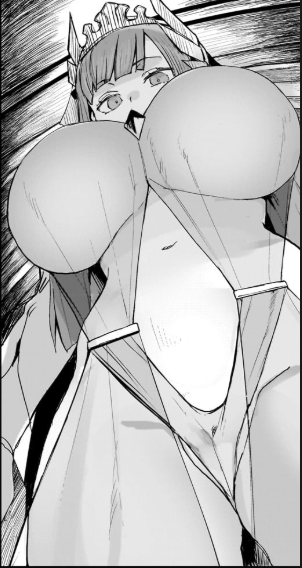
This is how the queen dresses by the way. Just imagine a topless fight between two noblewomen in this world. Oh wait…!

Eh, there isn’t any conclusive evidence that Austrian noblewomen fenced topless, but it’s a fun campfire story to get people’s imaginations running wild.

The introductory chapters explain how objectified men are, being sold as sex slaves, highly prized (for the bodies) and highly guarded (for the private use of their bodies), in some cases being passed around between every available woman, especially women in power, so theoretically a Viscountess has a private harem consisting of men who engage in any one of the BDSM subcategories. If she feels like sharing, these sex slaves are passed between this hypothetical viscountess and her entourage, always being used, spent, and emptied only to go through it all the next day… or hour.
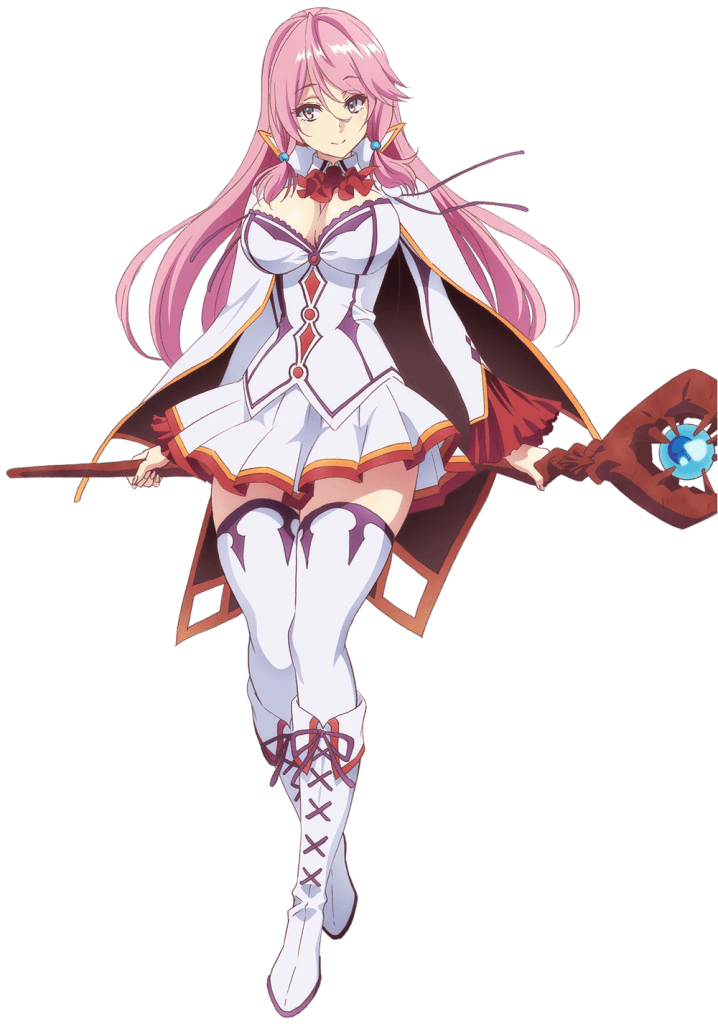
By our standards, what I described is a regular day in the Jioral Kingdom Royal Palace, if not worse for the men.

For less sexually suggestive themes, if you know a thing about Ancient Greece, specifically Athens, then you know that Athenian society made second-class citizens of their women, with all the men having the influence in the day-to-day operations of the city-state from the politics to the foreign affairs to the military to the voting to the education and numerous other aspects of the way of life. It’s the same in this series as well, of course with women filling that role.

Writing that last paragraph, I just remembered this trope has a name: Lady Land, and it’s precisely what it sounds like. It’s a bit of a divisive trope for portraying what would happen if women in the west had near or precisely equal rights to men, with critics deriding it as paranoid bollocks. Personally, I’m in the same boat. I’ve lambasted the likes of MeToo and GamerGate as having been hijacked and perverted by radical firebrands and the like, but it’s worth committing to memory that movements like this aren’t as big in membership as the Internet likes to fear-monger over. In the case of the Lady Land trope, I could see someone from the 1890s or around that time organizing a list of why women shouldn’t have these rights, but these days such worries would be overblown and truth be told, sections of the Internet would kill to get that kind of sex slave action, failing to understand that love and lust are two distinct concepts despite the overlap.

As much as I make it sound like this isn’t worth the read, it’s tropes like these that get me thinking about how women used to be treated in legacy media. Age-old comic tropes getting flipped on their head to offer insight on the other side of the fence. Not saying the same dire straits don’t still affect women today, but to treat it as though there hasn’t been any evolution since at least the late ’60s is both a lie and part of a means to completely flip everything in a more female-centric role but for the worse. The terminally online like to think that patriarchy is the source of all ills and either think things will be different under a matriarchy (they won’t) or, worst case scenario, install some sort of matriarchal dictatorship. Silly conclusions to draw, but I’m a “cooler heads prevail” kind of guy.

Maybe my time watching British content creators gave me a stiff upper lip, it’s hard to take the Internet seriously when it gets like this at times

Only about 11 manga chapters, the first few introduce the world, explain how this world’s men are like Ancient Athenian women, i.e. possessing only the right to live and exist (typically as a sperm-filled turkey baster for noblewomen), and introduces the characters. The story follows lone male knight Lord Faust von Polidoro being given the floor to speak by the Queen Lisenlotte who makes Scarlet from Scarlet Maiden look fully clothed by comparison.

Abnormally thick tooth floss for clothing

Lisenlotte explains that the first princess Lady Anastasia whose set to inherit the throne is the one who gets the most resources against a uniformed standing army while the second princess Valiere is stuck with glorified conscripts to handle barbarians. Master Chief fighting the Covenant while the Reds and Blues glare at each other in Blood Gulch, or sending units in a Civ game to fight Cleopatra or Gandhi VS sending units to clear out barbarians so you can place a settler. The way this is done doesn’t fly with Polidoro (who’s fighting is own chastity belt in the face of obese boobs), who suggests letting Valiere take more professional soldiers with her during this trial. Queen Lisenlotte concedes and allows the royal coffers to flow equally into both her daughters hands, while still casting favor over Anastasia–primogeniture and all that. But the Lord’s pleas to reconsider undersupplying the youngest daughter gets the queen feeling some type of way. The last man to get her this giddy was her late husband, and presumably she feels something for Polidoro but wouldn’t make a move on him as he’s the spare’s advisor, though she contemplates whether letting him stay as the advisor to the second daughter or giving him to the first. Even as a knight, Lord Polidoro is but a piece of meat to these powerful women. Alternate universe female me would write the same thing.

Scraping away the prominent gender-flip, the tropes in play are quite typical of any old medieval European fantasy and by extension Euro-fantasy isekai stories that the genre loves to exoticize, like in From Bureaucrat to Villainess or My Next Life as a Villainess or I’ve Raped So Many Women that My Penis is Now Trans— I mean, Redo of Healer. Medieval Europe never appealed to me as much as Medieval Japan did, so I admit that I have a blindspot for this period of history as well as a bias towards East Asia, which has ramped up as of late with my viewership of East Asian media, to the point where my YouTube recommendation feed features Japanese YouTube channels, and I’ve found this comedic gem on Netflix:
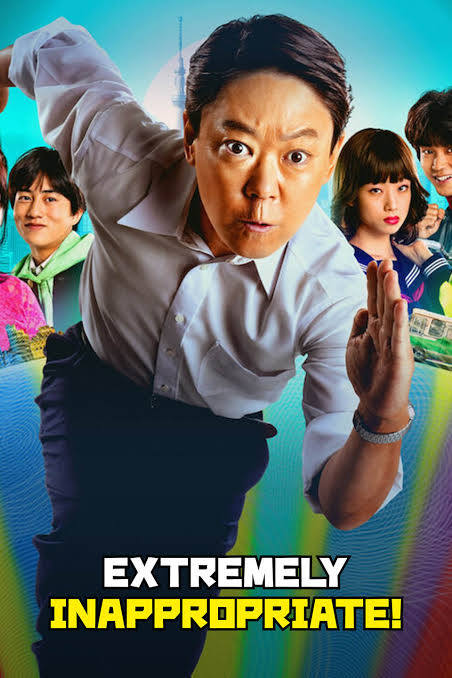
The one time I actually give a damn about musicals

From what little I know of medieval European absolute monarchies, the politics of the world aren’t even hidden. Navigating internal royal politics is its own chore even for the one in charge, as you want everyone else who shares the power with you as well as those who will soon have that same power after you die are satisfied long enough to keep the realm from falling into disorder. Unwritten rules that rulers take to heart historically and when speedrunning the Age of Discovery in Europa Universalis IV or the Victorian age in the Victoria series. Actually, these concepts were catalogued in Sun Tzu’s The Art of War. In the case where war is inevitable, all precautions need to be taken to guarantee a victory, and not just on the battlefield.

The rest of the chapters are about Polidoro, Lady Valiere, and the entourage they take in battle with them to fight against the barbarians, with select panels dedicated to the rest of the cast, like Lady Anastasia, the captain of the army, the third in line for the throne, Duchess Astarte, and others. The LNs definitely have more content and I may have a light novel arc in the future, mainly to confirm this but more to the point because some series I like have better LN continuations than they do animanga.
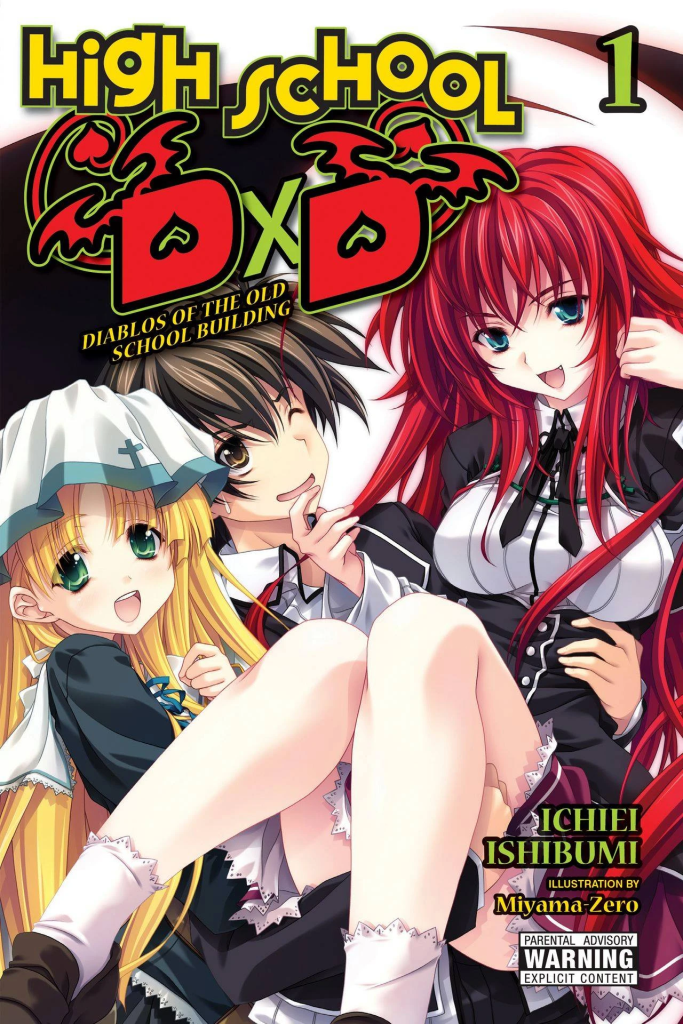
I’ve heard that the light novels vary from the anime and I want to see if that’s true

The manga so far ends in the midst of a campaign against the barbarians with more to follow, but AFAIK, the mangaka Michizo is hibernating and short of entering the dragon’s lair to agitate the beast, whenever we get the next full chapter or even update, or god forbid, more information on the series, the best we have are crumbs. It’s completely available on MangaDex and other such pirate manga sites, but beware the AI porn ads on the sidebars. S[ooh!]t’s getting out of control, people. The androids must not win!!
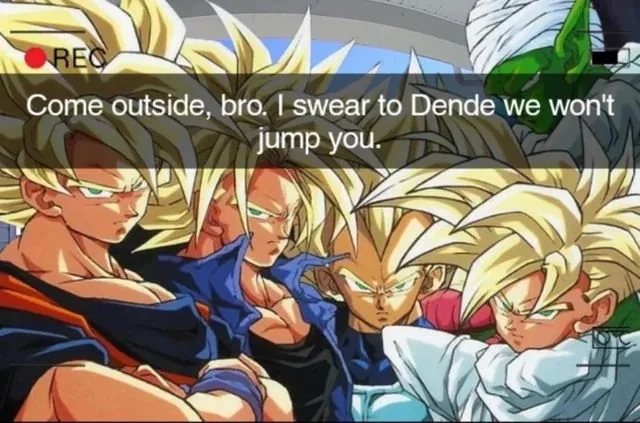
Trunks and John Connor are our last bastions of freedom

Ladies and Gentlemen, the Dumbest Otome Villainess Protagonist

Her braincell is always out to lunch

Multiple times on this blog, I’ve explained that I don’t make a beeline for the Isekai genre. My tastes are varied and, if I had to look at it objectively, inconsistent. But if it wasn’t me being lazy, it was life reminding me that the big picture exists.

Thank god for stock imagery

With the case of Isekai, recently I’ve had a look at some of the shows I’ve been watching, some of which have appeared on this blog before, and I don’t think the statement holds up anymore. Matter of fact, some earlier anime I watched as a kid technically count as Isekai by the slimmest margins and the loosest definitions. Similar to when I watched Shield Bro Loli Pokemon, I came across the subject of this post on Crunchyroll sometime in 2020. It’s not in my watch history for some reason, but I did see the entire first season and part of the second season, so I definitely remember the plot beats going on for this series.

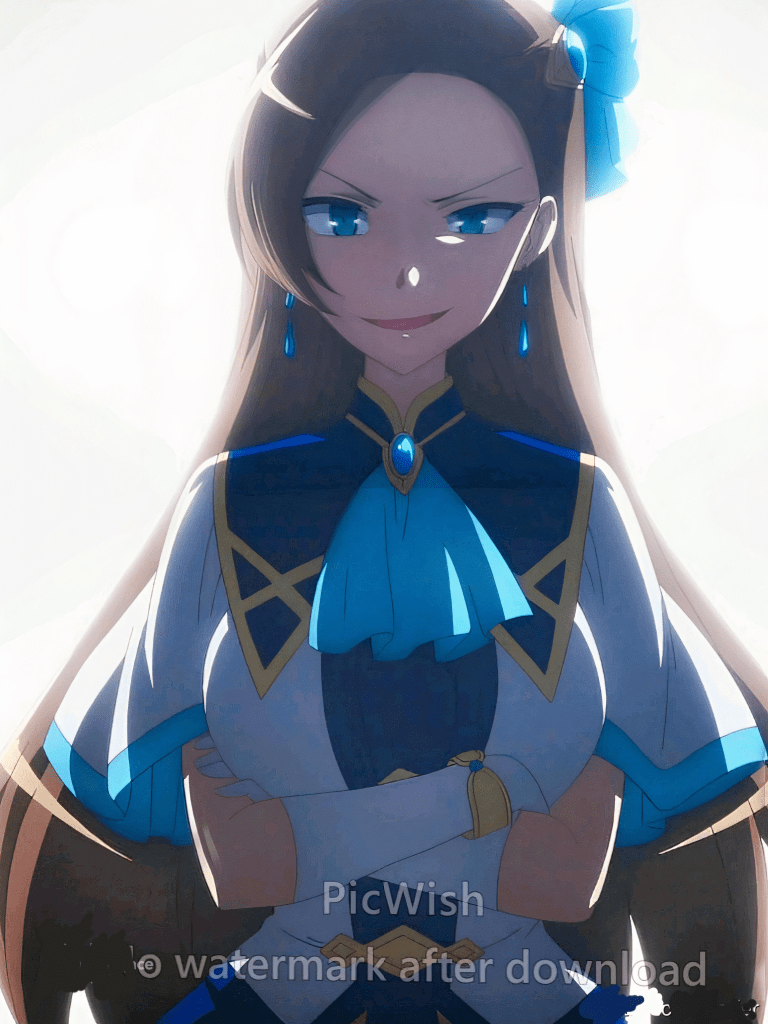
This series is an otome harem Isekai that would become more and more commonplace after 2020 for some s[piano]ing reason. As I recall, the anime skips over the Isekai-ing action, and drops the protagonist into the shoes of the villainess/antagonist, Catarina Claes, who is known to the Japanese audience as Bakarina for having an IQ level as big as her shoe size. The full English title doesn’t really do the series any favors, as the point of the game she’s isekai-ed into is to avoid all the doom flags. The game, known as Fortune Lover, has a series of different paths for the player to follow given specific conditions. One ending sees the villainess exiled, another puts her behind bars, and the third sees her killed in a crime of passion.

When the protagonist takes command of Bakarina’s braincell, the roles are reversed in even the design. Robbing the game of the villainess irreversibly changes the flow of the game to the point that the game semi-acknowledges the takeover, although the major consequences of this aren’t even that punishing, given the English translation of the Japanese title being “I Reincarnated into an Otome Game as a Villainess with only Destruction Flags” as opposed to the subtitle All Routes Lead to doom. A distinction I make seeing as the former explains the concept of and subsequent obsession with doom flags as opposed to the latter that leaves it largely vague. Couldn’t help but get pedantic about that…

Be it the villainess or the actual protagonist of the video game (to distinguish from the Female MC), the opportunity to romance any of the archetypes characters is, on the surface, divvied between the two, but with Bakarina being the queen of this series, that’s a decision largely left to her. Bakarina’s definitely different from how the original Catarina behaves, being more charitable than selfish, all to avoid the death flags. In so doing, she unlocks a secret ending that most games won’t give you until you 100% it once at the minimum.

Without a real window into the game before Catarina’s mind was taken over, all we the audience have to go off is what Bakarina claims she was. To be fair, there’s a few scenes that show what would happen to Catarina if she was the same as she was before the plot of the series kicked off. Now, as for concrete proof that this is an Isekai, again, the anime never shows the action, but it does have a flashback to what the pilot of the Catarina mech-suit looks like, all without ever giving her an actual name.

Another thing done differently is a semi-timeskip. The first five or so episodes start off in Bakarina’s childhood before transitioning to her and the rest of the cast as first- or second-years in high school. And although they’re all adolescents going forward, the recurring gag is that before a major life-altering decision is made, Bakarina retreats to an inner council within her own mind where five younger-somehow chibi-er versions of her debate the pros and cons of a certain path before moving forward with the decision.

And to put the cherry on top, the reason she’s referred to as Bakarina has to do with a variety of weird and idiotic moves prior she’d become famous for. I guess I would also find it difficult to explain that the world is an otome game from a different world, but with death acting as a portal from one world to another, the most I can do is reflect on my previous life before pulling a “when in Rome.” While Bakarina acknowledges the doom flags and bends over backwards to avoid them, she brings mannerisms and habits from her old world into this one.

Funny enough, I did a quick Google search and found this Reddit post that posits, with evidence, that she’s on the spectrum. It’s credible, but medical and mental health professionals make the distinction between autism, ADHD, and simply having those symptoms without fitting into either category. But their is also evidence that she is simply braindead. A lot of it having to do with her being clueless to a lot of things going on in the lives of the romancibles, notably their feelings towards her.

The show is entertaining enough and deserving of its second season when you keep in mind that Bakarina is a moron, though not completely. She does have her moments, though the plot doesn’t give much in the way of character development for Bakarina. She stays mostly the same from beginning to end, even after realizing how much of the plot of the game she’d changed. This isn’t necessarily a bad thing, but it’s a noticeable thing to keep in mind, especially for puzzles, such as one episode where everyone else was in despair while Bakarina kept stuffing her face.

But on the subject of idiocy, a distinction needs to be made between intelligence and wisdom. There’s overlap between the two concepts and some believe that they’re merely interchangeable. But that’s false. In layman’s terms, it’s merely the book smart VS street smart debate. A professor can tell you all about physics and maths, but will probably be lost in the worst parts of the Bronx. On the other end of the spectrum for wisdom, someone may be unable to do complex maths, but they can still learn you a thing or two about life.

The anime’s has two seasons with 12 episodes each plus an OVA. It was adapted from a 2017 manga which in turn was adapted from a 2014 light novel.

Need I elaborate?

Before I go, I have plans for a post concerning the corruption subplots of the video games, Max Payne 3, Sleeping Dogs, and Spec Ops: The Line, with all three handling it all differently. I can’t say for sure when it’ll be done, especially since Spec Ops had been delisted in most online retailers, leaving me the only option to pirate over it. Once I’ve finished at least the last two games (having finished MP3 before), I’ll have the full context of all three ready.

Did I Really Get Isekai’d with my Mother!?

How did it come to this?!?!

I’ve made it a point several times that I don’t default to isekai, but I don’t remember clarifying what that means. I make a beeline for shows I find interesting, that some of them are isekai is pure coincidence. I’m not an isekai junkie like Gigguk or an isekai avoider like The Anime Man. I’m in the middle of it, all things considered. Of course, I’ve made it clear that I don’t always find contemporary anime to watch, but the subject of this week’s blog was all the rage when it was airing.

Alternatively titled Okaasan Online, Do You Love Your Mom and Her Two-Hit Multi-Target attacks began life as yet another light novel but from the late 2010s rather than the early 2010s, complete with a manga adaptation as a companion piece running concurrently with the light novel. Shame it was subject to a simple 13-episode series, though this might be par for the course for series that only run for the same length of time as a single US presidential term. The unofficial name for this series is called MILF-sekai and the reasons below explain it better than the cover for the light novel:

The MMORPG parody is strong with this one.

The gist of the story is an ungrateful, angsty teenage boy named Masato Osuki tries to push his clingy mother, Mamako, away. Both of them are suckered into an isekai video game and go on an adventure together, interacting with other characters who have fallen for the same trap. The best joke this series tells is that it plays coy with the incestuous, MILF-y tropes that accompany the genres without exploring them on purpose. The most the anime will do is strip Mamako naked and have her son comedically fall on top of her in the second episode. Damn, I’ve read NTR doujins and felt less cucked there than in this series. That’s pretty much the height of the MILF antics, but the OVA has more to show in that regard.

As far as actual plot goes, Masato’s relatability comes in the form of wishing he were someone else with a doting mother whom he wishes was a different person, at the outset. Then he meets the future members of his party and their mothers and annoying as it may be to have a mom, let alone parents, who embarass you at every turn, it’s better than one with godly expectations or one who can’t help but let their vices enslave them. In the former example, one party member, Medhi, has a mother who’ll chastise her in private for not being perfect like a Cell after losing a competition, leading to feelings of doubt and self-loathing in the poor girl. For the latter example, party member Wise and her own mother, had a frought relationship in real life and used the game as a means to better bond, but when Wise’s mother learned that she could make a harem of men at her beck and call, she made a beeline for that and never went back. At least it beats what this girl was going through:

I’m almost tempted to catalogue some of the worst mother’s in media, but I don’t wanna abandon my faith in humanity just yet.

The show’s ecchi-leaning comedy make it the butt of a few jokes, but it’s not like it doesn’t know what its talking about. It’s different from a thinking man’s anime, but has a lot of the same story beats as one. Between the JRPG satire and the ecchi satire, it tries its best to split them evenly, though lacks in some other areas. I want to blame this on the anime for cramming so much into so little time, but on the whole that does nothing to specify which anime I’m talking about, for this series specifically, that’s an inaccurate and misleading conclusion to draw seeing as the light novel and manga were still running when the anime was airing in 2019, putting it in the category of yet another anime promoting the source material. And as a manga reader, I’d rather explore manga naturally than be given homework. At least not every series does that to me:

I’ll put this one in the timeline somewhere.

So how does Okaasan Online work as a series? Fine… it knocks out the important points like Kazuma at the batting cages, and generally speeds through them in about one or two episodes. But it also doesn’t really explore anything in much detail beyond “here’s a trope, give me my laughs.” Funny enough, the anime doesn’t do this as perfectly as presented. Two characters’ origins with their own mothers are explored, but one such character, Porta, is a one-off. No such relationship status between her and her own mother are revealed in the source material or the anime; she’s simply the little mage that behaves the most like a little sister to Masato and young daughter to Mamako.

Now that I’ve written that, Porta behaves the most like a little puppy or a kitten. The party leader status is shared between mother and son and awkward as it seems to point this out, they’re like the parents to the other three girls even though Masato and Mamako are mother and son. F[Nyan]k, even I couldn’t avoid the incest trope. Again, not explicit or even acted upon in any media, but it’s there.

So, Tiberius, do you recommend it? Eh, I’m indifferent. I watched it all the way through and 20-year-old me felt naughty things thanks in no small part to the visuals. Fast-forward five-and-a-half years later and looking back, it may have served as a gateway to lewder and racier things without meaning to. Basically, what I’m saying is, before, during, and after its run, the series has been outdone. I won’t persuade you to watch it or dissuade you from doing so, just know that while you could sit down and spare some time to give this one a watch, it co-exists with better shows, so don’t expect me to show up at your door at 3AM like this:

Add it to your isekai library if you feel like it.

Hashire Sori Yo…

Kaze no you ni/Tsukimi hara wo/Padoru Padoru!

This would’ve come out on Friday, but I had to pack my two bookbags for the holidays. Thought I was gonna look a gift of two weeks* of holiday leave in the mouth? (Actually, 11 days, but I also have a 4-day pass.)

Veteran weebs know what the image above means. ‘Tis the season to be jolly, and everything else Christmas-y. The holidays are a lot of things: great, awful, a mixed bag, an empty bag, and a bunch of other stuff. While this post is gonna be a happy holidays to all, it’s also gonna be a setup for a New Year’s reflection of this blog as well as a look back at the content I’ve written for this year and the content that was released, continued, suspended, or discontinued. Hitting the ground in 2025 with memories and goals. Knowing me, I may entertain theories with plausibility or significant evidence, but for most things I tend to stick with the facts. You’ll almost never hear or see me make a genuine guarantee unless it’s in my notes or I have evidence and research.

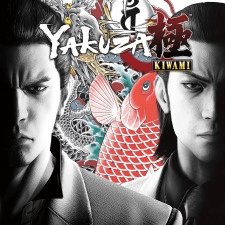
Now I do have plans in my notes to review my content for 2024, but that’s a January thing, and seeing as it’s a day before I return to duty, it’ll either be delayed or published ahead of schedule. Preferably the latter so I can focus on packing up, and New Year’s Eve or Day would be perfect ideally. For a look into the future though, of all the animanga I’ve viewed or games I’ve played, a fair few favorites stand out that have wide fanfare, but I’ve either admired out of respect for the reputation or not directly engaged in myself. Others I plan on writing about after a thorough amount of time. For example, I have a decent amount of time on my emulator with the original Yakuza game, though most fans would implore newcomers to try the Kiwami updates instead.

Still, a plus for Yakuza/Ryu ga Gotoku is that it’s generally easy to get into and the number of games released since 2005 gives newcomers a backlog to play catch-ups should they choose. And I do choose that method, real life responsibilities and desires would be damned, but being a responsible adult comes first.

On the opposite end of the spectrum are series I’ve encountered through osmosis. Memes, lore dumps, wikis, explorations; individual fans have tried to explain and recommend their own series, but from the outside looking in, I feel about it the same I feel about the Dune series, best explained with this meme.

Credit: u/netotz, r/dunememes

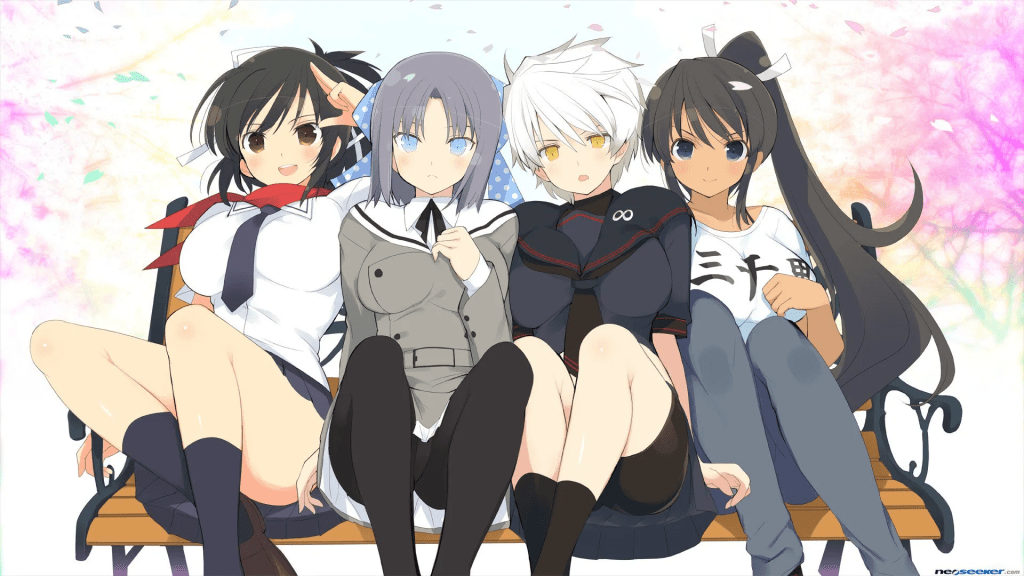
The series’ in question that I’m referring to are Senran Kagura, Fate, and Idolmaster. Each of these has a large following, both foreign and domestic, but my previous attempts to jump into the deeper lore and find a starting point has been met with mixed results. From easiest to hardest to understand, it’s SK, Idolmaster, and Fate. And I’ll start with SK.

The series’ Wikipedia page describes it as a multimedia franchise spearheaded by none other than Kenichiro Takaki, launched in Japan in 2011 with developers Tamsoft and Marvelous. The first game in the series released domestically is translated with the subtitle “Portrait of Girls” and was ported in 2013 with the subtitle Burst. So that’s simple, boot up an emulator or track down a still working 3DS or similar handheld and get some gameplay in, right? Wrong…

Opening up a can of worms called backwards compatibility and legalese, there’s a myriad of reasons why that’s not the most feasible way to do it for most. Of course, any potato computer can run a 3DS emulator–I did it myself to play Kirby: Planet Robobot and Triple Deluxe for old times’ sake–but the difference between eastern and western developers shows in the pudding. Eastern game devs will gladly re-release and remake old games for new hardware, such as the aforementioned Kiwami remakes of the old Yakuza PS2 games, whereas western devs can’t or won’t re-release remakes. Unless it’s Naughty Dog patting themselves too hard on the back with The Last of Us.

Narcissism is calling a PS4 port a remaster, when it was only a one-year release difference.

What I’ve noticed with eastern and specifically Japanese creators is that they’re accommodating enough to make their products available to all, though from what I’ve seen it can get hectic sometimes. If done poorly, a series can have numerous remakes or remasters or be disappeared and reintroduced, such was the case with JoJo’s Bizarre Adventure. Domestically, there weren’t many problems with manga releases, but western distributors either got a bad hand or dealt a bad hand with all the bravado and overconfidence that killed Macbeth. Long ago and today, it was considered sinful by the fandom to skip parts and lo and behold Viz Media was the one to ruin it in the mid-1990s. The approach was sound, but the execution necessitated the cancellation and re-release of a western release. To play devil’s advocate, Araki’s playlist disguised as a manga makes things difficult for copyright reasons, but it’s a miracle it was able to work so well, even if it took a quarter century to reach this goal.

25 years, people, 25 years. That’s how long it took for the first volume of Phantom Blood to get a successful anime adaptation. And the series had been through OVAs and a lost movie. If it was released contemporarily, we’d be halfway through a JoJolion adaptation with rumors of a JoJoLands adaptation getting a greenlight for Q3 2026.

For Senran Kagura, the source of confusion can come from the names they have, especially overseas. This itself isn’t a new concept, going back decades with international releases of Japanese anything, games notably; sorta like how Earthbound outside of Japan is known as Mother (which is its own wormhole of naming and releases). Couple SK with a limited anime adaptation in 2018, an OVA, and several spinoff games and it can seem like a lot to catch up to. I’m only one mission into Shinovi Versus thus far and I have an extended topic discussion lined up for February. This time, I’m going to try my best to get through Shinovi Versus and at least start another game in the series. So, does SK have a tricky starting point? Yes, but personally I found it easier than the next one I’ve been trying to find a starting point for: Idolmaster.

What makes this one trickier is that it didn’t start off with a console release, but with an arcade release in 2005, later ported in 2007 to the Xbox 360 in Japan. Clearly, it was successful to get a franchise of its own, but from what I’ve heard, Xbox and Microsoft don’t enjoy wide popularity in the Land of the Rising Sun. Sony and Panasonic have a wider reach on their native soil, but this series’ Wikipedia claims Xbox Live had better hardware. Who else but a computer company to push the limits, right?

So much for Sony, I suppose? The Wikipedia also suggests that that was just a test with subsequent releases getting PlayStation or mobile releases. Though over the course of 11 years, there’s been many releases. Again, spinoffs are no issue, but the volume of them in games like these makes finding the origin point tougher than it needs to be, especially when they’re neither conventionally named nor released in the right order for an international audience. Circling back to the Earthbound series, even if it’s true that the fanbase isn’t big enough to warrant a wide release, the small headcount was dedicated enough to translate the series themselves.

But the blame for that can’t always fall on the devs; copyright law is no joke no matter what part of the world you’re in. It’s part of the reason JoJo’s was so hard to introduce to the west. Let’s award the Benefit of Doubt in general cases and say that if it wasn’t for the corps of copyright and lawsuits, more players would play more games, no matter how obscure they are to the general populace. On the opposite end of the spectrum, there’s a monolith of a series that has one hell of a reputation. Starting as a visual novel, getting two separate anime adaptations (the latter made to correct the former’s mistakes), and spawning a franchise with more twists and turns than M. Night Shyamalan and Christopher Nolan could think of. Pretzels look at the timeline and think, “Holy knots, guy! The f[crunch]k am I lookin’ at?!” Of course, I’m talking about the Fate franchise.

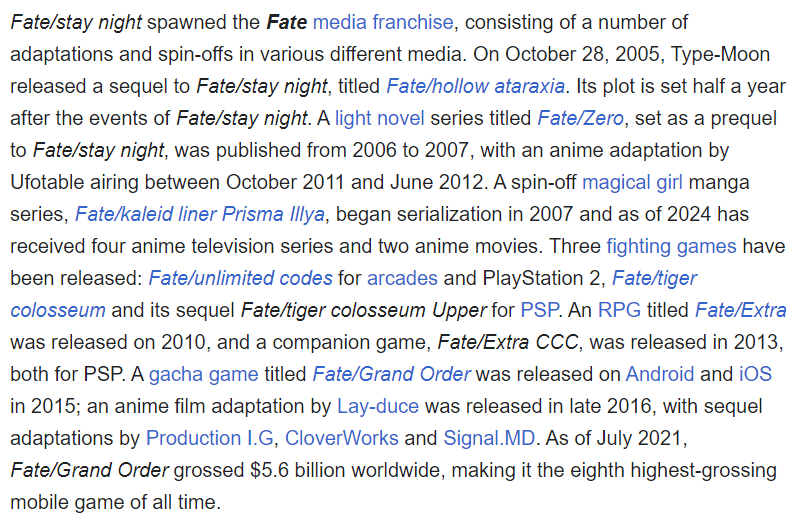
The emperor of long and convoluted timelines, and the source of upwards of 35 to 40% of all anime-based memes, it started with a visual novel in 2004 and hasn’t stopped running. Even if you messed up the train tracks ahead, the Fate Express continues on through the power of fandom and fanservice. This passage from the associated Wikipedia page says as much:

I’ve wanted to get into Fate for a few years now, but its reputation has held me back from taking the plunge. Also being a seasoned weeb myself, I know how hideous fandoms can get (see the My Hero Academia fanbase for more details, and cleanse yourself afterwards. IYKYK). Thankfully, there’s not much in the way of ugliness for the Fate series, but to quote a Welsh monke, “if Dragon Ball fans are the ghetto, Fate fans are the crack dealers.” Some of the more vocally dedicated types will stop at damn near nothing until every newcomer lives and dies by Fate and has immersed themselves in all the VNs, anime, movies, games, and other merch that a franchise this influential can spawn.

Channel: Trash Taste Highlights

With just this video, I don’t really need to elaborate further. Someone will tell me that Fate is easier to get into than I fear, and I guess I can take their word on that being blinder than Kenshi from Mortal Kombat or Toph Beifong in this regard, but what would help is if there was someone out there who will meet normies and newcomers with some interest at the halfway point instead of leaving us to fight off a pack of wolves with a stick and a book of pressed 4- and 5-leaf clovers. You can expect to see more in-depth opinions about all of these in a post about s[horse neighing] not (yet) reviewed after the New Year.

Going through my notes whilst finishing this up, I realize some stuff should’ve been up at least a week before I thought they’d be (this post included), but life and work had gotten in the way. The holidays aren’t gonna make that any easier for the last few topics, but I’ve been beating the odds for as long as I can remember and come hell or high water, I’m gonna make this work. Figuring it all out will have to come later.

Before I part, why don’t I give you a channel recommendation for the Holidays? Behold, Geopold!

https://www.youtube.com/@Geopoldd/videos

Not dissimilar from Gattsu, Geopold is another YouTube channel that introduces different parts of the world by way of the power of internet memes. Describing himself as “Birmingham’s Travel Agent,” going off of that alone, he’s confident that that he’s well-traveled enough to give an unbiased opinion about the places he’s– okay, I’m joking, he’s gonna meme these places off the map, and keep mememing them. Now that travel agent thing may be a joke, and if that’s what you’re looking for than stop where you are, have a drink of your choosing (Kirin or Asahi for me) and watch him grossly oversimplify white people… or the state of Florida…

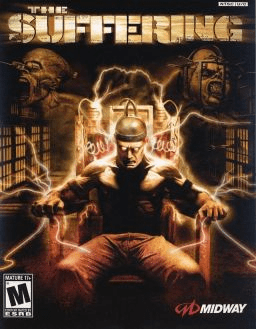
The next topic (fingers crossed, it’ll be out by Friday or Saturday night) will be an out of season third-person shooter game that only eight people remember.

If you’re at all curious about the plot, here’s a small hint: the Maryland prison system has been better, all things considered.

In Soviet Russia, Waifu Confesses To You

She doesn’t know you’re also fluent in Russian

Summer romcoms have seen a boost as of late as seen by the evidence below:

Credit: Gigguk

The sussy sisters suspiciously spouting sexually suggestive sayings was far from expected, but also far from uncommon. Yosuga no Sora fans and Coffin of Andy and Leyley fans know what’s up. In this case where a romance anime has comedy and a sussy imouto, I present to you Alya Sometimes Hides Her Feelings in Russian.

The most interesting thing about this is that it may or may not be responsible for a new -dere type. For those who’re new, -dere in Japanese is a onomatopoeic term for “lovey dovey” or “fawning over someone.” The suffix refers to the type of affection displayed by the love interest. The most common types being:

Tsundere – where the love interest feigns disgust while secretly wanting you to lust after them (think: playing hard to get on hard mode)

Deredere – where the love interest wakes up with you on their mind, erection notwithstanding and counting down the days where they wake up next to you as a loving spouse

Kuudere – where the love interest acts distant and uninterested but keeps a heart-shaped locket with a picture of you inside, longing for the days where you two can be one; and

Yandere – where the love interest only thinks of you and no one else and you yourself better not think of anyone else or you’ll lose other people you care about in your life. It’s not the obsession that can lead to complete disaster, it’s the suspicion that this obsession isn’t reciprocated that makes yanderes so dangerous.

In the case of -dere types, the origin of this archetype–RoshiDere–is a derivative of the light novel’s Japanese title: Tokidoki Bosotto Roshiago de Dereru Tonari no Ārya-san. RoshiDere is a romcom about a highschooler named Masachika Kuze and his budding relationship with a childhood friend Alisa Mikhailovna Kujo. Being half-Russian, Alisa and her sister Maria have the distinct honor of being hafu characters. Short summary: a hafu is anyone of partial Japanese dissent, as in only one parent is Japanese (alternately known as half-Japanese).

There aren’t very many characters of this kind in most Japanese media, but there are a few that stand out, some of which you probably didn’t think about.

Japanese dad, British-American mom (that the fandom keeps forgetting; his knowledge of the English language is not a surprise whatsoever).

Plot-wise, Alya-san is a bog standard romcom but nearly functions like a harem anime of sorts all things considered. Circling back to -dere types, Alya the Russian GF is the chief RoshiDere, but sometimes has her tsuntsun moments.

Not that locking a character into a specific archetype makes them a one-trick pony, but the course of the anime opens viewers up to multiple different sides of the characters. Call it the benefit of a small cast, the creators can focus on a small band of misfits as opposed to tripping over their own two feet trying to make the audience fall in love with everyone else. Shortfalls plagued by a lot of Shonen manga, especially My Hero Academia and Naruto.

For what the characters do in the series, Alya’s an overachiever with the beauty to match her brains while Masachika engages in the otaku lifestyle watching the best series of all time until 3AM (obligatory: he just like me fr), leaving him the narcoleptic, sleepyheaded underachiever and the subject of Alya’s romantic teasing. She thinks she’s being coy by speaking русский язык (Russkiy yazyk), but little does she know Masa-kun is no stranger to the Russian language. As a matter of fact (spoiler), she’s not the first girl to speak it to him, having had a childhood friend from Russia itself. So her passing her flirting off as snide remarks is merely her footing herself in the mouth.

To my knowledge, the only other person who knows his bilingual fluency is his sister, Yuki Suou, as seen in this clip:

Credit: Momka Weeb

I haven’t read the light novels yet (will I? Maybe I will and write about it [patrick_scheming.jpg]), but I imagine a scene where Alya shouts in Russian, Masa-kun walks up to her, translating outloud and Alya’s cool and confident demeanor shatters under the weight of her crush’s knowledge of her native tongue.

Not so much as a gotcha, remember she has tsundere traits and will likely be upset that he knew and didn’t reciprocate up until that point, but part of me can’t help but be the fly on the wall who witnesses that encounter. Gonna pop some popcorn real quick, BRB.

Away from the main events of Russian Girlfriend Problems, Masa-kun’s sister, Yuki, is the Queen of the Otaku vying for the Degeneracy Crown currently resting on the head of one Sydsnap.

Link to her channel if you’re interested.

https://www.youtube.com/channel/UCWH4JkQWioU3vTAritHDnAA

It’s explained that Masa’s and Yuki’s parents divorced and went to live separately. Yuki grew up as a quasi-aristocrat being viewed by the school as rivaling Alya academically, but Masa-kun knows how she’s like behind closed doors. A hardcore otaku who makes numerous references, points to the camera Deadpool-style, and wears her otaku flag on her sleeve. Don’t let her perception of innocence deceive you, she’s actually a cunning young lady and wanted for theft of every scene she’s in:

If the romance between Alya and Masa is the main course, I think we can safely call Yuki’s shenaniganry as the appetizer or dessert. It’s a cutesy little series that has a lot of fun with the premise and the use of multiple languages, that I haven’t seen really since Golden Kamuy, and considering that series takes place mostly in Hokkaido and Sakhalin (with flashbacks to the Korean peninsula where the Russo-Japanese war was fought), that part goes without saying.

Alya Likes to Flirt in Russian is available on Crunchyroll and other streaming sites of questionable legality. If you can stomach the ads, Crunchyroll is the way to go. If you have the cash to spend and can go premium, by all means. And for those of us, who are learning the right lessons from One Piece, HiAnime, AniWatch, and similar piracy sites are still up as of writing this. Enjoy them while they last, especially HiAnime which appears to have caught the eye of the U.S. government.

This week’s YouTube recommendation is NFKRZ.

https://www.youtube.com/@roman_nfkrz

Run by Russian-born Roman Abalin, NFKRZ is a channel that makes videos on Russian life, life in the former Soviet Union along with personal anecdotes sprinkled in. It’s a hybrid vlog/semi-documentary commentary channel that sheds light on this part of the world, often dispelling popular myths of this region with personal anecdotes having grown up in the city of Chelyabinsk (which is close to Kazakhstan). The link to his channel is above.

Date A Live: On a Whim Again

The life I live is watching anime with friends…

…and I can’t wait to do it on a whim again. I’m not apologizing for that Willie Nelson reference.

Date A Live honestly needs no introduction. It’s a series that I’d heard of for a couple years prior to actually watching it only to hear of a fourth season planned last year while I was already six episodes into the series.

It began life as a light novel with a run from March 2011 to March 2020, exactly nine years of writing from author Koshi Tachibana. A sci-fi fantasy romcom whose anime adaptation was released in 2013 and whose fifth season debuted in April of this year. Funny that light novels from the last decade are going strong in the 2020s.

So what’s Date A Live really about? Breaking it down by its genres, the sci-fi aspect comes from the world itself. It’s somewhat set in the future though no specifics are given so you the reader/viewer may fill in the blanks how you see fit. Spatial quakes or tremors in the solar system start affecting earth in a very negative manner, by way of leaving behind giant craters in the earth, one of the most notable being somewhere along the Eurasian steppe. Bad day to be wandering around Kazakhstan that day.

The in-universe explanation for this is that the space tremors follow the arrival of beings known as Spirits who all appear in the form of girls around the same age as the main character, Shido Itsuka–and protagonist powers aside he does have a crucial role that I’ll get to later.

Further, these Spirits possess abnormal powers, not the least of which involves the likes superhuman strength and devastating abilities the likes of which would make Babidi from Dragon Ball very, very jealous–and also ties in with the fantasy aspect of the series. There are two ways to combat these Spirits: one is by way of actual combat; and the other adds in the romance aspect and our main protagonist, Shido Itsuka.

Now that we’re putting two and two to get to four, you may have predicted that Shido’s task in this series is to romance the Spirits and prevent utter bedlam with the power of love, and you’d be right. The harem aspect is well advertised and if you know a few things about the harem genre in animanga, then you’re probably also aware of the main selling point: fanservice. Flash a boob once or twice, get some cheeky panty shots in, throw in an accidental pervert with multiple different -dere types and voila! you’re cooking a mean beef stew.

However, what I think separates Date A Live from contemporaries of this type would have to be the individual girls themselves. Even as I’ve only just wrapped up the second season of the anime, I’m seeing more than just comedically sexy eye candy. And I’ll even throw a bone to Shido himself. Rather than be just the generic harem protagonist who behaves as a stand-in for the audience, there is a personality to the boy for once. He’s shown to be persuasive and caring, especially since his position in the series is that of nonviolence. He’s basically playing the pacifist route in Undertale.

Meanwhile, the other main adversary present aside from rogue Spirits yet to be wooed by our hunk Shido is the Anti-Spirit Team. Similar to Japanese Special Forces, their purpose is to find and contain the damage the Spirits cause, a lot of the time through lethal force.

Then there’s the girls that Shido romances to the good, less destructive side. A lot of the time they fit well into the typical archetypes we’ve seen in other romance anime, but the backstories and personalities do make them intriguing. Some of them do genuinely want to live quietly and comfortably with Shido, but others answer the question “Violence?” with an enthusiastic “Yes!” Case in point: one of the most iconic characters in the series:

You can’t fix her, nor will she fix you or even try to make you worse. She’ll just leave a massive stain where you standing three seconds ago.

The series explains that the Spirits themselves come from different dimensions, but (minor spoiler) it’s possible for a human from this dimension to become a Spirit as well as what happened to some of the characters in the series. The AST is another display of the sci-fi within the series. With the Spirits being what they are–superpowered high school girls–the members of this elite team have to take the “fight fire with fire” approach to combating them with hi-tech battle suits. Not on par with what has been depicted all over the Gundam genre, but impressive all the same. It’s more like stripped down Iron Man armor in appearance.

Depending on your investment in the series overall and how you feel about the genres explained, you might get a kick out of it, or it might just be another harem series to add to the pile. Neither of these assessments are right or wrong, but it shows that it’s a product of its time. Does that mean the series hasn’t aged well? No. As I said, I got into it weeks before a fourth season was greenlit, not to mention a fifth season debuted a few months ago which suggests a determination to see it through to the end.

I know I’m not the first person to talk about this series and I will not be the last to do so. What I can do is simply point you in the direction of the series and however you choose to consume it. If possible for you, I say finish all five seasons of the anime and while you’re waiting on confirmation of a sixth, beat them to the punch with the light novels.

Before I sign off, since there’s a certain demographic that loves the type of character that I put further above, I feel the video below best describes that mindset:

Channel: Gianni Matragano

But hey, I like kickass ladies too.

For Saturday, June 8, 2024, I recommend the YouTube channel Christopher Chaos.

https://www.youtube.com/@christopherchaos/videos

Run by a retired Army Sergeant and Motor Transport Operator (Military Truck Driver), Christopher Chaos is a military explanation channel dedicated to detailing the possibilities and benefits that come with enlisting in the Army along with the occasional anecdote about his own personal service. Each servicemember’s/veteran’s story is unique due to how big the U.S. military is and how fast changes can be made while serving. Christopher himself explains that he served from 1999 to 2010, so most of his stories show the culture of the Army during his service. That being said, he does still keep up with Army and military news for the purpose of educating would-be recruit candidates.

And if you’re concerned about it, he’s not endorsed or sponsored by the U.S. Army. That chapter in his life is behind him.