
Supernatural music references
This one is a long-time coming. One of my posts from January of this year included a still frame of a JoJo’s Bizarre Adventure episode that has since been used as one of the countless memes in many anime circles online. For those who need a refresher, it’s not the one where the character Dire feigns incompetence to catch his enemy in a move known as the Thunder Cross Split Attack. Instead, it’s the one where a character named Pesci, notable for his lack of a neck cries in excitement that someone or something took his bait. Example:

The picture I used months ago was larger than that. But swinging back to my point. I won’t be the first person to speak about the JoJo’s Bizarre Adventure series, nor will I expect to be the first person to introduce it to those who haven’t heard of it or were on the fence before. But even if this is the millionth time you’ve heard or read about the series with no clear distinction on whether to see it in action, let me remove the ambiguity: I can’t recommend the series highly enough. I write this with the enthusiasm of a tourist coming back from the best vacation spot ever.
For an introduction, I’m going to try my best to spoil none of the manga or the anime. JoJo’s Bizarre Adventure belongs to the long list of longest running manga series still in production while also sitting on the list of most difficult series to adapt as an anime. For context, the first chapter debuted in December of 1986 with the first volume releasing later in 1987. The modern anime series that you might see on streaming sights like TubiTV or Crunchyroll or even Toonami in the west debuted in April of 2012. There’s a reason for the nearly quarter-century gap between manga and anime and it comes from the way the manga is structured. Artistically, the manga artist, Hirohiko Araki looked more towards Greco-Roman and Renaissance art for inspiration, western fashion magazines, and during the production of the earlier parts of the manga, the days’ most popular musicians to include Michael Jackson, Prince, the Beatles, the Police, and countless others.
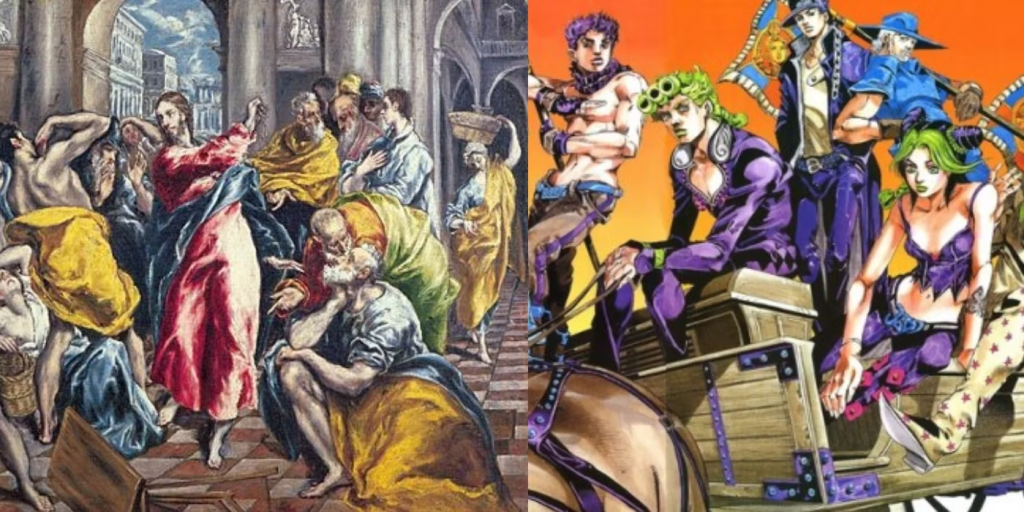
The manga itself is divided into nine parts or arcs that center on a different protagonist within the same lineage.
Part 1: Phantom Blood ran from January to October of 1987 and takes place in Victorian England. The protagonist is burgeoning gentleman Jonathan Joestar and the antagonist is his stepbrother Dio Brando.
Part 2: Battle Tendency ran from November 1987 to March 1989 and takes place fifty years later, centering on Jonathan’s grandson Joseph, who is far more rascally and mischievous than his grandfather. The antagonist this time is a trio of ancient Aztec beings known as the Pillar Men named Esidisi, Wamuu, and Kars.
Part 3: Stardust Crusaders ran from the same month the last part ended until April 1992 and this time the protagonist is Japanese delinquent Jotaro Kujo. It begins in Tokyo in the late 1980s, and the antagonist this time is Dio once again, but he’s come back with an upgrade, his name is capitalized as DIO, and this time he has a wider cadre of henchmen in different parts of the world.
Part 4: Diamond is Unbreakable is set about a decade after the events of the last part. It ran from May of 1992 to December 1995 and features the protagonist Josuke Higashikata. He’s also a delinquent but by the late 1990s, Japanese delinquent culture was losing favor to the emerging gyaru culture to follow in the 2000s. Still, Josuke’s not as rough as Jotaro so long as you don’t badmouth his immaculate hair.
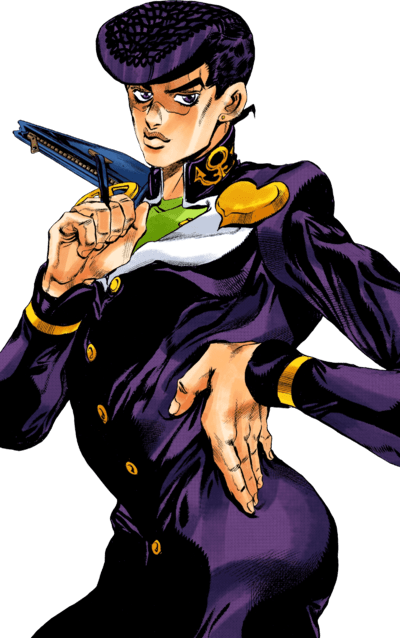
Part 4 is also centered in a fictional town modeled after Araki’s real life home in Sendai and is thus less of a high stakes thriller than the other parts, but there is still an antagonist in the form of department store employee and serial killer Yoshikage Kira.
Part 5: Golden Wind/Vento Aureo also began the same month the previous part ended and ended in April of 1999. It’s set in Spring 2001 around the southern half of the Italian peninsula and features the illegitimate son of DIO, Giorno Giovanna. The antagonist is the mob boss of the Passione mob, Diavolo. Without spoiling much, instead of cooling down like the last part and gradually sprints into its second wind for the plot.
Part 6: Stone Ocean ran from December of 1999 to April 2003 and features the first female protagonist, Jolyne Cujoh/Kujo, the daughter of Jotaro. Its setting this time is in a Florida prison in late 2011 and the antagonist is the prison’s chaplain and protege of DIO himself, Father Enrico Pucci. This part specifically along with Part 5 suffered from a long streak of unpopularity until the Part 6 anime adaptation was announced online in April of 2021. I covered that as it happened in another blog that I started two years ago and needless to say, it was one of the rare moments of hype I’ve ever felt for an upcoming product or series continuation of the sort.
Part 7: Steel Ball Run is set in an alternate continuity and sets the clock back to the 1890s but with a different protagonist who pays homage to the original British Jonathan Joestar. It begins in the western U.S. and ran in Weekly Shonen Jump magazine from January to October 2004 before switching to the more seinen demographic magazine of Ultra Jump for the remainder of its publication from March 2005 to April 2011. The protagonist is Johnny Joestar, a disabled ex-jockey and the antagonist is the 23rd President of the United States, not Benjamin Harrison like in real life, but Union Army cavalryman Funny Valentine.
Part 8: JoJolion (the -lion pronounced the same as in “Evangelion”) was actually set during the modern day. It ran from May 2011 to August 2021 and does almost quite what Part 4 does, supplanting Sendai with the fictional town of Morioh, but uses a real-world disaster as part of its setting. In Spring 2011, an earthquake struck the east coast of the Tohoku region of Japan. It features a similarly named protagonist to Josuke Higashikata from Part 4 (who also has a distant connection to the first guy), but differentiated by way of a different kanji in Japanese, and radically different circumstances. Like the rest of the plot, this time around it’s a more complicated affair with complicated characters and motives who run into each other. As such, the antagonist isn’t easily defined and is absent for a majority of the run, at least until the end.
Part 9: The JOJOLands is the most recent edition to the JoJo saga and is still in production as of this writing. In fact, it just started in February. It’s set in Hawaii in the modern day and its protagonist is Jodio Joestar.
At the outset, this sounds like a lot to get through because it is, but the modern anime adaptation is the best representation of the events in the manga. There have been attempts to adapt it a few years after the first two arcs had concluded with OVAs from the 90s until 2002, a movie from 2007, and in the case of translations that front was even more troubled.
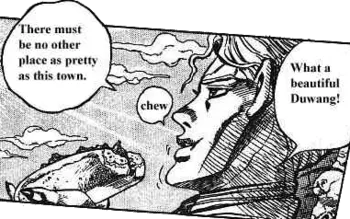
This is one of many examples of troubled attempts to translate the manga from Japanese to English. The problem in this case is that it wasn’t done professionally and Araki, consciously or unconsciously, hasn’t been as definitive in providing details and context until he was interviewed at different points during the production of the manga. For the panel above, which takes place in the middle of Part 4’s run, it was translated from Japanese to English in Taiwan, and the translations were so subpar that for many trying to get into the series, even illegally, had to wade through bad grammar and language until it was given a proper re-publication for the international market in the years leading up to and following the 2012 anime adaptation.
Part 5 had a similar issue back in the day as well and was a large part of its initial disdain from the community until re-publications with better translations rectified the mistakes. And mistakes would follow on even after this. Araki himself is also inconsistent with color schemes when it comes to coloring in the manga, then again, a lot of the monochrome manga is up to interpretation which explains why some characters are colored differently in the anime adaptations than their depictions in the manga.
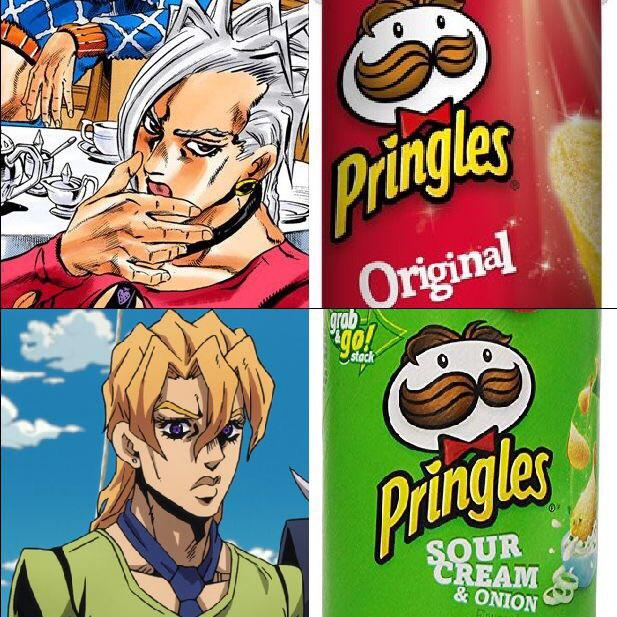
This example was used as a meme in r/ShitpostCrusaders, but is an example of the degree of freedom afforded to publishers and distributors in the case of JoJo’s Bizarre Adventure. Thankfully, these days it’s gotten exceptionally easier to start JoJo and however you get there, love it or not, it’ll leave a lasting impression.
The art styles of the characters, as I mentioned before aren’t the same as most manga in either the 1980s or even now. It’s art style is a bit of a beefier and more elaborate type found in Berserk, Fist of the North Star, Rokudenashi Blues, or even Yu Yu Hakusho. On reflection, it reminds me of some of the comics from the west like Martin Mystere or the erotic series Druuna, and it’s like that on purpose.
Ever since he debuted as a manga artist, Araki has looked at western styles for inspiration and just about any western artist does well for him, even the ones we learn about like Leonardo da Vinci or Michelangelo.

In anime/manga communities, the term for someone who consumes copious amounts of Japanese media and entertainment, not always limited to manga and anime itself is known as a weeaboo or weeb for short. The term began as an insult in the mid-2000s on forum sites like 4chan and at the time anime hadn’t taken as much of a grip as it does today. Now that the internet is what it is today, the opposite end of the spectrum is the “westaboo,” a term for a Japanese person who consumes more than the doctor’s recommended weight in western comics and cartoons, which would make Araki one of the first to be described as such. And since this appears to be the case, I’d like to be the fly on the wall of a bunch of Japanese internet users having their own dub vs. sub debate on King of the Hill which I learned recently is also popular in Japan.
We’ve come full circle now!
Not limited to just appearances, Araki also looks to music for inspiration. Earlier in this post, you may recall the names of the antagonists of Part 2 are Esidisi, Wamuu and Kars. These are direct references to the real life bands AC/DC, Wham!, and The Cars. This has become one of the numerous features of the JoJo’s Bizarre Adventure series since the beginning. Direct references to artists by name or characters in the books.
This is an interesting source of controversy for the series with specific artists and their estates or just the record labels that worked with them in the past getting uppity over their depictions. It’s also worth noting how complicated this gets in the case of copyright laws the world over, not just in Japan. Because of this, international distribution has had to put in the legwork censoring or altering or requesting alterations from Araki’s team to be able to distribute it in select countries. As an example, there have been more direct references to Michael Jackson and Prince as people than through characters or concepts. The reasons for this come down to when both men were still alive, they were both likely to use the courts to their advantage. I doubt Prince’s estate has kept that up since, but the Jackson family still lives and ex-members of the Jackson five for example can definitely waste that much time, money, and effort in a drawn out legal battle just to change a joke character on page 36 of the 17th volume in the manga. That’s a joke, but it’d be one hell of a read in a newspaper or on the associated wiki. Speaking of which, here’s a link to that:
https://jojowiki.com/JoJo_Wiki
One of the more iconic moments of the JoJo series comes in the supernatural abilities. Parts 1 and 2 begin with an ability known as “Hamon” or the Ripple in English. It functions as an ability that can harness a power similar to that of the sun. Its name derives from the ripples that appear in liquids and its mirroring of the sun’s power makes it an effective tool against vampires. After Part 3, Hamon is mostly done away with in favor of the Stand.

Stands are different from Hamon in the sense that they’re physical representations of one’s soul and can appear in diverse ways. The most common appearance they take is a ghostly humanoid form that stands beside its user and their powers, but can appear is different things; animals, plants, a gun, vehicles, concepts–the sky’s the limit. The only caveat is that only a Stand user can see another Stand, but they impact everyone. So you don’t have to be a Stand user to come under the impact or influence of one. For example, a Stand user who can control the weather can theoretically make it rain or snow on command. When they first debuted in Part 3, they took the names of Tarot cards and Egyptian gods before taking the names of music or musicians.
Following the successful 2012 adaptation, it’s hard to imagine western distribution of anime without JoJo, but the in-between years have a bunch of eye-catching references that a trained eye can find on review. It wasn’t until the most recent and currently produced adaptation that the JoJo’s reach became international and for better or worse, JoJo fans have taken the JoJo’s reference far beyond its roots. Copypastas, poses, iconic characters, parodies; you could sneeze and it would be a JoJo’s reference. Minor spoiler, but that’s also not a joke. On Reddit, there’s two dedicated subreddits centered around the franchise. For fanart, discussions, analyses, and announcements, there’s r/StardustCrusaders, and for memes and meme-related events, there’s the aforementioned r/ShitpostCrusaders.
As hard as it was for JoJo to make it to the west, now that it’s here, the newer debate comes in the form of where to start and how to start. Reading about that sounds absurd. If you’ve never heard of JoJo, but know that it’s divided into parts, your first thought would probably be to start at Part 1. The reason this debate exists is because different people have different opinions on certain parts. Similar to how there are beloved and reviled episodes of a certain cartoon or TV show. Some people will recommend different parts for different reasons revolving around plot and concept and others will recommend starting at the beginning, myself included, so as to get the entirety of the story.
If you want to hear it from me, I’ll start off with how I got into JoJo. It began with Toonami acquiring the license to air Part 3 in 2016 when I was in high school.
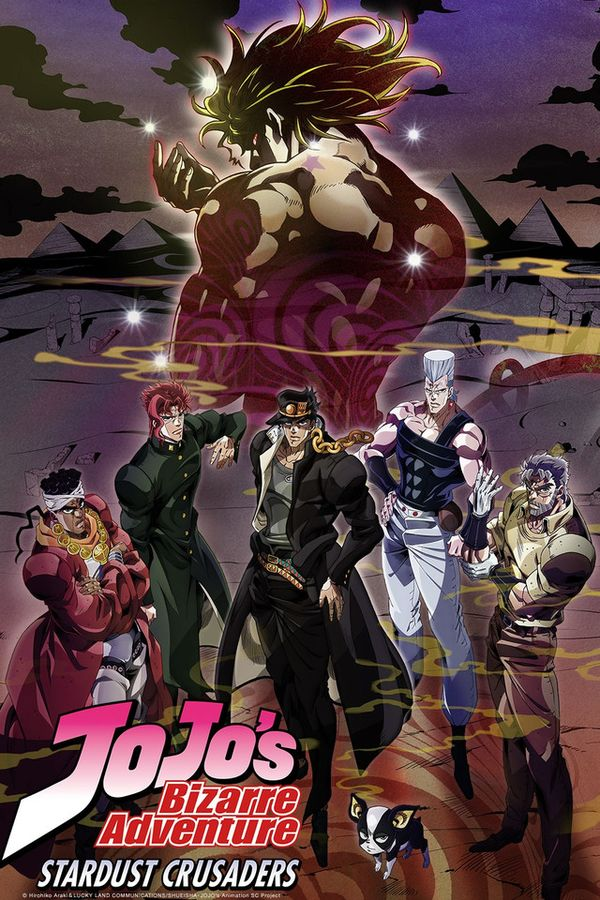
Stardust Crusaders was divided into two parts for the anime the Road to Egypt arc and the Battle in Egypt arc. In the middle of the second arc, one of the episodes begins with a character at gunpoint attempting to warn his comrades that an old enemy is back to challenge them and he does this by pointing his tongue in the shape of an arrow.
The art style put me off at first, but I started watching it and watching it even more until eventually, we reached the climax at the end of the arc. I wound up looking for it on YouTube where there are loads of videos in segments and/or playlists, and rewatching it with my fullest attention, made Stardust Crusaders one of my most favorite parts in JoJo.
That being said, the way the other parts are structured might shape your opinion on the part as a whole. As much as I recommend Part 3, I also highly recommend beginning at Part 1 and judging for yourself as you go along. The most recent part to get adapted to the anime was Stone Ocean in December 2021 which finished its batch release in December 2022. So whatever your watch pace, wherever you finish you can look at sources like Mangadex to start on Part 7. The black and white manga isn’t hard to find and recently, fans as well as the distributor Shueisha have been coloring the manga but it isn’t always perfect. All of the anime is also dubbed in English, so there’s pretty much no wrong way to get into JoJo’s Bizarre Adventure. Even if you begin somewhere in the middle, you can also go back to an earlier part or skim through the wiki for a better understanding of an arc or concept.
One more thing before I go:
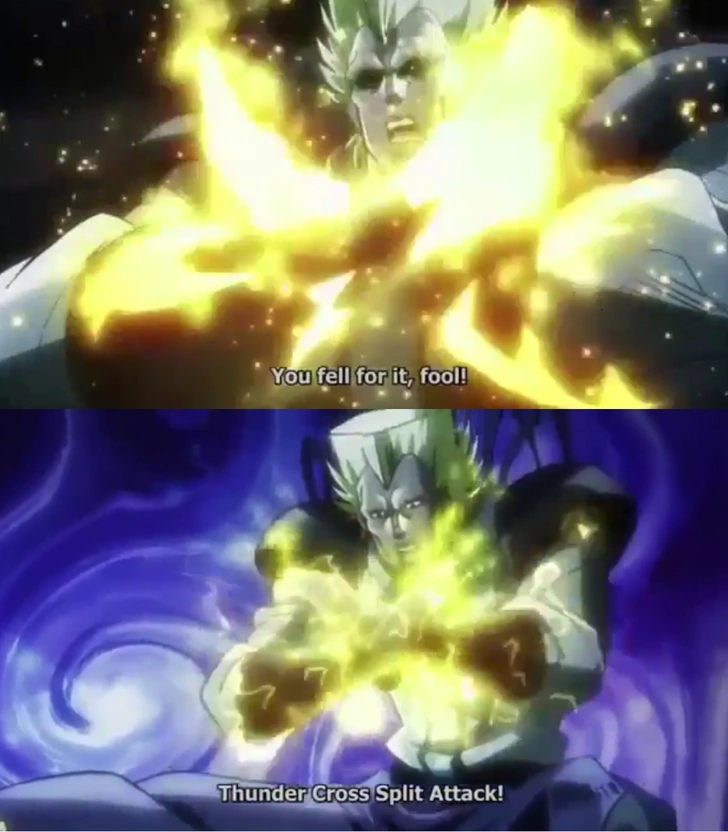
Just about any frame in the series, anime or manga, can be used as a meme if you’re creative enough. But for the love of all things holy, do not under any circumstances consume the series through just memes. The series is tough to read or watch as it is, and out of context memes don’t help with comprehension. For the most part, those are for people who do understand the series well enough to joke about it. I recommend the wiki and several JoJo-based YouTubers who can explain it in a concise fashion if you’re lost. And you might get lost on the way.
 Opinions on Entertainment