One of the earliest posts on this blog concerned racing games, three of which I ranked in order from great to terrible: Midnight Club 3, Need for Speed: Hot Pursuit 2, and L.A. Rush–with Gran Turismo 4 as the wild card that I would attempt to get back into at a later date due to vague memories of what it entailed.
I made that dedication on April 7, 2023 with this post: Racing Games. Attempts were made to fulfill that promise and short of typing “Results: Inconclusive. Project Cancelled” in bold letters, it’s worth noting what I experienced in the many times I booted the game up on PCSX2 and why it’s better to categorize it as “easy to play, hard to master.”
Getting back to the end of year wrap up of content, I’ve definitely watched more anime this year in between my regular duties in the Army. A lot of what I’ve been watching this year has been stuff I’ve written about on this blog yonks ago, but also some new stuff that can (and probably should get) their own posts, but this being a speedrun like before I shipped out to Fort Lost in the Woods for training is gonna be a brief overview of some stuff I got a look at this year, but didn’t necessarily finish. I may add more to the watch times of these respectively and give them the reviews that they deserve, but I’m probably gonna do what I normally do and play it by ear. Here’s the anime lineup:
Texhnolyze
Ghost in the Shell: Stand Alone Complex
Clevatess
Frieren
Neon Genesis Evangelion
With a bonus. If you were to ask me if it was anime, it falls under “Yesn’t.” It’s based off a manga and has an anime adaptation that is currently four seasons in, but it’s doing something different.
Full disclosure, the first topic lined up was meant to be about the Senran Kagura series, but I haven’t been playing it as much as of late. Work-related stuff among other things took my time, and for the style of gameplay, I’ve seen better. At least it has an anime adaptation. Next to that, was about a series that was subject to limited release outside of Japan — Idolmaster, only I’ve mentioned it before and without access to the whole of the franchise, I’m not able to review it in the manner I’d like. Typically, I start at the beginning, but the circumstances that created this series in particular are only available in Japanese arcades with the Xbox 360 port dying with the console, making the first installment in this franchise semi-lost media. So instead, we’re sticking with Nihon and talking about their movies.
As far as old movies go, whatever I could get my hands on I’d always given it a watch. In community college, I watched 1932’s Scarface and 1933’s King Kong. I managed to find the 1982 film The Wall based on the Pink Floyd album of the same name. I recommend all three by the way. And all of these plus similar films have been my go to for years, from my piracy era to my movie theater era. I’ve heard from the Extra History channel on YouTube in their series on Japanese Militarism that when it comes to studying societal changes in the Axis Countries during WWII, Germany and Italy get over-studied while Japan frustratingly has been under-studied or brushed aside, presumably because they don’t have an equivalent to Hitler and Mussolini, or rather no civilian equivalent with the Japanese military dragging the society down into Hell with them one assassinated politician at a time. I bring up the historical blind spot in an admittedly faulty comparison to my own approach to the Japanese film industry. I’m American, after all, my first movies are going to be American. Sometimes, British cinema will spillover.
Guess I was always a sci-fi fan, I was just denying it because the genre was so broad.
Certainly has been a while since I’ve covered a more niche animanga series, one that had a marketing push on the associated streaming sites, notably Crunchyroll and the now-defunct VRV in 2018. I remember as I’d paid them no mind whilst watching Boruto or FLCL or Soul Eater. Recently, I’d been looking more into Chihayafuru as I’d found very few people talking about it and due to more and more action-heavy series getting adapted that year and the years to follow, it’s no wonder it flew under the radar. As I’d looked further into it, it got me thinking about a series I’d talked about sometime last year: Akane-banashi.
Both are about traditional Japanese cultural products that require research for outsiders to get an idea of what it entails, but can still be enjoyed without prior knowledge; both feature female protagonists engaged in a sport of the mind, further broadening the definition of what a sport is or can entail; both of those female protagonists have a giant competitive edge in said sport; and personality-wise, both girls have a tomboyish history that shines when engaged in their respective sports.
Akane-banashi’s specialty is rakugo, where a lone performer tells any number of comedic stories on a center stage. Normally, they’re old folktales from Japanese history and mythology, and the last time I read the manga, they hardly strayed from the style of storytelling expected of the time they written/spoken, but can sometimes be adapted to more modern audiences, similar to the 1996 adaptation of Shakespeare’s Romeo and Juliet.
For Chihayafuru, the tradition this time is Karuta, a card game based on matching similar looking cards, though in the series it’s more about Japanese poetry. This version of the game has a caller who reads a portion of a poem written in Hiragana and the player nabs the card as fast as they can. Experts can get them before the stanza is fully read aloud. The main lead protagonist is Chihaya Ayase.
Initially, she was (and still is) supportive of her big sister’s modeling future, but became infatuated with Karuta after being introduced to it by a boy from Fukui Prefecture named Arata Wataya. The impoverished little boy didn’t have a lot to his name, living in a dirty, cluttered dwelling with 80% of his clothes being hand-me-downs from relatives. Further isolating him from the rest of his Tokyoite classmates as a child was his “hick” accent. For some reason, people outside of Tokyo Prefecture are referred to like this, which I think is ridiculous, but then again, I live in a country that celebrates even linguistic diversity, so personally, not much separates a Mississippian from a Michigander or a Nevadan. All Americans, different circumstances.
Still, while Arata struggles to fit in, he’s a Karuta prodigy at a young age, taking to heart the adage of: “If you’re going to do one thing, be good at that one thing,” like Zenitsu’s Thunder Breathing.
One-trick pony? It’s easy to say that, but different series like Golden Kamuy capitalize hard on one-trick pony characters, from Sugimoto’s extreme (and painful) survivalism to Shiraishi’s Houdini tactics to Ushiyama’s history as a dangerous judoka. Being good at one thing really only matters if its applicable to other things and in this case, Karuta is both the main connecting element for all the characters and the center of a competition within the series.
Learning from Arata the fundamentals of Karuta, Chihaya is encouraged to go big and make it her dream to become a de facto Karuta world champion, mostly because Karuta doesn’t really exist outside of Japan with the same claim to fame as Mahjong or Hanafuda. Along with the two, an old friend Taichi joins them and his contrast to himself is stark both financially and socially. Taichi is a rich Tokyoite who can actually afford to be petty while Arata’s childhood poverty humbles him greatly. As such, Taichi starts off spoiled and jealous, but his best excuse is due to the high expectations put on him by his family, namely his strict mother. And you thought wealth would be easy!
Yet as the three rejoin as adolescents, they found an afterschool club called the Mizusawa Karuta club and work towards the goal of becoming Karuta champions. I’m still checking the series out as of writing, having only completed episode 1 and the first chapter (and thus getting the research from the Wikipedia page), but other things that stand out is that it’s my first Josei series. Josei is typically aimed at a demographic of young women and is notorious for its inclusion of romance into the plot. Josei itself, sadly, doesn’t get as much exposure as Shonen, Seinen, or Shojo genres which is part of what hurts series like Chihayafuru compared to Akane-banashi, which is under the Shonen genre and licensed by Shonen Jump and Viz Media.
Couple these with the niche of Karuta, whoever expected the series to get wide praise would’ve had to fight sleepless nights for something to hardly ever come from conventional animanga media outlets. And that’s quite a shame. No matter what you think of the concept, the series is beautifully drawn and animated–the production quality narrows the gap between itself and something like The Elusive Samurai.
Channel: Crunchyroll
Speaking of animation, it’s worth pointing out that Chihayafuru was adapted by Madhouse, responsible for Overlord, Trigun, and No Game No Life. This also brings me to another matter going back to Akane-banashi. Niche subjects especially those that would be found in a book on Japanese history and/or culture don’t often get the animanga treatment and if/when they do, not always successfully. Rurouni Kenshin benefits from the battle aspect more so than its setting, as does Samurai Champloo because both series have a concept that has universal knowledge: the samurai and the ronin.
Akane-banashi and Chihayafuru differ by offering battles of wit instead of battles of physical strength and power. They both also rely on parts of Japanese culture that rarely get outside notoriety, leading to limited viewership. I have no idea if the performance of the Chihayafuru anime is a case for why not everything will get an anime adaptation or should not, but if by some chance that was the metric in use, then it’s not a fair assessment to make. Even then, it wouldn’t be the first time the art of rakugo was animated.
Be honest, you only know what this is because of its hyper-energetic ending animation.
No matter the future of Akane-banashi, it still has a future, whereas Chihayafuru’s manga ran from 2007 to 2022 and its anime running from 2011 to 2020. Once again, I call upon my advocacy of piracy to view the anime and/or the manga with little issue.
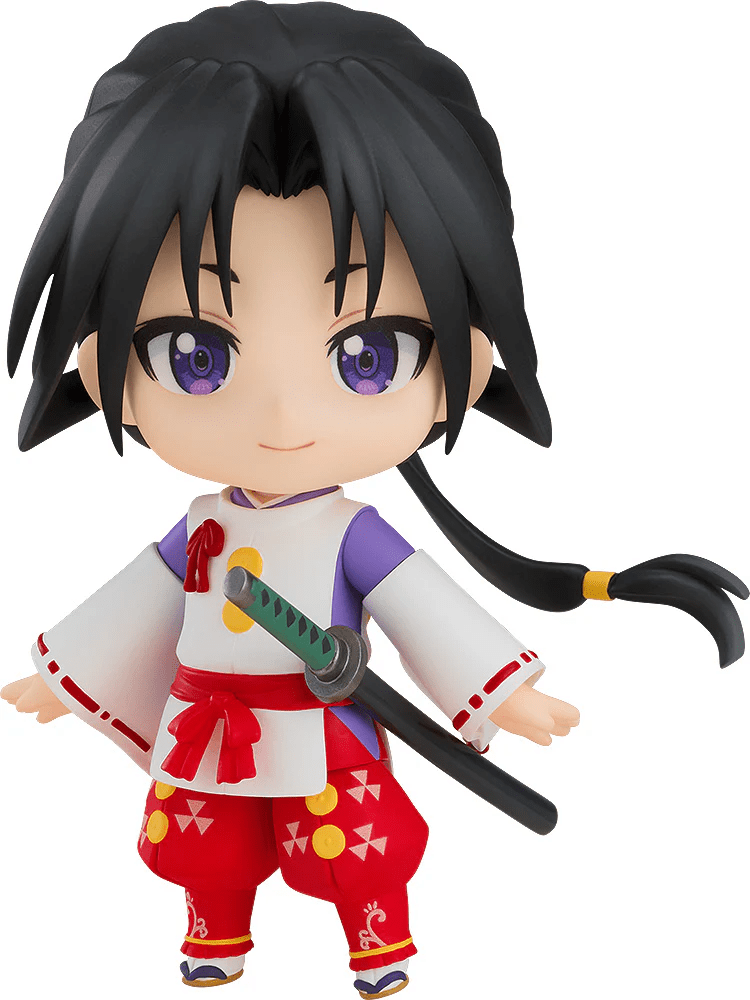
Long time subscribers (and newcomers who’ve searched the archives) know how I feel about history and even Japanese history as a weeb. I’d been followingthis series by Yusei Matsui since the first chapter was licensed for English by Viz Media in late January of 2021. After three years, about 17 volumes (plus more to follow), an anime adaptation, and figures set for release sometime next year; of all the things that could’ve happened to this series, franchising was probably the last thing I expected even for promotional purposes. Then again, this isn’t the first series to get a boost in merchandise time of debut notwithstanding.
Save for the OVAs and the lost 2007 movie, 25 years is a hell of a wait for a proper adaptation.
I’ve already written about the time period Nige Jouzu no Wakagimi takes place in, but as a refresher and to catch newcomers up to speed: between 1180 and 1185 in the Genpei War between the Taira and Minamoto clans, the Minamoto won out and established the Kamakura shogunate in the namesake city of Kamakura where it would be under the de facto rule of the Hojo clan, a Minamoto ally by the 1330s. The retired Emperor Go-Daigo plotted with Hojo clan retainers, the Ashikaga, with the purpose of returning control of Japan from the shogunate to the imperial court.
Following these plans initially, the Ashikaga betrayed the Hojo and led a siege spearheaded by the Ashikaga brothers, Takauji and Tadayoshi, with the purpose of mass elimination of the Hojo clan.
Of course, they had retainers of their own, Ogasawara Sadamune, Ichikawa Sukefusa, Nitta Yoshisada, and several others who rally to the Ashikaga cause. All but one of the Hojo survives, Tokiyuki, who carries more value as the heir to the previous ruler or shikken Takatoki compared to his half-brother Kunitoki, whose mother was a concubine.
These people all did exist in Japanese records, but English-language sources are scarce and my Japanese isn’t proficient enough to try to search through the original sources to look more into their personal lives, but as a spoiler, Hojo Tokiyuki made it all the way to the 1350s running endlessly from the forces of Ashikaga Takauji, escaping until his eventual capture and execution by forces loyal to Ashikaga in the Spring of 1353.
As for Go-Daigo, well Ashikaga seemed to have used the opportunity to betray the Hojo to also betray the emperor. Paying lip service to the idea of a civilian-run government, Go-Daigo’s Kenmu Restoration as it’s known these days was short-lived and Ashikaga implemented the Ashikaga Shogunate in 1336 until it eventually collapsed during the Sengoku era, paving the way for the last shogunate, Tokugawa, until 1868. Never trust a traitor. Though the entire time of the Ashikaga’s brutal rise to power, there were technically two courts in the north and south of Japan which is why this era is also known as the Nanboku-cho period and why there are two sets of emperors whose claim to legitimacy is dubious.
I remember reading about the anime adaptation last year, prompting the first ever full-length post about it the day of. Now that it’s here, I can finally share my thoughts on the adaptation. Clover Works pulled out all the stops to bring this series to the small screen. I’m almost 26 and in all my years as a weeb, I’ve never seen a more beautifully animated piece of media, not even when Toonami pranked us years ago by showing the original dub of Masaaki Yuasa’s 2004 film Mind Game.
Some sore spots exist with the use of CGI in select scenes in the anime, but they don’t really do anything harmful to the overall plot of the series. I admit, I was worried slightly with how much attention other anime were getting around it especially with regular updates on Reddit, but then again, a single social media forum isn’t and shouldn’t be seen as the poster child for all discussion on media, least of all anime. Healthy discussion does exist, but with how big anime has become, I think it’s time for the medium to go back to its roots as showcased in late 90s-early 2000s discussions are concerned, namely, a small group of friends, enthusiasts and connoisseurs (with a strict member limit) who meet up and talk about the latest series and other anime news. Reddit and Twitter are cramping anime’s style, you know?
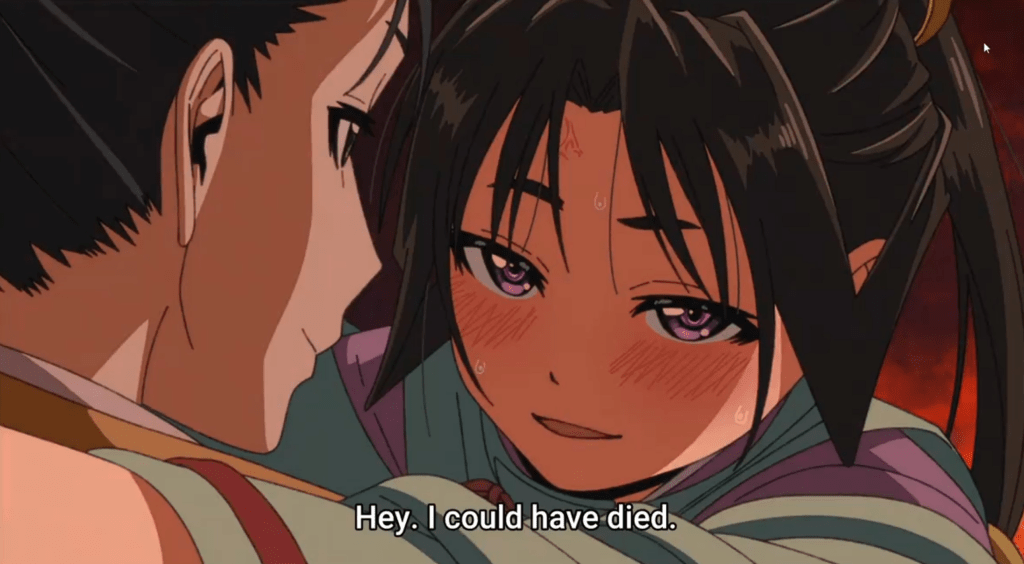
Following on from that point, if you want more evidence that social media is more curse than blessing, I made a discovery about seven or eight episodes in. I didn’t know this at the time, and I know better than to share misery, but in the first episode (spoilers again), there’s a scene where the chief of the Suwa Grand Shrine, Suwa Yorishige, pushes Tokiyuki off a cliff to join his family and be killed, when he shows his max experience in evasion and makes it back up the cliff, he flies into Suwa’s arms, and angrily tells him that he could’ve died down there. Though angrily in this context may not be what you imagine.
Matsui’s pride in femboy characters strikes again, as a disturbingly noticeable percentage of Japanese Twitter saw this scene and exploded with… excitement. I’m not responsible for this scene, but I still feel an apology is owed to someone. Maybe Shinzo Abe’s ghost for all of that excitement going into crumpled up tissues and not the rest of the population for procreation. Sorry, was that vulgar? Have a meme.
Pictured is my reaction to Japanese Twitter’s “awakening.”
Eh, it counts as engagement, so success? I’m still collecting and reading the manga, which I encourage you to do however you see fit. Follow along with the anime (which ends the 1st season at chapter 31), continue in the manga, or if you’ve done/are doing that, then wait with me for the figures to release. Time’s on our side.
On a final note, I heard rumors that a second longer season was in the works. We’ll have to wait for confirmation on that.
Long time followers of this blog may recall when I reviewed the manga The Elusive Samurai or Nige Jouzu no Wakagimi by Yusei Matsui, the same man responsible for My Teacher is a World-Ending Tentacle Monster?!
The Light-footed Hojo debuted in January of 2021 and I had been following it for months leading up to my first enlistment. Even now I still read it whenever I get the chance and a lot has transpired within the manga. Enough that there’s a whole time skip arc after 3.5 years in publication.
Now I come to report on an update regarding the manga, in that it joins my small but not insignificant list of manga I’m reading that is also getting an anime adaptation. So far, that makes this the fourth time it’s happened, the first three being, Demons Deserve Death, Gyarus of Hokkaido and Immortal Misfortune.
Channel: AnimeWakana
It started with a teaser sometime last year around the same time I actually reviewed the original manga before hibernating until now. With more time to simmer, it was now revealed to us further that the studio meant to bring life to this manga is none other than CloverWorks, the same studio that brought us many a work including but not limited to Bunny Girl Senpai, Spy x Family, Bocchi the Rock, Dress Up Darling, and several of the Fate adaptations.
An impressive repository of series to check out, right? That said, even godly studios have their off times and CloverWorks has made a few mistakes. We can each point to a studio and wonder what went wrong with XYZ and the number one anime to get brutally slaughtered without sound reason is:
An interesting cutesy horror story comparable to that of Made in Abyss, and interestingly another one I skipped over yonks ago to get to other manga I was and am still reading, Boruto and My Hero Academia: Vigilantes being among them.
I did watch all of season 1 when it premiered on Toonami years ago and I was planning on catching up with season 2, but knowing what became of that by word of mouth, to do so would be to waste time spent on other anime that’s worth my time. Namely:
I’ve still not started Season 3 yet, but now that it’s concluded, I can watch at my own pace.
For years since it’s conclusion readers have wondered why The Promised Neverland’s second season was so lackluster and divorced from the manga. I also occasionally try to look for answers and the most I get is mild speculation. I can’t say for certain how tight-lipped studios can be or will be about these sorts of things, especially Japanese studios, but with the news that studios like MAPPA have developed a crunch culture not seen since Team Bondi’s efforts to burn the candle at both ends or ufotable pulling an Al Capone tax-wise, there probably aren’t that many things besides language and traditions that separate Japanese animation studios from western ones.
Having said that, CloverWorks is one of the best studios in production today, standing tall with KyoAni, Pierrot, and David Production, and with more successes than failures to boast, especially in recent memory, I’ve no reason to believe CW will louse this up, even through malice, though a more mature way to look at it is that weirder stories have come from the animation industry and if it happens during the production of The Last of the Hojo, I’m damned sure gonna write about it. Bet on it.
For now, the scheduled date is July 6, 2024. I will save a spot for a first impression.
The accursed year of 2020 was a lot of things to people and only a few of those things were good. I recall searching for something to occupy my time while trapped in the dungeon and going back to that Looper article, I thought about looking for a review for a certain anime I’d definitely not heard of prior to reading it: House of Five Leaves, known in Japanese as Sarai-ya Goyou. Created by Natsume Ono.
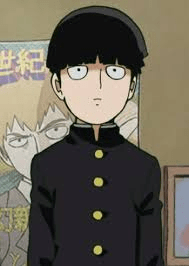
Set during the Edo period, it’s about a samurai warrior named Akitsu Masanosuke who very much has the skills of a seasoned warrior, but his timid demeanor loses him a client. The perfect samurai is meant to be intimidating, tough, and unflinching and this guy is shy, unassuming, and nervous. Sort of like Season 1 Mob.
Masanosuke doesn’t really meet the expectations or idea of a warrior even for the time period, which is the point of the series. It takes all the tropes associated with most samurai media and flips them on their head while also grounding the Edo period into reality. One could reasonably put two and two together based on what they know about the Tokugawa period and the Sakoku policy that a class of people defined by war in a time where there aren’t any wars anymore makes for a band of money-hungry and utterly reckless scoundrels… for the most part.
In reality, most samurai were just as diabolically malicious as the enemies they claimed to defeat in combat. Just like medieval knights, both of these warriors have a lot of stories real and mythical surrounding them.
This doesn’t reflect either class as a whole as lots of knights and samurai did have human decency and protect the weak as servants of the people, but being of nobility in Europe and Japan respectively, it meant that there was a lot of power shared by a diverse group of people of different thoughts and intentions. Focusing on Japan, some samurai were excellent and deserving of their position, others were fine with just the bare minimum of simply being there and the rest were heinously dangerous criminals abusing their positions for personal gain. Yeah, there’s no shortage of all three of these the world over; it’s the same old song no matter where you go. And I like that. It reminds you that there’s a difference between being something and being able to do something on a moral level.
So House of Five Leaves is generally about a nervous man who’s too gentle to throw the first punch, or in this case, swing the blade first. Plot wise, he finds himself in with the wrong crowd. Part of the downside of being gentle is not having the spine to put your foot down, which is how Masanosuke finds himself embedded with a group of criminals, functionally early inductees of what we now know as the Yakuza.
It’s hard to say when and how the Yakuza started, but based on my description of the Edo period making for restless ronin eager for battle some theories suggest that this is the most likely case for how the Yakuza morphed over centuries to become recognized as an organized crime group in Japan. For Masanosuke, these criminals specialize in theft and call themselves the Five Leaves. Their enigmatic leader, Yaichi, offers him the position of bodyguard which he reluctantly agrees to.
Again, he has the skills of a samurai, but doesn’t have the intimidation reflective of most other warriors in the Edo period. A worse person would jump at the offer and use whatever excuse there is to cut anyone in two. That said, there’s more to the series than just Masanosuke’s navigating this group of thieves and savages he just said yes to out of desperation.
Yaichi is one of the more interesting characters in the story. He keeps his personal history very close to his chest, playing things off as though he’s simply living life to the fullest. Other members of his gang or known associates who have some kind of connection to him or the gang share their own stories. An ex-thief named Matsukichi works as a beauty ornament manufacturer by day and a spymaster by night, contributing to the beauty of the women while also listening in on the Five Leaves’ potential targets. A tavern owner named Umezo who walked in the same sandals as the others but requested retirement from that lifestyle for safety’s sake, which was granted surprisingly enough. If you know a thing or two about organized crime groups, cults, secret societies, etc., they rarely let you go without a type of debt to pay…
…but in this case (slight spoiler), the loss of his skills weren’t gonna change how the gang operated. He also had a young family to put ahead of himself. Finally, there’s a geisha named Otake who was made to work off a large debt by way of entertainment (as was the standard practice/purpose of a geisha at the time) until Yaichi intervened financially.
Only a 1-cour anime series, it takes you into their eyes and what they go up against. The struggles, the nuances, the desires expressed; this was the anime that inspired my first accursed blog back in 2021… before it cha-cha slid off a cliff. I don’t want to link to that blog anymore; I’m trying to put it behind me, but it keeps coming back and I don’t even think it was a good showcase of my writing. But at least it inspired me to start this one which I’m more proud of.
Back to Five Leaf Clover Gang: my search for a review and recommendation on YouTube led to a playlist with all the episodes on it. People are really getting around YouTube’s copyright strike hammer to get some classics onto the platform like Azumanga Daioh and Lucky☆Star. There exists one spoiler free review on YouTube from over nine years ago following the trends that I’ve been going with so far with anime, awesome reception s[DIO wrryyyy]t sales.
Channel: AnimeEveryday
Keep in mind that this isn’t an action-heavy series, at least the anime isn’t. Don’t go in expecting Masanosuke to swing a sword all the time, because he’s not that kind of guy. He wasn’t written to be that kind of guy and I think it’s an advantage the series has over its contemporaries and progenitors. I like to think of it as the kind of anime that explores the issues people face daily, even if it’s set in the Edo period and if you choose to give it a watch as well, you think so too. The link is up above. Happy watching!
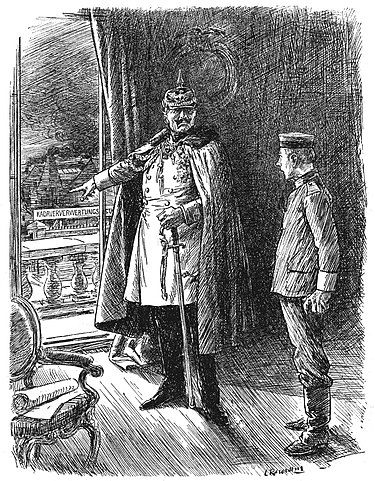
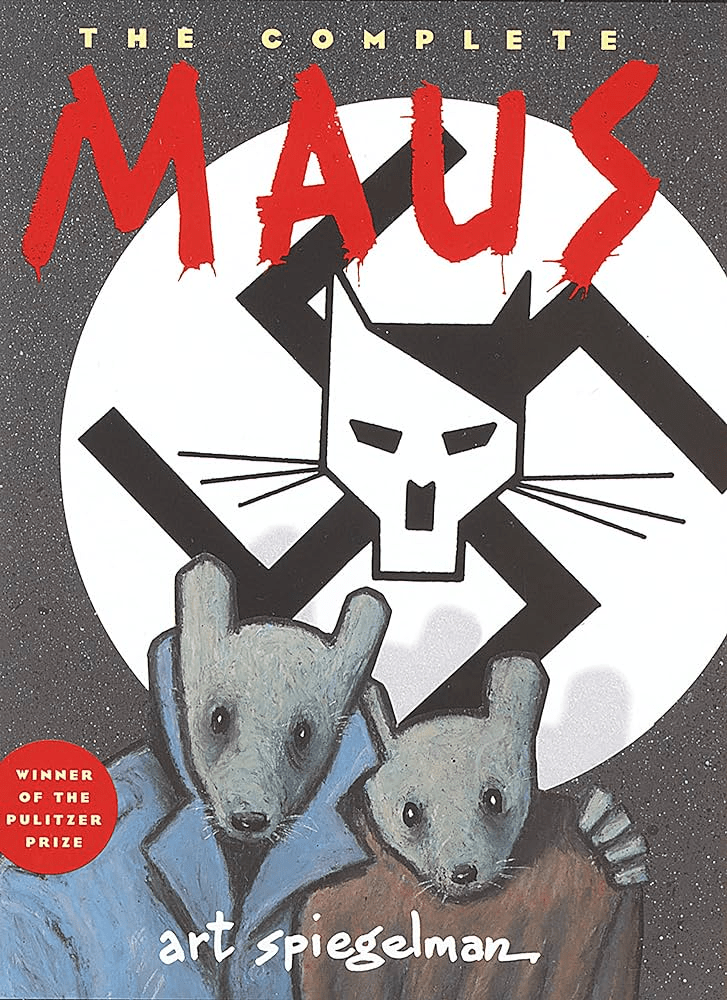
As both a history buff and a weeb, I like to think that history can work well even in graphic novel form. I’d bring proof, but so many political cartoons and, as mentioned before, graphic novels, have come out that the proof is everywhere you look. Here’s one of my favorite examples:
For the topic of this post (and something more lighthearted), I bring to you the manga series Golden Kamuy.
Created by Satoru Noda, Golden Kamuy is about a former Imperial Japanese soldier and Russo-Japanese war veteran named Saichi Sugimoto. After his military contract expires, Sugimoto hears from an ex-convict about a complicated story involving a legendary convict who hid a large stash of gold from the Ainu people of northern Japan, Hokkaido, and the Kuril Islands. When he was caught, he tattooed a map onto nearly 40 other convicts, each of whom is a specialist in his own right. After this, the prisoners were set to be relocated to another prison in the north of Japan, but the guards were ambushed and the convicts went into hiding. Sugimoto doesn’t buy into the story at first, but when the ex-con reveals that he’s one of the dozens tattooed by the legendary convict, he reveals the tattooist as “Noppera-bo.”
So far, we’ve got some interesting and familiar hooks, don’t we? A retired soldier searching for treasure, interactions with indigenous people groups, a changing political landscape, and slight spoilers for later, competing groups with similar interests. Almost sounds like a western… A story that fantastical would normally disappear into legend until you meet undeniable proof of its existence, but before we delve deeper into that, I want to discuss the historical background on which the manga is based.
Very briefly oversimplifying, Russo-Japanese relations in the early 20th century, the Russian and Japanese empires, both had conflicting interests in East Asia: for Russia, they wanted warm water ports and more land for the Trans-Siberian railway, and for Japan, they wanted to maintain political influence over East Asia, particularly Korea–but so did Russia. War broke out due to these conflicts and Russia maintaining a military presence in Manchuria when the original promise was for them to demobilize.
By 1905, the Theodore Roosevelt administration brokered a peace between the two powers that saw Japan as the victor, gaining the southern half of Sakhalin Island, political influence on the Korean peninsula, while Russia had to abandon its railway plans and its warm water port in Asia, the former of these later becoming Japan’s Southern Manchuria Railway which connected to that warm water port of Port Arthur.
Golden Kamuy is set in the aftermath of this. The fighting is long done away with, but the outside influences do have an impact on the characters. Keep in mind that decades before Japan went to blows with Russia, it was busy organizing itself into a modern country, and its first step was the reorganization of domestic territory into the modern day prefectures, all the while convincing the last of the samurai and feudal lords to surrender their holdings. Many did, but there were still a few holdouts, the most famous of them was the Vice Commander of the Shinsengumi, a hastily organized group of swordsmen with samurai sponsorship: Hijikata Toshizo.
This was all done during the Meiji Restoration of the 1860s. Although Golden Kamuy is decades after that, select characters with strong memories of the pre-Meiji days do still hang around. It’s also worth keeping in mind that the manga takes several liberties with history and some characters’ roles in specific events. Since I bring him up, Hijikata does appear in the manga, and is a part of a few flashback panels, but in the manga he appears as an old man and political prisoner since the Shinsengumi opposed the Meiji government. In real life, Hijikata Toshizo was shot dead on horseback while commanding troops in a major theatre of the Boshin War.
For the rest of the population of Japan, the Japanese government and media these days tend to promote an image of a homogenous populace, but reality is far different than what you’d believe. I briefly brought them up earlier, but the Ainu people are another central piece to the manga. The prisoner called “Noppera-bo” or “No Face” was the one who buried their gold in a hidden location and it takes the help of numerous Ainu peoples to help locate it. The Ainu people typically includes the indigenous groups found often in northern Japan and Hokkaido as mentioned before, but there are similar related groups elsewhere, on Sakhalin and in Russian Manchuria. These include but are not limited to the Uilta/Oroks, the Nivkh, the Nanai, and many more. One of these characters whom Sugimoto meets in Golden Kamuy is a little girl named Asirpa.
Asirpa serves as the audience’s window to an ethnic group that Japan has at best ignored and at worst disrespected. In history, the Yamato people of Japan gradually fought with them even into the Tokugawa Shogunate where they were forcefully relocated to Tohoku and Hokkaido. During the Meiji government in 1899, non-Japanese who were subjects of Japan (including the then-recently added Taiwan and soon to be added Korea) were forced to adopt Japanese names and use those publicly. True to this, even Asirpa has a Japanese name that would have to be used on official documents, as explained in her associated wiki page.
Nevertheless, love and appreciation for Ainu culture is evident and expressed in the Ainu characters, especially Asirpa when she explains language, naming customs, rituals, folk beliefs and several others. The name given to that convict who tattooed the map onto his fellow prisoners, Noppera-bo, is a reference to a Japanese spirit or “yokai.” The yokai come in a wide range of forms and depending on the legend, some are harmless or vicious. The Noppera-bo is described as a harmless yokai that takes the form of a human, only they have no face. Sorta like this:
Though as explained before, it normally takes the shape of a faceless human.
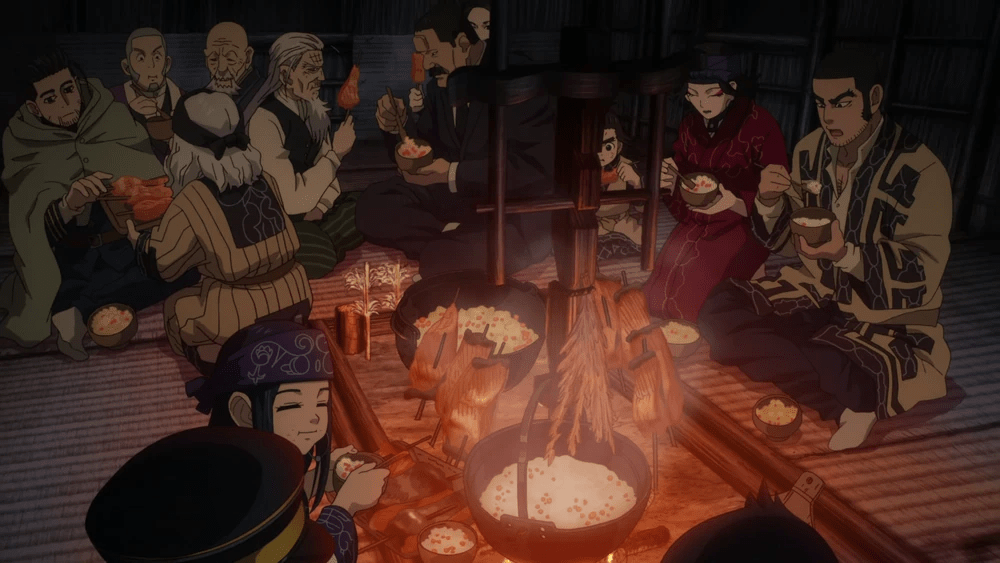
Regarding Ainu customs, the most famous aspect of the series among fans is the cuisine. It’s a common joke to refer to the series as a cooking show, which isn’t exactly inaccurate. Playing dodge bullet with loads of contentious groups is a key point of the series, but when there’s enough Arisaka rifle rounds flying for one scene, the next one transitions to Noda’s briefest possible tutorial on Ainu cooking, like so.
Channel: Crunchyroll Collection
It may seem insignificant plot-wise considering where the story takes our main leads, but funny enough, there’s a healthy hosting of food scenes throughout the series. Noda explained that much of his experience comes from growing up in Hokkaido as an ethnic Japanese. The conceptualization and characterization of the Ainu in particular comes both from his own experiences, which he admitted were limited and from research, which there’s a lot of.
The characters as a whole are all varied more so in personality than in ethnic group, though there’s a couple of the latter such as the Matagi, or traditional winter hunters also in Tohoku, or even people with varied accents and dialects, notably Satsuma dialect.
Although Japan also promotes a singular dialect of Standard Japanese, there’s a variety of accents in the archipelago. Like the U.S. or U.K., there’s often different words for many of the same thing like soda, pop, or coke in many U.S. regions or what lunch in dinner are called in different parts of the U.K.
Personality wise, the characters all differ in what they want the Ainu gold for. Sugimoto made a promise with a wartime and childhood friend that he’d look after his wife who moved to the United States who was at risk of going blind. A mutinous faction of soldiers, led by 1st Lieutenant Tokushiro Tsurumi, a vengeful intelligence officer, wants the gold to fund a separatist state in Hokkaido to spite the Meiji government. Asirpa was influenced by her father and another Ainu character to also use the gold to separate the Ainu from Japan but for different reasons, and some characters never reveal the truth of their intentions with the gold.
For the most part, the characters are in some way based on real life characters from history. Some are obvious like Hijikata Toshizo living for another 40 years in this universe, and others require some more research to determine their inspirations. My favorite has to be the character Yoshitake Shiraishi who was based on the similarly named prisoner and escape artist, Yoshie Shiratori. Like his inspiration, Shiraishi is described as a master escape artist, finding creative and innovative ways to get out of a jam from contorting his joints to making false keys and using lockpicks. You’d probably need a rotating body of prison guards to keep him in place.
Between Shiraishi and Tsurumi, these characters are both unique and not unique. Their quirks make them stand out from regular background characters, but there’s a bunch of characters who match that description anyone. Sugimoto, for example, gained fame during the war as the Immortal Sugimoto and has thus carried this nomme de guerre in the civilian world. Tsurumi and select soldiers within his unit — 27th Infantry Regiment, 7th Infantry Division — are all quirky as well. One might describe it as a circus of sorts. And this is a similar case concerning the prisoners who carry the map on their bodies.
Just about everyone is a specialist in some singular skill or trade. This may make them one-trick ponies by themselves, but there’s a lot of moments where they get to shine independently or in mixed company. Asirpa, for one, may initially seem like a monolithic standard-bearer for the Ainu, especially since she’s introduced with an old and negative stereotype of indigenous people groups from westerns, but both her and the rest of the Ainu presented don’t seem to adhere fully to these misconceptions.
Similar to the Amerindians in the Americas, the Ainu and other people groups in North Asia would’ve spent their lives directly or indirectly interacting with non-indigenous folks, fighting, trading, working, befriending them among other things. They would’ve been exposed to foreign customs and technology sooner or later, hence why during the Manifest Destiny era of the U.S., bands and tribes of American Indians would have fought back with the same rifles that were being used on them. Off the battlefield, cooking and craftsmanship have also caught up with the times, so old depictions of indigenous folk as backwards and removed are just that: they’re old and quite inaccurate.
My introduction to the series came from some old Funimation ads in 2018. At the same time as my anime speedrun during college, bouncing between Crunchyroll, Funimation, and the now defunct VRV, the ads for then-recently adapted Golden Kamuy were showing and initially, I wasn’t that interested. Most people weren’t either. No matter how high the marks, the average viewer would’ve been looking for “time well spent.” This conflicts with the overall negative opinion of CG in anime and with most of the ads depicting Sugimoto’s battle with a CGI bear, prospective audiences were initially turned off.
Then I started watching in 2019 and continued to do so during the pandemic. My opinions on CG have been somewhat influenced by those expressed online, but in all honesty, if it looks good and it means the animators don’t have to crunch to get an episode out, then it can work well for an anime production, and I feel it does here. I honestly didn’t realize the bear was CG until a few frames in. Just goes to show how rare and at times apprehensive studios can be about integrating this technology into a production.
The manga concluded in April 2022, but the anime recently wrapped up it’s fourth season in June after taking a hiatus out of respect for a treasured cast member’s passing in November 2022. A fifth season is currently in development, though as of writing there’s no release date. This is ample time to go through the anime and then continue in the manga or start the manga and compare/contrast the anime. Whatever works best for you.
It’s a month divisible by 2, and the last of the year so as a final sendoff, December’s first YouTube recommendation gets to the heart of a topic I have in store for next week: Cynical Historian.
The Cynical Historian is a YouTube channel that covers the history of the American Southwest primarily, and other topics in history secondarily. Started in March 2013, by former Army cavalry scout and noted historian Joseph Hall-Patton, the Cynical Historian has himself produced lessons and dissertations on his specialty in the American Southwest, namely violence and conflict, sometimes touching on the historicity of the local American Indian groups and figures active during the era. He runs a tight ship on his YouTube channel and has little tolerance for bigotry, hatred, or conspiracy theories of any kind.
One series he does that I recommend above all else is his Based on a True Story series that compares and contrasts historical moments and their silver screen depictions. Since the most recent video he did was in the lead up to the theatrical release of Ridley Scott’s Napoleon film, I suspect that a Based on a True Story video on the little corporal is somewhere in the pipeline, but without clairvoyance, I can’t say more. Be sure to check him out when you find the time.
Before I sign off proper, I had another video lined up emphasizing the surprising significance of food in Golden Kamuy, but couldn’t put it anywhere above, so I’ll link it down here.
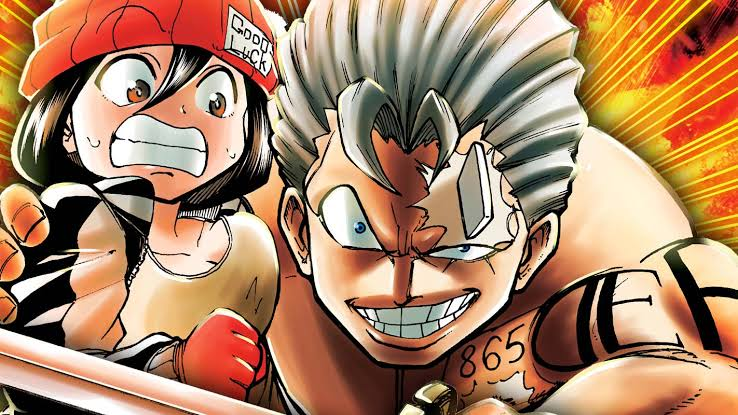
Clawing out of the deep recesses like the happiest Spartan breaking free from Hades wasn’t without its few perks. To date, this is the third manga presented to me by Viz, so if it feels as though they’re sponsoring me, they aren’t. But I’d be open to covering the works they’re allowed to license to the west if the opportunity comes knocking especially now that two of those series are set for anime releases in the near future: this series and the one about the zombie or something. I don’t know…
But while Bad Luck Unkillable has a trailer with voice over and all that, Running from the Samurai in Medieval Japan only gave us a teaser trailer which works for me as I have as much time as I feel is appropriate to play catch-ups with the manga.
For research on this post, I’ve had to skim through and remind myself of who’s who, while also brushing up on this period of Japanese history, so wherever there’s a mistake, I’ll amend and correct it once I read up on both. The premise of The Elusive Samurai is thus: the Hojo clan, who held sway over the shogunate and sent most of their own members to work with the imperial family and court, is represented by their two members, current shikken (regent) Hojo Takatoki and his son and heir, Hojo Tokiyuki. Ambitious members of the Ashikaga samurai clan allied with the Emperor Go-Daigo in an attempt to return the imperial court to its seat of power, i.e. overthrow the Hojo-ruled Kamakura shogunate in favor of the emperor. During festivities, the Ashikaga launch their siege on Kamakura and nearly exterminate the Hojo clan. When the dust settles, the Ashikaga realize that the heir, now-shogun, Hojo Tokiyuki has survived and escaped. With the Ashikaga now in power, they use their resources to hunt down and exterminate the boy and every one of his allies.
Brief history lesson: on paper, the imperial court sat at the top of the pillar with the most power, followed by the shogunate, and while they were in power, the shikken. In reality, the Hojo clan shikkens were more powerful than both the shogunate and the imperial court combined. This was the result of the 12th century Genpei War that pitted the Taira and Minamoto clans against each other. Minamoto no Yoritomo won out and as part of the spoils of victory, the imperial court behaved as a figurehead, a position that Go-Daigo was clearly not happy with, hence the Kenmu Restoration’s goal of reversing these circumstances. Fun fact: Kublai Khan found this out the hard way in the lead up to military actions against the imperial court and shogunate when the Mongol-led Yuan dynasty attempted to add the Japanese islands to their list of possessions. Couldn’t go east in the long run so he went hard west.
And thus we learned from the Mongols why it pays to think very hard about an amphibious invasion. Back to the manga, over the course of the Kenmu Restoration period, Tokiyuki-sama embarks on a quest to gain allies and build a force of formidable warriors who can return the Hojo clan to their former glory. It might go in a different direction in the long run considering in real life, the Kenmu Restoration was short-lived and to my interpretation the Ashikaga turned on Go-Daigo and restored the shogunate long enough to stay in power until 1573. Interestingly, this created a split in the historicity of the Japanese emperor’s line of succession briefly with Japan holding two capitals until the Azuchi-Momoyama period.
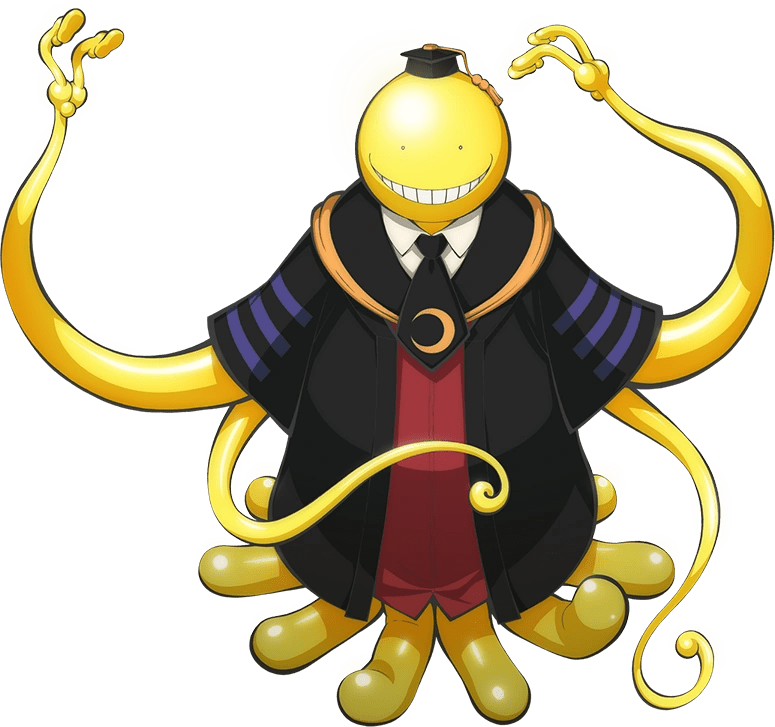
Seriously, I’ve gotta stop jumping the gun here. Alright, so Tokiyuki isn’t completely alone in his quest. He starts out with a few retainers at his side and actually has support from the head of the nearby Suwa clan in the form of Suwa Yorishige who I believe is loosely inspired by the samurai of the same name, though the real life Suwa Yorishige succeeds the fictional one by two centuries. Also, manga Yorishige is reimagined as medieval Japanese Nostradamus with all his predictions about the future and funny enough common manga tropes. Makes me think of Koro-sensei though more self-aware of the manga he’s in.
Structurally, I see a bunch of references to JRPGs like Chrono Trigger or early Final Fantasy. Protagonist with a long term goal, comrades at his side, godlike guide, encroaching force of evil closing in from all sides; the comrades especially exhibit several archetypes in several RPGs, the thief, the brute, the mage, etc. If I was alive in the 1980s, I probably wouldn’t have imagined how many manga series became franchises with spin-offs and video games in tow, but if I had Yorishige’s level of foresight and I could see Dragon Ball getting video games and all that, then I think I can also see other manga following suit. Whether The Elusive Samurai follows suit remains to be seen, but even if it was a fan creation, I could see an Elusive Samurai RPG-style game soon. It’s also worth noting that the art style and writing will feel familiar to fans of Assassination Classroom and that’s because it’s from the same man: Yusei Matsui. Overall, by itself, it seems to be having fun with the historical setting and subject material. Taking the piss outta historical figures is a worldwide pastime, after all. In comparison with Kill School, the most comparable thing they have is the femboy protagonist. Not sure if that’s Matsui’s bread and butter, but these days that might be the case.
The YouTube channel recommendations are coming back for April. Also, Tomorrow being April Fool’s Day, I’ll cover Toonami and Adult Swim’s yearly tradition when those stars align. Look forward to that.