If you don’t deal with your demons, they will deal with you
Late anime director Satoshi Kon created and directed the 2004 anime series Paranoia Agent. In 2020, Toonami picked up the series for broadcast for my viewing pleasure. It follows a timid character designer known as Tsukiko Sagi who gains fame from a pink dog mascot known as Maromi. Under pressure from higher-ups to imitate and essentially mass produce her prior success, she finds herself knocked unconscious by a mysterious boy on golden skates wielding a crooked gold bat. The detectives on the scene, Keiichi Ikari and Mitsuhiro Maniwa, don’t fully buy the story until another victim shows up and after that come more and more victims of the attacks. Every victim has essentially the same description of the perp: young buy with inline skates, a crooked bat, and a baseball cap. There’s two names for the kid in sub and dub: the sub refers to him as Golden Bat; and the dub refers to him as Lil’ Slugger. The dub name for the “antagonist” might be some holdover from times past, but I prefer Golden Bat because it’s one of the most identifiable objects on the antagonist’s person.
From a plot standpoint, Kon’s creation is a mystery thriller with some psychological horror blended into this cocktail. You don’t know who the antagonist is beyond the victim’s descriptions so that nails down the mystery. He’s a serial assaulter who attacks without warning, which adds to the thriller elements. And the psychological horror element has to do with the nature of the attacks. Post-assault all of the characters can consistently describe what was going on when they were attacked and what the assailant looked like or was wielding, but prior to that just about every one of them has some sort of mental health condition that makes them somewhat unreliable. That, or they’re some kind of opportunist with an ulterior motive or they’re hiding a deep, dark secret that they’d rather bring with them to the grave than make peace with.
For character design, knowing Japanese kinda spoils the main plot, which I’ll get to momentarily, but only if you know what kanji is being used and how. The main element to them all is animal based and is also based on their nature with a double entendre to boot for some characters, notably those with a mental disorder of some kind. From what I recall of the anime when Toonami broadcast it, it starts with the victims of Golden Bat before transitioning to detectives Ikari and Maniwa, but doesn’t want you to forget that Tsukiko and her creation, Maromi, are the first people who’re introduced in the series, despite transitioning to other characters.
It also has something of a supernatural element to Golden Bat. We’re gonna venture into spoiler territory right about now, so if you wanna open another tab and blaze through the series, you’re welcome to do so. Interspersed with the genuine attacks against them, there was a copycat perpetrator who personally singled out some of the victims while the real culprit was still at large and incidentally the real culprit was the one who killed the copycat while the copycat was in police custody, thereby ruining Ikari’s and Maniwa’s careers as detectives.
Disgraced and kicked to the curb, Ikari and Maniwa handle expulsion for f[metal clanking]ng up the case so royally in different ways. Ikari finds himself as extra help at a construction site that seemingly scoops up what society tosses out not the least of which was an ex-convict that Ikari himself arrested ages ago. Maniwa, meanwhile, doesn’t necessarily quit working on the case just because he no longer has a badge.
Ikari and Maniwa fill the buddy cop dynamic that I haven’t really seen since Rush Hour and wouldn’t again until Taiho Shichauzo. Ikari is the gruff, older, experienced cop who doesn’t have room for surprises anymore. His belief in the supernatural is as tight as the victims’ grips on reality and what especially makes the gears grind against each other is that his family’s future was torn apart. His wife, Misae, was expecting a child, but due either to a mishap or medical condition, she miscarried. Worse still, her health deteriorated significantly toward the end of the series.
Based on that description, she would be a prime target for the likes of Golden Bat to strike, considering he had an affinity for striking the mentally or even physically unwell throughout the series. But Misae in her final hours proved to be an indestructible show of force, refusing to let this manifestation of everyone’s darkest insecurities destroy her, even if her body is failing her.
Maniwa is Ikari’s counterpart. Young, bright, and more flexible than his older partner who’d rather stick to tradition than explore nifty and novel ideas to crime-stopping and problem-solving. While on the case, Ikari doesn’t even bother to explore the paranormal elements, writing them off as unintelligible drivel, but Maniwa examines these more closely, sometimes letting his own sanity get violently abused just to reach a conclusive answer. If it gets results I suppose… but I’m not so sure this would be advised outside of undercover work. Max Payne pushed it with his vigilantism while undercover in the Punchinello family, and the Valkyr trips were done to him than him doing it himself. Maniwa chooses to dance with the devil for a bit to parse what separates most of these cases.
Now the series does return to Sagi at the end to reveal that the pink dog mascot, Maromi, was in fact based on Sagi’s pet dog when she was a child who was run over by a car. Fearing reprisal for being an irresponsible dog owner, she makes up a false story that a random bat-wielding psycho clubbed the dog to death, and has lived with the lie for ages until she finally confronts the truth and confesses that she let the dog go. Clearly, this isn’t the series that deals with right or wrong, nor does it roll the die on its setup. Kon’s work on this was based on a bunch of ideas that were drafted during the production of some of his other movies, Perfect Blue, Millennium Actress, and Tokyo Godfathers. I’m really not well versed in anime movies, in fact, rare magmatic take: most anime movies disappoint me greatly, and that extends to modern day films like the Chainsaw Man: Reze movie. I read the manga already and as much as I wanna see it animated, when it comes to movie adaptations of manga arcs, it felt to me that a lot needed to be sacrificed to truncate it to a specific runtime. And that’s only of manga to movie adaptations; Kon’s original movies might be different, but who knows?
Anyway, Kon stated at the time that working on movies required his undivided attention from beginning to end whereas a TV series, least of all a semi-anthology series like Paranoia Agent allowed for more creativity from episode to episode. And I get that, similar to how I get some of the logic behind most anthology series, or back when they actually mattered video game DLCs and expansion packs. Nothing wrong with linear series, in fact, doing them right leaves players and in the case of film, moviegoers, with a lasting experience, but sometimes you wanna do something different.
The director of this series was promptly sacked for being 0.2 seconds late. .·°՞(˃ ᗜ ˂)՞°·.
I admit that this is the only Satoshi Kon production I can name that I’ve seen, partially or fully, but I recommend it nonetheless for the mystery thriller angle by itself. Especially if you enjoy series like Taiho Shichauzo/You’re Under Arrest or Columbo. Roughly all the details are there for you to see in real time, but to uncover each one requires close examination of each detail to a Maniwa-like level. Perhaps even re-examining the same scenes once or twice to see what is missed or will come back later in the episode or the next one. Also, red herrings. Red herrings everywhere.
Down to the wire, the 11th hour and 2025 is drawing to a close and I have time for the last in this wrap up trio before I get to things I was aware of this year but didn’t or couldn’t cover. Some of these will be games that released this year, others will be old enough to legally drink in the U.S. Looking back on it, I played more games than I watched anime and the problem with anime I’ve had is one of the same ones I’ve had with television, standard or otherwise. The commitment to a series is more than a game that can last between 4 and 400 hours, not to mention as much as I loathe the binge watching method, one benefit it has is that I can clear out my watchlist sooner, but the drawback I see is not being able to fully absorb a show, nuances and all.
For the games I’ve played this year:
Grand Theft Auto III (2001)
God of War (2005)
Silent Hill f (2025)
Mafia: The Old Country (2025)
Call of Duty: World at War (2008), Black Ops (2010), Black Ops II (2012)
Ghost of Tsushima (2020)
Max Payne (2001), Max Payne 2: The Fall of Max Payne (2003), Max Payne 3 (2012)
Spec Ops: The Line (2012)
This is neither an exhaustive nor ranked in order list. Just ones that I spent a lot of time on this year and yes, for those who know, Max Payne is up there again. It’s my favorite series after all. Actually, looking at this list, I have reverence for games as old as myself, beginning with:
You feelin’ lucky, punk?
Looking at the timeline, GTA 2 released in 1999 and III in 2001, October to be precise, and knowing what happened in real life a month prior, you’d think terrorism would at best lead to a delay, but loads of things were cut that would’ve made the game even darker and grittier than it already was, notably one such mission involving a fabricated aerial terrorist attack. Funny enough, anyone who was alive and old enough to remember 1990s U.S. politics would’ve suspected the decade to have something of a myriad of eye-catching headlines. Ruby Ridge, Waco, Oklahoma City, the World Trade Center parking lot in 1993, the East Africa Embassy bombings, and several others, not helped by President Bill Clinton promising repeatedly to get Osama bin Laden, only for that promise to be fulfilled a decade after he left office by the Obama administration, but I digress.
Of the cuts made to the game, the color scheme referencing the NYPD’s liveries was changed to black-and-white when it was originally sky blue-and-white. Those iconic police liveries would’ve been making daily trips to help clean up the area alongside FDNY and the National Guard, so the decision to change it would’ve been out of respect for the victims and the first responders, I take it. Also, if it wasn’t for 9/11, the NYPD police union might’ve brought them to court for copyright or plagiarism. Who knows? Several missions referencing terrorism were dropped because of course they were; unused characters and dialogue was found in the game’s files over the years; and the rest of what was found in the betas was also thought to be removed, but Rockstar/DMA Design was cutting bloated content in the months prior that year. Probably even before that.
Gameplay-wise, there’s loads of hints and minor details that make the game seem like a passion project/brainchild with so many celebrities whose voices and/or music was being featured in the game in some capacity. One that stands out to me would be the use of the background music for Scary Movies by Royce da 5’9″ and Eminem.
Something you’d have to find by delving into Wiki pages and whatnot
The music, the use of celebrities for voice acting roles (Frank Vincent, Robert Loggia, numerous rappers, etc.), the gangster movie aesthetic that was prominent in the late 1980s and 90s, and to top it all off, it was originally designed for the PS2 and original Xbox with a port to PC coming a couple years later. None of those devices had a lot of processing power at the time, and the games they housed were nothing short of extraordinary. The use of limited technology really drove creativity, and before I get accused of sounding like some boomer gamer longing for the “uncomplicated days,” as much trouble as I went through to emulate and play GTA III, I know damn well that between it and GTA V and later VI (set for release in 2032 or whatever), it aged poorly. Even it’s 2002 asset flip in Vice City was a better showing in comparison.
Tommy was essentially Claude with a functioning voice box and actual reasoning, all things considered
I really like GTA III, but I’m not gonna lambaste anyone who hasn’t played it or implore people to bother. If they do, great. If not, nothing was gained or lost. That said, the powers that be, the unchangeable forces of nature, and the gaming landscape owe a lot to GTA III. Rockstar’s successful venture into 3D with both this and Max Payne earlier that year show that with some refinement, 3D can and does work in the gaming sphere with nearly every video game releasing a sequel, if not debuting, over the course of the 2000s and the remainder of the 6th console generation in 3D. The open-world and nonlinear gameplay allowed for speedrunning and multiple different approaches to achieve the same objective so players can get creative with the sandbox. And this being Rockstar, the 3D graphics and depictions of violence led to lawsuits and court settlements for years to come.
Presumably less so for Max Payne and more so for GTA due to it being accessible despite having a slightly less dark story for the time period, GTA alone would see Rockstar in the hot seat by overzealous attorneys and aspirants harping on the zombie adage that “Video games cause violence.” A peek at just this blog and other, more respectable, researchers shows that that’s not and never has been the case–each one is unique, but ignoring nuance in the face of outrage is a time-honored human tradition that keeps us from discovering the aliens… or rather keeps the aliens from discovering us. We disagree on what a wall outlet should look like and the little green men are able to build advanced spaceships in galaxies lightyears away.
S[bark!]t like this is why we haven’t had any abductions as of late
And of course, Rockstar being Rockstar, not only kept trucking on in the face of adversity, but saw fit to take the piss out of their critics by putting their face on the Statue of Happiness in GTA 4, release Bully in 2006, and ride the wave until Jack Thompson was permanently barred from practicing law for his frivolous lawsuits. Rockstar may get s[gunshots]t for releasing one game every 30 years these days, but in a time when they put all of their heads together in a circle, they can give us the same magic used to make King Arthur’s armaments and accoutrements. The dark and edgy era of the 2000s isn’t here anymore, but I’d live to see a piece of media try something like this or Manhunt again, especially with all the cry-bullying that happens on Twitter, Facebook, Tumblr, and parts of Reddit. Heads would roll and I argue that they need to.
Onto the next game:
Ares!!! Destroy my enemies, and my life is yours!!
We laud Kratos as the eponymous hero of the Norse saga these days, but I’ve learned ages ago that because of the Norse saga, few people realize he debuted in 2005 in the Greek saga. Now, fans who’d made the discovery, even if they picked up the 2018 soft-boot, have a bevy of a series to pick through, but for those who aren’t aware, the original Greek games were an homage to the old claymation, Greco-Roman movies of old like Clash of the Titans, The 300 Spartans, and the 1995 live-action Hercules series. David Jaffe and co. grew up with those and true to the meme, he turned 4, chose one of the several things little kids do at that age and based his entire personality on it.
Fast-forward to Sony Computer Entertainment crafting God of War the same way Hephaestus crafts weapons for Olympus, and it may be lost on those who haven’t or are unable to experience the Greek saga games, but God of War 2005 represents a shift in gaming that happened at the same time during its release. Quick-time events, which it helped to popularize in gaming years later for better or worse; hack-and-slash combat that would reach its zenith in this and other games; puzzles and intricate level design that would be a staple of the series and its several hundred thousand derivatives, and on that last point, several clones.
A stern critic could eye up the God of War trilogy and its PSP spinoffs and put them side-by-side with other games that tried to ape its formula, you’ll notice that several games attempt to rip it off in the years following to make a quick buck, but very few did so successfully or memorably. Something that happened to Mortal Kombat and Street Fighter in the 90s. No-name developers attempting to make a name for themselves by way of emulating a popular formula is a time-honored tradition in video games and sometimes movies. Sometimes you get a successful product like Bayonetta and other times you get a ripoff that deserves the “Like God of War But” stamp of disappointment.
Channel: The Escapist
A reasonable argument could made over imitation and video game clones, but the fact remains that if it was popular enough to sell, it’s also popular enough to steal. God of War wasn’t the only victim of widespread theft, but it was a very noticeable one. To this day, video games are getting cloned and nothing is really stopping the cloning process.
Numero Tres:
化け物や!
Google Translate isn’t good for out of context translations…
My exposure to Silent Hill as a series was always through the grapevine. I didn’t know about it for years and by the time I showed interest in some of the better games, my financial situation and the trends of the time wouldn’t allow me to play them on obsolete hardware. Fast-forward to emulation and I have it saved on my PCSX2 emulator so when the time comes (probably in a few days or a week or so), I have Silent Hill 2 to look forward to.
I’ve been told many times that 2 is the peak of quality and the series gradually fell with 2007’s Origins, the following year’s Homecoming, the 2009 Shattered Memories remake, and 2012’s Downpour falling short of prior entries. A sycophantic Silent Hill fan may have more details on each, but the one game that got me genuinely interested in the series is one that can no longer be accessed by normal means thanks to Konami’s boneheadedness in the last 11 or 12 years.
Veterans got flashbacks and bad memories of a game that never was
From the viewer side of things, this was unsettling enough to simply watch–if I had a PS4 at the time, and I was made aware of the cancellation of Silent Hills, I would treasure P.T. like it was the crown jewel in my empire. Legendary horror writers and programmers in Guillermo del Toro, Hideo Kojima, and Junji Ito were, at some point, approached by Konami to work on, or at the very least contribute to the game’s development, but inheriting the same problems that Sega has — that being incredibly difficult to work with — Konami s[pig squeals]t so hard through the bed, the stool broke through the floor at Mach 7 and made a sinkhole that ate the house.
To make it worse, in 2015 during the Game Awards, a Konami-hired attorney barred Kojima from physically accepting awards for Metal Gear Solid V under threat of legal hell. My criticism of Konami is merely surface level, but I know there’s people out there who will die never letting Konami forget what they let slip through their fingers all those years ago by focusing mainly on profit over playability. Kojima’s expulsion was especially felt when Metal Gear Survive was crapped out, showing how much heavy-lifting Kojima was doing at Konami. To date, Metal Gear hasn’t had a release in over seven years and probably won’t unless we get something of a spiritual successor.
The whole point of detailing all of that was a reminder that even when a bad actor does good once in a while, a single move in the right direction isn’t enough to erase the past sins. I normally don’t like to bludgeon the point home like this, but in the case of recidivist behavior, the symptoms are still showing and a higher dosage is required. Having said that, Silent Hill f appears to return to form of sorts as a proper horror game in the same vein as the earlier entries from over 20 years ago. Coupling the psychological with the physical, the sense of foreboding and tension as you choose what part of fight or flight you want to emphasize really adds to the game. The use of a regenerating stamina bar and a regenerating sanity bar add to the experience too. You’re not some superpowered gorilla capable of smashing through everything from the grass going up like it’s Rampage; you’re a teenage schoolgirl in 1960s rural Japan where constant intrusions into your neighbor’s personal lives are how you get the news.
彼女の名前は深水雛子や。
AFAIK, prior Silent Hill games were always set in the titular Silent Hill or a surrounding suburb, but the decision to return it to Japan was to fully reset the series and remind everyone that it began with Japanese horror tropes, not western ones. Now my limited knowledge on East Asian, and specifically Japanese, horror boils down to Ju-On: The Grudge, One Missed Call, Ringu, and most recently Taiwan’s The Tag-Along, so I’m not an expert on East Asian mythological horror tropes outside of Japanese kami and various yokai. Still, there were several noticeable Japanese horror tropes that did tie into Shintoism and Mahayana Buddhism. I suspect that yokai are an influential part of the monsters in this entry, but it’s merely a gut feeling based on what I’ve seen and roughly two hours of gameplay ain’t enough to speak with certainty. I’ll be back for a full review of the game probably in February or something.
Quattro:
Il Regno delle Due Sicilie
I’ve talked about the Mafia series before because I like it, but not nearly as much as God of War or Max Payne, both of which I talk about and play at least once a year. For the Mafia series, it’s been a bit tougher with the original games descending into abandonware status and necessitating remakes, which are more accessible than the originals that they’d fixed, though they’re all long as hell, with Mafia III being one of the longer entries in the series for all the side content available in just the base game.
Mafia: The City of Lost Heaven takes place in the 1930s in the Midwest at the end of Prohibition, so you can still make a few pennies from rumrunning. Mafia II takes place between 1945 and ’51 on the East Coast and makes mention of the war effort and the lifestyle of the early 1950s. Mafia III takes place in 1968 in the Deep South during the civil rights movement, a pivotal time for the U.S. foreign and domestic policy concerning race relations and the Vietnam War effort seeing record anti-war protests and draft dodging. The Old Country is a prequel set in 1900s Sicily, at a time when Italy was whole but Italians as a national people were only just being made.
Much of my knowledge on Italian history came from the latter third of middle school, tenth grade, and my Italian language community college courses. So I know the generic stuff about the peculiar boot-shaped country, but not enough about specific regions at specific periods in time to criticize the historical angle, so learning that some families sold their sons to work in sulfur mines to pay off debts was interesting. The weapons in the games do reflect the era of combat, and in this case, the weapons used by the mafiosi would’ve been in use during Italy’s pathetic attempts to colonize East Africa.
The Mongols had better deserts to exploit, just saying
As such, rolling blocks, trapdoor rifles, and bolt-action rifles are a feature in the game. The machine guns and submachine guns of later mobster media obviously comes decades after all this. I’m not as far in this game as I am with some of the others on this list, but graphically Hangar 13 found their bread and butter back in Mafia III and have been using that with Mafia: Definitive Edition and this game, but left Mafia II untouched. But Mafia II: Definitive Edition has the appropriate promo art.
The tech also reflects the time period. Telephones, automobiles, entertainment; it all feels appropriate for the mid-1900s, which is to say primitive compared to Tommy Angelo’s definition of entertainment, and Vito Scaletta’s and Lincoln Clay’s, and the latter two had television. As a matter of fact, what I’ve seen of The Old Country so far reminds me of some mobster media about the earliest Italian-American organized crime groups. Less Commission and Lucky Luciano and more John Dillinger, Bugs Moran, and adolescent Al Capone.
Before he was dressing like this, though he might’ve always dressed like this
More needs to be explored before I share my thoughts, but for immersion, I’ve set the language output to Sicilian because English language courses as a part of the national Italian curriculum would be a century away.
五番目:
Seelow Heights 1945, Vietnam 1968, and Downtown L.A. 2025
I’ve played the Black Ops games before multiple times, but this year was the first time I got to World at War and playing through it, it has the hallmarks of a horror game. Enemies can pop up at you from nothing, notorious adversaries who famously courted death on the battlefield (Imperial Japanese and Nazi German fanaticism is still studied to this day), scarce ammunition, dark atmosphere in contrast to how this era is typically depicted especially in film; I shudder to think how many U.S. soldiers, sailors, and Marines were caught by surprise by the Japanese as well as the rest of the Pacific Allies. Same goes for everyone caught in the Eastern Front against Germany, to include collaborators and partisans.
I didn’t expect a war game to unnerve me while I was playing and here we are. Goes to show how far war games have fallen over the years. War has and always will be unpleasant. One thing to highlight though are a slew of historical inaccuracies design-wise. Of course, true historical accuracy is a concern for the reenactors and cosplayers, but to get to at least 90% accuracy requires a couple of mods. Some that reflect the ethnic diversity of the Soviet Union so we get more than Russian names; some that replace the Wehrmacht and Waffen-SS with the Volkssturm, the last ditch militia propped up by Hitler at the 11th hour; some for the U.S. Marines’ gear in the Pacific so they look appropriate for the era; and some for the Japanese Army, presumably some variance in voice lines to denote Japan’s historical use of Korean, Taiwanese and Manchu conscripts, as well as ideologically-minded partisans. But that’s not my strict desire, that would be the desire of YouTube channel: The Frosty 1.
Treyarch really had platinum with these games. It was still there come Black Ops III time, but after IV, it wasn’t worth it’s weight anymore. Cold War and Black Ops 6 were up there, but the most recent entry necessitates a reboot yesterday.
The mighty have fallen and they can’t get up
Fortunately for me, I included a handful of those accuracy mods, so the next time I boot the game up, they should impact the experience for me next time.
Sechste:
我が名は境井仁だ!
I briefly touched on shog我が名は酒井人だ!unate foreign policy when I was reviewing The Elusive Samurai manga for the first time, but to further elaborate on that, the Mongols didn’t realize that the emperor of Japan was a figurehead for the Hojo clan regents (shikken) at the time until they launched a naval invasion in 1274, which is what Tsushima is about. Contrary to popular belief, only the second attempt was deemed a failure by way of monsoons. The first one was enough to shake the foundations in Kamakura and Kyoto because the samurai had all put up a stiff and adamant resistance to Mongol absorption. Thus, the Mongols hyper-invaded the Middle East to make up for the shortfall of failing in Japan while Japan itself held onto its seat of power in Kamakura until Ashikaga Takauji double-crossed the Hojo and eventually the emperor himself to consolidate power.
For a traitor, Matsui really made him easy on the eyes
Although developed by American studio Sucker Punch, Ghost of Tsushima and its sequel Yotei are a love letter to Akira Kurosawa films. I’d lambaste the strict adherence to samurai blades if the time period was wrong. But it’s not bad at all. Portuguese missionaries didn’t bring guns with them to Japan until 1543, and it took another couple of decades for the Japanese to reverse engineer them domestically. It’s a technical marvel in its own right with the language also being appropriate for the time and archaic for modern Japanophones.
As for critique, it gets points docked for the Mongols being unanimously Mongolian speaking when the Mongol-led Yuan dynasty included Jurchens, Han Chinese and Koreans, and standardizing speech and vocal patterns would be an afterthought in this time period since nationalism is a more recent thing. A militant Mongol Empire could enforce a national tongue, but if what I’ve been taught about Mongol culture is true, then their territory would’ve been smaller and subject to further internal divisions after Kublai Khan. Then again, this video below explains why the devs did what they did:
Channel: Cool History Bros
Accurate or not, the cross-cultural pollination of east and west was a significant factor for this game seeing as the Japanese audience absolutely loved this game, same as how numerous western fans coined the adage “Git Gud” as a response when a novice Souls player asks for help with a boss, the Souls devs being Japanese themselves. One thing to note about recent titles like these is the wider variety of language options and seeing as I’m playing Sekiro and watching Japanese live-action shows in the original language, I believe I’ve become something of a purist in regard to gaming. I can’t really criticize voice acting and direction when I’m not a voice actor myself. The choice behind this is related to setting. Fantasy worlds are a free-for-all, but feudal Japan, rural 1960s Japan (possibly a stand-in for Shizuoka based on the kanji 「静岡」), and Sicily are all real places with their own respective languages and dialects. Doesn’t make a lot of sense that Sakai Jin, Hinako-san, and The Old Country protagonist, Enzo Favara, would know English. Also, I want the Kurosawa experience for Ghost of Tsushima.
The only great shame I can express for Ghost of Tsushima was the practice by Sony to limit exclusivity to sell consoles. Accessibility for more players who don’t have the necessary hardware to play the games is one thing to praise, or I wouldn’t have been able to see God of War 4 for myself personally…
…but if the player already has a Sony product on one platform, what’s the motivation to shell out for the console itself? Especially with cross-play becoming a thing in recent years? I can play Dead by Daylight on PC while my National Guard buddies boot up an Xbox or PS4 and load in with 2% of the issues that this brings. As for console gaming itself, though I emulate old titles, use ROMs for select PC releases, and game largely on PC when able, I’m not completely opposed to console gaming for good. Unfortunately, the pandemic unleashed the flood gates for a myriad of scalpers to buy and resell the 9th gen consoles at obscene prices. Not to mention, neither of them are making confident moves with their respective products. You can find numerous videos expressing confusion at Microsoft’s direction with the Xbox while Sony has been putting one too many eggs in the future of gaming while seemingly forgetting their roots. Crash Bandicoot may be awkward to look at today, but expecting perfection at the first hurdle is how you get imperfections. Did no one ever teach that to Sony?
Okay, I’ll elaborate. My well-known love for the series goes without saying. The decision to replay it once again is something of a yearly tradition. The gunplay, bullet-time, story beats, writing, game mechanics; the series is a masterpiece of third-person shooting and the fact that it hasn’t inspired more clones over the years is striking. The only ones I can point to are 2007’s Stranglehold by John Woo, starring Chow Yun-fat reprising his role as Inspector Tequila and 2023’s El Paso, Elsewhere by Xalavier Nelson Jr.
One day, I shall judge Mr. Nelson’s work of art
I don’t really have to worry too much about the state of the third game, but the first two being as old as they are are subject to age. Not that they’re aging poorly, but that the tech is evolving without a means to reliably support them without issue. I can run the first game on one of my laptops, but I struggle on the big rig, yet the same big rig is able to run the second and third games issue-free. So the yearly gameplays are something of a quality test of sorts.
As far as gameplay goes, the first game remains a steady ass-kicker. It’s a game that has me quick saving every time I clear a room full of bad guys. It’s also the one with admittedly s[boots]t physics. It ranges from mildly annoying in regard platforming to downright nightmarish in the appropriate nightmare sections. Combine this with a few minor but noticeable glitches that initially had me clipping through the wall or getting stuck in a wall in pitched moments, and I have to risk exiting out to look for a hotfix and go through the bulls[urgh!]t all over again.
Enemy AI has almost always been strong ever since the first game, so from the frozen NY maze of brownstones and brickwork to the sheet metal, ramshackle Hoovervilles of Sao Paulo, I find myself planning my next moves even further beyond what I can immediately see. Typically, I tend to play it by ear and leave the door open for any type of surprise to come my way. It can be done in this series too, even after playing it as many times as I have, though not to a large extent. Max being a cop would be collecting evidence as he goes, and some parts of the games require more than gunning everything in sight.
The third installment is the black sheep of the series noted by the lack of involvement from Sam Lake and Remedy Entertainment, the first clue being the cynical, nonanalytical writing, but in defense of the third game, it’s a nine-year gap between it and the second game and a strong painkiller/opioid addiction would leave anyone in a dour mood, especially if you were still mulling over the death of your family by outside forces.
Just ask this guy.
Granted, Max didn’t turn New York inside out, but the destruction of Olympus was literally the last thing Kratos was trying to do
Yes, this is another recommendation for Max Payne, and yes I’m eagerly awaiting the remakes coming out in or after 2026.
Lastly:
Leopold II and the Congo, 1899; Col. Kurtz and South Vietnam, 1970s; and Lt. Col. Konrad and the UAE, 2012.
Personally, I feel that this game’s commentary and stark chastisement of gaming is one that aged terribly. It had a case in criticism of modern warfare games and U.S. foreign policy, like other media, but it wasn’t really meant to be rebooted. Suffice to say, it at least went out on a whimper than with a bang. The modern warfare military shooter was revolutionary when CoD did it in 2007, followed by Battlefield soon after, though both were starting to feel that there wasn’t any evolution and some critics were getting tired of the formula by 2011, absent of the individual plots of MW3 and BF3.
2012 would see the long dormant shovelware shooter series Spec Ops belch its profound words at the time in criticism of the modern warfare shooter. “You’re not a hero, you’re a gamer.” “You wanted to feel like something you’re not.” All well and good, Yager Development, but I don’t play CoD for the sole purpose of saving the world, I like campaign of select games and when I wanna turn my brain off I retreat to the zombies mode. Sometimes multiplayer if I can spare a couple minutes to an hour these days.
Admittedly, Spec Ops was asking familiar questions regarding the purpose of Iraq if the WMD scare was cattle manure and why we were still in Afghanistan with it being revealed that nation-building in a place like that hasn’t worked out well for anyone who tried. Not the Soviets, not the Brits, not the Persians, not even Alexander the Great, and we call him “the Great.”
Well, it asked what it wanted to ask at the time and knowing how the War in Afghanistan ended with the Taliban unseated and subsequently reseated in Kabul, if Spec Ops did spawn a sequel or a successor, it might’ve been even harsher on U.S. foreign policy. And I won’t be nice, I know that the U.S. hadn’t built a stable nation since South Korea and calling South Korea stable is putting their modern history very nicely. Vietnam proved to be more prophetic than we originally thought.
But on the whole Spec Ops: The Line’s commentary is critically kneecapped by the decision to make the gameplay so cumbersome. I default to medium difficulty because I’m not so stunted that I need someone to hold and shake my penis every time I have to piss, but I’m also not a badass who can eat Dark Souls for breakfast, lunch, and dinner and still feel starved for tougher games. Functionally, Spec Ops: The Line is not fun to play and maneuver around and that’s on purpose. Bad controls are bad controls, but I don’t know if it’s made worse when it’s accidental or intentional.
To be fair to Yager, I wouldn’t call this an act of malice or villainy; I take it that they didn’t like the direction war games were going at the time. Unfortunately, there seem to be efforts to de-list and bury the game for some reason. It was difficult for me to find it for emulation on RPCS3 and despite its graphical glitches, it was the best way to play it on short notice. I still don’t recommend it, even for its story. Just watch an analysis on YouTube or play the Modern Warfare Remastered games like I did.
Heroes don’t exist…
The last post for 2025 will go up next week and while I’ll be on leave for the holidays, I’ll try to push it out sometime on December 26. The one after that, the first post of 2026 may have to be delayed so that I can make my flight. So it may be out over the weekend on Saturday.
Happy Holidays and Happy New Year, dear readers. Don’t stop consuming your favorite entertainment products.
One of the few Rockstar products nearly banned in the U.S.
Banning and heavily scrutinizing entertainment products has been a time-honored tradition ever since Mortal Kombat, Night Trap, and Doom were released in the early 1990s. Violence, gore, and in Night Trap’s case, violence against women. All of these follow on a legacy of learning too late that being devil may care about the contents of an entertainment product can lead to controversy and public outcry. Not all of these can be accurately predicted, but if I didn’t do my research on Jaws or Gremlins before taking my kids there, I’d really have only myself to blame if the kids have nightmares.
Never mind the boat, you’re gonna need to explain to the misses why Timmy doesn’t like sharks all of a sudden before sleeping on the couch tonight.
Although not present for the 1993-4 hearings, DMA Design, now Rockstar North (because no true Scotsman would associate themselves with England anything) released a successful series of video games alluding to the act of motor vehicle theft but not necessarily exclusive to such an act. Yes, I am referencing the Grand Theft Auto series and as noteworthy as the attempts to bury this series over the years are, a different Rockstar property was almost the victim of a successful attempt on its life.
For all the flak GTA got against it for its “realistic violence” (let’s be charitable, 2002 graphics were considered realistic at the time), this game originally got what it might as well have been asking for.
The content within was made for the dark web
Released on November 18, 2003 for PS2 and then the other then-current platforms the following April, Manhunt gave the audience very little to the imagination regarding its content. Roughly every object that can cause pain in the real world is itself an equippable weapon, but the weapons themselves weren’t on trial here. Or rather, it wasn’t just the weapons getting a heavier look this time around.
But we’ll get around to that soon. The story is as follows: Carcer City, death row inmate James Earl Cash is put to death by lethal injection in public. Privately, he was merely knocked out by presumably less harmful drugs than what costs millions to pump into an actual live person in the most remote parts of the country. Afterwards, a voice, referring to itself as “The Director” leads Cash around by the nose, whispering into his ears the different functions.
There’s the Hoods, who can best be described as a very loose confederation of low-level blue collar criminals from thieves to murderers to rapists to dealers. This amalgamation of crime and villainy is enough to even get crooked cops on the take. Next to that is the Skinz, a white power skinhead group that, if you know anything about how the Rust Belt came to be, makes for a really depressing state of the region. As for why these neo-Nazi larpers would be after Cash’s head when he’s both white and shaven-headed, well the answer to that has long chain in British and American colonial, citizenship, and race laws on the whole, but the short version deals with perception. Purity, or “join or die” mentality for those who fit the mold on paper, and it’s not like the Nazis were s[nein]t-talkers about that either.
Putting the Skinz on the cover of the game’s box art works for shock value if you ask me
After these yo-yos, it’s the Wardogs, a paramilitary group made up of veterans, survivalists, and mercenaries. Pulling from real-world examples, outside of foreign volunteers and conscripts who choose or are forced to fight respectively, mercenaries have never come cheap and paramilitaries typically fight for themselves or the highest bidder, though sometimes they have an ideological goal in mind. Real world paramilitaries include the historical SS and select conscripts fighting for Imperial Japan, and in more recent history there’s the American militia movement from the early 1990s, the Tamil Tigers from the Sri Lankan Civil War, paramilitaries based in the British Isles during the Troubles, some ethnic-based groups from Southeast Asia, notably the Philippines, and numerous others. And I bring up these examples to suggest that the Director has the resources to finance this s[clapperboard]t himself. I’m not crazy enough to watch snuff films and even doing research on them is murky at best, so I don’t know what kind of budget those cinematic horror shows have. Probably not as much as a Hollywood production, but again I’m showing my lack of knowledge.
Following the doomsday preppers are the Innocentz whose name is an apt and disturbing perversion of their patterns of behavior. It should be kept in mind that all criminal organizations are secret societies, but not all secret societies are criminal organizations. In this case, the Innocentz work in tiers each more terrifying than the last from the trademark gangbanger to the thanatistic cult faction to the mentally deficient pedophilic faction, thereby making them the most disturbing enemy in the gang.
And the last round of nasties you fight are the Smileyz, a gang of escaped mental patients who are bizarrely the most vaguely explained faction. They’re not strictly anything, not gangbangers, or white supremacists, or pedophilic cultists; the Wiki makes them out to be the grayest blur in the game.
All things considered, this era of games was churning out edgy and thematically dark games left and right. GTA III and Vice City, Mortal Kombat: Deadly Alliance, Max Payne 3 and this. The more emboldened developers felt to release edgier video games, the harder the backlash and the more highly praised the games were to the audience no matter the reviews. A not insignificant portion of these fell victim to cult classic status, neither hurting nor helping the sales of the PS2, but certainly adding to that platform’s library all things considered.
Credit: r/gaming, u/veterinarygamer
And the PS2 clearly had an expansive library!
I highly doubt that Midway Games cared very much about their public image since their revenue came mostly from the arcades, but DMA/Rockstar was taking home the lion’s share of the media’s attention. The fact that their philosophy was too downright tease their critics was nothing short of genius. These days, I know better than to engage with trolls and ragebait, but the savviest of creators can farm their critics for karma, and successfully. This is the philosophy of Rev Says Desu, or more historically, circus freak shows.
The IJA’s 7th Division was a circus all its own
Aside from nanny state countries that historically coddle their populace and refuse their people the right to decide for themselves what they do and don’t like, the US of A damn near banned it thanks to the graphic violence. Mortal Kombat would’ve reasonably been written off as fantasy with all the ninjas, sorcerers, soul-stealing wizards (Farewell Cary-Hiroyuki Tagawa), upright lizards, and whatnot, if it wasn’t for the use of digitized actors and inclusion of blood and finishing moves. For Manhunt and Grand Theft Auto, the fact that these are plausible and can be readily seen by ordinary people away from a computer or TV screen adds to the controversy. No one’s ever seen a fire-summoning ninja throw a grappling hook from his hand, but thanks to the news everyone’s heard of cartels, bank robbers, gangs, and prison escapees.
But even these are classic horror movie tropes. Most of the time, the criminal knows the victim, and most of the time criminals target members of their own communities. The 1 in 10 percent that the media likes to fearmonger over are all rarities. They do still happen but not to the extent that you’d believe.
RNGesus really needs to hate your existence if a guy like this spawns in front of you in the midnight hours.
It’s not like Manhunt is lost on me, the dark atmosphere and easter eggs make it something of a neo-gothic treat, like that time I watched The Addams Family movies and Beetlejuice. But putting it with its contemporaries just makes it a product of the era. As for the gameplay, it’s as strict a stealth game can be, rewarding creativity in sneaking up and killing and punishing any player averse to this gimmick. Not for nothing, it shows that as much of a monster that the Director tries to make Cash out to be (and he’s definitely up there, death row is spared for the worst outside of wrongful convictions), he’s certainly a crafty bastard if you think about it. When there’s 20 of the Skinz or the Innocentz or the Smileys and only one of Cash to go around, your options are limited and outright combat is a last resort.
It certainly demands patience, but can sometimes test your patience. If you’re not careful, the enemy can sense you about to slit them up with a broken piece of glass. Or they can gang up on you with bats or nail guns while all you have are the Kanye West Supreme Brick, your fists, and Philip J. Fry’s lucky seven-leaf clover. Fortunately, the game predates the Ubisoft Assassin’s Creed tailing missions, so there isn’t any worry about having to tail an enemy to a certain location, nor is there a requirement to slice everyone up into lamb chops outside of designated spaces, so you could only cut up a few guys, sneak past the others, get to the goal, rinse and repeat. It might bring down your slasher/snuff film score at the end, but rigid grading systems like this aren’t worth s[grenade]ting your organs out over.
One notable enemy in the game goes by the name of Piggsy. I haven’t reached him yet, but the Director’s use of him as an enforcer when he looks like this:
Definitely harkens to horror movie directors like Wes Craven and Tom Six.
The game and its sequel (which was initially banned in the U.S.) are both available for purchase on Steam, but the game being as old as it is requires some mods to get it working, even if you pirate it from SteamUnlocked. If you’d like to play yourself, consider this guide on the Steam forums if you run into issues like I did.
The draft for the triple comparison between Max Payne 3, Sleeping Dogs, and Spec Ops: The Line has been finished, but before I publish that I first wanted to get my thoughts on the last of these three out of the way. Spec Ops: The Line, a 2012 third-person shooter whose stated-mission purpose was to examine the era of the “modern military shooter,” and knock it down a peg. Unfortunately for it in that regard, the message was very ignored as Call of Duty and surprise return Medal of Honor had both had their releases around the same time. Black Ops II on November 13 and Warfighter on October 5. When did Spec Ops release? June 26 that year. It was released at a time when these types of games were all the rage, wearing the skin of a similar game while also lambasting the Bush administration for the Iraq and Afghanistan Wars. By my estimate, it was successful at only one of those, but only because so many other media outlets talked about it as it was happening. For a laugh though, take a gander at this:
Channel: Bloomberg News
Right after the Russo-Ukrainian War went hot.
But I’m somersaulting over the howitzer — let’s rewind. The main inspiration behind Spec Ops: The Line aside from the U.S.’s concurrent foreign policy in West Asia and a criticism of the state of the modern military shoot ’em up was the novel Heart of Darkness by Joseph Conrad and it’s very successful(ly troubled) film adaptation Apocalypse Now. The book was written to highlight the controversy of Leopold II outright owning and micromanaging his personal territory of the Congo in 1899 while the film took that, applied it to the Johnson and Nixon administration’s handling of the Vietnam War, very soon after the pullout and the fall of Saigon to the communists. Suffice it to say, not only was Spec Ops well within its own element by critiquing Bush and the war on terror, it follows a time-honored tradition of satirizing current events in a widely popular medium.
If it wasn’t obvious at the outset, there’s going to be spoilers. I’d encourage you to play the game for yourself, but after 13 years and a new generation of consoles and updates to operating systems, Yager Development hasn’t ported it to modern consoles and most digital storefronts have delisted it. It was a hassle for me to even find an emulated version and the one I have is beset with technical issues. None of them game-breaking, but if you’ve ever dealt with emulation before, you know that the game you emulate/pirate, etc. isn’t going to be the same game that would’ve been released years ago. An emulated game isn’t the same as one bought at GameStop or Best Buy. Alternatively, there’s searching endlessly online for a seventh-generation console and then ultimately a hard copy of the game, but as we progress further into digitization, hard copies will simultaneously be a thing of the past and a priceless collector’s item. Apologies for the rant. Now let’s get to Spec Ops.
The cover alone would’ve cost it sales if the gameplay didn’t after reviewers got their hands on it.
The game begins with Lieutenant Colonel John Konrad, commander of the 33rd Infantry Regiment authorizing a relief mission in Dubai after the city get’s blasted with wall-to-wall sandstorms. Trouble starts to sprout with the native Emiratis who take issue with the high and mighty US of A walking around as if they own the place. A peace deal/non-aggression pact is taken, but very soon broken by rogue actors among either the Emiratis or the Americans. Whatever the case, the ceasefire is short-lived and insurgents emerge to take back Dubai and handle it themselves. From what I know of history and geopolitics, this sounds eerily close to a similar problem that Somalia has been facing since theearly 1990s, but far less complicated than Somalia’s entrenched clan system. Or more like post-Gaddafi Libya. For a brief overture, the United Arab Emirates, where Dubai is located, didn’t suffer as terribly as its North African brothers in the Arab Spring, so trouble in paradise is somewhat unheard of but still within the realm of possibility.
The 33rd Infantry gets swamped with each of these problems and Col. Konrad declares the mission a miserable failure. He could’ve abandoned ship at the first sign of trouble and allowed his men to go back home, but he knuckled down and kept them there. As a result, the soldiers have gone stir-crazy fighting an unknown enemy, and I have to stop here momentarily. I fully understand what the game is intending, but I’m not so certain the devs at Yager know what they’re talking about. In Heart of Darkness, the Belgians were very much an invasive species meddling in on Congolese affairs, but there wouldn’t be a war to fight in the territory until 1915, because when empires go to war, so too do the colonies. Load up, Taiwan and Korea, you’re taking Tsingtao because Tokyo said so.
For Apocalypse Now, the Vietnamese were an amalgamation of southern Vietnamese communists receiving aid from the North Vietnamese Army, China, Laotian and Khmer communist forces and the Soviet Union. There were also veteran guerrillas who fought the Japanese in WWII, so this is the ultimate conflict where the U.S. wouldn’t be able to tell friend from foe anymore. Come Iraq and Afghanistan… the same problem from Southeast Asia followed into West and South Asia, but looking at the leaders and the countries of the time, stability was the one thing neither country had. Afghanistan had nearly as many civil wars as Rome did in the 3rd century and wouldn’t really have a case for nationalism whatsoever. Iraq, on the other hand, had a tenuous government in the hands of a dictator with an iron fist who would suffer from his own consequences thrice in a row over the years. What I’m getting at is, the situation for Iraq and Afghanistan was a top-down problem. The Belgian Congo had a “government” not much better than Leopold’s personal property, but nothing was threatening the Belgians until 1914; Vietnam had a series of governments from themselves to the French to Japan to the French again until decolonization, so there wasn’t a question of who would lead from where once the guns stopped firing. For Iraq, the cradle of civilization had rough years after Saddam’s capture and execution, but was able to get back on its feet and keep ISIS from rising to prominence ever again. Afghanistan’s last stable government was when it was a kingdom, toppled by communists, invaded by the Soviets, and subject to civil wars in the 1990s that saw the Taliban rise, fall, and gradually rise once again after playing the long game. And it hasn’t really been the same ever since.
I’m more than a little torn on this. On the one hand, Al-Qaeda and the Taliban weren’t an unknown enemy, but on the other, they blended in so well with civilian populations that the U.S. handling it personally was why there were accusations and even admissions of war crimes against an unarmed populace, but then again I don’t recall stories of soldiers rounding up civilians in concentration camp-style living conditions. Not from this conflict at least—the Philippines in 1900 surely but nothing from the Middle East in living memory. And no, Abu Ghraib doesn’t count because no one with the right mind was okay with that. All the soldiers involved have been shamed and disgraced. Say what you will about Bush-era foreign policy but for the love of God, don’t lie about it. Especially now, that we pulled out of Iraq during Obama’s first term.
Sorry about all the tangents, when it comes to myths surrounding the war on terror, I can’t help it.
The entire thing is incredibly complicated, so I look at criticism with an electron microscope. To get back to the meat of this review: 1st Special Forces Operational Detachment-Delta (SFOD-D), colloquially known as Delta Force sends a squad of soldiers, Capt. Martin Walker, Lt. Alphonso Adams, and Sgt. John Lugo to extract Col. Konrad and assess the physical and mental readiness of the Damned 33rd. They learn that the Emiratis may have been incensed to rise up thanks to meddling from Langley, and allow me this tangent. Every time I hear about the CIA, I get the urge to have sloppy drunken sex with a loaded shotgun. I’ve come to loathe the use of the CIA as a plot device for a lot what goes on in the world. True or not, it’s gotten lazy as hell, and I’m pretty sure it births new myths or perpetuates existing myths, some of which can be dispelled by the CIA themselves, but I doubt they’re allowed to do so, in case the public meddling is ruining an ongoing project.
Certainly would explain their Cold War behavior, eh?
Anyway, CIA perpetuates conflict in the UAE between the Army and the rebelling Emiratis and either neither the soldiers nor rebels are none the wiser or the “rogue” unit knows what’s up, but can’t get it through to the rebelling Emiratis because of high tensions. Meanwhile, these Delta Force operators have declared the unit rogue, their commander MIA, but still have faith that the mission can go on (it can’t), and over the course of the game, things keep getting worse and worse. The culmination of all of this cascades into one of the most disturbing moments in this game. More disturbing than the doctor harvesting organs from the Comando Sombra in Max Payne 3… or the doctor harvesting organs for the 18K in Sleeping Dogs… hmmm…
In Sleeping Dogs’ case, the police missions tend to be optional, but if you want super cop Wei Shen, then get to tagging and bagging!
They screwed up with the chargrill and have to make do with 70% of a burned meal. You know the trope of the traumatic experience being handwaved away with a hasty generalization? Like the one creepypasta where trauma victims, most commonly rape victims, retreat to a fantasy where they’re not being raped, heavily repressing the memory for as long as possible, at times for life? Well, that’s precisely what happens to Capt. Walker in this moment. This virtuous Special Forces officer who makes no mistakes and does nothing wrong f[gunshots]ks up once… colossally so, and admittedly should face a court-martial for the incident. In an admittedly weak defense, all three men weren’t in the right mind to make a sound decision, but to counter that, a period of R&R would be granted so that they could go and investigate the situation properly. For all that’s been going on in the plot so far, even the most bad ass Special Forces soldier would need to rest and Walker (because the plot wants it) doesn’t even rest for a second; and depending on your mindset, this is either a two-cent excuse for shock value or a magnificent pants-pull. Admittedly, I lean more pants-pull-wards, but this was well after the game was out and before my time in the Army. Now I’m towards the middle because I can see how someone would think this was cheap.
And the rest of the mission is almost never the same. The mental games and break from reality, Walker’s gradual descent into mental hell (complete with hallucinations of actual hell); the game stops pretending you’re the protagonist and downright calls you a monster for continuing to play. On the one hand, this can seem manipulative especially towards the end when you finally confront “Konrad,” but on the other hand, it takes “follow the objective marker” and kicks it into high gear. It reminds me of the Milgram experiment where participants were deceived into dutifully obeying atrocious directions. That experiment was one of several used to explain how the Nazis and German society could be complicit in crimes against humanity… though slightly undercut that the penalty was execution, even for the last-ditch militia propped up by Hitler himself, the Volkssturm.
Towards the end, you finally reach Konrad’s HQ, only to learn that he’s been dead the whole time and the voice in Walker’s ear was an auditory hallucination. That circles back to what I said earlier about traumatic experiences being hyper-repressed by the victim/survivor. “I’m not wrong! The world is wrong!!” Yeah, the devs didn’t want anyone to enjoy this, and this may have been where players kept yelling at Walker to abandon ship and declare the mission a failure. Being in the Army, I was doing that at the first sign of trouble, that being when a CIA agent was torturing a junior officer about three chapters in.
The series finale of the TV Show M*A*S*H revealed that the character Hawkeye blames himself for the death of an infant when a Korean woman smothers it, playing it off as a chicken all along. Walker did the same thing, passing off the deaths of civilians on Konrad.
Now there’s two endings in the penultimate chapter: 1. Let the apparition of Konrad gun you down, or 2. Shoot first and proceed to the final chapter which has three endings. Soldiers come to retrieve you and there are three responses: 1. Shoot them all dead and continue to live in the ruins of Dubai as a mad man; 2. Shoot and commit suicide by soldier because you’ve seen enough and this is the closest you’ll get to answering for your sins; 3. Surrender and let the soldiers take you back presumably for questioning and a court-martial. The last of these would see a mental health specialist determine Walker’s mental condition. If able to stand trial, that’s a burial plot 60 feet under Fort Leavenworth. If not, then wherever the line is drawn depends on whether Walker disobeyed orders and took charge of an authorized mission playing vigilante. He did and he did, which would be grounds for conduct unbecoming, though probably means something along the lines of a discharge of either general under honorable conditions or other than honorable discharge if evidence comes up short. As for the use of weapons on civilians, dishonorable. War crimes tribunal. 600 feet under the prison, let the casket melt. To further elaborate on the apparition of Konrad, him shooting you (or you shooting yourself) is an admission that the mission was an even worse failure than what Konrad tried to do by intervening, but shooting the apparition is an insistence that Walker was in the right all along and that every end justified the means, even the deaths of soldiers and civilians. No matter the outcome, Walker’s mind is essentially mashed potatoes. He might have been able to wave it off as Konrad’s doing, but after the shocking moment, the hallucinations, and the search for a golden nugget in a world of s[avalanche]t, there was no way.
Do I recommend the game then? Like I said, it was a struggle to find it as it’s since been delisted from digital stores, leaving emulation as the only way to experience it firsthand. And I don’t recommend it for the gameplay. It’s purposely clunky and cumbersome as an overall critique on the genre at the time but learning that neither CoD nor BF nor even Medal of Honor, belching its last before indefinite hiatus, took that lesson particularly to heart. Or rather the first two put their battlefields elsewhere while, as said before, MoH, went to sleep for the time being.
Also keep in mind that it was a critique on the Iraq and Afghanistan wars, which began under Bush Jr., continued under Obama (who by many accounts droned more people than his predecessor and successor), kept on under Trump’s first and officially ended under Biden, though to clarify, Obama saw the end of Iraq and Biden saw the pullout of Afghanistan. Being 13 years away from the release of the game and long after both conflicts have concluded, the message of the game has certainly aged. It’s not like a WWI-based game where warfare changed, but wars didn’t. The war on terror isn’t the same as a war against a nation where POWs are expected to be repatriated at the end. Knowing how Iraq ended, if the message was to end the wars or at least get out of Afghanistan at the time, it kind of falls flat with how complicated the whole ordeal was. Unless the message was, don’t make it America’s mess, we don’t need to keep seeing to it personally, there’s better ways to go about this, then fair enough, we didn’t need to commit as many to either conflict as we actually did. But would we still be Americans if we didn’t watch the tower fall in person?
America after winning a war, confident that the ideas died with the men…
Yahtzee Croshaw reviewed the game at the time and may have put it more succinctly as an outsider of sorts to American boondoggles in the sand. Now that all of that is done, to look at three 2012 releases and how well they tackle corruption.
Forgive me for using Google Translate for the title
Advanced weebs reading this are all too familiar with the Yandere trope, also known as “If I’m not the only woman you know, I will do things that will put me on a watchlist in multiple countries~!”
“You mean… you weren’t already…?” wondered the Wonder Bread male MC before he gets assaulted and threatened with snu snu.
To catch the newcomers up to speed, a yandere is any character (the most common ones being female) who’s so obsessively infatuated with the object of their lustful desires that they will cross legal and physical boundaries to be one with them. I made a joke in my Taste My Saliva post that Mikoto Urabe was Yandere-shaped what with the hentai protagonist haircut, her detached attachment (oxymoron?) to Tsubaki-kun, and her black belt in scissor-fu, but a common trait shared by many Yanderes is that they almost always follow through on the threats of violence and in more ways than one double as serial predators if not outright rapists. The objects of their “affection” rarely get a chance to consent, everything is a weapon if their creative enough, and short of a horror movie scenario, even if the object of their affection died naturally or by their hand, it doesn’t necessarily mean death would stop them.
I wouldn’t put it past NHentai or another such sight to have a tag in the same vein of “post-mortem erection.” Please do not introduce me to such a thing, I already have a hard time accepting Revenge of the Molesting Mage despite the decent, if formulaic, plot progression.
Now, with the knowledge that the Yandere is essentially a horny for romance horror monster archetype, I humbly introduce you to the horror game that took the Internet by storm at launch and has birthed a dynasty’s worth of memes: MiSide!
Awww, look at her! Look at how cute she is. Almost makes gore-y sex with your bloody, mangled corpse worth it…
…is what I would say if the rational part of my brain was missing. Her top is red and so are her flags. Developed by a pair of Russian coders forming the group, AIHASTO, MiSide is about a nameless, generic male protagonist getting suckered into an interactive video game about being a loving boyfriend/husband/significant other type to a fictional girl with a dark side that makes her the star of nearly any given true crime documentary and an average Tuesday in Rossiya.
After days of playing the game, you get literally suckered into the game to potentially live the rest of your life (trapped depending on how you look at it) with Yandere antagonist Mita. If you do certain actions beforehand, you can unlock the prerequisites to live a false life in the Matrix as the prized plaything of this drop dead gorgeous sociopath. Do something else and down the rabbit hole you go where you specifically are the rabbit and Mita the wolf on the prowl.
Fans of Beastars, erase this from your mental imagery right this second. The romance exhibited in the series is in no way comparable to the absolute horror in MiSide.
Slight spoilers for the specifics, there’s a few moments where you can poke around in the beginning when Mita says you don’t have to or even help her with more than what she asks for, as a sort of obedience test. Thanks to my gentlemanly behavior, I failed and was witness to real terror. So, the game contains more than one Mita and the one advertised on the game on Steam is Crazy Mita. The other variants have multiple different shapes and personalities and if I were to scrutinize more heavily, I’d say, they absorb elements from different genres and, dare I say, different horror movies; some of which I might have seen and some others I really need to, even a second viewing. I s[blyat]t you not, there’s a Playable Teaser reference in the game.
Never mind looking at legacy British and American horror movies and games, AIHASTO looked at Japan for this one.
This part also reminded many that Konami can’t get f[yarou!]ked hard enough for cancelling Silent Hills. But anyway, the carnival horrors gets progressively disturbing, surreal, and at times paranormal. That’s the most I’ll speak of on the plot because I wish for you to experience it for yourself.
How’s the gameplay? Well, looking back on it, I figure some extra inspiration came from Resident Evil 7’s and Outlast’s use of first-person POV. Jump scares come up in the select bits that they’re supposed to, but what else is implemented is the destruction of the 4th wall. Not dissimilar from the likes of Eternal Darkness or Doki Doki Literature Club (or even the nightmare sections in Max Payne plus its fourth wall break), Mita in her many forms talks directly to both the protagonist and the player. Although you choose the protagonist’s name, he still has dialogue and is as involved in the story as any other character, one of Mita’s several victims and the next on her impromptu serial killer list. Not content to mess about with the player, Mita also interacts with the environment in some manner. It’s not as extensive as tricking you into thinking you’re suffering from an audio problem or asking you to create a new folder in your files. But there was a clear inspiration from elsewhere.
For you the player, since the framework is a dark twist on a dating/life/social sim like… The Sims, the horror elements make a lasting impression, but so does the down time with some of the other Mita variants. Puzzle gameplay, dating sim gameplay, PvE co-op; all these elements would conflict with each other in a worse designed game, but for an indie, they play so well, that AIHASTO hasn’t just cooked–they have a whole recipe and MiSide is their beef stew. Please, sir. May I have some more?
Channel: Movieclips
Knowing Mita though, it’ll be my own still-beating heart or pumping veins…
You’re not entirely limited to running the f[gong]k away, as select sequences have you engaging in puzzle gameplay or even interacting in a playful way with some of the other Mita clones as the game by this point wants to still believe it’s a dating sim, even if Mita wants to harvest your organs for even worse purposes than making a couple thousand on the black market. Frankenstein’s monster…?
Horror is one thing, but some kind of horror comedy video game would be appreciated even slightly.
Suffice it to say, MiSide pays homage to all the old tropes within whilst putting its own spin on what it brings to the table, sort of like the video game equivalent of the Scream franchise when it debuted in 1996. Taking the piss out of every horror movie as the respective franchise lost favor to trends at the time and pumping it full of blood it harvested from a pig farm. For MiSide, I can’t say for certain whether horror games have lost their knife edge since, like isekai anime, I don’t particularly gun for it exclusively nor can I say that MiSide was trying the same thing here. For all I know, AIHASTO have been working on this brainchild for yonks before they decided to show the world what they were making. Add me to the list of other reviewers when I say that they succeeded.
Even post-release, it was still a work-in-progress of sorts what with all the patches since it released in December. Nevertheless, praise should go to all the voice actors who could convey the emotion in each of the featured languages. As an American, Russian anything can sound intimidating to me even if I’m just looking to get some pizza. With the devs being Russian, it was the first language patch to get the voicework. Down the line came the Japanese voicework and a quick clip of Japanese-speaking Mita vs Russian-speaking Mita, my American ears quickly applied different levels of dread on Mita in that one example. Finally, English-speaking Mita who finally translated the weight of the emotions in her scenes. Language, tone of voice, or merely silently reading the text as it appears on screen, the dialogue lines do well to translate the weight of a given scene to the player, and when it goes hand-in-hand with the gameplay, I can’t help but line up for seconds.
Chibi or not, this smug aura emits superiority… I am compelled to defeat her in a competition!
What I’m about to bring you is a video game series that is completely out of season and extraordinary mainly because of the team that developed it: The Suffering and its sequel Ties That Bind.
Yeah, I wasn’t kidding about it being a Midway game.
Released in 2004, The Suffering is set on a former POW island, now a regular civilian-operated prison under the control of the Maryland state prison system, and one with a nasty history. Think of the reputation of Andersonville prison camp or a few historical British or continental European prisons; the age-old “scrubbing a turd doesn’t make it not a turd” approach to refurbishing a place as accursed as this.
The protagonist is Torque and he’s on death row for brutally murdering his wife and two sons. Just one problem, he can’t recall ever doing such a thing, but not much can be done as he’s set to walk the green mile… or he would be if s[metal clanging]t didn’t turn sideways. Not ten minutes into his cell with fellow death row inmates–an Aryan Nations member, a pedophile, and a man convicted of an unspecified heinous crime (for giggles, let’s say he’s perma-banned from 15 states)–the prison island releases the Devil’s cologne and a legion of monsters, possibly created from the mummified remains of those who were executed return to exact their revenge on everything and everyone on the island, because no one can have s[gunshots]t in Baltimore. Not even The Wire.
These supernatural hybrid undead creatures hastily held together by nails, duct tape, and rusty scalpels prances about killing anything that breathes, doesn’t even have to move. The first victims are the prison guards, whom we see in the game don’t have the prisoners’ best interests at heart. Even those with a slated release date get stepped on. Next are the prisoners, and all of Torque’s cellies get sashimied. The rest of the prisoners aren’t as lucky but with law and order sliced and stabbed and even shot at, there’s a chance for the inmates to make their escape and Torque is of the same mindset, though he also spends his escape piecing together the course of events that put him on death row.
The horror elements of the game do wonders for the action and action is how the game was advertised. Critics at the time tried to compare it to Silent Hill or Resident Evil and the Wikipedia page states that that doesn’t work because the game is more “action-horror” than “survival-horror.” I’m not above making the comparison considering the game sets itself up for it, releasing at or around the same time as some of these; then again, the game’s reputation and comparison to other games weren’t why I chose to emulate it.
Its sequel, Ties That Bind, has a demo in the game Mortal Kombat: Shaolin Monks, following on from Deception’s Area 51 demo.
Maybe I’ll emulate this one. Maybe not. Who knows?
The game’s designer, Richard Rouse III, made it clear as crystal in interviews that survival isn’t the focus of the game. Action is, since Torque, despite being a silent protagonist, feels like a twisted version of Ashley J. Williams from the Evil Dead movies. I haven’t finished the first game and I’ve only played the demo for the sequel (many years ago, I might add so what I’m about to say next may be inaccurate), but I believe both games give you a variety of weapons to use. So far, I’ve got a shiv and a revolver in my current run through of the first game. Different weapons will work on different enemies and truth be told, looking at the enemy variety necessitates a semi-strategic approach.
The lore plays a huge part in the enemies that pop up. Contributing to this carnval of carnage and misery, the fictional history of the prison reveals a diverse range of creative execution methods from hanging to firing squad to even lethal injection. The enemies’ appearance is a reflection of many of these and I’ve found that fighting them with the most applicable weapons in accordance to how they died. The ones who died by firing squad are weakest against a gun. What kind? The revolver you pick up off a prison guard is sufficient enough. Sorta like how in Max Payne 1 every cutscene shows Max with his work weapon, even if you shot everyone with the Dual Ingrams.
Interestingly enough, Torque shares the same healing method as Max Payne, the painkiller.
The game also features a moral choice system that gives way to three openings, each influenced by player actions and a trio of spirits who haunt the prison. The three Ghosts of Prison’s Past are a doctor named Killjoy, a former executioner named Hermes Haight, and an executed prisoner named Horace Gauge. Killjoy ran the insane asylum in the 1920s and naturally his ghost wants to comb through Torque’s quirks, discover why he does what he does. Hermes the executioner has killed a handful of inmates in his nearly 30 years at the prison before taking his last victim: himself. To him, Torque is gonna free the beast and he is gonna like it! Lastly, Horace, is himself a prisoner who was also put to death for killing his lover during a conjugal visit, something he blamed on the evil atmosphere of the island. He maintained the regret and professed his innocence up until boarding the Ol’ Sparky Express, and from beyond the grave he believes he has a kinship with Torque, spending his afterlife convincing Torque that he’s not a bad guy. All three work together to influence Torque from within his mind and even drive him to transform into a grotesque Lovecraftian creature, though this transformation is wholly psychological.
The themes exhibited by these three ghosts harkens to a brief health lesson I got from my high school English class on personality traits as explained by famous psychoanalyst Sigmund Freud: the id, the ego, and the superego. The shortest explanation of that is the id is the force behind your desires, no matter how wicked; the superego is the force that houses your principles, even the naïve thoughts you had as a child; and the ego where reality keeps these ambitions and ideals in your head where they belong. Gauge is the closest to the superego, Hermes is the literal id, and Dr. Killjoy is the ego.
Not a bad video game overall, it did a lot of neat things, some new things and even makes good use of its moral choice system. It screws with canon a little though I’ve yet to discover by how much come the second game. Now that all the good is out the way, let’s discuss the bad.
The 2000s weren’t a good era for Midway. The YouTube channel Matt McMuscles explains in his Wha Happun? series that the good idea fairy invaded the Midway offices and greenlit yearly releases, ramping up in 2004 with this game and Mortal Kombat: Deception and ending around 2008 when the bankruptcy rumors were turning into reality. Here’s a video he did on The Suffering:
Channel: Matt McMuscles
Focusing on Midway’s darling franchise of Mortal Kombat, the magnum opus became a cultural phenomenon in the early 1990s when those arcade cabinets were first hooked up and internal troubles had been slowly boiling since at least 1997 when MK4 didn’t live up to it’s proposed potential. Coupled with that specific game’s subpar induction of 3D technology and it would take a while for Midway to recover from such an embarrassment. Failed spinoffs from Ed Boon and John Tobias’ side, the company drowning in debt to pay off pre-existing debt, and a few small gems buried under layers of s[cow moos]t, it was reported that Midway’s prestige as one of the Top 5 video game developers in 2000 dropped to Top 20 in just a few years. But as we know, it came back like a phoenix with help from Warner Bros. and is f[pimp slap]king with timelines once again.
The anonymous editors of the Wikipedia page for the 1992 game must not have been happy to specify which game having been rebooted a second time.
For what it’s worth, The Suffering is a victim of time, in that better timing could’ve helped it escape cult status, same for the second game. Executive shenanigans also hurt it severely as a yearly release was Midway’s answer to its financial woes. The “Band-Aid on a gunshot wound” approach to solving the issue, and one that if rumors are true, are looking to roost in Ubisoft’s nest. Whether that’s a good or bad thing is up to you–I haven’t played a Ubisoft game in years and I know I’m sleeping on a library of peak.
Let’s rewrite history a bit: The Suffering releases to such fanfare in 2004 and gets a sequel in 2005. Does it escape cult status? From within Midway, sure. From within the horror genre, not really. It would still have to fight against Konami, Capcom, and Tecmo’s Fatal Frame for attention, and what Raccoon City, New England and Project Zero do that The Suffering didn’t (or probably couldn’t) was have a voiced protagonist. This is what tears me up a bit; on the one hand, a silent protagonist can have character without a tongue, if analyses of Claude from GTA III can attest, but on the other hand, the era the game released in would’ve had more reverence for a protagonist who can voice their opinions. Midway may not have been as ambitious with casting at the time like RockStar was, but even an up and coming voice actor with an impressive range or future could’ve done wonders to guide us further into Torque’s mind.
Don’t get me wrong, I like that the lore of the island speaks for the game itself, but a silent protagonist with a backstory this heavy sells itself so depressingly short that it would need to wait some time before it can ride anything worth its salt at Disney World or Six Flags.
You could argue that it would rob the game of the mystery of the fate of Torque’s family, but it’s not like we’ve never had amnesiac protagonists before and a lot of them are pretty bad ass. Lest we forget:
And his animated forms have always had a beautifully raspy voice to carry those raw, unfiltered emotions. Sure, the cartoons have to be censored because the real Wolverine reeks of other people’s blood, but I’ll take the sacrifice for peak storytelling.
We don’t necessarily need a remake of The Suffering, but a game that does something similar or perfects what it did could be bless us in the future.
If I have time to do so, before the New Year, I’ll do something I’ve never done before and breakdown a 3×3 of my favorite anime characters. I’m still on leave as of writing so I’ll have time to push that out and even a New Year’s Day review of this blog. Anime was king for me this year.
Yonks ago, I mentioned an upcoming post that was initially meant to be just another double bill, but it occurred to me that there was a third series that I felt was appropriate to lump in with the other two. These are the three anime that I watched all through college:
Shimoneta: A Boring World Where the Concept of Dirty Jokes Doesn’t Exist
High School DxD, and;
Monster Musume
And we’ll go through them one-by-one. The titles of each should be a giveaway but just in case: each of these series contains sexually suggestive themes, language and imagery. Reader discretion is advised.
Shimoneta (2015):
Another anime to get its start in the world of early 2010s light novels, Shimoneta’s concept is exactly as it says on the tin. All language of a sexually suggestive or provocative nature is illegal and if uttered, the speaker(s) is/are arrested by the Decency Squad, a specialized morality police unit whose purpose is to track down and subdue anyone who dares utter such obscene words.
How do they know people are saying s[poop]t, f[moans]k, and ass? By the collars around their necks. They’re designed (read: programmed) to monitor different trigger words, I suspect, by way of detecting the movements of the mouth when certain words are spoken, sort of like how most YouTubers, TikTokers, etc. have to censor/monitor their own speech to keep from the Demon of Demonitization at bay. (Side note: f[plastic wrap]k the algorithm for doing that to our favorite creators.)
One such character is the protagonist, Tanukichi Okuma. He’s a brand new student to Tokioka Academy and a witness to the indecency of another character he meets later: Blue Snow, real name Ayame Kajou. Ayame takes the alias of Blue Snow whilst on a crusade to dismantle the shackles of this dystopian system of policing speech by way of challenging the response time of the Decency Squad. Under normal circumstances, suggestive language is how you get slapped on the dick (or in Ayame’s case, the tits), but she evades that by dialing a number on her cellphone that deactivates the collar on her neck for three minutes a day, letting her unleash a bevy of inappropriate sayings.
Based on her appearance here, Ayame adopts a Clark Kent persona when around others only to don a mask (a pair of panties, yes, really) when it’s time for her 180 seconds of lewd infamy.
The series isn’t just a man vs society conflict at play, there’s an actual antagonist in the series and she starts off as innocent and pure until the following happens to her:
Channe: Khánh Senseii Anime Kiss
The birth of the villainess of this series. Anna Nishikinomiya begins the series as the class president of Tokioka, but after a mishap in one of the episodes, Okuma plants a kiss on her by accident. If she had any knowledge of even romance, she’d probably have a normal reaction, but this unleashes metaphorical and literal floodgates. She conflates love with lust and 85% of the scenes that she’s in is a display of female-on-male sexual assault/rape. I’m not kidding.
Obviously, it’s played for laughs in the series and there’s a lot to be said about societal discourse surrounding male victims and their female perpetrators (a discussion I’m not qualified to talk about on a blog based on entertainment, but would have no problem entertaining in mixed company), but without getting too dark and focusing mainly on the central theme of the series, Shimoneta is a display of the consequences of policing morality and human behavior. If you’ve been on the internet for quite some time, you may recall an era when cancel culture went haywire and a small fraction of forum posters chastised trolls online to hell and back for a few racy comments here and there. Not that it was unwarranted, the internet around the time of the GamerGate controversy was an interesting time to be on the internet, but interspersed with genuine policing were impromptu witch hunts conflating ignorance with curiosity, and this went beyond just suggestive or provocative commentary, lest we forget the cultural appropriation vs appreciation argument that was prevalent at the time. Though these days, the conversation has moved towards intentionally ignoring sex organs, due to a variety of factors that have massively influenced the internet. Sorry, digressing.
In Shimoneta’s case, it proves how difficult at the least; Sisyphean at the most such a task of policing even speech can be. Not to mention a shortfall that accompanies the series from start to finish about how to go about this. You’ll notice that speech patterns themselves are the main crime, not the physical aspect itself. Now, there would still be procreation which this world would likely allow for survival’s sake, but another conversation can be had about how conspiracy to commit is addressed more seriously than an actual crime in this world.
This blog from 2018 has more to say about Anna herself and with a finer brush than the broadstrokes I employed here.
Having said all that, I still recommend this anime for anyone wanting a closer look at an example of how bad overpolicing behavior can get or if you just wanna see the most athletic Japanese school girl in the world hunt down the object of her “affection.” Beware her homemade cookies, IYKYK. Now onto:
High School DxD (2012-2018)
My personal favorite for being R-rated and uncensored, the light novel ran from 2008 to 2018, ending around the same time as the anime’s fourth season. Whereas Shimoneta’s content is light on explicit nudity and fan service, High School DxD throws the censorship to the wind. Back during the Funimation days, the English dub played up both the nudity and the jiggle physics. From threatening to get naked to actually getting naked; I like the progression so far.
In High School DxD, Kuoh Academy recently transitions into a co-ed school for the new schoolyear. A few male students enroll, likely taking advantage of the 8 to 1 ratio of girls to boys in the hopes of scoring big before Kuoh fully integrates. One of these boys is a massive pervert and otaku named Issei Hyoudo. He initially fits the bill of a stereotypical otaku in all but appearance. Body pillows, an alarm clock with different anime girl archetypes waking him up every morning, an extensive hentai and porn collection shared with his two other friends, and a MIGHTY NEED to get some titty.
It just so happens that one particular set of breasts happens to belong to this devilishly gorgeous redhead, Rias Gremory. More than just a sight for sore eyes, Lady Rias is a fierce fighter and one to defend those she cherishes to her dying breath. Outside of battle, she’s a kindhearted young woman, compassionate, and reliable. She’s the head of Kuoh’s occult club, thinly masking her connection to the paranormal as a devil herself and making great use of the common tropes associated with angels and demons/devils: angels are depicted as bone ugly to ward off evil while demons are depicted as drop dead gorgeous to tempt mankind into following their id. In an ironic twist, the series depicts devils as more heroic than the beings they fight against.
As much as I make that sound like an engagement wearing the clothes of praise, there’s an actual plot behind the plot here. It takes a lot of cues and tropes from the Christian bible with the concept of angels, devils, and fallen angels. Following the devils, their depiction seems more sympathetic in the series as the factions do have a fair share of shady and unscrupulous characters. The overall plot plays up the biblical angle with the fan service going into overdrive, so Rias, Issei, and the Occult club are all (knights) in service of Satan, or in this case, in service of one of those appointed as a satan. To quote Anton Szandor LaVey, founder of the Church of Satan, “if you’re gonna be a sinner, be the best sinner on the block,” and it seems that Issei is guaranteed to live up to those ideals.
The juxtaposition of magical action and theological babble with T and A and convenient panty shots is what kept me going until about halfway through the fourth season. When it comes to censorship, normally I’m an opponent depending on the company I’m with. Throwing out f[crunch]ks, s[footsteps]ts, damns, asses, and other such forbidden words in a room full of bureaucrats allergic to the sun makes you seem immature compared to a gathering of mobsters, gangsters, or even servicemembers, all things considered. I censor swearing and nudity here for presentability and professionalism, but seeing as I’m writing about a trio of anime that joke or outright show you uncensored boobs, if it wasn’t for the presentation, this whole blog would have no reins. Before we move on to the third and final series I want to talk about, let this ending convince you to watch High School DxD if the above hasn’t already:
Channel: SE NPAI
And last but certainly not least:
Monster Musume (2015):
A harem series like High School DxD but appealing to even more fetishes while also putting the protagonist in a tricky situation like Shimoneta, though with a different context. The plot of this horny adjacent series is that monster girls of various mythical origins are enrolled in a program not dissimilar from foreign exchange student programs in real life and one of the people who is accidented/voluntold into the program is regular human person No. 4986 Kimihito Kurusu.
One of the coordinators, Agent Smith, mistakenly sends a lamia (snake girl) Miia to his house to take care of her under the the circumstances that they refrain from conflict or copulation. Easy rules for Kurusu to follow considering the consequences, but as the series goes on and more and more monster girls share a roof with the man, his physical restraints are put to the test seeing as these women are physically capable of bending him like straw. More than once, he’s been grievously injured through accidents as none of the girls are even remotely aware of their gap in human endurance and their own strength.
Basically, it’s the equivalent of swapping Kratos, a character of pure strength and raw anger with Lester the Unlikely from his titular game. Kurusu exists in a world where monster girls damage him even without the promise or threat of snu snu, and yet, he’s not that kind of guy to engage in his temptations. Using Okuma and Issei as a scale of unfortunate to pervy, Kurusu is definitely closer to Okuma, yet we can put in a different category for him specifically seeing as how he doesn’t exactly live to fulfill is silly desires. He’s a blank slate of sorts that the viewer may put themselves in the shoes of.
Monster Musume has the makings of a horror show without the horror. It’s a harem romcom slice of life with horror elements featuring a protagonist who simply wants to live the most normal life allowed by this society, but is forced to share not only this world, but his dwelling with a harem of monster girls he’s forbidden from touching intimately because the agent that f[piano]ked him is functionally identical to Aqua from KonoSuba.
Don’t let the Matrix reference fool you, she’s not as efficient as those clones. But she does look good in a suit.
Another thing worth mentioning is that while the other two series in this post began as light novels, Monster Musume is a manga first, with a spin off light novel series that also got an anime adaptation: Monster Girl Doctor.
Take these three as my recommendations for when you think there’s too much wholesomeness to go around and not enough lewdness. There’s the possibility of getting muscled by the thirstiest girl in the world whilst on a crusade to curtail censorship; a harem of lovely ladies whose tits shake even when still; and a harem of lovely mythical monster ladies who’d each be wife material all their own if it wasn’t for the rules.
Whatever pirate site you watch your anime on (don’t worry, your secret is safe with me), give these all a watch if you haven’t done so already. And if you’ve seen them, see them again! Do it!!
I put this off for a week so I could do some more research on both, by which I mean reading the Wikipedia page for one and advancing in the manga for the other. Haibane Renmei is but a short 1-cour anime series from 2002. I found out about it from the same article that introduced me to House of Five Leaves a few years ago (along with another one), and without delving into details, a friend of mine challenged me to recommend him some anime he’s never heard of. Well, he didn’t challenge me per se, but I took it as such and I figured I might as well put another brick in this anime wall I chose to build. No, it still ain’t finished.
Japanese for Charcoal Feather Federation, Haibane Renmei starts with a young girl experiencing a very vivid dream about falling from the sky. This being the only memory she has, the theme of the series is that the Haibane–angel-like beings–are named after the dream they had. Shortly after that, their wings grow from their back and they’re given halos to wear above their heads.
It was based on an unfinished manuscript by the same mind responsible for the surprisingly well-aged Serial Experiments Lain, which when it comes to trying to label it, makes it difficult, at least for me. There’s anime that are adapted from manga, which is the most common adaptation style; anime that are adapted from light novels, which is probably the second most common adaptation style; sometimes anime are home grown originals (a.k.a. anime originals), proof that the studios animating them can make something special from thin air; and sometimes anime are adapted from novels:
It’s definitely irregular for a rough draft to get a green light for an adaptation, but it’s not like it’s unheard of. Stranger things have happened in media.
Part of my research for Haibane Renmei involved looking over this blog post from 2017. The writer explains that the cult-classic series has been the topic of such fierce debate over the meaning of the series, not helped by Yoshitoshi Abe’s notoriously enigmatic writing style. As a mystery series, this can be viewed as a double entendre both due to the cryptic writing and because the only source available lies with the writer and short of booking a flight to Japan to ask him directly, I highly doubt he’s ready to share the raw words with a wider audience so the anime adaptation had to make do.
That said, this isn’t the type of Scooby-Doo, CSI, Columbo type mystery series where you’re given a puzzle to solve. It leaves a lot open to interpretation and according to that post I linked above, a lot of it tends to be incorrect. From a writer’s perspective, there’s a fine line between treating the audience like they’re five years old and throwing them out of a plane and expecting them to catch the parachute on the way down.
Is this me being too harsh? Perhaps, but the creative world is pretty cutthroat in a manner of speaking. We criticize ourselves in a much harsher tone than any other critic, yet both the critic and the artist are given a near equal amount of outside exposure so doesn’t that mean we’re both talented groups of people?
Something, something pot calls the kettle black…
I like to think of it as an art house project. I believe the late 90s to late 2000s was the era of moe and this series does something different from most shows of the era. It was the equivalent of taking an extended museum tour and filling out a survey at the end before being released to the gift shop. It’s for thinkers; the door is open enough for observers to take a peek but is neither too wide nor too narrow. If it were too wide, important stuff goes missing, but if it were too narrow then you wouldn’t be able to see the contents very well. It sits neatly in the middle and once you’re done with the series you can walk away with your own interpretations of what you think the series is about. Here’s a link to the playlist. Enjoy it while it lasts:
Channel: Jesse M
From a series you probably never heard of before now to a series you still probably haven’t heard of unless you eat anime memes like black beans: Mysterious Disappearances.
Before I elaborate on this series, I want to get this out of the way right now: giant boobs.
Alright, we’re done with that. Well, I’m done with that aspect. Explaining the fanservice in this series will honestly get redundant especially since both the anime and the manga do that in spades. The first chapter especially ends with an uncensored shower scene (spoiler alert).
As for the rest of the series, Mysterious Disappearances is a blending together of urban legend and centuries-old Japanese folktales. The name doesn’t do the series enough justice. Looking to legends and myths for inspiration, Mysterious Disappearances has it all in droves. The first episode actually drops hints from an old urban legend about the fictional haunted Kisaragi Station. Akidearest explains it further in this video below:
Channel: akidearest
Basically, a few years ago, a Japanese vocaloid YouTuber’s videos spread by way of the recommendation system and the one thing that stood out was that their username and videos were mostly untitled, making use of zero width non-joiners or “invisible characters” read only by the computer. Anyway, the video referenced an old urban legend/creepypasta that only existed at the time on Japanese forums, namely 2chan in 2004. The urban legend in question was Kisaragi Station and was about a woman who noticed the train continued on for longer than usual. She gets off at the namesake station which was left unmapped and catalogs all of her interactions and findings at the phantom station, even wandering the tunnels until she was eventually picked up by a mysterious man who quickly dropped his helpful demeanor once she took the bait. Forums posters eagerly awaited for updates that never came after that.
This was one of several references to Japanese urban legend in the anime. Many more follow as the series progresses. Unlike The Society of Gray Feathers, Dangerous and Disturbing Puzzles has more exposition baked into it. Both the manga and the anime explore the phenomena as they happen. Part of the appeal for me is the urban legend side of things. Fictional or not, these ghost stories tend to be somewhat credible even if they don’t match beat for beat. They’re the fun little stories about things that go bump in the night. The supernatural element keeps me engaged, much like when I was first introduced to The Adventures of Shigeo Kageyama: Boy ESPer.
The protagonist is the big breasted woman we saw earlier, Sumireko Ogawa, a novelist working in a bookstore. Aided by her coworker Ren Adashino and his sister Oto, the trio investigate and confront the sources of the mysteries personally, unraveling their secrets along the way.
One of the main plot devices is a droplifted book picked up by the bookstore owner himself and gifted to Ogawa on her birthday. The anonymous writer catalogued ancient poems from the real-life Manyoshu, a collection of anonymously written Japanese poems going all the way back to the Nara period (circa 750s C.E.). If read aloud, the poems act as a spell cast on the reader themselves provided certain conditions are met. The “spell” can be broken by way of reading the poem backwards, but as shown in the series, when Ogawa does so, she’s able to control the effects of the poems on herself at will.
Other important plot devices are the siblings themselves and the signs that only they can see: yellow diamonds with exclamation points in the middle. They appear whenever a supernatural event has occurred. Once the event has been solved, the siblings are shown to use anything recovered from their findings as payment for tickets back to their own home through–you’ll never guess–Kisaragi station! It all comes together! There’s a lot more to this, though I haven’t gotten that far yet and the manga is still ongoing so it’ll be years before we see where the author, Nujima, is taking this series.
What is certain though is that for those who like creepypasta fanservice and closeup shot style fanservice are going to be intrigued by the blend here. It seems quite ridiculous to highlight Ogawa’s body as the connecting element when Ogawa herself is the protagonist, but the series finds a way to make it work. Rather than fall into the age-old trap of “damsel in distress,” Ogawa being the adult amongst the children here gives her more of a leg up as the woman in charge here. You could argue that she’s technically the mother figure based on this description, but the counterargument to that is that while the three do work together, they’re not inseparable.
Scenes exist with all of them together or just one of them alone or with other minor characters. All of them are well-written with their own goals and desires and none of them feels as though they’re held up by the other. That it’s mainly psychological horror is another plus for me. Honestly, I would’ve been turned off by anything horror as a kid, but now that I’m an adult and I’ve watched a few of the classic horror movies before they were ruined by their own franchising (Friday the 13th, Halloween, Scream, etc.), I realized that there’s still better ways to horror and thriller and Mysterious Disappearances is a better example of that.
All 12 episodes are available on Crunchyroll, but if you don’t feel like watching 12 of the same old advertisements, then you already know what I’m gonna say.
Because I’m behind schedule, I doubt I can guarantee a full review of Undead Unluck season 1 by the 30th, not to mention another topic lined up was pushed back due to the research I did for these two series in this post, so instead I’ll try to get back on track either the 29th (tomorrow) or sometime during the 4th of July weekend. The next topic I have concerns a manga that never got off the ground. Here’s a sneak-peek:

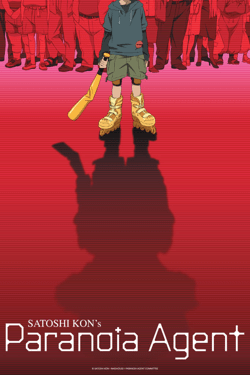
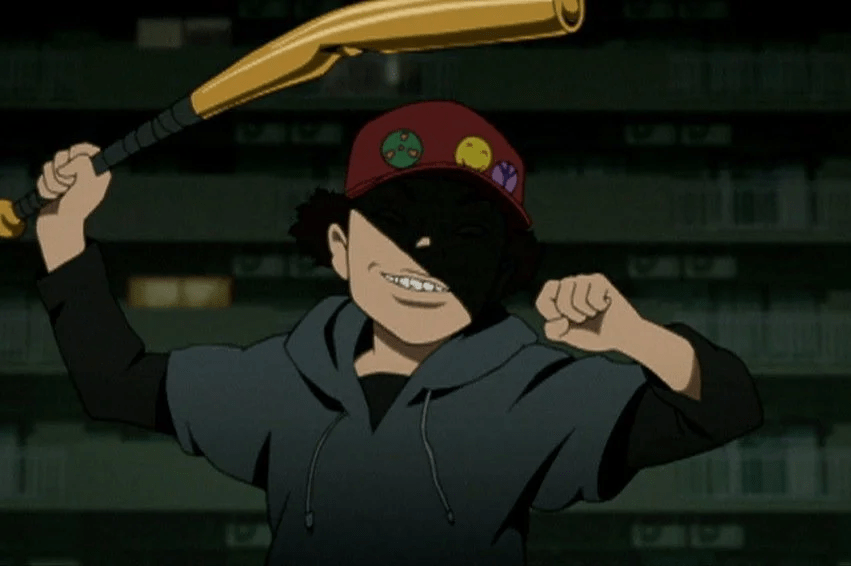
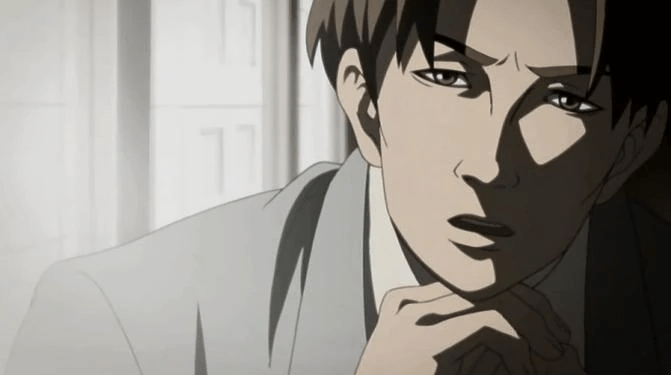


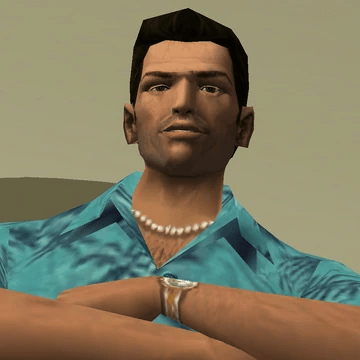


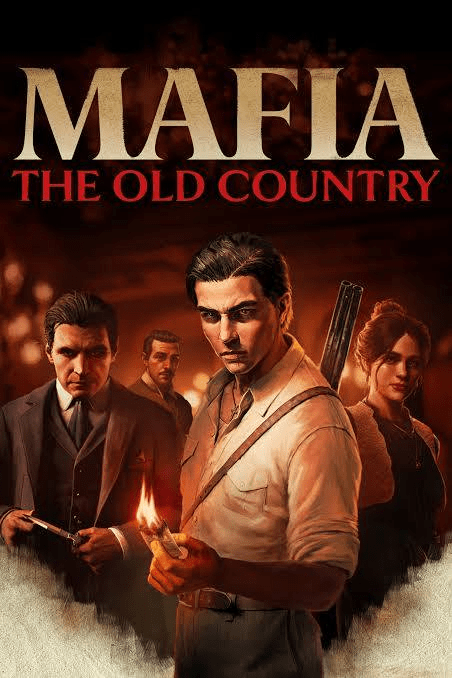


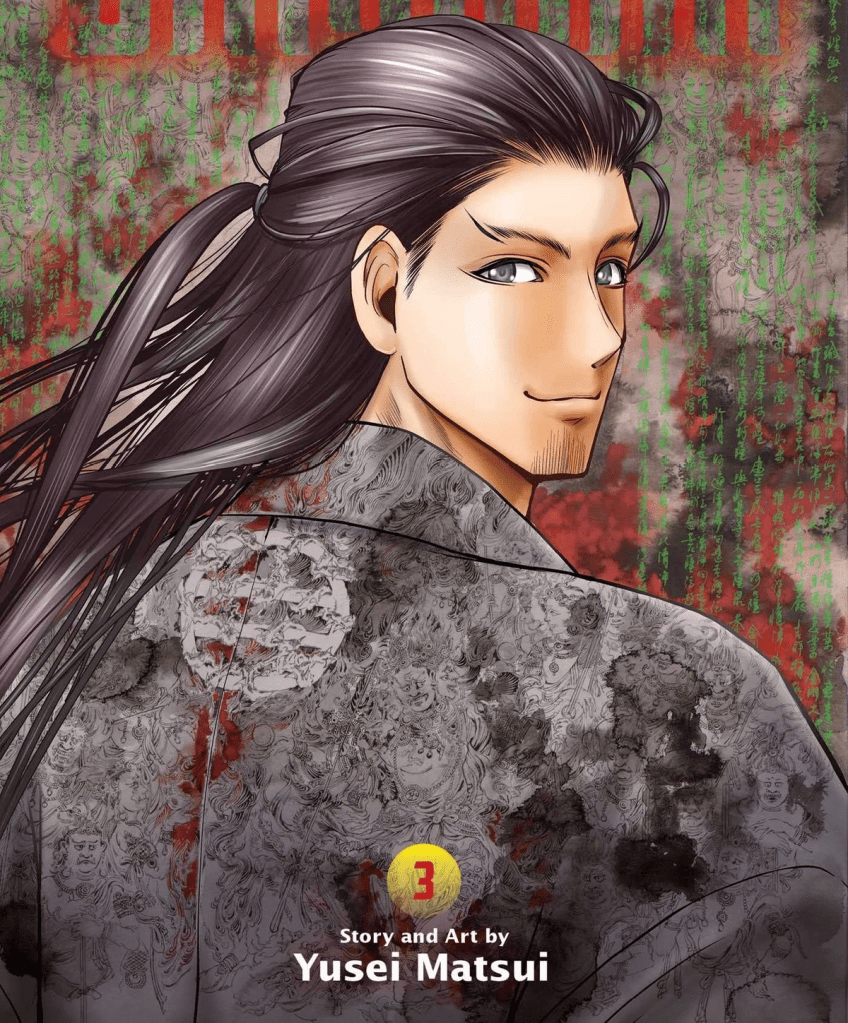
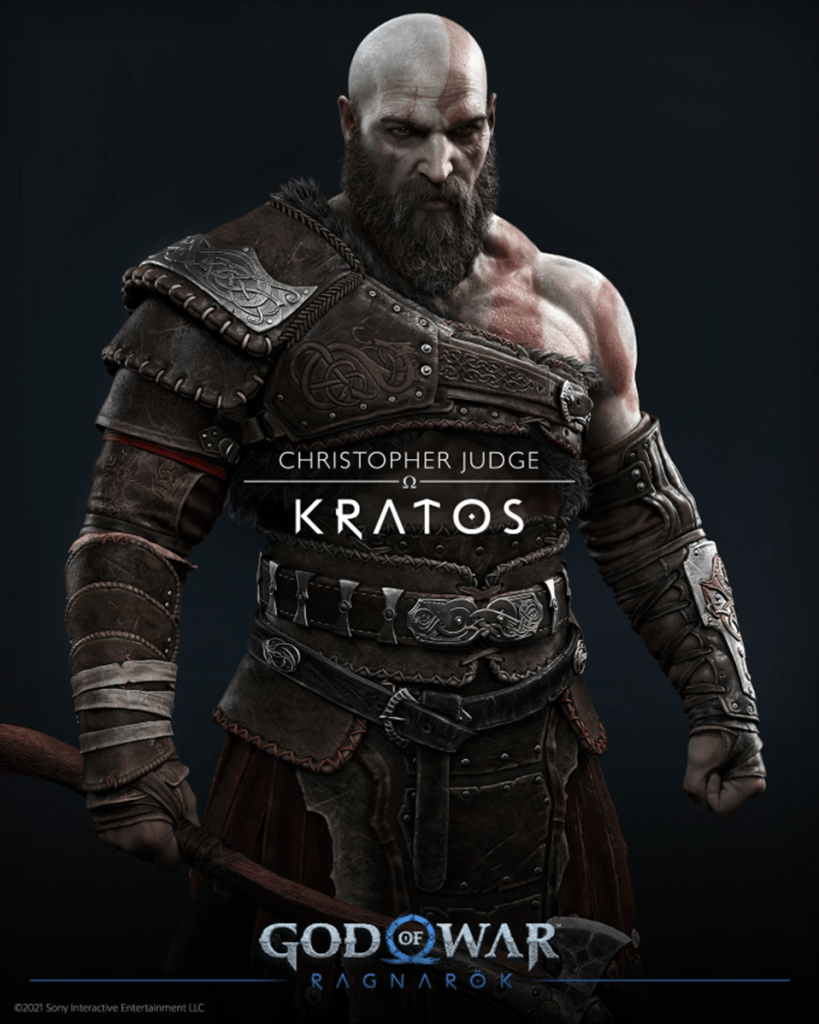


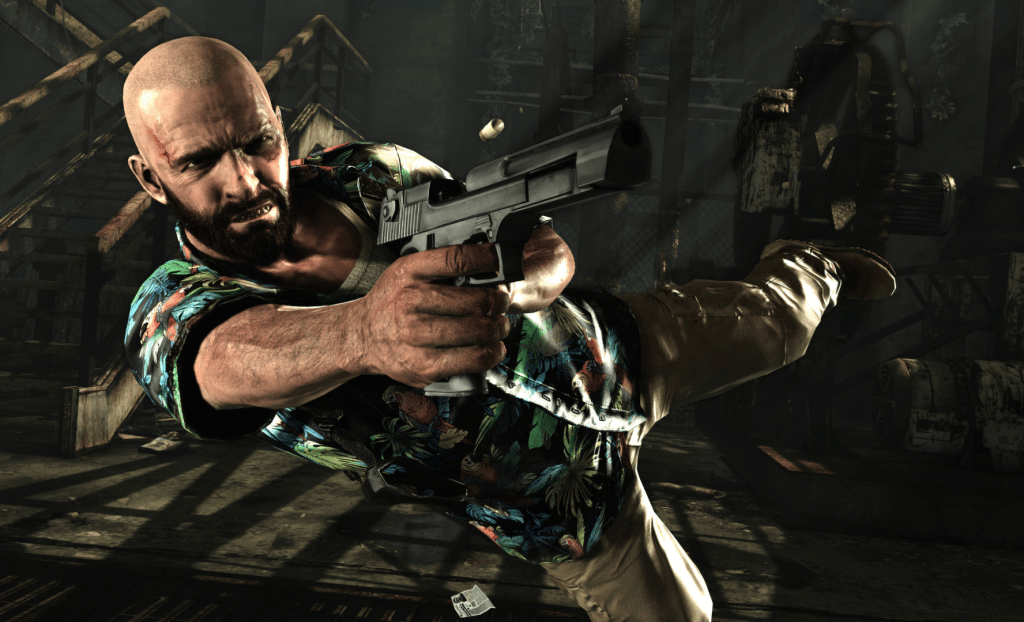
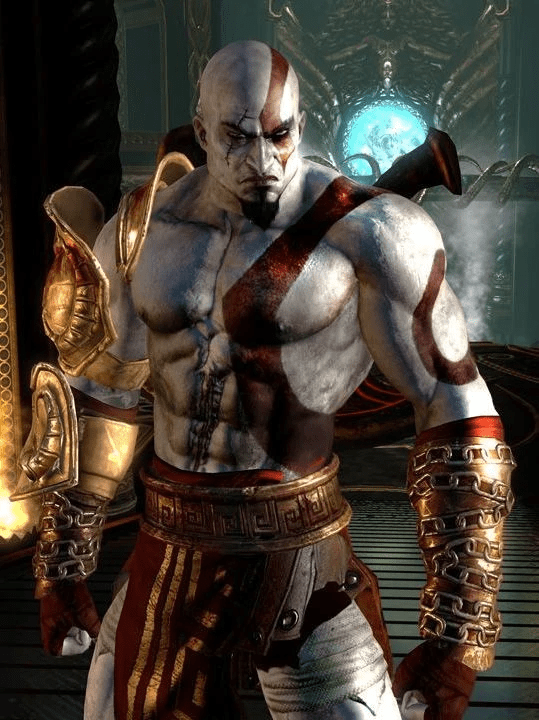

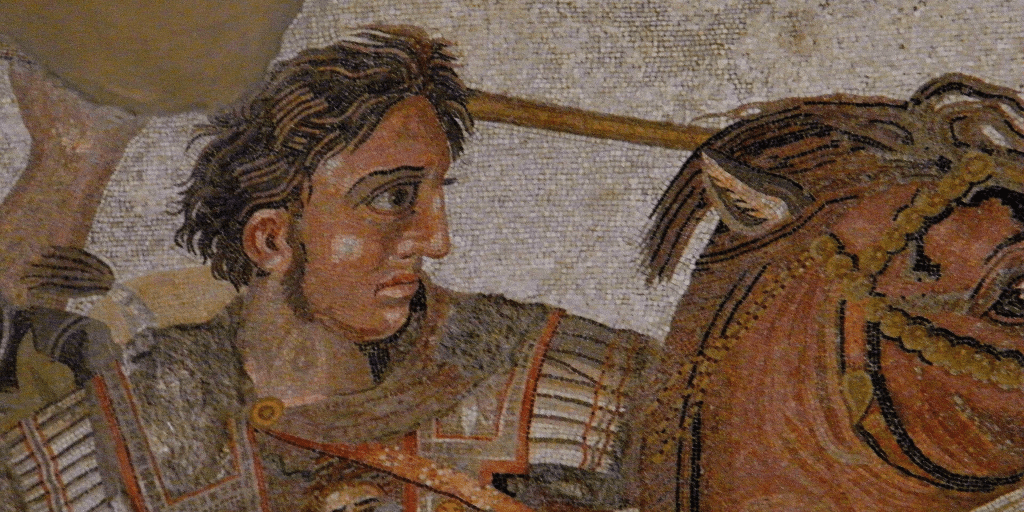


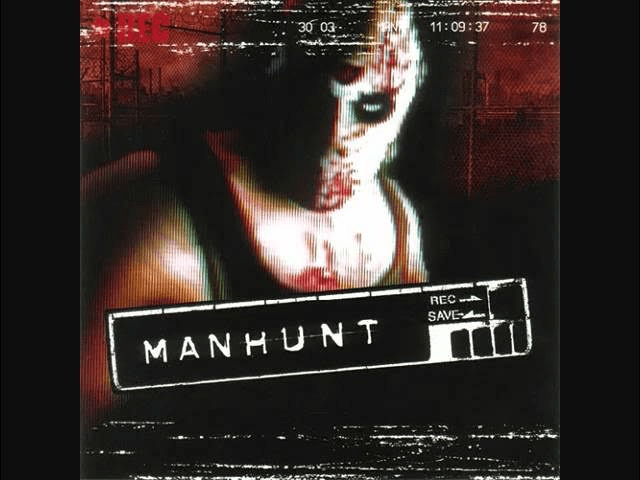
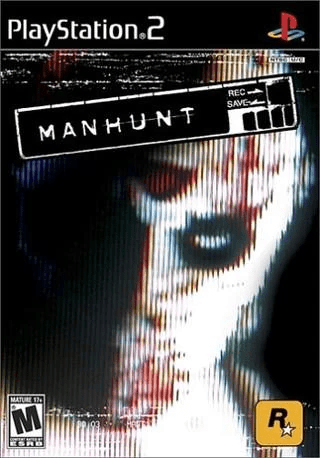



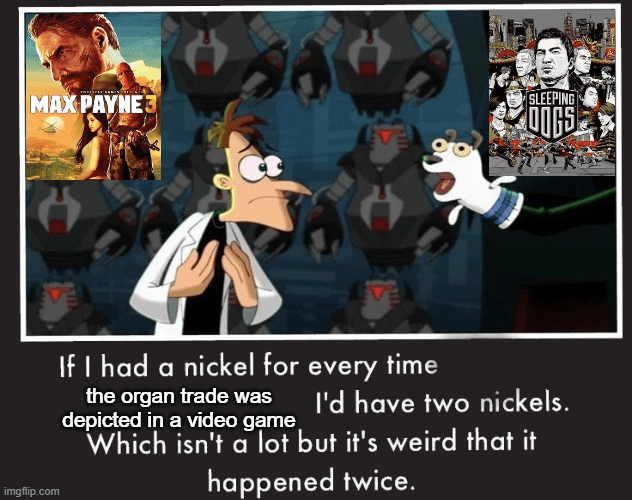
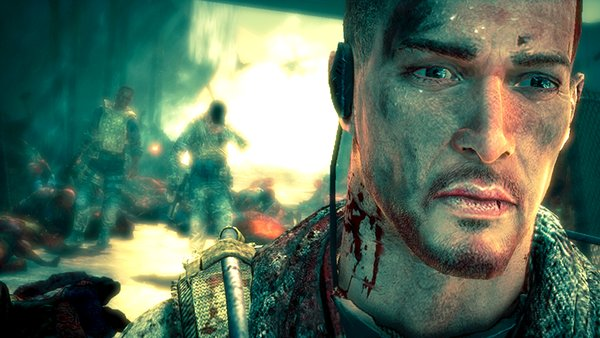






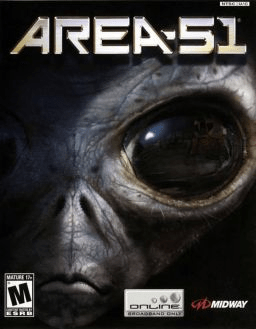










 Opinions on Entertainment