
The dangers of Insider Threats
A promise was made a few weeks ago to make a post about corruption in three action/adventure games released on 2012. This will be that post. As for what I have on the schedule, expect a review about a gender-role flipped isekai manga over the weekend.
Max Payne 3, Sleeping Dogs, and Spec Ops: The Line are a trio of 2012 video games that all deal with corruption and were in several ways criminally underrated by gamers at the time. Three pretty niche series, even despite the graphical showing with something to say about each of their own themes plot-wise. We’re going to look over the plots of all three and what I believe are the reasons they were all overlooked even now.
For the first of these three: Max Payne 3

Aventura Brasileira
The nine-year difference between the unraveling of the second game sets this installment apart from the rest of the series by sending titular Max Payne to Sao Paulo instead of keeping him in the NYC tri-state area. And the game explains why he’s voluntarily exiled from the city. In flashback scenes, Max isn’t exactly done mulling over the plot of the previous two games, walking in on his family dying in the first game and seeing people he regarded as friends double-cross him in the second game. To be fair, none of them were expected to keep specific loyalties to him. His alliance with people like Alfred Woden and Vladimir Lem, as well as a love affair with assassin, Mona Sax, were all out of convenience.
They each answered to their own bosses, though the corruption angle was relatively muted in the first game. The only corrupt figure in the first game was fellow DEA Agent B.B., who was not only on the Aesir Corporation‘s payroll, but had also helped orchestrate the murder of DEA Agent Alex Balder. Which explains how this was an inside job, though this part seems more like an afterthought, all things considered. I’ve been trying to wrap my head around B.B.’s role, but I haven’t been able to reach any significant conclusions.

The face of a… winner?
For Max Payne 2, the interconnected web of conspiracies concerning Max himself unravel in the second half of the game, but are present from the beginning. Woden, being part of the Inner Circle, initially used Max’s services to remove the connections between Woden himself and Aesir’s president and CEO, Nicole Horne. For Woden, only he and Max were privy to the relationship and for Max, she ordered the death of Max’s wife and child, so the vendetta was fulfilled and everyone “won” in the end. As it turns out, Woden wasn’t the only one with a tentacle in another pie. Vlad had an affair with another detective, Valerie Winterson, who’d been ordered by Vlad to remove Mona Sax from the picture, further complicated by Mona’s relationship with Max. Imprisoning a contract killer is one thing, but when she’s dating your junior, it’s easy to see how things get complicated with this intricate test of allegiances. Needless to say, everyone failed. Winterson was gunned down by Max in an ultimatum, Woden, dying of cancer anyway, died trying to stop Vlad, and Vlad shot Mona in the back and later paid for it, thanks to Max.
Yet, none of that was why Max was in Sao Paulo in 2012. In the flashbacks, an altercation with a mob brat who fit right in on Jersey Shore led to the brat’s death and the comeuppance from his father. Max dealt with the mob before, going after key figures in the Punchinello Family, but the father of the brat Max killed in the bar necessitated a six-figure hit on Max. He could spend the rest of his life dodging mobsters or leave. Conveniently, a fellow beat cop who was in private security for the rich and famous in distinct parts of the world — including Brazil — entices him with an opportunity. The first one was to protect a divorced socialite onboard her yacht while traversing the Panama Canal–except that went to s[pill-popping]t when a far-right Colombian paramilitary stormed the yacht and massacred all the inhabitants. It’s worth noting that the pirates were tipped off about the incoming yacht in a plot to frame Max for the violence and plant dirty money onboard. Max can’t escape these inside job affairs, can he?

Fast-forward to the plot of the third game and lo and behold, the Mother of All Conspiracies puts Max and partner, Raul Passos, at the center of it all. Private security once again for the rich and famous of Sao Paulo, a trio of brothers of the Branco family, businessman Rodrigo Branco, politician Victor, and airhead socialite Marcelo, pay the duo to protect them and their family including Rodrigo’s trophy wife Fabiana. Things go wrong when armed gangsters from the Comando Sombra gang storm the penthouse and take Fabiana hostage. This is resolved quickly and to celebrate, these idiots helicopter into a nightclub in Sao Paulo. That time, Fabiana is taken and held for ransom. Most of the family is recovered, but the ultimate mission from Rodrigo is to get his wife back. The first lead takes them to a football stadium in Sao Paulo where the duo bring three million reais to the CS, only to be interrupted by a right-wing paramilitary group known as the Cracha Preto (Black Badge).
Three million short and no closer to finding Fabiana, the next lead takes Max and Passos several kilometers up the Tiete River. A seafaring compound for drug smuggling operations by the CS, they were merely holding the woman in transport until the pair gun their way through the CS, but let her slip through their fingers again. At this point, come the next performance review, Senhor Branco was speaking with the commander of the 55th Battalion of the “elite” Special Forces Unit (Unidade de Forcas Especiais) of the Brazilian Military Police. Passos and Max convince Rodrigo to let them continue their efforts, but the Cracha Preto crashes into the offices of the Fabricas Branco and shoots everything from the office chairs up. Once again, Max is confronted by a painful failure. He was able to secure the building but not fast enough to keep Rodrigo from danger where he was assassinated in the chaos on the main floor. Complicating things further, a bomb is planted in the office to erase the evidence of the murder of a specific individual. Not that Max walks away from the wreckage empty-handed, with a dying paramilitary confessing that they were said to be after Max and that Fabiana was taken to the Nova Esperança favela.

The Max we all know and love
Max upgrades to his baldheaded beardy look and investigates personally running into trouble not five minutes into his impromptu investigation. Another cop from Sao Paulo PD, named Wilson da Silva, is also on the case and conveniently bumps into Max, giving him the details on the people holding Fabiana in custody. This heavily armed slum gives Max a proper Brazilian welcome with lead trinkets which he does in typical fashion reciprocating in kind. By the time he makes his way up to the Emperor’s Palace, the man he’d been chasing since the penthouse crash, Serrano, has not just Fabiana, but her sister, Giovanna, and Marcelo in custody. Clearly, they weren’t happy that Max was a grade-A f[gunshots]k up in a world of f[rocket launcher]k downs and sought to buy Fabiana’s safety personally. This effort goes nowhere, and Serrano kills Fabiana in cold blood. Another tense negotiation ended with an antagonist’s bullet broken up by a bigger dog barking and slobbering into enemy territory. The UFE make the rounds in a trademark raid on the favela looking for fresh meat to sell on the black market.
This isn’t an exaggeration either—the police in Brazil do carry out raids at the heart of the favelas to curtail organized crime, usually in a bloody and performative manner, though of course not all of them are this corrupt. The instance shown in the game sees the UFE pull out all the stops and fearing that he might be next, Serrano and the CS abandon ship. Giovanna and Marcelo are escorted elsewhere to be killed, and Max is left to fight through these makeshift infantrymen to the ground level. It’d be one thing if the UFE were there to arrest only the gang members, but innocent civilians are being carted off and handed to, you guessed it, the Cracha Preto for a hefty sum of money.
Max eventually finds Giovanna and Marcelo in time to save only Giovanna as Marcelo had been set on fire in a tower of tires, known as a “microwave oven.” He avenges Marcelo and has to escort Giovanna to safety through a public bus stop. Actually successful for once, but Max is essentially left behind while Passos, who was phoned up beforehand, helicopters the mother of his love child out of there. Da Silva returns to inform Max that he’d been a plaything from pretty much the beginning—not just by the Brancos but also allegedly from the Panama job.
But that’s all a moot point as there are more pressing matters to attend to. Max learned and da Silva knew that the 55th was in bed with the Cracha Preto, but the level of corruption wasn’t well understood. Countries with troubled histories like Brazil can easily have their corruption written off as a legacy of authoritarianism or its military junta. But neither realized that they were involved in the organ trade until Max was set out to raid the condemned Imperial Palace Hotel. The paramilitaries were witnessed burning the dead in trash bags, the civilians carted off earlier were found and as we learn, Serrano was among those rounded up by the UFE. The movie Elite Squad (Portuguese: Tropa de Elite) shows how aggressive the Military Police can be in matters of gang crackdowns, but doesn’t accuse the BOPE of being corrupt themselves. Max Payne 3 does show the UFE’s corruption inside and out. The hotel was the belly of the beast that Max dealt with before moving onto the UFE HQ itself. Unveiling himself as the mastermind behind the grand conspiracy to rule Sao Paulo with an iron fist is none other than Victor himself.
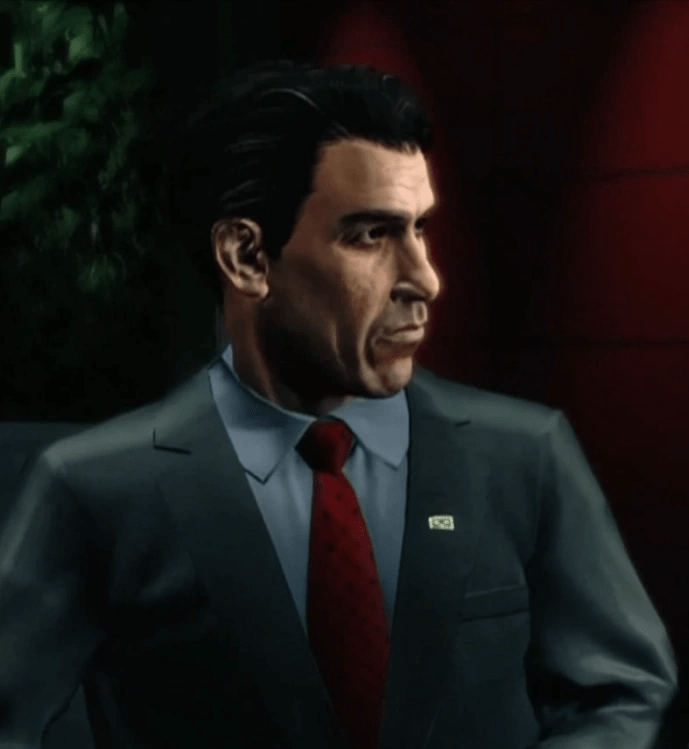
If he’d been elected Mayor of Sao Paulo, he would’ve made things much worse
Remember when I said this was the Mother of All Conspiracies? No lies or hyperbole detected. The game ends with Victor facing a trial and being found hanged in his cell, either through suicide or through mob retaliation, seeing as he walking around the general prison population. For all its faults, this may be the one time lack of oversight or corruption did some good. I’m certain here in the U.S., an imprisoned government official would be placed in solitary for their own protection. In Mafia III, the Faster Baby DLC reveals at the end that white supremacist Sinclair Parish Sheriff William “Slim” Beaumont was put in solitary for a 15-year stint, serving 12 before he was shot dead on his front porch in 1989 under mysterious circumstances. The black community had reason enough to hate him, but I think he was killed by fellow white supremacists for turning on them. Officer Tenpenny said it best: “Homies for life? Street loyalty? That’s all bullshit, Carl.” It really do be your own people.

Takes a traitor to know a traitor
Now, why do I think MP3 was overlooked? If you look at the cutscenes of this game and put them side-by-side with those of the first two games, it’s a major departure from the graphic novel neo-noir style it worked with. It would’ve been welcomed by fans to see it ape a modern comic book style, but RockStar spearheading the game’s development, absent of Sam Lake and Remedy Entertainment made it look and feel less like Max Payne and more of a spiritual successor. The first game was released in July 2001 on a shoe-string budget and had to do so much with so little. The last game was released in late May 2012 and cost RockStar some hundred million dollars to produce with a swanky new engine that showed how aged and disheveled Max looked after two games playing shootdodge in New York and New Jersey. The assumption was that beautiful-looking games sold like hot cakes, but MP3 was more like Hydrox cookies. The progenitor of the sandwich cookie overshadowed by the more successful Oreo.
Still Max got his proper send off and with the passing of his voice actor James McCaffrey in 2023, the only thing in the series’ future is a remake of the first two games at an as-of-yet unannounced release date. I’d welcome a spiritual successor, though, instead of a half-baked Max Payne 4. And on that note:
Sleeping Dogs – 九龍嘅遺產

歡迎嚟到香港
A spiritual successor to the True Crime series, Sleeping Dogs follows Hong Kong-born San Francisco cop, Wei Shen, and his transfer to the Hong Kong Police Force. The British legacy of colonization comes through in this game with nearly every Hongkonger in the game having a very western/English given name. Jackie, Winston, Vincent, Peggy, Sonny—you might know people with these names IRL. Goes to show that in recent history, Hong Kong and its territories were more British than they were Chinese. Speaking of British, the superintendent of the HKPF, Thomas Pendrew, is one of the only white people to be seen for miles.
Snoozing Mutts begins with Wei and his informant partner, Naz Singh, making a deal with the Triads. After a cop walks in on the deal, one of the Triads cleaves him up, Wei and Naz parkour their way out of Dodge, but are cornered by the police. At this opportunity, HK Police conduct an AAR on Wei and reveal that he’s being placed as the newest member of the Hong Kong-based Sun On Yee, this world’s stand-in for the real-world Triad group, Sun Yee On. His mission is to get close to key figures and unveil their main boss, starting at the bottom.
After this brief, Wei is put into a cell where he runs into a childhood friend from the Old Prosperity Projects, Jackie Ma. A budding gangster and soon-to-be Triad himself, Jackie gets Wei close to Red Pole (read: Lieutenant) Winston Chu, a foulmouthed, tattooed gangster operating out of his mother’s restaurant. Like their western counterparts, East Asian organized crime groups also make use of slice of life crimes from extortion to protection rackets to money laundering, but unlike their western counterparts, they like to present themselves as protectors of their neighborhoods, more so the Yakuza do this than the Triads as I’ve noticed in most crime media from this part of the world, so Winston’s operations being in the back of his mother’s restaurant is not unheard of at all.
Per the initiation, Wei survives getting surrounded by Sun On Yee, before Winston’s rival Sammy “Dogeyes” Lin shows up to antagonize Winston’s faction, the Water Street Boys. I know better than to walk into a new place like I own it, but Dogeyes pulls up wheeling his giant balls onto Winston’s coffee table. How offended was Winston at this? He went to a local fair to turn the vendors over to Winston’s side. Small, but noticeable losses that smack Dogeyes in the income. But the real prize here lies in a ketamine dealer, Ming, whom Wei tries and fails to get into police custody. In front of an interrogation table for the second time, Wei’s cover holds up well enough for Pendrew to reveal to the interrogating officer that Wei’s no ordinary thug, but one of their own. And I see why Wei wouldn’t initially want the Inspector Teng on the case either. He’s already got one mouthbreather, Raymond Mak, on his shoulder, he doesn’t want another one, but the powers that be have Teng as a secondary to Raymond.

One of Hong Kong’s finest
For the police side of things, Ming is nothing but a middleman. The true prize for the Sun On Yee is distributor Popstar. To get to him takes some more class-A acting that sees Wei catch him in the middle of a handoff that ends with a killing. Once that goes to the HKPF, Popstar goes to prison and soon after Winston shows that there’s a brain directing the brawn. Is it really a coincidence that Popstar goes down right as this new guy shows up? Though Winston didn’t think this up in a vacuum with enforcers like Conroy Wu giving him the idea simply because Wei failed a vibe check at his introduction. Thankfully for Wei and the plot he’s a seasoned thespian who was able to spin Popstar’s incarceration as an opportunity for Ming to eventually double-cross Winston and the Water Street Boys… had Ming not just taken a brand new ventilation system to the cranium. And you don’t need an undercover cop to learn how cutthroat organized crime is. Nor even the drug trade, at least if you’ve been anywhere near a TV to see the failures of the opioid epidemic and the war on drugs in real time.
So, Wei’s spared death and continues to get closer and closer to key figures in the Sun On Yee, even suggesting brilliant ideas for Winston and co. And once Wei actually meets the Dragon Head of the Sun On Yee, David Wa-Lin “Uncle” Po, rather than admit that most of the ideas were his, he hands off credit to Winston. This is a glimpse into face culture in East Asia. Even if you, the underling, are competent and capable of wiggling your way out of danger, the boss a.k.a. your superior, is the most important representative of your group, clan, guild, etc. So, by showing Winston to be the most competent and an infallible genius, Uncle Po grants him his favor. Better yet for his mission, Wei has seen the Dragon Head, a key figure in the Triads for his undercover mission.

山主的新义安
That said, undercover police work alongside plain old policing doesn’t get Wei a lot of love from his handlers, at least not Raymond. With a growing history in the triads, Raymond may be the one who most wants Wei off the mission during certain checkpoints. Ratting, snitching, internal security risks; whatever you wanna call it, there’s tons of checkpoints where it can go wrong for Wei and yet, only once has it been shown that his position was close to compromise, and that was resolved rather quickly in the beginning, but Raymond isn’t convinced and wants to leave this to whatever specialized organized crime unit HKPF can muster. Unfortunately for Raymond and fortunately for a time, for Wei, this is shot down each time by Superintendent Pendrew even after Winston and his bride, Peggy Li, are gunned down at their own wedding.
This removes an obstacle and puts Wei in Winston’s seat in the Sun On Yee, however, I look back on this mission and can’t see it as nothing but an inside job itself. In the mission, Winston asks Wei to bring the chairman his favorite wine. On his way back, gunshots go off inside, and the enemy isn’t dressed like a typical Triad gangster this time. The caterers are the ones who initiate the attack on the wedding, and they don’t discriminate. Once Winston and Peggy are dead, it’s free game. Uncle Po is wounded and recovering in the hospital on life support, and right after this, you go after the two people responsible for the hit: Johnny Ratface and Dogeyes, both of whom get their vengeance from Mrs. Chu, Winston’s mother.

Never mess with a mother’s babies
Now, I say it’s an inside job because of how it’s all set up. The Wiki says that Dogeyes orchestrated it and with Triad resources that’s easy to see, though if I’m allowed to put out a feeler for a bit, I question whether this was thought up independently or whether it came from another source. I’ll touch on this later, but for now, Winston’s death puts Wei in his shoes and Raymond’s lost faith in this entire endeavor. Pendrew still allows him to operate with carte-blanche but runs into conflict with Wei himself when he suggests that he should abandon the people who got him to his position in the first place. He doesn’t and Pendrew winds up double-crossing him at multiple points, notably at Uncle Po’s funeral. And it’s not like things get easier with Dogeyes turned into char siu. The next obstacle comes in the form of Big Smile Lee. He’d been trying to become the next chairman with Uncle Po incapacitated but another, Two Chin Tsao, so called because he could eat all of mainland China and still die of starvation, is suggested by Red Pole Broken Nose Jiang. A risk for the whole of the Sun On Yee? Sure, but it was Jiang’s suggestion that Two Guts Two Chin take the helm, though his past as a heroin addict has weakened his resolve to the point where most other Triads think him unfit to rule, even Jiang who might’ve simply made him a placeholder/seat-warmer of sorts. You later reaffirm his tetraphobia in his own house with a fellow Triad called Old Salty Crab.

Think of him as your mischievous uncle
The last leg of the game is where Big Smile Lee’s faction takes center stage as the main antagonists. His personal enforcer Mr. Tong kills Jackie and tries to kill Wei after Lee learns that Wei was undercover. A fierce final mission and battle sees Lee’s enforcers, Tong and Ponytail, dead and Lee himself thrown into an ice chipper face first. For all that he’s done, he should’ve gotten in feet first, but carrying an enemy into a deadly trap seems more like Like a Dragon shenanigans if Kazuma or Ichiban were different people.
Feels a bit useless though, knowing that Pendrew’s “hard work” is gonna get him promoted to Interpol. By this point, both Wei and Raymond know of Pendrew’s corruption but can’t touch him due to his status until Jiang, who also knows Wei is a cop, delivers a USB with video evidence of Pendrew murdering Uncle Po. Furthermore, the discussion between the two reveals that his corruption goes back decades with the two collaborating to reach their respective positions. The course of the game was where dispute erupted between them and Uncle Po gets one last callout before his funeral gets arranged. This is the evidence Wei uses to lock Pendrew up in the same prison housing most of the Triads put away by Wei. Most likely, general population where, like Victor Branco in Max Payne 3, he won’t get any protection. It doesn’t look like Hong Kong’s penal system is as draconian as its mainland counterparts, but with this many Triads inside, it’s gonna hurt.
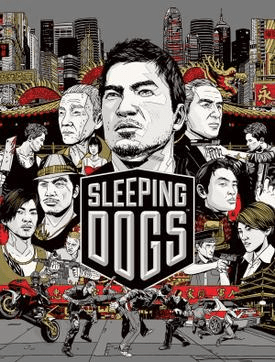
So let’s look at why Sleeping Dogs is underrated. This review by Yahtzee Croshaw of Zero Punctuation/Fully Ramblomatic fame should get the point across, but to get it down to brass tacks: it was left to cult status. Praise for the star cast, voice acting, game design, world-building, and set pieces. Even Cantonese speakers who’ve played it could tell that a lot of care was put into the game’s use of English, Cantonese, and Honglish. A bit better than Zenless Zone Zero’s use of Cantonese during the Waifei Peninsula arc, which is a fictionalized stand-in for Hong Kong. It was still a cool easter egg though…
But to go back to the ZP review of Sleeping Dogs, setting aside the accusations of GTA clone, the main crux of the game is that Wei is supposed to be caught between two loyalties. Too much of a Triad for the HKPF and too much of a cop for the Triads, but he maintains his loyalty beginning to end. Not really atypical, real-life undercover police stick with their law enforcement agencies of employment even after the mission is completed, and continue to work for the police until eventual retirement, assuming that’s not their last case. This is a time-honored tradition IRL and in media. Off the top of my head, there’s two examples, real and fictional, of an undercover cop leaving the force.
In the co-op game, A Way Out, Vincent Moretti, is revealed to actually be an FBI agent who spearheads an elaborate operation to take down a drug dealer who’s since made a home in Mexico. After he’s killed, in his ending, he reveals himself to partner, Leo Caruso, and attempts to arrest him, but Leo dies after a gun battle. The ending sees him with his wife and infant daughter (whom they’ve been struggling to conceive for years) as he announces his retirement from law enforcement altogether. In real life, British cop Neil Woods spent 14 years undercover, rubbing elbows with the worst of the worst Britain ever had to offer. The experience took him to dark places and motivated him to write two books criticizing the heavy-handed approach to the war on drugs in Britain and America.
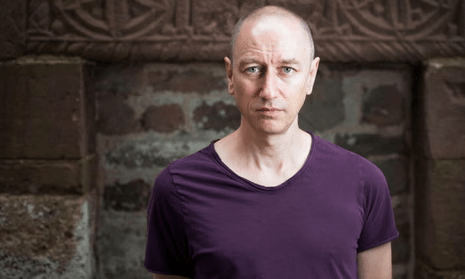
The real culprit for Sleeping Dogs’ status has to do with poor sales. The game cost the developers at United Front Games $30 million and when pushed out the door by Square Enix, they expected a better sales goal and a potential franchise, but with Sleeping Dogs being a spiritual successor to the True Crime series, this claim is one I have to call into question. Not to mention bigger releases from established franchises were releasing that year and the following year from the Tomb Raider reboot to Halo 4 to the announcement of Grand Theft Auto V to be released in September 2013. It still did well enough to earn its place as a great selling game in Britain and America, but not enough for Square whose real crown jewel was the Final Fantasy franchise. Thankfully, the Definitive Edition was released in 2014 complete with all the DLC and expansion packs, showing that even after United Front’s closure in 2016, the publisher still had faith in the game, which is more than can be said of the last game we’re looking at.
Spec Ops: The Line – Still a Hero, Son?
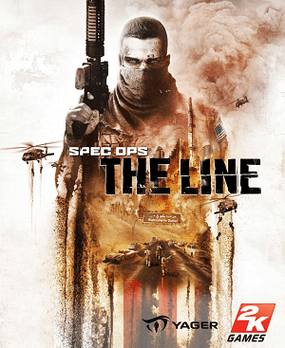
A real hero wouldn’t do even an eighth of what goes on in this game
Delisted and buried, Spec Ops: The Line may qualify for lost media if it wasn’t for all the gameplay videos released, the video analyses, and the ROMs that remain the only way to access the game these days. Even that’s difficult without a stable internet connection. While drafting up this post, I’ve had it quit on me multiple times until I did it through a mobile hotspot on my phone. Side note: it may be due to the location, but I’m positive that if my rig was in a bigger city with more traffic and therefore more customers on a livelier server, it would take considerably less time to download. RPCS3 is a bit finicky in some areas, but if it works well enough to let me play Mortal Kombat 9, flaws notwithstanding, then anything is possible.
Spec Ops: The Line follows on a time-honored tradition of adapting Joseph Konrad’s 1899 novella Heart of Darkness. A fictional tale of a sailor’s journey through Leopold II’s Congo Free State, it’s a harsh criticism of the Belgian king’s personal territory on the journey to find Kurtz, an ivory trader who’s taken a godlike role among the unsuspecting native tribes. Something that was given a glimpse of in, interestingly, Red Dead Redemption.
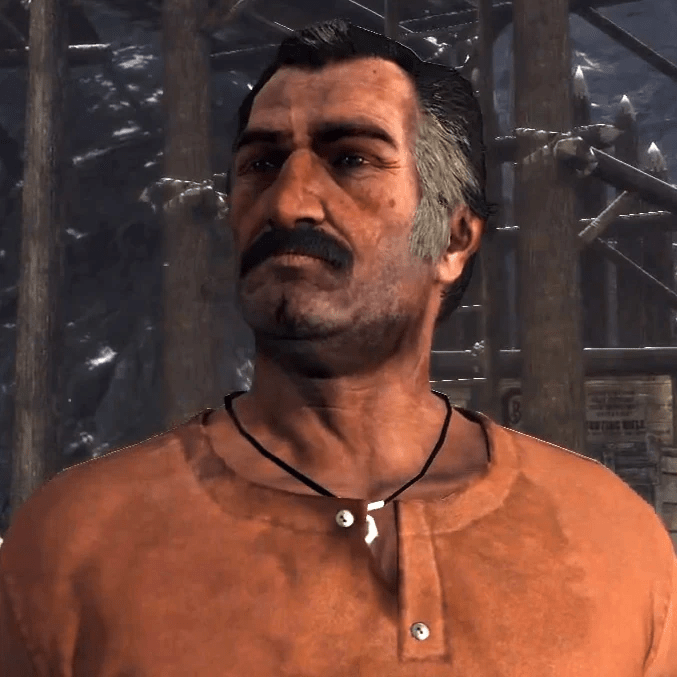
Trusting Dutch was a ruinous decision, but not the worst fate to befall American Indians, all things considered.
The tale ends with Kurtz meeting his end at the unnamed protagonist’s hands, something that’s consistent across nearly all media depicting the story, such as 1979’s Apocalypse Now where Captain Willard navigates the Mekong River with a Navy PT boat on a mission to find and kill rogue Special Forces Colonel Kurtz. Being in the Army now, this falls out of line with real-world military protocol. That high up and last assigned to a specialized unit, Kurtz would’ve been arrested and interrogated and likely would’ve faced a court-martial for desertion and treason, seeing as, like the character he’s based on, he also became a madman calling himself God among the native Vietnamese. He also meets his end by the protagonist’s hands.
Come Spec Ops: The Line time and the story beats are the same as Francis Ford Coppola’s troubled movie, but this time it’s a small squad of Delta Force operatives on a mission to find and apprehend Lieutenant Colonel John Konrad, which is consistent with protocol. Kudos. Col. Konrad’s mission was to provide relief to the citizens of Dubai in the wake of a sandstorm but tragedy strikes in the form of another sandstorm and the situation looks like post-Katrina New Orleans but worse… and sandy. The colonel takes matters into his own hands and worsens an already bad situation.
Delta Force operatives Capt. Walker, Lt. Adams, and Sgt. Lugo go in to relieve the situation. Thing is, Konrad is clearly not alone, seeing as the 33rd Battalion known as the Damned Thirty-Third is still in the city, and it’s on Walker’s assumption that the whole unit is rogue and therefore, free game. They’re in the way of the mission and as fellow soldiers, they put up a fierce resistance on the way to Konrad. The course of the game sees Walker make difficult decision after difficult decision culminating in a prosecutable war crime. The white phosphorus weapon system is a controversial weapon used by the U.S. military during the Iraq and Afghanistan wars. It’s chemical compounds leave horrific burns on all parts of the body that it meets. Despite Lugo’s objections, Walker greenlights its use on a compound that was actually housing civilians.

It’s common for trauma victims to retreat to a fantasy of their own design
This salient point is both a turning point for the group and a stark critique of military operations in the region at the time that led to the Iraq War’s inconclusive outcome the year prior in 2011 and Afghanistan’s failure a decade later. I remember watching gameplay of the game ages ago and the shock and awe of the results of this weapon… f[military drums]k everyone who says that these games glorify war; this is a perfect argument against that. The rest of the game gets considerably more nightmarish.
Even the loading screen tips get progressively more hostile, with messages advising the player that continuing forward is the worst choice to make. I wouldn’t be surprised if halfway through someone booted up a different game or simply put the controller down and had a walk. The last half and final leg of the game sees Walker get to Kurtz’s compound where plot-twist, he was dead the entire time. The herculean task of saving and rebuilding Dubai from scratch was too much for the man. Tragedies, unhappy civilians, dwindling resources, unpredictable outcomes; what sets Kurtz apart from the movie and book was that he didn’t try to make himself King of the Emiratis. Maybe doing so would’ve seen the game marked for banishment from the region, especially at a time when Middle Eastern-American relations were being put to the test in Baghdad and Kabul, as part of the reason Six Days in Fallujah couldn’t release in 2007, so the corruption angle isn’t so much rogue field-grade officer sells out his men for a golden AK. More on the point of rogue battalion-sized element overstays their welcome with good intentions. Or, in layman’s terms, why the U.S. hasn’t been very good at building democratic nations abroad in recent memory. The only success stories come from Germany and Japan post-WWII. Everywhere else has been a bag of trail mix.
Walker and co. also go in with the best of intentions but well after the gut-punch of using a chemical weapon on civilians, his sanity takes such a heavy hit that the pieces that used to be his brain warp his surroundings substantially. All that time he thought Konrad was mocking him from comms, it was all in his head. Moral choices were even corrupted by his gradually disintegrating psyche as a means of rationalizing the hell he’s in, lying to himself that he’s doing good when he’s another evil come to molest what’s left of the city.
Side note: for all the good that not just the U.S. military achieves, leaders can make or break an experience and looking at Walker as a soldier myself, there’s multiple instances where further harm could’ve been prevented had he simply called the mission a failure and gone home. Hell, Adams is another officer with him, he could’ve done it too. But let’s not ignore the human element. The game is designed as a critical satire, sans laughter, of the modern military video game at the time and military operations back then. I have the luxury of criticizing Walker with all that’s been made available from the game and real life. I won’t say too much about my leadership in the Army yet, but the working strategy is to simply learn from leadership good and bad. Retired and current servicemembers definitely have similar stories if you spend some time in the appropriate spaces. See r/Army and r/USMC among others for more details.
Back to the game: Walker at last gets to Konrad whose corpse was under heavy watch presumably since the start of the game. He then has a mind battle with who he thought Konrad was supposed to be, facing criticism after criticism after heavy criticism. Max always felt worthless in Max Payne 2 and 3, but he knew what kind of guy he was in those games. Walker could be shown a mirror and not realize Satan was in it in his own uniform. And here the game has multiple endings.
A destroyer in a cape is just another aura farmer
In both pre-endings, Konrad picks up his gun and aims it at Walker. In one ending, Walker, also aiming his weapon, can shoot back to unlock the post-ending. In the other, he can accept his fate and let Konrad shoot him, which is meant to be interpreted as a suicide. The final shot is the city in ruins as the screen goes black. The post endings have three paths. Soldiers are sent to retrieve the now broken Walker and here you get a last response. One ending, Walker shoots the soldiers dead. He grabs a radio from one and repeats the same line that he uses in the beginning, “Gentlemen, welcome to Dubai,” seemingly living the last of his days among the wreckage. Another ending, open fire on the soldiers and accept this upscale suicide by soldiers. His last moments are an audible flashback to one of his prior missions within Delta Force. Credits roll. Third and arguably the most haunting ending, surrender your weapon and return to base or more likely the U.S. to face a trial for treason and, going back to white phosphorus, crimes against humanity, though the political landscape of the time would likely see that charge ignored if brought up at all. The driver of the Humvee asks how he got through this hell, to which Walker replies, “Who says I did?” and whether this ending is canon or not, a close look at the background shows that it repeats, a sign that with all that goes on in the game, the nightmare is only starting for Walker.
Now the corruption claim I make here depends on definition. It gets muddier in this game. On the one hand, none of the characters collaborated with any enemy forces, sold soldiers down river, or anything of the sort. On the other hand, no one is really innocent of anything. On the surface, there’s the Damned Thirty-Third occupying the city and Walker’s group firing on fellow soldiers, but scraping a layer back, Dubai getting slapped with apocalyptic conditions shows the destruction of the social order. Mob justice was dished out to perpetrators of otherwise slice of life crimes like theft and of egregious sins like full on rape and murder. There wasn’t a gray area when applying mob law. Killing a man’s family was on the same level as stealing drinking water. Konrad was a fool to think his unit could put its best foot forward here and restore order and Walker was a fool to keep his faith in his mission. There’s an option to fire on civilians after they beat Lugo to death, though at that point I don’t think acting or abstaining makes much of a difference anymore. The gates of hell were coming to you, not the other way around.
Some may see Spec Ops: The Line and question why this instead of something like L.A. Noire which has corruption pretty much from the first case, as The Professional has a lore video on how deep-seated the corruption is:
Channel: The Professional
I omitted that as I thought it was too easy to make a case for L.A. Noire. It’s hidden for a lot of players in the beginning and doesn’t show its face once you get to insurance inspector Jack Kelso. Cole Phelps is a good protagonist on his own and Extra Credits critiqued him and his world. Sings the praises of enforcing the law with an even hand yet several cases show how uneven the long arm of the law is applied. A white kid gets off with having weed in the glove compartment of his car; a child molester, one of two, reports his car vandalized by the very brat he tried to rape, with another child molester being let go because he wasn’t guilty of murdering a woman – the police have more on the husband in that case and could probably get a warrant for both him and the rapist, the former for domestic violence and the latter for obvious reasons. Even Phelps and his partner on the ad vice desk, Roy Earle, accept a tip from a shady looking guy for a price, and the head of the whole weed distribution ring isn’t even personally charged with much. And some of this is well before Kelso gets a more important role. A look at the corruption of the LAPD in L.A. Noire would necessitate its own blog post. So look at Spec Ops: The Line as having a different kind of corruption, borne from good intentions with complicated answers to difficult issues. No one was gonna walk away from that blood-free.
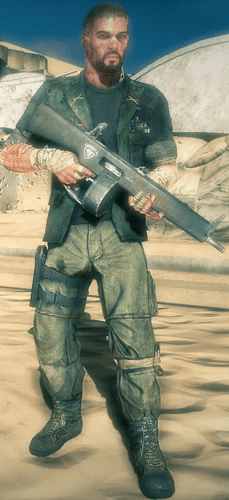
Becoming the villain while still believing you’re a hero
Why was Spec Ops: The Line overlooked? Deliberate design choices played a role in its underperformance. Some critics couldn’t get through the stiff gameplay or are even critical of its story. The heavy themes are enough to turn off a casual and a far cry from seasoned CoD and BF veterans of the time. It deliberately made itself look ugly to tell players that the modern military craze had to stop at some point, though that point doesn’t really come across until CoD’s 2013 release of Ghosts. That game was hated for the way its campaign ended and come Infinite Warfare time, the sci-fi babble was a f[gun cock]k load of bulls[bang!]t. Battlefield 1 emphasizing the oft-ignored World War I was a step in the right direction, while CoD’s 2017 release went to World War II, its roots, and gave us a rare instance of the Holocaust in an interactive medium.
That said, the criticism, while wanted by the game’s designers, overlooks the message it was meant to convey. Modern military shooters were overrated by 2012, and even then, DICE and the combined developers of Sledgehammer, Infinity Ward, and Treyarch weren’t doing themselves any favors back then or even now with Black Ops 7 releasing later this year and Battlefield 6 releasing while I was drafting this post. But whatever, a series that fell asleep in 2002 came back a decade later to slap some sense into the gaming industry and died with the industry walking those slaps off with pride instead of shame.
Well, there you have it: Three games, all released in 2012, all overlooked back then and in some cases even now whether it broke off from a prior entry, it couldn’t make back its money, or its entire point was glossed over by a fickle crowd of gamers wanting the engagement they were used to. However, I’m not ascribing blame for looking these games over. For all the reviews and peeks I make on this blog, I can treasure my favorite pieces of media and lament that some of them don’t have as much audience love, but I still appreciate that they were given something of a green light and a chance to shine when they did, and no matter what happens to these games decades down the line, they’re all worth to committing to memory no matter what.







 Opinions on Entertainment