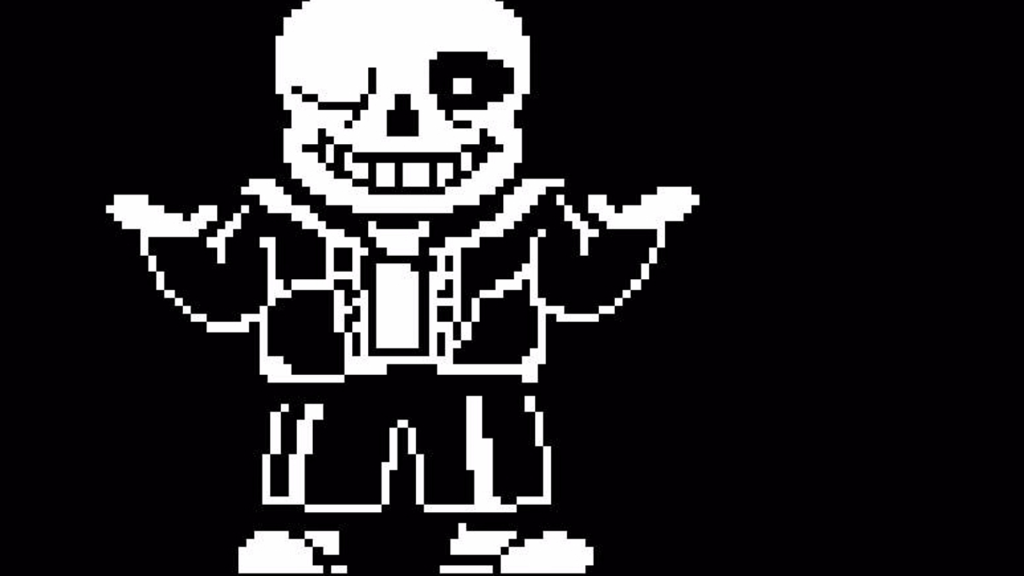
Ladies and Gentlemen, the Dumbest Otome Villainess Protagonist

Her braincell is always out to lunch

Multiple times on this blog, I’ve explained that I don’t make a beeline for the Isekai genre. My tastes are varied and, if I had to look at it objectively, inconsistent. But if it wasn’t me being lazy, it was life reminding me that the big picture exists.

Thank god for stock imagery

With the case of Isekai, recently I’ve had a look at some of the shows I’ve been watching, some of which have appeared on this blog before, and I don’t think the statement holds up anymore. Matter of fact, some earlier anime I watched as a kid technically count as Isekai by the slimmest margins and the loosest definitions. Similar to when I watched Shield Bro Loli Pokemon, I came across the subject of this post on Crunchyroll sometime in 2020. It’s not in my watch history for some reason, but I did see the entire first season and part of the second season, so I definitely remember the plot beats going on for this series.

This series is an otome harem Isekai that would become more and more commonplace after 2020 for some s[piano]ing reason. As I recall, the anime skips over the Isekai-ing action, and drops the protagonist into the shoes of the villainess/antagonist, Catarina Claes, who is known to the Japanese audience as Bakarina for having an IQ level as big as her shoe size. The full English title doesn’t really do the series any favors, as the point of the game she’s isekai-ed into is to avoid all the doom flags. The game, known as Fortune Lover, has a series of different paths for the player to follow given specific conditions. One ending sees the villainess exiled, another puts her behind bars, and the third sees her killed in a crime of passion.

When the protagonist takes command of Bakarina’s braincell, the roles are reversed in even the design. Robbing the game of the villainess irreversibly changes the flow of the game to the point that the game semi-acknowledges the takeover, although the major consequences of this aren’t even that punishing, given the English translation of the Japanese title being “I Reincarnated into an Otome Game as a Villainess with only Destruction Flags” as opposed to the subtitle All Routes Lead to doom. A distinction I make seeing as the former explains the concept of and subsequent obsession with doom flags as opposed to the latter that leaves it largely vague. Couldn’t help but get pedantic about that…

Be it the villainess or the actual protagonist of the video game (to distinguish from the Female MC), the opportunity to romance any of the archetypes characters is, on the surface, divvied between the two, but with Bakarina being the queen of this series, that’s a decision largely left to her. Bakarina’s definitely different from how the original Catarina behaves, being more charitable than selfish, all to avoid the death flags. In so doing, she unlocks a secret ending that most games won’t give you until you 100% it once at the minimum.
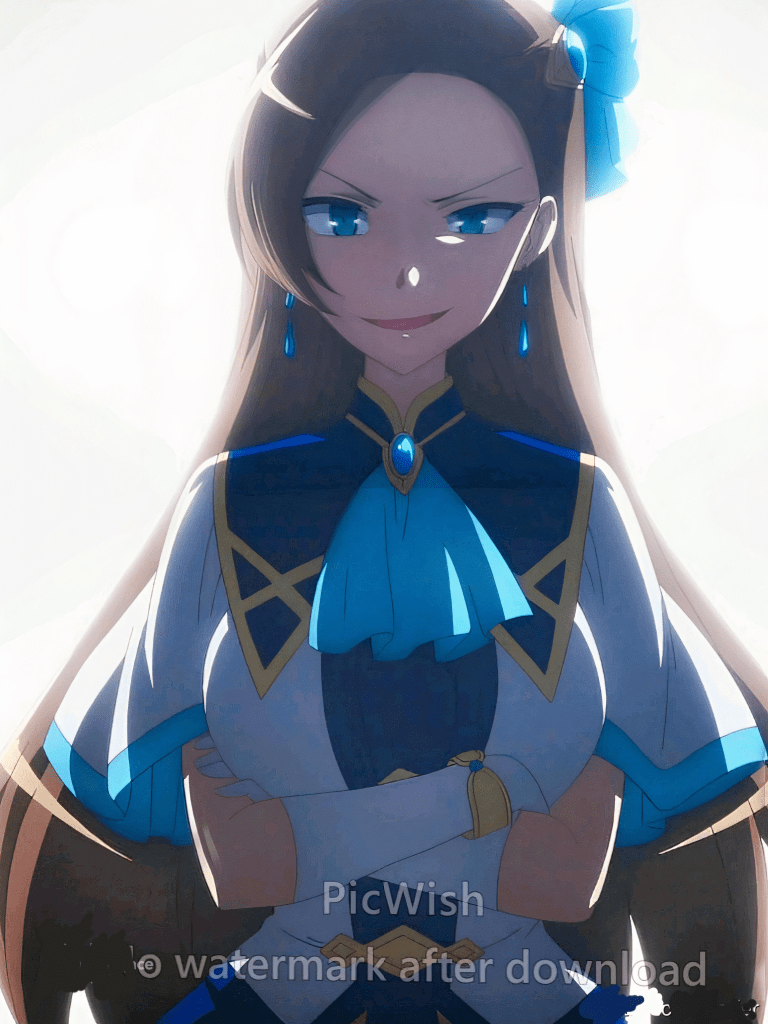
Without a real window into the game before Catarina’s mind was taken over, all we the audience have to go off is what Bakarina claims she was. To be fair, there’s a few scenes that show what would happen to Catarina if she was the same as she was before the plot of the series kicked off. Now, as for concrete proof that this is an Isekai, again, the anime never shows the action, but it does have a flashback to what the pilot of the Catarina mech-suit looks like, all without ever giving her an actual name.

Another thing done differently is a semi-timeskip. The first five or so episodes start off in Bakarina’s childhood before transitioning to her and the rest of the cast as first- or second-years in high school. And although they’re all adolescents going forward, the recurring gag is that before a major life-altering decision is made, Bakarina retreats to an inner council within her own mind where five younger-somehow chibi-er versions of her debate the pros and cons of a certain path before moving forward with the decision.

And to put the cherry on top, the reason she’s referred to as Bakarina has to do with a variety of weird and idiotic moves prior she’d become famous for. I guess I would also find it difficult to explain that the world is an otome game from a different world, but with death acting as a portal from one world to another, the most I can do is reflect on my previous life before pulling a “when in Rome.” While Bakarina acknowledges the doom flags and bends over backwards to avoid them, she brings mannerisms and habits from her old world into this one.

Funny enough, I did a quick Google search and found this Reddit post that posits, with evidence, that she’s on the spectrum. It’s credible, but medical and mental health professionals make the distinction between autism, ADHD, and simply having those symptoms without fitting into either category. But their is also evidence that she is simply braindead. A lot of it having to do with her being clueless to a lot of things going on in the lives of the romancibles, notably their feelings towards her.

The show is entertaining enough and deserving of its second season when you keep in mind that Bakarina is a moron, though not completely. She does have her moments, though the plot doesn’t give much in the way of character development for Bakarina. She stays mostly the same from beginning to end, even after realizing how much of the plot of the game she’d changed. This isn’t necessarily a bad thing, but it’s a noticeable thing to keep in mind, especially for puzzles, such as one episode where everyone else was in despair while Bakarina kept stuffing her face.

But on the subject of idiocy, a distinction needs to be made between intelligence and wisdom. There’s overlap between the two concepts and some believe that they’re merely interchangeable. But that’s false. In layman’s terms, it’s merely the book smart VS street smart debate. A professor can tell you all about physics and maths, but will probably be lost in the worst parts of the Bronx. On the other end of the spectrum for wisdom, someone may be unable to do complex maths, but they can still learn you a thing or two about life.

The anime’s has two seasons with 12 episodes each plus an OVA. It was adapted from a 2017 manga which in turn was adapted from a 2014 light novel.
Need I elaborate?

Before I go, I have plans for a post concerning the corruption subplots of the video games, Max Payne 3, Sleeping Dogs, and Spec Ops: The Line, with all three handling it all differently. I can’t say for sure when it’ll be done, especially since Spec Ops had been delisted in most online retailers, leaving me the only option to pirate over it. Once I’ve finished at least the last two games (having finished MP3 before), I’ll have the full context of all three ready.
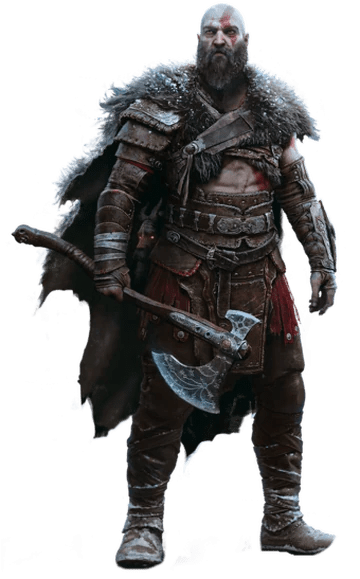
One Vengeful Cudgel VS A Thousand Pacifistic Proverbs

Heroes don’t exist

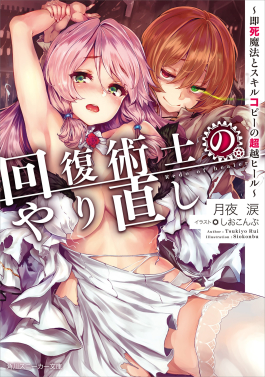
For the longest time, I’ve been on the fence about this series. It came out in 2021 adapted from a manga that already had a surprisingly high female fanbase, so clearly they were the ones looking forward to the Ranked Raping Ecchi. That might sound harsh and considering what I’ve watched in the past, may bode poorly on me. I’m aware of how that comes across and I know damn well I’m not one to judge. I’ve been eyeing up Rias Gremory merch for a few months now; I’ve come around to Anna Nishikinomiya after a few years, despite her being a committed (and scarily athletic) serial rapist; and I believe Monster Musume’s best girl is Suu (Centorea is a runner-up); but Redo of Healer has a sign posted that reads “No God Will Save You if You Pass This Point,” not even Kratos.

So to that I ask, “Will Satan be the one to save me? Because I’m letting curiosity take the wheel on this one, but I’m not sure if I should apply the ‘surprise’ principle on this one.” Well, this time I didn’t go in as blind as I normally do, I read the summary elsewhere and after a few episodes, I learned that the main genre is “rape and revenge” pioneered by cinematic pieces like I Spit On Your Grave, a notoriously awful movie that even I’d think would land me at a war crimes tribunal.

Basically, the main healer, Keyaru, plans an elaborate vengeance scheme. Having retained the memories of a previous go at life, he carries the weight of that hatred and uses it on the people he was supposed to help, members of an explicitly corrupt kingdom and their royal family, most notably the princess and heiress Flare, who gives her ilk her blessing to repeatedly abuse and molest poor Keyaru in exchange for goodies.

On the one hand, I shouldn’t kink-shame—technically, I’m kink-asking and kink-observing. But on the other hand, I have to draw a line somewhere. There are corners of the internet I know better than to explore because I want to maintain my sanity as an adult, and in this case, as much as I love ecchi and hentai, this merely goes to show that I’m a firm believer in the Love Making Philosophy of Sex, as in, two people who are inseparably in love with each other in the kind of way that makes you cringe but also want nothing more than good things to happen to the couple.

That’s not here! Even after Keyaru has gotten his revenge on the rotten royals, he continues to rape and reshape this world from below the belt. The infamous second episode has a “cathartic” torture scene against the princess Flare. Once he’s finished, he irreversibly wipes her memory and gives her a different personality under the name Freia. Did I mention there’s no heroes in this series? What about the female fanbase? Which is what I’m kink-asking the most.

I’ve been to a certain part of the internet that has explained to me like a college professor on the concept of “consensual nonconsent” whereby in roleplaying, both partners (or more) agree to have sex in a manner that replicates a raping—and in the right mood under ideal conditions, that’s… quite kinky to say the least. Obligatory, treat me like a princess, f[glass breaking]k me like a whore. That part I understand, and I just want clarity on whether this is the aspect that led to the majority female fanbase.

So how’s the rest of the series? Honestly, it follows a formula. Keyaru, now going as Keyaruga, encounters a female enemy, she gets depowered and Keyaruga uses his d[bong]k as a baton to knock them into line. There’s harem anime where all the girls love the male MC unconditionally, and then there’s Redo of Healer where the girls neither have a choice nor a real chance to fight back. Even if they try, they lose… to his d[munch!]k. Now, I’m not particularly saying they’re guilt-free themselves; some of these girls have used and abused Keyaruga in his past life, hell, some of the men molest him too. Maybe it’s me, but if diplomacy is a tool at my disposal, it’s the first tool I’m using to get a word in edge-wise. Even in anger, I’m not using my d[thwack!]k as a cudgel to punish my enemies. I’d sooner do to my enemies what Kratos did to Hercules, and I can imagine an ancient Greek coroner trying to make heads or tails of the tomato paste that used to be his face.

It still has some of its shock value, but for lack of a better choice of words, most of it was blown on the first two episodes and they were each 65-70% flashback to when Keyaru was drugged and gangraped at the princess’ commands. S[bark]t, I mentioned Kratos in this blog, I can almost see the comparison if Kratos in the Greek saga went “Full Spartan.” Though the comparison isn’t as apt as I’m implying here. Kratos will only strike if you keep annoying him; Keyaruga will knight you as a sex slave with his penis if you’re female. If you’re male, then your innards have never been more delicious to hungry wolves. Add some salt and you’re gourmet cooking.

Do I recommend Redo of Healer? Before I get there, I want to live up to this blog’s stated mission purpose for once and say that I like what it does. It knows it’s a vengeance story about a hateful bastard intent on taking home the gold in the Rape Olympics. I like that it keeps that consistency in the face of criticism that, fortunately for it, never came because its release window coincided with that of Attack on Titan and that show’s dodgy as hell CGI for that season. Having said all that, I won’t try to sway your opinion one way or the other, just that if you choose to view this for yourself, do so with a particular mindset. Understand the concept of revenge before going in, pick your favorite vengeful fictional character to use as a reference point. I used Kratos as one such example, but if you want equally or more violent examples, you can use that—Hanzo Hasashi, for instance. Come to terms that the sexual assault and rape is taken more seriously this go around. It’s not like Shimoneta where it’s a great big punchline; it’s as much a weapon in Keyaruga’s arsenal as it was (and disturbingly is) in most of the genocidal wars and regimes from real life in the past 50 years (from Vietnam, to Bosnia, to Darfur, to Rwanda, to Uganda and elsewhere). I don’t know about you, but I’m not rooting for or against anyone. I’m merely watching the raindrops come as they fall, and I think that’s a good approach for those who choose to watch this.

If you’ve reached the drinking age in your country, consider taking a swig before watching an episode or two. But mind your drinking. I did it twice, and no hangover can erase the memory of what I’d seen in the first two episodes.

And I thought this was pushing the envelope… やれやれだぜ。

I don’t even know if I’ll read further into the manga…

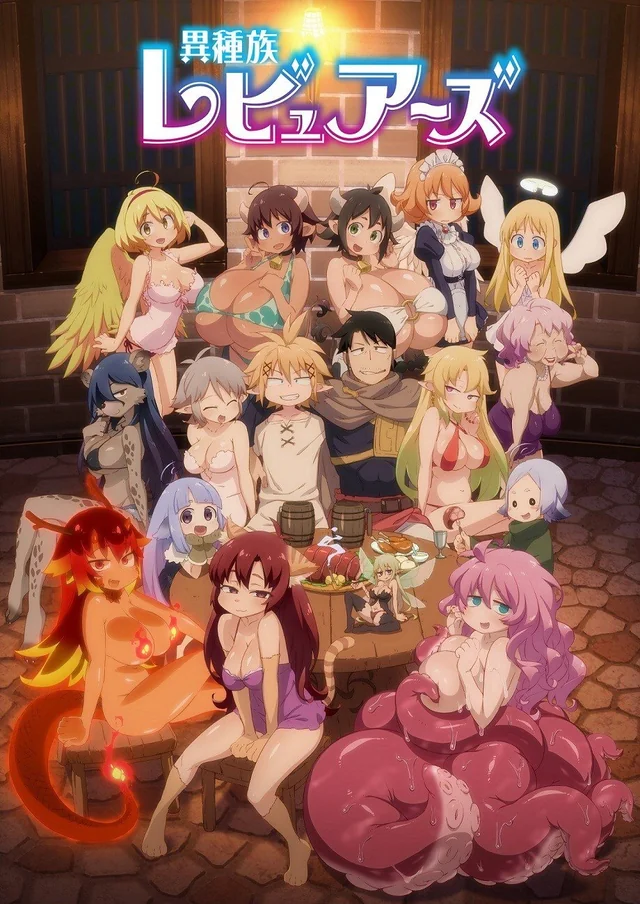
Shimoneta, High School DxD, and Monster Musume: Horny Trio

The three that carried me in community college

Yonks ago, I mentioned an upcoming post that was initially meant to be just another double bill, but it occurred to me that there was a third series that I felt was appropriate to lump in with the other two. These are the three anime that I watched all through college:

  1. Shimoneta: A Boring World Where the Concept of Dirty Jokes Doesn’t Exist
  2. High School DxD, and;
  3. Monster Musume

And we’ll go through them one-by-one. The titles of each should be a giveaway but just in case: each of these series contains sexually suggestive themes, language and imagery. Reader discretion is advised.

Shimoneta (2015):

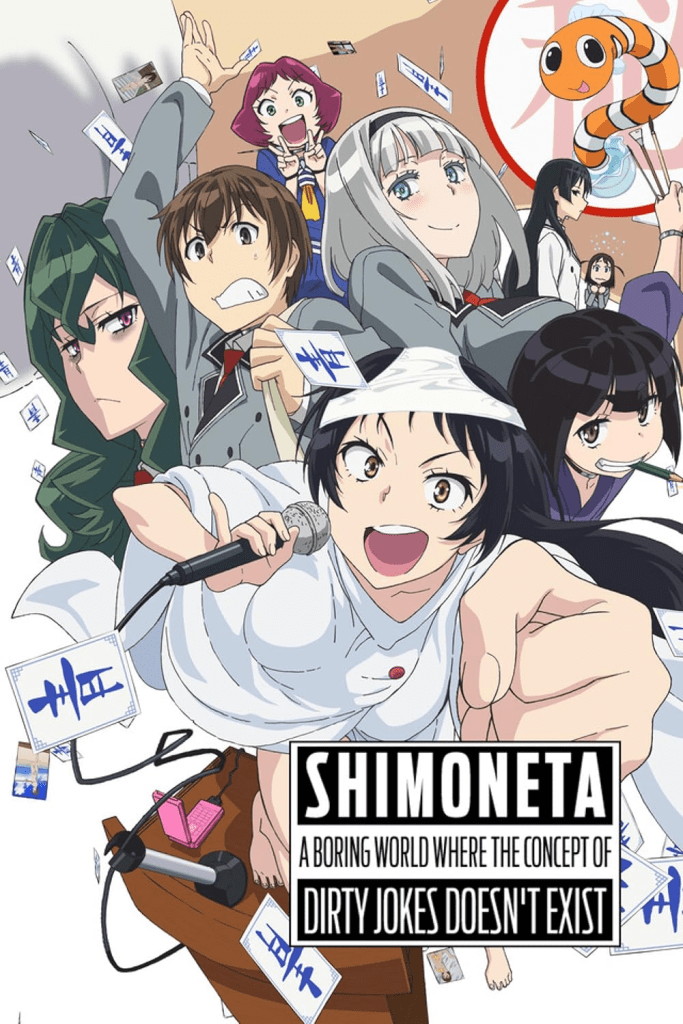
Another anime to get its start in the world of early 2010s light novels, Shimoneta’s concept is exactly as it says on the tin. All language of a sexually suggestive or provocative nature is illegal and if uttered, the speaker(s) is/are arrested by the Decency Squad, a specialized morality police unit whose purpose is to track down and subdue anyone who dares utter such obscene words.

How do they know people are saying s[poop]t, f[moans]k, and ass? By the collars around their necks. They’re designed (read: programmed) to monitor different trigger words, I suspect, by way of detecting the movements of the mouth when certain words are spoken, sort of like how most YouTubers, TikTokers, etc. have to censor/monitor their own speech to keep from the Demon of Demonitization at bay. (Side note: f[plastic wrap]k the algorithm for doing that to our favorite creators.)

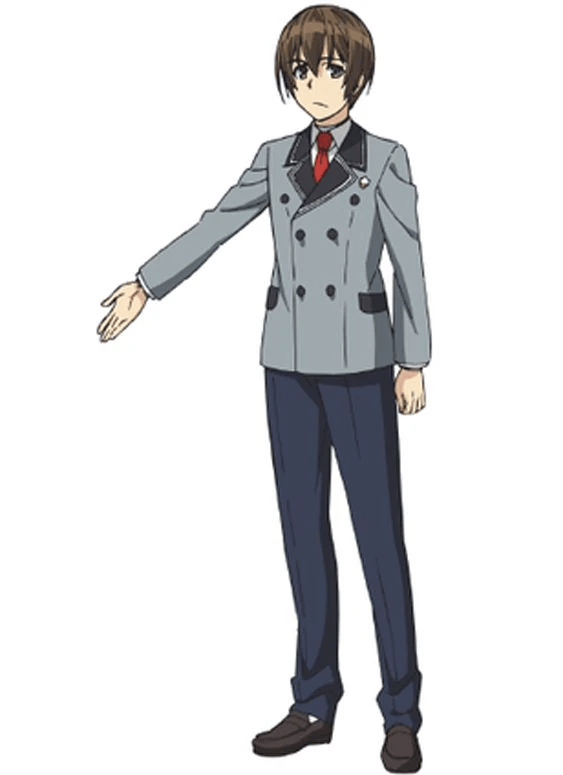
One such character is the protagonist, Tanukichi Okuma. He’s a brand new student to Tokioka Academy and a witness to the indecency of another character he meets later: Blue Snow, real name Ayame Kajou. Ayame takes the alias of Blue Snow whilst on a crusade to dismantle the shackles of this dystopian system of policing speech by way of challenging the response time of the Decency Squad. Under normal circumstances, suggestive language is how you get slapped on the dick (or in Ayame’s case, the tits), but she evades that by dialing a number on her cellphone that deactivates the collar on her neck for three minutes a day, letting her unleash a bevy of inappropriate sayings.

Based on her appearance here, Ayame adopts a Clark Kent persona when around others only to don a mask (a pair of panties, yes, really) when it’s time for her 180 seconds of lewd infamy.

The series isn’t just a man vs society conflict at play, there’s an actual antagonist in the series and she starts off as innocent and pure until the following happens to her:

Channe: Khánh Senseii Anime Kiss

The birth of the villainess of this series. Anna Nishikinomiya begins the series as the class president of Tokioka, but after a mishap in one of the episodes, Okuma plants a kiss on her by accident. If she had any knowledge of even romance, she’d probably have a normal reaction, but this unleashes metaphorical and literal floodgates. She conflates love with lust and 85% of the scenes that she’s in is a display of female-on-male sexual assault/rape. I’m not kidding.

Obviously, it’s played for laughs in the series and there’s a lot to be said about societal discourse surrounding male victims and their female perpetrators (a discussion I’m not qualified to talk about on a blog based on entertainment, but would have no problem entertaining in mixed company), but without getting too dark and focusing mainly on the central theme of the series, Shimoneta is a display of the consequences of policing morality and human behavior. If you’ve been on the internet for quite some time, you may recall an era when cancel culture went haywire and a small fraction of forum posters chastised trolls online to hell and back for a few racy comments here and there. Not that it was unwarranted, the internet around the time of the GamerGate controversy was an interesting time to be on the internet, but interspersed with genuine policing were impromptu witch hunts conflating ignorance with curiosity, and this went beyond just suggestive or provocative commentary, lest we forget the cultural appropriation vs appreciation argument that was prevalent at the time. Though these days, the conversation has moved towards intentionally ignoring sex organs, due to a variety of factors that have massively influenced the internet. Sorry, digressing.

In Shimoneta’s case, it proves how difficult at the least; Sisyphean at the most such a task of policing even speech can be. Not to mention a shortfall that accompanies the series from start to finish about how to go about this. You’ll notice that speech patterns themselves are the main crime, not the physical aspect itself. Now, there would still be procreation which this world would likely allow for survival’s sake, but another conversation can be had about how conspiracy to commit is addressed more seriously than an actual crime in this world.

This blog from 2018 has more to say about Anna herself and with a finer brush than the broadstrokes I employed here.

Having said all that, I still recommend this anime for anyone wanting a closer look at an example of how bad overpolicing behavior can get or if you just wanna see the most athletic Japanese school girl in the world hunt down the object of her “affection.” Beware her homemade cookies, IYKYK. Now onto:

High School DxD (2012-2018)

My personal favorite for being R-rated and uncensored, the light novel ran from 2008 to 2018, ending around the same time as the anime’s fourth season. Whereas Shimoneta’s content is light on explicit nudity and fan service, High School DxD throws the censorship to the wind. Back during the Funimation days, the English dub played up both the nudity and the jiggle physics. From threatening to get naked to actually getting naked; I like the progression so far.

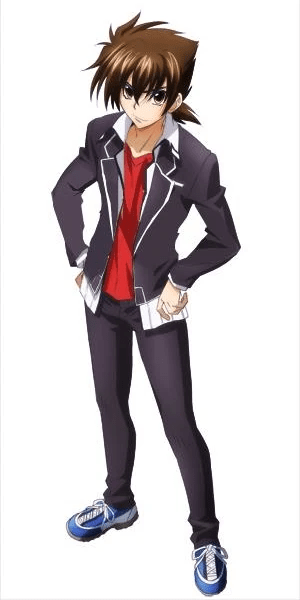
In High School DxD, Kuoh Academy recently transitions into a co-ed school for the new schoolyear. A few male students enroll, likely taking advantage of the 8 to 1 ratio of girls to boys in the hopes of scoring big before Kuoh fully integrates. One of these boys is a massive pervert and otaku named Issei Hyoudo. He initially fits the bill of a stereotypical otaku in all but appearance. Body pillows, an alarm clock with different anime girl archetypes waking him up every morning, an extensive hentai and porn collection shared with his two other friends, and a MIGHTY NEED to get some titty.

It just so happens that one particular set of breasts happens to belong to this devilishly gorgeous redhead, Rias Gremory. More than just a sight for sore eyes, Lady Rias is a fierce fighter and one to defend those she cherishes to her dying breath. Outside of battle, she’s a kindhearted young woman, compassionate, and reliable. She’s the head of Kuoh’s occult club, thinly masking her connection to the paranormal as a devil herself and making great use of the common tropes associated with angels and demons/devils: angels are depicted as bone ugly to ward off evil while demons are depicted as drop dead gorgeous to tempt mankind into following their id. In an ironic twist, the series depicts devils as more heroic than the beings they fight against.

As much as I make that sound like an engagement wearing the clothes of praise, there’s an actual plot behind the plot here. It takes a lot of cues and tropes from the Christian bible with the concept of angels, devils, and fallen angels. Following the devils, their depiction seems more sympathetic in the series as the factions do have a fair share of shady and unscrupulous characters. The overall plot plays up the biblical angle with the fan service going into overdrive, so Rias, Issei, and the Occult club are all (knights) in service of Satan, or in this case, in service of one of those appointed as a satan. To quote Anton Szandor LaVey, founder of the Church of Satan, “if you’re gonna be a sinner, be the best sinner on the block,” and it seems that Issei is guaranteed to live up to those ideals.

The juxtaposition of magical action and theological babble with T and A and convenient panty shots is what kept me going until about halfway through the fourth season. When it comes to censorship, normally I’m an opponent depending on the company I’m with. Throwing out f[crunch]ks, s[footsteps]ts, damns, asses, and other such forbidden words in a room full of bureaucrats allergic to the sun makes you seem immature compared to a gathering of mobsters, gangsters, or even servicemembers, all things considered. I censor swearing and nudity here for presentability and professionalism, but seeing as I’m writing about a trio of anime that joke or outright show you uncensored boobs, if it wasn’t for the presentation, this whole blog would have no reins. Before we move on to the third and final series I want to talk about, let this ending convince you to watch High School DxD if the above hasn’t already:

Channel: SE NPAI

And last but certainly not least:

Monster Musume (2015):

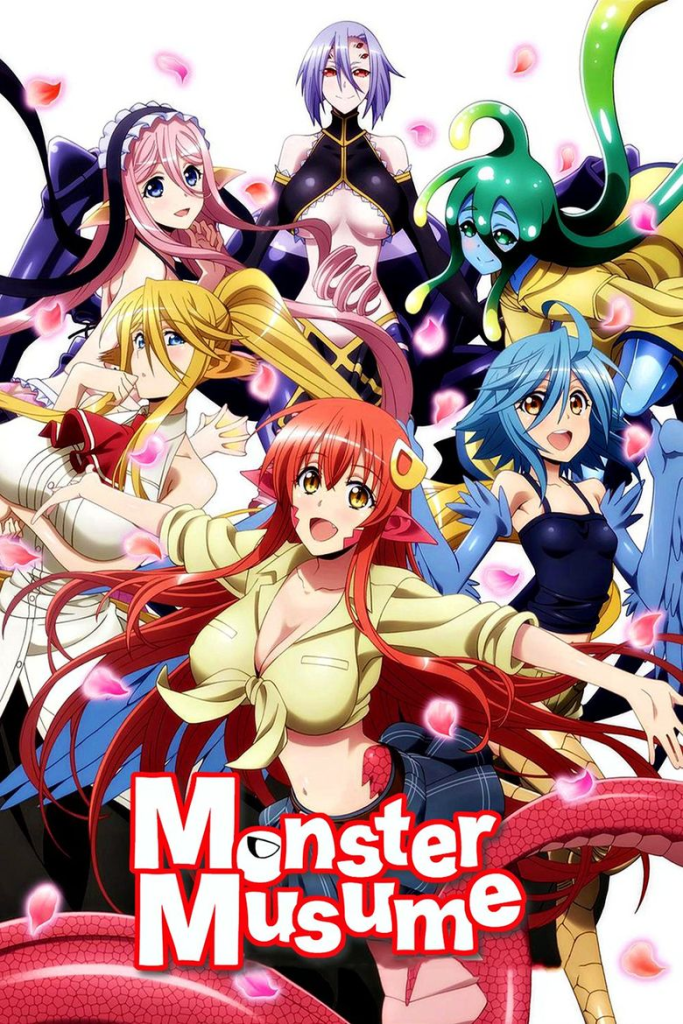
A harem series like High School DxD but appealing to even more fetishes while also putting the protagonist in a tricky situation like Shimoneta, though with a different context. The plot of this horny adjacent series is that monster girls of various mythical origins are enrolled in a program not dissimilar from foreign exchange student programs in real life and one of the people who is accidented/voluntold into the program is regular human person No. 4986 Kimihito Kurusu.

One of the coordinators, Agent Smith, mistakenly sends a lamia (snake girl) Miia to his house to take care of her under the the circumstances that they refrain from conflict or copulation. Easy rules for Kurusu to follow considering the consequences, but as the series goes on and more and more monster girls share a roof with the man, his physical restraints are put to the test seeing as these women are physically capable of bending him like straw. More than once, he’s been grievously injured through accidents as none of the girls are even remotely aware of their gap in human endurance and their own strength.

Basically, it’s the equivalent of swapping Kratos, a character of pure strength and raw anger with Lester the Unlikely from his titular game. Kurusu exists in a world where monster girls damage him even without the promise or threat of snu snu, and yet, he’s not that kind of guy to engage in his temptations. Using Okuma and Issei as a scale of unfortunate to pervy, Kurusu is definitely closer to Okuma, yet we can put in a different category for him specifically seeing as how he doesn’t exactly live to fulfill is silly desires. He’s a blank slate of sorts that the viewer may put themselves in the shoes of.

Monster Musume has the makings of a horror show without the horror. It’s a harem romcom slice of life with horror elements featuring a protagonist who simply wants to live the most normal life allowed by this society, but is forced to share not only this world, but his dwelling with a harem of monster girls he’s forbidden from touching intimately because the agent that f[piano]ked him is functionally identical to Aqua from KonoSuba.

Don’t let the Matrix reference fool you, she’s not as efficient as those clones. But she does look good in a suit.

Another thing worth mentioning is that while the other two series in this post began as light novels, Monster Musume is a manga first, with a spin off light novel series that also got an anime adaptation: Monster Girl Doctor.

Take these three as my recommendations for when you think there’s too much wholesomeness to go around and not enough lewdness. There’s the possibility of getting muscled by the thirstiest girl in the world whilst on a crusade to curtail censorship; a harem of lovely ladies whose tits shake even when still; and a harem of lovely mythical monster ladies who’d each be wife material all their own if it wasn’t for the rules.

Whatever pirate site you watch your anime on (don’t worry, your secret is safe with me), give these all a watch if you haven’t done so already. And if you’ve seen them, see them again! Do it!!

Date A Live: On a Whim Again

The life I live is watching anime with friends…

…and I can’t wait to do it on a whim again. I’m not apologizing for that Willie Nelson reference.

Date A Live honestly needs no introduction. It’s a series that I’d heard of for a couple years prior to actually watching it only to hear of a fourth season planned last year while I was already six episodes into the series.

It began life as a light novel with a run from March 2011 to March 2020, exactly nine years of writing from author Koshi Tachibana. A sci-fi fantasy romcom whose anime adaptation was released in 2013 and whose fifth season debuted in April of this year. Funny that light novels from the last decade are going strong in the 2020s.

So what’s Date A Live really about? Breaking it down by its genres, the sci-fi aspect comes from the world itself. It’s somewhat set in the future though no specifics are given so you the reader/viewer may fill in the blanks how you see fit. Spatial quakes or tremors in the solar system start affecting earth in a very negative manner, by way of leaving behind giant craters in the earth, one of the most notable being somewhere along the Eurasian steppe. Bad day to be wandering around Kazakhstan that day.

The in-universe explanation for this is that the space tremors follow the arrival of beings known as Spirits who all appear in the form of girls around the same age as the main character, Shido Itsuka–and protagonist powers aside he does have a crucial role that I’ll get to later.

Further, these Spirits possess abnormal powers, not the least of which involves the likes superhuman strength and devastating abilities the likes of which would make Babidi from Dragon Ball very, very jealous–and also ties in with the fantasy aspect of the series. There are two ways to combat these Spirits: one is by way of actual combat; and the other adds in the romance aspect and our main protagonist, Shido Itsuka.

Now that we’re putting two and two to get to four, you may have predicted that Shido’s task in this series is to romance the Spirits and prevent utter bedlam with the power of love, and you’d be right. The harem aspect is well advertised and if you know a few things about the harem genre in animanga, then you’re probably also aware of the main selling point: fanservice. Flash a boob once or twice, get some cheeky panty shots in, throw in an accidental pervert with multiple different -dere types and voila! you’re cooking a mean beef stew.

However, what I think separates Date A Live from contemporaries of this type would have to be the individual girls themselves. Even as I’ve only just wrapped up the second season of the anime, I’m seeing more than just comedically sexy eye candy. And I’ll even throw a bone to Shido himself. Rather than be just the generic harem protagonist who behaves as a stand-in for the audience, there is a personality to the boy for once. He’s shown to be persuasive and caring, especially since his position in the series is that of nonviolence. He’s basically playing the pacifist route in Undertale.

Meanwhile, the other main adversary present aside from rogue Spirits yet to be wooed by our hunk Shido is the Anti-Spirit Team. Similar to Japanese Special Forces, their purpose is to find and contain the damage the Spirits cause, a lot of the time through lethal force.

Then there’s the girls that Shido romances to the good, less destructive side. A lot of the time they fit well into the typical archetypes we’ve seen in other romance anime, but the backstories and personalities do make them intriguing. Some of them do genuinely want to live quietly and comfortably with Shido, but others answer the question “Violence?” with an enthusiastic “Yes!” Case in point: one of the most iconic characters in the series:

You can’t fix her, nor will she fix you or even try to make you worse. She’ll just leave a massive stain where you standing three seconds ago.

The series explains that the Spirits themselves come from different dimensions, but (minor spoiler) it’s possible for a human from this dimension to become a Spirit as well as what happened to some of the characters in the series. The AST is another display of the sci-fi within the series. With the Spirits being what they are–superpowered high school girls–the members of this elite team have to take the “fight fire with fire” approach to combating them with hi-tech battle suits. Not on par with what has been depicted all over the Gundam genre, but impressive all the same. It’s more like stripped down Iron Man armor in appearance.

Depending on your investment in the series overall and how you feel about the genres explained, you might get a kick out of it, or it might just be another harem series to add to the pile. Neither of these assessments are right or wrong, but it shows that it’s a product of its time. Does that mean the series hasn’t aged well? No. As I said, I got into it weeks before a fourth season was greenlit, not to mention a fifth season debuted a few months ago which suggests a determination to see it through to the end.

I know I’m not the first person to talk about this series and I will not be the last to do so. What I can do is simply point you in the direction of the series and however you choose to consume it. If possible for you, I say finish all five seasons of the anime and while you’re waiting on confirmation of a sixth, beat them to the punch with the light novels.

Before I sign off, since there’s a certain demographic that loves the type of character that I put further above, I feel the video below best describes that mindset:

Channel: Gianni Matragano

But hey, I like kickass ladies too.

For Saturday, June 8, 2024, I recommend the YouTube channel Christopher Chaos.

https://www.youtube.com/@christopherchaos/videos

Run by a retired Army Sergeant and Motor Transport Operator (Military Truck Driver), Christopher Chaos is a military explanation channel dedicated to detailing the possibilities and benefits that come with enlisting in the Army along with the occasional anecdote about his own personal service. Each servicemember’s/veteran’s story is unique due to how big the U.S. military is and how fast changes can be made while serving. Christopher himself explains that he served from 1999 to 2010, so most of his stories show the culture of the Army during his service. That being said, he does still keep up with Army and military news for the purpose of educating would-be recruit candidates.

And if you’re concerned about it, he’s not endorsed or sponsored by the U.S. Army. That chapter in his life is behind him.