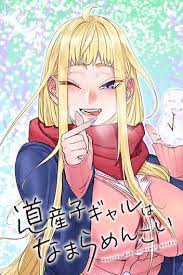
Unpopular Nerds become Preppy Rebels or Anime Rebel Without a Cause

A misnomer since it’s a manga as of writing this

Let me know if this sounds familiar, a shy, nerdy girl with a nonexistent social life in middle school redoes herself come high school into a gyaru and becomes the cock of the walk at school with an expanding circle of friends. Quick! What am I describing? A new and circulating manga or an R-rated doujin by Shindo L?
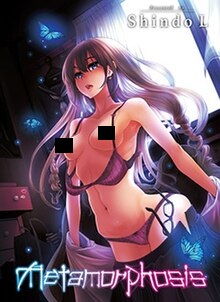
Dark jokes aside, I couldn’t help but draw the comparisons in the first chapter, but delightfully and thankfully, the subject of this manga isn’t about an adolescent girl being coerced into becoming the town bicycle by cliques of parasites. Instead, the manga on the table is a wholesome slice of life appreciation for the gyaru subculture, something I’m intimately familiar with as regular readers may know.

The manga is known as No Gyaru in This Class by Shigure Tokita. I’ve recently wrapped up the eighth chapter and there are currently 20 with many more to follow going forward. Halfway through this brand new manga, there are three central characters: Mirei Nanase, Yushin Mamiya, and Subaru Raisaka. All three were completely different people before the transition to high school — Nanase was a straight A student who put all of her experience points into being the best student in the class at the expense of a social life; Mamiya was in a similar boat; and Raisaka had put all her experience points into sports and fitness.

All three coincidentally chose to remake themselves and get more friends in high school, which puts this manga in the same boat as Komi Can’t Communicate based largely on the main characters’ goals. So far, I haven’t seen either character mention their previous lives in middle school prior to their transformations, though Tokita likes to have fun with the characters in the chapter covers.

I’ve already explained the gyaru subculture, so those who are paying attention may have already spotted the misnomer in the title. The nuances of Japanese popular culture require a reframing of the word “rebel” in this context. It’s not unheard of for Japanese schools to police students’ appearance, even in regard to hair (even though some Japanese have naturally light brown hair), so going purely by this definition, Nanase, Mamiya, and Raisaka are all rebels. In Mamiya’s case in particular, he tried to reimagine himself as a tough guy, but from what I’ve seen and how he’s portrayed in the manga, the tough exterior does nothing to hide his true nature. Nerdy and intellectually gifted he may be, he’s always been a softie, thus inducting him into the Soft-Hearted Brawler trope, though only on a technicality. It’s still early and we’ve yet to see Mamiya throw hands, unlike others who fit this trope.
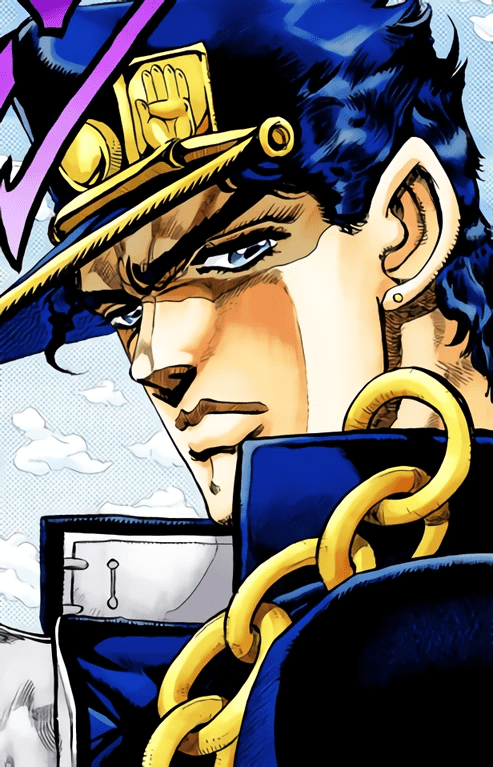
As for a character who could potentially fit the trope better, Raisaka was previously manufactured like the average anime tomboy complete with the short hair, energy, and fitness levels to match. Comedically, she’s surpassed Usain Bolt when it comes to speed and may just be strong enough to bench press Manhattan Island. If Mugi from K-On! was a different person, she’d probably react like this:

As a gyaru in high school Raisaka is extra taciturn, or she may have already been that way. Either way, the turn around for all three to becoming these flashy new kids on the block is a day-night difference. I’d give to be the one person who recognized either one of them and said, “They’re the last I would ever expect to turn out like that.” High school slice of life may not be everyone’s cup of tea, but I’m enjoying this one quite well. It does well to turn several tropes on their head and the ones that remain in place are executed decently enough to keep scrolling on the screen.

Will this get an adaptation? An OVA? Will it continue on for years? I’ve since retired my Nostradamus powers so I won’t comment on any of that. As far as first impressions of Tokita’s works go, Reddit holds this mangaka in high regard based on other series they’ve done. The fact that one of their manga is being mentioned on this blog at all pretty much guarantees a recommendation, not to fans of their work who would have already started reading once word got around that a new manga was in the works, but to newcomers like myself who want a break from all the heart-pumping, mouth-watering Shonen action. It’s a fun manga about reinventing oneself for their own benefit and getting rewarded with friends and good times. One could argue that the characters are merely lying to themselves and each other for this radical change, but to be fair, no one is really lying about anything and they wouldn’t really need to. Honest characters never have anything to hide or if they do, they do it very poorly. I haven’t gotten to that point in the manga, and while I did say I’m not going to be making bold predictions, I see one of two outcomes: they each reveal what they were in middle school, or they don’t say anything because it doesn’t matter in the long run. There’s really only one way to find out and to that end, Manga Plus, Shonen Jump, and other unconventional manga hosting websites have the series in stock, so you have your pick of the litter, though as with many things, exercise caution.
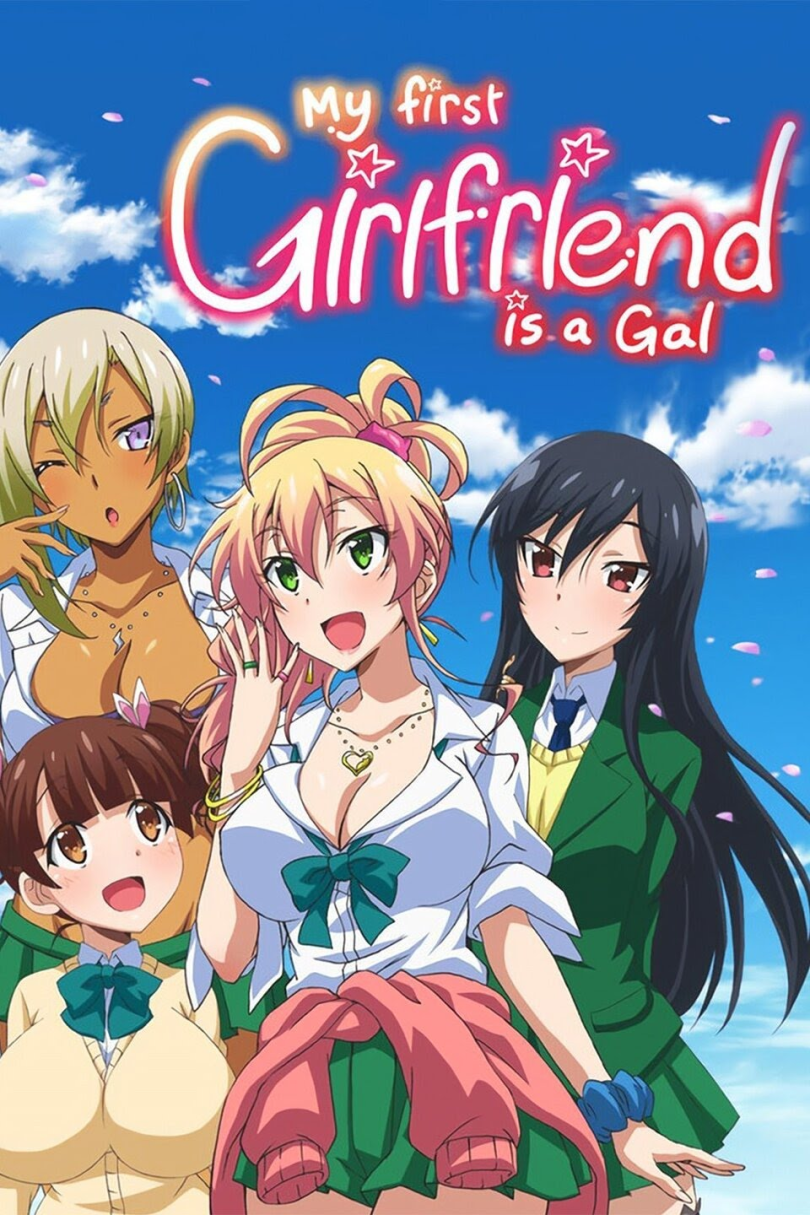
My First Gyaru Anime

This may or may not ring some bells

A while ago, I stated that the YouTuber Knowing Better claimed that Hollywood has a greater influence on the military than you’d believe. Sticking with that logic, based on my observations, I want to say that it’s a bit similar in Japan. Stories get told and retold and inspire mangaka to start putting pen to panel. In this context, the subject is that of subcultures. If you’re familiar with western culture, you’re familiar with some age-old subcultures: the goths, the jocks, the nerds, the popular kids, the emos, the preps, and the townies–all of which can be found in RockStar’s hidden gem Bully.

You already know I recommend the s[marbles falling]t out of this.

In Japan, there are several other subcultures that have come and gone over the years: bosozoku (motorcycle enthusiasts), delinquents (bancho/sukeban), otaku (nerds but extra), and the topic of this post: gyaru.

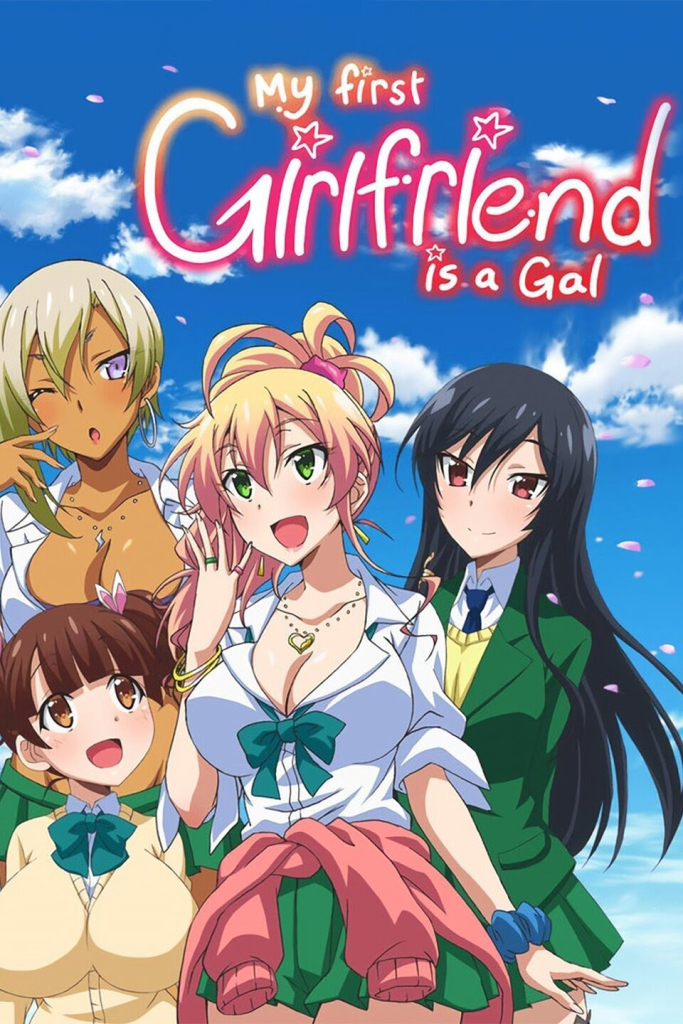
I’ve talked before about gyaru/gal animanga, including one that got an adaptation this year. Now, we’re taking a look at another gyaru-centric series: My First Girlfriend is a Gal (alternative title: Hajimete no Gal).

Another relic from my community college days, I was made aware of it from a WatchMojo Top 10 list on the worst girlfriends in anime voiced by Todd Haberkorn when they kept him locked away in their basement. Don’t worry, it was more of a mancave; think of it like the Scandinavian approach to imprisonment.

In that list, one of the characters from the anime, deuteragonist and love interest, Yukana Yame, made the list for essentially leading the protagonist, Junichi Hashiba, on. Not an unfair or untrue assessment, but when I had a look, I felt that there was more to it than that. But I’m somersaulting over a battleship here, let’s build up.

Typical romcom anime, a trio of dudes have a conversation describing perverted and sexual things about the girls in their class. One such girl makes the topic of conversation and on a dare, Junichi is challenged to ask her out on a date. Scummy. And Yukana entertains it. Also scummy. Honestly, I remember being that horny both at that age and when I watched this series, and I did watch it from beginning to end, mainly because of the eye candy.

These days, the terminally online “crusaders” would cry fowl at a busty teenage girl, but this is where I play the hypocrisy card as just about every single one of us knew or knows someone whose bodies developed that fast. I definitely did. What the hell happened to “no bodyshaming?” Hmmm? But f[anime girl moaning]k it.

Now that I look back on it, with the experience I’ve gained (mostly from observing other relationships flop around my single ass), never mind a bond formed by ignorance, this is a bond formed by deception. They didn’t even start out taking each other seriously; Junichi was expecting the hardest rejection while Yukana initially planned on milking him dry without using her hands. I’m very sorry about that; it’ll happen again.

But to play Saul Goodman and defend these clients, there is some character development for them both. They hang out more often, and Junichi gradually adheres to the lessons imparted to us by history’s greatest philosophers: the Spice Girls

If you wanna be my lover, you gotta get with my friends

And Yukana’s BFFs include but are not limited to Ranko Honjo, a contendor for the Bimbo Olympics who wants to f[snaps fingers]k both Junichi and Yukana (most likely at the same time); Yui Kashi, a Twitch streamer whose desire is to wrap everyone around her finger (she ain’t beating Makima, just saying); Nene Fujinoki, Junichi’s childhood friend and one of the bustiest lolis I’ve ever seen until Ilulu (also the subject of a specific character’s troubling fetish; more to follow later); and a few others who, although reportedly got more love in the anime than the manga, not enough to make a big enough impact over the course of 10 episodes.

Even though it doesn’t really start out with the best of intentions, the character development does leave them marginally better than when they began. Junichi stops letting his penis think for him the more he learns about Yukana and her… well, it’s not a harem, but she functionally has more women than Junichi will hope to have. Out-rizzed by your own girl…

Fortunately, you know who to turn to whenever you want a threesome.

If Yukana was ever the subject of salacious rumors, her behavior on screen discredits such slander. Like Junichi, it’s highly suggested that not only is she too a virgin, she may be even more nervous about her first time than Junichi is. The gyaru aesthetic is all for show and tell, as in she’s showing her friends and the audience while telling us that she just likes pretty things. But that’s a given.

Conversely, to use the teachings of Lao Zi, within this light side is a bit of a dark side. I mentioned earlier that one of Junichi’s friends, Minoru Kobayakawa, has a troublingly illegal fetish that conjures up the message of the Oingo Boingo song Little Girls. Not lolis or short girls, young girls. He does nothing to hide it in the anime (no clue if its subdued in the manga) and will remind you what his ideal type is. He’s a disturbingly honest Harvey Weinstein sans the influence of Hollywood kickbacks.

The series plays it off as a joke which is probably lost on me since I cringed every time Minoru made an appearance. All things considered, the other Minoru from My Hero Academia was divisive in his own right, but probably shouldn’t have had as much hate directed towards him as this Minoru. Inappropriate and depraved, at least he eyed up adults.

Also, he gets humbled at every turn so whatever debt he owes, he’s overpaid it.

The other Minoru… one of the other guys said it best when he claimed he’d end up on the sex offender registry. Don’t take this as a dissuasion or an argument against watching the anime; this is still a recommendation, just keep in mind that this troubling aspect is in the show. It’s a short viewing, 10 episodes and an OVA that I haven’t seen myself. And of course, you have the choice of sitting through ads like a trooper and joining the dark side and becoming a pirate. The side effect of the latter choice is fighting Luffy.

Hokkaido Gals are Super Adorable Coming Soon

Reorganizing my list is sometimes a blessing in disguise.

Over the course of this blog, I’ve put sneak peeks at the end for the next week’s topic, and I did that last week in light of some recent news. The manga Hokkaido Gals are Super Adorable (alternate name: Dosanko Gyaru is Mega Cute) has been greenlit for an anime adaptation in January of 2024.

I believe I’ve also made it aware that more often than not manga series I champion just sit in the back of the class unnoticed and unsung by handful of devotees while popular manga that I don’t pay a lot of attention to are the ones that get a greenlight relatively quickly. This is a rare instance of another manga I happen to enjoy getting the anime treatment, and soon. I recall reporting about adaptational rumors in late June concerning the My Hero Academia spinoff, but so far, no further reports on that have surfaced as of this writing, sadly. But at least you have a complete arc to round out the picture of the MHA franchise.

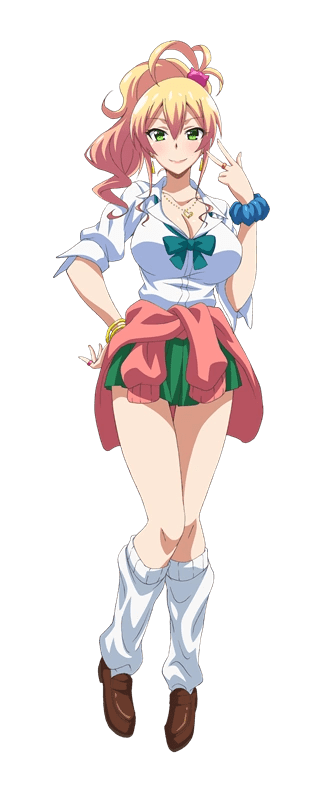
For Hokkaido Gals, let’s catch up to speed. In Japanese pop culture, the gal (or gyaru) is a subculture of usually teenage girls engaging in fashion trends. The typical gyaru is seen normally with a sweater (wrapped around their waist or actually wearing it), a bright-colored mini skirt, thigh socks or leg warmers, a blouse with the top few buttons undone, often light or even blonde-dyed hair, makeup, jewelry, and an attachment to her cell phone. Derisively, gyarus are said to also have a stigma of being loose and promiscuous. Call it fanservice or a mean-spirited inside joke, but of the gal-focused series I’ve seen or observed, in all but demeanor they give me the impression of Hollywood’s idea of the popular girl/cheerleader archetype.

All things considered, I think these tropes were the writers’ best attempt at therapy for an unresolved wrong. But between Galko-chan, Hajimete no Gal, and even Dosanko Gyaru among others, I’m finding that this negative stereotype is getting debunked as we go on, though its replacement isn’t all that much better.

Hokkaido Gals are Super Adorable does a few things differently than previous gyaru-centric series. The typical trope is that it’s centered in Tokyo, the male MC is from elsewhere in Japan, and the gyaru MC is a native who knows her way around the Tokyo Metro. In reality, it’s a statement that means she can navigate the tens of millions of citizens, residents, and tourists who coalesce around the main hot spots of Akihabara and the famous Shibuya crossing. It’s really no different from highlighting any given tourist-y spot in any major city like NYC or L.A.

So to turn this trope on its head, the main MC is himself a Tokyoite who comes up to Hokkaido. This teaches me the power of a popular thing physical or conceived, so there might be an equivalent in other parts of Japan. The male protagonist of this manga is Tsubasa Shiki, the rather upper-class sheltered Tokyoite who has moved north to Hokkaido with his grandmother. On the way to school, he runs into gyaru and female protagonist of this manga, Minami Fuyuki, and while he attends the high school up in Hokkaido, Tsubasa meets other gyaru characters in the form of Sayuri Akino, Rena Natsukawa, and interestingly, Fuyuki’s mother.

When I say Tsubasa’s a sheltered upper-class guy, I mean it in the sense that he grew up comfortably and averagely enough to openly declare his main attraction to a very average type of Japanese woman; dark hair, composed, reserved, prim and proper — none of which are inherent in Fuyuki. As a matter of fact, she’s the type of gyaru I described earlier in this post. As for that stereotype that seems to have replaced the derisive promiscuity one, Fuyuki is also somewhat ditzy and short-sighted. In the early chapters of the manga, she’s shown to struggle with studying and even test-taking as Tsubasa and Sayuri make strides when all of them study together while Fuyuki struggles to catch up. It would be more accurate and charitable to say that she doesn’t have the kind of academic intelligence. Honestly, for all the sightseeing done in the manga, she’s a shoe-in for Hokkaido tourism, especially in a place like Sapporo or Hakodate.

Sayuri combines two tropes into one, but also comes with several surprises of her own. In appearance, she’s exactly Tsubasa’s type of girl and in fashion she dresses like a gyaru, even if only slightly. For the surprises, early in the manga, there’s two and they have an uneven connection. Sayuri has a condition known as hyperhidrosis, or excessive sweating, and thus she refrained from intense physical activity. Instead, she’s become a hardcore gamer goth girl, probably the type to skip over cutscenes and 100% a game. Sounds like someone else I know of.

Rena Natsukawa is a third gyaru character, but is also a hafu, meaning that she has one parent who isn’t ethnically Japanese. She’s also a high-achieving student who just so happens to have near-unrestricted access to the library and is a tutor to her peers. Moreover, she’s admired by Fuyuki herself, so if Fuyuki ever needs help with her studies, Natsukawa-san is not too hard to find.

What’s interesting about this manga is the common tropes that are broken down. It borrows from series like Hajimete no Gal and Sono Bisque Doll, while also carving something new for itself. Call it for what it is, but with so many series alluding to or stating that they’re set in Tokyo, it’s nice to see other parts of Japan get the spotlight they need. It’s something I welcome personally when someone outside the U.S. goes to a place that probably doesn’t have a strong tourism industry, though on the other hand, the isolation tends to suit places like this better. No outside disturbances to ruin what makes a certain place unique.

The gyaru characters come into stride in their own unique ways. Since I’m only about twenty chapters in with the manga clocking in about almost 100 so far, I can’t say with certainty if there are more gyaru characters who show up down the line, but keeping the cast so small thus far does a lot to flesh them out evenly and gradually as the series progresses. Most of what I described of the characters thus far is in the chapters they each debut in with more to be revealed, but again, I’m not that far as of writing this so even if I wanted to spoil, I couldn’t. I really want those who’re interested to catch up to the manga in time for Silver Link to start distributing the anime next January.

Once it airs, if there’s nothing else taking my time away, I’ll report my findings as it airs.

While my hopes are up, some poking around in associated forums on Reddit leave me with a few concerns. I refrained from spoiling myself, but I’ve heard through the grapevine, that the most recent chapters haven’t been as good in regard to characterization, seemingly undoing the character development since the beginning and, to my interpretation, trapping Tsubasa in a needless love triangle. But I’m regarding these observations as rumors until I see it for myself, and I advise anyone to do the same. As for where to read the manga, it is getting released in volumes here in the west, but to catch the chapters as they release, my source has been the Manga Plus website and app run by Shueisha themselves.

https://mangaplus.shueisha.co.jp/titles/100116

Alternatively, there’s pirate sites, though it’s best to use caution. I recommend Manga Plus for this series specifically, because every chapter is available without subscription if you’re short of cash yourself. It’s a fun series overall and I hope it makes a seamless transition to anime. Still, holding out hope for Vigilantes though…