Another week, another comparison between two games I’ve talked about at length on this blog before concerning warriors scorned by the powers that be and in a way that requires service to an opponent and/or taking the entirety of the Pantheon and unleashing the wrath of Timur the Lame onto it.
Maybe it was a coincidence, but Stalin never should’ve trusted Hitler for that long. Same with Mussolini, they already hated each other.
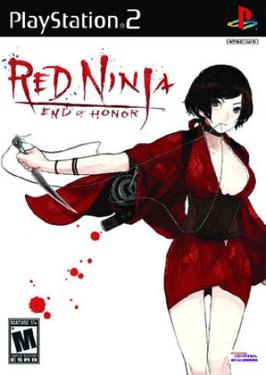
To summarize the plot of Red Ninja again, young Kurenai’s father is killed by the Black Lizard/Kurotokage clan, she is left for dead, and recruited by the enigmatic Mochizuki Chiyome, aligned with the Takeda clan and its leader, Takeda Shingen, to serve him and dismantle both the Kurotokage and Takeda’s enemies: the Oda clan. Her various methods of disposing of enemies consist of a weapon at the end of a chain used creatively, classic shinobi stealth and deceit, her own body as hinted by her suggestive outfit and the video game’s cover art, poison darts, and trademark shinobi tools like kunai and shuriken. There’s a blend of typical tropes and Japanese history, of which I approve as a Japanese history enjoyer.
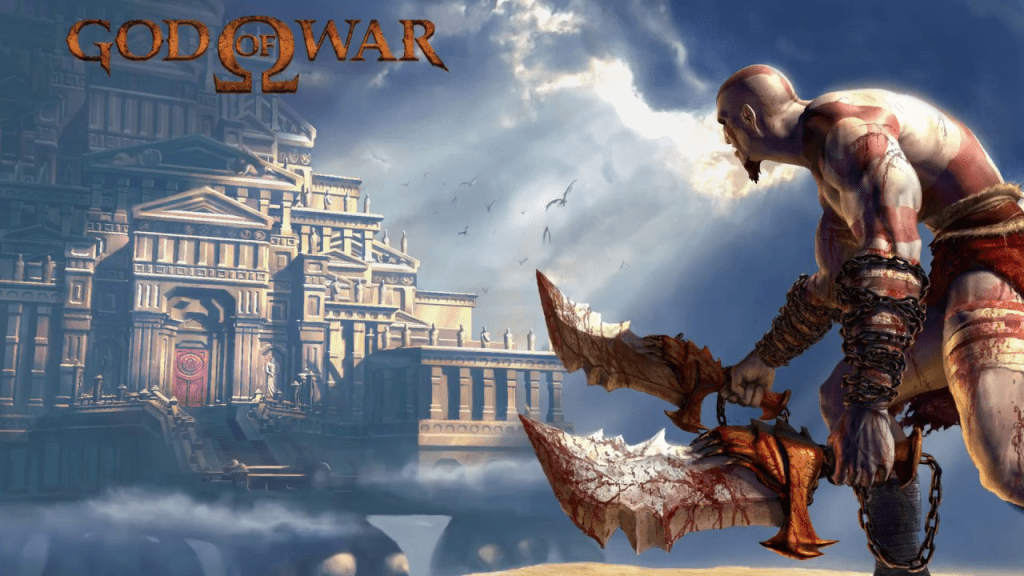
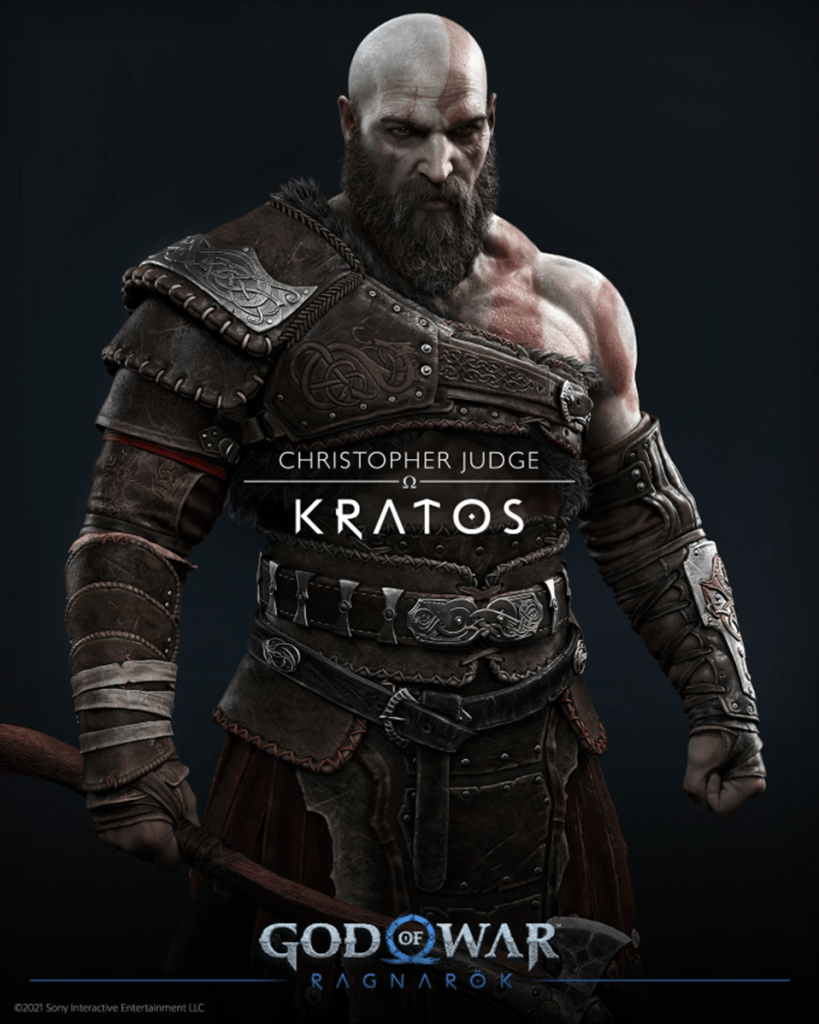
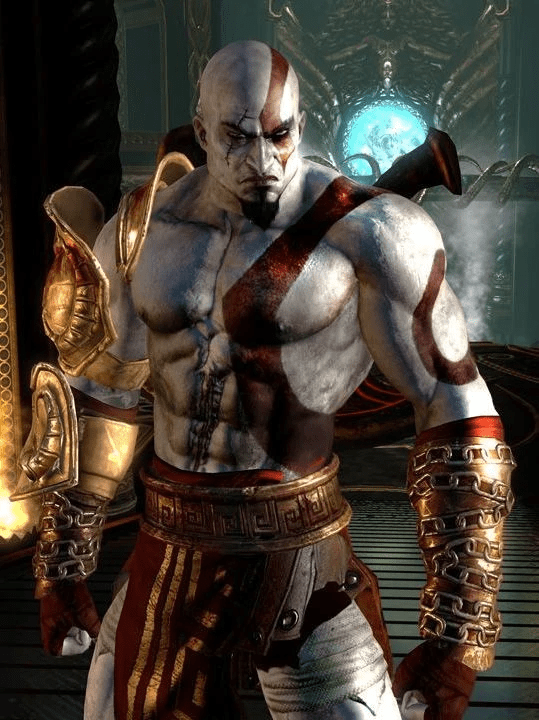
God of War debuted in 2005 as an homage to claymation sword-and-sandals epic movies from the 1950s through the ’80s like Jason and the Argonauts, Hercules (likely the 1958 version), and Clash of the Titans. The central character is Kratos, a very brutally patriotic Spartan, whose skin is marked, first by the searing chains of the Blades of Chaos awarded to him by Ares, and then by the ashes of his family who was killed in a blinding rage as a means to sever his connection to mortality and commit him to lifetime service to Ares. Say what you will about Ascension and the PSP games, but they all do well to cement his position in a very Greek tragedy way.
Ascension is shortly after he realizes that serving Ares is a ruin. Leaving his service isn’t as easy with the Furies breathing down his neck to bind him to his oath. Chains of Olympus occurs five years into his redemptive service to the larger pantheon sans Ares where his main duty is to retrieve Helios from Hades and drive back Morpheus, the God of Dreams. God of War 2005 is five years after that, and a real chance at redemption arrives at the death of Ares by Kratos’ hand, but due to the nature of his brutality and prior service, the one thing he’s always wanted–a mental cleanse–is out of reach.
“The gods of Olympus have abandoned me… now there is no hope.”
But Olympus won’t let him go. They award him Ares’ throne, which was never what he wanted, and in Ghost of Sparta (my personal favorite next to II), visions of his childhood and his brother Deimos come back to haunt him. Learning from his mother, who was cursed by Zeus, that Deimos had been held for ages in the Domain of Death, Kratos seeks to free him, and the gods try to stop him tacitly by having Athena talk him out of it and explaining why they thought Deimos was the personification of dread. In Greek mythology, the deity Deimos and his twin brother Phobos represented the concepts of dread and fear respectively. In typical tragic fashion, Ghost of Sparta shows him being kidnapped from Sparta by Ares and Athena themselves to eliminate threats, namely threats to Olympus. Thanatos, the literal black sheep of the pantheon and personification of death, keeps him locked up. Committing to these duties, Thanatos engages them in combat and kills Deimos.
His mother, brother, wife, and child all dead around Kratos and without any human attachments, Athena awards him godhood and the official seat as the god of war. A great boost of morality for Sparta, an asset for Olympus, and a Spartan kick in the teeth for Kratos whose humanity, which he wanted to cling on to, has been stripped away.
Channel: Parts From Movies
I could not resist.
God of War II is where Kratos is in full “f[roar]k this” mode and he personally guides his Spartans into battle with virtually zero resistance from them and all from Olympus who realize they replaced a beast with an even worse monster. A man who cared little for petty godly squabbles is now using his position to discredit their sense of order and elevate himself as a consequence. Now Sparta truly is known throughout the world. Zeus tricked him into stripping himself of his own godly powers and saw to it personally that he would never be able to resist him again… or so he thought until Gaia intervened personally. Kratos angered himself back to life and slaughtered his way to the Isle of Creation to seek counsel from the Sisters of Fate, the literal gatekeepers of time. Ignoring the inherent danger of messing with time to f[SPARTA]k Zeus back, Kratos returned to weaken Zeus, and with the help of the Titans who lost the Titanomachy, he storms Olympus and starts slashing gods one by one, plunging the world into chaos in the process. No gods to manage their domains, no more earth; even the Titans were using him.
Yeah, as epic as this is (and it fu[clash]ing was), there’s a couple of inconsistencies. How does Kratos become the God of War at the end of the 2005 game, but the death of his remaining family solidifies it further? If Kratos could go back in time, why not save his family or stop himself from becoming a servant of Ares to begin with? These kind of ignore what kind of man Kratos was and what the Greek games were. Mythology is never consistent, just look at who the first emperor of Japan is supposed to be compared to who historians believe the real first emperor of Japan was (Jimmu and Kinmei). As for why he didn’t bring Calliope and Lysandra back to life… I chalk it up to Kratos not being that kind of griever. He’s more this kind:
He’s like a Toyota, he only moves forward, even when he goes back.
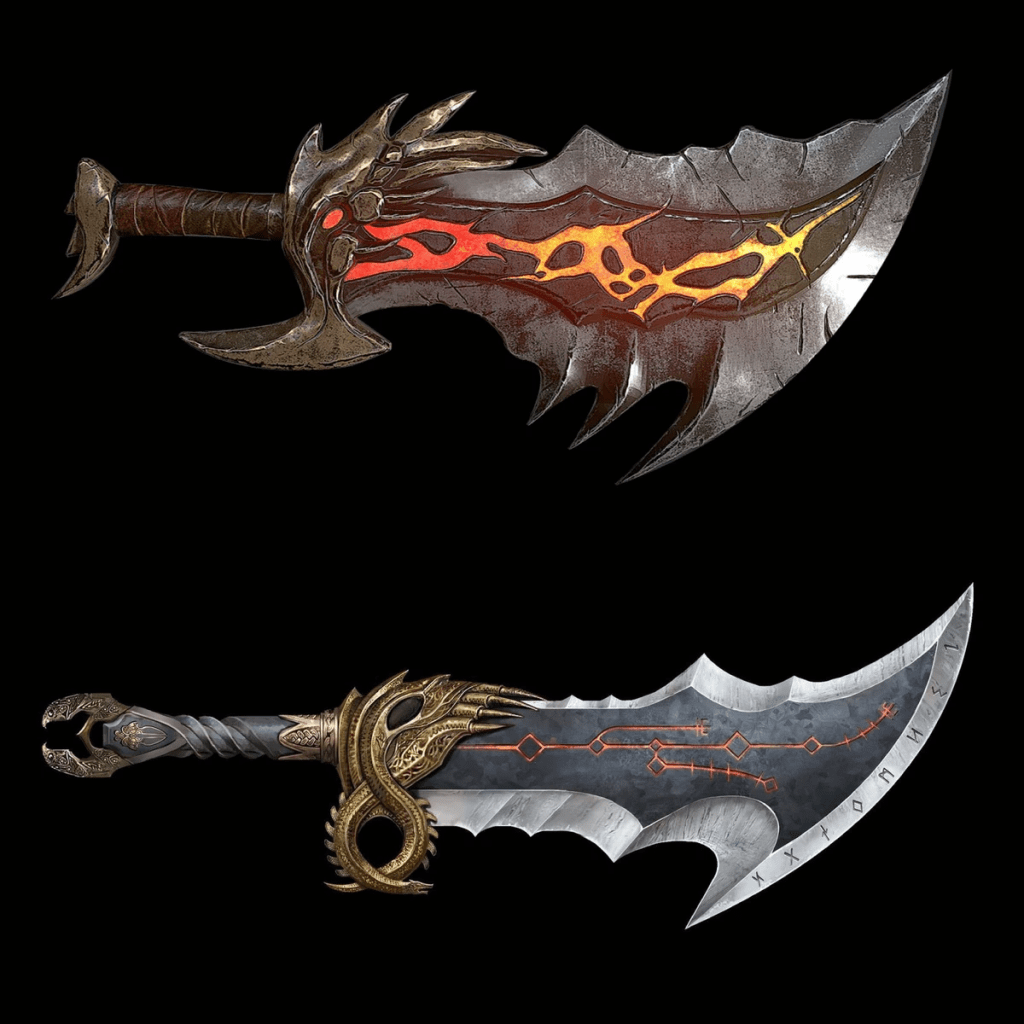
And that’s all for the plot synopses of Vermillion Ninja and Ghost of Sparta. What do they do that can be compared here? Combat, of course. Each character gets gadgets and weapons to use against their enemies, but the default is a weapon at the end of a chain, or dual weapons in Kratos’ case of which he had several by III. Kurenai is able to use her kusarigama primarily offensively. Kratos’ blades, no matter what shape they take, are more than just offensive combat tools. Grappling, platforming, climbing, fighting from various distances; and a good look at Kratos’ primary weapons shows this:
They’re ugly, they cut terribly, they burn and sear, they char, they can wedge and burrow into solid rock, are resistant to scratching and the roughest forms of abuse (which defines Kratos’ fighting style); these blades, forged in the darkest pits of Hades, have raw divine power keeping them in their consistently rough and rugged shape.
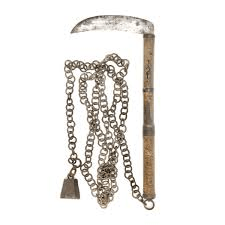
They allowed Kratos to fight and platform with acrobatic prowess. They also helped greatly during the countless puzzle segments that defined the Greek era games. Compare that to Kurenai and Crimson Shinobi whose platforming is less jumping onto conveniently exposed platforms and solving puzzles while using her weapon system and more incorporation of trademark shinobi trope tactics. The design leans into some of the mechanics that made Shinobi and Ninja Gaiden staples over the years, but is again, held back by its hybrid implementation of multiple combat and platforming systems, some of which fight each other. For reference, this is a kusarigama:
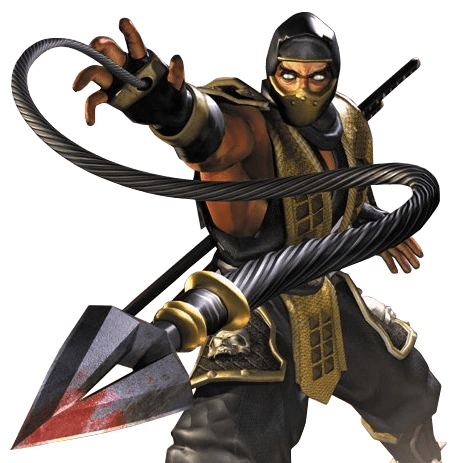
Rather than a pair of chained weapons, Kurenai has one weapon at the end of one chain with the other end being a weight, so it kills and entraps. Which brings her closer to Scorpion from Mortal Kombat.
Neither of them uses their signature weapon acrobatically, at least not for Scorpion until Shaolin Monks where he’s a boss battle in the Netherrealm, and I think the budgetary hemorrhage from Midway in the 2000s, coupled with the game’s structure of being a 2D fighter, Shaolin Monks was the only way Ed Boon and the like could use that. Funny enough, all three of these games released across 2005 fighting with a bevy of releasing around the same time. Shaolin Monks was the latest to release (September 16, though sources differ on the precise release date), so while Red Ninja was probably buried by God of War, I wonder if the Midway guys were eyeing God of War and used the spear like that after seeing what Kratos could do. Probably not, but I like to think.
Red Ninja probably could’ve implemented something slightly similar or adjacent to Kratos’ level of platforming, not to mention a better camera, controls, and enemy AI. Actually, Japanese devs can, have, and do use this, typically in Ninja Gaiden. Ryu Hayabusa’s move set is compatible with a wide array of weapons within a ninja’s skillset and outside typical ninja characteristics consistent with the genre as we see it in pop culture. Kurenai is limited to the tools that emphasize stealth, but the game doesn’t behave consistently in a way that allows for that.
But in an age of remakes and remasters, as I said the first time I reviewed Red Ninja in full, a case can be made to apply that to some games that were buried, this one included.
The last game to put side-by-side with this one is a 2020 American homage to Kurosawa samurai epics. Yes indeed I do mean:
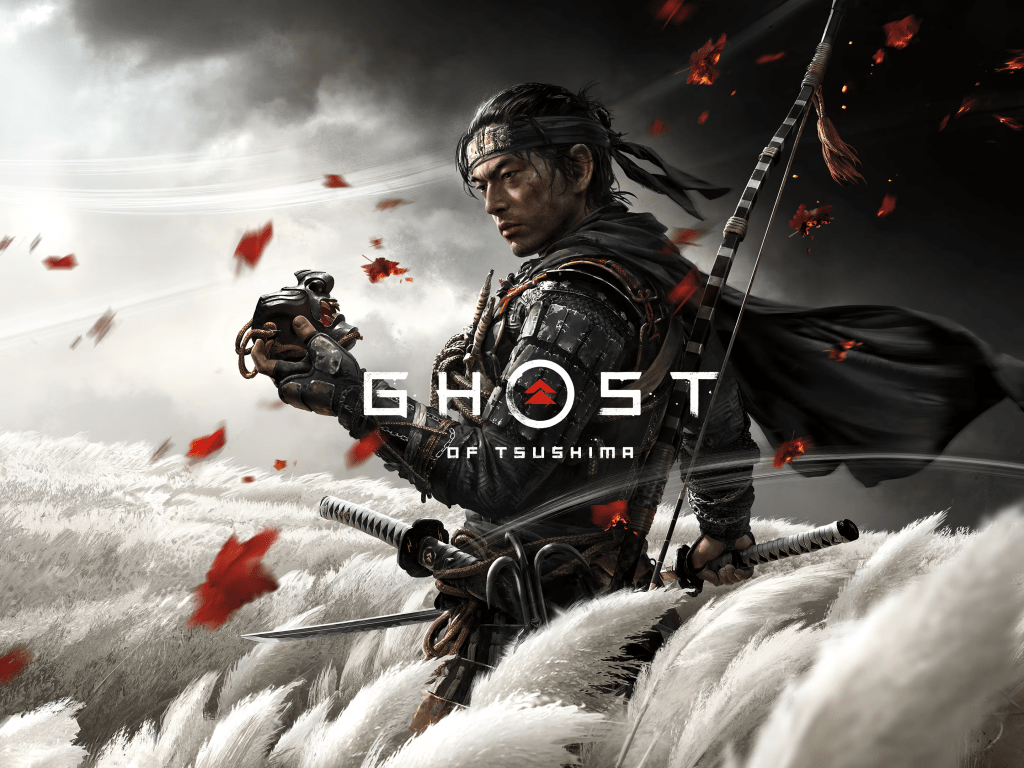
Ghost of Tsushima, also known as The Tale of Sakai Jin or Sakai Jin Monogatari or 境井仁物語. This game is more of an evolution from honorable samurai warrior to deceitful proto-shinobi as the shinobi wouldn’t be put to more use by the samurai and daimyo class until the Sengoku era, but both this and Red Ninja being set in Japan gives me a lot of leeway. Haven’t I written about Japanese historical series before?
Hope everyone is enjoying their holidays, to include Boxing Day for my British and Commonwealth subscribers, I know you pop in a couple times a month. I am currently on leave right now, seeing family in New York until January 2, so the first post for 2026 will be delayed most likely until later the next day. So this Boxing Day will be spent reflecting on pieces of entertainment that I consumed in 2025, even if it was older or not necessarily released this year.
I won’t be using any particular order or any kind of ranking system. This post is gonna be a free-for-all, so look forward to video games, TV series, movies, and animanga all in one post. For the video game front, the FPS genre suffered a devastating loss earlier this week with one of the founders of Call of Duty and Medal of Honor, Vince Zampella, losing his life in a car crash in Los Angeles. His work, along with that of Jason West, heavily influenced the trajectory of the FPS genre and the gaming landscape from spearheading the modern warfare concept up until he and West were unceremoniously booted on trumped up charges. Nevertheless, neither man was deterred and got back on their feet with the likes of Titanfall under EA.
1970-2025
Further hurting CoD was the mediocrity of CoD: Black Ops 7’s release last month. If ever a case was to be made in favor of delaying CoD’s dev time by a year or two, this is it. Overuse of AI, nostalgia bait, the weird decision to make the campaign a coop feature, and an unacceptable recycling of old assets pushed the fandom to pressure Activision-Blizzard to slow up on yearly releases. Even the multiplayer wasn’t up to snuff in many players’ eyes due to the aforementioned marks against the whole game. In 2019, the channel Knowledge Husk published a video examining the history and a trajectory of the franchise with hopeful, cautious optimism. It precedes the official release of the Modern Warfare reboot so it shows its age there. After over seven years, the topic needed to be revisited, which it was, by our friends at The Act Man and the Angry Joe Show.
Channel: Knowledge Husk
The game hub updates with each release, but thankfully I filled my time with the likes of World at War, Black Ops 1 and 2, and the original Modern Warfare trilogy. Nothing against the modern games, but these were at a time when CoD didn’t worry about courting controversy. It knew what it was and what it was doing back then. Speaking of games that offered subpar content, I happened across a forgotten ninja game for the PS2 called Red Ninja: End of Honor.
So many tropes are present and unfortunately wasted, I feel
It’s about a kunoichi who is hired to protect the Takeda clan during the lordship of daimyo Takeda Shingen. Japanese history time: the daimyo or feudal lords were the equivalent of vassals to the shogunate, with the land to manage and the samurai class as retainers to keep that land from falling into enemy hands, which was the hallmark of the Sengoku period until the early 1600s when the Tokugawa clan won out. In some cases, daimyo and samurai clans hired ninja clans to spy on their enemies and remove any image from your head about what they might’ve looked like. Ninja, or shinobi, typically dressed like commonfolk, peasants, farmers, merchants, artisans, and some even had the skills to sell the idea that they were what they claimed to be. It’s also worth noting that they were more loyal to their masters than the people they hired. See the Ashikaga clan and Ashikaga Takauji for more details.
Kuoichi or female ninja didn’t exist IRL, but have become a staple of popular media, especially in properties like the Naruto franchise. This game features a kunoichi named Kurenai who embarks on a revenge quest after her father was killed by the Black Lizard clan. Like the ninja of old, she pledges undying loyalty and even uses the typical ninja tools from popular media from kunai to string weaponry to blow darts to poison arrows. In nearly all media, the shinobi almost always have few armaments or protection compared to the bushi they were fighting. So stealth mechanics are ideal in a game like this, which is something I’m not against if the controls work and in this game it was knocked down because of that. Precision is desired in this game in order to complete the platforming sections and of all the platforming games I’ve played, this was the first one that demanded the player to cook omelets with a broken skillet.
The game demands precision while giving you nearly none to work with. Flimsy and cumbersome controls are the game’s worst aspect and yet the game’s plot is fairly interesting. I plan to go over it in more detail come the new year, say February, as I’ve had the time to recover from its god-awful platforming, but taking the plunge once again for review’s sake is gonna be interesting. I’m still near the beginning of the game as of this writing, and while I don’t wanna be too harsh, it encouraged me to play God of War 2005 again.
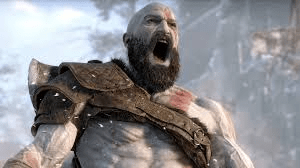
I love bearded Kratos, but sometimes I miss that preposterous Spartan jawline
In lighter news, an animanga series that I’d been following since debut years ago and had wrapped up its first season last year has been greenlit for a second season for 2026. (^v^)
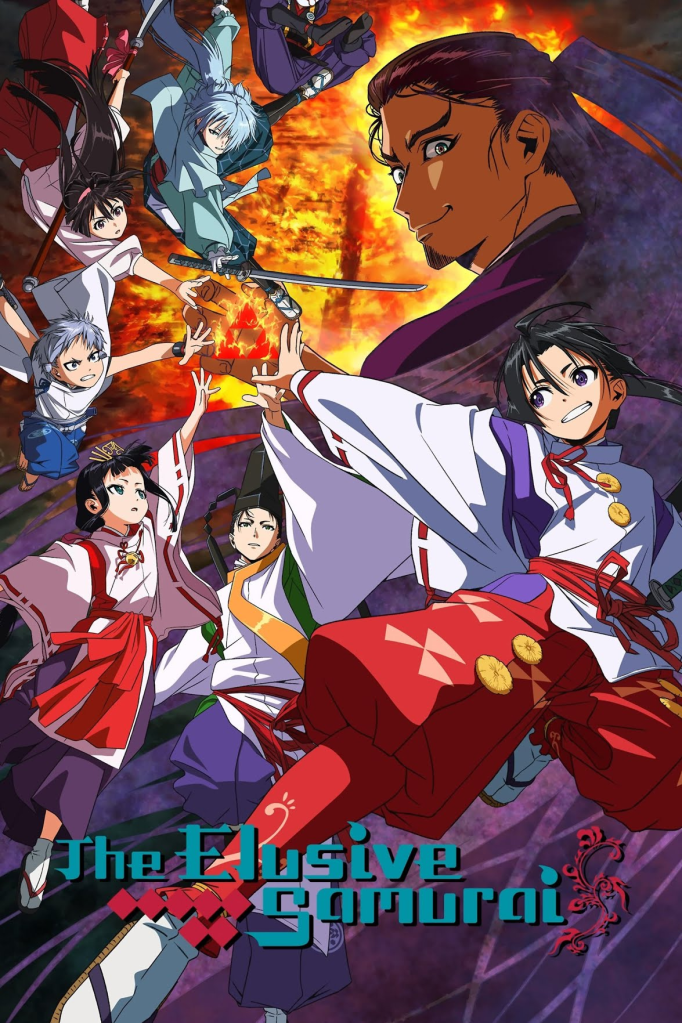
It’s The Elusive Samurai or Nige Jouzu no Wakagimi or 逃げ上手の若君 or The Young Lord who Excels at Running Away. The second season is set to release in July 2026, around the same time as the first one. So that’ll be saved for the week of July 2026 for a first impression and a full review once all the episodes are out. At the risk of jinxing its production (unlikely since this is Clover Works at the helm), let’s it escapes the fate of One Punch Man S3.
You deserved so much better, Caped Baldy
Reading a little further in the manga, the group eventually hides in plain sight in Heian-Kyo/Old Kyoto where they find another to join them in the form of Sasaki Mima. Next to that, the coming battles against Ashikaga allied forces commences with a few familiar faces, notably Hirano Shogen. Specific spoiler incoming, if you’ve ever seen the meme of the woman headpatting some children with a photo of her in uniform denoting a past as an equivalent of a Class A war criminal (i.e. Adolf Eichmann, Heinrich Himmler, Tomoyuki Yamashita, Masaharu Homma, etc.):
Specifically this meme template
This is exactly what Shogen has become in the penultimate chapters I’ve read up thus far. A past of slaughtering people, selling the children in slavery (hinted at times to be of a sexual variety interspersed with that of menial labor), ravishing helpless women across the land, and having the audacity to offer hollow prayers to Lord Buddha; clearly, it weighs on him in a couple panels, but not as much as a trip to Jigoku. Even after reforming his behavior and refining his battlefield technique to actually be useful against an enemy that can fight back, it doesn’t do much for him all things considered. Does make for an interesting battle on the page; now we just need to wait to see it animated.
I’m not saying there’s no such thing as redemption, just that even if you pay your dues, there’s always going to be one group or gaggle of people who’ll curse your name til the end of days. In real life and in fiction, the road to forgiveness is long and winding. Just ask this man:
Personally, redemption relies heavily on the severity of the offense and personal conviction. Proof and consistent evidence that the offender wants to be a better person going forward, while admirable, would still need regular checks to confirm they haven’t relapsed. How long this would last, I’m tempted to say for life like what 7th Hokage Naruto has with Orochimaru, but in his specific case, Orochimaru can create synthetic bodies of himself to jump into each time his mortality creeps up on him so Naruto’s problem becomes the next Hokage’s problem, i.e. Shikamaru’s.
The buck stops at war criminal levels. Hangman, firing squad, guillotine; fastest way to hell is the one to be taken. The anime stops right after the first confrontation between Tokiyuki and Shogen, so I’m certain the second season may stop after the second time we see Shogen or a bit after that.
In the gaming space, a not-insignificant portion of my time has been taken up by Victoria 3, Zenless Zone Zero, and the trio of Lewdtroidvanias I wrote about before. For Victoria, I main Japan, Germany, and the U.S. for the historian in me with Russia thrown in for good measure. I’ve been able to get the Empire of Japan going, but RNGesus doesn’t make the colonial aspect very easy. Praiseworthy, but after some updates regarding the Iberian kingdoms, it’s gotten even tougher than I recall, so I’m up for a grind.
Speaking of which, ZZZ has newer banners to round out the year and I’ve gotten lucky enough to avoid the cat Nekomata until recently.
Then again, she has a past as a cat thief (no pun intended) so I should’ve expected this at some point during my pulls.
For progress in the Lewdtroidvania front, with Midnight Castle Succubus, looking online for guides was a big help. I found all the girls and nearly all the crowns and finally saw Beatrix as a succubus.
Should’ve known the transformation also meant waiting 20 minutes for the honkers to pass before the rest of Bebe showed up, I guess.
More upgrades, health, a powered up form and I’m at the final boss who’s putting up even more of a fight than the final one to unlock the alternate map that I’m at right now. Thanks to the guides, I’m ever confident I can get through this. And while I’m at it, power through the other pixelated NSFW titles with that knowledge I’ve acquired.
Lastly, Red Ninja’s impression didn’t just leave me retreating to Greek God of War and The Suffering. That game and Tactical Bacon Productions had me returning to a specific Zero Punctuation episode from 2009.
Channel: The Escapist
In the beginning, one of the showrunners of Unskippable was dared to review a game called X-Blades in the same manner and interestingly, the game was featured on Unskippable itself and that show’s purpose is to take the piss out of video game intros. Through this, I bought X-Blades and its sequel Blades of Time to see whether it is Like God of War But. Yeah, the tower of content ain’t coming down and it ain’t gonna be finished whatsoever.
I plan on covering animanga releases slated for 2026 after everything is settled and I’m back from leave. I’ve so far only kept tabs on Featherfooted Daimyo, so I know I have even more to look forward to for the year.
Interspersed with my day job army-ing. Yay…
On a final note, one of my computers, an MSI Katana 15 B12V, has a key that works intermittently. The E key which has left me to hot key the copy-paste function to type just this post. A nuisance that I haven’t been able to fix, and I fear having to replace the thing to return to form. I have the old Acer Nitro 5 despite it sputtering to life much slower than before the SD Fiasco of ’24 and for all its faults, OneDrive still has all my precious files so nothing is lost, but for how long, I dread the day when I have to restart everything from scratch.
Down to the wire, the 11th hour and 2025 is drawing to a close and I have time for the last in this wrap up trio before I get to things I was aware of this year but didn’t or couldn’t cover. Some of these will be games that released this year, others will be old enough to legally drink in the U.S. Looking back on it, I played more games than I watched anime and the problem with anime I’ve had is one of the same ones I’ve had with television, standard or otherwise. The commitment to a series is more than a game that can last between 4 and 400 hours, not to mention as much as I loathe the binge watching method, one benefit it has is that I can clear out my watchlist sooner, but the drawback I see is not being able to fully absorb a show, nuances and all.
For the games I’ve played this year:
Grand Theft Auto III (2001)
God of War (2005)
Silent Hill f (2025)
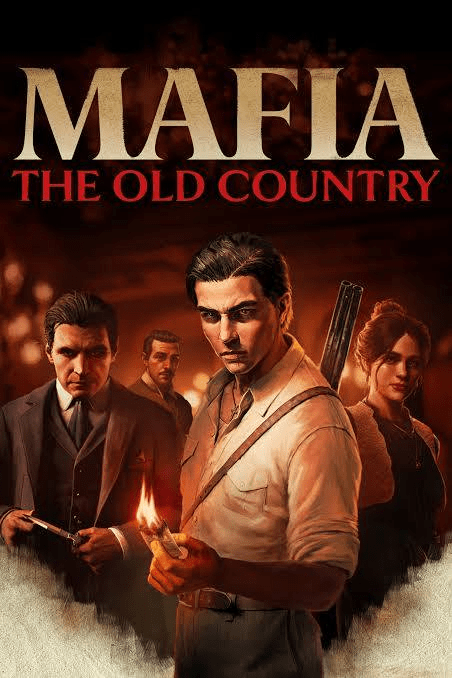
Mafia: The Old Country (2025)
Call of Duty: World at War (2008), Black Ops (2010), Black Ops II (2012)
Ghost of Tsushima (2020)
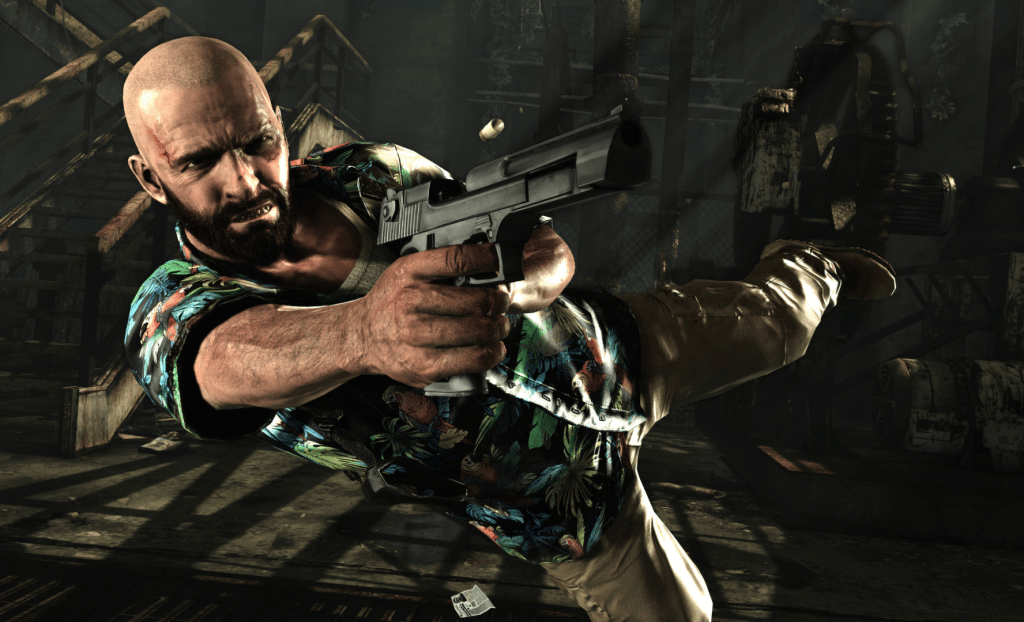
Max Payne (2001), Max Payne 2: The Fall of Max Payne (2003), Max Payne 3 (2012)
Spec Ops: The Line (2012)
This is neither an exhaustive nor ranked in order list. Just ones that I spent a lot of time on this year and yes, for those who know, Max Payne is up there again. It’s my favorite series after all. Actually, looking at this list, I have reverence for games as old as myself, beginning with:
You feelin’ lucky, punk?
Looking at the timeline, GTA 2 released in 1999 and III in 2001, October to be precise, and knowing what happened in real life a month prior, you’d think terrorism would at best lead to a delay, but loads of things were cut that would’ve made the game even darker and grittier than it already was, notably one such mission involving a fabricated aerial terrorist attack. Funny enough, anyone who was alive and old enough to remember 1990s U.S. politics would’ve suspected the decade to have something of a myriad of eye-catching headlines. Ruby Ridge, Waco, Oklahoma City, the World Trade Center parking lot in 1993, the East Africa Embassy bombings, and several others, not helped by President Bill Clinton promising repeatedly to get Osama bin Laden, only for that promise to be fulfilled a decade after he left office by the Obama administration, but I digress.
Of the cuts made to the game, the color scheme referencing the NYPD’s liveries was changed to black-and-white when it was originally sky blue-and-white. Those iconic police liveries would’ve been making daily trips to help clean up the area alongside FDNY and the National Guard, so the decision to change it would’ve been out of respect for the victims and the first responders, I take it. Also, if it wasn’t for 9/11, the NYPD police union might’ve brought them to court for copyright or plagiarism. Who knows? Several missions referencing terrorism were dropped because of course they were; unused characters and dialogue was found in the game’s files over the years; and the rest of what was found in the betas was also thought to be removed, but Rockstar/DMA Design was cutting bloated content in the months prior that year. Probably even before that.
Gameplay-wise, there’s loads of hints and minor details that make the game seem like a passion project/brainchild with so many celebrities whose voices and/or music was being featured in the game in some capacity. One that stands out to me would be the use of the background music for Scary Movies by Royce da 5’9″ and Eminem.
Something you’d have to find by delving into Wiki pages and whatnot
The music, the use of celebrities for voice acting roles (Frank Vincent, Robert Loggia, numerous rappers, etc.), the gangster movie aesthetic that was prominent in the late 1980s and 90s, and to top it all off, it was originally designed for the PS2 and original Xbox with a port to PC coming a couple years later. None of those devices had a lot of processing power at the time, and the games they housed were nothing short of extraordinary. The use of limited technology really drove creativity, and before I get accused of sounding like some boomer gamer longing for the “uncomplicated days,” as much trouble as I went through to emulate and play GTA III, I know damn well that between it and GTA V and later VI (set for release in 2032 or whatever), it aged poorly. Even it’s 2002 asset flip in Vice City was a better showing in comparison.
Tommy was essentially Claude with a functioning voice box and actual reasoning, all things considered
I really like GTA III, but I’m not gonna lambaste anyone who hasn’t played it or implore people to bother. If they do, great. If not, nothing was gained or lost. That said, the powers that be, the unchangeable forces of nature, and the gaming landscape owe a lot to GTA III. Rockstar’s successful venture into 3D with both this and Max Payne earlier that year show that with some refinement, 3D can and does work in the gaming sphere with nearly every video game releasing a sequel, if not debuting, over the course of the 2000s and the remainder of the 6th console generation in 3D. The open-world and nonlinear gameplay allowed for speedrunning and multiple different approaches to achieve the same objective so players can get creative with the sandbox. And this being Rockstar, the 3D graphics and depictions of violence led to lawsuits and court settlements for years to come.
Presumably less so for Max Payne and more so for GTA due to it being accessible despite having a slightly less dark story for the time period, GTA alone would see Rockstar in the hot seat by overzealous attorneys and aspirants harping on the zombie adage that “Video games cause violence.” A peek at just this blog and other, more respectable, researchers shows that that’s not and never has been the case–each one is unique, but ignoring nuance in the face of outrage is a time-honored human tradition that keeps us from discovering the aliens… or rather keeps the aliens from discovering us. We disagree on what a wall outlet should look like and the little green men are able to build advanced spaceships in galaxies lightyears away.
S[bark!]t like this is why we haven’t had any abductions as of late
And of course, Rockstar being Rockstar, not only kept trucking on in the face of adversity, but saw fit to take the piss out of their critics by putting their face on the Statue of Happiness in GTA 4, release Bully in 2006, and ride the wave until Jack Thompson was permanently barred from practicing law for his frivolous lawsuits. Rockstar may get s[gunshots]t for releasing one game every 30 years these days, but in a time when they put all of their heads together in a circle, they can give us the same magic used to make King Arthur’s armaments and accoutrements. The dark and edgy era of the 2000s isn’t here anymore, but I’d live to see a piece of media try something like this or Manhunt again, especially with all the cry-bullying that happens on Twitter, Facebook, Tumblr, and parts of Reddit. Heads would roll and I argue that they need to.
Onto the next game:
Ares!!! Destroy my enemies, and my life is yours!!
We laud Kratos as the eponymous hero of the Norse saga these days, but I’ve learned ages ago that because of the Norse saga, few people realize he debuted in 2005 in the Greek saga. Now, fans who’d made the discovery, even if they picked up the 2018 soft-boot, have a bevy of a series to pick through, but for those who aren’t aware, the original Greek games were an homage to the old claymation, Greco-Roman movies of old like Clash of the Titans, The 300 Spartans, and the 1995 live-action Hercules series. David Jaffe and co. grew up with those and true to the meme, he turned 4, chose one of the several things little kids do at that age and based his entire personality on it.
Fast-forward to Sony Computer Entertainment crafting God of War the same way Hephaestus crafts weapons for Olympus, and it may be lost on those who haven’t or are unable to experience the Greek saga games, but God of War 2005 represents a shift in gaming that happened at the same time during its release. Quick-time events, which it helped to popularize in gaming years later for better or worse; hack-and-slash combat that would reach its zenith in this and other games; puzzles and intricate level design that would be a staple of the series and its several hundred thousand derivatives, and on that last point, several clones.
A stern critic could eye up the God of War trilogy and its PSP spinoffs and put them side-by-side with other games that tried to ape its formula, you’ll notice that several games attempt to rip it off in the years following to make a quick buck, but very few did so successfully or memorably. Something that happened to Mortal Kombat and Street Fighter in the 90s. No-name developers attempting to make a name for themselves by way of emulating a popular formula is a time-honored tradition in video games and sometimes movies. Sometimes you get a successful product like Bayonetta and other times you get a ripoff that deserves the “Like God of War But” stamp of disappointment.
Channel: The Escapist
A reasonable argument could made over imitation and video game clones, but the fact remains that if it was popular enough to sell, it’s also popular enough to steal. God of War wasn’t the only victim of widespread theft, but it was a very noticeable one. To this day, video games are getting cloned and nothing is really stopping the cloning process.
Numero Tres:
化け物や!
Google Translate isn’t good for out of context translations…
My exposure to Silent Hill as a series was always through the grapevine. I didn’t know about it for years and by the time I showed interest in some of the better games, my financial situation and the trends of the time wouldn’t allow me to play them on obsolete hardware. Fast-forward to emulation and I have it saved on my PCSX2 emulator so when the time comes (probably in a few days or a week or so), I have Silent Hill 2 to look forward to.
I’ve been told many times that 2 is the peak of quality and the series gradually fell with 2007’s Origins, the following year’s Homecoming, the 2009 Shattered Memories remake, and 2012’s Downpour falling short of prior entries. A sycophantic Silent Hill fan may have more details on each, but the one game that got me genuinely interested in the series is one that can no longer be accessed by normal means thanks to Konami’s boneheadedness in the last 11 or 12 years.
Veterans got flashbacks and bad memories of a game that never was
From the viewer side of things, this was unsettling enough to simply watch–if I had a PS4 at the time, and I was made aware of the cancellation of Silent Hills, I would treasure P.T. like it was the crown jewel in my empire. Legendary horror writers and programmers in Guillermo del Toro, Hideo Kojima, and Junji Ito were, at some point, approached by Konami to work on, or at the very least contribute to the game’s development, but inheriting the same problems that Sega has — that being incredibly difficult to work with — Konami s[pig squeals]t so hard through the bed, the stool broke through the floor at Mach 7 and made a sinkhole that ate the house.
To make it worse, in 2015 during the Game Awards, a Konami-hired attorney barred Kojima from physically accepting awards for Metal Gear Solid V under threat of legal hell. My criticism of Konami is merely surface level, but I know there’s people out there who will die never letting Konami forget what they let slip through their fingers all those years ago by focusing mainly on profit over playability. Kojima’s expulsion was especially felt when Metal Gear Survive was crapped out, showing how much heavy-lifting Kojima was doing at Konami. To date, Metal Gear hasn’t had a release in over seven years and probably won’t unless we get something of a spiritual successor.
The whole point of detailing all of that was a reminder that even when a bad actor does good once in a while, a single move in the right direction isn’t enough to erase the past sins. I normally don’t like to bludgeon the point home like this, but in the case of recidivist behavior, the symptoms are still showing and a higher dosage is required. Having said that, Silent Hill f appears to return to form of sorts as a proper horror game in the same vein as the earlier entries from over 20 years ago. Coupling the psychological with the physical, the sense of foreboding and tension as you choose what part of fight or flight you want to emphasize really adds to the game. The use of a regenerating stamina bar and a regenerating sanity bar add to the experience too. You’re not some superpowered gorilla capable of smashing through everything from the grass going up like it’s Rampage; you’re a teenage schoolgirl in 1960s rural Japan where constant intrusions into your neighbor’s personal lives are how you get the news.
彼女の名前は深水雛子や。
AFAIK, prior Silent Hill games were always set in the titular Silent Hill or a surrounding suburb, but the decision to return it to Japan was to fully reset the series and remind everyone that it began with Japanese horror tropes, not western ones. Now my limited knowledge on East Asian, and specifically Japanese, horror boils down to Ju-On: The Grudge, One Missed Call, Ringu, and most recently Taiwan’s The Tag-Along, so I’m not an expert on East Asian mythological horror tropes outside of Japanese kami and various yokai. Still, there were several noticeable Japanese horror tropes that did tie into Shintoism and Mahayana Buddhism. I suspect that yokai are an influential part of the monsters in this entry, but it’s merely a gut feeling based on what I’ve seen and roughly two hours of gameplay ain’t enough to speak with certainty. I’ll be back for a full review of the game probably in February or something.
Quattro:
Il Regno delle Due Sicilie
I’ve talked about the Mafia series before because I like it, but not nearly as much as God of War or Max Payne, both of which I talk about and play at least once a year. For the Mafia series, it’s been a bit tougher with the original games descending into abandonware status and necessitating remakes, which are more accessible than the originals that they’d fixed, though they’re all long as hell, with Mafia III being one of the longer entries in the series for all the side content available in just the base game.
Mafia: The City of Lost Heaven takes place in the 1930s in the Midwest at the end of Prohibition, so you can still make a few pennies from rumrunning. Mafia II takes place between 1945 and ’51 on the East Coast and makes mention of the war effort and the lifestyle of the early 1950s. Mafia III takes place in 1968 in the Deep South during the civil rights movement, a pivotal time for the U.S. foreign and domestic policy concerning race relations and the Vietnam War effort seeing record anti-war protests and draft dodging. The Old Country is a prequel set in 1900s Sicily, at a time when Italy was whole but Italians as a national people were only just being made.
Much of my knowledge on Italian history came from the latter third of middle school, tenth grade, and my Italian language community college courses. So I know the generic stuff about the peculiar boot-shaped country, but not enough about specific regions at specific periods in time to criticize the historical angle, so learning that some families sold their sons to work in sulfur mines to pay off debts was interesting. The weapons in the games do reflect the era of combat, and in this case, the weapons used by the mafiosi would’ve been in use during Italy’s pathetic attempts to colonize East Africa.
The Mongols had better deserts to exploit, just saying
As such, rolling blocks, trapdoor rifles, and bolt-action rifles are a feature in the game. The machine guns and submachine guns of later mobster media obviously comes decades after all this. I’m not as far in this game as I am with some of the others on this list, but graphically Hangar 13 found their bread and butter back in Mafia III and have been using that with Mafia: Definitive Edition and this game, but left Mafia II untouched. But Mafia II: Definitive Edition has the appropriate promo art.
The tech also reflects the time period. Telephones, automobiles, entertainment; it all feels appropriate for the mid-1900s, which is to say primitive compared to Tommy Angelo’s definition of entertainment, and Vito Scaletta’s and Lincoln Clay’s, and the latter two had television. As a matter of fact, what I’ve seen of The Old Country so far reminds me of some mobster media about the earliest Italian-American organized crime groups. Less Commission and Lucky Luciano and more John Dillinger, Bugs Moran, and adolescent Al Capone.
Before he was dressing like this, though he might’ve always dressed like this
More needs to be explored before I share my thoughts, but for immersion, I’ve set the language output to Sicilian because English language courses as a part of the national Italian curriculum would be a century away.
五番目:
Seelow Heights 1945, Vietnam 1968, and Downtown L.A. 2025
I’ve played the Black Ops games before multiple times, but this year was the first time I got to World at War and playing through it, it has the hallmarks of a horror game. Enemies can pop up at you from nothing, notorious adversaries who famously courted death on the battlefield (Imperial Japanese and Nazi German fanaticism is still studied to this day), scarce ammunition, dark atmosphere in contrast to how this era is typically depicted especially in film; I shudder to think how many U.S. soldiers, sailors, and Marines were caught by surprise by the Japanese as well as the rest of the Pacific Allies. Same goes for everyone caught in the Eastern Front against Germany, to include collaborators and partisans.
I didn’t expect a war game to unnerve me while I was playing and here we are. Goes to show how far war games have fallen over the years. War has and always will be unpleasant. One thing to highlight though are a slew of historical inaccuracies design-wise. Of course, true historical accuracy is a concern for the reenactors and cosplayers, but to get to at least 90% accuracy requires a couple of mods. Some that reflect the ethnic diversity of the Soviet Union so we get more than Russian names; some that replace the Wehrmacht and Waffen-SS with the Volkssturm, the last ditch militia propped up by Hitler at the 11th hour; some for the U.S. Marines’ gear in the Pacific so they look appropriate for the era; and some for the Japanese Army, presumably some variance in voice lines to denote Japan’s historical use of Korean, Taiwanese and Manchu conscripts, as well as ideologically-minded partisans. But that’s not my strict desire, that would be the desire of YouTube channel: The Frosty 1.
Treyarch really had platinum with these games. It was still there come Black Ops III time, but after IV, it wasn’t worth it’s weight anymore. Cold War and Black Ops 6 were up there, but the most recent entry necessitates a reboot yesterday.
The mighty have fallen and they can’t get up
Fortunately for me, I included a handful of those accuracy mods, so the next time I boot the game up, they should impact the experience for me next time.
Sechste:
我が名は境井仁だ!
I briefly touched on shogunate foreign policy when I was reviewing The Elusive Samurai manga for the first time, but to further elaborate on that, the Mongols didn’t realize that the emperor of Japan was a figurehead for the Hojo clan regents (shikken) at the time until they launched a naval invasion in 1274, which is what Tsushima is about. Contrary to popular belief, only the second attempt was deemed a failure by way of monsoons. The first one was enough to shake the foundations in Kamakura and Kyoto because the samurai had all put up a stiff and adamant resistance to Mongol absorption. Thus, the Mongols hyper-invaded the Middle East to make up for the shortfall of failing in Japan while Japan itself held onto its seat of power in Kamakura until Ashikaga Takauji double-crossed the Hojo and eventually the emperor himself to consolidate power.
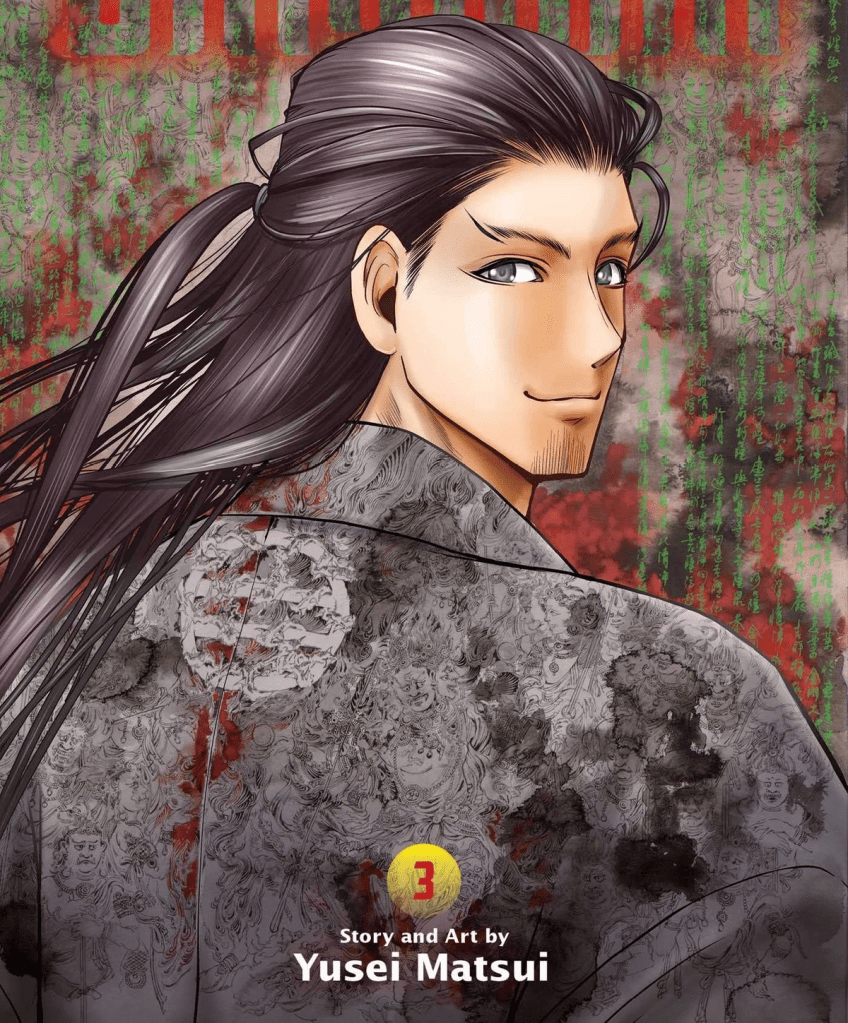
For a traitor, Matsui really made him easy on the eyes
Although developed by American studio Sucker Punch, Ghost of Tsushima and its sequel Yotei are a love letter to Akira Kurosawa films. I’d lambaste the strict adherence to samurai blades if the time period was wrong. But it’s not bad at all. Portuguese missionaries didn’t bring guns with them to Japan until 1543, and it took another couple of decades for the Japanese to reverse engineer them domestically. It’s a technical marvel in its own right with the language also being appropriate for the time and archaic for modern Japanophones.
As for critique, it gets points docked for the Mongols being unanimously Mongolian speaking when the Mongol-led Yuan dynasty included Jurchens, Han Chinese and Koreans, and standardizing speech and vocal patterns would be an afterthought in this time period since nationalism is a more recent thing. A militant Mongol Empire could enforce a national tongue, but if what I’ve been taught about Mongol culture is true, then their territory would’ve been smaller and subject to further internal divisions after Kublai Khan. Then again, this video below explains why the devs did what they did:
Channel: Cool History Bros
Accurate or not, the cross-cultural pollination of east and west was a significant factor for this game seeing as the Japanese audience absolutely loved this game, same as how numerous western fans coined the adage “Git Gud” as a response when a novice Souls player asks for help with a boss, the Souls devs being Japanese themselves. One thing to note about recent titles like these is the wider variety of language options and seeing as I’m playing Sekiro and watching Japanese live-action shows in the original language, I believe I’ve become something of a purist in regard to gaming. I can’t really criticize voice acting and direction when I’m not a voice actor myself. The choice behind this is related to setting. Fantasy worlds are a free-for-all, but feudal Japan, rural 1960s Japan (possibly a stand-in for Shizuoka based on the kanji 「静岡」), and Sicily are all real places with their own respective languages and dialects. Doesn’t make a lot of sense that Sakai Jin, Hinako-san, and The Old Country protagonist, Enzo Favara, would know English. Also, I want the Kurosawa experience for Ghost of Tsushima.
The only great shame I can express for Ghost of Tsushima was the practice by Sony to limit exclusivity to sell consoles. Accessibility for more players who don’t have the necessary hardware to play the games is one thing to praise, or I wouldn’t have been able to see God of War 4 for myself personally…
…but if the player already has a Sony product on one platform, what’s the motivation to shell out for the console itself? Especially with cross-play becoming a thing in recent years? I can play Dead by Daylight on PC while my National Guard buddies boot up an Xbox or PS4 and load in with 2% of the issues that this brings. As for console gaming itself, though I emulate old titles, use ROMs for select PC releases, and game largely on PC when able, I’m not completely opposed to console gaming for good. Unfortunately, the pandemic unleashed the flood gates for a myriad of scalpers to buy and resell the 9th gen consoles at obscene prices. Not to mention, neither of them are making confident moves with their respective products. You can find numerous videos expressing confusion at Microsoft’s direction with the Xbox while Sony has been putting one too many eggs in the future of gaming while seemingly forgetting their roots. Crash Bandicoot may be awkward to look at today, but expecting perfection at the first hurdle is how you get imperfections. Did no one ever teach that to Sony?
Okay, I’ll elaborate. My well-known love for the series goes without saying. The decision to replay it once again is something of a yearly tradition. The gunplay, bullet-time, story beats, writing, game mechanics; the series is a masterpiece of third-person shooting and the fact that it hasn’t inspired more clones over the years is striking. The only ones I can point to are 2007’s Stranglehold by John Woo, starring Chow Yun-fat reprising his role as Inspector Tequila and 2023’s El Paso, Elsewhere by Xalavier Nelson Jr.
One day, I shall judge Mr. Nelson’s work of art
I don’t really have to worry too much about the state of the third game, but the first two being as old as they are are subject to age. Not that they’re aging poorly, but that the tech is evolving without a means to reliably support them without issue. I can run the first game on one of my laptops, but I struggle on the big rig, yet the same big rig is able to run the second and third games issue-free. So the yearly gameplays are something of a quality test of sorts.
As far as gameplay goes, the first game remains a steady ass-kicker. It’s a game that has me quick saving every time I clear a room full of bad guys. It’s also the one with admittedly s[boots]t physics. It ranges from mildly annoying in regard platforming to downright nightmarish in the appropriate nightmare sections. Combine this with a few minor but noticeable glitches that initially had me clipping through the wall or getting stuck in a wall in pitched moments, and I have to risk exiting out to look for a hotfix and go through the bulls[urgh!]t all over again.
Enemy AI has almost always been strong ever since the first game, so from the frozen NY maze of brownstones and brickwork to the sheet metal, ramshackle Hoovervilles of Sao Paulo, I find myself planning my next moves even further beyond what I can immediately see. Typically, I tend to play it by ear and leave the door open for any type of surprise to come my way. It can be done in this series too, even after playing it as many times as I have, though not to a large extent. Max being a cop would be collecting evidence as he goes, and some parts of the games require more than gunning everything in sight.
The third installment is the black sheep of the series noted by the lack of involvement from Sam Lake and Remedy Entertainment, the first clue being the cynical, nonanalytical writing, but in defense of the third game, it’s a nine-year gap between it and the second game and a strong painkiller/opioid addiction would leave anyone in a dour mood, especially if you were still mulling over the death of your family by outside forces.
Just ask this guy.
Granted, Max didn’t turn New York inside out, but the destruction of Olympus was literally the last thing Kratos was trying to do
Yes, this is another recommendation for Max Payne, and yes I’m eagerly awaiting the remakes coming out in or after 2026.
Lastly:
Leopold II and the Congo, 1899; Col. Kurtz and South Vietnam, 1970s; and Lt. Col. Konrad and the UAE, 2012.
Personally, I feel that this game’s commentary and stark chastisement of gaming is one that aged terribly. It had a case in criticism of modern warfare games and U.S. foreign policy, like other media, but it wasn’t really meant to be rebooted. Suffice to say, it at least went out on a whimper than with a bang. The modern warfare military shooter was revolutionary when CoD did it in 2007, followed by Battlefield soon after, though both were starting to feel that there wasn’t any evolution and some critics were getting tired of the formula by 2011, absent of the individual plots of MW3 and BF3.
2012 would see the long dormant shovelware shooter series Spec Ops belch its profound words at the time in criticism of the modern warfare shooter. “You’re not a hero, you’re a gamer.” “You wanted to feel like something you’re not.” All well and good, Yager Development, but I don’t play CoD for the sole purpose of saving the world, I like campaign of select games and when I wanna turn my brain off I retreat to the zombies mode. Sometimes multiplayer if I can spare a couple minutes to an hour these days.
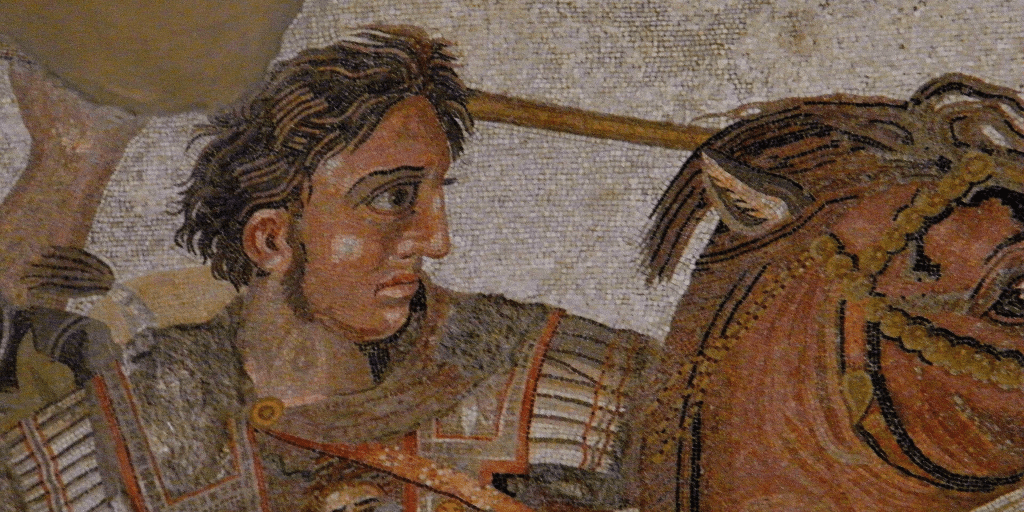
Admittedly, Spec Ops was asking familiar questions regarding the purpose of Iraq if the WMD scare was cattle manure and why we were still in Afghanistan with it being revealed that nation-building in a place like that hasn’t worked out well for anyone who tried. Not the Soviets, not the Brits, not the Persians, not even Alexander the Great, and we call him “the Great.”
Well, it asked what it wanted to ask at the time and knowing how the War in Afghanistan ended with the Taliban unseated and subsequently reseated in Kabul, if Spec Ops did spawn a sequel or a successor, it might’ve been even harsher on U.S. foreign policy. And I won’t be nice, I know that the U.S. hadn’t built a stable nation since South Korea and calling South Korea stable is putting their modern history very nicely. Vietnam proved to be more prophetic than we originally thought.
But on the whole Spec Ops: The Line’s commentary is critically kneecapped by the decision to make the gameplay so cumbersome. I default to medium difficulty because I’m not so stunted that I need someone to hold and shake my penis every time I have to piss, but I’m also not a badass who can eat Dark Souls for breakfast, lunch, and dinner and still feel starved for tougher games. Functionally, Spec Ops: The Line is not fun to play and maneuver around and that’s on purpose. Bad controls are bad controls, but I don’t know if it’s made worse when it’s accidental or intentional.
To be fair to Yager, I wouldn’t call this an act of malice or villainy; I take it that they didn’t like the direction war games were going at the time. Unfortunately, there seem to be efforts to de-list and bury the game for some reason. It was difficult for me to find it for emulation on RPCS3 and despite its graphical glitches, it was the best way to play it on short notice. I still don’t recommend it, even for its story. Just watch an analysis on YouTube or play the Modern Warfare Remastered games like I did.
Heroes don’t exist…
The last post for 2025 will go up next week and while I’ll be on leave for the holidays, I’ll try to push it out sometime on December 26. The one after that, the first post of 2026 may have to be delayed so that I can make my flight. So it may be out over the weekend on Saturday.
Happy Holidays and Happy New Year, dear readers. Don’t stop consuming your favorite entertainment products.
A week-long journey in rewriting a fictional storyline
Two weeks ago, I made a post in the midst of a memory lapse concerning the God of War timeline. My vague notes were misinterpreted as a detailed look at the timeline, but on reflection, I realized that it may have been more in line with making the timeline make better sense due to the plot holes as well as mythical inaccuracies. In a rough draft, I attempted to do this for the entire chronology of Greek era God of War and unweaving one thread meant unweaving another and, fittingly, this would mean further opening Pandora’s box.
Some of the points I brought up were based on The Mythology Guy’s videos on listing all the mythical inaccuracies in the series, and there are a lot. But then again, Mythology Guy did it all for fun. That’s kind of how it started for me until the script sprouted wings and flew south for the winter.
I still think it’s fun to look at all the inaccuracies in the games and at the end of the day, that’s what they are. It’s generally not that deep despite the lore built up, but I didn’t want to let it all go just like that. I do still think there are things to address in accordance with the series plot. Some of these changes might be radical enough to essentially rewrite one or more of the games, but even if we acknowledge more than a few inaccuracies (like nonexistent weapons and relics for example), there’s still a few things that need some TLC.
The length of my draft opened my eyes to how untenable rewriting six games to be more mythically accurate could get. I’ve always given the games leeway since myths tend to be based on a version of reality while also having multiple tellings and retellings over time, such is the case with Egyptian mythology, but one of the examples I think should be changed regards Kratos’ ability to kill gods. One of the most famous victims of his goals being Hades’ wife, Persephone.
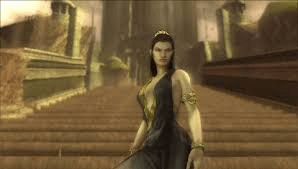
As we can see from this picture above, in-game Persephone has a dark aroma about her. Wearing a dark dress, gloomy demeanor, and spoiler for God of War: Chains of Olympus, plans to use a titan to destroy Olympus in revenge for her kidnapping. Mythical Persephone was the goddess of springtime and her presence on the surface signifies the changing seasons while her absence signifies a coming winter. Changing this aspect of her isn’t a new thing for Santa Monica and it followed them well into the development of the Norse saga.
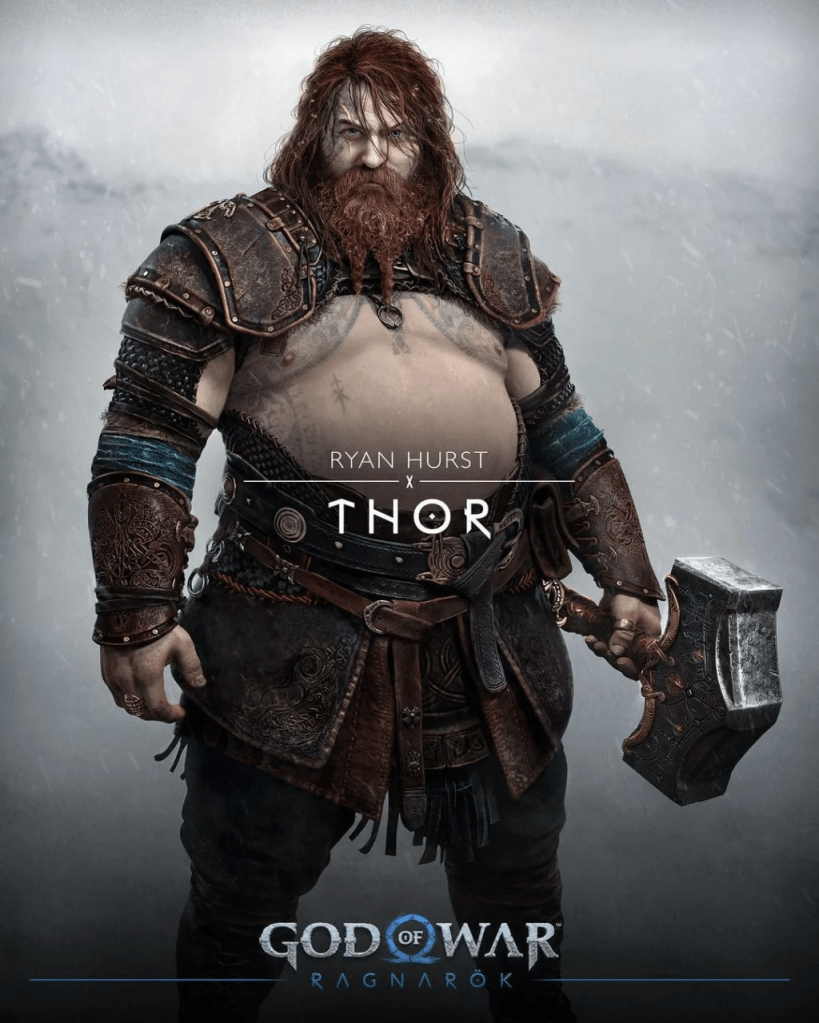
Just to clarify, I’m not trying to say fat Thor is inaccurate. His personality as a villainous god undyingly loyal to Odin is the inaccuracy. Still makes for an exciting game though.
The portrayal of Persephone as seeking vengeance against Olympus for abandoning her can be chalked up to different versions of the myths. Don’t quote me on this, but I think the version where she willingly wandered into the realm of Hades and grew an affection for the god of the underworld is a relatively recent retelling differing from the myths where she’s a kidnap victim. The kidnap victim angle works hand-in-hand with the double-cross from Olympus and makes for good villain. The point of change that I would say needed a change would be her death. For a while, I ran with the theory that she was a goddess of lesser importance, but commenters in The Mythology Guy’s video on Chains of Olympus stated that the Gauntlet of Zeus was the god-killing weapon specifically.
By this logic, Pandora’s box can grant a mortal the ability to kill god with any weapon since the sword Kratos used on Ares wasn’t all that special, merely acting as a bridge on the outskirts of Athens while the Gauntlet of Zeus bears the name and is the sole property of the king of Olympus, which would apply like the diamond rule where only a diamond can cut another diamond. In this instance, only a tool blessed by an Olympian can kill an Olympian, which also seems to be in line with the Blade of Olympus, from the Titanomachy in the games. So I’ll give the commenters in that video the W for explaining and confirming it, since this is before Kratos gets the powers to kill a god by any other means from the box of Pandora, but another point where Kratos kills a god without gaining the ability from the box or is in possession of a godly weapon comes from God of War: Ascension and the main baddies there: the Furies.
This picture also works to show that despite being a demigod, Kratos was also capable of mutilating a deity with just the blades of Chaos. And you can argue that the blades of Chaos, later Athena, later Exile are all godly weapons capable of killing gods, then Pandora’s Box would be unnecessary later unless the box is capable of making sure the gods, primordials and Olympians alike, but some of this hasn’t been confirmed, so it exists as a retcon.
There’s other stuff that, if changed, or addressed would essentially rewrite the narrative of the games. Personally, I’ve found a newfound appreciation for God of War II for the references and other heroes and characters who appear in the game like Theseus and Perseus, who have an indirect connection through Perseus’ descendant Hercules/Heracles. What I like about Perseus in this game come to the weapons on his person: the reflective shield, the helm of invisibility, the voice acting talents of Harry Hamlin who played the character in 1981’s Clash of the Titans. It’s all so good. To add to this, the point of divergence in his life comes from Kratos taking the head of Medusa instead of him which, in the myths, he was supposed to use on Cetus to save Andromeda from peril, and his quest to see the Sisters of Fate reflects the negative consequences of that in a “Rob Peter to Pay Paul” aspect.
But there’s different things about Perseus to nitpick. Highlighted once again by the Mythology Guy, the sword is the wrong shape and his boots don’t have wings as described in the myths. As for the part of him where he never sought the sisters or died in battle, I’ll leave that part alone. Additionally, before this point, Kratos encounters an elderly Theseus who works as the gatekeeper of the steeds of time, which Kratos himself pointed out was the last thing he expected out of him since Theseus was so famously arrogant and cocky. Something students of Greek mythology are also likely to point out just before the fight on one of the horses.
He’s still quite arrogant in the game, but him having decades on Perseus or even Heracles in God of War III is a strange direction for the developers to take since Perseus is the one who should be an old man instead. In the myths, their indirect connection comes from Perseus being Heracles’ direct ancestor and Heracles encountered Theseus during one of his labors. If we want to alter this slightly, perhaps have a disgruntled and elderly Perseus trade spots with Theseus who’d be obsessed with attempting to regain his fame as the founder-king of Athens.
On the subject of weird directions to take, Hobo Icarus doesn’t make much sense. In the myths, Icarus was warned by his father Daedalus to neither fly too close to the sun or the heat would melt the binding wax that holds the feathers, not too close to the sea or the water would wash away the adhesive. Failing to adhere, the sun melts the wax and sends the boy into the sea to drown and Daedalus buries him on an island.
This would make more sense if it was Daedalus seeking the sisters to see if they could do something about his son as opposed to him becoming a victim of the gods’ cruelty and being forced to work on that labyrinthine Rubik’s cube in God of War III.
In the same game, there’s the issue of the Fates. In Ghost of Sparta, Thanatos tells Kratos and Deimos before fighting them that the Fates determine the paths of everyone in the Greek world, but normally at the behest of the gods, which is also confirmed by Theseus before his own fight in God of War II as well as Lahkesis herself at her own temple before the sisters face their own ultimate fate. A major plot hole here is that the Fates meant for Kratos to beat the odds and get to the temple, but strictly state that there is no changing one’s fate. Whatever happens happens. By this point, Kratos is hellbent on angering his way to Zeus and burying him under the soil of Olympus (or what’s left of it) by the end.
But I have to ask why the Fates would bring him this far if he wasn’t supposed to win. Probably to live up to the prophecy revealed in Ascension and follow the trend of failing to avoid fate by eventually being the cause of it, coupled with Kratos never really losing those god-killing powers from the first game since the Sisters fall to him with more Olympians to follow suit in God of War III. That’s my explanation, but admittedly I’m only working with the powers of extrapolation so I know damn well I’m wrong somewhere.
Not as wrong as Heracles is with his own labors though. He claims in God of War III that he performed all twelve of them, but by my count three of them were taken by Kratos, namely the hydra, the Cerberus, and the Geryon. The first two appeared in GoW 1 as the first battle and the Challenge of Poseidon respectively. The Geryon was the teleporting monster on the island of Crete from Ghost of Sparta, which is fitting since the enemy appears in Heracles’ namesake city in the game. For reference:
Granted in the myth, it didn’t teleport and was described as a three-headed giant or a three-torsoed giant that got bodied by Heracles. I’d still keep the Heracles fight, but maybe change the lines to make the timeline a little bit more consistent than what we got. Going back to Chains of Olympus briefly, Morpheus was pretty much teased as a major figure and him being the god of dreams should have been a golden opportunity for Kratos to combat him in the hopes of getting some kind of relief from his nightmares. Just saying, the series uses the Rule of Three cliché quite a bit so why not give him a third deity to fight unless there were plans that were scrapped? Such a shame we didn’t get to see this.
Speaking of missed opportunities, God of War III has Kratos toppling Olympus in an attempt to reach Zeus. An awesome concept that honestly should have included more deities in the pantheon. We already know about the vacancies left by Ares, Athena, and Persephone, but others either made only one appearance or none at all. Why reference Apollo’s bow but omit the god himself? Or leave Artemis out of the last of the games? Would she have been too OP even for Kratos since she’s a goddess of the hunt? Well, that giant sword she gives him in the first game would suggest that she’s one of the gods you wouldn’t want to trifle with, especially since she turned one of her followers into a bear after an affair with Zeus.
Hades losing his wife to Kratos along with his brother and niece would be a sore spot of reference, and I imagine Zeus would force him to put up with it so he can lend him control of the dead in his fight with Ares, but Hades wouldn’t be the only one pissed off about that. Persephone’s mother should’ve also been there to stop Kratos. Lastly, there are Dionysus and Hestia. Admittedly, some of these omitted gods wouldn’t have any battle prowess, but with the chaos unleashed from the box of Pandora, I’d still think they’d put up a fight of some kind. Dionysus could’ve afflicted Kratos with drunkenness, Hestia and Demeter are both said to wield scepters, and Artemis and Apollo both have bows. Or if this would extend an already pretty long game, how about challenges bearing their names like the first game? Just a thought.
This is just what I think could be used to fix some of God of War’s plot holes, I don’t think they’re egregious and make the games unplayable or unenjoyable, and I understand that some concepts don’t always make it to the final product, like Atlantis getting scrapped and becoming a major plot point for Ghost of Sparta, but some of these points, when examined, don’t often make a lot of sense.
Before I move onto the YouTube channel recommendations, I want to briefly address one recommendation I made in the past. Two weeks ago, I recommended the YouTube channel iilluminaughtii because of her in-depth anticorporatist, anti-MLM documentaries, but earlier this week, it was revealed that former editors and collaborators on her channel and associated channels have dug out some skeletons from her closet.
She attempted to defame another YouTuber when one of his editors questioned the techniques of her editing team on Discord. This specific editor is a YouTuber himself and had simply asked for tips and tricks, which comes with the territory on YouTube, but when the same editing tricks made their way into a video, iilluminaughtii, or in this case Blair herself, got mad and falsely claimed plagiarism on Twitter, which others were quick to point out the hypocrisy as her channel has plagiarized other documentaries in the past.
Now there’s nothing wrong with calling someone out if you believe they stole material or even with referencing a documentary for use in a video or article you yourself are making. The points of divergence come with what Blair claimed and the YouTuber she attempted to accuse of theft. What she claimed was a practice that is common all over the site and the YouTuber she attempted to defame was Devin Stone, a real-life attorney operating in the Washington, DC area whose content focuses on real-life and fictional law cases from the trial in SpongeBob SquarePants to Better Call Saul.
Furthermore, ex-editors and such have come out on Twitter to describe Blair as a person and as a YouTuber personally and none of them have nice things to say about her. For a start, she doesn’t seem to keep a tidy dwelling and is quite accusatory as seen with the nontroversy she tried to start with an actual attorney. She’s also not a good neighbor and doesn’t always practice what she preaches, shaming and lambasting the uber-wealthy, but now that she’d found success from her own channel, she allegedly shopped for luxurious items like expensive clothing brands and cars, sometimes after publishing a video on why X brand doesn’t live up to its purported reputation.
Looking back, it was quite alarming that she could pump out so many documentaries in such a short amount of time considering documentaries take far longer to make than any given movie thanks to the research that goes into them. After what I’d heard about another documentary YouTuber, Jake Tran, I thought I’d be over hypocritical content creators becoming the monsters they sought to destroy, and I make this comparison because this was what I’d thought of with the Twitter threads and YouTube videos released this week that talk about this sort of thing amongst other YouTuber controversies as of late. But whereas Jake Tran took histories lessons as a handbook instead of a warning, Blair is doing the exact thing she often accuses real-life public figures of doing, so what gives?
I’ll still make recommendations for YouTube channels I like and I might cover the topic more in-depth in the future but I can’t make promises to the latter. I don’t really like delving into content creator drama. Personally, I stick around for the content. Online and in Hollywood there are too many examples of celebrities falling victim of their own hubris and I’ll always praise those who try their best to remain controversy-free and point people in their direction since they tend to have evidence of their services to the unfortunate, either through donations or fundraisers, but I can’t say everyone I recommend will be or remain a good person five, ten, twenty years for now. I only promise to try.
As for channels I recommend, to make up for the shortfall that came with Blair “iilluminaughtii,” I have two recommendations this time around. Yes, a two-fer! The first one is Monsieur Z.
Monsieur Z, also known as Mr. Z, real name Dean, is also a history YouTuber who delves into alternate history most of the time. His channel is a bit more frequent than that of Cody Franklin’s Alternate History Hub et al and incidentally, both have been confused with each other because of their deep voices. Politically, Mr. Z leans conservative and has some videos that tacitly or overtly criticize left-leaning and liberal viewpoints, but he’s not a primary current events channel. Most of the time, it’s looking at different points in history that could’ve gone differently like the aforementioned Alternate History Hub.
To throw a bone to Devin Stone, I’m also recommending his channel: LegalEagle.
Devin Stone of LegalEagle fame is, as I stated above a real-life attorney who often examines real ongoing law cases as well as fictionalized lawsuits in media. He’s also active on the website Nebula with other similar YouTubers, and even has courses and guides for aspiring lawyers in the US. Whether you hope to become an attorney in the US, you want to know more about the legalese we laymen aren’t always privy to, or if you just want to see how fictionalized court cases compare to real-world practices common in a court room, check out the channel. For both Mr. Z and LegalEagle, they have dedicated Patreon pages and other such outlets for which to support the work that they do, found in their respective about pages.
Also, Devin was a good sport in spite of the dubious claims made against him by Blair. If you’d like, you can look around on YouTube to hear what others have been saying. To summarize, it’s not a very good look for Blair.




















 Opinions on Entertainment