Yet it was available for free on Tubi a few years ago
Due in no small part to its popularity and wide appeal, Shonen action-battle series get all the media attention at home and abroad, unintentionally hiding other genres in the process. So it’s not a big surprise or concern when people erroneously claim that the longest running animanga series is One Piece, or JoJo’s Bizarre Adventure, or Dragon Ball. All have been running for decades, with the latter two debuting at the end of the Showa era. The subject of this post however has been in serialization since 1968.
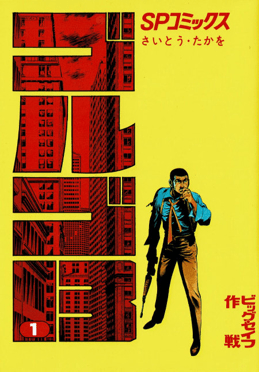
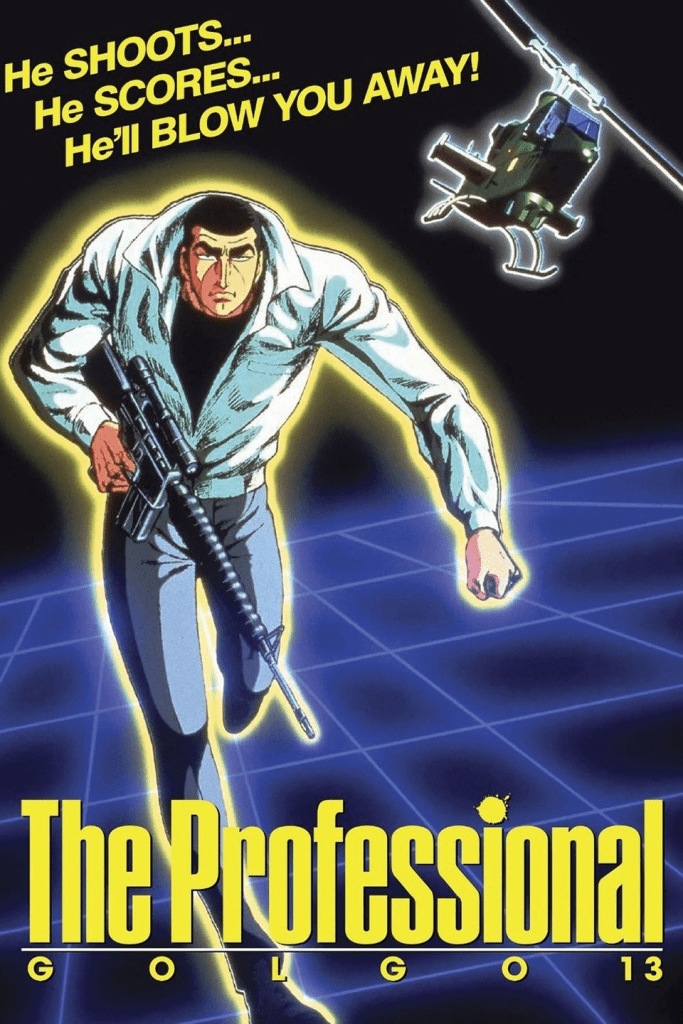
Indeed, the longest-running animanga series still releasing chapters even after the author’s passing is none other than this Japanese take on the well-established James Bond franchise. The mangaka, Takao Saito, designed Golgo 13 to be an international man of mystery. A man with no need for an introduction and gets all the results from the business end of a high-powered scoped rifle. Under the alias “Duke Togo,” Golgo 13’s backstory is up in the air. A legendary figure in international espionage, what’s known about him comes secondhand from those he chooses to work with. As long as they can get him a plan, a gun, and a car, then he’s in business.
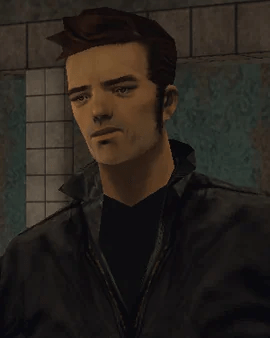
The name “Golgo 13” has a symbolic meaning, Golgo being short for Golgotha, the place where Jesus Christ was crucified, and 13, of course, being the unlucky number spelling death and destruction for his targets. And Duke Togo doesn’t seem to discriminate in his choice of target. Coincidence or not, I see a lot of this man in Claude from GTA III.
Before you look at this post inside-out, let’s size them up.
Contract killers from parts unknown with little to no mention of their origin, never mind their own birth names, who take up arms and remove problems for a variety of bosses, sticking their own necks out for a couple of bucks while earning the ire of different people and/or factions. But what separates the Holy Bullet from the grimy drifter is both the environment and the nature of their respective series. Golgo 13 is a professional hitman for hire. So is Claude, but he exists in a world designed to satirize everything from the ground up: New York City (which they needed to make adjustments for because the release date was very close to 9/11), mob life, gang life, pop culture, the works. Saito’s manga is more of an homage to the James Bond franchise and at the time of debut, James Bond only had five movies.
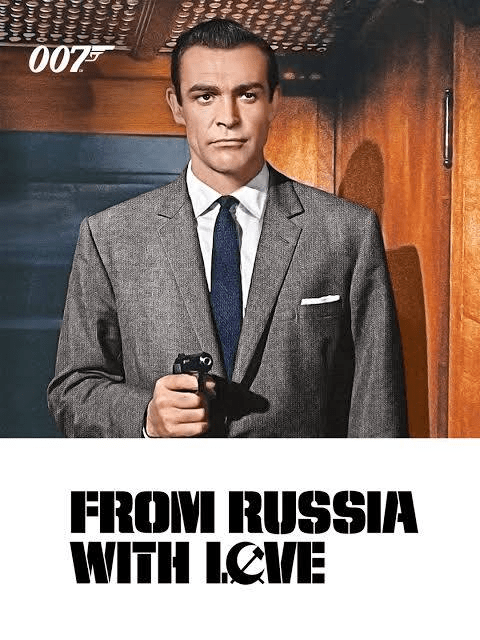
Not to mention, depending on who you ask, the depiction of early Golgo 13 in the manga and the movies is a mirror to the behavior of Sean Connery’s James Bond as well as Connery himself at the time in regard to women. I can’t say for certain if it’s a perfect mirror of Bond, James Bond from that time period having seen the 1983 movie a few years ago on Tubi TV, but just from that, the most I saw was Golgo 13 bedding a sexy lady instead of slapping the hysteria out of her, so I take it that this is a more reserved form of misogyny compared to Connery’s more boisterous form.
Does that make it any better? Well, considering the woman in that scene was more of a side show than a main event, it puts him a stair step above his British counterpart, but it’s worth closely examining Golgo 13’s character in relation to others. By himself, he’s a quiet professional with a singular focus: the target. Personally, I think these kinds of discussions erroneously apply modern customs and expectations to a 1960s Japanese publication, but I won’t refrain from entertaining them. Ditching random women after presenting the solid snake may not sound any better than Connery’s slap ’em and plap ’em, and it’s more or less on par, but with even less to say about this aspect than Golgo 13’s background, I wouldn’t dwell on this as much since the primary focus is Duke Togo and his incredible range.
In line with the nature of this blog’s discovery and promotion of notoriously hard-to-find animanga series among other things, this series is not only right up my alley, but it’s scarcity is tailor-made for a blog like this. 50+ years in serialization, even after the original mangaka died, with a handful of movies to go along with it subbed and dubbed, and yet… hardly a squeak. And understandably so.
The series has a library-occupying 200 volumes to collect so unless Saito’s estate approved omnibus truncations to shrink the number, you may wanna invest in some extra storage space and shelves. It does have a 2008 anime adaptation on Blu-Ray (and has since been made available on the underground pirate sites) 50 episodes strong, and most likely will rely heavily on those brave enough to dedicate hard drive space to keeping it in preservation. And to top it all off, the manga hasn’t had as many people scrambling to translate it for international audiences.
A die-hard fan may have a dedicated section to just the Golgo 13 series and if you happen to be that person…
You might have the blood of a Japanese historian in you, because bringing it to light is a gargantuan task.
And a couple of movies and a 50-episode anime series doesn’t go deep beyond the surface. Having said all of this though, with audiences craving more than paper-thin characters with unchanging motives and priorities, Golgo 13 may not be what a lot of people want these days. Protagonists who aren’t heroic 100% of the time against antagonistic forces who aren’t necessarily evil is what sells than rigid good VS evil, but it creates a false conclusion that pure good and pure evil are bad. I suspect that people who dabble in fanfiction are among those who lambaste these archetypes because it doesn’t give them a lot to work with, especially if they can’t rewrite what already exists due to its non-existence (Golgo 13 being too straightforward to bend into whatever the mind can imagine), but if that’s the case, then I chastise these types back with a megaphonic “LAZY WRITERS!!!”
100 of these guys in a room can crap out Hamlet, so what’s your excuse, fanfiction writers?
But a point can be made about how immovable the character of Golgo 13 can be compared to people like Saichi Sugimoto, Frieren, or JoJolion Josuke Higashikata (東方定助). Sugimoto maintains his eyes on the Ainu gold, but faces mental and physical challenges in search of it. Frieren learns more and more about the late Himmel the Hero long after the journey has ended. And Josuke/Gappy understands who and what he was and is while battling people he regarded as friends and family for control of the Rokakaka fruit.
The usual channels of viewership for the series and the movies are available, but with most of the manga being out of reach due to a lack of translation for the later chapters, I wouldn’t blame you if you decided to skip the manga altogether.
About time I addressed a noticeable pattern of mine
Between Hong Kong cinematic action pieces of yesteryear and Japan’s golden age of cinema, I’ve been quite busy exploring the directors of East Asia. So far, I’ve addressed four powerful names in the cinematic world (John Woo, Akira Kurosawa, Yasujiro Ozu, Kenji Mizoguchi), but this is only the tip of the iceberg, as I’ve definitely seen more than just those for in both the live-action and animated worlds. And before I expand on that, I thought I’d address that for a few seconds:
I love this era of literal memes, it beats brainrot 100% of the time.
The archives of this very blog show that the things I write the most about animanga and almost always on the series itself as opposed to the production side of things. It’s been this way since the blog first launched in 2023 and when it comes to writing about the production side, it’s heavily skewed toward games, movies and TV series. The reasons for this have to do with what creators are willing to share to news agencies. From my experience, game devs are happy to document the process from storyboard to controller to thrown off a cliff by Margit the Fell Omen.
Animanga is a lot of the same but it highly depends on the publisher. So while the 3D Mortal Kombat games have videos where Ed Boon et al talk candidly on the creation and re-introduction of legacy MK characters, Francis Ford Coppola feels cathartic talking about the troubles facing Apocalypse Now, and Bryan Cranston and Aaron Paul would walk you through the making of Breaking Bad and Better Call Saul, only a few manga publishers I’ve found are to be this open about their processes. Individual mangaka certainly, but editors for companies like Shueisha, Kadokawa, etc. are more than a little lockjawed. Even when they do show journalists the tour or sit down to conduct an interview, the details are either light or the sources are in Japanese, which I’ve explained during my review of The Elusive Samurai anime adaptation is nowhere near at a level where I can confidently review the contents. This part is understandable when the studio is busy bringing manga to life in real time, but if nothing is currently being worked on or not set to be for another half-year or so, then there’s really nothing worth keeping secret about the general production part at least, and I say this as a guy who revels in surprises.
Sometimes information is behind a paywall or a region code and no amount of sloppy-toppy offers will get me access to that succulent content short of a VPN subscription and moving my IP address somewhere else.
Maybe this will help when it comes to viewing the BBC’s documentary on The Troubles
A not insignificant portion of my animanga reviews have my parsing what I can from what I’m able to find in English, the most notable examples on this blog being that of Nazo no Kanojo X and Haibane Renmei, where the mangaka doesn’t have easily accessible photos of themselves or evidence that they’ve done interviews in the past and the other where the eccentric writer pulled an anime adaptation off the cutting room floor of his studio. Who says Haibane Renmei was a final draft at the time?
With that said, my recent trip to the cinematic side of things in East Asia is something of a pipeline, I consider. The precise origin point isn’t so much lost as its under tough debate within myself. I would say that it began when I was in community college in 2018 and my Asian Art History professor introduced the class to Akira Kurosawa’s Ran which is a medieval Japanese interpretation Shakespeare’s King Lear.
Japanese romanticization of medieval Europe is a time-honored tradition outside of Isekai, it seems.
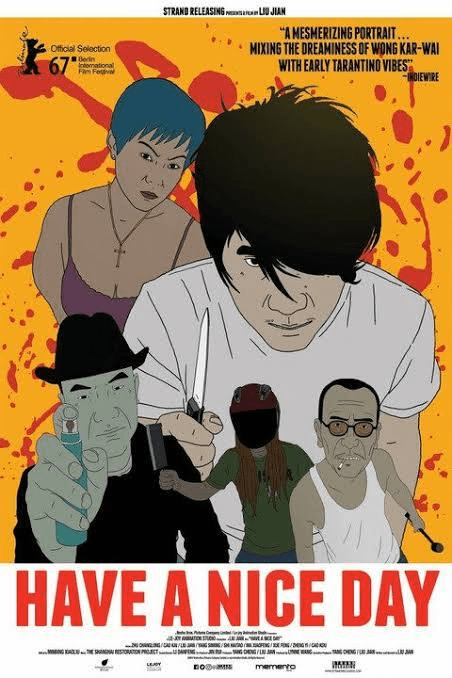
But as I recall, I was on a streaming site whose name I forget where I was made aware of a Chinese-animated and directed film by the name of Have a Nice Day.
Without spoiling too much of the plot, it’s inciting incident is when a cab driver, Xiao Zhang, takes a million yuan ($150,000 USD) at knife point. Not for completely selfish reasons; his girlfriend was the victim of a botched cosmetic surgery and he wants to use the money to get it fixed in South Korea. The rest of the film is something of a No Country For Old Men type of movie, in the sense that even more unscrupulous folks are after the cash, with each pursuer quirkier than the last. Are they dangerous? Yes and no. They are dangerous, but often to themselves than anyone else. And Zhang is still in some kind of danger as some of these types gun for him too, but have to fight the rest of the mob off as they chase him down. One prize, clashing goals, and a story made up of losers and those who lost less. Make of that what you will. It’s currently free to watch on Tubi as of this writing, so I might as well remind myself what I liked about it.
At the time, I was simply looking for movies and content to watch in the dark of night on my ancient Samsung touchscreen laptop. I was 18 turning 19 at the time and the 2AM binge was a fierce mentality. After a few years of that, binging doesn’t do it for me anymore, as I’ve explained in the past. I was scrounging for films I’d heard of but haven’t seen, and without a specific order in mind. Just wait for the lightbulb to flash on, scour the web for a pirate site that’ll allow to me watch or torrent without issue, and I’m on my way. In some cases, I took these with me to the movies during the holidays and because the copyright expired on some of these, I was able to watch them all in the Almighty Internet Archive.
To keep track of all of these, I had a Wordpad document organizing the movies listed by decade, starting with the 1930s black and white films where just about every production member is long dead, the production studio defunct or eaten by another one over the years, and no one left alive to make a fuss over it. Pirating movies is my time-honored tradition, Jake.
Of the films listed, some of these do happen to be Kurosawa films, but looking back at that old document, interspersing Eastern films with the plethora of Western films harkens back to a time when I couldn’t tell the difference between animation and anime, but didn’t care because the drawings moved. You think I gave a damn whether Zatch Bell! or Yu-Gi-Oh! were animated in Vancouver or Yokohama? Seven-year-old me could tell it was art, and it was f[horse]king art!!
Where did this series go, by the way?
Speaking of art, I can talk at length about the production and cost side of even foreign cinema, but aside from country of origin, there really isn’t anything foreign film studios do differently in terms of filming. And yet as far as accessing these films go, it’s historically been a challenge for the simple reason of Hollywood being Hollywood. Harboring the lion’s share of the world’s movies, a foreign film would need an international film festival to get more eyes on it. These days, there’s not much trouble achieving that and more, but in an industry where the mantra is to “know your audience,” dropping a foreign film on an unfamiliar audience can further alienate the audience and hurt the film’s efforts, provided the audience is looking at that sort of thing. It can feel like homework if there isn’t prior exposure to the subject matter.
What does this mean for Asian cinema in the past? Well, long before the interconnected-ness of the modern age, the best you could do was release films of age-old stories, hence why the western film genre dominated from the late 1890s to the 1970s. So powerful and inspirational were these stories of cowboys and Indians that non-American directors took a stab at it by way of the European (mainly Italian) subgenre, the spaghetti western. East Asia, in particular, had to make do with old tropes and stereotypes for specific genres to gain traction over the decades with pioneers like Bruce Lee, John Woo and even Akira Kurosawa gradually introducing these concepts to the western market. The benefit being that their names are known, the drawback being that kung fu, samurai, shinobi, and other medieval concepts were assumed by many to be all that the region had to offer at least until minds like John Woo and Park Chan-wook showed us that even East Asia can cinematic set piece and gun-fu to the top.
Another thing to highlight about Asian cinema would be the local politics. Like it or not, history and politics touches everyone and in the grand scheme of things, East Asia and Southeast Asia have a disturbing tradition of strong men dictators who couldn’t help but meddle in the affairs of private citizens, historically and contemporarily. Mainland China has loosened its grip in recent years, but in some areas the CCP can still put a thumb over film production. Japan is a democracy these days, but pre-war films were heavily scrutinized for dissent from the Meiji era to the mid-Showa era. Post-independence South Korea had a hardline anticommunist stance that kept creatives walking on eggshells in the film industry and (as I’ve discussed before) in their manhwa/comics industry, leaving their manhwa to be discovered decades after publishing online. Needless to say, if the government didn’t like it, it wasn’t gonna get a wide release outside the country, never mind have a guaranteed impact at home. Why bother making uncultured foreigners care about our movies?! We have mouthpieces to produce!!
But we live in a freer world, so that’s not an issue anymore… supposedly… It’s only a recent discovery (or re-discovery if I’m being honest) that I’m adding these films to my watchlist and the showing thus far has been nothing short of:
Insert Invincible title card effect here
I will not stop writing about these films. I’ll use my remaining appendages if my fingers fall off.
The title of this post is meant to have two purposes: to highlight how media can become lost and the modern era’s means of recovering lost media. There isn’t always a perfect method to prevent lost media nor is there a perfect means to recover lost media without sacrifice to the media in question. I’ve faced this problem personally while gaming and emulating games, but I’ll get to that soon.
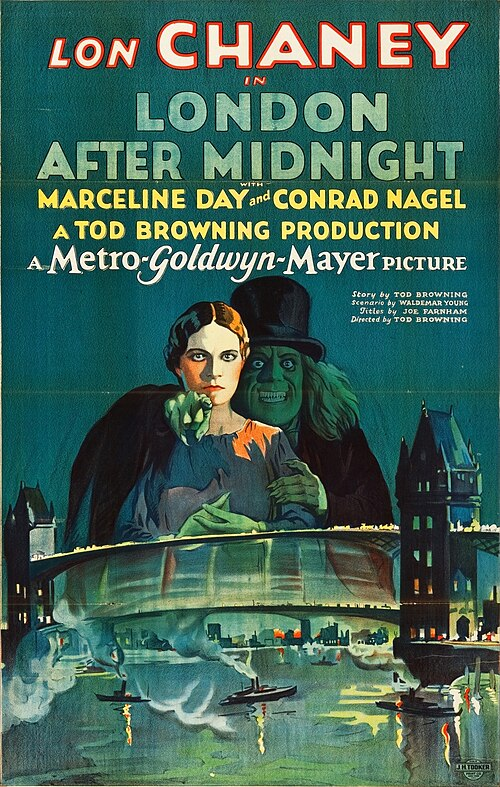
A brief overview of lost media is any piece of media whose preservation methods were either nonexistent or severely compromised to the point that part, most or the entire medium is effectively ruined or destroyed. Surviving copies can’t be located or recovered because they either don’t exist or sometimes won’t be released publicly, even after the copyright expires or the original author dies. For the longest time for obvious reasons, this has mostly applied to film, like so:
This film was released in 1927. It was kept in the MGM vault for decades until all surviving copies were destroyed in the 1965 vault fire. As of this writing, it only survives in posters like this and surviving still shots.
Yet as time has progressed, more and more forms of media have been created, to include video games which can also become vulnerable to media destruction. In one extreme case, Adobe Flash.
Five years have passed and I still miss it.
This critical piece of software was launched in November 1996 and has formed an important cultural touchstone on the internet ever since. Countless creators, new and veteran, have used it to make everything from videos to short films to even video games. There used to be countless flash games and even websites hosting those games. They were inescapable, until Adobe ceased support for the software on New Year’s Eve 2020.
A not insignificant portion of these games couldn’t be saved and are thus forever lost outside of admittedly s[dial-up]ty videos recorded in 144P in 2007. Yeah, they were hard to look at and aged really terribly, but having aged media is better than having no media. It shows the technological progress between, say, VHS tapes and Blu-Ray discs.
The crux in the custard I’m getting to is that efforts to preserve media have been undertaken for over a century, and while not perfect, as an advocate of piracy and emulation, I also advocate the preservation and, by extension, re-release of old media in as many forms as possible, especially when the format in question begins to deteriorate due to age. My grandmother clung tightly to old VHS tapes and while they may have been endlessly playable in 2005 for example, they had problems at the time and have considerably gotten worse since. Same for all the old floppy disks she never threw away.
In my documented experience on this blog, in order of difficulty from easiest to find to Raiders of the Lost Ark, video games have been fairly easier compared to movies. And movies are still easier to search up compared to TV series. I say fairly and not absolutely because digital stores like Steam and Epic Games Store have delisted video games before and will nonetheless do so again for a variety of reasons. MMORPGs are most vulnerable to destruction when the devs can no longer support the servers due to something like acquisition, shutdown, or “cost-cutting measures.” That last one is less excusable because video games haven’t had a better time to be profitable than the modern day. You can pick your favorite examples of this, but my pick for one of the best-selling video games ever goes to:
Once RockStar realized this game s[gunshots]ts platinum, it hasn’t turned the faucets off ever since. Notice the gap in time between this and Red Dead Redemption 2.
Time and tech is another factor for this. Games released on arcade cabinets or 16- and 32-bit consoles are merely a collection of pixels and a third party emulator is seldom needed. In some cases, they function the same as a browser game. Sixth-generation video games do require a third party emulator but I’ve yet to face any problems downloading them. Just needed to make space. Seventh-generation has proven the most difficult to emulate. On average a PS2 game can be downloaded to PCSX2, for instance, in several minutes to an hour or two, but PS3 and Xbox 360 games can take double or triple that, especially with a spotty connection. Maybe a signal booster would help, but the area of El Paso is surrounded by mountains, so the servers in this part of the country may be considerably weaker than more densely populated areas. Testing this out myself would cost me money and resources I don’t have.
I made mention at the end of the last post that I was planning on posting in the future a comparison of three underappreciated 2012 video games that tackled corruption in different aspects, one of those being Yager Development’s Spec Ops: The Line. Unfortunately, I couldn’t find a store front that was carrying the PC release as it had been delisted ages ago. I’ll elaborate on that in the post, but in order to play it, I had to download a console version for four hours.
This is what I mean when I say it’s important to preserve as much media as we can. Spec Ops: The Line was one such example of a hard to find piece of media. I was worried it was only available in YouTube playthroughs from years ago, but digital libraries keeping the files available online were a godsend for this endeavor. For other games, this isn’t going to be the case. All traces of the game in question could be lost forever.
This wasn’t the sole inspiration for this post. Actually, region-locking of movies was the inspiration, but with the Stop Killing Games initiative going viral, I might as well include it here.
Going back to MMORPGs and similar online games, if a developer goes under or gets eaten by another dev, it’s not their fault if their efforts to stay afloat don’t work. And as I said earlier, the argument of keeping the servers up is too expensive faceplants epically when video games continuously make tons of money.
Although not the original victim of media destruction, the earliest films were most vulnerable to it due to attitudes towards them since inception. A lot of the first examples from the late 19th century were admittedly glorified experiments consisting of multiple still shots giving the illusion of a picture moving independently, but these early examples helped to perfect the craft. Science yesterday, artform today. But a lot of these old films were made with hazardous materials, notably cellulose nitrate. It could catch fire easily and long before the marriage between sound and sight, many of the silent films of a century-plus ago can no longer be recovered. At first, the reasons for preservation were balked at, but efforts to try and preserve it have been made. I consider the zenith of home releases to be the VHS and succeeding DVD-Video eras as both formats have re-released tons of TV and movies with estimates in the hundreds of thousands.
Then we progressed to digital streaming after some time and my main concern with that has to do with licensing and even region locking. If the license expires, you might find yourself unable to view the series you paid for. And if you move from one region to another, you might have to invest in a VPN to see the series you paid for. In a more perfect world, this wouldn’t be the case, but now that buying is no longer owning, piracy is no longer theft.
I do make some concessions with this. I don’t pirate modern games because of the risk of anti-piracy software. Some of the games I do pirate are from dead developers.
No matter the form media takes, it’s always important to save it for the archives. Allow future generations to be able to engage with it, even if it hasn’t aged well graphically. Ed Boon may be perpetually embarassed by Mortal Kombat: Special Forces, but it’s not like nothing was learned from that. Yesterday’s mistakes make for tomorrow’s masterpieces.
I’m still in the process of drafting up that comparison between Max Payne 3, Sleeping Dogs, and Spec Ops: The Line, but I want to preface that with a review on Spec Ops: The Line first. Now that I’m able to play it on RPCS3, I’m in a better position to give my thoughts on more than just its plot.
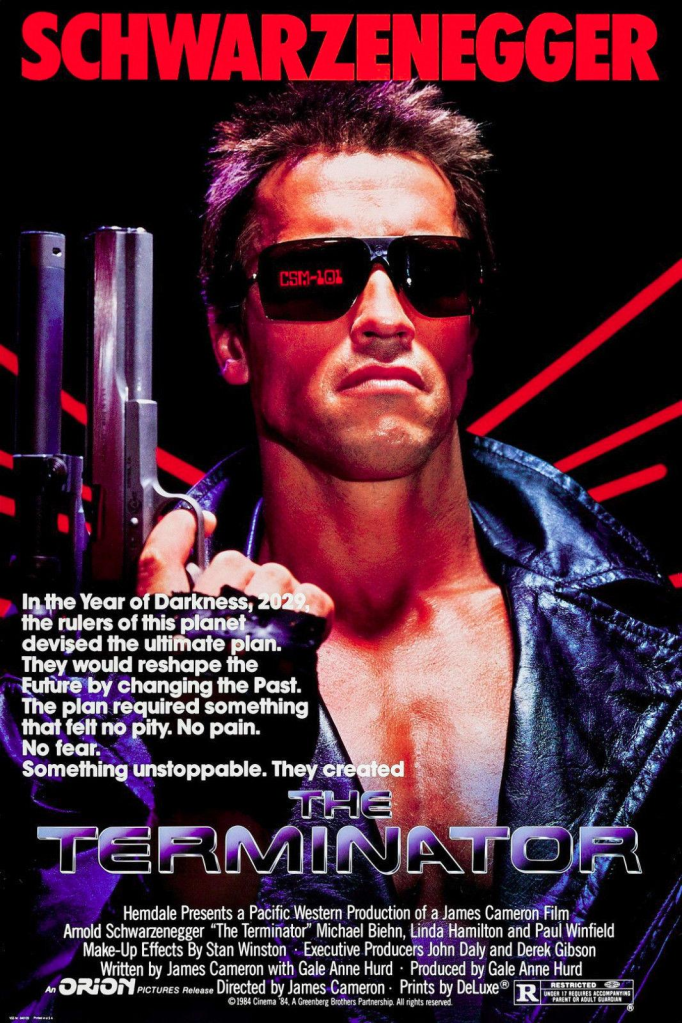
Although I’m as much a piracy advocate as Gol D. Roger, it’s not like the legacy services don’t occasionally give us something worth viewing. The way I got into watching movies primarily on YouTube (before looking elsewhere if what I wanted wasn’t available) began with that time I started to binge all the Terminator movies in rapid succession, next to a viewing of Saving Private Ryan.
For Saving Private Ryan, I recall in middle and high school how whenever the history classes progressed to World War II and eventually to the Allied Landings, they almost always showed the Normandy landings and it became something of a tradition to show the brutality of battle from the Omaha landings, the deadliest landing of just that day. But if you’re American, you’re history lessons probably stopped short of the fall of the wall or the collapse of the Soviet Union. Out of curiosity, I went to look up the entire movie and someone was ballsy enough to have it fully uploaded onto YouTube at the time, before there were ads and before YouTube started to turn to s[pop!]t.
And as regular viewers would know, this was the same setup for at least the first Terminator movie. The original channel I watched it on a decade ago is most certainly deleted (and I highly doubt I can look up my YouTube history from ten years ago), but even to this day dastardly (read: heroic) YouTube channels with only about 20 people in their audience are uploading the full movie, risks notwithstanding. Like this channel:
Channel: INDY CAT PLAY
The graphic content will of course lock the movie to YouTube, but this is an acceptable sacrifice.
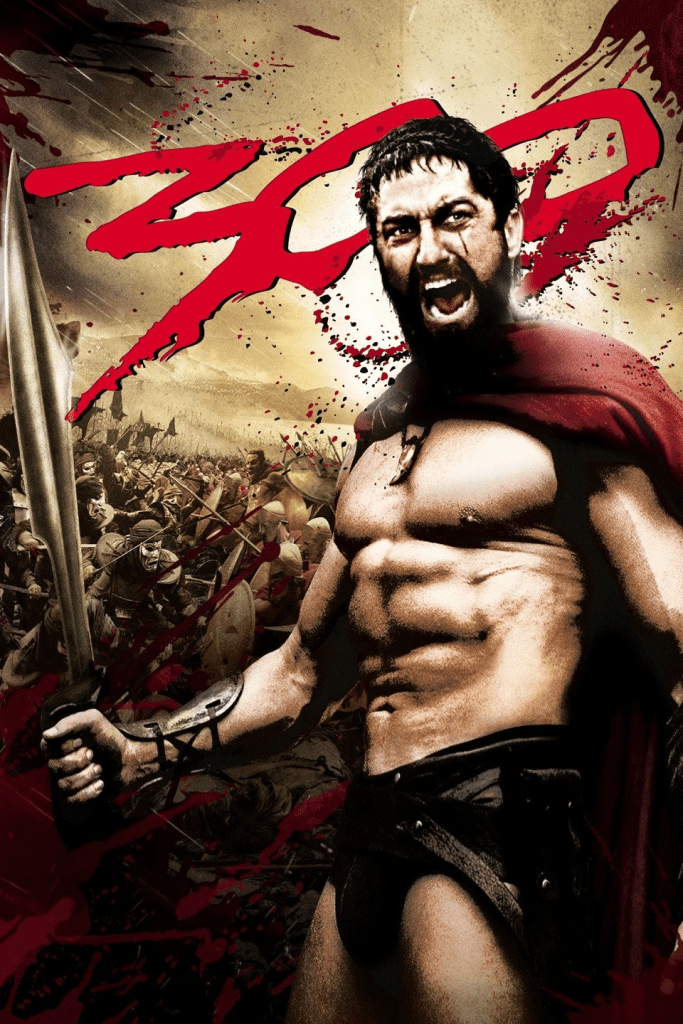
After that, it was down to looking for multiple different movies on multiple different pirate and torrenting sites. Gangster Squad, the 300 movies, Apocalypse Now, Full Metal Jacket, and several more. It was an occasional thing to do prior to community college and during the summer of 2017, it started to ramp up alongside that time I checked up on the Naruto series to discover that Boruto was a thing.
Maybe it’s because I took a break from Naruto that I grew to appreciate the successor series as well. But criticism still exists.
In between choosing my courses, I was on the hunt for new movies to watch, and prior to this, I had expressed an interest in military service by the end of high school. Unfortunately, I was 17 when I graduated and wasn’t able to convince my mom that even part-time service had its merits. “Try college first,” everyone said. You know how the classroom setting doesn’t mesh with everyone? That’s me. Learning by myself was always better than learning in a classroom setting, and there was always a pressure to get the highest scores. My average was usually a B- to B, tops. Except for Art, English and Foreign Languages which got me consistent A’s. The push for A’s across the board led me to lightly defy those expectations due to how Icarian and hubristic it felt. Also, every smart kid was a know-it-all with an attitude.
So I went from slightly above average high schooler to slightly below average college student. Seriously, my GPA took a hit due to my piss poor math scores. But away from that, a section of my free time was devoted to movies with a military slant, as a means to hype myself up. I was still determined to join the Army, and if I’m being honest, I probably wouldn’t have had that break in service from 2021 to ’24 if I had kept it a bit more realistic.
As for the movies I was looking for, there was never a single one-size-fits-all website for me to watch them all on, and as you’d expect, popup ads. Popup ads everywhere. But I was able to fight through the mess and make some pretty neat discoveries. The one website that I was able to watch my movies on was called MegaShare. I’m going off memory alone, but as I recall, the site had its server in Vietnam and momentarily went under in late 2020. A Google search during this draft reveals that as of writing this it’s still up and still functional, with TV series included in its lineup.
Watching anything on this site is a bit tricky without a VPN so good luck streaming Paddington 2 or Jigsaw for instance. These days, the majority of the content that I don’t always pirate comes from my subscriptions to Crunchyroll, Netflix, and Tubi, and for free viewing, there’s YouTube Movies and the Internet Archive, God’s gift to the internet.
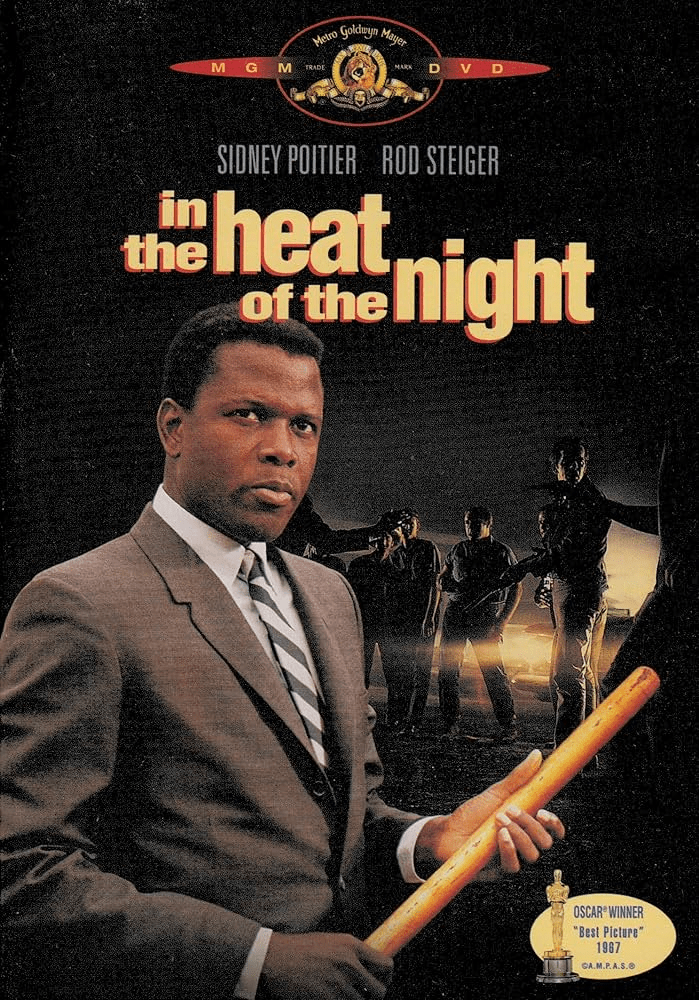
Which brings me to the arc of YouTube movies made free with ads in between. It started in early June 2020. In the aftermath of the George Floyd riots, movies promoting primarily black casts and stories were made free with ads, and one of them was the saga of Philly detective Virgil Tibbs:
Filmed in 1967, starring Sidney Poitier and Rod Steiger, this movie was about a murder of an influential man in tiny Sparta, Mississippi. The racist police department not only suspects this out-of-town Yankee Negro of doing the deed, they point a gun at him while taking him in. However, when Det. Tibbs reveals that he’s also a cop, his superiors assign him to this murder case and his expertise wins over both the police, the victim’s next of kin, and even select townsfolk. A great movie that to those who’re old enough may have a few things to say about how segregation worked at the time, though probably a smaller net would need to be cast for on-duty cops from back then. My grandmother certainly has some surviving memories of Virginia. Not as far south, but still influenced by the Jim Crow laws.
Afterward, there was a blank period where I didn’t watch that many movies, until the last half of 2022. In the Army, if you can’t continue on in basic training, you’d still be allowed to graduate just at a later date. They’ll recycle you into another company either at the beginning or slightly behind depending on certain factors. I was getting tired of medical issues f[clank!]ing me over and I called it quits… which I was regretting. Playing the waiting game for the entirety of 2022 gave me a lot of time to kill as I couldn’t get a job. Eagerly awaiting the initial rejection, I just watched a handful of movies, two of which that stood out were The Mask and Tombstone. Fast-forward to the last quarter of 2023, where my second attempt at joining the Army bore fruit. Much of my time was divided between watching Lucky Star and Azumanga Daioh on YouTube through unlisted playlists and playing CoD: MW 2019 and House Flipper. This was also after my grandmother moved out to an elder’s home in Baltimore, so for the first time in my life I had my own room… at 24 years old…
The recruiter I was talking with through Reddit (true story) told me that my waiver had been approved and I was set for training at Fort Leonard Wood, Missouri the following January. With that out of the way, I watched as many of the movies as YouTube would make available. The list of movies I’ve seen is extensive, so instead I’ll grab three of the movies that I recall watching on YouTube. Not necessarily before the second attempt at Army life, but just on YouTube Movies
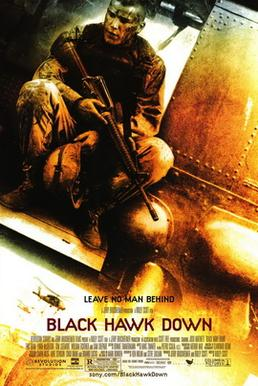
1. Black Hawk Down
I was more than a little hyped up getting back into the Army, and one of the movies I watched was Black Hawk Down. The dramatic retelling of Delta Force’s worst day in Somalia in 1993. To gloss over some of the history, numerous factors helped contribute to the breakdown of the Somali government and instability in the leadership thanks in no small part to colonialism and the clan system. By the early 1990s, the Somali government hit the road indefinitely and numerous warlords rose up dousing the flames with gasoline. One of them, Mohamed Farrah Aidid, had been antagonizing UN Peacekeepers from Pakistan, and President Bill Clinton authorized military action to take him out. The tip of the spear had no idea what they were fighting, a trend that would curse the U.S. military, starting arguably in Vietnam, but continuing on after Somalia.
Channel: Armchair Historian
This video explains it in further detail.
A Black Hawk helicopter was blasted out of the sky and the new mission was to find the soldiers and get them out intact. Easier said than done, when the population of Mogadishu, radicalized and armed with small arms and machetes comes barreling down on your position. Delta lost two of their operators, Master Sergeant Gary Gordon and Sergeant First Class Randy Shughart, and it became a race to get the f[gunshot]k out of Mogadishu without losing anymore people. Mission failed. We won’t get them next time. Somalia is a failed state, yadda yadda…
I’ve talked about this last year, but that was to observe different military practices that are still in use today. For content, 90% of the movie is obviously focused on events from that fateful day, with 10% dedicated to the history and politics of the event. Completely historically accurate? Well, this website fills in the gaps that were scrubbed from the movie for brevity’s sake, but it’s not like there was a fictional account of a flying Pegasus so to that I’d say it’s 95% accurate.
2. Tropic Thunder
This one I hadn’t seen since I was a kid, and its content shows that, on the one hand, it’s best when things age to show the difference between the culture of media then and now, but on the other hand, biting satire like this is sorely missed in this day and age, especially with social media companies making idiot moves in recent history. Cancel culture anyone?
The premise of this comedic masterpiece is that four actors are joined together to adapt a novel of a Vietnam war movie and the production goes awry at every turn. Not because they can’t get film rights, but because of on-set clashes between not just the actors, but also the producers. The studio decides to throw them into Indochina and film them with hidden cameras, failing to realize that they were dropped into the Golden Triangle, a region swaddling Thailand, Laos, and Myanmar where much of the world’s opium is cultivated, typically under the thumb of the nastiest gangs in Asia, to include Triad groups.
Of course, the actors find themselves somewhat held hostage by these guys and the movie turns into an impromptu rescue mission that harkens back to the Project 100,000 policy during the Vietnam War. As for the directors, they have a very clouded “show must go on” mentality and fail to realize who has their stars hostage.
The comedy comes from all the politically incorrect writing and satire. This movie pulls zero punches in taking the piss out of everything. Hollywood’s controversial casting choices, the portrayal of disabled characters by able-bodied actors, the drug use among the Hollywood elites, the draconian control of select studio execs, directors, and other production staff; in an alternate universe, Tropic Thunder would’ve been a documentary. I’ve made jokes elsewhere online that comedy is prophetic and I’ve been seeing it less as a joke and more as the truth these days. No matter your beliefs on a variety of topics, I can’t encourage you to watch this enough. If you’ve seen it before, like I have, give it another watch.
3. No Country for Old Men
Based on the novel of the same name by Cormac McCarthy, in 1980, West Texas hunter, Llewelyn Moss stumbles upon a drug deal gone wrong and takes the money for himself and his wife. Knowing an agent of chaos is after him, he goes through numerous lengths to avoid this amoral hitman, all while an aging sheriff tries to reach him before cartel bullets do.
This movie is called by some the pinnacle of the western genre brought to the modern age. Changing world, untamed land, conflict between nature, society, and mankind; I can think of different media that fit this mold.
No Country requires an elevated level of thinking. It gets a lot of flak from some for the way it ends, which I attribute to a misunderstanding of the western genre. Moss may have been the protagonist, but he’s not necessarily a good guy. His adversary, Anton Chigurh, is both an antagonist and a bad guy and the sheriff Bell is honestly at a loss. When the camera pans to him, he feels like he’s useless and out of his element. Things made sense ages ago, but that age is no more and there’s not much he feels he can do. Moss and Chigurh move at a comparably breakneck pace in their search for the money. Most analyses of the movie are about Chigurh, but not a lot mention Sheriff Bell at all. The movie introduces his character several minutes in, but he has the first and last lines in the movie. I don’t have the analytical expertise to talk about Bell’s place in the movie or the novel (which I haven’t read), but I say he deserves some exposure himself.
YouTube movies can expose you to some films you didn’t know you would like and with a healthy library to show for it, you could easily get lost looking for something to see. No, really, it’s a labyrinth, bring a map… and maybe something to distract the minotaur. For a fourth surprise recommendation to complement the three here, have this:
No staff members were sacked in the production of this classic.
Full disclosure, the first topic lined up was meant to be about the Senran Kagura series, but I haven’t been playing it as much as of late. Work-related stuff among other things took my time, and for the style of gameplay, I’ve seen better. At least it has an anime adaptation. Next to that, was about a series that was subject to limited release outside of Japan — Idolmaster, only I’ve mentioned it before and without access to the whole of the franchise, I’m not able to review it in the manner I’d like. Typically, I start at the beginning, but the circumstances that created this series in particular are only available in Japanese arcades with the Xbox 360 port dying with the console, making the first installment in this franchise semi-lost media. So instead, we’re sticking with Nihon and talking about their movies.
As far as old movies go, whatever I could get my hands on I’d always given it a watch. In community college, I watched 1932’s Scarface and 1933’s King Kong. I managed to find the 1982 film The Wall based on the Pink Floyd album of the same name. I recommend all three by the way. And all of these plus similar films have been my go to for years, from my piracy era to my movie theater era. I’ve heard from the Extra History channel on YouTube in their series on Japanese Militarism that when it comes to studying societal changes in the Axis Countries during WWII, Germany and Italy get over-studied while Japan frustratingly has been under-studied or brushed aside, presumably because they don’t have an equivalent to Hitler and Mussolini, or rather no civilian equivalent with the Japanese military dragging the society down into Hell with them one assassinated politician at a time. I bring up the historical blind spot in an admittedly faulty comparison to my own approach to the Japanese film industry. I’m American, after all, my first movies are going to be American. Sometimes, British cinema will spillover.
Guess I was always a sci-fi fan, I was just denying it because the genre was so broad.
Only recently have I been watching Japanese films and a lot of them are damn old, coming from legendary names in Japanese cinema, Akira Kurosawa, Yasujiro Ozu, and one other one I discovered whilst researching this topic, Kenji Mizoguchi. These three directors formed the foundation of post-WWII Japanese cinema in the 1950s during the Golden Age. By the time they were making film after film, Japan already had a storied cinematic history, though looking at the world the country left behind in and entered in favor of, one can see what kinds of films were being made especially during the late Taisho and early Showa periods. The short version of the history of the motion picture largely boils down to an amalgamation of centuries’ long efforts to get pictures to move by themselves, a means to record a moving flipbook and similarly, movements of this type popped up in East Asia.
Early films, as you can expect, are unimpressive considering what populates our screens, streaming services, and theaters today, but to Frederick Harrison Burgh in 1898, regular photos of the every man to his left and right were given life before his eyes. I didn’t exactly take any history of cinema courses, but I can also imagine a playwright of some kind looking at the first film directors in human history and incorporating the ideas into his plays or straight up becoming a film director himself in part or whole–to varying degrees of success. Maybe a combination of these, who knows?
Even when Japan had more or less completed industrialization or neared its zenith, they weren’t done learning from western innovators, such as Thomas Edison.
Far from the progenitor of filmmaking, his inventions and contributions to cinema in particular formed the foundation of this industry worldwide. When the industry erupted in Japan, elements of kabuki and rakugo have made their way in over time. Narration, depictions of bygone eras, romanticism; different country, similar tropes about legendary figures. Just watch any western and compare it to the reality of the cowboy.
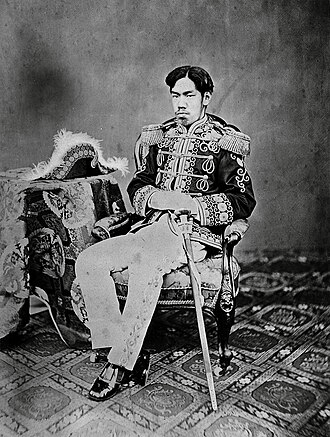
In this case, Japan had the shogunates and numerous tales of courageous warriors to adapt to film. Miyamoto Musashi, Tomoe Gozen, the main belligerents of the Genpei War; even the monarch has been depicted in film. Meiji was a fixture of post-WWII cinema for a time and looking at the Meiji era it’s easy to see why. A teenage emperor spearheads reforms that put an island nation on equal footing with the west over the course of about 45 years. Meiji was the emperor during the establishment of the Empire of Japan, his reforms reshaped the military into a powerhouse capable of knocking China and Russia around, empires many times the size of Japan itself and they were weak to Japanese might. Nationalist or no, you can’t help but laud an era of rapid industrialization and the man who helped with that.
These days, we can look at the era objectively, but the World Wars era emboldened and inspired filmmakers world wide. Wartime propaganda to motivate the populace to accept rations for the troops, instructional movies on the safety and operation of equipment and maneuvers, pre-mission briefs with the commanders in the war room before the march to battle: if done right, it can get the public firing on all cylinders and bolster the war effort significantly. If done wrong, the populace will be made complicit or forced to go along with the military’s worst actions. A tool of Japanese militarism, factions of junior officers in the Imperial Army and Navy formed individual groups all along the nationalist side of things. On the tame end, films released in this era in authoritarian nations helped lead to the cult of personality around certain authoritarians. Hitler had one, Mussolini had one, and I doubt he was aware of it, but Hirohito had a cult of personality as well, fostered by a radical faction working under the worst evolution of the national slogan, the latest one being “Revere the Emperor, Destroy the Traitors.”
The wild end of the propaganda spectrum can lead to the fabrication of enemies and dubious reasons to subjugate them. Most tools at their disposal were used for this purpose and led to ultimately dire consequences. Militarism could only last so long though and the dismantling of the Japanese colonial empire and subsequent occupation meant starting over again, with a new constitution and a self-defense industry with limited expeditionary capabilities.
So where does filmmaking factor into all of this? Adaptable stories for one thing. Think of all the western films featuring Ancient Greece and Rome, even in a stylized/fictionalized manner.
Obviously, the Spartans had armor, these masters of warfare weren’t stupid.
As mentioned before, any knowledgeable filmmaker can make Japanese historical films, circling us back to the likes of Kurosawa, Ozu, and Mizoguchi. So far, I’ve only watched Kurosawa films, but I do want to talk about the others anyway. Kurosawa was an inspiration to many. He was to film what Osamu Tezuka was to animanga. The first time I watched him was in college during a course on Asian Art during the Japanese section. The film in question was called Ran and it was Kurosawa’s version of Shakespeare’s King Lear in a manner of speaking, which itself, when I saw it, drew parallels to the power struggle that emerged from the division of the Carolingian Empire in the 9th century. All three stories involve a ruler of some kind who chooses to divide power among his heirs in near-equal status; all three fail to realize that the water of the womb doesn’t always bind and that siblings may bicker, but rich siblings don’t pull any punches; all three heirs immediately raise armies to rob the others of their territory; and all three explain in a gruesome showing why much of the known monarchic world defaulted to primogeniture. This model is criticized heavily by historians but without a better alternative, what were medieval kingdoms gonna do? Let a woman rule? Well, sometimes…
Queen Eleanor by Frederick Sandys, 1858
Remember when I mentioned western influence in Japan? Expanding beyond technology, this opens up a wider question on Japanese appeal to medieval Europe, of which the short answer to that is exoticism, same as how many westerners and weebs exoticize Japan and at times the rest of East Asia, hence why a lot of East Asian celebrities and such adopt western names.
Samurai tales were Kurosawa’s bread and butter and a great influence on samurai storiesthereafter. One such film I had the pleasure to watch while on CQ was Yojimbo: the tale of an anti-hero ronin with a bullish demeanor who fights off gangs after getting to know an innkeeper family.
Moving onto Yasujiro Ozu’s output, he didn’t make samurai tales, instead favoring contemporary, slice of life films about everyday life. Exclusively Japanese life? Yes and no. Obviously, the setting is going to be in Japan, but the lifestyle of the people in his films being relatively modern make it relatable to many people globally. These aren’t disillusioned ex-samurai with a lot to gain in a changing Japan; these were regular people with commonfolk stories, easy to tell and far away from the realm of fantasy. I only recently discovered a few of Ozu’s films on the Internet Archive site, and I do plan on giving them all a proper viewing.
The last of the Golden Age Japanese directors is Kenji Mizoguchi, who I mentioned I discovered while drafting this post. Google and his Wikipedia page both tell me that his films historical dramas with a focus on women’s lives. How feministic! He was the oldest of the trio and being born when Meiji was still emperor and thus would have been exposed to the lives of not just female entertainers (geisha) but also of women going into a rapidly advancing Japan. This leads me to believe that, like much of the western world, Japan in particular was about to approach the subject of a woman’s place in life but not with the right approaches or interests at heart in mind. Or when the society did so, it was a mixed bag of controversial successes and failures. Like their male counterparts, women enjoy many of the same privileges enshrined in western societies, but some age-old challenges still linger, many of which became a central theme of Mizoguchi’s movies. Like most of the other media I have listed, I also plan to watch a few Mizoguchi films. I hadn’t made any concrete plans to write about them in any capacity, but I do wanna get back into it at some point–things have been looking a bit too anime otaku-centric as of late.
Not a shift, but an addition to my typical lineup.
Hollywood has a century and change with a wealth of films and genres to back it up, but it’s obviously far from the only producer of groundbreaking films. On the other side of the world on the Pearl River Delta, there’s a city in Guangdong Province that’s been a part of the British Empire longer than it’s been Chinese, and a look through city streets and select-people’s names shows this.
Hong Kong! One of Britain’s prizes in East Asia, to summarize the history of the area, 19th Century European powers sought foreign markets for trade. Britain, for instance, was making inroads in Asia and one of their stops was a fishing village in Southern China. China didn’t want the Brits to sell opium to their people due to the adverse effects on health and in doing so, ignited a war that they lost to Britain.
Although Hong Kong Island was the prize, it did nothing to satisfy British interests and they’d try to renegotiate the existing treaty. China said no again and this time more of Europe and even America had something to gain from an even more vulnerable China, or at least their neighbors. Sticking with Hong Kong, Britain’s near-peer rivals could and have sacked similar-sized territories thus necessitating a formation of the British military to keep the territory safe, though this stronghold of sorts was also witness and participating in further engagements for the rest of the 19th century.
By 1899 and the start of the Boxer rebellion, China had ceded so much territory that it was derisively known as the “Sick Man of East Asia.” Russia, Germany, France, Britain, and Japan all took some of their land and/or influence, further European powers split Shanghai amongst themselves, and Japan was making it crystal clear that this would be their backyard, largely solidified when they won out in the Russo-Japanese War in 1905. British-appointed Hong Kong leaders largely sat back while this corner of the globe kept adjusting lines on maps one ink-dipped fountain pen at a time… at least until Japanese ambitions brought the chaos to the governor’s mansion following Pearl Harbor.
Part of Japanese expansionist ambitions, the great lie told to the colonies of East Asia was that the answer to western imperialism was Japanese imperialism. They lost their opportunity when the US and UK shot down a racial equality clause at Versailles, so Japan’s next move was to dislodge western influence in the area through blood.
The 1920s and 30s gave Japan multiple opportunities to gradually expand in China and Mongolia, but their endeavors were somewhat halted by the US oil embargo after vile reports of, for lack of a better term, Olympic-level rapes and murders being committed in Nanjing.
This book has the details, and predictably none of them are for the faint of heart. Read at your own discretion.
After Pearl Harbor, American, British, Dutch, and commonwealth possessions were eaten and absorbed into the Greater East Asia Co-Prosperity Sphere, including Hong Kong, who wasn’t safe from Japanese atrocities across the Pacific. As we know, the combined forces of the US, UK, Australia, New Zealand, and resistance fighters in Japanese-occupied territories worked tirelessly to send the Japanese back to Tokyo and finish it off with a pair of bangs in 1945.
The Cold War saw roughly every part of the world violently or peacefully throw off the yoke of colonial influence and the last two in China were Hong Kong and Macau in 1997 and 1999 respectively from British and Portuguese hands to a two-systems situation, with full reintegration of the territories into China by 2047 and ’49, on the 50th anniversaries of their return to China, but recent news particularly in Hong Kong leaves the fate of the region uncertain.
Suffice it to say, Hong Kong’s history is one to preserve and retell for eternity. So, why bring up geopolitical history in a post hinting at their cinematic history? Well, I felt that the outside world would certainly have an influence on the region and Hong Kong would have something to give back to the world. Notably, it’s film industry.
Before Hong Kong, Shanghai was China’s moviemaking capital, but very few films of that era are available for wide viewing. Conversely, Hong Kong under British ownership had more room to flex its artistic muscle and it did, compared to mainland China and Japanese Taiwan. Since the end of World War II, the Hong Kong movie industry enjoyed an approach to movie making that wouldn’t be seen until the late civil rights era in the US where more and more independent films would rise to challenge Hollywood.
As a matter of fact, Hong Kong-born cinema was free from subsidies and government influence as a consequence of British ownership, so there weren’t any efforts at the time to scrutinize their films for any anti-British sentiment, like the Shanghainese film industry or the colonial Taiwanese film industry, both of which would be heavily vetted for dissent or used as propaganda tools for the empires. Still, the British empire would likely have something of a propagandist industry, especially in the Cold War. But the filmmakers in London would be doing that anyway, and they wouldn’t need the crown or MI6 to influence their slant seeing as the alliance with the US and NATO membership status would guarantee anti-Soviet hostility even in British media.
The Brits wouldn’t be outdone at this time.
But enough about the pillow where the crown rests, time to continue on about one of its overseas territories. In retrospect, each time the UK tried to put a thumb on their territories, it declared independence with the worst lesson learned. Conversely, when London leaves the colony alone, it learns to develop on its own, coming out better as an independent state. For Hong Kong’s sake, freedom plus location equals a prime source of inspiration. A millennia of Chinese stories ripe for the adapting was set to follow, and with Hollywood pumping out British and American works (at times distributing continental European cinema over the years), the world was Hong Kong’s oyster.
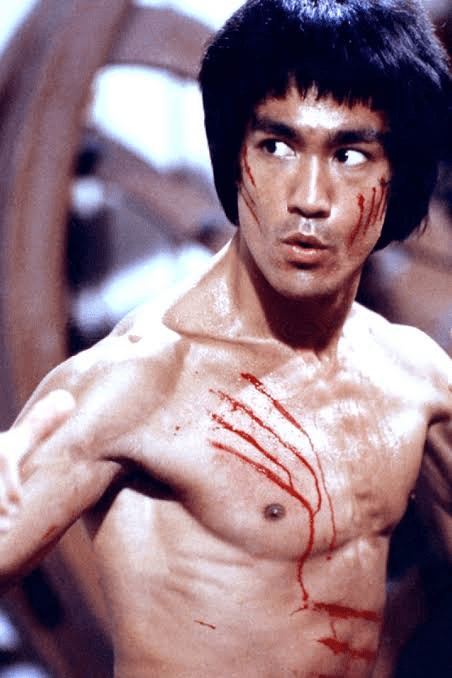
Most of the time, HK filmmakers stuck with the stories they knew best, though by the 1960s and 70s, some of Hong Kong’s best movies would be bolstered by legendary actors and directors, to include but are not limited to Stephen Chow, Jackie Chan, John Woo, Donnie Yen, Chow Yun-fat, and one of the biggest in martial arts cinema, arguably the biggest in his lifetime, Bruce Lee.
Personal story, where I grew up in the Bronx, there were at least ten different Chinese restaurants within walking distance or a short bus or train ride away. One of them had a mural of Bruce Lee in his trademark stance from the Enter the Dragon series.
Millennia of martial arts disciplines and practices led to filmmakers incorporating the concepts into many of their films. The aforementioned Enter the Dragon, Drunken Master, Crouching Tiger Hidden Dragon, Rumble in the Bronx, Kung Fu Hustle; hallmarks of Hong Kong cinema and complete with martial arts action and uniquely comedy. Several of these tend to be based on folktales from the mainland or at least the Guangdong Province, sort of like how kids in the US learn about Paul Bunyan or John Henry. Larger than life folk heroes giving the audience a window into their world at that point in time. For Hong Kong’s film industry, it’s had lots of time to reach perfection over the years, even rivaling foreign competitors, taking in as much cash flow as the US, UK, India, the mainland, Japan, and France.
Sadly, the fun had to end at some point. Domestic competition initially benefitted individual studios and filmmakers to found some of their own, like Golden Harvest, for instance, but when the competition collapsed in the early 1970s, only one studio, Shaw Bros., was left to carry the weight of the industry on its shoulders. The studios in Hong Kong felt this pressure and was compelled to get as many films in theaters as possible in a short amount of time. The problem with rushing movies out the door like that is the same for rushing video games out of the door: quality control. Few rushed movies come out perfectly and the ones that do have to compete with the rest of the dreck they release with or rely on rapidly aging tropes which was the case for Hong Kong. Trope bloat was killing the industry and filmmakers didn’t understand why.
Another, more indirect, cause of the industry’s downfall came with an increase in affordable housing. More tenants move in and start families and/or get jobs, other things take priority, and entertainment becomes a luxury that only a few can afford. Speaking of which, job creation eventually grew the middle class who increasingly became critical of low budget indie films, so good luck getting an honest answer out of Brian Chang when you ask him about the Blair Witch Project.
Or at least the Cantonese answer to The Blair Witch, I suppose.
The final two death throes had to do with piracy and Hollywood making in-roads in East Asia. If you think companies are overblowing the concern for piracy, in some parts of the world, piracy was still necessary if you wanted to watch movies, and going back to East Asian politics, some countries were severely restricting distribution in their territories at the time. Some still do and lobby draconian retaliation for even having the film in their soil. The final straw was Hollywood’s push into the East Asian market and all the aforementioned factors would mean that the Einstein of Cinema would need to breathe new life if Hong Kong was going to rebound. As of 2025, it still hasn’t.
All things considered, all that time rising, shining, and fading was arguably more than enough for Hong Kong cinema to make an impact on media, even to the point that countless classics get referenced to this day. The most recent example that comes to mind would be the gacha game Zenless Zone Zero where the developers at Hoyoverse released an animated promotional music video for their limited S-rank character Ju Fufu, with numerous homages to Hong Kong cinema.
Channel: Zenless Zone Zero
The thumbnail alone is a movie reference. Quick! Guess which one!
And predictably, the Hong Kong films of old would find their way into video games. Of these, I’ve played two unconnected video games, one of which has an interesting story. Starting off:
Sleeping Dogs (2012):
Released by Deep Silver in 2012, it’s more than a Hong Kong GTA clone. It’s cast consists of big name actors on both sides of the Pacific, one of them–Will Yun Lee–taking the visage of the protagonist, Hong Kong-born Wei Shen, a troubled youth who set himself right after he moves with his mother and sister to San Fran. Sadly, the move hardly changed the life of his sister Mimi who was ultimately defeated by a heroin addiction. For Wei, he still had connections to old friends back in Hong Kong, a not insignificant number of them being Triads from adolescence.
In the game, the SFPD imbeds him into the Hong Kong Police Force deep undercover to nab a high ranking Triad in the Sun On Yee, based on the real life Sun Yee On. The gameplay infuses eastern and western tropes and even some concepts, as a result of Hong Kong’s outside influences. The East Asian concept of face culture is implemented in both the plot and in gameplay where an underling, regardless of skill, makes the boss look more capable than they really are. Company-suck up culture with an East Asian flare.
Since he’s playing both sides in this, there are missions where Wei is a detective and story missions where he continues to embed himself in the Triads. Contrary to the game’s description, there’s really no conflict between these that can’t be solved relatively easily. The Triad characters suspect Wei of being a rat three times at most before he Academy Award acts his way out of it–a skill I expect undercover cops to have but it’s stretched to comedic levels until the end. Meanwhile, the HKPF hardly warn that his cover is under serious threat. Maybe they think he can handle it or not, but that’s not a unanimous view. Some of Wei’s handlers express doubt over his ability to stay on the straight and narrow once this is over… even though you the player can probably balance out the criminal activities with the cop work for the duration of the game. The game doesn’t even punish you very harshly for screwing up, merely awarding less upgrade points at the end.
Still worth experiencing, as the DLCs make up for it, each with unique mechanics.
Hard Boiled (1992)
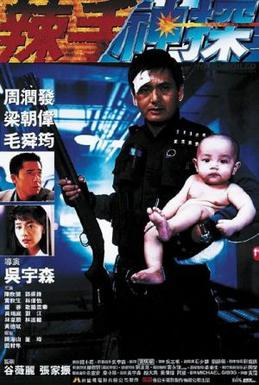
I’d been looking for this one for a few months before I had found it on the Internet Archive sight. John Woo’s blowout success before embarking to Hollywood, like Sleeping Dogs, it’s another cop story, but with arguably more guns than a US gun show.
A pair of Hong Kong cops, Inspector Tequila Yuen, runs into an undercover cop and agrees to help him shut down a gunrunning ring. Tequila is a loose cannon who skirts past the rules to get results, which works in the long run but leaves him subject to reprimand each time. The movie itself has loads of action with some downtime sprinkled for a total of at least 10-15 minutes of breathing room combined. Paying close attention to the cinematography, it’s rare to find a contemporary gun-fu flick without shaky camera effects and I forever praise John Woo for omitting a maligned practice.
The camera stays afar and runs up close during pivotal moments so the fear of missing anything during the action scenes is highly reduced. By the film’s end, the loose ends had been largely tied up leaving for a bittersweet ending.
I didn’t know it at the time, but a video game I played was marketed as a sequel to this very movie. After watching Hard Boiled, I see how that came to be.
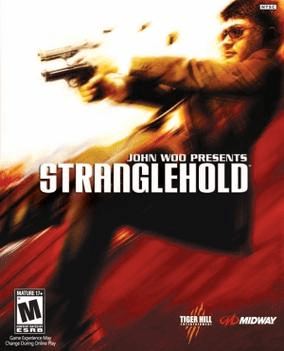
Stranglehold (2007)
Speaking of bittersweet, the sweet part is knowing that this is a surprisingly well-done Max Payne clone. The bitter part is knowing this came out with Midway staring bankruptcy from the business end of a rifle.
A follow-up to Hard Boiled set 15 years later, Triads kill a cop and kidnap Tequila’s family and he goes on a one-man mission to get his loved ones home. Sound familiar?
Well, it actually precedes Taken by a year at most, meaning it was probably in development as early as 2004 or 05. Taken likely had been in production since at least late 2005 to mid-2006. Coincidence, nothing more. For John Woo’s sake, Hard Boiled and it’s video game sequel were at least well-received even if the latter is a Max Payne clone and the former helped to influence, interestingly, not just Max Payne but also The Matrix. Funny how it all ties in together, isn’t it?
I’m not yet done with Stranglehold, but I did finish and download Hard Boiled from the Archive site for preservation’s (and private viewings} sake. So once I’m done with the game at least, I hope to give it a review and how well it compares to Max Payne whilst doing its own thing.
Hong Kong used to be a giant in the film world. Someone has to bring it back to its former glory… or s[guns]t, I don’t know. Start a video game company there.
Enough people doing this in Hong Kong should revive it’s anemic industries.































 Opinions on Entertainment