On Dragon Ball Z

Cha-la! Head Cha-la!

Last week, I gave an update on the extremely slow progress for One Piece. Given my situation in the Army and routinely driving weekly to do a training exercise, it sounds like I wouldn’t be able to do anything entertaining even if I wasn’t on a training exercise, but there’s a hell of a lot of down time that gives me my pick of the litter. There were the usual series I still had listed for viewing as well as the occasional movie that YouTube lets me watch for the small price of a skippable advertisement for a product I care little about. One such movie:
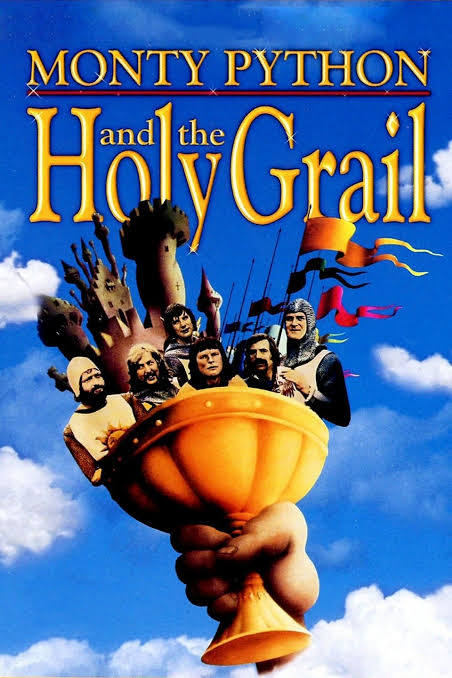
The impact of budget is often lost on the audience. This movie’s lack of funding was why they used coconuts… no evidence though that it explains the sparrow.

While One Piece has had me looking for One Pace (which is still lengthy in its own right given what the team is working with if the Discord server is what clues me in), Dragon Ball Z had been dubbed over ever since its western debut. Looking at simultaneous dubs today vs dubbing done even 15 to 20 years ago, it puts into perspective how long it took back then to translate everything well enough to give us a dub, passable or stellar. These days, finding a budding voice actor or even a newcomer is easier than it used to be. From the outside looking in, the talent manager/agent is either becoming a thing of the past or is fighting for the middleman position it now shares with social media.

Legacy and up-and-coming voice actors are all on Twitter and BlueSky now. Some are content creators outside of screaming their lungs deflated into a microphone, others are elsewhere in the entertainment industry, and the rest are varied. Why mention this? Mainly to show that the constraints that plagued animanga 40 years ago are largely a thing of the past, but in the case of the Dragon Ball franchise, fans would’ve went from waiting years to hear it in English to simply looking up where to find the VHS tapes, then the DVDs, then the Blu-Rays and eventually subscribing to whatever streaming service has your choice of show for a limited time.

Call me a monkey like Frieza because I have a bunch of s[monkey screech]t to fling, especially at these jokesters.

Dragon Ball Z was tied to Funimation in the west very close to the beginning, and the relationship hasn’t changed even after Funi got eaten by Crunchyroll as of late. It’s initial dubbing and runtime were extraordinarily long. This plus its content may explain how it became a staple in Latin America, but good luck selling animanga drama to an American or Canadian. Matter of fact, the reason Latin America loved animanga before the Anglophone world did can best be explained in this video:

Channel: Get In The Robot

The crux of this video is merely that with upwards of 90% of Latin America being subject to authoritarian dictatorships and military juntas or some other kind of government sponsored violence against itself (which ropes in the Philippines, Indonesia, South Korea, Taiwan, and other Asian countries that have a similar story to Chile, Brazil, Peru, Panama, and the others), the ridiculous plot points, dynamic battles, and Shonen-/Seinen-style romance stories were easy as hell to sell. Plus the changes made from Japanese to Spanish and Portuguese were left largely unchanged.

Eventually, though Dragon Ball would come to America and Canada and more than once. As stated earlier, the first round of dubbing kept the original episodes and dubbed them, but to mark the 20th anniversary of the western world’s reception of the Dragon Ball franchise, it was dubbed again with the subtitle Kai.
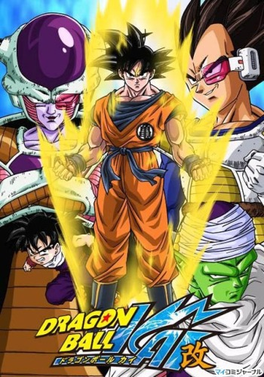
Like One Pace and Dragon Ball Z: Abridged, Kai recuts the anime and pretty much shortens the pace substantially. The original run of DBZ in the 1980s in Japan and its English version in the 90s, had an episode count of 291. When Kai came around, it cut the episode count to 167 episodes. Both of these include not just the three major sagas of the Z arc of the Dragon Ball manga — Saiyans, Frieza, and Androids — but also the rise of Majin Buu. Likewise, the original longer Dragon Ball Z had all those main arcs, stretched out, but also had filler arcs.

You could include a bunch of nonsensical, non-canon filler arcs back then as the manga would still be in serialization and several volumes in as soon as the animators were drawing the first cels of the first few seconds of the pilot episode. In contrast, when it comes to animation in the west, the storyboard and production phases would be planned out over the course of months for a weekly release schedule. Depending on the series it can last between 10-13 episodes or 20-26 episodes. Same goes for anime, though rather than batch release series, they’ve truncated the average run time from over 22 episodes to 12-13 episodes at best. There’s a wider discussion to be had about the treatment of animators, which gets away from the point of this post while also using secondary and tertiary accounts, but that’s best saved for another date. No guarantees, though, I’m not a Sith.
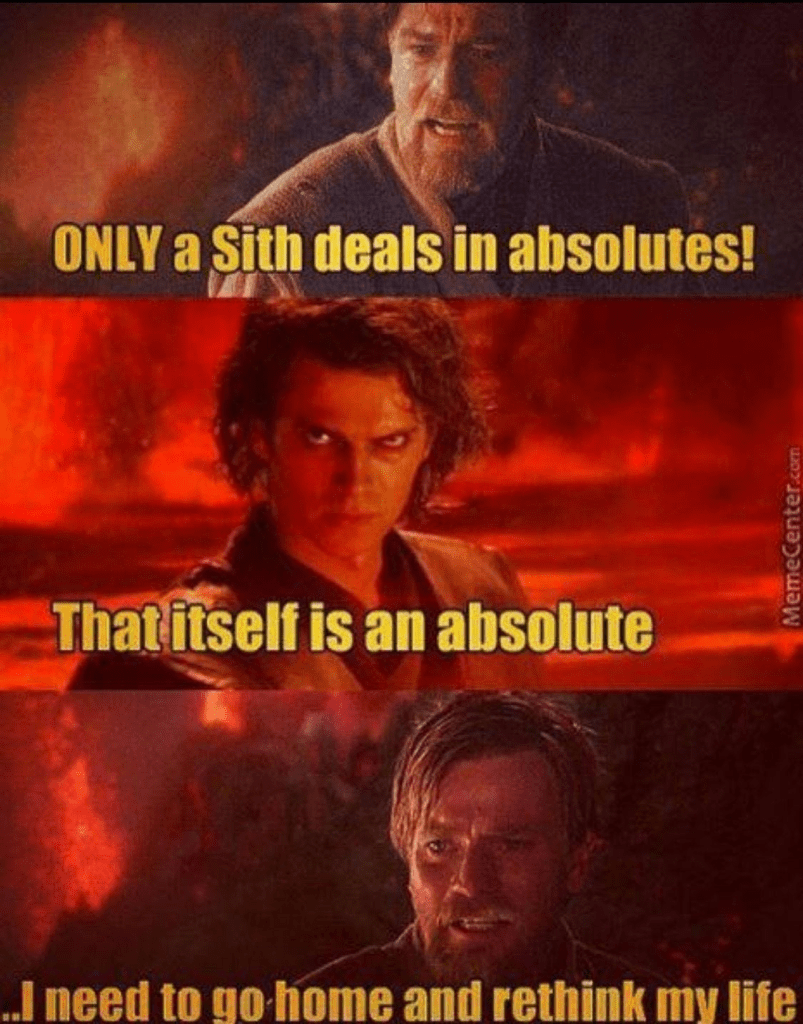
Maybe I am a Sith because I think this is absolute horse s[neighs]t.

Every time I watch Dragon Ball Z anything, I default to the Kai dub because it was my introduction to the series on TV, though not exactly my introduction to the series. That came from the PS2 version of the Dragon Ball Z: Budokai, released in North America in 2002.
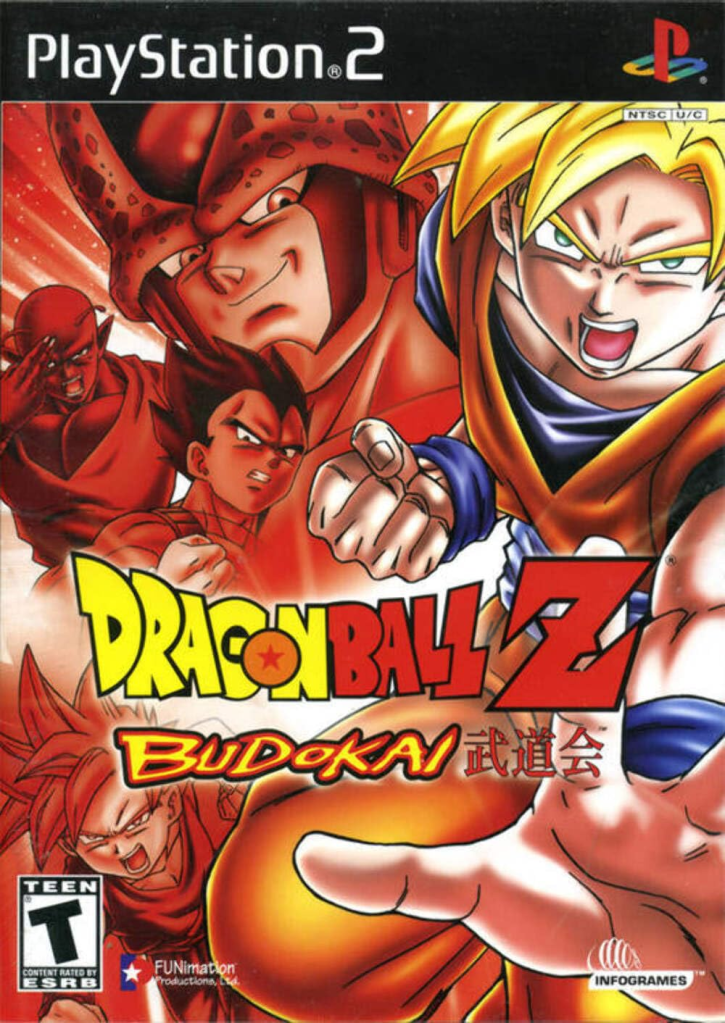
If I were Dr. Strange and I wanted to find a universe where Dragon Ball wasn’t also a video game for s[blasts]ts and giggles, I would be so short of results that the debt collectors would’ve broken my legs ahead of time.

I was probably able to do it at a young age, given that I went back to watch Naruto from halfway through the Chunin Exams arc, as well as Shippuden from start to finish in order to get up to a certain plot point mentioned in passing in Boruto, but to be honest, the original run of Dragon Ball doesn’t jive that well with me. Many who were around at the time can easily go back to that dub or even the sub if they prefer, but I’ve been living off accurate adaptations of serializing manga and light novels. The comparisons between DBZ original and its manga would drive me nuts and there’s no steering wheel down there.

:D

I don’t care what anyone says, whether I’m missing something hilarious in the filler arcs or if their importance is lost on anime these days. I fully understand that that’s the case now. Not that all filler is a waste of time, but rather with anime adopting the seasonal model in the mid-2010s so to speak, there’s no need to chain the animators to their desks and keep them drawing until their hands bend in eight places.

I’m exaggerating, not every animation studio is doing that, but abridged series, official and parodical, show that there’s no need to rush the release anymore. For Kai, I may be an artist, but I’m not an animator and I don’t have an intimate knowledge of recuts, but my limited experience with video editing shows that it’s a bit more complicated than simply removing a few scenes or adding some. No matter what Team Four Star would have you believe. This may harken back to my lifelong difficulty of absorbing massive amounts of information in one sitting, which was why I hated school, but I’d rather watch the Kai dub a hundred times than try to get through the original uncut Dragon Ball Z. And not just that, I’m certain the human mind isn’t designed to or supposed to take in so much information so shortly. I can tell you the plot of some things I’ve watched or played even years after the fact if I’m interested, but speedrunning a series is how I miss some details. I like to absorb everything I can at my own pace, which is why I generally view animanga in a non-straightforward, nonlinear method. I need to let it simmer before I start serving the soup.

I’ve watched the Kai dub at least twice now because of this set up so I’m glad I can say that this works for me. The absence of filler arcs distracted me less and the rigid focus on adapting the manga this time around was easier to follow. Having said that, if you’re cut from the same cloth as I, you may find it easier to hunt for the Blu-Rays or pirate and torrent, especially now since “buying ain’t owning” anymore. And definitely the Kai dub so less time is wasted stretching a single frame or scene for longer than it needs to be.

Shame no other studio officially recut its long ass anime into shorter episodes before it gained traction in the last decade or rewatching original Naruto would be so much easier than it is now.
At least there’s guides to help pick apart the canon from the filler.

Giving Classic Anime the Rewatch it Deserves

They’re classics for a reason

Before we start, quick context: due to a technical issue with attempting to upgrade my computers, I was briefly unable to recover my files until I resynced everything with OneDrive, a service I have a love-hate relationship with. I’m still in the process of sorting the problem out with roughly 90% of my files saved due to OneDrive, one of those being my notes for this blog. Based on what I had scheduled next, it was supposed to be a review of the 2004 anime Genshiken. But due to work presenting me with some interesting surprises, I haven’t been able to relax and set aside some time to view it. I’m still looking for an ideal site to view anime and its a toss-up between Aniwatch, 9animetv, and Hianime, joined up by whatever no-name YouTube channel is brave enough to upload full episodes of insert 20-year-old anime here. I’ll try my best to get at least a few episodes in before I put my opinions down, so for now, have a supplementary post: classic anime!

I know I could’ve put up a picture of the actual anime, but with 25 years on air, I couldn’t resist. One Piece is very memeable. See r/MemePiece for more details. Also, I’ve gotta say that unlike most blogs where I review part, most, or whole series, I wanna make this an opportunity to announce a personal campaign of sorts. That is, to watch a majority of several classic anime that are known the world over. Two of them so far are One Piece and the remaining episodes of Dragon Ball Z, the Kai dub.

Others are in the running to join this grouping, but those are the two that come to mind for now.

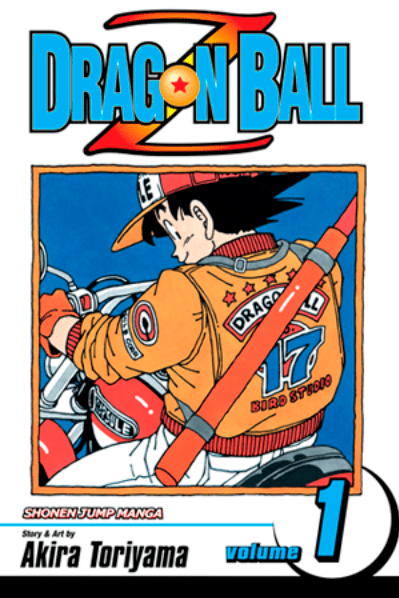
There’s no deep reason for wanting to do this, although lately I’d been reading my usual pick of manga on MangaDex, and I thought I’d find Toriyama’s magnum opus. Sure enough, I did. I’m not sure if it’s well-known in the west, but the original manga isn’t exactly split from Dragon Ball. We acknowledge Z as a continuation of the original manga, but it’s all rolled into a giant series unlike the anime.

It might be due to how it was licensed in the west, but although Z is seen as a sequel to the original Dragon Ball manga, Toriyama and his assistants put subtle hints that Z might as well be a part two of sorts, like Naruto: Shippuden or JoJo’s Bizarre Adventure dividing into different parts. Keeping this in mind made it easy for me to go straight to my favorite saga in Dragon Ball, the Namek saga.

When I was a kid and the series was redubbed in Kai for the twentieth anniversary of the anime adaptation in 2009, most of my exposure to Dragon Ball was through the video games and anyone who was a kid/pre-teen, etc. at the time can attest that a fighting manga like Dragon Ball has a Library of Alexandria’s worth of video games. Some are faithful adaptations of the series, others put their own spin on the same story, the rest worked with what they got and a fourth category got creative, for example, making a card game out of the series.

There exists a ROM of this somewhere, and I want to at least get to the first fight between Goku and Vegeta.

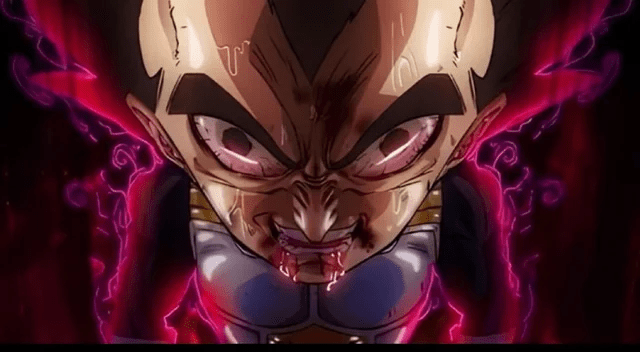
I owned a few of the games myself and with more and more getting released long after the Final Chapters, GT, and Super have all gotten their fifteen minutes of (screaming) fame, Dragon Ball has a hold on the cultural zeitgeist of the early 1990s and beyond. When I was a kid, the Namek saga felt like the home stretch. One more push and the remaining Z fighters will have achieved their goals of recovering the original dragon balls and reviving the others. The only things standing in their way was Vegeta and the forces of Frieza. Both men hate each other and wanted each other dead, Frieza certainly wanted Vegeta out of the picture with his rebellious streak and them both wishing for immortality.

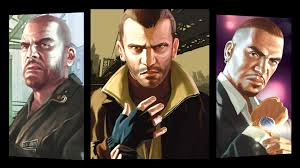
From a writing standpoint, it of course has some of the usual tropes found in other anime of the time and unique to Dragon Ball, but if you’ll excuse the comparison, let me know if this sounds familiar: three parties happen upon a treasure said to bring untold riches and get in each others way to have it, dealing with the consequences that follow the acquisition of this wealth. Pick your favorite story arc from media to fill in the blank; I’m going with a specific plot point from Grand Theft Auto IV and it’s expansion packs: The Lost and Damned and The Ballad of Gay Tony.

I make this comparison because like the Namekian dragon balls, competing forces within GTA IV’s storyline are after another prize which all things considered also bring bad luck. It’s not uncommon for crossover events in the GTA series, in fact the series is famous for it. Vic Vance and Tommy Vercetti nearly close a deal before Riccardo Diaz sends gunmen to snuff them out; CJ wins a race against Claude the Silent before getting some property in San Fierro and in GTA IV’s case, Niko Bellic, Johnny Klebitz, and Luis Lopez all cross paths over one simple thing: blood diamonds. Going by the name it took a funeral pyre to dig them up and the rocks aren’t done taking bodies. Also, blood diamonds are a real thing, with West and Southwest African countries being the most likely to have this problem.

Like their real-life counterpart, in the games, the diamonds were smuggled into Liberty City where the main employers of the three protagonists unknowingly compete with each other to get their hands on them for their own ends. In a somewhat similar circumstance, three foreign parties land on a distant planet to uncover a set of dragon balls for their own ends. But unlike GTA where the trio are all antiheroes, there’s a clear line of good and evil in Dragon Ball, though Vegeta’s convenient alliance with Gohan and Krillin complicates things for him.

I told you these shows were memeable.

Favorite saga it may be, I admit I’ve had trouble keeping up with Dragon Ball ever since Super was on Toonami and without meaning to disparage the network, while it’s done wonders to bring anime to the west, more than once I’ve had a few conflicts with their scheduling in the past. Yes, I know outside circumstances can interfere with schedules, but come on. At least try to fight to keep it consistent at least for the season. And while we’re on the topic of Toonami, will they ever be allowed to air Mob Psycho 100 Season II? Ever?

Anyway, while I’ve been getting my fill of Dragon Ball once again, One Piece, like the titular treasure, surprisingly is difficult to view. Of all the anime I’ve pirated, One Piece hasn’t been it. Most of its western publishers have done a bang up job to host the series, but Crunchyroll proves to be the only one capable of lousing it up. All that time spent bringing your site to the 21st-century, buying up the competition, and nabbing bigoted localizers with an activist mindset, but what do you have to show for it, Crunchyroll-hime?

I highly doubt these afflictions are in One Piece since there is no ruining peak fiction, but the most recent shows that they host on their site do nothing to boost their reputation as of late.

For One Piece though, like Dragon Ball it was a show that made the rounds at school and among my friends in the neighborhood, especially with 4kids telling us without telling us how inexperienced they were with anime, but to their credit, anime was still a niche in the early 2000s. Everyone knew who Naruto was and is these days, but who at the time in the U.S. could name anyone in Azumanga Daioh?

In all seriousness, One Piece is definitely not hard to watch. Toonami had been airing it since it first debuted, bar a few breaks in screen time. Guess it’s only fitting now that I pirate the pirate anime. It’s been yonks since I’ve seen it, but from what I remember of it (a mix of the actual show and memes) moss-haired swordsman gets lost all the time (probably looking for more minorities to hunt), Nami disappeared for a bit before returning to the crew, Chopper is the series cowardly lion, Nico Robin has a dark and complicated past, Boa Hancock wants Luffy but he’s not about that life, and Brook is the tallest skeleton on Earth. Forget a 3-meter statue of the guy, just bronze his bones when he’s dead, put up a sign and call it a day.

That paragraph there is gonna piss off all the One Piece fans. With so many episodes and so little time left in the Year of Our Lord 2024, even if I speedrun, I’m not gonna get through all the episodes. And yes, I know One Pace takes care of the Shonen Recap Syndrome problem it has, similar to how Kai shortens Dragon Ball Z substantially. I think before I sit down and watch Genshiken, I’ll test which is the better way for me to watch One Piece.

Been missing these, this week’s YouTube recommendation is Preston Stewart.

https://www.youtube.com/@PrestonStewart

Similar to Ryan McBeth or William Spaniel, Preston Stewart is another channel run by the man who lends his name to the channel. An Army officer in the Reserve, his channel covers national security, world affairs, and the military in as unbiased a manner as possible. He doesn’t focus on cybersecurity like Ryan does, but there is overlap in their respective coverage of world events, especially with disinformation and overseas conflicts like Israel, Ukraine, or Taiwan. Consider this a completed trifecta, considering I recommended the other two in posts from last year. Factual, in-context reporting on real-world events. Need I elaborate further?

One more before I go:

And a bonus:

Credit: u/Dilly4Dall, r/azudaioh

Farewell, Akira Toriyama

A tribute to a legendary mangaka

I had been in Army basic training from January ’til the ides of March, so I didn’t learn of Akira Toriyama’s passing until a couple weeks after it had happened. Of course, everybody would’ve gotten their honors and tributes out to the late author by then so my words are coming later than normal, but I’d still like to remember and recount some of his work.

My introduction to his magnum opus was similar to a lot of kids in the early 2000s. There wasn’t a distinction between anime and regular cartoons back then, so anime fans young and old accepted them with open arms as more cartoons to watch every Saturday morning, further bolstered by programming blocks like 4KidsTV. Seeing a golden legacy ahead of them, many notable programming blocks acquired the rights to air anime in the west. No doubt you or someone you know remembers the ham-fisted attempts at censorship or cultural adjustments because “no westerner has ever heard of rice balls,” or “think of the kids when depicting cigarettes.”

Obviously, Dragon Ball was no different when it came to censorship. Swearing (however slight) was edited out, scenes were edited or cut, and numerous references from the original Japanese were lost in translation due to how tough it was back then to research a lot of the cultural and historical references considering Dragon Ball’s source material is the Chinese classic Journey to the West. This video can better explain the history of censorship in the Dragon Ball franchise.

Credit: Nerdstalgic

Nevertheless, Dragon Ball or more popularly it’s better known successor Dragon Ball Z gained the lion’s share of the fame in the west, albeit with a much wider reception in Latin America. Once Toriyama’s crazy diamond got an English dub, there was nowhere else to go but up.

My DBZ collection of media was a bit more miniscule compared to my Naruto diet, but it was still fairly noticeable. A few puzzle and DS games, the console fighting games, memes and image macros, fan-made projects featuring some of the characters or the whole cast; an entire production company based in Texas has Toriyama to thank for their success, and they started as a series of parodies.

In 2008, Team Four Star blessed us with an abridged parodical take on Dragon Ball Z, movies included. Covering the original major sagas, they rewrote and jokingly recontextualized all of DBZ over the course of a decade on YouTube and on their own website.

Other programming blocks like Toonami, have also owed their success to Toriyama’s star franchise. They began with re-runs back in the summer of 1998, but even so, the English cast never left the project. For decades now, VAs like Sean Schemmel, Christopher Sabat, and Kyle Hebert have gotten their recognition from the English dub and have since lent their talents to other anime ever since. I think it’s safe to say that Dragon Ball has been the connecting element to a lot of media worldwide. You could trip on a Dragon Ball reference and it doesn’t even need to be animated.

Credit: iiAFX

But Toriyama was more than just the creator of a manga inspired by Chinese literature. Away from his studio, he worked on other series like Dr. Slump and video games like Dragon Quest and Chrono Trigger. His distinctive art style has even been emulated by his fans over the years. Sites that are hubs for artists, classical and digital alike, are guaranteed to have some attempt at drawing at least one character. Even professional artists and other mangaka have redrawn entire scenes or individual characters, either while working with Toriyama or to honor him in his lifetime. Some of these other mangaka grew up watching or reading his work too.

What makes Toriyama’s passing especially sad is that, like Kentaro Miura before him, he also left behind unfinished work. Miura never finished Berserk after two decades plus and it felt as if even though Goku’s original story had concluded so long ago, there was a lot of fun to have with the Z fighters, especially with all the video games, references, and spin-offs that have come out ever since. The direction of the Dragon Ball Super manga and the newest installment in the franchise, DAIMA, are likely going to be put on hold for a while until an announcement is made.

Whatever the case, Dragon Ball fans, numerous anime fans, artists and many more have paid their tributes to a prolific and influential artist since his passing. This post is one of them having found out so late and being away from technology during training. And on that note, the block that was made famous for airing and helping perpetuate the Dragon Ball series also made a tribute complete with a marathon in his honor.

Credit: Toonami

Farewell, Akira Toriyama [1955-2024]