
One in a million
There have been numerous non-Japanese animations that have aped the art-style and, at times, tropes of the medium over the years. Sometimes a single episode is dedicated to taking the piss outta anime, other times it’s the framework of the entire show. You can pick some of your favorites, and while some of mine come from French-produced animations that Nicktoons Network was able to air in the US, one particular show jumped on the same bandwagon and in a more crude manner than its contemporaries in Europe. Enter Kappa Mikey:
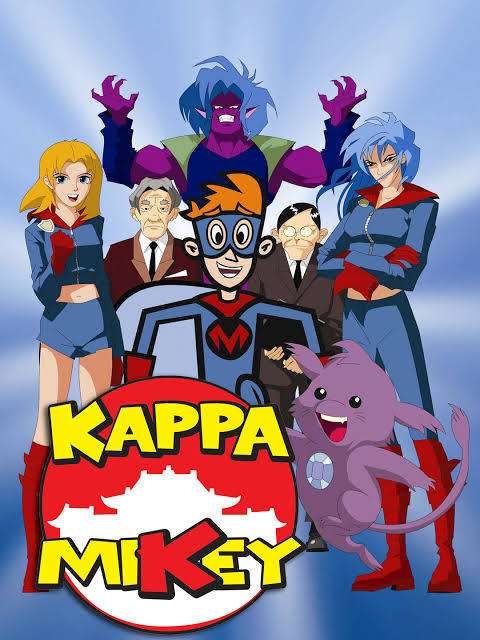
Created by Larry Schwarz and his production company Animation Collective, it was given a home on Nicktoons Network, Nickelodeon’s redhaired step-child channel, from February 25, 2006 to September 20, 2008. The premise of the show is 19-year-old Ohioan fumbles an audition to become an actor in Cleveland and gets shunted by the auditioner for his inability to act. Elsewhere, the cast and crew of a Japanese tokusatsu children’s show called LilyMu are eyeing up the wall where the kanji for “financial ruin” (財政破綻) is being written. Their boss notices and demands the director come up with a solution to fix it or they’ll be jobless in no time. After a series of stellar auditions that go nowhere, the crew resorts to a contest on a series of scratch cards, some of which blow in the wind and find themselves in the failed actor’s hands in America.
As luck would have it, it’s the winning ticket, and since becoming even a B-list celebrity in the US is a bust, it’s time to see if the Japanese populace can be won over on this struggling TV series. Sure enough, the fish out of water wins over Japanese fans and breathes new air into the show.

The format of the show is like most comedy anime and even a few western cartoons. Rather than separate the A and B subplots of the episode, they tend to blend into each other, first being introduced as separated entities until they converge roughly 3/4 or 4/5 into the episode’s run time. As for the animation style, it’s a mix of eastern and western animation styles with the American having his distinct art style separate from his Japanese and other non-American counterparts.
The cast of the Kappa Mikey series consists of LilyMu actors Michael “Mikey” Simon, Gonard, Lily, Mitsuki, and the director-producer, Guano. Above them are the literal suits, their boss, Ozu and his Yes-Man named as such. Mikey is the orange-haired, blue-shirted American who does silly and ridiculous things when not acting as the new addition to the LilyMu team. On the set of the show, he’s the star and main hero, a position that would’ve gone to his co-worker, Lily, if it wasn’t for his introduction into the show and is the main reason for her off-screen aloofness towards him.
For Lily, her character design is across between Inuyasha’s Kagome Higurashi and Sailor Moon’s Usagi Tsukino, but personality-wise she exudes a type of tsundere exhibited by Tora Dora’s Taiga Aisaka and Lucky Star’s Kagami Hiiragi. Her language may not carry the same weight after 20 years, but at the time, she was so liberal with the use of the word “spaz” that a concerned British parent may as well investigate further before muting the telly because of how dangerously close that is to the word “spastic.” Sidenote: If you’re curious why that’s a taboo word in the UK, in the Americas it carries the same connotation as the word “retarded.”
Gonard is built like an off-brand Raditz sans scouter, armor, and death by Kakarot, but has the same role as Raditz and just because he isn’t plenty dead enough, lots more screentime. His role in the LilyMu TV show is that of the villain with all the gadgets and gizmos that either inspired Heinz Doofenshmirtz in Danville to build his own or inspired him to take on a lawsuit because that Japanese show took all of his ideas!

But the Tokyo Metropolis is well outside the tri-state area and Doof’s mission is to be a doofus.
When off the show, Gonard is simply the good-natured dimwit who eats everything that is known to edible while also experimenting like that one episode of Teen Titans when Cyborg’s module malfunctioned and he saw food everywhere. Gonard is essentially Patrick Star from the ridiculous ideas, to the green shorts, even to the body type, though instead of hefty, Gonard has noticeable muscle mass. As a result of being the villain on the show, one episode hints at him being feared by those with a surface level knowledge of the show he plays in. And this is a real phenomenon where kind actors are too heavily associated with a great villain they have or currently portray. See Sir Anthony Hopkins and Hannibal Lecter for more details.
Mitsuki is the polar opposite and foil of sorts to Lily. If Lily was like Kagami from Lucky Star, Mitsuki is a bit like her sister, Tsukasa. Furthermore, Mitsuki instantly took a liking to Mikey once he landed at Haneda Airport and has an immediate crush on him at first glance, despite his general idiocy and whatnot. Sadly, it’s not very reciprocal as Mikey himself has a one-way crush on Lily. The reason given in a Season 2 episode being that she has a competitive, risky edge to her, compared to Mitsuki who could best be described as what Jotaro Kujo considers a traditional Japanese woman, or “yamato nadeshiko”. Quiet, demure, considerate, but also smart and unflinching. I don’t know if the “blue haired loser girl” trope is this old, but if it’s not then that means Mitsuki is either the progenitor or an early source of the trope. On the show, she’s fiercer and tougher than she is off screen
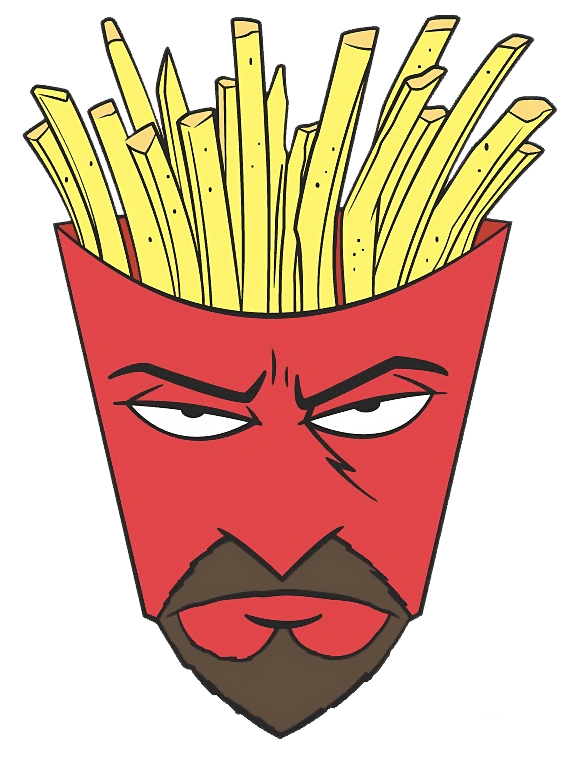
Guano is the purple-dyed Pikachu reject and nervous trainwreck that manages to keep the show held together with homegrown gorilla glue and 20-year-old Flex Tape, and it’s fairly obvious why he’d be that. He’s the director and Ozu and Yes-Man breathing down his neck put him on edge, especially when things go diagonally. On the show, he lives up to the rip-off Pikachu by merely repeating his name with each action or attack he pulls, especially with the large gemstone in his chest. Although the gemstone functions and shoots lasers, its reserved for other emergencies both on the set and on the Kappa Mikey show as a whole, merely having the same function as the gem or laser eyes on Frylock’s back in Aqua Teen Hunger Force.
For Ozu and Yes-man, Ozu is the man who can feed or starve his actors, pay or withhold pay, pull the plug or keep life support on. Long before Benson the gumball machine on Regular Show would threaten to fire Mordecai and Rigby, Ozu did it several years prior and normally did it to Mikey, but sometimes he extended it to the rest of the cast if the screw up was that egregious. Opposite the iron footprint on the floor, he’s consistently shown to butter up Mikey and consider him the prized piece that makes the show whole. As an inseparable addition to the show, keeping Mikey in good graces is his main priority. He doesn’t always do this to him out of genuine kindness, but it hints at one aspect of Japanese and, by extension, East Asian face culture. Maintaining an image of grace and harmony keeps the tabloids and journos from slandering you every minute. As a contrast, the employees are societally obligated to also make the boss and the company look at its absolute best 100 percent of the time. And this is all a satire as the reality on the ground still exposes even East Asian companies to scandals and controversies of their own. Nintendo, Konami, most Korean chaebols (itself a different snake pit), Alibaba; being based in East Asia doesn’t save these kind of companies from human error, negligence, or even malice.
Finally, there’s Yes-man who’s more of a caricature than an actual character. He’s a parodical gag of an existing character in other media and at times in real life. A cheerleader in a suit for Ozu himself, he’s not exactly meant to have any development whatsoever, merely an exaggerated side-character to point and laugh at. A jester of sorts.
This video by Jordan Fringe explains the production side of things:
Channel: Jordan Fringe
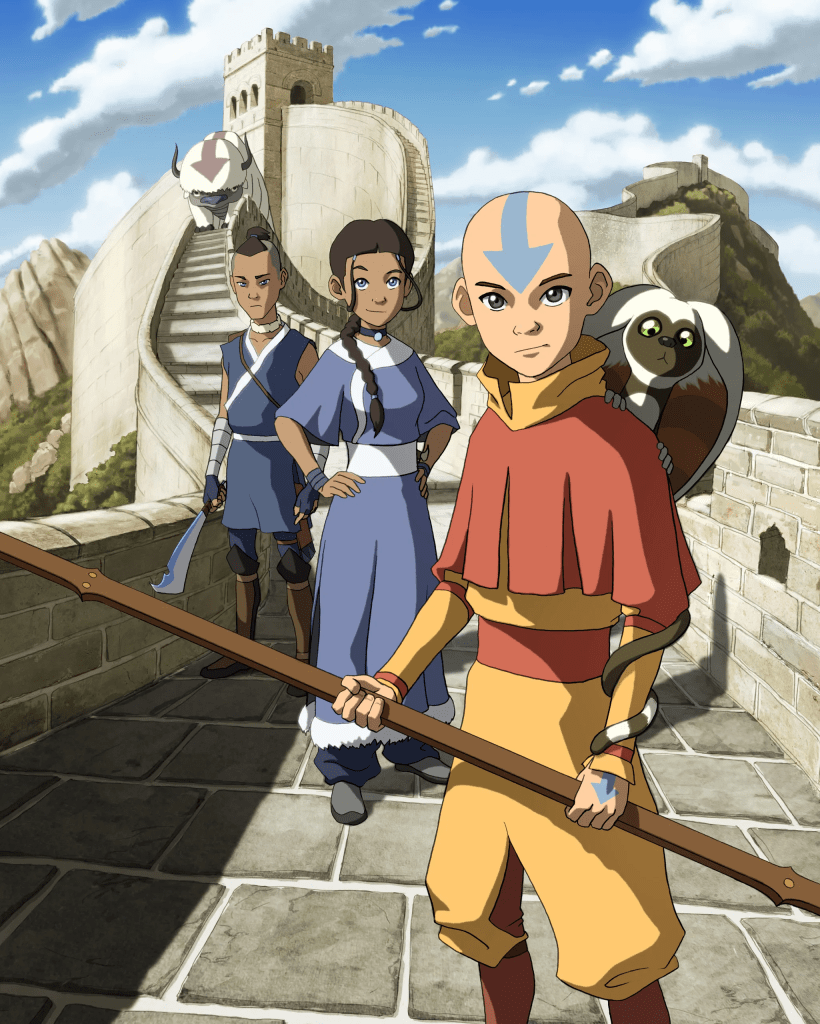
For two seasons, Kappa Mikey ran largely unimpeded by any outside forces. It was pitched by Schwarz as an “American-style anime series” and considering what I’ve grown up on, it’s been preceded and surpassed many times depending on what you consider an American cartoon whose art-style is heavily influenced by Japanimation. The Boondocks and Avatar: The Last Airbender for instance but neither are very well-loved in Japan in particular or East Asia very widely. The former was made by Aaron McGruder as a reflection of black American culture which will get lost in translation, literally, when exported abroad and the latter does its best with its source material of wider Asian folklore and mythology, but without the core tenets of Buddhist, Taoist, or Confucian beliefs, the face culture, or the courtship, it would at best be limited to a cult following outside of the west.
I haven’t even the slightest idea if this show has popularity in the country it takes the piss out of. On the one hand, it’s theme song is sung by a J-Rock band called Beat Crusaders, but on the other hand, Nickelodeon’s practice of hiding mid-tier TV series on Nicktoons Network and praying no one would notice when iCarly and Drake and Josh and SpongeBob were on the air left it to its fate of obscurity, at least for those who couldn’t afford cable.

Damn, I miss this logo…
Now that’s pretty much the show and its lifespan, how did it end? Or more to the point, why did it end? It had the energy to get at least another season or two. Perhaps even a made-for-TV movie. In that same video by Jordan Fringe, no clear reason was given except for speculation over budget constraints and a low viewership. Considering it was on an affiliate channel at the time and not likely not a major priority for the likes of Nick and Viacom, I can’t help but feel some sabotage was at play and as biased as it may sound to say about a studio over one show, there were a lot of shows that got shunted and only found wider success of sorts on the smaller channel. Some of the shows being legacy series that were given a modern reboot, though the results were far more mixed.
For a rather primitive though mid-2000s charmed show about an American becoming a Japanese audience darling, the entire series can be found on the Internet Archive for your viewing pleasure. Not to mention one I’m watching out of order since the callbacks to earlier episodes are few and far between.

 Opinions on Entertainment