Limited and Hard to Find Video Games

Part 2 to Lost Media

Last week, I brought up the subject of some video games acquiring the same label that has forever gripped early films: lost media. Where, in some capacity, surviving copies of the original, plus the original, have been destroyed deliberately or accidentally. This time there’s video games that have surviving copies but aren’t made available the world over. In many ways, the gamers are not only innocent, but tend to be victims of arbitrary laws. In places like Brazil, Venezuela, or Argentina, video games are released at ridiculous prices. If an American or British or Australian player can get the same video game for 60 locally, their South American counterparts are paying many times that in reais, pesos, or bolivars (provided that currency hasn’t collapsed again).

This is true of much of the developing world. I’m a proud piracy advocate, as regular readers know, and this extends not just to animanga, but also of video games, movies, and TV. And I still do so despite having the income able to afford multiple subscriptions. Why? Well, circling back to those posts about my history with emulation, as much as I like modern gaming, some classics can’t be beat. And they’re either hard to find or hard to acquire through traditional means.
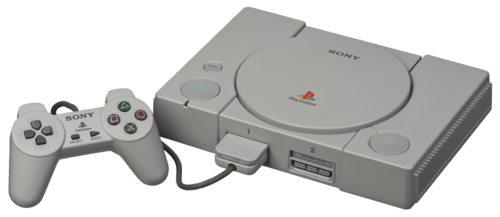
Tell me, who the f[THX sfx]k still has this in 2025? Does it still run? Name the Top 5 Best-Selling PS1 games from memory!!

This is proof in my pudding. Granted, there is a museum dedicated to the history of video games — several, in fact — and I don’t need to take this matter on myself. But I want to. There’s too many godly classics getting shunted to the dustbins and not enough efforts at preservation, nor are there many developers or publishers or even CEOs who care about this matter.

Silence would’ve been better to hear from you, Jimmy boy.

What about the devs, publishers, and other video game heads who do care? Well, the problem that trips them up can come down to the intricacies of development. Never mind the ludicrous projects that are bringing us the likes of Grand Theft Auto VI in 2026 after 13 years in Los Santos, nor the dire straits that kept Duke Nukem Forever cooking for 12 years or Beyond Good and Evil 2 in limbo for longer than that; say a game enters development one year, is announced with trailers and gameplay footage in the next year or year-and-a-half, and finally the full product is delivered after 2.5 to 3 years. If there was trouble, at most it’ll be upwards of five or more years. What kind of trouble could such a game face? Many.

If it covers a touchy subject especially under concurrent politics, it may not see a wide release, if at all. There’ve been efforts to better educate the gaming population about subjects like the Transatlantic slave trade, the Holocaust, and other such concepts, but because of how weighted these subjects are critics have fired back at the idea of using a video game to discuss it when the time-honored tradition of boring the students with the dullest teacher has always been seen as the least controversial, failing to understand that that may not be the most effective means to go about it.

A more dynamic teaching style can mitigate this outcome if the lesson is on Philippine-American reconcentrados.

Creative developers can skirt past this by hiding the lesson in a different narrative, and not even in a completely digital format. It’s possible that there’s a board game or DND campaign whose inner lore includes such a plot point. Several anime I’ve seen touch on the subject with the oppressed being some other humanoid or human-like species.

As for video game series that have adapted other media, the series itself may not be under trouble or has a countermeasure of some kind if the game is unceremoniously canceled for whatever reason. Game can’t release? Reboot the franchise but on more platforms, it’s been done before.

My best example of this.

For the Ultimate Ninja series, I thought for the longest time that there wasn’t a 5th game. There was, but it never got to North America due to timing and dubbing issues, which is why we now have the more successful Ultimate Ninja Storm series. More arcs, better tech, more new moves from the series, and on more platforms than the originals.

Then there’s instances where developer-side things are perfect, but politically things are not. As I mentioned in last week’s post, region-locking/coding can keep you from accessing a product. For instance, the Senran Kagura games are mostly available outside Japan, but not all of them are; the iDOLM@STER series has overseas fans, but the games are largely Japan exclusive. How did it travel the world? Probably a con, or an otaku from Nagoya visited Houston once. Who knows? Then there’s Kantai Collection or KanColle (Japanese: 艦これ) that despite not being accessible to the wider world, has attracted fans outside Japan as well.
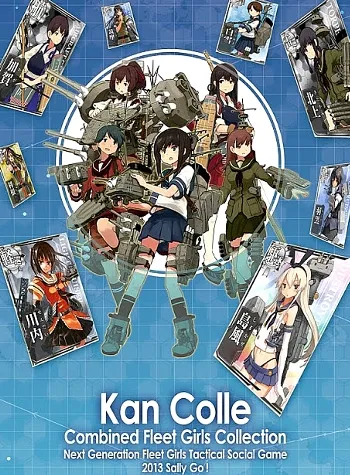
Did I mention this is a browser game?

At the part of the politic-side of things, licensing and import restrictions can make things interesting. Oft-times though, politics and laws don’t impede the wider release of a product, but human error within the dev studio keeps it from gaining an overseas audience. Or worse, some type of greed or hesitancy motivates the studio to keep it locally available despite pressure from the wider audience.
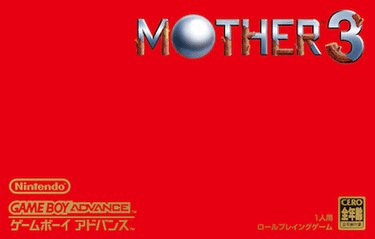
Fans have translated and dubbed this in the years since, Nintendo. What f[Mario coins]ing gives!?

Realistically, there won’t always be an opportunity to keep this from happening, and as time marches on, new technology will create new problems, but I’m not gonna stop forgetting what games and wider media used to look like and how patchy our earliest endeavors were at the beginning, and I think it’d be a crime if anyone else did either.

The Tragedy of Act-Age

Gone… reduced to atoms

Years ago as a college student, I’ve spent a handful of late nights scouring the Internet for content in between school days. I’ve spent these nights viewing the Pink Floyd movie, rewatching Naruto: Shippuden to fill in the gaps I missed while watching Boruto (finally find out what happened to Danzo), and in this case, reading the manga Act-Age, written by Tatsuya Matsuki, illustrated by Shiro Usazaki.

I remember the marketing on the Viz Media site as a story of an orphaned girl named Kei Yonagi who is left to raise her little siblings all by herself. To that end, she seeks the path of an actress and discovers that her natural talent for the art of acting is above and beyond what most would expect, even by method or character acting standards. Essentially, she reminds me a bit of Christian Bale’s dedication to his roles.

Now, as a viewer, my knowledge on the acting industry comes from research and stories, made-up and real. As far as I know, there’s a bunch of moving parts that the average person will likely never see unless they enter the field themselves or something like a scandal pops up, the latter of the two being quite commonplace in Hollywood. I can’t say for sure if similar practices exist in acting in Japan or anywhere else in the world, but I wouldn’t put it past anyone. Every organization thinks they’re normal and everyone else is weird. Maybe one day, I’ll make it a blog post.

In the manga, a lot of the ins and outs of acting as a whole are present, but one of the main selling points was the mental health aspect. Show business is a cutthroat industry to break into and has been that way ever since the Ancient Greeks were pioneering and perfecting theater and stage. It’d be something to be the fly on the wall of the original Antigone play.

Act-Age ran from January 2019 until its untimely cancellation in August 2020. Millions of views across 123 chapters, 107 of them collected into book format, spread over 12 chapters with only 2 of them in English, so basically, if that person is you, depending on how you feel about it you practically have gold or pyrite. But I’m jumping the gun.

This blog post explains that the manga is atypical for a Shonen manga at face value, trading physical punches for mental attacks, but after reading through the article, it makes sense. The term battle tends to get used quite loosely these days. Stretching the definition to any kind of struggle, physical or mental, works well in this case because Kei does undergo her own internal struggles while acting or at home. Mental strength is something that I don’t see get praised in the animanga sphere all that much outside of horror. If anyone has any recommendations that fit this mold, do share. I’d like to expand my horizons.

Memorable characters, challenging story arcs, mental fortitude and an inside look at the acting industry (at least on the Japanese side of things); all of these are a smash hit manga make. Probably even an anime adaptation, but it sadly wasn’t meant to be. The manga got the axe when Matsuki was caught performing a heinous crime on middle school girls, and everything associated with the manga was halted, including a planned stage play. As for Usazaki, she was asked whether she wanted to continue the series without Matsuki and she understandably chose not to. So Shueisha and Viz Media both shelved it for good and any and all mention of the series has been s[metal banging]t-canned for good, save for blogs like this that occasionally dig through the annals and archives to write about the tragedy that was Act-Age.

S[clapperboard]t like this makes it even harder to be a weeb. Explaining away weird plot points and out of context images/scenes is very fun and hilarious. It gets all the more dark when the series in question is in some capacity tainted by something the author did. Normally, I have no problem splitting the art from the artist, but with debates like that–and you may have your own concepts about the matter–I think it depends on the attachment between the art and the artist. I remember reading Joe Bonanno’s autobiography A Man of Honor and in that he claimed to have met the likes of Errol Flynn, praising his acting prowess but chastising him as a person, especially with how he treated women. Similarly, I think the Rolling Stones would be directionless without Mick Jagger, or that John Lennon was something of a lyrical genius, but at best it’s creepy that Jagger’s lovers are much younger than him, and at worst Lennon’s romantic life gets less and less opaque the more you read into it. Or just listen to “Run For Your Life” and pay attention to the lyrics.

Most licensed manga hosting sites have done away with the manga, especially Viz Media, out of respect for victims and survivors. I doubt it exists even on pirate sites, making it a candidate for deliberate lost media, where a work is purposely excluded from anything capable of archiving it. As I said, depending on your stance, if you managed to save the chapters for private viewing you may have gold or pyrite.

Act-Age, during serialization, was proof that it could work and was on its way to become the next big thing. There may be an alternate timeline where Matsuki wasn’t a s[horse neighing]t heel and it’s still in publication with its distinctive writing and art aesthetics, but no one can say for sure where it would be now. Maybe like Undead Unluck, it’d suffer a slump until a later arc revived it, or the anime adaptation saved it. Who knows?

But a light exists at the end of the tunnel for the original team that worked on Act-Age. For instance, Usazaki walked away from the project to work on other stuff, be it magazine covers or her very own one-shot manga. The facts were in the fondue during Act-Age’s run; she could clearly do it. The manga cover up above in this post is her own work. The link to the one-shot is right here. Enjoy!

Back into the fold, baby! For this week’s YouTube recommendation, I recommend One Punch Dad.

https://www.youtube.com/@onexpunchxdad

Run by a current U.S. Army warrant officer, One Punch Dad features TikTok-esque/YouTube Short style skits, a Star Wars parody of all things, and the warrant officer’s opinions on multiple different things from military uniforms the world over to fast food to duty stations and a bunch of other stuff.

While I have recommended channels run by prior service vets, this may be the first recommendation of an active servicemember. If you like the kind of content to be featured, consider subscribing.