The Getaway: Like GTA, But British

Even more British than the GTA series

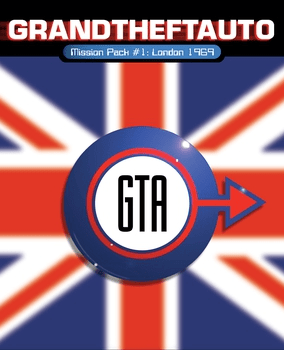
Although the GTA series routinely satirizes American culture from the safety and comfort of the same three locations–budget NYC, discount Miami, and dollar store Los Angeles, plus surrounding areas–the heart and soul of the series is Britain and there was an expansion pack for the original GTA, set in London and featuring James Bond of all people.
Not for nothing, I welcome more games set in the UK to break the mold for a change

But Rockstar North (formerly DMA Design) wasn’t the only British developer making open-world action games. Team SoHo, under the direction and storytelling prowess of Brendan McNamara, the same one who practically drove Team Bondi into a shallow grave, released The Getaway in December 2002 in Europe and Oceania, and in 2003 in North America; in a rare instance of Europe getting the game before America and Canada. Not so much a parody of the setting, the nature of the game was intended for a cinematic experience, so the comparisons to draw between itself, GTA, and the True Crime series all fall rather flat by way of the UI design.

From a technical standpoint, it’s a very unorthodox open-world game. Set in the borough of the City of London, not to be confused with Greater London as the PS2 never had that kind of power to render a whole f[traffic]ng city, the UI is sans a HUD, so you don’t see a typical health bar for the character. Rather, the damage is reflected on the character’s body itself, so think of any open-world game with the damage to match, but it actually had an effect on the character instead of just being a porous open wound treated the same as a scratch or a bug bite. Too many shots to center mass before death leave you huffing and heaving for mercy at which point you simply lean against a nearby wall and you’re back in action. You also don’t have a way to count your bullets unless you’re whispering the number of shots taken to yourself, but without Senku Ishigami’s brain, you’re bound to be inaccurate. Fortunately, it has what it took GTA and Max Payne ages to implement. A cover system! But it conflicts with the camera sometimes, so good luck making your targets before your carotid artery gets blocked by a loose bullet.

How about driving? Are there any arrows or a map that can help me navigate? Nope. You’re vehicular navigation is handled by way of the turn signals, and on the one hand; f[beeping]ng yes, the one game where they serve a purpose. But on the other hand; without a good map of the City of London, or any sense of familiarity, I feel even more like a tourist to Britain than I would be in real life. Turn signals being an extremely rare thing to see being used in any kind of video game is a novel idea that I wish was more common in games these days, however the implementation here is to direct you to your destination. The lights flashing faster when you’re on the street you need to turn into and the hazard lights popping on once you’re there. Additionally, the cars this time around come from real-life brands as opposed to some Frankenstein creation of existing brands that Rockstar has always loved, so you get to drive an RHD Honda or a Lexus or a Vauxhall if you care very much about that sort of thing.
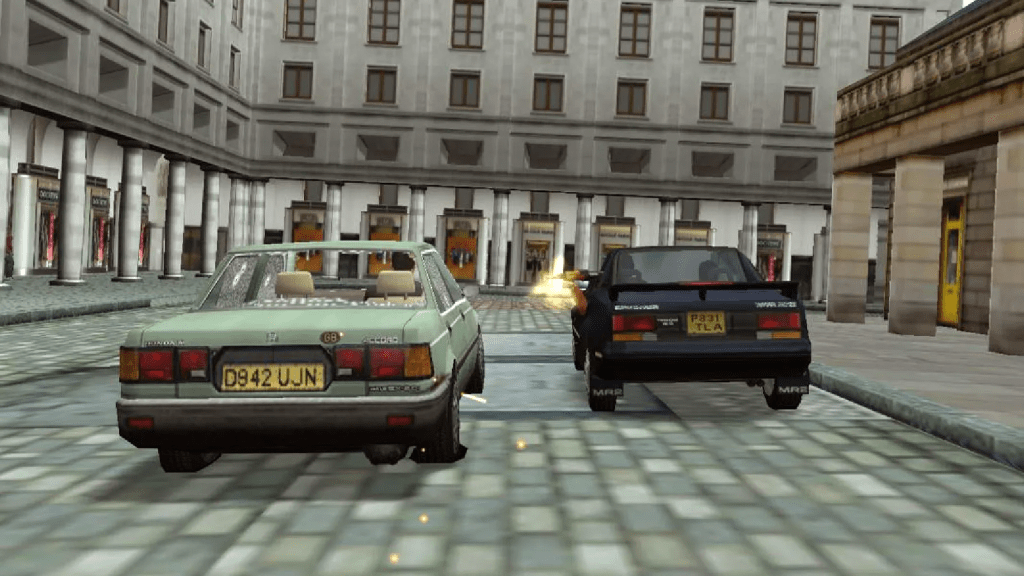
For personal research, I looked up a bunch of the manufacturers and most of the car companies have since gone out of business, been absorbed in consolidation efforts, or their parent companies decided to focus on what they were originally good at, as is the case with Saab to an extent.

So what’s the game about? It starts with a woman getting gunned down and her son kidnapped by gangsters working for a crooked geezer named Charlie Jolson. Jolson ordered this attack to force the protagonist of the story, Mark Hammond, to be his personal slave and run all over the borough kicking s[tire screech]t up and causing conflict between the cities gangs of which there are four: Jolson’s gang known as the Bethnal Green Mob, Hammond’s former gang known as the Collins gang, the 14K Triads, and the Yardies. Jolson himself is particularly dastardly, aligning himself with the far-right National Front movement in Britain. For those who don’t know, the National Front in the UK has a reputation as a neo-Nazi, white supremacist political movement, and is one of several far-right political parties and/or movements from the UK, so making Jolson a member of this group can feel like forced hatred of a character to some, but I can easily see someone putting him in the same light as Battle Tendency’s Rudol von Stroheim. I wouldn’t be surprised if Jolson’s ill-gotten gains were a means of quietly funding far-right individuals to steer Britain in a neo-fascist direction.

Jolson’s main enemies, aside from Hammond, is Hammond’s original crew, the Collins gang, founded by Nick Collins. It’s explained in the story that Hammond was a part of this crew until he got pinched in 1997. Since his release in 2002 he vowed to stay on the straight and narrow until the powers that be forced him back into the life. The third gang you antagonize is the infamous 14K Triad group, who are generally more powerful in China and their territories, but also have influence over sections of the diaspora, even in the UK.

Lastly, there’s the Yardies, an umbrella term for any Jamaican organized crime group, typically used interchangeably with the term for “posse.” Like their triad counterparts, they’re generally more powerful in Kingston and Spanish Town, but have a roof over the heads of sections of the diaspora, with overseas Jamaicans calling Britain, America, Canada, and the rest of the West Indies home.
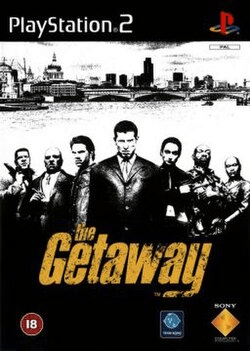
The main plot of the game is let Jolson step all over you and earn a chance to get your son back, but it also subdivides into a different focus and brings on another protagonist, Frank Carter, the undercover cop and Britain’s answer to Dirty Harry, stopping at nothing until Jolson and his kind are dead or imprisoned. Maybe both.

I’m not entirely sure how long the game is, but I know I’m about a third or so into Hammond’s part of the story. I’m trying not to spoil myself too much and keep as much of it a surprise as I can. For the gameplay aspect, there’s some variation to the movement on foot and in a car, and even shooting has quite a bit of variance. Without a HUD, the game employs much of the same mechanics of weapon equipment found in later, fancier titles like Max Payne 3 or Red Dead Redemption 2, only you get the impression that Hammond doesn’t give much of a toss over what he has on hand, with the plot reflecting that he’s only doing all this s[clank]t because Jolson is threatening to kill Hammond’s kid. But it’s not like he’s completely enslaved to the prick; one of Hammond’s best mates, Liam Spencer, hears about what’s going on and helps Hammond get one over on Jolson.

If I had to wager a guess for the rest of the game, I take it Hammond attempts to find his son himself, but gets caught up and has to suffer the wrath of Jolson’s boys, leading to the switch up to Carter.
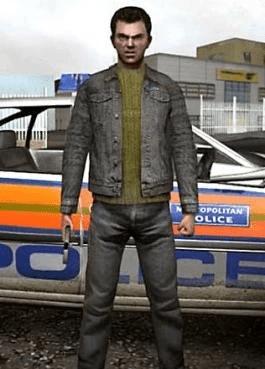
The Wiki makes him sound like a loose cannon and I have until I get to his part to confirm that

These days, The Getaway is more than a little bit rough around the edges, but it’s not like GTA III levels of difficult. Personally, it could benefit from a modern remake with more responsive controls not dissimilar to what Sega did with the Kiwami remakes of the Yakuza/Like a Dragon PS2 games. But it did gangbusters at the time and was able to produce a sequel subtitled Black Monday in 2004, and a PSP exclusive called Gangs of London in 2006.

A third mainline installment was supposed to release sometime after 2008 on PS3, but the project was cancelled alongside another unrelated game called Eight Days, or according to the devs at the time, the games were put “on hold.” But considering it’s been nearly 20 years since either of the games have been in the public consciousness, I highly doubt anyone is holding out for either game to finish development after so f[goat bleats]ng long. The same thing goes for Beyond Good and Evil 2 and any hope anyone had for a third installment of a Valve game.

I don’t know why I suddenly wanted to bully this game, I don’t really have a reason to. I just popped into my head one day as that thing that’s been in development hell for ages.

For what it’s worth though, Team SoHo’s brainchild inspired by British gangster flicks went on to embed itself in British gangster media years down the line with a spinoff TV series in 2020 and a graphic novel two years later. Unlike Yakuza though, I don’t think I’ll see myself going through the whole of the franchise. Tracking down games to emulate is becoming a chore over time–this would be so much worse. I still wanna consume more foreign media and I think I have a case for another location:

I already saw the Tropa de Elite movies, and I know there’s more to discover outside of telenovelas. I’m gonna make this a goal for the year.

What Was Lost from L.A. Noire

It was underbaked all along

I’ve brought up L.A. Noire before as an example of what went wrong with it on the developer’s side. To not repeat myself a third time, here’s the short version: Australian developer and programmer Brendan McNamara used his experiences working on the 2002 video game The Getaway to open his own studio in Sydney called Team Bondi with the goal of developing their only game L.A. Noire, based on old noir films from the 1940s and 50s. The problems that arose came from McNamara’s corrosive personality, crunch, and, according to ex-developers under his wing, explicit approval of sweatshop hours. Numerous people quit or got sick either physically or mentally of his open berating of “slackers” and loads of people who contributed to the project were omitted from the credits, especially if they didn’t see it to its May 2011 release. Keep in mind, Team Bondi started working on the game in 2004.

Over the course of nearly eight years, Team Bondi lost a lot of people and with a high turnover rate and new people not knowing what their predecessor was specifically working on, lots of stuff was scrapped. It wasn’t until Rockstar themselves made a personal investment in the game’s release, but by the time it released, it never broke even and Team Bondi’s assets were sold off in October 2011. The studio was said to have spent over $50 million on the game, making it one of the most expensive video games at the time, but it only made back less than half, even with all the marketing in the years prior to release.

After 12 years and a series of remasters and graphical upgrades especially on newer consoles, Rockstar clearly has a place in its heart for the game. As for what would’ve been different if more level heads were allowed to direct or manage the project, it’s difficult to say. Maybe someone could’ve reined in McNamara or fired him from his own studio for the toxic sludge he spewed from his mouth. Maybe the game would still be in development with graphics and physics engines changing over time. Maybe it’ll get cancelled and all we’ll have are numb, carpal tunnel afflicted hands to show for it. No one can say for certain at least not until we master interdimensional travel.

As for what should’ve made it into the game, it’s clear to see that some content was missing. Select characters seem to know the protagonist Cole Phelps without a proper introduction for the audience, especially on the game’s ad vice desk which handles drug crimes. Spoilers incoming, there’s also a subplot in the latter quarter of the game tying together (though haphazardly) the fate’s of the characters Cole Phelps, an ex-Marine who fought with him in the Pacific Jack Kelso, and a German immigrant jazz singer Elsa Lichtmann. Part of the subplot is meant to hint at Cole becoming smitten with Elsa and beginning a love affair with her despite him being married with children.

Following this revelation, his partner on the vice desk rats him out due to personal reasons (he lost out on a boxing match and Cole pretty much ruined the fun for him by promising one of the potential victims a ticket to catch a ferry from New York), and he’s demoted for adultery. The scandal makes the headlines and left with no one but Elsa, after a few cases on the arson desk, Cole looks into a personal conflict Elsa’s been looking into for a while: the most likely (read: confirmed) fraudulent death of her friend. This is where Kelso comes in as an investigator for the California Fire and Life insurance company. Elsa’s friend was a construction worker who was contracted in the development of new homes for returning G.I.’s but the house he was working on collapsed and killed him. It’s revealed from Kelso’s investigation that most of the houses were build with subpar wood and brickwork, some of it from shut down silent-era film sets.

I bring all this up because the adultery subplot comes in quite apropos of nothing. Call it subtlety or a hint at the rushed development cycle, but the closest we get to a build up of Cole’s and Elsa’s relationship is him visiting the club that she sings at most nights. The scenes where they get even somewhat intimate are rare and in the last few cases in the game. It also seems that much of Cole’s character development is absent. Throughout the patrolman cases and going to the traffic and homicide desks, he’s portrayed as levelheaded and quite straightlaced, even chiding fellow officers for not sticking to his personal definition of justice no matter how slight, though keeping to himself for some other officers’ personalities.

By the time he’s on the arson desk, he’s back to his old professional ways and he’s still the type to chase a victory, even with the power of slippery slopes, but I personally never saw him as the type of guy to think himself as a hypocrite, nor did I think that his preaching morality was in some way a shield for his own personal conduct. Some moments do stand out, but don’t have that much of an effect on the story, such as his pride in his own job as a cop while his first partner, Stefan Bekowsky, complains about aspects of his tenure on the traffic desk; or his taking the homicides more seriously on that desk while his partner there, Rusty, is busy drinking half the time, and several others.

Still, if the devs weren’t dodging an interpretive clock or a nasty boss, it could’ve seen a lower turnover rate and some of the original ideas that were cut could’ve been added back, if not in the game itself than as an expansion pack or DLC. The finer points of this implementation can be better explored elsewhere if they haven’t been already, but of the ideas that were scrapped, there were two crime desks that were abandoned: the fraud desk and the burglary desk.

According to McNamara himself, the desks were exactly as described: burglary dealing in thefts and robberies, stuff going missing, and all that entails; fraud would’ve dealt with scams, conmen, forgeries and everything in between. We don’t know who would’ve been the officer in charge of dispatching detectives to investigate these cases, but we have one clue as to who would’ve been partnered with Cole at least on the burglary department: a minor character named Harold Caldwell.

Caldwell was seen getting along famously with Cole. During the final case on the vice desk, he lends a hand to Cole and his vice desk partner, the sleazeball Roy Earle. Caldwell was suggested to have been Cole’s partner on the burglary desk which would’ve had around 11 cases to play, which is the closest explanation for how he has such a good chemistry with Cole at this point in the game. Because the game skips forward six months between the traffic and homicide desks, it’s suggested that the timeskip was supposed to be the burglary desk, but the reason for its omission comes down to formatting and storage.

The PS3 version has the benefit of a large capacity Blu-Ray disc, but there’s no equivalent feature for the Xbox 360 version. Having played it myself after getting it loaned to me by a friend, I remember the game case having a total of three discs. Leaving extra content in the game would’ve necessitated a fourth disc and to my knowledge, few, if any, games would’ve come with so many discs. Without the cut content, L.A. Noire clocked in at a 20 hour campaign depending on your playstyle, but with 11 more cases focused on burglary, who knows how many more hours and gigs would’ve been dedicated to the game?

As for the fraud desk, we know even less. All we have is speculation based on what probably would’ve counted as fraud in the late 1940s since this game was also released in a time before the Miranda rights afforded criminal suspects protection while in police custody along with a defense attorney. It might not be obvious playing it, but if you ever look at gameplay of L.A. Noire or play it yourself, you’ll notice that Cole never reads the suspects their rights. The landmark Miranda rights case was argued in Arizona in 1966, less than 20 years after the events of L.A. Noire, so a lot of what the LAPD could’ve been implied to play fast and loose with in 1947 would’ve largely ceased by then.

Regarding people involved in the fraud desk, that’s also not well known. Who would’ve been the dispatcher? Cole’s partner? Is there a desk that challenges Cole’s lawman philosophy and awaken him to the shades of gray in law enforcement? All of this is up for interpretation. McNamara claimed to have had some levels and concept art for the burglary at least, but I couldn’t find any screenshots of these to verify. Not that I’m calling McNamara a liar, but he was the only public face during the development of the game.

The attitudes and accounts of the disgraced ex-employees of Team Bondi (especially those who left before the game released) may suggest that McNamara had all the cards, so unless an artist or designer snuck away a copy of a potential level, this cut content exists as lost media. Instances of both still exist in the game, but you would only be able to see it in the game’s free roam mode, looking at fliers and ledgers and whatnot.

Would the cut content have made the game any better than what we got? Well, I doubt it would make as big an impact as expected, though it could still change a lot of things. Like what? Probably an in-depth look at how theft was prosecuted post-war or what defined fraud. The examples I listed above are clearly not exhaustive and people smarter and more experienced than me in those fields may have more to add to those, but those would be the more obvious ones to me as I’d never investigated a missing object in any capacity, nor have I investigated fraud. Certainly, Caldwell would join the list of partners Cole has had over the course of the game and likely one of the more respectable ones compared to Roy Earle who takes home loads of allegations of racism and misconduct, even for an America pre-integration.

For formatting and storage, if Team Bondi was able to commit as much as possible to leaving everything in undisturbed, then the game case may look more like a binder or folder with well over four discs dedicated to each case on the Xbox 360 and probably two or three Blu-Rays for the PS3. Subsequent re-releases for PCs would occupy more storage than can possibly fit on an unmodified computer. If I was a part of that alternate reality, I could easily see myself budgeting for more than one high capacity hard drive for just one game or even a series.

On that note, there’s also a part of me that sees this as being a series given the same treatment as the multiple expansions for The Sims franchise or Battlefield and Medal of Honor, which probably says a lot about how EA’s design philosophy compared to what was inherited from Team Bondi into the Rockstar family.

The only notable changes for later releases of L.A. Noire is the interrogation going from Truth, Doubt, and Lie to Good Cop, Bad Cop, and Accuse. All things considered, what counts as speculation for a different game solely exists in criticisms for what didn’t work or go far enough in the version we got. Then again, it takes a game with enough hard work going into it to spark debates and discussion years after the original developer went under and the closest thing we had to DLC or a sequel was seemingly shelved forever. This video by Real Pixels explains all the faults in L.A. Noire. Based on what I wrote, there’s a lot so take this as a brass tacks examination of L.A. Noire.

Channel: Real Pixels

Finally, is L.A. Noire even good? It clearly doesn’t live up to its purported expectations and as I’ve explained there’s a lot under the hood that’s missing or what’s left over isn’t perfectly aligned, but considering I’ve dedicated one post to the game and sections within two separate blog posts to the game, I have a relatively high opinion of the game, and so do others given how many people dream about there being a better version of L.A. Noire or even a Whore of the Orient.

We end 2023 with a YouTube recommendation for the channels Business Basics and Geopolitics Daily.

https://www.youtube.com/@BusinessBasicsYT

https://www.youtube.com/@GeopoliticsDaily247

The twin channels cover news coverage and geopolitics across the world keeping viewers up to date on major issues that affect us directly or indirectly, typically from a consequences of conflict standpoint especially in the case of territorial disputes like those of Russia, Israel, and China among other places across the world. Both channels began as business and investment guides before the shift to global events, but do still offer tips and guides for business and investing.