Spec Ops: The Line after 13 Years

When do I start feeling like a hero?

The draft for the triple comparison between Max Payne 3, Sleeping Dogs, and Spec Ops: The Line has been finished, but before I publish that I first wanted to get my thoughts on the last of these three out of the way. Spec Ops: The Line, a 2012 third-person shooter whose stated-mission purpose was to examine the era of the “modern military shooter,” and knock it down a peg. Unfortunately for it in that regard, the message was very ignored as Call of Duty and surprise return Medal of Honor had both had their releases around the same time. Black Ops II on November 13 and Warfighter on October 5. When did Spec Ops release? June 26 that year. It was released at a time when these types of games were all the rage, wearing the skin of a similar game while also lambasting the Bush administration for the Iraq and Afghanistan Wars. By my estimate, it was successful at only one of those, but only because so many other media outlets talked about it as it was happening. For a laugh though, take a gander at this:

Channel: Bloomberg News

Right after the Russo-Ukrainian War went hot.

But I’m somersaulting over the howitzer — let’s rewind. The main inspiration behind Spec Ops: The Line aside from the U.S.’s concurrent foreign policy in West Asia and a criticism of the state of the modern military shoot ’em up was the novel Heart of Darkness by Joseph Conrad and it’s very successful(ly troubled) film adaptation Apocalypse Now. The book was written to highlight the controversy of Leopold II outright owning and micromanaging his personal territory of the Congo in 1899 while the film took that, applied it to the Johnson and Nixon administration’s handling of the Vietnam War, very soon after the pullout and the fall of Saigon to the communists. Suffice it to say, not only was Spec Ops well within its own element by critiquing Bush and the war on terror, it follows a time-honored tradition of satirizing current events in a widely popular medium.

If it wasn’t obvious at the outset, there’s going to be spoilers. I’d encourage you to play the game for yourself, but after 13 years and a new generation of consoles and updates to operating systems, Yager Development hasn’t ported it to modern consoles and most digital storefronts have delisted it. It was a hassle for me to even find an emulated version and the one I have is beset with technical issues. None of them game-breaking, but if you’ve ever dealt with emulation before, you know that the game you emulate/pirate, etc. isn’t going to be the same game that would’ve been released years ago. An emulated game isn’t the same as one bought at GameStop or Best Buy. Alternatively, there’s searching endlessly online for a seventh-generation console and then ultimately a hard copy of the game, but as we progress further into digitization, hard copies will simultaneously be a thing of the past and a priceless collector’s item. Apologies for the rant. Now let’s get to Spec Ops.

The cover alone would’ve cost it sales if the gameplay didn’t after reviewers got their hands on it.

The game begins with Lieutenant Colonel John Konrad, commander of the 33rd Infantry Regiment authorizing a relief mission in Dubai after the city get’s blasted with wall-to-wall sandstorms. Trouble starts to sprout with the native Emiratis who take issue with the high and mighty US of A walking around as if they own the place. A peace deal/non-aggression pact is taken, but very soon broken by rogue actors among either the Emiratis or the Americans. Whatever the case, the ceasefire is short-lived and insurgents emerge to take back Dubai and handle it themselves. From what I know of history and geopolitics, this sounds eerily close to a similar problem that Somalia has been facing since the early 1990s, but far less complicated than Somalia’s entrenched clan system. Or more like post-Gaddafi Libya. For a brief overture, the United Arab Emirates, where Dubai is located, didn’t suffer as terribly as its North African brothers in the Arab Spring, so trouble in paradise is somewhat unheard of but still within the realm of possibility.

The 33rd Infantry gets swamped with each of these problems and Col. Konrad declares the mission a miserable failure. He could’ve abandoned ship at the first sign of trouble and allowed his men to go back home, but he knuckled down and kept them there. As a result, the soldiers have gone stir-crazy fighting an unknown enemy, and I have to stop here momentarily. I fully understand what the game is intending, but I’m not so certain the devs at Yager know what they’re talking about. In Heart of Darkness, the Belgians were very much an invasive species meddling in on Congolese affairs, but there wouldn’t be a war to fight in the territory until 1915, because when empires go to war, so too do the colonies. Load up, Taiwan and Korea, you’re taking Tsingtao because Tokyo said so.

For Apocalypse Now, the Vietnamese were an amalgamation of southern Vietnamese communists receiving aid from the North Vietnamese Army, China, Laotian and Khmer communist forces and the Soviet Union. There were also veteran guerrillas who fought the Japanese in WWII, so this is the ultimate conflict where the U.S. wouldn’t be able to tell friend from foe anymore. Come Iraq and Afghanistan… the same problem from Southeast Asia followed into West and South Asia, but looking at the leaders and the countries of the time, stability was the one thing neither country had. Afghanistan had nearly as many civil wars as Rome did in the 3rd century and wouldn’t really have a case for nationalism whatsoever. Iraq, on the other hand, had a tenuous government in the hands of a dictator with an iron fist who would suffer from his own consequences thrice in a row over the years. What I’m getting at is, the situation for Iraq and Afghanistan was a top-down problem. The Belgian Congo had a “government” not much better than Leopold’s personal property, but nothing was threatening the Belgians until 1914; Vietnam had a series of governments from themselves to the French to Japan to the French again until decolonization, so there wasn’t a question of who would lead from where once the guns stopped firing. For Iraq, the cradle of civilization had rough years after Saddam’s capture and execution, but was able to get back on its feet and keep ISIS from rising to prominence ever again. Afghanistan’s last stable government was when it was a kingdom, toppled by communists, invaded by the Soviets, and subject to civil wars in the 1990s that saw the Taliban rise, fall, and gradually rise once again after playing the long game. And it hasn’t really been the same ever since.

I’m more than a little torn on this. On the one hand, Al-Qaeda and the Taliban weren’t an unknown enemy, but on the other, they blended in so well with civilian populations that the U.S. handling it personally was why there were accusations and even admissions of war crimes against an unarmed populace, but then again I don’t recall stories of soldiers rounding up civilians in concentration camp-style living conditions. Not from this conflict at least—the Philippines in 1900 surely but nothing from the Middle East in living memory. And no, Abu Ghraib doesn’t count because no one with the right mind was okay with that. All the soldiers involved have been shamed and disgraced. Say what you will about Bush-era foreign policy but for the love of God, don’t lie about it. Especially now, that we pulled out of Iraq during Obama’s first term.

Sorry about all the tangents, when it comes to myths surrounding the war on terror, I can’t help it.

The entire thing is incredibly complicated, so I look at criticism with an electron microscope. To get back to the meat of this review: 1st Special Forces Operational Detachment-Delta (SFOD-D), colloquially known as Delta Force sends a squad of soldiers, Capt. Martin Walker, Lt. Alphonso Adams, and Sgt. John Lugo to extract Col. Konrad and assess the physical and mental readiness of the Damned 33rd. They learn that the Emiratis may have been incensed to rise up thanks to meddling from Langley, and allow me this tangent. Every time I hear about the CIA, I get the urge to have sloppy drunken sex with a loaded shotgun. I’ve come to loathe the use of the CIA as a plot device for a lot what goes on in the world. True or not, it’s gotten lazy as hell, and I’m pretty sure it births new myths or perpetuates existing myths, some of which can be dispelled by the CIA themselves, but I doubt they’re allowed to do so, in case the public meddling is ruining an ongoing project.
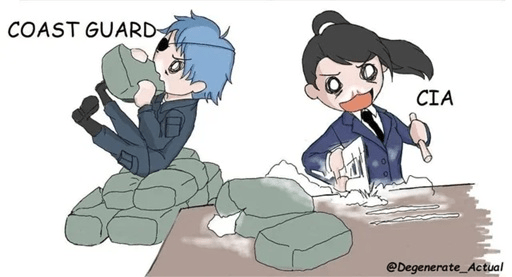
Certainly would explain their Cold War behavior, eh?

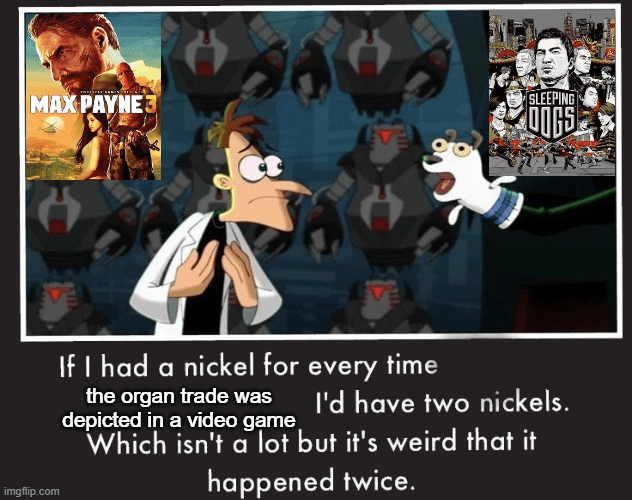
Anyway, CIA perpetuates conflict in the UAE between the Army and the rebelling Emiratis and either neither the soldiers nor rebels are none the wiser or the “rogue” unit knows what’s up, but can’t get it through to the rebelling Emiratis because of high tensions. Meanwhile, these Delta Force operators have declared the unit rogue, their commander MIA, but still have faith that the mission can go on (it can’t), and over the course of the game, things keep getting worse and worse. The culmination of all of this cascades into one of the most disturbing moments in this game. More disturbing than the doctor harvesting organs from the Comando Sombra in Max Payne 3… or the doctor harvesting organs for the 18K in Sleeping Dogs… hmmm…
In Sleeping Dogs’ case, the police missions tend to be optional, but if you want super cop Wei Shen, then get to tagging and bagging!

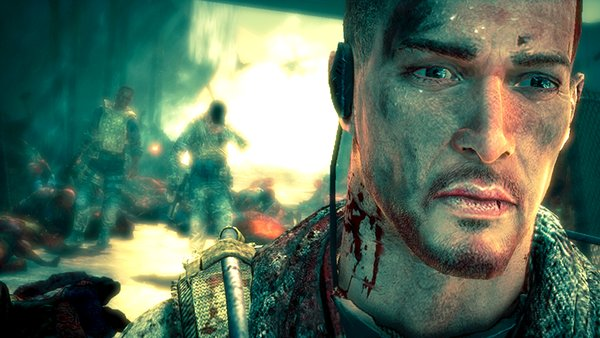
They screwed up with the chargrill and have to make do with 70% of a burned meal. You know the trope of the traumatic experience being handwaved away with a hasty generalization? Like the one creepypasta where trauma victims, most commonly rape victims, retreat to a fantasy where they’re not being raped, heavily repressing the memory for as long as possible, at times for life? Well, that’s precisely what happens to Capt. Walker in this moment. This virtuous Special Forces officer who makes no mistakes and does nothing wrong f[gunshots]ks up once… colossally so, and admittedly should face a court-martial for the incident. In an admittedly weak defense, all three men weren’t in the right mind to make a sound decision, but to counter that, a period of R&R would be granted so that they could go and investigate the situation properly. For all that’s been going on in the plot so far, even the most bad ass Special Forces soldier would need to rest and Walker (because the plot wants it) doesn’t even rest for a second; and depending on your mindset, this is either a two-cent excuse for shock value or a magnificent pants-pull. Admittedly, I lean more pants-pull-wards, but this was well after the game was out and before my time in the Army. Now I’m towards the middle because I can see how someone would think this was cheap.

And the rest of the mission is almost never the same. The mental games and break from reality, Walker’s gradual descent into mental hell (complete with hallucinations of actual hell); the game stops pretending you’re the protagonist and downright calls you a monster for continuing to play. On the one hand, this can seem manipulative especially towards the end when you finally confront “Konrad,” but on the other hand, it takes “follow the objective marker” and kicks it into high gear. It reminds me of the Milgram experiment where participants were deceived into dutifully obeying atrocious directions. That experiment was one of several used to explain how the Nazis and German society could be complicit in crimes against humanity… though slightly undercut that the penalty was execution, even for the last-ditch militia propped up by Hitler himself, the Volkssturm.

Towards the end, you finally reach Konrad’s HQ, only to learn that he’s been dead the whole time and the voice in Walker’s ear was an auditory hallucination. That circles back to what I said earlier about traumatic experiences being hyper-repressed by the victim/survivor. “I’m not wrong! The world is wrong!!” Yeah, the devs didn’t want anyone to enjoy this, and this may have been where players kept yelling at Walker to abandon ship and declare the mission a failure. Being in the Army, I was doing that at the first sign of trouble, that being when a CIA agent was torturing a junior officer about three chapters in.
The series finale of the TV Show M*A*S*H revealed that the character Hawkeye blames himself for the death of an infant when a Korean woman smothers it, playing it off as a chicken all along. Walker did the same thing, passing off the deaths of civilians on Konrad.

Now there’s two endings in the penultimate chapter: 1. Let the apparition of Konrad gun you down, or 2. Shoot first and proceed to the final chapter which has three endings. Soldiers come to retrieve you and there are three responses: 1. Shoot them all dead and continue to live in the ruins of Dubai as a mad man; 2. Shoot and commit suicide by soldier because you’ve seen enough and this is the closest you’ll get to answering for your sins; 3. Surrender and let the soldiers take you back presumably for questioning and a court-martial. The last of these would see a mental health specialist determine Walker’s mental condition. If able to stand trial, that’s a burial plot 60 feet under Fort Leavenworth. If not, then wherever the line is drawn depends on whether Walker disobeyed orders and took charge of an authorized mission playing vigilante. He did and he did, which would be grounds for conduct unbecoming, though probably means something along the lines of a discharge of either general under honorable conditions or other than honorable discharge if evidence comes up short. As for the use of weapons on civilians, dishonorable. War crimes tribunal. 600 feet under the prison, let the casket melt. To further elaborate on the apparition of Konrad, him shooting you (or you shooting yourself) is an admission that the mission was an even worse failure than what Konrad tried to do by intervening, but shooting the apparition is an insistence that Walker was in the right all along and that every end justified the means, even the deaths of soldiers and civilians. No matter the outcome, Walker’s mind is essentially mashed potatoes. He might have been able to wave it off as Konrad’s doing, but after the shocking moment, the hallucinations, and the search for a golden nugget in a world of s[avalanche]t, there was no way.

Do I recommend the game then? Like I said, it was a struggle to find it as it’s since been delisted from digital stores, leaving emulation as the only way to experience it firsthand. And I don’t recommend it for the gameplay. It’s purposely clunky and cumbersome as an overall critique on the genre at the time but learning that neither CoD nor BF nor even Medal of Honor, belching its last before indefinite hiatus, took that lesson particularly to heart. Or rather the first two put their battlefields elsewhere while, as said before, MoH, went to sleep for the time being.

Also keep in mind that it was a critique on the Iraq and Afghanistan wars, which began under Bush Jr., continued under Obama (who by many accounts droned more people than his predecessor and successor), kept on under Trump’s first and officially ended under Biden, though to clarify, Obama saw the end of Iraq and Biden saw the pullout of Afghanistan. Being 13 years away from the release of the game and long after both conflicts have concluded, the message of the game has certainly aged. It’s not like a WWI-based game where warfare changed, but wars didn’t. The war on terror isn’t the same as a war against a nation where POWs are expected to be repatriated at the end. Knowing how Iraq ended, if the message was to end the wars or at least get out of Afghanistan at the time, it kind of falls flat with how complicated the whole ordeal was. Unless the message was, don’t make it America’s mess, we don’t need to keep seeing to it personally, there’s better ways to go about this, then fair enough, we didn’t need to commit as many to either conflict as we actually did. But would we still be Americans if we didn’t watch the tower fall in person?
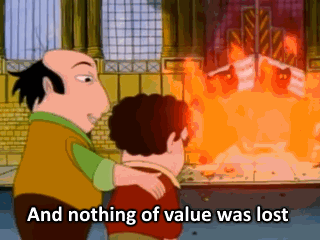
America after winning a war, confident that the ideas died with the men…

Yahtzee Croshaw reviewed the game at the time and may have put it more succinctly as an outsider of sorts to American boondoggles in the sand. Now that all of that is done, to look at three 2012 releases and how well they tackle corruption.

Channel: The Escapist

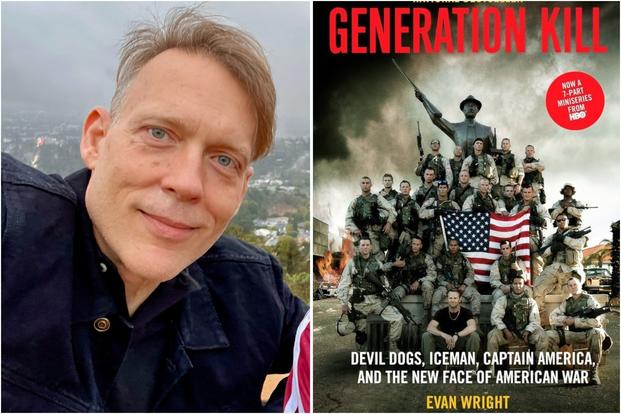
Evan Wright’s Generation Kill

War journalism brought to life

I’m doing something different this week. It had come to light that the author of the novel Generation Kill, Evan Wright, had taken his life on July 12, 2024 at the age of only 59. I’ll be upfront and say that I lack the expertise to deal with a subject as delicate as suicide and the most I can do for those who’ve fought or are currently fighting those demons is direct them to crisis prevention organizations and hotlines, which I feel would come across as hollow since anyone can do those things.

Instead, I’d like to do something that I think would be more thoughtful and remember Wright by his work, namely the novel that I’d had a lot of time reading and it’s TV miniseries adaptation: Generation Kill.

My introduction to the book was a bit of a cascade. I first heard of it through reviews of the miniseries of the same name, licensed by HBO in 2008. It got a brief mention in Knowing Better’s video on his own service in the U.S. Army, where he said it was as accurate a depiction of the average servicemember as one could get, next to actually signing up.

Channel: Knowing Better

And also a more in-depth review of the series by The Almighty Loli.

Channel: TheAlmightyLoli

Yeah, the subject matter means you’d have to view it on the site. Good viewing if you have 1.5 hours to spare.

To summarize it, Evan Wright was attached to the Marines’ 1st Recon Battalion during the invasion of Iraq in 2003, documenting every single action of the jarheads from actual combat operations to random silliness and off-color conversations carried in their off time. Anyone whose exposure to military operations is limited only to Hollywood would be surprised to learn how juvenile and sophomoric the humor can get, but to circle back to something Knowing Better said in a different video, the military doesn’t influence Hollywood. It’s often the other way around, and this makes a lot of sense if you think about it. Just because you wear camouflage and a helmet doesn’t mean you’re not also a nerd about something. And in my own little circle, the Army’s Signal Corps has a bunch of sci-fi fans interspersed with weebs, two things I happen to be as evidenced by all my blog posts.

I can’t speak for every veteran, but from what I’ve heard and read, military media gets a lot of scrutiny from these groups. Living day-to-day in the military trains you to pick through every detail with a fine-tooth comb, and the small details often make or break a piece of media for a servicemember. There’s a bunch of regulations on how things should look and how to behave or react or respond to fire. No matter the branch, the US military follows the rules of engagement to heart. As a result, there’s loads of ire launched at films like The Hurt Locker whereas In the Army Now, Black Hawk Down, or even Saving Private Ryan get praise not just for the storytelling but the miniscule details that vets and servicemembers would notice from a mile away. A single deviation from the standard tells them all they need to know about how much or how little the producers cared about the subject matter.

Because Evan Wright saw the Marines fight tooth and nail to capture and secure Baghdad, he had earned himself a lot of respect from military vets and the community on a wide scale for sticking his neck out, even if he didn’t have to. That said, war journalism is nothing to scoff at. It’s a serious and dangerous branch of journalism that can and does kill the reporters on scene. In just the invasion of Ukraine by Russia, little more than a dozen war correspondents have come under fire, some of them fatally and more may follow as the conflict progresses. Both sides know who their enemy is, but the tools of war are themselves not loyal to a flag, president, or even constitution. A pen isn’t going to miss you if it gets lost in your house and in a similar vein, a rocket’s area of impact largely depends on the capabilities of the mapper; and even then the enemy isn’t a guaranteed hit. Sometimes friendlies or civilians get caught in the crossfire.

Wright and countless others in his position knew this prior to going into the conflict zone and many more following such examples will take that to heart before stepping off attached to a unit in the field.

It’s worth mentioning that popular as the book was and still is, it wasn’t controversy-free. Some of the Marines at the center of the book faced backlash initially until 1st Recon commanders intervened and advocated for firsthand viewership of the book. A few of those same Marines even helped with the miniseries adaptation in 2008 and starred as themselves in the show during its run. Even now, over a decade and a half later, Generation Kill gets praise for its reporting and up close depiction of the lower enlisted as they were neck deep in the fight between the Iraqi Army, Saddam’s Republican Guard, and the Fedayeen death squads.

Speaking of which, another thing the book and series does well is display the troubles of modern warfare. The early stages of the War on Terror were wrought with controversy and opposition most of which still lives on to this day in the form of popular myths. In the case of the Iraq War specifically, some of those concerns centered around fighting an atypical war against a largely faceless adversary. Loose groups of terror cells in dangerous parts of the world made fighting the war incredibly difficult and complicated with some groups fighting each other and their listed enemies, the West being among them.

Because they were often dressed casually or “plainclothes,” picking apart friend from foe turned into a clusterf[boots stomping]k of massive proportion. The rules of engagement weren’t always applicable to the situation. Common sense isn’t common or even as widely available as we wish it were, that’s why there’ve been travesties, many of which don’t make it to screens and newsprint often until years after the fact, since empathizing with both the warfighters and the victims of oppression is a balancing act. Protesting wars is old — I don’t know how old — but I know that when a line is crossed, the aggravated public gets restless if in a democracy. It might have something to do with war correspondents having widespread freedom of information, but I think it’s safe to say that the public discourse against the military reached its zenith during the Vietnam War.

You may not know it, but this man helped put an end to a war crime… and he was essentially laughed into depressive episodes for “snitching” on his criminal comrades.

Wright’s novel and the miniseries based on it show how complicated even “black-and-white” wars can get. What becomes of the civilians involved? How do you treat non-uniformed combatants? How do you atone for devastating mishaps? Questions and dilemmas like these are what make and break people in war, whether they’re fighting it or just witnessing it. Often, it’s the sword of Damocles problem–the blade changes position with every move a leader makes, and sometimes there are hard logistical choices you have to make in modern wars. Slight spoiler: one scene in the miniseries depicts the Marines deliberating on whether to bring civilians with them, but the idea is (no pun intended) shot down to the dangers of having civilians in tow, as Wright himself could attest. But there were equally bad if not worse consequences for sending them on their way, that being the Fedayeen death squads mowing down suspected traitors of Saddam.

This article on Military.com has more to say about Evan Wright’s professional work away from Generation Kill, but adding to the praise, I like how honest and unjudgmental it is. It gives you as many of the facts as can be recalled while letting the audience see inside the mind of a young Marine ready to let ‘er rip in a combat zone.

Normally, I’d put a link to where the series can be viewed, especially for free, but for once, I won’t be sailing the high seas for this. In fact, for those who are able, I’ll leave a link to the book and if you want to watch the miniseries, it’s still available on HBO if you can afford the cable package or are able to subscribe on the app.

Results on Amazon: https://www.amazon.com/s?k=generation+kill+book&crid=1OKAPP40AEAOG&sprefix=generation+kill%2Caps%2C91&ref=nb_sb_ss_pltr-data-refreshed_3_15

HBO miniseries: https://www.hbo.com/generation-kill

Evan Wright (1964-2024)

Date A Live: On a Whim Again

The life I live is watching anime with friends…

…and I can’t wait to do it on a whim again. I’m not apologizing for that Willie Nelson reference.

Date A Live honestly needs no introduction. It’s a series that I’d heard of for a couple years prior to actually watching it only to hear of a fourth season planned last year while I was already six episodes into the series.

It began life as a light novel with a run from March 2011 to March 2020, exactly nine years of writing from author Koshi Tachibana. A sci-fi fantasy romcom whose anime adaptation was released in 2013 and whose fifth season debuted in April of this year. Funny that light novels from the last decade are going strong in the 2020s.

So what’s Date A Live really about? Breaking it down by its genres, the sci-fi aspect comes from the world itself. It’s somewhat set in the future though no specifics are given so you the reader/viewer may fill in the blanks how you see fit. Spatial quakes or tremors in the solar system start affecting earth in a very negative manner, by way of leaving behind giant craters in the earth, one of the most notable being somewhere along the Eurasian steppe. Bad day to be wandering around Kazakhstan that day.

The in-universe explanation for this is that the space tremors follow the arrival of beings known as Spirits who all appear in the form of girls around the same age as the main character, Shido Itsuka–and protagonist powers aside he does have a crucial role that I’ll get to later.
Further, these Spirits possess abnormal powers, not the least of which involves the likes superhuman strength and devastating abilities the likes of which would make Babidi from Dragon Ball very, very jealous–and also ties in with the fantasy aspect of the series. There are two ways to combat these Spirits: one is by way of actual combat; and the other adds in the romance aspect and our main protagonist, Shido Itsuka.


Now that we’re putting two and two to get to four, you may have predicted that Shido’s task in this series is to romance the Spirits and prevent utter bedlam with the power of love, and you’d be right. The harem aspect is well advertised and if you know a few things about the harem genre in animanga, then you’re probably also aware of the main selling point: fanservice. Flash a boob once or twice, get some cheeky panty shots in, throw in an accidental pervert with multiple different -dere types and voila! you’re cooking a mean beef stew.

However, what I think separates Date A Live from contemporaries of this type would have to be the individual girls themselves. Even as I’ve only just wrapped up the second season of the anime, I’m seeing more than just comedically sexy eye candy. And I’ll even throw a bone to Shido himself. Rather than be just the generic harem protagonist who behaves as a stand-in for the audience, there is a personality to the boy for once. He’s shown to be persuasive and caring, especially since his position in the series is that of nonviolence. He’s basically playing the pacifist route in Undertale.

Meanwhile, the other main adversary present aside from rogue Spirits yet to be wooed by our hunk Shido is the Anti-Spirit Team. Similar to Japanese Special Forces, their purpose is to find and contain the damage the Spirits cause, a lot of the time through lethal force.

Then there’s the girls that Shido romances to the good, less destructive side. A lot of the time they fit well into the typical archetypes we’ve seen in other romance anime, but the backstories and personalities do make them intriguing. Some of them do genuinely want to live quietly and comfortably with Shido, but others answer the question “Violence?” with an enthusiastic “Yes!” Case in point: one of the most iconic characters in the series:

You can’t fix her, nor will she fix you or even try to make you worse. She’ll just leave a massive stain where you standing three seconds ago.

The series explains that the Spirits themselves come from different dimensions, but (minor spoiler) it’s possible for a human from this dimension to become a Spirit as well as what happened to some of the characters in the series. The AST is another display of the sci-fi within the series. With the Spirits being what they are–superpowered high school girls–the members of this elite team have to take the “fight fire with fire” approach to combating them with hi-tech battle suits. Not on par with what has been depicted all over the Gundam genre, but impressive all the same. It’s more like stripped down Iron Man armor in appearance.

Depending on your investment in the series overall and how you feel about the genres explained, you might get a kick out of it, or it might just be another harem series to add to the pile. Neither of these assessments are right or wrong, but it shows that it’s a product of its time. Does that mean the series hasn’t aged well? No. As I said, I got into it weeks before a fourth season was greenlit, not to mention a fifth season debuted a few months ago which suggests a determination to see it through to the end.

I know I’m not the first person to talk about this series and I will not be the last to do so. What I can do is simply point you in the direction of the series and however you choose to consume it. If possible for you, I say finish all five seasons of the anime and while you’re waiting on confirmation of a sixth, beat them to the punch with the light novels.

Before I sign off, since there’s a certain demographic that loves the type of character that I put further above, I feel the video below best describes that mindset:

Channel: Gianni Matragano

But hey, I like kickass ladies too.

For Saturday, June 8, 2024, I recommend the YouTube channel Christopher Chaos.

https://www.youtube.com/@christopherchaos/videos

Run by a retired Army Sergeant and Motor Transport Operator (Military Truck Driver), Christopher Chaos is a military explanation channel dedicated to detailing the possibilities and benefits that come with enlisting in the Army along with the occasional anecdote about his own personal service. Each servicemember’s/veteran’s story is unique due to how big the U.S. military is and how fast changes can be made while serving. Christopher himself explains that he served from 1999 to 2010, so most of his stories show the culture of the Army during his service. That being said, he does still keep up with Army and military news for the purpose of educating would-be recruit candidates.

And if you’re concerned about it, he’s not endorsed or sponsored by the U.S. Army. That chapter in his life is behind him.

Dystopian Fiction

And now for something completely different

Before we start, I’ll say that I meant to have something up either by Friday evening or sometime yesterday, but I missed it because I was tired after work and yesterday there was a local comic con in town that me and some friends wanted to attend. Also the two topics I had lined up for coverage–a review of the Undead Unluck anime adaptation, and a chronicling of the reboot Planet of the Apes series–would require me to both finish the anime, and to at least see the new Kingdom of the Planet of the Apes movie. The first of those can be done more easily than the second since while in TRADOC (Training and Doctrine Command) if you go off post, you need to be with at least two more people, and I haven’t found anyone to go with yet. So my thoughts on the anime adaptation will come later, and my series review of the Apes movies will also come later. Back to the topic.

I’ve gotta be honest and say that I had forgotten why I put this up as one of the many topics to blog about. As much as I like sci-fi, the dystopian side of things isn’t something I actively seek out on purpose. Often, what I find just so happens to have dystopian elements in the plot. This might’ve been on my mind at the same time as the Civil War movie back in April. I haven’t seen that movie myself yet, but based on what I’ve heard from people like Brandon Herrera, there seemed to be a lot of build up with little pay off. That, or everyone was expecting the same kind of hullabaloo that came with the political landscape of releasing a movie like this during an election year, and most people’s expectations weren’t in line with what the movie had in store. If I see the movie, I may share what I saw.

Jesse Plemons’ appearance in the trailer certainly added to the hype until release.

Anyway, I’d say that for me, the appeal of dystopian sci-fi comes from an added appeal to the fantasy, as in a lot can be done even with this one specific filter. It could be and often is a world similar to ours but with a few new rules that make it a darker and bleaker place. Think of Fahrenheit 451 by Ray Bradbury. The theme of this world is that of suppressing dissent. One way to go about this is burning books. All of them. It’s illegal in this world to even own a book let alone read it, so firemen are employed to do the opposite of what we know firemen in the real world do: light the books on fire. But with all the calls to burn the books, it can only mean that there’s a resistance of some kind to this draconian law and sure enough there is. An underground society of sorts that serves as a gathering of rebellious readers, sort of like a book club in tacit defiance of the Gestapo-like firemen.

As we can see from the book and its movie adaptation, the world is not dissimilar from ours except reading and literature are criminal acts where the offender is disappeared while their illegal library goes up in flames. In this case specifically, it calls back to the pre-war Nazi German laws where anything critical to national socialism was up for a mass purging, writings included. Of course, knowing Nazi Germany, this boiled down to anything perceived to be penned or endorsed by their enemies, namely communists and Jews.

Based on that example, the dystopian genre can also provide some social commentary on the real world, and it doesn’t necessarily have to take itself seriously. Comedic examples like Futurama, select episodes of South Park, or even certain skits in Robot Chicken do a lot to make a commentary on the real world, often through speculative warnings. And the operative word here is “speculative.” In my research for this blog, I found that utopia and dystopia normally go hand in hand, often as a response to one another and from my perspective either of them can and do address the issue of logical fallacies, namely slippery slopes and depending on the writing and phrasing tu quoque and/or middle ground fallacy; slippery slope since the more pessimistic of the two can be argued that X will happen if blank is allowed, tu quoque since either side can argue convincingly that the other is behaving naively and unethically, and middle ground since a third party can attest that the most ideal solution lies the furthest away from the two extremes and unlike the extremes, the middle ground attestation isn’t under the same expectation to provide supporting arguments.

Sounds familiar, right?

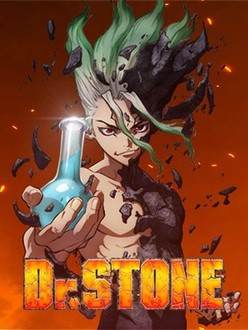
Well, like real-world politics, utopia/dystopia and everything under that umbrella can come in many different forms. As such, there’s a lot of elbow room over what a work of fiction can look like and/or talk about. Tell me your favorite examples. Mine has to be the beginning chapters of the Dr. Stone manga. Shortly after awakening, Senku, Taiju, and Tsukasa all agree to harness the titular anti-petrifying agent to awaken humanity and reclaim the Earth from that evil queen we call nature, but the conflict arises over who to revive. Senku chooses all of humanity should be revived no matter what, but Tsukasa disagrees, citing the existence of bastards and monsters in this world, many of them bitter geriatrics that we could do without and essentially starts off as an antagonist reviving a handful of warriors he believes are incorruptible while Senku, Taiju, and later Yuzuriha continue on without Tsukasa’s might and brute strength.

The question dealt with here in the beginning is that of morals. Both the antagonist and protagonist in this arc accuse the other of being nonsensical and provide compelling arguments for this case.

The manga obviously follows the protagonist who won out and eventually recruited Tsukasa to his side, save for several dissenters spouting his original tenets for the next arc or so, but if the manga was more Seinen instead of Shonen, we probably might see the perspectives of both sides or even a third side emerge, though depending on who you ask a third side already exists and its called the legal system.

Joking aside, since I’m already a fan of sci-fi and more specifically the alternate history side of things (See: my recommendations for Alternate History Hub and Monsieur Z/Dean Mosley), the dystopian side of things has its appeal for me for a lot of the reasons listed, offering interesting stories and scenarios to explore.

And since the subject is on dystopian fiction, I offer these novels as my personal recommendations:

Stand on Zanzibar (1968) by John Brunner

A Clockwork Orange (1962) by Anthony Burgess

Anything by Mary Shelley (1797-1851) (I’d be more specific, but there are too many examples to choose just one, though I do encourage looking beyond Frankenstein)

A Scanner Darkly (1977) by Philip K. Dick

Planet of the Apes (US)/Monkey Planet (UK) (1963) by Pierre Boulle

That Manga About Robert Johnson

Seems there’s a manga for everything

I remember long ago writing about searching high and low for obscure series to read or watch. Unknown, underappreciated, undersold series that have very little audience, very little fanfare, very little recognition of any kind out there. And I believe I have another one that not only is largely unheard of by the layman, but is also on the subject of an individual who lived and died in obscurity, forever doomed to posthumous recognition for his talents… or curse depending on how you look at it. But I’m jumping the gun. What I’m talking about is this:

An unknown artist and blues pioneer of the early 20th century, Robert Johnson lived a life familiar to many black Americans at the time. Born and raised in the Deep South on a sharecrop with an almost predetermined future. Brief history lesson: post-Civil War America and Reconstruction came with a wave of new changes for the formerly enslaved, but not all of it implemented unanimously, cleanly, or with regard to the realities of the situation. Between ex-Confederates skipping country, finding their way back into the U.S. political machine, or in some uglier cases, becoming the first members, if not, founders of the first Ku Klux Klan, there was a lot of infighting in the Reconstruction era. A lot was promised for black Americans, but so little was implemented with the recently reunited government figuring out how to kill two birds with one stone at the time.

The reason I include that brief history lesson is to show how long the system actually lasted. It was not too long after the Civil War ended that these sharecrops became so prevalent and it wasn’t until midway through the 20th century that they were on their way out, and Johnson’s early childhood as well as that of his family was in the middle of that. What separates sharecropping from full-on slavery was how someone found themselves in the sharecropping system. It was basically like debt on steroids. You’d agree to live on and tend to a farm, with roughly everything stacked against you. Negotiations are virtually nonexistent and you hardly ever get to live off your hard work. Someone else enjoys themselves while you literally bend over backwards to pay off a HUGE amount of debt.

For Johnson, there’s evidence that he started off like this, but major details of his life are missing from the historical record, and that’s largely on him allegedly vanishing and showing up back home or around home with large gaps of time in between them. You were lucky if you could sit down with him for five minutes as a researcher to write his story, and whether what he or others told you was true was all up in the air.

Getting concrete proof of what this guy did outside of music was one of the toughest things historians and researchers could do, and the ones who tried should be applauded for their efforts. You think you can do some investigative reporting while chasing shadows at the same time? What’re the odds there was a rumor he never even existed to begin with? (Actually, in my research, I found out that the few surviving photos of him available were discovered decades after his death, so this certainly adds to the legend/conspiracy theory/rumor, etc. of Robert Johnson. What are the odds?) Me bringing this up is probably the first time you’ve ever heard of him. I only found out about him a few years ago, and I can’t remember where; nevermind where the mangaka Akira Hiramoto learned. That all said, the fact that Hiramoto wrote about an obscure blues pioneer from Nowhere, Mississippi is proof that America continues to fascinate Japan to odd degrees. It would be the equivalent of a westerner (read: American) writing a novel about the samurai Sakanoue no Tamuramaro… well, I think I fit that bill somewhat considering what the last few posts have been about.

Back to the subject at hand, owing to the name of the manga which is also the name of an album recorded by Johnson, part of his biography claims that he became an expert guitarist in little over a few days, which is impossible for seasoned guitarists who spend years learning to strum and pick before choosing what suits them best personally. How he even learned to do so and claim to in such a short amount of time is questionable and a huge part of the legend. Johnson was said to have heard from the grapevine that playing a tune of any sort at a crossroads is how one acquires the gift of music… from the devil.

Channel: RobertJohnsonVEVO

In all likelihood, all that time spent traveling alone or with peers would’ve allowed for a hell of a lot of time to practice the guitar and pick up lessons from musicians like Son House or Lead Belly or any other blues musician who was alive at the time. So the poor guy from the Deep South pours his heart and soul into the guitar and becomes a local legend. One could reasonably chalk up the black codes and segregation especially in the Deep South for the reason he had almost little fame, but I see it as a combination of factors for why he was only destined for posthumous success.

Keep in mind, he never stayed in one place for very long. Historians did have a hard time finding and even writing about him, or if they did it was more often from a secondary source. Music is definitely a way to gain fame and riches, but only if you can stay long enough to record the song and see the royalties rolling in. Johnson’s behavior was quite atypical. He was often in a juke joint strumming for s[guitar twangs]s and giggles. Not a very stable way to grab some cash, but it surely earned him women’s affection. Most often married women’s affection, and this would lead to conflict. The last one being fatal.

His life and his death are a riddle wrapped in a mystery inside an enigma. He never had an autopsy done on him, presumably due to the circumstances of the period, but adding to the deal with the devil legend, once his flame was out, it was time for him to cash his check. It’s said that an irate husband of one of the women enamored by his skills slipped him some beer laced with poison and it killed him in a matter of days.

Less interesting, but still serious was the possibility that he may have had congenital syphilis which offers a better explanation of his unusual behavioral patterns. For a very long time, and even now, the medical sciences didn’t treat black Americans with a modicum of respect, so if the syphilis theory checks out, whoever passed it on likely died as terribly as Johnson did.

Whatever happened is all up in the air. What is a true blue(s) fact is that he and others of his time had a massive impact on music and rock n roll for generations to come. And the manga is proof that he didn’t just inspire westerners or musicians. As one of the pioneers of the blues genre, specifically Delta blues, a lot of effort was put into researching the man, with many researchers spending decades compiling enough information about his life to open the Robert Johnson Blues Foundation museum in Mississippi.

This might be where the author of Prison School found his inspiration. Yes, this Prison School:

I honestly didn’t believe it either. From a manga about a 27 Club inductee to one about pervy highschoolers getting the crap kicked out of them by a cadre of all-female sadistic school wardens. Should I bother making sense of that? Probably not.

The manga largely retells what we know about Robert Johnson along with some conjecture. I’m not even 100% sure about the historicity of some of the events I looked up considering what I’ve seen of the manga or read in my research, but all things considered, I can only assume that this is probably one of the best things we have to a historical record next to the aforementioned museum in his name. As for what I think about the manga itself, Hiramoto seems to be quite well-learned of the Deep South to know what life would’ve been like for the average black American in the 1910s and ’20s. I like that it’s as honest and realistic about life back then while also acknowledging the myths and legends around the musician.

For criticisms though, it’s hard to think of any. Semilegendary figures seldom have anything to disprove especially if it isn’t recorded anywhere, so all we’re left with is the guesswork put together by the historians of yesteryear. It could even be claimed that we don’t even have all of his songs. Another victim of lost media, possibly.

I’m still reading the manga as of writing this, and last I checked it was still ongoing even after a seven-year hiatus. Certainly worth the read, especially if you want to see in manga form how legends are born.

For this week’s YouTube recommendation, look no further than That Japanese Man Yuta.

https://www.youtube.com/channel/UCn7LyBvG5LEBXK9I4W5dGdA

Run by YouTuber, blogger, and polyglottal language teacher Yuta Aoki, That Japanese Man Yuta is a channel dedicated to uncovering all the little bits and pieces that have come to construct the Japanese language. He stands as one of a handful of Japanese YouTubers who can and has crossed over to a western/English-speaking audience. A majority of his videos are about dissecting the Japanese language wherever it appears from his own videos, to interviews, to manga and of course anime.

They also end with the same message: an offer to learn from him personally about how to speak Japanese in a way that most natives would believe you’d been living there all your life. I personally haven’t signed up for that due to time constraints, but if you see yourself brushing up on your Japanese, learning for the first time, or wanting to test a different method, especially if you’re going to Japan sooner or later, perhaps Mr. Aoki can tutor you in the language. He’s definitely confident with how often he mentions it and structures his channel around it.

An Important Announcement and a Desired Topics Any% Speedrun

Nearing the corner on a new year

Since I started writing this blog in January, I expected and prepared for real life to momentarily take me away from the blog for a time. We’re approaching that milestone. Originally, I had attempted to sign up for a volunteer program with AmeriCorps in the Southwest. Moments before clearing the hurdle, however, technical issues held me back and I’d missed the June deadline. This wouldn’t be the first time real life interfered with this weekly blog and I doubt it’ll be the last. Life is like that sometimes; you can lead a horse to water.

This time around, I’d pursued a different endeavor, one that lasted from the latter half of the summer until now. I’d mentioned in blogs before that I had little experience in the Army. To elaborate on that journey, it had been a long time coming. I wanted to join ever since I graduated high school in 2016, even in a reserve capacity which my mom would’ve expected me to do at the time. I was 17 when I graduated and if I wanted to move forward I’d need parental approval. We were also still seeing deployments to Afghanistan at the time and the potential of me going on such a deployment mostly torpedoed any argument I had at joining before I was 18. Not even a list of non-combat deployments would be able to sway her. Like most people, they hear “Army” and immediately think “infantry, cannons, tanks, helicopters.”

Don’t get me wrong, that’s all cool. But from what I’ve seen and read about from films to movies to video games like Call of Duty, the cool guy stuff tends to be limited to combat branches like Infantry, Artillery, Cavalry, etc. For specific missions like those of modern Call of Duty and Battlefield games, if you pay close attention you’ll notice that the units mentioned are Special Forces groups. Delta Force, SEAL Teams, Marine Spec Ops, Air Force Pararescue; units whose training alone demands extra mental fortitude and fitness that I’ve known all my life was impossible for me to achieve. Which was why when I looked for specialties on the goarmy.com website, I looked at support specialties.

Specifically, the Signal Corps where soldiers in this field potentially work on or with networking, telecommunications, satellites, computers, and anything else that kept technical and electrical systems up and running. Nevertheless, my mom thought I should try college first, but I never stopped eyeing the Army. In case you’re curious why the Army specifically, the Marines took everything a bit too seriously, my family in general has an influx of ex-sailors, and the Air Force practices camouflage a little too well. Not to mention the Army recruiting office was right down the street from my home. It was easier to find the Army guys than anyone else.

My first attempt was in 2020, deep into the pandemic. My original goal was to serve close to home (National Guard), and make use of VA home loans to nab a house and a car. That’s still part of my goals, though I’ve had more time to do research on what that looks like. I don’t crap cash so something new is off the table for me. I’d been looking at cars known for their reliability and durability than their ability to show me what I look like in the light.

Never mind the fact that the pandemic made everything difficult, I was determined and sure enough I’d gotten to the recruiter. After a few snags, we were getting to what I’d discover would be the first round of paperwork. The recruiter and I discussed my health in private. Growing up, I had asthma trouble and it would’ve kept me indoors. Conversely, I liked going out and running around as a kid, so asthma attacks were so rare, I can only ever point to one in my life and it’s far before the U.S. military’s cut off of age seven. Didn’t stop doctors from prescribing medicines unnecessarily as a safety precaution. By the time I was turning 22, the asthma was so diminished I didn’t really need anything.

I took a pulmonary function test soon after and I was certain I had failed it, but the doctor who referred me told me I’d pass and if I still wanted to, I could go forward with the National Guard. After all, the most I’d done with them was take the Armed Services Vocational Aptitude Battery or ASVAB, a series of tests that determine your strengths and weaknesses. No disrespect to the National Guard, but COVID slowed a lot of things to a crawl, recruitment being one of them. It worked out for me though, I’d waited long enough to get vaccinated in Spring 2021 and by then I was talking to an active duty recruiter.

We talked about my health again, but surprisingly, the asthma wasn’t as strong a focus this time around. I wear glasses and the recruiters saw fit to put in a vision waiver because of a lazy eye. This pushed my ship out date to two months that year and I was gone by the evening of August 9. My preparation for basic training was subpar as seen by my amazing ability to run at the speed of a continental drift. I was also nursing a leg injury and going back and forth to the docs there to get told to do some stupid band exercises wasn’t helping. They did give me pills to eat after each meal, but I don’t like the idea of popping to keep up the pace, not to mention one of them came with a blood thinning side effect.

So in my infinite wisdom, I thought it’d be easier to leave and come back. Well, that would be all wrong. I spent all of 2022 and the first half of 2023 trying to get back into the Army. And the real kicker was that the last IRL recruiter I talked to was the one to get me in the first time two years ago. Fortunately, there’s r/Army on reddit, not administered by the Army themselves, but administered by individuals who are or did serve in the Army. I’m not sure if the Army themselves approved it’s creation, but I’m not discounting it since every business has a social media page of some kind these days.

One of the soldiers I’d been messaging is an active duty recruiter who has a record of helping people enlist even from out of their home state. Now this isn’t exactly a one-off. It’s 100% possible to get aid from a recruiter in, say, Tennessee, even though you live in Wisconsin. On the Army’s side, every recruiter can go through an applicant’s paperwork and help push it forward, especially if the entrant suspects that a recruiter isn’t following through on their duties.

Like last time, it was a series of electronically signing papers and using the power of lucky charms, crossed fingers, and the hands of time to get my waiver approved. By October of this year, I was given the greenlight from my recruiter and the sun started shining brighter that day.

The next hard part was getting a recruiter in my immediate area to taxi me to the processing station to choose my military occupational specialty or MOS. Three games of musical phones later, we get a date for the second week of November and I sign for an MOS that would potentially see me working on telecommunications with a secret security clearance. The important thing to know about secret and top secret security clearances is that they allow those with access to sensitive information. It can’t be shared, reproduced, or tampered with without appropriate authorization. Doing so brings forth dire consequences. If you don’t f[horse noises]k around, you won’t find out. No one wants to share the same fate as Airman 1st Class Jack Teixeira.

No one can stress hard enough how crucial it is that you follow this like a mantra. No one would dare show the likeness of the prophet Muhammad, and no one should do anything with sensitive information that they’re not supposed to.

As of writing this, my ship out date is January 2. I’ll swear in and ship out that day. Last time I was at Fort Jackson, South Carolina. I might go there again to train, but other entrants in a similar MOS as me are slated to train at Fort Leonard Wood, Missouri. It might be related to the weather since I was at Jackson in the summer and it’s currently winter, but I’ll know for certain on the day of.

Doing the math, the timeline should have me in training from January 2 to around the second or third week of March, then to train specifically for my MOS, it’s 19 weeks so I should be done with that by July. This means that this blog will be dark until I can find a way to access it in the summer and depending on my first duty station, I’ll either have the free time to continue this though with less frequency, or not at all.

I have a lot of stuff I’d still like to talk about and I want to try to speed through them here before it goes dark proper. I plan on fully elaborating on these at some point, but I can’t say when or if I’ll get that chance. So here’s a brief on three projected topics I won’t get to discuss further.

My First Blog Should Be Forgotten

This blog is actually my second. The first I launched on blogger in February 2021 and ran until my ship out date in August that year, plus another two or so posts in October and December. It was originally supposed to be animanga focused and serve as a launch pad for a side gig on Fiverr.

I wasn’t all that lucky however and it became more of a hobby where I can improve my writing without feeling locked to the commitment of a novel. As time went on, I involved several of my political views which don’t have a place in an entertainment-focused blog and looking back I don’t like how I worded a lot of things. I’d like for it to fade into obscurity but bringing it here will yield the curious. For those of you who’d like to skim through the muck, I’ll leave a link below so you can see what 22-year-old me thought was a stellar blog. Please be nice.

Stumbling Blind into Btooom!

As a viewer of the Trash Taste podcast, I’m aware of how clear the hosts are on certain genres. Joey Bizinger can’t stand most isekai anime while Gigguk wolves them down like Mars bars. If I could use them as a scale, I’d be a couple notches Gigguk-ward. I’ll watch a few isekai, but it’s not a genre I’ll make a beeline for. Sometimes I investigate things on a whim and that’s how I managed to find all 12 episodes of the Btooom! anime on YouTube, concealed and unlisted so the algorithm has to work hard to find and delete it.

It might not call itself isekai, but to me it fits the criteria, though I’m using The Rising of the Shield Hero, KonoSuba, and Re:Zero as my measuring sticks. The protagonist is a NEET named Ryota Sakamoto who excels in an online video game where instead of guns, players fight each other with different types of explosives.

As of writing, I’m only two episodes deep into this 1-cour anime, so my assessment of it as an isekai anime may not be completely accurate. It has one hallmark of an isekai that of seen so far, though instead of the lone NEET heading to a fantasy world, multiple people are present from the real world. Then again, Sword Art Online did something similar and both received their anime adaptations in 2012. The Btooom! anime only ran for 12 episodes while SAO became a franchise in and of itself.

In only two episodes of Btoom!, it appears to be a darker series. My memories of SAO are hazy as I haven’t seen it in years, but I remember the golden rule being that death in-game means actual death for the player. In the first two episodes that I saw of Btooom!, Sakamoto lived up to the reputation of most incels while in the next episode, the girl, Himiko, was sexually assaulted by fat nerd. Junya Inoue wasn’t pulling any punches with the writing it seems. As much as I want to write about this anime, I haven’t seen enough of it to throw my hat into the ring, nor have I any memories of SAO to make a good enough comparison.

However much free time I’ll get in Advanced Individual Training will determine if I can use what’s left to play catch-ups with either series, but at least there’ll be enough time for me to absorb what I’m gonna see soon.

That Manga about Robert Johnson

Of the YouTubers I’ve discovered, one called NFKRZ — real name Roman — released a video sometime last month or so about how he took Chinese and practiced enough of it to become fluent. Under the comments of that video, some made a joke about globalization. As hilarious as the next YouTube comment, but a more serious and more interesting case of globalization to me is less on someone learning a notoriously difficult language and more on the manga artist who decided to illustrate the life of early 20th century blues musician Robert Johnson.

There’s a manga for everyone.

I stumbled upon the manga whilst reading a Looper article on unsung and underrated manga and the manga in question takes the name of one of the musician’s posthumous albums: Me and the Devil Blues. Like Btooom!, I’m also early in this series, but from what I’ve read so far it appears to be an apocryphal retelling of how a black man from Mississippi became a legendary blues musician and pioneer. I say apocryphal because the focal point seems to be a legend.

When Johnson was growing up (mid 1910s to late 1920s), adherence to religion, especially in Mississippi — a Bible belt state — was societally enforced as opposed to legislatively enforced. No matter your color or creed, you were assumed or expected to be a churchgoer, even if you didn’t give a damn about what the preacher had to say. Somehow, someway, the Bible made its way into ordinary people’s lives and in the case of the manga, it’s marketed as a devil’s contract/monkey’s paw sort of deal. You get talent in exchange for your mortal soul [evil laughter].

I hesitate to call the rest of it a spoiler. You can’t really spoil history, but I want to implore readers to check out the manga. It’s only five volumes, so you can knock it out in a few days or a week at most. It’s available for reading on MangaDex. I have no idea where to find physical copies, but if you do and you want to read more about one of the 20th century’s earliest blues pioneers and 27 club inductees, I can’t recommend it enough. I’d certainly love to read more of it myself and give a more expansive opinion. Akira Hiramoto’s manga deserves it, so does this sadly forgotten musician.

Those are three of the topics I had lined up for 2024. They all will soon get their own more in depth blog posts in the future, ideally in the summer, but this is subject to change. My job in the Army will take precedence over this blog for 2024, but I’m glad I could get something off the ground this year and with a small but growing following of readers. Glad to have had some people checking out this… admittedly poorly named blog site. Fingers crossed 2024 doesn’t keep me too far away from this.

The Wonders of Golden Kamuy

A near-perfectly balanced dramady

As both a history buff and a weeb, I like to think that history can work well even in graphic novel form. I’d bring proof, but so many political cartoons and, as mentioned before, graphic novels, have come out that the proof is everywhere you look. Here’s one of my favorite examples:

For the topic of this post (and something more lighthearted), I bring to you the manga series Golden Kamuy.

Created by Satoru Noda, Golden Kamuy is about a former Imperial Japanese soldier and Russo-Japanese war veteran named Saichi Sugimoto. After his military contract expires, Sugimoto hears from an ex-convict about a complicated story involving a legendary convict who hid a large stash of gold from the Ainu people of northern Japan, Hokkaido, and the Kuril Islands. When he was caught, he tattooed a map onto nearly 40 other convicts, each of whom is a specialist in his own right. After this, the prisoners were set to be relocated to another prison in the north of Japan, but the guards were ambushed and the convicts went into hiding. Sugimoto doesn’t buy into the story at first, but when the ex-con reveals that he’s one of the dozens tattooed by the legendary convict, he reveals the tattooist as “Noppera-bo.”

So far, we’ve got some interesting and familiar hooks, don’t we? A retired soldier searching for treasure, interactions with indigenous people groups, a changing political landscape, and slight spoilers for later, competing groups with similar interests. Almost sounds like a western… A story that fantastical would normally disappear into legend until you meet undeniable proof of its existence, but before we delve deeper into that, I want to discuss the historical background on which the manga is based.

Very briefly oversimplifying, Russo-Japanese relations in the early 20th century, the Russian and Japanese empires, both had conflicting interests in East Asia: for Russia, they wanted warm water ports and more land for the Trans-Siberian railway, and for Japan, they wanted to maintain political influence over East Asia, particularly Korea–but so did Russia. War broke out due to these conflicts and Russia maintaining a military presence in Manchuria when the original promise was for them to demobilize.

By 1905, the Theodore Roosevelt administration brokered a peace between the two powers that saw Japan as the victor, gaining the southern half of Sakhalin Island, political influence on the Korean peninsula, while Russia had to abandon its railway plans and its warm water port in Asia, the former of these later becoming Japan’s Southern Manchuria Railway which connected to that warm water port of Port Arthur.

Golden Kamuy is set in the aftermath of this. The fighting is long done away with, but the outside influences do have an impact on the characters. Keep in mind that decades before Japan went to blows with Russia, it was busy organizing itself into a modern country, and its first step was the reorganization of domestic territory into the modern day prefectures, all the while convincing the last of the samurai and feudal lords to surrender their holdings. Many did, but there were still a few holdouts, the most famous of them was the Vice Commander of the Shinsengumi, a hastily organized group of swordsmen with samurai sponsorship: Hijikata Toshizo.

This was all done during the Meiji Restoration of the 1860s. Although Golden Kamuy is decades after that, select characters with strong memories of the pre-Meiji days do still hang around. It’s also worth keeping in mind that the manga takes several liberties with history and some characters’ roles in specific events. Since I bring him up, Hijikata does appear in the manga, and is a part of a few flashback panels, but in the manga he appears as an old man and political prisoner since the Shinsengumi opposed the Meiji government. In real life, Hijikata Toshizo was shot dead on horseback while commanding troops in a major theatre of the Boshin War.

For the rest of the population of Japan, the Japanese government and media these days tend to promote an image of a homogenous populace, but reality is far different than what you’d believe. I briefly brought them up earlier, but the Ainu people are another central piece to the manga. The prisoner called “Noppera-bo” or “No Face” was the one who buried their gold in a hidden location and it takes the help of numerous Ainu peoples to help locate it. The Ainu people typically includes the indigenous groups found often in northern Japan and Hokkaido as mentioned before, but there are similar related groups elsewhere, on Sakhalin and in Russian Manchuria. These include but are not limited to the Uilta/Oroks, the Nivkh, the Nanai, and many more. One of these characters whom Sugimoto meets in Golden Kamuy is a little girl named Asirpa.

Asirpa serves as the audience’s window to an ethnic group that Japan has at best ignored and at worst disrespected. In history, the Yamato people of Japan gradually fought with them even into the Tokugawa Shogunate where they were forcefully relocated to Tohoku and Hokkaido. During the Meiji government in 1899, non-Japanese who were subjects of Japan (including the then-recently added Taiwan and soon to be added Korea) were forced to adopt Japanese names and use those publicly. True to this, even Asirpa has a Japanese name that would have to be used on official documents, as explained in her associated wiki page.

Nevertheless, love and appreciation for Ainu culture is evident and expressed in the Ainu characters, especially Asirpa when she explains language, naming customs, rituals, folk beliefs and several others. The name given to that convict who tattooed the map onto his fellow prisoners, Noppera-bo, is a reference to a Japanese spirit or “yokai.” The yokai come in a wide range of forms and depending on the legend, some are harmless or vicious. The Noppera-bo is described as a harmless yokai that takes the form of a human, only they have no face. Sorta like this:

Though as explained before, it normally takes the shape of a faceless human.

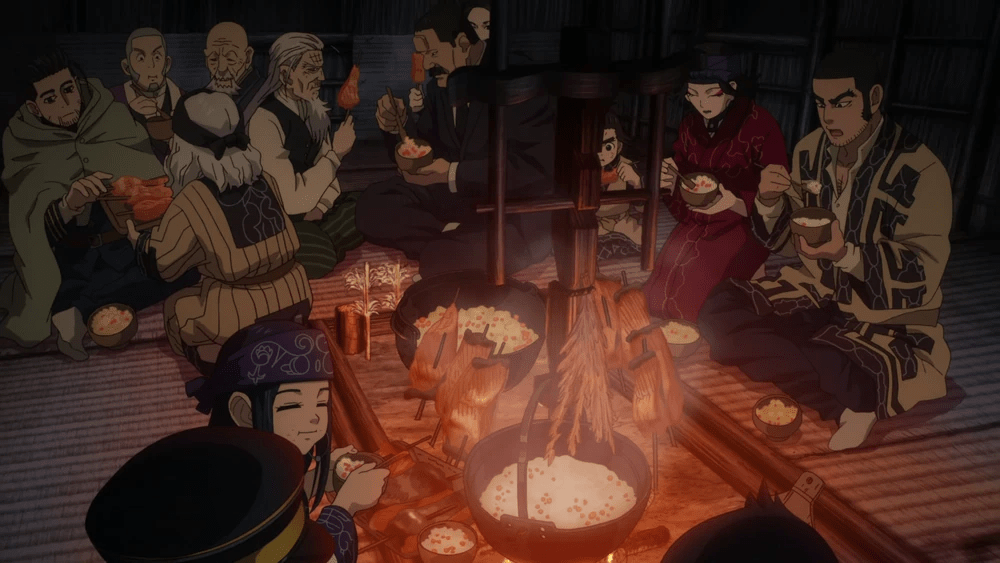
Regarding Ainu customs, the most famous aspect of the series among fans is the cuisine. It’s a common joke to refer to the series as a cooking show, which isn’t exactly inaccurate. Playing dodge bullet with loads of contentious groups is a key point of the series, but when there’s enough Arisaka rifle rounds flying for one scene, the next one transitions to Noda’s briefest possible tutorial on Ainu cooking, like so.

Channel: Crunchyroll Collection

It may seem insignificant plot-wise considering where the story takes our main leads, but funny enough, there’s a healthy hosting of food scenes throughout the series. Noda explained that much of his experience comes from growing up in Hokkaido as an ethnic Japanese. The conceptualization and characterization of the Ainu in particular comes both from his own experiences, which he admitted were limited and from research, which there’s a lot of.

The characters as a whole are all varied more so in personality than in ethnic group, though there’s a couple of the latter such as the Matagi, or traditional winter hunters also in Tohoku, or even people with varied accents and dialects, notably Satsuma dialect.

Although Japan also promotes a singular dialect of Standard Japanese, there’s a variety of accents in the archipelago. Like the U.S. or U.K., there’s often different words for many of the same thing like soda, pop, or coke in many U.S. regions or what lunch in dinner are called in different parts of the U.K.

Personality wise, the characters all differ in what they want the Ainu gold for. Sugimoto made a promise with a wartime and childhood friend that he’d look after his wife who moved to the United States who was at risk of going blind. A mutinous faction of soldiers, led by 1st Lieutenant Tokushiro Tsurumi, a vengeful intelligence officer, wants the gold to fund a separatist state in Hokkaido to spite the Meiji government. Asirpa was influenced by her father and another Ainu character to also use the gold to separate the Ainu from Japan but for different reasons, and some characters never reveal the truth of their intentions with the gold.

For the most part, the characters are in some way based on real life characters from history. Some are obvious like Hijikata Toshizo living for another 40 years in this universe, and others require some more research to determine their inspirations. My favorite has to be the character Yoshitake Shiraishi who was based on the similarly named prisoner and escape artist, Yoshie Shiratori. Like his inspiration, Shiraishi is described as a master escape artist, finding creative and innovative ways to get out of a jam from contorting his joints to making false keys and using lockpicks. You’d probably need a rotating body of prison guards to keep him in place.

Between Shiraishi and Tsurumi, these characters are both unique and not unique. Their quirks make them stand out from regular background characters, but there’s a bunch of characters who match that description anyone. Sugimoto, for example, gained fame during the war as the Immortal Sugimoto and has thus carried this nomme de guerre in the civilian world. Tsurumi and select soldiers within his unit — 27th Infantry Regiment, 7th Infantry Division — are all quirky as well. One might describe it as a circus of sorts. And this is a similar case concerning the prisoners who carry the map on their bodies.

Just about everyone is a specialist in some singular skill or trade. This may make them one-trick ponies by themselves, but there’s a lot of moments where they get to shine independently or in mixed company. Asirpa, for one, may initially seem like a monolithic standard-bearer for the Ainu, especially since she’s introduced with an old and negative stereotype of indigenous people groups from westerns, but both her and the rest of the Ainu presented don’t seem to adhere fully to these misconceptions.

Similar to the Amerindians in the Americas, the Ainu and other people groups in North Asia would’ve spent their lives directly or indirectly interacting with non-indigenous folks, fighting, trading, working, befriending them among other things. They would’ve been exposed to foreign customs and technology sooner or later, hence why during the Manifest Destiny era of the U.S., bands and tribes of American Indians would have fought back with the same rifles that were being used on them. Off the battlefield, cooking and craftsmanship have also caught up with the times, so old depictions of indigenous folk as backwards and removed are just that: they’re old and quite inaccurate.

My introduction to the series came from some old Funimation ads in 2018. At the same time as my anime speedrun during college, bouncing between Crunchyroll, Funimation, and the now defunct VRV, the ads for then-recently adapted Golden Kamuy were showing and initially, I wasn’t that interested. Most people weren’t either. No matter how high the marks, the average viewer would’ve been looking for “time well spent.” This conflicts with the overall negative opinion of CG in anime and with most of the ads depicting Sugimoto’s battle with a CGI bear, prospective audiences were initially turned off.

Then I started watching in 2019 and continued to do so during the pandemic. My opinions on CG have been somewhat influenced by those expressed online, but in all honesty, if it looks good and it means the animators don’t have to crunch to get an episode out, then it can work well for an anime production, and I feel it does here. I honestly didn’t realize the bear was CG until a few frames in. Just goes to show how rare and at times apprehensive studios can be about integrating this technology into a production.

The manga concluded in April 2022, but the anime recently wrapped up it’s fourth season in June after taking a hiatus out of respect for a treasured cast member’s passing in November 2022. A fifth season is currently in development, though as of writing there’s no release date. This is ample time to go through the anime and then continue in the manga or start the manga and compare/contrast the anime. Whatever works best for you.

It’s a month divisible by 2, and the last of the year so as a final sendoff, December’s first YouTube recommendation gets to the heart of a topic I have in store for next week: Cynical Historian.

https://www.youtube.com/channel/UCN5mhhJYPcNUKBMZkR5Nfzg

The Cynical Historian is a YouTube channel that covers the history of the American Southwest primarily, and other topics in history secondarily. Started in March 2013, by former Army cavalry scout and noted historian Joseph Hall-Patton, the Cynical Historian has himself produced lessons and dissertations on his specialty in the American Southwest, namely violence and conflict, sometimes touching on the historicity of the local American Indian groups and figures active during the era. He runs a tight ship on his YouTube channel and has little tolerance for bigotry, hatred, or conspiracy theories of any kind.

One series he does that I recommend above all else is his Based on a True Story series that compares and contrasts historical moments and their silver screen depictions. Since the most recent video he did was in the lead up to the theatrical release of Ridley Scott’s Napoleon film, I suspect that a Based on a True Story video on the little corporal is somewhere in the pipeline, but without clairvoyance, I can’t say more. Be sure to check him out when you find the time.

Before I sign off proper, I had another video lined up emphasizing the surprising significance of food in Golden Kamuy, but couldn’t put it anywhere above, so I’ll link it down here.

Channel: BOOFIRE191

Long-awaited Update

Doing what I should’ve done about a month ago.

Hello, subscribers and tourists catching this on the fly. I’m known as the one who publishes ironically non-controversial takes on entertainment, mostly video games and animanga as of late. As I recall, the only hot takes I have on hand are these three:

1. Kratos did nothing wrong (sorta)

2. Boruto is slightly above average, and;

3. Chainsaw Man was predictable (to me)

And some others that might be expressed in the future. I’m writing to inform you all of something I should have updated everyone on in October 2023. After ten long years, I’d finally self-published my book. It’s called Dawn of Freedom. It’s a fictional crime story set in the early 2010s in New York, which was modern-day when I wrote it years ago. I’d struggled trying to navigate the publishing world and had to rewrite the manuscript multiple times, but I pushed through and saw it come to print. If you’d like to check it out, I have an Amazon link below for you.

PROOF: Dawn of Freedom https://www.amazon.com/dp/B0CJSWNHSG?ref=ppx_pop_mob_ap_share

Available in print and ebook form.

Ten Years of Writing

The origins of my passion

A personal anniversary is on the horizon, so to get ready I thought I’d commemorate the occasion by reminiscing on how I went from “struggling to hold a pencil” bad to “Shakespeare School of Literacy” decent at writing. Bear with me folks, because the path is a long and winding road with unpredictable twists and turns that won’t make sense unless you’re paying attention. So do pay attention; there’s a test at the end.

Before we begin let’s get confusing. Although I acknowledge the general start of this writing journey as October 2013, the closest I ever got to writing would be in July 2012, and my familiarity with programs like Microsoft Word precede that even by a few years as schooling in the 2000s saw the potential of computers in class and wanted to start us early on those Mac desktops.

These things were everywhere when I was 8.

Writing falls under the umbrella of creativity, so something needed to inspire the writing journey, right? Right! And where was the inspiration? Lego bricks. The building blocks made about 40% of my childhood, with the others being video games and the playground. During one summer a friend and I were playing with the Legos I had set up on the coffee table. At the same time, I was a big consumer of stop-motion videos on YouTube and was momentarily part of that brickfilming community myself.

For those unaware brickfilming is a subset of stop-motion that in any capacity makes use of Lego bricks for set pieces, actions, scenes or what not. There have been several over the years, but a pioneer in the concept is Australian filmmaker Lindsay Fleay who between 1985 and 1989 made one of the first brickfilms: The Magic Portal.

Channel: Keshen8

Despite the huge production time, it still only clocked in at around 16 minutes, with subsequent brickfilmers over the years making longer films in even less time assuming no technical difficulties are around to ruin anything. A quick Google search and the Wikipedia page for brickfilming will tell you that Lego had long seen this potential and are said to have started this themselves as early as the 1960s, though feature length films made entirely or partly through stop-motion.

For the connection to my writing, it was my intense viewership of brickfilmers on YouTube, some of which included custom-made Brick Arms (some of which I had myself), or plastic molded to the shape of any given gun or sword that can be made that gave me an idea to try animation in June 2012. I saw a moderate amount of success for a beginning YouTuber at the time, though other responsibilities kept me away from my makeshift film sets. After Christmas Eve 2012, I tried to keep it going but with New Years’ Day 2013 walking away and high school proving more important, there was just no way.

Still, the interest in animation, tedious and meticulous as it was, was there. Most importantly, the storytelling element was what I remembered the most. I had made a minifigure, or Lego figure, that I’d gotten somewhat (read: quite) attached to. I made it with one of the blue leg pieces, a trench torso piece, a black scruffy hair piece, and one of the heads with the angry-looking face, but wearing orange-tinted shades. If I were to draw him again today, he’d be drawn with blue jeans, a light blue dress shirt under a blue overcoat, messy black hair and the same light orange-tinted shades. If that description makes you think of an underlying symbolism of any kind, try not to overthink it. Keep in mind that, this character was designed when I was around 13 or 14 between middle school and high school, so there might not have even been a real meaning other than, “it looked cool.”

Not this intense or exaggerated, but around a halfway point of sorts. When it came to developing him further, writing was amateurish and my taste for the craft was underdeveloped at the time. Being inexperienced here, I dove headfirst by putting it all in a notebook that I wasn’t using for anything important. I’ve gone through many of those, occasionally scribbling in the blank pages and whatnot. The earliest form of this story I have in print isn’t exactly the earliest form of the story as a concept.

As time went on, and I started to write more for my English and history classes (projects, reports, and essays, etc.), I’d begun to learn more about themes and motifs and other terms to help craft better versions of the story about the man in the orange-tinted shades. Between 2014 and around 2019, I’d written and rewritten this manuscript, with each successive manuscript getting longer and more complex than the last, developing a more mature tone over time.

Through all of that, I’m glad to say that the latest version of the story is arguably the best version I have of it. Subsequent manuscripts of mine would also go through rewrites and edits of their own, although not as many as the first one, not for so long, and partly due to technical issues with aging computers and/or computer components.

Fortunately, Microsoft’s good idea fairy had a “lightning in a bottle” idea, and made Microsoft Office available on mobile. So if you trust OneDrive enough to try your clothes on only once, you can craft a chapter or two on your laptop/desktop, and when duties pull you elsewhere, you can add more to the manuscript on a mobile device that allows for it. Personally, I favor phones over tablets, but my experiences writing more than YouTube comments and text messages with my giant hands make it somewhat unbearable. I don’t really like tablets all that much, but if I had one on hand and some time to kill in between other responsibilities, I could edit and add some more to the manuscript and then when it syncs up with what’s on the real computer, it’ll add that and I can continue with no serious issues.

Creativity was often the barrier, which just seems like the typical creative person thing to say for why I do or don’t do X, but it’s true. Those of you who can’t see yourself as an artist or painter or musician, etc. creativity comes whenever. It’s like dealing with a spontaneous cat; you never know when it will greet you, but you’re delighted when it does and you want your time with it to be meaningful before your train of thought derails.

Art doesn’t march to a schedule it comes whenever and goes whenever. Sometimes the sparks start a fire, other times it doesn’t and like a pyromaniac, you want to make use of that fire before it gets put out or burns out. Inspiration also plays a major part in creativity. Find any modern artist and they’ll list off influences, many of those influences, if they’re still around, will list influences of their own and then some.

For me, the tenth grade was a turning point in my writing journey. Part of the inspiration came from some of the books we read and class and had at the time, it was clear that I had a certain preference. Of all the books to introduce me to the coming-of-age genre, I would’ve preferred anything else besides J.D. Salinger’s Catcher in the Rye. Short rant: Holden Caulfield is a [donkey noises]. Fortunately for me, I got a better showing of the genre in Stephen King’s novella Stand By Me. Matter of fact, this and select others were how King became one of my favorite authors.

At the same time, during a reading of F. Scott Fitzgerald’s The Great Gatsby, my tenth grade English teacher assigned us to write a short snippet in either the point of view of an existing character or we could make one up. I chose the latter, creating and writing from the POV of a performer in Jay Gatsby’s mansion. This was the paper that netted me an A+ in that class and admittedly I didn’t move on from that for a while. I’m tempted to say I never did as of writing this. Although I was never a bad student, my teachers always wanted me to shoot for the stars, but I kept dragging my heels while the more analytic brainiacs in math and science thrived. But this was where I was encouraged to let my creative side go nuts, so I did. As another humblebrag, I did exceptionally well in my art class, hardly ever dipping below a solid A+. The conclusion to draw from that is structured tutorials are a limiter for me, but with a green light and the simple words “The sky’s the limit,” nothing is gonna stop me from channeling my inner Claude Monet.

Honestly, I’m more of a Van Gogh kind of guy.

From around 2015 to the modern day, I just kept on writing and rewriting those manuscripts. For the first one about the orange shades guy, with help from family, I had it copyrighted in 2018. All that was left was to edit and find a publisher. The publisher proved to be quite tricky. In general, you’re not supposed to pay the publisher; that’s a scam. The author gets 7/10 of the royalties and the publisher gets the rest. I do have dreams one day that the manuscripts graduate from file to physical book on a shelf, even now as I draft a potential fourth draft while editing the third one.

This method of mine is probably not unheard of. Stephen King is so prolific, that if he spits it’s a bestseller slated to receive its film adaptation in the next three years or so. And the olden days where books could serve as a writer’s sole source of income probably needed to be written with the speed of Barry Allen. Fame and fortune not guaranteed while the author is still alive, but at least Poe and Lovecraft have their appropriate credits.

Towards the end of college, and even now, I’d been looking at a variety of outlets that have a strong writing market. For the anniversary of this blog, I plan on giving a sneak peek of a blog I had on Blogger from February to December of 2021 with a brief hiatus in between because I was in the Army. As a mild spoiler, it… went off the rails and no one can be bothered to clear the debris.