
An overlooked spin-off may finally get some attention
In my notes, the topic of this spin-off was in the pipeline for at least a few months now, but thanks to recent rumors, it’s possible that the fabled adaptation may be entering its production stage. And as a follower of the series for a time, this has been a long time coming.

The original My Hero Academia launched in 2014 by mangaka Kohei Horikoshi, and was given an adaptation about two years later which, as of writing this, has wrapped up its sixth season a few months ago. Additionally, it’s had a series of light novels, video games, associated apparel and other accessories, and a pair of spin-offs in the form of the aforementioned Vigilantes and a chibi four-panel comic, both of which are much shorter than the original MHA manga which, as of writing this, is nearing 400 chapters and over 30 volumes. All things considered, since Horikoshi was a fan of Naruto growing up, I think it’s safe to say that if part of the dream was to have the same impact that Naruto had in the early 2000s then on that front, he’s succeeded.
The Vigilantes manga meanwhile sat in the back, being released in April 2016 and running up until May 2022, concluding its story in 15 volumes, so it can be cleared at a faster rate than it would take to catch up to the original manga from the beginning. The protagonists are Koichi Haimawari, a college student and part-time vigilante who mostly patrols a single area of Tokyo under the alter ego of the Crawler, jokingly mispronounced “Cruller”; Kazuho Haneyama, the trademark, pink-haired tsundere high school student who moonlights as an impromptu pop-star under the guise of Pop-Step; and Knuckleduster, a crusty Batman-like archetype, who embraces his quirklessness and dishes out justice the old-fashioned way.
At the outset, you can see the differences between the original’s Izuku Midoriya and this one’s Koichi Haimawari. Izuku, or Deku, began the story quirkless and with zero prospects to become a world-class professional hero until his idol, the world’s Number 1 superhero All Might, observed a hallmark of bravery and allowed him to prepare enough to inherit his quirk One For All, which has been handed down through generations of world-class heroes. Koichi, on the other hand, has a quirk called Slide n’ Glide which allows him to glide around and connect to flat surfaces with three points of contact. Kazuho’s quirk is leap which allows her to jump at great distances; this allows her to live out the idol persona she puts on.
Not just limited to these unofficial heroes, pros from the original series also make an appearance to include, the big man himself All Might, Shota Aizawa, Midnight, Present Mic, Detective Tsukauchi and several more, most of these folks being pros before teaching at UA Hero Academy. Most notably, the tone of Vigilantes is darker and a bit more mature than that of the original as it focuses on a college student this time around than a high school class. As I wrote above, All Might is there, but his presence is more of a backdrop than as a prominence. Koichi’s part-time hobby as a vigilante puts him in a tough spot legally. The original manga introduces the pro heroes who are licensed to step in alongside the proper authorities like the police and courts, and the villains are their polar opposite, but the Vigilantes manga clarifies what this means.
When quirks were first discovered in the MHA world, the laws were nonexistent. Vigilantes were the original unlicensed heroes who stepped up to answer to the rampant chaos borne from the emerging quirk era. The law eventually came up, not to explain the makings of a hero but to classify villains. The first place to have laws written on heroism or villainy was the U.S. state of Rhode Island. Of 189 vigilantes whose candidacy for heroism was up for review, only seven were allowed to continue on as the U.S.’s first pro heroes. The issue for the other 182 candidates was that they didn’t have the qualities that made the trademark hero and either continued on as vigilantes or villains. Ironically, the law’s adherence to licensing puts vigilantes in the same spot as villains despite vigilantes being the origins of the laws and most vigilantes running counter to full-blown villainy. The causal loop is definitely not lost on the manga though.
Burgeoning heroes who find themselves in vigilante limbo though aren’t hopeless thankfully; there’s a program that allows pro heroes to recruit vigilantes as sidekicks and incidentally, some big name pros in the original began as sidekicks before finding their own paths in the hero world. Vigilantes also has a sort of slice of life element to it as well. If Koichi was up for hero candidacy, there’s no shortage of witnesses to his do-gooding in the immediate neighborhood, as well as some pro heroes who can give him a leg up if he needs it. There’s glimpses of him aiding people with minor inconveniences just as he assists his fellow vigilantes and pros in stopping villains in any capacity.
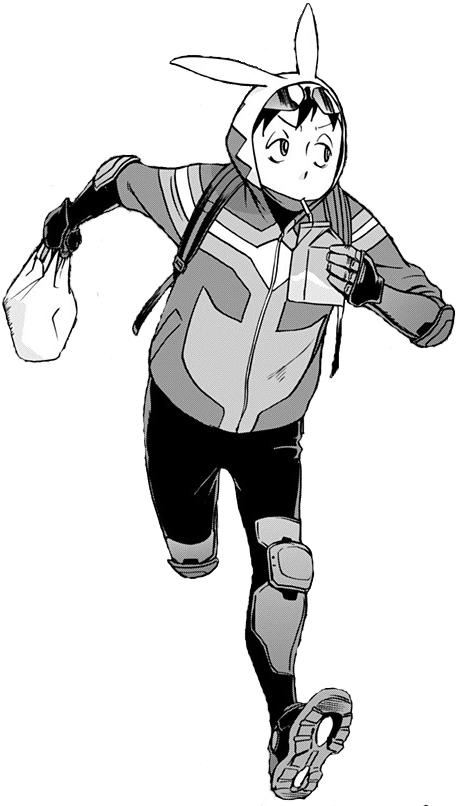
There are also several plot points in the original that have origins in the spin-off series. Another notable difference between Deku and the Crawler were how they both deal with their lots in life: Deku’s aspirations would’ve been impossible even if he had a relatively worthless quirk; meanwhile Crawler’s initial poor handling of his own quirk didn’t really stop him from attempting to help, even if it was with a stray dog (that’s sort of a joke, there is a dog in trouble later in the manga; not so much of a spoiler since it gets resolved in about five panels). Deku obviously starts off in high school with his head in the clouds; Koichi tends to keep it realistic and is more in it for the good of the locals, so if he went the pro hero route, the money wouldn’t be his main motivation, though the same would apply to Deku.
The Vigilantes manga’s place in canon can be interpreted as a sort of foil for the checkerboard presentation of the main plot. Vigilantes as unlicensed, illegal heroes are shown to be a necessary evil in the law’s eyes, and a digestible aid from a practical standpoint. With pro heroes, there’s laws that rein a hero in from overstepping the established boundaries, but vigilantes being unregulated could go a step further to prevent an escalation before it becomes a problem for the pros, which turns out to be Knuckleduster’s own philosophy in the manga.
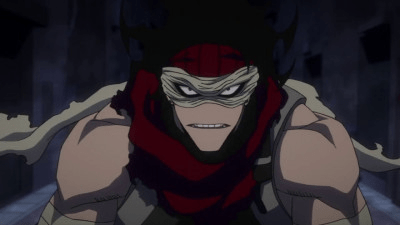
Personally, I welcome Vigilantes as a bit more grounded in its approach to what the original is doing. It’s still a Shonen series at heart, but in practice it takes things a bit further with an older, more mature protagonist who is still optimistic about his future even though he’s buried pretty deep in the gray muck of hero laws. It also has a bit of an edgier portrayal that would really challenge the cast of the original MHA, but not grotesquely or irreverently as Amazon’s The Boys. In the MHA world, Homelander and A-Train would be high on hero killer Stain’s crap list.
If the rumors are to be true, then a notable rarity in anime production would be the adaptation of a complete manga. The only other case that comes to mind would be that of JoJo’s Bizarre Adventure reaching a successful adaptation in 2012, one year after the eighth arc of the manga was being written. That said, all we have are the rumors, so it might not be true until an animator or someone else in the industry has more concrete evidence of an adaptation in the pipeline.
For now, the chapters are available on Viz Media and Shueisha, and its 126 chapters are spread across 15 volumes. To my knowledge there’s no collection or box set to speak of for the lesser known Vigilantes arc, but don’t let that stop you from making your own. For my take, it’s a B+. Avoiding spoilers, there are minor instances that could’ve been reworked or omitted, but the rest of the time it’s a solid manga.
To go along with this overlong recommendation wearing the mask of a blog post is the last YouTube recommendation for the month of June. Adding onto the cadre of Trash Taste affiliates and allies is the YouTube channel Abroad in Japan.
https://www.youtube.com/@AbroadinJapan/about
The channel and other associated Abroad channels are run by British grammar educator and YouTuber Chris Broad who first moved to Japan in 2010. Ever since, he’s made video after video on daily life in Japan going by prefecture, sights to be seen, activities to perform, and generally places to visit. While not a full-blown weeb, his guest appearances on Trash Taste have introduced him to several anime series and he has revealed to the TT boys that his favorites included most of Studio Ghibli’s lineup and anything directed by Hayao Miyazaki or Satoshi Kon or even Kenichiro Watanabe to name a few directors. Normally, when it comes to Japan-based YouTubers, one of the first people to go to is someone who’s native, but spending over a decade and change in Japan should put him in the same room as other Japan-based YouTubers, especially since he’s been up and down the country.
If you’re still looking for a slice of Japan, but you’ve had your fill of anime, Chris Broad’s always got a video or series up, to include the likes of Dr. Jelly as part of a collaboration with The Anime Man, and Wacky Weekends and Journey Across Japan done mostly in collaboration with CDawgVA.
 Opinions on Entertainment