Did I Really Get Isekai’d with my Mother!?

How did it come to this?!?!

I’ve made it a point several times that I don’t default to isekai, but I don’t remember clarifying what that means. I make a beeline for shows I find interesting, that some of them are isekai is pure coincidence. I’m not an isekai junkie like Gigguk or an isekai avoider like The Anime Man. I’m in the middle of it, all things considered. Of course, I’ve made it clear that I don’t always find contemporary anime to watch, but the subject of this week’s blog was all the rage when it was airing.

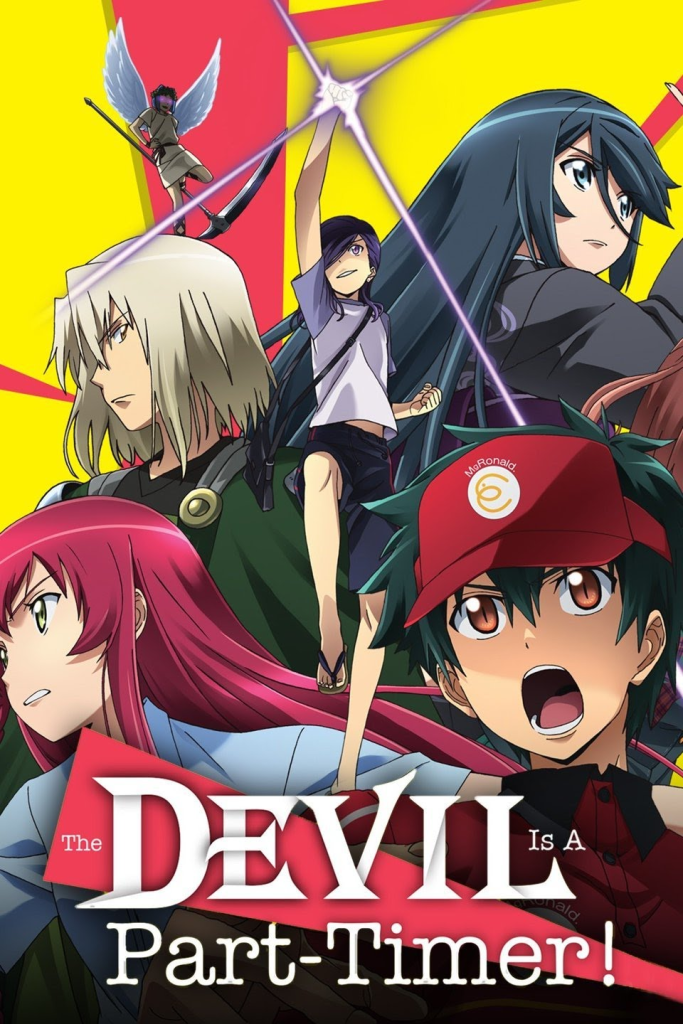
Alternatively titled Okaasan Online, Do You Love Your Mom and Her Two-Hit Multi-Target attacks began life as yet another light novel but from the late 2010s rather than the early 2010s, complete with a manga adaptation as a companion piece running concurrently with the light novel. Shame it was subject to a simple 13-episode series, though this might be par for the course for series that only run for the same length of time as a single US presidential term. The unofficial name for this series is called MILF-sekai and the reasons below explain it better than the cover for the light novel:

The MMORPG parody is strong with this one.

The gist of the story is an ungrateful, angsty teenage boy named Masato Osuki tries to push his clingy mother, Mamako, away. Both of them are suckered into an isekai video game and go on an adventure together, interacting with other characters who have fallen for the same trap. The best joke this series tells is that it plays coy with the incestuous, MILF-y tropes that accompany the genres without exploring them on purpose. The most the anime will do is strip Mamako naked and have her son comedically fall on top of her in the second episode. Damn, I’ve read NTR doujins and felt less cucked there than in this series. That’s pretty much the height of the MILF antics, but the OVA has more to show in that regard.

As far as actual plot goes, Masato’s relatability comes in the form of wishing he were someone else with a doting mother whom he wishes was a different person, at the outset. Then he meets the future members of his party and their mothers and annoying as it may be to have a mom, let alone parents, who embarass you at every turn, it’s better than one with godly expectations or one who can’t help but let their vices enslave them. In the former example, one party member, Medhi, has a mother who’ll chastise her in private for not being perfect like a Cell after losing a competition, leading to feelings of doubt and self-loathing in the poor girl. For the latter example, party member Wise and her own mother, had a frought relationship in real life and used the game as a means to better bond, but when Wise’s mother learned that she could make a harem of men at her beck and call, she made a beeline for that and never went back. At least it beats what this girl was going through:

I’m almost tempted to catalogue some of the worst mother’s in media, but I don’t wanna abandon my faith in humanity just yet.

The show’s ecchi-leaning comedy make it the butt of a few jokes, but it’s not like it doesn’t know what its talking about. It’s different from a thinking man’s anime, but has a lot of the same story beats as one. Between the JRPG satire and the ecchi satire, it tries its best to split them evenly, though lacks in some other areas. I want to blame this on the anime for cramming so much into so little time, but on the whole that does nothing to specify which anime I’m talking about, for this series specifically, that’s an inaccurate and misleading conclusion to draw seeing as the light novel and manga were still running when the anime was airing in 2019, putting it in the category of yet another anime promoting the source material. And as a manga reader, I’d rather explore manga naturally than be given homework. At least not every series does that to me:

I’ll put this one in the timeline somewhere.

So how does Okaasan Online work as a series? Fine… it knocks out the important points like Kazuma at the batting cages, and generally speeds through them in about one or two episodes. But it also doesn’t really explore anything in much detail beyond “here’s a trope, give me my laughs.” Funny enough, the anime doesn’t do this as perfectly as presented. Two characters’ origins with their own mothers are explored, but one such character, Porta, is a one-off. No such relationship status between her and her own mother are revealed in the source material or the anime; she’s simply the little mage that behaves the most like a little sister to Masato and young daughter to Mamako.

Now that I’ve written that, Porta behaves the most like a little puppy or a kitten. The party leader status is shared between mother and son and awkward as it seems to point this out, they’re like the parents to the other three girls even though Masato and Mamako are mother and son. F[Nyan]k, even I couldn’t avoid the incest trope. Again, not explicit or even acted upon in any media, but it’s there.

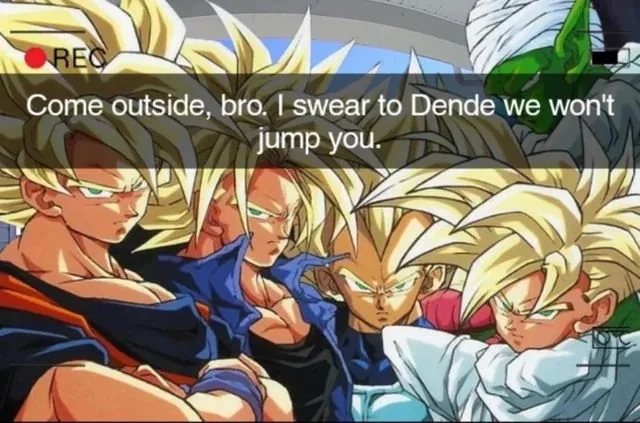
So, Tiberius, do you recommend it? Eh, I’m indifferent. I watched it all the way through and 20-year-old me felt naughty things thanks in no small part to the visuals. Fast-forward five-and-a-half years later and looking back, it may have served as a gateway to lewder and racier things without meaning to. Basically, what I’m saying is, before, during, and after its run, the series has been outdone. I won’t persuade you to watch it or dissuade you from doing so, just know that while you could sit down and spare some time to give this one a watch, it co-exists with better shows, so don’t expect me to show up at your door at 3AM like this:
Add it to your isekai library if you feel like it.

Revenge of the Shield Bro or Oops, All Lolis

What Went Right and What Went Wrong

I’ve said before that I don’t make a beeline for Isekai. I don’t love or hate it, I’m just indifferent and for a while I was curious why so damn many anime fell under the Isekai genre as of late, but looking at the goings on in Japan, it wasn’t hard to connect the dots. The same could be applied to much of the rest of East Asia, all things considered. There are still a few Isekai that I enjoy and stop me if these sound familiar: KonoSuba, Overlord, I have plans to watch The Saga of Tanya the Evil, Gate, and probably Re:Zero if more people shut up about it. Technically, I got the gist of what to expect from all of these thanks to the Isekai Quartet parodying all of them.

But it’s no substitute for all of them. Watch the originals or read their source material if you haven’t already.

If we use technicalities, Btooom! counts as the fifth Isekai I’ve ever seen. The Rising of the Shield Hero is one of the earliest I’ve seen at the height of its popularity and according to my watch history archived on Crunchyroll, it was about a month before the pandemic was declared as such. Thank goodness I had something to hold me over until the vaccines were made available. It had a decent starting premise for an adaptation of a light novel from 2013, and wound up living up to its name.

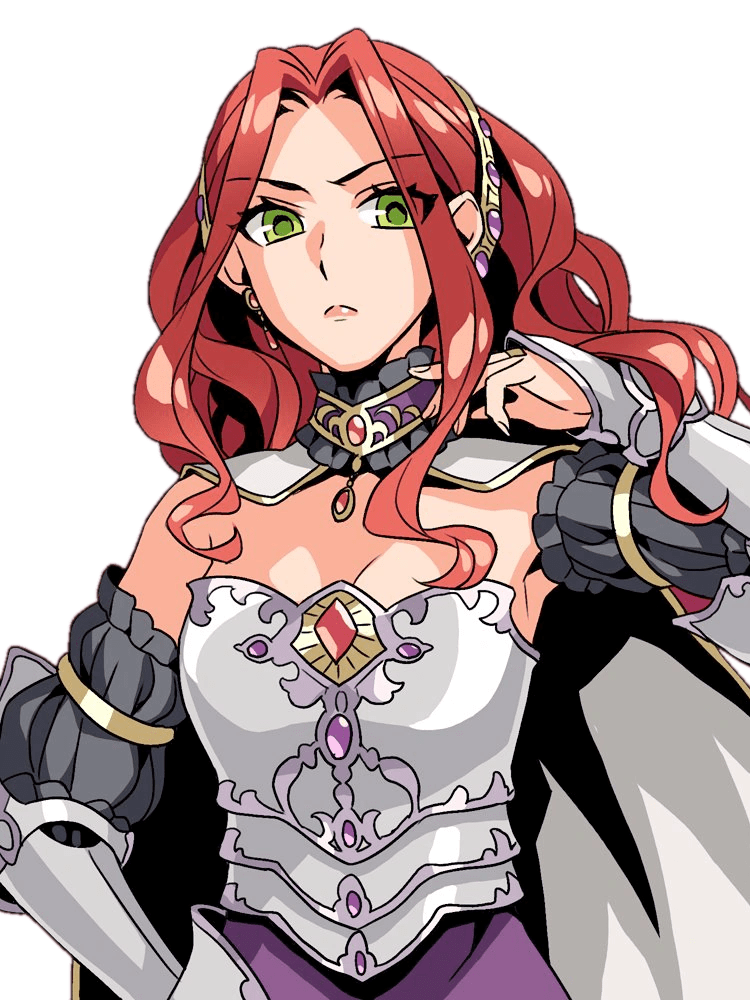
It begins with a college student, Naofumi Iwatani, visiting his local library and thumbing through a magical book that puts him in another world with three other people from alternate versions of Japan. Now that I’ve written that, it took me ’til now to realize that Isekai can be looked at from a multiverse lens than from a reincarnation lens. Anyway, our four noble heroes are awarded four weapons: spear, shield, sword, and bow with shield being the most maligned of the four. For further malice, Naofumi is cursed to team up with what becomes a major antagonist in the series: Princess Malty S Melromarc.

Worse Azula here starts off okay, but after a stay in a motel, she wrongly accused Naofumi of sexual harassment and assault, which burned a hole through the internet at the time due to the ongoing MeToo movement as it was getting hijacked by the worst people we’re forced to share the world with. In a prophetic scene that brings me to the Depp-Heard trial, Naofumi pleaded his innocence, but the kingdom he pledged to serve is a matriarchal society, and using that card to her advantage, she had him stripped of his prestige and ousted, momentarily marked as the Devil of the Shield.

A different series would’ve turned him into Kratos without the family-killing dynamic.

With only a few people to rely on, Naofumi continues on honing his shield skills, and controversially buys a slave. In this world, there’s two types of people: human beings who have the rights and demihumans, blanketly any humanoid with slight anatomical differences, most commonly of the kemonomimi variety, which is applicable to the Thirens of Zenless Zone Zero. This particular slave is a raccoon girl called Raphtalia and I firmly recall the internet falling in love with her for being a reliable companion and most importantly not f[Ore wa!]ng Malty. Even I loved her at one point.

Over the course of the anime, Naofumi occasionally runs into the rest of the dumbasses he was gonna serve the kingdom with, taking snide remarks on the side and dishing them out whilst also proving himself to be more capable in more than just shield tactics. Slave or no, Naofumi taught Raph how to fight as a swordswoman, and act as the offense to his defense. Later, he purchases an egg from which we get a character known as a Filolial named Filo, who can transform between bird and human form; her human form being a loli, which seem to be attracted to him in the same way a planet is attracted to a star. Finally, in the first season, there’s the second princess, the much nicer Melty Melromarc, another loli.

Credit: u/FurySnow47, r/ShieldHero

Guess all the MILFs were taken? Not all of them, though, there is still Queen Melromarc who was conveniently absent until the second half of the first season.

Fortunately, she’s absolutely nothing like her daughter and (spoilers) retries her and her husband, the king, for their harsh treatment and high crimes and misdemeanors on the throne, about to be executed until Naofumi does what most responsible heroes would do and stays their execution in favor of a more humiliating punishment, renaming Malty to “Bitch,” and the king to “Trash.” The first season doesn’t end there, but for loads of people watching, myself included, this was a definite highlight for characters who treated the protagonist like dirt all this time.

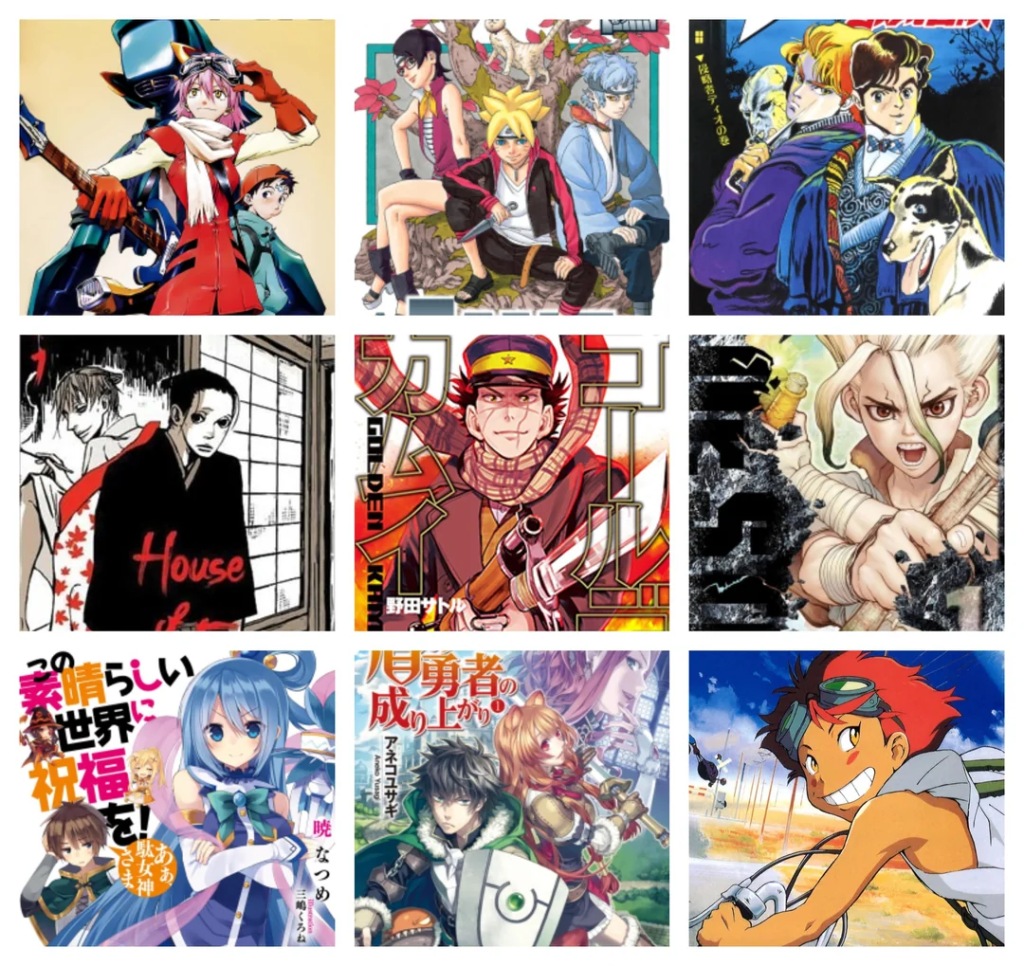
Due to the recency bias, an old 3×3 of mine has it included.

This was in August of 2021, one of my earliest Reddit posts. I do still like some of these series, and in the case of Shield Hero, its first season started strong and went demonstrably well. Where does it falter? By most accounts, season 2 is where it starts to fall.

I didn’t watch it due to the reputation it was carrying as it went on and I was too busy looking for employment as well as working with an extremely slow Army recruiter (2022 wasn’t my year (-_-)), but as I understand it, season 1 started strong, season 2 fumbled it but picked it up, and season 3 did better than season 2’s beginning. I don’t think I’ve said it before but I don’t really plan any of my anime watches out. I definitely watch anime, but I don’t set anything in stone; I just follow my whims. I put more planning in the blog topics than I do in my anime “watchlist,” so I won’t say whether I’ll see for myself if Shield Hero S2 is as bad as it says, but more like if I so choose, I’ll have this video linked below to keep in mind:

Channel: LunarEquinox

But my expectations are already nonexistent so aside from all of you dear readers, who else do I need to tell this to?

I enjoyed the first season for what it was at the time. Looking back, if I’m being honest, Naofumi doesn’t have the makings of our modern definition of a hero, he’s written more in line with the old Greco-Roman classical heroes, like Hercules/Heracles or Theseus or basically Kratos from God of War 2005. He’s not the most selfish or intimidating or morally conflicted character, but the cards he’s been dealt and the people he serves makes him question whether he should quit and what good he’d get out of it aside from a good night’s rest for once. Instead, rather than wait on quests to pop out of nowhere, as a white mage of sorts, he doesn’t really need combat to showcase his heroics; when the other heroes leave to claim their rewards, Naofumi stays behind to deliver medicine and sanctuary to the shaken populace, fitting and expected of a shield. See what I did there?

This is probably the first time I’ve felt conflicted recommending a series. Guess we’re transitioning into the S[oink]t That Exists that Makes me Pissed arc, and while it’d be more fitting for a blog meant to present unconventional opinions, I rarely do such a thing. For this series, I don’t recommend you watch as I recommend you experience the series. Season 1 and season 3 are the cleanest they’ll get, but season 2 might be left to the Pick Your Poison method. Can you stomach the reportedly poorly presented first half or would you rather spare your eyes and delve into the light novels? Maybe that’s your approach if you choose to give it a watch. It’s far from the first light novel adaptation I’ve written about, but it’s one with a complicated legacy after 12 or 13 years on the shelves. I don’t recommend going in with a judgmental or comparative mind as thinking about a different series in the viewing of this one may ruin the experience for you. Rather, what you should do is go in as blind as humanly possible and judge it on its own merits. It’s got light novels, manga, and the anime’s 4th season is supposed to release this year. Hopefully, the 4th one doesn’t ruin anything any further… or worse!

Undead Unluck Anime Adaptation

From page to cel

Ah, f[swords clashing]k it. I’ve been putting it off long enough and my desire for perfection is clashing with my schedule so, I’m bringing the long-awaited opinion on the anime adaptation of Undead Unluck. Still got a few episodes left in this season, but I’ve reviewed anime halfway through before so there’s no reason to hold this one to a higher standard.

Immortality Misfortune is the story of a man who’s chronologically so old, his birthday is on a different calendar system going on a journey with Japan’s millionth unlucky female protagonist on a quest for the best death the world can offer. It was picked up by Viz Media in January 2020 for weekly distribution in the west and I’ve been keeping up with it leading up to my first try at Army basic training. I’m still following along to the best of my ability, and yes I still recommend the manga.

For the anime, it was picked up by David Production, the same craftspeople responsible for bringing JoJo’s Bizarre Adventure to stunning life after 25 years in limbo and Fire Force, only for that to be delayed by a few weeks due to the tragedy at KyoAni in July 2019. It’s not often that a manga I follow closely gets this treatment, but the industry seems to be enjoying a boost as of late with more and more manga I find getting adaptations later. Speaking of which, The Elusive Samurai’s next episode should be airing right now so a review of that will arrive in time. I will try my best not to delay it as long as I’ve done with this one.

Considering the year of release of the manga and that of the anime, Deathless 13 went through a few changes since it takes place in the modern era. COVID had a slight influence on the first episode as the female MC, Fuuko Izumo, was all by herself before attempting to try her own hand at death, whereas in the manga, there was a crowd gathered attempting to stop her. Then deuteragonist, Andy, shows up attempting to do the same but in style.

The series likes to have a ton of fun with body horror considering the premise: a select group of people possess supernatural abilities that negate the laws of physics. What anyone else can do normally, these “Negators” can do the opposite, hence the abilities like Untouch, Undead, Unstoppable, Unchange, Unmove, etc. No, it doesn’t match with how English works, but longtime weebs know the difficulties of accurate localizations.

A small group of Negators, known as The Union, have made it their mission to uncover the mysteries of the world they live in by challenging God himself. Many obstacles stand in their way, those being the UMAs or Unidentified Mysterious Anomalies/Animals. These beings have an adverse affect of some kind on the rest of the planet and are due in large part to The Union’s performance in the field. If successful, the repercussions are negated and things return to their normal state; but if they fail, the consequences become part of nature, in some cases permanently. Sacrifices tend to be made in order for The Union to reach their goal.

Having followed the series for the better part of 3.5 years, I recall some panels that would look astounding if animated because the action within is limited by the medium it originated from.

Of course, not every manga has that luxury, as Berserk fans know very well. When I learned that DP would be captaining the ship, I recalled their expertise in animation with JoJo, Fire Force and several other series and rested easy that night confident that their ethos of quality animation would not have to suffer. The studio promised us the Sistine Chapel once again and their hard work has paid off. Better yet, no one was breathing down their necks to meet an arbitrary standard so prepare yourselves, people. For the chefs have cooked another perfect dish.

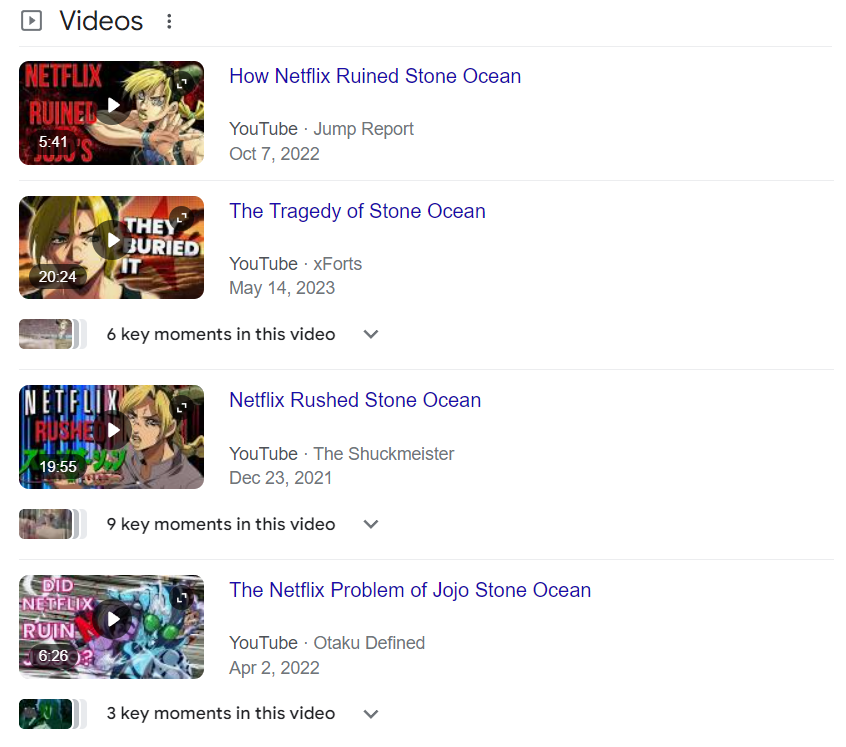
I personally didn’t have much issue with the Stone Ocean adaptation, but I understand the argument that there was interference.

DP’s attention to details is one for the textbooks. Watching Andy regenerate severed limbs and such is phenomenal, and whatever confusion there was about how this world works is enhanced with the motion of all the pictures. No more flipping through pages for visual learners.

Having said that though, much of the series makes it a candidate for the mystery genre. Discoveries are being made all the time, characters keep their pasts well-hidden, motives change regularly, and the changes that influence the world can only be explained by a handful of people. I’d say it meets those prerequisites well with what I remember about it.

I can’t recommend enough that you check out the anime yourself. The manga got back on its feet a while back after a subpar arc, but with the anime adaptation in tow, it’s more than worth the watch. It’s available in dub and sub on Hulu and you already know what I like to frequent.

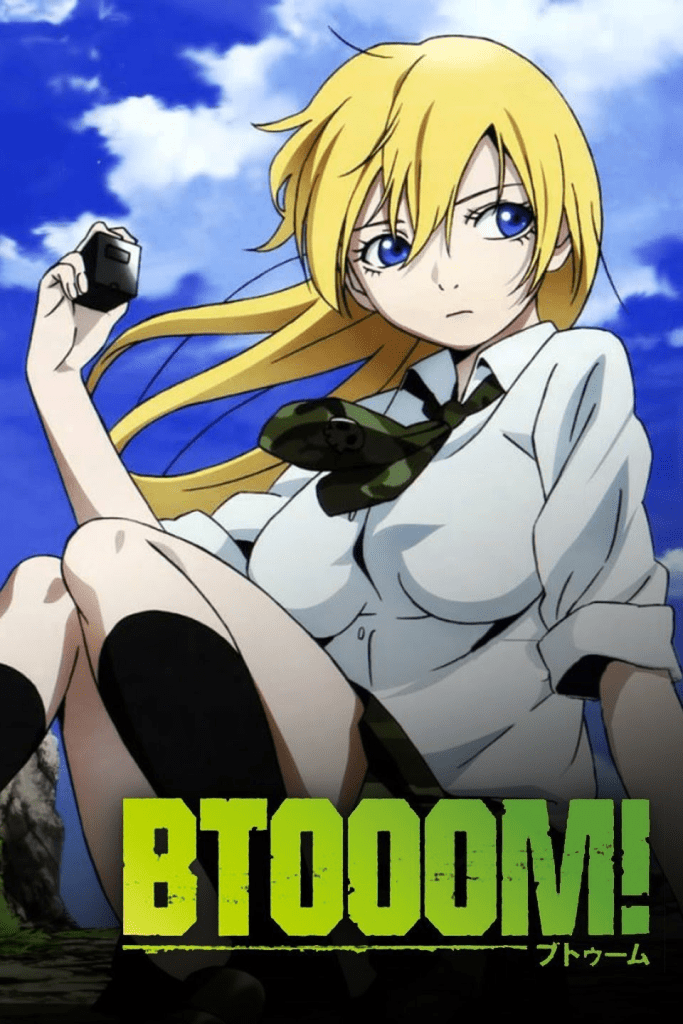
Stumbling Blind into Btoom!

I didn’t know what to expect from this one

My discovery of this series was quite an interesting one. I couldn’t remember where I first heard of it, but after watching more of it I realized I’d seen bits and pieces of it in WatchMojo.com’s anime top 10 lists. So not as blind as advertised.

Still, all I remembered from it was the name of the series and on a whim, I found that someone was pirating it for their viewing pleasure on YouTube. In the time between when I saw the first two episodes and completed Army basic training, I found that the channel had been taken down, though as of writing, there’s still a video of all 12 episodes in a 4+ hour marathon, so if you wanna game the system without risking malware Trojan horsing into your devices, have a looksee. Otherwise, go in with a shield and beware the spam on your hard drive.

I talked briefly about Btooom! at the end of December when I wanted to speedrun the topics I had on my mind at the time before I stepped off to new adventures, but I didn’t have enough time to properly explore my thoughts on the series, especially since it only has 12 episodes to boast compared to similar series like SAO that have franchises and can simultaneously earn the praise of some and the ire of others. So let’s give Btooom! some love it should have by now.

As of writing I’m only six episodes deep into Btooom! which I’d say is good enough to fully write about what I’ve witnessed thus far. From what I remember of the first two episodes I watched in December, as a Seinen series, it’s not the type of series to highlight the good in everyone. It knows its characters are bastards and scoundrels in some shape or form. The protagonists are definitely antiheroes. We’ve got three of them: Sakamoto, Himiko, and Taira. Each of them have at least something to balance out their negative qualities.

Sakamoto was a 20-something NEET with no passion or future in anything more productive than just lazing in front of the screen and keeping his high scores. This part is understandable since not everyone is required to behave like the heroes and crusaders they might be raised to believe, but what makes Sakamoto quite s[fart noises]t is that he’s that kind of toxic gamer. Abusive to his mother, refuses to find a stable job or training and move out of the house, no affection even for his stepdad (honestly this fits a lot of toxic gamer tropes that even I myself fell into as a teen at one point), and really hot-tempered. All those jokesters and mouth-breathers who argued that video games caused violence probably would’ve been onto something if Btooom! was used as an example.

Himiko’s the second character we see in the anime and her flaw was being a bit two-faced. Prior to being sent to the island to play the game IRL, she and some school friends were going to be the groupies for some musicians, but when the band mass molested them, she was the only one to book it and leave her friends to their fate. Now they don’t want anything to do with her seeing as she abandoned them when they needed help, but it wouldn’t be long before, in their eyes, she’d get a taste of her own medicine. I talked before about the molestation scene and I don’t want to elaborate further on that aspect as it was harrowing to watch only once, but to catch you up to speed: the one decent person who helped her got rejected, physically assaults and rapes her, she pulls out a bomb and explodes him to the seventh circle of hell.

You might begin to cheer her on for defending herself, but down the road she appears to be killing men left and right as a trauma response. And I think that’s one of Btooom!’s highlights. Trauma in western media tends to be hit or miss with more strike outs than home runs to speak of, which would be why so few of them handle it very well and with the maturity the subject matter demands.

I heard this show handles trauma pretty well. I haven’t seen it myself yet. I might…

For Himiko as a rape survivor, the reactions sound valid but get less and less rational as the series goes on, which may be the point. She narrowly dodges an assault, is the victim of one, and is motivated to never, ever be the victim of such an act again, even if it means a series of pre-emptive strikes that could easily be mistaken for Unabomber attacks, especially considering this series.

Finally, there was Taira, a middle-aged convenience store manager who meant well to his friends and family, but according to himself, was a great bastard to his subordinates. Allegedly, he’s the type of guy you’d talk about in order to not be like him. The example of what toxicity at work looks like, so to speak.

Now that I think about it, the series felt like the Saw franchise but anime and with bombs instead of overelaborate traps. Also, few people are genuine do-gooders in the series. The characters are either believable or wickedly f[power tool noises]d in the head. Each of these characters are ripped from their familiar surroundings and dropped into a real-life version of the Btooom! video game, only it’s more like The Most Dangerous Game with more evidence left behind for a forensics team to analyze.

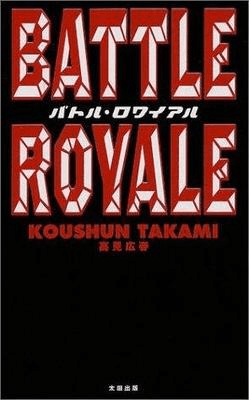
The game Btooom! is pretty much a battle royale, deathmatch style video game similar to Call of Duty’s or Halo’s multiplayers, though more Halo style since everyone is kitted up in sci-fi looking armor and in place of guns and small arms, it’s all bombs of different types, from incapacitation to full-on lethality, and seeing the types of characters running around in only six episodes thus far, a lawless, free-for-all for keeps is exactly what would attract more than a handful of psychopaths who just felt like killing. Some of the nobodies who get gunned down in Black Lagoon would feel right at home in a series like this.

Sounds like an exciting watch, right? Well, I and whoever ran that now-deleted channel and whoever is still uploading clips of the anime to this day all thought so, but at only 12 episodes with the manga lasting far longer than that, I’d at least want to know why the anime died off while a similar yet comparatively lighthearted series like Sword Art Online became an overnight global success. Well, I came across one video that pretty much explains the reason behind Btooom!’s faults and failures.

Channel: thisvthattv

In short, the series was a sufferer of a vintage anime bugbear where the anime releases before the manga is even halfway done. For the most part, up to two or three chapters of a manga can make one episode while depending on the style, that’s one or more volumes making a full arc, and it looks like there wasn’t enough time given between the first episode and the release of the 9th volume in January of 2013, which sounds like time constraints or nonexistent timetables made a mess of things anime-wise.

The manga at least finished all the way up until 2018 with creator Junya Inoue’s assistant Hiroki Ito releasing a spinoff series called Btooom! U-18 the same year as the manga’s conclusions. Yes, plural. There’s a light ending and a dark ending; U-18 follows the former. But even with an interesting premise, the biggest culprit is that the manga was never financially successful, almost forever doomed to cult status. This fate followed the home releases of the anime with only a few collectors having it on Blu-Ray and DVD in Japan at least. Japanese publishers notoriously ignore foreign data and market share so there’s no way to know for certain if they know that the show had an audience overseas. My best guess for why this is for a lot of studios at least is that they agree to let western studios and voice actors dub it over and immediately call it a day. That, or they go straight to work either on the rest of the series or something else until another season is announced.

Speaking of which, a second season was promised under the condition that the tie-in online mobile game stay within the top 5 in Japan for a set amount of time. In 2016, the mobile game developer Asobimo developed a mobile game based on the series as a bit of a glorified promotion and also as an early pioneer in the battle royale genre which in turn was based on the manga which itself was based on the series that gave the genre its name.

Holy Christopher Nolan, Batman. We’re discovering fractal layers left and right!

So all of these conditions needed to be met before an animator could get to work on a second season of the show, but alas it wasn’t meant to be. The success of the game was short-lived and it lost its high marks and status after a month and change. It wasn’t even in the top 100 in Japan anymore and I don’t think Asobimo was doing much to help promote or maintain it. It’s last updates were in the Spring of 2017 and it lost support two years later. A second season is a long shot, and a well-done second season is aiming at a gas station sign from five miles away. With only one arrow.

It can be done, we’ve seen more unlikelier series come back for a second season even years later…

…but assuming that of every series is like assuming every coffeehouse makes joe the same way, like they follow an industry standard. It just doesn’t work that way. Maybe we’ll get more Btooom!, maybe we won’t. My crystal ball is looking kinda gray, but if there’s a silver lining, it’s this. It’s finished. The manga’s done, so an extended continuation is in no way off the table if the cards are played well and the season is properly formatted. I just hope it doesn’t go the way of Rising of the Shield Hero season 2 or The Promised Neverland’s season 2.