The Cartoon that Satirized Anime Before it was Cool

One in a million

There have been numerous non-Japanese animations that have aped the art-style and, at times, tropes of the medium over the years. Sometimes a single episode is dedicated to taking the piss outta anime, other times it’s the framework of the entire show. You can pick some of your favorites, and while some of mine come from French-produced animations that Nicktoons Network was able to air in the US, one particular show jumped on the same bandwagon and in a more crude manner than its contemporaries in Europe. Enter Kappa Mikey:
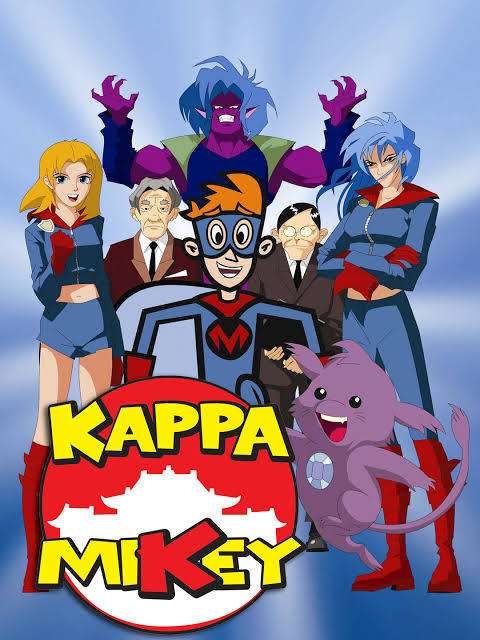
Created by Larry Schwarz and his production company Animation Collective, it was given a home on Nicktoons Network, Nickelodeon’s redhaired step-child channel, from February 25, 2006 to September 20, 2008. The premise of the show is 19-year-old Ohioan fumbles an audition to become an actor in Cleveland and gets shunted by the auditioner for his inability to act. Elsewhere, the cast and crew of a Japanese tokusatsu children’s show called LilyMu are eyeing up the wall where the kanji for “financial ruin” (財政破綻) is being written. Their boss notices and demands the director come up with a solution to fix it or they’ll be jobless in no time. After a series of stellar auditions that go nowhere, the crew resorts to a contest on a series of scratch cards, some of which blow in the wind and find themselves in the failed actor’s hands in America.

As luck would have it, it’s the winning ticket, and since becoming even a B-list celebrity in the US is a bust, it’s time to see if the Japanese populace can be won over on this struggling TV series. Sure enough, the fish out of water wins over Japanese fans and breathes new air into the show.

The format of the show is like most comedy anime and even a few western cartoons. Rather than separate the A and B subplots of the episode, they tend to blend into each other, first being introduced as separated entities until they converge roughly 3/4 or 4/5 into the episode’s run time. As for the animation style, it’s a mix of eastern and western animation styles with the American having his distinct art style separate from his Japanese and other non-American counterparts.

The cast of the Kappa Mikey series consists of LilyMu actors Michael “Mikey” Simon, Gonard, Lily, Mitsuki, and the director-producer, Guano. Above them are the literal suits, their boss, Ozu and his Yes-Man named as such. Mikey is the orange-haired, blue-shirted American who does silly and ridiculous things when not acting as the new addition to the LilyMu team. On the set of the show, he’s the star and main hero, a position that would’ve gone to his co-worker, Lily, if it wasn’t for his introduction into the show and is the main reason for her off-screen aloofness towards him.

For Lily, her character design is across between Inuyasha’s Kagome Higurashi and Sailor Moon’s Usagi Tsukino, but personality-wise she exudes a type of tsundere exhibited by Tora Dora’s Taiga Aisaka and Lucky Star’s Kagami Hiiragi. Her language may not carry the same weight after 20 years, but at the time, she was so liberal with the use of the word “spaz” that a concerned British parent may as well investigate further before muting the telly because of how dangerously close that is to the word “spastic.” Sidenote: If you’re curious why that’s a taboo word in the UK, in the Americas it carries the same connotation as the word “retarded.”

Gonard is built like an off-brand Raditz sans scouter, armor, and death by Kakarot, but has the same role as Raditz and just because he isn’t plenty dead enough, lots more screentime. His role in the LilyMu TV show is that of the villain with all the gadgets and gizmos that either inspired Heinz Doofenshmirtz in Danville to build his own or inspired him to take on a lawsuit because that Japanese show took all of his ideas!

But the Tokyo Metropolis is well outside the tri-state area and Doof’s mission is to be a doofus.

When off the show, Gonard is simply the good-natured dimwit who eats everything that is known to edible while also experimenting like that one episode of Teen Titans when Cyborg’s module malfunctioned and he saw food everywhere. Gonard is essentially Patrick Star from the ridiculous ideas, to the green shorts, even to the body type, though instead of hefty, Gonard has noticeable muscle mass. As a result of being the villain on the show, one episode hints at him being feared by those with a surface level knowledge of the show he plays in. And this is a real phenomenon where kind actors are too heavily associated with a great villain they have or currently portray. See Sir Anthony Hopkins and Hannibal Lecter for more details.

Mitsuki is the polar opposite and foil of sorts to Lily. If Lily was like Kagami from Lucky Star, Mitsuki is a bit like her sister, Tsukasa. Furthermore, Mitsuki instantly took a liking to Mikey once he landed at Haneda Airport and has an immediate crush on him at first glance, despite his general idiocy and whatnot. Sadly, it’s not very reciprocal as Mikey himself has a one-way crush on Lily. The reason given in a Season 2 episode being that she has a competitive, risky edge to her, compared to Mitsuki who could best be described as what Jotaro Kujo considers a traditional Japanese woman, or “yamato nadeshiko”. Quiet, demure, considerate, but also smart and unflinching. I don’t know if the “blue haired loser girl” trope is this old, but if it’s not then that means Mitsuki is either the progenitor or an early source of the trope. On the show, she’s fiercer and tougher than she is off screen

Guano is the purple-dyed Pikachu reject and nervous trainwreck that manages to keep the show held together with homegrown gorilla glue and 20-year-old Flex Tape, and it’s fairly obvious why he’d be that. He’s the director and Ozu and Yes-Man breathing down his neck put him on edge, especially when things go diagonally. On the show, he lives up to the rip-off Pikachu by merely repeating his name with each action or attack he pulls, especially with the large gemstone in his chest. Although the gemstone functions and shoots lasers, its reserved for other emergencies both on the set and on the Kappa Mikey show as a whole, merely having the same function as the gem or laser eyes on Frylock’s back in Aqua Teen Hunger Force.

For Ozu and Yes-man, Ozu is the man who can feed or starve his actors, pay or withhold pay, pull the plug or keep life support on. Long before Benson the gumball machine on Regular Show would threaten to fire Mordecai and Rigby, Ozu did it several years prior and normally did it to Mikey, but sometimes he extended it to the rest of the cast if the screw up was that egregious. Opposite the iron footprint on the floor, he’s consistently shown to butter up Mikey and consider him the prized piece that makes the show whole. As an inseparable addition to the show, keeping Mikey in good graces is his main priority. He doesn’t always do this to him out of genuine kindness, but it hints at one aspect of Japanese and, by extension, East Asian face culture. Maintaining an image of grace and harmony keeps the tabloids and journos from slandering you every minute. As a contrast, the employees are societally obligated to also make the boss and the company look at its absolute best 100 percent of the time. And this is all a satire as the reality on the ground still exposes even East Asian companies to scandals and controversies of their own. Nintendo, Konami, most Korean chaebols (itself a different snake pit), Alibaba; being based in East Asia doesn’t save these kind of companies from human error, negligence, or even malice.

Finally, there’s Yes-man who’s more of a caricature than an actual character. He’s a parodical gag of an existing character in other media and at times in real life. A cheerleader in a suit for Ozu himself, he’s not exactly meant to have any development whatsoever, merely an exaggerated side-character to point and laugh at. A jester of sorts.

This video by Jordan Fringe explains the production side of things:

Channel: Jordan Fringe

For two seasons, Kappa Mikey ran largely unimpeded by any outside forces. It was pitched by Schwarz as an “American-style anime series” and considering what I’ve grown up on, it’s been preceded and surpassed many times depending on what you consider an American cartoon whose art-style is heavily influenced by Japanimation. The Boondocks and Avatar: The Last Airbender for instance but neither are very well-loved in Japan in particular or East Asia very widely. The former was made by Aaron McGruder as a reflection of black American culture which will get lost in translation, literally, when exported abroad and the latter does its best with its source material of wider Asian folklore and mythology, but without the core tenets of Buddhist, Taoist, or Confucian beliefs, the face culture, or the courtship, it would at best be limited to a cult following outside of the west.

I haven’t even the slightest idea if this show has popularity in the country it takes the piss out of. On the one hand, it’s theme song is sung by a J-Rock band called Beat Crusaders, but on the other hand, Nickelodeon’s practice of hiding mid-tier TV series on Nicktoons Network and praying no one would notice when iCarly and Drake and Josh and SpongeBob were on the air left it to its fate of obscurity, at least for those who couldn’t afford cable.

Damn, I miss this logo…

Now that’s pretty much the show and its lifespan, how did it end? Or more to the point, why did it end? It had the energy to get at least another season or two. Perhaps even a made-for-TV movie. In that same video by Jordan Fringe, no clear reason was given except for speculation over budget constraints and a low viewership. Considering it was on an affiliate channel at the time and not likely not a major priority for the likes of Nick and Viacom, I can’t help but feel some sabotage was at play and as biased as it may sound to say about a studio over one show, there were a lot of shows that got shunted and only found wider success of sorts on the smaller channel. Some of the shows being legacy series that were given a modern reboot, though the results were far more mixed.

For a rather primitive though mid-2000s charmed show about an American becoming a Japanese audience darling, the entire series can be found on the Internet Archive for your viewing pleasure. Not to mention one I’m watching out of order since the callbacks to earlier episodes are few and far between.

My Brief Experience with Stop-Motion

One of the tougher things I’ve tried

We’re down to the wire with a new year on the horizon and I’ve kept this blog strictly professional with personal information kept to a minimum. But for today, we’re venturing back into the vault to show another side to myself, one that I wouldn’t mind revisiting with new information and knowledge. There used to be a time in my childhood when I consumed a giant swathe of brickfilms.

I’ve explained this before, but for a quick refresher, a brickfilm is a stop-motion animation where the primary pieces to be animated are Lego bricks, the animator moving the pieces individually between each picture taken to give the illusion of motion. It’s like traditional hand-drawn animation but typically uses less writing or drawing utensils, though depending on the props used in the animation, can drill holes into your wallet.

Many of the brickfilms I’d watched at the time came from numerous channels, some of which are now practically defunct, and many of them venture on the slapstick side of things. Others involve action set pieces similar to what could be found in The Lego Movie series. It’s been dog’s years since I’ve seen some of them, but I’d like to share one of my all time favorites from this era.

Channel: Keshen8

Stop-motion itself has a storied history. If you’ve ever seen some of the old 1950s or 60s swords and sandals epics, you probably saw how janky and wild the mythical creatures may have looked. The process involved an interlacing of two different styles of film to make into one, something we did even when 3D movies were all the rage; put the live-action footage with the 3D animation and keep animating in a way that objects looked like they’d fly at the audience.

On YouTube specifically, it’s hard to trace when it started to gain popularity on the platform, but as I’ve stated in another post it began with Lego themselves in the 1960s as part of a TV advert, but later gained fame online when Keshen8 uploaded Lindsay Fleay’s The Magic Portal to YouTube in 2008. Filmed over the course of four years when Fleay was in college between 1985 and 1989, the project incorporated Lego bricks but didn’t necessarily limit itself to just that. The video can also be found on Keshen8’s channel.

Channel: Keshen8

Interestingly, the film was showed by Fleay himself to the leadership at Lego. Personally, they were delighted, but the tried to monopolize it by issuing a cease and desist. Thankfully they have since softened their stance on the matter and it has inspired burgeoning and amateur animators, myself included, to try their hand at a craft that isn’t as devil may care as it looks.

Yahtzee Croshaw said it best in his review of Saint’s Row 4: it takes a lot of care to make [something] look completely care-free. I don’t know about you but the processing that comes with animation in general was mostly lost on me as a viewer because when a cartoon goes to air, it’s the fruits of the combined efforts of a studio’s labor that I’m seeing. Nickelodeon and Cartoon Network do take their viewers under the hood to see how the sausage is made, but not always. When you begin to animate yourself, you start to realize how involved the process is.

For the sake of just this topic, I’ll go into what made me think I too can do this. Some of the channels I’d been watching were making back-to-back stop-motion videos, again of a comedic, slapstick style. Other times of an action set piece or even of a dramatic reenactment of a film or even a love letter to popular film genres. In some cases, channels like LCM Brick Show used the building toys to make historical documentaries covering war and geopolitical topics (revolutions, world wars, empires rising and falling, etc.).

Some of the channels I’d watched were various different love letters to established film and TV genres or tropes, and my earliest stop-motion was cut from a similar stock. I began filming it on a stick camera I got as a gift for my birthday as I recall. Playing around with that plus another camera I had was pretty cool, but they weren’t practical for what I planned on using them for. Then again, this was my first time using a camera and while digital cameras were available and smartphone cameras were getting near-professional, what we had in 2011 wasn’t up to snuff compared to what’s in your pocket right now.

By the way, this model of Droid was one of my first ever phones in 2013.

Someone with more experience than me can probably explain that it was possible to do it at the time, but keep in my mind, my knowledge of filming techniques was limited and it would be a while before I learned that just because a thing is done a certain way doesn’t mean it’s the only way to do it: a mantra repeated by any speedrunner.

Fortunately, part of the filming equipment I got included a tripod for me to set up with extendable legs. As for educating myself on brickfilming, there were video tutorials breaking them down from frame rate to filming technique to snafus that could trip up amateur animators. Either way, it wasn’t as easy as it looked or sounded. One of the hurdles I faced was the camera quality. Not the picture, but the camera itself. The pictures were taken over the course of just a night, but stretched out over at least five or six hours as I recall and that was because it conked out and needed to recharge for three hours.

I probably could’ve planned it out a bit better, but it was the equivalent of a rough draft for me that night. Experiment with some ideas before getting down to business. Once the camera was done charging and the animating continued, another hurdle I realized quite late was editing, specifically sound effects. Loads of stock sounds exist on the internet but aren’t exactly cheap. As for producing the sounds yourself, I admire that approach as a cost-effective measure, but some tools necessary to make these sounds weren’t always available, especially to a 13-year-old back then.

Voices and dialogue on the other hand was easier to come by and still is. At the time, and to this day, the free program Audacity has been many creators’ go-to method for voice recording and sound design due to its ease of access. With some time spent learning to script and write dialogue, anyone can do it, but only a few turn it into a profession.

Funny enough, the editing software I had, Adobe Premiere Elements 11, wasn’t all that hard to learn. If I had a budget of some kind, and could afford to license the sound effects I could see how it could be done: let the footage run, install the downloaded sound effects into the editor, input some special effects where applicable, and voila! A brickfilm is ready to be published.

That said, this much involvement necessitated tips and tricks that I wouldn’t have been able to find through means at my own disposal. So by the time I got to brickfilming as a hobby on YouTube, I was making do with the first few videos being filmed on a camera that evidently couldn’t be trusted to stay still.

I launched my channel in June 2012 under the name “legoworksstudios1.” The vision I had was to make many brickfilms for years to come, improve, and join the ranks of some of the channels I looked up to at the time. About a month or two later into the existence of the channel, I had switched from using a push-button stick camera to using a stationary webcam. A Logitech C310.

Personally, this is better used for making Skype calls to relatives or have a long-distance relationship. If you ever choose to do this yourself, I highly recommend getting a camera that allows you to control the focus feature. Auto-focus is not the way to go, especially for filming something as small as Lego bricks or even action figures. I did have the C525 which was remarkably better and in just about no time flat, my shaky animations became more stable and fluidic.

I filmed off and on until my last video around Christmas Eve 2012. I tried to think of something silly for New Year 2013, but nothing manifested and I had put the hobby to rest until recently. I still viewed brickfilms and whatnot over the years, but my taste in YouTube content shifted largely to video game Let’s Plays, live-action content, documentaries, clips taken from anime, and curiously enough full anime shows. I have no idea about the science behind it, but I know that some people have uploaded anime to YouTube by way of keeping them unlisted. They can’t be found through conventional means. If they’re still around past the New Year, then there may be a form of piracy that’s hiding in plain sight.

As for stop-motion animation, the film technique is still available and readily used. Sometime last year, one of the channels I follow up on periodically, Emirichu, had a recommendation for a video from the channel MOONSHINE ANIMATIONS. The video in question took audio files from a game played between its creator and real life friends, Emirichu, Daidus, and Moonshine’s girlfriend during gameplay of the horror video game Phasmophobia. It made use of Japanese-made action figures under the brands of Figma and S.H. Figuarts, though custom made to resemble the channels’ avatars/profile pictures.

Channel: MOONSHINE ANIMATIONS

This one video introduced or reintroduced me to several things. As a viewer of the show Robot Chicken, I already knew that stop-motion props weren’t limited to just Lego, but because of the reputation and budget behind an Adult Swim production, it didn’t dawn on me until I got this recommendation that any old schmoe can pick a camera and start animating. Seth Green did it with Cyborg Poultry, Trey Parker and Matt Stone did it with North Playground, and I did it when I was 13-turning-14 with my building block toys.

With the knowledge I have now about how involved and time consuming animations can get (recall that The Magic Portal took 4 years to produce on 16mm film), I want to say that I could pick up a camera and get back to animating again. How I’ll be able to achieve this, I can’t say yet, but it would be awesome to get back into the fold, be it with my Legos or some Figma figures. Shouldn’t be too hard since my channel is still up.

This week’s channel recommendation is the channel William Spaniel.

https://www.youtube.com/@Gametheory101/videos

An associate political science professor, Spaniel’s main specialty is game theory and geopolitical issues and conflicts. His videos as of recent have focused on modern conflicts and potential flashpoints, including but not limited to the international relations of China, the Russo-Ukrainian War post-escalation, the Israel-Hamas War and several others. And when I say he’s a professor, I’m being serious. He has a textbook available for purchase and teaches political science at the University of Pittsburgh, and is a University of Rochester alumni.

Even if political science or, as Prof. Spaniel would put it, “lines on maps” isn’t your forte, Spaniel’s content offers a lot of insight for many modern conflicts largely from the political side than the military side, so you can get a better grasp of what everyone wants when it comes to conflict. If this sounds interesting to you or you see yourself practicing political science in the future, you can’t go wrong with William Spaniel.

Update: (December 23, 2023)

It’s come to my attention that for the section mentioning brickfilming, I’d stumbled upon a series of videos documenting the animation style in a fittingly familiar manner, but hadn’t placed a link for those who’re interested. The playlist consists of videos published by the YouTube channels sillypenta and Bricks in Motion. They’ve both done hard work researching some of the earliest brickfilms in history, the evolution of the practice over the years and many other aspects of the style. Here’s the link to the playlist:

Channels: sillypenta, Bricks in Motion

Animation Deserves more Respect

It hurts to see it.

Normally, I have one topic ready to go every Friday and planned on several weeks in advance. This week and into the weekend, I want to try something different, something special. A lot has occurred both in real life and the entertainment sector that may become old and stale if I add them to the empty spaces on my planner document (which goes into March 2024 as of writing this), so for today, I’ll cover my thoughts on animation today, tomorrow October 14, I will cover an anime adaptation that I’d been looking forward to personally, and on Sunday, October 15, I’ll cover the misfortunes of a company that, honestly, feels like it’s been on life support for a while now, each with sneak peeks at the end. Unlike this one, no YouTube recommended channels will be featured for those posts–just this one. Now to begin proper.

Since I was a kid, I remember part of my day was complete or going expressly well when I could turn on the TV after speeding through my homework and catching up on my favorite cartoons. Funny enough, a lot of what I liked at the time is now remembered as genuinely creepy and weird. Observe:

And it wasn’t just this one. Courage the Cowardly Dog, Invader Zim, The Secret Show, Kappa Mikey, Martin Mystery, and several other shows that I was always convinced I was the only one watching. The draw for me, aside from a series of moving drawings, was that a lot of them were so unique. They had their own art styles, plots, some of them were spearheaded by comic book artists, such as in the case of Invader Zim’s creator Jhonen Vasquez and Kaput and Zosky creator Lewis Trondheim.

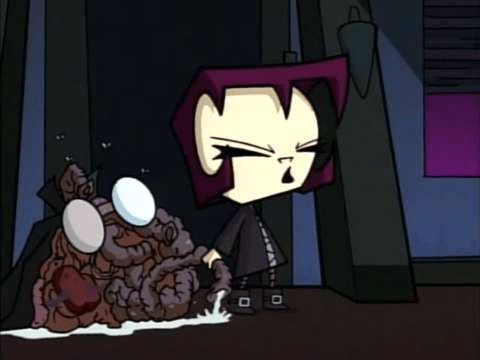
They also had an air of black comedy embedded in the structure of the series, often based on works published prior. When these shows were picked up by Nickelodeon or its sister network Nicktoons, they were often marketed towards children, though often needed to keep the darker elements under wraps to avoid censorship. Still, a lot of stuff got through the cracks. Like this scene: [content warning].

And this wouldn’t be the only time, shockingly, that someone’s organs were outside them.

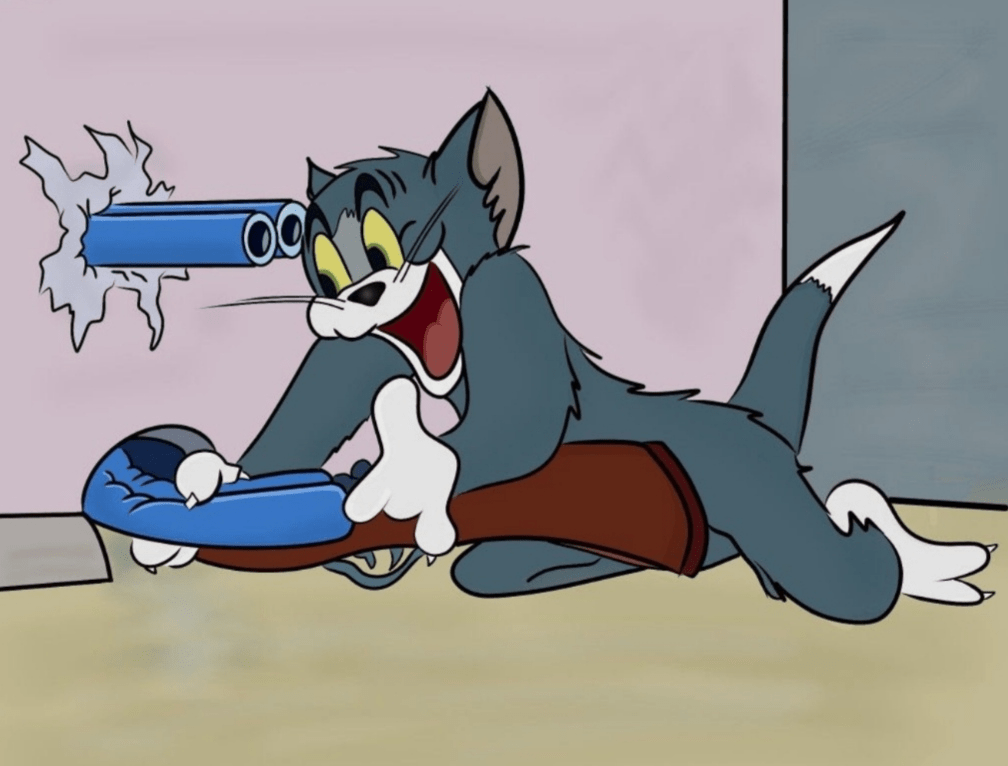
For all the flack cartoons have gotten for being “childish” and “immature,” it’s easy to forget that the pioneers of old like Disney, Warner Bros. and MGM had darker themes in a lot of their old cartoons. Never mind the modern day creepypastas featuring Mickey Mouse and co.; think about how many old cartoons had gun violence in them. Where else do you think we get this meme template?

I bring this all up, not so much to rant about cartoons getting soft, but more so to contextualize why I think animation and cartoons have become something of a laughingstock in the West. Ridiculous violence and anthropomorphic animals aside, it’s not like this was all western animation studios were throwing out since the 1960s onwards.

Think about comic book adaptations, like all those of Batman or Spider-Man or the X-Men. All of those comics and many successors trusted their audience, no matter how young they could’ve been, to understand the complicated themes and plot points within. For one such example, the YouTube channel, Shady Doorags, frequently covers animation and animated shows and their many mature themes. Even shows that had a high child and preteen audience like Teen Titans was covered several times, and this episode he covered earlier this year seems to have been one of the more mature ones in the series.

Credit: Warner Bros., Cartoon Network. Channel: Shady Doorags (March 26, 2023)

When referring to mature animated shows retroactively, there’s now a distinction between a show that’s mature and a show that’s adult. King of the Hill, The Boondocks, Black Dynamite, and Seth MacFarlane’s Family Guy and American Dad are all mature and handle maturity in different ways, through satire, social commentary, the politics within certain hot-button issues (especially if those issues are still front and center today), or some combination of all these.

By stark contrast, some recent animated shows go straight for the fences without the maturity or class of some of the older shows. I need more fingers to count the themes in a South Park or King of the Hill episode, but I’d struggle for something like that show Fairview or Legends of Chamberlain Heights among others. The same goes for maligned reboots of well-beloved properties. You probably know about the 2016 reboot of Powerpuff Girls or Teen Titans Go! or worse Velma, or if not, you know them all by their sour reputations among fans of the original properties.

Whenever I look into the main sources of criticism, similar talking points come about. Lazy art-styles, crude and purposeless humor, mean-spirited humor, a grave misunderstanding of the subject matter, and often the worst of the criticism relates to pandering. Pandering to a demographic that had a hissy fit on social media; pandering to an underrepresented demographic, likely because that specific demographic is literally extremely few in number; pandering to demographics that suffer from an advanced case of white savior complex. The types that won’t really watch the property, but will lie on the internet to look more virtuous than the person they’re arguing with over the keyboard, even if they’re talking to someone who has volunteered before in the past.

Altogether, it brings back problems animation and fans of animation were certain they’d dealt with years prior and this new generation of animators seem to be fighting an old battle. I’m looking in from the outside, but some of the recent shows coming out don’t do burgeoning animators any favors, especially if you’re familiar with what Disney and Warner Bros. Discovery are responsible for. Sometimes I only know about it because channels like Clownfish TV have experience and expertise on their design philosophy.

When I started conceptualizing this topic, at first I was going to write from the standpoint of award shows, but then I remembered some of the shows I mentioned in this post in passing have gotten recognition from awards boards in the past and even now so if there’s a group of people I’m asking or nearly begging to respect animation, it may be the studios that greenlight them and some of the animators that work on them. From my old high school art class, I remember learning of the philosophy of knowing the rules before breaking them, as in, learn how to draw before you put your own spin on things, and this rings true for all of animation. There’s a stark difference between Bugs Bunny and Tom and Jerry and the Pink Panther/The Inspector art-wise, and even animator-wise. Walt Disney and Friz Freleng were not the same people, but they both learned to draw somehow.

And this is true of today’s animators. You know the old saying: Rome wasn’t built in a day. It takes a lot of skill, craft, and imagination to make a disciplined practice look so undisciplined. Think about how radically different medieval music is compared to Black Sabbath. And for animation, there was a lot of respect for the creators of this:

And the studios that brought us animations like this:

The simple and obvious solution for modern day animators is multifaceted, though to take an example from the military would be to look at who’s at the top of the chain of command. I would never doubt the capabilities of a studio today since most of the time they’re only doing what they’re told; rather my efforts would be better focused on the people they answer to. Clownfish TV mentions names like Disney’s pair of Bobs, Chapek and Iger, as well as investors ignorantly chasing lightning bolts with an open mason jar, confident that it’ll hit the bottle and not them.

Then again, if we’re looking at the investor angle, as risky as it is to put your eggs on an untapped market, it’s equally risky to go for the diminished returns for obvious reasons. Call it the centrist approach, but why not blend the two together? Put a few eggs in the new and unforeseen while keeping the rest in safety boxes, only moving when things go consistently south. If the new thing fails, you still have some pennies, and when the old things lose favor, you can pull out before you lose everything. Oversimplified solution? Well, again I’m no expert. It’s just something I could see myself doing if given the resources to do so.

For this week’s recommendation, I bring you to the channel sydsnap.

https://www.youtube.com/@sydsnap/about

The channel, run by Sydney Maneetapho (née Poniewaz), covers anime and manga, but a more adult-oriented type variety of each, namely hentai. Sydney often recommends some of her own favorite series often for the sake of some guilty pleasure, but also because between all the exposure and nudity, some of the authors and artists behind these hentai have credits writing manga for general audiences, such as in the case with the author of Don’t Toy with Me, Nagatoro-san. She’s even interviewed several names in the adult entertainment industry, like retired porn actress, Kaho Shibuya, or active porn actress, June Lovejoy. If you’re looking for some recommendations or would like to learn more about topics of this nature, most of sydsnap’s videos cover this in detail or alternatively, a donation can be made to her associated Patreon page to get past the censors.

I will return tomorrow with an impression of a long-awaited adaptation.

My History With Movies

A love letter to cinema

I was originally gonna rattle off some of my favorite movies and what I liked about them, but I thought I’d get more mileage out of listing off my history with the medium, so I’ll go with that. I may list off some of my favorite movies recently or movie genres by the end, so look forward to that.

Getting to the topic of how my taste in movies developed, like all things, will be complicated. The history of that even more so, but to the best that I can remember, funny enough, it began with my mom and her siblings. The area of the Bronx that I grew up in had several local theaters in the 1960s and 70s, many of them are abandoned or were torn down in favor of a retail store or local pharmacy, but some that have stayed have significantly minimized their presence or reach. There might have been a trend in the 80s and 90s concerning access to cinema, probably with access to VCRs going stronger than an ox at this time, or some major movie distributor like AMC getting a huge boost, but I can’t say for certain whether any of these were the case. But if I ask my mom or aunts, they might say that it was.

Whatever the answer is to this chicken-or-egg scenario, it did mean that VHS tapes would be made in surplus over the years until they fell out of fashion with the rise of DVDs by 2002, only for those now to be seen as obsolete thanks to digital releases, but I’m getting ahead of myself.

For context, I was born in 1998, and, according to Legacy Box, VHS lost popularity around 2002-03. Some of the first movies I’d watched were formatted for a VCR and one of those happened to be a movie adaptation of a certain yellow sponge who lives in a tropical fruit.

Since it came out in 2004, I’m not entirely certain how it got to my house. I’m pretty sure an older relative of mine got it for me, but it’s been so long and whatever VCRs we still have these days is likely no longer compatible with modern TVs now. I’m confident that VHS releases of beloved movies of yesteryear have since become collector’s items due to the rarity, even at the time of release.

The SpongeBob movie certainly got some out of me as a kid, but at that time, anything animated was my bread and butter and seeing the porous cube for an extended adventure was a ginormous win. For other animated movies, I definitely remember watching a certain pair of movies as a kid. The first one was about an Inuit man who learned the hard way of what it’s like to disturb nature and lives his life as a bear as penance.

And I would only go on to continue watching Disney animated features of this making because that’s what Mortimer Mouse does best. He and Jimmy Carter may be the most prolific nonagenarians at work. Brother Bear was on DVD, and thus still compatible with modern TVs. Even back then, there were fewer problems regarding DVD players than there were with VHS tapes, so rewatching some of my favorite scenes from Ursa Fraternity was damn easy.

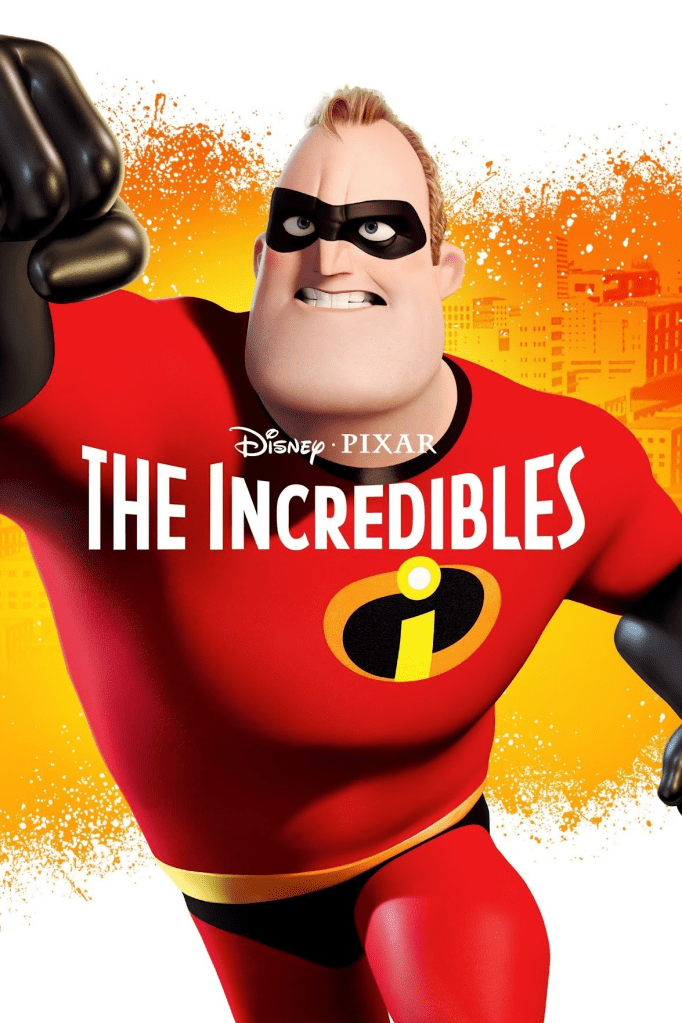
The second one was about a superpowered family juggling life between saving the day and the boring parts of Americana that get glorified for the sake of a joke on TV.

Also a 2004 release but on DVD, this was my go-to when the adults were busy watching MTV or BET sitcoms and movies, and I watched this movie a disturbing number of times because I was an only child and my options for entertainment, though present, were limited. Cell phones weren’t necessary in the early-to-mid 2000s and no good parent would let a child out after dark unless they genuinely knew what they were doing. I could go to the park, though that often meant waiting on my mom to take me there even though it was down the block from where I lived. So TV and video games for the rest of my childhood.

Between all of these, a reasonable conclusion to jump to would be that from a parenting standpoint, the movies I was allowed to watch at around 4 or 5 years old didn’t fall outside of established parental guidelines and from a child’s standpoint, heroes and villains here, monster fights there, save the day, get the girl, the classic Superman formula.

On the opposite end of the spectrum, because my mom was single at the time and my grandma hadn’t retired until 2004, this meant leaving me in either my grandma’s care or that of a neighbor who comparatively had three children and was seen as the go-to for some of the other neighbor kids. So 6-year-old, only child me often had to spend time with some of these kids who were not very far from their immediate siblings. So that was neat.

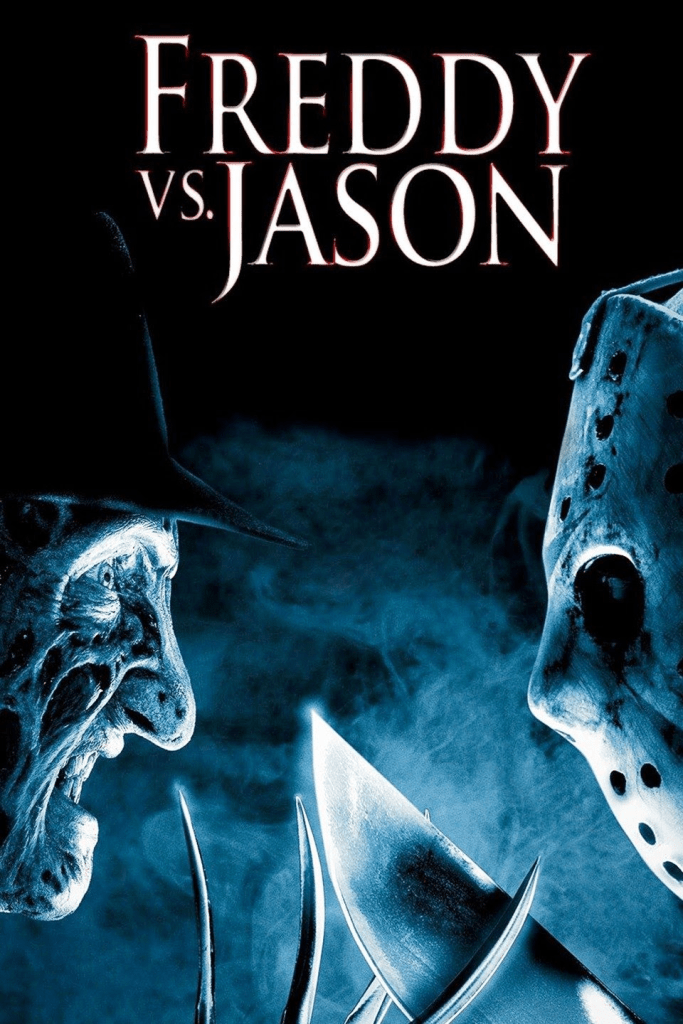
In line with that pattern, it might be because a lot of these kids were somewhat older, but for whatever reason, if I wasn’t witnessing MTV devolve in real time, I was watching a slasher movie. Of the ones I was unfortunate to see at a young age, the one about the masked machete wielder stuck with me for an uncomfortably long time. His collaboration with a sweater-wearing burn victim from the nightmare realm did me no favors, though there was a reason for me why the machete wielder was the worst of those two.

The other slashers and horrors were largely forgettable, but every goddamn time something reminded me of Jason Voorhees, I’d get mental images of a grizzly slaying. And why Jason? Why not Michael Myers, or Freddy Krueger, or Predator, or the Aliens from Alien? For me, it was because Jason and by extension Michael were so calm and collected. They walked into frame with a clear vision and a creativity only a psychopath could appreciate. Their flare for the gory and incorrect ways to use a lawn ornament and the fact that either one of them could do so much with just so little made it even more dramatic than it probably was. If they didn’t use their powers for nefarious purposes, they might be the first people to thrive in the middle of a zombie apocalypse. I’m pretty sure they’d be tailormade for the first part of The Last of Us 2 since that part of the game starts in a Wyoming winter and Max Brooks of World War Z fame wrote that in such a scenario the coldest climates are ironically the hottest spots on earth.

Needless to say, I didn’t start appreciating Jason or Michael until I was around 16 and part of that was because on reflection, so many horror movies at the time telegraphed and prioritized their jump scares over their stories that the money that should’ve gone to the screenwriter and storyboard artist went to the pockets of the soundtrack composers, and every time the brass section went nuts during a jump scare, the composers would need to run back to the store to get a new safe to hold all that cash. It was annoying!

Cliffordlonghead (YouTube), Nickelodeon, Viacom

Friday the 13th, Halloween and others did that as well, but not every five minutes. I think one day I’ll dedicate my research to the history of film scores.

By the time I was 15 or 16, trips to the theater fell to the wayside, reflecting a growing trend of home streaming and home video releases as Blockbuster shuttered its brick and mortar stores while Netflix thrived online, especially with shows like Breaking Bad being made available for streaming on the platform in the years following its airing on AMC, as well as many Netflix originals, short lifespans notwithstanding.

Followers of this blog can remember how clear and precise my words were when I admitted to emulating and pirating certain video games. What I didn’t mention until now was that it didn’t start with video games. I remember watching 300 on pirate sites in anticipation for the 2014 follow-up. And about a year later, after watching The Terminator on YouTube on a probably now deleted account, I heard through the grapevine that a fifth Terminator was releasing soon and when I later watched the trailers myself, I vowed to pirate it sometime in the future.

I avoided major spoilers for Terminator: Genisys while pirating online or catching the others on TV and by the time I saw the fifth one by way of piracy, my opinions on the fifth Terminator movie are thus:

I paid for nothing and still felt robbed. Okay, let’s dial it back. The first two movies and somewhat the third all did well enough to prepare you for what was to come about the prophecy about SkyNet launching on August 29, 1997 and the immediate aftermath that subsequent releases felt like they were written into a narrow corner and had to dig themselves out with a spoon and crossed fingers.

If I were to rate the series having only seen the movies, my opinions on them all are this:

  • The Terminator (1984): Fantastic. 4.5/5
  • Terminator 2: Judgment Day (1991): Also fantastic, like the original. 5/5
  • Terminator 3: Rise of the Machines (2003): Interesting take on the premise. 3.2/5
  • Terminator: Salvation (2009): Memorable only because of Christian Bale’s temper tantrum on set. Otherwise, missing crucial elements. 2.3/5
  • Terminator: Genisys (2015): Nice that you’ve got Arnie back, but are we still on the same timeline as Salvation or what? 2/5

My opinions on Genisys isn’t isolated either; other critics and viewers thought much the same. Call it for what it is, but if 2014 was starving for good games, 2015 was starving for good movies. Or rather, I remember more bad movies getting the adverts than I do the good or better movies largely because many of the studio heads were losing faith in these potential box office bombs. It might have cost the studios some dough, but from my perspective, being nose deep in the novel Black Mass in anticipation for its movie adaptation that year, it’s a good thing I spent that year invested in my own interests instead of following trends or I would’ve been even more disappointed with Fifty Shades of Grey.

This was a better film to have Dakota Johnson’s and Johnny Depp’s names on compared to what else they were in that year.

The latter half of the 2010s became the era of the Crazy News Segment and it was around that time I decided that Facebook wasn’t my style. Retreating into the movies at this time slowed down as I was dedicating myself to community college and whatnot, but I was still watching movies. The newer stuff coming out was putting me to sleep, so I went to some classics.

In my latter years of high school and all through college, I’d entertained the idea of joining the Army and thought I’d get a general idea of that through movies. Good idea? Bad idea? Well, the movies I’d watched that came to mind for me as quintessential war movies were centered around either of the two World Wars or Vietnam. I’m still searching for a good Korean War movie though.

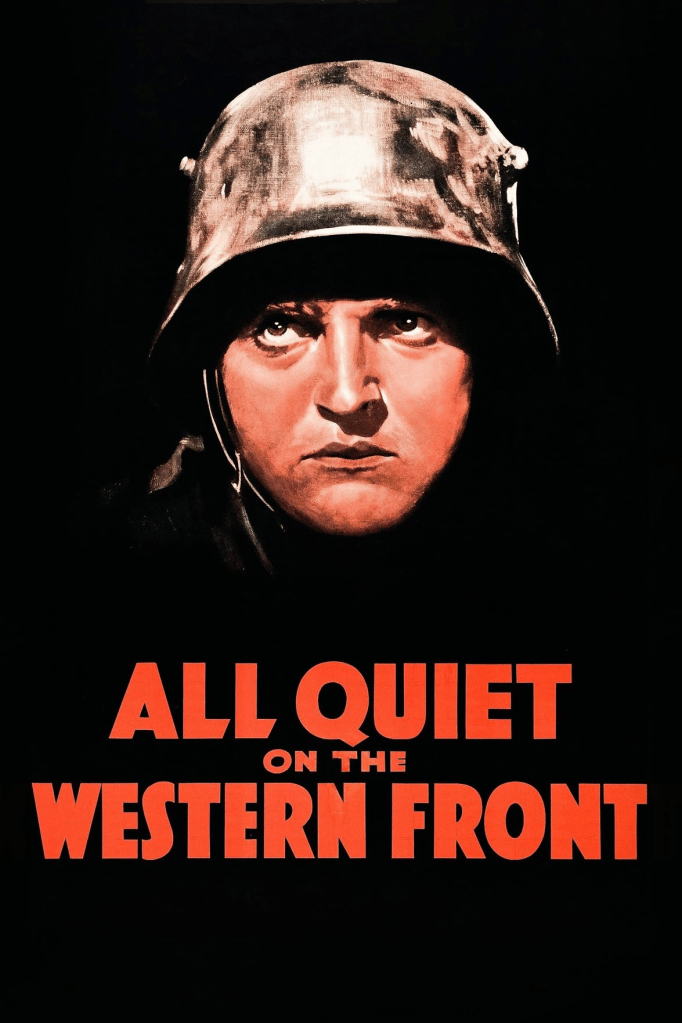
In the U.S., copyrights are good for at least 75 years, and with the copyright long expired on one of these by the time I was able to watch it, technically, it wasn’t piracy. As I recall, this particular film and similar were archived online. If this is the case every time a movie gets that old, then as time goes on, whenever I want to watch an old movie, I have a beeline.

This movie was an adaptation of a diary of a German WWI vet, and as of 2022 was the first of about three so far.

World War I movies, I feel, have been muted by the clearer battle lines of its deadlier successor. You have villains, heroes, and a happy ending, hence why numerous intellectual properties in the decades since the end of World War II have looked on to the Nazis and the Wehrmacht as the perfect archetype for a villainous force of nature. Allow me to complain somewhat, but there were other armies of equal or worse brutality to look at for a template. Not saying you can’t keep using the Nazis or their 10,000 paramilitaries for reference if you want; just that it pays to look elsewhere from time to time. Consider your options.

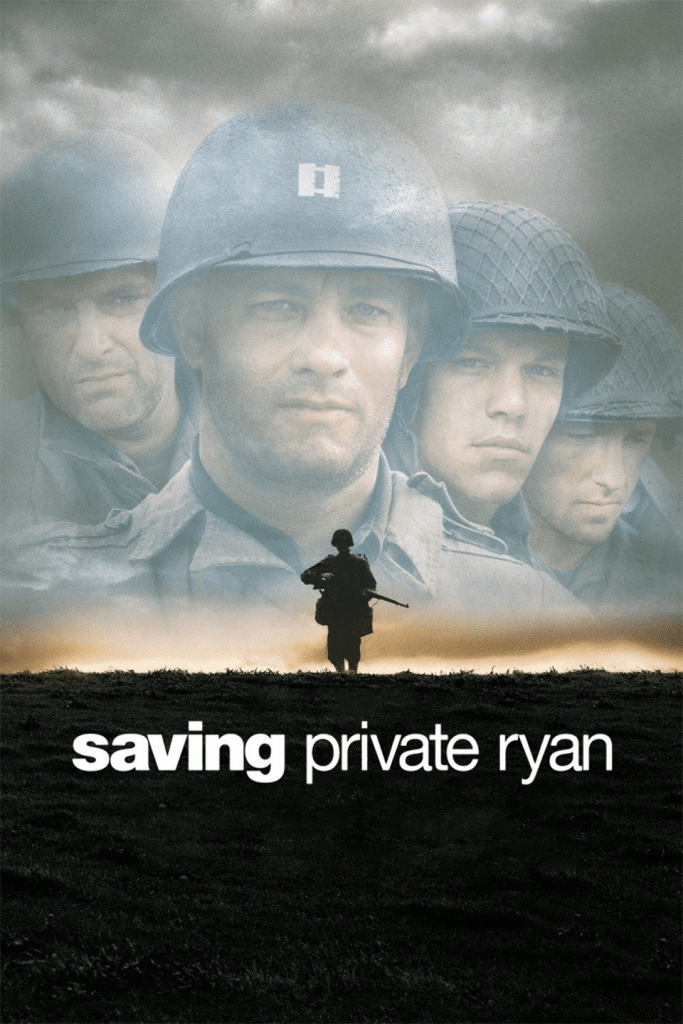
And speaking of movies about the deadlier successor, an impromptu reconnaissance platoon sent into France to ship the sole survivor of the Normandy landings out of a family of five brothers back home, complete with a perilous journey through the occupied north.

And for better or worse, veterans of all strides who would otherwise take their stories with them to the grave were motivated to share them by proxy after watching the movie. It’s a fact.

In the case with Vietnam War movies, the diplomacy of the war itself at the time leads me to believe that it was a sign of things to come. Light my on the pyre for this, but experiences with guerilla fighting in Indochina probably would’ve helped to better inform post-9/11 warfighting policies in the Middle East if we stopped looking at things the same way we looked at World War II. False equivalency, you say? I do still have a point. Accounts from the French experience leading up to occupation by Germany in WWII draw toward the conclusion that if France had realized Round 2 would be a different fight, they would’ve been able to stave off occupation or at least better liberate themselves than in our timeline.

Similarly, U.S. military history has a gap between the fall of Saigon and the Gulf War that probably reminds folks of the current recruiting crisis the DoD doesn’t need as it’s the second time there’s been a military shortfall at home. In my eyes, the Vietnam-era movies serve a purpose and have important lessons that only now we seem to be adhering to–that is to say know your enemy and yourself; set and understand your goals; and one of the biggest lessons from the jungles of former French Indochina, make sure the populace is on your side. No one wants to be sent to fight in a country they can’t find on a map only to lose and come back and get harassed for what they were forced to do.

As for movies I’ve seen about the conflict itself, there are two that stand out that you probably know about. One was about a rogue special forces field grade who needed to be taken out and the other was about the most sympathetic of McNamara’s Misfits for the first half while also criticizing the nature of warfare in general in the second half.

As told by retired SEAL Commander Jocko Willink in this video, if a servicemember commits a crime overseas or goes rogue in-country/while deployed, their punishment is determined mostly by rank and performance prior to the crime. For example, if a private or private first class is under scrutiny, they could face any combination of forfeiture of pay, reduction in rank, imprisonment, or for severe crimes, execution for conduct unbecoming. Higher ranking enlisted soldiers may face that as well, but so far the highest ranking enlisted soldier I know of that has ever faced such a penalty was the 10th Sergeant Major of the Army Gene McKinney, and he wasn’t even reduced by that much. Below Sergeant Major of the Army is command sergeant major, and below that is either first sergeant or master sergeant depending.

Officers like that of Colonel Kurtz are in command of a large number of servicemembers, generally brigades. Being that high up in a chain of command with that much time in service (over 20 years avg.), he would’ve been captured and interrogated for what he’d done and any penalties would likely come from whoever was the Secretary of Defense at the time.

Now for that one about a McNamara-grade recruit…

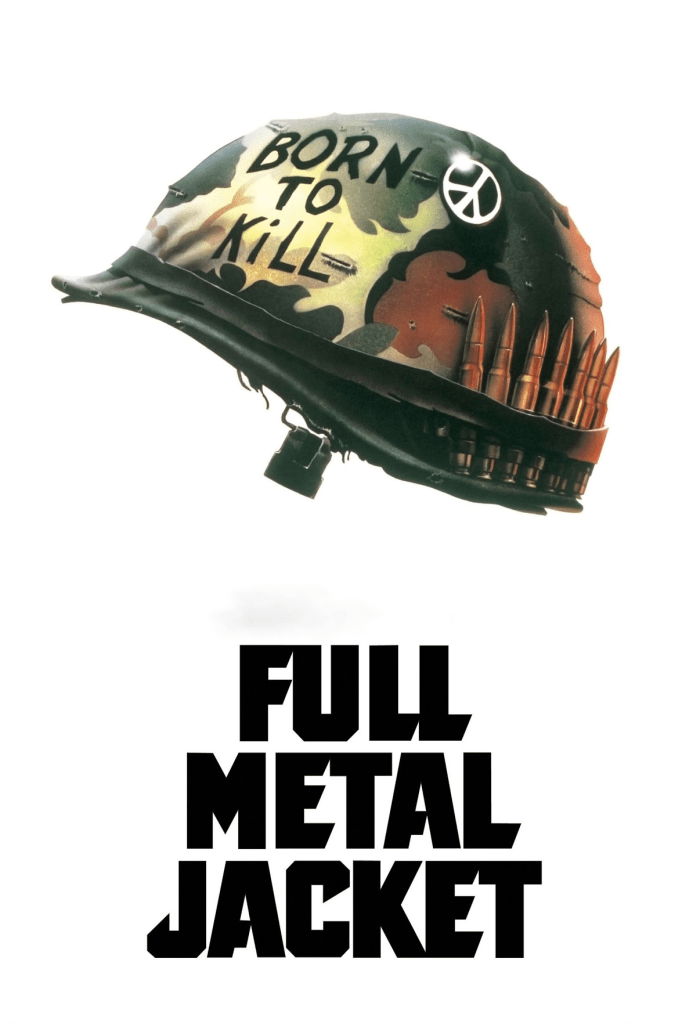
In my experience in basic training, FMJ was the one to get the most love out of the trainees because we saw ourselves in those starry-eyed virgin recruits even if events depicted were exaggerated. R. Lee Ermey’s portrayal of a Marine DI was exaggerated for drama’s sake, and in the Army we didn’t have footlockers, and compared to the men who would be sent to Vietnam, our drills were, due to several factors, fairly lenient with us. That said, we still got the dog crap smoked out of us because the good idea fairy visited our battle buddy that day; or we learned to lock our lockers and secure our stuff when half of it was across the bay and other half was under my battle buddy’s bed in pieces.

That being said, looking at GySgt. Hartman’s conduct as a drill instructor, he would likely have been investigated for inciting hazing against Pvt. Leonard Lawrence/Gomer Pyle. Similarly, for how the boot camp section of the movie ends, even though those Marines were graduating and whatnot, the precursor to the NCIS would’ve gotten word of crimes in the barracks like a [spoiler warning] murder-suicide, especially if an SNCO like Gunny Hartman was involved in some way. With an even hand, after the dead are laid to rest, the whole platoon could forget about ever getting to Vietnam, though at this point in history, stuff was getting swatted to the wayside because the war effort was more important.

Fast-forward to Bush Jr. in Iraq boosting numbers for the 2007 surge and a round of stop-loss orders and most of those who were deployed at the time need three sets of hands to count the number of people who got in despite being previously disqualified for moral or medical reasons. Bonus points if the moral waivers offended in uniform. How do I know this? The Military subreddit among others holds the answers.

Above all, war films showed me that there’s always a gray zone even in the darkest moments in our lives or in history. Not everything has an easy answer.

Sorry if things got serious at the end there. Let’s take it back a few notches. My favorite film genres? Right now, it’s the war films since I clearly had more to say about them in this post. My Army brain isn’t gonna look at them the same way again, but for what it’s worth, the experiences from basic training to duty station to deployment to discharge are military-wide. Retired servicemembers from different ends of the political aisle will feel a connection because at one point they were clowns in the same circus. From this genre: Full Metal Jacket, Saving Private Ryan, Patton, and for atmosphere a Soviet Belarusian film called Come and See.

For something more humorous, comedies obviously work, but the talent lies with the writing and the characters. Done well, and I can see myself going back to a classic I enjoyed. Done poorly, and I’m praying to God, Lord Buddha, and Tom Selleck’s mustache that the writers of the god-awful “comedy” I was forced to watch walk into a door. From this genre: Identity Thief, Fargo, The Mask, History of the World, and Spaceballs.

And for action/adventure, my video game brain has been hardwired to expect a Point A to Point B plot with a clear goal and character arc. I don’t always get that, but when I do, my butt’s in the chair, my eyes are on the screen, and if I like what it opens with, I reserve judgment until the credits roll. If I don’t like it, I’m nitpicking from start to finish. From this genre: Red and Red 2, The Terminator until the third movie, London Has Fallen (kinda), RoboCop uncensored, and I want to put a martial arts film in here, but I haven’t seen any as of late. Bruce Lee’s Fist of Fury will serve as a placeholder for now.

This was late, I know. We were having issues with our cable, and I was summoned to try to fix it until we phoned it in to the service provider. Hopefully, next week’s post will be on time.

April Fools’ Day and Adult Swim

Pranks and Adult Animation

April 1 is a golden opportunity for a lot of people to play practical jokes on each other, and there’s often no rules as to how this can go. As long as no one gets hurt then have at it. In the case of TV, even the news likes to have their go at the festivities. Personally, I think there’s more mileage in animation which brings me to the topic of this post’s title.

Perhaps by virtue of being an adult animation TV channel, Adult Swim has a knack for partaking in the jokes and merriment of April Fools’ Day. In some cases, where the program runs from late night March 31 to early morning April 1, they’ll engage in some tomfoolery on the shows they plan on airing, messing with the schedule, or other such on-air silliness. As a bonus for them, it’s an opportunity to air shows set to debut sometime in the future.

What interests me the most of all is that this isn’t exclusive to just the Adult Swim block. In the US, Cartoon Network, Adult Swim, and Toonami, all air on the same channel. CN is the primary daytime block; by 9:00 PM every night Adult Swim airs from Sunday to Friday all night, handing the reins back to CN at 5:00 AM; and on Saturday from midnight to 5:00 AM, Toonami airs.

All three have a rotating body of regular shows, some of which have gone down in animation history from Johnny Bravo, Dexter’s Laboratory, Power Puff Girls, and Teen Titans on Cartoon Network; King of the Hill, Futurama, Family Guy, Aqua Teen Hunger Force on Adult Swim; and Toonami’s had a variety of different anime, the most common ones ranging from Cowboy Bebop, to FLCL, to Naruto, Dragon Ball Z, Bleach, and One Piece, some of which are still on the block albeit in the dead of night.

Every April 1, viewers of Adult Swim and sometimes Toonami are in for any given treat. The first round of AS pranks began back in 2004 as a series of slight alterations to the channel’s shows. They were quick to do the same to Toonami and as the years went on, they got progressively more spontaneous. The tradition was still ongoing even after Toonami was canned in 2008. The Wikipedia page for Toonami describes the cancellation of Toonami as low-ratings. But I think I know what the true culprit was for that. Toonami is normally hosted by a robot character known as TOM who introduces the audience to the show and over the years the first time around, he’s gone through more than a few appearance changes through interactive events known as Total Immersion Events.

These events have been a staple of the block for years and generally involve a crisis of some sort attacking TOM’s station where he and AI partner SARA host the programming block. After the crisis is solved or averted or sometimes succeeded into killing TOM, a new appearance is adopted and the appearance of TOM 4 in 2007 was why it was axed the following year.

I wouldn’t say TOM 4’s appearance straight up assassinated the block, but it was a major contributor to the dip in viewership.

For about four years, Toonami was dead until it was revived for April Fools 2012 with a return to form. TOM 3, or in this case 3.5, returned to catch the viewers up to speed that night, by airing some old shows that have been on the block years prior, notably Fullmetal Alchemist and Tenchi Muyo. It wasn’t until a month later that executives confirmed on social media that Toonami was back for good this time.

Ever since, the April Fools’ Day pranks haven’t stopped and occasionally there’s a crossover into Toonami as previously mentioned. One of my personal favorites has to come from 2018. Being a western animation block airing English dubbed anime, the block normally doesn’t air anything in Japanese unless it’s something along the lines of an interview with a mangaka, a director, a studio in Japan or something else. Well, for 2018, not only were Japanese-dubbed anime put on the TV, TOM and SARA themselves were also given Japanese dubs, as was the logo.

Normally, April Fools’ is where AS markets the premiere of an upcoming show or a show’s next season later in the year, and for Toonami, I believe they were especially excited for this as FLCL: Alternative and Progressive were slated to air later that year. Additionally, they put on the 2004 Masaaki Yuasa produced movie Mind Game, also in Japanese, because this April Fools’ wasn’t weird enough.

This still goes down as one of my favorite April Fools’ events from Adult Swim and I was almost expecting them to do it again especially recently. Last month, they stuck it out with the April Fools’ tradition as expected and poking around on the associated subreddit, I kinda got my hopes up a bit. Part of the charm of these events is that its unpredictable. The only thing a viewer can expect from these is a deviation from the schedule and an introduction to a new show or new season of an existing show. This tradition was honored and for 2023, audiences got a taste of new show Royal Crackers and another season was confirmed for The Eric Andre Show and Teenage Euthanasia.

I was expecting something for Toonami this year, but it seemed Adult Swim took the glory. The daily discourse these days has been that of the progress in AI technology, so to capitalize on that, Adult Swim used a generative AI (think DALL-E or Midjourney) to run their programs in the early morning hours of April 1, mildly disrupting the run of Smiling Friends and putting a rerun of Space Ghost: Coast to Coast. It’s hard to explain in wording or writing so have a look at the livestream from that day.

In contrast, Toonami aired the shows as normal whilst paying homage to the joke that put them back on TV. The reason I expected a 2018-style makeover was because Toonami comes on every Saturday night at midnight and April began on a Saturday, but this was more of a miscalculation on my end. Toonami began about three hours earlier than the midnight setup that it has now. Double bills are also quite rare in this regard, so while Adult Swim did give us something stupid to laugh at early Saturday morning, this wasn’t guaranteed for Toonami. Again, April Fools’ Day pranks on AS are unpredictable after all.

So the joke is very much on me, but I still think it was fun this year. Another possible double bill April Fools’ Day prank could probably occur the next time April begins on a Saturday and because 2024 is a Leap Year, the next time that’ll happen coincidentally will be another Leap Year: 2028, which is the year I turn 30. Again, this is speculation. I’m not Nostradamus trying to see what’s in the future…

Significant changes to your life are in the future.

One more thing before I end this blog post, I may have a topic for the next week that’ll throw my schedule into the fray and it concerns FLCL mentioned above. Here’s a sneak peek:

Admittedly, this was from March 2022, but I’m gonna write about it next week because I didn’t know about it at the time.