The Getaway: Like GTA, But British

Even more British than the GTA series

Although the GTA series routinely satirizes American culture from the safety and comfort of the same three locations–budget NYC, discount Miami, and dollar store Los Angeles, plus surrounding areas–the heart and soul of the series is Britain and there was an expansion pack for the original GTA, set in London and featuring James Bond of all people.
Not for nothing, I welcome more games set in the UK to break the mold for a change

But Rockstar North (formerly DMA Design) wasn’t the only British developer making open-world action games. Team SoHo, under the direction and storytelling prowess of Brendan McNamara, the same one who practically drove Team Bondi into a shallow grave, released The Getaway in December 2002 in Europe and Oceania, and in 2003 in North America; in a rare instance of Europe getting the game before America and Canada. Not so much a parody of the setting, the nature of the game was intended for a cinematic experience, so the comparisons to draw between itself, GTA, and the True Crime series all fall rather flat by way of the UI design.

From a technical standpoint, it’s a very unorthodox open-world game. Set in the borough of the City of London, not to be confused with Greater London as the PS2 never had that kind of power to render a whole f[traffic]ng city, the UI is sans a HUD, so you don’t see a typical health bar for the character. Rather, the damage is reflected on the character’s body itself, so think of any open-world game with the damage to match, but it actually had an effect on the character instead of just being a porous open wound treated the same as a scratch or a bug bite. Too many shots to center mass before death leave you huffing and heaving for mercy at which point you simply lean against a nearby wall and you’re back in action. You also don’t have a way to count your bullets unless you’re whispering the number of shots taken to yourself, but without Senku Ishigami’s brain, you’re bound to be inaccurate. Fortunately, it has what it took GTA and Max Payne ages to implement. A cover system! But it conflicts with the camera sometimes, so good luck making your targets before your carotid artery gets blocked by a loose bullet.

How about driving? Are there any arrows or a map that can help me navigate? Nope. You’re vehicular navigation is handled by way of the turn signals, and on the one hand; f[beeping]ng yes, the one game where they serve a purpose. But on the other hand; without a good map of the City of London, or any sense of familiarity, I feel even more like a tourist to Britain than I would be in real life. Turn signals being an extremely rare thing to see being used in any kind of video game is a novel idea that I wish was more common in games these days, however the implementation here is to direct you to your destination. The lights flashing faster when you’re on the street you need to turn into and the hazard lights popping on once you’re there. Additionally, the cars this time around come from real-life brands as opposed to some Frankenstein creation of existing brands that Rockstar has always loved, so you get to drive an RHD Honda or a Lexus or a Vauxhall if you care very much about that sort of thing.
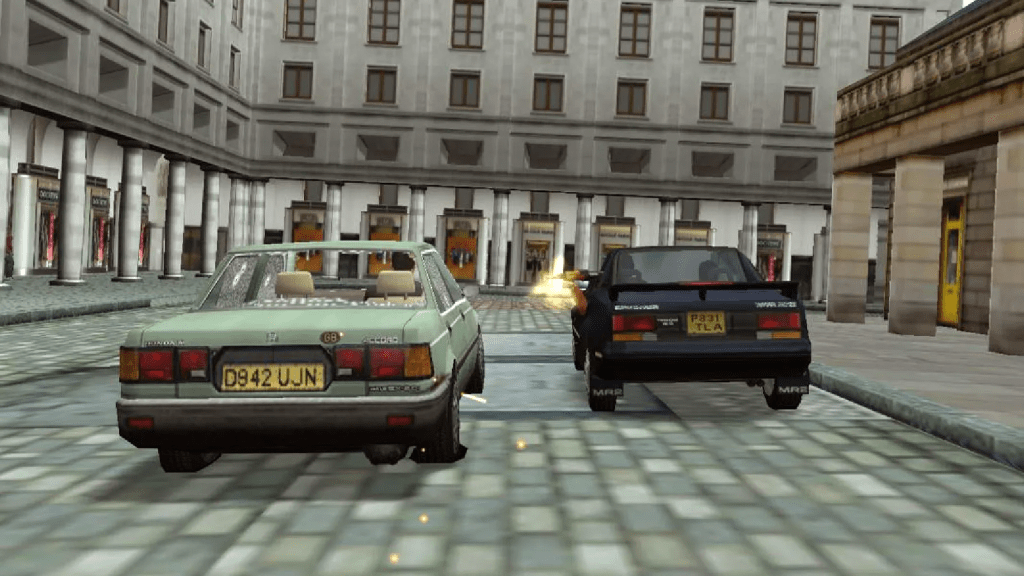
For personal research, I looked up a bunch of the manufacturers and most of the car companies have since gone out of business, been absorbed in consolidation efforts, or their parent companies decided to focus on what they were originally good at, as is the case with Saab to an extent.

So what’s the game about? It starts with a woman getting gunned down and her son kidnapped by gangsters working for a crooked geezer named Charlie Jolson. Jolson ordered this attack to force the protagonist of the story, Mark Hammond, to be his personal slave and run all over the borough kicking s[tire screech]t up and causing conflict between the cities gangs of which there are four: Jolson’s gang known as the Bethnal Green Mob, Hammond’s former gang known as the Collins gang, the 14K Triads, and the Yardies. Jolson himself is particularly dastardly, aligning himself with the far-right National Front movement in Britain. For those who don’t know, the National Front in the UK has a reputation as a neo-Nazi, white supremacist political movement, and is one of several far-right political parties and/or movements from the UK, so making Jolson a member of this group can feel like forced hatred of a character to some, but I can easily see someone putting him in the same light as Battle Tendency’s Rudol von Stroheim. I wouldn’t be surprised if Jolson’s ill-gotten gains were a means of quietly funding far-right individuals to steer Britain in a neo-fascist direction.

Jolson’s main enemies, aside from Hammond, is Hammond’s original crew, the Collins gang, founded by Nick Collins. It’s explained in the story that Hammond was a part of this crew until he got pinched in 1997. Since his release in 2002 he vowed to stay on the straight and narrow until the powers that be forced him back into the life. The third gang you antagonize is the infamous 14K Triad group, who are generally more powerful in China and their territories, but also have influence over sections of the diaspora, even in the UK.

Lastly, there’s the Yardies, an umbrella term for any Jamaican organized crime group, typically used interchangeably with the term for “posse.” Like their triad counterparts, they’re generally more powerful in Kingston and Spanish Town, but have a roof over the heads of sections of the diaspora, with overseas Jamaicans calling Britain, America, Canada, and the rest of the West Indies home.
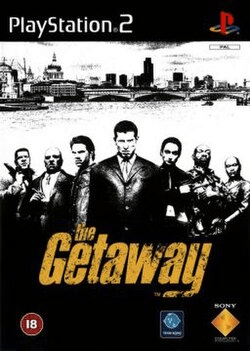
The main plot of the game is let Jolson step all over you and earn a chance to get your son back, but it also subdivides into a different focus and brings on another protagonist, Frank Carter, the undercover cop and Britain’s answer to Dirty Harry, stopping at nothing until Jolson and his kind are dead or imprisoned. Maybe both.

I’m not entirely sure how long the game is, but I know I’m about a third or so into Hammond’s part of the story. I’m trying not to spoil myself too much and keep as much of it a surprise as I can. For the gameplay aspect, there’s some variation to the movement on foot and in a car, and even shooting has quite a bit of variance. Without a HUD, the game employs much of the same mechanics of weapon equipment found in later, fancier titles like Max Payne 3 or Red Dead Redemption 2, only you get the impression that Hammond doesn’t give much of a toss over what he has on hand, with the plot reflecting that he’s only doing all this s[clank]t because Jolson is threatening to kill Hammond’s kid. But it’s not like he’s completely enslaved to the prick; one of Hammond’s best mates, Liam Spencer, hears about what’s going on and helps Hammond get one over on Jolson.

If I had to wager a guess for the rest of the game, I take it Hammond attempts to find his son himself, but gets caught up and has to suffer the wrath of Jolson’s boys, leading to the switch up to Carter.
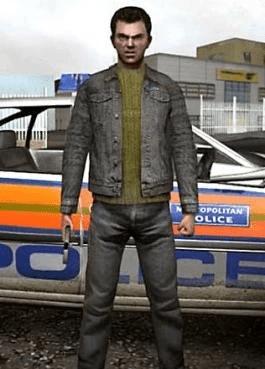
The Wiki makes him sound like a loose cannon and I have until I get to his part to confirm that

These days, The Getaway is more than a little bit rough around the edges, but it’s not like GTA III levels of difficult. Personally, it could benefit from a modern remake with more responsive controls not dissimilar to what Sega did with the Kiwami remakes of the Yakuza/Like a Dragon PS2 games. But it did gangbusters at the time and was able to produce a sequel subtitled Black Monday in 2004, and a PSP exclusive called Gangs of London in 2006.

A third mainline installment was supposed to release sometime after 2008 on PS3, but the project was cancelled alongside another unrelated game called Eight Days, or according to the devs at the time, the games were put “on hold.” But considering it’s been nearly 20 years since either of the games have been in the public consciousness, I highly doubt anyone is holding out for either game to finish development after so f[goat bleats]ng long. The same thing goes for Beyond Good and Evil 2 and any hope anyone had for a third installment of a Valve game.

I don’t know why I suddenly wanted to bully this game, I don’t really have a reason to. I just popped into my head one day as that thing that’s been in development hell for ages.

For what it’s worth though, Team SoHo’s brainchild inspired by British gangster flicks went on to embed itself in British gangster media years down the line with a spinoff TV series in 2020 and a graphic novel two years later. Unlike Yakuza though, I don’t think I’ll see myself going through the whole of the franchise. Tracking down games to emulate is becoming a chore over time–this would be so much worse. I still wanna consume more foreign media and I think I have a case for another location:

I already saw the Tropa de Elite movies, and I know there’s more to discover outside of telenovelas. I’m gonna make this a goal for the year.

Spec Ops: The Line after 13 Years

When do I start feeling like a hero?

The draft for the triple comparison between Max Payne 3, Sleeping Dogs, and Spec Ops: The Line has been finished, but before I publish that I first wanted to get my thoughts on the last of these three out of the way. Spec Ops: The Line, a 2012 third-person shooter whose stated-mission purpose was to examine the era of the “modern military shooter,” and knock it down a peg. Unfortunately for it in that regard, the message was very ignored as Call of Duty and surprise return Medal of Honor had both had their releases around the same time. Black Ops II on November 13 and Warfighter on October 5. When did Spec Ops release? June 26 that year. It was released at a time when these types of games were all the rage, wearing the skin of a similar game while also lambasting the Bush administration for the Iraq and Afghanistan Wars. By my estimate, it was successful at only one of those, but only because so many other media outlets talked about it as it was happening. For a laugh though, take a gander at this:

Channel: Bloomberg News

Right after the Russo-Ukrainian War went hot.

But I’m somersaulting over the howitzer — let’s rewind. The main inspiration behind Spec Ops: The Line aside from the U.S.’s concurrent foreign policy in West Asia and a criticism of the state of the modern military shoot ’em up was the novel Heart of Darkness by Joseph Conrad and it’s very successful(ly troubled) film adaptation Apocalypse Now. The book was written to highlight the controversy of Leopold II outright owning and micromanaging his personal territory of the Congo in 1899 while the film took that, applied it to the Johnson and Nixon administration’s handling of the Vietnam War, very soon after the pullout and the fall of Saigon to the communists. Suffice it to say, not only was Spec Ops well within its own element by critiquing Bush and the war on terror, it follows a time-honored tradition of satirizing current events in a widely popular medium.

If it wasn’t obvious at the outset, there’s going to be spoilers. I’d encourage you to play the game for yourself, but after 13 years and a new generation of consoles and updates to operating systems, Yager Development hasn’t ported it to modern consoles and most digital storefronts have delisted it. It was a hassle for me to even find an emulated version and the one I have is beset with technical issues. None of them game-breaking, but if you’ve ever dealt with emulation before, you know that the game you emulate/pirate, etc. isn’t going to be the same game that would’ve been released years ago. An emulated game isn’t the same as one bought at GameStop or Best Buy. Alternatively, there’s searching endlessly online for a seventh-generation console and then ultimately a hard copy of the game, but as we progress further into digitization, hard copies will simultaneously be a thing of the past and a priceless collector’s item. Apologies for the rant. Now let’s get to Spec Ops.

The cover alone would’ve cost it sales if the gameplay didn’t after reviewers got their hands on it.

The game begins with Lieutenant Colonel John Konrad, commander of the 33rd Infantry Regiment authorizing a relief mission in Dubai after the city get’s blasted with wall-to-wall sandstorms. Trouble starts to sprout with the native Emiratis who take issue with the high and mighty US of A walking around as if they own the place. A peace deal/non-aggression pact is taken, but very soon broken by rogue actors among either the Emiratis or the Americans. Whatever the case, the ceasefire is short-lived and insurgents emerge to take back Dubai and handle it themselves. From what I know of history and geopolitics, this sounds eerily close to a similar problem that Somalia has been facing since the early 1990s, but far less complicated than Somalia’s entrenched clan system. Or more like post-Gaddafi Libya. For a brief overture, the United Arab Emirates, where Dubai is located, didn’t suffer as terribly as its North African brothers in the Arab Spring, so trouble in paradise is somewhat unheard of but still within the realm of possibility.

The 33rd Infantry gets swamped with each of these problems and Col. Konrad declares the mission a miserable failure. He could’ve abandoned ship at the first sign of trouble and allowed his men to go back home, but he knuckled down and kept them there. As a result, the soldiers have gone stir-crazy fighting an unknown enemy, and I have to stop here momentarily. I fully understand what the game is intending, but I’m not so certain the devs at Yager know what they’re talking about. In Heart of Darkness, the Belgians were very much an invasive species meddling in on Congolese affairs, but there wouldn’t be a war to fight in the territory until 1915, because when empires go to war, so too do the colonies. Load up, Taiwan and Korea, you’re taking Tsingtao because Tokyo said so.

For Apocalypse Now, the Vietnamese were an amalgamation of southern Vietnamese communists receiving aid from the North Vietnamese Army, China, Laotian and Khmer communist forces and the Soviet Union. There were also veteran guerrillas who fought the Japanese in WWII, so this is the ultimate conflict where the U.S. wouldn’t be able to tell friend from foe anymore. Come Iraq and Afghanistan… the same problem from Southeast Asia followed into West and South Asia, but looking at the leaders and the countries of the time, stability was the one thing neither country had. Afghanistan had nearly as many civil wars as Rome did in the 3rd century and wouldn’t really have a case for nationalism whatsoever. Iraq, on the other hand, had a tenuous government in the hands of a dictator with an iron fist who would suffer from his own consequences thrice in a row over the years. What I’m getting at is, the situation for Iraq and Afghanistan was a top-down problem. The Belgian Congo had a “government” not much better than Leopold’s personal property, but nothing was threatening the Belgians until 1914; Vietnam had a series of governments from themselves to the French to Japan to the French again until decolonization, so there wasn’t a question of who would lead from where once the guns stopped firing. For Iraq, the cradle of civilization had rough years after Saddam’s capture and execution, but was able to get back on its feet and keep ISIS from rising to prominence ever again. Afghanistan’s last stable government was when it was a kingdom, toppled by communists, invaded by the Soviets, and subject to civil wars in the 1990s that saw the Taliban rise, fall, and gradually rise once again after playing the long game. And it hasn’t really been the same ever since.

I’m more than a little torn on this. On the one hand, Al-Qaeda and the Taliban weren’t an unknown enemy, but on the other, they blended in so well with civilian populations that the U.S. handling it personally was why there were accusations and even admissions of war crimes against an unarmed populace, but then again I don’t recall stories of soldiers rounding up civilians in concentration camp-style living conditions. Not from this conflict at least—the Philippines in 1900 surely but nothing from the Middle East in living memory. And no, Abu Ghraib doesn’t count because no one with the right mind was okay with that. All the soldiers involved have been shamed and disgraced. Say what you will about Bush-era foreign policy but for the love of God, don’t lie about it. Especially now, that we pulled out of Iraq during Obama’s first term.

Sorry about all the tangents, when it comes to myths surrounding the war on terror, I can’t help it.

The entire thing is incredibly complicated, so I look at criticism with an electron microscope. To get back to the meat of this review: 1st Special Forces Operational Detachment-Delta (SFOD-D), colloquially known as Delta Force sends a squad of soldiers, Capt. Martin Walker, Lt. Alphonso Adams, and Sgt. John Lugo to extract Col. Konrad and assess the physical and mental readiness of the Damned 33rd. They learn that the Emiratis may have been incensed to rise up thanks to meddling from Langley, and allow me this tangent. Every time I hear about the CIA, I get the urge to have sloppy drunken sex with a loaded shotgun. I’ve come to loathe the use of the CIA as a plot device for a lot what goes on in the world. True or not, it’s gotten lazy as hell, and I’m pretty sure it births new myths or perpetuates existing myths, some of which can be dispelled by the CIA themselves, but I doubt they’re allowed to do so, in case the public meddling is ruining an ongoing project.

Certainly would explain their Cold War behavior, eh?

Anyway, CIA perpetuates conflict in the UAE between the Army and the rebelling Emiratis and either neither the soldiers nor rebels are none the wiser or the “rogue” unit knows what’s up, but can’t get it through to the rebelling Emiratis because of high tensions. Meanwhile, these Delta Force operators have declared the unit rogue, their commander MIA, but still have faith that the mission can go on (it can’t), and over the course of the game, things keep getting worse and worse. The culmination of all of this cascades into one of the most disturbing moments in this game. More disturbing than the doctor harvesting organs from the Comando Sombra in Max Payne 3… or the doctor harvesting organs for the 18K in Sleeping Dogs… hmmm…

In Sleeping Dogs’ case, the police missions tend to be optional, but if you want super cop Wei Shen, then get to tagging and bagging!

They screwed up with the chargrill and have to make do with 70% of a burned meal. You know the trope of the traumatic experience being handwaved away with a hasty generalization? Like the one creepypasta where trauma victims, most commonly rape victims, retreat to a fantasy where they’re not being raped, heavily repressing the memory for as long as possible, at times for life? Well, that’s precisely what happens to Capt. Walker in this moment. This virtuous Special Forces officer who makes no mistakes and does nothing wrong f[gunshots]ks up once… colossally so, and admittedly should face a court-martial for the incident. In an admittedly weak defense, all three men weren’t in the right mind to make a sound decision, but to counter that, a period of R&R would be granted so that they could go and investigate the situation properly. For all that’s been going on in the plot so far, even the most bad ass Special Forces soldier would need to rest and Walker (because the plot wants it) doesn’t even rest for a second; and depending on your mindset, this is either a two-cent excuse for shock value or a magnificent pants-pull. Admittedly, I lean more pants-pull-wards, but this was well after the game was out and before my time in the Army. Now I’m towards the middle because I can see how someone would think this was cheap.

And the rest of the mission is almost never the same. The mental games and break from reality, Walker’s gradual descent into mental hell (complete with hallucinations of actual hell); the game stops pretending you’re the protagonist and downright calls you a monster for continuing to play. On the one hand, this can seem manipulative especially towards the end when you finally confront “Konrad,” but on the other hand, it takes “follow the objective marker” and kicks it into high gear. It reminds me of the Milgram experiment where participants were deceived into dutifully obeying atrocious directions. That experiment was one of several used to explain how the Nazis and German society could be complicit in crimes against humanity… though slightly undercut that the penalty was execution, even for the last-ditch militia propped up by Hitler himself, the Volkssturm.

Towards the end, you finally reach Konrad’s HQ, only to learn that he’s been dead the whole time and the voice in Walker’s ear was an auditory hallucination. That circles back to what I said earlier about traumatic experiences being hyper-repressed by the victim/survivor. “I’m not wrong! The world is wrong!!” Yeah, the devs didn’t want anyone to enjoy this, and this may have been where players kept yelling at Walker to abandon ship and declare the mission a failure. Being in the Army, I was doing that at the first sign of trouble, that being when a CIA agent was torturing a junior officer about three chapters in.

The series finale of the TV Show M*A*S*H revealed that the character Hawkeye blames himself for the death of an infant when a Korean woman smothers it, playing it off as a chicken all along. Walker did the same thing, passing off the deaths of civilians on Konrad.

Now there’s two endings in the penultimate chapter: 1. Let the apparition of Konrad gun you down, or 2. Shoot first and proceed to the final chapter which has three endings. Soldiers come to retrieve you and there are three responses: 1. Shoot them all dead and continue to live in the ruins of Dubai as a mad man; 2. Shoot and commit suicide by soldier because you’ve seen enough and this is the closest you’ll get to answering for your sins; 3. Surrender and let the soldiers take you back presumably for questioning and a court-martial. The last of these would see a mental health specialist determine Walker’s mental condition. If able to stand trial, that’s a burial plot 60 feet under Fort Leavenworth. If not, then wherever the line is drawn depends on whether Walker disobeyed orders and took charge of an authorized mission playing vigilante. He did and he did, which would be grounds for conduct unbecoming, though probably means something along the lines of a discharge of either general under honorable conditions or other than honorable discharge if evidence comes up short. As for the use of weapons on civilians, dishonorable. War crimes tribunal. 600 feet under the prison, let the casket melt. To further elaborate on the apparition of Konrad, him shooting you (or you shooting yourself) is an admission that the mission was an even worse failure than what Konrad tried to do by intervening, but shooting the apparition is an insistence that Walker was in the right all along and that every end justified the means, even the deaths of soldiers and civilians. No matter the outcome, Walker’s mind is essentially mashed potatoes. He might have been able to wave it off as Konrad’s doing, but after the shocking moment, the hallucinations, and the search for a golden nugget in a world of s[avalanche]t, there was no way.

Do I recommend the game then? Like I said, it was a struggle to find it as it’s since been delisted from digital stores, leaving emulation as the only way to experience it firsthand. And I don’t recommend it for the gameplay. It’s purposely clunky and cumbersome as an overall critique on the genre at the time but learning that neither CoD nor BF nor even Medal of Honor, belching its last before indefinite hiatus, took that lesson particularly to heart. Or rather the first two put their battlefields elsewhere while, as said before, MoH, went to sleep for the time being.

Also keep in mind that it was a critique on the Iraq and Afghanistan wars, which began under Bush Jr., continued under Obama (who by many accounts droned more people than his predecessor and successor), kept on under Trump’s first and officially ended under Biden, though to clarify, Obama saw the end of Iraq and Biden saw the pullout of Afghanistan. Being 13 years away from the release of the game and long after both conflicts have concluded, the message of the game has certainly aged. It’s not like a WWI-based game where warfare changed, but wars didn’t. The war on terror isn’t the same as a war against a nation where POWs are expected to be repatriated at the end. Knowing how Iraq ended, if the message was to end the wars or at least get out of Afghanistan at the time, it kind of falls flat with how complicated the whole ordeal was. Unless the message was, don’t make it America’s mess, we don’t need to keep seeing to it personally, there’s better ways to go about this, then fair enough, we didn’t need to commit as many to either conflict as we actually did. But would we still be Americans if we didn’t watch the tower fall in person?

America after winning a war, confident that the ideas died with the men…

Yahtzee Croshaw reviewed the game at the time and may have put it more succinctly as an outsider of sorts to American boondoggles in the sand. Now that all of that is done, to look at three 2012 releases and how well they tackle corruption.

Channel: The Escapist

The Mafia Series: A Three-Part Saga

Induction, Made-Man and Destroyer in that order

Here, reader, I bring you a tale of a video game series known only as Mafia. 2K Games released three installments between 2002 and 2016: Mafia: The City of Lost Heaven; Mafia II; and Mafia III. Depending on how you view the series, it’s either another welcome addition into the open-world genre, or yet another GTA clone, especially in era when that was all too common. And like the series, it may or may not be accused of ripping off along with other video games, the Mafia series draws from the inspiration of mobster media from Godfather to Goodfellas, but what sets it apart from GTA is that the satirical take on American society is nonexistent and the controversy that lingers over the GTA series like a noxious cloud is also nonexistent.

The focus in the games is based strictly on the Mafia and all the mobsters within, so while some characters may be inspired by someone like Bob Hope or Lauren Bacall or Tippi Hedren, the most you’ll get are throwaway lines of dialogue or even cinema boards advertising popular films from the era… which I count as a worldbuilding plus as it captures part of the atmosphere in the games, but I’ll explore that aspect later.

Mafia: The City of Lost Heaven (2002)

Set in the city of Lost Heaven, an amalgamation of several major midwestern cities (especially where the Purple Gang and Al Capone were based in), during the interwar period and Prohibition, cab driver Tommy Angelo is coerced into aiding and abetting mobsters Sam and Paulie into helping them escape a rival family. Already mafia material; on the way back to their territory, these members of the Salieri Family compensate him for the damages and buy his silence, which considering how corrupt law enforcement was at the time, may not have been necessary, then again, not everyone was eating bribes like beans on toast at the time.

Being given time to think about becoming a Salieri gangster himself, Tommy initially declines until the rival Morello gangsters wreck his car again, and attempt to break his legs. Now it’s a matter of survival; those f[aah!]kers were gonna eat him alive. Over the course of the rest of the ’30s, Tommy continues his work with the Mafia and learns firsthand how complicated things could get: enemies with connections, friends who want out, strict adherence to the laws of the Mafia, and even betrayal.

Compared to other open-world games, Mafia’s strength comes in its more grounded and serious portrayal as opposed to simply being a video game. It gets to be cinematic at times with Scorsese/Tarantino-esque set pieces and dialogue. The influence is strong enough that it can feel like any one of the movies it draws inspiration from. Lost Heaven’s setting was reflective of the time period. When the government passed the 21st Amendment in repeal of the 18th, they moved onto other profitable avenues of illicit activity. Hollywood had to get those drugs somehow…

Such a waste…

Incidentally, this won’t be the last time drugs make their way into the Mafia series. Lost Heaven seemingly ends on a high note, but just because Tommy’s tale is done doesn’t mean the consequences don’t find him later. Such as the case with real-life mobsters Abe Reles or Albert Anastasia. And where does he face these consequences?

Mafia II (2010):

In this game where the next protagonist, Sicilian immigrant, Vito Scaletta, takes the helm in the fictional Empire Bay, which may or may not be an amalgamation of a certain northeastern megalopolis. In all seriousness, the name immediately makes me think of New York, accents and all, but if I was a bit more well-traveled, I could probably make the case that Baltimore, Boston, and Dover are equally referenced too.

I haven’t seen any Silver or Golden Age films as of late, but one I do remember was 1933’s King Kong and all its primitive claymation ape suits, as well as 1932’s Scarface. Yeah, the 1983 one with Al Pacino is a remake of a classic. Bet you didn’t know that.

From what I remember of those films was the way the respective cities looked: the clothing, the buildings, the cars, the people and their accents, the outside world and its influence on the story–similarly, the case is felt in Mafia II. Vito says that his family moved when he was seven and he was born in 1925, which would mean he moved to the U.S. in 1932 before prohibition was repealed. He also claimed his father was an alcoholic who was probably also a frequent buyer of bootlegged booze until speakeasies were replaced by legitimate bars and taverns. Maybe some of the booze smuggled into the States made into his flask back east. Who knows?

Fast-forward to when Vito is 18, Japan had since roped the U.S. into a two-front war, and Vito’s gonna find himself on the frontlines after a robbery gone wrong. Drafted into the 506th Parachute Infantry Regiment (Currahee!), Vito is specially chosen as a native Italian for the U.S. combined effort to invade Europe through Sicily, for which his unit convenes with the Italian resistance. After guest-starring in HBO’s Band of Brothers for about two years, Vito returns to Empire Bay where his best friend, Joe Barbaro, has made a name for himself amongst the cities’ wiseguys.

Joe helps Vito avoid a redeployment, probably to Germany, by forging his papers, and find more work for him to do with the wiseguys, leading to crimes of a federal degree for which Vito was initially sentenced to a decade. However, thanks to even more wiseguys already serving sentences, Vito’s time behind bars is cut short and he’s released just in time to experience the early ’50s; where the mob was still going strong and official corruption was being virulently ignored long after the prohibition days.

Vito continues riding with the Mafia, reaching made man status, and reaching his highest of highs until, like Tommy Angelo, his past catches up to him and relatively quickly as well, leading to the loss of nearly all of his fancy belongings. Unlike Tommy who was forced into the Mafia out of survival, Vito did so to get riches. He worked so hard to stave off the poverty he lived through in those tenement homes and circumstances put him back at square one.

Admittedly more self-fulfilling than Tommy who definitely had his own qualms with Mafia life, Vito takes a bunch of jobs, one of which just so happens to include (spoilers) an attempt on Tommy’s life. Mafia II starts impersonal and gradually becomes more and more about Vito. He’s clearly not the first Italian to leave Italy and join the Mob in the U.S., but all things considered, he tried to solve his lack of money problem while also clearing a standing debt with a loan shark by dashing between odd jobs, but even if he wasn’t in debt, I still see Vito mad dashing to get the dough for himself.

Mafia II is divided into chapters and the first half has a lot of time in between them. The last half of the game though is spread out through a few days, probably the longest stretch between them being at most a week or close to it, obviously for narrative purposes, signifying what’s at stake: his life. Vito’s loose ends are finally tied, but in the end, the wiseguys who helped him in prison only vouched for him, not Joe who was there by coincidence. We the audience are lead to believe that he didn’t make it, but surprisingly, he and Vito eventually make their way to the third game’s setting…

Mafia III (2016):

Now the setting is New Bordeaux, the game’s stand in for New Orleans, Louisiana and well within the civil rights era and counterculture movement of the late 1960s. This time the protagonist is an orphan named Lincoln Clay who by modern standards doesn’t meet the genealogical parameters to be considered black, having a Dominican mom and most likely Italian dad (whom fans theorized was Joe Barbaro himself), but going off face value (no pun intended), society put him into the black community who accepted him with open arms, even praying for his safety when he joined the Army and was sent to fight the Viet Cong.

His adoptive family is still there waiting for him, and he learns that they’re in trouble with a gang of Haitian descent while also being the “lapdogs” of the Italian Mafia in New Bordeaux. The antagonist, Sal Marcano, attempts to make an irrefusable offer which then gets refused and after one last job, Lincoln and his family are left for dead, setting him on a revenge quest. Continuing the theme of a living environment, the developers this time being Hangar 13 did well to capture the feeling of being non-white in the Deep South. Segregation ended federally in 1964, but the practice was still burning out years and even decades afterward, hence the the nearly 160 race riots across the U.S. in 1967, a lot of times in northern cities where segregation also existed but was outclassed by the southern way of separate but equal.

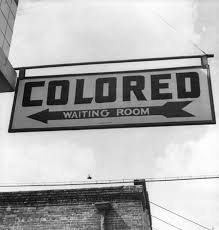
Lincoln Clay and the setting really distinguish Mafia III from the rest of the series with a brutally raw inclusion of racism as a mechanic, and it’s everywhere, from women clutching their personal bags whenever people of color walk by to stores having signs limiting or outright barring non-whites from entry and service.

The story, not including all the DLC, had been terribly undercut by the mountains worth of technical glitches on release, but ignoring the initial release’s problems, I say the game does a great job of putting the player in the shoes of those who called that a reality back in the day. My grandmother, who grew up in Virginia in the ’40s and ’50s, has a bunch of corroborating stories from the era. It reminds me of the approach taking by Max Payne 3, making Max a private bodyguard for the wealthy in South America, isolating him linguistically as he traverses the many locales of São Paulo. You are the one nail that can’t be hammered in very easily.

From Prohibition to early Cold War to civil rights, the Mafia series had a momentous evolution. As of writing this, I’m 2/3s of the way through Mafia II and I’m still at the beginning of Mafia 2002 with plans to complete them both and the third one sometime in the future. In spite of all the faults in the games, I can’t recommend enough that you experience this trilogy at least once if you haven’t already.