Sega’s Goofy Take on the Yakuza

It’s literally all fun and games.

The Sega division, Ryu ga Gotoku Studio 「龍が如く」, exclusively works on the Yakuza/Like a Dragon series and has done so for the last 20 years.

An urban modern-day RPG-lite with a gangster skin, Yakuza features characters that are a part of a connected web of Tokyo-based Yakuza groups with the main character, Kazuma Kiryu, AKA the Dragon of Dojima, so called for his dragon tattoo and association with the Dojima family Yakuza group. From what I’ve gathered, the early games have a serious tone coupled with areas of humor and, in the long run, satire. The primary inspiration comes from decades of yakuza media with each game being something of a movie with a nuanced plot populated with characters of shifting motives.

Kazuma is a primary protagonist across the first few games, but since the series follows him throughout his life from his youth to middle-age, some of the later games feature a character-switching mechanic before Kazuma himself is retired in favor of the new face of the franchise: Ichiban Kasuga.
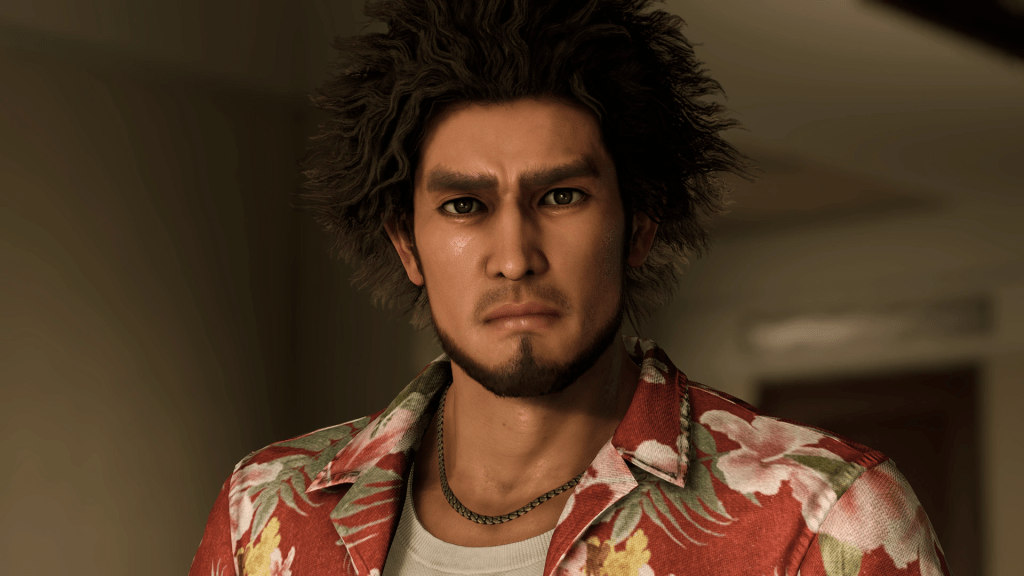
Less complex than Kazuma-san, Ichi-kun is introduced as a sillier character but with a heart of gold, so not at all dissimilar from Kazuma. Full disclosure, I’m still in the process of exploring the series, having emulated the 2005 game on PCSX2 back in 2023. So far, I’ve explored one of its spinoffs, Ishin, a fictional retelling of the life of Sakamoto Ryoma with our beloved Kazuma filling the role of the Bakumatsu-era samurai. Seems Sega really loves to reuse its characters.

I’d explain more about the series from game to game, but the games, though long, are worth the experiences they give you. Even if I was that involved in the games, I’d know better than to spoil them. So instead, the rest of this post will be about the gameplay features between the old games and something fairly recent.

Perhaps its because I started with emulating the first game in the series, I didn’t realize how clunky the controls could get until I bought and loaded up Ishin for the first time. Comparing the two shows how far the series has come since debut gameplay-wise. The first game has a fixed camera when moving that fixes itself closer to Kazuma when in combat. The right analog stick merely moves the minimap in the corner of the screen. The face buttons are all different combat attacks and interactive buttons in exploration and work fine on their own, but the movement in combat coupled with the block/evade functions defaulted to the shoulder buttons makes combat more than a little bit stiff and awkward.

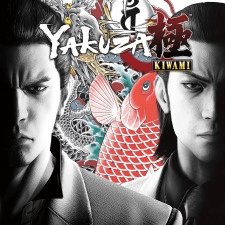
Thankfully, 2005 and the 2006 sequel, Yakuza 2, were given the reboot treatment a decade later, thus revamping, among other things, the combat system. I’d say, the beat ’em up formula was in its prime in this era of video games seeing as Yakuza debuted at the same time the west was gifted God of War and Mortal Kombat: Shaolin Monks. You can’t really go wrong with either the original or the remake, but if you value sturdier controls and a more fluid combat system, I and other Yakuza players implore you to buy the Kiwami games. They’re near-mirrors of the original games with extra bells and whistles to keep it modern along with the textures and graphics while staying true to the original.

Speaking of modern games, the latest installment in the Yakuza series was last year’s Infinite Wealth coupled with yesterday’s spin-off Pirate Yakuza in Hawaii.

Before you speculate, this was a coincidence. Nothing more.

The most recent modern release I played is a spin-off, the aforementioned Ishin. I can’t say whether its framework and UI are similar to the main games, but for what its worth, Ishin, being a retelling of sorts of the life of Sakamoto Ryoma, incorporates multiple combat styles from hand-to-hand to swordplay to even gunplay. In real life, Sakamoto was a samurai who adopted several western styles and customs. Western-style loafers, a revolver he used to try to escape the attempt on his life, and light dabbling with western tech like the telegram with hopes that it would change the face of Japan… and it did! Approximately 20 years after his death, so influence still counts.

In Ishin, the character of Sakamoto Ryoma doesn’t change just because he’s wearing Kazuma-san’s face like some Japanese parody of Face/Off.

Insert Spongebob licking meme.

Kazuma’s Bakumatsu fever dream plays like its modern contemporary games with all the modern settings and defaults found in the games, so it plays much better than the PS2 games, but doesn’t sacrifice the difficulty curve. In fact, since the first game’s release, the Yakuza series has always incorporated RPG mechanics, notably upgrading, collecting, potions, and skills; between this and last week’s RPG adventure with tits and ass, I really can’t get away from RPG and RPG-likes. Maybe I’ll put it in the pipeline in the future for review.

Obviously the modern games look prettier with the facelift and play better with the new tools that have defined gaming since debut–what does this mean for me and my enjoyment of the series? Well, I do plan on exploring them all further in some capacity. The pandemic may have ruined console gaming for me with all the scalpers reselling the newer consoles at f[dial-up]k you prices, but I probably might return to console. I’m already emulating my favorites on a console (RPCS3 has more kinks to iron out), which may speak volumes about what I remember as a great era in gaming.
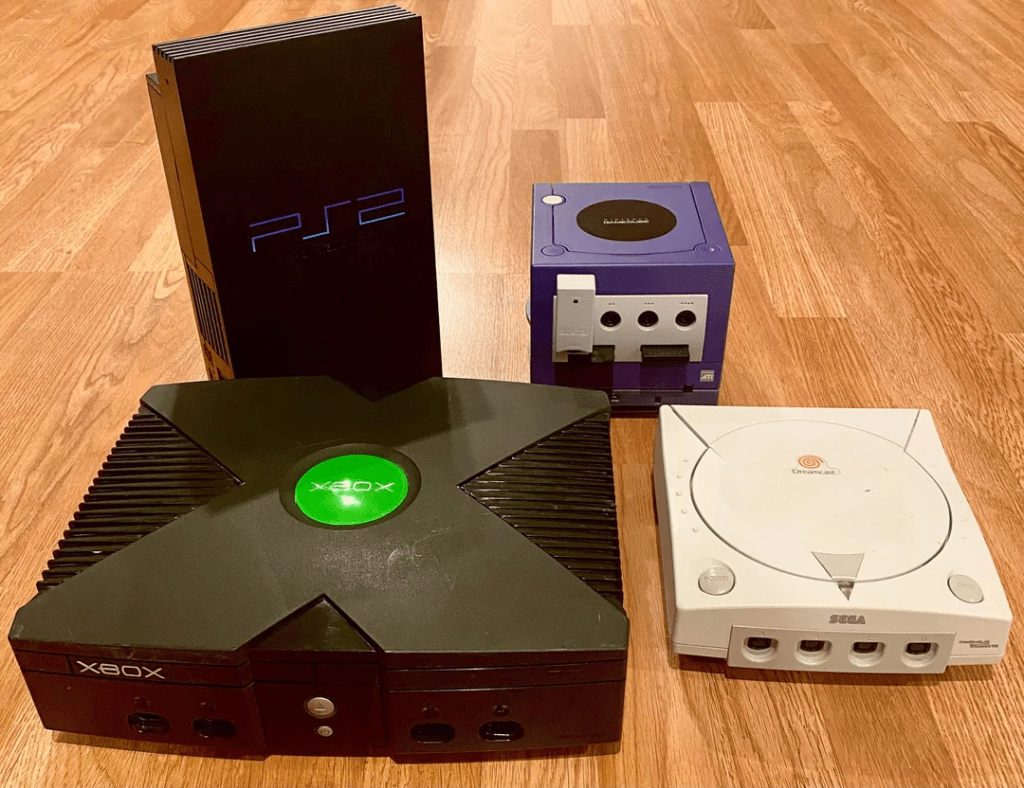
Credit: u/TheUndeadGunslinger, r/gaming

F[button mashing]k modern gaming, these are hard to find in the US these days. As a result, that Xbox is now $800. Well, I’m exaggerating, but these things being collector’s items now, I don’t think I’m that far off from what they’d go for now. Whether you can run them on a modern monitor is another story. At least the Yakuza series is fully available on Steam as of this writing… ‘Scuse me, I have a series to blaze through.

16-Bit NSFW Roguelike Metroidvania

Guess it was only a matter of time

By now, dear reader, you are well aware of my tastes. I played coy in the early days of this blog, but with time comes growth, exploration, and experience. Many forms of media have been covered on this blog, but even two years after starting, I’ve a few blind spots here and there.

My marriage proposal masquerading as a blog about three lewd and pivotal anime series many moons ago was arguably the loudest I’ve been of my tastes and while I admit it was a gateway to the horny, it’s mostly stopped there…

…until in late December when I added an Adults Only game to my Steam library. For the longest time, I was under the impression that these types of games couldn’t be bought or accessed normally. And in the context of brick and mortar game stores, I was kinda right. They wouldn’t be on the shelves next to Pokémon or Kirby or even Mortal Kombat and Grand Theft Auto, but there were (and are) developers who continually release envelope-pushing games for maturer audiences beyond the M-17+ rating. Games that, if put in a RockStar game, would easily get it the legendary AO rating.

The game I’m playing that has this rating is known as Scarlet Maiden by Otterside Games, a developer whose stated purpose is to make pornographic hentai games alongside publisher Critical Bliss. Scarlet Maiden is one of several fielded by this dev and by its nature leaves nothing to the imagination. It starts out with the titular character Scarlet, the last of a group of Maidens of the Flame on a quest to defeat an enemy known as the Prime Evil, previously sealed away by the First Maiden. On the way, you meet a smorgasbord of the typical RPG characters during your runs who can equip you with all the weapons necessary to navigate the dungeon. Melee weapons, magics, enhancing trinkets et al; you discover more with each run you take along with different enemy types that also come from just about any other RPG from orcs to fairies to slimes, etc.

As for the lewd content… actually, lewd suggests that there’s teasing and nothing is teasing in this game. Every character and enemy type either has but one inch of fabric over their genitalia or nothing over their genitalia, they’re just hiding a massive dong in between their legs. Or stickers are covering their nipples. Or… they’re either designed to be comfortable enough to leave their bits out in the open for all to see (something something exhibitionism kink), or they have a d[ding]k so big that they need to wheel it around…

I told you I wasn’t making it up.

Scarlet herself is covered by an abnormally thick piece of tooth floss that’s easily removed over the course of the game. In combat, sometimes when an enemy is downed she can remove the necessary parts of her outfit to f[anh]k the enemy (which is how you add them to the game’s Castlevania-like bestiary) or whenever you come across a chest or weapon/item swap/upgrade, the guardian/being resting in the room can simply be sexually pleasured to get to the shinies through the in-game currency called Sin. More sin = more upgrades. Sounds like pornstars when I put it that way…

Credit: ⎛⎝𝖘𝖍𝖆𝖗𝖕⎠⎞ (on Steam)

There’s a subsect of anime fans (read: tourists) who’ve sworn off all lewd and pornographic or porn-lite content, a legacy of the old GamerGate controversy that espouses the consequences of a generations of objectifying women in video gaming, and truth be told the number of games that still do this would only be found in Mature and up rated games and other media. For my take, if it’s plot essential, I welcome it, hence my shrine to Lady Rias…

IF I HAD ONE!!!!

Fanservice, however, is a broader brush to stroke. I can make the argument that a series like Black Lagoon has it in spades in the English dub in the form of anything coming out of Revy’s mouth.

For those who’re apprehensive of even fanservice or scantily clad women in media, rest assured that this game takes what I call the JoJo’s Bizarre Adventure approach to character design. When I say, every character has only about an inch of fabric covering their bodies, I don’t just mean the women. At the Maiden of the Flame house, there’s a thinly covered nun, a blacksmith with bulging muscles, a wizard who’s wearing nothing beneath the robe (except probably a c[rooster call]k ring), and others.

As you explore the dungeon, one of the maidens will ask you to recover ten of something which unlocks a sexy minigame, and as you may have picked up earlier in this post, there’s a wide appeal to many a kink/fetish most commonly found in hentai, though thankfully not so many that would put off a newcomer. Futanari, huge tits, giant d[bells]k, masquerade, naughty nun; from what I’ve seen, BDSM is an umbrella term that more than accurately describes the sexual content in Scarlet Maiden. And to build on that observation, using BDSM terms, I can safely deduce that Scarlet is a switch. She f[kcuf]ks and gets f[gasp!]ked by roughly all manner of creature and character that the game will allow.

As for the gameplay, there’s one attack button, there’s a double jump, you can use a magic spell, and you can dash to avoid the traps inside on your way to pleasure the traps and get some new stuff to help you conquer the dungeon. See what I did there?

The last thing to mention is the permadeath feature. The game doesn’t have lives or save points, but it does save your Sin points for upgrades and displays your progress each time you die or if you complete a successful run–the latter of which I haven’t done yet as of this writing.

Do I recommend this game? Abso-f[horse neighs]king-lutely.

This “Lewdtroidvania” (that’ll never stick) is but one of several in the Otterside/Critical Bliss library in particular and one of several I’ve seen on that side of Steam as a whole. Full disclosure, it’s more than just one of those sex games hiding behind the skin of a visual novel or even a puzzle game (the latter of which has more gameplay interaction than a bog-standard VN), the types you might see in any one of those s[horse dung]tty ads on the porn sites. On a whim, I tried one of those and I can’t deny there’s an audience for that type of porn game, but all things considered, you might as well just read hentai, or better yet, play Scarlet Maiden. You’ll get your money’s worth and you’ll get the same level of entertainment you would from booting up the old 2D Castlevania or Metroid games.

Also, don’t let the abundance of milkers distract from the fact that everything in this game is f[plastic wrap]kable. I may or may not play more of these types of games in the future.

Games I Haven’t Played Yet

A part two to anime I haven’t watched.

Last week, I talked about different anime series that have crossed my radar. Popular series that everyone but me has seen. Some of them I was avoiding due to the reputation of their fandoms or a disinterest in the content of the show.

Source*: Anigamme on Facebook

I don’t know if the person who posted this is the same person who made the meme format. Exaggerated or not, I never had an interest in idol culture. I find it too poisonous an industry to support or even look into. No industry is perfect (and anime and video games both have their controversies), but East Asian idol culture (Japan and Korea especially) is the only industry I’ve heard of where the idol has been lambasted for having a normal life or worse driven to suicide or been the victim of assault, deadly or sexually. I admit, these are cherry-picked but my point still stands.

Back to gaming, I’ve been around long enough to recall gaming’s most pivotal moments. The release of GTA: San Andreas 20 years ago (if you didn’t feel old already, here you go); Sonic steadily one-upping the Hindenburg as a 3D series; Lara Croft’s second return in a more grounded approach (as grounded as a series about a British archaeologist can get when thrown against the supernatural); and the first of two Mortal Kombat reboots where smashing together the first three arcade games worked surprisingly well.

But there’s still a few gaps in my library that I haven’t filled yet. Gaps I’ll be sharing in this post. Like last time, the list is not exhaustive; and there are more I’d like to talk about, but won’t be able to for brevity’s sake.

  1. The rest of the Castlevania series (1986-2014)
  2. Metal Gear franchise (1987-)
  3. More RPGs and JRPGs
  4. Metroid series (1986-)
  5. Metroidvanias

Castlevania series (1986-2014)

A series of reputations, one negative one that it managed to break, thanks in no small part to the Netflix series, but another one that it traded in return through no fault of its own. If Konami was in the hands of better people, the series would either have a better send-off or at least a more recent reboot that honors its legacy while roping in new players… like MK9.

My exposure to the series comes from Castlevania: Lords of Shadow on the PS3 and a pirated version of Aria of Sorrow for the PAL region on a bootleg PSP. That’s it, so far. Based on my observations, there’s an old love for the 2D games compared to 3D. Yahtzee Croshaw and the Angry Video Game Nerd both tackled Castlevania games with both wondering what went wrong with the series. Aria of Sorrow and Symphony of the Night get praise compared to something as ridiculous as Castlevania 64, and at least by that time we had over 15 years to iron out good games from bad.

To give credit to Castlevania’s 3D/HD ventures, it’s not like all of them are bad. Enough can be said about the 2D games, but from what I recall of Lords of Shadow, it’s a solid 6/10 game. To pull from Yahtzee Croshaw’s 2010 review of the game, it combines elements of God of War, Shadow of the Colossus, and Dante’s Inferno from weapons to enemies to character design. Hell, it starts off with the main character Gabriel Belmont, a holy knight in the 11th century, who goes on a journey to rid the world of all evil in search of a way to return his wife to the land of the living. Servant of a god fights monsters with a chained weapon as penance for the death of loved ones — God of War comparison made. Some of the bosses are huge hulking monsters you have to climb on whilst pecking away at glowing weakspots — Shadow of the Colossus. And Satan’s appearance draws comparison to his appearance in the Dante’s Inferno games.

Channel: The Escapist

But the main draw of the series back in the 1980s was Dracula as well as open-ended level designs and exploration encouraging multiple runs of the same levels and therefore birthing the concept of the Metroidvania (more on that later). As such, my desire to look into the Castlevania series will have to go to the older games. Symphony of the Night may get all the praise for being one of the best games of all time, but to this end, I’d rather judge it by itself than where it stands in the series or with its contemporaries.

Metal Gear (1987-)

Another historic series getting f[bombs]ked by its Konami Overlords because pachinko and claw machines make a lot of money, as a certain Welsh monkey can attest.

Playlist by: Kim Kalliope, Videos by: CDawgVA, ConnorDawg

Still, Metal Gear is still releasing games to this day with another entry set for release later this year, tarnished as the series may be, thanks to Konami. A strategic stealth game that lampoons the s[blyat]t out of the Cold War, long after the joke died. Though, considering Metal Gear is still doing that, is the joke really dead or is it just on life support?

The best excuse I have for why I never played Metal Gear would probably be due to lack of interest. Sort of like what kept me away from Yu-Gi-Oh! or Pokémon for so many years. What ties these three together for me is that there wasn’t anything physically keeping me from collecting a few of the games. Metal Gear Solid was on the PS2, which I had; Pokémon Red or Green were on the GameBoy, of which I had several (they were fragile or we kept losing them amongst our other stuff in the house); and Yu-Gi-Oh! is a card game. Cards are inexpensive, and they have been for years. But leave it to me to stand out and not get lost in the shuffle back then. Average oddball behavior.

But of course, Metal Gear is neither Pokémon nor Yu-Gi-Oh! It didn’t begin with collectible cards (but might have them as part of a collector’s edition of sorts) and I didn’t know a lot of people playing the games growing up, though I wouldn’t be surprised if I was friends with a long time Metal Gear fan but didn’t know it at the time. Pokémon and Yu-Gi-Oh! were just more visible at school by the nature of the games. With my experiences in games like Outlast, or Sekiro, or the hackneyed stealth sections in numerous action-games, I want to say that it’s in my corner, but I know different games do stealth differently. Sekiro’s stealth isn’t Outlasts and neither compare to the sometimes stealth of Max Payne 3. Metal Gear is a legacy series ripe for the emulating; PCSX2 still works for me and I’ve been getting remarkably lucky with the likes of RPCS3 on another machine that I own (though I’ve still got a bit to learn about extracting games on it).

RPGs and JRPGs

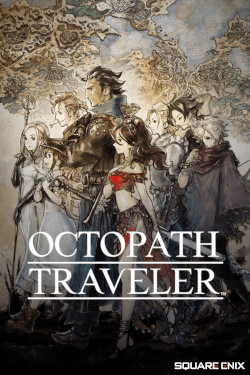
As far as genres go, I have a decent amount of exposure to some RPGs and JRPGs, more so the latter, but largely due to some western games having semi-RPG elements in them. GTA: San Andreas has more of it with the ability to let CJ’s waist expand or shrink; same thing with his muscles which was the approach I took the last time I played it two years ago. It’s more muted in GTA V, but still there even in GTA Online. JRPGs, on the other hand, are another blind spot I hope to fill. How I achieve that will need to be more finely detailed, but for the most part a look through of time-honored series as well as more recent releases can help me out. Octopath Traveler, for instance, is one that’s currently on my radar.

During Army AIT, a few of my classmates played around a bit in a Final Fantasy 14 RPG (and stopped after making a dedicated Minecraft server). I played some of the Naruto turn-based RPGs as a kid as well as a Dragon Ball-themed one. Fun fact, my exposure to Dragon Ball started with the PS2 games. The anime (specifically the Kai dub) came way later. And I feel like I’m selling myself short experience-wise without more JRPGs to call from. I’m starting to rectify this by way of some of the Souls’ games, which are developed by a Japanese studio, but Japan liking medieval Europe for a fantasy setting undercuts the experience aesthetics-wise. Dark Souls is still enjoyable, I’ll never debate that, but I don’t think it’s enough to fill the void. I’d like more to experience, Soulslike or not be damned.

Metroid series (1986-)

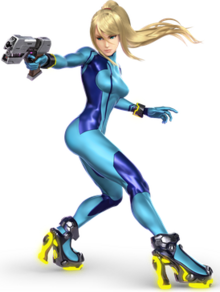
The first-half of the Metroidvania genre, the fact that major elements from both Metroid and Castlevania combined to form a new genre is remarkable. It was a groundbreaking game when it debuted in the mid-1980s, and is still going strong with its star character, the tall, beautiful, kick-ass Samus Aran.

Practically, Ellen Ripley’s disciple, both women are space adventurers blasting away at evil aliens. Couple that concept with a Mega Man-esque arm-blaster, the core of Metroid has been a blend of its contemporaries with a few things to make it stand out. Early example of female video game character (though probably not the grandmother of female protagonists in games), sci-fi setting, nonlinear game structure and retraversable levels, different weapons; it’s a great game series that I have limited exposure to.

All my knowledge comes from Wikipedia and I’d rather not have to go to a third party for my education. My s[splash]tbag college days allowed for this absolutely, but I’m not in college anymore. I may not be guaranteed more time to do it, but whatever excuse there is to keep avoiding it is no longer valid. Emulators for the older games (because no one is crazy enough to track down a still working NES/Famicom in 2025) and I can get a Nintendo Switch or wait for the Switch 2 to release and hook it up to my monitor, if that’s allowed.

Metroidvanias

Interestingly, I’m hard at work fixing this gap with a series of Adults Only roguelike Metroidvanias made possible through Steam. Especially one I’ve discovered with permadeath elements in it. But before I cross it off the list, I do still have more to say about these types of games. I really love my narrative driven Max Paynes, Mafias, Spec Ops, CoDs, etc., etc., BUT! A huge but.

Sometimes, I just want to push buttons and make the enemy collapse into a puff of smoke. You don’t need to convince me to boot up a game of Kirby; that itself is the oil. Need I any reason to play it? If it can be accessed by any means necessary, there’s no need for me to avoid it. As for Metroidvanias themselves, never mind games that make you think through their narrative; games that make you think through their gameplay are another favorite of mine. Puzzle games used to get lambasted for being “girl games,” but I still like them as well as physical jigsaw puzzles for helping to prepare me for visual puzzles. Nonlinear gameplay structures meanwhile have their place and depending on the Metroidvania in question, the puzzle elements and level design can be really innovative and creative or boring and uninspired. Or worse, convoluted. But I’ve seen a separate category of randomly generated levels with each separate run. Sometimes this leads to perpetual recycling, but it can still feel fresh if the enemies themselves are varied, especially within the level itself.

Well, now that I’m rereading this before publishing, I think this could apply to any old adventure puzzle platformer, but the distinction between those and Metroidvanias relates to going back with new abilities to get more items, powerful items especially. So while your first run will be predictably terrible (unless you’re a based Metroidvania titan), a few more runs and experience points later, you should be able to get through to the final boss largely unassisted, like a true gamer.

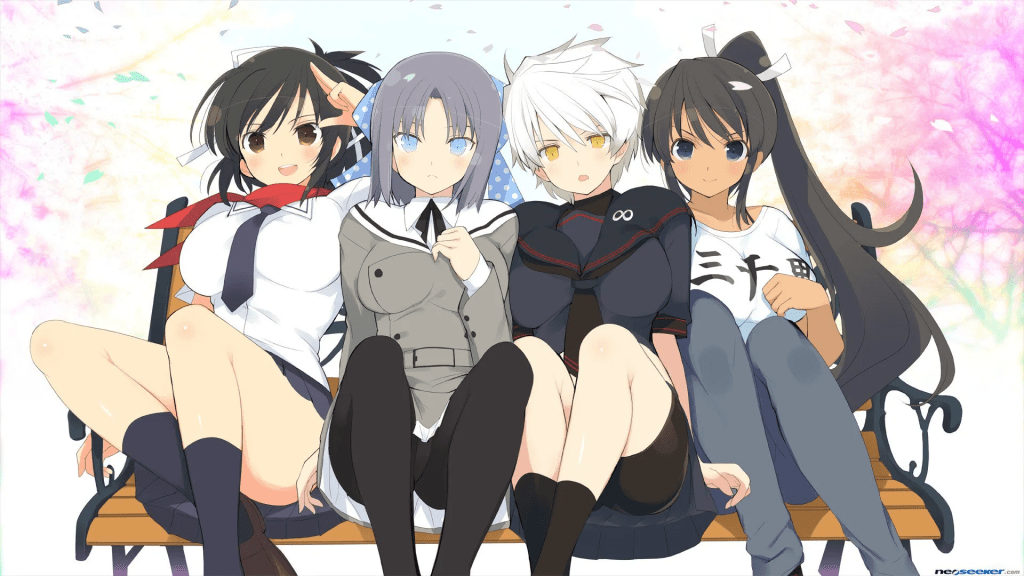
That’s an admittedly short list of all the games and game types I’d like to get into more in the future. Not exhaustive, certainly and not the end, as there are more games I could mention, some of which are on my Steam library for example but I haven’t touched yet (I’m a damn hoarder). The Senran Kagura games, more of the Yakuza series (GOATed series by the way), unconventional shooters (The Suffering is a start even though its a hybrid), horror games, Resident Evil, and even more to follow. F[slurp]k me, my Discord description is too profound when I said my anime and gaming list was an expanding castle…

I might make another list about those games in the future. I filled up the list in my notes for half of this year, but not the rest so I have a backlog of free space to fill. Maybe I’ll bring back the YouTube channel recs, but I’ve been watching mostly Vtubers and I don’t want to only recommend those.

It’s only January, I can make it work.

The Suffering: A Forgotten Horror TPS

Even Midway can take a break from fighting games

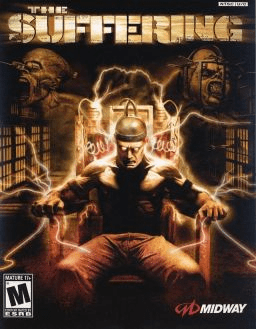
What I’m about to bring you is a video game series that is completely out of season and extraordinary mainly because of the team that developed it: The Suffering and its sequel Ties That Bind.

Yeah, I wasn’t kidding about it being a Midway game.

Released in 2004, The Suffering is set on a former POW island, now a regular civilian-operated prison under the control of the Maryland state prison system, and one with a nasty history. Think of the reputation of Andersonville prison camp or a few historical British or continental European prisons; the age-old “scrubbing a turd doesn’t make it not a turd” approach to refurbishing a place as accursed as this.

The protagonist is Torque and he’s on death row for brutally murdering his wife and two sons. Just one problem, he can’t recall ever doing such a thing, but not much can be done as he’s set to walk the green mile… or he would be if s[metal clanging]t didn’t turn sideways. Not ten minutes into his cell with fellow death row inmates–an Aryan Nations member, a pedophile, and a man convicted of an unspecified heinous crime (for giggles, let’s say he’s perma-banned from 15 states)–the prison island releases the Devil’s cologne and a legion of monsters, possibly created from the mummified remains of those who were executed return to exact their revenge on everything and everyone on the island, because no one can have s[gunshots]t in Baltimore. Not even The Wire.

These supernatural hybrid undead creatures hastily held together by nails, duct tape, and rusty scalpels prances about killing anything that breathes, doesn’t even have to move. The first victims are the prison guards, whom we see in the game don’t have the prisoners’ best interests at heart. Even those with a slated release date get stepped on. Next are the prisoners, and all of Torque’s cellies get sashimied. The rest of the prisoners aren’t as lucky but with law and order sliced and stabbed and even shot at, there’s a chance for the inmates to make their escape and Torque is of the same mindset, though he also spends his escape piecing together the course of events that put him on death row.

The horror elements of the game do wonders for the action and action is how the game was advertised. Critics at the time tried to compare it to Silent Hill or Resident Evil and the Wikipedia page states that that doesn’t work because the game is more “action-horror” than “survival-horror.” I’m not above making the comparison considering the game sets itself up for it, releasing at or around the same time as some of these; then again, the game’s reputation and comparison to other games weren’t why I chose to emulate it.

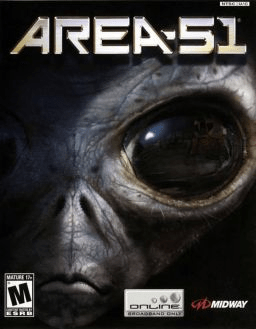
Its sequel, Ties That Bind, has a demo in the game Mortal Kombat: Shaolin Monks, following on from Deception’s Area 51 demo.

Maybe I’ll emulate this one. Maybe not. Who knows?

The game’s designer, Richard Rouse III, made it clear as crystal in interviews that survival isn’t the focus of the game. Action is, since Torque, despite being a silent protagonist, feels like a twisted version of Ashley J. Williams from the Evil Dead movies. I haven’t finished the first game and I’ve only played the demo for the sequel (many years ago, I might add so what I’m about to say next may be inaccurate), but I believe both games give you a variety of weapons to use. So far, I’ve got a shiv and a revolver in my current run through of the first game. Different weapons will work on different enemies and truth be told, looking at the enemy variety necessitates a semi-strategic approach.

The lore plays a huge part in the enemies that pop up. Contributing to this carnval of carnage and misery, the fictional history of the prison reveals a diverse range of creative execution methods from hanging to firing squad to even lethal injection. The enemies’ appearance is a reflection of many of these and I’ve found that fighting them with the most applicable weapons in accordance to how they died. The ones who died by firing squad are weakest against a gun. What kind? The revolver you pick up off a prison guard is sufficient enough. Sorta like how in Max Payne 1 every cutscene shows Max with his work weapon, even if you shot everyone with the Dual Ingrams.

Interestingly enough, Torque shares the same healing method as Max Payne, the painkiller.

The game also features a moral choice system that gives way to three openings, each influenced by player actions and a trio of spirits who haunt the prison. The three Ghosts of Prison’s Past are a doctor named Killjoy, a former executioner named Hermes Haight, and an executed prisoner named Horace Gauge. Killjoy ran the insane asylum in the 1920s and naturally his ghost wants to comb through Torque’s quirks, discover why he does what he does. Hermes the executioner has killed a handful of inmates in his nearly 30 years at the prison before taking his last victim: himself. To him, Torque is gonna free the beast and he is gonna like it! Lastly, Horace, is himself a prisoner who was also put to death for killing his lover during a conjugal visit, something he blamed on the evil atmosphere of the island. He maintained the regret and professed his innocence up until boarding the Ol’ Sparky Express, and from beyond the grave he believes he has a kinship with Torque, spending his afterlife convincing Torque that he’s not a bad guy. All three work together to influence Torque from within his mind and even drive him to transform into a grotesque Lovecraftian creature, though this transformation is wholly psychological.

The themes exhibited by these three ghosts harkens to a brief health lesson I got from my high school English class on personality traits as explained by famous psychoanalyst Sigmund Freud: the id, the ego, and the superego. The shortest explanation of that is the id is the force behind your desires, no matter how wicked; the superego is the force that houses your principles, even the naïve thoughts you had as a child; and the ego where reality keeps these ambitions and ideals in your head where they belong. Gauge is the closest to the superego, Hermes is the literal id, and Dr. Killjoy is the ego.

Not a bad video game overall, it did a lot of neat things, some new things and even makes good use of its moral choice system. It screws with canon a little though I’ve yet to discover by how much come the second game. Now that all the good is out the way, let’s discuss the bad.

The 2000s weren’t a good era for Midway. The YouTube channel Matt McMuscles explains in his Wha Happun? series that the good idea fairy invaded the Midway offices and greenlit yearly releases, ramping up in 2004 with this game and Mortal Kombat: Deception and ending around 2008 when the bankruptcy rumors were turning into reality. Here’s a video he did on The Suffering:

Channel: Matt McMuscles

Focusing on Midway’s darling franchise of Mortal Kombat, the magnum opus became a cultural phenomenon in the early 1990s when those arcade cabinets were first hooked up and internal troubles had been slowly boiling since at least 1997 when MK4 didn’t live up to it’s proposed potential. Coupled with that specific game’s subpar induction of 3D technology and it would take a while for Midway to recover from such an embarrassment. Failed spinoffs from Ed Boon and John Tobias’ side, the company drowning in debt to pay off pre-existing debt, and a few small gems buried under layers of s[cow moos]t, it was reported that Midway’s prestige as one of the Top 5 video game developers in 2000 dropped to Top 20 in just a few years. But as we know, it came back like a phoenix with help from Warner Bros. and is f[pimp slap]king with timelines once again.

The anonymous editors of the Wikipedia page for the 1992 game must not have been happy to specify which game having been rebooted a second time.

For what it’s worth, The Suffering is a victim of time, in that better timing could’ve helped it escape cult status, same for the second game. Executive shenanigans also hurt it severely as a yearly release was Midway’s answer to its financial woes. The “Band-Aid on a gunshot wound” approach to solving the issue, and one that if rumors are true, are looking to roost in Ubisoft’s nest. Whether that’s a good or bad thing is up to you–I haven’t played a Ubisoft game in years and I know I’m sleeping on a library of peak.

Let’s rewrite history a bit: The Suffering releases to such fanfare in 2004 and gets a sequel in 2005. Does it escape cult status? From within Midway, sure. From within the horror genre, not really. It would still have to fight against Konami, Capcom, and Tecmo’s Fatal Frame for attention, and what Raccoon City, New England and Project Zero do that The Suffering didn’t (or probably couldn’t) was have a voiced protagonist. This is what tears me up a bit; on the one hand, a silent protagonist can have character without a tongue, if analyses of Claude from GTA III can attest, but on the other hand, the era the game released in would’ve had more reverence for a protagonist who can voice their opinions. Midway may not have been as ambitious with casting at the time like RockStar was, but even an up and coming voice actor with an impressive range or future could’ve done wonders to guide us further into Torque’s mind.

Don’t get me wrong, I like that the lore of the island speaks for the game itself, but a silent protagonist with a backstory this heavy sells itself so depressingly short that it would need to wait some time before it can ride anything worth its salt at Disney World or Six Flags.

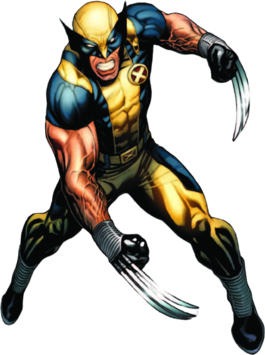
You could argue that it would rob the game of the mystery of the fate of Torque’s family, but it’s not like we’ve never had amnesiac protagonists before and a lot of them are pretty bad ass. Lest we forget:

And his animated forms have always had a beautifully raspy voice to carry those raw, unfiltered emotions. Sure, the cartoons have to be censored because the real Wolverine reeks of other people’s blood, but I’ll take the sacrifice for peak storytelling.

We don’t necessarily need a remake of The Suffering, but a game that does something similar or perfects what it did could be bless us in the future.

If I have time to do so, before the New Year, I’ll do something I’ve never done before and breakdown a 3×3 of my favorite anime characters. I’m still on leave as of writing so I’ll have time to push that out and even a New Year’s Day review of this blog. Anime was king for me this year.

Hashire Sori Yo…

Kaze no you ni/Tsukimi hara wo/Padoru Padoru!

This would’ve come out on Friday, but I had to pack my two bookbags for the holidays. Thought I was gonna look a gift of two weeks* of holiday leave in the mouth? (Actually, 11 days, but I also have a 4-day pass.)

Veteran weebs know what the image above means. ‘Tis the season to be jolly, and everything else Christmas-y. The holidays are a lot of things: great, awful, a mixed bag, an empty bag, and a bunch of other stuff. While this post is gonna be a happy holidays to all, it’s also gonna be a setup for a New Year’s reflection of this blog as well as a look back at the content I’ve written for this year and the content that was released, continued, suspended, or discontinued. Hitting the ground in 2025 with memories and goals. Knowing me, I may entertain theories with plausibility or significant evidence, but for most things I tend to stick with the facts. You’ll almost never hear or see me make a genuine guarantee unless it’s in my notes or I have evidence and research.

Now I do have plans in my notes to review my content for 2024, but that’s a January thing, and seeing as it’s a day before I return to duty, it’ll either be delayed or published ahead of schedule. Preferably the latter so I can focus on packing up, and New Year’s Eve or Day would be perfect ideally. For a look into the future though, of all the animanga I’ve viewed or games I’ve played, a fair few favorites stand out that have wide fanfare, but I’ve either admired out of respect for the reputation or not directly engaged in myself. Others I plan on writing about after a thorough amount of time. For example, I have a decent amount of time on my emulator with the original Yakuza game, though most fans would implore newcomers to try the Kiwami updates instead.

Still, a plus for Yakuza/Ryu ga Gotoku is that it’s generally easy to get into and the number of games released since 2005 gives newcomers a backlog to play catch-ups should they choose. And I do choose that method, real life responsibilities and desires would be damned, but being a responsible adult comes first.

On the opposite end of the spectrum are series I’ve encountered through osmosis. Memes, lore dumps, wikis, explorations; individual fans have tried to explain and recommend their own series, but from the outside looking in, I feel about it the same I feel about the Dune series, best explained with this meme.

Credit: u/netotz, r/dunememes

The series’ in question that I’m referring to are Senran Kagura, Fate, and Idolmaster. Each of these has a large following, both foreign and domestic, but my previous attempts to jump into the deeper lore and find a starting point has been met with mixed results. From easiest to hardest to understand, it’s SK, Idolmaster, and Fate. And I’ll start with SK.

The series’ Wikipedia page describes it as a multimedia franchise spearheaded by none other than Kenichiro Takaki, launched in Japan in 2011 with developers Tamsoft and Marvelous. The first game in the series released domestically is translated with the subtitle “Portrait of Girls” and was ported in 2013 with the subtitle Burst. So that’s simple, boot up an emulator or track down a still working 3DS or similar handheld and get some gameplay in, right? Wrong…

Opening up a can of worms called backwards compatibility and legalese, there’s a myriad of reasons why that’s not the most feasible way to do it for most. Of course, any potato computer can run a 3DS emulator–I did it myself to play Kirby: Planet Robobot and Triple Deluxe for old times’ sake–but the difference between eastern and western developers shows in the pudding. Eastern game devs will gladly re-release and remake old games for new hardware, such as the aforementioned Kiwami remakes of the old Yakuza PS2 games, whereas western devs can’t or won’t re-release remakes. Unless it’s Naughty Dog patting themselves too hard on the back with The Last of Us.

Narcissism is calling a PS4 port a remaster, when it was only a one-year release difference.

What I’ve noticed with eastern and specifically Japanese creators is that they’re accommodating enough to make their products available to all, though from what I’ve seen it can get hectic sometimes. If done poorly, a series can have numerous remakes or remasters or be disappeared and reintroduced, such was the case with JoJo’s Bizarre Adventure. Domestically, there weren’t many problems with manga releases, but western distributors either got a bad hand or dealt a bad hand with all the bravado and overconfidence that killed Macbeth. Long ago and today, it was considered sinful by the fandom to skip parts and lo and behold Viz Media was the one to ruin it in the mid-1990s. The approach was sound, but the execution necessitated the cancellation and re-release of a western release. To play devil’s advocate, Araki’s playlist disguised as a manga makes things difficult for copyright reasons, but it’s a miracle it was able to work so well, even if it took a quarter century to reach this goal.

25 years, people, 25 years. That’s how long it took for the first volume of Phantom Blood to get a successful anime adaptation. And the series had been through OVAs and a lost movie. If it was released contemporarily, we’d be halfway through a JoJolion adaptation with rumors of a JoJoLands adaptation getting a greenlight for Q3 2026.

For Senran Kagura, the source of confusion can come from the names they have, especially overseas. This itself isn’t a new concept, going back decades with international releases of Japanese anything, games notably; sorta like how Earthbound outside of Japan is known as Mother (which is its own wormhole of naming and releases). Couple SK with a limited anime adaptation in 2018, an OVA, and several spinoff games and it can seem like a lot to catch up to. I’m only one mission into Shinovi Versus thus far and I have an extended topic discussion lined up for February. This time, I’m going to try my best to get through Shinovi Versus and at least start another game in the series. So, does SK have a tricky starting point? Yes, but personally I found it easier than the next one I’ve been trying to find a starting point for: Idolmaster.

What makes this one trickier is that it didn’t start off with a console release, but with an arcade release in 2005, later ported in 2007 to the Xbox 360 in Japan. Clearly, it was successful to get a franchise of its own, but from what I’ve heard, Xbox and Microsoft don’t enjoy wide popularity in the Land of the Rising Sun. Sony and Panasonic have a wider reach on their native soil, but this series’ Wikipedia claims Xbox Live had better hardware. Who else but a computer company to push the limits, right?

So much for Sony, I suppose? The Wikipedia also suggests that that was just a test with subsequent releases getting PlayStation or mobile releases. Though over the course of 11 years, there’s been many releases. Again, spinoffs are no issue, but the volume of them in games like these makes finding the origin point tougher than it needs to be, especially when they’re neither conventionally named nor released in the right order for an international audience. Circling back to the Earthbound series, even if it’s true that the fanbase isn’t big enough to warrant a wide release, the small headcount was dedicated enough to translate the series themselves.

But the blame for that can’t always fall on the devs; copyright law is no joke no matter what part of the world you’re in. It’s part of the reason JoJo’s was so hard to introduce to the west. Let’s award the Benefit of Doubt in general cases and say that if it wasn’t for the corps of copyright and lawsuits, more players would play more games, no matter how obscure they are to the general populace. On the opposite end of the spectrum, there’s a monolith of a series that has one hell of a reputation. Starting as a visual novel, getting two separate anime adaptations (the latter made to correct the former’s mistakes), and spawning a franchise with more twists and turns than M. Night Shyamalan and Christopher Nolan could think of. Pretzels look at the timeline and think, “Holy knots, guy! The f[crunch]k am I lookin’ at?!” Of course, I’m talking about the Fate franchise.

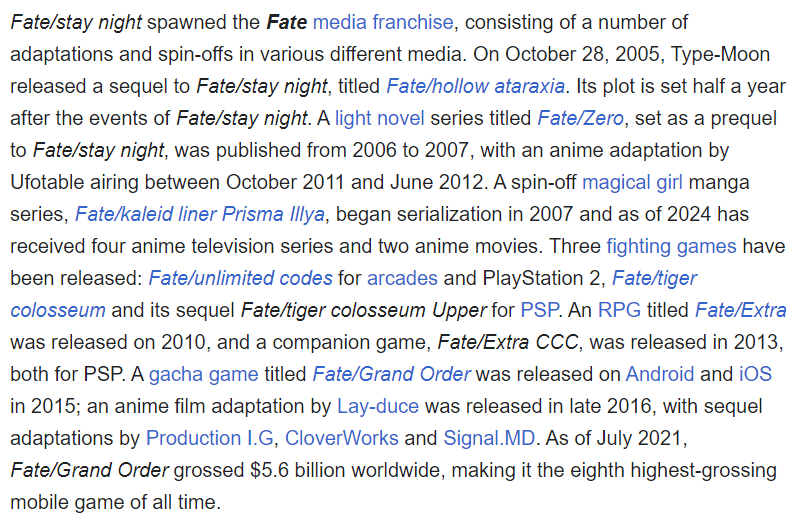
The emperor of long and convoluted timelines, and the source of upwards of 35 to 40% of all anime-based memes, it started with a visual novel in 2004 and hasn’t stopped running. Even if you messed up the train tracks ahead, the Fate Express continues on through the power of fandom and fanservice. This passage from the associated Wikipedia page says as much:

I’ve wanted to get into Fate for a few years now, but its reputation has held me back from taking the plunge. Also being a seasoned weeb myself, I know how hideous fandoms can get (see the My Hero Academia fanbase for more details, and cleanse yourself afterwards. IYKYK). Thankfully, there’s not much in the way of ugliness for the Fate series, but to quote a Welsh monke, “if Dragon Ball fans are the ghetto, Fate fans are the crack dealers.” Some of the more vocally dedicated types will stop at damn near nothing until every newcomer lives and dies by Fate and has immersed themselves in all the VNs, anime, movies, games, and other merch that a franchise this influential can spawn.

Channel: Trash Taste Highlights

With just this video, I don’t really need to elaborate further. Someone will tell me that Fate is easier to get into than I fear, and I guess I can take their word on that being blinder than Kenshi from Mortal Kombat or Toph Beifong in this regard, but what would help is if there was someone out there who will meet normies and newcomers with some interest at the halfway point instead of leaving us to fight off a pack of wolves with a stick and a book of pressed 4- and 5-leaf clovers. You can expect to see more in-depth opinions about all of these in a post about s[horse neighing] not (yet) reviewed after the New Year.

Going through my notes whilst finishing this up, I realize some stuff should’ve been up at least a week before I thought they’d be (this post included), but life and work had gotten in the way. The holidays aren’t gonna make that any easier for the last few topics, but I’ve been beating the odds for as long as I can remember and come hell or high water, I’m gonna make this work. Figuring it all out will have to come later.

Before I part, why don’t I give you a channel recommendation for the Holidays? Behold, Geopold!

https://www.youtube.com/@Geopoldd/videos

Not dissimilar from Gattsu, Geopold is another YouTube channel that introduces different parts of the world by way of the power of internet memes. Describing himself as “Birmingham’s Travel Agent,” going off of that alone, he’s confident that that he’s well-traveled enough to give an unbiased opinion about the places he’s– okay, I’m joking, he’s gonna meme these places off the map, and keep mememing them. Now that travel agent thing may be a joke, and if that’s what you’re looking for than stop where you are, have a drink of your choosing (Kirin or Asahi for me) and watch him grossly oversimplify white people… or the state of Florida…

The next topic (fingers crossed, it’ll be out by Friday or Saturday night) will be an out of season third-person shooter game that only eight people remember.

If you’re at all curious about the plot, here’s a small hint: the Maryland prison system has been better, all things considered.

Ananta: Anime GTA?

We’re getting anime GTA before GTA 6!

If it releases before GTA 6 does (and some outlets seem to suggest this as the case), the opening joke will become more prophetic than I meant it to. Anime and the Grand Theft Auto series aren’t too things that always mix themselves, but talking to any gamer or anime fan, you may find that they’re the same people. One of them is writing this blog right now! Matter of fact, GTA Online has a few cars that can be customized with anime liveries. You can have your very own Itasha of the GTA anime parody Princess Robot Bubblegum.

For some reason, I was more embarrassed of this than I was of High School DxD, and that series proudly shows boobs and ass in nearly every scene!

But to get away from a parody of an East Asian medium present in a game developed by Northern Englishmen and Scots, let’s go to an upcoming game whose development team is in East Asia and is drawing comparisons to a game developed by Northern Brits.

Announced in August 2023 under the working title Project Mugen, Ananta is described as a fantasy urban RPG open-world, not dissimilar from Zenless Zone Zero but with much more to do gameplay-wise. Driving, city exploration, minigames, and Spider-Man’s wrists.

Not much is known about the plot as of writing, but the associated Wikipedia page (which will definitely be updated post-release and interviews) explains that its protagonists are paranormal investigators with some kind of extrasensory perception (ESP). These abilities are being used to fight against the main antagonistic force known as Chaos.

Channel: Mugen Official

I haven’t the slightest idea who specifically asked for this, but I want to buy them a present. A six-foot tall cake with a stripper or porn star of their choosing.

It’ll be hard to see this as a gacha game with how it looks and what it’s supposed to have, being an amalgamation of GTA, Honkai: Star Rail, Spider-Man for PS4, and Zenless Zone Zero, with a dash of Mob Psycho 100. Write what you know, learn more so you can know more, write even more. It’s also worth making the distinction between the devs of this game and Mihoyo. They’re another Chinese company based in Hangzhou called Naked Rain. Due to the whales that coalesce around paid DLC and many gacha games, they most likely do have the capacity and resources to make a game like this, but they’re not. ZZZ comes close and it’s still not a 1 to 1.

Ananta’s trailer seems to promise the ability to drive around the city, or, according to the Wikipedia, cities with planned updates. A game with multiple cities. It might be due to the resources needed to include multiple cities, but I would love it if more games had more maps to explore without locking it behind an expansion pack, DLC, or any other paywall. Even a loading screen would be serviceable, to me at least. It’s what made Midnight Club 3 and the old Need for Speed games so memorable and exciting.

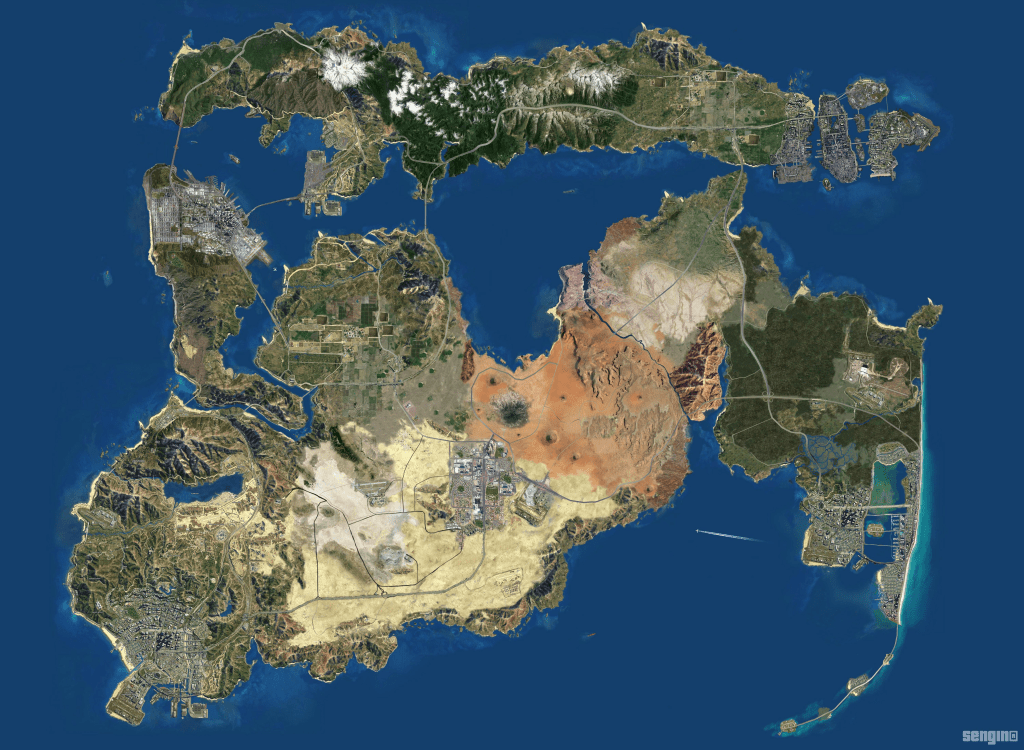
Also, I have to circle back to GTA for a rant. Liberty City, Vice City, Los Santos: the big three stand-ins for NYC, Miami, and Los Angeles and victims of the RockStar game design of “take well-known big city and make it an island.” There’s a few theories floating around that the reason for this is a great big satire on the old “self-absorbed Americans live in their own world” stereotype and to be honest, I’d say the joke is quite old. It may have worked before, but with GTA: San Andreas having stand-ins for Vegas and Frisco as Las Venturas and San Fierro respectively as well as an area that can be viewed as the rural part of NorCal, there’s evidence from RockStar that they can and could (read: should) make a multi-city game. Or frankenstein their three cities together. Multiple fan artists have done it in the years since.

Source: sengin*

* The source for that map is hard to find seeing as it’s nearly 10 years old. Nevertheless, we have a good base, even if conceptual in design. There was also Ubisoft’s The Crew which had a truncated map of the lower 48, and most MMORPGs to go off of for a true open-world GTA-esque game. Come on, RockStar, give us what we really want.

Sorry, back on topic. Ananta is available for pre-registration so you can be among the first get it once it’s available. And you can bet you’re bottom dollar, I’ve already pre-registered and I’ll definitely be one of the first to play it as soon as I acquire the yottabytes necessary to house them all. Maybe I should make a rant of modern gaming, there’s enough material online for me to use as examples… as well as anecdotes and memes of people moving files around for storage; a story I know all too well.

It’s easy to say that I’m excited for Ananta and want it to succeed. That kind of goes without saying, gacha games are plenty successful as shown by Mihoyo’s output and I don’t just mean the whales funding it better than any Wall Street investor. But I’m going to take a page from the Det. Cole Phelps Institute and match that excitement with some skepticism. No assumptions, wait for more trailers and information to be revealed, look into some theories, and most importantly, prioritize the facts. To quote the God of War:

  1. Expect the worst;
  2. Assume nothing, and;
  3. Always anticipate [danger]

Credit: alexloai64

A series of great quotes to follow, not just in a hack-n-slash god-pulverizing simulator, and something I’ll keep in mind whilst eagerly awaiting more updates on Ananta/Mugen.