The accursed year of 2020 was a lot of things to people and only a few of those things were good. I recall searching for something to occupy my time while trapped in the dungeon and going back to that Looper article, I thought about looking for a review for a certain anime I’d definitely not heard of prior to reading it: House of Five Leaves, known in Japanese as Sarai-ya Goyou. Created by Natsume Ono.
Set during the Edo period, it’s about a samurai warrior named Akitsu Masanosuke who very much has the skills of a seasoned warrior, but his timid demeanor loses him a client. The perfect samurai is meant to be intimidating, tough, and unflinching and this guy is shy, unassuming, and nervous. Sort of like Season 1 Mob.
Masanosuke doesn’t really meet the expectations or idea of a warrior even for the time period, which is the point of the series. It takes all the tropes associated with most samurai media and flips them on their head while also grounding the Edo period into reality. One could reasonably put two and two together based on what they know about the Tokugawa period and the Sakoku policy that a class of people defined by war in a time where there aren’t any wars anymore makes for a band of money-hungry and utterly reckless scoundrels… for the most part.
In reality, most samurai were just as diabolically malicious as the enemies they claimed to defeat in combat. Just like medieval knights, both of these warriors have a lot of stories real and mythical surrounding them.
This doesn’t reflect either class as a whole as lots of knights and samurai did have human decency and protect the weak as servants of the people, but being of nobility in Europe and Japan respectively, it meant that there was a lot of power shared by a diverse group of people of different thoughts and intentions. Focusing on Japan, some samurai were excellent and deserving of their position, others were fine with just the bare minimum of simply being there and the rest were heinously dangerous criminals abusing their positions for personal gain. Yeah, there’s no shortage of all three of these the world over; it’s the same old song no matter where you go. And I like that. It reminds you that there’s a difference between being something and being able to do something on a moral level.
So House of Five Leaves is generally about a nervous man who’s too gentle to throw the first punch, or in this case, swing the blade first. Plot wise, he finds himself in with the wrong crowd. Part of the downside of being gentle is not having the spine to put your foot down, which is how Masanosuke finds himself embedded with a group of criminals, functionally early inductees of what we now know as the Yakuza.
It’s hard to say when and how the Yakuza started, but based on my description of the Edo period making for restless ronin eager for battle some theories suggest that this is the most likely case for how the Yakuza morphed over centuries to become recognized as an organized crime group in Japan. For Masanosuke, these criminals specialize in theft and call themselves the Five Leaves. Their enigmatic leader, Yaichi, offers him the position of bodyguard which he reluctantly agrees to.
Again, he has the skills of a samurai, but doesn’t have the intimidation reflective of most other warriors in the Edo period. A worse person would jump at the offer and use whatever excuse there is to cut anyone in two. That said, there’s more to the series than just Masanosuke’s navigating this group of thieves and savages he just said yes to out of desperation.
Yaichi is one of the more interesting characters in the story. He keeps his personal history very close to his chest, playing things off as though he’s simply living life to the fullest. Other members of his gang or known associates who have some kind of connection to him or the gang share their own stories. An ex-thief named Matsukichi works as a beauty ornament manufacturer by day and a spymaster by night, contributing to the beauty of the women while also listening in on the Five Leaves’ potential targets. A tavern owner named Umezo who walked in the same sandals as the others but requested retirement from that lifestyle for safety’s sake, which was granted surprisingly enough. If you know a thing or two about organized crime groups, cults, secret societies, etc., they rarely let you go without a type of debt to pay…
…but in this case (slight spoiler), the loss of his skills weren’t gonna change how the gang operated. He also had a young family to put ahead of himself. Finally, there’s a geisha named Otake who was made to work off a large debt by way of entertainment (as was the standard practice/purpose of a geisha at the time) until Yaichi intervened financially.
Only a 1-cour anime series, it takes you into their eyes and what they go up against. The struggles, the nuances, the desires expressed; this was the anime that inspired my first accursed blog back in 2021… before it cha-cha slid off a cliff. I don’t want to link to that blog anymore; I’m trying to put it behind me, but it keeps coming back and I don’t even think it was a good showcase of my writing. But at least it inspired me to start this one which I’m more proud of.
Back to Five Leaf Clover Gang: my search for a review and recommendation on YouTube led to a playlist with all the episodes on it. People are really getting around YouTube’s copyright strike hammer to get some classics onto the platform like Azumanga Daioh and Lucky☆Star. There exists one spoiler free review on YouTube from over nine years ago following the trends that I’ve been going with so far with anime, awesome reception s[DIO wrryyyy]t sales.
Channel: AnimeEveryday
Keep in mind that this isn’t an action-heavy series, at least the anime isn’t. Don’t go in expecting Masanosuke to swing a sword all the time, because he’s not that kind of guy. He wasn’t written to be that kind of guy and I think it’s an advantage the series has over its contemporaries and progenitors. I like to think of it as the kind of anime that explores the issues people face daily, even if it’s set in the Edo period and if you choose to give it a watch as well, you think so too. The link is up above. Happy watching!
I had gotten news of the live-action Avatar remake on Netflix through the grapevine. Stirrings online in r/TheLastAirbender brought it up sometime last summer and I was holding my opinions until I saw the series for myself, which I did so this week. Even with all the news and assurances that it would do its best to honor the series while putting a new spin on it for a 2024 audience I still felt dubious for a number of reasons.
For one point, the original 2005 cartoon debuted on Nickelodeon, presenting itself as a goofy cartoon about practitioners of the four elements, one, the Avatar, being the master of them all in a bid to bring harmony to a world almost completely victimized and under threat from a militaristic, ultranationalist empire. Goofy moments when the time calls for it surely, but it’s a surprisingly mature cartoon that treats the subject of war, death, genocide, and loss with the maturity those all deserve.
It was a beloved show and those who were there when it aired (myself among them) remember very well many key events and moments from the show from Aang’s discovery by the Southern Water Tribe siblings, to the hunt for the nearly completely buried library managed by a spiritual being, to the planned for and failed invasion of the Fire Nation mainland by a coalition of Earth- and Waterbenders.
Forgive me if those were spoilers for those of you who couldn’t see it even until it recently came to Netflix, but I bring those plot points up to set up what it was like for me watching the show, eagerly awaiting for Book 3: Fire to finally launch in 2007.
I won’t pretend that it was the perfect series even at the time. Some episodes dragged on in places, character flaws that were acceptable back then show the age of the era select episodes were written in, and some plot points were either never addressed or outright dropped for mysterious reasons (the fate of Zuko’s mother was the biggest mystery back then), but I forgive a lot of these for the progress from beginning to end. The mark of good, if not, great writing is the kind where the character shows considerable growth from beginning to end, hence why you learn to hate Walter White towards the end of Breaking Bad.
Another point to bring up would be the early production issues experienced shortly after the announcement of the series. The series had been in the works for a few years prior to the filming of any trailers of announcements of which actors would be cast as which characters as told by original co-creators Bryan Konietzko and Michael D. DiMartino. Initially, they were all on board with the idea, but Netflix being Netflix seemed to have made a decision that drove them away from the project, and it would be up in the air as to what that would be until the series debuted in February of this year.
Either way, things weren’t looking very good for the live-action series, especially since this had the Netflix stamp of approval, a now-diminished status that at one point was worth a mouthful of gold crowns.
I personally had been critical of Netflix, at first for contrarian reasons. Since at least high school, even with the streaming service gaining ground as far back as the mid-2010s, I was the one going against the grain failing to see the point. Call it my upbringing; classic cable television hadn’t disappointed me yet. I was still a kid watching cartoons. It wasn’t until high school actually that I got a taste as to why some shows continued over others. Ratings were often the name of the game, which seems to be the core of the philosophy for Netflix now that they’re a streaming service.
It works for some, but the millions they spend even on single episodes, their original series being hit or miss at times, and their pioneering of the batch release takes some others getting used to if they ever do. But with a bunch of other apps and streaming services putting their own spin on the formula, some of them established brands and others newcomers, the crown jewels of the Netflix empire start to look and feel like old paperweights. Guess I still have those old opinions despite being on Netflix for the sake of a few shows that are on the service. Hahaha!
These days though, what makes me so cautious of Netflix is its reputation. I’m not gonna knock all of their originals — I’ve heard critics sing the praises of the likes of Stranger Things, Orange is the New Black, and Bojack Horseman among others — but f[bricks falling]k me some of their other s[farting]t stinks to high heaven. I’m scared as hell to include the promotional poster for that one movie of theirs that caused such a stink online a few years ago for numerous reasons. IYKYK.
Narrowing it down further is the reputation of its live-action adaptations of popular anime. For years, live-action adaptations of anime, be it western or Japanese, has come under scrutiny for a lot of reasons, many of which are obvious. Impractical set pieces and designs, the absurdity of a lot of anime plots and character designs, and the awkwardness of introducing a lot of tropes known only to weebs apropos of nothing is a major killer of a lot of non-anime fans interest at the first hurdle. It’s a hard lesson that most western studios learn and forget rather quickly. I’ll never forget the ham-fisted attempts at hyping some of these movies up for release. Notably, this one:
For Netflix’s case, they thoroughly bungled the Death Note movie (forgive me for mentioning that… mess) and they screwed up the Cowboy Bebop movie with its god awful writing. Only recently did they nab themselves a mining pan of silver with the live-action One Piece, but flubbing it time after time, is that the only victory they have to flex? Probably.
Now they’ve come out with an eightfold batch of Avatar: the Last Airbender filmed and remade in the third dimension for our viewing pleasure.
I can’t make this a complete review as I’m only two episodes deep, but I already see the differences that Konietzko and DiMartino likely had an issue with. It’s not a shot-for-shot reshoot of the original series. Instead, it has the groundwork but interweaves easter eggs for the original audience watching with the new layer they built for themselves. Of the things I remember from Book 1, Zuko and Zhao were butting heads trying to capture Aang for Fire Lord Ozai until the end when Zhao was killed in the raid on the Northern Water Tribe, eliminating one of several of Zuko’s rivals.
Speaking of which, the circumstances behind Zuko’s scar are also rewritten. I didn’t get this far in the series yet, but in the clips I saw when the original and new shows were being compared, instead of cowering when he found out he had to face Ozai in an Agni Kai, he seemed to have put up a fight until the last minute. Something I’ve gotta praise personally because it hits a bit close to home. You or someone you know may have had that kind of parent, the type who wants to show their child the world is made up of enemies to fight with your fists by volunteering to be the first enemy they have to overcome.
And there’s more moments in the show that differ slightly or greatly from the original in a lot of ways. But are the humorous moments still there? Actually, yes. Select moments and characters do stand out quite a bit like Momo, Sokka, and my personal favorite so far, Uncle Iroh. But others did raise an eyebrow of curiosity, namely the early introduction of the Spirit World and the first Avatar Aang encounters when there.
If you remember, the first Avatar he encountered in the cartoon was Roku, first from his statue in the Southern Air Temple, then through his pet dragon Fang before finally meeting him on the eve of the solstice aided by an underrated character, Shyu the Fire Sage.
In the live-action series, Kyoshi’s the first Avatar he encounters and its at her temple where she’s pretty much having a DBZ: Abridged moment with Aang while he’s looking for easy answers to a complicated problem. Personally, I feel this would’ve worked well at the end when he’s nailed every element and the fight with Ozai is on the horizon, just like it is in the original. That works so well because Aang is at a crossroads and is looking for answers from as many of his past lives as he can contact.
In that moment, Roku didn’t much left to offer the teenage Aang; Kyoshi practically told the boy to make a decision or suffer the consequences; Kuruk used his life’s regrets as an example of what not to do in the face of danger; and Yangchen, the last Airbender Avatar, while understanding the disciplines instilled in all Air Nomads (Aang being the living legacy of such), she reiterated that Airbending Avatars like them are exempt from such expectations due to their duty, and in this moment, it was up to Aang to save the world from evil by lopping off the snake’s head. In the live-action though, it seems more than a little bit rushed. The original series gave Aang and co. roughly the length of a year to master the bending disciplines and concepts. The circumstances of the show may have forced him to rush it at at faster pace than his predecessors, but he’d matured well-enough to understand what was at stake.
The live-action series dumps all this on him at the first hurdle, before he has time to at least try to get a better understanding of this world he was awaken from. At this point in the series, all he knows is that thanks to Sozin’s Fire Nation, he’s the last of his kind. Again, everything was revealed both to him and the audience in snippets. The Netflix batch release hinders this, I feel, as it forces the series to do a lot more with a lot less, specifically condense 20 episodes into eight. It feels to me that it’s jumping the gun when it doesn’t really have to.
If Netflix were a different company, they could probably dedicate more time to retelling the story over the course of more episodes (probably 12-13 instead of eight), maybe giving the series more seasons than what it got back in the 2000s, but that’s just what I feel. Maybe a second season gets greenlit and we’re in business or maybe it follows a trend of million-dollar-an-episode shows getting canceled because someone hit the bulls[cattle bellowing]t button. Who knows what’s in store?
As I said, this is less of a full review (I hardly ever do those these days), and more of a first impression of sorts. It’s bound to change the more I watch.
For Saturday, May 11, 2024, I introduce you all to The Japan Reporter.
Also known as Nobita from Japan until recently, The Japan Reporter is another Japanese YouTuber with a bridge to the western and Japanese worlds, reporting on a variety of different things that do or have the ability to impact Japanese every day life from societal norms, social issues, and environmental factors to political stirrings, culture, and a bunch of other stuff.
Far from being the only channel to openly discuss these topics for a broad audience, if you were looking for more windows into Japan perhaps for an upcoming visit or for your own personal curiosity, have a look at this channel.
I’m not making up that statement by the way, I did find this anime through a meme. This one specifically:
Channel: Vinicius Costa
I highly doubt that a single meme motivated everyone who saw it to dig deeper into what the anime was about, especially since on My Anime List it’s quite low in popularity for a ’90s anime, but reviews on both MAL, and even on Amazon for the novelization going as far back as 2000 give it high praise, so the conclusion to draw from this observation is that the series is yet another cult classic series.
Created by Kosuke Fujishima and running from 1986 to 1992, You’re Under Arrest, also known as Taiho Shichauzo in Japanese, is essentially a buddy cop manga. Like Gunsmith Cats, the series has a pair of tomboy protagonists with a rotating cast, but unlike Gunsmith Cats, it has more than the manga and an OVA to its name. Actually, the Wikipedia page lists three TV seasons, multiple OVAs, a movie and even a video game. One essentially wins a popularity contest at the time of release and then some while the other sees renewed interest after decades of sitting on a shelf with a family of dust bunnies. Maybe this is an indictment on the cultures of the targeted audiences–the western audience championing the lampooning of a government agency (even though they’re not that bad in the series) whereas the Japanese audience loves and adores the portrayal of the police in the series because it rings somewhat true of Japanese police behavior IRL.
It could be something else I haven’t looked at, but for all intents and purposes, You’re Under Arrest had a lot more going for it so if Fujishima had any doubts of success, those doubts must’ve been dashed when it came time for the anime release. Released in 1996, season 1 of the series starts off with an introduction to our two leads, Natsumi Tsujimoto and her partner against crime, Miyuki Kobayakawa. Other characters include but are not limited to Ken Nakajima, Yoriko Nikaido, and interestingly a trans character Aoi Futaba.
As a buddy cop series, it sorta fits the bill of what could be seen in shows like Brooklyn Nine-Nine. It doesn’t take itself too seriously and shows the more relatable human elements between the cast members. Uniformed or not, there will never not be an organization of people being weird or spontaneous on an off day. Talk to veterans about the stupid things they’ve done in service during their time off and you’ll be cracking like an egg from all the jokes and off-color humor.
Credit: 22 January 2016; Uriarte, Maximilian; Terminal Lance Comics
For plot, most of the time the characters are either goofing off or just performing their duties as police officers. It’s framed as the sort of episodic anime series that you can kick your feet up to, though it’s not light on the action either. The policing part of the job in You’re Under Arrest is a mix of the standard issuing of tickets, tracking down minor law violations and whatnot to tracking down and arresting criminals, aiding the elderly and defenseless, and overall being a pillar of the community. And spending enough time on the internet may open you up to some snarky comments about policing in most western countries, but that’s getting off topic.
Unless you are that type of person, it’s an unoffensive series that has a lot of heart, humor, and complexity to it. The characters are fun and energetic, and (slight spoiler) for those who have feelings for each other, there comes the question of whether this is a conflict of interest. Are the risks worth it to be with each other and whatnot.
This video also says much of the same about the series:
Channel: Anime Top Scholar
While viewing the series, one thing I noticed was the meticulous attention to detail, especially for a hand-drawn ’90s anime. Little to no details are left out from objects or people reflected in windows, to water effects during rain or storms even to the response of the gauges in the vehicles. Fujishima and the people at Studio Deen did well on their research for the series. There are some minor errors as expected–no one is perfect–but it’s not too much of a distracting unless you’re a certain type of person.
Users on MAL gave it an overall score of 7.6 out of 10. Normally, I stray away from a numbers system not so much out of principle or preference, but largely because to a certain degree I understand the argument that a numbers rating system trivializes or undermines the whole review. Spending all that time to write a long- if not well-thought out opinion piece on a certain piece of entertainment, brought to its knees by a scale. Not changing my rule, but for the most part, I’d bump it up to a solid 8 out of 10.
The full series is available on YouTube, as someone was based enough to share it for the rest of us without concern for monetization. Trying my best not to jinx it, but if you search it up on YouTube one day and the playlist is absent, you already know what to do.
I remember long ago writing about searching high and low for obscure series to read or watch. Unknown, underappreciated, undersold series that have very little audience, very little fanfare, very little recognition of any kind out there. And I believe I have another one that not only is largely unheard of by the layman, but is also on the subject of an individual who lived and died in obscurity, forever doomed to posthumous recognition for his talents… or curse depending on how you look at it. But I’m jumping the gun. What I’m talking about is this:
An unknown artist and blues pioneer of the early 20th century, Robert Johnson lived a life familiar to many black Americans at the time. Born and raised in the Deep South on a sharecrop with an almost predetermined future. Brief history lesson: post-Civil War America and Reconstruction came with a wave of new changes for the formerly enslaved, but not all of it implemented unanimously, cleanly, or with regard to the realities of the situation. Between ex-Confederates skipping country, finding their way back into the U.S. political machine, or in some uglier cases, becoming the first members, if not, founders of the first Ku Klux Klan, there was a lot of infighting in the Reconstruction era. A lot was promised for black Americans, but so little was implemented with the recently reunited government figuring out how to kill two birds with one stone at the time.
The reason I include that brief history lesson is to show how long the system actually lasted. It was not too long after the Civil War ended that these sharecrops became so prevalent and it wasn’t until midway through the 20th century that they were on their way out, and Johnson’s early childhood as well as that of his family was in the middle of that. What separates sharecropping from full-on slavery was how someone found themselves in the sharecropping system. It was basically like debt on steroids. You’d agree to live on and tend to a farm, with roughly everything stacked against you. Negotiations are virtually nonexistent and you hardly ever get to live off your hard work. Someone else enjoys themselves while you literally bend over backwards to pay off a HUGE amount of debt.
For Johnson, there’s evidence that he started off like this, but major details of his life are missing from the historical record, and that’s largely on him allegedly vanishing and showing up back home or around home with large gaps of time in between them. You were lucky if you could sit down with him for five minutes as a researcher to write his story, and whether what he or others told you was true was all up in the air.
Getting concrete proof of what this guy did outside of music was one of the toughest things historians and researchers could do, and the ones who tried should be applauded for their efforts. You think you can do some investigative reporting while chasing shadows at the same time? What’re the odds there was a rumor he never even existed to begin with? (Actually, in my research, I found out that the few surviving photos of him available were discovered decades after his death, so this certainly adds to the legend/conspiracy theory/rumor, etc. of Robert Johnson. What are the odds?) Me bringing this up is probably the first time you’ve ever heard of him. I only found out about him a few years ago, and I can’t remember where; nevermind where the mangaka Akira Hiramoto learned. That all said, the fact that Hiramoto wrote about an obscure blues pioneer from Nowhere, Mississippi is proof that America continues to fascinate Japan to odd degrees. It would be the equivalent of a westerner (read: American) writing a novel about the samurai Sakanoue no Tamuramaro… well, I think I fit that bill somewhat considering what the last few posts have been about.
Back to the subject at hand, owing to the name of the manga which is also the name of an album recorded by Johnson, part of his biography claims that he became an expert guitarist in little over a few days, which is impossible for seasoned guitarists who spend years learning to strum and pick before choosing what suits them best personally. How he even learned to do so and claim to in such a short amount of time is questionable and a huge part of the legend. Johnson was said to have heard from the grapevine that playing a tune of any sort at a crossroads is how one acquires the gift of music… from the devil.
Channel: RobertJohnsonVEVO
In all likelihood, all that time spent traveling alone or with peers would’ve allowed for a hell of a lot of time to practice the guitar and pick up lessons from musicians like Son House or Lead Belly or any other blues musician who was alive at the time. So the poor guy from the Deep South pours his heart and soul into the guitar and becomes a local legend. One could reasonably chalk up the black codes and segregation especially in the Deep South for the reason he had almost little fame, but I see it as a combination of factors for why he was only destined for posthumous success.
Keep in mind, he never stayed in one place for very long. Historians did have a hard time finding and even writing about him, or if they did it was more often from a secondary source. Music is definitely a way to gain fame and riches, but only if you can stay long enough to record the song and see the royalties rolling in. Johnson’s behavior was quite atypical. He was often in a juke joint strumming for s[guitar twangs]s and giggles. Not a very stable way to grab some cash, but it surely earned him women’s affection. Most often married women’s affection, and this would lead to conflict. The last one being fatal.
His life and his death are a riddle wrapped in a mystery inside an enigma. He never had an autopsy done on him, presumably due to the circumstances of the period, but adding to the deal with the devil legend, once his flame was out, it was time for him to cash his check. It’s said that an irate husband of one of the women enamored by his skills slipped him some beer laced with poison and it killed him in a matter of days.
Less interesting, but still serious was the possibility that he may have had congenital syphilis which offers a better explanation of his unusual behavioral patterns. For a very long time, and even now, the medical sciences didn’t treat black Americans with a modicum of respect, so if the syphilis theory checks out, whoever passed it on likely died as terribly as Johnson did.
Whatever happened is all up in the air. What is a true blue(s) fact is that he and others of his time had a massive impact on music and rock n roll for generations to come. And the manga is proof that he didn’t just inspire westerners or musicians. As one of the pioneers of the blues genre, specifically Delta blues, a lot of effort was put into researching the man, with many researchers spending decades compiling enough information about his life to open the Robert Johnson Blues Foundation museum in Mississippi.
This might be where the author of Prison School found his inspiration. Yes, this Prison School:
I honestly didn’t believe it either. From a manga about a 27 Club inductee to one about pervy highschoolers getting the crap kicked out of them by a cadre of all-female sadistic school wardens. Should I bother making sense of that? Probably not.
The manga largely retells what we know about Robert Johnson along with some conjecture. I’m not even 100% sure about the historicity of some of the events I looked up considering what I’ve seen of the manga or read in my research, but all things considered, I can only assume that this is probably one of the best things we have to a historical record next to the aforementioned museum in his name. As for what I think about the manga itself, Hiramoto seems to be quite well-learned of the Deep South to know what life would’ve been like for the average black American in the 1910s and ’20s. I like that it’s as honest and realistic about life back then while also acknowledging the myths and legends around the musician.
For criticisms though, it’s hard to think of any. Semilegendary figures seldom have anything to disprove especially if it isn’t recorded anywhere, so all we’re left with is the guesswork put together by the historians of yesteryear. It could even be claimed that we don’t even have all of his songs. Another victim of lost media, possibly.
I’m still reading the manga as of writing this, and last I checked it was still ongoing even after a seven-year hiatus. Certainly worth the read, especially if you want to see in manga form how legends are born.
For this week’s YouTube recommendation, look no further than That Japanese Man Yuta.
Run by YouTuber, blogger, and polyglottal language teacher Yuta Aoki, That Japanese Man Yuta is a channel dedicated to uncovering all the little bits and pieces that have come to construct the Japanese language. He stands as one of a handful of Japanese YouTubers who can and has crossed over to a western/English-speaking audience. A majority of his videos are about dissecting the Japanese language wherever it appears from his own videos, to interviews, to manga and of course anime.
They also end with the same message: an offer to learn from him personally about how to speak Japanese in a way that most natives would believe you’d been living there all your life. I personally haven’t signed up for that due to time constraints, but if you see yourself brushing up on your Japanese, learning for the first time, or wanting to test a different method, especially if you’re going to Japan sooner or later, perhaps Mr. Aoki can tutor you in the language. He’s definitely confident with how often he mentions it and structures his channel around it.
My discovery of this series was quite an interesting one. I couldn’t remember where I first heard of it, but after watching more of it I realized I’d seen bits and pieces of it in WatchMojo.com’s anime top 10 lists. So not as blind as advertised.
Still, all I remembered from it was the name of the series and on a whim, I found that someone was pirating it for their viewing pleasure on YouTube. In the time between when I saw the first two episodes and completed Army basic training, I found that the channel had been taken down, though as of writing, there’s still a video of all 12 episodes in a 4+ hour marathon, so if you wanna game the system without risking malware Trojan horsing into your devices, have a looksee. Otherwise, go in with a shield and beware the spam on your hard drive.
I talked briefly about Btooom! at the end of December when I wanted to speedrun the topics I had on my mind at the time before I stepped off to new adventures, but I didn’t have enough time to properly explore my thoughts on the series, especially since it only has 12 episodes to boast compared to similar series like SAO that have franchises and can simultaneously earn the praise of some and the ire of others. So let’s give Btooom! some love it should have by now.
As of writing I’m only six episodes deep into Btooom! which I’d say is good enough to fully write about what I’ve witnessed thus far. From what I remember of the first two episodes I watched in December, as a Seinen series, it’s not the type of series to highlight the good in everyone. It knows its characters are bastards and scoundrels in some shape or form. The protagonists are definitely antiheroes. We’ve got three of them: Sakamoto, Himiko, and Taira. Each of them have at least something to balance out their negative qualities.
Sakamoto was a 20-something NEET with no passion or future in anything more productive than just lazing in front of the screen and keeping his high scores. This part is understandable since not everyone is required to behave like the heroes and crusaders they might be raised to believe, but what makes Sakamoto quite s[fart noises]t is that he’s that kind of toxic gamer. Abusive to his mother, refuses to find a stable job or training and move out of the house, no affection even for his stepdad (honestly this fits a lot of toxic gamer tropes that even I myself fell into as a teen at one point), and really hot-tempered. All those jokesters and mouth-breathers who argued that video games caused violence probably would’ve been onto something if Btooom! was used as an example.
Himiko’s the second character we see in the anime and her flaw was being a bit two-faced. Prior to being sent to the island to play the game IRL, she and some school friends were going to be the groupies for some musicians, but when the band mass molested them, she was the only one to book it and leave her friends to their fate. Now they don’t want anything to do with her seeing as she abandoned them when they needed help, but it wouldn’t be long before, in their eyes, she’d get a taste of her own medicine. I talked before about the molestation scene and I don’t want to elaborate further on that aspect as it was harrowing to watch only once, but to catch you up to speed: the one decent person who helped her got rejected, physically assaults and rapes her, she pulls out a bomb and explodes him to the seventh circle of hell.
You might begin to cheer her on for defending herself, but down the road she appears to be killing men left and right as a trauma response. And I think that’s one of Btooom!’s highlights. Trauma in western media tends to be hit or miss with more strike outs than home runs to speak of, which would be why so few of them handle it very well and with the maturity the subject matter demands.
I heard this show handles trauma pretty well. I haven’t seen it myself yet. I might…
For Himiko as a rape survivor, the reactions sound valid but get less and less rational as the series goes on, which may be the point. She narrowly dodges an assault, is the victim of one, and is motivated to never, ever be the victim of such an act again, even if it means a series of pre-emptive strikes that could easily be mistaken for Unabomber attacks, especially considering this series.
Finally, there was Taira, a middle-aged convenience store manager who meant well to his friends and family, but according to himself, was a great bastard to his subordinates. Allegedly, he’s the type of guy you’d talk about in order to not be like him. The example of what toxicity at work looks like, so to speak.
Now that I think about it, the series felt like the Saw franchise but anime and with bombs instead of overelaborate traps. Also, few people are genuine do-gooders in the series. The characters are either believable or wickedly f[power tool noises]d in the head. Each of these characters are ripped from their familiar surroundings and dropped into a real-life version of the Btooom! video game, only it’s more like The Most Dangerous Game with more evidence left behind for a forensics team to analyze.
The game Btooom! is pretty much a battle royale, deathmatch style video game similar to Call of Duty’s or Halo’s multiplayers, though more Halo style since everyone is kitted up in sci-fi looking armor and in place of guns and small arms, it’s all bombs of different types, from incapacitation to full-on lethality, and seeing the types of characters running around in only six episodes thus far, a lawless, free-for-all for keeps is exactly what would attract more than a handful of psychopaths who just felt like killing. Some of the nobodies who get gunned down in Black Lagoon would feel right at home in a series like this.
Sounds like an exciting watch, right? Well, I and whoever ran that now-deleted channel and whoever is still uploading clips of the anime to this day all thought so, but at only 12 episodes with the manga lasting far longer than that, I’d at least want to know why the anime died off while a similar yet comparatively lighthearted series like Sword Art Online became an overnight global success. Well, I came across one video that pretty much explains the reason behind Btooom!’s faults and failures.
Channel: thisvthattv
In short, the series was a sufferer of a vintage anime bugbear where the anime releases before the manga is even halfway done. For the most part, up to two or three chapters of a manga can make one episode while depending on the style, that’s one or more volumes making a full arc, and it looks like there wasn’t enough time given between the first episode and the release of the 9th volume in January of 2013, which sounds like time constraints or nonexistent timetables made a mess of things anime-wise.
The manga at least finished all the way up until 2018 with creator Junya Inoue’s assistant Hiroki Ito releasing a spinoff series called Btooom! U-18 the same year as the manga’s conclusions. Yes, plural. There’s a light ending and a dark ending; U-18 follows the former. But even with an interesting premise, the biggest culprit is that the manga was never financially successful, almost forever doomed to cult status. This fate followed the home releases of the anime with only a few collectors having it on Blu-Ray and DVD in Japan at least. Japanese publishers notoriously ignore foreign data and market share so there’s no way to know for certain if they know that the show had an audience overseas. My best guess for why this is for a lot of studios at least is that they agree to let western studios and voice actors dub it over and immediately call it a day. That, or they go straight to work either on the rest of the series or something else until another season is announced.
Speaking of which, a second season was promised under the condition that the tie-in online mobile game stay within the top 5 in Japan for a set amount of time. In 2016, the mobile game developer Asobimo developed a mobile game based on the series as a bit of a glorified promotion and also as an early pioneer in the battle royale genre which in turn was based on the manga which itself was based on the series that gave the genre its name.
Holy Christopher Nolan, Batman. We’re discovering fractal layers left and right!
So all of these conditions needed to be met before an animator could get to work on a second season of the show, but alas it wasn’t meant to be. The success of the game was short-lived and it lost its high marks and status after a month and change. It wasn’t even in the top 100 in Japan anymore and I don’t think Asobimo was doing much to help promote or maintain it. It’s last updates were in the Spring of 2017 and it lost support two years later. A second season is a long shot, and a well-done second season is aiming at a gas station sign from five miles away. With only one arrow.
It can be done, we’ve seen more unlikelier series come back for a second season even years later…
…but assuming that of every series is like assuming every coffeehouse makes joe the same way, like they follow an industry standard. It just doesn’t work that way. Maybe we’ll get more Btooom!, maybe we won’t. My crystal ball is looking kinda gray, but if there’s a silver lining, it’s this. It’s finished. The manga’s done, so an extended continuation is in no way off the table if the cards are played well and the season is properly formatted. I just hope it doesn’t go the way of Rising of the Shield Hero season 2 or The Promised Neverland’s season 2.
You’d be surprised what a spontaneous Google search can reveal. It’d been yonks since but I remember stumbling upon an anime adaptation of a manga that unfortunately flew under the radar for reasons I’ll share later. Known in English as Wave, Listen to Me! and in Japanese as Nami yo Kiitekure!, the manga tells of a Sapporo-based restaurant worker who finds herself as the newest voice of a late night radio show by proxy. A drunken rambling to an ex-TV executive gets her into this world and she doesn’t even realize what had happened until she and her peers recognized her voice coming out of the radio in the restaurant she works at. Talk about stumbling face first into fortune, right?
Well, fortune isn’t exactly how she sees it and legally no lawyer would unless a negotiation and settlement would be reached. Reasonable people call this a discussion, we here in the real world call this the high road most copyright strikers on YouTube refuse to take.
All things considered, this is the kind of series that lives up to its stated mission goal. Although I’m not a wave, I certainly am listening. (See what I did there?) The protagonist, Minare Koda, found herself in this world thanks in no small part to Mr. Al Cohol. For me, I found my way into blogging purely out of desperation for employment of some kind. I had just graduated from community college and I didn’t want the degree to just sit there and look nice, though now I know that this is a fate that befalls many arts degrees.
A majority of the focus in the series is on the radio, the station, the show Minare works on, etc. but it doesn’t focus on the inner workings of running a radio show or performing in one. It’s not like Akane-banashi where the story introduces the reader to the history and culture behind rakugo performances. And honestly, it’s not like it really needs to. If the pandemic was proof of anything, it doesn’t take a lot to just grab some equipment and start podcasting. Some of the people who gained popularity through the medium have been doing it for years or decades by then. They just got more listeners because of the lockdowns.
Rather, Wave, Listen to Me! reminds me of a couple of other series I happened to stumble upon from that old article a few years ago: House of Five Leaves and Ristorante Paradiso both written by Natsume Ono, both of which I’ve seen, and one of which I tried talking about on my first blog, but will likely devote time to again once I get to rewatching them both.
The connecting element between the three Seinen series is that it’s not about the practice, it’s about the people engaged in the practice. Wave, Listen to Me! takes care to dive into the people’s personal lives and show you what goes on in their lives outside of work. Pretty much how a slice of life should be. Describing the rest of the cast, well, do you remember when you were a kid you saw all the adults engaged in admittedly mundane activities, but it looked like they had everything sorted out? Then when you became an adult you realized everyone was essentially bulls[bull noises]ng the entire way and no one had anything sorted out? That’s what it felt like watching Wave, Listen to Me! except me being 25 (around the same age as Minare in the series) I had gotten smart to this around the time I was in college.
Minare is given a lot of responsibilities in the restaurant, not all of them relating to waitstaff, but that and coupled with her personal woes may or may not be the reason she drowns herself at the bottom of a beer glass weekly. She’s such a mess that her downstairs neighbor brings her back up to her apartment on his back. Her boss and coworkers aren’t all that much better either. The ex-TV exec, Kanetsugu Matoh, recorded her without her consent and even though it works out in both of their favors, an even worse person could easily have a lot of fun with that. Hell, her boss at the restaurant is one such example, and this could be a minor indictment on the series itself. For starters, this character gropes the bums of men whenever he takes pictures with male celebrities who come to dine. Do with that information what you will.
Now, all of that is interesting on its own, but what about the diminished attention this series has? Why haven’t I heard about it until now or before? Normally, with unsung and unknown series, that’s a matter of debate unless outright stated by the creator themselves on the status of the series and in the case of the anime adaptation, it was like a bunch of other short term anime series: an advertisement for the manga. But I think I have a few theories on why Wave, Listen to Me! slid through the cracks.
One part of it may have to do with the release schedule: April 2020, so exactly four years ago (my, how time flies). The year of the pandemic, the riots, and what amounts to an almost-pocalypse in retrospect.
Barely a week in and people were crying about a potential war! It’s just a dark joke now.
I don’t know about the rest of the world, but the month before Wave, Listen to Me! debuted, the U.S. went into a lockdown and news of lifts kept getting pushed back every three weeks with TV moving out of studios and podcasts dropping from the sky left and right to pass the time until a vaccine could be mobilized. As for Japan, a more health-conscious country, guidelines were stricter and generally everyone was encouraged to maintain safety and even move their work home with them, hence why a look at 2020’s anime repertoire doesn’t look as stacked as what preceded or succeeded it since. Loads of projects were canceled or postponed until the pandemic was declared reduced or over.
That said, I believe that even if there wasn’t a pandemic that year, the marketing would’ve done a lot to make or break the reception of the series. Don’t get me wrong, this is a great series. But a bad or badly received trailer can straight up assassinate interest in a show, as explained in this video about demos:
Channel: Extra Credits/History
There’s also this trailer for the 2018 TV series Titans:
Channel: Rotten Tomatoes TV
In both of these examples, Spec Ops: The Line and Titans were both given positive reviews post-release, but the initial reception based on their respective marketing led to a lot of people counting their chickens before they began to hatch.
For Wave, Listen to Me!, good marketing could help promote it at the time. No clue if it would have the longevity to still be talked about even now if this were the case, but we’ve seen stranger things happen. To quote a smooth-talking, galactic smuggler:
YouTube recommendations are still a thing, albeit biweekly for now. And for this week, I bring you Mrs. Eats.
One of a handful of Japanese YouTubers whose content is in both Japanese and English, Mrs. Eats likes to show people the ground perspective of life in Japan, at times in a comedic way with her husband. Additionally, her videos uncover several misconceptions many people, especially foreigners, may have about Japanese culture, lifestyle, or even entertainment. Sounds like it’s up your alley? See the link above.
A while ago before stepping off for my new adventures in the Army, I mentioned briefly that I had a blog on Google’s Blogger that ran continuously from February to August of 2021 until a break due to that first attempt at Army life. The summary I made in that little speedrun was that it was crap and should be forgotten at all costs, but in a show of reverse psychology, it’s got me going back to it if only for the sake of this post, and then it’ll be forgotten forever more like the Macarena from the 1990s.
Channel: LosDelRioVEVO
Feeling your age yet, gramps? Well, move aside, we’re peers now.
The origins of the blog were born from a time of both desperation and interest. I had graduated during the emotionally charged year of 2020, a.k.a. the Second Long Hot Summer (after 1967’s many race riots), a.k.a. The Pandemic/COVID-19 Era, a.k.a.; I’ll stop with the references now, I don’t wanna remember that year either.
I may have mentioned it before, but during that year right after I graduated from college and some change during the protests or riots depending on who you were talking to, I decided to phone up an Army National Guard recruiter. Here’s one of the first problems I ran into here: the waiting. Being in the Army now, I understand the concept of “Hurry Up and Wait,” but a civilian attempting to understand the concept with no other point of reference would be left watching and waiting for something amazing to happen.
For reasons that make sense only to recruiters and journalists who focus on the military, the reason for the wait time — at least for recruiting — has to deal with bureaucracy. A bunch of moving parts are considered before a candidate is moved onto the next step, and yes this does include fitness and health. Decades ago, you could be very physically fit with the body of the next super-soldier but unable to join because you had asthma at five. The standards have been reduced since at least 2004 in that specific case, but asthma and other life-altering maladies do require a waiver… which was what kept me from signing the paper and shipping out the same day.
My medical history was far from perfect, but then again, so were a lot of people going into support roles in the Army. Also, before this, there were loads of (now outdated, but still relevant) statistics on obesity rates in the U.S., so how different was I from the average potential recruit?
Still, I was determined to at least try for the Guard that year, but with all that was going on, including my city refusing to let anyone go outside save for emergencies, and there was no chance in hell I was gonna get into the National Guard that year. I didn’t even have faith in my pulmonary functions test until my doctor rang me up and said it was positive.
And I was ecstatic! The one malady that kept me down all my life had been defeated! But by this point I was so disappointed in the recruiting that I tried looking at getting a work in my college major: writing and literature. Impossible? Or just very difficult? Well, up until that point I was so tunnel-visioned that when it came to writing, my original goal of getting published blinded me to other possibilities, both in becoming a published author and wherever else writers could flex their skills.
The difference between traditional or even self-publishing was the barrier to entry. More experienced writers can give me different stories based on their own experience, but being a poor kid with a lot of dreams, the route of manuscript to editor to agent to publisher was more a matter of money than time. I could definitely wait on this; it took me ten years to get the damn thing published. Side note: if you’re wondering why I didn’t like waiting for the recruiter, but had more patience for the manuscript it was because I was more involved with the manuscript considering I was writing it while the National Guard recruiter was more a luck of the draw. I was dying to beat the odds on this one. Part of the reason I wanted to go NG before throwing all my chips in active was to use the cash there to fund this hobby and eventually use the benefits for a VA home loan. Biased opinion or not, I firmly believe a two-bedroom, one bathroom apartment is not where a family should be raised.
That excursion with the NG recruiter lasted from August to November of 2020. Between the last correspondence with the guy and the beginning of the first blog, I contemplated learning new skills with the Job Corps, but I blew them off for a bunch of personal reasons, the biggest one being my immediate area. The nicest way I can put it is that there are swaths of the Bronx that remind me of these important lessons from The Boondocks.
Channel: BOKC headhuncho901_
Parodical or not, where I grew up, very few people turned into responsible adults. There were only three things a black or Hispanic (or in my case, both) kid could see in their future: basketball, rap, or drug dealing, a secret fourth outcome, all of these combined. And I wanted more options. The Army would mean saying goodbye to my family to potentially defend the nation from terrorists and/or near-peer adversaries, but I just saw an excuse to see more of the world that I was missing. Remember, poor kid who wants to see the world, but won’t be able to without money for bus, plane, or train tickets.
Writing, on the other hand, was a much slower process that would have me hone my skills for better results, but there’d still be pitfalls all the same. And I’d be ready for what those could look like. That said, more research and patience to know what to expect and possible steps would’ve helped me plenty. Writing is a passion of mine, as these past blogs show. The bull crap I grew up seeing was really tired and really overdone with all these new people showing up in sports and music. Allow me to be the boomer and say that the classics beat these new folks any day.
Tear me off this hill all you want, I’ll never recant this statement!
So yeah, I was concerned about potentially sharing a workspace and probably a dormitory with a bunch of kids who essentially thought the same, spoke the same, and all that. I went to school with people like that; some diversity of thought would be a huge breath of fresh air at least.
I still had my friends from before, but we were all drifting apart over time. Hell, my best friend is a father now, which essentially makes me an uncle. Writing wouldn’t net me any new friends, but it would put some money in my bank account so that I could travel and make friends the old fashioned way.
Or so I thought. Just like this blog, the old one was supposed to be primarily entertainment, but with a larger focus on anime and video games. Somewhere along the way, my time on YouTube bled into the blog posts and s[horse neighing]t went wild. Going off the rails and everything. I’ve been careful to keep my political opinions to myself, but on that other one, it was like watching someone go mad with cabin fever. And this was 2021. We had the vaccine by that point. Maybe the maturity wasn’t there yet. I was only 22 then and at least in this blog, I put some kind of research into my topics instead of just bashing my head on the keyboard like a somehow more inept Invader Zim.
A few months later, I went all in on active duty. I’d spent the last year of high school till that point convincing my mom that the military was a smart decision for me personally, but she had her reasons for imploring me to explore different options, not all of them related to my health. I graduated high school in 2016 at the age of 17. In the U.S. at least, if you’re out of school by 17 and you want to join the military, you need parental consent and my mom was in zero rush to see me in a military uniform at that point. We were also still seeing active combat deployments to Afghanistan and potentially becoming a statistic was completely off the table for her. So it was off to community college for me.
Fast-forward to 2021, and we’re set to leave Afghanistan and transition into a peace-time Army and my mother finally tells me that if I want to I can go active duty Army, so I did. The time between talking with the recruiter literally down the street from me and shipping out was about 3.5 months, enough time for me to scramble my incoherent thoughts in a piss poor blog. I’ve linked to that blog right before I shipped out in January for basic training, but to save you all the trouble, it’s right here again.
Once again, I’d like y’all to be nice. The first attempt is almost always the worst attempt. It’s not like Einstein was born with a brain that big and heavy. Then I started this blog in 2023 after being told by another recruiter that based on my previous performance at Fort Jackson, I wouldn’t have another chance in the Army. But again, my tunnel vision, or rather my determination, kept me from quitting just yet. I’d keep looking for ways to beat the odds.
It still took some doing and a year of mostly sitting at the computer and occasionally jogging wasn’t worth anything. Literally. My folks were wondering why I wouldn’t get even a retail job and my excuse was that even though experience is different from anecdotes, too many retail worker horror stories kept me from taking that plunge. I was desperate for work too, but not that desperate.
A third recruiter bailed on me, leading me to find a remote one on Reddit (beating the odds once again), and in between then and now 2023 was just me filling up this blog with better though still imperfect content. I know I said that I’d like that first blog to be forgotten for good, but as an archive of how I used to think and feel about XYZ, it’s good to have something to remind me of how not to do something. Yay!
I know it’s a month divisible by 2, but this time I wanna try something different. No recommendation this time, but next time I want to see if I can make biweekly recommendations at least until June to get everything back on track. My notes from before still have old dates written on them and they’re pretty much invalid. Once that’s cleared up, then I’m good to give you another YouTuber to eye. Gonna step out into the wider world next time.
Howdy, audience! I come to you from my advanced individual training location at Fort Eisenhower, previously known as Fort Gordon with a few announcements, first for what I’ve been doing, how the schedule might work for now, and what may or may not be in my future. But first, a brief.
I’ve been open before about my previous enlistment in the Army during the Summer 2021 cycle, getting injured and getting out and fighting tooth and nail to come back and finish and get what I enlisted for: benefits and a future. Well, I’m pleased to report that I had completed my Army basic training for the Winter 2024 cycle. Knowing I’d have no time or means to continue writing/blogging, I kept a notebook to use as a personal journal of mine as a supplement for the blogging. I might not reproduce those writings here since there’s a lot that’s either not suitable for the blog both language- and content-wise, but I do want to provide a summary of my time at BCT.
We don’t use that pattern for the uniforms anymore, by the way. The photo is supposed to be from 2006, but considering those uniforms were the universal wear by January 2008, I’m a bit curious why there isn’t a mix of the old and then-new uniforms.
Anyway, I found out the day of ship-out that I was going to the second worst BCT location for training: Fort Leonard Wood, Missouri.
Credit: Military.com
Before I continue, I just wanna say f[gunshots]k that place. I hope the Army doesn’t send me back over there for any reason at all.
I checked into 43rd Adjutant General Battalion, a reception unit for all incoming trainees, waiting to be assigned to my training unit elsewhere. Those of you who are older or have relatives who’ve served before, you might remember old cattle trucks being used to ferry trainees everywhere. Yes, they’re still in use, but in my experience, they were converted and fitted with seating, so if you wanted to hear about how we were all sardined into a giant cattle truck going across the bumpiest roads, sorry to disappoint you in that aspect.
The day we were taken to our training unit, it started to snow, or technically sleet on us. We were called one-by-one by the company first sergeant to our respective training platoons to grab our civilian stuff that we stuck in these black duffel bags at reception and form up in the freezing cold. In case you don’t know, the heart of the Midwest gets cold, dry air especially in the wintertime. Being out in -10 degree weather in thin physical fitness uniforms was not a fun experience. Neither was being on a sidewalk that froze overnight.
For the cadre, drill sergeants often come in a variety of different flavors and styles. I was part of 2nd Platoon (MAD DOGS!) and we lucked out by having some of the most softspoken drill sergeants in the company. Most people’s idea of a drill sergeant/instructor comes from movies like Full Metal Jacket, Jarhead, or the Army scenes in Forrest Gump, and it’s not like there aren’t drills who try to behave in the ways of Gunnery Sergeant Hartman or D.I. Fitch, but to get pedantic, they were part of a different branch – the Marines – and are representative of different times in the military’s history. But for all intents and purposes, military instructors aren’t allowed to put their hands on trainees except in the case of an instruction. For instance, if you’re called on to demonstrate a certain firing position, the instructor needs to ask for consent before repositioning your hands or arms. This is to avoid accusations of inappropriate behavior between a trainer and trainee and to maintain strict professionalism in a training environment, i.e. no abuse of power, no hazing, all that stuff.
For punishments, it was the standard repetition of a specific exercise. Half-right face (45 degree turn), front leaning rest position, move (get ready to do X number of pushups). And yes, even our whispering drill sergeants did this either to just the platoon or the whole company.
After getting chaptered out in September 2021, I thought I was off their records until I got back in and everything restarted from scratch, but I learned at the last minute that this never happened and I was given an automatic promotion from private first class with a paygrade of E-3 to specialist with a paygrade of E-4. I can’t explain how this is since I don’t know how and it likely wouldn’t be a good idea to do so. All I know is that I’ve been a member of the E-4 Mafia for about a month and never even realized until I graduated.
Credit: Military-Ranks.org
After this rank, if I have the points necessary, I’ll have to go to a promotion board at my unit wherever that is since I’m still in training.
The first week of training was getting more gear issued to us: a ruck sack, a fighting load carrier with a family of buckles and pouches, helmets, an extra duffel bag, and some winter weather gear that would’ve been nice to have when it snowed on us during the week of MLK day. Call me bitter, but just because we were shivering together doesn’t necessarily mean we had to. Yeah, we’ve adjusted to the cold, but if the summer has overheating precautions then the winter also had hypothermia precautions.
After we got our gear, training went forward as usual. Introductions to the preparatory exercises, learning the chains of command, basic medical and comms classes, especially during the field training exercises, all the fun stuff. Of course, not everything went the way we wanted it all to. The weather did get in the way at times, and on good days where I and my battle buddies (read: fellow trainees) were doing the right thing, someone else was off doing the wrong thing and at least in the beginning we paid for it. As training progresses, the punishments become individualized and you stop having to push because Pvt. Pyle wanted a jelly doughnut from the chow hall.
Credit: Full Metal Jacket (1987), Warner Bros. YT: mercurio0100
For the training exercises, there’s three: the Hammer which lasts one day and one night; the Anvil for two days and one night; and the Forge for three days and two nights. The best, if not necessarily accurate way to describe these exercises and BCT most of the time is living for two months as an infantryman, which I say is inaccurate because U.S. Army Infantry (along with other combat-oriented military occupational specialties or MOSs) go through a longer and more rigorous training course called One Station Unit Training. BCT and AIT are separate locations either at a different base or elsewhere on the same base. One Station Unit Training or OSUT is BCT and AIT back-to-back.
In between all of this is what the morning physical training or PT is for: the Army Combat Fitness Test or ACFT. A six-course event covering all the things a Soldier, MOS notwithstanding, could do in the event of a combat deployment. Timed strength and endurance tests for the body and the spirit. The first one I did yielded an awful score because it was raining and there was no opportunity to rest in between events. Thankfully, it was better the second time and my goal to improve actually showed itself. Starting off with a 25.5 minute two-mile and ending with a 19.5 minute two-mile was a hell of an improvement, I’ll tell you that.
Towards the end of basic training, I had a singular mantra pushing me forward: the Anvil, the ACFT, the Forge. Two FTXs and a fitness test. I was in no hurry to stay in goddamn Missouri for any longer than I had to. That’s not to say I’m turn off from the state. If/when I get the chance, I’ll use my leave to frolic around St. Louis or KCMO one day. I definitely wanna use that time to explore East Texas after meeting a few battle buddies from that area. And also because Texas hearts military folk.
Whether a good section of my life will be in this state is another story. I know now that my MOS may put me in either Killeen or El Paso and based on the reputations of the installations there (Fort Hood/Cavazos for the former, Fort Bliss for the latter), I’ve gotta find some good, safe entertainment outside of Armying and soldiering all day.
When all the graduation requirements are finished, the last few days were dedicated to cleaning and returning equipment, getting our U.S. Army shoulder patches as a symbol that we graduated, a Warrior’s meal of the drill sergeants’ discretion complete with skits, and then Family Day and Graduation rehearsal. Family Day is pretty much what it sounds like: trainees hang out with their families all day until around 7PM, then it’s back to the company for the night. Same thing for graduation, but the uniform is different. While the graduates wear their combat uniform and black berets on Family Day, on Graduation Day it’s the green service uniform, AKA the pinks and greens. These bad boys:
Credit: Army Times, U.S. Army
Obviously, the uniforms look snazzier with evidence of experience on your chest. Having grown up seeing soldiers wear the older dress blue uniforms, learning that they were bringing back the WWII-era uniforms a few years ago had me scratching my head. I have theories, but again, someone smarter and more experienced than me has a clearer, if not necessarily better, explanation.
The last day with all our returnables return, we were up ’til at least 1 in the morning scrubbing our bunks and the barracks. Leave times for our AITs varied by MOS. Mine was one of the first, so we ate our MREs and hopped on a bus from Lost in the Woods, Misery to Fort Gordon/Eisenhower, Georgia. A 12.5 hour bus ride from the chem school to the signal school. I’m not kidding.
Reception at Fort Eisenhower was a lot faster considering we were already in the system. As of writing, I’m taking my classes for my MOS and the classes are expected to end by late July.
With all that out of the way, will I be able to go back to my regularly scheduled blogs? Probably… Keep in mind the military trains you to expect surprises all around, some benign, some major, and you don’t even need to be a stone’s throw away from a combat zone for something to happen. Even in training not everything goes to schedule, but that’s life sometimes. Everything I wrote about so far isn’t exactly a secret, though I’m still encouraged to practice operational security so obviously no secrets are going to be scared. General stuff, yes, but anything that could threaten security will never be shared, even after I get out.
I’m still in a training environment, I just have more freedoms from when I was in basic. If I’m able, I’ll try to get back to business as usual every Saturday, assuming no funny business comes my way. If not, then get ready for periodic posts and updates. I’ve been away from the media and I have a lot of catching up to do after duty hours and dinner chow. Speaking of media surprises:
I found out at the end of basic that Toriyama passed away. While I have a list of desired topics to talk about or expand upon since my last post, I feel I should dedicate the next one to one of animanga’s most legendary manga artists. His worked shaped mine and other people’s childhoods after all.
Since I started writing this blog in January, I expected and prepared for real life to momentarily take me away from the blog for a time. We’re approaching that milestone. Originally, I had attempted to sign up for a volunteer program with AmeriCorps in the Southwest. Moments before clearing the hurdle, however, technical issues held me back and I’d missed the June deadline. This wouldn’t be the first time real life interfered with this weekly blog and I doubt it’ll be the last. Life is like that sometimes; you can lead a horse to water.
This time around, I’d pursued a different endeavor, one that lasted from the latter half of the summer until now. I’d mentioned in blogs before that I had little experience in the Army. To elaborate on that journey, it had been a long time coming. I wanted to join ever since I graduated high school in 2016, even in a reserve capacity which my mom would’ve expected me to do at the time. I was 17 when I graduated and if I wanted to move forward I’d need parental approval. We were also still seeing deployments to Afghanistan at the time and the potential of me going on such a deployment mostly torpedoed any argument I had at joining before I was 18. Not even a list of non-combat deployments would be able to sway her. Like most people, they hear “Army” and immediately think “infantry, cannons, tanks, helicopters.”
Don’t get me wrong, that’s all cool. But from what I’ve seen and read about from films to movies to video games like Call of Duty, the cool guy stuff tends to be limited to combat branches like Infantry, Artillery, Cavalry, etc. For specific missions like those of modern Call of Duty and Battlefield games, if you pay close attention you’ll notice that the units mentioned are Special Forces groups. Delta Force, SEAL Teams, Marine Spec Ops, Air Force Pararescue; units whose training alone demands extra mental fortitude and fitness that I’ve known all my life was impossible for me to achieve. Which was why when I looked for specialties on the goarmy.com website, I looked at support specialties.
Specifically, the Signal Corps where soldiers in this field potentially work on or with networking, telecommunications, satellites, computers, and anything else that kept technical and electrical systems up and running. Nevertheless, my mom thought I should try college first, but I never stopped eyeing the Army. In case you’re curious why the Army specifically, the Marines took everything a bit too seriously, my family in general has an influx of ex-sailors, and the Air Force practices camouflage a little too well. Not to mention the Army recruiting office was right down the street from my home. It was easier to find the Army guys than anyone else.
My first attempt was in 2020, deep into the pandemic. My original goal was to serve close to home (National Guard), and make use of VA home loans to nab a house and a car. That’s still part of my goals, though I’ve had more time to do research on what that looks like. I don’t crap cash so something new is off the table for me. I’d been looking at cars known for their reliability and durability than their ability to show me what I look like in the light.
Never mind the fact that the pandemic made everything difficult, I was determined and sure enough I’d gotten to the recruiter. After a few snags, we were getting to what I’d discover would be the first round of paperwork. The recruiter and I discussed my health in private. Growing up, I had asthma trouble and it would’ve kept me indoors. Conversely, I liked going out and running around as a kid, so asthma attacks were so rare, I can only ever point to one in my life and it’s far before the U.S. military’s cut off of age seven. Didn’t stop doctors from prescribing medicines unnecessarily as a safety precaution. By the time I was turning 22, the asthma was so diminished I didn’t really need anything.
I took a pulmonary function test soon after and I was certain I had failed it, but the doctor who referred me told me I’d pass and if I still wanted to, I could go forward with the National Guard. After all, the most I’d done with them was take the Armed Services Vocational Aptitude Battery or ASVAB, a series of tests that determine your strengths and weaknesses. No disrespect to the National Guard, but COVID slowed a lot of things to a crawl, recruitment being one of them. It worked out for me though, I’d waited long enough to get vaccinated in Spring 2021 and by then I was talking to an active duty recruiter.
We talked about my health again, but surprisingly, the asthma wasn’t as strong a focus this time around. I wear glasses and the recruiters saw fit to put in a vision waiver because of a lazy eye. This pushed my ship out date to two months that year and I was gone by the evening of August 9. My preparation for basic training was subpar as seen by my amazing ability to run at the speed of a continental drift. I was also nursing a leg injury and going back and forth to the docs there to get told to do some stupid band exercises wasn’t helping. They did give me pills to eat after each meal, but I don’t like the idea of popping to keep up the pace, not to mention one of them came with a blood thinning side effect.
So in my infinite wisdom, I thought it’d be easier to leave and come back. Well, that would be all wrong. I spent all of 2022 and the first half of 2023 trying to get back into the Army. And the real kicker was that the last IRL recruiter I talked to was the one to get me in the first time two years ago. Fortunately, there’s r/Army on reddit, not administered by the Army themselves, but administered by individuals who are or did serve in the Army. I’m not sure if the Army themselves approved it’s creation, but I’m not discounting it since every business has a social media page of some kind these days.
One of the soldiers I’d been messaging is an active duty recruiter who has a record of helping people enlist even from out of their home state. Now this isn’t exactly a one-off. It’s 100% possible to get aid from a recruiter in, say, Tennessee, even though you live in Wisconsin. On the Army’s side, every recruiter can go through an applicant’s paperwork and help push it forward, especially if the entrant suspects that a recruiter isn’t following through on their duties.
Like last time, it was a series of electronically signing papers and using the power of lucky charms, crossed fingers, and the hands of time to get my waiver approved. By October of this year, I was given the greenlight from my recruiter and the sun started shining brighter that day.
The next hard part was getting a recruiter in my immediate area to taxi me to the processing station to choose my military occupational specialty or MOS. Three games of musical phones later, we get a date for the second week of November and I sign for an MOS that would potentially see me working on telecommunications with a secret security clearance. The important thing to know about secret and top secret security clearances is that they allow those with access to sensitive information. It can’t be shared, reproduced, or tampered with without appropriate authorization. Doing so brings forth dire consequences. If you don’t f[horse noises]k around, you won’t find out. No one wants to share the same fate as Airman 1st Class Jack Teixeira.
No one can stress hard enough how crucial it is that you follow this like a mantra. No one would dare show the likeness of the prophet Muhammad, and no one should do anything with sensitive information that they’re not supposed to.
As of writing this, my ship out date is January 2. I’ll swear in and ship out that day. Last time I was at Fort Jackson, South Carolina. I might go there again to train, but other entrants in a similar MOS as me are slated to train at Fort Leonard Wood, Missouri. It might be related to the weather since I was at Jackson in the summer and it’s currently winter, but I’ll know for certain on the day of.
Doing the math, the timeline should have me in training from January 2 to around the second or third week of March, then to train specifically for my MOS, it’s 19 weeks so I should be done with that by July. This means that this blog will be dark until I can find a way to access it in the summer and depending on my first duty station, I’ll either have the free time to continue this though with less frequency, or not at all.
I have a lot of stuff I’d still like to talk about and I want to try to speed through them here before it goes dark proper. I plan on fully elaborating on these at some point, but I can’t say when or if I’ll get that chance. So here’s a brief on three projected topics I won’t get to discuss further.
My First Blog Should Be Forgotten
This blog is actually my second. The first I launched on blogger in February 2021 and ran until my ship out date in August that year, plus another two or so posts in October and December. It was originally supposed to be animanga focused and serve as a launch pad for a side gig on Fiverr.
I wasn’t all that lucky however and it became more of a hobby where I can improve my writing without feeling locked to the commitment of a novel. As time went on, I involved several of my political views which don’t have a place in an entertainment-focused blog and looking back I don’t like how I worded a lot of things. I’d like for it to fade into obscurity but bringing it here will yield the curious. For those of you who’d like to skim through the muck, I’ll leave a link below so you can see what 22-year-old me thought was a stellar blog. Please be nice.
As a viewer of the Trash Taste podcast, I’m aware of how clear the hosts are on certain genres. Joey Bizinger can’t stand most isekai anime while Gigguk wolves them down like Mars bars. If I could use them as a scale, I’d be a couple notches Gigguk-ward. I’ll watch a few isekai, but it’s not a genre I’ll make a beeline for. Sometimes I investigate things on a whim and that’s how I managed to find all 12 episodes of the Btooom! anime on YouTube, concealed and unlisted so the algorithm has to work hard to find and delete it.
It might not call itself isekai, but to me it fits the criteria, though I’m using The Rising of the Shield Hero, KonoSuba, and Re:Zero as my measuring sticks. The protagonist is a NEET named Ryota Sakamoto who excels in an online video game where instead of guns, players fight each other with different types of explosives.
As of writing, I’m only two episodes deep into this 1-cour anime, so my assessment of it as an isekai anime may not be completely accurate. It has one hallmark of an isekai that of seen so far, though instead of the lone NEET heading to a fantasy world, multiple people are present from the real world. Then again, Sword Art Online did something similar and both received their anime adaptations in 2012. The Btooom! anime only ran for 12 episodes while SAO became a franchise in and of itself.
In only two episodes of Btoom!, it appears to be a darker series. My memories of SAO are hazy as I haven’t seen it in years, but I remember the golden rule being that death in-game means actual death for the player. In the first two episodes that I saw of Btooom!, Sakamoto lived up to the reputation of most incels while in the next episode, the girl, Himiko, was sexually assaulted by fat nerd. Junya Inoue wasn’t pulling any punches with the writing it seems. As much as I want to write about this anime, I haven’t seen enough of it to throw my hat into the ring, nor have I any memories of SAO to make a good enough comparison.
However much free time I’ll get in Advanced Individual Training will determine if I can use what’s left to play catch-ups with either series, but at least there’ll be enough time for me to absorb what I’m gonna see soon.
That Manga about Robert Johnson
Of the YouTubers I’ve discovered, one called NFKRZ — real name Roman — released a video sometime last month or so about how he took Chinese and practiced enough of it to become fluent. Under the comments of that video, some made a joke about globalization. As hilarious as the next YouTube comment, but a more serious and more interesting case of globalization to me is less on someone learning a notoriously difficult language and more on the manga artist who decided to illustrate the life of early 20th century blues musician Robert Johnson.
There’s a manga for everyone.
I stumbled upon the manga whilst reading a Looper article on unsung and underrated manga and the manga in question takes the name of one of the musician’s posthumous albums: Me and the Devil Blues. Like Btooom!, I’m also early in this series, but from what I’ve read so far it appears to be an apocryphal retelling of how a black man from Mississippi became a legendary blues musician and pioneer. I say apocryphal because the focal point seems to be a legend.
When Johnson was growing up (mid 1910s to late 1920s), adherence to religion, especially in Mississippi — a Bible belt state — was societally enforced as opposed to legislatively enforced. No matter your color or creed, you were assumed or expected to be a churchgoer, even if you didn’t give a damn about what the preacher had to say. Somehow, someway, the Bible made its way into ordinary people’s lives and in the case of the manga, it’s marketed as a devil’s contract/monkey’s paw sort of deal. You get talent in exchange for your mortal soul [evil laughter].
I hesitate to call the rest of it a spoiler. You can’t really spoil history, but I want to implore readers to check out the manga. It’s only five volumes, so you can knock it out in a few days or a week at most. It’s available for reading on MangaDex. I have no idea where to find physical copies, but if you do and you want to read more about one of the 20th century’s earliest blues pioneers and 27 club inductees, I can’t recommend it enough. I’d certainly love to read more of it myself and give a more expansive opinion. Akira Hiramoto’s manga deserves it, so does this sadly forgotten musician.
Those are three of the topics I had lined up for 2024. They all will soon get their own more in depth blog posts in the future, ideally in the summer, but this is subject to change. My job in the Army will take precedence over this blog for 2024, but I’m glad I could get something off the ground this year and with a small but growing following of readers. Glad to have had some people checking out this… admittedly poorly named blog site. Fingers crossed 2024 doesn’t keep me too far away from this.
I’ve brought up L.A. Noire before as an example of what went wrong with it on the developer’s side. To not repeat myself a third time, here’s the short version: Australian developer and programmer Brendan McNamara used his experiences working on the 2002 video game The Getaway to open his own studio in Sydney called Team Bondi with the goal of developing their only game L.A. Noire, based on old noir films from the 1940s and 50s. The problems that arose came from McNamara’s corrosive personality, crunch, and, according to ex-developers under his wing, explicit approval of sweatshop hours. Numerous people quit or got sick either physically or mentally of his open berating of “slackers” and loads of people who contributed to the project were omitted from the credits, especially if they didn’t see it to its May 2011 release. Keep in mind, Team Bondi started working on the game in 2004.
Over the course of nearly eight years, Team Bondi lost a lot of people and with a high turnover rate and new people not knowing what their predecessor was specifically working on, lots of stuff was scrapped. It wasn’t until Rockstar themselves made a personal investment in the game’s release, but by the time it released, it never broke even and Team Bondi’s assets were sold off in October 2011. The studio was said to have spent over $50 million on the game, making it one of the most expensive video games at the time, but it only made back less than half, even with all the marketing in the years prior to release.
After 12 years and a series of remasters and graphical upgrades especially on newer consoles, Rockstar clearly has a place in its heart for the game. As for what would’ve been different if more level heads were allowed to direct or manage the project, it’s difficult to say. Maybe someone could’ve reined in McNamara or fired him from his own studio for the toxic sludge he spewed from his mouth. Maybe the game would still be in development with graphics and physics engines changing over time. Maybe it’ll get cancelled and all we’ll have are numb, carpal tunnel afflicted hands to show for it. No one can say for certain at least not until we master interdimensional travel.
As for what should’ve made it into the game, it’s clear to see that some content was missing. Select characters seem to know the protagonist Cole Phelps without a proper introduction for the audience, especially on the game’s ad vice desk which handles drug crimes. Spoilers incoming, there’s also a subplot in the latter quarter of the game tying together (though haphazardly) the fate’s of the characters Cole Phelps, an ex-Marine who fought with him in the Pacific Jack Kelso, and a German immigrant jazz singer Elsa Lichtmann. Part of the subplot is meant to hint at Cole becoming smitten with Elsa and beginning a love affair with her despite him being married with children.
Following this revelation, his partner on the vice desk rats him out due to personal reasons (he lost out on a boxing match and Cole pretty much ruined the fun for him by promising one of the potential victims a ticket to catch a ferry from New York), and he’s demoted for adultery. The scandal makes the headlines and left with no one but Elsa, after a few cases on the arson desk, Cole looks into a personal conflict Elsa’s been looking into for a while: the most likely (read: confirmed) fraudulent death of her friend. This is where Kelso comes in as an investigator for the California Fire and Life insurance company. Elsa’s friend was a construction worker who was contracted in the development of new homes for returning G.I.’s but the house he was working on collapsed and killed him. It’s revealed from Kelso’s investigation that most of the houses were build with subpar wood and brickwork, some of it from shut down silent-era film sets.
I bring all this up because the adultery subplot comes in quite apropos of nothing. Call it subtlety or a hint at the rushed development cycle, but the closest we get to a build up of Cole’s and Elsa’s relationship is him visiting the club that she sings at most nights. The scenes where they get even somewhat intimate are rare and in the last few cases in the game. It also seems that much of Cole’s character development is absent. Throughout the patrolman cases and going to the traffic and homicide desks, he’s portrayed as levelheaded and quite straightlaced, even chiding fellow officers for not sticking to his personal definition of justice no matter how slight, though keeping to himself for some other officers’ personalities.
By the time he’s on the arson desk, he’s back to his old professional ways and he’s still the type to chase a victory, even with the power of slippery slopes, but I personally never saw him as the type of guy to think himself as a hypocrite, nor did I think that his preaching morality was in some way a shield for his own personal conduct. Some moments do stand out, but don’t have that much of an effect on the story, such as his pride in his own job as a cop while his first partner, Stefan Bekowsky, complains about aspects of his tenure on the traffic desk; or his taking the homicides more seriously on that desk while his partner there, Rusty, is busy drinking half the time, and several others.
Still, if the devs weren’t dodging an interpretive clock or a nasty boss, it could’ve seen a lower turnover rate and some of the original ideas that were cut could’ve been added back, if not in the game itself than as an expansion pack or DLC. The finer points of this implementation can be better explored elsewhere if they haven’t been already, but of the ideas that were scrapped, there were two crime desks that were abandoned: the fraud desk and the burglary desk.
According to McNamara himself, the desks were exactly as described: burglary dealing in thefts and robberies, stuff going missing, and all that entails; fraud would’ve dealt with scams, conmen, forgeries and everything in between. We don’t know who would’ve been the officer in charge of dispatching detectives to investigate these cases, but we have one clue as to who would’ve been partnered with Cole at least on the burglary department: a minor character named Harold Caldwell.
Caldwell was seen getting along famously with Cole. During the final case on the vice desk, he lends a hand to Cole and his vice desk partner, the sleazeball Roy Earle. Caldwell was suggested to have been Cole’s partner on the burglary desk which would’ve had around 11 cases to play, which is the closest explanation for how he has such a good chemistry with Cole at this point in the game. Because the game skips forward six months between the traffic and homicide desks, it’s suggested that the timeskip was supposed to be the burglary desk, but the reason for its omission comes down to formatting and storage.
The PS3 version has the benefit of a large capacity Blu-Ray disc, but there’s no equivalent feature for the Xbox 360 version. Having played it myself after getting it loaned to me by a friend, I remember the game case having a total of three discs. Leaving extra content in the game would’ve necessitated a fourth disc and to my knowledge, few, if any, games would’ve come with so many discs. Without the cut content, L.A. Noire clocked in at a 20 hour campaign depending on your playstyle, but with 11 more cases focused on burglary, who knows how many more hours and gigs would’ve been dedicated to the game?
As for the fraud desk, we know even less. All we have is speculation based on what probably would’ve counted as fraud in the late 1940s since this game was also released in a time before the Miranda rights afforded criminal suspects protection while in police custody along with a defense attorney. It might not be obvious playing it, but if you ever look at gameplay of L.A. Noire or play it yourself, you’ll notice that Cole never reads the suspects their rights. The landmark Miranda rights case was argued in Arizona in 1966, less than 20 years after the events of L.A. Noire, so a lot of what the LAPD could’ve been implied to play fast and loose with in 1947 would’ve largely ceased by then.
Regarding people involved in the fraud desk, that’s also not well known. Who would’ve been the dispatcher? Cole’s partner? Is there a desk that challenges Cole’s lawman philosophy and awaken him to the shades of gray in law enforcement? All of this is up for interpretation. McNamara claimed to have had some levels and concept art for the burglary at least, but I couldn’t find any screenshots of these to verify. Not that I’m calling McNamara a liar, but he was the only public face during the development of the game.
The attitudes and accounts of the disgraced ex-employees of Team Bondi (especially those who left before the game released) may suggest that McNamara had all the cards, so unless an artist or designer snuck away a copy of a potential level, this cut content exists as lost media. Instances of both still exist in the game, but you would only be able to see it in the game’s free roam mode, looking at fliers and ledgers and whatnot.
Would the cut content have made the game any better than what we got? Well, I doubt it would make as big an impact as expected, though it could still change a lot of things. Like what? Probably an in-depth look at how theft was prosecuted post-war or what defined fraud. The examples I listed above are clearly not exhaustive and people smarter and more experienced than me in those fields may have more to add to those, but those would be the more obvious ones to me as I’d never investigated a missing object in any capacity, nor have I investigated fraud. Certainly, Caldwell would join the list of partners Cole has had over the course of the game and likely one of the more respectable ones compared to Roy Earle who takes home loads of allegations of racism and misconduct, even for an America pre-integration.
For formatting and storage, if Team Bondi was able to commit as much as possible to leaving everything in undisturbed, then the game case may look more like a binder or folder with well over four discs dedicated to each case on the Xbox 360 and probably two or three Blu-Rays for the PS3. Subsequent re-releases for PCs would occupy more storage than can possibly fit on an unmodified computer. If I was a part of that alternate reality, I could easily see myself budgeting for more than one high capacity hard drive for just one game or even a series.
On that note, there’s also a part of me that sees this as being a series given the same treatment as the multiple expansions for The Sims franchise or Battlefield and Medal of Honor, which probably says a lot about how EA’s design philosophy compared to what was inherited from Team Bondi into the Rockstar family.
The only notable changes for later releases of L.A. Noire is the interrogation going from Truth, Doubt, and Lie to Good Cop, Bad Cop, and Accuse. All things considered, what counts as speculation for a different game solely exists in criticisms for what didn’t work or go far enough in the version we got. Then again, it takes a game with enough hard work going into it to spark debates and discussion years after the original developer went under and the closest thing we had to DLC or a sequel was seemingly shelved forever. This video by Real Pixels explains all the faults in L.A. Noire. Based on what I wrote, there’s a lot so take this as a brass tacks examination of L.A. Noire.
Channel: Real Pixels
Finally, is L.A. Noire even good? It clearly doesn’t live up to its purported expectations and as I’ve explained there’s a lot under the hood that’s missing or what’s left over isn’t perfectly aligned, but considering I’ve dedicated one post to the game and sections within two separate blog posts to the game, I have a relatively high opinion of the game, and so do others given how many people dream about there being a better version of L.A. Noire or even a Whore of the Orient.
We end 2023 with a YouTube recommendation for the channels Business Basics and Geopolitics Daily.
The twin channels cover news coverage and geopolitics across the world keeping viewers up to date on major issues that affect us directly or indirectly, typically from a consequences of conflict standpoint especially in the case of territorial disputes like those of Russia, Israel, and China among other places across the world. Both channels began as business and investment guides before the shift to global events, but do still offer tips and guides for business and investing.




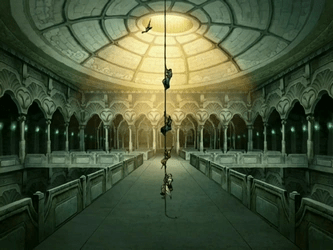
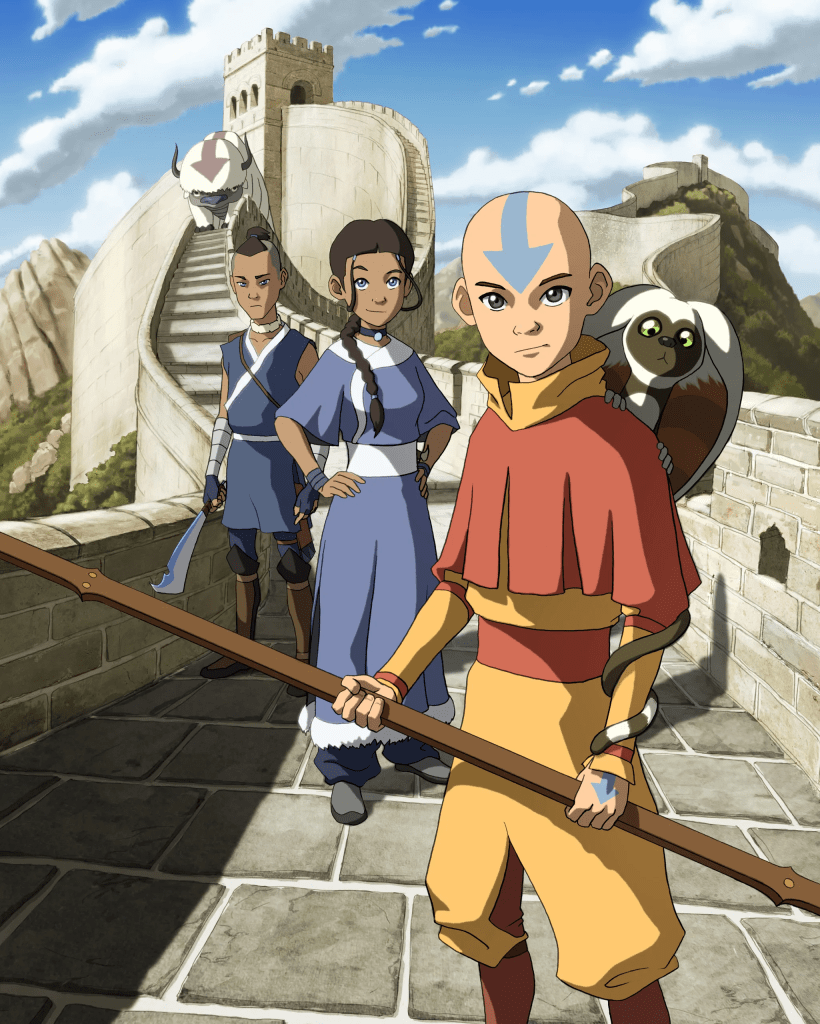

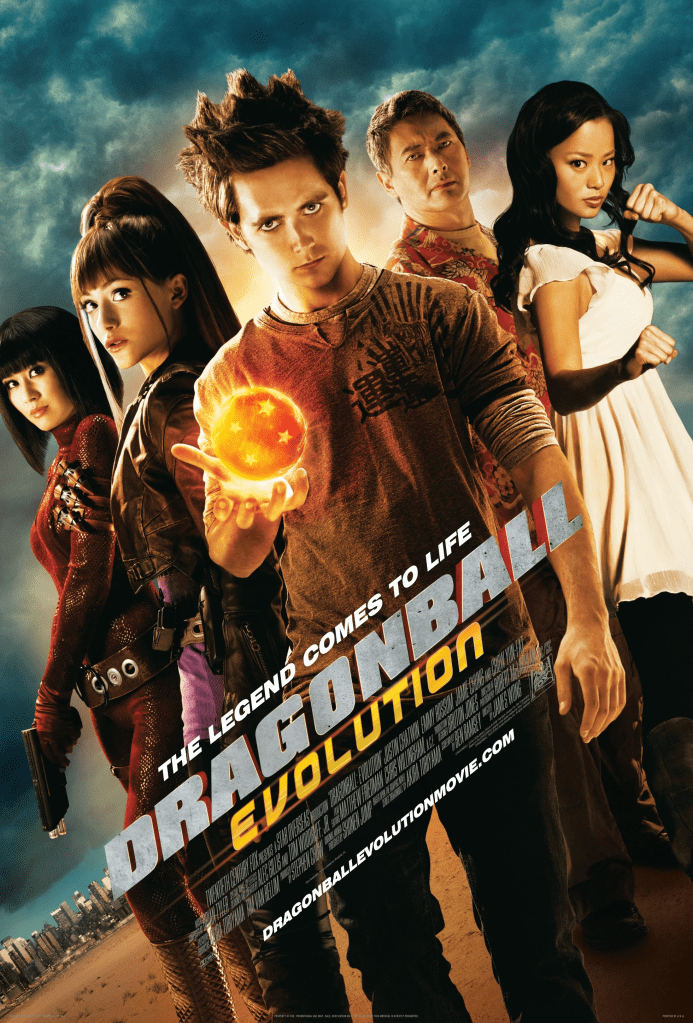
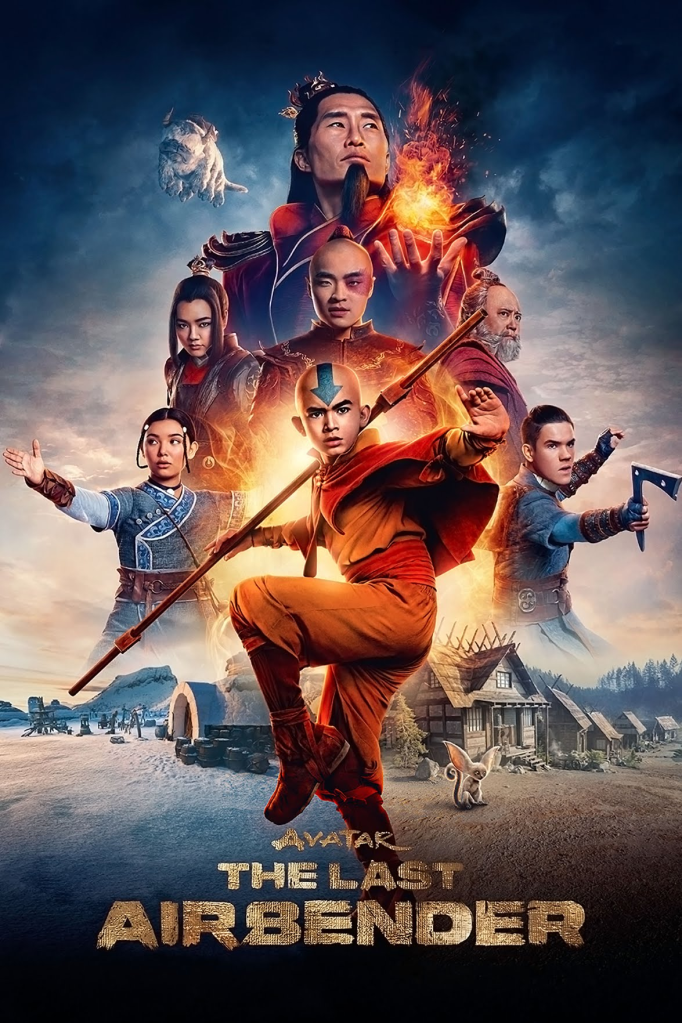
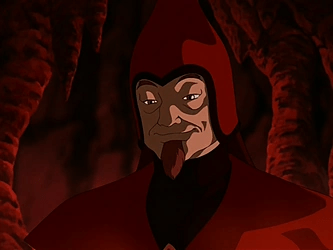

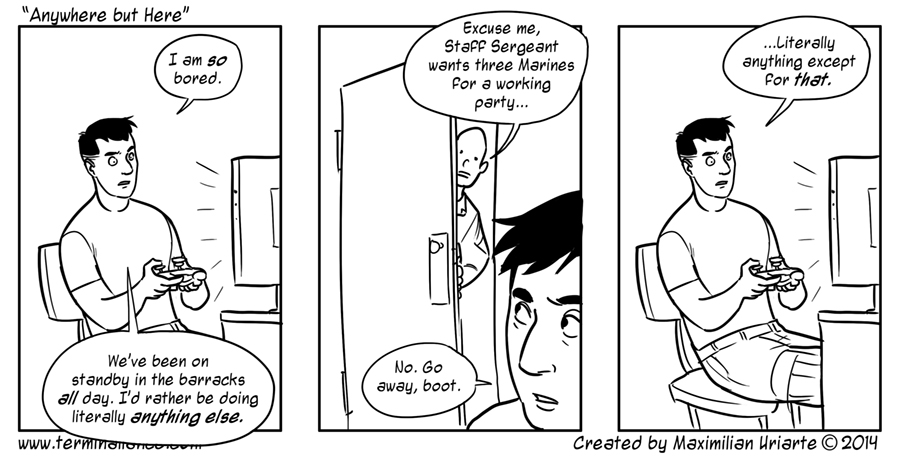

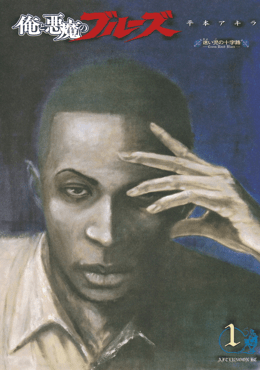



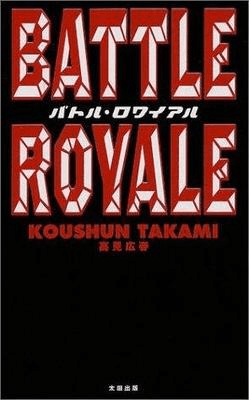











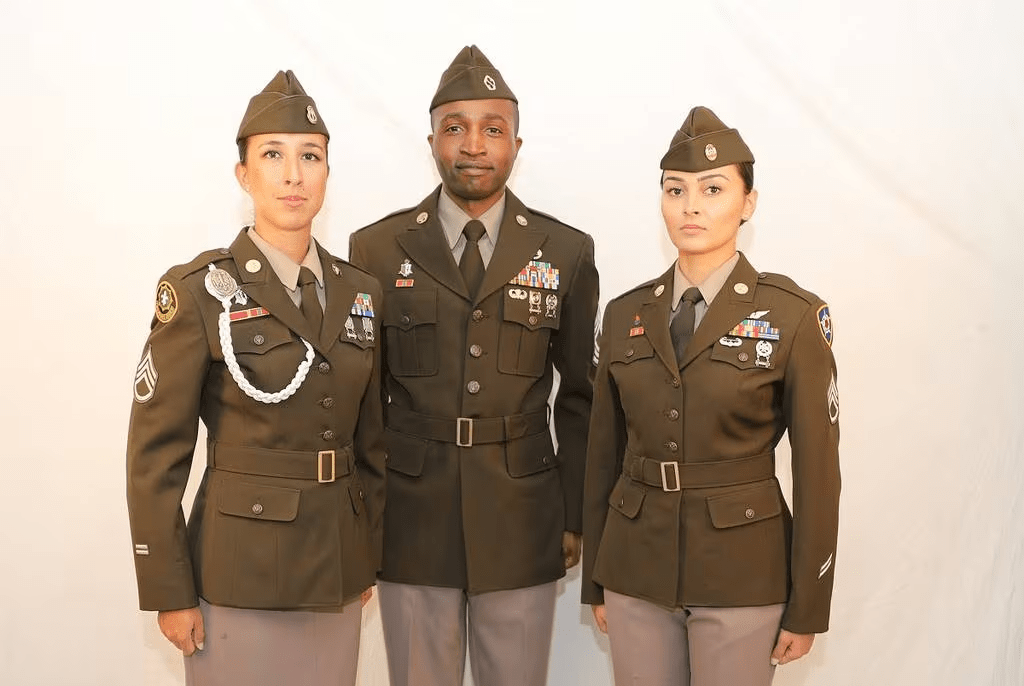
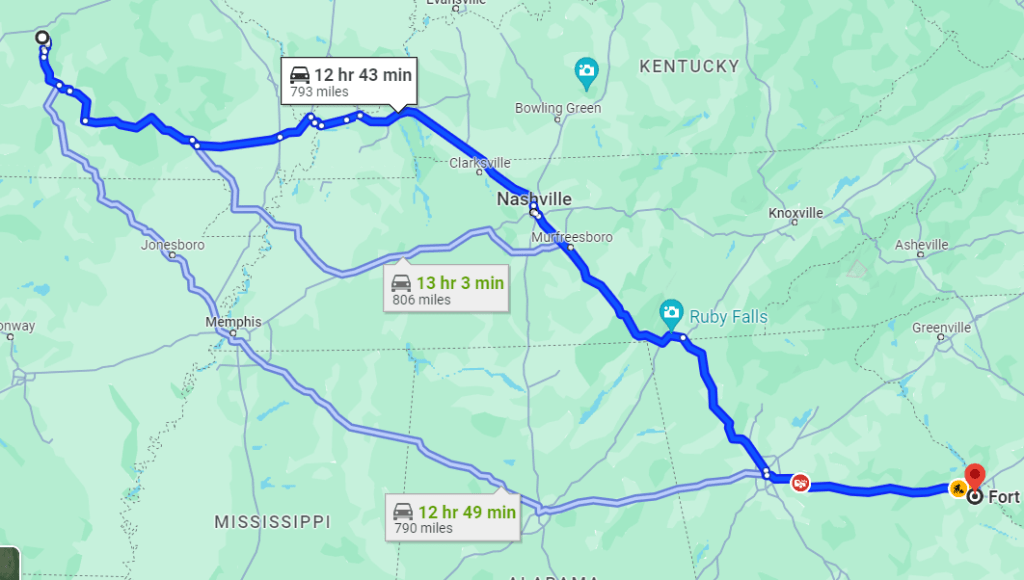



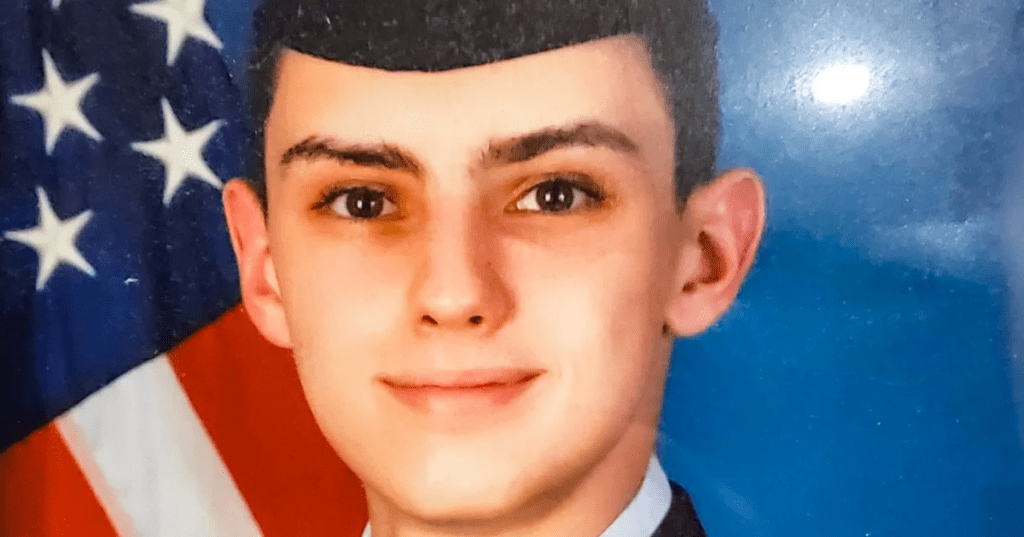


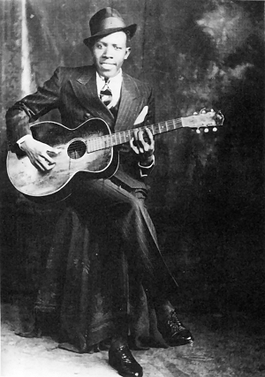




 Opinions on Entertainment