Forgotten Mortal Kombat Plot Points that Had Potential

With more time and care, these could’ve helped the old games

This post was originally supposed to be about different archetypes in anime, though I’m delaying that to sometime in December as I don’t yet have enough research to discuss those in full detail. This week, however, I’ll bring up something that has crossed my mind before, but not with enough frequency to expand upon: forgotten plot points from the 3D Mortal Kombat universe.

The original idea came from a MojoPlays video that I couldn’t f[head rip]king find until a few minutes before writing this because I misremembered the title. Abandoned Story Threads instead of Forgotten Plot Points; potato, potahto. Either way, the video can be viewed on the MojoPlays channel through the link below.

Credit: MojoPlays

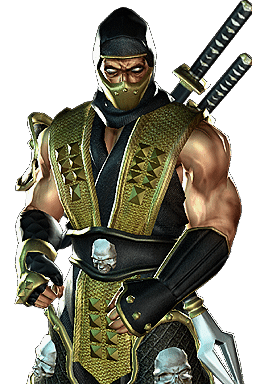
The gist of the video is that throughout the series, the Mortal Kombat games have introduced plot points that were about to heat up only for the devs to go in a different direction. With over 30 years out on the market, you’ve got your pick of the litter to choose from. For this week, it’s the 3D games from MK Deadly Alliance to Armageddon. Here’s the f[scream of pain]king short version: starting with Deadly Alliance, Quan Chi escaped from a fiery ass-whoopin’ at Scorpion’s hands, discovering the Dragon King’s “undefeatable” army in the process and bringing these mummified warriors to Shang Tsung where they formed a bond based on ignorance.

Context:

Channel: Kamidogu

After the Deadly Alliance is formed, they remove all obstacles that would block them from ruling all existence. Not happy sucking up to Shao Kahn for millennia, they kill him in his throne room then make their way to the Wu Shi Academy where Shang Tsung finally gets to consume the soul of the greatest warrior in Mortal Kombat History: The Great Kung Lao I mean, Liu Kang!

OGs can’t be beat!

So with Liu Kang and Shao Kahn dead, they operate a tournament under false pretenses in Outworld and use the defeated to return the mummified army to life with the goal of marching on Earthrealm with malicious intent. Raiden saw this from the heavens and organized the remaining warriors across the realms to stop them. Fun fact, you can find archived websites and forums debating the plot points of then-upcoming games, like this website MKSecrets.net, which for some reason still looks like it was made in 2001 even though it has details on MK1 (2023)… I thought that was most Japanese websites…?

Anyway, MK: Deception picks up from the premise of Deadly Alliance only the sorcerers were too powerful for all of the warriors (could’ve probably sent them all as a group, but MK9 proves that that wouldn’t have helped much) and so at his wits end, Raiden challenges them himself. Not even a thunder god could defeat the sorcerers and realizing that their goals were nearly complete, what was left was the amulet Quan Chi stole from Shinnok in MK4. He hangs onto it defeating Shang Tsung in the process, only to have Onaga reborn (hinted at from Reptile’s ending in the last game) and return to reclaim the army that the sorcerers so generously returned to life with the souls of conquered fighters.

All three men realize that danger was marching towards them and while they managed to temporarily hold them back, Raiden uses a last ditch attack on the Dragon King. It failed to even scratch him and he grabs a hold of the amulet which will be needed to form the six Kamidogu into a single entity.
Channel: MKIceAndFire

As for how Onaga acquired the Kamidogu, well it involved tricking a young boy named Shujinko and leading him across reality by the nose for 40 years. If this game were canon, that would’ve come back to bite Onaga in the ass, only for Shujinko’s efforts to go unrecognized as redemption and still get punished by a Dark Raiden. This will become important later.

Shaolin Monks was a bit of a beat ’em up remake of MKII (kinda) and I’d already talked about that before, so we’re skipping it considering it has nothing to do with the 3D trilogy anyway.

Armageddon was supposed to cap it all off and the more I’ve thought about it, the more it felt like a final send off before Midway got the crappy ideas out of the way in time to file for Chapter 11 bankruptcy in 2010.

Let’s not be too harsh though, it did help pave the way for the Injustice line.

Story-wise, the protector god of Edenia, Argus, is made aware that between the actions of the sorcerers and Shujinko being duped for that long, the warriors of the realms were learning more about the construction of the realms than the Elder Gods would be comfortable with and proposed to Argus to come up with a solution. He suggested total annihilation to protect the realms from their own residents, but his wife Delia suggested depowering them all since there were many heroes who fought tooth and nail to defend the realms from evil, not the least of which was Shao Kahn and Shinnok (whom we learn later was banished to the Netherrealm for eternity for treachery, leaving Quan Chi to do the heavy lifting through the Brotherhood of Shadow).

They’re granted the power to do this and choose to do so by making a competition of things for their sons Taven and Daegon. If things went to plan, the two men would engage in a friendly competition, grab their weapons and armor and race to defeat their mother’s firespawn (half-brother?) Blaze to achieve full godhood as both of them are demigods. In reality, the two brothers, under the watchful eye of a pair of dragons, Orin and Caro, are set on a different path. Caro, who was the guardian dragon of Daegon, lost contact with Blaze believing it to be an early sign to set him on his path. Instead, Daegon forms the Red Dragon clan in Caro’s name and signs off on unethical science experiments for the purpose of choking existence into coughing Blaze up. The way its presented makes me think of Unit 731 in Manchuria and its surgeon general Shiro Ishii. If you don’t know, look it up at your own peril.

This makes Daegon the antagonist of the Konquest mode and through no fault of his own Taven loses sight of the purpose of his quest. And his frustration and confusion at this whole course of events is best reflected at the several times he’s questioned and even considered abandoning ship. The quest stopped being fun for him as he lost the things he cherished. Blaze appeared at the end to catch him up to at least what the true purpose of the quest was and Taven is a hero if we compare him to the Ancient Greek model similar to Perseus or Theseus. Self-serving at times, but the guy still knows the difference between good and evil. Daegon’s descent into evil seems random until he learned that he was supposed to lose the quest and decided to take matters into his own hands, hence the birth of the Red Dragon.

Dropped and abandoned plot points are still a problem for the series as it’s developed a reputation for introducing points and leaving them to collect dust. We barely get five minutes with the concept before the devs (read: Ed Boon and John Tobias) moved onto something else. You could say the fandom is also to blame for this as dedicated fans have asked (demanded) the team to release canonically deceased characters as DLC, but staying with the 3D games where the problem expanded, there’s more to say about it during this era than anywhere else in the series.

Starting with Deadly Alliance, Shao Kahn was established to be killed in the intro to this game, with Deception and Shujinko’s story acting as a prequel taking place some years before the events of Deadly Alliance where it all converges. Shujinko himself was invited twice by the White Lotus Society and later by Shang Tsung himself to represent Earthrealm in the tournament but couldn’t attend for different reasons. The White Lotus got tired of waiting for him to power up (never mind that the tournament is hosted every 50 years) and due to his cleansing journey with Nightwolf, he had to go back to the Netherrealm to gather more hatred, from none other than the ghost of Hanzo Hasashi.

This part doesn’t necessarily screw around with the timeline as egregiously as following plot points, but Armageddon is where it all breaks down. Canonically dead characters are resurrected off-screen and based on what we know we can connect the dots, but often the devs are a bit cagey when it comes to showing how, who and/or why characters are returned to life. The 2011 continuity shows that Quan Chi has brought Noob and Sindel back to life and claimed the souls of those killed by Sindel herself in the eleventh hour, but it’s not shown whether he brought Shao Kahn back to life or if he did why he’d do so, or even why the rest of the villains would agree to this arrangement.

Channel: BruskPoet

I’m not saying this moment in the story is bad, I like it a lot. But the nonexistent explanation for how all this can come to be is what sours me on it somewhat. I’d say there’s no care for a consistent timeline especially in a fighting game (something that doesn’t escape Tekken), but I think it’s more along the lines of the devs wanting their personal favorites to shine brighter than the others, which is why the franchise works better as video games and toy lines than it does movies.

Most of the time…

For what it’s worth, the characters have been mostly consistent with a few touch ups here and there, but if you ask people like The4thSnake, there’s a lot under the hood that could use some light to heavy rewiring from individual characters to whole ass f[swords clashing]king plot points, like what I’ve been writing about here. I’m a bit torn personally, because it brings a charm not found in other series, but this many plot holes treats the timeline like a redheaded step child. Doesn’t stop people from trying, as I’ve stated before, I rewrote MK: Shaolin Monks myself like it was Dragon Ball as that was what I was watching at the time.

Why bother with the 3D games, though? Well, of all the plot points introduced and left by the wayside, the 3D games did it the most and the worst of any other era, which seems to be the result of developmental inconsistencies prior to release on store shelves. It certainly hasn’t stopped people from trying though and it likely will keep going for as long as there is a Mortal Kombat to fix. Nothing too serious at this point, but it’s both fun to expand on what was and offer critique for one of the series most tumultuous times in its history.

Genshiken: A Full Review*

Well, more episodes to cover at least

Gonna have to be entirely honest here, the timeline I gave myself to fully watch Genshiken couldn’t be adhered to. Life got in the way. C’est la vie. But now that I think about it, having covered series before only partly, halfway, or most of the way through, it got me thinking that I don’t necessarily have to complete a series to review it. I think I get more mileage if I watch enough to understand without necessarily having to complete the series. Completion does help, but to quote Jack Torrance, “All work and no play makes [Tiberius] a dull boy.” Now to the review.

It wasn’t long ago that I caught this anime by way of one of the anime subreddits and in that clip, four otaku speak wildly to a normie about the beauties of a niche Japanese rape game.

Not necessarily a turn off for weebs, if the Redo of Healer’s overwhelmingly female fanbase is any indicator and certainly not one for me as I ventured into this anime expecting more off-the-cuff conversations and it’s a lot more mellow than that clip would lead anyone to believe. As I’ve said before, it’s an anime about a quartet of otaku, sometimes joined by the sometimes Y otaku who has himself a girlfriend hellbent on shaming them into being normal. As a weeb, I take offense, but knowing what I know about the internet when this anime was on air in 2004, she wasn’t the only one yelling this from the heavens.

Further, even I have my limits on my own hobbies, though limit doesn’t necessarily mean quit. Moderation is the key. So as I watched more of Genshiken, the more I saw of the slice of life aspects, similar to shows like Azumanga Daioh, Lucky Star, and K-On!, but instead of a multitude of cute girls doing cute things cutely, it’s a bunch of college dudes taking half the share of the oppression shared by gamers because they were brave enough to say no to the rat race by engaging in their hobbies. But it does share a similarity with the aforementioned series, namely progression. Azumanga follows the girls throughout high school; Lucky Star does the same even if it’s famous for talking about nothing, and K-On! adds to the roster in the form of Azunyan, weak to the power of the headpat.

Credit: r/HeadPats, u/BTN099

The slice of life genre has its detractors who balk at the idea of a show about f[pages flipping]k and all, but as someone who enjoys many genres SoL being one of them, it’s a nice break from all the methamphetamine fueled action found in Shonen or the isekai singularity. I like beating up ghosts or searching for the One Piece or defeating space Hitler as much as the next guy, but I don’t always want to see that. Something something variety, something something slice of life.

Besides, Genshiken is a series that speaks to weebs because it’s about weebs. You definitely have nerd friends and may yourself be a nerd in some aspect, especially if you’re subscribed to this blog or check in every week. We all have that circle of friends who geeks out over the same things. I had mine in middle and high school and I met mine both times I was in basic training and when I was in AIT, and that passion turned from video games to anime (but of course, games are still a major part of my life; I’m currently building a gaming PC).

Credit: Naumovski

The passion is what speaks to me, this collection of nerds coming together to discuss the important things in life, such as Oppai, Medium or Flat — which is a trick debate because all size makes the wood rise, especially when paired with thicc thighs that save lives. I do recall that rant on the character of Saki Kasukabe and her intense criticism of the medium of animanga as a whole. Watching further was the right choice and I do recommend continuing the series in whichever form you find best as further episodes see her eating her own words every time she gets humbled.

No one can be this dedicated to animanga, you say? Well, conventions beg to differ. Childish, you say? Well, yesterday’s weebs are parents now — see Latin America’s love of Dragon Ball for more details. Women are definitely not interested, you say? Well, not only does my comment about Redo of Healer having a massive female fanbase stand tall, but so does a new character introduced in Season 1: Kanako Ono:

Makes me think of Tomoko Kuroki from WataMote.

Beyond that, Genshiken is a chronicle of passionate animanga geeks whose love of the medium is not tempered by naysayers and is surprisingly large to newcomers and tourists. Once again, for those who wish to view the series, I implore you to find whatever piracy site works best for you. Most anime streaming sites (read: Crunchyroll) aren’t guaranteed to have the full series.

Now That You’ve Tasted My Saliva, Wanna be My Boyfriend?

Perhaps romance has always been weird

No matter your relationship status, you’ve definitely seen pictures and memes or heard stories through the grapevine about how certain people are made for each other. When applied to fiction, fanbases notoriously put certain characters together and creatively put whatever circumstances they can concoct to make it happen in their own fanfics. Sometimes it works, but other times it’s more or less an appeal to a certain character for a variety of reasons. And as you might expect, other aspects of the fanbase can get perverse in this matter. This typically happens when a series is presented as neutrally as possible. The series I’m talking about here starts off in a strange position by virtue of its own title:

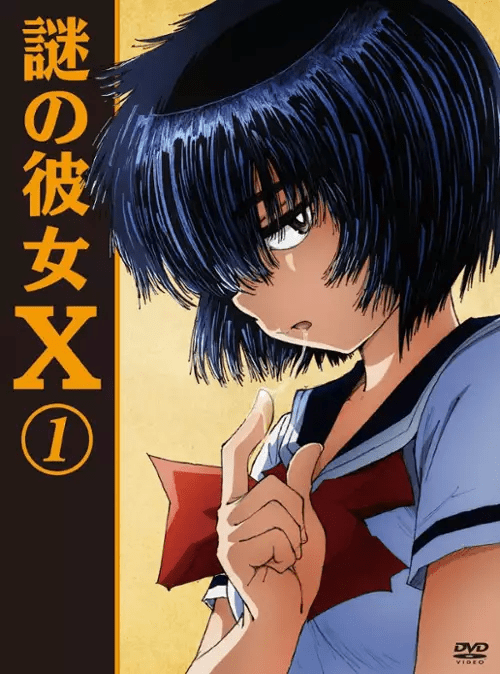
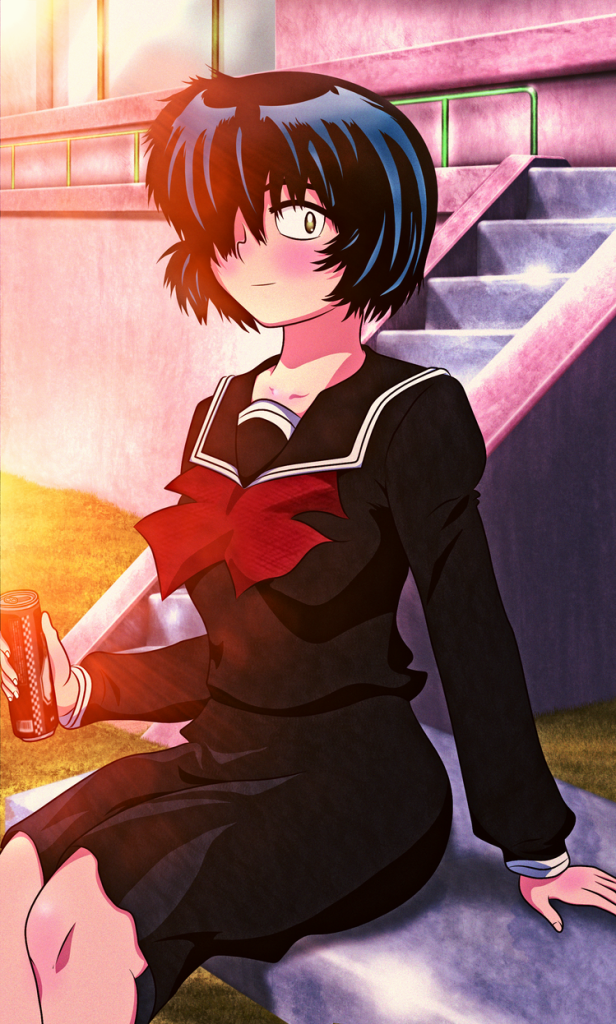
Nazo no Kanojo X or Mysterious Girlfriend X gained fame at the time of release for one of its characters, Mikoto Urabe, releasing the sluice gate she has for a mouth and leaking all of her drool. A sane man would probably be put off by this aspect, but curiosity overrules sanity and the other character, Akira Tsubaki, licks some of the drool she leaves on her desk while napping during lunch. Why would he do that? Don’t bother looking for answers to that question because it goes unacknowledged for the remainder of the show.

Urabe is a riddle inside a mystery wrapped in an enigma. She’s introduced as the new girl and in the first episode bursts into uncontrollable laughter. She’s awfully cagey for a girl romantically involved with Tsubaki, and more or less prefers this sort of arrangement, even keeping a pair of scissors tucked into her underwear. Of all the talk you hear on social media of fighting back suspected and would-be rapists, Urabe is ready to make sashimi out of anyone. S[sword unsheathing]t-talking is for the weak.

Credit: SoundwaveSuperior69 on DeviantArt

Tsubaki meanwhile is the polar opposite of his girlfriend. An open book with an evident circle of friends and interests, you don’t really have to guess what’s on his mind, what he did or what he’s gonna do next. Obligatory: run-of-the-mill male protagonist ends up with “quirky” female protagonist. There’s a name for this specific trope and I won’t rest until I learn it! The closest would probably be manic pixie dream girl, but I personally think that’s a dubious label to throw into this.

Either way, the two are practically ripped from the bizarro world of shipping. Whereas established characters will be randomly paired by the fandom, mangaka Riichi Ueshiba started out that way. Call Urabe a foil to this slice of bread we call a male protagonist with her hentai protagonist hair, anti-molestor blades, unorthodox outlook on life, and obsession with saliva. The last of those being the tamest fetish I’ve seen or heard of, and no I won’t elaborate on what I think is the wildest one I’m aware of.

So that’s them as individuals, how do they behave as a couple? Initially, I was gonna say that her cagey personality gets in the way of things, but on closer inspection, it feels a bit more like she wears a slightly longer pair of pants. Think of it this way, Tsubaki is smitten yet nervous around her due to a lack of dating/romantic experience whereas Urabe has scissors rated E for everyone… and I do mean everyone. She sets hard boundaries, but will make concessions to let her Tsubaki into her space. Her flavor of introvert is honest yet taciturn as she won’t even fake a smile for a picture. Lack of sportsmanship? Considering, she talks to only like two or three people all anime, that’s an easy assumption to make though I’ve heard it explained (can’t remember where, sorry) that most of the action happens offscreen. In this case, any number of wild stories can be made about the girl and Ueshiba may or may not elaborate further. Actually, it’s possible to argue that Urabe herself is in some capacity an extension of Ueshiba, the mangaka.

A quick googling shows that the number of interviews he’s done is close to the number of fingers on the average human hand. Photographs are even more elusive as I’m certain there don’t exist any that he’s agreed to share. Even without any expectations, I knew for a fact that Urabe would live up to the mysterious moniker but for it to likely be connected to the man who conceptualized her character is practically “write what you know” in living color. And in this instance, Ueshiba seems to be the only one who knows. Not that he’s the first or only one to subscribe to that philosophy.

Now why am I watching this anime? Once again, I’m doing so on a whim. The romance does intrigue me, but more so the appeal of Who’s This Drooling Girl? is the fact that it’s a break from the action-heavy series we’re getting these days. It had its 15 minutes of fame a decade ago, but now that more people are paying attention to other things developing in contemporary manga (as well as disappointing endings), going to series only five people globally know about is a nice change of pace.

I’d also like to highlight how much of a deconstruction of many tropes Urabe is.

Unlike most other characters, she leaves the audience and the characters guessing. Again, not the first character to do this, but one of the few who does it in less overt ways. The most she’ll do is test whether you can stomach her drool (that sounded better in my head (>_<)); if you can succeed, you two are meant to be. If not, well the effort was made and the question was answered.

Based on my description of her in regard to Tsubaki in general, it sounds like I described a yandere, but Urabe isn’t like that. She shows that she cares about him, but is the last person who’d reach out for a hug from him, especially in public. She’s like a planet: her gravitational pull reels him in, but not too close. As explained in the series (and this blog from 2018), she doesn’t need him to be physically close for there to be a bond. Her drool does the heavy lifting for her there. More than just a test of her connection to whomever tastes it, it’s properties seem to activate different senses and feelings especially in Tsubaki. It’ll make him sick, feel pain, give him a window into Urabe’s true feelings; I’ve never heard of anyone’s saliva doing that so the bond is either that strong or she’s aN aLiEn?!?!?

Again, neither Urabe nor Ueshiba will elaborate, so that’s up to you to decide. For what it’s worth, the manga has 12 volumes, 13 episodes and an OVA ripe for the pirating. Enjoy having questions go unanswered.

Also, Urabe can definitely make twintails work. Shame it’s only in one episode, but fanart thankfully picks up the slack.

Rewatching One Piece

Following up on some classics

About two months ago, I made a declaration to go back to some classic anime, those being Dragon Ball Z (the Kai dub) and One Piece. Why these two specifically? No particular reason, just that with Kai, it was a redub of the original DBZ anime that aired when I was a kid and in an abridged fashion. The reason Funimation did this was to commemorate the anime’s 20th anniversary. As for One Piece, you’d be hard pressed to find an anime fan who hasn’t heard of or watched or planned on watching One Piece. As I write this, someone just finished the most recent episode of One Piece and is blazing through the manga right now. Someone else has the entire box set and omnibus and a third fan has taken it further, emulating Zoro in appearance, technique and awful sense of direction.

I made the declaration to give One Piece a rewatch and try (keyword: try) to play catch ups. Kind of ridiculous 1,000 episodes in, but not impossible. Thing is, I kept getting held up either by work or my personal desires at the time. That declaration was made in September and as of writing this, I’m only 19 episodes in. It would be more, but I have an explanation for the part that’s within my control. The simplest answer is that I’m not the biggest fan of binge watching.

Netflix spearheaded this phenomenon in the mid-2010s and I had been questioning it for the better part of a decade. The more I learned about Netflix’s formula, the more I began to criticize it. It’s normal for a show to get pulled or stop airing after several years, but Netflix’s pattern of batch releases has created a culture built around rapid mass consumption of media… with little thought given to subcultures built around a particular show. Not to mention, too many great shows of theirs get s[banging metal]t-canned after one season and the hype is lost on me. Shows that have already aired though are the only reason I’m still on that platform for now, but the influence of one can trickle elsewhere and I don’t like how influential Netflix has been over the years.

This blog covers obscure and old media as its bread and butter; and while I do cover recently aired/currently airing shows or recently released video games, I don’t recall covering that many newer series of any kind. That’s more suited to guys like this:

He can afford to watch and talk about anime on a regular basis now that he and Trash Taste are under the GeeXPlus umbrella, whereas I’m currently doing Signal Corps things in the Army. Sidenote: if you join the Army and are put in Air Defense Artillery, I strongly implore you to choose any other branch. You’ll get more time to yourself when able.

As for the time I’ve been able to scrounge up for myself and spend on watching things I like, I’ve been dividing it between One Piece and other shows. I’m still not all that far into Genshiken (and I plan to write that up in two weeks), and I’ve been caught up watching my favorite history documentaries, as well as another manuscript. Can I get all of this done outside of duty? Yes. Is it easy? F[bonobo screech]k no. It’s a very challenging series of feats I’ve taken on for myself, and my laziness has stifled progress in a few areas. Couple it with a gacha game addiction and it’s a miracle I got to the first 20 episodes.

Variety is the spice of life, Terry!

Still, 19 episodes gives me a decent amount to talk about even for an anime this long and old. So how did I enjoy starting from number 1? Pretty well! I can’t recall the last time I watched One Piece before this quest of mine, but the most memorable arc I watched before it became too inconvenient was the one where Nami came down with a bad fever. Quick googling revealed that that’s known as the Five-Day Disease. This was at least ten years ago and Toonami was (and still is) airing the reruns to my knowledge. A show that helped build the block and make these shows household names isn’t gonna be dropped by the network, but it will be moved to make room for new shows. To my knowledge, it had been moved to at least 2:30AM or 3AM and my days of watching episodes in rapid succession are long gone.

C’est la vie.

I’m still watching One Piece and hope to at least clear 250 episodes by sometime next year, probably by Spring or early Summer. So far, Luffy had gathered a crew of three and is about to recruit the fourth member. Zoro was freed from capital punishment, Nami was insistent that her relationship is purely transactional and she’s not a pirate (not dissimilar from the “I’m not a furry” crowd), and Usopp whose sweet little lies would make him a match for Hol Horse in a game of wits. It also goes to show that similar to Hol Horse, he’s not prone to hurting unnecessarily. Lies, yes, but attacking the innocent isn’t something he’ll do. It might be the same for Hol Horse, but until I finish Crazy Diamond’s Demonic Heartbreak, I’ll confirm for sure.

As of writing this, Sanji is set to join the crew next (those who know, don’t spoil anything so I can still see for myself how everyone joins the crew). The wheels turn slowly but they turn either way, so I hope to follow up with an update sometime in the future.

Back to YouTube channel recommendations, this time with Dr Mod

https://www.youtube.com/@DrModGTA

A recent discovery of mine, this channel covers just about everything GTA-related. Older games, recent games, and even the upcoming GTA VI are a staple on this channel. Some of my own early work covers the GTA series, though not to the lengths that Dr Mod does, so if you’d like something to hold you over until we return to modern day Vice City, enjoy Dr Mod.

And maybe also pirate Vice City and Vice City Stories as well. They won’t take up a lot of space on your hard drive. I speak from experience.

You Dropped This, Queen of Karuta

Another niche series about Japanese culture

Certainly has been a while since I’ve covered a more niche animanga series, one that had a marketing push on the associated streaming sites, notably Crunchyroll and the now-defunct VRV in 2018. I remember as I’d paid them no mind whilst watching Boruto or FLCL or Soul Eater. Recently, I’d been looking more into Chihayafuru as I’d found very few people talking about it and due to more and more action-heavy series getting adapted that year and the years to follow, it’s no wonder it flew under the radar. As I’d looked further into it, it got me thinking about a series I’d talked about sometime last year: Akane-banashi.

Both are about traditional Japanese cultural products that require research for outsiders to get an idea of what it entails, but can still be enjoyed without prior knowledge; both feature female protagonists engaged in a sport of the mind, further broadening the definition of what a sport is or can entail; both of those female protagonists have a giant competitive edge in said sport; and personality-wise, both girls have a tomboyish history that shines when engaged in their respective sports.

Akane-banashi’s specialty is rakugo, where a lone performer tells any number of comedic stories on a center stage. Normally, they’re old folktales from Japanese history and mythology, and the last time I read the manga, they hardly strayed from the style of storytelling expected of the time they written/spoken, but can sometimes be adapted to more modern audiences, similar to the 1996 adaptation of Shakespeare’s Romeo and Juliet.

For Chihayafuru, the tradition this time is Karuta, a card game based on matching similar looking cards, though in the series it’s more about Japanese poetry. This version of the game has a caller who reads a portion of a poem written in Hiragana and the player nabs the card as fast as they can. Experts can get them before the stanza is fully read aloud. The main lead protagonist is Chihaya Ayase.

Initially, she was (and still is) supportive of her big sister’s modeling future, but became infatuated with Karuta after being introduced to it by a boy from Fukui Prefecture named Arata Wataya. The impoverished little boy didn’t have a lot to his name, living in a dirty, cluttered dwelling with 80% of his clothes being hand-me-downs from relatives. Further isolating him from the rest of his Tokyoite classmates as a child was his “hick” accent. For some reason, people outside of Tokyo Prefecture are referred to like this, which I think is ridiculous, but then again, I live in a country that celebrates even linguistic diversity, so personally, not much separates a Mississippian from a Michigander or a Nevadan. All Americans, different circumstances.

Still, while Arata struggles to fit in, he’s a Karuta prodigy at a young age, taking to heart the adage of: “If you’re going to do one thing, be good at that one thing,” like Zenitsu’s Thunder Breathing.

One-trick pony? It’s easy to say that, but different series like Golden Kamuy capitalize hard on one-trick pony characters, from Sugimoto’s extreme (and painful) survivalism to Shiraishi’s Houdini tactics to Ushiyama’s history as a dangerous judoka. Being good at one thing really only matters if its applicable to other things and in this case, Karuta is both the main connecting element for all the characters and the center of a competition within the series.

Learning from Arata the fundamentals of Karuta, Chihaya is encouraged to go big and make it her dream to become a de facto Karuta world champion, mostly because Karuta doesn’t really exist outside of Japan with the same claim to fame as Mahjong or Hanafuda. Along with the two, an old friend Taichi joins them and his contrast to himself is stark both financially and socially. Taichi is a rich Tokyoite who can actually afford to be petty while Arata’s childhood poverty humbles him greatly. As such, Taichi starts off spoiled and jealous, but his best excuse is due to the high expectations put on him by his family, namely his strict mother. And you thought wealth would be easy!

Yet as the three rejoin as adolescents, they found an afterschool club called the Mizusawa Karuta club and work towards the goal of becoming Karuta champions. I’m still checking the series out as of writing, having only completed episode 1 and the first chapter (and thus getting the research from the Wikipedia page), but other things that stand out is that it’s my first Josei series. Josei is typically aimed at a demographic of young women and is notorious for its inclusion of romance into the plot. Josei itself, sadly, doesn’t get as much exposure as Shonen, Seinen, or Shojo genres which is part of what hurts series like Chihayafuru compared to Akane-banashi, which is under the Shonen genre and licensed by Shonen Jump and Viz Media.

Couple these with the niche of Karuta, whoever expected the series to get wide praise would’ve had to fight sleepless nights for something to hardly ever come from conventional animanga media outlets. And that’s quite a shame. No matter what you think of the concept, the series is beautifully drawn and animated–the production quality narrows the gap between itself and something like The Elusive Samurai.

Channel: Crunchyroll

Speaking of animation, it’s worth pointing out that Chihayafuru was adapted by Madhouse, responsible for Overlord, Trigun, and No Game No Life. This also brings me to another matter going back to Akane-banashi. Niche subjects especially those that would be found in a book on Japanese history and/or culture don’t often get the animanga treatment and if/when they do, not always successfully. Rurouni Kenshin benefits from the battle aspect more so than its setting, as does Samurai Champloo because both series have a concept that has universal knowledge: the samurai and the ronin.

Akane-banashi and Chihayafuru differ by offering battles of wit instead of battles of physical strength and power. They both also rely on parts of Japanese culture that rarely get outside notoriety, leading to limited viewership. I have no idea if the performance of the Chihayafuru anime is a case for why not everything will get an anime adaptation or should not, but if by some chance that was the metric in use, then it’s not a fair assessment to make. Even then, it wouldn’t be the first time the art of rakugo was animated.

Be honest, you only know what this is because of its hyper-energetic ending animation.

No matter the future of Akane-banashi, it still has a future, whereas Chihayafuru’s manga ran from 2007 to 2022 and its anime running from 2011 to 2020. Once again, I call upon my advocacy of piracy to view the anime and/or the manga with little issue.

That Time I Sped-ran the Terminator Movies

And developed a skepticism of A.I.

Regular viewers will know that in the animanga space, I’m fairly okay with keeping up with series, especially when they merchandise and franchise out like Naruto or Dragon Ball. In the west, however, this gets trickier and more challenging for a number of reasons. Reboots/remakes/retcons, etc., screw with canon so much that it starts to look like a hentai doujin with some of the most accursed tags. Franchising itself, I highlighted just now, but it’s not always done neatly or with a solid plan. For example, Star Wars is the champion and great-grandfather of all references. People are insane enough to catalog every single reference to George Lucas’ brainchild, but what makes this an insane task specifically for this franchise is George Lucas getting in the way of his own vision by constantly remaking everything. Creatives tend to be this way, as I would know, but I’d probably not be this uptight about my own projects.

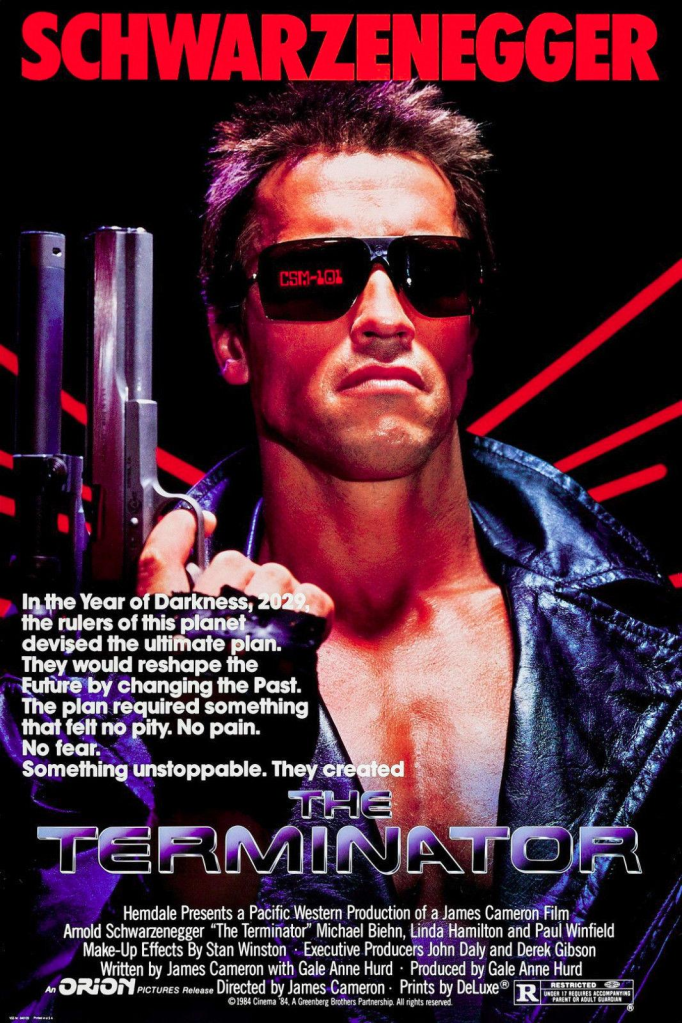
There are a few series whose franchises I’ve followed with full or near-consistency to say that I approach expert level knowledge. Those three are Deadpool, the reboot Planet of the Apes trilogy, and the topic of this post, Terminator. But while Merc with a Mouth and Upright Apes were more gradual, I started to follow the Terminator franchise more closely around 2014.

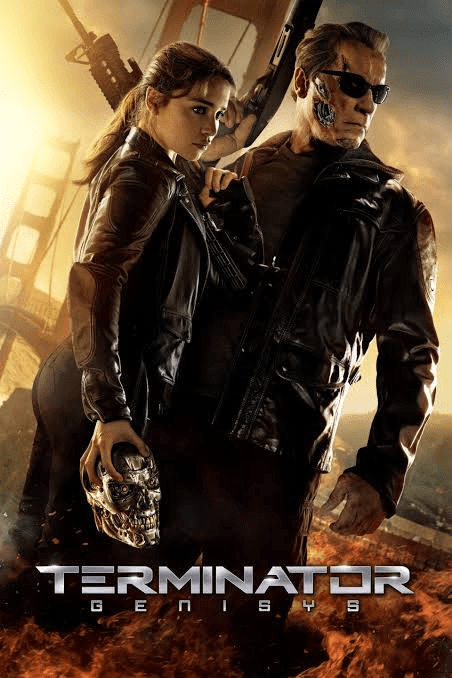
I don’t recall specifically what brought this on, but I think it might have been a rumor of sorts of an upcoming movie at the time, the fifth one in the franchise and on reflection one of the least warmly received sequels probably since 2009’s Salvation, Terminator: Genisys.

If I was a cynical asshole, I’d probably write up a snarky review about how the franchise only exists because Arnold made it so in the 1980s, his absence in Salvation proves that he was the adhesive holding it all together, and his return in this one is both a proof of concept while also reminding us that glue eventually ages too. Both harsh and what it would look like if not written by a fan but a critic looking to get paid for every character in their document. But I’m vaulting over the USS Theodore Roosevelt on this one.

The sudden confirmation of another movie made me want to play catch-ups, hold the mustard, on the franchise and I did so in an era prior to my current methods of pirating. Pre-adpocalypse, YouTube let you get away with nearly anything visual media-wise though some artists’ estates and family were hook-deep into the copyright claim booth (or I’d remember being able to listen to Jimi Hendrix’s Little Wing at the time), but my first way to look into the franchise was on YouTube, right next to a now deleted channel that had the full length version of Saving Private Ryan. It’s still possible even now to find channels daring to upload full- or seemingly full-length versions of the original 1984 movie, but be careful. Sometimes editing tricks are used to get past the censorship and burn away minutes of your life.

Terminator 2: Judgment Day couldn’t be found on YouTube so I went to a now-defunct torrenting site to watch it. The fate of that site is one shared by several, taken down in a global effort to crack down on piracy. Did it lead to arrests? I didn’t care honestly. Watching movies without spending the pennies to do so was still a challenge for me personally, but I kept trying. I did it with 300 and would nonetheless keep doing it until I discovered services like Tubi and was able to pay for Netflix.

Then of course there was Terminator 3: Rise of the Machines which came out when I was about 4 years old. So technically, this was my introduction to the series, considering I watched it at a babysitter’s house at the time. Rewatching it at 16 and comparing it to the last two films, it was a decent addition to the series as a whole, but not as good as 1 or Judgment Day.

All things considered, I think the third film is looked on two harshly. Dark Fate tried to rewrite it starting here and personally I don’t think Rise of the Machines deserved that. Salvation, however…

I’m exaggerating, but if I had to use a metaphor, if Terminators 1 and 2 were the exciting points, 3 is the midpoint before Salvation starts going down hill, and gradually. I admit that I’m a bit biased here largely because I was watching them all in rapid succession in the lead up to Genisys. Hell, I’d caught up to all the movies long before it was ready for a theatrical release and by the time it released, I once again relied on the dark powers of piracy.

I saw it the following year when I was 17. I don’t remember the trailers spoiling it for me as much, but putting the major plot points, twist included, is almost never a good sign. But I pushed on through and to recap all the movies (spoilers, but it shouldn’t matter anymore):

  1. Terminator 1: cyborg is sent back to kill the mother of the resistance. The resistance has the same idea and sends an agent back to save the mother (and also father the leader of the resistance)
  2. Terminator 2: cyborg is captured and reprogrammed by the resistance to save the leader as a child when the same thing is tried again with an even deadlier model. Mom is also there, in an asylum, “why are you booing me, I’m right” style.
  3. Terminator 3: leader of the resistance afflicted with trauma at the killer cyborgs trying to kill him all his life, another one is his guardian and they try to destroy SkyNet at the source. Love story subplot, chased by Terminatrix, Terminatrix fails, but SkyNet lives on in backup hard drives (I can’t remember it that well)
  4. Terminator 4: full-blown war, leader of resistance sees to combat meanwhile death row inmate is lethal injectioned and transformed unknowingly into a cyborg to get close to the leader but deviates from its mission purpose, leader almost dies but the deviant cyborg/ex-death row inmate saves him at the eleventh hour, SkyNet is disturbingly patient
  5. Terminator 5: resistance ongoing, SkyNet’s next trick is to kill the leader and make a cyborg of him, meanwhile father of the resistance goes back to 1984 as usual (fanservice detected) to find that the timeline’s been f[dial-up modem]ked very thoroughly, they go back to the present (2017) to fight with better weaponry (I think), the Golden Gate Bridge falls for the millionth time in history (it happens a lot in action movies for some reason), cyborg leader of the resistance is defeated, SkyNet still operates…

…and thus was born an effort to rewrite the damn movies. Or at least that’s what the media thought at the time. Dark Fate was the franchise’s last ditch effort at recapturing the magic and to do the third movie justice since it doesn’t fit as neatly into canon as one would’ve hoped pre-release, but the efforts were in vain.

As a fan of the series, Genisys was the let-down that keeps on letting down. It started out well but the grave got so deep, Satan needed to come up and tell the funeral directors that that’s not how grave digging works. I don’t wanna be harsh on the Terminator franchise, the concept does still play on a lot of fears and anxieties, many of which are becoming true 40 years later, but to see where it is now is disappointing. The only thing I have to show for it now is an uncanny apprehension for anything A.I. It took me longer than normal to even try using chatbots and I treat them like Wikipedia or r/AskReddit most of the time. I guess I’m just still testing it. For what it’s worth, if you’re going to go into the franchise yourself, watch the first 3 movies and then maybe go watch the Sarah Connor Chronicles TV series.

And then finish it off with the R-rated uncut version of Robocop 1 and 2 for more sci-fi action gore.

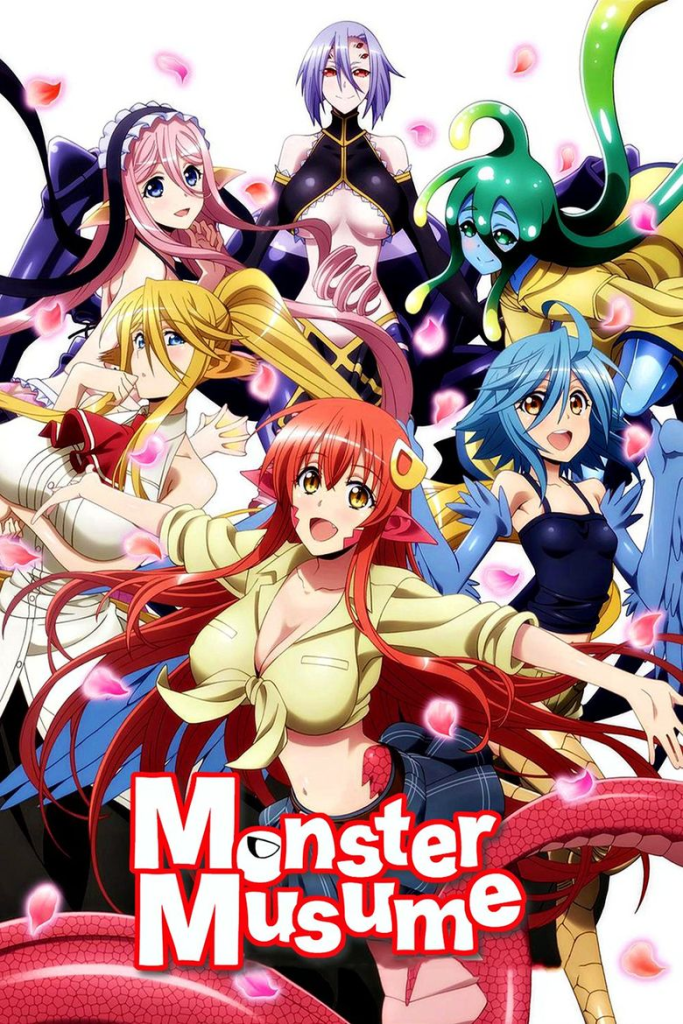
Shimoneta, High School DxD, and Monster Musume: Horny Trio

The three that carried me in community college

Yonks ago, I mentioned an upcoming post that was initially meant to be just another double bill, but it occurred to me that there was a third series that I felt was appropriate to lump in with the other two. These are the three anime that I watched all through college:

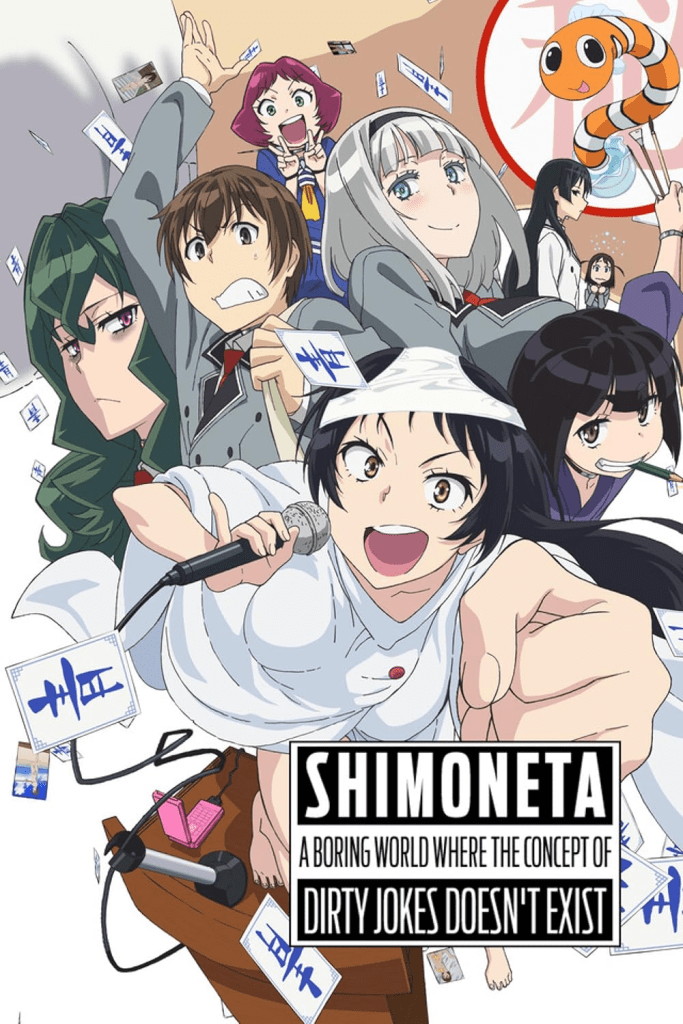
  1. Shimoneta: A Boring World Where the Concept of Dirty Jokes Doesn’t Exist
  2. High School DxD, and;
  3. Monster Musume

And we’ll go through them one-by-one. The titles of each should be a giveaway but just in case: each of these series contains sexually suggestive themes, language and imagery. Reader discretion is advised.

Shimoneta (2015):

Another anime to get its start in the world of early 2010s light novels, Shimoneta’s concept is exactly as it says on the tin. All language of a sexually suggestive or provocative nature is illegal and if uttered, the speaker(s) is/are arrested by the Decency Squad, a specialized morality police unit whose purpose is to track down and subdue anyone who dares utter such obscene words.

How do they know people are saying s[poop]t, f[moans]k, and ass? By the collars around their necks. They’re designed (read: programmed) to monitor different trigger words, I suspect, by way of detecting the movements of the mouth when certain words are spoken, sort of like how most YouTubers, TikTokers, etc. have to censor/monitor their own speech to keep from the Demon of Demonitization at bay. (Side note: f[plastic wrap]k the algorithm for doing that to our favorite creators.)

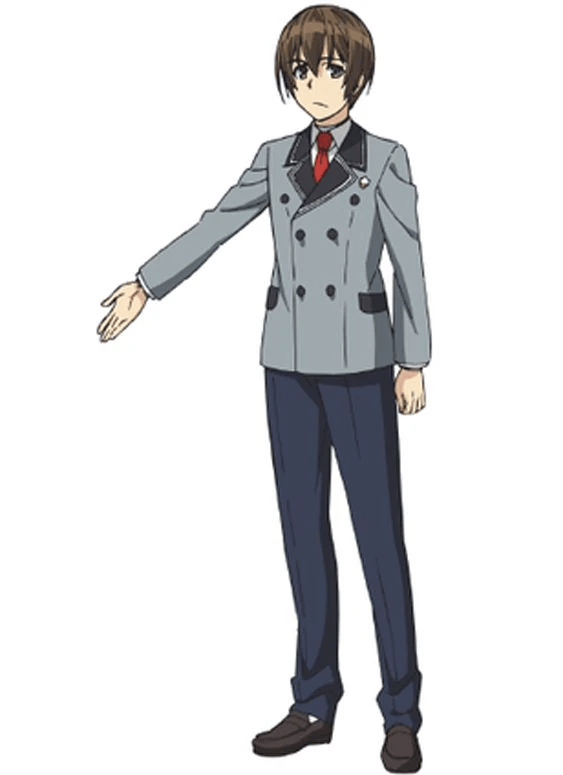
One such character is the protagonist, Tanukichi Okuma. He’s a brand new student to Tokioka Academy and a witness to the indecency of another character he meets later: Blue Snow, real name Ayame Kajou. Ayame takes the alias of Blue Snow whilst on a crusade to dismantle the shackles of this dystopian system of policing speech by way of challenging the response time of the Decency Squad. Under normal circumstances, suggestive language is how you get slapped on the dick (or in Ayame’s case, the tits), but she evades that by dialing a number on her cellphone that deactivates the collar on her neck for three minutes a day, letting her unleash a bevy of inappropriate sayings.

Based on her appearance here, Ayame adopts a Clark Kent persona when around others only to don a mask (a pair of panties, yes, really) when it’s time for her 180 seconds of lewd infamy.

The series isn’t just a man vs society conflict at play, there’s an actual antagonist in the series and she starts off as innocent and pure until the following happens to her:

Channe: Khánh Senseii Anime Kiss

The birth of the villainess of this series. Anna Nishikinomiya begins the series as the class president of Tokioka, but after a mishap in one of the episodes, Okuma plants a kiss on her by accident. If she had any knowledge of even romance, she’d probably have a normal reaction, but this unleashes metaphorical and literal floodgates. She conflates love with lust and 85% of the scenes that she’s in is a display of female-on-male sexual assault/rape. I’m not kidding.

Obviously, it’s played for laughs in the series and there’s a lot to be said about societal discourse surrounding male victims and their female perpetrators (a discussion I’m not qualified to talk about on a blog based on entertainment, but would have no problem entertaining in mixed company), but without getting too dark and focusing mainly on the central theme of the series, Shimoneta is a display of the consequences of policing morality and human behavior. If you’ve been on the internet for quite some time, you may recall an era when cancel culture went haywire and a small fraction of forum posters chastised trolls online to hell and back for a few racy comments here and there. Not that it was unwarranted, the internet around the time of the GamerGate controversy was an interesting time to be on the internet, but interspersed with genuine policing were impromptu witch hunts conflating ignorance with curiosity, and this went beyond just suggestive or provocative commentary, lest we forget the cultural appropriation vs appreciation argument that was prevalent at the time. Though these days, the conversation has moved towards intentionally ignoring sex organs, due to a variety of factors that have massively influenced the internet. Sorry, digressing.

In Shimoneta’s case, it proves how difficult at the least; Sisyphean at the most such a task of policing even speech can be. Not to mention a shortfall that accompanies the series from start to finish about how to go about this. You’ll notice that speech patterns themselves are the main crime, not the physical aspect itself. Now, there would still be procreation which this world would likely allow for survival’s sake, but another conversation can be had about how conspiracy to commit is addressed more seriously than an actual crime in this world.

This blog from 2018 has more to say about Anna herself and with a finer brush than the broadstrokes I employed here.

Having said all that, I still recommend this anime for anyone wanting a closer look at an example of how bad overpolicing behavior can get or if you just wanna see the most athletic Japanese school girl in the world hunt down the object of her “affection.” Beware her homemade cookies, IYKYK. Now onto:

High School DxD (2012-2018)

My personal favorite for being R-rated and uncensored, the light novel ran from 2008 to 2018, ending around the same time as the anime’s fourth season. Whereas Shimoneta’s content is light on explicit nudity and fan service, High School DxD throws the censorship to the wind. Back during the Funimation days, the English dub played up both the nudity and the jiggle physics. From threatening to get naked to actually getting naked; I like the progression so far.

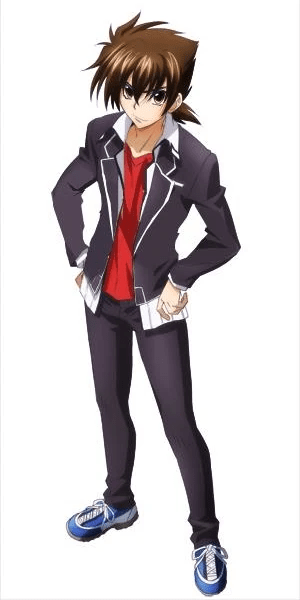
In High School DxD, Kuoh Academy recently transitions into a co-ed school for the new schoolyear. A few male students enroll, likely taking advantage of the 8 to 1 ratio of girls to boys in the hopes of scoring big before Kuoh fully integrates. One of these boys is a massive pervert and otaku named Issei Hyoudo. He initially fits the bill of a stereotypical otaku in all but appearance. Body pillows, an alarm clock with different anime girl archetypes waking him up every morning, an extensive hentai and porn collection shared with his two other friends, and a MIGHTY NEED to get some titty.

It just so happens that one particular set of breasts happens to belong to this devilishly gorgeous redhead, Rias Gremory. More than just a sight for sore eyes, Lady Rias is a fierce fighter and one to defend those she cherishes to her dying breath. Outside of battle, she’s a kindhearted young woman, compassionate, and reliable. She’s the head of Kuoh’s occult club, thinly masking her connection to the paranormal as a devil herself and making great use of the common tropes associated with angels and demons/devils: angels are depicted as bone ugly to ward off evil while demons are depicted as drop dead gorgeous to tempt mankind into following their id. In an ironic twist, the series depicts devils as more heroic than the beings they fight against.

As much as I make that sound like an engagement wearing the clothes of praise, there’s an actual plot behind the plot here. It takes a lot of cues and tropes from the Christian bible with the concept of angels, devils, and fallen angels. Following the devils, their depiction seems more sympathetic in the series as the factions do have a fair share of shady and unscrupulous characters. The overall plot plays up the biblical angle with the fan service going into overdrive, so Rias, Issei, and the Occult club are all (knights) in service of Satan, or in this case, in service of one of those appointed as a satan. To quote Anton Szandor LaVey, founder of the Church of Satan, “if you’re gonna be a sinner, be the best sinner on the block,” and it seems that Issei is guaranteed to live up to those ideals.

The juxtaposition of magical action and theological babble with T and A and convenient panty shots is what kept me going until about halfway through the fourth season. When it comes to censorship, normally I’m an opponent depending on the company I’m with. Throwing out f[crunch]ks, s[footsteps]ts, damns, asses, and other such forbidden words in a room full of bureaucrats allergic to the sun makes you seem immature compared to a gathering of mobsters, gangsters, or even servicemembers, all things considered. I censor swearing and nudity here for presentability and professionalism, but seeing as I’m writing about a trio of anime that joke or outright show you uncensored boobs, if it wasn’t for the presentation, this whole blog would have no reins. Before we move on to the third and final series I want to talk about, let this ending convince you to watch High School DxD if the above hasn’t already:

Channel: SE NPAI

And last but certainly not least:

Monster Musume (2015):

A harem series like High School DxD but appealing to even more fetishes while also putting the protagonist in a tricky situation like Shimoneta, though with a different context. The plot of this horny adjacent series is that monster girls of various mythical origins are enrolled in a program not dissimilar from foreign exchange student programs in real life and one of the people who is accidented/voluntold into the program is regular human person No. 4986 Kimihito Kurusu.

One of the coordinators, Agent Smith, mistakenly sends a lamia (snake girl) Miia to his house to take care of her under the the circumstances that they refrain from conflict or copulation. Easy rules for Kurusu to follow considering the consequences, but as the series goes on and more and more monster girls share a roof with the man, his physical restraints are put to the test seeing as these women are physically capable of bending him like straw. More than once, he’s been grievously injured through accidents as none of the girls are even remotely aware of their gap in human endurance and their own strength.

Basically, it’s the equivalent of swapping Kratos, a character of pure strength and raw anger with Lester the Unlikely from his titular game. Kurusu exists in a world where monster girls damage him even without the promise or threat of snu snu, and yet, he’s not that kind of guy to engage in his temptations. Using Okuma and Issei as a scale of unfortunate to pervy, Kurusu is definitely closer to Okuma, yet we can put in a different category for him specifically seeing as how he doesn’t exactly live to fulfill is silly desires. He’s a blank slate of sorts that the viewer may put themselves in the shoes of.

Monster Musume has the makings of a horror show without the horror. It’s a harem romcom slice of life with horror elements featuring a protagonist who simply wants to live the most normal life allowed by this society, but is forced to share not only this world, but his dwelling with a harem of monster girls he’s forbidden from touching intimately because the agent that f[piano]ked him is functionally identical to Aqua from KonoSuba.

Don’t let the Matrix reference fool you, she’s not as efficient as those clones. But she does look good in a suit.

Another thing worth mentioning is that while the other two series in this post began as light novels, Monster Musume is a manga first, with a spin off light novel series that also got an anime adaptation: Monster Girl Doctor.

Take these three as my recommendations for when you think there’s too much wholesomeness to go around and not enough lewdness. There’s the possibility of getting muscled by the thirstiest girl in the world whilst on a crusade to curtail censorship; a harem of lovely ladies whose tits shake even when still; and a harem of lovely mythical monster ladies who’d each be wife material all their own if it wasn’t for the rules.

Whatever pirate site you watch your anime on (don’t worry, your secret is safe with me), give these all a watch if you haven’t done so already. And if you’ve seen them, see them again! Do it!!

In Soviet Russia, Waifu Confesses To You

She doesn’t know you’re also fluent in Russian

Summer romcoms have seen a boost as of late as seen by the evidence below:

Credit: Gigguk

The sussy sisters suspiciously spouting sexually suggestive sayings was far from expected, but also far from uncommon. Yosuga no Sora fans and Coffin of Andy and Leyley fans know what’s up. In this case where a romance anime has comedy and a sussy imouto, I present to you Alya Sometimes Hides Her Feelings in Russian.

The most interesting thing about this is that it may or may not be responsible for a new -dere type. For those who’re new, -dere in Japanese is a onomatopoeic term for “lovey dovey” or “fawning over someone.” The suffix refers to the type of affection displayed by the love interest. The most common types being:

Tsundere – where the love interest feigns disgust while secretly wanting you to lust after them (think: playing hard to get on hard mode)

Deredere – where the love interest wakes up with you on their mind, erection notwithstanding and counting down the days where they wake up next to you as a loving spouse

Kuudere – where the love interest acts distant and uninterested but keeps a heart-shaped locket with a picture of you inside, longing for the days where you two can be one; and

Yandere – where the love interest only thinks of you and no one else and you yourself better not think of anyone else or you’ll lose other people you care about in your life. It’s not the obsession that can lead to complete disaster, it’s the suspicion that this obsession isn’t reciprocated that makes yanderes so dangerous.

In the case of -dere types, the origin of this archetype–RoshiDere–is a derivative of the light novel’s Japanese title: Tokidoki Bosotto Roshiago de Dereru Tonari no Ārya-san. RoshiDere is a romcom about a highschooler named Masachika Kuze and his budding relationship with a childhood friend Alisa Mikhailovna Kujo. Being half-Russian, Alisa and her sister Maria have the distinct honor of being hafu characters. Short summary: a hafu is anyone of partial Japanese dissent, as in only one parent is Japanese (alternately known as half-Japanese).

There aren’t very many characters of this kind in most Japanese media, but there are a few that stand out, some of which you probably didn’t think about.

Japanese dad, British-American mom (that the fandom keeps forgetting; his knowledge of the English language is not a surprise whatsoever).

Plot-wise, Alya-san is a bog standard romcom but nearly functions like a harem anime of sorts all things considered. Circling back to -dere types, Alya the Russian GF is the chief RoshiDere, but sometimes has her tsuntsun moments.

Not that locking a character into a specific archetype makes them a one-trick pony, but the course of the anime opens viewers up to multiple different sides of the characters. Call it the benefit of a small cast, the creators can focus on a small band of misfits as opposed to tripping over their own two feet trying to make the audience fall in love with everyone else. Shortfalls plagued by a lot of Shonen manga, especially My Hero Academia and Naruto.

For what the characters do in the series, Alya’s an overachiever with the beauty to match her brains while Masachika engages in the otaku lifestyle watching the best series of all time until 3AM (obligatory: he just like me fr), leaving him the narcoleptic, sleepyheaded underachiever and the subject of Alya’s romantic teasing. She thinks she’s being coy by speaking русский язык (Russkiy yazyk), but little does she know Masa-kun is no stranger to the Russian language. As a matter of fact (spoiler), she’s not the first girl to speak it to him, having had a childhood friend from Russia itself. So her passing her flirting off as snide remarks is merely her footing herself in the mouth.

To my knowledge, the only other person who knows his bilingual fluency is his sister, Yuki Suou, as seen in this clip:

Credit: Momka Weeb

I haven’t read the light novels yet (will I? Maybe I will and write about it [patrick_scheming.jpg]), but I imagine a scene where Alya shouts in Russian, Masa-kun walks up to her, translating outloud and Alya’s cool and confident demeanor shatters under the weight of her crush’s knowledge of her native tongue.

Not so much as a gotcha, remember she has tsundere traits and will likely be upset that he knew and didn’t reciprocate up until that point, but part of me can’t help but be the fly on the wall who witnesses that encounter. Gonna pop some popcorn real quick, BRB.

Away from the main events of Russian Girlfriend Problems, Masa-kun’s sister, Yuki, is the Queen of the Otaku vying for the Degeneracy Crown currently resting on the head of one Sydsnap.

Link to her channel if you’re interested.

https://www.youtube.com/channel/UCWH4JkQWioU3vTAritHDnAA

It’s explained that Masa’s and Yuki’s parents divorced and went to live separately. Yuki grew up as a quasi-aristocrat being viewed by the school as rivaling Alya academically, but Masa-kun knows how she’s like behind closed doors. A hardcore otaku who makes numerous references, points to the camera Deadpool-style, and wears her otaku flag on her sleeve. Don’t let her perception of innocence deceive you, she’s actually a cunning young lady and wanted for theft of every scene she’s in:

If the romance between Alya and Masa is the main course, I think we can safely call Yuki’s shenaniganry as the appetizer or dessert. It’s a cutesy little series that has a lot of fun with the premise and the use of multiple languages, that I haven’t seen really since Golden Kamuy, and considering that series takes place mostly in Hokkaido and Sakhalin (with flashbacks to the Korean peninsula where the Russo-Japanese war was fought), that part goes without saying.

Alya Likes to Flirt in Russian is available on Crunchyroll and other streaming sites of questionable legality. If you can stomach the ads, Crunchyroll is the way to go. If you have the cash to spend and can go premium, by all means. And for those of us, who are learning the right lessons from One Piece, HiAnime, AniWatch, and similar piracy sites are still up as of writing this. Enjoy them while they last, especially HiAnime which appears to have caught the eye of the U.S. government.

This week’s YouTube recommendation is NFKRZ.

https://www.youtube.com/@roman_nfkrz

Run by Russian-born Roman Abalin, NFKRZ is a channel that makes videos on Russian life, life in the former Soviet Union along with personal anecdotes sprinkled in. It’s a hybrid vlog/semi-documentary commentary channel that sheds light on this part of the world, often dispelling popular myths of this region with personal anecdotes having grown up in the city of Chelyabinsk (which is close to Kazakhstan). The link to his channel is above.

The Elusive Samurai Anime Review

A burgeoning franchise based on medieval Japan

Long time subscribers (and newcomers who’ve searched the archives) know how I feel about history and even Japanese history as a weeb. I’d been following this series by Yusei Matsui since the first chapter was licensed for English by Viz Media in late January of 2021. After three years, about 17 volumes (plus more to follow), an anime adaptation, and figures set for release sometime next year; of all the things that could’ve happened to this series, franchising was probably the last thing I expected even for promotional purposes. Then again, this isn’t the first series to get a boost in merchandise time of debut notwithstanding.

Save for the OVAs and the lost 2007 movie, 25 years is a hell of a wait for a proper adaptation.

I’ve already written about the time period Nige Jouzu no Wakagimi takes place in, but as a refresher and to catch newcomers up to speed: between 1180 and 1185 in the Genpei War between the Taira and Minamoto clans, the Minamoto won out and established the Kamakura shogunate in the namesake city of Kamakura where it would be under the de facto rule of the Hojo clan, a Minamoto ally by the 1330s. The retired Emperor Go-Daigo plotted with Hojo clan retainers, the Ashikaga, with the purpose of returning control of Japan from the shogunate to the imperial court.

Following these plans initially, the Ashikaga betrayed the Hojo and led a siege spearheaded by the Ashikaga brothers, Takauji and Tadayoshi, with the purpose of mass elimination of the Hojo clan.

Of course, they had retainers of their own, Ogasawara Sadamune, Ichikawa Sukefusa, Nitta Yoshisada, and several others who rally to the Ashikaga cause. All but one of the Hojo survives, Tokiyuki, who carries more value as the heir to the previous ruler or shikken Takatoki compared to his half-brother Kunitoki, whose mother was a concubine.

These people all did exist in Japanese records, but English-language sources are scarce and my Japanese isn’t proficient enough to try to search through the original sources to look more into their personal lives, but as a spoiler, Hojo Tokiyuki made it all the way to the 1350s running endlessly from the forces of Ashikaga Takauji, escaping until his eventual capture and execution by forces loyal to Ashikaga in the Spring of 1353.

As for Go-Daigo, well Ashikaga seemed to have used the opportunity to betray the Hojo to also betray the emperor. Paying lip service to the idea of a civilian-run government, Go-Daigo’s Kenmu Restoration as it’s known these days was short-lived and Ashikaga implemented the Ashikaga Shogunate in 1336 until it eventually collapsed during the Sengoku era, paving the way for the last shogunate, Tokugawa, until 1868. Never trust a traitor. Though the entire time of the Ashikaga’s brutal rise to power, there were technically two courts in the north and south of Japan which is why this era is also known as the Nanboku-cho period and why there are two sets of emperors whose claim to legitimacy is dubious.

I remember reading about the anime adaptation last year, prompting the first ever full-length post about it the day of. Now that it’s here, I can finally share my thoughts on the adaptation. Clover Works pulled out all the stops to bring this series to the small screen. I’m almost 26 and in all my years as a weeb, I’ve never seen a more beautifully animated piece of media, not even when Toonami pranked us years ago by showing the original dub of Masaaki Yuasa’s 2004 film Mind Game.

Some sore spots exist with the use of CGI in select scenes in the anime, but they don’t really do anything harmful to the overall plot of the series. I admit, I was worried slightly with how much attention other anime were getting around it especially with regular updates on Reddit, but then again, a single social media forum isn’t and shouldn’t be seen as the poster child for all discussion on media, least of all anime. Healthy discussion does exist, but with how big anime has become, I think it’s time for the medium to go back to its roots as showcased in late 90s-early 2000s discussions are concerned, namely, a small group of friends, enthusiasts and connoisseurs (with a strict member limit) who meet up and talk about the latest series and other anime news. Reddit and Twitter are cramping anime’s style, you know?

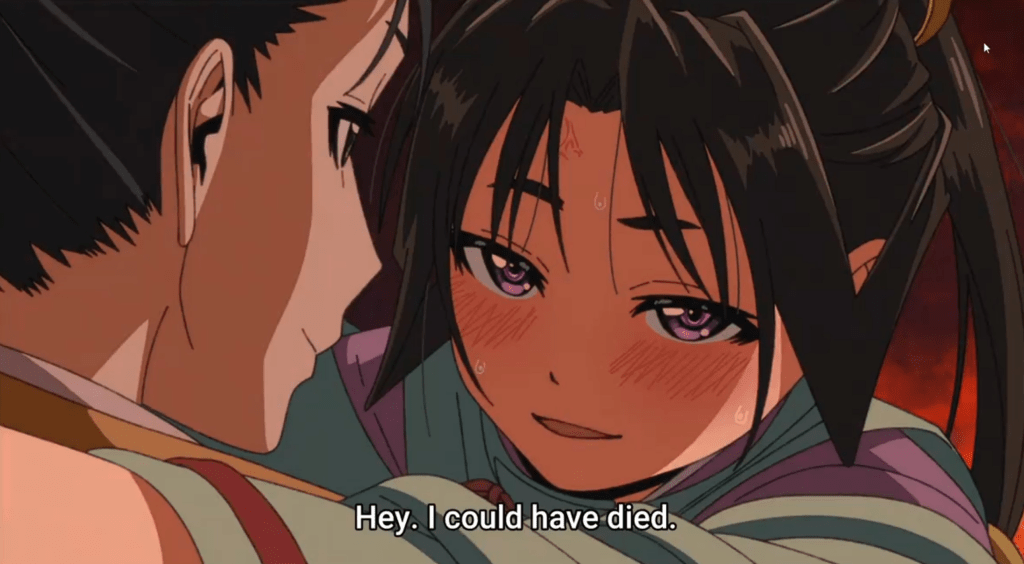
Following on from that point, if you want more evidence that social media is more curse than blessing, I made a discovery about seven or eight episodes in. I didn’t know this at the time, and I know better than to share misery, but in the first episode (spoilers again), there’s a scene where the chief of the Suwa Grand Shrine, Suwa Yorishige, pushes Tokiyuki off a cliff to join his family and be killed, when he shows his max experience in evasion and makes it back up the cliff, he flies into Suwa’s arms, and angrily tells him that he could’ve died down there. Though angrily in this context may not be what you imagine.

Matsui’s pride in femboy characters strikes again, as a disturbingly noticeable percentage of Japanese Twitter saw this scene and exploded with… excitement. I’m not responsible for this scene, but I still feel an apology is owed to someone. Maybe Shinzo Abe’s ghost for all of that excitement going into crumpled up tissues and not the rest of the population for procreation. Sorry, was that vulgar? Have a meme.

Pictured is my reaction to Japanese Twitter’s “awakening.”

Eh, it counts as engagement, so success? I’m still collecting and reading the manga, which I encourage you to do however you see fit. Follow along with the anime (which ends the 1st season at chapter 31), continue in the manga, or if you’ve done/are doing that, then wait with me for the figures to release. Time’s on our side.

On a final note, I heard rumors that a second longer season was in the works. We’ll have to wait for confirmation on that.

The Tale of a Needy Streamer [Overload]

My opinions on VNs rear their ugly head again

A few weeks before my second attempt to Army, I wrote about my opinions on visual novels, with the overall consensus being lukewarm above all else. A good VN can stay as long as it wants, but I don’t actively make a beeline to find them all, no matter how great the art style may be. For the topic of this post, I had bought another VN during my time in AIT on sale, and one of my roommates (who’s an even bigger weeb than myself, he’ll talk you to death about Konosuba or Hatsune Miku), had recommended the video game Needy Streamer Overload.

I placated him by “promising” and dismissing future playthroughs and I couldn’t see myself continuing forward for several reasons. Not limited to my play style as I have expressed some VNs do go on to have great legacies like Fate, Clannad, or Steins;Gate. This one specifically carried darker undertones, which I’m not against, but it varies depending on certain things. Maybe I’m just being arbitrary but the juxtaposition of cute and creepy in this one makes me a little uneasy. It’s a bit like the talking pie from that one episode of Regular Show. Like a doll possessed by the spirit of some little girl that drowned.

Now, watching and keeping up with thriller series Mysterious Disappearances would make you think I have no problem with scary stories like this, but with a series written around urban legends and folktales, some of which are plausible but not guaranteed, only a fool would try to take those seriously.

But what turned me off of Necessity Streamer Maximum would be because how real the concept is. It’s basically about a depressed, near-suicidal adolescent girl putting on a show for a legion of faceless fans across the globe, acting in an erratic and unpredictable manner as part of her schtick.

Yes, I know, I practically slandered VTubers, but in another post I assure you that I have no real problem with VTubers, following a few myself when the time allows for it. That said, my description in the above paragraph shows the types of VTubers I have a preference for. Sus-commentary is fine, everyone says weird s[8-bit soundbite]t from time to time, though only a few of us have the courage [read: foolishness] to monetize it. Personalities are also fine, look up any celebrity’s on-screen vs off-screen behavior and you may be shocked at what you found, like Marilyn Monroe being an intellectual cursed by the Hollywood cretins to play the blonde bimbo.

Screaming one’s lungs out certainly has an audience and I was among those, but in the years’ since, I can’t go back to that. There’s a meme of a guy tearfully gunning down something he loved because it grew increasingly annoying, and it sounds like I’m phrasing it that way, but it’s more the process of growing up. Some things you just outgrow and can’t really enjoy anymore. It stopped being entertainment by the time I was 19 and my 26th birthday is at the end of next month. So specifically with entertainment, while I don’t see myself outgrowing the analytical like, for instance, documentaries, the random humor that emerged in the late 2000s and 2010s especially on YouTube isn’t for me anymore. And personally, I had trouble watching Pipkin Pippa. Someone will try to convince me that she has less intense content, and I appreciate the body of water you’re allowing me to drink from, but the horse isn’t guaranteed to even take a sip.

This meme is the point of this post, the crux in the custard, the proof in the pudding, the facts in the fondue (hungry yet?). I know people who stuck it out with unstable people and got severely burned as a result, not to mention the numerous stories I’ve read of how bad things have gotten for some people and hypotheticals of how much worse it could get, so sorry if I’m a bit suspicious about what can and does happen in real life. You know how you view a piece of media and the antagonist is memorable because of how they can mirror some actual people past and present? It’s a bit like that.

Now I’m fully aware that this isn’t 100%, though the potential is what keeps me at arms length at times. This part is gonna get slightly personal; everyone has their problems that they’re trying to work out or live with and it’s something I commend, but my opinion changes for those who swear to whomever they call god that there’s not one thing wrong with how they live, even more so if they’re highly reactive. These types of people are easy to avoid on the street or whatever, but what about if you work with them? Or live with them? You don’t need me to say that life with a person who dwells in misery and is overly generous with their suffering is zero fun.

For Neediest VTuber Maximum Overdrive, it reminds me a lot of what I want to see less of in my future. Not by a giant margin, though it would get a bit depressing for me if the background art was a physically broken home. Then there’s the main character herself. It’s been a while so I don’t remember what her real name was supposed to be, but the alias she puts on is “OMGkawaiiAngel” or just K-Angel for short. The game’s Steam page describes her as a girl with an unsatisfiable lust for attention, which brings me to something else I want to see less of as I age. I’m always happy to help wherever and however I can, but I can’t stomach habitual linecrossing. Kindness is no weakness, but we often find ourselves sharing that philosophy with those who think otherwise.

Back on topic: Notice Me Senpai Simulator is perhaps a comprehensive look into mental illness that most internet forums like to meme away. A look I’m definitely not qualified to discuss in length, so here’s a video I found that explains the “I Can Fix Her” situation.

Credit: BoolioGalaxy

What is it exactly? A look at one of entertainment’s dark sides? An analysis of monetizing what’s left of one’s conscience? An extreme example of things going wrong? A combination of any one of these? Or none of the above because it’s just a game? I honestly wish I could break from this streak of cop-out answers, but if it’s any consolation, it looks like there’s a bunch of nuanced answers to Feed My Attention-Seeking Behavior, Nimrod.

Subscribers will remember the time from when I recommended the darkly comical episodic series The Casket of Drew and Ash and might be confused or call tu quoque for recommending that series and being uneasy about this one. But to reiterate and emphasize, that game had comedic elements of a classic black comedy. It elicits multiple emotions as you go along, whereas Hey, All You People, Won’t You Listen to Me? is darkly comical if you cross out -ly comical.

Rather than subscribe to the stereotypical dark atmosphere that accompanied horror movies of old, the disturbing part about this is that not only could it happen in real life, it probably is and few may even realize it, or they do and it feeds into the appeal of the yandere in anime.

Everyone likes a well-written archetype, but I found that Why Haven’t You Called Me Mommy Yet? does its job a bit too well. I’m no stranger to these sorts of things, I admit I’ve had dreams before where an unstable woman loves me unconditionally (so long as I keep my eyes on her and not any other owner of a second X-chromosome) but thank Rias it was just a dream. Joker isn’t crazy enough to fight the IRS and I’m 95% sure that I’m not mad enough to live this life:

Credit: kukuri ito

On a final note, if you’re keeping in the back of your head that this game was recommended by my roommate back in AIT, then congrats on your impeccable memory, have a trophy and some cheese popcorn. You’ve earned it. He was honest with me about his life and all things considered, it makes sense that this would be more his speed than mine. Don’t worry though, we’re all living our best lives. I’ve always wanted to see even a part of Texas, and that guy is currently living it up in the Hotel California Germany.

I have a recommendation this week, it’s Gattsu

https://www.youtube.com/@Gattsu

A Georgian YouTuber, his early work specialized in analyzing music, but nowadays he looks in-depth at the world, namely the western world, Russia, and the Caucasus region. If you’re sick to death of criticism of America and Britain in the west, let this guy’s honorary American card masquerading as a video convince you that he’s worth the watch. The man does his research in a variety of topics, which shows proficiency I say. Gotta know what you’re talking about before you take the piss out of it, am I right?