The L.A.P.D.’s Det. Columbo

See, there’s, uh, just one thing that doesn’t look right.

Before you, dear reader, is an atypical series with an atypical protagonist played by a rather atypical actor for an atypical runtime.
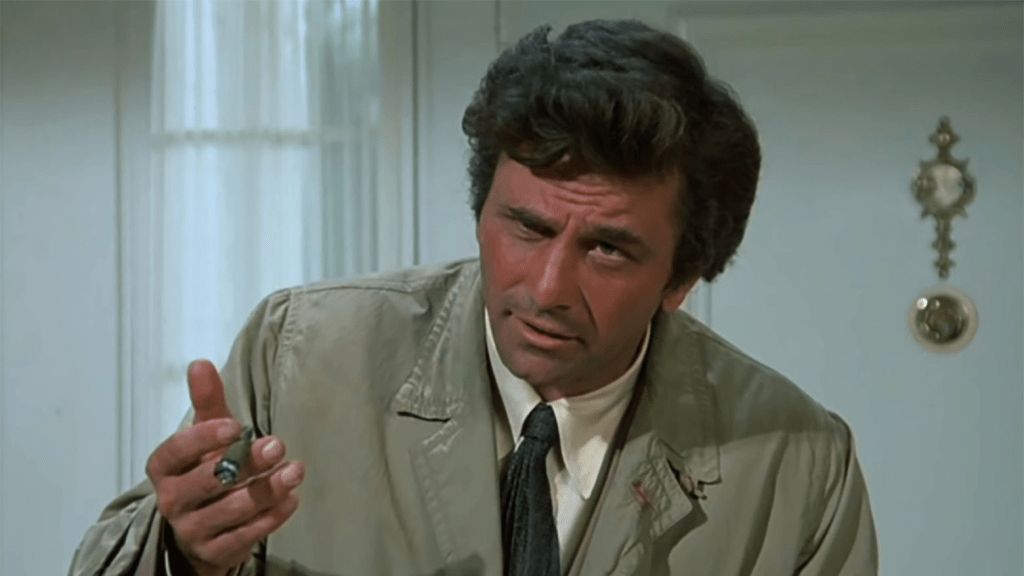
Columbo!

Created initially as a standalone character for the TV series The Chevy Mystery Show in 1960 by Robert Levinson and William Link, Det. Frank Columbo deviates from the time-honored tradition of whodunit mysteries. Columbo shows you the crime and if you pay attention and think about what the perp tells the police, read into their actions, you’re gonna find the inconsistencies that don’t make a lot of sense. For Lt. Columbo isn’t a whodunit guy, he’s a howcatchem guy. Seeing the action ain’t enough, you gotta dissect the action, consider the logic, some of the science, see more of the parts moving as they begin to move and voila! it starts to make sense how they get caught in the end.

Now, before I continue, I’d like for you to pause and answer the following question: What is your idea of a TV detective? Gil Grissom? Raymond Langston? D. B. Russell? Horatio Caine? Mac Taylor? Any of those guys from CSI original, Miami, or NY? Law and Order? Criminal Minds? Bones? Yeah, we make a lot of cop shows in the States; but Columbo is none of those. He’s confident, but not camera dominant. He’s exceptional, but not superhuman. He’s humble, but not imperfect. What is Det. Columbo? A bumbling cop who puts his prowess behind a mask of clumsiness and bolsters that crime-solving expertise with his relentless tenacity. The man can be told a story, but it doesn’t make sense completely because it’s not the story.

The main separation between Bobblehead Detective and Crime Scene Assertion and its twenty thousand derivatives is that Columbo doesn’t make use of fancy-shmancy technology. The crimes he investigates are all run through tests and labs, police have been doing that since the technology’s caught up, but it slows it down and walks with the audience through the process. It gets as close as it can to the timeline of police work from crime to investigation to suspicion to arrest with receipts, yet a not insignificant portion of the show is fantastical. Cops are always partnered up, they don’t show the evidence to the suspect while at their place of work or their domicile–that part is saved for the interrogation–and most importantly, they don’t carry themselves like Columbo in appearance. His position as a police lieutenant may give him a lot of leeway to choose how to carry an investigation, but the way he looks is improper for a cop. But this is the key advantage the show has.

Let’s put him side-by-side with a chronologically older example: Cole Phelps in 1947.

As you can see here, Detective Phelps and his partners don’t dress all that differently from him. Three-piece suit, badge at the waist, gun in the coat, fedora on top covering the exact same hairstyle that separates the societal pushers from the societal chains. Columbo has the look of a homeless man but performs with the confidence and experience of a seasoned detective. Phelps may not clock Columbo as a fellow officer until he pulls out his badge. Phelps’ foolhardiness and Custer Syndrome in the Marines turned him into the best detective in Los Angeles for the 1940s and the system still defeated him.

Columbo is not a tragic character who thinks he’s above them all though. He’s not a vigilante like Max Payne, even if he fits the role appearance-wise. He’s more of a founder for what the Ace Attorney series would become decades later.

This point will be relevant later.

Most of the whodunit mystery series all have a thriller angle thrown in. For Columbo, because he takes it a lot slower than the breakneck, whiplash pace of successor police and courtroom procedurals, the thriller isn’t in finding out who did the crime, it’s in breaking down how the crime was done on a microscopic logical level. Columbo looks at things the viewer may not have considered before the victim appears, the logic applied to the crime, the motives, the breakdown of these intimate relationships between victim and perpetrator, further reinforcing the often true assertion that a majority of criminals know the victim, even personally, which is why the label of “inside job” is better saved for something more elaborate, like Naruto’s Uchiha Clan Downfall.

It’s also worth considering that not only do these criminals know their victims, they’re established personalities with exalted positions. They’re politicians, military officials, realtors, wine tasters, artists, curators, doctors, chess masters, scientists; the criminal has a master’s degree in insert specialty here. They’re masters of their chosen craft and yet… the bloodlust is indiscriminate. You don’t need to be a squalid nothing to have a desire to kill. The only requirements are simply being human. Human enough to think you’re infallible, human enough to go above and beyond the core words, human enough to want something and know you can’t have it without going off the deep end. And most importantly, human enough to stumble over your own two feet.

Your eyes do not deceive you, dear reader. That is indeed Peter Falk as Lt. Columbo standing in front of Leonard Nimoy of Star Trek fame. Playing as an opportunistic surgeon, his crime is, in fact, highly illogical.

One more thing to point out is the standard runtime. Let’s circle back to CSI, Law and Order, NCIS, and the other thriller-spilling shows of this type. How long do they run? Roughly an hour if you include all the commercials trying to sell you worthless bunk. Columbo is filmed in a manner that makes each episode less episodic and more of a self-contained film. I’ve been watching the series on Tubi and my first time watching it there carried me through a soul food dinner with chicken, peas, and mac and cheese. It’s not a series you binge in excess, it’s a series you watch one episode of, ponder, then watch more. How long is that grace period between episodes? Give or take, depending on you, it could be once every one or two weeks. I wasn’t there when it was on serialized TV from 1968 to 2003, but the slow burn feel of this series is one for a journey. The destination has been long mapped out, there’s no need to rush. Take your time and you’ll find your way.

Now let’s pull back and analyze it by way of broad analysis. An American inverted detective story whose central character feigns incompetence to get the suspect to gas themselves up only to notice an unsecured rope and watch them tumble into handcuffs and a criminal trial.

My sources tell me that Columbo is, in fact, the father of the Ace Attorney series, and the next topic will confirm that.

How so? Well, the way Columbo is portrayed is that of a bumbling, but earnest gentleman. And this was what Japan loved about him so much.

Even without meaning to, the choice to make Columbo a silent, humble genius resonated very well with Japanese cultural nuances, and I suspect the East Asian concept of face culture was a major factor. Clumsy on the surface, expert behind the scenes. These apply to the concepts of honne and tatemae (本音と建前). The short version description of this is that you don’t show everyone you know your ass. Your close family knows you better than most friends and acquaintances. Is this uniquely Japanese? No, for me being a westerner, I know people who are genuine with everyone whether everyone cares or not (most of the time, they don’t), and I know people who would be derisively known as two-faced. It’s not like keeping your personal affairs personal, it’s like presenting yourself as respectable to those who need to see that, and unwinding and being your goofy self in the privacy of your own home. Case in point:

Source: Iggy-Bomb, Newgrounds. I promise, I didn’t pull this up for the obvious Great Big Booba Joke.

This fanart depicts Yuriko Okada from Tojima Wants to be the Kamen Rider in different forms of dress, her professional schoolteacher appearance on the left and her Electro-Wave Human Tackle persona on the right. Yeah, this struggle is near universal; you wanna be your natural self, but society will shoot you out of a cannon if you do so (T_T).

Columbo accidentally struck the balance, by not having the titular detective be a standard, bust the door down and arrest the guy in such a brazen move. Instead, he shows an extreme level of politeness that may just outdo Japan itself. Even if he stops in front of a wall, he’s not the type to take it sitting down, for it’d be highly illogical for a cop to just up and quit. No, he finds workarounds, looks for further clues to investigate, zeroes in on inconsistencies and his tenacity for justice is outdone only by his love of cigars.

Peter Falk didn’t zero in on a singular brand of cigars, and neither do I. But if I were to choose a brand, Factory Smokes, El Septimo, and Cohiba stand out the most. Runner ups are Brickhouse, Warfighter, and Joya de Nicaragua.

So, Tiberius, what exactly am I getting from watching Columbo? A trope inversion for a start. Even when something is clear, breaking down what the average bloke misses is a strength of the detective. Another one would be guest appearances. Big name actors have appeared in various episodes of the time. Granted, some of these may pass you by if you haven’t seen other TV series where they appeared in, but if you know the name you may know the other property they star or co-star in, especially if its a long-lasting franchise like Leonard Nimoy from Star Trek above. And most of all: longevity. 1968 to 2003 is 35 solid years of show to thumb through with considerably less episodes than a soap opera. 10 seasons with a pause between 1978 and 1989, so it’s less straight 1968-2003 and more 1968; 1971-78; 1989-2003.

Tubi once again has the series in full on its platform and you can watch it for free. No need to pirate this time, but in case they can’t hold onto it forever, then:

This post doesn’t exist.

Semi-Lost Media

A Tragedy of Media

The title of this post is meant to have two purposes: to highlight how media can become lost and the modern era’s means of recovering lost media. There isn’t always a perfect method to prevent lost media nor is there a perfect means to recover lost media without sacrifice to the media in question. I’ve faced this problem personally while gaming and emulating games, but I’ll get to that soon.

A brief overview of lost media is any piece of media whose preservation methods were either nonexistent or severely compromised to the point that part, most or the entire medium is effectively ruined or destroyed. Surviving copies can’t be located or recovered because they either don’t exist or sometimes won’t be released publicly, even after the copyright expires or the original author dies. For the longest time for obvious reasons, this has mostly applied to film, like so:
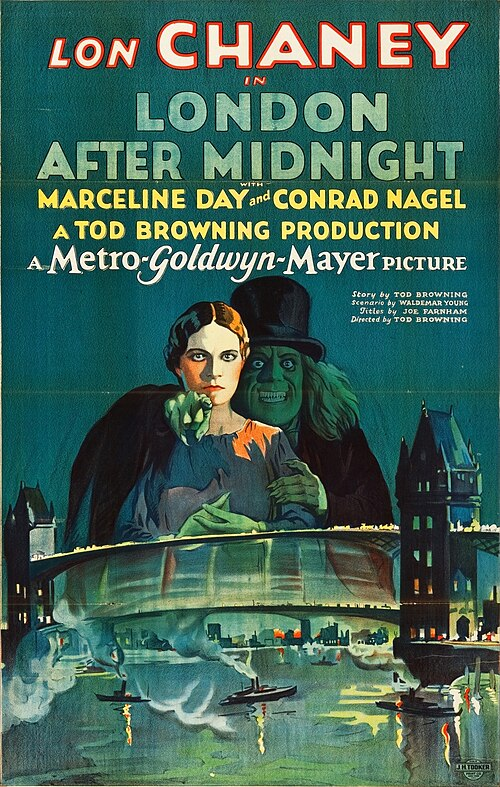
This film was released in 1927. It was kept in the MGM vault for decades until all surviving copies were destroyed in the 1965 vault fire. As of this writing, it only survives in posters like this and surviving still shots.

Yet as time has progressed, more and more forms of media have been created, to include video games which can also become vulnerable to media destruction. In one extreme case, Adobe Flash.

https://upload.wikimedia.org/wikipedia/commons/3/31/Adobe_Flash_Player_32.svg

Five years have passed and I still miss it.

This critical piece of software was launched in November 1996 and has formed an important cultural touchstone on the internet ever since. Countless creators, new and veteran, have used it to make everything from videos to short films to even video games. There used to be countless flash games and even websites hosting those games. They were inescapable, until Adobe ceased support for the software on New Year’s Eve 2020.

A not insignificant portion of these games couldn’t be saved and are thus forever lost outside of admittedly s[dial-up]ty videos recorded in 144P in 2007. Yeah, they were hard to look at and aged really terribly, but having aged media is better than having no media. It shows the technological progress between, say, VHS tapes and Blu-Ray discs.

The crux in the custard I’m getting to is that efforts to preserve media have been undertaken for over a century, and while not perfect, as an advocate of piracy and emulation, I also advocate the preservation and, by extension, re-release of old media in as many forms as possible, especially when the format in question begins to deteriorate due to age. My grandmother clung tightly to old VHS tapes and while they may have been endlessly playable in 2005 for example, they had problems at the time and have considerably gotten worse since. Same for all the old floppy disks she never threw away.

In my documented experience on this blog, in order of difficulty from easiest to find to Raiders of the Lost Ark, video games have been fairly easier compared to movies. And movies are still easier to search up compared to TV series. I say fairly and not absolutely because digital stores like Steam and Epic Games Store have delisted video games before and will nonetheless do so again for a variety of reasons. MMORPGs are most vulnerable to destruction when the devs can no longer support the servers due to something like acquisition, shutdown, or “cost-cutting measures.” That last one is less excusable because video games haven’t had a better time to be profitable than the modern day. You can pick your favorite examples of this, but my pick for one of the best-selling video games ever goes to:

Once RockStar realized this game s[gunshots]ts platinum, it hasn’t turned the faucets off ever since. Notice the gap in time between this and Red Dead Redemption 2.

Time and tech is another factor for this. Games released on arcade cabinets or 16- and 32-bit consoles are merely a collection of pixels and a third party emulator is seldom needed. In some cases, they function the same as a browser game. Sixth-generation video games do require a third party emulator but I’ve yet to face any problems downloading them. Just needed to make space. Seventh-generation has proven the most difficult to emulate. On average a PS2 game can be downloaded to PCSX2, for instance, in several minutes to an hour or two, but PS3 and Xbox 360 games can take double or triple that, especially with a spotty connection. Maybe a signal booster would help, but the area of El Paso is surrounded by mountains, so the servers in this part of the country may be considerably weaker than more densely populated areas. Testing this out myself would cost me money and resources I don’t have.

I made mention at the end of the last post that I was planning on posting in the future a comparison of three underappreciated 2012 video games that tackled corruption in different aspects, one of those being Yager Development’s Spec Ops: The Line. Unfortunately, I couldn’t find a store front that was carrying the PC release as it had been delisted ages ago. I’ll elaborate on that in the post, but in order to play it, I had to download a console version for four hours.

This is what I mean when I say it’s important to preserve as much media as we can. Spec Ops: The Line was one such example of a hard to find piece of media. I was worried it was only available in YouTube playthroughs from years ago, but digital libraries keeping the files available online were a godsend for this endeavor. For other games, this isn’t going to be the case. All traces of the game in question could be lost forever.

This wasn’t the sole inspiration for this post. Actually, region-locking of movies was the inspiration, but with the Stop Killing Games initiative going viral, I might as well include it here.

Going back to MMORPGs and similar online games, if a developer goes under or gets eaten by another dev, it’s not their fault if their efforts to stay afloat don’t work. And as I said earlier, the argument of keeping the servers up is too expensive faceplants epically when video games continuously make tons of money.

Although not the original victim of media destruction, the earliest films were most vulnerable to it due to attitudes towards them since inception. A lot of the first examples from the late 19th century were admittedly glorified experiments consisting of multiple still shots giving the illusion of a picture moving independently, but these early examples helped to perfect the craft. Science yesterday, artform today. But a lot of these old films were made with hazardous materials, notably cellulose nitrate. It could catch fire easily and long before the marriage between sound and sight, many of the silent films of a century-plus ago can no longer be recovered. At first, the reasons for preservation were balked at, but efforts to try and preserve it have been made. I consider the zenith of home releases to be the VHS and succeeding DVD-Video eras as both formats have re-released tons of TV and movies with estimates in the hundreds of thousands.

Then we progressed to digital streaming after some time and my main concern with that has to do with licensing and even region locking. If the license expires, you might find yourself unable to view the series you paid for. And if you move from one region to another, you might have to invest in a VPN to see the series you paid for. In a more perfect world, this wouldn’t be the case, but now that buying is no longer owning, piracy is no longer theft.

I do make some concessions with this. I don’t pirate modern games because of the risk of anti-piracy software. Some of the games I do pirate are from dead developers.

No matter the form media takes, it’s always important to save it for the archives. Allow future generations to be able to engage with it, even if it hasn’t aged well graphically. Ed Boon may be perpetually embarassed by Mortal Kombat: Special Forces, but it’s not like nothing was learned from that. Yesterday’s mistakes make for tomorrow’s masterpieces.

I’m still in the process of drafting up that comparison between Max Payne 3, Sleeping Dogs, and Spec Ops: The Line, but I want to preface that with a review on Spec Ops: The Line first. Now that I’m able to play it on RPCS3, I’m in a better position to give my thoughts on more than just its plot.