
The Cantonese Collective
Hollywood has a century and change with a wealth of films and genres to back it up, but it’s obviously far from the only producer of groundbreaking films. On the other side of the world on the Pearl River Delta, there’s a city in Guangdong Province that’s been a part of the British Empire longer than it’s been Chinese, and a look through city streets and select-people’s names shows this.

Hong Kong! One of Britain’s prizes in East Asia, to summarize the history of the area, 19th Century European powers sought foreign markets for trade. Britain, for instance, was making inroads in Asia and one of their stops was a fishing village in Southern China. China didn’t want the Brits to sell opium to their people due to the adverse effects on health and in doing so, ignited a war that they lost to Britain.
Although Hong Kong Island was the prize, it did nothing to satisfy British interests and they’d try to renegotiate the existing treaty. China said no again and this time more of Europe and even America had something to gain from an even more vulnerable China, or at least their neighbors. Sticking with Hong Kong, Britain’s near-peer rivals could and have sacked similar-sized territories thus necessitating a formation of the British military to keep the territory safe, though this stronghold of sorts was also witness and participating in further engagements for the rest of the 19th century.

By 1899 and the start of the Boxer rebellion, China had ceded so much territory that it was derisively known as the “Sick Man of East Asia.” Russia, Germany, France, Britain, and Japan all took some of their land and/or influence, further European powers split Shanghai amongst themselves, and Japan was making it crystal clear that this would be their backyard, largely solidified when they won out in the Russo-Japanese War in 1905. British-appointed Hong Kong leaders largely sat back while this corner of the globe kept adjusting lines on maps one ink-dipped fountain pen at a time… at least until Japanese ambitions brought the chaos to the governor’s mansion following Pearl Harbor.
Part of Japanese expansionist ambitions, the great lie told to the colonies of East Asia was that the answer to western imperialism was Japanese imperialism. They lost their opportunity when the US and UK shot down a racial equality clause at Versailles, so Japan’s next move was to dislodge western influence in the area through blood.
The 1920s and 30s gave Japan multiple opportunities to gradually expand in China and Mongolia, but their endeavors were somewhat halted by the US oil embargo after vile reports of, for lack of a better term, Olympic-level rapes and murders being committed in Nanjing.

This book has the details, and predictably none of them are for the faint of heart. Read at your own discretion.
After Pearl Harbor, American, British, Dutch, and commonwealth possessions were eaten and absorbed into the Greater East Asia Co-Prosperity Sphere, including Hong Kong, who wasn’t safe from Japanese atrocities across the Pacific. As we know, the combined forces of the US, UK, Australia, New Zealand, and resistance fighters in Japanese-occupied territories worked tirelessly to send the Japanese back to Tokyo and finish it off with a pair of bangs in 1945.
The Cold War saw roughly every part of the world violently or peacefully throw off the yoke of colonial influence and the last two in China were Hong Kong and Macau in 1997 and 1999 respectively from British and Portuguese hands to a two-systems situation, with full reintegration of the territories into China by 2047 and ’49, on the 50th anniversaries of their return to China, but recent news particularly in Hong Kong leaves the fate of the region uncertain.
Suffice it to say, Hong Kong’s history is one to preserve and retell for eternity. So, why bring up geopolitical history in a post hinting at their cinematic history? Well, I felt that the outside world would certainly have an influence on the region and Hong Kong would have something to give back to the world. Notably, it’s film industry.
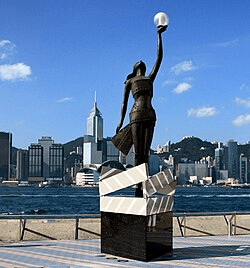
Before Hong Kong, Shanghai was China’s moviemaking capital, but very few films of that era are available for wide viewing. Conversely, Hong Kong under British ownership had more room to flex its artistic muscle and it did, compared to mainland China and Japanese Taiwan. Since the end of World War II, the Hong Kong movie industry enjoyed an approach to movie making that wouldn’t be seen until the late civil rights era in the US where more and more independent films would rise to challenge Hollywood.
As a matter of fact, Hong Kong-born cinema was free from subsidies and government influence as a consequence of British ownership, so there weren’t any efforts at the time to scrutinize their films for any anti-British sentiment, like the Shanghainese film industry or the colonial Taiwanese film industry, both of which would be heavily vetted for dissent or used as propaganda tools for the empires. Still, the British empire would likely have something of a propagandist industry, especially in the Cold War. But the filmmakers in London would be doing that anyway, and they wouldn’t need the crown or MI6 to influence their slant seeing as the alliance with the US and NATO membership status would guarantee anti-Soviet hostility even in British media.
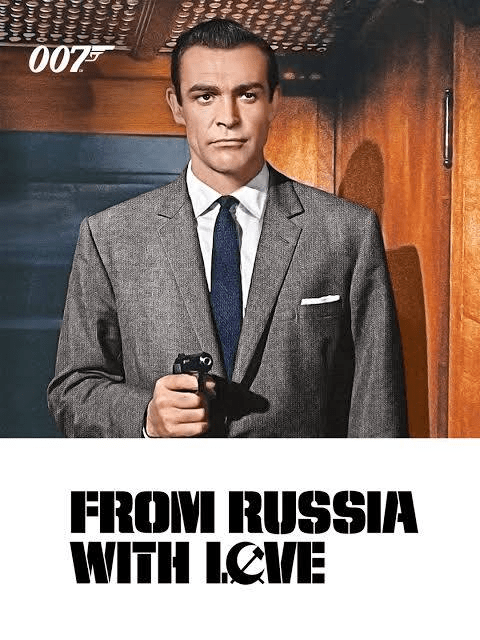
The Brits wouldn’t be outdone at this time.
But enough about the pillow where the crown rests, time to continue on about one of its overseas territories. In retrospect, each time the UK tried to put a thumb on their territories, it declared independence with the worst lesson learned. Conversely, when London leaves the colony alone, it learns to develop on its own, coming out better as an independent state. For Hong Kong’s sake, freedom plus location equals a prime source of inspiration. A millennia of Chinese stories ripe for the adapting was set to follow, and with Hollywood pumping out British and American works (at times distributing continental European cinema over the years), the world was Hong Kong’s oyster.
Most of the time, HK filmmakers stuck with the stories they knew best, though by the 1960s and 70s, some of Hong Kong’s best movies would be bolstered by legendary actors and directors, to include but are not limited to Stephen Chow, Jackie Chan, John Woo, Donnie Yen, Chow Yun-fat, and one of the biggest in martial arts cinema, arguably the biggest in his lifetime, Bruce Lee.
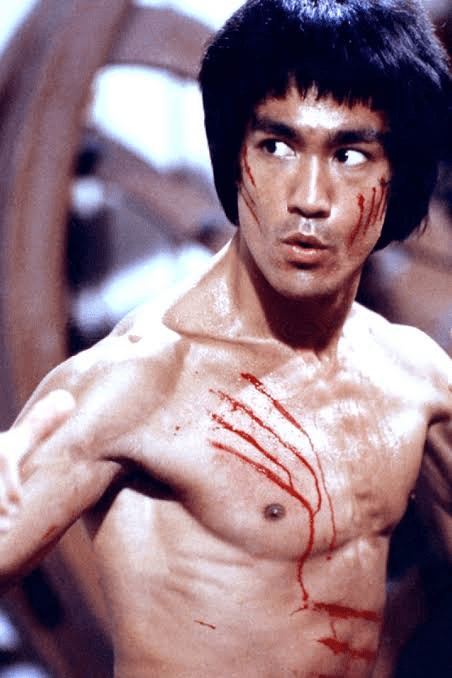
Personal story, where I grew up in the Bronx, there were at least ten different Chinese restaurants within walking distance or a short bus or train ride away. One of them had a mural of Bruce Lee in his trademark stance from the Enter the Dragon series.
Millennia of martial arts disciplines and practices led to filmmakers incorporating the concepts into many of their films. The aforementioned Enter the Dragon, Drunken Master, Crouching Tiger Hidden Dragon, Rumble in the Bronx, Kung Fu Hustle; hallmarks of Hong Kong cinema and complete with martial arts action and uniquely comedy. Several of these tend to be based on folktales from the mainland or at least the Guangdong Province, sort of like how kids in the US learn about Paul Bunyan or John Henry. Larger than life folk heroes giving the audience a window into their world at that point in time. For Hong Kong’s film industry, it’s had lots of time to reach perfection over the years, even rivaling foreign competitors, taking in as much cash flow as the US, UK, India, the mainland, Japan, and France.
Sadly, the fun had to end at some point. Domestic competition initially benefitted individual studios and filmmakers to found some of their own, like Golden Harvest, for instance, but when the competition collapsed in the early 1970s, only one studio, Shaw Bros., was left to carry the weight of the industry on its shoulders. The studios in Hong Kong felt this pressure and was compelled to get as many films in theaters as possible in a short amount of time. The problem with rushing movies out the door like that is the same for rushing video games out of the door: quality control. Few rushed movies come out perfectly and the ones that do have to compete with the rest of the dreck they release with or rely on rapidly aging tropes which was the case for Hong Kong. Trope bloat was killing the industry and filmmakers didn’t understand why.
Another, more indirect, cause of the industry’s downfall came with an increase in affordable housing. More tenants move in and start families and/or get jobs, other things take priority, and entertainment becomes a luxury that only a few can afford. Speaking of which, job creation eventually grew the middle class who increasingly became critical of low budget indie films, so good luck getting an honest answer out of Brian Chang when you ask him about the Blair Witch Project.

Or at least the Cantonese answer to The Blair Witch, I suppose.
The final two death throes had to do with piracy and Hollywood making in-roads in East Asia. If you think companies are overblowing the concern for piracy, in some parts of the world, piracy was still necessary if you wanted to watch movies, and going back to East Asian politics, some countries were severely restricting distribution in their territories at the time. Some still do and lobby draconian retaliation for even having the film in their soil. The final straw was Hollywood’s push into the East Asian market and all the aforementioned factors would mean that the Einstein of Cinema would need to breathe new life if Hong Kong was going to rebound. As of 2025, it still hasn’t.
All things considered, all that time rising, shining, and fading was arguably more than enough for Hong Kong cinema to make an impact on media, even to the point that countless classics get referenced to this day. The most recent example that comes to mind would be the gacha game Zenless Zone Zero where the developers at Hoyoverse released an animated promotional music video for their limited S-rank character Ju Fufu, with numerous homages to Hong Kong cinema.
Channel: Zenless Zone Zero
The thumbnail alone is a movie reference. Quick! Guess which one!
And predictably, the Hong Kong films of old would find their way into video games. Of these, I’ve played two unconnected video games, one of which has an interesting story. Starting off:
Sleeping Dogs (2012):

Released by Deep Silver in 2012, it’s more than a Hong Kong GTA clone. It’s cast consists of big name actors on both sides of the Pacific, one of them–Will Yun Lee–taking the visage of the protagonist, Hong Kong-born Wei Shen, a troubled youth who set himself right after he moves with his mother and sister to San Fran. Sadly, the move hardly changed the life of his sister Mimi who was ultimately defeated by a heroin addiction. For Wei, he still had connections to old friends back in Hong Kong, a not insignificant number of them being Triads from adolescence.
In the game, the SFPD imbeds him into the Hong Kong Police Force deep undercover to nab a high ranking Triad in the Sun On Yee, based on the real life Sun Yee On. The gameplay infuses eastern and western tropes and even some concepts, as a result of Hong Kong’s outside influences. The East Asian concept of face culture is implemented in both the plot and in gameplay where an underling, regardless of skill, makes the boss look more capable than they really are. Company-suck up culture with an East Asian flare.
Since he’s playing both sides in this, there are missions where Wei is a detective and story missions where he continues to embed himself in the Triads. Contrary to the game’s description, there’s really no conflict between these that can’t be solved relatively easily. The Triad characters suspect Wei of being a rat three times at most before he Academy Award acts his way out of it–a skill I expect undercover cops to have but it’s stretched to comedic levels until the end. Meanwhile, the HKPF hardly warn that his cover is under serious threat. Maybe they think he can handle it or not, but that’s not a unanimous view. Some of Wei’s handlers express doubt over his ability to stay on the straight and narrow once this is over… even though you the player can probably balance out the criminal activities with the cop work for the duration of the game. The game doesn’t even punish you very harshly for screwing up, merely awarding less upgrade points at the end.
Still worth experiencing, as the DLCs make up for it, each with unique mechanics.
Hard Boiled (1992)

I’d been looking for this one for a few months before I had found it on the Internet Archive sight. John Woo’s blowout success before embarking to Hollywood, like Sleeping Dogs, it’s another cop story, but with arguably more guns than a US gun show.
A pair of Hong Kong cops, Inspector Tequila Yuen, runs into an undercover cop and agrees to help him shut down a gunrunning ring. Tequila is a loose cannon who skirts past the rules to get results, which works in the long run but leaves him subject to reprimand each time. The movie itself has loads of action with some downtime sprinkled for a total of at least 10-15 minutes of breathing room combined. Paying close attention to the cinematography, it’s rare to find a contemporary gun-fu flick without shaky camera effects and I forever praise John Woo for omitting a maligned practice.
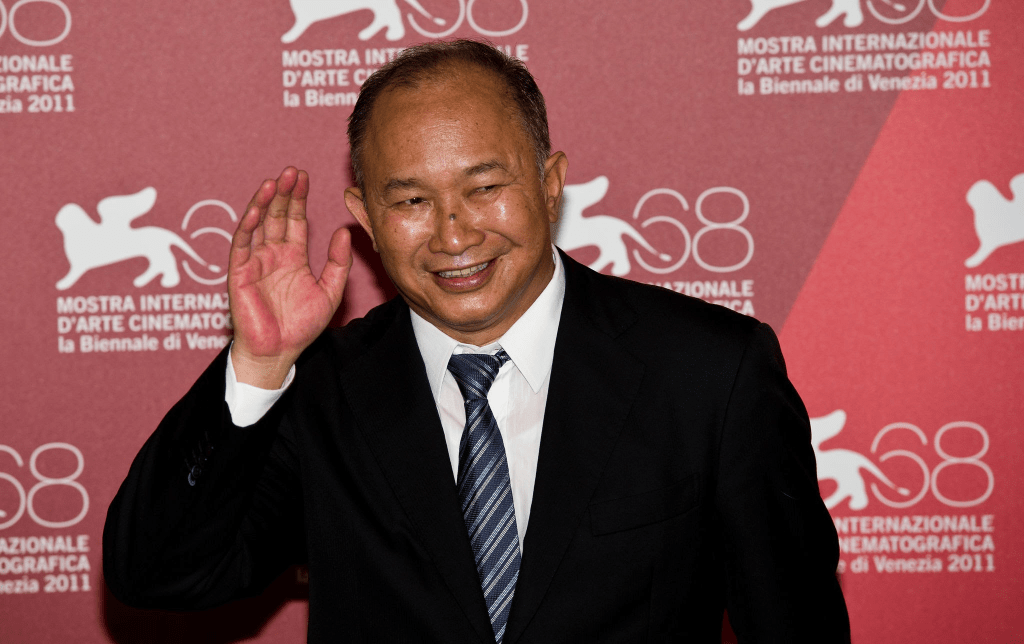
The camera stays afar and runs up close during pivotal moments so the fear of missing anything during the action scenes is highly reduced. By the film’s end, the loose ends had been largely tied up leaving for a bittersweet ending.
I didn’t know it at the time, but a video game I played was marketed as a sequel to this very movie. After watching Hard Boiled, I see how that came to be.
Stranglehold (2007)
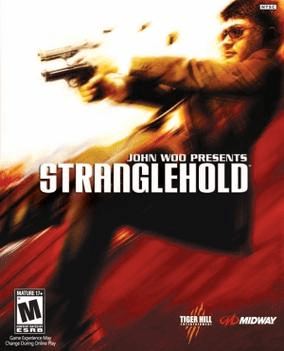
Speaking of bittersweet, the sweet part is knowing that this is a surprisingly well-done Max Payne clone. The bitter part is knowing this came out with Midway staring bankruptcy from the business end of a rifle.
A follow-up to Hard Boiled set 15 years later, Triads kill a cop and kidnap Tequila’s family and he goes on a one-man mission to get his loved ones home. Sound familiar?

Well, it actually precedes Taken by a year at most, meaning it was probably in development as early as 2004 or 05. Taken likely had been in production since at least late 2005 to mid-2006. Coincidence, nothing more. For John Woo’s sake, Hard Boiled and it’s video game sequel were at least well-received even if the latter is a Max Payne clone and the former helped to influence, interestingly, not just Max Payne but also The Matrix. Funny how it all ties in together, isn’t it?
I’m not yet done with Stranglehold, but I did finish and download Hard Boiled from the Archive site for preservation’s (and private viewings} sake. So once I’m done with the game at least, I hope to give it a review and how well it compares to Max Payne whilst doing its own thing.
Hong Kong used to be a giant in the film world. Someone has to bring it back to its former glory… or s[guns]t, I don’t know. Start a video game company there.

Enough people doing this in Hong Kong should revive it’s anemic industries.




 Opinions on Entertainment