
Yet it was available for free on Tubi a few years ago
Due in no small part to its popularity and wide appeal, Shonen action-battle series get all the media attention at home and abroad, unintentionally hiding other genres in the process. So it’s not a big surprise or concern when people erroneously claim that the longest running animanga series is One Piece, or JoJo’s Bizarre Adventure, or Dragon Ball. All have been running for decades, with the latter two debuting at the end of the Showa era. The subject of this post however has been in serialization since 1968.
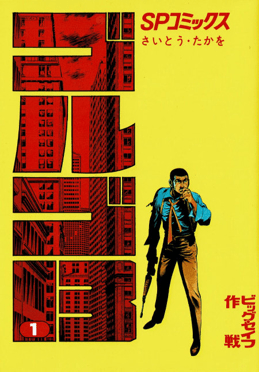
Indeed, the longest-running animanga series still releasing chapters even after the author’s passing is none other than this Japanese take on the well-established James Bond franchise. The mangaka, Takao Saito, designed Golgo 13 to be an international man of mystery. A man with no need for an introduction and gets all the results from the business end of a high-powered scoped rifle. Under the alias “Duke Togo,” Golgo 13’s backstory is up in the air. A legendary figure in international espionage, what’s known about him comes secondhand from those he chooses to work with. As long as they can get him a plan, a gun, and a car, then he’s in business.
The name “Golgo 13” has a symbolic meaning, Golgo being short for Golgotha, the place where Jesus Christ was crucified, and 13, of course, being the unlucky number spelling death and destruction for his targets. And Duke Togo doesn’t seem to discriminate in his choice of target. Coincidence or not, I see a lot of this man in Claude from GTA III.
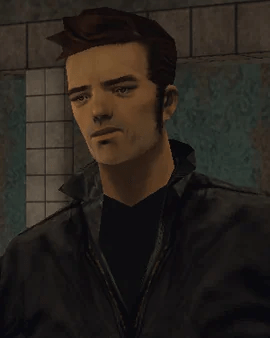
Before you look at this post inside-out, let’s size them up.
Contract killers from parts unknown with little to no mention of their origin, never mind their own birth names, who take up arms and remove problems for a variety of bosses, sticking their own necks out for a couple of bucks while earning the ire of different people and/or factions. But what separates the Holy Bullet from the grimy drifter is both the environment and the nature of their respective series. Golgo 13 is a professional hitman for hire. So is Claude, but he exists in a world designed to satirize everything from the ground up: New York City (which they needed to make adjustments for because the release date was very close to 9/11), mob life, gang life, pop culture, the works. Saito’s manga is more of an homage to the James Bond franchise and at the time of debut, James Bond only had five movies.
Not to mention, depending on who you ask, the depiction of early Golgo 13 in the manga and the movies is a mirror to the behavior of Sean Connery’s James Bond as well as Connery himself at the time in regard to women. I can’t say for certain if it’s a perfect mirror of Bond, James Bond from that time period having seen the 1983 movie a few years ago on Tubi TV, but just from that, the most I saw was Golgo 13 bedding a sexy lady instead of slapping the hysteria out of her, so I take it that this is a more reserved form of misogyny compared to Connery’s more boisterous form.
Does that make it any better? Well, considering the woman in that scene was more of a side show than a main event, it puts him a stair step above his British counterpart, but it’s worth closely examining Golgo 13’s character in relation to others. By himself, he’s a quiet professional with a singular focus: the target. Personally, I think these kinds of discussions erroneously apply modern customs and expectations to a 1960s Japanese publication, but I won’t refrain from entertaining them. Ditching random women after presenting the solid snake may not sound any better than Connery’s slap ’em and plap ’em, and it’s more or less on par, but with even less to say about this aspect than Golgo 13’s background, I wouldn’t dwell on this as much since the primary focus is Duke Togo and his incredible range.
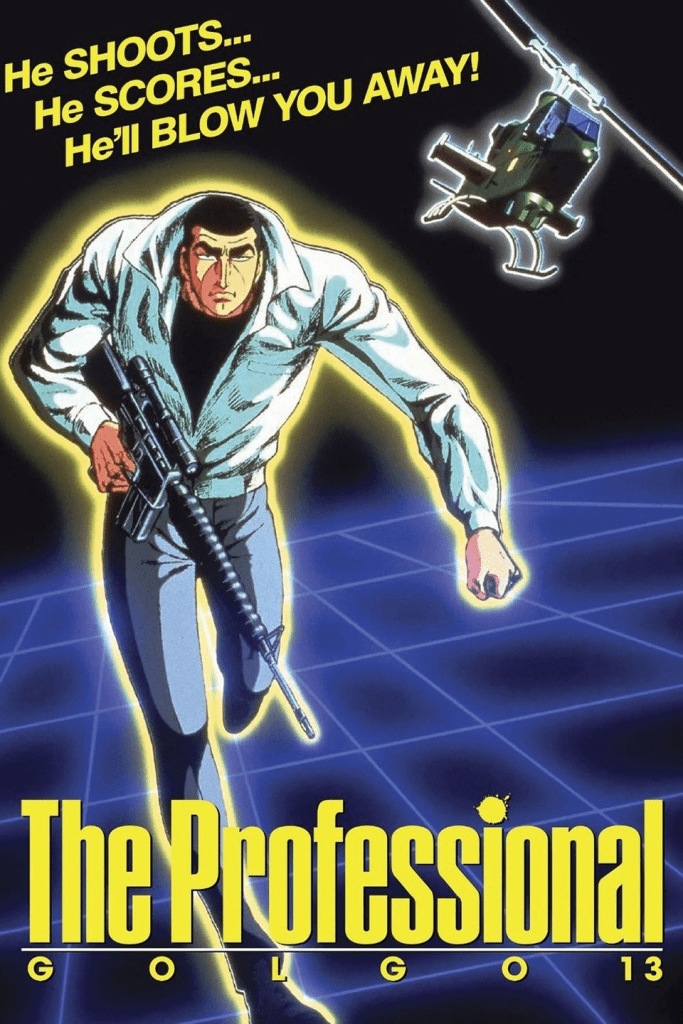
In line with the nature of this blog’s discovery and promotion of notoriously hard-to-find animanga series among other things, this series is not only right up my alley, but it’s scarcity is tailor-made for a blog like this. 50+ years in serialization, even after the original mangaka died, with a handful of movies to go along with it subbed and dubbed, and yet… hardly a squeak. And understandably so.
The series has a library-occupying 200 volumes to collect so unless Saito’s estate approved omnibus truncations to shrink the number, you may wanna invest in some extra storage space and shelves. It does have a 2008 anime adaptation on Blu-Ray (and has since been made available on the underground pirate sites) 50 episodes strong, and most likely will rely heavily on those brave enough to dedicate hard drive space to keeping it in preservation. And to top it all off, the manga hasn’t had as many people scrambling to translate it for international audiences.
A die-hard fan may have a dedicated section to just the Golgo 13 series and if you happen to be that person…

You might have the blood of a Japanese historian in you, because bringing it to light is a gargantuan task.
And a couple of movies and a 50-episode anime series doesn’t go deep beyond the surface. Having said all of this though, with audiences craving more than paper-thin characters with unchanging motives and priorities, Golgo 13 may not be what a lot of people want these days. Protagonists who aren’t heroic 100% of the time against antagonistic forces who aren’t necessarily evil is what sells than rigid good VS evil, but it creates a false conclusion that pure good and pure evil are bad. I suspect that people who dabble in fanfiction are among those who lambaste these archetypes because it doesn’t give them a lot to work with, especially if they can’t rewrite what already exists due to its non-existence (Golgo 13 being too straightforward to bend into whatever the mind can imagine), but if that’s the case, then I chastise these types back with a megaphonic “LAZY WRITERS!!!”
100 of these guys in a room can crap out Hamlet, so what’s your excuse, fanfiction writers?
But a point can be made about how immovable the character of Golgo 13 can be compared to people like Saichi Sugimoto, Frieren, or JoJolion Josuke Higashikata (東方定助). Sugimoto maintains his eyes on the Ainu gold, but faces mental and physical challenges in search of it. Frieren learns more and more about the late Himmel the Hero long after the journey has ended. And Josuke/Gappy understands who and what he was and is while battling people he regarded as friends and family for control of the Rokakaka fruit.
The usual channels of viewership for the series and the movies are available, but with most of the manga being out of reach due to a lack of translation for the later chapters, I wouldn’t blame you if you decided to skip the manga altogether.
 Opinions on Entertainment