On a day ending in Y, I decided to get through another anime in my never-ending fortress: Recovery of an MMO Junkie
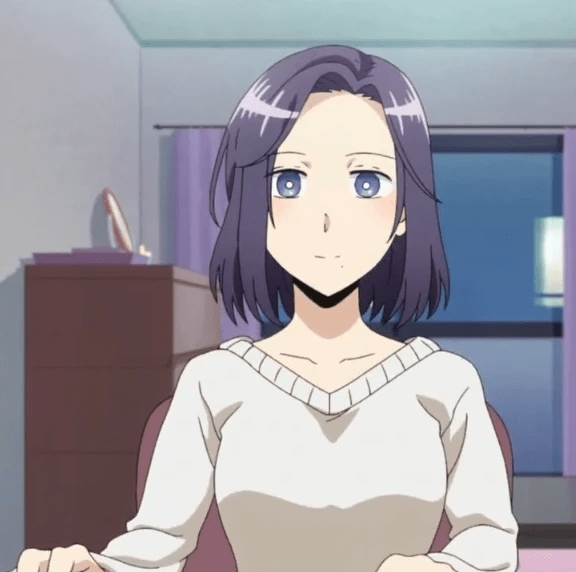
Although a manga, it began serialization as a webtoon before getting physical. The story is described as budding romcom between two successful adults, one who abandons the route of salarywoman to become Queen NEET (Not in Education, Employment or Training) and one who is still a gainfully employed salaryman. NEET extraordinaire is female MC, Moriko Morioka, who spends at least 48 hours a day on an MMO called Fruits de Mer. Next to her is the male deuteragonist, Yuta Sakurai, a man in the same position that Moriko left in favor of the NEET life, and more seasoned in FdM than Mori-mori. So much so that he offers to help her learn the game.
The twist here is that both are playing the opposite gender in the game with Mori-mori creating a male character named Hayashi and Yuta creating a female character named Lily. Accurate depiction of gamers thus far, creating eye candy for personal ogling for every 12 hour session.
I couldn’t find any other examples for this. Just know that it’s common, even I do it.
Unbeknownst to the players, however, is their knowledge of each other outside the game. They meet first in passing and then are set to connect over the course of the anime, but in a case of dramatic irony, the viewer is privy to their connection in the game. So while the relationship is developing virtually, reality playing catch-ups to what’s going on elsewhere.
The crux of the series is largely about shutting in from the outside world due to overwhelming circumstances. Life throws so much at people that sometimes disconnecting is a way to recover from the barrage of hits. However, this can easily turn into a double-edged sword if the shut-in/NEET is not careful.
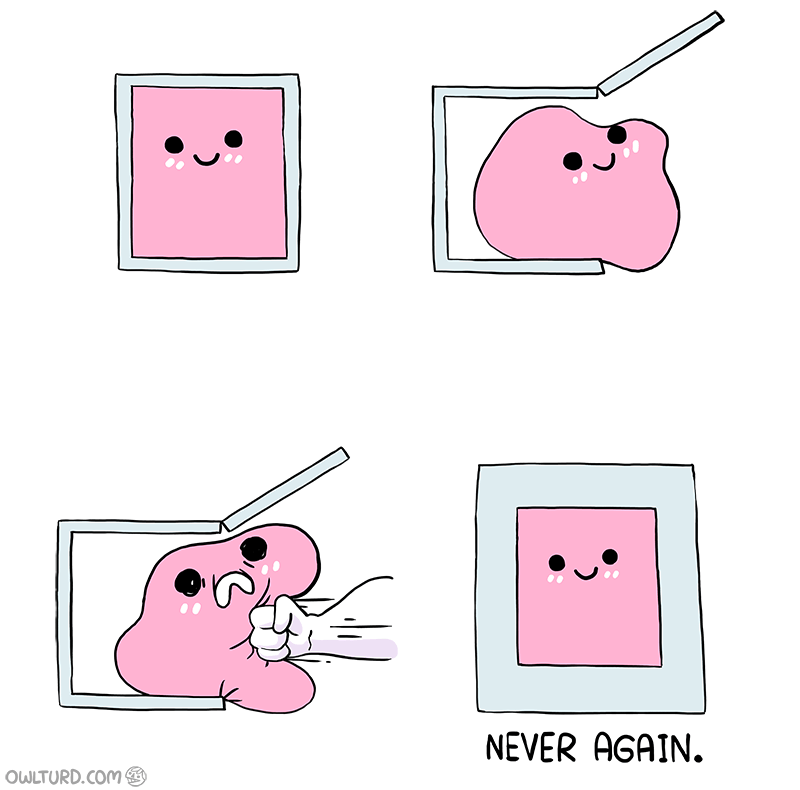
It’s pretty much this meme except the top and bottom images would be separated by a text that reads “[Length of Time] Later” in this specific context. Moriko started off rather well as a salarywoman, but the workload got its own growth spurt and she was unable to keep up the pace. Shackled only to her desires now, she games and goes about her days as she sees fit. As a consequence, her diet is negatively impacted, her sleep “schedule” is interrupted, and I’m pretty sure she touches grass only slightly.
This does touch on a concept that is all too common across East Asia. Most of these nations are culturally collective and most of the societies therein tacitly demand that everyone pulls their weight no matter what. You’re still free to choose the path you walk, but the culture means that whatever path you choose must be committed to absolutely. No slacking, no sticking out; individuality stays home where it belongs. This concept has supporters and critics and writing critically about this, the detriment can at times be twofold. The pace can be too much for some to bear but for those who can stomach it can only take so much, such is the case with Moriko and her choice to become a shut-in.
It’s not unique to East Asia, but it tends to be quite pronounced, especially if the culture reveres the words of its elders extremely highly. Having said that, Moriko’s life as a NEET isn’t the end of the world for her, which sounds like a variation of “I can quit whenever,” but the circumstances that led to her meeting Yuta/Lily do help.
For Yuta, nearly the opposite is true for him. Not a NEET and most likely wouldn’t be one by choice unlike our Queen Moriko. Fruits de Mer is but a hobby that costs a fraction of his earnings, though likely not as much as Mori’s. A socially awkward man using the game to help him communicate, although I call it luck that he met Mori in real life and her character Hayashi in the game, this is a mutually beneficial relationship for them both.
Based on Mori’s past life as an overworked horse, she clearly didn’t have many problems connecting to other people. Yuta, however, does have this difficulty and it shows several times across the series. In FdM, the script is flipped once again, Mori only knew how to brain herself on a bit of crumbling wall in comparison to Yuta who, through experience, learned how to break the wall down with more than just his head.
The series definitely lives up to its name, it falls under the spoiler category all things considered, but knowing the MMO junkie returns to the real world (while occasionally logging into the game) isn’t a turn-off. Matter of fact, the magic is in seeing how the characters develop. I know I mentioned that tuning the outside world can be detrimental, but with the context of this series, it’s both subjective and spontaneous. Each case is unique and whatever gets the person in question to go back to developing healthy relationships varies. There are real-life tragic cases of people dyingin seclusion, but there are beautiful tales of people coming back from these dark places.
The series also serves as a connection for those who’ve personally walked down the path of the reclusive hermit. No matter who you are or where you’ve been in life, I wholeheartedly give this a recommendation, especially since it’s bound to connect to a wider audience post-COVID.
I’ve had quite a lot of time to think about this genre.
Since this blog began, my specialty has been animanga coupled with video games, film, and television. Within animanga, there are several genres within this medium I always make a beeline for and in recent memory it’s focused on a single archetype: gyaru-centric romcoms. I know I don’t write the most about these, but they are noticeable enough that I can’t help but circle back to them. From a series I took a peak at thanks in no small part to a WatchMojo video about s[flies buzzing]ty girlfriends to one that I’m pretty sure was in the line up of Google searches whilst looking up the first one. Completing the trilogy of gyaru romance anime is one that was fawned over in online forums and by anime-themed media outlets for breaking some old tropes… apparently.
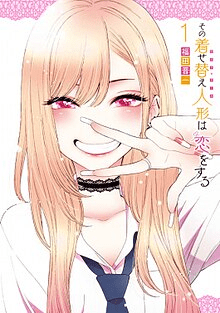
Even though I’m a writer, some things still fly over my head at times. Not gonna say outlets like Kotaku or Comic Book Reader are straight-up drowning in manure but to borrow a quote from Tactical Bacon Productions, if games journalism is the corpse that keeps in twitching, animanga journalism in the hands of guys like these are the gasses that keep causing that same corpse to burp every now and then. Be that as it may, these outlets have their moments of journalistic brilliance; and to compare the likes of My First Girlfriend is a Gal to Hokkaido Gals are Super Adorable to My Dress-up Darling would seem impractical considering what they all cover, not to mention Dress-up Darling forms the “Going to See?” part of this post’s title. Still, it got enough love and exposure (and memes) for me to get the gist of it from just the introductory blurb, so rather than treat my imminent analysis of This Gyaru Wants me to Make Her the Cosplay Queen as a holy text, take it more as a shaky summary from a dubious narrator.
Years Ago:
I’ve went over this before, but this was the first series I ever viewed with a gyaru deuteragonist and based on the writing and characterization it’s 100 percent a relic of its time. Basically, Junichi Hashiba asks a popular gyaru, Yukana Yame, out on a dare who teases him at every turn only for this mutual joke of theirs to form into something genuine. It’s a 10 episode series whose purpose was to promote the original written source material, and at the outside. Junichi’s prime motivation was to punch his V-card with an anatomically-blessed girl, personality notwithstanding, and you initially get the impression that Yame is the queen of keep away, dangling a carrot in front of a stick like Makima from Chainsaw Man but way less malicious or vile.
The initial motivation by Junichi puts him in the same shoes as Highschool DxD’s Issei Hyodo but they diverge not just in the types of characters they are or are going to be or even the types of series they represent. Issei may be a pervy degenerate, but I don’t recall him having friends that low. The most they’ve ever done as a trio was spy on the girls changing a la Porky’s, but without Issei, they’ve just been getting jealous that the school bombshell and occult club leader Rias Gremory reciprocates wife vibes. For Junichi, what he’s gone through was a series of shot-in-the-dark dares with little expectation and even build-up so his Surprise Pikachu face is apt considering his reaction in episode 1.
Channel: Ben Senpai
All things considered, for all the praise Dress-up Darling got for breaking the mold, it’s not like any of that was absent in Hajimete no Gal, though this series didn’t break the mold 100 percent. There were still a few tropes, some of which may or may not disgust you, the viewer, but the one that separates this from the other two series is the characterization of the gyaru. Yukana’s not a walking Hokkaido Tourist associate like Minami Fuyuki, nor is she a doujin otaku like Marin Kitagawa. She’s the embodiment of the stereotypical gyaru and by all accounts, your countries archetype of the standoffish, at times bitchy popular girl. When I was growing up the centerpieces for this archetype on TV wound up being the cheerleader types, the overconfident pretty girls even though this flies in the face of the reality on the ground. Not that there aren’t those types of girls, but that the description is grossly overrepresented when they really might only make up some 5 percent of the actual high school or even college cheerleaders. F[broken glass]g Hollywood and their f[meows]g tropes.
But I digress. Both Junichi and Yukana start the series as sleazy opposites, but they later grow to become two sides of the same coin, especially when they realize how much they have in common. Now I have to dig into the reserves of my memory banks to specify those commonalities, but on the surface, they both have a series of friends who root for them every step of the way. Last time, I focused on Junichi’s loli-loving, pedophilic friend, Minoru Kobayakawa, but on the other side is Ranko Honjo who holds sole self-proclaimed rights to Yukana’s virginity, downright threatening to take both hers and Junichi’s before he gets a turn. And that description alone is probably vague enough to make the more cultured among you think back to a similar sounding doujin… one that I don’t mind checking out. No, not for research purposes, I wanna add to this fortress I’ve begun building for myself. I wanna build an NSFW dungeon.
Have my opinions deviated any from my initial description of this series? Hardly. Even now that I’ve got a summary open in another tab on my browser, I’m glad to know my memory isn’t that f[plastic wrap]ked. Recommendations? Well, the anime’s only 10 episodes so finish those 10 then go to the source material if you want some more.
Recently Finished
At the risk of sounding like I’m pissed or making this post a correction of the record from s[burps]t said before by the typical media outlets, Hokkaido Gals is another one that breaks the mold especially in the Gyaru space. Actually, that aspect isn’t even worth mentioning anymore with more and more romcoms debuting with gyaru protagonists/deuteragonists who are less and less of the standoffish type and more and more of the lovey-dovey, “How to Be a Loving Wife” type, which calls back to another meme that floats around especially some of the wholesome forum posts online.
More power to you, ghost of Shinzo Abe, but your subliminal messaging seems to be working more on the mangaka’s mindscapes than it does on their audience. Not to mention the international audience being more likely to have started families than the Japanese and Korean audiences if the demographic statistics aren’t completely fudged over.
For tropes broken and in serious disrepair, Kitami Gals Are Like C-U-T-E, puts us in a notoriously freezing part of Japan. Gone are the days of waiting for a regular winter in Tokyo of all places; come up to Hokkaido where it feels like the northernmost part of Minnesota regularly. Speaking of which, that’s precisely the accent used in the English dub of this series. Fuyuki, Sayurin, and Natsukawa all were cute in the manga, thanks to Kai Ikada’s magic, but the gongs of kawaii sounded the loudest when they were given upper Midwest accents! Holy North Dakota, I didn’t think it would open up a blindspot in my US geography; exploring the Deep South at the expense of the Midwest and Mountain states.
It doesn’t deviate that much from the established gyaru norms though, seeing as the girls all still dress like gyaru albeit adjusted for a colder climate… somewhat. Fuyuki is definitely the equivalent of that one kid you know who’s worn shorts and sneakers in at least 20 inches of snow. I’m not sure if there’s a European or Asian variant of this, but I wouldn’t put it past a Korean or Finnish kid to try it at least once before. Maybe in the age of pen pals they might’ve heard of the phenomenon through the grapevine, who knows?
Refreshingly, Fuyuki, Sayurin, Natsukawa, and Tsubasa, the main male protagonist, aren’t fickle like the protagonists of My First Gyaru GF. Naive and wishy-washy, definitely, but not fickle. Comparatively, they may be less confident seeing as Tsubasa grew up in probably the most average, traditional Japanese household prior to moving to northern Hokkaido while Fuyuki was born to be a gyaru, fashion accessories and cell phone in hand, Sayurin adopting the look sometime in between intense sessions of Animal Crossing and Natsukawa unconsciously marrying the library. They each get along swimmingly as friends, but unlike Yukana and Junichi who have plans to f[door closes]k in the imminent future (or at least entertain the idea), none of the characters in either the anime or the manga (up to the chapters I’ve read, which isn’t that far from where the anime ended) have expressed anything beyond a close bond crossing into romantic development. Spoilers to follow: the latest of these developments involves a friend of Sayurin’s practicing for a swimming competition where after practice has concluded, Sayurin tearfully confesses to the friend (a tan gyaru, holy s[surprise music]t, there’s a lot of them) that she’s fallen in love with Tsubasa. As far as I’ve read, she’s the only girl to announce these feelings publicly to anyone and there’s tens of chapters for me to thumb through so I’m in for further developments as soon as I can find a manga hosting site that doesn’t redirect me to another series or refresh with every click. The things I face as a content pirate.
Going to See?
The darling of 2022, My Dress-up Darling did get its praise for breaking the mold in several areas, notably for giving us another shy, uncharismatic protagonist. Wakana Gojo isn’t Monkey D. Luffy; he’s more like Tanjiro Kamado in the sense that he has a big heart. From what I’ve seen at the outset, he wouldn’t take up arms or get into a street fight, not at least without a kick in the pants to get him up to speed. Gojo seemed to be more the type to let things wash over him without resistance stemming from an incident where his love of hina-doll making was grossly insulted to his face by a girl who we later learn had a crush on him.
Add the Guts theme from Berserk and you’re accurate to what little Gojo-tan felt that day. Fast-forward a decade and hiding his passion was what got him through the years until Marin Kitagawa, our lovely gyaru deuteragonist and thinly-veiled stand-in for Sydsnap, plays the part of the extrovert adopting the introvert. It was a joke at the time that this blonde girl looks and behaves like the actual aforementioned YouTuber down to a T, but the joke was scarily accurate to Kitagawa’s character wholesale. Like Sydsnap, Kitagawa does have a passion for a lot of the typical otaku interests and hobbies, especially the ones specific to female otaku (IYKYK), among them hentai and eroge and the less savory tags for each of them.
But the one that makes up the title of the series is cosplay, which she’d like to do with more polish but is unable to due to a lack of dress-making experience. Enter Wakana Gojo whose specialty is dress-making for hina-dolls. These combined forces make her an unstoppable force in the cosplay scene and the more they hang out the more Kitagawa realizes that this off-the-cuff ad hoc union has developed into a blossoming romance, though only she realizes this as it takes Gojo more time to understand what he feels when she’s around–which circles around to an age-old trope that has its roots in many series across the globe called “Everyone Knew but Them” where the couple is unaware that they’re a couple, but the hints were picked up more easily by their friends and other outside observers. Let this meme explain:
Are they dating? Worse, they’re stupid.
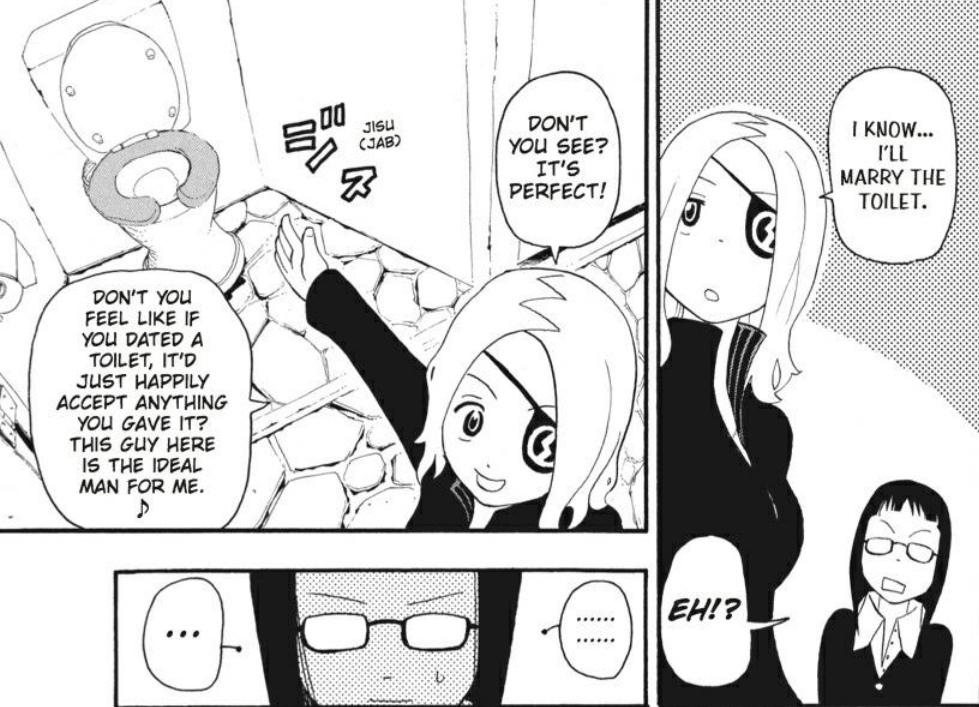
But whoever said love was straightforward? We weebs and otaku would fall for inanimate objects if they came to us with a bouquet of roses and dinner plans to an expensive French restaurant. I’m not making that up, by the way. One of the teachers from the Soul Eater series was about to drop everything to be happily wed… to a toilet.
I’ve talked before about thumbing through the latest chapters of the Dress-up Darling manga out of curiosity and hearing that the girl who first prompted Gojo to isolate himself and his hobbies from the rest of the world was coming back to apologize for her childish behavior back then, claiming jealousy over his hina-dolls. Unreciprocated crush plus dense boy equals “what’s that? you like something more than me?! You’re stupid!! I hope [my lawyer has advised me not to continue this example]!!!!”
While writing this post, I was curious if I was able to watch the full series without having to upgrade to premium and sure enough as of writing, Crunchyroll is feeling generous with this series in particular and it isn’t even a legacy series like One Piece or Dragon Ball. I may see it for myself and continue on in the manga where the anime finishes like normal. It’s just a matter now of putting it in the timeline somewhere.
This is gonna be the biggest animanga fortress I’ve ever built.
This week’s post was gonna be about more webcomics, but I kinda already talked about that last week. Country of origin be damned, there’s distinction between manhwa/hua and western webcomics, but there’s not a lot of difference. So instead, we’re following up on a nearly 2-year-old newspiece:
Funny enough, when the original ended a few months ago, many felt more cucked than the central character of an NTR hentai; part of this has to do with the gap in Japanese culture and western culture as well as the assumption that My Hero Academia was a western-style superhero-themed manga. To be fair, it presented itself as such playing homage to DC and Marvel, but the application of Japanese characteristics explains why most western readers were let down by the ending. What I mean is, (spoiler) Deku becoming a teacher instead of staying as a Pro-Hero feels like a slap in the face to over a decade of build-up and promise due to the punching bag most teachers in the west are compared to East Asian teachers who are held in the same regard as historical figures and heroes. Teachers in the east are seen with the same reverence as, say, George Washington or Winston Churchill.
That said, much of the MHA fandom was conflicted over how it ended. Personally, I initially gave it praise for not falling into the same traps as DC and Marvel have in the past (re- everything, f[gasp]ing hell), but over time it became a bit too much to follow. I lost track and playing catch-ups made me feel like Samurai Jack being sent to Aku’s future.
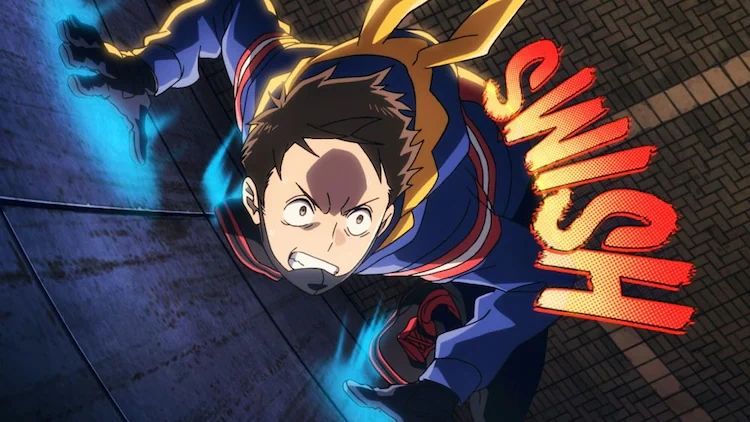
Vigilantes, on the other hand, had a tighter focus. Smaller cast, more mature atmosphere, a deceptively loose connection to the main series through characters, concepts, and/or key items, and a darker tone than the original’s high school setting. Summarizing s[neighs]t I said two years ago, college student Koichi Haimawari starts off as a friendly, neighborhood Spider-Man-like archetype doing it because it’s the right thing to do; he meets wannabe pop-star and tsundere-in-training Kazuho Haneyama and before the pair are nearly violently assaulted by a trio of anti-villainous thugs, Japanese Batman-like Knuckleduster knocks their skulls out of place in search of an illegal Quirk enhancer and offers (read: practically threatens) to tutor Koichi in the art of vigilantism. Much appreciated, but a date with a neck brace initially feels better than Peter Parker becoming angsty again.
I jest, it doesn’t get to this level, but it does explore themes that the original doesn’t delve very far into. It wrapped up its story with a neat and tidy ending, and is an interesting addition to MHA on the whole, along with the light novels, and spin-off, yonkoma parody. Yeah, it’s become a franchise since debut.
It was in 2023 where the rumors of an adaptation first circulated and I did report on it at the time, letting it sleep until I got official news from the horse’s mouth. Fast-forward to mid-January 2025, and the rumors are facts: My Hero Academia: Vigilantes is set for a spring 2025 release.
As far as reputations go, the fandom coupled with the writing of the last two quarters of the manga seem to have colored many people’s outside interpretations of the series. Not that it had a good leg to stand on initially; for all the praise it gets for helping to popularize new Shonen tropes, if you just got off a binge of the big 3 anime of yesteryear and expected badassery on every corner, then I can’t blame you if you were ever disappointed. Then again, the original’s deconstruction of Shonen tropes was what made it seem so fresh at the time. Deku doesn’t start off as a badass–instead he’s proof that heroes are made, not born. He’s basically what happens if you tell someone in the past that this scrawny weakling would become the best of the best in ten years time before being laughed out the room.
And that was an easy sell at launch. It and Demon Slayer have broken the mold with more empathetic protagonists, and as such have garnered their own opinions on such a trope. Koichi, on the other hand, doesn’t exactly have the most unrealistic goals imaginable: college student by day, local helper by night. At the risk of burying Deku under the cemetery, Koichi’s no starry-eyed kid with his head in the clouds. Being an All Might otaku, he does secretly dream of being a hero, but is content with being anything but the hero.
Over the course of the manga, this begins to morph into something more complicated tan what was originally stated. More characters, more intrigue, more mysteries unraveled; it makes the L.A. Noire plot look like a retelling of the Three Little Pigs. And out of respect for you, the reader, I refuse to spoil the main plot of the manga.
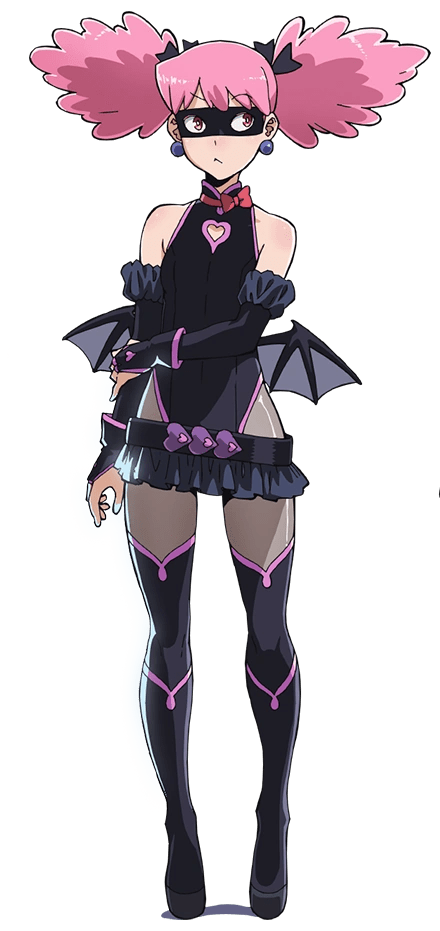
But what about the upcoming anime? Well, the manga fell into a bit of controversy over the depiction and treatment of select female characters, namely Kazuho Haneyama, alias Pop-Step. Notably her vigilante costume.
As you can see, Kazuho, who’s around 16 years old in chapter 1, wears this as her costume. The Pop-Step persona is meant to be a cutesy imp-like creature which, on reflection, makes me think of Ironmouse in a lot of ways. The original series had people crying foul over Horikoshi’s decision to have Momo show so much skin for her quirk to work, but in a weak defense, that was one of a few ways to get it down. (Some headcanons depict her as a shy exhibitionist unlike Midnight, IYKYK.)
Pop-Step has less reason to show her butt here. I had brushed it off as “animanga tropes” while I was reading it, but after some thought (and time), this doesn’t look very good. Couple that with the initial panels of her about to face a nasty assault or harassment and the criticism is as solid as Snake. Trust me, though, it does get better as the manga progresses, and to answer to an upcoming backlash, the animators have considered the following for a redesign of her costume:
Tights! Will it work for the anime? Time will tell. Does it work for me? I turned my brain off and let the story guide me each time I read another chapter so I didn’t put much thought into it until way later when the manga ended. For my recommendation, you’re better off letting the manga do the same and speak to you then go in with any expectations whatsoever. Even what you know about the original series is gonna get tossed out the window at the first panel. You know my shtick by now. Manga hosting pirate sites, physical volumes, etc., etc., though the former may help you get up to speed considering it has significantly less volumes and chapters — 126 spread across 15 volumes VS the originals 431 spread across 42. I have yet to see a box set of the whole franchise, but it’s only a matter of time before it gets a Naruto-like 3-in-1 omnibus manga treatment.
YouTube recommendations! I’ve been struggling to find some channels to have you all check out largely because what I watch these days is incredibly varied and I don’t like throwing people in at the deep end. I do still want to keep sending stuff your way and my crystal ball sees me recommending a series of sorts whether its on YouTube or not. Some candidates have had to axe their channels due to unwanted outside attention, others have simply moved on. And that makes this difficult.
This time, I thought I’d share what I’ve been watching. I’ve only got a few lined up for February now, but as time goes on I may do what I did in 2023 and do a bi-monthly recommendation system compared to what I had going on last year.
A channel that has my eyes is Stiff Lip Supplements. A series of humorous Army MOS ads masquerading as a satire, it’s a company whose videos are short form Zyn advertisements. You don’t necessarily have to be a servicemember or Zyn/snu user to get the gist of their humor. They know damn well that what they’re selling isn’t a miracle cure for the usual daily bollocks, but do offer to alleviate the headache only slightly. If you need a quick chuckle or you’re thinking about buying some of their merch (which does include apparel), the link is in the first line of this paragraph.
Of all the media I’ve covered since this blog’s creation, animanga takes center stage followed by video games, TV, and to a lesser extent, music. And with all that content there’s still a blind spot that not only affects my coverage but also coverage of several other creators. Name any anituber and they’ve covered some of the most popular animanga series to debut in recent or even living memory. Bonus points if they’ve also promoted series that few people ever paid attention to.
I was recommended this on Reddit once when I put the manga Rokudenashi Blues in a 3×3 post. Here’s a video review of it.
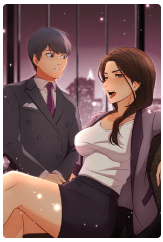
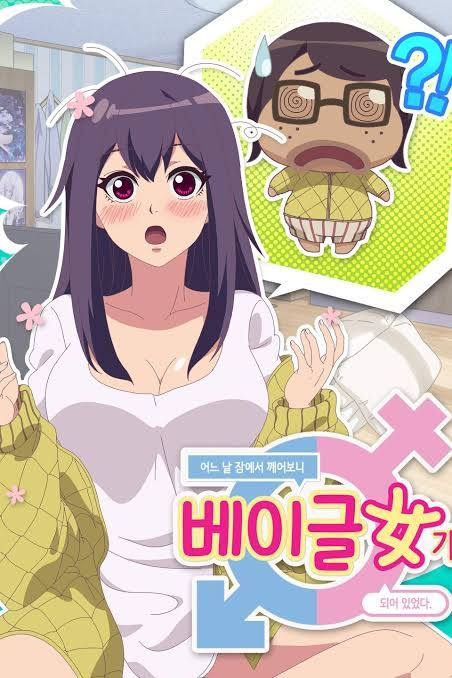
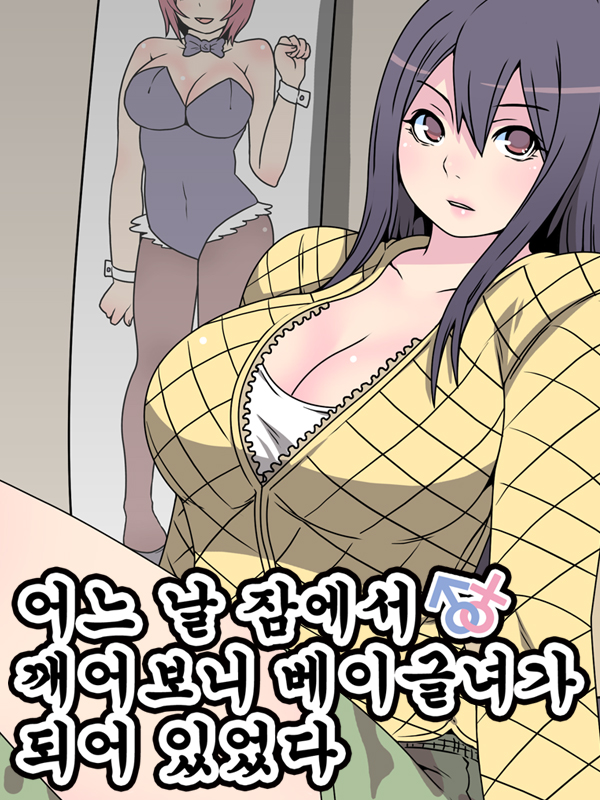
Obviously, Japanese manga solos the graphic novel charts overtaking western comics roughly 95% of the time, but Japan’s not the only country producing graphic novels of its own. China has manhua and Korea has manhwa; same concept, different spelling when Romanized. There was a point in my life during the second half of community college that I took in an extensive amount of manhwa along with my manga intake. I remember browsing a porn site late into the night and next to the generic “Hot MILFs in Your Area” pop up ads, there was one that stood out. An ad (or in this case: promotion) of a manhwa hosting site called Toomics.com
I joined it back in 2018, before it put up some fancy new paywalls. Not working at the time, my best way around it for the series I was reading was the age-old “find a manhwa pirate site and hope it isn’t hiding malware in its ads.” On mobile, at least. I was careful not to try anything with my laptop because my mom would occasionally borrow it to complete important work. She did respect my privacy but you can never be too careful.
Toomics was what I’d call a gateway site as far as manhwa. The ad in question was for a manhwa called My Stepmom, interestingly enough. If it wasn’t obvious yet, it was one of the several manhwa series that was porn. I did see it on a porn site, after all. With that came several more manhwa, adult content notwithstanding, and speaking of adult content, a feature of the website is the NSFW filter, so you don’t have to worry about being the subject of a popular copypasta.
I wasn’t joking when I said a majority of my readership was pornographic. For the 30% wholesome, safe for work series, they bounced around between action and dramady, but for some of these, while not explicitly pornographic in nature, they were still intended for mature audiences by covering complicated topics from war to illegal trades to gambling to alcoholism and drug abuse among numerous others.
Then there’s the purely wholesome romcom manhwa where “are they dating? worse they’re stupid” has a full dormitory. Pick your favorites: mine has to be one called Annoying Alice; about office workers starting off with playful teasing only to come together towards the end. Hopefully, that was vague enough to not warrant a spoiler alert. I briefly took a pause from manhwa around the same time as my first go at the Army in 2021. But like with manga, I did come back though I don’t read as much manhwa as I would like.
All that aside, a question I have regarding manhwa is about why I don’t hear more about it. The genre has a dedicated subreddit some 1.1 million members strong, there are numerous legitimate and underground websites hosting the chapters with an untold number of teams hard at work localizing them for the broke and hungry populace, as well as those bringing us the raw scans for those who want a better grasp of Hangul.
Further, this is an argument in favor of Korean culture’s spread throughout the world. Next to K-Pop and K-drama, I believe manhwa is another instance of the Korean Wave or Hallyu spreading, but it gets less attention than the aforementioned, and circling back to Chinese culture spreading–without demeaning or scolding–can you, the reader name at least one C-drama or Chinese manhua? It’s okay if you can’t because neither can I.
This was an interesting find during the 2020 election season.
I only have hypotheses for why manhwa seems so unsung and underground compared to its Japanese counterpart. One hypothesis I have is in some manner connected to how some people find it, or how it finds audiences. I can’t speak for everyone, but with the adage of “sex sells,” a bold (or desperate depending on how you see it) move is to advertise the site and/or a series on a porn site in between the rest of the dreck on the sidebar getting in the way of some scripted T ‘n A. Another I have may be due to the proliferation of manga compared to manhwa/hua, and the history behind adaptations of famous manga. Even since before the Tezuka and Ishinomori days, manga has been a thing and so has anime; and it’s become expected of manga to eventually become anime. Sometimes there’s even a pipeline of light novel to manga to anime. Even movies.
Speaking of history, you’ll notice that Osamu Tezuka’s days were the mid-1940s up until his death in 1989, inspiring future mangaka in the years since. Araki, Toriyama, Kishimoto, Arakawa, Oda, and far too many to list.
The tragedy of his magnum opus was that it took so long to properly adapt it, leaving behind years of lost media in its trail.
Even if a manga is adapted after years in slumber, it’s still more likely to get a wide reach through a faster-paced medium like animation, but most Korean manhwa aren’t as lucky, from what I’ve seen. There’s a few coming out in recent memory like Solo Leveling, Tower of God, and God of Highschool in the last few years, but manhwa is far older than that. I think it may have something to do with the history of Korean politics and its government. Post-war Japan is extremely sedated, and the dismantling of the Japanese Empire meant the ad hoc independence of its former territories, repatriation of its non-Japanese subject, and/or the transfer of its territories to the Allies, the most famous of the lot being Korea split in twain by the Soviets and Americans.
Both were led by unassuming statesmen who had notorious reputations for being ruthless dictators. The South had long been an anticommunist state to the point of carrying a dictatorial slant until true democratization in the late 1980s. I’m prepared to be corrected for this, but I’ve got a sneaking suspicion that this roughly 40-year post-independence timeline of strongmen had an influence on a lot of Korean culture and popular media. There’s a Last Week Tonight segment on Taiwan and in the latter half of the segment, the dictatorship on the island stamped hard on anything that even slightly criticized or satirized the government. I think Korea had the same issue at the time, overzealously stating its independence and opposition to communism in the face of its neighbors, but at the cost of its inhabitants. In a dictatorship, the freedom to read, write, and speak freely is severely under threat. With that knowledge, aspiring comic artists would’ve had three options: Comply with Seoul’s wishes; emigrate to a freer nation; or self-publish your works and await the consequences. South Korea and Taiwan don’t have flawless human rights records, but compared to Kim Il-Sung’s or Mao Zedong’s regimes, they were on the opposite ends of the spectrum.
Another hypothesis, one I’ve come across on r/manhwa posits that there’s a mix of western exoticism and self-loathing within the community due to an influx of manhwa set in medieval European-adjacent royalty, which speaks to a wider conception of the culture. It’s a stereotype that East Asia is unforgiving on its own people and if Japanese Isekai is any indicator, then the blend of escapism and exotic fantasy is more widespread than you might’ve previously believed. Don’t we all want to travel to an alien world and jive with the locals?
The premise of this series.
The last hypothesis would probably come with the reputation of some western manhwa publishers and localizers. If you follow Rev Says Desu and Hiro Hei, you may have been made aware of a select few English voice actors of anime shotgunning their kneecaps off on social media while their Japanese counterparts either keep quiet or promote what they like (see: Aoi Yuki for more details). In a similar vein, a subsect of activist-minded artists have discovered the publisher Webtoon and are said to have been aggressively pushing their works on the platform, negatively impacting the reputation of the site and driving more innocuous publishers away and onto sites with different criteria for vetting and publishing comics. I’ve heard these arguments as well as the purported reputation of another web-series and I can’t say for sure which is the true culprit, but there’s a lot of power behind a perception. I’m pretty sure Toomics and Lezhin comics don’t have that much dirt under their heals though…
Whatever the case, on a scale of All the Luck to There Ain’t S[burp]t to Gamble With, Korean manhwa is closer to the latter with even Chinese manhua getting adaptations from time to time, though not nearly as much as Japanese animanga. Normally, I champion underground series, but this is a rare moment where I’d rather see more variety in this hardly tapped market. Even if you’re not in the market for sexual content, there’s a handful of series I can recommend off the bat that hardly ever touch that or even encourage the reader for touching themselves.
My top 3 would be these:
Devilish Romance: a powerful demon is reincarnated as a Korean investigator and initially attempts to reclaim his honor as the most feared demon in the underworld, but is paired with a strict, if goofy prosecutor.
Annoying Alice: Office romance between a pair of pure coworkers who like to mess with each other which gradually evolves into tender, loving romance.
High School Devil: local delinquent is implored to change schools and start anew but his reputation as a brawler gets him into trouble not 5 minutes into admission to the school.
As a bonus, a dystopian manhwa by the name of Shaman centering on a special forces agent tasked with safeguarding a K-pop idol duo.
Also, circling back to the porn part of my manhwa arc, it was where I first discovered that the black bars were cast out in favor of the lightsaber in pornhwa and hentai. Whichever came first (no pun intended), I’d like to believe there’s an influence, if not a cross-cultural pollination.