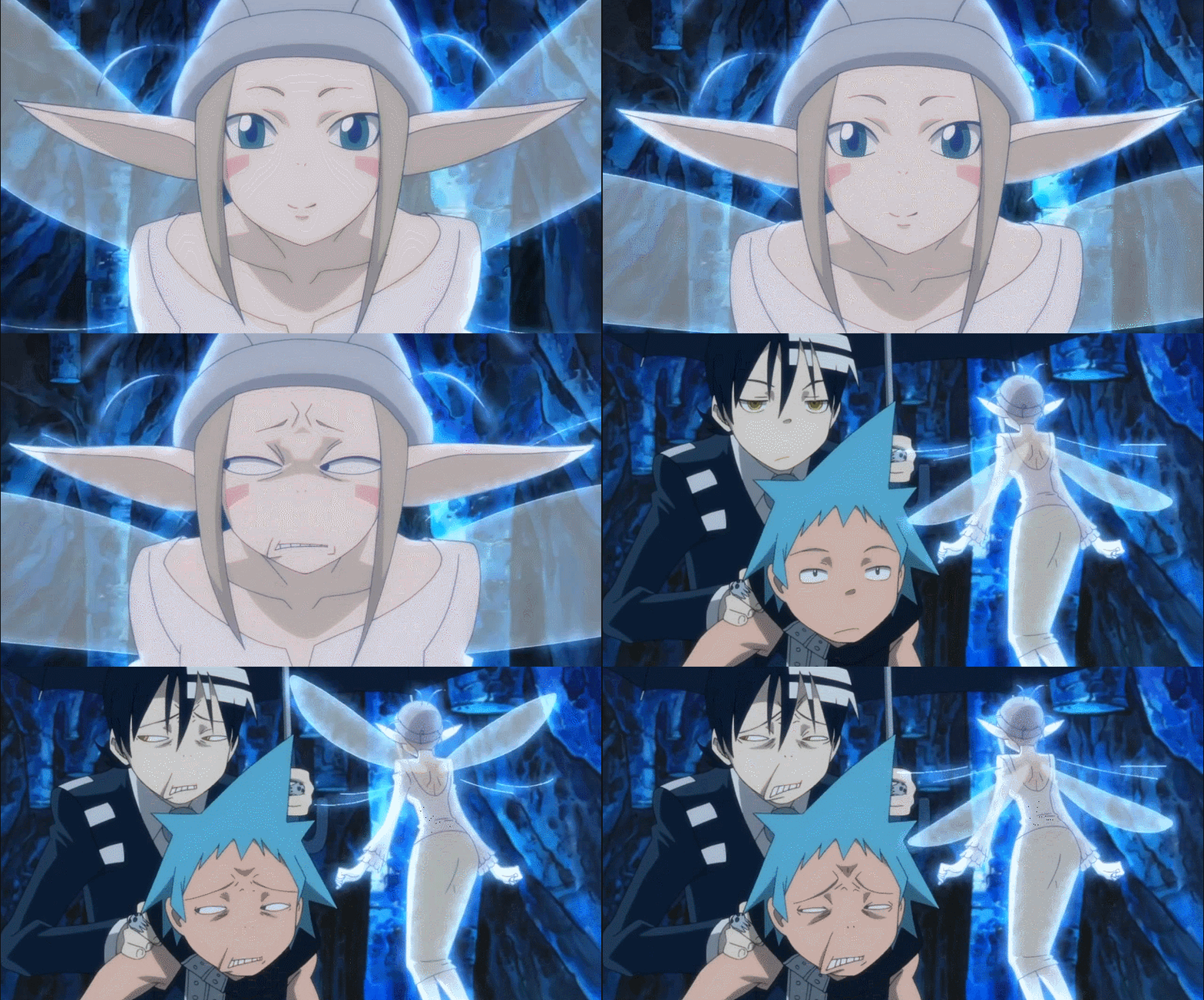
The Series About Three Things: F[kazoo]k, And, All

Alternatively known as: Jack, And, S[monkeys]t

Breaking up the Red Ninja: End of Honor Blog Post Saga momentarily to bring you the wonderful world of an animanga series featuring otaku culture and the comedic deconstruction of otaku culture.
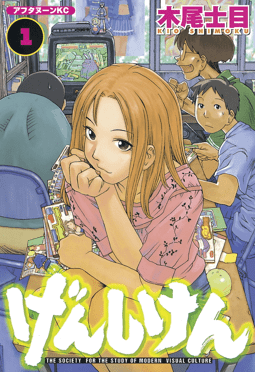
No, not that one. We did that before. Twice.

No, the series on topic this week is a classic one that’s roughly about schoolgirls doing otaku things rather than cute things with music or just silly things goofily. Damn, I’m not making a good case for myself here.
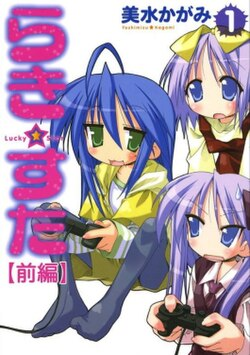
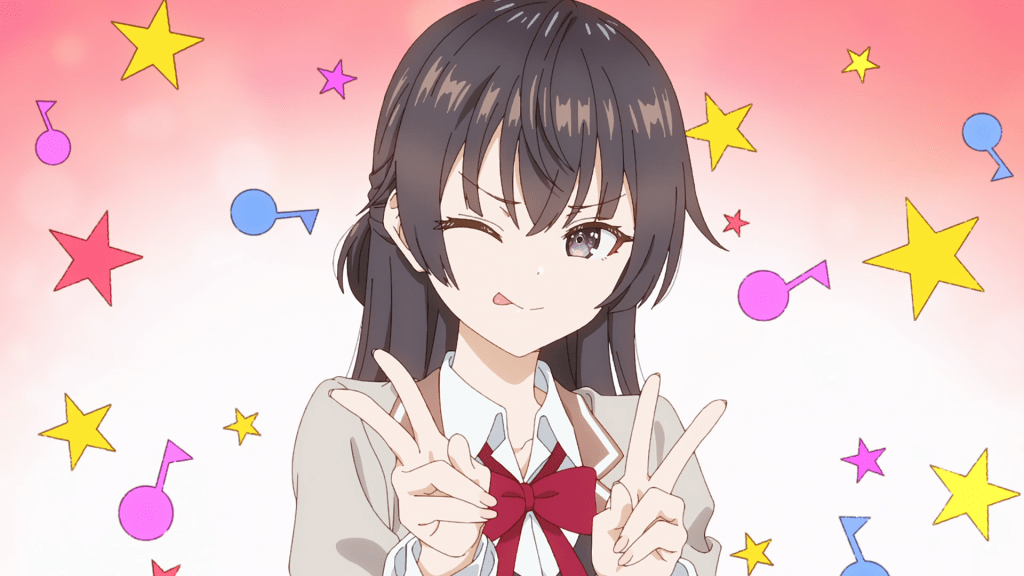
It’s this one. Lucky Star.

Rather than pull out all the stops to showcase a cast of six high school girls navigating academics and their friendships from first- to third-year, this one showcases four. Konata Izumi, an insightful otaku girl coming from a family of otaku (no wonder I like her so much); fraternal twin sisters, Kagami and Tsukasa Hiiragi, the former acting as the straight man to Konata the funny man in double act terms, and Miyuki Takara, the prim and proper class representative who’s humanly clumsy.

Combining these four creates an interesting cast and could theoretically put Kagami in the Tsundere bin if there’s a trace of romance, but in both the manga and the anime, it’s slice-of-life through and through, so the earlier mentioning of AzuDaioh and K-On! would be apt if the plot progression wasn’t limited to “how does Konata weeb herself out of this one?” All things considered, the learning processes of the girls is comparatively static. They don’t change in outlandishly big ways from Episode 1 to end, but rather in small incremental ways.

The rest of the cast shows up over the course of the series, mainly to take the piss out of other animanga prior to 2007 as though it was following an unwritten and unacknowledged law. Most notably:
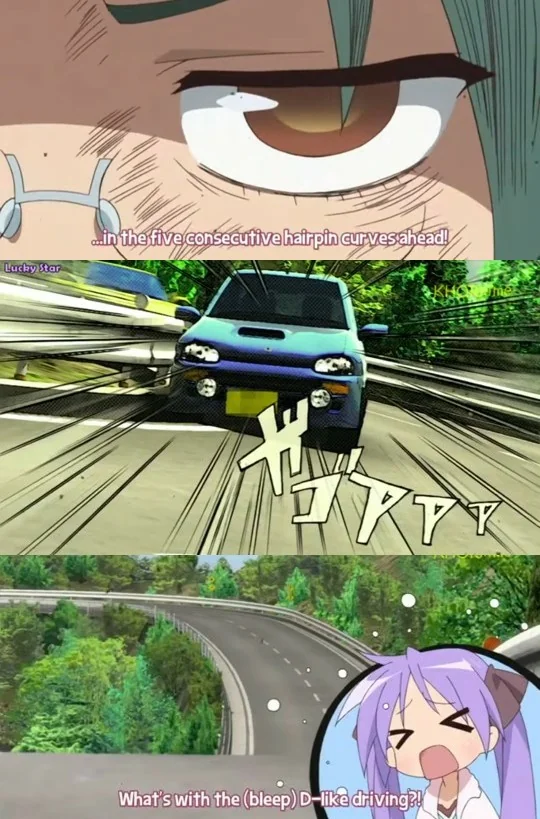
Credit: u/YaBoiErr_Sk1nnYP3n15, r/InitialD

Yeah, Initial D was ripe for the parodying at the time and a good look at the series reveals why.
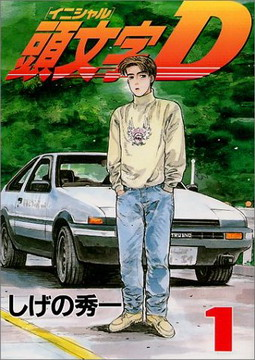
The original manga ran for 18 years, by the way.

The charm of Kagami Yoshimizu’s yonkoma is that through the format and characters, nothing is off the table for referencing or parody, and Yoshimizu’s taste seems to be something of a diet of Toshiyuki “Hirohiko” Araki’s JoJo’s Bizarre Adventure, but with less music references and more animanga references. If you’re a fan of The Melancholy of Haruhi Suzumiya, you may already know then that the Japanese voice actress for Konata is the same one for the titular Haruhi in that series: Aya Hirano. The joke is deliberate and Konata herself takes the piss out of that in very malicious fashion. She already looks like Haruhi, why wouldn’t they share a VA?
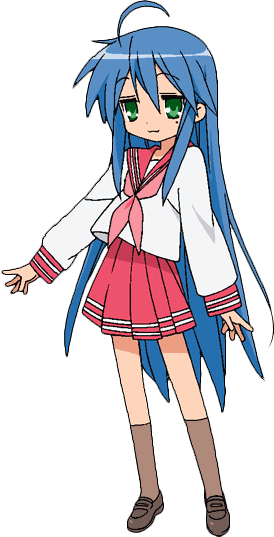
SHE’S A SENIOR.

Between the parodies and callbacks to popular concurrent media, the main gag revolves around a double act format but with an extended side cast to fill in the spots to maintain consistency. Konata does something stupid or ridiculous, Tsukasa and/or Miyuki follow the motions, and Kagami calls it out for what it is. Simple, right? Well, no. The formula is more fluid with instances where one person is right and the other reassesses, or it backfires spectacularly.

Having said that, the series does have its moments. For all the funnies and references, there are some deep touching moments. If ever it has been said that comedy/parody/satire, are a reflection of the thing it takes the piss out of, then Lucky Star is a reflection of a lot of things. Idol culture, otaku, gaming, friendships, Japanese high school life; and I suspect most high school/college-centric series are like this. Unlike western high school tropes where life is dreadful, tests are painful, and the archetypes never evolved past the 1980s culture of jerky jocks, eccentric nerds, and brute force, brainless bullies, Japan’s reverence for seniority and politeness is a time-honored tradition with its own filial philosophy airlifted from ancient Chinese traditions and one repeatedly poked fun at with how absurd it can get at times. Of course, these tropes are lost in translation which makes western debate on a Japanese cultural staple seem braindead without that understanding. Seriously, is it that hard to request information from Google-sama these days?

Thanks in no small part to dubbing and distribution in the west by the likes of Funimation, recently consumed by Crunchyroll, the parody of select concurrent media has become parodied itself to oblivion. To death. Back to life. And to death again, to the point where this is canon:
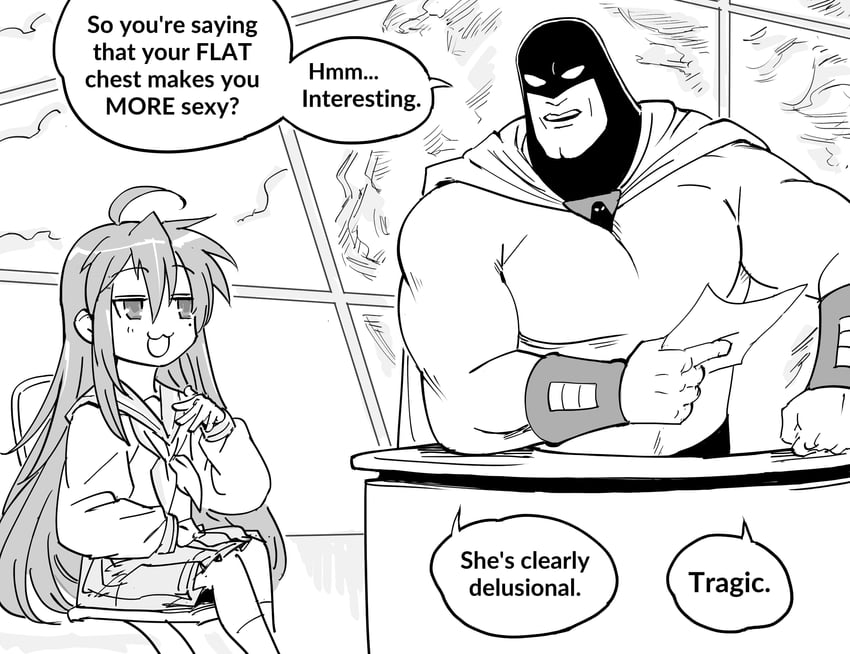
If you know, you know.

A test of time for a series depends almost entirely on how well it survives pop culture. Good or bad, internet jokesters on forums and artists contributing to 20-year-old imageboards will find something to make a meme or image-macro out of, even if it comes decades after the fact.
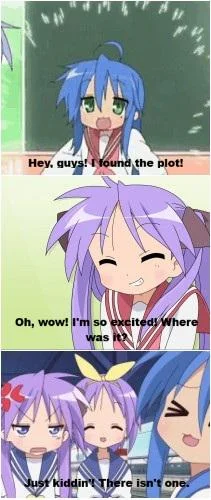
This one describes the crux of my custard pie quite well and in one less panel than the original source material.

Another thing to point towards in Lucky Star comes from the post-credits in-universe idol channel known as Lucky Channel.

Credit: Jas A

The gag in this one is even more static than the rest of the show. Akira Kogami and Minoru Shiraishi reflect a deep cut parody at the likes of idol culture in East Asia, something I’ve mentioned before briefly. They play nice for the cameras about a minute in before Akira wishes for it all to end and sidelines her co-host like a stuck-up celebrity, which itself may or may not be a dig at Hollywood at the time. Yoshimizu allegedly consumes about 25% western media among the native animanga he regularly parodies, so who’s to say he hasn’t poked L.A. once or twice? Lambasting Hollywood through media is a time-honored American tradition, but it’s something else when non-Americans do it, even these days. Calling back this meme:

The meme in question also applies to military branches, presumably worldwide, so my brothers in arms in Britain would also know what’s up.

If at all it feels like Hollywood has been flailing like a “lol cow” in response to constant negative reception, keep in mind Hollywood has always been this way. A controversy appears like a Ratatat in Pokémon and Hollywood gets clumsily defensive over its image. That, or it’s an actor reacting negatively to the changing tide. Tinsel Town just can’t take the heat anymore.

Lucky Star’s anime has 24 episodes that aired in 2007 with the manga starting in 2003, and is said to be still running after nearly 25 years, give or take, one or two hiatuses, as well as a smorgasbord of other media from OVAs to light novel to presumably lost DS games (╯°□°)╯︵ ┻━┻ f[door slam] lost media!! Probably. Who knows if an emulator has archived the games? But the main draw here are the anime, the manga, and the OVA, where this screenshot exists:
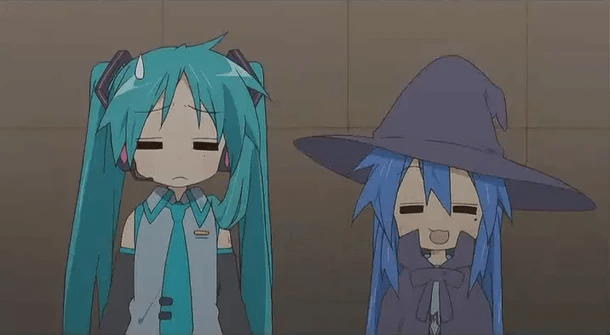
Have I ever lied about the parodies? ARE YOU NOT ENTERTAINED!!??!

Normally, I’d advocate for pirating here, but there are chads on YouTube uploading the whole series in dub and sub for whichever appeals to you so you have wider choices as of this writing.

Channel: CrackerBountyHD

See? Told you it was about f[kazoo]k, and, all.

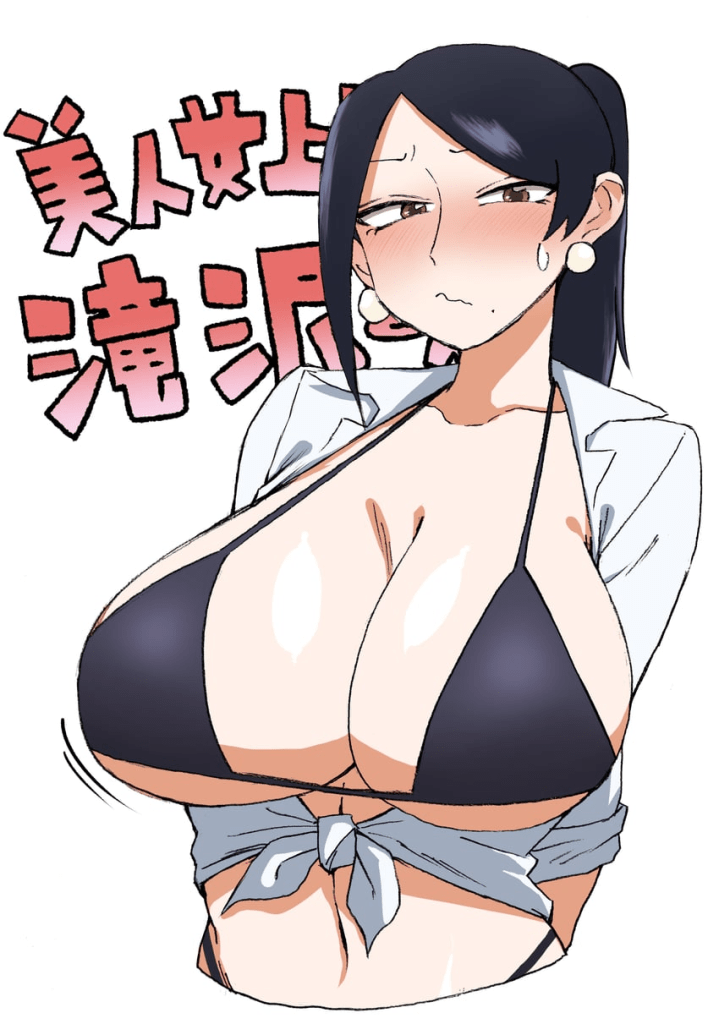
Miss Kyoko Takizawa, My Beautiful (Busty) Boss

The Life and Times of a Busty Office Lady

After over 150+ chapters of this manga, and years of fanart, I’ve come to the conclusion that its existence was used as an excuse for artists try and draw its title character in various outfits and hairstyles. Except by “artists,” I mean “creator” Yanbaru, though countless other artists have aped his art style in order to draw Takizawa-san.

Artist: AfterProject

Oops, I’m jumping the gun. Let’s properly introduce the series. Created by mangaka Yanbaru, Bijin Onna Joushi Takizawa-san (rough translation: My Beautiful Female Superior, Miss Takizawa), is a yonkoma/4-panel manga about office workers. A slice of life that cheekily takes the piss out of Japanese work culture, at least on the mild end where the bosses aren’t evil. You’d need Japan’s answer to Trey Parker and Matt Stone if you wanna take the piss out of Japanese black company culture, and biting satire, though honest, requires an above average number of braincells before the powers that be realize that it’s a plea for change masquerading as a comedy act.

But I digress, it’s primarily a comedy with romantic elements thrown in later into the manga, and quite late I might add, at least 50 or 60 chapters. Sounds like a dissuasion, but the benefit of a yonkoma format is that you can blaze through the first 20 chapters in under five minutes. It would surely explain Azumanga’s popularity back in the day.

Lovely Boss Takizawa starts off with baby-faced new hire, Kota Takeda, starting his job at a company under which he’s accepted into Takizawa’s department as her underling. The first few chapters show Takeda getting accustomed to the office life at this place and his slow introduction to some other characters. The unnamed Section Chief is meant to be written as a comic relief character, but with the gag being that he makes off hand comments about Takizawa’s extra large bust size, very much to her chagrin. This adds him to the shortlist of manga characters with a sexual harassment case as thick as a Yellow Pages. A step above Minoru “Grape Juice” Mineta of MHA fame, but somewhat below Minoru Kobayakawa who’s a lolicon at best, and pedophile at worst.

Mingling with his contemporaries, Takeda meets Shimizu who can best be described as a slacker, but not necessarily harmful to his own or Takeda’s personal development. A middling bro who means well but if given a character to bounce off of with a similar personality comes across as a Rigby to that character’s Mordecai. Wait, that’s pretty much Takeda’s role when I think about it, but the Regular Show comparison ends there since there aren’t any supernatural elements that damn near explode a local park every day.

By the time Takeda’s largely embedded into the company, another newcomer joins up in the form of Aya Miyamoto, a nervous young woman whose exposure to men her age was so severely limited as a consequence of graduating from an all-girls’ school. She has a bit of an anxiety towards men and thanks to her being introduced to Shimizu and the Chief of all people, her anxieties are realized. Thankfully, she makes contact with Miss Takizawa who metaphorically slaps them into gear and helps reintroduce Miyamoto to Takeda whom she regards as more trustworthy and less “dangerous” than the other two.

Away from the 9 to 5, Takizawa and Takeda grow closer and closer to the point where Everybody Knows but Them rears its ugly head, but more to the viewer than towards the other characters. Some, like Shimizu have their suspicions, but no one knows better than Takeda’s sisters, imouto Yuki…

…not that one.

And anee-san, Kaoru. I jest about Yuki Takeda and Yuki Suou right here, but the comparison isn’t as apt as I teased. They both read manga, though Yuki Takeda favors Shojo romance then Suou’s outright smut. I’m still catching up to the manga, but from what I’ve seen of Yuki, she shows her love for her brother in a funny way. Practically screaming at him to be a gentleman when around Takizawa, even though he was already doing that on and off work. Aggressive wingwoman box ticked.

For the more passive wingwoman, Kota’s older sister, Kaori, is more foxy in a manner of speaking. Being the first born, she teases her siblings left and right, and seems to do so indiscriminately every time she hangs out with Takizawa. In one such instance at an arcade, they’re playing all the games, and Kaori ends the trip getting more than a little invasive. Poor Takizawa. She’s already playing dodge harassment at work and Takeda’s older sister shows that she’s not safe from the same treatment around Kaori. Still, she exemplifies the opposite end of the spectrum where she seems to be pushing Takizawa towards Kota while Yuki does the same for Kota, pushing him towards Takizawa. I say passive in the sense that Kaori’s intensity shines less in how she accomplishes her mission compared to Yuki, but going by my description she’s still aggressive towards Takizawa. In that category, we may have to hold off on that tick or at least add an asterisk.

Does their hard work finally pay off? Well, after over 100 chapters of “will they, won’t they” teasing, I’m pleased to report that they do become an item, and some of the reactions around the office are funny. Most of the time, it’s generally seen as a bad idea to date a coworker, least of all someone in a managerial position, but in reality it’ll still happen and under ideal conditions, with a relationship that grows organically, this can blossom into something beautiful. So that’s the romantic aspect, the comedy aspect zeroes in on Takizawa’s F-cups… or G-cups or larger.

For an easily lewded character, I’ve yet to see someone even try to get her measurements. Even Yanbaru himself hasn’t bothered with this, AFAIK. I’ll just leave it at G-cup and call it a day. If that’s the case than most of her bras would either be special order (not too hard considering her position and its regular salary) or she’d have to look online for bras normally marketed to heavy-set women in Britain and America.

Do I give this series a recommendation? Depends on what you’re looking for honestly. If you’re looking for boob jokes or commentary, most of them come from the Chief or Shimizu and they’re not good parameters for comedy. If you’re looking for something akin to Kiyohiko Azuma, then you’ll find that in spades. The later chapters do still have visual gags like Takizawa’s boobs bouncing every which way, but I figure when your chest is big enough to shake your table if you plop them on the top, that mostly comes with the territory. And if you want to see a romance develop in a yonkoma, well you’re in for the long haul. Slice of life stories tend to have to fight to be seen or heard when every animanga these days is about balletic, bombastic fights and pseudo-kung fu mysticism, but this works in Great Boss Takizawa’s favor seeing as it can be break from the Jujutsu Kaisens and Solo Levelings getting all the praise these days.

For as much as I like this manga, pacing can summon the Sandman in some areas and the Azumanga Daioh is strong in the story structure seeing as this kind of format favors nonlinear storytelling. There is progression in the story, but with each chapter being written the way it is (usually apropos of nothing until a prior plot point is connected), it can be something of a chore in some areas. But the announcement of Takeda and Takizawa’s relationship developing is something to look forward to at least. For now, all the chapters are available on MangaDex with regular updates, but if you wanna find a pirate site to read it, then by all means. Beware the sidebar and pop-up ads.

Artist: yan-baru

Yanbaru may be having fun with putting Takizawa in outfits like this, but reading the manga shows why she’d never wear something so provocative.