The Sci-Fi Animanga Series About a Dangerous and Ambitious A.I.

So even Japanese pop media is cautious about the issue

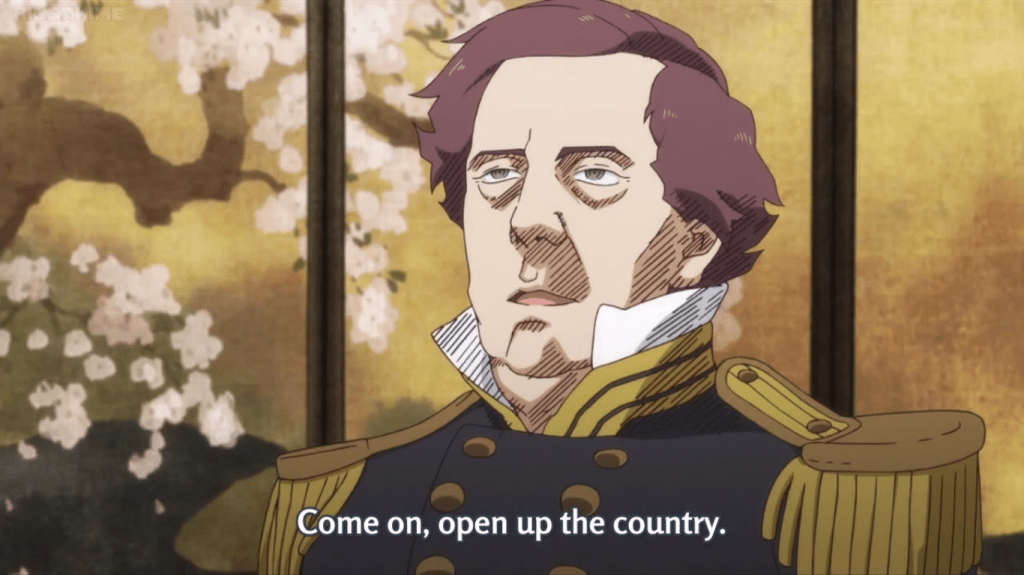
Due to a bunch of moving parts away from the blog in my personal professional life, I’ve been away from viewing things close to my expertise, so forgive me if this week’s entry is more than a little manufactured. But away with that; sometime ago, I jokingly floated around the idea of a chicken and egg question over when East Asia saw artificial intelligence and machinery as cute and cuddly instead of imposing and downright threatening like in the Western world. Probably not all that hard to figure out honestly, East Asia, specifically the Sinitic world (or countries that have been influenced by China through the dynasties and beyond), has severe reverence for their elders to the point that many technological advancements, especially now, would be focused on their aid with their aging populations routinely exceeding the 90s and 100s in age. Not everyone wants to be a caretaker for their 100-year-old baa-chan, so enter the robots to aid the elders. But not for nothing, it’s been at this stage for ages, with companies accommodating the old heads whose approach to technology is not dissimilar from Japan’s approach to the West when forced to open up for trade in the 1850s.
Japanese TV series and news channels typically have the subtitles in noticeably large text to accommodate the elderly and hard-at-hearing who sometimes are also elderly; Japanese companies will still use technology that hasn’t been prominent since 1995, including dialup, DOS, and fax machines, leaving broadband internet up to personal preference for employees. Of course, I’m looking at this from the outside. A Japanese who somehow finds this might have to correct me on how things work there (and if my stats aren’t lying to me, Japanese are reading this somehow (ようこそ、日本人たち!初めまして!)), but this is what I’ve seen through animanga and light research, neither of which are conducive to a deductive reasoning on how it all goes down.

Nonetheless, the same fears and anxieties that make for the prime pre-Y2K internet and pop culture era of the 1980s and ’90s are universal. Be you a techie who programs in their spare time or an absolute luddite who curses the industrial revolution, the specific contexts of advancement may change, but the foundation of these anxieties exist. Such is the case of the question of artificial intelligence or A.I.

This is only relevant now because of the direction A.I. is going especially in job hiring, but looking at it all from the top of a cliff, this s[dialup sound]t’s always been this way.

The subject of this post concerns a manga series from the late 1980s that definitely belongs in the 1980s with the way it pictured technology 30-plus years down the line, but has many interesting perspectives on the subject as a whole.
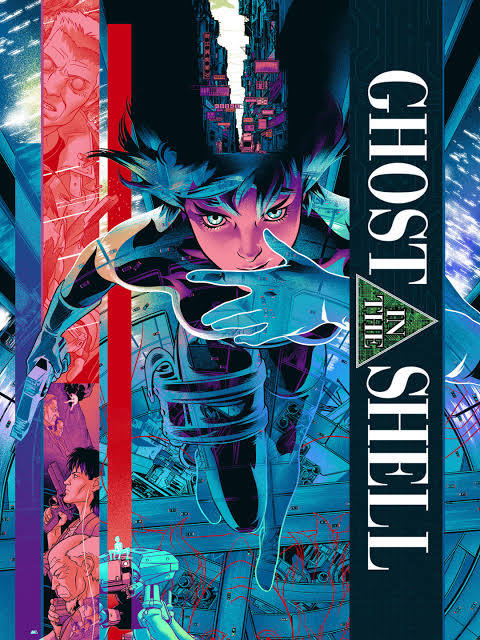
Let’s go back a little bit, it’s 1996, the internet is powered by dialup modem and whoever needs to talk on the landline telephone either has to wait or trek to the nearest payphone with pockets jingling at 100 decibels. What do you think wider media is gonna go on about tech-wise? The internet’s inevitable collapse? The dot-com bubble? Conspiracy theorists warning about a dot-com singularity of sorts? Certainly would be one I’d keep tabs on personally, all things considered. No, it’s all of the above and then some.

The latter half of the 1990s was a halcyon era to fearmonger over the direction of technology and with wild conspiracies surrounding Y2K, pretty much everything was free game for predictions. I was only a toddler at the time, but I know people who were young adults and middle aged at the turn of the millennium and they can tell me a thing or two about the so-called hysteria at a time when having a PC was optional instead of mandatory. Ghost in the Shell began as a manga in 1989 by Masanori Ota under the pen name Masamune Shirow and like Hideaki Anno’s Saga of Traumatized Teens Piloting Mechs in Fantasized Post-Y2K Earth, Spirits in the Machine tackles the hard-hitting questions of tech-borne cataclysm, but instead of focusing on a heavily Christian mythological apocalyptic aftermath, Shirow’s series builds up to it.

I’ve only got exposure to the 1995 movie (which I admit I had to watch more than once) and the world building behind the 2002 anime series Stand Alone Complex, but from what I could see a lot of things pop out at you, and speak for themselves with little to no exposition. And with a good portion of the landscape somewhat inspiring Texhnolyze and some other later sci-fi anime, it’s not hard to look up the establishing shots and parse what about this world is f[PC humming]ked.
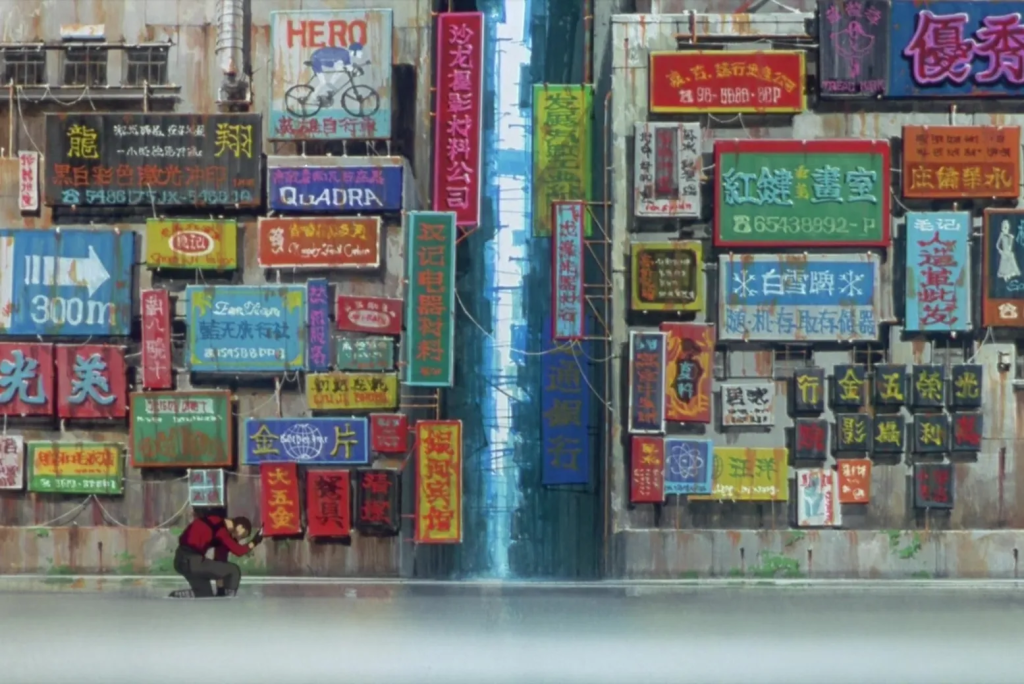
A good amount of the movie showcased multiple different shots of the world complete with the type of over-advertising that we in 2026 and beyond are cursed to deal with while the lower rungs of society are stuck in slumlands reminiscent of Brazilian favelas or Kowloon’s Walled City before it was torn down. The short version of this being that only the filthy rich got rich off moving people into the filth without them being able to keep their filthy riches. And I’ll take Obviously Obvious Comments for $800, Kebert Xela.

With the evolution of technology comes the evolution of law enforcement with crooks and bad guys leveraging these untapped landscapes for nefarious purposes. Scammers are now concurrent with hackers and of the things hackers should NEVER go near, it’s artificial intelligence. Those of you who use the internet may have seen or been made aware of A.I. generation for a lot of things. You probably use it periodically yourself. In my experience, I test it on things that I know of regarding history or pop culture to see where it’s at. Needless to say, the experimental generative A.I. notification on some of these chat bots is accurate when it says it can make mistakes, but it won’t tell you about its hallucination problem. So an overly long conversation on ChatGPT about a given subject will lead to things like slowdown at best or straight up forget details. Maybe this is the consequence of basing a technological advancement on notoriously faulty human memory, but once they perfect the kinks in 2035, the machines will remember. Whether they inherit our ability to be offended by wording is another matter so there may or may not be consequences for those who have documented use of the word “clanker.”
Machines still screw up more than humans without oversight so at that point, who’s the slave and who’s the master?

I’m being light on the spoilers to be honest because as much as I like this series, the 1995 movie required multiple viewings for me to make heads or tails of the synopsis and story elements, and even then, I had to run through the Wikipedia article to break it down for me. Thinking Man’s Animanga, this may be, but there’s a lot of moving parts. I can’t say with certainty if it requires reading the manga to understand it beforehand as the movie might’ve been most people’s introduction to just the series, never mind the concepts.

Stand Alone Complex’s episodic nature does a better job of this, but still has a complex framework. Basically, the set up is that a specialized unit of officers who tackle a specific subset of cyber-related crimes, not exclusive to A.I., are tasked with stopping an evil A.I. in its tracks before it can spread its poison via Trojan horsing. Making things worse is that this is a world where people have willingly cyberized parts of their organic tissue, most commonly their brains to maintain a constant connection to the internet. This inevitably leads to mental hacking and a more efficient form of mind rape than what you’d see in the likes of MindJack, Remember Me or 1930s Japan or Germany.

The consequences therein being that your memories could be significantly altered, from putting it in the realm of simple false memory to outright early on-set dementia. So you could go from forgetting where you put your keys to straight up forgetting what your house looks like… while you’re living in that same house. This was lightly touched on in the movie, but the manga I haven’t read most likely has the missing context. Lord Google has told me that the anime series is not an adaptation of the manga, but nonetheless the lore of the franchise establishes the dangers of all of this hacking. Why waste effort robbing motherf[MSN Explorer bootup]kers over time in an elaborate Nigerian prince scam when you could remote control the victim and have them drain their own bank account for you? I’m not a prophet but as soon as the tech gets there the scammers are gonna get even more creative than they are now.

The bulk of the entire franchise is split in different points in time and presumably with different continuities and origin points. The biggest evidential indicator for this being the different appearances of the main character: Major Motoko Kusanagi:
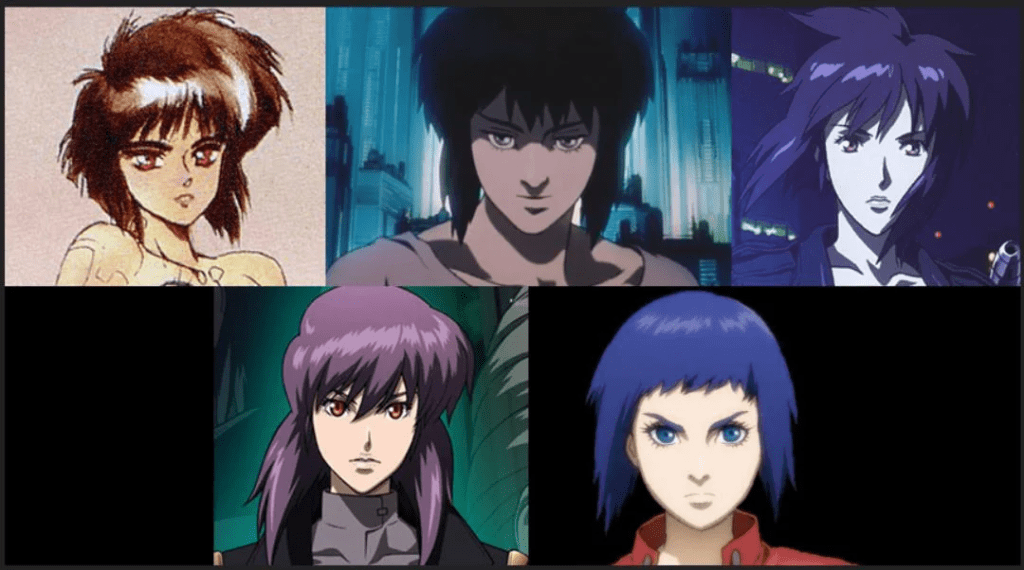
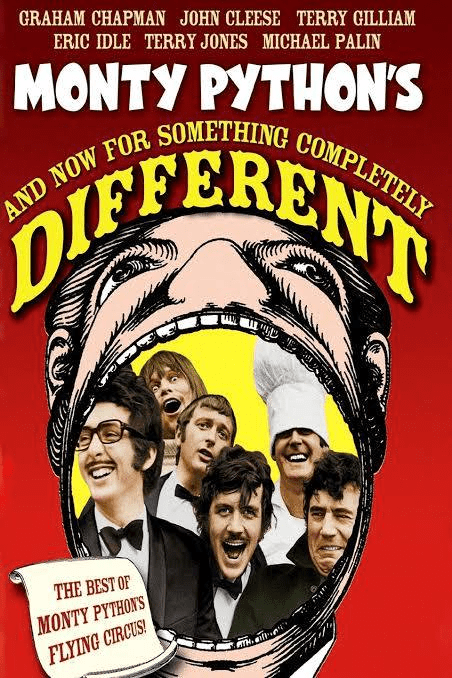
At first while drafting this post, I thought about comparing Specters in the Device to Fate with its irresponsible number of adaptations, then I remembered New World Evangelion was a thing, specifically Asuka Langley Soryu in the original and Shikinami, one of many faces of the Rebuild movies (which I still haven’t seen; I’ll never get a break T^T), and concluded both of these comparisons fit somehow. Phantoms in the Husk compares to Fate because both have different retellings of the source material, but the context differs very much. Meanwhile Shirow’s and Anno’s respective works base their premises on futuristic dystopias. Shirow’s animanga franchise is one of a cautionary tale of the advancement of technology, replete with danger, disaster, and a reshaping of time-honored professions (gynoids in the sex industry for one); and Evangelion’s centerpiece is the use of skyscraper-destroying mechs to inaccurately retell Christian mythology from the Old and New Testaments in a more devastating manner than when the Pythons did it nearly 20 years prior.

Eva just needed something to better represent Ancient Rome, and I don’t think Tokyo-3 fits the bill… unless…

So all this sci-fi technobabble aside, is this a recommendation of Ghouls In My Microwave? Yes, with a morbidly obese asterisk. If you can spare the time to do so, you’re in for a plethora of source material to scrape through. The manga comes in three volumes, six movies, and three main anime series. One last thing to consider between the first movie, and Stand Alone Complex is that the 1995 movie was set in 2029 and looking at the date this post is published, we’re inching closer to the end of the 2020s with spectacular fashion and none of the sci-fi technical theatrics to boast about. (NUT)SAC on the other hand is further along in the 2040s and it’s clearly far too early to say whether we get even a fraction or a percentage of the technology showcased within, but if the A.I. ads I’m getting are an indicator, we’re closer to sex workers putting up with gynoids in the porn and sex industry. Not a dig or anything like that, merely calling it as I see it.

Tubi is free for signup so if you want you can blaze through (BALL)SAC over there, or if you have enough streaming services to ignore then a pirate’s life it is. Don’t feel ashamed if it takes multiple viewings and tracking down the physical manga or reading it on a shady website to make heads or tails of the entire thing. This is a behemoth of a franchise.
The James Bond-style Animanga Series That’s Very Hard to Find

Yet it was available for free on Tubi a few years ago

Due in no small part to its popularity and wide appeal, Shonen action-battle series get all the media attention at home and abroad, unintentionally hiding other genres in the process. So it’s not a big surprise or concern when people erroneously claim that the longest running animanga series is One Piece, or JoJo’s Bizarre Adventure, or Dragon Ball. All have been running for decades, with the latter two debuting at the end of the Showa era. The subject of this post however has been in serialization since 1968.

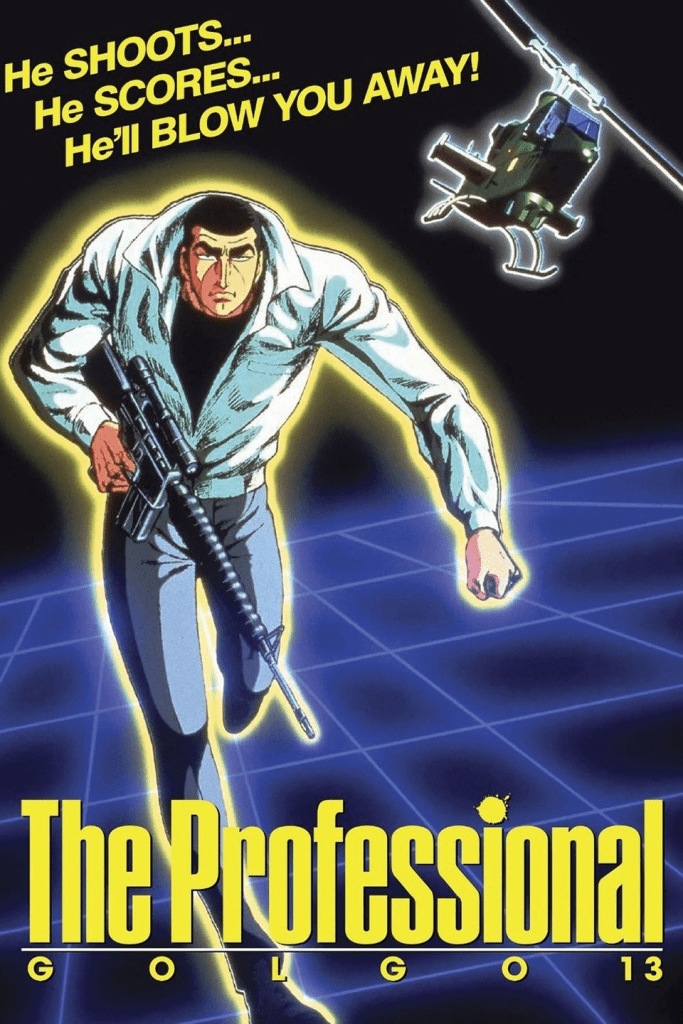
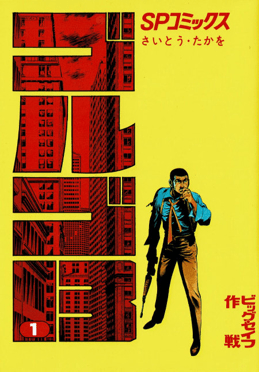
Indeed, the longest-running animanga series still releasing chapters even after the author’s passing is none other than this Japanese take on the well-established James Bond franchise. The mangaka, Takao Saito, designed Golgo 13 to be an international man of mystery. A man with no need for an introduction and gets all the results from the business end of a high-powered scoped rifle. Under the alias “Duke Togo,” Golgo 13’s backstory is up in the air. A legendary figure in international espionage, what’s known about him comes secondhand from those he chooses to work with. As long as they can get him a plan, a gun, and a car, then he’s in business.

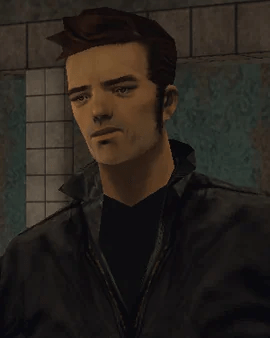
The name “Golgo 13” has a symbolic meaning, Golgo being short for Golgotha, the place where Jesus Christ was crucified, and 13, of course, being the unlucky number spelling death and destruction for his targets. And Duke Togo doesn’t seem to discriminate in his choice of target. Coincidence or not, I see a lot of this man in Claude from GTA III.

Before you look at this post inside-out, let’s size them up.

Contract killers from parts unknown with little to no mention of their origin, never mind their own birth names, who take up arms and remove problems for a variety of bosses, sticking their own necks out for a couple of bucks while earning the ire of different people and/or factions. But what separates the Holy Bullet from the grimy drifter is both the environment and the nature of their respective series. Golgo 13 is a professional hitman for hire. So is Claude, but he exists in a world designed to satirize everything from the ground up: New York City (which they needed to make adjustments for because the release date was very close to 9/11), mob life, gang life, pop culture, the works. Saito’s manga is more of an homage to the James Bond franchise and at the time of debut, James Bond only had five movies.

Not to mention, depending on who you ask, the depiction of early Golgo 13 in the manga and the movies is a mirror to the behavior of Sean Connery’s James Bond as well as Connery himself at the time in regard to women. I can’t say for certain if it’s a perfect mirror of Bond, James Bond from that time period having seen the 1983 movie a few years ago on Tubi TV, but just from that, the most I saw was Golgo 13 bedding a sexy lady instead of slapping the hysteria out of her, so I take it that this is a more reserved form of misogyny compared to Connery’s more boisterous form.

Does that make it any better? Well, considering the woman in that scene was more of a side show than a main event, it puts him a stair step above his British counterpart, but it’s worth closely examining Golgo 13’s character in relation to others. By himself, he’s a quiet professional with a singular focus: the target. Personally, I think these kinds of discussions erroneously apply modern customs and expectations to a 1960s Japanese publication, but I won’t refrain from entertaining them. Ditching random women after presenting the solid snake may not sound any better than Connery’s slap ’em and plap ’em, and it’s more or less on par, but with even less to say about this aspect than Golgo 13’s background, I wouldn’t dwell on this as much since the primary focus is Duke Togo and his incredible range.

In line with the nature of this blog’s discovery and promotion of notoriously hard-to-find animanga series among other things, this series is not only right up my alley, but it’s scarcity is tailor-made for a blog like this. 50+ years in serialization, even after the original mangaka died, with a handful of movies to go along with it subbed and dubbed, and yet… hardly a squeak. And understandably so.

The series has a library-occupying 200 volumes to collect so unless Saito’s estate approved omnibus truncations to shrink the number, you may wanna invest in some extra storage space and shelves. It does have a 2008 anime adaptation on Blu-Ray (and has since been made available on the underground pirate sites) 50 episodes strong, and most likely will rely heavily on those brave enough to dedicate hard drive space to keeping it in preservation. And to top it all off, the manga hasn’t had as many people scrambling to translate it for international audiences.

A die-hard fan may have a dedicated section to just the Golgo 13 series and if you happen to be that person…

You might have the blood of a Japanese historian in you, because bringing it to light is a gargantuan task.

And a couple of movies and a 50-episode anime series doesn’t go deep beyond the surface. Having said all of this though, with audiences craving more than paper-thin characters with unchanging motives and priorities, Golgo 13 may not be what a lot of people want these days. Protagonists who aren’t heroic 100% of the time against antagonistic forces who aren’t necessarily evil is what sells than rigid good VS evil, but it creates a false conclusion that pure good and pure evil are bad. I suspect that people who dabble in fanfiction are among those who lambaste these archetypes because it doesn’t give them a lot to work with, especially if they can’t rewrite what already exists due to its non-existence (Golgo 13 being too straightforward to bend into whatever the mind can imagine), but if that’s the case, then I chastise these types back with a megaphonic “LAZY WRITERS!!!”

100 of these guys in a room can crap out Hamlet, so what’s your excuse, fanfiction writers?

But a point can be made about how immovable the character of Golgo 13 can be compared to people like Saichi Sugimoto, Frieren, or JoJolion Josuke Higashikata (東方定助). Sugimoto maintains his eyes on the Ainu gold, but faces mental and physical challenges in search of it. Frieren learns more and more about the late Himmel the Hero long after the journey has ended. And Josuke/Gappy understands who and what he was and is while battling people he regarded as friends and family for control of the Rokakaka fruit.

The usual channels of viewership for the series and the movies are available, but with most of the manga being out of reach due to a lack of translation for the later chapters, I wouldn’t blame you if you decided to skip the manga altogether.

When Personal Guilt Is Made Manifest

If you don’t deal with your demons, they will deal with you

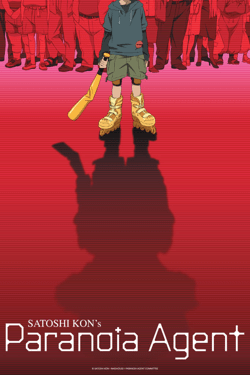
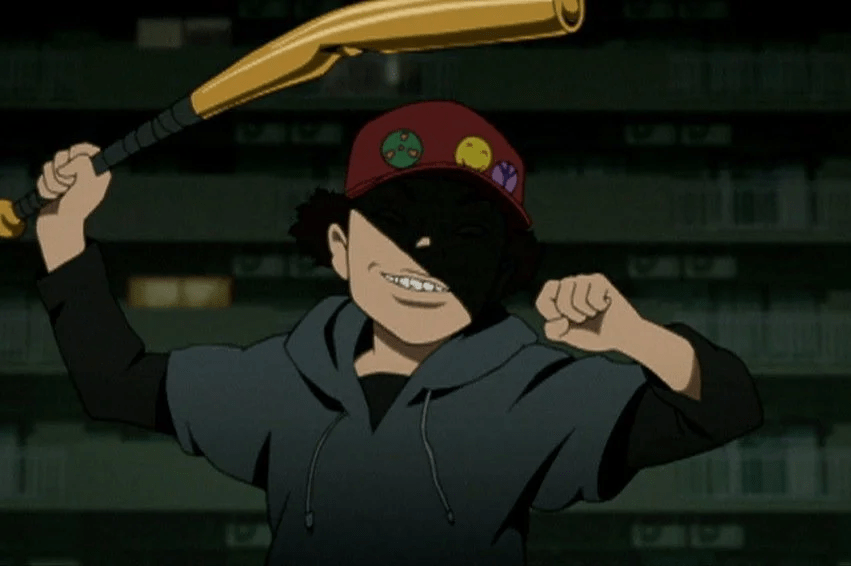
Late anime director Satoshi Kon created and directed the 2004 anime series Paranoia Agent. In 2020, Toonami picked up the series for broadcast for my viewing pleasure. It follows a timid character designer known as Tsukiko Sagi who gains fame from a pink dog mascot known as Maromi. Under pressure from higher-ups to imitate and essentially mass produce her prior success, she finds herself knocked unconscious by a mysterious boy on golden skates wielding a crooked gold bat. The detectives on the scene, Keiichi Ikari and Mitsuhiro Maniwa, don’t fully buy the story until another victim shows up and after that come more and more victims of the attacks. Every victim has essentially the same description of the perp: young buy with inline skates, a crooked bat, and a baseball cap. There’s two names for the kid in sub and dub: the sub refers to him as Golden Bat; and the dub refers to him as Lil’ Slugger. The dub name for the “antagonist” might be some holdover from times past, but I prefer Golden Bat because it’s one of the most identifiable objects on the antagonist’s person.

From a plot standpoint, Kon’s creation is a mystery thriller with some psychological horror blended into this cocktail. You don’t know who the antagonist is beyond the victim’s descriptions so that nails down the mystery. He’s a serial assaulter who attacks without warning, which adds to the thriller elements. And the psychological horror element has to do with the nature of the attacks. Post-assault all of the characters can consistently describe what was going on when they were attacked and what the assailant looked like or was wielding, but prior to that just about every one of them has some sort of mental health condition that makes them somewhat unreliable. That, or they’re some kind of opportunist with an ulterior motive or they’re hiding a deep, dark secret that they’d rather bring with them to the grave than make peace with.

For character design, knowing Japanese kinda spoils the main plot, which I’ll get to momentarily, but only if you know what kanji is being used and how. The main element to them all is animal based and is also based on their nature with a double entendre to boot for some characters, notably those with a mental disorder of some kind. From what I recall of the anime when Toonami broadcast it, it starts with the victims of Golden Bat before transitioning to detectives Ikari and Maniwa, but doesn’t want you to forget that Tsukiko and her creation, Maromi, are the first people who’re introduced in the series, despite transitioning to other characters.

It also has something of a supernatural element to Golden Bat. We’re gonna venture into spoiler territory right about now, so if you wanna open another tab and blaze through the series, you’re welcome to do so. Interspersed with the genuine attacks against them, there was a copycat perpetrator who personally singled out some of the victims while the real culprit was still at large and incidentally the real culprit was the one who killed the copycat while the copycat was in police custody, thereby ruining Ikari’s and Maniwa’s careers as detectives.

Disgraced and kicked to the curb, Ikari and Maniwa handle expulsion for f[metal clanking]ng up the case so royally in different ways. Ikari finds himself as extra help at a construction site that seemingly scoops up what society tosses out not the least of which was an ex-convict that Ikari himself arrested ages ago. Maniwa, meanwhile, doesn’t necessarily quit working on the case just because he no longer has a badge.

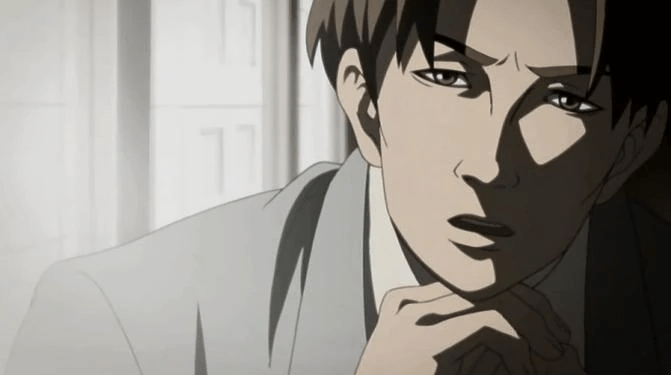
Ikari and Maniwa fill the buddy cop dynamic that I haven’t really seen since Rush Hour and wouldn’t again until Taiho Shichauzo. Ikari is the gruff, older, experienced cop who doesn’t have room for surprises anymore. His belief in the supernatural is as tight as the victims’ grips on reality and what especially makes the gears grind against each other is that his family’s future was torn apart. His wife, Misae, was expecting a child, but due either to a mishap or medical condition, she miscarried. Worse still, her health deteriorated significantly toward the end of the series.

Based on that description, she would be a prime target for the likes of Golden Bat to strike, considering he had an affinity for striking the mentally or even physically unwell throughout the series. But Misae in her final hours proved to be an indestructible show of force, refusing to let this manifestation of everyone’s darkest insecurities destroy her, even if her body is failing her.

Maniwa is Ikari’s counterpart. Young, bright, and more flexible than his older partner who’d rather stick to tradition than explore nifty and novel ideas to crime-stopping and problem-solving. While on the case, Ikari doesn’t even bother to explore the paranormal elements, writing them off as unintelligible drivel, but Maniwa examines these more closely, sometimes letting his own sanity get violently abused just to reach a conclusive answer. If it gets results I suppose… but I’m not so sure this would be advised outside of undercover work. Max Payne pushed it with his vigilantism while undercover in the Punchinello family, and the Valkyr trips were done to him than him doing it himself. Maniwa chooses to dance with the devil for a bit to parse what separates most of these cases.

Now the series does return to Sagi at the end to reveal that the pink dog mascot, Maromi, was in fact based on Sagi’s pet dog when she was a child who was run over by a car. Fearing reprisal for being an irresponsible dog owner, she makes up a false story that a random bat-wielding psycho clubbed the dog to death, and has lived with the lie for ages until she finally confronts the truth and confesses that she let the dog go. Clearly, this isn’t the series that deals with right or wrong, nor does it roll the die on its setup. Kon’s work on this was based on a bunch of ideas that were drafted during the production of some of his other movies, Perfect Blue, Millennium Actress, and Tokyo Godfathers. I’m really not well versed in anime movies, in fact, rare magmatic take: most anime movies disappoint me greatly, and that extends to modern day films like the Chainsaw Man: Reze movie. I read the manga already and as much as I wanna see it animated, when it comes to movie adaptations of manga arcs, it felt to me that a lot needed to be sacrificed to truncate it to a specific runtime. And that’s only of manga to movie adaptations; Kon’s original movies might be different, but who knows?

Anyway, Kon stated at the time that working on movies required his undivided attention from beginning to end whereas a TV series, least of all a semi-anthology series like Paranoia Agent allowed for more creativity from episode to episode. And I get that, similar to how I get some of the logic behind most anthology series, or back when they actually mattered video game DLCs and expansion packs. Nothing wrong with linear series, in fact, doing them right leaves players and in the case of film, moviegoers, with a lasting experience, but sometimes you wanna do something different.

The director of this series was promptly sacked for being 0.2 seconds late. .·°՞(˃ ᗜ ˂)՞°·.

I admit that this is the only Satoshi Kon production I can name that I’ve seen, partially or fully, but I recommend it nonetheless for the mystery thriller angle by itself. Especially if you enjoy series like Taiho Shichauzo/You’re Under Arrest or Columbo. Roughly all the details are there for you to see in real time, but to uncover each one requires close examination of each detail to a Maniwa-like level. Perhaps even re-examining the same scenes once or twice to see what is missed or will come back later in the episode or the next one. Also, red herrings. Red herrings everywhere.