Remember when I said that I don’t particularly gun for isekai anime? Well, it’s not because I have strong feelings towards it; it’s quite the opposite. I’m indifferent. A few good isekai will make the rounds and come up on my radar a few months after people finally stop yapping about them… except in this case where I discovered this one due in large part to its upcoming and currently airing anime adaptation that I haven’t been able to access through the usual channels.
Created in March of 2020 (flashbacks), the manga follows middle-aged salaryman and damn near everyone’s Ojiisan, Kenzaburo Tondabayashi, 50something pencil pusher whose reward for the consideration of a young boy’s life is an isekai journey into an otaku blindspot of his that is more of a specialty of his daughter, Hinako: an Otome video game, known as Magical Academy: Love & Beast. For those who don’t know, the Otome genre of visual novels and JRPGs consists of a female protagonist and series of branching story paths that determine the fate of the characters in relation to the MC. More often than not, the MC faces a challenger in the name of the sadistically evil villainess as a competitor for the affections of the same male romance targets.
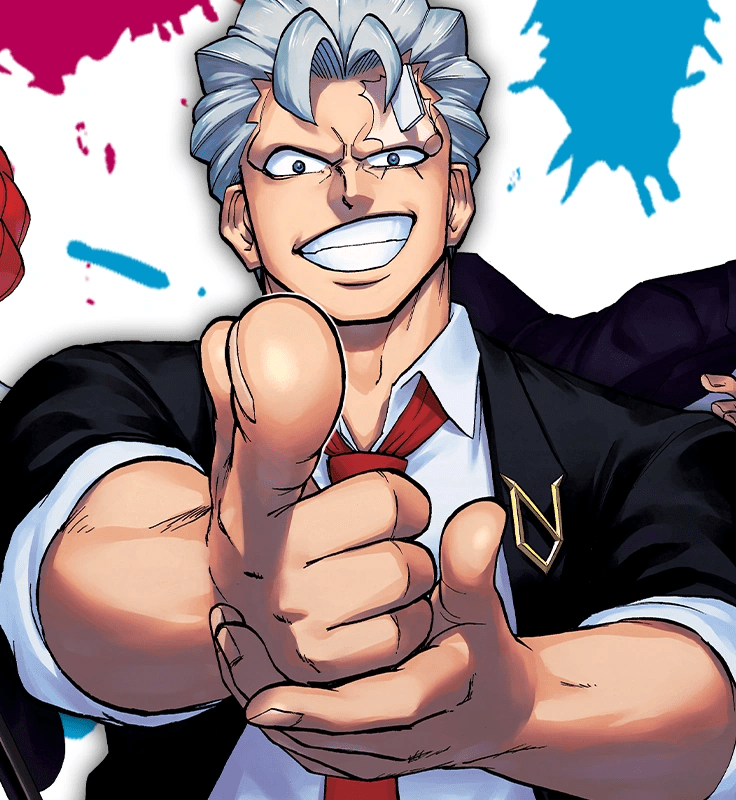
In recent times, the isekai genre has begun to saturate with a twist on the formula by inserting Truck-kun’s victims into the minds of the listed antagonists. And in the case of My Dad’s in an Otome Game?!, Mr. Tondabayashi is an ultimate fish out of water. Or he is in regard to this specific genre. As luck would have it, Kenzaburo and his wife, Mitsuko, are expert otaku having been adolescents and young adults during the boom of the 80s and 90s. So Hinako’s parents are intimately familiar with some old school anime that have found new life online in memes, not the least of which include this:
There’s a story of a Japanese man who, at his first job in the 90s, spent a significant portion of his paycheck on VHS tapes of Yu Yu Hakusho, Hajime no Ippo, Captain Tsubasa, and Neon Genesis Evangelion. That man now works in a museum where most of his collection was donated. The rest sold well online for a collective hundred thousand yen. I made that all up, but how far outside of reality is that?
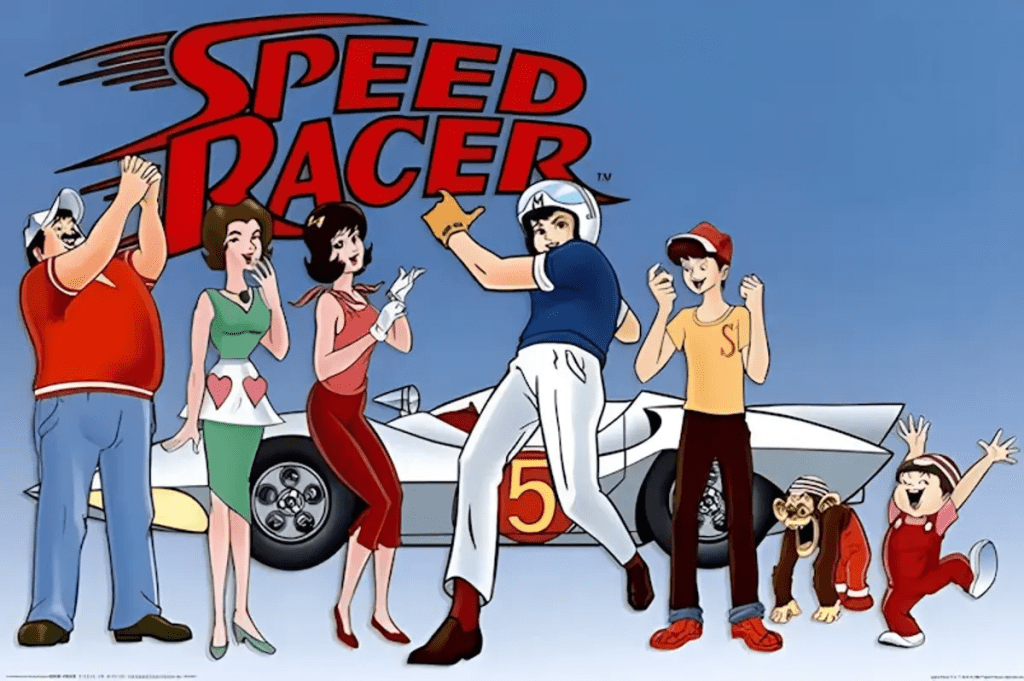
As a result of Kenzaburo’s and Mitsuko’s experience in the medium, they practically raised Hinako on the same animanga series that shaped their youths. And like the child of an otaku, she went on to discover her own favorite animanga genres. Something I share personally having grown up on Naruto, Bleach, and Dragon Ball Z, while my mom and uncle were also present for DBZ’s western debut alongside Speed Racer.
Following the isekai-ing incident, Kenzaburo navigates the game with his limited knowledge unknowingly aided by his family back home. The set up is not dissimilar from tackling a problem with an outdated but still effective solution, sort of like fighting a modern war from the trenches or on horseback. Mounted riflemen!
The fish out of water comedy in this anime is the contrast between Kenzaburo and the in-game villainess he’s currently piloting. A nasty wench named Grace Auvergne, she has a reputation for being as delightful and radiating as nuclear fallout. Toxicity is more than just a System of a Down song and Grace pre-takeover was a textbook mean princess. Berating the help, unrealistic standards, short temper, a cutthroat attitude, and a silver tongue sharp enough to dice your soul like onions on a chopping board.
Post-takeover, Kenzaburo overriding her character has transformed her into a firm but considerate character. She respects her servants equally, lifts their unforgiving standards, lengthens her fuse, and although still confident, she’s not a show-stealing showman. She let’s the game’s protagonist Anna Doll get her time of day, assisting and dare I say playing cheerleader for her.
This is the result of Kenzaburo empathizing as a father, and although I’m currently watching subbed, the comedy has transcended the language barrier. It’s never not funny to watch Grace/Kenzaburo attempt to be an intimidating villain and have his better nature overpower her villainous intent. He’s aware of his role as the primary antagonist, but can’t help but be a gentleman. He simply spent too much of his adult life living well.
Now you may have caught on that I listed Kenzaburo as another of Truck-kun’s victims and he is, but perhaps because he’s built like a brickhouse compared to the popsicle sticks Truck-kun normally runs over, he’s spared death in favor of a coma. So Truck-kun only gets half a point for this. Aside from that, Kenzaburo’s condition is stable physically while mentally he’s extrapolating with incomplete information on a genre he’s not intimately familiar with, but will try his best to play his part. The keyword being try, because the first few episodes do him no favors whatsoever.
As of writing, there’s 8 volumes, 4 of which have been translated online and the anime recently concluded with 12 episodes. Of the available services to watch it for yourself, there’s HiDive, any pirate site for our unscrupulous types, and would you have it: YouTube. For now, anyways. It’s only a matter of time before the Chad uploading them as they air gets the channel terminated for theft.
Channel: WOLF RECAP
Let me use my Made in China Nostradamus powers and say this channel will go under before October 2025. Watch it while its fresh! Or get HiDive; I’m not your boss.
I’ve had quite a lot of time to think about this genre.
Since this blog began, my specialty has been animanga coupled with video games, film, and television. Within animanga, there are several genres within this medium I always make a beeline for and in recent memory it’s focused on a single archetype: gyaru-centric romcoms. I know I don’t write the most about these, but they are noticeable enough that I can’t help but circle back to them. From a series I took a peak at thanks in no small part to a WatchMojo video about s[flies buzzing]ty girlfriends to one that I’m pretty sure was in the line up of Google searches whilst looking up the first one. Completing the trilogy of gyaru romance anime is one that was fawned over in online forums and by anime-themed media outlets for breaking some old tropes… apparently.
Even though I’m a writer, some things still fly over my head at times. Not gonna say outlets like Kotaku or Comic Book Reader are straight-up drowning in manure but to borrow a quote from Tactical Bacon Productions, if games journalism is the corpse that keeps in twitching, animanga journalism in the hands of guys like these are the gasses that keep causing that same corpse to burp every now and then. Be that as it may, these outlets have their moments of journalistic brilliance; and to compare the likes of My First Girlfriend is a Gal to Hokkaido Gals are Super Adorable to My Dress-up Darling would seem impractical considering what they all cover, not to mention Dress-up Darling forms the “Going to See?” part of this post’s title. Still, it got enough love and exposure (and memes) for me to get the gist of it from just the introductory blurb, so rather than treat my imminent analysis of This Gyaru Wants me to Make Her the Cosplay Queen as a holy text, take it more as a shaky summary from a dubious narrator.
Years Ago:
I’ve went over this before, but this was the first series I ever viewed with a gyaru deuteragonist and based on the writing and characterization it’s 100 percent a relic of its time. Basically, Junichi Hashiba asks a popular gyaru, Yukana Yame, out on a dare who teases him at every turn only for this mutual joke of theirs to form into something genuine. It’s a 10 episode series whose purpose was to promote the original written source material, and at the outside. Junichi’s prime motivation was to punch his V-card with an anatomically-blessed girl, personality notwithstanding, and you initially get the impression that Yame is the queen of keep away, dangling a carrot in front of a stick like Makima from Chainsaw Man but way less malicious or vile.
The initial motivation by Junichi puts him in the same shoes as Highschool DxD’s Issei Hyodo but they diverge not just in the types of characters they are or are going to be or even the types of series they represent. Issei may be a pervy degenerate, but I don’t recall him having friends that low. The most they’ve ever done as a trio was spy on the girls changing a la Porky’s, but without Issei, they’ve just been getting jealous that the school bombshell and occult club leader Rias Gremory reciprocates wife vibes. For Junichi, what he’s gone through was a series of shot-in-the-dark dares with little expectation and even build-up so his Surprise Pikachu face is apt considering his reaction in episode 1.
Channel: Ben Senpai
All things considered, for all the praise Dress-up Darling got for breaking the mold, it’s not like any of that was absent in Hajimete no Gal, though this series didn’t break the mold 100 percent. There were still a few tropes, some of which may or may not disgust you, the viewer, but the one that separates this from the other two series is the characterization of the gyaru. Yukana’s not a walking Hokkaido Tourist associate like Minami Fuyuki, nor is she a doujin otaku like Marin Kitagawa. She’s the embodiment of the stereotypical gyaru and by all accounts, your countries archetype of the standoffish, at times bitchy popular girl. When I was growing up the centerpieces for this archetype on TV wound up being the cheerleader types, the overconfident pretty girls even though this flies in the face of the reality on the ground. Not that there aren’t those types of girls, but that the description is grossly overrepresented when they really might only make up some 5 percent of the actual high school or even college cheerleaders. F[broken glass]g Hollywood and their f[meows]g tropes.
But I digress. Both Junichi and Yukana start the series as sleazy opposites, but they later grow to become two sides of the same coin, especially when they realize how much they have in common. Now I have to dig into the reserves of my memory banks to specify those commonalities, but on the surface, they both have a series of friends who root for them every step of the way. Last time, I focused on Junichi’s loli-loving, pedophilic friend, Minoru Kobayakawa, but on the other side is Ranko Honjo who holds sole self-proclaimed rights to Yukana’s virginity, downright threatening to take both hers and Junichi’s before he gets a turn. And that description alone is probably vague enough to make the more cultured among you think back to a similar sounding doujin… one that I don’t mind checking out. No, not for research purposes, I wanna add to this fortress I’ve begun building for myself. I wanna build an NSFW dungeon.
Have my opinions deviated any from my initial description of this series? Hardly. Even now that I’ve got a summary open in another tab on my browser, I’m glad to know my memory isn’t that f[plastic wrap]ked. Recommendations? Well, the anime’s only 10 episodes so finish those 10 then go to the source material if you want some more.
Recently Finished
At the risk of sounding like I’m pissed or making this post a correction of the record from s[burps]t said before by the typical media outlets, Hokkaido Gals is another one that breaks the mold especially in the Gyaru space. Actually, that aspect isn’t even worth mentioning anymore with more and more romcoms debuting with gyaru protagonists/deuteragonists who are less and less of the standoffish type and more and more of the lovey-dovey, “How to Be a Loving Wife” type, which calls back to another meme that floats around especially some of the wholesome forum posts online.
More power to you, ghost of Shinzo Abe, but your subliminal messaging seems to be working more on the mangaka’s mindscapes than it does on their audience. Not to mention the international audience being more likely to have started families than the Japanese and Korean audiences if the demographic statistics aren’t completely fudged over.
For tropes broken and in serious disrepair, Kitami Gals Are Like C-U-T-E, puts us in a notoriously freezing part of Japan. Gone are the days of waiting for a regular winter in Tokyo of all places; come up to Hokkaido where it feels like the northernmost part of Minnesota regularly. Speaking of which, that’s precisely the accent used in the English dub of this series. Fuyuki, Sayurin, and Natsukawa all were cute in the manga, thanks to Kai Ikada’s magic, but the gongs of kawaii sounded the loudest when they were given upper Midwest accents! Holy North Dakota, I didn’t think it would open up a blindspot in my US geography; exploring the Deep South at the expense of the Midwest and Mountain states.
It doesn’t deviate that much from the established gyaru norms though, seeing as the girls all still dress like gyaru albeit adjusted for a colder climate… somewhat. Fuyuki is definitely the equivalent of that one kid you know who’s worn shorts and sneakers in at least 20 inches of snow. I’m not sure if there’s a European or Asian variant of this, but I wouldn’t put it past a Korean or Finnish kid to try it at least once before. Maybe in the age of pen pals they might’ve heard of the phenomenon through the grapevine, who knows?
Refreshingly, Fuyuki, Sayurin, Natsukawa, and Tsubasa, the main male protagonist, aren’t fickle like the protagonists of My First Gyaru GF. Naive and wishy-washy, definitely, but not fickle. Comparatively, they may be less confident seeing as Tsubasa grew up in probably the most average, traditional Japanese household prior to moving to northern Hokkaido while Fuyuki was born to be a gyaru, fashion accessories and cell phone in hand, Sayurin adopting the look sometime in between intense sessions of Animal Crossing and Natsukawa unconsciously marrying the library. They each get along swimmingly as friends, but unlike Yukana and Junichi who have plans to f[door closes]k in the imminent future (or at least entertain the idea), none of the characters in either the anime or the manga (up to the chapters I’ve read, which isn’t that far from where the anime ended) have expressed anything beyond a close bond crossing into romantic development. Spoilers to follow: the latest of these developments involves a friend of Sayurin’s practicing for a swimming competition where after practice has concluded, Sayurin tearfully confesses to the friend (a tan gyaru, holy s[surprise music]t, there’s a lot of them) that she’s fallen in love with Tsubasa. As far as I’ve read, she’s the only girl to announce these feelings publicly to anyone and there’s tens of chapters for me to thumb through so I’m in for further developments as soon as I can find a manga hosting site that doesn’t redirect me to another series or refresh with every click. The things I face as a content pirate.
Going to See?
The darling of 2022, My Dress-up Darling did get its praise for breaking the mold in several areas, notably for giving us another shy, uncharismatic protagonist. Wakana Gojo isn’t Monkey D. Luffy; he’s more like Tanjiro Kamado in the sense that he has a big heart. From what I’ve seen at the outset, he wouldn’t take up arms or get into a street fight, not at least without a kick in the pants to get him up to speed. Gojo seemed to be more the type to let things wash over him without resistance stemming from an incident where his love of hina-doll making was grossly insulted to his face by a girl who we later learn had a crush on him.
Add the Guts theme from Berserk and you’re accurate to what little Gojo-tan felt that day. Fast-forward a decade and hiding his passion was what got him through the years until Marin Kitagawa, our lovely gyaru deuteragonist and thinly-veiled stand-in for Sydsnap, plays the part of the extrovert adopting the introvert. It was a joke at the time that this blonde girl looks and behaves like the actual aforementioned YouTuber down to a T, but the joke was scarily accurate to Kitagawa’s character wholesale. Like Sydsnap, Kitagawa does have a passion for a lot of the typical otaku interests and hobbies, especially the ones specific to female otaku (IYKYK), among them hentai and eroge and the less savory tags for each of them.
But the one that makes up the title of the series is cosplay, which she’d like to do with more polish but is unable to due to a lack of dress-making experience. Enter Wakana Gojo whose specialty is dress-making for hina-dolls. These combined forces make her an unstoppable force in the cosplay scene and the more they hang out the more Kitagawa realizes that this off-the-cuff ad hoc union has developed into a blossoming romance, though only she realizes this as it takes Gojo more time to understand what he feels when she’s around–which circles around to an age-old trope that has its roots in many series across the globe called “Everyone Knew but Them” where the couple is unaware that they’re a couple, but the hints were picked up more easily by their friends and other outside observers. Let this meme explain:
Are they dating? Worse, they’re stupid.
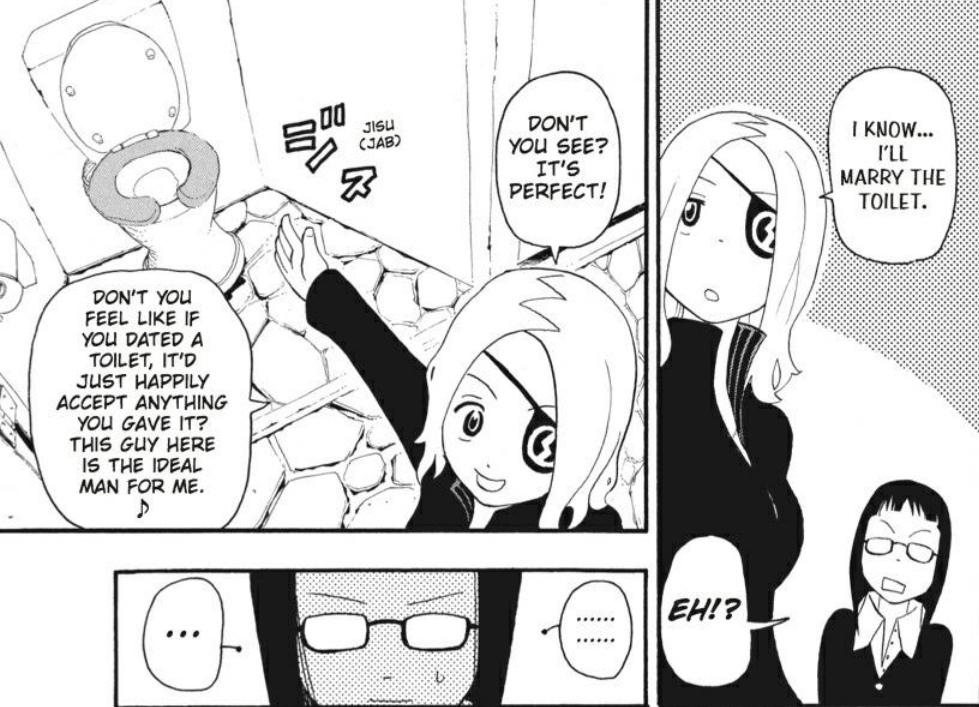
But whoever said love was straightforward? We weebs and otaku would fall for inanimate objects if they came to us with a bouquet of roses and dinner plans to an expensive French restaurant. I’m not making that up, by the way. One of the teachers from the Soul Eater series was about to drop everything to be happily wed… to a toilet.
I’ve talked before about thumbing through the latest chapters of the Dress-up Darling manga out of curiosity and hearing that the girl who first prompted Gojo to isolate himself and his hobbies from the rest of the world was coming back to apologize for her childish behavior back then, claiming jealousy over his hina-dolls. Unreciprocated crush plus dense boy equals “what’s that? you like something more than me?! You’re stupid!! I hope [my lawyer has advised me not to continue this example]!!!!”
While writing this post, I was curious if I was able to watch the full series without having to upgrade to premium and sure enough as of writing, Crunchyroll is feeling generous with this series in particular and it isn’t even a legacy series like One Piece or Dragon Ball. I may see it for myself and continue on in the manga where the anime finishes like normal. It’s just a matter now of putting it in the timeline somewhere.
This is gonna be the biggest animanga fortress I’ve ever built.
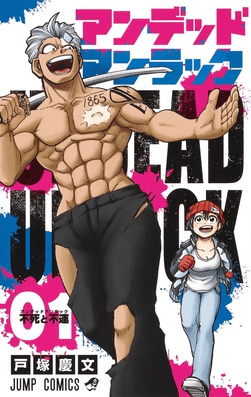
If you’ve been following this blog since the beginning, you may recall months ago when I wrote about a manga where select people get random powers of negation, as in what would normally happen to someone else doesn’t happen to the negator themselves. Lots of luck? This person gets none. Mortal? Not gonna happen. Approachable? There’s a literal barrier that keeps you from getting close. This manga is known as Undead Unluck. Created by Yoshifumi Tozuka on January 20, 2020 (the events since, my god), it’s up to 18 volumes as of writing this with 11 currently translated for an international audience. It was recently picked up for an anime adaptation in August 2022, and it’s first episode debuted on October 7, 2023 on Hulu with weekly releases to follow.
It’s too early to tell whether it’ll run for 12-13 episodes or 24-26 episodes, so this post will be a first impression of the first episode and whenever the first season ends, I’ll review it in bulk with comparisons to the manga. If the title, didn’t give it away, I’m gonna spoil episode 1. So go watch the first episode if you haven’t already, then come back when you’re all caught up.
Speaking of which, the first episode is already markedly different from the first chapter. Being early 2020, no one could predict the global impact of the COVID-19 pandemic then. On a side note: I first read about it in December 2019 and said to myself, “That’s unfortunate, but as long as it stays there [in Wuhan], we have nothing to worry about.” My words were delicious, thanks for asking.
Anyway, no one knew about the pandemic’s global impact in January, news was still getting out back then, and I bring this up because the manga starts in August 2020, deep into the pandemic with lockdown and travel restrictions in place across the world. This is reflected in the anime as the first scene shows the protagonist Fuuko Izumo set to self-delete from atop a trainline with only Andy, a.k.a. Undead watching from the other side. In the manga, she was surrounded by bystanders who were attempting to bring her back to safety but were stopped when she produced a knife.
Andy still walks into the blade and touches Fuuko’s face hoping to catch some of her Unluck ability, and like clockwork, the platform collapses beneath him, causing him to fall onto an incoming train. In the manga, they show the disruption of service due to the fall, but the anime skips past that and immediately shows Undead sprouting a new body from his head.
In the anime, members of an antagonistic agency (revealed later in the manga, I won’t spoil too much) show up to apprehend Undead, but he takes Fuuko with him and flees. In the manga, with the world still being populated, a civilian witness attempts to alert the cops on an out-of-context scenario involving a naked man and a young woman in public (honestly, much of the manga is just “Out of Context” the series; it’s unbelievable).
In both the manga and the anime, Undead and Fuuko stop at a building rooftop with Undead dangling Fuuko over the edge until she explains her Unluck ability. She explains it and although it was given a single page in the manga, the anime elaborated further on this. It starts with scenes alternating between Fuuko’s last connection with her parents before the accident, and scenes from the romance manga she was reading.
The anime had introduced them early, but by this point in the manga, after being saved from an accidental slip and fall from the rooftop, the antagonistic agency, represented by men in black suits observes their target making a run for it to an abandoned site. At the site, Fuuko’s jacket snags and she loses her beanie which kept her hair under wraps for years since no hairdresser or stylist could cut it without dropping dead. At the same time, Undead is maintaining as much skin contact with Fuuko while he cuts her hair so that he can test a few hypotheses, mainly is the impact influenced by duration or surface area?
Well, he doesn’t really get that answer since this agency of black suits tracks him down to his hideout and lops off his head. They put the head in a container and handcuff Fuuko, but the Unluck comes in clutch to save the two as one of the black suits gets zapped. Undead regenerates everything below the neck and removes the card he keeps in his head as a restrictor of sorts to cut them all down to size. Between the manga and the anime, this scene is a mix of gore and action.
The main guy in a black suit holds Fuuko at sword-point and threatens to behead her too if Undead doesn’t surrender his own head. Neither of them agree to that and when Fuuko breaks free and kisses Undead on the cheek, a meteorite decimates the abandoned hospital. With just a single cell of him left, Undead regenerates full and takes the black suit’s sword as a keepsake. Putting two and two together, he realizes that neither duration nor surface area have anything to do with the Unluck reciprocated and that it may be more connected to feelings of affection. Working with that as the going hypothesis, Undead, now christened “Andy” as a play on words (works better in Japanese) by Fuuko, half-jokingly proposes that they’ll both get their desired death if they have sex… which Fuuko is clearly not keen on as they both just met. And that’s where chapter 1/episode 1 leaves off.
For my impression, I say that if follows the manga as best as it can with a few nods to real life changes. Then again, for obvious reasons, the COVID pandemic and probably by extension the year 2020 aren’t going to be referenced very heavily in media unless it’ll be for alternate changes to reflect real life or for an alternate timeline of sorts. I liked what they did in just the first episode. This being, David Production, the people who brought us JoJo’s Bizarre Adventure, I didn’t worry all that much about how it would look or turn out.
This studio tends to live up to their reputation and they made Undead Unluck look pretty good for the beginning. I didn’t think they’d expand further on the origin of Fuuko’s Unluck ability with the plane explosion, but from a narrative standpoint, it’s cool to see what we’re expecting going forward. The same goes for the scenes of Fuuko’s romance manga. This is connected to the plot many chapters into the manga, but without spoiling this again, DP seems to be playing the long game of adaptation with the foreshadowing in just this episode and likely more to follow.
If the anime is 1-cour running for 12 or 13 episodes, then the last episode should air on December 23 or 30 of this year. Alternatively, if it’s 2-cour running for 24 or 26 episodes then it should wrap up its first season by either March 16 or March 30, 2024. Whichever of those comes first, I’ll save a spot in my schedule for that and cover it in a post in the future.
Call me biased in favor of the series, but I’m glad to see something I cheerlead for in the beginning get one of its dues and I hope I can say the same for The Elusive Samurai when it releases in 2024.
Tomorrow I’ll be covering a media company that is on a slow and steady decline. Stay tuned. Here’s a hint:
Normally, I have one topic ready to go every Friday and planned on several weeks in advance. This week and into the weekend, I want to try something different, something special. A lot has occurred both in real life and the entertainment sector that may become old and stale if I add them to the empty spaces on my planner document (which goes into March 2024 as of writing this), so for today, I’ll cover my thoughts on animation today, tomorrow October 14, I will cover an anime adaptation that I’d been looking forward to personally, and on Sunday, October 15, I’ll cover the misfortunes of a company that, honestly, feels like it’s been on life support for a while now, each with sneak peeks at the end. Unlike this one, no YouTube recommended channels will be featured for those posts–just this one. Now to begin proper.
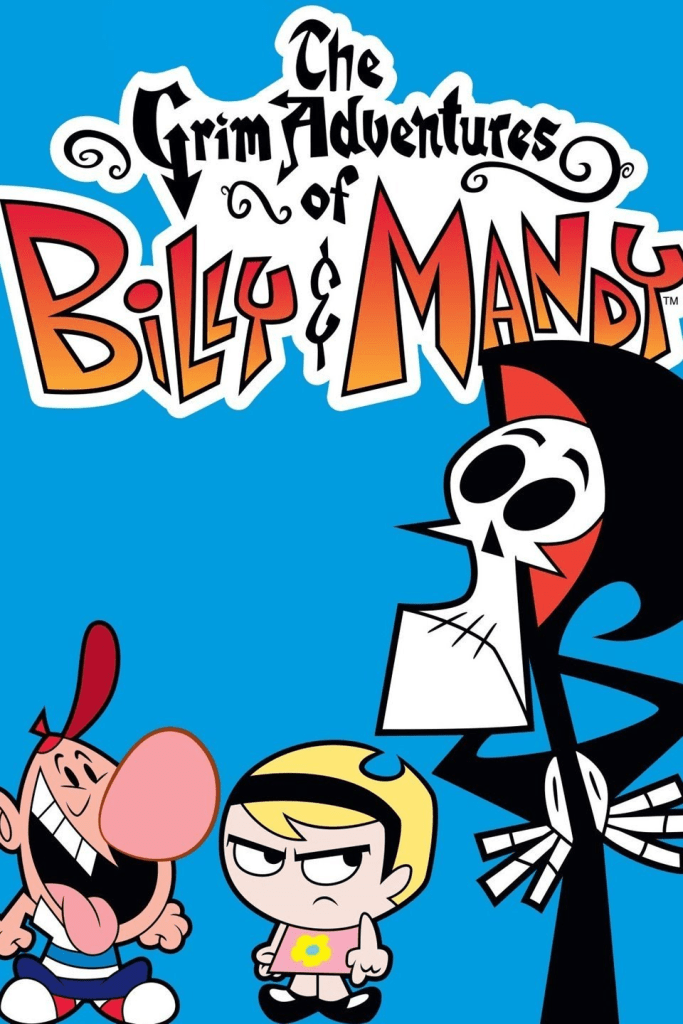
Since I was a kid, I remember part of my day was complete or going expressly well when I could turn on the TV after speeding through my homework and catching up on my favorite cartoons. Funny enough, a lot of what I liked at the time is now remembered as genuinely creepy and weird. Observe:
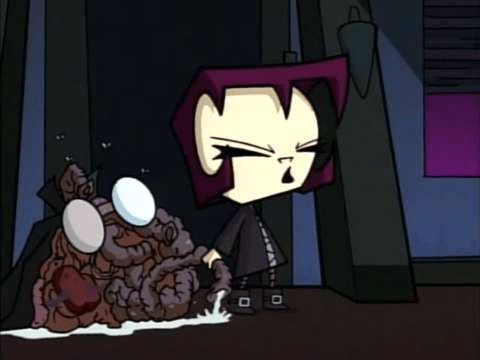
And it wasn’t just this one. Courage the Cowardly Dog, Invader Zim, The Secret Show, Kappa Mikey, Martin Mystery, and several other shows that I was always convinced I was the only one watching. The draw for me, aside from a series of moving drawings, was that a lot of them were so unique. They had their own art styles, plots, some of them were spearheaded by comic book artists, such as in the case of Invader Zim’s creator Jhonen Vasquez and Kaput and Zosky creator Lewis Trondheim.
They also had an air of black comedy embedded in the structure of the series, often based on works published prior. When these shows were picked up by Nickelodeon or its sister network Nicktoons, they were often marketed towards children, though often needed to keep the darker elements under wraps to avoid censorship. Still, a lot of stuff got through the cracks. Like this scene: [content warning].
And this wouldn’t be the only time, shockingly, that someone’s organs were outside them.
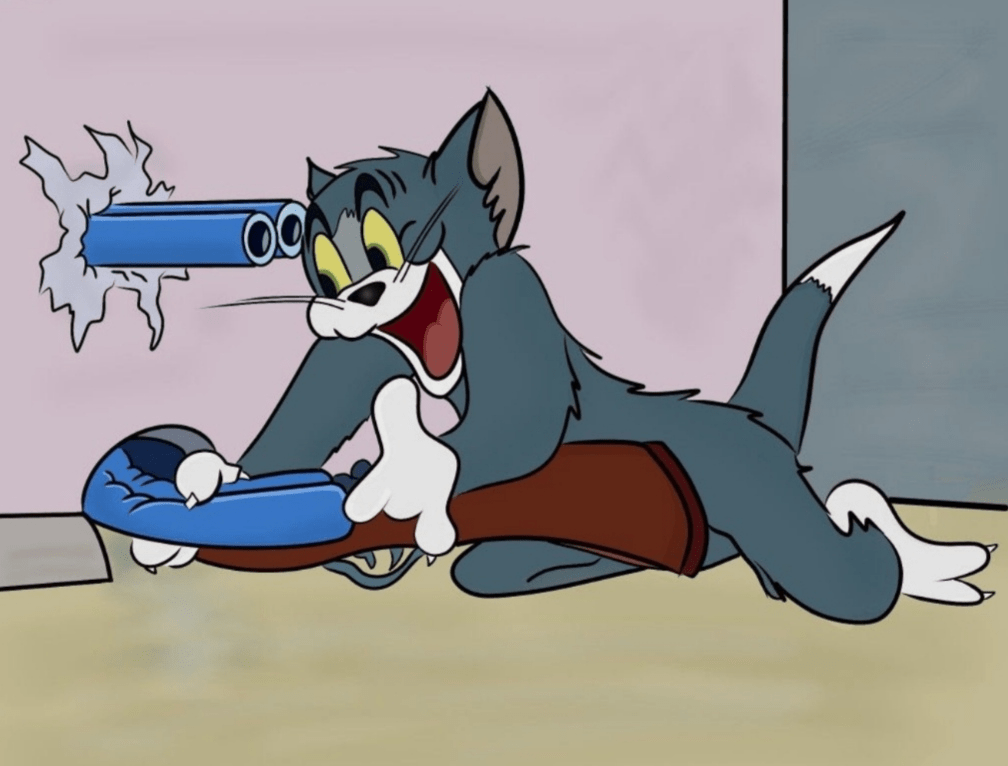
For all the flack cartoons have gotten for being “childish” and “immature,” it’s easy to forget that the pioneers of old like Disney, Warner Bros. and MGM had darker themes in a lot of their old cartoons. Never mind the modern day creepypastas featuring Mickey Mouse and co.; think about how many old cartoons had gun violence in them. Where else do you think we get this meme template?
I bring this all up, not so much to rant about cartoons getting soft, but more so to contextualize why I think animation and cartoons have become something of a laughingstock in the West. Ridiculous violence and anthropomorphic animals aside, it’s not like this was all western animation studios were throwing out since the 1960s onwards.
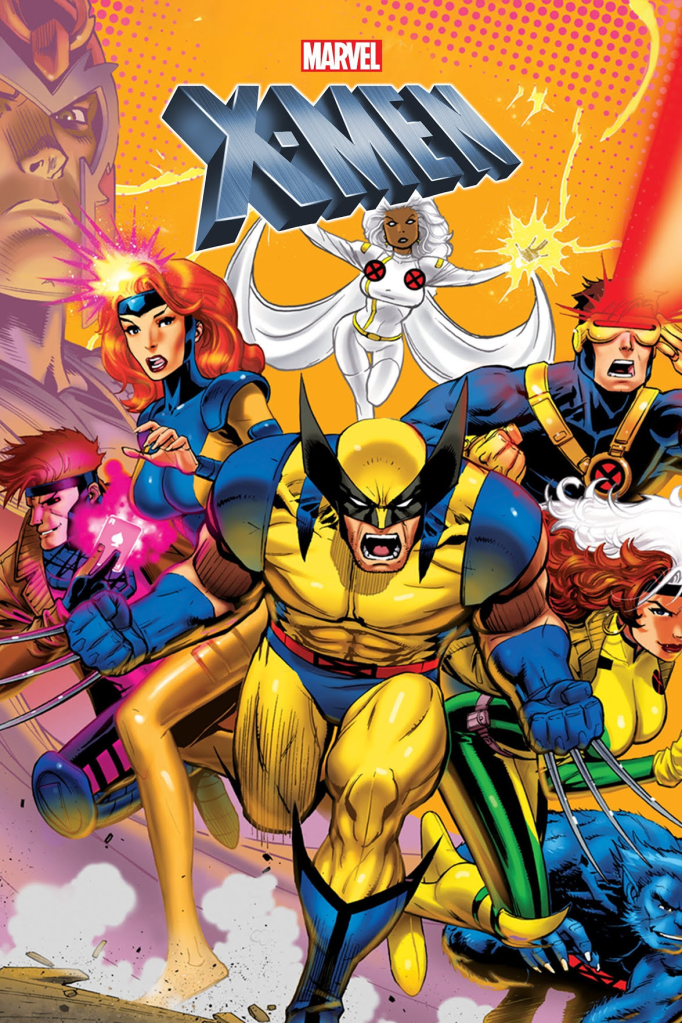
Think about comic book adaptations, like all those of Batman or Spider-Man or the X-Men. All of those comics and many successors trusted their audience, no matter how young they could’ve been, to understand the complicated themes and plot points within. For one such example, the YouTube channel, Shady Doorags, frequently covers animation and animated shows and their many mature themes. Even shows that had a high child and preteen audience like Teen Titans was covered several times, and this episode he covered earlier this year seems to have been one of the more mature ones in the series.
When referring to mature animated shows retroactively, there’s now a distinction between a show that’s mature and a show that’s adult. King of the Hill, The Boondocks, Black Dynamite, and Seth MacFarlane’s Family Guy and American Dad are all mature and handle maturity in different ways, through satire, social commentary, the politics within certain hot-button issues (especially if those issues are still front and center today), or some combination of all these.
By stark contrast, some recent animated shows go straight for the fences without the maturity or class of some of the older shows. I need more fingers to count the themes in a South Park or King of the Hill episode, but I’d struggle for something like that show Fairview or Legends of Chamberlain Heights among others. The same goes for maligned reboots of well-beloved properties. You probably know about the 2016 reboot of Powerpuff Girls or Teen Titans Go! or worse Velma, or if not, you know them all by their sour reputations among fans of the original properties.
Whenever I look into the main sources of criticism, similar talking points come about. Lazy art-styles, crude and purposeless humor, mean-spirited humor, a grave misunderstanding of the subject matter, and often the worst of the criticism relates to pandering. Pandering to a demographic that had a hissy fit on social media; pandering to an underrepresented demographic, likely because that specific demographic is literally extremely few in number; pandering to demographics that suffer from an advanced case of white savior complex. The types that won’t really watch the property, but will lie on the internet to look more virtuous than the person they’re arguing with over the keyboard, even if they’re talking to someone who has volunteered before in the past.
Altogether, it brings back problems animation and fans of animation were certain they’d dealt with years prior and this new generation of animators seem to be fighting an old battle. I’m looking in from the outside, but some of the recent shows coming out don’t do burgeoning animators any favors, especially if you’re familiar with what Disney and Warner Bros. Discovery are responsible for. Sometimes I only know about it because channels like Clownfish TV have experience and expertise on their design philosophy.
When I started conceptualizing this topic, at first I was going to write from the standpoint of award shows, but then I remembered some of the shows I mentioned in this post in passing have gotten recognition from awards boards in the past and even now so if there’s a group of people I’m asking or nearly begging to respect animation, it may be the studios that greenlight them and some of the animators that work on them. From my old high school art class, I remember learning of the philosophy of knowing the rules before breaking them, as in, learn how to draw before you put your own spin on things, and this rings true for all of animation. There’s a stark difference between Bugs Bunny and Tom and Jerry and the Pink Panther/The Inspector art-wise, and even animator-wise. Walt Disney and Friz Freleng were not the same people, but they both learned to draw somehow.
And this is true of today’s animators. You know the old saying: Rome wasn’t built in a day. It takes a lot of skill, craft, and imagination to make a disciplined practice look so undisciplined. Think about how radically different medieval music is compared to Black Sabbath. And for animation, there was a lot of respect for the creators of this:
And the studios that brought us animations like this:
The simple and obvious solution for modern day animators is multifaceted, though to take an example from the military would be to look at who’s at the top of the chain of command. I would never doubt the capabilities of a studio today since most of the time they’re only doing what they’re told; rather my efforts would be better focused on the people they answer to. Clownfish TV mentions names like Disney’s pair of Bobs, Chapek and Iger, as well as investors ignorantly chasing lightning bolts with an open mason jar, confident that it’ll hit the bottle and not them.
Then again, if we’re looking at the investor angle, as risky as it is to put your eggs on an untapped market, it’s equally risky to go for the diminished returns for obvious reasons. Call it the centrist approach, but why not blend the two together? Put a few eggs in the new and unforeseen while keeping the rest in safety boxes, only moving when things go consistently south. If the new thing fails, you still have some pennies, and when the old things lose favor, you can pull out before you lose everything. Oversimplified solution? Well, again I’m no expert. It’s just something I could see myself doing if given the resources to do so.
For this week’s recommendation, I bring you to the channel sydsnap.
The channel, run by Sydney Maneetapho (née Poniewaz), covers anime and manga, but a more adult-oriented type variety of each, namely hentai. Sydney often recommends some of her own favorite series often for the sake of some guilty pleasure, but also because between all the exposure and nudity, some of the authors and artists behind these hentai have credits writing manga for general audiences, such as in the case with the author of Don’t Toy with Me, Nagatoro-san. She’s even interviewed several names in the adult entertainment industry, like retired porn actress, Kaho Shibuya, or active porn actress, June Lovejoy. If you’re looking for some recommendations or would like to learn more about topics of this nature, most of sydsnap’s videos cover this in detail or alternatively, a donation can be made to her associated Patreon page to get past the censors.
I will return tomorrow with an impression of a long-awaited adaptation.













 Opinions on Entertainment