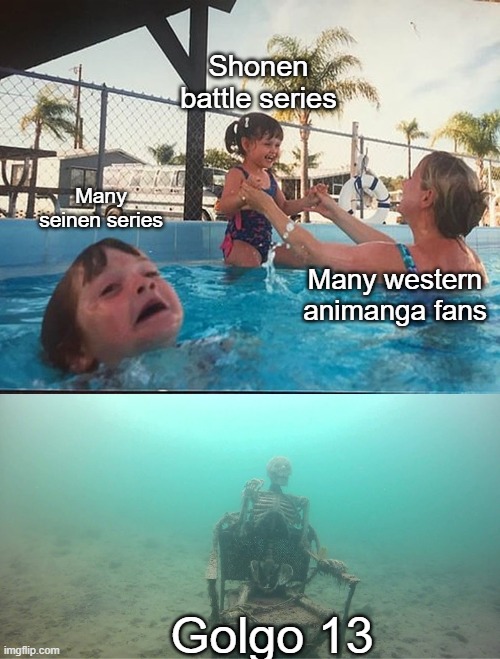
Yet it was available for free on Tubi a few years ago
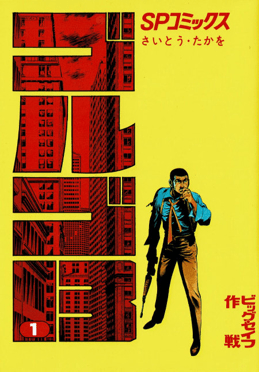
Due in no small part to its popularity and wide appeal, Shonen action-battle series get all the media attention at home and abroad, unintentionally hiding other genres in the process. So it’s not a big surprise or concern when people erroneously claim that the longest running animanga series is One Piece, or JoJo’s Bizarre Adventure, or Dragon Ball. All have been running for decades, with the latter two debuting at the end of the Showa era. The subject of this post however has been in serialization since 1968.
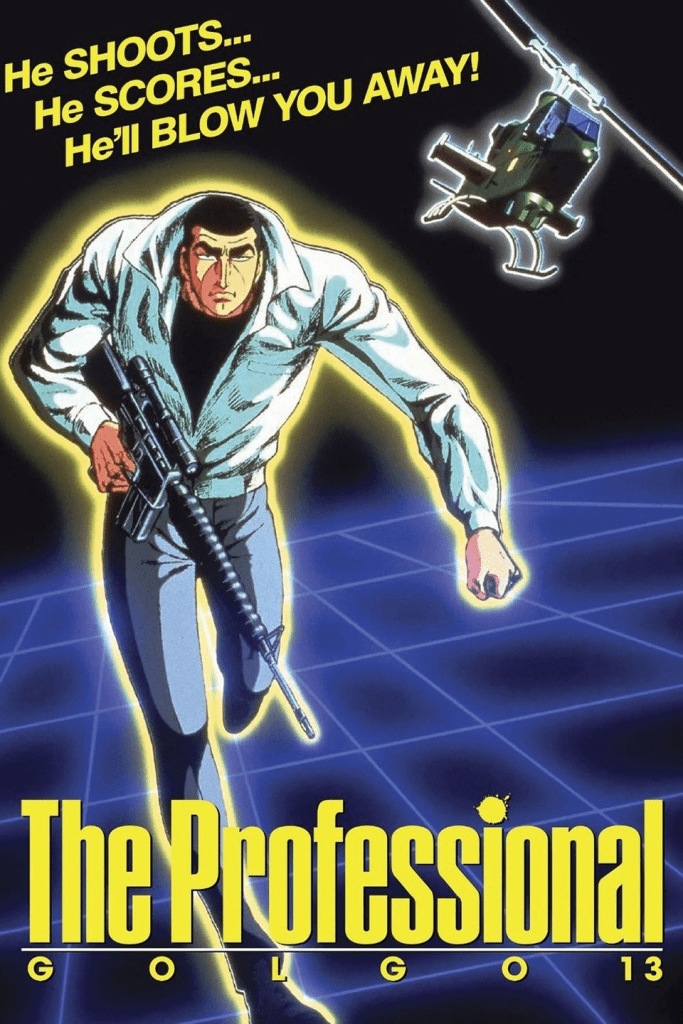
Indeed, the longest-running animanga series still releasing chapters even after the author’s passing is none other than this Japanese take on the well-established James Bond franchise. The mangaka, Takao Saito, designed Golgo 13 to be an international man of mystery. A man with no need for an introduction and gets all the results from the business end of a high-powered scoped rifle. Under the alias “Duke Togo,” Golgo 13’s backstory is up in the air. A legendary figure in international espionage, what’s known about him comes secondhand from those he chooses to work with. As long as they can get him a plan, a gun, and a car, then he’s in business.
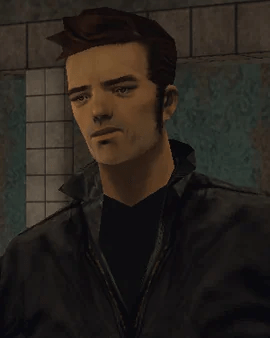
The name “Golgo 13” has a symbolic meaning, Golgo being short for Golgotha, the place where Jesus Christ was crucified, and 13, of course, being the unlucky number spelling death and destruction for his targets. And Duke Togo doesn’t seem to discriminate in his choice of target. Coincidence or not, I see a lot of this man in Claude from GTA III.
Before you look at this post inside-out, let’s size them up.
Contract killers from parts unknown with little to no mention of their origin, never mind their own birth names, who take up arms and remove problems for a variety of bosses, sticking their own necks out for a couple of bucks while earning the ire of different people and/or factions. But what separates the Holy Bullet from the grimy drifter is both the environment and the nature of their respective series. Golgo 13 is a professional hitman for hire. So is Claude, but he exists in a world designed to satirize everything from the ground up: New York City (which they needed to make adjustments for because the release date was very close to 9/11), mob life, gang life, pop culture, the works. Saito’s manga is more of an homage to the James Bond franchise and at the time of debut, James Bond only had five movies.
Not to mention, depending on who you ask, the depiction of early Golgo 13 in the manga and the movies is a mirror to the behavior of Sean Connery’s James Bond as well as Connery himself at the time in regard to women. I can’t say for certain if it’s a perfect mirror of Bond, James Bond from that time period having seen the 1983 movie a few years ago on Tubi TV, but just from that, the most I saw was Golgo 13 bedding a sexy lady instead of slapping the hysteria out of her, so I take it that this is a more reserved form of misogyny compared to Connery’s more boisterous form.
Does that make it any better? Well, considering the woman in that scene was more of a side show than a main event, it puts him a stair step above his British counterpart, but it’s worth closely examining Golgo 13’s character in relation to others. By himself, he’s a quiet professional with a singular focus: the target. Personally, I think these kinds of discussions erroneously apply modern customs and expectations to a 1960s Japanese publication, but I won’t refrain from entertaining them. Ditching random women after presenting the solid snake may not sound any better than Connery’s slap ’em and plap ’em, and it’s more or less on par, but with even less to say about this aspect than Golgo 13’s background, I wouldn’t dwell on this as much since the primary focus is Duke Togo and his incredible range.
In line with the nature of this blog’s discovery and promotion of notoriously hard-to-find animanga series among other things, this series is not only right up my alley, but it’s scarcity is tailor-made for a blog like this. 50+ years in serialization, even after the original mangaka died, with a handful of movies to go along with it subbed and dubbed, and yet… hardly a squeak. And understandably so.
The series has a library-occupying 200 volumes to collect so unless Saito’s estate approved omnibus truncations to shrink the number, you may wanna invest in some extra storage space and shelves. It does have a 2008 anime adaptation on Blu-Ray (and has since been made available on the underground pirate sites) 50 episodes strong, and most likely will rely heavily on those brave enough to dedicate hard drive space to keeping it in preservation. And to top it all off, the manga hasn’t had as many people scrambling to translate it for international audiences.
A die-hard fan may have a dedicated section to just the Golgo 13 series and if you happen to be that person…
You might have the blood of a Japanese historian in you, because bringing it to light is a gargantuan task.
And a couple of movies and a 50-episode anime series doesn’t go deep beyond the surface. Having said all of this though, with audiences craving more than paper-thin characters with unchanging motives and priorities, Golgo 13 may not be what a lot of people want these days. Protagonists who aren’t heroic 100% of the time against antagonistic forces who aren’t necessarily evil is what sells than rigid good VS evil, but it creates a false conclusion that pure good and pure evil are bad. I suspect that people who dabble in fanfiction are among those who lambaste these archetypes because it doesn’t give them a lot to work with, especially if they can’t rewrite what already exists due to its non-existence (Golgo 13 being too straightforward to bend into whatever the mind can imagine), but if that’s the case, then I chastise these types back with a megaphonic “LAZY WRITERS!!!”
100 of these guys in a room can crap out Hamlet, so what’s your excuse, fanfiction writers?
But a point can be made about how immovable the character of Golgo 13 can be compared to people like Saichi Sugimoto, Frieren, or JoJolion Josuke Higashikata (東方定助). Sugimoto maintains his eyes on the Ainu gold, but faces mental and physical challenges in search of it. Frieren learns more and more about the late Himmel the Hero long after the journey has ended. And Josuke/Gappy understands who and what he was and is while battling people he regarded as friends and family for control of the Rokakaka fruit.
The usual channels of viewership for the series and the movies are available, but with most of the manga being out of reach due to a lack of translation for the later chapters, I wouldn’t blame you if you decided to skip the manga altogether.
The title of this post is meant to have two purposes: to highlight how media can become lost and the modern era’s means of recovering lost media. There isn’t always a perfect method to prevent lost media nor is there a perfect means to recover lost media without sacrifice to the media in question. I’ve faced this problem personally while gaming and emulating games, but I’ll get to that soon.
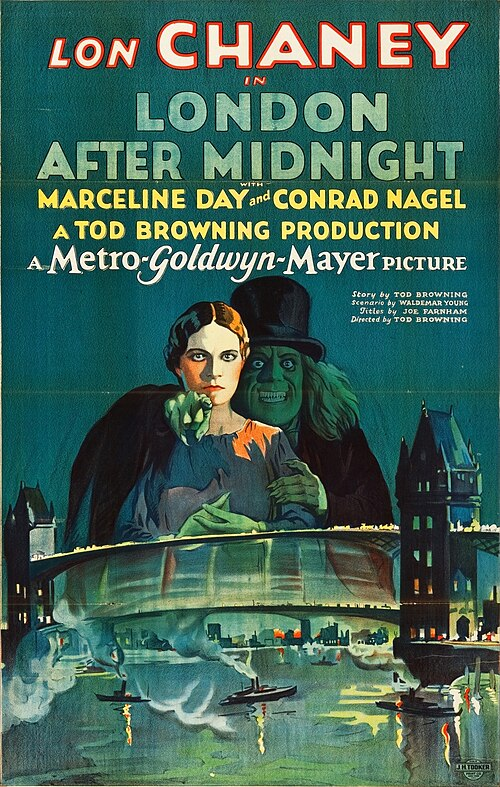
A brief overview of lost media is any piece of media whose preservation methods were either nonexistent or severely compromised to the point that part, most or the entire medium is effectively ruined or destroyed. Surviving copies can’t be located or recovered because they either don’t exist or sometimes won’t be released publicly, even after the copyright expires or the original author dies. For the longest time for obvious reasons, this has mostly applied to film, like so:
This film was released in 1927. It was kept in the MGM vault for decades until all surviving copies were destroyed in the 1965 vault fire. As of this writing, it only survives in posters like this and surviving still shots.
Yet as time has progressed, more and more forms of media have been created, to include video games which can also become vulnerable to media destruction. In one extreme case, Adobe Flash.
Five years have passed and I still miss it.
This critical piece of software was launched in November 1996 and has formed an important cultural touchstone on the internet ever since. Countless creators, new and veteran, have used it to make everything from videos to short films to even video games. There used to be countless flash games and even websites hosting those games. They were inescapable, until Adobe ceased support for the software on New Year’s Eve 2020.
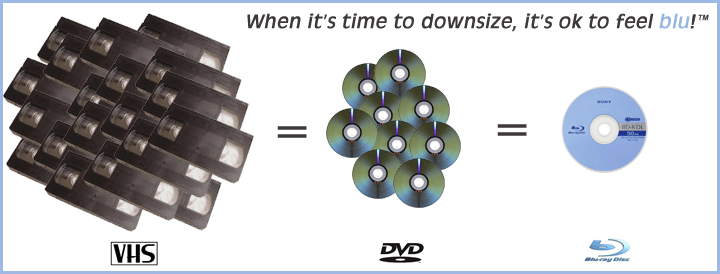
A not insignificant portion of these games couldn’t be saved and are thus forever lost outside of admittedly s[dial-up]ty videos recorded in 144P in 2007. Yeah, they were hard to look at and aged really terribly, but having aged media is better than having no media. It shows the technological progress between, say, VHS tapes and Blu-Ray discs.
The crux in the custard I’m getting to is that efforts to preserve media have been undertaken for over a century, and while not perfect, as an advocate of piracy and emulation, I also advocate the preservation and, by extension, re-release of old media in as many forms as possible, especially when the format in question begins to deteriorate due to age. My grandmother clung tightly to old VHS tapes and while they may have been endlessly playable in 2005 for example, they had problems at the time and have considerably gotten worse since. Same for all the old floppy disks she never threw away.
In my documented experience on this blog, in order of difficulty from easiest to find to Raiders of the Lost Ark, video games have been fairly easier compared to movies. And movies are still easier to search up compared to TV series. I say fairly and not absolutely because digital stores like Steam and Epic Games Store have delisted video games before and will nonetheless do so again for a variety of reasons. MMORPGs are most vulnerable to destruction when the devs can no longer support the servers due to something like acquisition, shutdown, or “cost-cutting measures.” That last one is less excusable because video games haven’t had a better time to be profitable than the modern day. You can pick your favorite examples of this, but my pick for one of the best-selling video games ever goes to:
Once RockStar realized this game s[gunshots]ts platinum, it hasn’t turned the faucets off ever since. Notice the gap in time between this and Red Dead Redemption 2.
Time and tech is another factor for this. Games released on arcade cabinets or 16- and 32-bit consoles are merely a collection of pixels and a third party emulator is seldom needed. In some cases, they function the same as a browser game. Sixth-generation video games do require a third party emulator but I’ve yet to face any problems downloading them. Just needed to make space. Seventh-generation has proven the most difficult to emulate. On average a PS2 game can be downloaded to PCSX2, for instance, in several minutes to an hour or two, but PS3 and Xbox 360 games can take double or triple that, especially with a spotty connection. Maybe a signal booster would help, but the area of El Paso is surrounded by mountains, so the servers in this part of the country may be considerably weaker than more densely populated areas. Testing this out myself would cost me money and resources I don’t have.
I made mention at the end of the last post that I was planning on posting in the future a comparison of three underappreciated 2012 video games that tackled corruption in different aspects, one of those being Yager Development’s Spec Ops: The Line. Unfortunately, I couldn’t find a store front that was carrying the PC release as it had been delisted ages ago. I’ll elaborate on that in the post, but in order to play it, I had to download a console version for four hours.
This is what I mean when I say it’s important to preserve as much media as we can. Spec Ops: The Line was one such example of a hard to find piece of media. I was worried it was only available in YouTube playthroughs from years ago, but digital libraries keeping the files available online were a godsend for this endeavor. For other games, this isn’t going to be the case. All traces of the game in question could be lost forever.
This wasn’t the sole inspiration for this post. Actually, region-locking of movies was the inspiration, but with the Stop Killing Games initiative going viral, I might as well include it here.
Going back to MMORPGs and similar online games, if a developer goes under or gets eaten by another dev, it’s not their fault if their efforts to stay afloat don’t work. And as I said earlier, the argument of keeping the servers up is too expensive faceplants epically when video games continuously make tons of money.
Although not the original victim of media destruction, the earliest films were most vulnerable to it due to attitudes towards them since inception. A lot of the first examples from the late 19th century were admittedly glorified experiments consisting of multiple still shots giving the illusion of a picture moving independently, but these early examples helped to perfect the craft. Science yesterday, artform today. But a lot of these old films were made with hazardous materials, notably cellulose nitrate. It could catch fire easily and long before the marriage between sound and sight, many of the silent films of a century-plus ago can no longer be recovered. At first, the reasons for preservation were balked at, but efforts to try and preserve it have been made. I consider the zenith of home releases to be the VHS and succeeding DVD-Video eras as both formats have re-released tons of TV and movies with estimates in the hundreds of thousands.
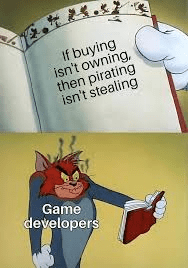
Then we progressed to digital streaming after some time and my main concern with that has to do with licensing and even region locking. If the license expires, you might find yourself unable to view the series you paid for. And if you move from one region to another, you might have to invest in a VPN to see the series you paid for. In a more perfect world, this wouldn’t be the case, but now that buying is no longer owning, piracy is no longer theft.
I do make some concessions with this. I don’t pirate modern games because of the risk of anti-piracy software. Some of the games I do pirate are from dead developers.
No matter the form media takes, it’s always important to save it for the archives. Allow future generations to be able to engage with it, even if it hasn’t aged well graphically. Ed Boon may be perpetually embarassed by Mortal Kombat: Special Forces, but it’s not like nothing was learned from that. Yesterday’s mistakes make for tomorrow’s masterpieces.
I’m still in the process of drafting up that comparison between Max Payne 3, Sleeping Dogs, and Spec Ops: The Line, but I want to preface that with a review on Spec Ops: The Line first. Now that I’m able to play it on RPCS3, I’m in a better position to give my thoughts on more than just its plot.
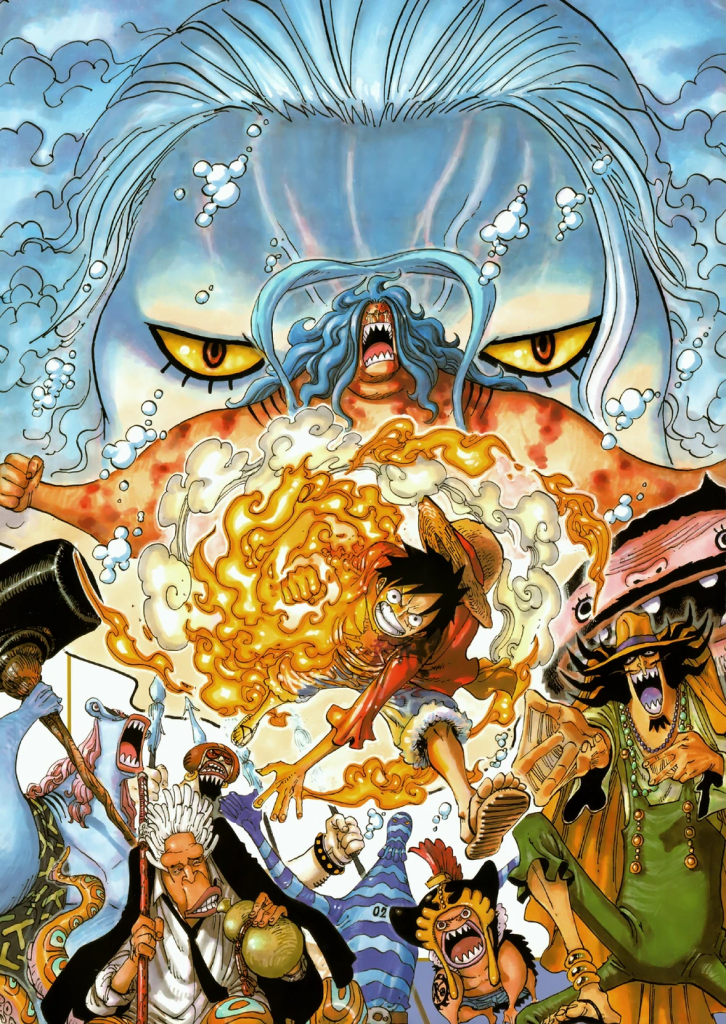
Some time last year, I made a bold declaration to give some older anime series a rewatch, namely Giant Pirate Adventure and Space Monkey Mafia. I was able to watch Dragon Ball Z’s Kai dub on the Internet Archive from start to finish, at first before leaving for the Army, and again while in. For One Piece though, I made mention of its pacing problem before which kept me from watching it as consistently at first. Following that, I looked for the One Pace recut to do away with all the half-isode runtime that was standard practice at the time, if you’ve ever watched orignal Naruto, Bleach or the original cut of Dragon Ball Z.
I’m still in the process of completing One Pace after getting back into it from the insistence of a fellow soldier whose exposure to the series is more personal. So far, I’m on the Drum Island arc. Yeah, yeah, snails pace and all that.
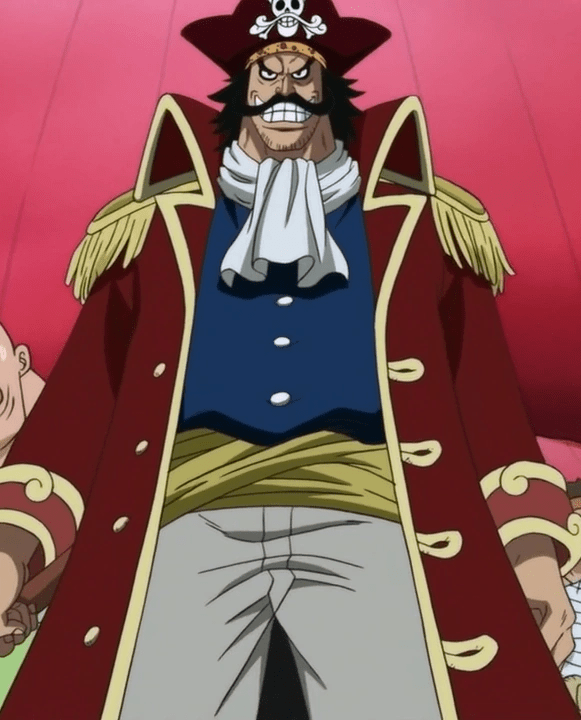
But I am rediscovering what appeals to so many about Luffy’s adventures. The core of the series is merely to search for the legendary treasure of the legendary Gol D. Roger: a posthumous character who took the location of his treasure with him to the grave.
There was something about Luffy seeing the execution platform that evoked several images and emotions. The most powerful pirate in history was caught and killed by the Marines, never revealing the location of his treasure, but sprinkling breadcrumbs for other ambitious pirates to follow. The risk of capture and execution is still present, but let’s think critically about what the pirates and the Marines means in this world.
To some of you reading, this may bring up things Hasan Piker has said about One Piece before being “pro-socialist, anti-imperialist” in design. I do see that talking point, but I personally don’t agree with it, since you can be anti-imperialist without being pro-socialist. Getting away from that, though, One Piece does have a slant against an oppressive government as seen in this clip:
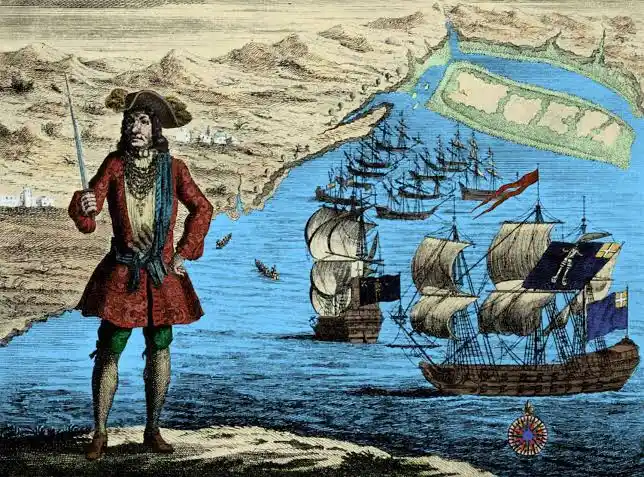
As I’ve stated, I’m not that far into the anime, but so far, looking at what Gol D. Roger did to get himself executed by the Marines is a question worth asking. This isn’t me saying he was a good guy. Going by his design, and just from what I can extrapolate from the openings, he doesn’t seem to be very different from Blackbeard or Henry Every or, one of the worst pirates in the Golden Age of Piracy, Black Bart Roberts.
Still following along, albeit, much less closely. It’s a monster series that’s still being released and even repackaged in 3-in-1 omnibus volumes after 28 years in serialization and counting. Not as massive as JoJo’s Bizarre Adventure, but it’s a contender for longest-running series next to Sazae-san and any soap opera/telenovela still on the air.
Maybe because of how long it is, I can make this a yearly thing. Perhaps by September next year, I’ll be nearly done with the Fishman Island arc.
Actually, since I talked more critically about One Piece this time, I think I can put my analysis of Dragon Ball Z in for next week.
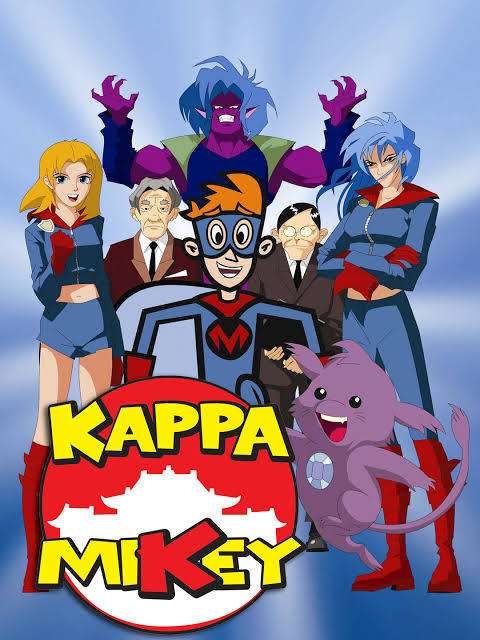
There have been numerous non-Japanese animations that have aped the art-style and, at times, tropes of the medium over the years. Sometimes a single episode is dedicated to taking the piss outta anime, other times it’s the framework of the entire show. You can pick some of your favorites, and while some of mine come from French-producedanimations that Nicktoons Network was able to air in the US, one particular show jumped on the same bandwagon and in a more crude manner than its contemporaries in Europe. Enter Kappa Mikey:
Created by Larry Schwarz and his production company Animation Collective, it was given a home on Nicktoons Network, Nickelodeon’s redhaired step-child channel, from February 25, 2006 to September 20, 2008. The premise of the show is 19-year-old Ohioan fumbles an audition to become an actor in Cleveland and gets shunted by the auditioner for his inability to act. Elsewhere, the cast and crew of a Japanese tokusatsu children’s show called LilyMu are eyeing up the wall where the kanji for “financial ruin” (財政破綻) is being written. Their boss notices and demands the director come up with a solution to fix it or they’ll be jobless in no time. After a series of stellar auditions that go nowhere, the crew resorts to a contest on a series of scratch cards, some of which blow in the wind and find themselves in the failed actor’s hands in America.
As luck would have it, it’s the winning ticket, and since becoming even a B-list celebrity in the US is a bust, it’s time to see if the Japanese populace can be won over on this struggling TV series. Sure enough, the fish out of water wins over Japanese fans and breathes new air into the show.
The format of the show is like most comedy anime and even a few western cartoons. Rather than separate the A and B subplots of the episode, they tend to blend into each other, first being introduced as separated entities until they converge roughly 3/4 or 4/5 into the episode’s run time. As for the animation style, it’s a mix of eastern and western animation styles with the American having his distinct art style separate from his Japanese and other non-American counterparts.
The cast of the Kappa Mikey series consists of LilyMu actors Michael “Mikey” Simon, Gonard, Lily, Mitsuki, and the director-producer, Guano. Above them are the literal suits, their boss, Ozu and his Yes-Man named as such. Mikey is the orange-haired, blue-shirted American who does silly and ridiculous things when not acting as the new addition to the LilyMu team. On the set of the show, he’s the star and main hero, a position that would’ve gone to his co-worker, Lily, if it wasn’t for his introduction into the show and is the main reason for her off-screen aloofness towards him.
For Lily, her character design is across between Inuyasha’s Kagome Higurashi and Sailor Moon’s Usagi Tsukino, but personality-wise she exudes a type of tsundere exhibited by Tora Dora’s Taiga Aisaka and Lucky Star’s Kagami Hiiragi. Her language may not carry the same weight after 20 years, but at the time, she was so liberal with the use of the word “spaz” that a concerned British parent may as well investigate further before muting the telly because of how dangerously close that is to the word “spastic.” Sidenote: If you’re curious why that’s a taboo word in the UK, in the Americas it carries the same connotation as the word “retarded.”
Gonard is built like an off-brand Raditz sans scouter, armor, and death by Kakarot, but has the same role as Raditz and just because he isn’t plenty dead enough, lots more screentime. His role in the LilyMu TV show is that of the villain with all the gadgets and gizmos that either inspired Heinz Doofenshmirtz in Danville to build his own or inspired him to take on a lawsuit because that Japanese show took all of his ideas!
But the Tokyo Metropolis is well outside the tri-state area and Doof’s mission is to be a doofus.
When off the show, Gonard is simply the good-natured dimwit who eats everything that is known to edible while also experimenting like that one episode of Teen Titans when Cyborg’s module malfunctioned and he saw food everywhere. Gonard is essentially Patrick Star from the ridiculous ideas, to the green shorts, even to the body type, though instead of hefty, Gonard has noticeable muscle mass. As a result of being the villain on the show, one episode hints at him being feared by those with a surface level knowledge of the show he plays in. And this is a real phenomenon where kind actors are too heavily associated with a great villain they have or currently portray. See Sir Anthony Hopkins and Hannibal Lecter for more details.
Mitsuki is the polar opposite and foil of sorts to Lily. If Lily was like Kagami from Lucky Star, Mitsuki is a bit like her sister, Tsukasa. Furthermore, Mitsuki instantly took a liking to Mikey once he landed at Haneda Airport and has an immediate crush on him at first glance, despite his general idiocy and whatnot. Sadly, it’s not very reciprocal as Mikey himself has a one-way crush on Lily. The reason given in a Season 2 episode being that she has a competitive, risky edge to her, compared to Mitsuki who could best be described as what Jotaro Kujo considers a traditional Japanese woman, or “yamato nadeshiko”. Quiet, demure, considerate, but also smart and unflinching. I don’t know if the “blue haired loser girl” trope is this old, but if it’s not then that means Mitsuki is either the progenitor or an early source of the trope. On the show, she’s fiercer and tougher than she is off screen
Guano is the purple-dyed Pikachu reject and nervous trainwreck that manages to keep the show held together with homegrown gorilla glue and 20-year-old Flex Tape, and it’s fairly obvious why he’d be that. He’s the director and Ozu and Yes-Man breathing down his neck put him on edge, especially when things go diagonally. On the show, he lives up to the rip-off Pikachu by merely repeating his name with each action or attack he pulls, especially with the large gemstone in his chest. Although the gemstone functions and shoots lasers, its reserved for other emergencies both on the set and on the Kappa Mikey show as a whole, merely having the same function as the gem or laser eyes on Frylock’s back in Aqua Teen Hunger Force.
For Ozu and Yes-man, Ozu is the man who can feed or starve his actors, pay or withhold pay, pull the plug or keep life support on. Long before Benson the gumball machine on Regular Show would threaten to fire Mordecai and Rigby, Ozu did it several years prior and normally did it to Mikey, but sometimes he extended it to the rest of the cast if the screw up was that egregious. Opposite the iron footprint on the floor, he’s consistently shown to butter up Mikey and consider him the prized piece that makes the show whole. As an inseparable addition to the show, keeping Mikey in good graces is his main priority. He doesn’t always do this to him out of genuine kindness, but it hints at one aspect of Japanese and, by extension, East Asian face culture. Maintaining an image of grace and harmony keeps the tabloids and journos from slandering you every minute. As a contrast, the employees are societally obligated to also make the boss and the company look at its absolute best 100 percent of the time. And this is all a satire as the reality on the ground still exposes even East Asian companies to scandals and controversies of their own. Nintendo, Konami, most Korean chaebols (itself a different snake pit), Alibaba; being based in East Asia doesn’t save these kind of companies from human error, negligence, or even malice.
Finally, there’s Yes-man who’s more of a caricature than an actual character. He’s a parodical gag of an existing character in other media and at times in real life. A cheerleader in a suit for Ozu himself, he’s not exactly meant to have any development whatsoever, merely an exaggerated side-character to point and laugh at. A jester of sorts.
This video by Jordan Fringe explains the production side of things:
Channel: Jordan Fringe
For two seasons, Kappa Mikey ran largely unimpeded by any outside forces. It was pitched by Schwarz as an “American-style anime series” and considering what I’ve grown up on, it’s been preceded and surpassed many times depending on what you consider an American cartoon whose art-style is heavily influenced by Japanimation. The Boondocks and Avatar: The Last Airbender for instance but neither are very well-loved in Japan in particular or East Asia very widely. The former was made by Aaron McGruder as a reflection of black American culture which will get lost in translation, literally, when exported abroad and the latter does its best with its source material of wider Asian folklore and mythology, but without the core tenets of Buddhist, Taoist, or Confucian beliefs, the face culture, or the courtship, it would at best be limited to a cult following outside of the west.
I haven’t even the slightest idea if this show has popularity in the country it takes the piss out of. On the one hand, it’s theme song is sung by a J-Rock band called Beat Crusaders, but on the other hand, Nickelodeon’s practice of hiding mid-tier TV series on Nicktoons Network and praying no one would notice when iCarly and Drake and Josh and SpongeBob were on the air left it to its fate of obscurity, at least for those who couldn’t afford cable.
Damn, I miss this logo…
Now that’s pretty much the show and its lifespan, how did it end? Or more to the point, why did it end? It had the energy to get at least another season or two. Perhaps even a made-for-TV movie. In that same video by Jordan Fringe, no clear reason was given except for speculation over budget constraints and a low viewership. Considering it was on an affiliate channel at the time and not likely not a major priority for the likes of Nick and Viacom, I can’t help but feel some sabotage was at play and as biased as it may sound to say about a studio over one show, there were a lot of shows that got shunted and only found wider success of sorts on the smaller channel. Some of the shows being legacy series that were given a modern reboot, though the results were far more mixed.
For a rather primitive though mid-2000s charmed show about an American becoming a Japanese audience darling, the entire series can be found on the Internet Archive for your viewing pleasure. Not to mention one I’m watching out of order since the callbacks to earlier episodes are few and far between.
Speak, penis, for you have the floor… and the p[nyan]y.
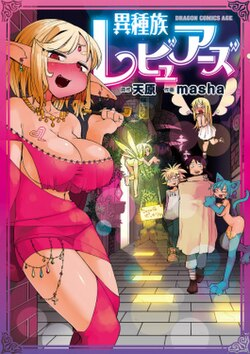
My reluctant review of F[crash]k You! Actually F[horn]ks You Into the Harem ended with a mention of another series that was pushing the envelope, so much so that it took Funimation three episodes to realize it might as well have been hentai. And looking at it’s content, I really wanna go back in time to Funimation’s as of yet unclaimed office, stare the big boss/manager/whatever in the face and say, “With a premise like this, what were you expecting? Raunchier KonoSuba?”
No matter the intention, learning about this led to a Streisand effect in the animanga community, whereby, those who weren’t watching it yet, checked it out to see why Funimation would choose not to continue airing a current anime series. Once they saw why, it made sense.
If I was in charge of a streaming service, I’d put this behind an older teen or 18+ section. Simply change your user settings to be able to view hentai and ecchi freely and voila! Enjoy your culture, ladies and gentlemen.
The premise is simple: a fantasy world where every monster girl is available and about 90% of them work in a legalized sex industry, Stunk the human and his bestie Zel the elf embark on an adventure to f[crumble]k every monster girl they can find. Shortly after their quest begins, they meet an angel named Crimvael who has both sets of genitalia, but defaults male to lessen the confusion when being addressed by others. And wouldn’t you have it, the little angel is the most well-endowed of the three. It’s like Team Four Star’s take on Krillin, smacking him around all throughout the Abridged Dragon Ball run until finally giving him the golden ticket in Android 18.
A typical episode begins with the trio heading to a brothel under the ownership of a type of monster girl, they ask for the services and perhaps through power of Post Nut Enlightenment, their reviews of the girls read like Dante Alighieri’s Divine Comedy at times. Aiding your prostate apparently brings out the poet when describing how well (or poorly) these girls use their bodies to help the reviewer reach a satisfying climax. Not the first or last time such an observation would be made, as PornHub comments and the Zenless Zone Zero community can attest.
D[clank]ks out, tits out, spurt like a faucet and cover in baby batter, rate us on Yelp, hope to clean your fluids off our floors again… but would you believe me if there was more than an absurd number of fetishes in this series? The culture of individual monster girls plays a significant role to some degree. For instance, minotaur/cow-girls have the biggest breasts and their speech patterns are cattle-influenced; the succubi are so extremely depraved that they can f[pop!]k you to death; fairy girls are predictably Tinker Bell-sized, so good look trying something remotely kinky; elf girls are all GILFs by default due their aging process compared to human beings, etc. etc. etc.
This also leads to a few dark moments in the series. Away from the brothels where penises get played with like any other toy, sometimes venues make a strip show of things. Venturing into even more inappropriate territory sheds light on a certain episode involving egg-laying. And that’s the most I’ll reveal about that episode. Another moment involves them making a sex doll in the shape of their bird girl friend and tavern waitstaff, Meidri. After the men take their turns, word gets around and let’s just say arms and legs don’t bend in three places for a reason.
Yeah, it begins on a funny note and evolves into WTF?! over the course of its twelve episodes. The manga is apparently still going on and it has two light novels. Competitive Harem Rapist still outmatches it by it’s sheer gratuitous sex and sexual assault scenes (everyone sins in that goddamn anime!!), but an animanga based around sex work and the various girls that can be found in the Red Light district… outclassed or not, I’d give it a watch. I saw it through to the end in 2021, and it’s worth a rewatch, especially for the opening:
Channel: mediafactory
Knowing what ecchi is now, it’s nice to see the ones that helped push the envelope, no matter how they age.
Don’t let the title of this post deceive you, reader. This isn’t a sharp left turn into chronicling French President Emmanuel Macron’s married life, nor is it me announcing that I contacted an old teacher and got down on one knee for a short-lived matrimony. Instead, we’re diving back into my community college days where I watched an ecchi anime known only as Why the Hell Are You Here, Teacher!?
Known in Japanese as Nande Koko ni Sensei ga!?, the series is about a quartet of female high school teachers of different personalities and subjects who develop romantic feelings for their students. A slice of forbidden fruit that can’t work due to a power dynamic that this anime seems to have a lot of fun with and far from the only series animated or not to try this. Most other anime go the “incest = wincest” route of forbidden fruit. From what I’ve seen, there’s a bit of overlap between teacher-student romance and office worker romance, appearance-wise as both tend to feature smartly dressed love interests with professional presentations, but under scrutiny these “professionals” aren’t immune to clumsy f[clicks]k-ups from time to time.
What I remember from Sexy Teacher, Bombshell Wife was that the four teachers all behaved different in front of their respective classes compared to their love interests. Language teacher Kana Kojima was dubbed “Kojima the Demon” because she’s known to be demanding in class, but in front of her love interest, Ichiro Sato, she can behave just like Hinata Hyuga, albeit less creepy. Art teacher Mayu Matsukaze is a busty shortstack with a demure personality, affectionately nicknamed “Lady Matsukaze” for her kind personality. Cupid’s Arrow also makes a fool of her when she’s next to her love interest, the towering gentle giant Rin Suzuki who “helped” her deliver important paperwork. For romantic backstories, this is right up there with a comedic plot of being helped by the protagonist and the “help” in question was just a dropped pencil, or a notice of an untied shoe. Well, it’s simple…
Gym teacher Hikari Hazakura is a trademark, tanned, big tittied tomboy, the kind who’d encourage a novice swimmer to improve by starting at the deep end and giving an after action report, hoping to see her students become Michael Phelps. One student, Takashi Takahashi, is the one she gets real touchy-feely with. They later develop romantic feelings with each other. Finally, there’s the school nurse: a Kuudere named Rei Ayanami Chizuru Tachibana, who’s been dubbed “Absolute Zero,” and the nickname isn’t lost on her in the series. She wants to be closer to the students, notably one Ko Tanaka, and over the course of their arc, they grow so close they lose their virginities together in a love hotel. Going further than Kojima who was engaged to Sato at the end, a bonus chapter reveals that they started a family together. Obligatory, “silent in the streets, freaky in the sheets.”
Ecchi funtimes all around, but with most anime these days merely advertising the manga without guaranteeing a longer run, the anime covered four arcs spread across a miserable 12 episodes. We’re far and away from the likes of Azumanga Daioh and few are expecting a Yotsuba-to! adaptation anytime soon, but AzuDaioh was able to stretch and progress a four-panel manga over the course of 26 episodes in 2002.
But expanding on a romcom could ruin it, you’d argue and if The Way of the Househusband on Netflix is an indicator, then yes, putting effort where it isn’t needed and ignoring it where it is needed would’ve netted us a piss-poor adaptation of Yakuza Yesterday, Husbando Today. So why don’t I look back at Why Does My Teacher Want My Heart? as fondly as others? Largely because of its length.
I gave it some slack yonks ago when I watched it because it did make me laugh with the short time I had with it and also the horniness at the time was on autopilot. My braincells fired up at the end when all the teachers and love interests got together toward the end to announce that some of them were dating, engaged, married, or expecting.
And then it just ended. I didn’t know at precisely at the time, but with only 12 episodes, it felt like more could’ve done even with just the Fab Four and their Lovely Maidens. The source material even lists more than just the characters that got to the anime. So, is this a recommendation in favor of the series or not?
Again, the braincells were out to lunch while the horniness took command, but looking back it’s nothing more serious than a “haha look at this fanservice” gradually evolving into “you may now kiss the bride.” My post history is the evidence needed when I say that I’ve seen this s[bells]t before. It’s also evidence that I know what I like and while I’m not gonna say it wasn’t up my alley, if I’m gonna watch ecchi/fanservice/hentai, a plot can go a long way. Came for the booba, stayed for the story gambit and this may be part of the pipeline into erotic fiction, or it may have been a bit earlier than that… Hmmm…
I cannot say with certainty. For my recommendation, you’re more than welcome to see I Found My Wife in High School, and She Wasn’t a Fellow Classmate up to the last episode and continue in the manga to see what didn’t make the cut, it has 12 volumes and the anime was followed up with an OVA I haven’t seen in 2019. But for something somewhat more grounded, feel free to pair it with 2002’s Please Teacher!
Off topic, I simultaneously adore this old art style and can’t disassociate it from some hentai I’ve seen or read recently.
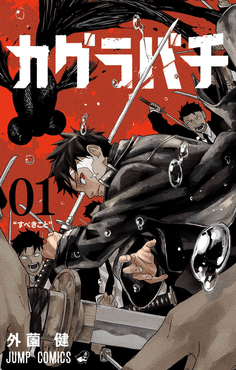
We return once again to a currently serializing manga slated for an anime adaptation in the near future. The manga in question debuted in September 2023 and was licensed for western serialization by the likes of Viz Media: Kagurabachi.
Created by up-and-coming mangaka Takeru Hokazono, it follows the story of a young man on quest for vengeance after his swordsmith father is murdered by evil sorcerers and his seven Enchanted Blades are stolen from their home in the mountains. Not exactly the most unique story, all things considered, but I’d be the last to say it’s aping something along the lines of Demon Slayer as far as inspiration goes. Young boy lives with family in the woods has life flipped-turned upside down when screeching plot device orphans him. Though, that’s the point of divergence for Magical Sword Journey as Kagurabachi merely gifts the protagonist with dead parent instead of demon imouto. Also, the protagonist is older than Gonpachiro Kamaboko being 18 instead of 14, so Hokazono can put more wild s[tenchu!]t in the plot, and boy does he.
The protagonist of Let’s Go Get My Dad’s Enchanted Swords is Chihiro Rokuhira, made noticeable by an all-black outfit consisting of a blazer under an overcoat, one of the few remaining katanas at the hip that wasn’t stolen by the antagonists, and a giant scar on the left side of his face.
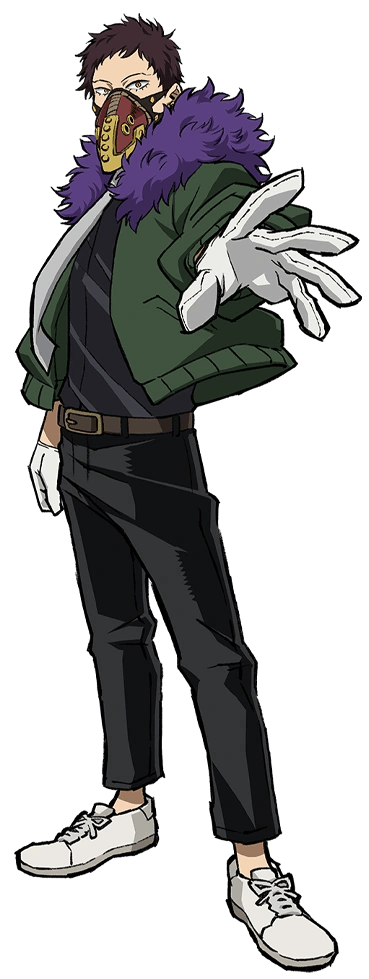
The manga alone gives me the impression that the goal wasn’t about originality but instead just writing an epic action tale of vengeance because Hokazono’s a grown man and no one besides the legal system can tell him what to do. The antagonist faction is a group of sorcerers known as the Hishaku, a small but formidable force in bed with other factions like the Sazanami Clan of sorcerers and the Korogumi Yakuza group, the latter of these felt typical with the Yakuza becoming more involved in supernatural phenomena in Japanese media as of late. Pick your favorite example, mine has to be MHA’s Shie Hassaikai.
Like many villain groups, the combined might of the Hishaku, Korogumi, and Sazanami is primarily based on ignorance, but the main connecting element extends beyond the magical blades of Chihiro’s father, Kunishige. The main plot device is a little girl named Char Kyonagi, the last in a line of regenerators. No matter who nabs her, they have the key to immortality in their hands, and the traditional Shonen trope is to protect her whilst searching for the swords and making sashimi out of Kunishige’s killers, which does happen, though Chihiro’s general attitude in the manga is so cavalier that I can’t help but imagine most anti-heroes from the late 1990s and early 2000s. The unsmiling, scarred visage of this edgy 18-year-old is a contrast to the similarly themed BLACK TORCH and its cocky, but confident 17-year-old animal lover and learning that Hokazono took inspiration from the likes of John Wick and Quentin Tarantino films shows that this was a deliberate choice.
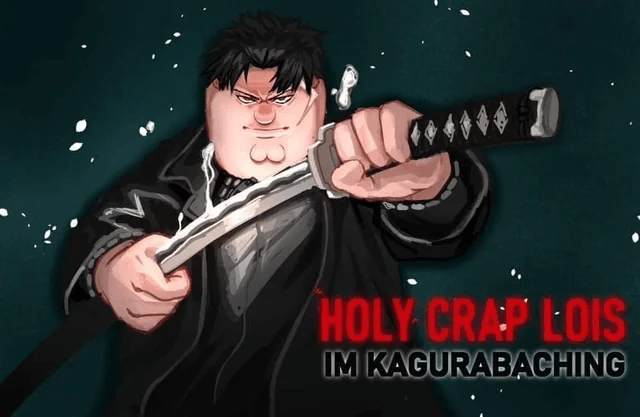
Cross cultural pollination strikes once again, first through Disney Company’s namesake meeting with Astro Boy’s creator, then through Hirohiko Araki’s manliest 1980s playlist and now with this green mangaka enjoying western cinema. Part of a cycle that is guaranteed to keep on turning like a dharma wheel. All of what I’ve been writing so may make it sound like I’m taking the piss out of the manga and thanks to memes like the one below, you could get the wrong impression that the manga is far from good.
However, the meme tourism has done a bang up job boosting its numbers globally. Sitting at a sexy 2.2 million copies in circulation and growing, it isn’t every day that memes bring something to popularity. The “ah… eto, bleh!” meme from 1995’s You’re Under Arrest has found a new life online, and 2019’s Joker made even more famous the set of stairs in the Bronx, to the chagrin of many natives, myself included at the time. With the internet and animanga going hand in hand over 30 years strong, something like this is almost guaranteed to happen again in the future.
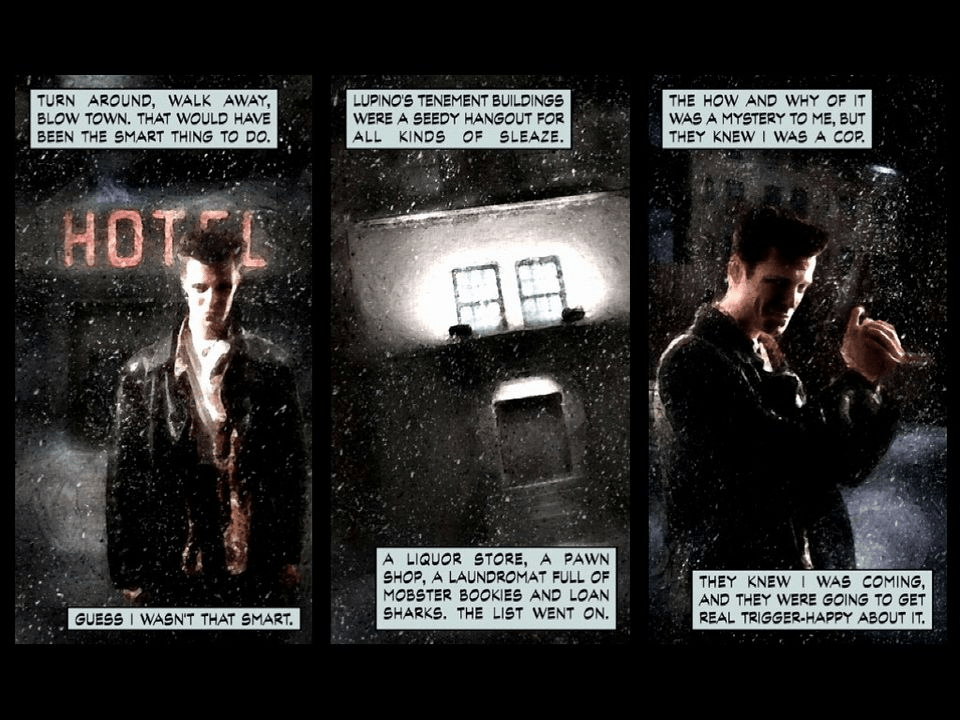
The manga is currently at over 80 chapters and I’ve only read six so far. For my assessment, although there’s nothing concrete about an anime adaptation, it’s put together like it needs one. The manga panels of Demon Slayer only go so far but with Ufotable flexing their tax evasion with artful animation, and CloverWorks doing the impossible by overloading the color palettes on The Elusive Samurai in nearly every scene, the animators’ fingers will look like nubs with dried blood as they bring this dark fantasy manga to life. As it stands, the studio tasked with conducting the anime will be CyGamesPictures, responsible for bringing us Umamusume, Princess Connect! Re:Dive, and Zombieland Saga. With how dark and broody the manga comes off as, it makes me think of all the graphic novel panels from Max Payne and the overall vibes I’ve gotten from Silent Hill 2 clips.
At least the themes match. Max was able to lie to himself for two-and-a-half games before it came crashing down like an absinthe hangover in the final installment where he found himself pulling a look that would’ve gotten him mistaken for a South Florida kingpin in 1986. Looking it over now, we haven’t really had a lot of dark animanga that’s been able to stand the test of time. The closest examples that come to mind for me are Berserk 1997, Elfen Lied, and Akame ga Kill, three critical series where only a chosen few have plot armor, but it’s treated less like a luck stat and more like a discipline that slips away as easily as muscle memory.
As much as I love the influx of Kawaii Sugoi characters being as dangerous as cotton balls, I’ve gone on record saying that variety is the slice of life and I’d like to see more dark series get their own. I’m fully aware they exist, but with so much animanga defaulting to lightheartedness as of late, few other series get the attention they need. It also doesn’t help that Seinen is overlooked in favor of Shonen usually for not having heart-pumping, corpse-reviving, zombie-apocalypse-beginning action scenes, and Seinen and Josei are where more of the mature storylines exist.
I know better than to say darker series are few in number, and while I’d rather the tourists not barge in and ruin it with their holier-than-thou moralitybabble, it would help some if there was a bit more marketing. It helped yonks ago on Crunchyroll/VRV when they were advertising Golden Kamuy and I think it can help here. Thankfully, the memes have helped propel both it and its mangaka to fame, so perhaps in the future we’ll get even more dark manga to join the rest of the lineup getting anime adaptations these days. I don’t even care if the endings are happy or not so long as they’re fulfilling reads. The expectation for Kagurabachi to reach new heights and have a lasting legacy is clearly there, and I wanna see where it goes in the next five years or so.
Doesn’t get any simpler than the title, eh? I’ve gotta confess first that I was so busy all week preparing for Army things to last the next few months (not a deployment or rotation, that would last way longer) that I didn’t even think to look at my topics list until last night and even then I was so tired I didn’t have much prepared until this morning save for this opener. Now that I’m well-rested and caffeinated, I’m going to spend this post talking about my journey into hentai, some of my favorite artists, and some updates; one related to work which may or may not have an impact on future blog posts, and one that covers an event in the city where I’m currently stationed.
Now, what is hentai? If you’ve been around the internet or can call yourself a veteran weeb, you might have instantly thought of an image involving an anime girl, tentacles, or in some cases, both. By which I mean a tentacle girl.
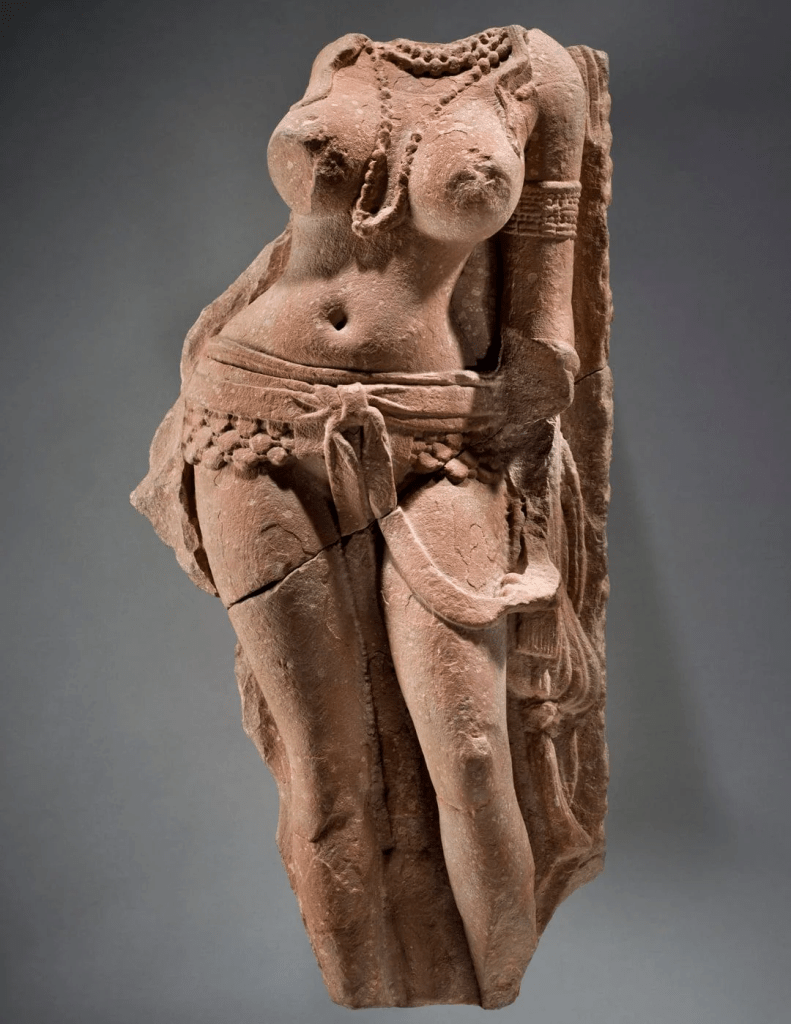
And there’s a reason the image of tentacles of have stuck with the genre for decades. For as long as art has been a thing, humanity has been sculpting, painting, and carving images of exaggerated and unrealistic human or humanoid bodies, to include depictions of deities. Travel the world and tell me about all the fertility statues you can find. In recent memory, I’ve stumbled upon a photo of this Indian Yakshini statue.
Shame the head’s missing, but simply what’s left is enough inspiration for countless artists, even today. Observe:
In the context of hentai and overall Japanese pornographic works (live and drawn), the term “hentai” originally carried to connotations denoting strange or inexplicable behavior, not necessarily erotic or sexual in nature. Over time, the term has been so associated with animated porn that search engines preface that the results are censored or otherwise NSFW. For erotic art in Japan, early sources of erotic works of art can be traced all the way back to the Heian period. Theoretically, a daimyo who had some control of the Taira or Minamoto clans at the time likely had a stash of erotic art. Maybe a samurai clan had a treasure trove up until the Meiji Restoration or priceless art where everyone’s bits are out. Who knows?
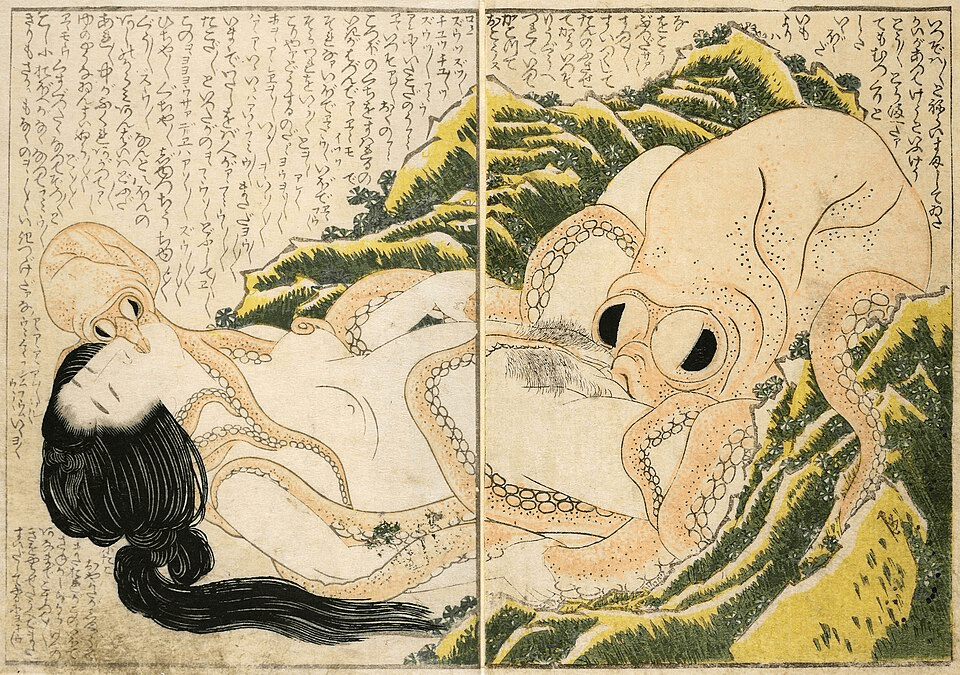
One of the most famous erotic artists in history was one Katsushika Hokusai and his painting “The Dream of the Fisherman’s Wife.”
An early depiction of a woman being sexually pleasured by countless appendages and a fixture that will grace the genre centuries later.
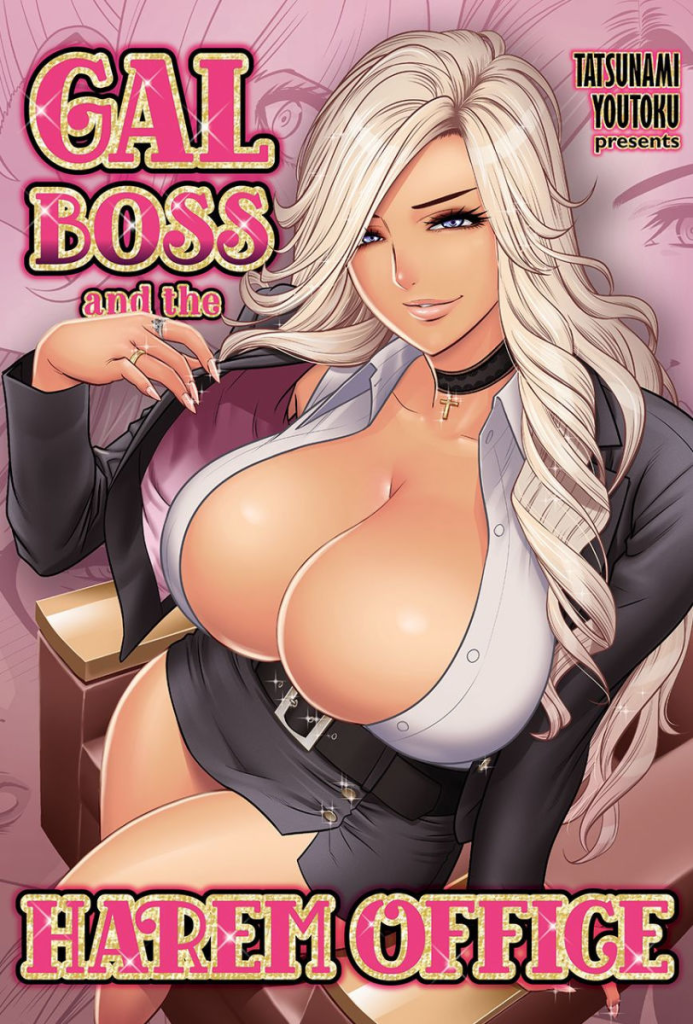
From these humble beginnings, come manga. The associated wikipedia page clarifies that what you think of as manga today meant something completely different during the Tokugawa period. I’m not talking about animanga series set in the Edo period (a completely different topic that I have no problem exploring in the future), manga at this time wasn’t made up of structured stories like a serialization or even a yonkoma. The pictures were unrelated and predictably more difficult to make, but if it can be put into a book format and follow a kind of plot with boobs, d[foghorn]ks, and p[tiger]y playing some kind of part in it (and not just in a playfully teasing manner) then by all accounts it’s an erotic manga. These days, we know them as doujinshi, the Japanese term for a self-published work that not a lot of people realize is itself a broad term not necessarily exclusive to hentai and not always limited to physical releases. Name your favorite artist on Twitter or Pixiv or Bilibili, they may or may not have dabbled in putting plot to artwork. Here’s a sneak-peek of one of my favorites:
Source: Tatsunami Youtoku
After manga came adaptations into the form of animation/anime. Classic examples to some of you veterans may include Bible Black or Sailor and the 7 Ballz or for all you Eva fans reading this, the enigmatic Human Salvation Project (the latter of these I found out about yesterday morning). All classics, but none of them are the oldest examples of animated hentai/porn, neither in Japan or elsewhere. Saberspark has an example of one such animation from the late 1920s. His video is below with more details.
Channel: Saperspark
I stand corrected, a link to his video is here with more details. The wikipedia page for the short film is also linked. Six-and-a-half minutes and not too out of place for the Betty Boop-era.
The true earliest form of animated hentai was an Osamu Tezuka directed film adaptation of the 18th-century Middle Eastern folktale 1001 Arabian Nights. There’s two films with the same name released a decade apart in different countries. The American produced 1001 Arabian Nights released in 1959, and the Japanese produced One Thousand and One Nights released in 1969. I probably shouldn’t be surprised that the father of Astro Boy is behind this one. When your contributions kick a genre or medium into overdrive you have to go multiple different places. Still fascinating to see Tezuka’s name on such a thing.
Not as famous as the 1972 raunchy animated film Fritz the Cat, but preceding that film by about three years puts more points in that basket to me.
The more accurate adaptation of the Middle Eastern story isn’t the only one with Tezuka’s name on it as he also helped direct a raunchy retelling of Cleopatra’s life. After that erotic and hentai-like adaptations lay dormant and sparsely touched until the mid-1980s. Considering their laws addressing such material is from the late Meiji era when lines on maps were the most important thing in the world, in Japan’s case all hands on deck would be needed for such endeavors and leaving erotica uncensored was grounds for imprisonment. These days, it still is, which is why so many doujins and even live-action porn, known in Japan as adult videos, are censored even though the intended demographic is 18+… I won’t lie, I was a horny teen once.
I’m not a lawyer and I can’t argue in favor of either censoring or uncensoring Japanese porn and hentai, but what I do know is that the restrictions in place have inspired many geniuses ever since. An uncensored penis is how the artist gets slapped on theirs with a giant dildo bat not seen since Saints Row, but similarly shaped phalluses are not, which is all an artist needs to simulate pentrative intercourse or self-pleasure without the addition of censor bars, pixels, or more recently the lightsaber effect. The earliest of phallic replacements for the penis was tentacles which brings me back to Hokusai’s famous painting. We began with the likes of an octopus or other cephalopod caressing a naked woman’s body and have not looked back ever since.
Nowadays, references call back regularly to these early depictions of hentai online with comments showing tentacles in any such manner being some amalgamation of “I’ve seen enough hentai to know how this ends.” The genre wasn’t even done evolving. Where else could you find erotic anime-style scenes? Video games. Specifically, visual novels.
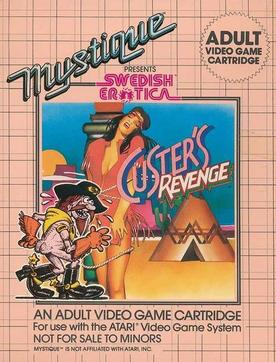
You might be familiar with early attempts at adult video games and the continuing legacy that I’ve found myself a part of recently, and that’s just speaking of the west where earlier depictions have fallen into controversy even in the wild times of the 1970s and ’80s. The time where the sexual revolution helped boost many names in porn and the video game industry hadn’t found its legs yet. The most infamous examples of adult-themed video games with any such action come in the form of the controversial Custer’s Revenge and X-Man, the latter of which is notorious for the pixely depiction of a Civil War and Indian Wars general George Armstrong Custer taking advantage of a bound, nude Amerindian woman.
Crazy that it took until Mortal Kombat and Night Trap to create the ESRB. Considering this s[bricks]t exists, it should’ve happened sooner.
From woodblock ukiyo-e print to manga to moving frames to playable frames, having dumped all that lore on the history of anime pornography on you, before I list my favorites, I must make another confession. My history with hentai is simultaneously a blindspot and a poorly-explored endeavor. Some of my recommendations come from the appropriate subreddits, but I’ve made a habit of saving so many posts and links that it’d take longer to find and paste the links into a browser than it would to view it all. As for what I have seen, Reddit’s not the only place I’ve seen what can be classed as hentai. Pixiv, Danbooru, Gelbooru, and even Twitter allow users to view and/or upload porn in some manner, though Pixiv and Twitter require age verification, Twitter especially recently.
My introduction to hentai actually came in the form of ecchi series like High School DxD and Shimoneta (both of which I’ve written about already). Shimoneta had a message about censorship hidden in between all the boobage and panty shots while DxD didn’t exactly have that same message and was merely about angels and devils with a side of T ‘n A, which sounds like the worst possible way to describe the Neon Genesis Evangelion franchise.
Credit: u/thot_patrol117, s/EvangelionMemes
Try not to look for deeper meaning amongst the Eva memes. It’s not the deep. But the franchise definitely is, if you’re willing to take Hideaki Anno at face value.
I believe I’ve said it before that DxD and Shimoseka were gateways to pornographic animanga and I hold onto that dearly. They got the ball rolling by proudly showing Rias’ tits and boldly displaying the consequences of a horny (read: predatory in this context) awakening and thus led me to discover more hentai series. I’ve seen many and read many but my personal favorites have to be as follows:
I Want to do Sexy Things with my Tall Younger Cousin
Seika Jogakuin Koutoubu Konin Sao Ojisan; and
Twin Milf
Admittedly something of a one-shot with an incest angle, the central themes of this plot boil down to a tall girl fetish. The fantasy lies in a shorter male scaling a taller female like summiting Mt. Everest on the journey to her Mt. Everests. See what I did there? It also does away with the cutesy embarassed trope. The two main leads are hardly what I’d call shy, in fact, they both confidently know what they want with hints in the doujin alluding to a history of having done this type of thing. What really reels me in is the tomboy trope of the female lead. Cute and playful, she reminds me of Tomo Aizawa from Tomo-chan is a Girl in some ways. Hardly anything deeper than surface level though so those who wanted some drama may have to look elsewhere.
Created by Kurosu Gatari, it translates to English as Seika Girls’ Academy Official Sanctioned Gigolo. This one does have a plot to go with the mountains and valleys. A man with a friend in debt agrees to share some of that debt to help the first guy get back on his feet, this means he has to repay the remaining debt and to do so he takes a job as a gigolo for an all girls’ school. The test involving sex with the dean of the school, before passing and being allowed to exercise this blessing on a select number of students. The operative logic behind this move is hands-on stress relief seeing as sex is a great way to relieve stress and burn calories.
Each of the girls is unique in their own right, one of them having deep-seated daddy issues that don’t arise until she reluctantly uses these gigolo services herself where she gradually evolves from bitch of the school to stern hand. Getting d[monkeys]ked down by the school man-whore softens her up so much that it leads to a personality change. From punishing a tiny infraction to brushing it off like a levelheaded adult, I haven’t crossed that bridge yet but with so many stories corroborating this, a little bit of bumping uglies does seem to go a long way. For the male lead, he’s drawn like an ugly bastard, but is merely just a middle-aged gentleman facing an unusual problem. Debt he can handle, but feeling like a hooker to pay some of it off over time was the last thing he was expecting. What makes his situation more tricky is that he’s married with a daughter no older than the girls he’s getting paid to sexually pleasure, so life at home gets extra awkward when his side job is to mingle with girls like this to make some extra cash. So if you want more drama than the last entry’s “tall girl fantasy,” have at it.
Created by a master of MILF hentai Tatsunami Youtoku, Twin Milf is exactly as advertised on the tin, identical twin sisters with voluptuous body types. A college student and avid soccer player/fan is neighbors with a thick, busty woman. In one such incident, water leaks down into his apartment where she comes down personally to apologize, only for him to accidentally grope her breasts and realize she put something on very quickly (i.e. no bra). From there, he spills the beans to his best bro who’s stuck with a tsundere girlfriend who doesn’t suffer perverts. Main MC presumably runs into his MILFy neighbor again only she’s more perverted than originally introduced and invites him to f[cannonball]k her in her own car.
It isn’t until after this he realizes she’s a twin and the rest of the series takes off. Like Kurosu Gatari, Tatsunami has a type and it’s a woman so thick the clapping of her ass cheeks alerts all of Western Australia and part of Jakarta.
These aren’t exhaustive recommendations as I have more from the same artists and then some so consider this another gateway that I’ll leave open for you to enter.
Now for those updates: without revealing too much, starting on June 16 and continuing until October, my unit will be travelling periodically back and forth between Fort Bliss in El Paso and a missile range in New Mexico. Thankfully, the first week will only be about three days long since Juneteenth is a federal holiday that I have off, so I can get the next topic out in time. We won’t be there during the weekends to my understanding so until later this year the posts will see a Saturday or Sunday release at the latest. If not, then delays are to be expected.
For the event happing in El Paso, I’m currently writing this whilst I have a ticket to an anime convention in El Paso lasting June 14 and 15 until the evening hours. I don’t exactly plan to write about my experiences in detail as each one is different, but it will be my first one in a different city, having attended one in Augusta during AIT last June. If I do, it’ll be more spur of the moment than regularly scheduled.
Out-of-schedule topics haven’t been a thing on this blog in over two months since I wrote about BLACK TORCH rising from the grave. The next topic will cover an anime I was really on the fence about watching, so take this one as a calm before the storm, so to speak. And thankfully one I’d been looking forward to for years.
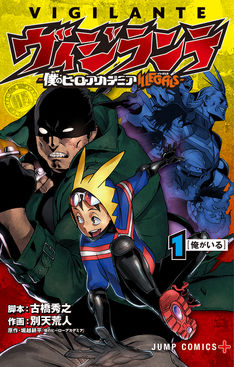
I’ve written about this manga before in the past, so here’s the cliffnotes version: college student Koichi Haimawari doesn’t fit the bill to be an officially licensed hero and so moonlights as Nice Guy in his neighborhood, as a sort of friendly neighborhood Spider-Man sans the tragic death of a popular brand of rice. One night, he and wannabe popstar idol, Pop-Step get jumped by a roving band of misfits and saved by this universe’s answer to Batman with a dash of Frank Castle sprinkled in.
Keep in mind, that that’s how the manga begins. The rest of the story covers a pivotal plot detail in the main storyline involving the Shie Hassaikai Yakuza’s use of an experimental Quirk-altering drug called Trigger, used to boost an individual’s Quirk to often disastrous results. The main tell that someone’s been using it is through their tongues, leaving them stained black from overuse. The main structure of Vigilantes is that the Pro-Heroes often can’t or (according to Stain) won’t stop smaller slice-of-life crimes as they’re expected to, so vigilantes tend to pick up the slack though under the cloak of darkness because vigilantism is illegal.
The hero system in this universe is used to denote what makes a villain, not a hero. Strict boundaries are put on heroes to stay within the law and legal limits, but villains and vigilantes aren’t bound by the same obligation. Even though a vigilante can cover a hero’s blindspots, not all of them subscribe to the same heroic ethos that binds most ordinary Pros so the legal system sees them as villains too, even though vigilantism birthed this same system. This is explained by one of Koichi’s senpai, Makoto Tsukauchi.
I’d highlight these as spoilers, but they’re more an explanation of the hero system as portrayed in all MHA media, adding nuance to a picture portrayed as black and white. Obligatory, honorable thieves, untrustworthy law enforcement; we’ve seen it all before, but to apply to superheroes tilts the picture significantly. The anime debuted last month and as of writing this is currently at eight episodes.
I cannot say for certain how many episodes or seasons it will have, but considering the cultural phenomenon MHA has become as a franchise in the last decade, it’s more than just a welcome addition to the franchise as a whole. It also fills in a few missing plot points from the original as a prequel set two years before Midoriya and Bakugo step off for UA High.
Going off the first episode, the anime opening follows the art style of the manga sticking closer to its western comic inspiration than the original does. Observe below:
Channel: TOHO Animation チャンネル
Studio BONES doesn’t miss a beat. Establishing shots of all the characters present, stylistic choices and art direction to fit them all with their appropriate themes – Koichi is shown using his Slide and Glide Quirk with the animation beginning with All Might and ending with Knuckleduster to show he’s gonna be different than his idol; Pop-Step dancing first with silhouettes of herself before they’re supplanted with fans who take heavy inspiration from Cyclops and Wolverine especially; and Knucklduster appropriately left an enigma for an upcoming reveal that manga readers already know. I made a promise not to spoil anything until we get there, so my lips are sealed and I will not ruin the surprise. The internet’s gonna lose it, I swear on it.
It sets up the anime well and I once again have to come to terms with simuldub. Growing up, most anime would take years to dub in English, let alone a different language from Japanese. Nowadays, thanks to social media, budding voice actors can contact dubbing studios, showcase their talents and through some other methods the public won’t see, they may be considered for certain roles. Voice actors have more insight into how this works, so don’t look to me for gospel in this aspect. I’m not a voice actor.
For what it’s worth though, the English VAs get the tone of voice really well. Kudos to their director. Confession: I was imagining the voices of Koichi, Pop, and Knuckleduster to be some variation of Todd Haberkorn, Kari Wahlgren, and Christopher Sabat respectively, though that may just be my own fantasy. Natsu Dragneel, Haruko Haruhara, and Piccolo walk into a bar… well, that’s just a fanfic now, but the manga gave a lot of leeway to imagine their voices until they were confirmed. Instead of legacy, the industry is giving rise to new faces. They don’t exactly have any household recognition yet like the aforementioned, but the grind of voice acting should put them on the map for future projects.
Credit: u/LolyHumter, r/TrashTaste
Characters this time are more varied and complex being on the older side. In the case of Koichi, with him being in college as opposed to high school, he’s shown to be much less insecure of his Quirk than Deku was. Granted, he wasn’t Quirkless at the outset, but we see the differences in a protagonist with a recently acquired Quirk and a protagonist who was born with one. Also being older makes him somewhat more humble in my eyes. Deku still has admirable goals, but I recall in the first episode how foolish several people thought he was wanting to be a Quirkless hero, until All Might saw him in action. I like underdog stories as much as the next guy, but there’s something refreshing about a character who doesn’t think about their powers all that much, merely using it as another tool in their arsenal.
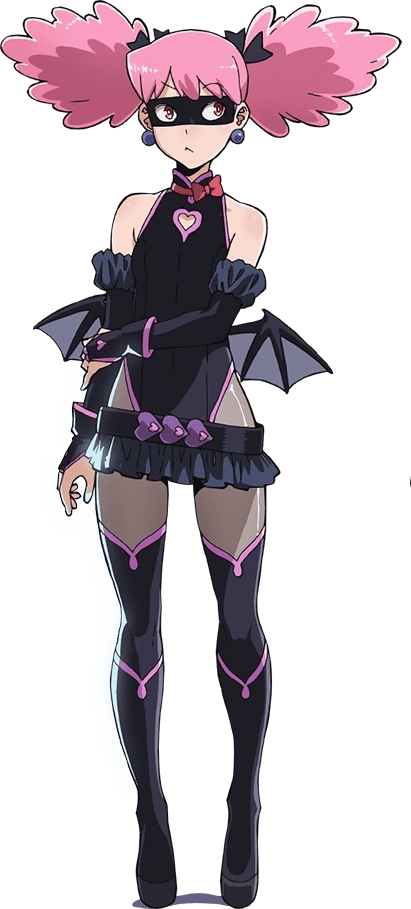
Pop-Step is written completely differently than Uraraka. Not wanting to be a hero for the sake of her family or thinking that much about heroics on the whole. She already uses her Quirk for impromptu concerts so it’d be a bit ridiculous of her to try, although in the Vigilantes storyline, she technically is one by proxy. As the youngest one, she’s in high school being hinted at being around 16 or 17 years old (despite what some online have been saying, especially concerning her choice of costume).
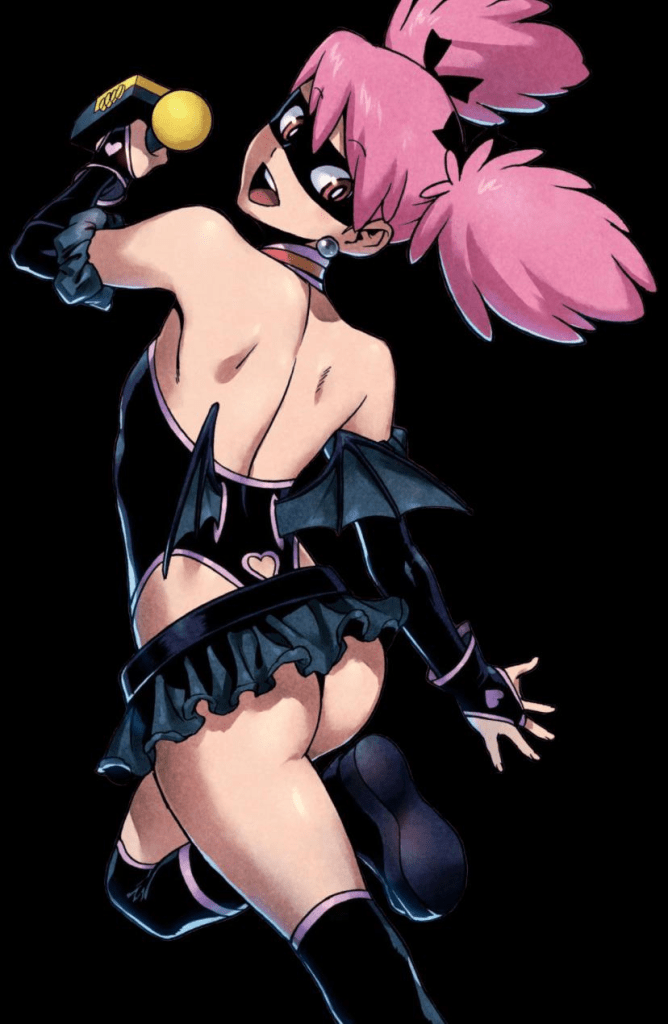
Those tights are an anime addition. Beneath that in the manga it’s all skin. The manga art shows more funny enough.
Lore-wise, this was her choice, but character design-wise, sometimes you gotta look at the writers and wonder…
But why get anal (no pun intended) about character designs? Manga readers know that Midnight used to look like this:
This costume design caused lawmakers to rewrite acceptable costume laws. If it wasn’t for that, a good portion of her career would be even more scandalous than it probably already is.
Kazuho Haneyama is instead very tsundere-coded. She’ll lend a helping hand and use her online influence to implore her loyal fans to keep a keen eye for Trigger users and encourage them to stay away from it. I’ve talked before briefly about my thoughts on East Asian idol culture, but if there’s an argument in favor of it, it can positively influence followers of a certain idol to raise awareness where it’s necessary. So Kazuho means well, but the tsuntsun comes out a lot when in close proximity to Koichi who unfortunately falls for a lot of the same traps that most would in his position when next to a tsundere. But she at least didn’t become the same type of Shonen female the genre’s been stuck with for decades.
I’m not as hostile to her as others have been, but Part I left a lot to be desired.
Finally, there’s Knuckleduster whose backstory is so heavy it needs to be shipped on a transpacific cargo ship. So keeping in line with where the anime is, he’s a dark gray character who lives up to the Batman comparisons even more than he lets on. Not to mention his first encounter with Shota Aizawa – better known as Erasure Hero: Eraserhead – shows that even pure adrenaline and energy can leave even the Pros tapping out for a breath of air. Coupled with the rest of his screen time and that brief encounter with just Aizawa reveals a few things about them. 1. Next to his first encounter with Koichi and Soga Kugisaki, you get more clues that he’s done this type of thing before, most likely in a past life; 2. The Pros shouldn’t rely so much on their Quirks for work, because they’ll eventually meet a villain or worse who’ll give them a run for their money (see the Paranormal Liberation War arc for more details); 3. Without endorsing his methods, Stain has a point about the Pros. Save for All Might, far too many heroes never know what they’re up against until they meet a Sisyphean endeavor, like the War arc in the main series.
On a final note, this post should be even more persuasion to check out the series in whatever medium you see fit. It’s still airing on Crunchyroll as I write this, so if you have the means to do so, check out it there. Or if you can’t or won’t for personal reasons (I won’t judge, and I can’t considering what I’ve been talking about for the better part of two-and-a-half years), you already know what I’m gonna say.
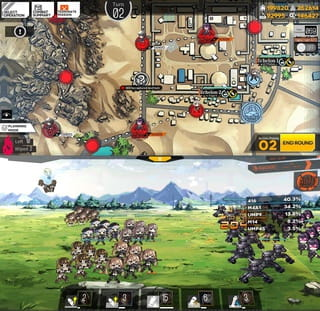
At this point in time, I’ve got to propose a chicken and egg question about the origin of cute girls in dystopian fiction in East Asia. Whatever the case, there’s enough in the world to inspire such a setting for a mobile game. The one I’m referring to being Girls’ Frontline
Developed by MICA Team in 2016 in mainland China before spreading its wings overseas, Girls’ Frontline (Chinese name: 少女前线) is set in a distant future where the widespread integration of androids is commonplace in numerous walks of life from services to retail to even the military, more so than what we currently have in the world’s most developed militaries, so those drones have a human-looking face for once.
A devastating global war breaks out (probably even worse than nightmare scenarios of a WWIII) and these androids in the shape of cute girls are repurposed en masse to make up for the military shortfall. They’re designed and programmed in a way to effectively and efficiently handle specific firearms and their classifications, whatever those classifications may be. Outsiders, welcome to the wacky world of North American gun laws (because Canada does weird s[bang!]t with their guns too). For instance an android, called a T-Doll, that’s specifically designed for the M16A2 will only operate the M16A2. Modifications can be made to get them to adopt other rifles of a similar platform, though this requires some amount of recalibration beyond what can be expected for the military use of automatons.
Whatever you’ve conceptualized as an android, it’s a different beast being depicted here. They’re machines to the core, yes, but they’re not exactly soulless or anything. It’s not like there are military formations of androids with Android 16’s personality. That’d make for a boring game.
They’re programmed with their own personalities. Some are charming, others are sweet, a third category is more varied with the typical animanga tropes like -dere types, and the rest you can fill in the blanks of this Mad Lib if you’d like. I wonder if the different depictions of robots in the east and west can be counted as a culture clash. With only a few exceptions, most western stories view robots as a menace compared to East Asia where they fit right in with society. As for the plot, well, it’s got the foundation of the wider lore of the Terminator franchise, in that advanced AI goes rogue and after a catastrophe reduces the human population to near-extinction by the early 2060s.
The offending AI in question is called Sangvis Ferri (SF) and starts terrorizing what’s left of mankind and setting up human-free areas. The unaffected androids are contracted by a private military company called Griffin & Kryuger (G&K) to stop the reign of terror, reduce SF’s numbers and destroy them. So this belongs in the rare category where androids are more complicated than originally presented.
Looking back, both sides can be viewed for the general use of androids for military purposes and it can be seen as a distinction without a difference, which it is on the surface. Digging into the nuance reveals what G&K does differently with their own T-Dolls: saving humanity. Thus morphing from distinction to false dichotomy.
Now, my memories with the game were during the Spring and Summer of 2022 and a bit in 2023 before interest died off. It was during the time when I was trying to join the Army and the recruiter I was directed to at the time kept dragging his heels. Or I wasn’t being proactive — either way, I invite someone to tell me why there’s a two-year wait for Glossary Non-Prior Service types. But I digress.
The best way to describe the gameplay is a hybrid of “deploy unit to achieve task” and “move and reposition unit to impact effectiveness.” The same system I recall being used in Assassin’s Creed: Black Flag where Edward can deploy ships to specific parts of the world to lessen the danger levels and make use of established trading ports, like a real pirate.
The gacha-ness of the games comes from spending points to unlock more T-Dolls which can be upgraded individually or used to upgrade existing dolls. For instance, if I have one who uses a MAC-10 and get another MAC-10 doll, I can keep on building the older one and eventually build the second, newer one. Or I can cannibalize the newer one for parts for the first one. There’s not exactly a wrong way to go about this provided it’s the same type of doll being used for the upgrade. An MP-40 doll doesn’t have parts compatible with a Mosin-Nagant doll and etc.
Sounds like a neat experience, right? Well, remember when I wrote about You’re Under Arrest/Taiho Shichauzo? The Buddy Cop anime series from the mid-1990s and it’s revitalization as a meme? Specifically this one:
Channe: Vinicius Costa
Meme tourism is a hit or miss for me. It can introduce people to a series that may not have the same marketing as something else more popular or it can backfire and drive people away or bring in the wrong types of people. JoJo fans get a bad rap for being obnoxious if you ever scroll down the comments of a song or artist referenced in the series.
The way I found out about Girls’ Frontline was through a different video. Moonshine Animations’ stop-motion toy review of a figure of one of the characters: UMP9.
Channel: MOONSHINE ANIMATIONS
In the video itself, Moonshine contacted a voice actor on Twitter to voice the character in Japanese as a gag. Having dabbled in stop-motion before, I was pulled in by the presentation and after doing more research on the game downloaded it myself. I was doing rather well at the time making it to the second chapter, but ultimately the game bent me over and painted my ass creamy white. It defeated me and made me feel like a whore wearing thick tooth floss while doing so. Gacha games have a drawback for repetitive gameplay and grinding for those who can’t fork over cash to advance. (Still more honest than EA’s bulls[ka-ching]t lootboxes and Konami’s pachinko machines, I guess.) And Girls’ Frontline is no different.
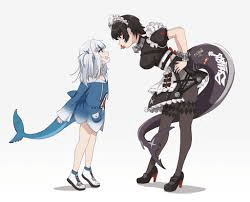
Multiple attempts to get past a level had me repeatedly grinding earlier levels to get more tokens to progress and upgrade, though doing so meant waiting literally minutes to hours to get anywhere. I don’t remember if it had a system to use real money, but it was at a time where I also wasn’t making any money of any kind, so putting a few bucks on the game at the time wasn’t an option for me. These days, the most I’ve done was drop a few bucks on monochromes for Zenless Zone Zero because I have a MIGHTY NEED to get the shark maid.
No! Miss Ellen! You can’t give up now! You’ve got to have pride in yourself!!
— Vegeta Corin Wickes
Perhaps I’m showing my bias or whatever but MICA Team’s first installment in this franchise left a boot print in my ass and I haven’t looked back. Until I learned that it had an anime adaptation. In the case of media franchises Girls’ Frontline has a leg up on, say, Touhou Project or Idolmaster in terms of foreign accessibility, and my experiences are unique. Should you choose to engage in the mobile game, I’d better hope you have a better strategy than simply press buttons and whatnot. As for the anime, there’s better series and there’s worse series. Make of that what you will.

























 Opinions on Entertainment