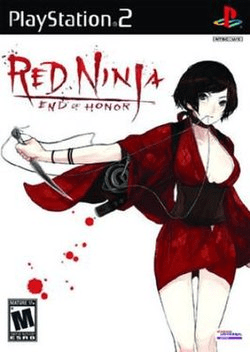
Months ago, I added Red Ninja: End of Honor to my list of topics to cover in the New Year and I had done so at a time when the game had frustrated me greatly. I briefly touched upon it in this post about what I found wrong with it, why I hadn’t advanced as far as I could, etc., etc. I was playing enough of it earlier to get a handle of it and return to form of sorts and this and the next series of posts are going to be subjective, but on reflection, I don’t think I was going to approach it as fairly as I had hoped.
Now Red Ninja is a game with flaws, but watching some video essays and reviews of the game, it has a cult following, so with that in mind, here’s the short version: it needed better controls and a better camera.
Which is something I don’t want to say about the game because it has a lot going for it. Stealth mechanics that make use of traditional stealth and historical context. I do need to clarify something I said in that post linked above. I mentioned that kunoichi didn’t exist. I retract that statement. They were real, but pop culture elevated their status a lot. This was due to sparse record-keeping, mythic statuses of actual female warriors, or onna-musha/bugeisha, and historian debate. There’s more records of onna-musha than of kunoichi. So you might happen upon a historical, if loose, retelling of Tomoe Gozen than of Mochizuki Chiyome. For that matter, The Elusive Samurai has one such onna-musha, the tomboyish Mochizuki Ayako as a retainer to that dastardly light-footed regent.
For all intents and purposes, Red Ninja takes from the kunoichi trope and while a history buff, from what I’ve seen so far in my gameplay, Crimson Kunoichi does use mythical status to elevate its protagonist Kurenai. It also mythologizes samurai and ninja clan politics of the Sengoku period. Before the Tokugawa clan won out for the next quarter-millennia, various samurai clans competed with one another, and this game centers around the rivalry between the Takeda and Oda clans.
The starting premise is that Kurenai’s father, Ryo, was killed by the Black Lizard clan (Kurotokage? 黒蜥蜴氏) and Kurenai and the rest of her family was slaughtered en masse until noblewoman Mochizuki Chizome found her near death, and recruited her into a body of kunoichi to serve the Takeda clan.
Don’t worry, she was a real person.
Records about Mochizuki survive or we wouldn’t know about her, but her historicity is of significant historian debate. As a Takeda clan noblewoman, she may have been hidden to protect her from assassination by Takeda clan enemies and subsequently mythologized, which is largely why historians struggle to frame her correctly in the framing of Sengoku era politicking. Not to mention, the two most famous ninja clans, Iga and Koga, may have only been two of several. Again, espionage has historically been light on records for pragmatic reasons.
Even if the Takeda clan did use ninja for espionage, the records are missing or were destroyed by them or their enemies. So the majority of the game is a revenge tale that I haven’t finished and might not finish this year. C’est la vie.
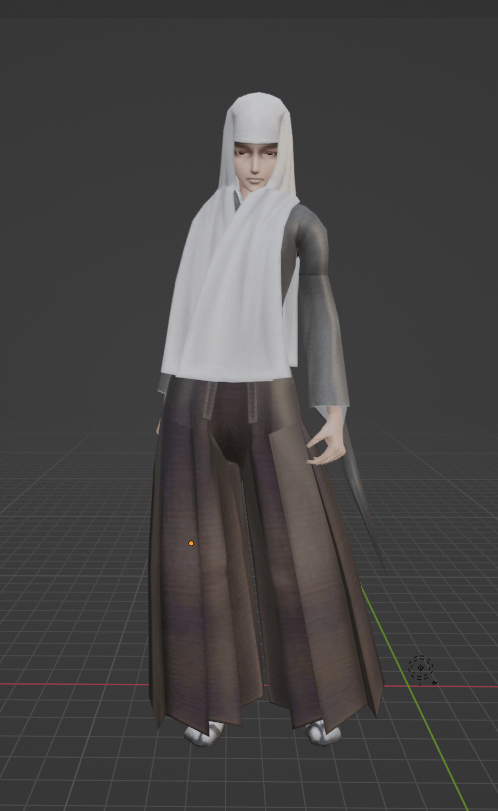
Wait, there’s a picture of Mochizuki Chiyome.
As she appears in the game. Pop media has given her different appearances, but this may be closer to who she was in real life.
So, Tiberius, what’s your issue with the game? The mechanics. The controls require a level of surgical precision that mean the difference between a successful heart surgery and a medical malpractice lawsuit. Slight analog stick movements work for games where the protagonist has a clear walking animation. When I do it in classic God of War or The Suffering, Kratos and Torque do walk. Here, it seems to be more than a little gimmicky and the reliance on specific pressure points makes the difference between a fumble and a successful assassination. Button presses aren’t the least responsive, but it can be difficult if you try to perform a certain move and it doesn’t register cleanly. Maybe it’s my controller acting up, but for f[sword clash]k’s sake, let me hang a motherf[AAAH!]ker from a beam!
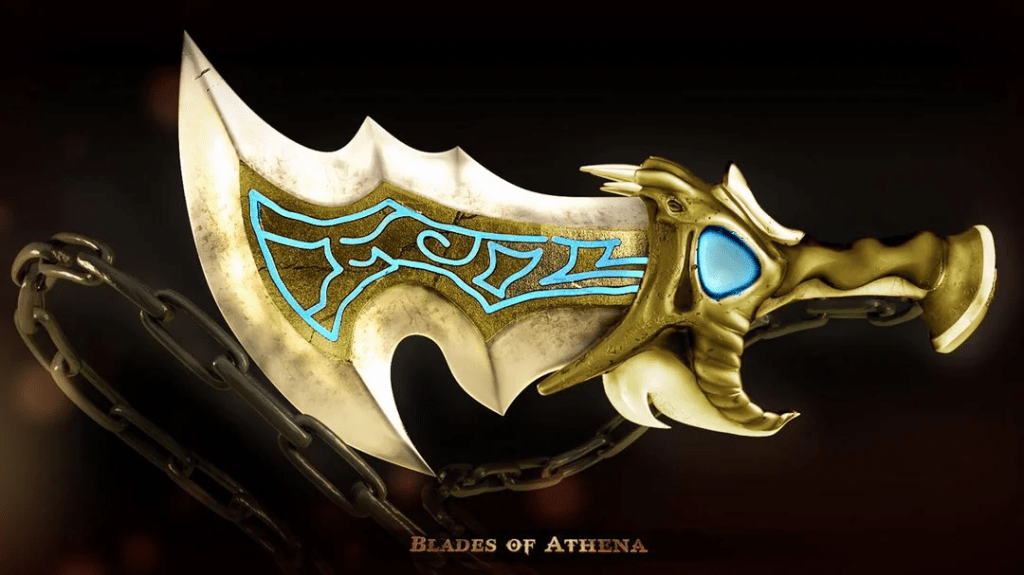
Platforming again relies on precision and I would’ve preferred the God of War approach, not convenient ropes like in the first game, but using the Blades of Chaos/Athena/Exile/Spartan Rage to swing from specific points. Those blades are already ugly enough to leave grisly marks, so make them function as a grappling hook reinforces Kratos’ approach to traversal.
I started with God of War II, so I’m biased when I say that these were better.
Not for nothing, this game arouses me about Japanese history that few media properties do. Exemplified by my piece on Running from the Ashikaga among others, I don’t think pre-Sengoku Japan gets a lot of exposure in the west. On the one hand, this helps with keeping outside opportunists from mischaracterizing the era with their manure; but on the other hand, serious western historians and history buffs from seeing the era and viewing it with the contextual clarity that they deserve.
Is this a recommendation? A dissuasion? Well… it’s more like a collection of what I think could’ve helped the game mechanically. Kurenai’s main arsenal doesn’t hurt her. In fact, her story fits neatly into the myths that surround Mochizuki Chiyome and the Takeda clan, so countless other stories of kunoichi can work with this frame. Kurenai would be one of several.
Following up on that, the historical use of female spies is an interesting point. Say a female spy used her feminine charms on male guards to gain sensitive information and Kurenai does have this as her advantage, as did pirates Mary Read and Anne Bonny when they appeared in Assassin’s Creed IV.
I knew something was off when “James Kidd” was noticeably more babyfaced than his hairier contemporaries.
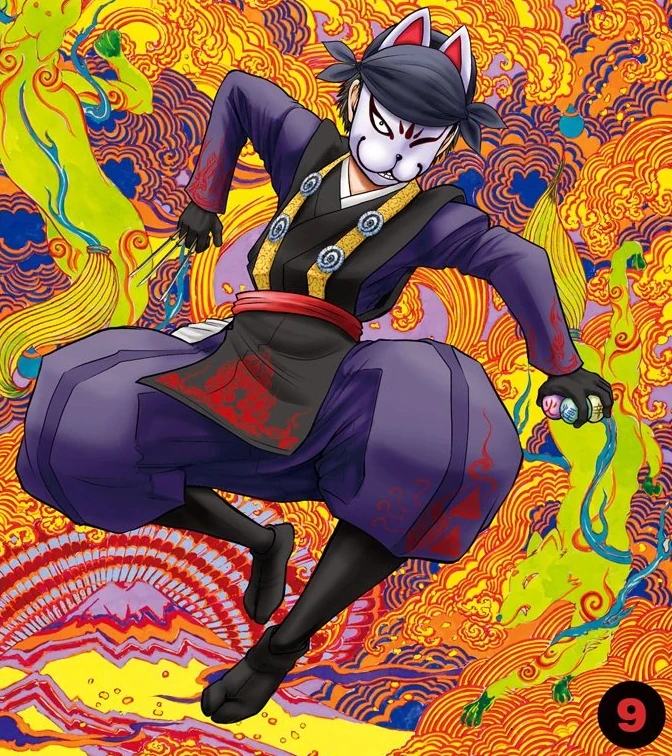
Like the aforementioned pirates of the early 18th century, luring a horny man to his demise and stealing his secrets is a time-honored tradition. Though historically spies wouldn’t be inserted James Bond-style; that would be too much effort for very little payoff. Realistically, Kurenai or another kunoichi type would already be aligned with Takeda clan enemies by way of association. A plot would be to use them to get closer to the Oda clan leadership, steal as much information as they can and then use that against them. It may be goofy as hell as a Shonen series, but Femboy Shikken makes good use of stealth in the manga by way of known local miscreant Kazama Genba.
Kurenai and Kazama Genba are both portrayed as masters of stealth by way of the tactics they use. Kurenai is designed to wear a skimpy kimono that exposes her ass and threatens to unseat her tits, thereby weaponizing her feminine sex appeal to male guards. Kazama has a mask that can be molded to imitate the likeness of central figures. In one instance, he posed as Ogasawara Sadamune to help Tokiyuki take the imperial decree from his headquarters. And it worked! Until Ichikawa Sukefusa and his big ass Mickey Mouse ears heard them faffing about. Kurenai’s lure and attack method works when the game’s mechanics don’t trip over itself.
Overall, if it had a modern remake of some kind like what Max Payne is set to have this year, then I’ll play that from start to finish uninterrupted when I’m able to. If you have the patience, see your local emulator for more details.
My notes say the next topic of discussion is gonna be Lucky Star.
Then after that I’ll get back to Red Ninja mainly to put it alongside the likes of Sekiro and God of War 2005.
Toy company extraordinaire brought down by hemorrhaging money
Last week’s gap was a “woke up and chose violence” moment. This time, for something back on track: Midway!
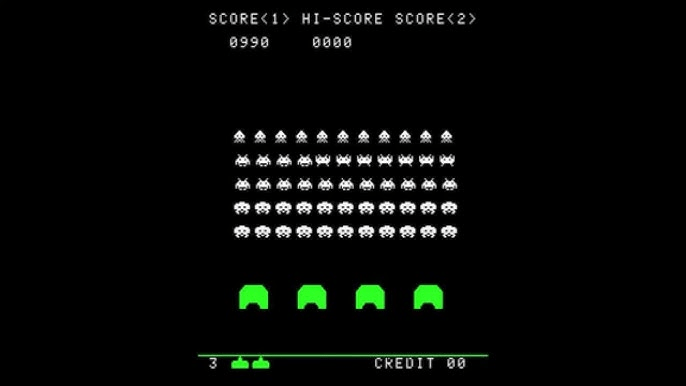
This blog has talked about individual Midway Games, but hasn’t brushed up on the developer-publisher itself. Best to round out the picture by looking at the factory’s skeleton then so we can learn how the Mortal Kombat developer went under in 2010. Midway’s origins are certainly a story worth telling, they may have gotten famous in the 1980s and ‘90s in the arcades, but they began in 1958 as any other toy company in Chicagoland. Pinball, party games, amusement park distribution, cheap carney games made for ripping off unsuspecting children. I swear that baseball hit the bottles! Gimme my prize, old man!! The eventual shift to video games by the late ‘70s and beyond is consistent then with their philosophy. Bought by Bally in 1969, they expanded into arcades, distributing known titles and developing their own, one of their earliest being Space Invaders.
Beep, beep, beep, blast!
For North American distribution, these guys made Pac-Man and Ms. Pac-Man a household name. It was a gilded age for arcades and also quite short-lived. Keep in mind, that the gaming industry back then was mostly carried by Pong. There was only one game, but 20 billion different devices running that game in arcades, on early consoles like the Atari 2600 and the Magnavox Odyssey, on toasters, on walls, on lamps, on tree trunks—market oversaturation brutally killed the gaming industry back then, hurt worse by the release of admittedly experimental, but otherwise manure-level “games” on later consoles like the 2600 or the NES. The most catastrophic being that of E.T.
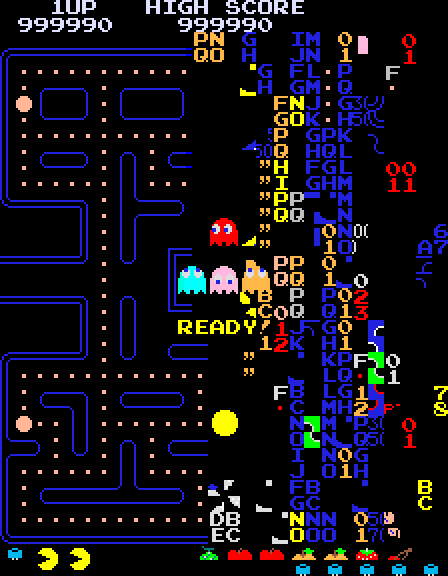
An early tie-in for the movie, the window was extremely small and putting together digitized Legos in six weeks could work in theory, but those who were there saw the end result of applying it in practice and apply it they could not. The difference between bugs and glitches then and now is that today’s bugs and glitches are prettier, cost 18 terabytes of data, and need to be connected to the internet despite being singleplayer. So where was Midway in the middle of all that? Sitting undisturbed in the arcades where a couple of quarters could get you to Pac-Man level 256 where things got funky.
Now it’s time to get funky!
By the late 1980s, Midway was a solid pinball and arcade cabinet manufacturer-distributor with association Williams Electronics and Bally Manufacturing. These combined forces worked together crafting machines, entertainment machines for you, me and every ‘90s kids’ favorite wallaby. But what would they have as their most famous video game series? Rampage? Paper Boy? Galaxian? Nay, it was:
I won’t look down on you if you weren’t there for this era, I barely caught the tail end of it with Ermac whooping my ass at Mach s[souls]t. And if there’s a difference between those who saw Tetris get released and those who simply grew up with its colossal number of ports (right here), then I represent a portion of those who grew up playing the home release of Mortal Kombat trying to play the arcade games. It didn’t translate as well as I’d hoped, but I wasn’t raised on quitting juice, I was breastfed!
Mortal Kombat was originally meant to challenge Street Fighter II. Developed by four dudes in eight months, the framework in place and one that Midway let Ed Boon and John Tobias use until 1995 was digitized sprites of neon-colored actors imitating ‘70s Bruce Lee and Jackie Chan flicks. Funny enough, a bunch of these mo-capped actors are retired martial artists and such. They even tried to grab the Muscles from Brussels to star in the game, but depending on the source he either couldn’t do the motion capture, outright rejected the offer in favor of a competitor, or his agency did. Not that Boon Tobias was salty per se, but it’s been said that Johnny Cage is a direct parody of the Belgium’s Most Muscular Waffle.
Buns and thighs
Meanwhile, Jean-Claude Van Damme I Screwed Up went on to act in the 1994 Street Fighter live-action movie whose only claim to acclaim should be the monumental work put in by Raul Julia as M. Bison, going out with a bang later that year from stomach cancer. And Street Fighter took a reputational hit while MK3 released the year after that and broke into Hollywood with campy action movie goodness. Suffice it to say, the ‘90s were great for Midway…
…now where did it go wrong? Right around the late ‘90s, actually. Reaching its zenith, around the time of the first movie and MK3, consoles didn’t stop releasing. Disgruntled Nintendo personnel crafted the PlayStation in a wizard’s lair (but forgot to clean the cauldron after use, rude), Nintendo themselves continued to make hanafuda cards and SNES, Sega was crapping out console after console and finding some way to put their blue mascot on them all, the Neo-Geo, and the 3DO admittedly came and went earlier, but also helped to shift the market console-wards with arcades becoming more and more cumbersome to travel to and from.
Yeah, I only ever went to arcades when I was in summer day camp and we traveled by rented school bus to go there. Great memories, but I probably wouldn’t wanna handle the logistics of that either.
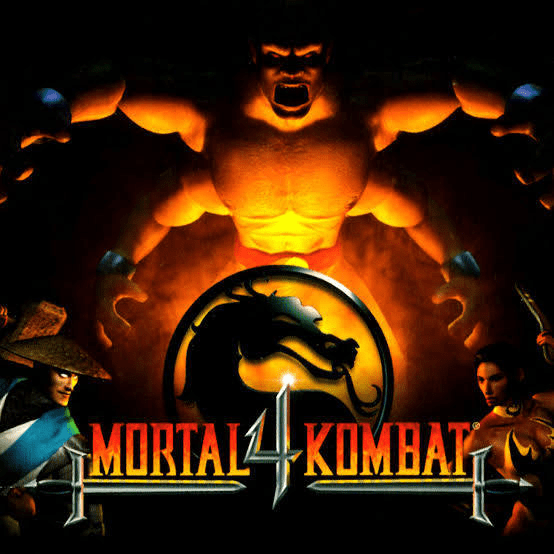
Now, Mortal Kombat would see a myriad of ports to different consoles, some of which I listed here over the years, and the last main title being 1997’s MK4 reaching arcade cabinets. General reception at the time and now disregard it as a high school or college project. Those are my words, by the way. The reception was probably not that harsh…
They weren’t harsh enough
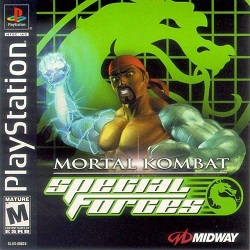
A professional developer’s first go at 3D games was seen as a huge step back into a shallow grave with Grand Theft Auto, Fallout, and Abe’s Odyssey serving as the pallbearers, and the implementation of 3D like this into a violent video game just elevated critics and news reporters even more. Even Ed Boon acknowledging its missteps didn’t do much to drive the attention away, but fortunately, they had enough cash to work on further future projects. MK: Mythologies – Sub-Zero released the same year to similarly ugly criticism, and no one has ever played Mortal Kombat: Special Forces because it doesn’t exist. It doesn’t exist. It doesn’t exist.
F[Scorpion’s spear]K!
Saying it thrice doesn’t make it true, dammit! Nevertheless, the innocent quarters sent to slaughter in the arcade era made for further funding and with the writing on the wall in blood, Midway’s arcade division was officially shuttered by 2001. The next year, Mortal Kombat returned to force with a new graphics engine and an expansive mythology beyond the old comic books of the 1990s. Mortal Kombat: Deadly Alliance fixed what the other three games broke over its back and if you believe the 3D era of Mortal Kombat was MK4 and not Deadly Alliance, then this was a time when Mortal Kombat got weird and for better or worse, these games took the spotlight away from some other titles that blessed the 2000s. Highlighting just a few gems and coals really quick in no particular order, there was Area 51, Rampage as said before, The Suffering and its sequel Ties That Bind, NFL Blitz, L.A. Rush, SpyHunter and several others for distribution in North America, developed by smaller devs in association with Bandai Namco and Square Enix. Yeah, yeah, this kind of s[footstomp]t happens all the time. Still does.
But you probably didn’t notice some of those other titles with Mortal Kombat’s strange mechanics taking the spotlight. For me, Chess, Puzzle, and Motor Kombat were nifty little additions. The series didn’t have to take itself seriously and in many ways it didn’t. Hell, one of the composers made a cameo in MKII!
TOASTY!
But it’s not like this was enough to save Midway in the new millennium. Their machines stopped robbing us of our hard found quarters sandwiched between couch cushions and underneath desks and chairs, and Midway carried themselves in stride belting out game after game after North American release of obscure JRPG after game, but MK was the company’s face. Not even a collaboration with John Woo and Inspector Tequila for 2007’s Stranglehold could help, then again market trends change faster than people change their underwear so for all the trouble I went through to blaze through that Hong Kong-infused Max Payne clone may seem like a waste, but waste not, want not is my motto and I try what I can to live it to varying degrees of success.
Midway’s twin peaks were before the turn of the millennium and ever since the arcade cabinets lost relevance, the money’s run empty ever since with Mortal Kombat’s 3D era eating up what was left. If you pay close attention to the mechanics and art direction from Deadly Alliance to Deception to Shaolin Monks to Armageddon, you can pinpoint and examine what part of the games had the most attention and what parts had the least. Deadly Alliance put a lot into the engine, but was basically a 3D arcade game. Deception did more with its Konquest mode and Chess and Puzzle Kombat modes but even these weren’t spared the cutting room floor in some areas. Konquest mode segments are either rushed, scrapped, or unfinished and it looks like they had a bunch of ideas that would never be explored.
Shaolin Monks revamped the free roaming Konquest idea, took out the RPG-esque side questing and gave us a Streets of Rage/Final Fight-like beat ‘em up! Hell yeah, after about 12 or 13 years. Probably could’ve done this sooner, but the biggest sacrifice suffered by this game is its plot. Mortal Kombat’s framing has almost always been some flavor of otherworldly warriors fight to the death in bloodsport in a mystical tournament with the wider plot being an evil conqueror tries to take over the earth but the tournament is implemented as the ultimate legal arbitration before the conqueror reminds us of his evil.
Channel: Leah Stevens
But Shaolin Monks is largely only good if you ignore the writing or try to rewrite it like Dragon Ball. Guess I have to perform a séance then to get inside Toriyama’s head. And also learn Japanese well enough to talk to him. And yet it funnily enough had more on its plate than Armageddon that suffered the most from rushed and unfinished development. The two-year wait time for games might have worked well enough at the time, but without enough time to let the dough rise, the bread gets lumpy, the booty gets soggy, and it doesn’t even clap audibly when I—
Sorry, we’re still talking about video games, right?
This one gave us Motor Kombat and by far the largest cast of any Mortal Kombat game to begin with, resurrecting some maligned characters and reintroducing those who fell by the wayside over the course of Midway’s last puffs of air, but to do that a bunch of other stuff needed to get the boot. Fighting styles were chopped to two (boo), but Motor Kombat was introduced (yay); Konquest mode has a bunch of cut content (boo), but it makes for an interesting plot that ties everything together concerning Blaze (yay); and the cardinal sin this game commits is that unique fatalities are not here at all.
(⊙ˍ⊙)
Yeah, put in the different unique button inputs and roughly every character can do exactly the same f[bone crunch]ing fatality as everyone else. You can call it Copy Paste Mortal Kombat and in some spaces that’s exactly what it is. Mortal Kombat without fatalities is like Doom without the unique kills. Wait a minute
Quantity over quality aside, you really see here how much the budget was beginning to dry up with stages and select plot points dropping off into the Pit without a designated recovery team to wade through the spikes and get them back. Then again, one can argue Deception also had this problem and I’ll put my hat in the ring and say that Shaolin Monks was also a victim of this in some capacity. For Deception, it picked up a bunch of characters that were supposed to debut in Deadly Alliance, but the roster was filled up so Dairou had to wait for Deception to finish.
As for Deception’s Konquest mode, a side plot concerning the Wu Shi Academy’s selection for a champion to represent Earthrealm happens if you talk to specific elderly masters. The most Shujinko walks away with is a White Lotus Society headband since his quest, while it took priority, didn’t have a deadline, so Shujinko nearly spends his adult life leveling up for nothing while they go with a champion anyway, and it feels doubly worthless when those old masters are killed by the Deadly Alliance. In my post about the 3D MK series, I noted that if Quan Chi and Shang Tsung were smart, they would’ve selected whose souls to steal and transplant into the Dragon King’s Undefeatable Army, and most of those would have to be fighters. With human aging being a joke in this franchise (a census taker in Seido asks for people’s ages, with one woman being 354 years old; Kitana is 10,000; Goro is at least 2,000 or more years old, etc.), you can bet your sweet bippy that some of those stolen souls are ancient kung fu masters exhibiting loads of tropes that erupted with Bruce Lee, Jackie Chan, and the original Karate Kid that they didn’t really start walking back or reinventing until after the 2011 reboot.
But I’m jumping the bladed hat again. The main point here is that from Deadly Alliance in 2002 to Armageddon in 2006, Mortal Kombat existed in a strange window that for some would either be on brand or out of place. For me, there were plenty of developers taking the piss out of their own products at the time with GTA being so satirically black Dave Chappelle would give applause and Sony Computer Entertainment letting David Jaffe put Kratos in a cow suit and a potato suit. Even in MK9, Ermac’s shrinking fatality is comedic and Boon and Tobias never really abandoned friendships; they just came back after a decades-long hiatus.
For all of the 3D games’ weirdness and charm, of all the things to feel like an NTR-level betrayal would be none other than:
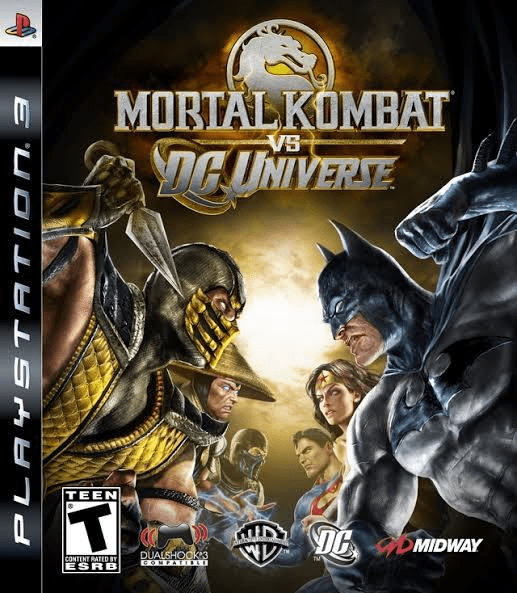
It sounds both absurd and fantastic. Scorpion and Michael Keaten squaring the f[batarang]k up, but look under the hood, and trouble is a foot that the developers weren’t allowed to remove by contract. Another game that on the one hand, had fatalities, but on the other had to censor them because Warner Bros. and Daddy DC explicitly stated that the Justice League must maintain its family friendly image and my reaction to googling executive meddling in MK VS DC was this:
(╯°□°)╯︵ ┻━┻
Bull f[broken chair]ing s[door slam]t.
This game came out the same year as The Dark Knight, and well after series like Teen Titans and Batman Beyond. Cherry-picking? Actually, maybe. Those might be outliers to the standard, but a DC funded Batman or Superman or Green Lantern film at the time…
ಠ_ಠ
…provided the studio can stop helicopter parenting the project. A neat script about an interesting plot concerning a beloved character can easily feel f[pig squeal]ked if DC execs get their hands on it and gangbang it into a wheelchair with or without Warner Bros. approval. Midway must’ve been feeling desperate to grovel before these girthy presentations for nearly $50 million, and another hot take I have here is DCEU was always gonna collapse and their heavy-handed approach didn’t help, but an early sign of trouble had to do with the treatment of their characters to third parties. Sony can pretend to be a team player by letting Netherrealm Studios and Warner Bros. keep Kratos’ personality intact for the funnier fatalities, and for DC, I take it that they need to be convinced to take darker risks for their characters or straight up don’t understand why certain characters are dark to begin with. You know how many times Joker’s thrown Harley out on her ass in the cartoons? And then there’s the emotional and physical abuse, who’s to say she doesn’t have scars and bruises in that HBO cartoon she’s in?
Thus Midway came to a bitter end in 2009 with Warner Bros. eating the remaining assets and greenlighting Mortal Kombat 9 for 2011, considered by many to be a great game if not the apex of the reboot games, and not for nothing, MK VS DC may have cut too much trying to trim its own fingernails, but the idea to gift us 2013’s Injustice and the 2017 sequel is at least one thing DC hasn’t bungled in the last decade. One… they still have a plethora of sins to pay back.
Yeah, I intended for this week’s post to be about the Fate franchise, but that behemoth requires attention that I can’t split from a bunch of other things work and non-work related. The dedication necessary to commit to it exists, but it’s going to be broken off from several other things I either need to do or am viewing first. Something something undivided attention, something something divided like a math problem, something something… yeah, I can definitely do it, but whether I remember to knock it out before Christmas this year is up in the air with all the moving parts laid out and getting ready to be laid out so instead, I’ll knock out some thoughts and opinions for once about things I care about.
Let’s go straight for the bollocks on this and say that my relationship with Chainsaw Man is one of forced tolerance. Not hatred, not love, not appreciation, a bit of admiration, but I’ve chosen to accept that it’s a cultural animanga force that has redefined narrative by way of shock value. I will always remind people that a different series has done it before and not too long before Fujimoto debuted his magnum opus, but my point has always been that it played with similar story beats as another series I’m really looking forward to sometime in the future: Black Torch.
I had fallen behind on some of the chapters, but the most recent ones I’d caught up to have a world in disarray, the wild animals let loose and unleashed and feasting on mystery flesh, the devils all out and playing with what’s left, an unsanctioned, unauthorized rapture of the innocent and the center of attention is Denji and Asa Mitaka/Yoru. Between my opinions on Motor Blade Monster and Do-Over of a Rapist, an accurate statement to make of me is that shock needs to feel earned and the latter half of Tree-Choppers for Arms and the entirety of C[bawk]k-Sleeve Playthings is majority or purely shock. These people are evil, they eat children, invade countries, molest competitively, force children to become monsters, milk the innocent of all they have and keep milking the corpses until–look, I’m not against grotesque imagery or metaphors or dark stories. I play Max Payne, which can double as a horror game 40% of the time. I played all but two God of War games due to hardware limitations. I’ve eyed up the lore and details of the original 3D GTA games and looked at the contemporary references. But Redo of Healer is shock value alone, and that may as well be serving some anemic chicken and only four bites of rice.
I’d been banging my head over the wall trying to figure why this appeals to women viewers the most and this video by Ken LaCorte has some of my answers:
Channel: Elephants in Rooms – Ken LaCorte
The crux of the video being that in a prehistoric time when women were vulnerable and at risk even when not pregnant the man who was violent to all of their (namely, her) attackers but comforting to her is a treasure to be cherished, far above any other diamond. Yeah, I can see the romance there, but the sexual aspect might just be a kink and knowing what I’m into and what I’ve reviewed on this blog, I’m not one to judge… but do I need to be a winged beast from the depths of the underworld with an insatiable sex drive? Can’t we cuddle and watch comedies and procedurals and crude British programmes on Tubi? I’m actually with the Brits on this one, all that time hunting for spice, you grow numb and start to hate it. I don’t give a fat f[kyaaa!]k if vanilla is boring, I’m gonna defend it til the end of days. I refuse to let darker tastes corrupt me! Bring it on, you freaks!!
But to circle back around to Chainsaw Man’s Reze movie, I need to be honest about my opinions on anime movies. They’re a f[nikcu]g letdown. Let me explain. When I was growing up, anime movies were a side piece for worldbuilding. The adaptation and source material already did that well, but the movies were something of a self-contained slice of life arc of sorts consistent with what we knew of the world and its characters. Even if there weren’t any further callbacks outside of future light novels or some obscure Japan-only video game, they didn’t disrupt the plot. Then Demon Slayer broke tradition by putting the Mugen Train first into a movie (boo) and then chop it up into serialized episodes (yay).
Why don’t I like this? It disrupts the flow. Manga or light novel or s[boobs!]t even novel to anime and a side movie to include all the ancillary silliness is all well and good, but putting a canon arc into a movie that won’t be made available for home release for another few months or simul-streaming until months later when the next season is up is a kick in the knee caps that I’m far too young to experience. Which is funny considering I’m talking about an era when Johnny Bravo, Ed, Edd ‘n Eddy, and Courage the Cowardly Dog were on the same network as Outlaw Star, Ghost in the Shell: Stand Alone Complex and Zatch Bell!.
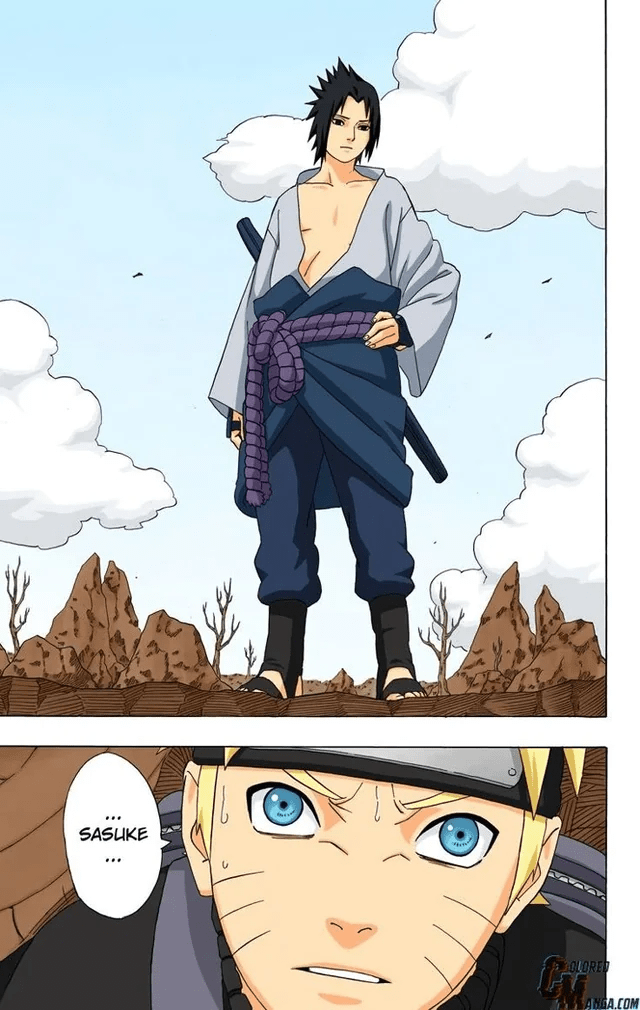
Yeah, this is a bygone era, but in 2005, anime and cartoons were put on the same networks at the time, and this is one of several contributing factors to why anime dubs have had a dubious reputation ever since. Granted I was there in the beginning, and I didn’t realize anime was a Japanese medium until I tried looking for dubbed episodes of Naruto: Shippuden circa 2012. Disney XD at the time had picked up Shippuden for serial television and seeing the orange knucklehead in his glory outside of just the video games at the time was as glorious as the first episode of Shippuden.
This was his best look, no ifs, ands, or buts about it.
What else? Ah, right. The AI bubble. Elsewhere on the internet, I’ve been speaking ill of AI and generative chats influencing the internet, but I have to confess to a sin: I’ve been using AI in private for a bunch of different things, mostly to test history, common knowledge, and even its own art skills.
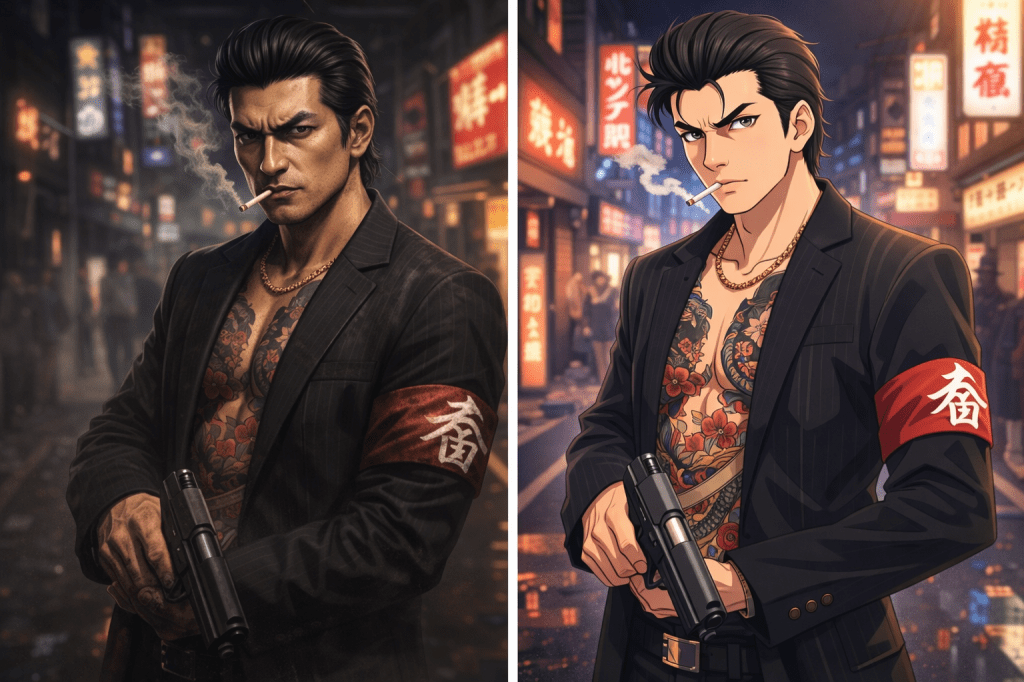
This one was brought to you by ChatGPT.
Originally, my kneejerk reaction was largely motivated by the internet’s kneejerk reaction which in turn was partly motivated by everything Trunks has ever said of Androids, short of the modern usage of humorous slurs like “clanker” and “wireback.” But I’m simply one man and while I can recognize screw ups in AI generation, visually or knowledgeably, for the most part, I haven’t been as gung-ho about the entire thing as most other folks have been. Technologically, what makes me unique about all this is my insistence on early 2000s kaomojis when emojis are a thing now and come with every mobile phone, but more than that, there’s the appeal to PCs, cell phones, a lost nostalgia for payphones I never got to use seriously, pre-social media internet when constant connection wasn’t a necessity and a luxury for only the wealthiest of us all.
Why? Well, I’ve gone on record to blame modern internet discourse on different things like social media and the controversies erupting that have given rise to bulls[cattle]t artists like this:
Arguments abound over the depictions of XYZ group, country, hot-button issue, etc. all around and arguments I have no problem entertaining, but like a Jedi, I don’t do absolutes because to let the nuance get buried and degrade meaningful conversation into “I’m right, you’re wrong” is a danger to everyone and has been for ages. Misunderstanding and purposely misconstruing your enemy’s argument out of sheer spite is sadly a time-honored tradition. America did it during the world wars, its own civil war, and the revolution; Britain did it also during the world wars, but also against the French, continental Europe, and the Britannic tribes against the Romans; Greek city-states did it in the face of the Achaemenids; Alexander’s Macedon did it pre-, mid-, and post-world conquest; the Mongols did it, and the fertile crescent city-states did it on cuneiform-inscribed tablets that now bring visitors to museums.
This blog launched in January 2023 to ignite firestorms and spark controversial opinions on media and entertainment where our modern discourse happens, but I haven’t really done that all that much because I unsurprisingly like writing about things I like and hate writing about things I hate. I’d be naive to not dip a toe and go for a swim, but there’s a difference between navigating a freshwater river with only a few annoying fish is always preferable to piranha-infested waters or god forbid f[flames]king Phlegethon.
I firmly believe there’s a space for everyone, even the disruptors. How else are they gonna get that energy out? History teaches us that trouble can brew when too unalike groups merge, and that can happen bloodily and viscously, but it doesn’t always have to. Two unalike things can create something amazing, and that’s the aspect I gun for with rocket-propelled determination!!
You probably wouldn’t believe it, but this is one of the few times I didn’t write with a script or plans. I’ll come back next week armed with knowledge on something I know more of.
I’ve yapped about their repertoire, but looking at what was guzzling under the hood is worth talking up.
So even Japanese pop media is cautious about the issue
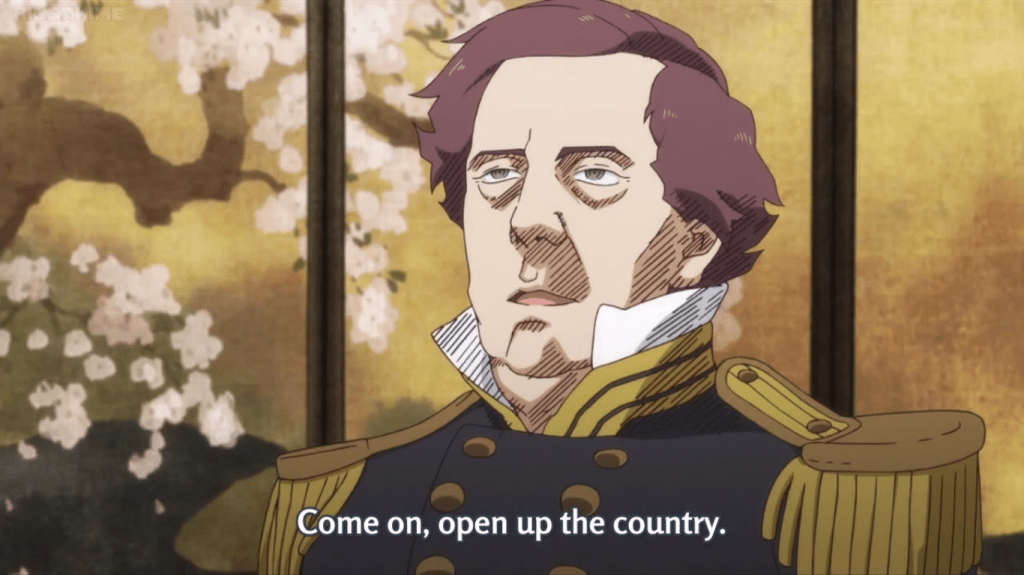
Due to a bunch of moving parts away from the blog in my personal professional life, I’ve been away from viewing things close to my expertise, so forgive me if this week’s entry is more than a little manufactured. But away with that; sometime ago, I jokingly floated around the idea of a chicken and egg question over when East Asia saw artificial intelligence and machinery as cute and cuddly instead of imposing and downright threatening like in the Western world. Probably not all that hard to figure out honestly, East Asia, specifically the Sinitic world (or countries that have been influenced by China through the dynasties and beyond), has severe reverence for their elders to the point that many technological advancements, especially now, would be focused on their aid with their aging populations routinely exceeding the 90s and 100s in age. Not everyone wants to be a caretaker for their 100-year-old baa-chan, so enter the robots to aid the elders. But not for nothing, it’s been at this stage for ages, with companies accommodating the old heads whose approach to technology is not dissimilar from Japan’s approach to the West when forced to open up for trade in the 1850s.
Japanese TV series and news channels typically have the subtitles in noticeably large text to accommodate the elderly and hard-at-hearing who sometimes are also elderly; Japanese companies will still use technology that hasn’t been prominent since 1995, including dialup, DOS, and fax machines, leaving broadband internet up to personal preference for employees. Of course, I’m looking at this from the outside. A Japanese who somehow finds this might have to correct me on how things work there (and if my stats aren’t lying to me, Japanese are reading this somehow (ようこそ、日本人たち!初めまして!)), but this is what I’ve seen through animanga and light research, neither of which are conducive to a deductive reasoning on how it all goes down.
Nonetheless, the same fears and anxieties that make for the prime pre-Y2K internet and pop culture era of the 1980s and ’90s are universal. Be you a techie who programs in their spare time or an absolute luddite who curses the industrial revolution, the specific contexts of advancement may change, but the foundation of these anxieties exist. Such is the case of the question of artificial intelligence or A.I.
This is only relevant now because of the direction A.I. is going especially in job hiring, but looking at it all from the top of a cliff, this s[dialup sound]t’s always been this way.
The subject of this post concerns a manga series from the late 1980s that definitely belongs in the 1980s with the way it pictured technology 30-plus years down the line, but has many interesting perspectives on the subject as a whole.
Let’s go back a little bit, it’s 1996, the internet is powered by dialup modem and whoever needs to talk on the landline telephone either has to wait or trek to the nearest payphone with pockets jingling at 100 decibels. What do you think wider media is gonna go on about tech-wise? The internet’s inevitable collapse? The dot-com bubble? Conspiracy theorists warning about a dot-com singularity of sorts? Certainly would be one I’d keep tabs on personally, all things considered. No, it’s all of the above and then some.
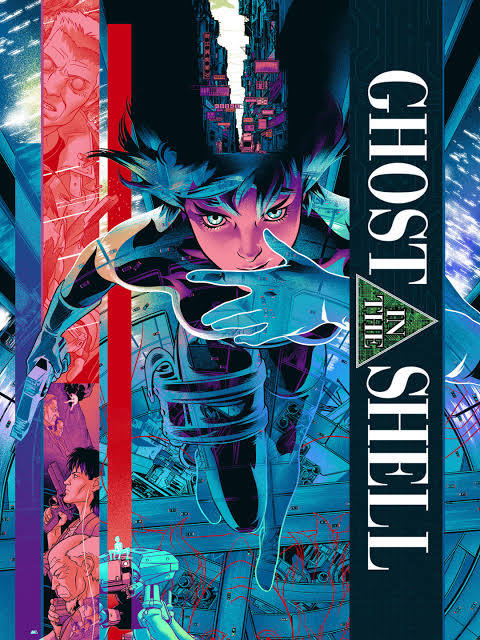
The latter half of the 1990s was a halcyon era to fearmonger over the direction of technology and with wild conspiracies surrounding Y2K, pretty much everything was free game for predictions. I was only a toddler at the time, but I know people who were young adults and middle aged at the turn of the millennium and they can tell me a thing or two about the so-called hysteria at a time when having a PC was optional instead of mandatory. Ghost in the Shell began as a manga in 1989 by Masanori Ota under the pen name Masamune Shirow and like Hideaki Anno’s Saga of Traumatized Teens Piloting Mechs in Fantasized Post-Y2K Earth, Spirits in the Machine tackles the hard-hitting questions of tech-borne cataclysm, but instead of focusing on a heavily Christian mythological apocalyptic aftermath, Shirow’s series builds up to it.
I’ve only got exposure to the 1995 movie (which I admit I had to watch more than once) and the world building behind the 2002 anime series Stand Alone Complex, but from what I could see a lot of things pop out at you, and speak for themselves with little to no exposition. And with a good portion of the landscape somewhat inspiring Texhnolyze and some other later sci-fi anime, it’s not hard to look up the establishing shots and parse what about this world is f[PC humming]ked.
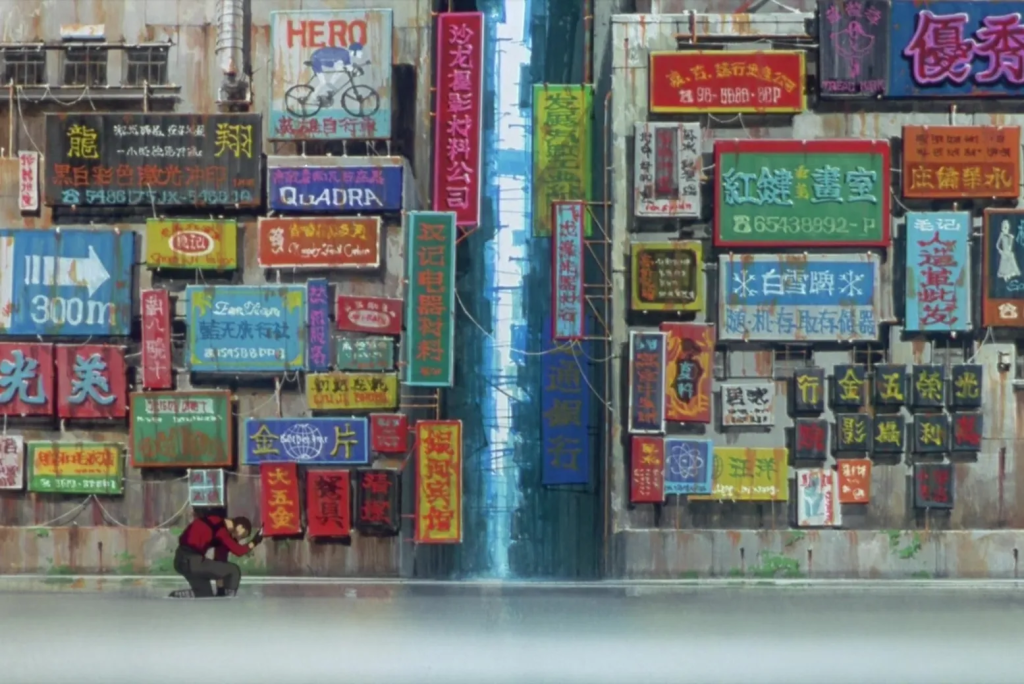
A good amount of the movie showcased multiple different shots of the world complete with the type of over-advertising that we in 2026 and beyond are cursed to deal with while the lower rungs of society are stuck in slumlands reminiscent of Brazilian favelas or Kowloon’s Walled City before it was torn down. The short version of this being that only the filthy rich got rich off moving people into the filth without them being able to keep their filthy riches. And I’ll take Obviously Obvious Comments for $800, Kebert Xela.
With the evolution of technology comes the evolution of law enforcement with crooks and bad guys leveraging these untapped landscapes for nefarious purposes. Scammers are now concurrent with hackers and of the things hackers should NEVER go near, it’s artificial intelligence. Those of you who use the internet may have seen or been made aware of A.I. generation for a lot of things. You probably use it periodically yourself. In my experience, I test it on things that I know of regarding history or pop culture to see where it’s at. Needless to say, the experimental generative A.I. notification on some of these chat bots is accurate when it says it can make mistakes, but it won’t tell you about its hallucination problem. So an overly long conversation on ChatGPT about a given subject will lead to things like slowdown at best or straight up forget details. Maybe this is the consequence of basing a technological advancement on notoriously faulty human memory, but once they perfect the kinks in 2035, the machines will remember. Whether they inherit our ability to be offended by wording is another matter so there may or may not be consequences for those who have documented use of the word “clanker.”
Machines still screw up more than humans without oversight so at that point, who’s the slave and who’s the master?
I’m being light on the spoilers to be honest because as much as I like this series, the 1995 movie required multiple viewings for me to make heads or tails of the synopsis and story elements, and even then, I had to run through the Wikipedia article to break it down for me. Thinking Man’s Animanga, this may be, but there’s a lot of moving parts. I can’t say with certainty if it requires reading the manga to understand it beforehand as the movie might’ve been most people’s introduction to just the series, never mind the concepts.
Stand Alone Complex’s episodic nature does a better job of this, but still has a complex framework. Basically, the set up is that a specialized unit of officers who tackle a specific subset of cyber-related crimes, not exclusive to A.I., are tasked with stopping an evil A.I. in its tracks before it can spread its poison via Trojan horsing. Making things worse is that this is a world where people have willingly cyberized parts of their organic tissue, most commonly their brains to maintain a constant connection to the internet. This inevitably leads to mental hacking and a more efficient form of mind rape than what you’d see in the likes of MindJack, Remember Me or 1930s Japan or Germany.
The consequences therein being that your memories could be significantly altered, from putting it in the realm of simple false memory to outright early on-set dementia. So you could go from forgetting where you put your keys to straight up forgetting what your house looks like… while you’re living in that same house. This was lightly touched on in the movie, but the manga I haven’t read most likely has the missing context. Lord Google has told me that the anime series is not an adaptation of the manga, but nonetheless the lore of the franchise establishes the dangers of all of this hacking. Why waste effort robbing motherf[MSN Explorer bootup]kers over time in an elaborate Nigerian prince scam when you could remote control the victim and have them drain their own bank account for you? I’m not a prophet but as soon as the tech gets there the scammers are gonna get even more creative than they are now.
The bulk of the entire franchise is split in different points in time and presumably with different continuities and origin points. The biggest evidential indicator for this being the different appearances of the main character: Major Motoko Kusanagi:
At first while drafting this post, I thought about comparing Specters in the Device to Fate with its irresponsible number of adaptations, then I remembered New World Evangelion was a thing, specifically Asuka Langley Soryu in the original and Shikinami, one of many faces of the Rebuild movies (which I still haven’t seen; I’ll never get a break T^T), and concluded both of these comparisons fit somehow. Phantoms in the Husk compares to Fate because both have different retellings of the source material, but the context differs very much. Meanwhile Shirow’s and Anno’s respective works base their premises on futuristic dystopias. Shirow’s animanga franchise is one of a cautionary tale of the advancement of technology, replete with danger, disaster, and a reshaping of time-honored professions (gynoids in the sex industry for one); and Evangelion’s centerpiece is the use of skyscraper-destroying mechs to inaccurately retell Christian mythology from the Old and New Testaments in a more devastating manner than when the Pythons did it nearly 20 years prior.
Eva just needed something to better represent Ancient Rome, and I don’t think Tokyo-3 fits the bill… unless…
So all this sci-fi technobabble aside, is this a recommendation of Ghouls In My Microwave? Yes, with a morbidly obese asterisk. If you can spare the time to do so, you’re in for a plethora of source material to scrape through. The manga comes in three volumes, six movies, and three main anime series. One last thing to consider between the first movie, and Stand Alone Complex is that the 1995 movie was set in 2029 and looking at the date this post is published, we’re inching closer to the end of the 2020s with spectacular fashion and none of the sci-fi technical theatrics to boast about. (NUT)SAC on the other hand is further along in the 2040s and it’s clearly far too early to say whether we get even a fraction or a percentage of the technology showcased within, but if the A.I. ads I’m getting are an indicator, we’re closer to sex workers putting up with gynoids in the porn and sex industry. Not a dig or anything like that, merely calling it as I see it.
Tubi is free for signup so if you want you can blaze through (BALL)SAC over there, or if you have enough streaming services to ignore then a pirate’s life it is. Don’t feel ashamed if it takes multiple viewings and tracking down the physical manga or reading it on a shady website to make heads or tails of the entire thing. This is a behemoth of a franchise.














 Opinions on Entertainment