
Of all the games I’d play, gacha was the last I expected to be one of them
I wanna set the stage a bit before I get to the meat and potatoes of this topic. If you’ve been anywhere online, especially on social media, you know doubt have heard of a Shanghai-based video game company named MiHoyo, and their library of games, the four most famous of those being Honkai Impact 3rd, Genshin Impact, Honkai: Star Rail, and this year’s most recent release Zenless Zone Zero.

They’re all described as free-to-play games, though with massive strings attached: for starters, they’re all gacha games. If you’re not in the know, a gacha game has a gachapon mechanic based on a random number generator, downright imploring the player to spend real-life money on an aspect of the game. In the west, it would be a loot box with skins, and in East Asia where these games thrive, it’s a character or some other collectible. They’re designed to be scarce and encourage the player to keep going for a chance to win big; so gambling with loopholes.
Gachapon itself comes from a term for capsule toy dispensers in Japan, other parts of East Asia and select American cities, like New York or L.A.

I put all that up beforehand to explain what I’ve felt about lootbox mechanics and paywalls in games and why, despite being against them overall, I’ve played three of these games. So back in 2016-17, EA was taking a lot of manure for the implementation of lootboxes, and the manipulative mechanics in several of their releases, not the least of which was Star Wars: Battlefront II. Fans of this series felt that monetary gain was prioritized over player engagement and experiences and that in order to actually have fun with an EA or Ubisoft product, rather than put the DLC in with periodic updates (i.e. the RockStar Grand Theft Auto method), they release the DLC at nearly a fraction of the price of the “full release.”
Both them and other developers of this model were reamed for the predatory practices, with legislation being debated on over regulation coupled with concern over who is most at risk of engaging in such content intentionally or accidentally, from children with little understanding of money and financing to at-risk adults with a history of gambling addiction.
Did any of the legislation and debate help? Although most of the games I play are older, the ones I do play that still get regularly released don’t suffer from such a problem, though looking at the ones that do or did, there’s one of three outcomes:
- They overcame the lootboxes and have genuinely improved
- They still implement them despite them falling out of favor in the west; or
- The lootboxes one and scared away the gamers.
Outcome 1 is the rarer of the three, sadly. These days, it takes genuine care and development for a gamer to stick around and see the DLC, but if a company has a checkered past, either they’ll be written off as untrustworthy or gamers may wait and see what the reviews are before considering dropping cash on it. Personally, I’d balk at some Assassin’s Creed DLC that wasn’t worth its salt, but Elden Ring: Shadow of the Erdtree does get me thinking…
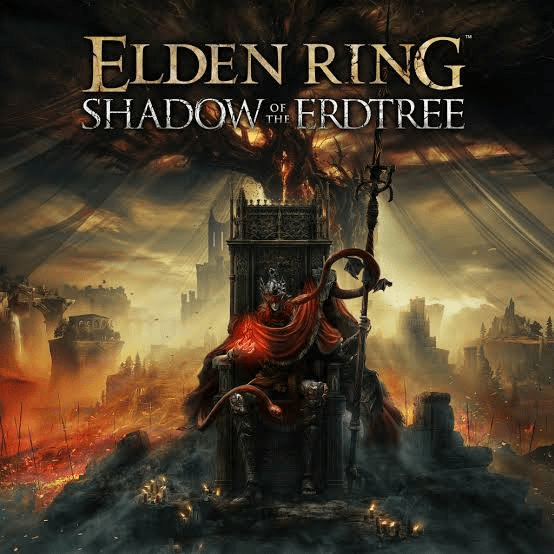
Never mind that my friend burned three hours trying to beat Radahn.
So if that’s all established why gacha > lootbox system?
Well, let’s look closely at what they all offer. As of writing, I have Honkai Impact 3rd downloaded, but haven’t played it so going instead I’ll go over why I caved to Genshin, Star Rail and ZZZ.

It took me an absurdly long time to see what this one was about, longer than the other two. For Honkai Impact, while that one is older than the other three, I nabbed it just last year, and once I play it, I may record my thoughts.
For now, Genshin released in September of 2020 and it looked like every YouTuber was getting sponsored by MiHoyo to talk about it or stream it on their associated channels. I think even Achievement Hunter got in on the action. It was the talk of the town and something I didn’t so much avoid at the outset with dedication, more like I was waiting for talk of it to die down before I tried it myself, which happened to be in December of 2021 — a full year and change after it had released. I didn’t know it at the time, but as a player of this and the others, I learned that characters debut shortly for a chance to roll (think roll of the die) and it can take a while (usually a few months) for the character to roll again.
If you’re in the loop, ZZZ just debuted the characters Seth Lowell and Jane Doe with more coming for the last quarter of this year. Best get to rolling if you wanna play as any of them.
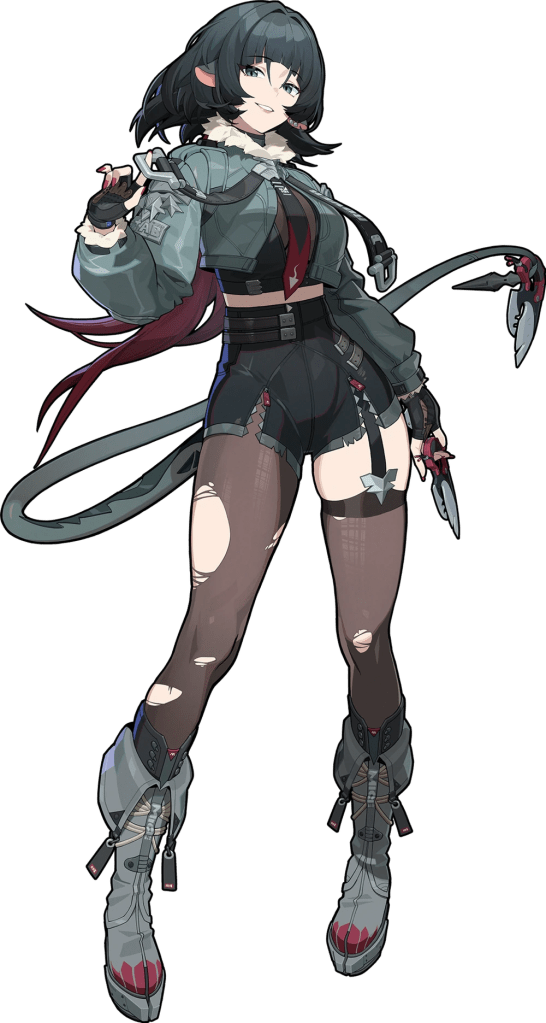
Get her while she lasts, and while you’re at it, enjoy some thirsty memes. There’s plenty being made and more than enough to go around.
In Genshin, it’s a fantasy game that takes a lot of tropes from existing isekai anime and other fantasy stories. People and places are in some way, shape, or form take their names from Russian, Chinese, or Japanese folklore. Obligatory write-what-you-know, considering where MiHoyo is headquartered. I can’t list all of them, but there are a few instances that caught my eye, especially in the trailers. One character, for example, Qiqi is a zombie.

Starting with her name, it’s written in Chinese with the same characters for “seven” [七七], but it could also be a play on words with this also being the pronunciation for the Chinese word for “life” [气/氣], although with different vocal tones to it. As for her design, she’s based on the Chinese hopping zombie, an undead creature in Chinese folklore similar to vampires in that if they get a hold of you, they’ll turn you into them by sucking out your breath, though I doubt Qiqi herself can do that. There’s different ways of countering this, usually by way of rice or holding your breath so they can’t find you. Side note: as for why jiangshi are typically dressed like Qing dynasty officials, the style is a legacy of Hong Kong cinema. The choice to depict them this way might be a metaphor for how that dynasty ended, it could be because earlier dynasties had more ornate attire (read: harder to draw), or possibly because a reanimated Dong Zhuo or Liu Bei would be terrifying in concept… unless we’re talking Dynasty Warriors.
Other Genshin characters, locations, concepts, etc. take from East Asian/Old World folktales to make the fantasy feeling come alive. Couple that with timed events in-game and the fantasy aspect goes in maximum overdrive of sorts. The plot is that you take control of either a brother named Aether or sister named Lumine (though both are referred to as Traveler since you can put whatever name you want for them), with the other being captured and possessed while you go off to level up, and find and save your missing sibling. Typical fantasy tropes ensue, thriving city-state with armed militia as a protection force, you meet the many characters that inhabit it, help them and build trust, they help you and level up and after completing several events, they point you in the direction of your quest until you complete your goal. Side quests can be taken to help you level up because all of these games have a skills-based leveling system which I take slight issue with.
I’ll gladly collect experience points like dragon balls, but if I’m Level 15 and up against a Level 20, I hate that they can sleep me in one shot while I whittle away at their health bars for hours or weeks. Let me get the God of War hack n slash model of battle where I throw the chained blades in any direction and hit everything that’s too close to me.

Maybe it’s that way because it’s more popular in Asia where MiHoyo is expecting most of the player base to originate from. Either way, flaws aside, it’s a story-rich environment that has its moments and is often the talk of the town whenever an update comes out which is often. I can’t say how big the playerbase is, but it’s gotta be ginormous with all that it has to offer. I believe the adventure aspect is why I’m playing these all things considered, with all of them being different in some way. They’re all adventures, but Genshin Impact is certainly not Honkai: Star Rail:

Away from the medieval fantasy setting is a space epic setting that, now that I think about it, gives me Borderlands vibes. The main characters are on a vessel designed like a locomotive traveling through space where they land on another planet for the purpose of securing a Vault Key Stellaron. They’re not the only ones after these Stellarons however; a faction of hunters are also looking for them and stand in our heroes way.
Who are the heroes? They’re the residents of the Astral Express, another pairing of either a young man named Caelus or young woman named Stelle. They’re not said to be siblings like their Genshin counterparts and the quest either takes is supposedly one of regaining their memories than looking for a lost sibling, although memes exist of the two having a more realistic sibling relationship of sorts. I’m an only child, but I’ve absorbed a handful of media with siblings and read many stories to know that sibling fights don’t really cross any lines. They can be tense and competitive and spontaneous, but they still live with each other until its time to adult. However that looks varies the world over.
After the Traveler, or in Star Rail’s case Trailblazer, is March 7th, a bubbly girl with ice archery skills that also doesn’t remember her past, not even her name which is why she’s named after the date in which she was found by the Astral Express. Finally, there’s Dan Heng and here we see more of the Chinese influence in the game. There’s a reference to something from folklore in his name most likely, but I haven’t seen it yet. Or it could just be a name. He’s the more stoic and pragmatic of the trio.
Another way in which Star Rail differentiates itself from Genshin is combat. Genshin’s combat is more open-world, but Honkai: Star Rail has a short transition screen before switching over to a turn-based combat system. Everyone in your party gets a turn to attack or heal before it goes over to the opponent. It’s a classic system that to my knowledge still only exists in Pokémon. One fun fact: the English localizers collaborated with the Trash Taste podcast who all make cameo voice appearances in one arc in the game.
Since it’s not the same kind of adventure game, the need for crafting foods, weapons and other accessories isn’t present as this futuristic setting would make all the menial labor like this obsolete, and in a lot of ways in-game it does. Sometimes you go up against a combination of human and robotic enemies, while also controlling human or human/animal hybrid characters common in animanga (fox girl here, cat boy there, those moe characters with animal ears and tails everywhere), though they’re in limited number here. Still, there’s a bunch of interesting character designs and the characters themselves all have their own motives, which makes it a bit more mature than Genshin in some aspects.
As for a game that goes one step further, we have MiHoyo’s most recent release: Zenless Zone Zero.

I’m using the same screenshot for this section of the post only because I don’t really wanna make it seem as though I’m biased towards one of these, especially since I’ve been playing ZZZ a lot recently.
Another futuristic society, but this time relying on outdated technology like payphones, VHS tapes, and CRT monitors due to an interesting in-game reason. The lore of the world of Zenless Zone Zero is that modern technology like the device you’re currently reading this on is a magnet for Ethereals, hostile creatures, who lurk in the Hollows where access is cut off from the rest of the public for safety’s sake. Going in without a defense mechanism of any type spells doom for those who wander in, usually in the form of corruption and transformation into one of the Ethereals.
Like the other HoyoVerse games, the characters are subdivided into factions, some of which compete with each other or work together for common goals. The first faction is essentially a freebie, Gentle House known colloquially (unofficially doing business as) the Cunning Hares is a three-man team led by Nicole Demara, the fiscally irresponsible yet money-hungry face of this faction. Joined by a sentient A.I. Billy Kid and adoptive sister Anby, this faction accepts their commissions on the in-game service InterKnot through a Proxy who guides them through the Hollows. It’s a relationship of mutual interest though in lore, Nicole is so broke she walks down the street with Louis Vuitton that she probably found in the trash. Billy is a more childish character who, initially reminded me of Deadpool by way of the color-scheme, weapons of choice (dual pistols) and general demeanor. Recency bias coming from the Deadpool and Wolverine movie is to blame for that, though Billy is more prone to panic in stressful situations and isn’t exactly as snarky as the Merc with a Mouth, nor is he breaking down the fourth wall every hour on the hour.
Anby is the mystery one with no recollection of her past before being taken in by Gentle House. She makes me think of Rei Ayanami from Neon Genesis Evangelion at times. For characterization, she’s not boisterous or extroverted; but there are subtle ways to gauge her personality. She normally wears headphones as if listening to music during battle, quotes movies, and likes hamburgers. Observe:

I tried, I guess I am biased.
So between 2016 and 2024 (I’m including Honkai Impact 3rd despite not playing it yet), MiHoyo released a series of games that share something of a multiverse with gachapon mechanics based on a random number generator while disguising it under a series of beautifully designed video games and interesting characters and stories, many of which are in someway inspired by Russo-Sinitic-Japanese folklore and can offer enough content to live through the heat death of the universe with all the regular updates.
I state once again that I have no love for lootboxes and while I’m familiar with grinding in games, if it doesn’t scratch that particular itch it can f[metal clanging]k right off. But what about the MiHoyo games? Why do I give them all a pass whilst shunning the others? Reputation plays a big part. It might be something concerning in East Asia, but unless I teach myself Japanese and hop onto that side of Twitter, I might not see the discourse in East Asia surrounding this company’s influence, whereas regular talking fish heads on YouTube have a 99 problems and EA, Ubisoft, and Konami are all of them.

Pictured is a representation of Rev says desu… or YongYea…
Meanwhile, it seems the game development philosophy on the other side of the world is to make good games. I do have my gripes with the grinding and the gacha mechanics, but part of that may be the extra exposure having grown up with those toy dispensers in my neighborhood as shown above. It’s not like a vending machine where you know what you’re getting. Again, it’s a random number generator. If we were to put it in a tier-list, light exposure to this mechanic would probably be an internet personality engaging in the gachapon machines in Japan or Korea or just virtual gambling; middle exposure would be where I’m at with the toy dispensers, but also sometimes the gachapon machines in places like Barnes & Noble; and finally there’s heavy exposure where you not only live in a place that has those, but you’ve engaged in them before or do so regularly. There’s a tier above that where you’ve just been to Japan or Korea or Hong Kong or Taiwan and pulled a “when in Rome” during your travels.
Call this blog post a bit of a rant on how NOT to do lootboxes and grinding, but someone who’s more skilled and experienced in game design can tell you more about how it all works. I’m just a fan enjoying my games.
 Opinions on Entertainment