Earlier this week, it come to my attention that a pirate site I frequent called Aniwave was recently taken down.
Aniwave.to to be specific, other copycat sites are up and running, but for how long no one can say for sure… unless one of the web devs for those sites is currently reading in which case, hi! I’m a huge fan. Keep doing the lord’s work.
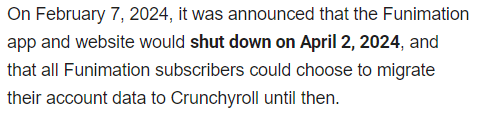
Aniwave.to going under is a huge blow considering it was purported to have one of, if not, the largest database of free anime at over 12,000 series. Regular watchers know that I’m a champion of anime piracy for a lot of reasons boiling down to practicality. Everyone and their great-grandmother has their criticisms and concerns over companies like Crunchyroll essentially monopolizing the anime industry, especially since they ate Funimation this year, Crunchyroll itself being bought by Sony three years before that. Damn, corporate consolidation is a b[slap]ch, isn’t it?
The one saving grace here is that past users of either have their old archives saved, so you can go back and look at the degeneracy you watched like five years ago (Shimoneta and Highschool DxD for me), but the point is fans are running out of options to view their favorite anime free of hassle. Crunchyroll is a mess of advertising for services and products few people asked for, and the library is far too small to satisfy those of a niche taste, like myself.
I make a habit of introducing you all to series you probably never heard of, partly because I found entertainment in it and partly because they can’t be found on the usual streaming services. HiDive, Crunchyroll, Hulu, and others all have their own shows, but often times even for legal reasons (or the creator being an oddball), some stuff is deliberately made impossible to access. Some of the stuff I’ve written about on this blog is thanks to those who take the plunge and go out of their way to search for these series. I get that sometimes copyright law gets in the way of a good anime session and your favorite series is at risk of becoming lost media (like the JoJo’s Bizarre Adventure film from 2007) or are lost media, forever wiped from collective memory, especially if there’s not a lot of marketing behind the series at the time, but it’s a damn shame that the task of archiving is left to fans who are that dedicated to some of the more obscure series.
This isn’t limited to anime as there are a handful of western series and movies that are poorly archived assuming an attempt was made. Most films from the early 20th century are likely forever lost due to faulty viewing methods at the time. But when it comes to preventing this problem and preserving media, copyright laws and the companies that study them closely will put piracy sites through legal hell which is why some of the series I’ve recommended may not be available anymore. Apologies for any dead links that are still up.
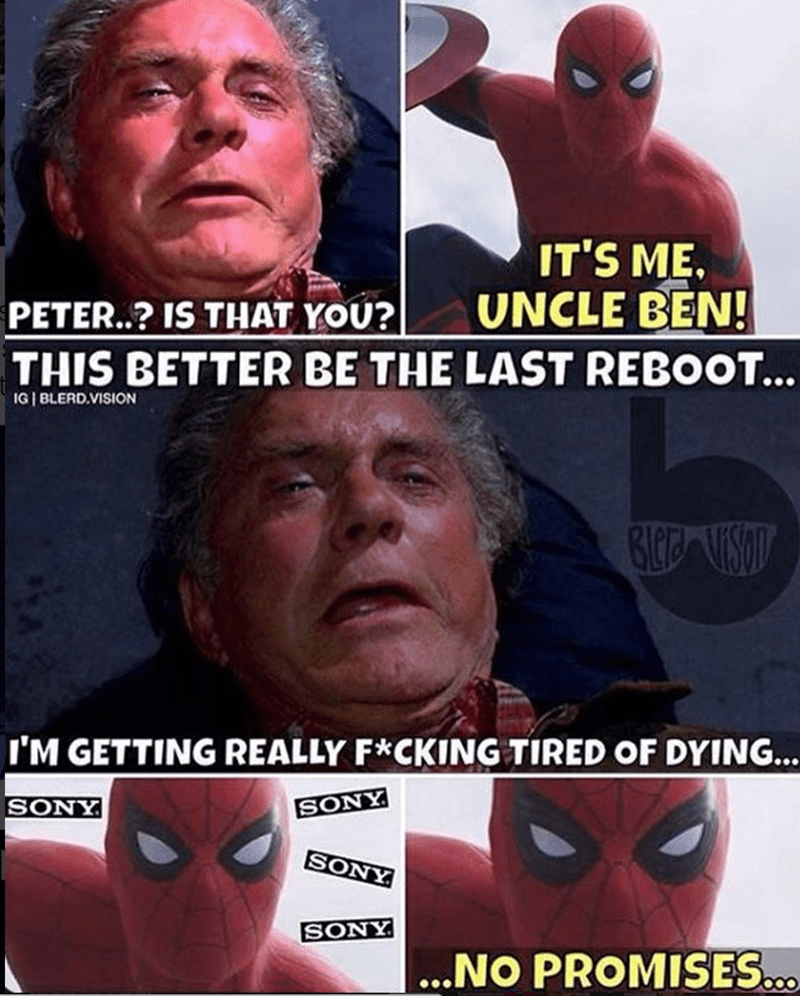
The discussion is healthy in places like Reddit and 4chan where they tend to put the blame on companies like Sony fighting for multiple different properties. If you recall, a few years ago, they got into it with Disney over the rights to the Spider-Man franchise, which led to a tense, uneasy deal where Sony continues ownership of the films while Disney markets everything else. It was a s[thwip]t show.
Canonically, Ben’s been alive and dead twice. Even if it led to an entire Spider-Verse (holy f[yamero!]k there’s a lot of those), Deadpool and Wolverine proved that establishing a multiverse isn’t always what it’s cracked up to be.
Fortunately and obviously, there’s still ways to combat this: other more durable pirate sites, hosting your own site, torrenting (which is a pain in the ass), but this consolidation hurts western anime fans with options for stress-free anime viewing getting increasingly scarce. Physical media is on its deathbed, and fewer studios are putting their series on hard copies these days. I doubt all of them are doing it willingly and likely have their reasons for making this move especially at the breakneck pace we’re seeing. There might also be another reason I haven’t thought of as the viewer looking in from the outside, but this reminds me of an Extra Credits video on why demos lost favor about a decade ago.
Part of the argument for why this happened in the gaming world is that gamers disincentivized devs from including demos in recent titles. Basically, with access to small section of the game, a handful of outcomes makes or breaks the future of the game. If the demo sucked, then the player might not be incentivized to get the full game on release; or if it was awesome, hype may surround a game that would turn out to be mediocre or if it lives up to its reputation, financially the developer doesn’t see a very large return on investment.
For anime, newer technologies are a high risk, high reward endeavor. Golden Kamuy was dropped yonks ago by those who were turned off by the CGI bear fight, but those who trudged along found a peak viewing experience with memorable characters and an interesting plot. Some may have gotten tired of waiting and bought as much of the manga as they could (or continued on MangaDex). I can see why companies and studios would pick and choose to show the anime that are famous instead of risk allowing access to niche markets, especially to minimize the risk of commercial flops.
But to argue in favor of allowing unfettered access to all anime produced, I offer two words: cult following.
Shoestring budget or high development cost, there’s a series out there for everyone. Studio heads and execs may be shortsighted or too cautious to see a property’s reputation grow over time, but if/when it does it can reinvigorate the conversation around the property, not all of it centered on associated products. I don’t know about you, but The Warriors getting a video game in 2005 published by RockStar was a good way to introduce a new audience to the franchise. Reboots also work, but it’s too easy for those to get out of hand like with Spider-Man or Tomb Raider.
It all looks like a tall order, and those of us without the technical expertise to torrent can only watch as the gods fight each other in the heavens, but while that’s going on, there’s other sites up that are picking up the slack. There’s 9animetv.to as well as aniwatchtv.to which seems to be undefeated in piracy if this meme is to be believed.
Credit: u/SpiderGeneralYT
Remember all of those? Good times.
Likely an exaggeration–as I said, more will replace what aniwave was–but if this keeps going on, then the future is pretty bleak with site after site getting taken down.
Sorry for the grim ending, but for a look on the bright side, someone else is currently updating a list of available sites to still watch anime if it hasn’t been done already. Only one way to see now if the sites listed are still up and running flawlessly.
“Dysfunctional” implies that there was a solid function to begin with.
Before we start, I wanna say that I had planned originally on comparing and contrasting the Black Mass novel with its movie adaptation, but I couldn’t. Too much time had passed since I read the book or watched the movie, and assuming my memories aren’t that crooked and misshapen, there weren’t many comparisons to make between them. The book mentioned horseracing and bookmaking, but not Whitey Bulger’s son, Douglas while the movie did mention his son whilst omitting the horseracing aspect, though both did mention the Winter Hill Gang’s involvement in the assassination of World Jai Alai owner Roger Wheeler in 1981. Maybe I do have a comparison to make, but then again, I’d have to reread the book (or go over the footnotes) or watch the movie again.
So instead, I’m going to write about a point-and-click mental horror game about a pair of siblings and the dark world they call home.
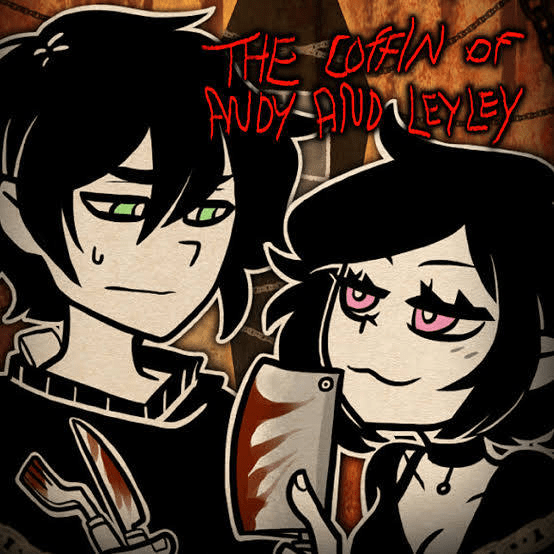
Brought to us by the minds at Nemlei and Kit9 Studio, it’s an episodic psychological horror game that takes us into the minds and lives of the Graves siblings, Andrew and Ashley. They’re essentially trapped in a condemned building with a few other people who are all monitored by very uncharitable wardens who feign kindness for the cameras, but are content letting them starve for months on end. As of writing, there’s only two episodes with a third and fourth one coming out later this year and sometime in 2025 respectively.
I’m halfway done with the second episode, but I’ve seen enough Coffin of Andy and Leyley memes online to see where the story ends up.
It’s probably been spoiled to death since release, but I’ll be light on the details about the two episodes. The first one has the two going to drastic measures first to feed themselves (understandable, all things considered; months without food is hell), and then to get out alive. The second one involves them going on the run and taking their revenge against their parents for what they did to them. It’s an interesting carnival of horrors that feels like it’d fit with any given horror film franchise. You can pick your favorites, I’m going with Halloween… coupled the original The Hills Have Eyes.
As far as characters go, the attractive quality of the game’s writing leads me to believe that some of the characters are loosely based on real people. Focusing only on the titular characters this time (because I don’t want online discourse regarding their parents to color my own observations), Andrew and Ashley Graves are an interesting pair.
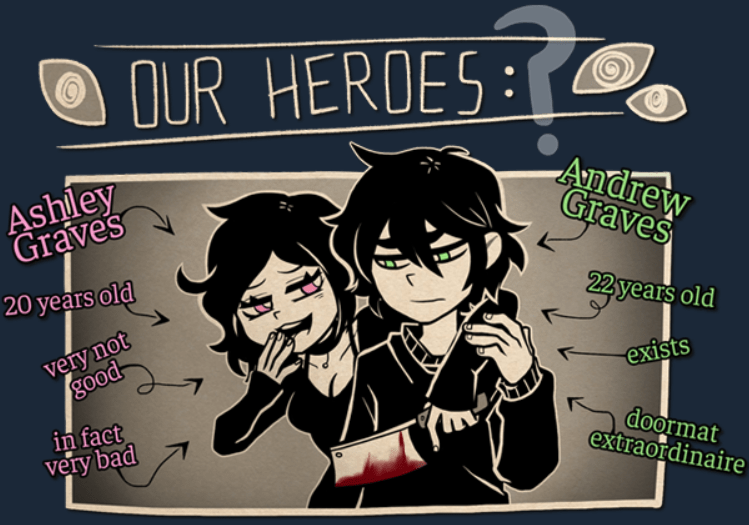
Yeah, let’s take the kid gloves off for this one. They’re a very disturbed pair of individuals in a world so black, Deimos retired and gave the position of God of Terror to someone else. As noted by the screenshot above, Ashley is marketed as the more disturbed of the two with her wicked and unorthodox ideas. Based on my observations, this is definitely in line and an accurate description of her character.
Most of her ideas she writes off as mischief and childish whimsy, but her callousness is reflected in her devil-may-care attitude and her lack of concern for the consequences of her actions. She knows she’s doing wrong, but she does it anyway, and the flashback scenes show that she hasn’t changed at all. As a matter of fact, her manipulative personality is why her brother is hopelessly attached to her, yet she doesn’t have absolute control over the guy. To pull from a box of nerdy, lines on maps enjoyer things to say, the power dynamic they share makes me think of the Investiture Controversy, where medieval German nobility kept attempting to buy favors for themselves in the Catholic Church, the papacy included. If that interests you, look to this video for a few more (oversimplified) details:
Channel: Oversimplified
Basically, what I’m saying is that there’s an illusion of power between them. Both of them think they’re stuck with each other, but honestly, they don’t have to be with each other… or rather, they wouldn’t have to be if Ashley wasn’t so clingy. Does that mean Andrew is a better person? Nope.
Also in reference to the screenshot from above, he’s subject to his sister throwing her weight around. Canonically, he has no problem talking to girls, having had romantic interests in other women and even an ex-girlfriends in both high school and college, but the more I think about his past relationships the more evident it becomes that he’s using them to hide from his sister. Not that there’s no genuine romance between Andrew and his lovers, and while not saying it’s not normal to cycle through dates in your lifetime, but the armchair therapist in me sees a MIGHTY NEED to be away from Ashley, even slightly.
Thinking about it even more, the two may share the same problem Zuko and Azula from Avatar have. Andrew doesn’t want to cause anyone any trouble, but Ashley couldn’t care less. Observe this meme from r/TheLastAirbender
It may be a joke, but look at all the scenes in the show that display or mention them and this becomes disturbingly closer to the truth than you’d like to admit, though in regards to the game, it’s worse since everyone has issues.
Having said all that, it’s not all doom, gloom and things go boom. One of the tags listed on Steam for the game is dark comedy. This part also shines in the game as the dark elements are campy. Dark and probable as it may be, it doesn’t really stop the game from being ridiculous at times. When I say you can compare it to some aspect of an old horror movie, I was not exaggerating. Michael Myers shrugging off six bullets is ridiculous; Jason Voorhees bouncing back up from life-threatening injury is very ridiculous; and the antics the siblings find themselves in is absurdly comical at times, you can’t help but wonder sometimes. The writers put a lot of care into making the game what it is and seem to be hard at work still drafting up the script of the final two episodes.
Obviously, a property this popular has its naysayers and harassers, neither of which deserve even a sliver of my attention, but on the “positive” attention the game has received, online forums, especially the game’s associated subreddit. Due to a scene in the second episode, the fanbase has run wild with fanart of the siblings in action. Again, being light on the details because I recommend this game and think going in blind is a sound approach, but IYKYK.
If in fact, you do know, then you also already know about the millions of other copy-pasted fan art of different sibling characters in the art style. This kinda leaves me divided, on the one hand, I commend the talent; but on the other hand,
And this is coming from a guy who has seen both Shimoneta and Highschool DxD yonks ago, both of which I plan on writing about in a future double bill. It was a certain aspect that kept me from playing it for the longest, but for curiosity’s sake (and to snub the naysayers and doombringers) I bit the bullet and I recommend a play through of your own.
For this YouTube recommendation, I present an up and coming Canadian YouTuber known as Art Chad.
At over 82,000 subscribers and counting, Art Chad is a channel run by a young man who asks a lot of important questions about modern topics and issues in our society and attempts to answer them from as broad and unbiased a viewpoint as he can. Often with the tone of one who wishes to make a better world for this generation and its succeeding ones a la Superman, or in a gradual yet noticeable approach instead of the ad hoc, hasty changes we’ve grown accustomed to. The link to his channel is up above.
The changes you notice when you’re in those boots too
By now, regular viewers know that I’m currently in the U.S. Army, but if you’re just joining us: Hello, I run an entertainment-based blog during my free time in the Army. I do what I can to not make it my personality, and sometimes I’ll update you if it interferes with this blog (especially deployments and whatnot); occasionally, I add insight in my experiences in training whenever I see the military in media and the military shows up a handful of times in media.
Not the few times where they’re a side piece to the main event, but when they are the main event, and within the military and veteran communities, because of how we’re trained, the issues that fly over the heads of those who never served are all too obvious to those who have. I don’t normally go out of my way to hunt down military movies to watch; the most recent movie I saw was a touching love story about a man with a metallic skeleton traveling across the multiverse with his dumbest friend because they’re both too dangerous to be left alive.
All things considered, Deadpool is a menace to existence. Can’t wait to see him do it again with the web slinger.
Of the military movies I did see in recent memory were Black Hawk Down, Saving Private Ryan, and Full Metal Jacket, and I’ll go over them one by one based on what I know now that I’m in the Army. I’ve seen others, but these are the ones I can remember vividly.
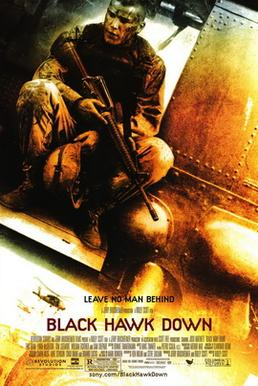
Released in 2001, Black Hawk Down is a retelling of an actual event that happened to U.S. Soldiers overseas. For context, Somalia has a lot of the problems that were present in Afghanistan at least in the lead up to the Taliban’s first takeover in 1996. Post-colonialism was an opportunity for Cold War politicking and with Somalia and Ethiopia barking at each other, the U.S. and Soviets got involved. Glossing over the latter half of the Cold War in the Horn of Africa, the regimes changed, Somalia’s communist government was overthrown by an anticommunist government that was just as ruthless as the last and the most infamous man at the helm was warlord, Mohamed Farrah Aidid.
In the middle of the Somali Civil War which began at the end of the Cold War (no one can agree on a starting year, just that it’s still going on), one of the warlords Mohamed Farrah Aidid made a name for himself when those loyal to him attacked Pakistani military personnel in June 1993, followed by attacks on UN peacekeepers, prompting an American retaliation on his lieutenants. Aidid spat back by deliberately targeting American troops in the area, and the Clinton administration was done playing games, sending in Special Forces Group Delta and spearheading Operation Gothic Serpent with the sole purpose of bringing him to justice for crimes against humanity.
This was easier said than done and probably foreshadows the logistical issues of the later War on Terror which the Somali Civil War folded into down the line: who’s the enemy? The inciting incident that kept Delta Force in Mogadishu overnight in October 1993 was the downing of a pair of Black Hawk attack choppers. U.S. soldiers never leave a fallen comrade behind, so a garrison was tasked with finding the downed soldiers and bringing them home broken or in a box. It may be a trope these days, but we do take care of our own.
To put it mildly, U.S. soldiers were lost in a horror show even Satan would reject. Aidid’s paramilitary, the Somali National Alliance, wasn’t exactly a uniformed entity. The movie depicts them as dressed casually albeit adorned with military gear over their everyday attire, and scenes like this would come back to bite U.S. forces in the ass in the Middle East, especially in Iraq in the early years and after during the ISIS years.
The movie focuses mainly on the U.S. Army and its special forces contingents, but the reality was that more troops from other services (Navy SEALs and Air Force Parajumpers) were also involved. Those who survived the initial crash were trapped in the downed chopper, desperately awaiting help from other U.S. forces while the Somali population barreled down on them. Of the two Delta Force operators killed that day, Sergeants First Class Gary Gordon and Randy Shughart were the two who were given posthumous Medals of Honor. As for the rest of U.S. forces, the situation forced them to retreat with their fallen comrades in tow. Photos exist of what was done to the bodies afterward, but I’m not comfortable showing it. Just know that it was grizzly.
From what I’ve heard of people who’s family members served, those who were sent to Somalia would 9 out of 10 times rather be deployed literally anywhere else. Even Vietnam vets of the time, would rather fight the Viet Cong and NVA again than take their chances with Aidid’s forces again. Normally, I’d question the validity of these statements, but there’s enough evidence from retired servicemembers who were there to pretty much write it off as a living nightmare. Somalia is still a grave danger to residents and guests alike, but U.S. Special Forces are training Somali military units so that’s a silver lining.
Channel: Warographics
The thing about the movie that stood out to me the most was a moment when Nelson and Twombly were left behind to cover for their unit while they headed to the crash site. Some time later, Yurek returns and presumably following their training, Twombly and Nelson fired until they realize it was another soldier. Yurek asks why they’re pulling security for a single deserted street corner where the two reveal that they were left there, assured that the rest of the unit would return shortly and that they have no radio or other means of communication because it was unnecessary.
Shortsighted orders are not unheard of at all in the military–in fact, it happens a lot. Military-based subreddits have members past and present sharing stories of commanders and senior enlisted leaders lying to themselves about the worst orders sent from the top down. Often they’re in a humorous light, but in the case of this scene in Black Hawk Down, a soldier stranded with no means of getting aid is above and beyond a blue falcon moment. Even if the unit didn’t know how long that rescue mission would take, leaving with just one radio would’ve been far better than deeming it unnecessary.
Overall, I can’t dispute the numbers. Critics liked it, audiences liked it, servicemembers talk about it, I liked it; inaccuracies exist about the finer details of the involved units, but isn’t enough to turn you off from the movie. It’s one of the good war movies. Give it a watch if you haven’t already.
Next is: Saving Private Ryan.
A classic 1998 war film about a platoon-sized element sent on a mission to find a sole survivor whose three other brothers perished at Normandy and send him home. Fun fact: when the movie debuted, it ignited a flurry of calls to the PTSD hotline because the Omaha landing scene triggered PTSD in veterans young and old.
The characters within this film are all fictional, but director Steven Spielberg relied on real-life accounts of families being drafted into World War II and losing brothers along the way. One such family whose sons were sent to Europe in the 1940s was that of the Niland brothers from Tonawanda, New York. Journalist Stephen Ambrose wrote of stories like those of the Niland brothers, and it wasn’t uncommon at the time for entire families of soldiers to get sent to combat. In World War I, for instance, Ike Sims, a former slave from Georgia, fathered 11 sons, all of whom died in combat.
The little details I noticed in Saving Private Ryan were numerous but the ones that stood out to me was when Corporal Reiben called attention for Captain Miller while in garrison, with Miller responding “as you were.” This is the rule for whenever an officer enters or exits a room. The troops stand at the position of attention and render a salute accompanied by the greeting of the day. The officer returns the salute and replies, “carry on,” to let the troops return to their previous activities.
Speaking of officers, while I’m not one, the rule of thumb that I know of with officers is that once they reach the rank of Major (Lieutenant Commander in the Navy and Coast Guard), they stop leading troops on the frontlines and work as battalion support, unless otherwise directed by higher-ups. I don’t know if that’s true, so don’t quote me on that. I just noticed that during the movie, more field-level officers are dressed in service uniforms than in combat/field uniforms. The exception is the lieutenant colonel who updates Miller on the situation and what he needs to do next, i.e. the plot of the movie.
There’s always praise to go around in a Spielberg flick, no matter how it turns out and while I did love this movie, there are criticisms or comments to make about it. It might be because of Spielberg’s professional background (with Schindler’s List under his belt), his religious upbringing, or the general portrayal of World War II as a black-and-white war, or all of these, but Saving Private Ryan can be viewed as a typical “saving the world” movie. Not that that’s a bad thing, but the reality on the ground was more complicated than western contemporary sources would have us believe. The Nazis had set up conscript battalions of nonethnic Germans in most of their occupied territories, feeding them the same old nationalistic manure to get them into the meat grinder. This was far more prevalent on the Eastern Front where there were more opponents of the Soviets than the Nazis until the war crimes were committed by both swastika and hammer and sickle standard-bearers, though I think Spielberg acknowledged this. It’s not an overall World War II film about stopping Hitler; it’s about a soldier who survived when his brothers gave their lives and is eventually sent back home.
Don’t let that discourage you from watching it if you haven’t already. You’re bound to have done so; Matt Damon aging five decades is a timeless meme for when you’re feeling old.
I put the template instead of an actual meme because I come across this one daily. Put your own spin on it; bonus points if it’s dark.
Lastly, is the movie that was supposed to decry war and the military, but ironically inspired more young men to sign up.
The most striking of this movie is that the character who would fill the role of Senior Drill Instructor Hartman wasn’t supposed to be R. Lee Ermey, but someone essentially coached by him. But looking at the final product, Ermey put the hat on once again and delivered a performance that’s been inspiring real and fictional servicemembers to this day. I’m pretty sure one of the senior drill sergeants from my basic at Fort Leonard Wood was in some way inspired by Ermey’s performance.
The first half is Marine Corps Boot Camp, and the second half is the characters in South Vietnam. The Marines are there own branch, and I don’t know what chicanery they get up to in boot camp, but it’s an extra month of training. Maybe if I find a Marine, I can ask, but I’m looking in from the outside for now. Being a Vietnam War-era film, it’s quite nuanced in some of the characters, the most famously nuanced character being Private Leonard Lawrence, i.e. Gomer Pyle. Knowing Better said it best when he said that Hollywood influences the military more than the other way around. Gomer Pyle was a satirical TV show from the 1960s, so every character in the film knows who DI Hartman is talking about, compared to my company at basic who might not know the origins of Gomer Pyle, U.S.M.C…. or funnily enough, Yogi Bear.
It’s a long story. Look up the “Yogi Bear is dead” marching cadence for context.
Other Hollywood characters regularly referenced in the movie is Mickey Mouse. Three little circles printing infinite money that Venezuela and Zimbabwe could’ve used when s[dial tone]t got flipped turned upside down.
For Leonard “Gomer Pyle” Lawrence, he’s a character who reflects a controversial policy launched by Secretary of Defense Robert McNamara. Dubbed Project 100,000 or derisively as McNamara’s Morons or Misfits or Folly, the goal of the project was to bring the active duty troop number across the military from five to six figures in an effort to turn the tides of the war in the U.S.’s favor. This meant an aggressive draft that targeted the most disadvantaged in America, most notably those who would’ve suffered physically and/or mentally from training alone, let alone a combat deployment to South Vietnam. These ranged from the nearly mentally retarded to the high school dropouts to the literal illiterates with a 4th grade education.
Pvt. Pyle fits the category of McNamara’s Misfit to a T. He’s quite slow mentally, is about 150 pounds of chewed bubblegum, can barely understand the simplest of instructions until the entire platoon starts paying for his f[Attention!]k ups, and overall brings the platoon down, largely by accident. He struggles, yes, but he does try his best until he suffers a mental breakdown that leads to the death of both Hartman and himself in a murder-suicide.
The movie then cuts to Pvt.’s Cowboy and Joker in Vietnam, but in reality, an investigation would’ve been conducted. Different time or no, it’s not different enough where the service’s law enforcement agency wouldn’t investigate the death of both a drill instructor and a recruit. The predecessor to the modern Naval Criminal Investigative Service (then-called the Naval Investigative Service) would’ve questioned everyone about the incident and possibly divvied up the blame based on hazing. None of those Marines would’ve been sent to Vietnam. If charged and convicted of hazing, that’s turning in the olive greens in favor of prison denim or civilian clothing with barriers to re-entry. That, or barrier to promotion depending on how a JAG officer would like to see things. It does get the McNamara’s Folly part right that mass conscription of those deemed unfit would get mixed results at best. A lesson we swiftly forgot when it came time for the 2007 Iraq War troop surge if accounts from troops of the time are to be believed.
But whatever, Kubrick never served, he just directed the movie. The war part of the war film is something I don’t have experience with and–god-willing–it stays like that, but much of the film is essentially a repetition of the central “war is bad” message seen in insert work of art here. Even Saving Private Ryan is an antiwar movie with three out of four brothers going back in one piece.
I kinda pulled my punches selecting these movies for assessment only because I was sparing myself the disappointment that would come with other war/military movies that would get the military egregiously wrong. Sooner or later, I’ll bite the bullet and bring out the worst military movie I’ll have seen by then. Of the worst, The Hurt Locker is regularly decried and maligned by the veteran community.
Before I start, I meant to have something out at least by Friday, but I delayed it because I had recently graduated from AIT on Fort Eisenhower and took ten days of leave to relax and unwind from the grind. I was enjoying the vacation. It also would’ve been close to when my leave would end so it would’ve cut into time I needed to repack and organize all of my s[drum roll]t. Couple that with jet lag that comes with a six-hour flight from Baltimore to El Paso and adjusting to a new climate and time zone, and I was in no shape to write anything. I’m back now and ready to get back in the groove, though like AIT, now that I’m part of the big Army, time could be taken away from me at the drop of a hat, so if nothing is out by Friday or Saturday, that’ll be the reason for it. Now the post!
This one had been a long time coming, personally. My exposure to the Planet of the Apes franchise was all the way back in 2011 when older family members took me to the movies to see Rise of the Planet of the Apes. At the time, I never realized it was the second reboot in a film franchise that began all the way back in 1968 with Charlton Heston as the star, which in turn was borne from a French sci-fi novel that was published five years prior in 1963.
Bet you didn’t know it was a book first, did ya?
Those in my family who took me were definitely old enough to remember the Charlton Heston movies, and it wasn’t until 2014’s Dawn (that I believe I pirated back then) that I had heard more about the franchise, particularly from James Rolfe of Cinemassacre and Angry Video Game Nerd fame that I learned that the franchise goes back five decades. Here’s the video:
Credit: Cinemassacre
Admittedly, he’s made more videos about the Planet of the Apes franchise, including a 2017 review of War (also linked here), so if you want more of his opinions on the franchise check out the channel and search for Planet of the Apes.
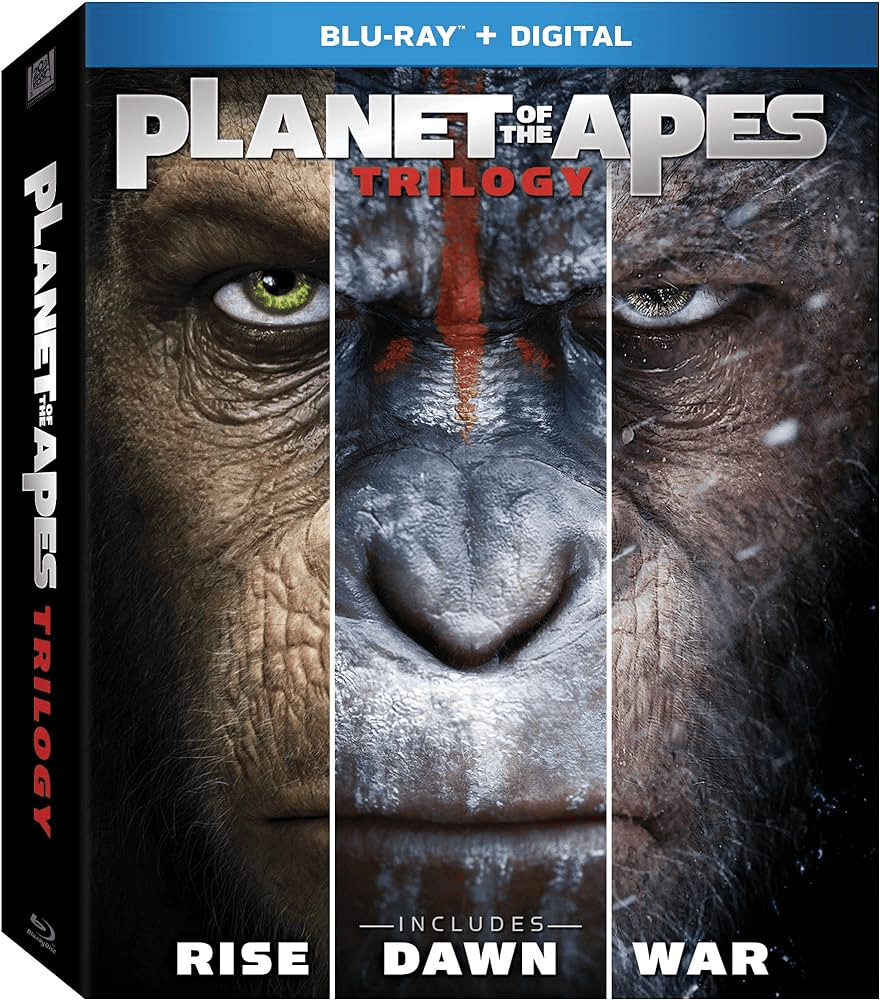
Hell, without meaning to I’ve done a lot of research on the franchise from the lightning in a bottle performance of Charlton Heston–regularly parodied for years on end–to the franchise’s worst fears manifest in the 2001 reboot starring Marky Mark and the Accursed Bunch, which I believe prompted the 2011 reboot trilogy. The premise is definitely an interesting one and a long-lasting one considering all the movies. Wonder how much a box set would cost of all of them?
The original ended with Heston’s character realizing that apes and humanity have reversed their roles and he didn’t find out until he came back to earth from a rocket ship. Spoiler? Honestly, not necessary. Like I said, the ending of the movie had been parodied to death ever since, so I hesitate to label it as such. Don’t let that stop you from checking out the original if you’d like to see where the franchise got its bearings.
I personally never saw the original films or the Mark Wahlberg reboot, all I know was that it was put to rest in the ’70s after one or two failures (someone with more knowledge will correct me if that’s not the case), and the 2001 reboot was so bad that whatever plans there were for a sequel were shelved permanently until the next decade, which brings us to the new more successful trilogy.
It isn’t everyday that a trilogy produces installments better than the last, but if the Rotten Tomatoes scores are still worth anything then the reboot trilogy got better and better with each installment. To catch you up to speed, Rise establishes the beginning of the ape revolution, dawn shows the tensions between humanity and apes, and war shows the culmination of peace talks broken down by a failure to communicate, ironic for the apes since they’ve evolved past the need for communication through sign language–and fitting for humanity since the simian flu in lore robs them of their ability to communicate through anything other than sign language.
Seven years later, 2024 brings us Kingdom of the Planet of the Apes, and much has definitely passed since we last saw any of the apes. Generations after the reign of Caesar, the apes who have long taken over as the dominant species on earth, have fallen into the same trap that plagues humanity even today: tribalism. Different clans of ape with their own philosophies, religion, societies, etc. have popped up, each accusing the other of being different or wrong and in need of fixing.
Almost reminds me of a certain lesson taught to us by a revolutionary known as Huey Freeman.
The different clans within the film all have their own sets of rules, some militaristic, some religious, and a bunch of others that we don’t see directly, but can be implied to be elsewhere in the world. One such clan is that whose traditions center around taming and training birds of prey, namely eagles. The protagonist who belongs to this clan is named Noa, and part of a bonding ritual in his clan involves taking an egg from a nest at a high peak and returning it unscathed to the clan.
His clan is attacked by “followers” of Caesar who bring him to the main villain of the film, Proximus Caesar, an ape with a Julius Caesar complex the size of the Roman Empire at its peak.
One ape, Raka, whose clan had done research and catalogued Caesar’s teachings, explains that these so-called followers have a distorted view of Caesar. Not their fault since his struggle couldn’t be written down and chronicled, but the central focus of Caesar’s struggle had been lost to time. Raka tells Noa that Caesar’s core teaching was “apes together, strong,” an important scene you may remember from Rise when Maurice asked why he gave a cookie to Rocket, one of the more combative apes in custody.
Seeing as the apes are divided by clans like early humans were (and modern humans still are), that lesson had been forgotten. Raka also tells Noa of humanity’s many accomplishments prior to the global world-ending virus; Proximus is also aware of these now antiquated human achievements and inventions, but the tone of voice separates their characters. Raka boasted of humanity’s achievements on the mission to tie the world together while Proximus boasted of humanity’s achievements on the mission to keep the world divided.
Like a warlord, Proximus is dead set on getting humanity’s warfare capabilities, locked behind a giant vault. Throughout the movie, Noa’s character is drip-fed to the audience. Unlike Caesar who was a diplomatic figure with the charisma and courage to sway even the most violent of apes, Noa isn’t a particularly violent character. He’s a soft-spoken, pacifistic character who resorts to violence as an absolute last resort. He uses his words more so than his paws, but it’s not like he doesn’t have flaws of his own.
The state of the world being what it is in the franchise, most apes are lucky if they lay eyes on a wild human. When Noa does see a human, he’s not the most trusting, likely a product of how he grew up. But with Raka acting as a more knowledgeable foil to the young, ignorant but still growing Noa, he learns more about humans from him than even his elders knew, which shows how much knowledge of the old world is lost. In comparison, archeological sites in recent history have rewritten what we thought we knew about early settlements and civilization, like the eastern Turkish structure Göbekli Tepe, said to be older than the first civilization estimated to have been built between 9600 and 8200 BCE. Archeologists are still learning about it as we speak.
“Ape-themed Crusader Kings” is a bit of a joke, but there’s some truth to it. It’s not unheard of for media to look to mythology or religion as a source of inspiration, several videogames have becomefamous for it. In this case, the way Noa is written appears to be Christlike, which may set him up for such a role in the future in this series, provided there is a sequel to Kingdom. Going by audience and critical reception, it looks like there will be and I think there’s going to be a theme in the titles. This successor is called Kingdom and there’s a bunch of early Christian and even ancient Roman themes within the film. Rome itself began with a kingdom, established a republic and then built an empire before it split and the west fell to ruin. My guess for a sequel would probably something along the lines of Republic of the Planet of the Apes, followed by Empire of the Planet of the Apes, just to keep the theme going.
Of course, this is subject to change and whatever’s cooking in the writers’ minds may or may not line up with what I’m thinking of, but as it stands, Kingdom is a welcome addition to the Apes franchise (don’t let the naysayers bray at you like the donkey-headed homunculi they are). I saw it on a streaming service recently, and if you have the means to do so, be sure to sign up and stream it in your own time whenever you’d like, or if you’re a physical media enjoyer, A. based, and B. wait for a DVD release so you can watch it whenever you’d like. Its an age-old franchise with a hell of a lot of lore and history to uncover. Have fun!
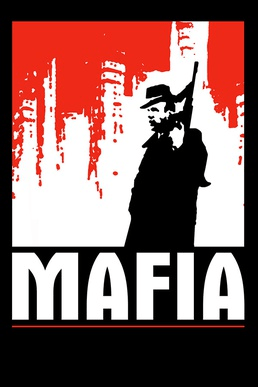
Here, reader, I bring you a tale of a video game series known only as Mafia. 2K Games released three installments between 2002 and 2016: Mafia: The City of Lost Heaven; Mafia II; and Mafia III. Depending on how you view the series, it’s either another welcome addition into the open-world genre, or yet another GTA clone, especially in era when that was all too common. And like the series, it may or may not be accused of ripping off along with other video games, the Mafia series draws from the inspiration of mobster media from Godfather to Goodfellas, but what sets it apart from GTA is that the satirical take on American society is nonexistent and the controversy that lingers over the GTA series like a noxious cloud is also nonexistent.
The focus in the games is based strictly on the Mafia and all the mobsters within, so while some characters may be inspired by someone like Bob Hope or Lauren Bacall or Tippi Hedren, the most you’ll get are throwaway lines of dialogue or even cinema boards advertising popular films from the era… which I count as a worldbuilding plus as it captures part of the atmosphere in the games, but I’ll explore that aspect later.
Mafia: The City of Lost Heaven (2002)
Set in the city of Lost Heaven, an amalgamation of several major midwestern cities (especially where the Purple Gang and Al Capone were based in), during the interwar period and Prohibition, cab driver Tommy Angelo is coerced into aiding and abetting mobsters Sam and Paulie into helping them escape a rival family. Already mafia material; on the way back to their territory, these members of the Salieri Family compensate him for the damages and buy his silence, which considering how corrupt law enforcement was at the time, may not have been necessary, then again, not everyone was eating bribes like beans on toast at the time.
Being given time to think about becoming a Salieri gangster himself, Tommy initially declines until the rival Morello gangsters wreck his car again, and attempt to break his legs. Now it’s a matter of survival; those f[aah!]kers were gonna eat him alive. Over the course of the rest of the ’30s, Tommy continues his work with the Mafia and learns firsthand how complicated things could get: enemies with connections, friends who want out, strict adherence to the laws of the Mafia, and even betrayal.
Compared to other open-world games, Mafia’s strength comes in its more grounded and serious portrayal as opposed to simply being a video game. It gets to be cinematic at times with Scorsese/Tarantino-esque set pieces and dialogue. The influence is strong enough that it can feel like any one of the movies it draws inspiration from. Lost Heaven’s setting was reflective of the time period. When the government passed the 21st Amendment in repeal of the 18th, they moved onto other profitable avenues of illicit activity. Hollywood had to get those drugs somehow…
Such a waste…
Incidentally, this won’t be the last time drugs make their way into the Mafia series. Lost Heaven seemingly ends on a high note, but just because Tommy’s tale is done doesn’t mean the consequences don’t find him later. Such as the case with real-life mobsters Abe Reles or Albert Anastasia. And where does he face these consequences?
Mafia II (2010):
In this game where the next protagonist, Sicilian immigrant, Vito Scaletta, takes the helm in the fictional Empire Bay, which may or may not be an amalgamation of a certain northeastern megalopolis. In all seriousness, the name immediately makes me think of New York, accents and all, but if I was a bit more well-traveled, I could probably make the case that Baltimore, Boston, and Dover are equally referenced too.
I haven’t seen any Silver or Golden Age films as of late, but one I do remember was 1933’s King Kong and all its primitive claymation ape suits, as well as 1932’s Scarface. Yeah, the 1983 one with Al Pacino is a remake of a classic. Bet you didn’t know that.
From what I remember of those films was the way the respective cities looked: the clothing, the buildings, the cars, the people and their accents, the outside world and its influence on the story–similarly, the case is felt in Mafia II. Vito says that his family moved when he was seven and he was born in 1925, which would mean he moved to the U.S. in 1932 before prohibition was repealed. He also claimed his father was an alcoholic who was probably also a frequent buyer of bootlegged booze until speakeasies were replaced by legitimate bars and taverns. Maybe some of the booze smuggled into the States made into his flask back east. Who knows?
Fast-forward to when Vito is 18, Japan had since roped the U.S. into a two-front war, and Vito’s gonna find himself on the frontlines after a robbery gone wrong. Drafted into the 506th Parachute Infantry Regiment (Currahee!), Vito is specially chosen as a native Italian for the U.S. combined effort to invade Europe through Sicily, for which his unit convenes with the Italian resistance. After guest-starring in HBO’s Band of Brothers for about two years, Vito returns to Empire Bay where his best friend, Joe Barbaro, has made a name for himself amongst the cities’ wiseguys.
Joe helps Vito avoid a redeployment, probably to Germany, by forging his papers, and find more work for him to do with the wiseguys, leading to crimes of a federal degree for which Vito was initially sentenced to a decade. However, thanks to even more wiseguys already serving sentences, Vito’s time behind bars is cut short and he’s released just in time to experience the early ’50s; where the mob was still going strong and official corruption was being virulently ignored long after the prohibition days.
Vito continues riding with the Mafia, reaching made man status, and reaching his highest of highs until, like Tommy Angelo, his past catches up to him and relatively quickly as well, leading to the loss of nearly all of his fancy belongings. Unlike Tommy who was forced into the Mafia out of survival, Vito did so to get riches. He worked so hard to stave off the poverty he lived through in those tenement homes and circumstances put him back at square one.
Admittedly more self-fulfilling than Tommy who definitely had his own qualms with Mafia life, Vito takes a bunch of jobs, one of which just so happens to include (spoilers) an attempt on Tommy’s life. Mafia II starts impersonal and gradually becomes more and more about Vito. He’s clearly not the first Italian to leave Italy and join the Mob in the U.S., but all things considered, he tried to solve his lack of money problem while also clearing a standing debt with a loan shark by dashing between odd jobs, but even if he wasn’t in debt, I still see Vito mad dashing to get the dough for himself.
Mafia II is divided into chapters and the first half has a lot of time in between them. The last half of the game though is spread out through a few days, probably the longest stretch between them being at most a week or close to it, obviously for narrative purposes, signifying what’s at stake: his life. Vito’s loose ends are finally tied, but in the end, the wiseguys who helped him in prison only vouched for him, not Joe who was there by coincidence. We the audience are lead to believe that he didn’t make it, but surprisingly, he and Vito eventually make their way to the third game’s setting…
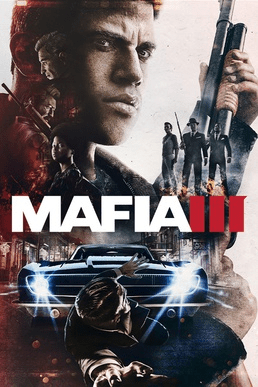
Mafia III (2016):
Now the setting is New Bordeaux, the game’s stand in for New Orleans, Louisiana and well within the civil rights era and counterculture movement of the late 1960s. This time the protagonist is an orphan named Lincoln Clay who by modern standards doesn’t meet the genealogical parameters to be considered black, having a Dominican mom and most likely Italian dad (whom fans theorized was Joe Barbaro himself), but going off face value (no pun intended), society put him into the black community who accepted him with open arms, even praying for his safety when he joined the Army and was sent to fight the Viet Cong.
His adoptive family is still there waiting for him, and he learns that they’re in trouble with a gang of Haitian descent while also being the “lapdogs” of the Italian Mafia in New Bordeaux. The antagonist, Sal Marcano, attempts to make an irrefusable offer which then gets refused and after one last job, Lincoln and his family are left for dead, setting him on a revenge quest. Continuing the theme of a living environment, the developers this time being Hangar 13 did well to capture the feeling of being non-white in the Deep South. Segregation ended federally in 1964, but the practice was still burning out years and even decades afterward, hence the the nearly 160 race riots across the U.S. in 1967, a lot of times in northern cities where segregation also existed but was outclassed by the southern way of separate but equal.
Lincoln Clay and the setting really distinguish Mafia III from the rest of the series with a brutally raw inclusion of racism as a mechanic, and it’s everywhere, from women clutching their personal bags whenever people of color walk by to stores having signs limiting or outright barring non-whites from entry and service.
The story, not including all the DLC, had been terribly undercut by the mountains worth of technical glitches on release, but ignoring the initial release’s problems, I say the game does a great job of putting the player in the shoes of those who called that a reality back in the day. My grandmother, who grew up in Virginia in the ’40s and ’50s, has a bunch of corroborating stories from the era. It reminds me of the approach taking by Max Payne 3, making Max a private bodyguard for the wealthy in South America, isolating him linguistically as he traverses the many locales of São Paulo. You are the one nail that can’t be hammered in very easily.
From Prohibition to early Cold War to civil rights, the Mafia series had a momentous evolution. As of writing this, I’m 2/3s of the way through Mafia II and I’m still at the beginning of Mafia 2002 with plans to complete them both and the third one sometime in the future. In spite of all the faults in the games, I can’t recommend enough that you experience this trilogy at least once if you haven’t already.





















 Opinions on Entertainment