Sekiro and Elden Ring: My Experiences

Style plus difficulty equals banquet of substance

I’ve got another double bill for you: a pair of FromSoftware games that I’d put a substantial amount of time in and I thought I’d compare and contrast them from both my point of view and how they’re designed. Fair warning: I’m no expert on game design so don’t expect a well-informed breakdown of how XYZ works in insert game here.

I’ll start with Sekiro: Shadows Die Twice.
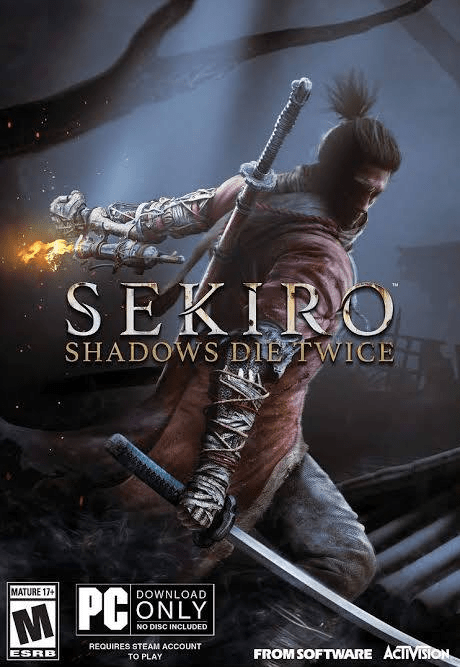
Released on March 22, 2019 for all available platforms, Sekiro is the tale of a shinobi dedicated to his lord, Divine Heir Kuro, and the dangers they face from the expected like ronin and ambitious samurai to the plausible like other contracted shinobi to the completely fantastical like ginormous creatures. Kuro’s position as the last in line of a divine lineage puts him in the crosshairs of the Ashina clan’s retainer, Ashina Genichiro, whose soul purpose in the game is to use the rejuvenating waters to revive his ailing grandfather Isshin and subsequently make the Ashina clan immortal and unite Japan under the Ashina banner.

You know, having played as the Ashikaga shogunate in EU4 and reading about the downfall of the Kamakura shogunate (and it’s most recent manga adaptation), I can’t tell what’s more sinful–Ashikaga treachery or Ashina ruthlessness.

Just goes to show that the shinobi had a better loyalty track record than the samurai. Inazo Nitobe was full of it.

I’m also going to out myself as having a lack of experience with the other FromSoft games, namely Dark Souls, so in lieu I’ll speak on the gameplay, level design, and combat I’ve witnessed. Although I’m not well-versed in the Dark Souls franchise, I’ve seen bits and pieces of gameplay here and there and from the outside looking in, it looks more like Dark Souls proper sacrifices speed for power and precision. By contrast, Sekiro seems to rely on quicker movements, agility, and a lot of times, simple tricks. Fitting for a shinobi, eh?

Dark Souls players needn’t quote me on this, but also based on what I’ve seen in gameplay and my own methods of playing Sekiro, it seems like there a more ways to cheese enemies in the game. The faster movements make it look as though there are more ways to do it, but it being a FromSoft game, wrong moves and the like will still result in the bosses planting Sekiro and seeing if a smarter shinobi grows.

Speaking of dying, Sekiro is also set apart by allowing a second chance at battle, really putting the Shadows Die Twice subtitle to use in-game. That said, reviving and dying before there’s time to recharge leads to NPCs being afflicted with a disease known as Dragonrot. It might seem like nothing to cheat death endlessly, but the energy to achieve can’t come from nothing. The way it works is that each time Sekiro flips off a shinigami, the energy required to do so draws on the healthy population, gradually sucking their life forces until they develop a hoarse cough. If it happens too often, they can die, and if I’m not mistaken, this leads to an alternate ending. Fortunately, there is a way to treat it in-game. Gathering the blood of a victim and bringing it to a doctor, Lady Emma, can help keep them alive until it happens again. So to keep it from happening again or often, git gud.

Paradoxically, Sekiro doesn’t want you to get too comfortable with the trial and error method because there are only so many times you can do that until you have to change strategies, as you’d know from any lesson on the scientific method.

Sekiro’s level design takes a page out of Spider-Man media. Plot spoiler: Sekiro loses his arm after the first encounter with Genichiro and is given a prosthetic that’s also a grappling hook. So swinging from tree to tree to rooftop and getting slashed in the face by a flying enemy feels so freeing and amazing. Sekiro is probably not the most physically imposing protagonist of all time, but he makes up for it with ninja-like reflexes you’ll definitely employ in-game. As of writing this, the furthest I got was the second encounter with Genichiro on console and I’m still near the beginning on PC, but there’s enough to glean from the combat even in the early game.

Breaking from the “one enemy attacks at a time” trope found in most media, FromSoft’s output reminds you of how special you’re not. Enemies work together to make sashimi out of your shinobi hide so living up to your reputation as a fiend from the shadows works best when it comes to clearing them all out piecemeal. Means dicks to the boss fights since they’re meant to face you upfront or at least most of them are designed to, so I guess Nitobe wasn’t completely full of s[horse neighing]t when it came to describing samurai warriors. Then again, you’re a shinobi so playing by a samurai’s rules are worthless to you. You could face them upfront the classic way, but staying in character means sneaking behind them to take off a health bar. At that point, you need only fight them once, collect a prayer bead and progress to keep on doing it.

Sekiro also caused a stink with journalists who couldn’t get through the game to review it “properly” according to their arbitrary standards, and I think someone better than me can put in extra details, especially past the second Genichiro encounter, but for what it’s worth, if you’ve been putting off Sekiro for whatever reason, but really wanted to play it, I can’t recommend it enough. My best way to describe it as easy lessons, hard application.

Now for the other FromSoft game: Elden Ring.
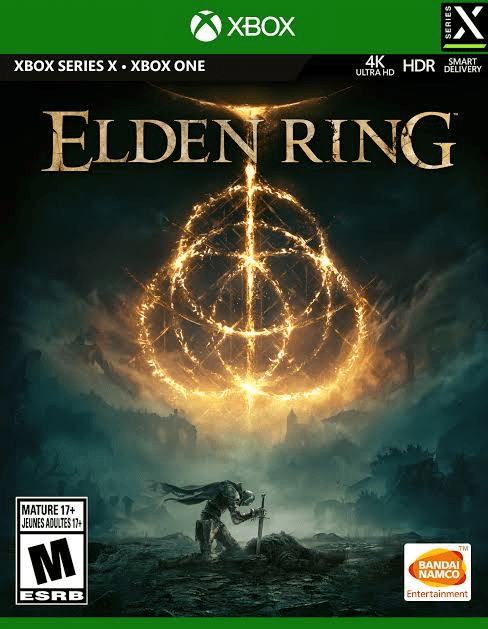
Released on February 25, 2022, Elden Ring made a meme of itself rather quickly by wheelbarrowing in its gargantuan balls and declaring everyone to be maidenless gits. Well, screw you too, Discount Wales! I’m gonna go in and Margit threw me off a cliff.

That did happen to me in Elden Ring. I summoned some help and got thrown off the cliffside. But I kept going in until I won. Gittin gud, folks!

Working with the few memories I have of Dark Souls gameplays, I’d say Elden Ring is the closest to form without actually being Dark Souls in name. Classes to choose from, customizable character, in-depth story about constructing the titular item, ruined medieval European-inspired castles, spirit steed, bosses that can sleep you in one hit; rings a lot of bells, but without the proper experience I hesitate to definitively say they’re Dark Souls bells. Regardless, one thing I forgot to mention that both Sekiro and Elden Ring do is allow players to leave messages to each other, though Sekiro does it differently by showing instead of telling.

Dodge-rolling has made a comeback in Elden Ring and dodging a titanic swing and countering with a slash at the ankles feels right. Between these two, they crank up the difficulty to make the victories that much more rewarding. I genuinely get a kick out of beating a boss after getting planted enough times to make a forest of bodies. I have less time with Elden Ring, but as I said there’s a lot to extrapolate in a short time with the game. Toss away the shinobi-like agility and speed and the slower movements are because your character is covered head to toe in armor… unless you’re the solo guy.
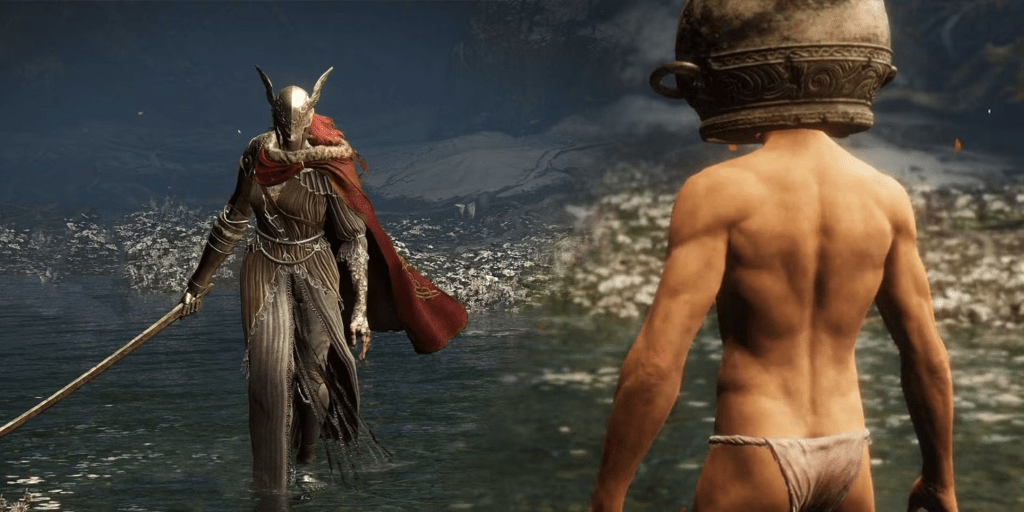
Well, it’s not like there’s a wrong way to play games anymore. Nonlinear structures of this type encourage creativity and I’d like to be the fly on the wall of the player who found all the exploits first before sharing them with the internet.

As far as hard games go, both Sekiro and Elden Ring have the difficulty found in a FromSoft product, both cannot stress enough the importance of the parry, and both give you enough tools to play how you see fit with a few bosses having a method that makes them easier to deal with. In Sekiro’s field, sometimes you can just rack up a kill count and take the ryo that drops from enemies ’til you reach the desired amount to buy from a merchant; and other times you can eavesdrop on loudmouthed enemies and discover new weapons by simply waiting and listening for more details. For the most part in Elden Ring, I’ve found extra accessories from fallen enemies. I haven’t used the merchants yet, but based on my play style I might never get/have to. Even in video games, I’m a great big cheapskate.

Channel: AreaEightyNine

One main element in Elden Ring is that the titular artifact is fragmented and scattered across the game world, sort of like the jewel shards in Inuyasha. Finding them is “easy,” it just takes getting past the boss fights to get them. Once constructed, the Elden Ring is said to grant the wielder great power. So like Sekiro, there’s a powerful object that both sides want and depending on how the stories for both goes, the protagonists of both will realize that no one is meant to have that power and let it be, or they take the power and use the godly powers for good instead of evil.

I will peak ahead to see what I’m up against, but that’s the most I’ll do for spoiling myself–knock on wood. All I can say with certainty is that I have a long way to go.

Another spoiler: I never made it past Genichiro, Way of Tomoe on console.

As Rias is my witness, I’m gonna do it on PC. That’s my declaration!

For this recommendation, I present to you: Japanese Comedian Meshida.

https://www.youtube.com/@Meshida

As the title suggest, Meshida is a Japanese comedian. He said goodbye to salaryman life and chose laughter as a full-time job. His brand of comedy briefly explains Japanese society while at the same time taking the piss out of it. If satire is the best way to critique while also wishing for improvements, then I say keep it going.

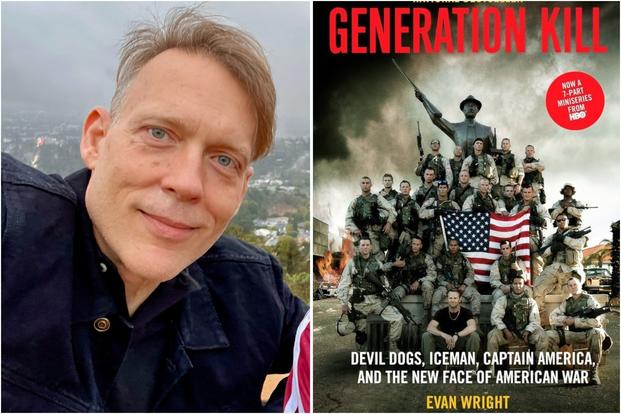
Evan Wright’s Generation Kill

War journalism brought to life

I’m doing something different this week. It had come to light that the author of the novel Generation Kill, Evan Wright, had taken his life on July 12, 2024 at the age of only 59. I’ll be upfront and say that I lack the expertise to deal with a subject as delicate as suicide and the most I can do for those who’ve fought or are currently fighting those demons is direct them to crisis prevention organizations and hotlines, which I feel would come across as hollow since anyone can do those things.

Instead, I’d like to do something that I think would be more thoughtful and remember Wright by his work, namely the novel that I’d had a lot of time reading and it’s TV miniseries adaptation: Generation Kill.

My introduction to the book was a bit of a cascade. I first heard of it through reviews of the miniseries of the same name, licensed by HBO in 2008. It got a brief mention in Knowing Better’s video on his own service in the U.S. Army, where he said it was as accurate a depiction of the average servicemember as one could get, next to actually signing up.

Channel: Knowing Better

And also a more in-depth review of the series by The Almighty Loli.

Channel: TheAlmightyLoli

Yeah, the subject matter means you’d have to view it on the site. Good viewing if you have 1.5 hours to spare.

To summarize it, Evan Wright was attached to the Marines’ 1st Recon Battalion during the invasion of Iraq in 2003, documenting every single action of the jarheads from actual combat operations to random silliness and off-color conversations carried in their off time. Anyone whose exposure to military operations is limited only to Hollywood would be surprised to learn how juvenile and sophomoric the humor can get, but to circle back to something Knowing Better said in a different video, the military doesn’t influence Hollywood. It’s often the other way around, and this makes a lot of sense if you think about it. Just because you wear camouflage and a helmet doesn’t mean you’re not also a nerd about something. And in my own little circle, the Army’s Signal Corps has a bunch of sci-fi fans interspersed with weebs, two things I happen to be as evidenced by all my blog posts.

I can’t speak for every veteran, but from what I’ve heard and read, military media gets a lot of scrutiny from these groups. Living day-to-day in the military trains you to pick through every detail with a fine-tooth comb, and the small details often make or break a piece of media for a servicemember. There’s a bunch of regulations on how things should look and how to behave or react or respond to fire. No matter the branch, the US military follows the rules of engagement to heart. As a result, there’s loads of ire launched at films like The Hurt Locker whereas In the Army Now, Black Hawk Down, or even Saving Private Ryan get praise not just for the storytelling but the miniscule details that vets and servicemembers would notice from a mile away. A single deviation from the standard tells them all they need to know about how much or how little the producers cared about the subject matter.

Because Evan Wright saw the Marines fight tooth and nail to capture and secure Baghdad, he had earned himself a lot of respect from military vets and the community on a wide scale for sticking his neck out, even if he didn’t have to. That said, war journalism is nothing to scoff at. It’s a serious and dangerous branch of journalism that can and does kill the reporters on scene. In just the invasion of Ukraine by Russia, little more than a dozen war correspondents have come under fire, some of them fatally and more may follow as the conflict progresses. Both sides know who their enemy is, but the tools of war are themselves not loyal to a flag, president, or even constitution. A pen isn’t going to miss you if it gets lost in your house and in a similar vein, a rocket’s area of impact largely depends on the capabilities of the mapper; and even then the enemy isn’t a guaranteed hit. Sometimes friendlies or civilians get caught in the crossfire.

Wright and countless others in his position knew this prior to going into the conflict zone and many more following such examples will take that to heart before stepping off attached to a unit in the field.

It’s worth mentioning that popular as the book was and still is, it wasn’t controversy-free. Some of the Marines at the center of the book faced backlash initially until 1st Recon commanders intervened and advocated for firsthand viewership of the book. A few of those same Marines even helped with the miniseries adaptation in 2008 and starred as themselves in the show during its run. Even now, over a decade and a half later, Generation Kill gets praise for its reporting and up close depiction of the lower enlisted as they were neck deep in the fight between the Iraqi Army, Saddam’s Republican Guard, and the Fedayeen death squads.

Speaking of which, another thing the book and series does well is display the troubles of modern warfare. The early stages of the War on Terror were wrought with controversy and opposition most of which still lives on to this day in the form of popular myths. In the case of the Iraq War specifically, some of those concerns centered around fighting an atypical war against a largely faceless adversary. Loose groups of terror cells in dangerous parts of the world made fighting the war incredibly difficult and complicated with some groups fighting each other and their listed enemies, the West being among them.

Because they were often dressed casually or “plainclothes,” picking apart friend from foe turned into a clusterf[boots stomping]k of massive proportion. The rules of engagement weren’t always applicable to the situation. Common sense isn’t common or even as widely available as we wish it were, that’s why there’ve been travesties, many of which don’t make it to screens and newsprint often until years after the fact, since empathizing with both the warfighters and the victims of oppression is a balancing act. Protesting wars is old — I don’t know how old — but I know that when a line is crossed, the aggravated public gets restless if in a democracy. It might have something to do with war correspondents having widespread freedom of information, but I think it’s safe to say that the public discourse against the military reached its zenith during the Vietnam War.

You may not know it, but this man helped put an end to a war crime… and he was essentially laughed into depressive episodes for “snitching” on his criminal comrades.

Wright’s novel and the miniseries based on it show how complicated even “black-and-white” wars can get. What becomes of the civilians involved? How do you treat non-uniformed combatants? How do you atone for devastating mishaps? Questions and dilemmas like these are what make and break people in war, whether they’re fighting it or just witnessing it. Often, it’s the sword of Damocles problem–the blade changes position with every move a leader makes, and sometimes there are hard logistical choices you have to make in modern wars. Slight spoiler: one scene in the miniseries depicts the Marines deliberating on whether to bring civilians with them, but the idea is (no pun intended) shot down to the dangers of having civilians in tow, as Wright himself could attest. But there were equally bad if not worse consequences for sending them on their way, that being the Fedayeen death squads mowing down suspected traitors of Saddam.

This article on Military.com has more to say about Evan Wright’s professional work away from Generation Kill, but adding to the praise, I like how honest and unjudgmental it is. It gives you as many of the facts as can be recalled while letting the audience see inside the mind of a young Marine ready to let ‘er rip in a combat zone.

Normally, I’d put a link to where the series can be viewed, especially for free, but for once, I won’t be sailing the high seas for this. In fact, for those who are able, I’ll leave a link to the book and if you want to watch the miniseries, it’s still available on HBO if you can afford the cable package or are able to subscribe on the app.

Results on Amazon: https://www.amazon.com/s?k=generation+kill+book&crid=1OKAPP40AEAOG&sprefix=generation+kill%2Caps%2C91&ref=nb_sb_ss_pltr-data-refreshed_3_15

HBO miniseries: https://www.hbo.com/generation-kill

Evan Wright (1964-2024)

Undead Unluck Anime Adaptation

From page to cel

Ah, f[swords clashing]k it. I’ve been putting it off long enough and my desire for perfection is clashing with my schedule so, I’m bringing the long-awaited opinion on the anime adaptation of Undead Unluck. Still got a few episodes left in this season, but I’ve reviewed anime halfway through before so there’s no reason to hold this one to a higher standard.

Immortality Misfortune is the story of a man who’s chronologically so old, his birthday is on a different calendar system going on a journey with Japan’s millionth unlucky female protagonist on a quest for the best death the world can offer. It was picked up by Viz Media in January 2020 for weekly distribution in the west and I’ve been keeping up with it leading up to my first try at Army basic training. I’m still following along to the best of my ability, and yes I still recommend the manga.

For the anime, it was picked up by David Production, the same craftspeople responsible for bringing JoJo’s Bizarre Adventure to stunning life after 25 years in limbo and Fire Force, only for that to be delayed by a few weeks due to the tragedy at KyoAni in July 2019. It’s not often that a manga I follow closely gets this treatment, but the industry seems to be enjoying a boost as of late with more and more manga I find getting adaptations later. Speaking of which, The Elusive Samurai’s next episode should be airing right now so a review of that will arrive in time. I will try my best not to delay it as long as I’ve done with this one.

Considering the year of release of the manga and that of the anime, Deathless 13 went through a few changes since it takes place in the modern era. COVID had a slight influence on the first episode as the female MC, Fuuko Izumo, was all by herself before attempting to try her own hand at death, whereas in the manga, there was a crowd gathered attempting to stop her. Then deuteragonist, Andy, shows up attempting to do the same but in style.

The series likes to have a ton of fun with body horror considering the premise: a select group of people possess supernatural abilities that negate the laws of physics. What anyone else can do normally, these “Negators” can do the opposite, hence the abilities like Untouch, Undead, Unstoppable, Unchange, Unmove, etc. No, it doesn’t match with how English works, but longtime weebs know the difficulties of accurate localizations.

A small group of Negators, known as The Union, have made it their mission to uncover the mysteries of the world they live in by challenging God himself. Many obstacles stand in their way, those being the UMAs or Unidentified Mysterious Anomalies/Animals. These beings have an adverse affect of some kind on the rest of the planet and are due in large part to The Union’s performance in the field. If successful, the repercussions are negated and things return to their normal state; but if they fail, the consequences become part of nature, in some cases permanently. Sacrifices tend to be made in order for The Union to reach their goal.

Having followed the series for the better part of 3.5 years, I recall some panels that would look astounding if animated because the action within is limited by the medium it originated from.

Of course, not every manga has that luxury, as Berserk fans know very well. When I learned that DP would be captaining the ship, I recalled their expertise in animation with JoJo, Fire Force and several other series and rested easy that night confident that their ethos of quality animation would not have to suffer. The studio promised us the Sistine Chapel once again and their hard work has paid off. Better yet, no one was breathing down their necks to meet an arbitrary standard so prepare yourselves, people. For the chefs have cooked another perfect dish.

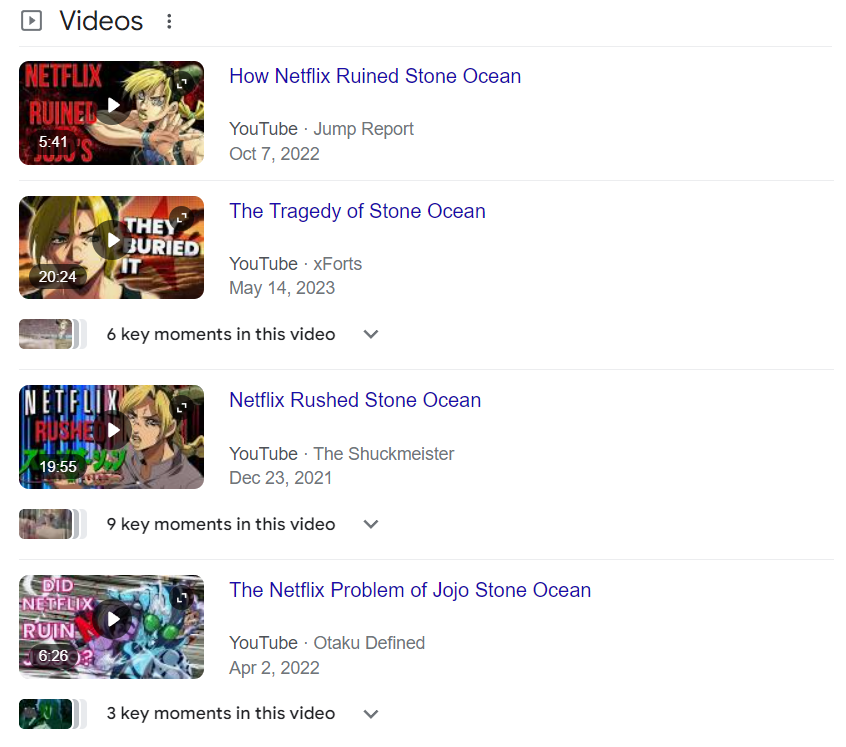
I personally didn’t have much issue with the Stone Ocean adaptation, but I understand the argument that there was interference.

DP’s attention to details is one for the textbooks. Watching Andy regenerate severed limbs and such is phenomenal, and whatever confusion there was about how this world works is enhanced with the motion of all the pictures. No more flipping through pages for visual learners.

Having said that though, much of the series makes it a candidate for the mystery genre. Discoveries are being made all the time, characters keep their pasts well-hidden, motives change regularly, and the changes that influence the world can only be explained by a handful of people. I’d say it meets those prerequisites well with what I remember about it.

I can’t recommend enough that you check out the anime yourself. The manga got back on its feet a while back after a subpar arc, but with the anime adaptation in tow, it’s more than worth the watch. It’s available in dub and sub on Hulu and you already know what I like to frequent.

The Tragedy of Act-Age

Gone… reduced to atoms

Years ago as a college student, I’ve spent a handful of late nights scouring the Internet for content in between school days. I’ve spent these nights viewing the Pink Floyd movie, rewatching Naruto: Shippuden to fill in the gaps I missed while watching Boruto (finally find out what happened to Danzo), and in this case, reading the manga Act-Age, written by Tatsuya Matsuki, illustrated by Shiro Usazaki.

I remember the marketing on the Viz Media site as a story of an orphaned girl named Kei Yonagi who is left to raise her little siblings all by herself. To that end, she seeks the path of an actress and discovers that her natural talent for the art of acting is above and beyond what most would expect, even by method or character acting standards. Essentially, she reminds me a bit of Christian Bale’s dedication to his roles.

Now, as a viewer, my knowledge on the acting industry comes from research and stories, made-up and real. As far as I know, there’s a bunch of moving parts that the average person will likely never see unless they enter the field themselves or something like a scandal pops up, the latter of the two being quite commonplace in Hollywood. I can’t say for sure if similar practices exist in acting in Japan or anywhere else in the world, but I wouldn’t put it past anyone. Every organization thinks they’re normal and everyone else is weird. Maybe one day, I’ll make it a blog post.

In the manga, a lot of the ins and outs of acting as a whole are present, but one of the main selling points was the mental health aspect. Show business is a cutthroat industry to break into and has been that way ever since the Ancient Greeks were pioneering and perfecting theater and stage. It’d be something to be the fly on the wall of the original Antigone play.

Act-Age ran from January 2019 until its untimely cancellation in August 2020. Millions of views across 123 chapters, 107 of them collected into book format, spread over 12 chapters with only 2 of them in English, so basically, if that person is you, depending on how you feel about it you practically have gold or pyrite. But I’m jumping the gun.

This blog post explains that the manga is atypical for a Shonen manga at face value, trading physical punches for mental attacks, but after reading through the article, it makes sense. The term battle tends to get used quite loosely these days. Stretching the definition to any kind of struggle, physical or mental, works well in this case because Kei does undergo her own internal struggles while acting or at home. Mental strength is something that I don’t see get praised in the animanga sphere all that much outside of horror. If anyone has any recommendations that fit this mold, do share. I’d like to expand my horizons.

Memorable characters, challenging story arcs, mental fortitude and an inside look at the acting industry (at least on the Japanese side of things); all of these are a smash hit manga make. Probably even an anime adaptation, but it sadly wasn’t meant to be. The manga got the axe when Matsuki was caught performing a heinous crime on middle school girls, and everything associated with the manga was halted, including a planned stage play. As for Usazaki, she was asked whether she wanted to continue the series without Matsuki and she understandably chose not to. So Shueisha and Viz Media both shelved it for good and any and all mention of the series has been s[metal banging]t-canned for good, save for blogs like this that occasionally dig through the annals and archives to write about the tragedy that was Act-Age.

S[clapperboard]t like this makes it even harder to be a weeb. Explaining away weird plot points and out of context images/scenes is very fun and hilarious. It gets all the more dark when the series in question is in some capacity tainted by something the author did. Normally, I have no problem splitting the art from the artist, but with debates like that–and you may have your own concepts about the matter–I think it depends on the attachment between the art and the artist. I remember reading Joe Bonanno’s autobiography A Man of Honor and in that he claimed to have met the likes of Errol Flynn, praising his acting prowess but chastising him as a person, especially with how he treated women. Similarly, I think the Rolling Stones would be directionless without Mick Jagger, or that John Lennon was something of a lyrical genius, but at best it’s creepy that Jagger’s lovers are much younger than him, and at worst Lennon’s romantic life gets less and less opaque the more you read into it. Or just listen to “Run For Your Life” and pay attention to the lyrics.

Most licensed manga hosting sites have done away with the manga, especially Viz Media, out of respect for victims and survivors. I doubt it exists even on pirate sites, making it a candidate for deliberate lost media, where a work is purposely excluded from anything capable of archiving it. As I said, depending on your stance, if you managed to save the chapters for private viewing you may have gold or pyrite.

Act-Age, during serialization, was proof that it could work and was on its way to become the next big thing. There may be an alternate timeline where Matsuki wasn’t a s[horse neighing]t heel and it’s still in publication with its distinctive writing and art aesthetics, but no one can say for sure where it would be now. Maybe like Undead Unluck, it’d suffer a slump until a later arc revived it, or the anime adaptation saved it. Who knows?

But a light exists at the end of the tunnel for the original team that worked on Act-Age. For instance, Usazaki walked away from the project to work on other stuff, be it magazine covers or her very own one-shot manga. The facts were in the fondue during Act-Age’s run; she could clearly do it. The manga cover up above in this post is her own work. The link to the one-shot is right here. Enjoy!

Back into the fold, baby! For this week’s YouTube recommendation, I recommend One Punch Dad.

https://www.youtube.com/@onexpunchxdad

Run by a current U.S. Army warrant officer, One Punch Dad features TikTok-esque/YouTube Short style skits, a Star Wars parody of all things, and the warrant officer’s opinions on multiple different things from military uniforms the world over to fast food to duty stations and a bunch of other stuff.

While I have recommended channels run by prior service vets, this may be the first recommendation of an active servicemember. If you like the kind of content to be featured, consider subscribing.