Working in a Hidden Away Restaurant in Rome

Been a while since we did a double bill

Part of the fortune of covering a series done by the same author is that I don’t have to thumb through another file to look for another series. Last time I did this was when I was covering the two GTAs that seemed to get ignored by modern Rockstar Games: Liberty City Stories and Vice City Stories. These double bills are rare sadly, but this time around I’ve got another series by Natsume Ono: Ristorante Paradiso.

Definitely not the first time a mangaka took their audience to Italy for a story, but instead of chasing an enigmatic mob boss with dissociative identity disorder, this Seinen series is largely crime free. Drama on the other hand goes hand in hand with the panna cotta and insalata mista. Similar to the other series, House of Five Leaves, Ristorante Paradiso also features a diverse cast of characters in background and thought. The story follows a young culinary school graduate, Nicoletta, who started her journey tracking down her estranged mother for the purpose of sabotaging her livelihood after discovering she operates a restaurant in a small corner in Rome. The reason for this vendetta stems from her mother, Olga, leaving Nicoletta with Nicoletta’s grandparents while she went off to get remarried. I can see a number of ways to handle this immaturely, but from what I’ve seen, Ono handles it better than some of the other works where a connecting element is a character’s issues with an absentee parent or abandonment, then again some of those other works portray it as a balding punchline. That, or they try to take it seriously but it falls flat on its face.

Doesn’t exactly mean Nicoletta’s forgiven her mother for that, only that her priorities are elsewhere for the time being. As for the other characters, there’s one older man named Claudio who is legally separated from his wife, so he’s free to date whomever he pleases, but keeps the ring on to dissuade any women from pursuing him, though Nicoletta developed a crush on him after working with him.

Speaking of men who just want to live their lives drama free, another one of the older characters is Luciano. He keeps to himself and also turns down most women’s advances to remain loyal to his departed wife. The anime presents him as cold and stonelike, but he secretly cares a lot about his daughter and grandson. Vito is a flirty type though his heart belongs to a college student he met while working out. And there’re several other characters working at the restaurant, all with different backgrounds and connections to one another.

The series is more about the people working and dining at the restaurant than the meals so don’t expect anything of the likes of, say, Shokugeki no Soma or Dagashi Kashi where the focus is on the eats. Rather, it’s related to a joke within the Golden Kamuy community about the series being an Ainu cooking show that just so happens to feature gold treasure and a rogue unit of IJA soldiers. The restaurant ties everyone together in a way.

What I have to praise about Natsume Ono is that she creates her characters from nearly every angle. Of all the aspects that aren’t given a lot of mind, she chisels out the finest details from those characters and puts them at the forefront of her writing. I also like how she includes minor details. In Ristorante Paradiso, what is addressed is that a lot of the male staff is wearing glasses and this is by design. Nicoletta’s mother, Olga, has a thing for men in thin frames and thus makes it a part of the dress code. And you don’t need a real prescription for glasses. I forget who, but one of the characters got around this by wearing glasses without any lenses in them.

It’s a short series that has the skeleton of an anthology but isn’t as rigid as one. Ono seems to do quite a lot with very little, and as I’d found out for the research of this post, that’s not a hyperbolic statement considering Ristorante Paradiso lasts only one volume despite running for a year. House of Five Leaves, however, ran for eight volumes over the course of five years. It’s also worth noting that Ono writes BL manga under the pen name of basso, so this may have to do more with these stories being very short as opposed to a writing philosophy. Juggling multiple works at a time can get to be a hassle, but this is me thinking, so don’t quote me on anything.

Funnily enough, there is a playlist of the Ristorante Paradiso episodes, but the one I found has a few missing episodes, so if you can stand to do so, a Crunchyroll subscription should do it or if for whatever reason (I won’t judge) you don’t want them to have access to your credit card information then put on a straw hat and challenge the world government from the seven seas.

For May 25, 2024, I introduce you to Kaho Shibuya.

https://www.kaho-shibuya.com

This is a bit unorthodox for a recommendation. Google lied to me about her having a YouTube channel all her own; the closest she is to being on YouTube is multiple collaborations with the Trash Taste podcast, either individually with the hosts or on select episodes as a guest, or in interviews about her previous life, but fortunately Ms. Shibuya does have her own website as you can see linked above.

Kaho Shibuya left the life of an adult video actress (read: Japanese porn star) behind her to pursue something closer to her heart. These days, Ms. Shibuya has begun streaming on Twitch, she cosplays as different characters from anime and video games, she’s dabbled a few times in voice acting, and she even has a book on what she’s witnessed of the Japanese porn industry. These days, people discover her from her cosplays or collabs than of her previous work. If all that sounds like it’s up your alley, click the link above and see what’s in store.

A Lookback at House of Five Leaves

Filling in some time during the pandemic

The accursed year of 2020 was a lot of things to people and only a few of those things were good. I recall searching for something to occupy my time while trapped in the dungeon and going back to that Looper article, I thought about looking for a review for a certain anime I’d definitely not heard of prior to reading it: House of Five Leaves, known in Japanese as Sarai-ya Goyou. Created by Natsume Ono.

Set during the Edo period, it’s about a samurai warrior named Akitsu Masanosuke who very much has the skills of a seasoned warrior, but his timid demeanor loses him a client. The perfect samurai is meant to be intimidating, tough, and unflinching and this guy is shy, unassuming, and nervous. Sort of like Season 1 Mob.

Masanosuke doesn’t really meet the expectations or idea of a warrior even for the time period, which is the point of the series. It takes all the tropes associated with most samurai media and flips them on their head while also grounding the Edo period into reality. One could reasonably put two and two together based on what they know about the Tokugawa period and the Sakoku policy that a class of people defined by war in a time where there aren’t any wars anymore makes for a band of money-hungry and utterly reckless scoundrels… for the most part.

In reality, most samurai were just as diabolically malicious as the enemies they claimed to defeat in combat. Just like medieval knights, both of these warriors have a lot of stories real and mythical surrounding them.

This doesn’t reflect either class as a whole as lots of knights and samurai did have human decency and protect the weak as servants of the people, but being of nobility in Europe and Japan respectively, it meant that there was a lot of power shared by a diverse group of people of different thoughts and intentions. Focusing on Japan, some samurai were excellent and deserving of their position, others were fine with just the bare minimum of simply being there and the rest were heinously dangerous criminals abusing their positions for personal gain. Yeah, there’s no shortage of all three of these the world over; it’s the same old song no matter where you go. And I like that. It reminds you that there’s a difference between being something and being able to do something on a moral level.

So House of Five Leaves is generally about a nervous man who’s too gentle to throw the first punch, or in this case, swing the blade first. Plot wise, he finds himself in with the wrong crowd. Part of the downside of being gentle is not having the spine to put your foot down, which is how Masanosuke finds himself embedded with a group of criminals, functionally early inductees of what we now know as the Yakuza.

It’s hard to say when and how the Yakuza started, but based on my description of the Edo period making for restless ronin eager for battle some theories suggest that this is the most likely case for how the Yakuza morphed over centuries to become recognized as an organized crime group in Japan. For Masanosuke, these criminals specialize in theft and call themselves the Five Leaves. Their enigmatic leader, Yaichi, offers him the position of bodyguard which he reluctantly agrees to.

Again, he has the skills of a samurai, but doesn’t have the intimidation reflective of most other warriors in the Edo period. A worse person would jump at the offer and use whatever excuse there is to cut anyone in two. That said, there’s more to the series than just Masanosuke’s navigating this group of thieves and savages he just said yes to out of desperation.

Yaichi is one of the more interesting characters in the story. He keeps his personal history very close to his chest, playing things off as though he’s simply living life to the fullest. Other members of his gang or known associates who have some kind of connection to him or the gang share their own stories. An ex-thief named Matsukichi works as a beauty ornament manufacturer by day and a spymaster by night, contributing to the beauty of the women while also listening in on the Five Leaves’ potential targets. A tavern owner named Umezo who walked in the same sandals as the others but requested retirement from that lifestyle for safety’s sake, which was granted surprisingly enough. If you know a thing or two about organized crime groups, cults, secret societies, etc., they rarely let you go without a type of debt to pay…

…but in this case (slight spoiler), the loss of his skills weren’t gonna change how the gang operated. He also had a young family to put ahead of himself. Finally, there’s a geisha named Otake who was made to work off a large debt by way of entertainment (as was the standard practice/purpose of a geisha at the time) until Yaichi intervened financially.

Only a 1-cour anime series, it takes you into their eyes and what they go up against. The struggles, the nuances, the desires expressed; this was the anime that inspired my first accursed blog back in 2021… before it cha-cha slid off a cliff. I don’t want to link to that blog anymore; I’m trying to put it behind me, but it keeps coming back and I don’t even think it was a good showcase of my writing. But at least it inspired me to start this one which I’m more proud of.

Back to Five Leaf Clover Gang: my search for a review and recommendation on YouTube led to a playlist with all the episodes on it. People are really getting around YouTube’s copyright strike hammer to get some classics onto the platform like Azumanga Daioh and Lucky☆Star. There exists one spoiler free review on YouTube from over nine years ago following the trends that I’ve been going with so far with anime, awesome reception s[DIO wrryyyy]t sales.

Channel: AnimeEveryday

Keep in mind that this isn’t an action-heavy series, at least the anime isn’t. Don’t go in expecting Masanosuke to swing a sword all the time, because he’s not that kind of guy. He wasn’t written to be that kind of guy and I think it’s an advantage the series has over its contemporaries and progenitors. I like to think of it as the kind of anime that explores the issues people face daily, even if it’s set in the Edo period and if you choose to give it a watch as well, you think so too. The link is up above. Happy watching!

Live Action Avatar: Honoring a Classic?

Bringing nostalgia back for new and old audiences

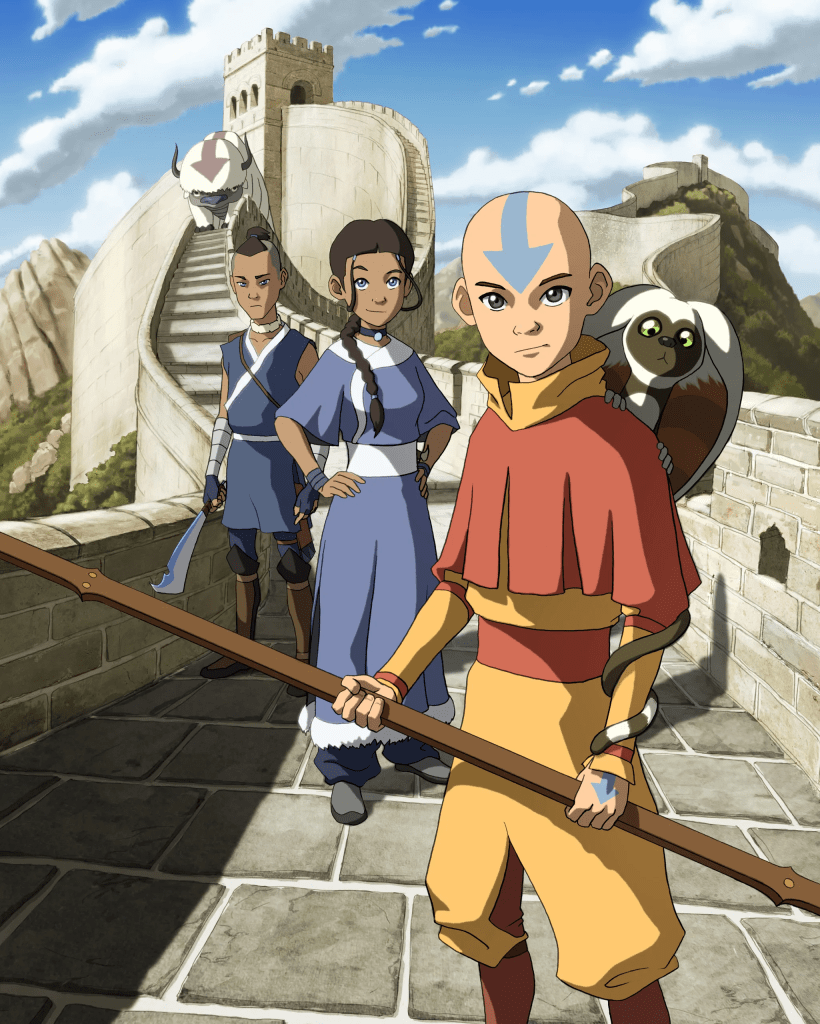
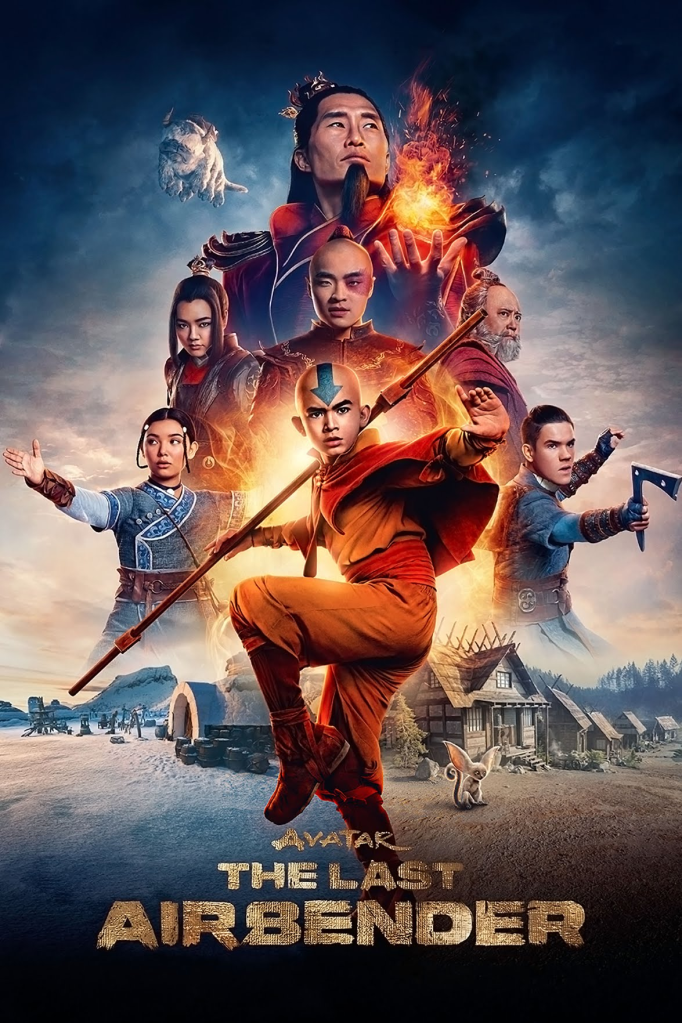
I had gotten news of the live-action Avatar remake on Netflix through the grapevine. Stirrings online in r/TheLastAirbender brought it up sometime last summer and I was holding my opinions until I saw the series for myself, which I did so this week. Even with all the news and assurances that it would do its best to honor the series while putting a new spin on it for a 2024 audience I still felt dubious for a number of reasons.

For one point, the original 2005 cartoon debuted on Nickelodeon, presenting itself as a goofy cartoon about practitioners of the four elements, one, the Avatar, being the master of them all in a bid to bring harmony to a world almost completely victimized and under threat from a militaristic, ultranationalist empire. Goofy moments when the time calls for it surely, but it’s a surprisingly mature cartoon that treats the subject of war, death, genocide, and loss with the maturity those all deserve.

It was a beloved show and those who were there when it aired (myself among them) remember very well many key events and moments from the show from Aang’s discovery by the Southern Water Tribe siblings, to the hunt for the nearly completely buried library managed by a spiritual being, to the planned for and failed invasion of the Fire Nation mainland by a coalition of Earth- and Waterbenders.

Forgive me if those were spoilers for those of you who couldn’t see it even until it recently came to Netflix, but I bring those plot points up to set up what it was like for me watching the show, eagerly awaiting for Book 3: Fire to finally launch in 2007.

I won’t pretend that it was the perfect series even at the time. Some episodes dragged on in places, character flaws that were acceptable back then show the age of the era select episodes were written in, and some plot points were either never addressed or outright dropped for mysterious reasons (the fate of Zuko’s mother was the biggest mystery back then), but I forgive a lot of these for the progress from beginning to end. The mark of good, if not, great writing is the kind where the character shows considerable growth from beginning to end, hence why you learn to hate Walter White towards the end of Breaking Bad.

Another point to bring up would be the early production issues experienced shortly after the announcement of the series. The series had been in the works for a few years prior to the filming of any trailers of announcements of which actors would be cast as which characters as told by original co-creators Bryan Konietzko and Michael D. DiMartino. Initially, they were all on board with the idea, but Netflix being Netflix seemed to have made a decision that drove them away from the project, and it would be up in the air as to what that would be until the series debuted in February of this year.

Either way, things weren’t looking very good for the live-action series, especially since this had the Netflix stamp of approval, a now-diminished status that at one point was worth a mouthful of gold crowns.

I personally had been critical of Netflix, at first for contrarian reasons. Since at least high school, even with the streaming service gaining ground as far back as the mid-2010s, I was the one going against the grain failing to see the point. Call it my upbringing; classic cable television hadn’t disappointed me yet. I was still a kid watching cartoons. It wasn’t until high school actually that I got a taste as to why some shows continued over others. Ratings were often the name of the game, which seems to be the core of the philosophy for Netflix now that they’re a streaming service.

It works for some, but the millions they spend even on single episodes, their original series being hit or miss at times, and their pioneering of the batch release takes some others getting used to if they ever do. But with a bunch of other apps and streaming services putting their own spin on the formula, some of them established brands and others newcomers, the crown jewels of the Netflix empire start to look and feel like old paperweights. Guess I still have those old opinions despite being on Netflix for the sake of a few shows that are on the service. Hahaha!

These days though, what makes me so cautious of Netflix is its reputation. I’m not gonna knock all of their originals — I’ve heard critics sing the praises of the likes of Stranger Things, Orange is the New Black, and Bojack Horseman among others — but f[bricks falling]k me some of their other s[farting]t stinks to high heaven. I’m scared as hell to include the promotional poster for that one movie of theirs that caused such a stink online a few years ago for numerous reasons. IYKYK.

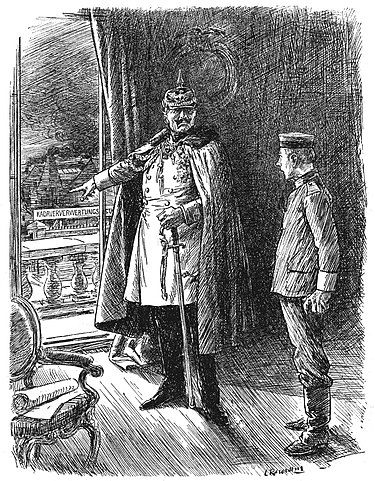
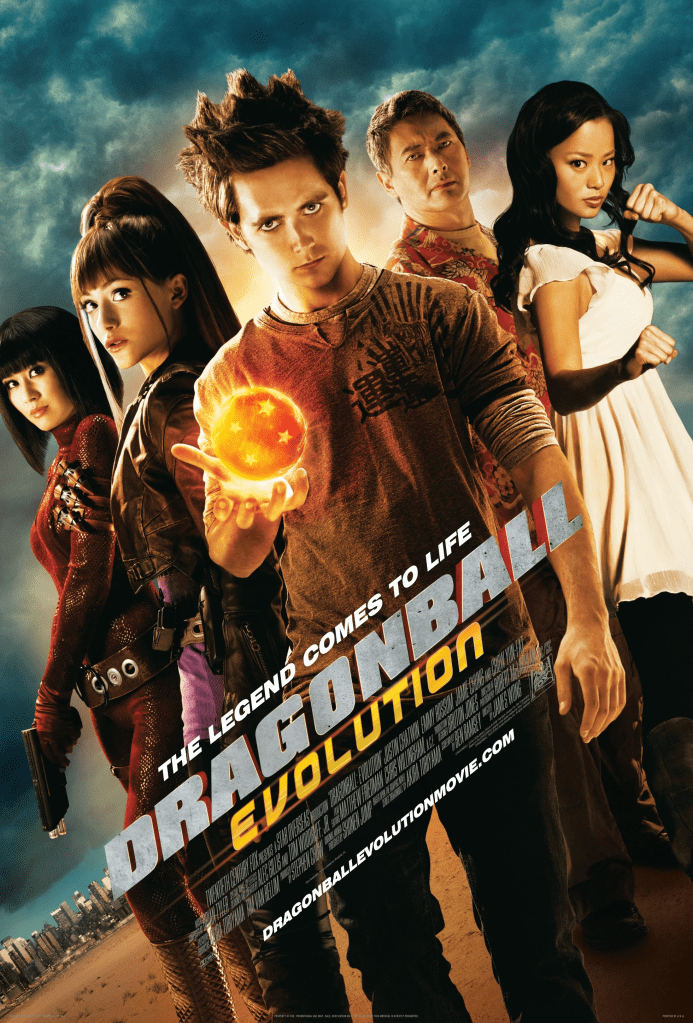
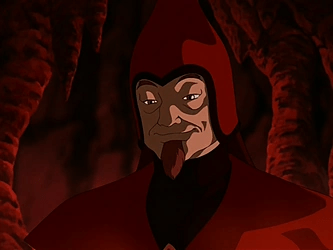
Narrowing it down further is the reputation of its live-action adaptations of popular anime. For years, live-action adaptations of anime, be it western or Japanese, has come under scrutiny for a lot of reasons, many of which are obvious. Impractical set pieces and designs, the absurdity of a lot of anime plots and character designs, and the awkwardness of introducing a lot of tropes known only to weebs apropos of nothing is a major killer of a lot of non-anime fans interest at the first hurdle. It’s a hard lesson that most western studios learn and forget rather quickly. I’ll never forget the ham-fisted attempts at hyping some of these movies up for release. Notably, this one:

For Netflix’s case, they thoroughly bungled the Death Note movie (forgive me for mentioning that… mess) and they screwed up the Cowboy Bebop movie with its god awful writing. Only recently did they nab themselves a mining pan of silver with the live-action One Piece, but flubbing it time after time, is that the only victory they have to flex? Probably.

Now they’ve come out with an eightfold batch of Avatar: the Last Airbender filmed and remade in the third dimension for our viewing pleasure.

I can’t make this a complete review as I’m only two episodes deep, but I already see the differences that Konietzko and DiMartino likely had an issue with. It’s not a shot-for-shot reshoot of the original series. Instead, it has the groundwork but interweaves easter eggs for the original audience watching with the new layer they built for themselves. Of the things I remember from Book 1, Zuko and Zhao were butting heads trying to capture Aang for Fire Lord Ozai until the end when Zhao was killed in the raid on the Northern Water Tribe, eliminating one of several of Zuko’s rivals.

Speaking of which, the circumstances behind Zuko’s scar are also rewritten. I didn’t get this far in the series yet, but in the clips I saw when the original and new shows were being compared, instead of cowering when he found out he had to face Ozai in an Agni Kai, he seemed to have put up a fight until the last minute. Something I’ve gotta praise personally because it hits a bit close to home. You or someone you know may have had that kind of parent, the type who wants to show their child the world is made up of enemies to fight with your fists by volunteering to be the first enemy they have to overcome.

And there’s more moments in the show that differ slightly or greatly from the original in a lot of ways. But are the humorous moments still there? Actually, yes. Select moments and characters do stand out quite a bit like Momo, Sokka, and my personal favorite so far, Uncle Iroh. But others did raise an eyebrow of curiosity, namely the early introduction of the Spirit World and the first Avatar Aang encounters when there.

If you remember, the first Avatar he encountered in the cartoon was Roku, first from his statue in the Southern Air Temple, then through his pet dragon Fang before finally meeting him on the eve of the solstice aided by an underrated character, Shyu the Fire Sage.

In the live-action series, Kyoshi’s the first Avatar he encounters and its at her temple where she’s pretty much having a DBZ: Abridged moment with Aang while he’s looking for easy answers to a complicated problem. Personally, I feel this would’ve worked well at the end when he’s nailed every element and the fight with Ozai is on the horizon, just like it is in the original. That works so well because Aang is at a crossroads and is looking for answers from as many of his past lives as he can contact.

In that moment, Roku didn’t much left to offer the teenage Aang; Kyoshi practically told the boy to make a decision or suffer the consequences; Kuruk used his life’s regrets as an example of what not to do in the face of danger; and Yangchen, the last Airbender Avatar, while understanding the disciplines instilled in all Air Nomads (Aang being the living legacy of such), she reiterated that Airbending Avatars like them are exempt from such expectations due to their duty, and in this moment, it was up to Aang to save the world from evil by lopping off the snake’s head. In the live-action though, it seems more than a little bit rushed. The original series gave Aang and co. roughly the length of a year to master the bending disciplines and concepts. The circumstances of the show may have forced him to rush it at at faster pace than his predecessors, but he’d matured well-enough to understand what was at stake.

The live-action series dumps all this on him at the first hurdle, before he has time to at least try to get a better understanding of this world he was awaken from. At this point in the series, all he knows is that thanks to Sozin’s Fire Nation, he’s the last of his kind. Again, everything was revealed both to him and the audience in snippets. The Netflix batch release hinders this, I feel, as it forces the series to do a lot more with a lot less, specifically condense 20 episodes into eight. It feels to me that it’s jumping the gun when it doesn’t really have to.

If Netflix were a different company, they could probably dedicate more time to retelling the story over the course of more episodes (probably 12-13 instead of eight), maybe giving the series more seasons than what it got back in the 2000s, but that’s just what I feel. Maybe a second season gets greenlit and we’re in business or maybe it follows a trend of million-dollar-an-episode shows getting canceled because someone hit the bulls[cattle bellowing]t button. Who knows what’s in store?

As I said, this is less of a full review (I hardly ever do those these days), and more of a first impression of sorts. It’s bound to change the more I watch.

For Saturday, May 11, 2024, I introduce you all to The Japan Reporter.

https://www.youtube.com/@TheJapanReporter/videos

Also known as Nobita from Japan until recently, The Japan Reporter is another Japanese YouTuber with a bridge to the western and Japanese worlds, reporting on a variety of different things that do or have the ability to impact Japanese every day life from societal norms, social issues, and environmental factors to political stirrings, culture, and a bunch of other stuff.

Far from being the only channel to openly discuss these topics for a broad audience, if you were looking for more windows into Japan perhaps for an upcoming visit or for your own personal curiosity, have a look at this channel.

You’re Under Arrest: The Buddy Cop Anime

Meme tourism brought me here

I’m not making up that statement by the way, I did find this anime through a meme. This one specifically:

Channel: Vinicius Costa

I highly doubt that a single meme motivated everyone who saw it to dig deeper into what the anime was about, especially since on My Anime List it’s quite low in popularity for a ’90s anime, but reviews on both MAL, and even on Amazon for the novelization going as far back as 2000 give it high praise, so the conclusion to draw from this observation is that the series is yet another cult classic series.

Created by Kosuke Fujishima and running from 1986 to 1992, You’re Under Arrest, also known as Taiho Shichauzo in Japanese, is essentially a buddy cop manga. Like Gunsmith Cats, the series has a pair of tomboy protagonists with a rotating cast, but unlike Gunsmith Cats, it has more than the manga and an OVA to its name. Actually, the Wikipedia page lists three TV seasons, multiple OVAs, a movie and even a video game. One essentially wins a popularity contest at the time of release and then some while the other sees renewed interest after decades of sitting on a shelf with a family of dust bunnies. Maybe this is an indictment on the cultures of the targeted audiences–the western audience championing the lampooning of a government agency (even though they’re not that bad in the series) whereas the Japanese audience loves and adores the portrayal of the police in the series because it rings somewhat true of Japanese police behavior IRL.

It could be something else I haven’t looked at, but for all intents and purposes, You’re Under Arrest had a lot more going for it so if Fujishima had any doubts of success, those doubts must’ve been dashed when it came time for the anime release. Released in 1996, season 1 of the series starts off with an introduction to our two leads, Natsumi Tsujimoto and her partner against crime, Miyuki Kobayakawa. Other characters include but are not limited to Ken Nakajima, Yoriko Nikaido, and interestingly a trans character Aoi Futaba.

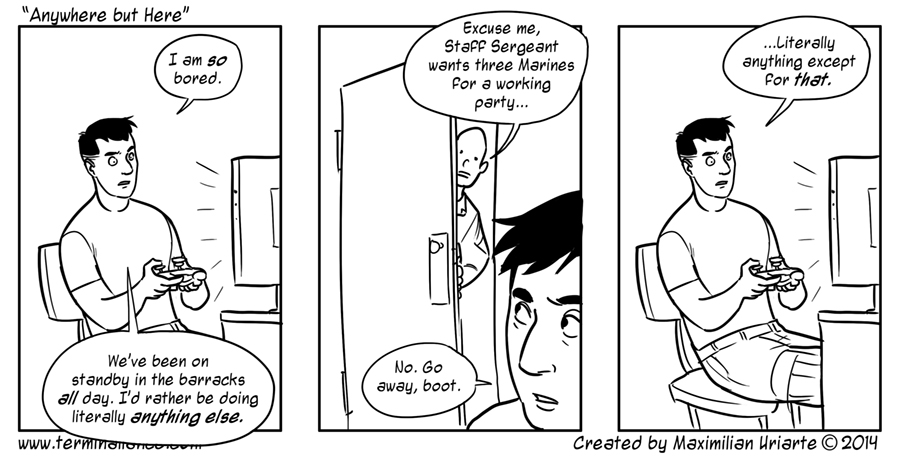
As a buddy cop series, it sorta fits the bill of what could be seen in shows like Brooklyn Nine-Nine. It doesn’t take itself too seriously and shows the more relatable human elements between the cast members. Uniformed or not, there will never not be an organization of people being weird or spontaneous on an off day. Talk to veterans about the stupid things they’ve done in service during their time off and you’ll be cracking like an egg from all the jokes and off-color humor.

Credit: 22 January 2016; Uriarte, Maximilian; Terminal Lance Comics

For plot, most of the time the characters are either goofing off or just performing their duties as police officers. It’s framed as the sort of episodic anime series that you can kick your feet up to, though it’s not light on the action either. The policing part of the job in You’re Under Arrest is a mix of the standard issuing of tickets, tracking down minor law violations and whatnot to tracking down and arresting criminals, aiding the elderly and defenseless, and overall being a pillar of the community. And spending enough time on the internet may open you up to some snarky comments about policing in most western countries, but that’s getting off topic.

Unless you are that type of person, it’s an unoffensive series that has a lot of heart, humor, and complexity to it. The characters are fun and energetic, and (slight spoiler) for those who have feelings for each other, there comes the question of whether this is a conflict of interest. Are the risks worth it to be with each other and whatnot.

This video also says much of the same about the series:

Channel: Anime Top Scholar

While viewing the series, one thing I noticed was the meticulous attention to detail, especially for a hand-drawn ’90s anime. Little to no details are left out from objects or people reflected in windows, to water effects during rain or storms even to the response of the gauges in the vehicles. Fujishima and the people at Studio Deen did well on their research for the series. There are some minor errors as expected–no one is perfect–but it’s not too much of a distracting unless you’re a certain type of person.

Users on MAL gave it an overall score of 7.6 out of 10. Normally, I stray away from a numbers system not so much out of principle or preference, but largely because to a certain degree I understand the argument that a numbers rating system trivializes or undermines the whole review. Spending all that time to write a long- if not well-thought out opinion piece on a certain piece of entertainment, brought to its knees by a scale. Not changing my rule, but for the most part, I’d bump it up to a solid 8 out of 10.

The full series is available on YouTube, as someone was based enough to share it for the rest of us without concern for monetization. Trying my best not to jinx it, but if you search it up on YouTube one day and the playlist is absent, you already know what to do.

I was never here.