
One of the tougher things I’ve tried
We’re down to the wire with a new year on the horizon and I’ve kept this blog strictly professional with personal information kept to a minimum. But for today, we’re venturing back into the vault to show another side to myself, one that I wouldn’t mind revisiting with new information and knowledge. There used to be a time in my childhood when I consumed a giant swathe of brickfilms.
I’ve explained this before, but for a quick refresher, a brickfilm is a stop-motion animation where the primary pieces to be animated are Lego bricks, the animator moving the pieces individually between each picture taken to give the illusion of motion. It’s like traditional hand-drawn animation but typically uses less writing or drawing utensils, though depending on the props used in the animation, can drill holes into your wallet.
Many of the brickfilms I’d watched at the time came from numerous channels, some of which are now practically defunct, and many of them venture on the slapstick side of things. Others involve action set pieces similar to what could be found in The Lego Movie series. It’s been dog’s years since I’ve seen some of them, but I’d like to share one of my all time favorites from this era.
Stop-motion itself has a storied history. If you’ve ever seen some of the old 1950s or 60s swords and sandals epics, you probably saw how janky and wild the mythical creatures may have looked. The process involved an interlacing of two different styles of film to make into one, something we did even when 3D movies were all the rage; put the live-action footage with the 3D animation and keep animating in a way that objects looked like they’d fly at the audience.
On YouTube specifically, it’s hard to trace when it started to gain popularity on the platform, but as I’ve stated in another post it began with Lego themselves in the 1960s as part of a TV advert, but later gained fame online when Keshen8 uploaded Lindsay Fleay’s The Magic Portal to YouTube in 2008. Filmed over the course of four years when Fleay was in college between 1985 and 1989, the project incorporated Lego bricks but didn’t necessarily limit itself to just that. The video can also be found on Keshen8’s channel.
Interestingly, the film was showed by Fleay himself to the leadership at Lego. Personally, they were delighted, but the tried to monopolize it by issuing a cease and desist. Thankfully they have since softened their stance on the matter and it has inspired burgeoning and amateur animators, myself included, to try their hand at a craft that isn’t as devil may care as it looks.
Yahtzee Croshaw said it best in his review of Saint’s Row 4: it takes a lot of care to make [something] look completely care-free. I don’t know about you but the processing that comes with animation in general was mostly lost on me as a viewer because when a cartoon goes to air, it’s the fruits of the combined efforts of a studio’s labor that I’m seeing. Nickelodeon and Cartoon Network do take their viewers under the hood to see how the sausage is made, but not always. When you begin to animate yourself, you start to realize how involved the process is.
For the sake of just this topic, I’ll go into what made me think I too can do this. Some of the channels I’d been watching were making back-to-back stop-motion videos, again of a comedic, slapstick style. Other times of an action set piece or even of a dramatic reenactment of a film or even a love letter to popular film genres. In some cases, channels like LCM Brick Show used the building toys to make historical documentaries covering war and geopolitical topics (revolutions, world wars, empires rising and falling, etc.).
Some of the channels I’d watched were various different love letters to established film and TV genres or tropes, and my earliest stop-motion was cut from a similar stock. I began filming it on a stick camera I got as a gift for my birthday as I recall. Playing around with that plus another camera I had was pretty cool, but they weren’t practical for what I planned on using them for. Then again, this was my first time using a camera and while digital cameras were available and smartphone cameras were getting near-professional, what we had in 2011 wasn’t up to snuff compared to what’s in your pocket right now.
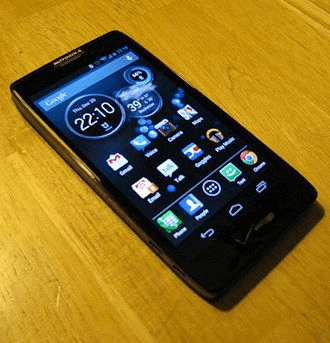
By the way, this model of Droid was one of my first ever phones in 2013.
Someone with more experience than me can probably explain that it was possible to do it at the time, but keep in my mind, my knowledge of filming techniques was limited and it would be a while before I learned that just because a thing is done a certain way doesn’t mean it’s the only way to do it: a mantra repeated by any speedrunner.
Fortunately, part of the filming equipment I got included a tripod for me to set up with extendable legs. As for educating myself on brickfilming, there were video tutorials breaking them down from frame rate to filming technique to snafus that could trip up amateur animators. Either way, it wasn’t as easy as it looked or sounded. One of the hurdles I faced was the camera quality. Not the picture, but the camera itself. The pictures were taken over the course of just a night, but stretched out over at least five or six hours as I recall and that was because it conked out and needed to recharge for three hours.
I probably could’ve planned it out a bit better, but it was the equivalent of a rough draft for me that night. Experiment with some ideas before getting down to business. Once the camera was done charging and the animating continued, another hurdle I realized quite late was editing, specifically sound effects. Loads of stock sounds exist on the internet but aren’t exactly cheap. As for producing the sounds yourself, I admire that approach as a cost-effective measure, but some tools necessary to make these sounds weren’t always available, especially to a 13-year-old back then.
Voices and dialogue on the other hand was easier to come by and still is. At the time, and to this day, the free program Audacity has been many creators’ go-to method for voice recording and sound design due to its ease of access. With some time spent learning to script and write dialogue, anyone can do it, but only a few turn it into a profession.

Funny enough, the editing software I had, Adobe Premiere Elements 11, wasn’t all that hard to learn. If I had a budget of some kind, and could afford to license the sound effects I could see how it could be done: let the footage run, install the downloaded sound effects into the editor, input some special effects where applicable, and voila! A brickfilm is ready to be published.
That said, this much involvement necessitated tips and tricks that I wouldn’t have been able to find through means at my own disposal. So by the time I got to brickfilming as a hobby on YouTube, I was making do with the first few videos being filmed on a camera that evidently couldn’t be trusted to stay still.
I launched my channel in June 2012 under the name “legoworksstudios1.” The vision I had was to make many brickfilms for years to come, improve, and join the ranks of some of the channels I looked up to at the time. About a month or two later into the existence of the channel, I had switched from using a push-button stick camera to using a stationary webcam. A Logitech C310.
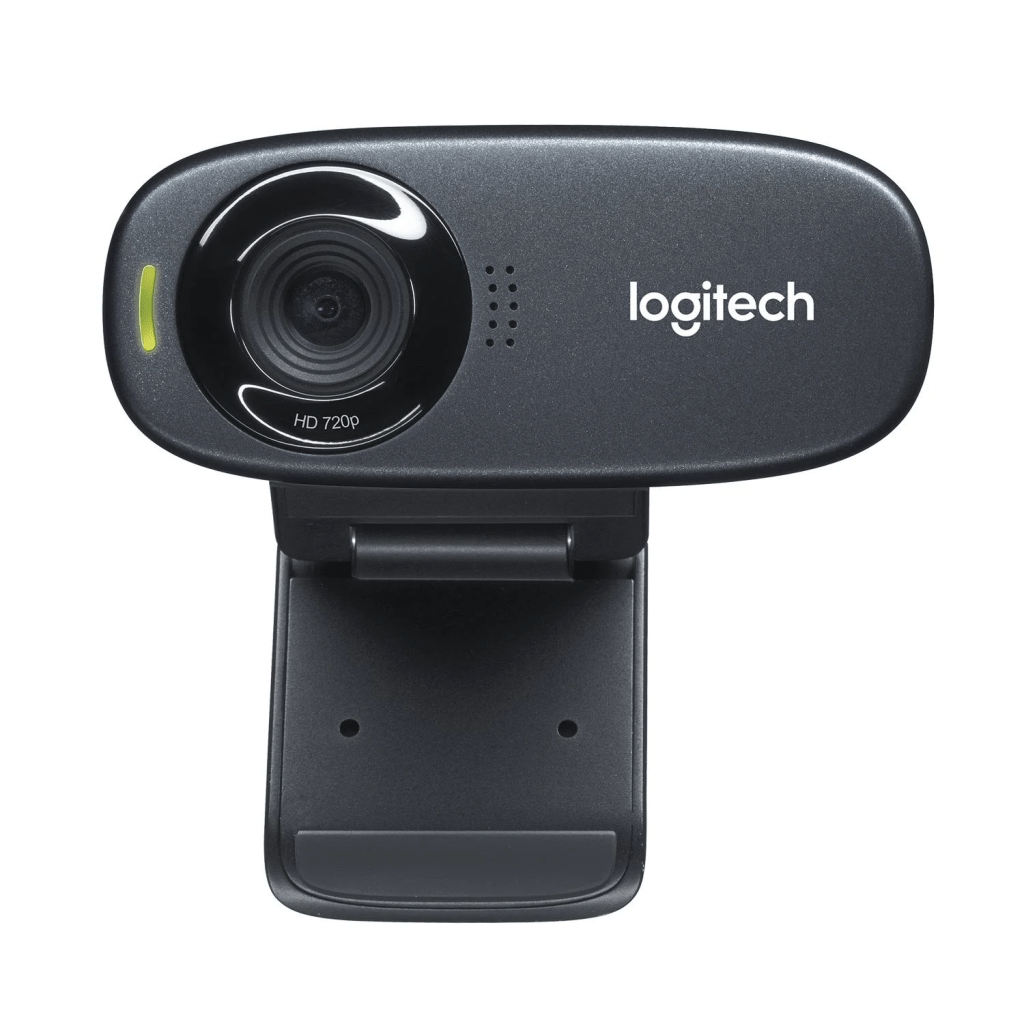
Personally, this is better used for making Skype calls to relatives or have a long-distance relationship. If you ever choose to do this yourself, I highly recommend getting a camera that allows you to control the focus feature. Auto-focus is not the way to go, especially for filming something as small as Lego bricks or even action figures. I did have the C525 which was remarkably better and in just about no time flat, my shaky animations became more stable and fluidic.
I filmed off and on until my last video around Christmas Eve 2012. I tried to think of something silly for New Year 2013, but nothing manifested and I had put the hobby to rest until recently. I still viewed brickfilms and whatnot over the years, but my taste in YouTube content shifted largely to video game Let’s Plays, live-action content, documentaries, clips taken from anime, and curiously enough full anime shows. I have no idea about the science behind it, but I know that some people have uploaded anime to YouTube by way of keeping them unlisted. They can’t be found through conventional means. If they’re still around past the New Year, then there may be a form of piracy that’s hiding in plain sight.
As for stop-motion animation, the film technique is still available and readily used. Sometime last year, one of the channels I follow up on periodically, Emirichu, had a recommendation for a video from the channel MOONSHINE ANIMATIONS. The video in question took audio files from a game played between its creator and real life friends, Emirichu, Daidus, and Moonshine’s girlfriend during gameplay of the horror video game Phasmophobia. It made use of Japanese-made action figures under the brands of Figma and S.H. Figuarts, though custom made to resemble the channels’ avatars/profile pictures.
This one video introduced or reintroduced me to several things. As a viewer of the show Robot Chicken, I already knew that stop-motion props weren’t limited to just Lego, but because of the reputation and budget behind an Adult Swim production, it didn’t dawn on me until I got this recommendation that any old schmoe can pick a camera and start animating. Seth Green did it with Cyborg Poultry, Trey Parker and Matt Stone did it with North Playground, and I did it when I was 13-turning-14 with my building block toys.
With the knowledge I have now about how involved and time consuming animations can get (recall that The Magic Portal took 4 years to produce on 16mm film), I want to say that I could pick up a camera and get back to animating again. How I’ll be able to achieve this, I can’t say yet, but it would be awesome to get back into the fold, be it with my Legos or some Figma figures. Shouldn’t be too hard since my channel is still up.
This week’s channel recommendation is the channel William Spaniel.
https://www.youtube.com/@Gametheory101/videos
An associate political science professor, Spaniel’s main specialty is game theory and geopolitical issues and conflicts. His videos as of recent have focused on modern conflicts and potential flashpoints, including but not limited to the international relations of China, the Russo-Ukrainian War post-escalation, the Israel-Hamas War and several others. And when I say he’s a professor, I’m being serious. He has a textbook available for purchase and teaches political science at the University of Pittsburgh, and is a University of Rochester alumni.
Even if political science or, as Prof. Spaniel would put it, “lines on maps” isn’t your forte, Spaniel’s content offers a lot of insight for many modern conflicts largely from the political side than the military side, so you can get a better grasp of what everyone wants when it comes to conflict. If this sounds interesting to you or you see yourself practicing political science in the future, you can’t go wrong with William Spaniel.
Update: (December 23, 2023)
It’s come to my attention that for the section mentioning brickfilming, I’d stumbled upon a series of videos documenting the animation style in a fittingly familiar manner, but hadn’t placed a link for those who’re interested. The playlist consists of videos published by the YouTube channels sillypenta and Bricks in Motion. They’ve both done hard work researching some of the earliest brickfilms in history, the evolution of the practice over the years and many other aspects of the style. Here’s the link to the playlist:
 Opinions on Entertainment