JoJo’s Bizarre Adventure: Beautifully Blursed

Supernatural music references

This one is a long-time coming. One of my posts from January of this year included a still frame of a JoJo’s Bizarre Adventure episode that has since been used as one of the countless memes in many anime circles online. For those who need a refresher, it’s not the one where the character Dire feigns incompetence to catch his enemy in a move known as the Thunder Cross Split Attack. Instead, it’s the one where a character named Pesci, notable for his lack of a neck cries in excitement that someone or something took his bait. Example:

The picture I used months ago was larger than that. But swinging back to my point. I won’t be the first person to speak about the JoJo’s Bizarre Adventure series, nor will I expect to be the first person to introduce it to those who haven’t heard of it or were on the fence before. But even if this is the millionth time you’ve heard or read about the series with no clear distinction on whether to see it in action, let me remove the ambiguity: I can’t recommend the series highly enough. I write this with the enthusiasm of a tourist coming back from the best vacation spot ever.

For an introduction, I’m going to try my best to spoil none of the manga or the anime. JoJo’s Bizarre Adventure belongs to the long list of longest running manga series still in production while also sitting on the list of most difficult series to adapt as an anime. For context, the first chapter debuted in December of 1986 with the first volume releasing later in 1987. The modern anime series that you might see on streaming sights like TubiTV or Crunchyroll or even Toonami in the west debuted in April of 2012. There’s a reason for the nearly quarter-century gap between manga and anime and it comes from the way the manga is structured. Artistically, the manga artist, Hirohiko Araki looked more towards Greco-Roman and Renaissance art for inspiration, western fashion magazines, and during the production of the earlier parts of the manga, the days’ most popular musicians to include Michael Jackson, Prince, the Beatles, the Police, and countless others.
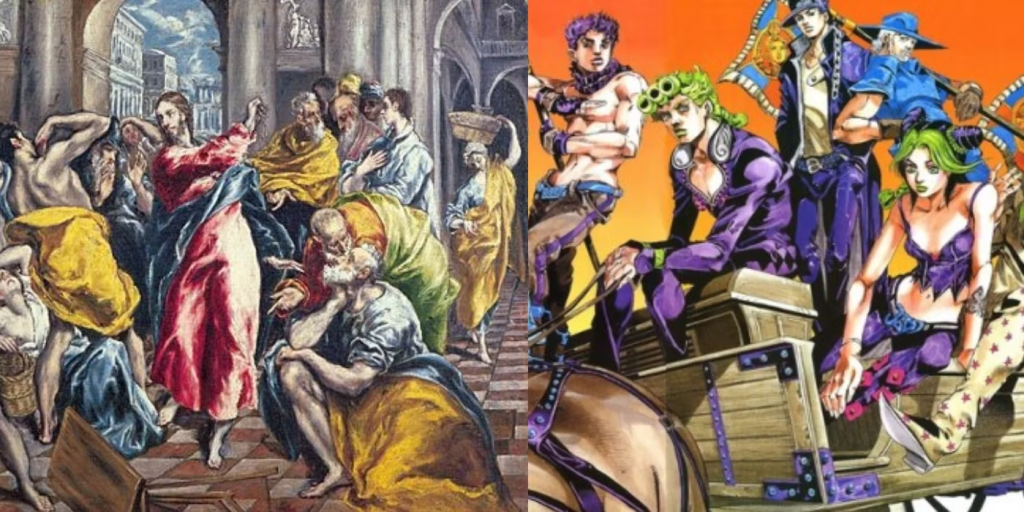
The manga itself is divided into nine parts or arcs that center on a different protagonist within the same lineage.

Part 1: Phantom Blood ran from January to October of 1987 and takes place in Victorian England. The protagonist is burgeoning gentleman Jonathan Joestar and the antagonist is his stepbrother Dio Brando.

Part 2: Battle Tendency ran from November 1987 to March 1989 and takes place fifty years later, centering on Jonathan’s grandson Joseph, who is far more rascally and mischievous than his grandfather. The antagonist this time is a trio of ancient Aztec beings known as the Pillar Men named Esidisi, Wamuu, and Kars.

Part 3: Stardust Crusaders ran from the same month the last part ended until April 1992 and this time the protagonist is Japanese delinquent Jotaro Kujo. It begins in Tokyo in the late 1980s, and the antagonist this time is Dio once again, but he’s come back with an upgrade, his name is capitalized as DIO, and this time he has a wider cadre of henchmen in different parts of the world.

Part 4: Diamond is Unbreakable is set about a decade after the events of the last part. It ran from May of 1992 to December 1995 and features the protagonist Josuke Higashikata. He’s also a delinquent but by the late 1990s, Japanese delinquent culture was losing favor to the emerging gyaru culture to follow in the 2000s. Still, Josuke’s not as rough as Jotaro so long as you don’t badmouth his immaculate hair.
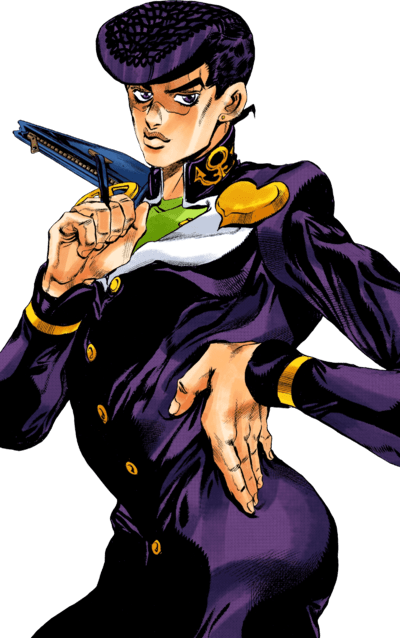
Part 4 is also centered in a fictional town modeled after Araki’s real life home in Sendai and is thus less of a high stakes thriller than the other parts, but there is still an antagonist in the form of department store employee and serial killer Yoshikage Kira.

Part 5: Golden Wind/Vento Aureo also began the same month the previous part ended and ended in April of 1999. It’s set in Spring 2001 around the southern half of the Italian peninsula and features the illegitimate son of DIO, Giorno Giovanna. The antagonist is the mob boss of the Passione mob, Diavolo. Without spoiling much, instead of cooling down like the last part and gradually sprints into its second wind for the plot.

Part 6: Stone Ocean ran from December of 1999 to April 2003 and features the first female protagonist, Jolyne Cujoh/Kujo, the daughter of Jotaro. Its setting this time is in a Florida prison in late 2011 and the antagonist is the prison’s chaplain and protege of DIO himself, Father Enrico Pucci. This part specifically along with Part 5 suffered from a long streak of unpopularity until the Part 6 anime adaptation was announced online in April of 2021. I covered that as it happened in another blog that I started two years ago and needless to say, it was one of the rare moments of hype I’ve ever felt for an upcoming product or series continuation of the sort.

Part 7: Steel Ball Run is set in an alternate continuity and sets the clock back to the 1890s but with a different protagonist who pays homage to the original British Jonathan Joestar. It begins in the western U.S. and ran in Weekly Shonen Jump magazine from January to October 2004 before switching to the more seinen demographic magazine of Ultra Jump for the remainder of its publication from March 2005 to April 2011. The protagonist is Johnny Joestar, a disabled ex-jockey and the antagonist is the 23rd President of the United States, not Benjamin Harrison like in real life, but Union Army cavalryman Funny Valentine.

Part 8: JoJolion (the -lion pronounced the same as in “Evangelion”) was actually set during the modern day. It ran from May 2011 to August 2021 and does almost quite what Part 4 does, supplanting Sendai with the fictional town of Morioh, but uses a real-world disaster as part of its setting. In Spring 2011, an earthquake struck the east coast of the Tohoku region of Japan. It features a similarly named protagonist to Josuke Higashikata from Part 4 (who also has a distant connection to the first guy), but differentiated by way of a different kanji in Japanese, and radically different circumstances. Like the rest of the plot, this time around it’s a more complicated affair with complicated characters and motives who run into each other. As such, the antagonist isn’t easily defined and is absent for a majority of the run, at least until the end.

Part 9: The JOJOLands is the most recent edition to the JoJo saga and is still in production as of this writing. In fact, it just started in February. It’s set in Hawaii in the modern day and its protagonist is Jodio Joestar.

At the outset, this sounds like a lot to get through because it is, but the modern anime adaptation is the best representation of the events in the manga. There have been attempts to adapt it a few years after the first two arcs had concluded with OVAs from the 90s until 2002, a movie from 2007, and in the case of translations that front was even more troubled.
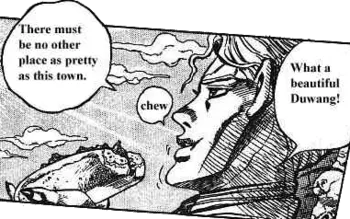
This is one of many examples of troubled attempts to translate the manga from Japanese to English. The problem in this case is that it wasn’t done professionally and Araki, consciously or unconsciously, hasn’t been as definitive in providing details and context until he was interviewed at different points during the production of the manga. For the panel above, which takes place in the middle of Part 4’s run, it was translated from Japanese to English in Taiwan, and the translations were so subpar that for many trying to get into the series, even illegally, had to wade through bad grammar and language until it was given a proper re-publication for the international market in the years leading up to and following the 2012 anime adaptation.

Part 5 had a similar issue back in the day as well and was a large part of its initial disdain from the community until re-publications with better translations rectified the mistakes. And mistakes would follow on even after this. Araki himself is also inconsistent with color schemes when it comes to coloring in the manga, then again, a lot of the monochrome manga is up to interpretation which explains why some characters are colored differently in the anime adaptations than their depictions in the manga.
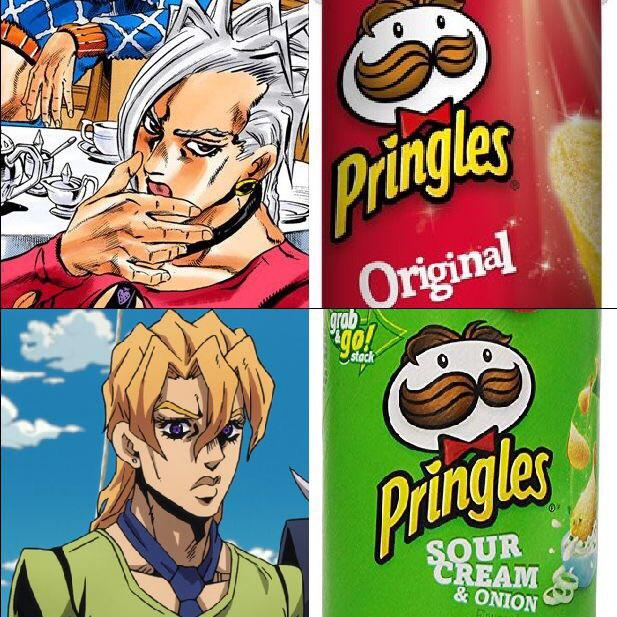
This example was used as a meme in r/ShitpostCrusaders, but is an example of the degree of freedom afforded to publishers and distributors in the case of JoJo’s Bizarre Adventure. Thankfully, these days it’s gotten exceptionally easier to start JoJo and however you get there, love it or not, it’ll leave a lasting impression.

The art styles of the characters, as I mentioned before aren’t the same as most manga in either the 1980s or even now. It’s art style is a bit of a beefier and more elaborate type found in Berserk, Fist of the North Star, Rokudenashi Blues, or even Yu Yu Hakusho. On reflection, it reminds me of some of the comics from the west like Martin Mystere or the erotic series Druuna, and it’s like that on purpose.

Ever since he debuted as a manga artist, Araki has looked at western styles for inspiration and just about any western artist does well for him, even the ones we learn about like Leonardo da Vinci or Michelangelo.

In anime/manga communities, the term for someone who consumes copious amounts of Japanese media and entertainment, not always limited to manga and anime itself is known as a weeaboo or weeb for short. The term began as an insult in the mid-2000s on forum sites like 4chan and at the time anime hadn’t taken as much of a grip as it does today. Now that the internet is what it is today, the opposite end of the spectrum is the “westaboo,” a term for a Japanese person who consumes more than the doctor’s recommended weight in western comics and cartoons, which would make Araki one of the first to be described as such. And since this appears to be the case, I’d like to be the fly on the wall of a bunch of Japanese internet users having their own dub vs. sub debate on King of the Hill which I learned recently is also popular in Japan.

We’ve come full circle now!

Not limited to just appearances, Araki also looks to music for inspiration. Earlier in this post, you may recall the names of the antagonists of Part 2 are Esidisi, Wamuu and Kars. These are direct references to the real life bands AC/DC, Wham!, and The Cars. This has become one of the numerous features of the JoJo’s Bizarre Adventure series since the beginning. Direct references to artists by name or characters in the books.

This is an interesting source of controversy for the series with specific artists and their estates or just the record labels that worked with them in the past getting uppity over their depictions. It’s also worth noting how complicated this gets in the case of copyright laws the world over, not just in Japan. Because of this, international distribution has had to put in the legwork censoring or altering or requesting alterations from Araki’s team to be able to distribute it in select countries. As an example, there have been more direct references to Michael Jackson and Prince as people than through characters or concepts. The reasons for this come down to when both men were still alive, they were both likely to use the courts to their advantage. I doubt Prince’s estate has kept that up since, but the Jackson family still lives and ex-members of the Jackson five for example can definitely waste that much time, money, and effort in a drawn out legal battle just to change a joke character on page 36 of the 17th volume in the manga. That’s a joke, but it’d be one hell of a read in a newspaper or on the associated wiki. Speaking of which, here’s a link to that:

https://jojowiki.com/JoJo_Wiki

One of the more iconic moments of the JoJo series comes in the supernatural abilities. Parts 1 and 2 begin with an ability known as “Hamon” or the Ripple in English. It functions as an ability that can harness a power similar to that of the sun. Its name derives from the ripples that appear in liquids and its mirroring of the sun’s power makes it an effective tool against vampires. After Part 3, Hamon is mostly done away with in favor of the Stand.

Stands are different from Hamon in the sense that they’re physical representations of one’s soul and can appear in diverse ways. The most common appearance they take is a ghostly humanoid form that stands beside its user and their powers, but can appear is different things; animals, plants, a gun, vehicles, concepts–the sky’s the limit. The only caveat is that only a Stand user can see another Stand, but they impact everyone. So you don’t have to be a Stand user to come under the impact or influence of one. For example, a Stand user who can control the weather can theoretically make it rain or snow on command. When they first debuted in Part 3, they took the names of Tarot cards and Egyptian gods before taking the names of music or musicians.

Following the successful 2012 adaptation, it’s hard to imagine western distribution of anime without JoJo, but the in-between years have a bunch of eye-catching references that a trained eye can find on review. It wasn’t until the most recent and currently produced adaptation that the JoJo’s reach became international and for better or worse, JoJo fans have taken the JoJo’s reference far beyond its roots. Copypastas, poses, iconic characters, parodies; you could sneeze and it would be a JoJo’s reference. Minor spoiler, but that’s also not a joke. On Reddit, there’s two dedicated subreddits centered around the franchise. For fanart, discussions, analyses, and announcements, there’s r/StardustCrusaders, and for memes and meme-related events, there’s the aforementioned r/ShitpostCrusaders.

As hard as it was for JoJo to make it to the west, now that it’s here, the newer debate comes in the form of where to start and how to start. Reading about that sounds absurd. If you’ve never heard of JoJo, but know that it’s divided into parts, your first thought would probably be to start at Part 1. The reason this debate exists is because different people have different opinions on certain parts. Similar to how there are beloved and reviled episodes of a certain cartoon or TV show. Some people will recommend different parts for different reasons revolving around plot and concept and others will recommend starting at the beginning, myself included, so as to get the entirety of the story.

If you want to hear it from me, I’ll start off with how I got into JoJo. It began with Toonami acquiring the license to air Part 3 in 2016 when I was in high school.
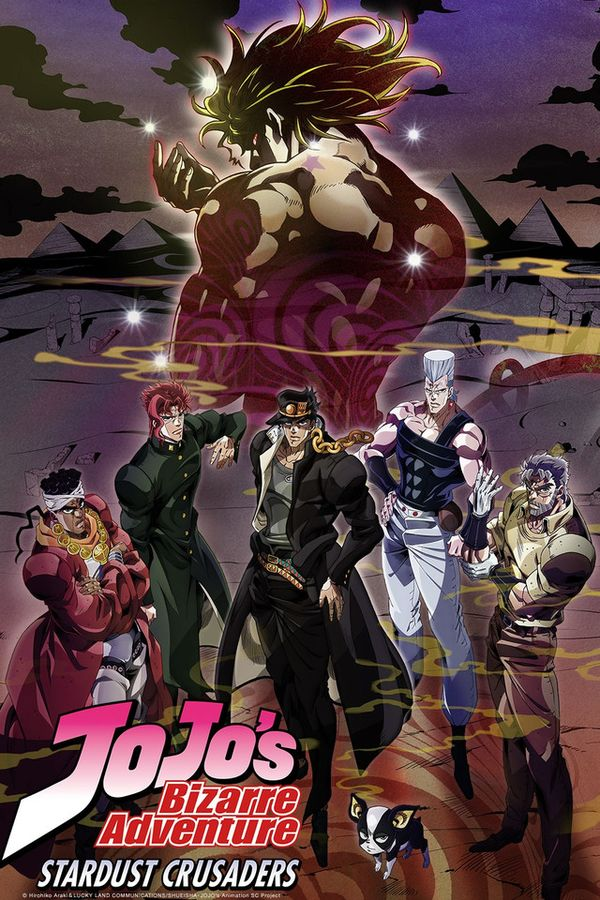
Stardust Crusaders was divided into two parts for the anime the Road to Egypt arc and the Battle in Egypt arc. In the middle of the second arc, one of the episodes begins with a character at gunpoint attempting to warn his comrades that an old enemy is back to challenge them and he does this by pointing his tongue in the shape of an arrow.

The art style put me off at first, but I started watching it and watching it even more until eventually, we reached the climax at the end of the arc. I wound up looking for it on YouTube where there are loads of videos in segments and/or playlists, and rewatching it with my fullest attention, made Stardust Crusaders one of my most favorite parts in JoJo.

That being said, the way the other parts are structured might shape your opinion on the part as a whole. As much as I recommend Part 3, I also highly recommend beginning at Part 1 and judging for yourself as you go along. The most recent part to get adapted to the anime was Stone Ocean in December 2021 which finished its batch release in December 2022. So whatever your watch pace, wherever you finish you can look at sources like Mangadex to start on Part 7. The black and white manga isn’t hard to find and recently, fans as well as the distributor Shueisha have been coloring the manga but it isn’t always perfect. All of the anime is also dubbed in English, so there’s pretty much no wrong way to get into JoJo’s Bizarre Adventure. Even if you begin somewhere in the middle, you can also go back to an earlier part or skim through the wiki for a better understanding of an arc or concept.

One more thing before I go:
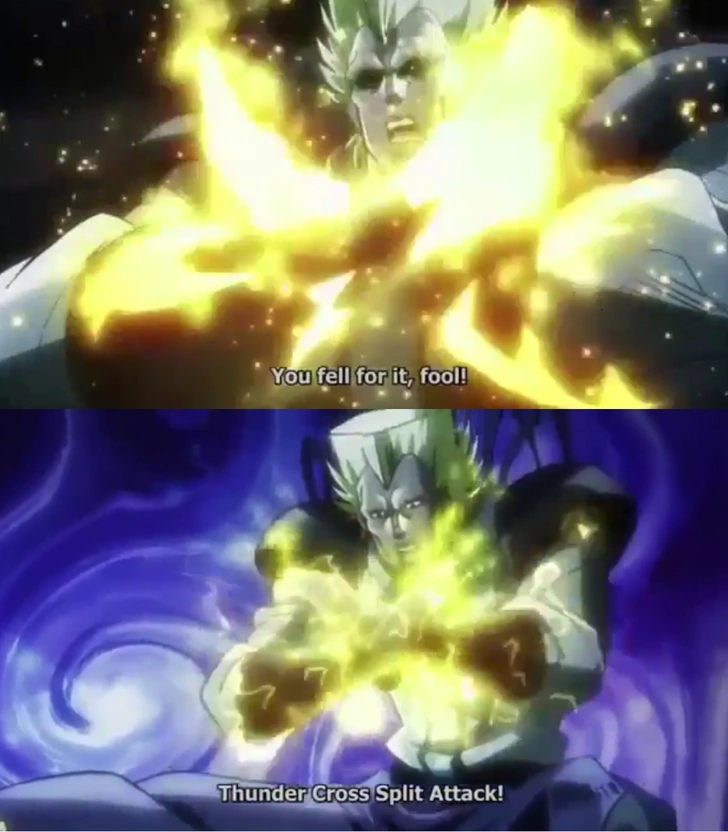
Just about any frame in the series, anime or manga, can be used as a meme if you’re creative enough. But for the love of all things holy, do not under any circumstances consume the series through just memes. The series is tough to read or watch as it is, and out of context memes don’t help with comprehension. For the most part, those are for people who do understand the series well enough to joke about it. I recommend the wiki and several JoJo-based YouTubers who can explain it in a concise fashion if you’re lost. And you might get lost on the way.
Grand Theft Auto: Chinatown Wars: A Callback to the 2D Era

2D graphics in the HD world

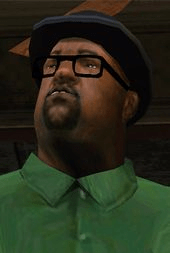
Whether you play it or not, you likely know at least a few things about the Grand Theft Auto series: 1) it’s pretty much an organized crime simulator, 2) it’s violently comedic, 3) and the character Big Smoke exists to this day as a meme machine.

The more knowledgeable of you may also know some fun facts about the series as a whole, not the least of which involves the series’ humble beginnings. The concept of the game was under the working title of Race ‘n’ Chase with a release date set for sometime in 1997 by Scottish developers DMA Design. The original goal was top-down street racing with an added bonus of a police response that would become common for series like Midnight Club and Need for Speed.

The point of divergence for the concept was a tough-to-patch glitch. The police cars were extraordinarily relentless in pursuit of the player and most of the time, the devs couldn’t correct the issue, so instead they decided to team up with the madness and make it an action-adventure game retitled Grand Theft Auto. Across all the games, the skeleton of the objective is the same: the protagonist changes with each game, but they’re all tasked with completing a set of tasks for increasingly high payment with proportional risk to the player. As the games progress, the player unlocks new weapons, safe houses, locations, and in some cases clothing options. The police wanted level has influenced the game and others across the industry — the response is often proportional to the crime from mild disturbances having a single cop car investigating to high level crimes involving stand-ins for real life federal agencies like the FBI. Up until GTA V took away one of the stars, the military would be called for the highest wanted level of six stars all just to take you down. A look on YouTube may find you some compilation videos of the police partaking in the Darwin Awards, or interestingly analysis videos on the police in GTA games. My favorite comes from Game Theory where they experimented on whether real-life instances of brutality have been programmed into the game. In a serious tone, this is a debate best suited for a platform better equipped to make comment on it, so this is more of a comedic tone.

GTA and GTA 2 in 1999 were both 2D games despite the late 1990s being the era of the emerging 3D graphics market. Almost every developer was launching a video game with full 3D graphics with resounding success stories like Medal of Honor and GoldenEye 007 coupled with lackluster releases like Mortal Kombat 4 and what would’ve been Star Fox 2 if it came out on time.

One can argue that Grand Theft Auto III’s 2001 release was somewhat later than what was expected of games at the time as RockStar’s formula is to one-up itself with each new release and GTA III came swinging at the hip, guns ablaze. The graphics and mechanics at the time set the stage for a ginormous change all throughout the gaming industry and one of the first notable examples of GTA’s influence was the many clones, though I doubt the men in charge of RockStar cared all that much. Leslie Benzies and the Houser Bros., Sam and Dan, were busy making games and as shameless as some of the clones were, taking elements from a proven success story isn’t the end of the world. Other devs could do what they wanted while RockStar Games released, 2002’s GTA Vice City, 2004’s GTA San Andreas (which to this day is the reason the PS2 sold well over 150 million units), 2006’s Vice City Stories — one of two underrated GTA games that I talked about months ago on this blog, and one of the most expensive games at the time, 2008’s GTA IV.

Coupled with DLC content in the form of The Lost and Damned and The Ballad of Gay Tony expansions, GTA IV signified a change in the GTA series. The HD era was upon us and the next generation of consoles was its home. Better graphics, a more serious tone, new mechanics, and reimagined cities and locales. GTA IV’s Liberty City looked more like the Big Apple than its 3D rendition, and a lot of small details from older games have remained unchanged or were tweaked to fit the era.

As we all know, RockStar’s prize success story is that of GTA V in 2013, which reimagines Los Angeles and some surrounding areas in the HD universe, but before that, there was another HD game in the 2D style: Grand Theft Auto: Chinatown Wars.

I was originally going to mention how much of a difference there is between this game and the two GTAs released before and after it, but every GTA game differs in some capacity so that would’ve been a useless metric for the game. The basic plot of this game involves Hong Kong immigrant Huang Lee who flies to Liberty City and is welcomed with violence. He arrived in the city to deliver a sword to his uncle Wu “Kenny” Lee, but things turned sideways when he was ambushed at the airport, so now he has to work to make up for the loss of the sword. Obviously, there’s more to this story and if you want to look at the series from beginning to end, The Professional, GTASeriesVideos (a RockStar fan channel), and Willzyyy are your best sources of gameplay on YouTube along with some other channels.

Now the plot is the standard, started at the bottom, now we’re here fare, but the most notable difference was that when it released in March of 2009, Nintendo allowed RockStar to publish it on the DS.

Yeah, the same company that heavily censored Mortal Kombat in the 1990s and lives and breathes by Super Mario and Kirby allowed a notoriously violent video game on one of their star handheld platforms. Granted, 2000s Nintendo was far removed from 1990s Nintendo. There was still the family-friendly image on the face of the company, but at this point Nintendo was letting the chains loosen a bit on the family friendly image by allowing Ultimate Mortal Kombat 3 to be played on the DS as well. It’s a large company with a large history, run by a council of suits and while there’s nothing detailing how this arrangement came to be in detail, the main connecting element is extensive use of the touchscreen function in some manner.

This might have been part of the deal to get certain types of games on the Nintendo DS: design it in a way that the touchscreen doesn’t go ignored, and while that works well for touch games like the Touchmaster series, third parties are hit and miss. From best use to worst use in my personal experience, it’s Chinatown Wars at best, Mortal Kombat in the middle, and Call of Duty at the worst. Or rather just awkward for that last one.

If I didn’t know any better, I’d say the rest of that deal included a lap dance of some sort. For Chinatown Wars, it might be a good example of a game whose mechanics are tied to the touchscreen, but not necessarily dependent on that feature. Certain minigames and combat sequences make good use of the feature and it flows naturally enough into gameplay that you won’t really notice it as much half the time. Don’t quote me on this, but I don’t think this was actually the first time a GTA game was on a Nintendo system. Prior to GTA III, there was GTA Advance available for the Game Boy, and once again, I doubt attempting to research that arrangement will net me anything interesting, unless I use a time machine or the wayback machine.

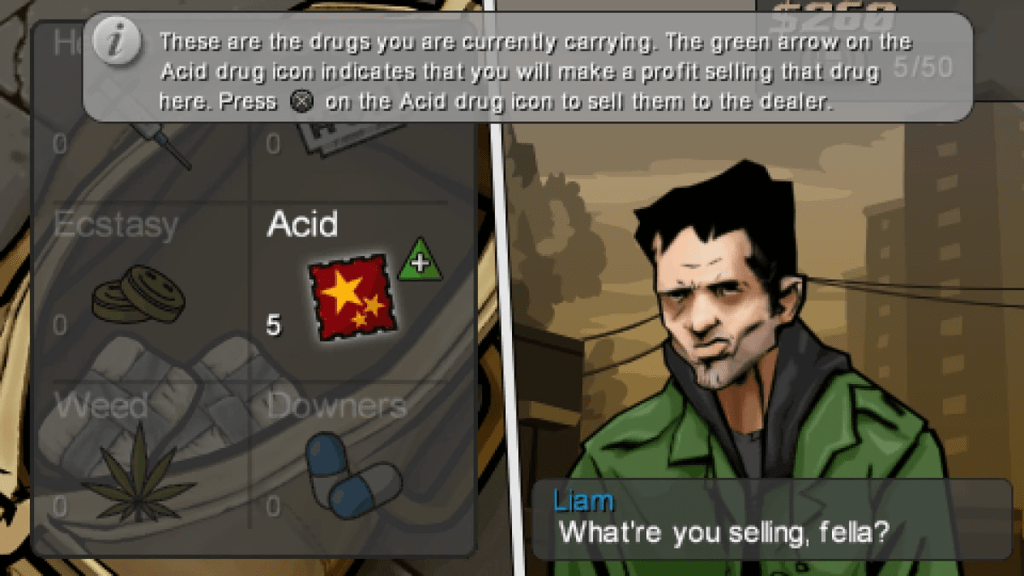
Some mechanics in Chinatown Wars that use the touchscreen include filling your own bottles of Molotov cocktails at the gas station; rigging stolen cars by way of screwdriver, hotwire, or PDA hacking (sidenote: this was most likely the last time in the modern era that PDAs would ever be important in any medium); assembling the sniper rifle for certain occasions, like a story mission; and controversially, drug dealing.

Grand Theft Auto belongs to a list of media properties that courts controversy like Casanova rounding third base for the fifth time in a week, and until recently, RockStar Games themselves have been known for their controversial money maker. Seasoned veterans of the series who skipped over this game may be curious why the drug dealing specifically was a sore point for critics to look at when the game was released. Well, another part of what makes the game different from the others was the player’s direct involvement in the drug dealing. For the most part, the protagonist is merely a glorified middleman who moves things from A to B, rarely having a role in the direct purchase or sale of such things save for cutscenes.

Chinatown Wars breaks away from that and allows the player to do so in their free time away from missions and sometimes as a prerequisite to activate a certain mission. Of course, it comes with its own set of risks. Sometimes the dealers — who come from multiple different gangs and factions — meet up in locations where a police camera is. The presence of the camera can help determine whether a deal is about to be busted, but its presence also raises the prices of a certain product. Minimizing the police response by destroying the cameras is also an option, but the price of the drugs bought or sold also takes a hit. This mechanic makes more use of the high risk, high rewards system that GTA is usually known for.

And I’m certain this is needless to say, but no, video game violence doesn’t lead to real life violence. There was one incident in 2003 when Alabama teen Devin Moore went on a rampage inspired by GTA Vice City that left three people dead and put him on death row where he still sits as of writing this, but if that were the metric used to judge games based on their content, then laws around video games in the US would closely resemble what Australia has on the books which was why GTA III was banned their for over twenty years.

This guy knows how it feels.

This is the part where after reviewing a game and listing its gameplay in detail, I’d encourage you to track down a copy and a working console to play it, or find an emulator to use, but unlike Warner Bros. who practically force us nostalgic types to emulate the 3D Mortal Kombat games, RockStar’s been a big fan of anniversary releases with GTA III, Vice City and San Andreas all getting updates every ten years to correspond with the games’ respective release dates, and GTA Chinatown Wars is the same being made available on smartphones as of late. There’s also a PSP version that adds another character, the opportunistic journalist Melanie Mallard as an extra character. To my knowledge, the smartphone versions are upgrades from the original DS version so, I guess it’s a matter of personal preference.

I had both versions available to me at the time and I personally recommend the PSP version for the extra character and extra music stations alone. Admittedly, there’s no voice lines in this games, except for the DS version where the game says a short dialogue line when the DS is closed and then opened, so the cutscenes are a bit like a visual novel or, since we have precedent, the cutscenes featured in 1988’s Ninja Gaiden on the NES.

As I said, gameplay videos exist on YouTube and however you experience the game is all up to you.

FLCL: New Seasons?

A beloved, obscure anime with a bizarre lack of fanfare

The subtitle might seem a bit misleading, and it is in some manner. Thing is, I found out about this last week, but it seems that Adult Swim released a teaser in March of 2022 advertising two new seasons subtitled Grunge and Shoegaze.

Yeah, I used the same video as I teased in last week’s post. And that’s the point, this was all the evidence I could find of the new seasons. Normally, my posts are long-form, even if I do on-the-fly research (which tends to be most of the time, honestly speaking), but with so little news about the new seasons of FLCL, I couldn’t help but wonder if it did fly under the radar, which is a shame honestly. It premiered on Toonami in 2001 a short time after the original six episodes were made in Japan, and came back in 2018, during the April Fool’s joke as a promotional piece for FLCL: Alternative and Progressive later that year. The most I could find on it were a few articles and some extra videos providing analysis on the ten-second teaser.

That said, FLCL original, Alternative, and Progressive still give me something to work with. So the most I can do is write about what the other three seasons entailed, fan reception, and perhaps I’ll try my best to speculate on what Shoegaze and Grunge are meant to be, though considering the nature of the property, those names may not mean anything.

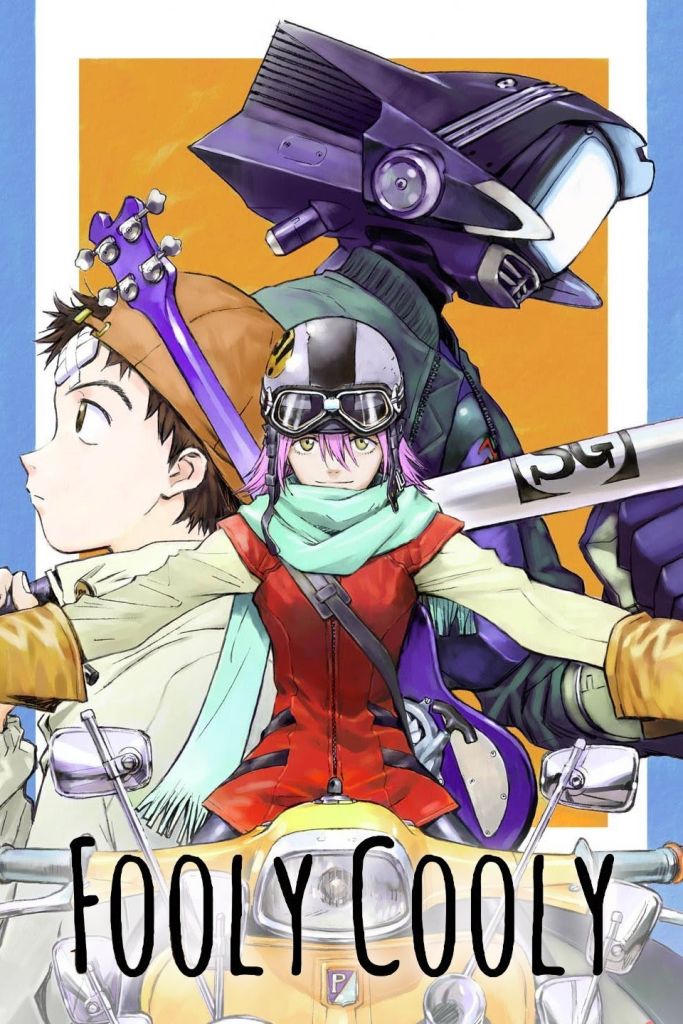
Starting with the original, FLCL (read as Fooly Cooly) was launched in Spring 2000 and is remarkably short at six episodes. On the surface, it looks like wacky nonsense that not even JoJo’s Bizarre Adventure would touch with a Stand holding a 5-meter barge pole, but fans of the series recommend watching the entire thing multiple times with a notepad nearby for some homework.

Depending on what you’re focusing on — which is its own feat because there’s a lot that goes on in just this show — you may be looking at the main character, Naota Nandaba, learn what it means to be mature while trying to speedrun childhood or you may be looking at the highlighted character, Haruko Haruhara, prepare to face off against organizations known as Medical Mechanica and the Fraternity so she can steal ultimate power from the pirate king Atomsk.

Just kidding!

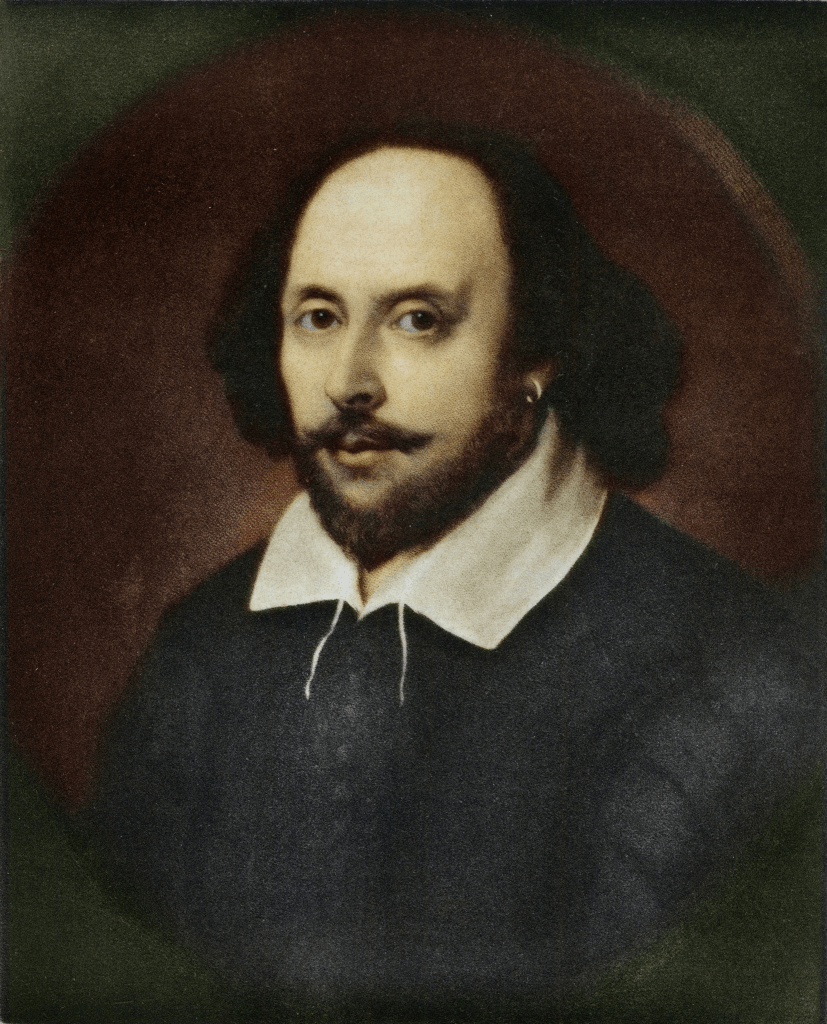
Now maybe it’s me, but I’ve heard people focus on one or the other without considering that they run concurrent. Most often, I hear people focus on one or the other, likely because Naota has nothing to do with Atomsk or Medical Mechanica… except that the connecting piece between them is Haruko herself, who introduces herself to the scene by speeding on a Vespa and braining the boy with a bass guitar. The impact gives him a ginormous bump that morphs into a horn that acts as a portal for which a robot emerges from his forehead. Even if Naota isn’t directly involved with these intergalactic shenanigans, it doesn’t stop Haruko from pulling him along while some of the other people in his life come along for the ride. Hell, looking at the rest of the townsfolk, Naota might as well be out of place, which is part of the point of FLCL’s meaning as the plot goes along. I’m not saying it’s bad to focus on one aspect over the other, there’s no wrong way to interpret something, even if the conclusions you come across are different from the general consensus, but thinking one is more important than the other is a bit misleading, even if the two don’t connect directly. As an example, William Shakespeare’s play King Lear was said to be performed on Boxing Day in 1606 and a few months later the Kingdom of England successfully set up the Virginia colony after failing the first two times twenty years earlier, yet there’s no connection between them aside from the country because Shakespeare’s contributions to geopolitics and colonialism are nonexistent.

On the whole though, most fans of FLCL original have lots of love for it. The points of divergence are sharp and clear between that of Progressive and Alternative. Progressive is about a girl named Hidomi Hibajiri whose personality is a match with that if Naota, except she’s most defined by her cat-ear headphones and unlike Naota, she chooses to ignore everything. The boy at least interacted with people; this girl would honestly be mistaken as a “relatable character” by some. Off topic, but I hate how relatable has come to equal jaded and gloomy. Is it hard to relate to a smily, joyful character? I haven’t seen it in full, but the clips of Tomo-chan is a Girl that feature Carol Olston specifically are some of my favorite, and we are nothing alike.

Anyway, like Naota, Hidomi was hit by a weird woman in a weird vehicle who goes on to live with her and her mother, Hinae, as the maid and of course Medical Mechanica returns to bear its fangs. But where’s Haruko in this? Well, she’s the teacher and this time she goes by the name Haruha Raharu. Now based on that description, this sounds like a skeleton wearing the skin of FLCL, and to some, it is. It’s not the same FLCL with a hidden meaning about growing up and boyhood; the original meaning is lost without Naota anywhere to be seen. Then again, I say that this is a fallacy from a fallacy, which draws the conclusion that Naota’s story is the only thing worth focusing on while all that other tomfoolery is going on in the background. This is true, but I’m hard-pressed to say that it should be isolated as much as it is. I’m more of the belief that it’s a coming-of-age story with a challenge for the boy to overcome as opposed to two separate things that barely interact with each other.

The widespread attachment to Naota at the cost of the rest of the plot might be an attribution to the general weirdness of anime being taken as normal and so the plot with Haruko and Atomsk and Medical Mechanica and what not isn’t seen as important as a jaded young boy growing up with unreliable relationships, and I understand that argument, but I also don’t like that. Not that I think it’s a bad faith argument to emphasize the boy’s importance, but to me, it’s more that Naota Nandaba’s story, while as important to the meaning of the show, isn’t what I would call the be-all, end-all.

I also don’t think the Haruko-Atomsk plot is meant to be the main focus of the show either. A video by akidearest on YouTube explains that the director, Kazuya Tsurumaki, wanted to break the rules as much as possible when making the show.

For Alternative, it’s got a wider cast and a more sociable protagonist, Kana Koumoto, and her friends, Mossan, Pets, and Hijiri, all of whom are in the latter half of high school and all of whom are also said to lead unremarkable lives until the giant monster jellyfish shows up and incinerates everything… oh, my mistake, that’s SpongeBob. Same as before: Haruko, bass guitar, Atomsk, the whole shebang.

If you’ve been following along, you’ll notice that as we progress, the protagonists get older and older. Naota is 12 years old, Hidomi is 14, and Kana et al are around 17-18. So for the most part, everyone is growing up and whatever we can expect from Grunge and Shoegaze, slated for release later this year might follow this path or do something completely different.

Across all three of them, FLCL at least maintains the relationships theme, whether it highlights how unreliable they can be as we age, learning to soften up to people, or how hard it can be to maintain them over time. Akidearest’s video linked above shows that FLCL’s plot is a complicated mess of many things and my research on the show and this blog reflect how hard it is to understand. It’s not just a distraction, it’s a fractal distraction, or at least that’s the frame that it’s wearing.

Part of the intention of this specific blog was to look at why a lot of fans of OG FLCL don’t give Progressive and Alternative as much of a chance with a lot of them seeing clones that wear the name as a mask while also questioning the necessity of a double-sequel after seventeen or so years in naptime, but for me, this highlights a number of false conclusions about FLCL and the coming-of-age genre. I didn’t get it at the time, but when I read Catcher in the Rye in high school, I just wrote Holden Caulfield off as a spoiled brat. While I still think that, I’ve come to realize that sometimes he has a point and it’s not all about misunderstanding the world from the mind of an adolescent.

All things considered, Progressive and Alternative follow the coming-of-age model quite nicely, even in the piecemeal fashion as presented. Do I think any one of them are better than the other? That’s a loaded question for me as I think there’s an audience for each type of animation style within the confines of any given animation and specifically FLCL, but as far as plot goes, I can’t really find one I prefer to the other. I feel about all of FLCL the same way I feel about JoJo’s Bizarre Adventure. Everyone has criticisms for and against some aspect of it, and I’m not above that, but the connecting element for JJBA is the family legacy of the Joestar clan’s fight against Dio and his cronies or just fate itself. I don’t have a part I dislike, but I do have some that I lean more towards than most.

Similarly, there’s a lot to examine about all three seasons of FLCL so far. In isolation or association, they all do their job well enough while following different stages in life. But that doesn’t answer if I think one of them is superior. To that I say–

Cop out answer incoming: declaring preference for one over the other is complicated for me. I tend to do it selectively, and with full expectations that what I like now will be different in the next few years. So not superior to anything else, but circling back to my point about relatable characters being gloomy and dejected, I like FLCL: Alternative because of the extra cast of characters to work with than just what I see in the others as a textbook case of how not to communicate. The others are still good in their own right, though.

April Fools’ Day and Adult Swim

Pranks and Adult Animation

April 1 is a golden opportunity for a lot of people to play practical jokes on each other, and there’s often no rules as to how this can go. As long as no one gets hurt then have at it. In the case of TV, even the news likes to have their go at the festivities. Personally, I think there’s more mileage in animation which brings me to the topic of this post’s title.

Perhaps by virtue of being an adult animation TV channel, Adult Swim has a knack for partaking in the jokes and merriment of April Fools’ Day. In some cases, where the program runs from late night March 31 to early morning April 1, they’ll engage in some tomfoolery on the shows they plan on airing, messing with the schedule, or other such on-air silliness. As a bonus for them, it’s an opportunity to air shows set to debut sometime in the future.

What interests me the most of all is that this isn’t exclusive to just the Adult Swim block. In the US, Cartoon Network, Adult Swim, and Toonami, all air on the same channel. CN is the primary daytime block; by 9:00 PM every night Adult Swim airs from Sunday to Friday all night, handing the reins back to CN at 5:00 AM; and on Saturday from midnight to 5:00 AM, Toonami airs.

All three have a rotating body of regular shows, some of which have gone down in animation history from Johnny Bravo, Dexter’s Laboratory, Power Puff Girls, and Teen Titans on Cartoon Network; King of the Hill, Futurama, Family Guy, Aqua Teen Hunger Force on Adult Swim; and Toonami’s had a variety of different anime, the most common ones ranging from Cowboy Bebop, to FLCL, to Naruto, Dragon Ball Z, Bleach, and One Piece, some of which are still on the block albeit in the dead of night.

Every April 1, viewers of Adult Swim and sometimes Toonami are in for any given treat. The first round of AS pranks began back in 2004 as a series of slight alterations to the channel’s shows. They were quick to do the same to Toonami and as the years went on, they got progressively more spontaneous. The tradition was still ongoing even after Toonami was canned in 2008. The Wikipedia page for Toonami describes the cancellation of Toonami as low-ratings. But I think I know what the true culprit was for that. Toonami is normally hosted by a robot character known as TOM who introduces the audience to the show and over the years the first time around, he’s gone through more than a few appearance changes through interactive events known as Total Immersion Events.

These events have been a staple of the block for years and generally involve a crisis of some sort attacking TOM’s station where he and AI partner SARA host the programming block. After the crisis is solved or averted or sometimes succeeded into killing TOM, a new appearance is adopted and the appearance of TOM 4 in 2007 was why it was axed the following year.

I wouldn’t say TOM 4’s appearance straight up assassinated the block, but it was a major contributor to the dip in viewership.

For about four years, Toonami was dead until it was revived for April Fools 2012 with a return to form. TOM 3, or in this case 3.5, returned to catch the viewers up to speed that night, by airing some old shows that have been on the block years prior, notably Fullmetal Alchemist and Tenchi Muyo. It wasn’t until a month later that executives confirmed on social media that Toonami was back for good this time.

Ever since, the April Fools’ Day pranks haven’t stopped and occasionally there’s a crossover into Toonami as previously mentioned. One of my personal favorites has to come from 2018. Being a western animation block airing English dubbed anime, the block normally doesn’t air anything in Japanese unless it’s something along the lines of an interview with a mangaka, a director, a studio in Japan or something else. Well, for 2018, not only were Japanese-dubbed anime put on the TV, TOM and SARA themselves were also given Japanese dubs, as was the logo.

Normally, April Fools’ is where AS markets the premiere of an upcoming show or a show’s next season later in the year, and for Toonami, I believe they were especially excited for this as FLCL: Alternative and Progressive were slated to air later that year. Additionally, they put on the 2004 Masaaki Yuasa produced movie Mind Game, also in Japanese, because this April Fools’ wasn’t weird enough.

This still goes down as one of my favorite April Fools’ events from Adult Swim and I was almost expecting them to do it again especially recently. Last month, they stuck it out with the April Fools’ tradition as expected and poking around on the associated subreddit, I kinda got my hopes up a bit. Part of the charm of these events is that its unpredictable. The only thing a viewer can expect from these is a deviation from the schedule and an introduction to a new show or new season of an existing show. This tradition was honored and for 2023, audiences got a taste of new show Royal Crackers and another season was confirmed for The Eric Andre Show and Teenage Euthanasia.

I was expecting something for Toonami this year, but it seemed Adult Swim took the glory. The daily discourse these days has been that of the progress in AI technology, so to capitalize on that, Adult Swim used a generative AI (think DALL-E or Midjourney) to run their programs in the early morning hours of April 1, mildly disrupting the run of Smiling Friends and putting a rerun of Space Ghost: Coast to Coast. It’s hard to explain in wording or writing so have a look at the livestream from that day.

In contrast, Toonami aired the shows as normal whilst paying homage to the joke that put them back on TV. The reason I expected a 2018-style makeover was because Toonami comes on every Saturday night at midnight and April began on a Saturday, but this was more of a miscalculation on my end. Toonami began about three hours earlier than the midnight setup that it has now. Double bills are also quite rare in this regard, so while Adult Swim did give us something stupid to laugh at early Saturday morning, this wasn’t guaranteed for Toonami. Again, April Fools’ Day pranks on AS are unpredictable after all.

So the joke is very much on me, but I still think it was fun this year. Another possible double bill April Fools’ Day prank could probably occur the next time April begins on a Saturday and because 2024 is a Leap Year, the next time that’ll happen coincidentally will be another Leap Year: 2028, which is the year I turn 30. Again, this is speculation. I’m not Nostradamus trying to see what’s in the future…

Significant changes to your life are in the future.

One more thing before I end this blog post, I may have a topic for the next week that’ll throw my schedule into the fray and it concerns FLCL mentioned above. Here’s a sneak peek:

Admittedly, this was from March 2022, but I’m gonna write about it next week because I didn’t know about it at the time.