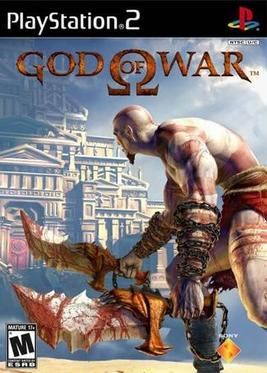
An Attempt to Fix the Original God of War Timeline

A week-long journey in rewriting a fictional storyline
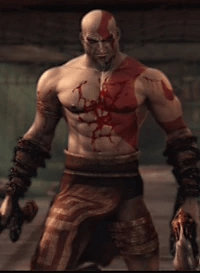
Two weeks ago, I made a post in the midst of a memory lapse concerning the God of War timeline. My vague notes were misinterpreted as a detailed look at the timeline, but on reflection, I realized that it may have been more in line with making the timeline make better sense due to the plot holes as well as mythical inaccuracies. In a rough draft, I attempted to do this for the entire chronology of Greek era God of War and unweaving one thread meant unweaving another and, fittingly, this would mean further opening Pandora’s box.

Some of the points I brought up were based on The Mythology Guy’s videos on listing all the mythical inaccuracies in the series, and there are a lot. But then again, Mythology Guy did it all for fun. That’s kind of how it started for me until the script sprouted wings and flew south for the winter.

I still think it’s fun to look at all the inaccuracies in the games and at the end of the day, that’s what they are. It’s generally not that deep despite the lore built up, but I didn’t want to let it all go just like that. I do still think there are things to address in accordance with the series plot. Some of these changes might be radical enough to essentially rewrite one or more of the games, but even if we acknowledge more than a few inaccuracies (like nonexistent weapons and relics for example), there’s still a few things that need some TLC.

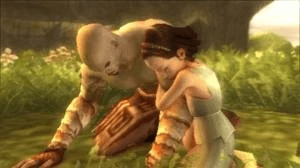
The length of my draft opened my eyes to how untenable rewriting six games to be more mythically accurate could get. I’ve always given the games leeway since myths tend to be based on a version of reality while also having multiple tellings and retellings over time, such is the case with Egyptian mythology, but one of the examples I think should be changed regards Kratos’ ability to kill gods. One of the most famous victims of his goals being Hades’ wife, Persephone.
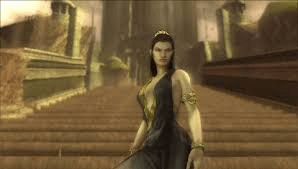
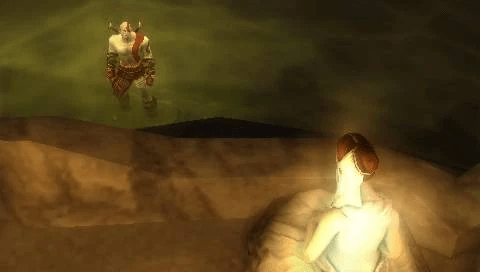
As we can see from this picture above, in-game Persephone has a dark aroma about her. Wearing a dark dress, gloomy demeanor, and spoiler for God of War: Chains of Olympus, plans to use a titan to destroy Olympus in revenge for her kidnapping. Mythical Persephone was the goddess of springtime and her presence on the surface signifies the changing seasons while her absence signifies a coming winter. Changing this aspect of her isn’t a new thing for Santa Monica and it followed them well into the development of the Norse saga.
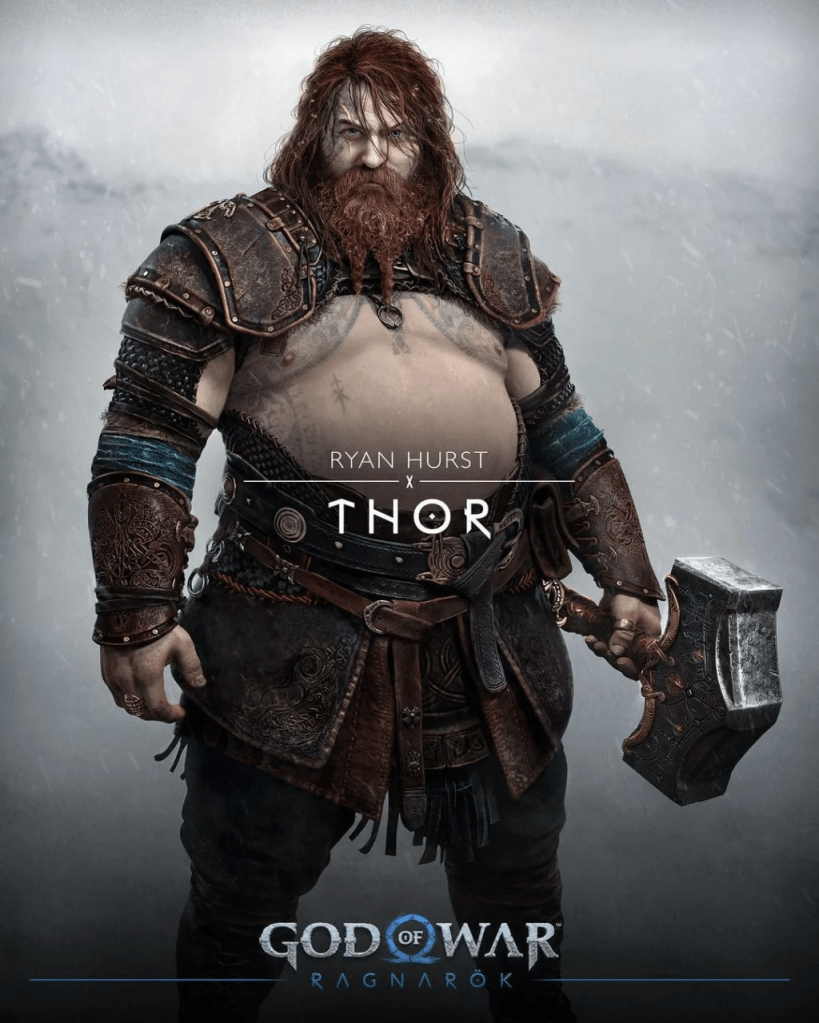
Just to clarify, I’m not trying to say fat Thor is inaccurate. His personality as a villainous god undyingly loyal to Odin is the inaccuracy. Still makes for an exciting game though.

The portrayal of Persephone as seeking vengeance against Olympus for abandoning her can be chalked up to different versions of the myths. Don’t quote me on this, but I think the version where she willingly wandered into the realm of Hades and grew an affection for the god of the underworld is a relatively recent retelling differing from the myths where she’s a kidnap victim. The kidnap victim angle works hand-in-hand with the double-cross from Olympus and makes for good villain. The point of change that I would say needed a change would be her death. For a while, I ran with the theory that she was a goddess of lesser importance, but commenters in The Mythology Guy’s video on Chains of Olympus stated that the Gauntlet of Zeus was the god-killing weapon specifically.

By this logic, Pandora’s box can grant a mortal the ability to kill god with any weapon since the sword Kratos used on Ares wasn’t all that special, merely acting as a bridge on the outskirts of Athens while the Gauntlet of Zeus bears the name and is the sole property of the king of Olympus, which would apply like the diamond rule where only a diamond can cut another diamond. In this instance, only a tool blessed by an Olympian can kill an Olympian, which also seems to be in line with the Blade of Olympus, from the Titanomachy in the games. So I’ll give the commenters in that video the W for explaining and confirming it, since this is before Kratos gets the powers to kill a god by any other means from the box of Pandora, but another point where Kratos kills a god without gaining the ability from the box or is in possession of a godly weapon comes from God of War: Ascension and the main baddies there: the Furies.

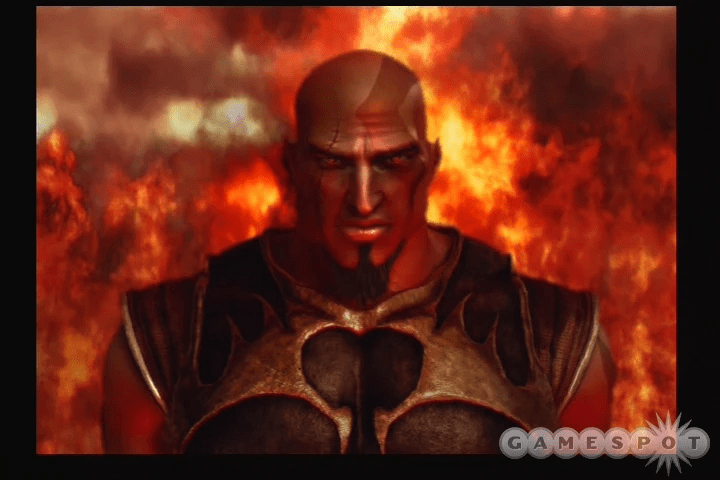
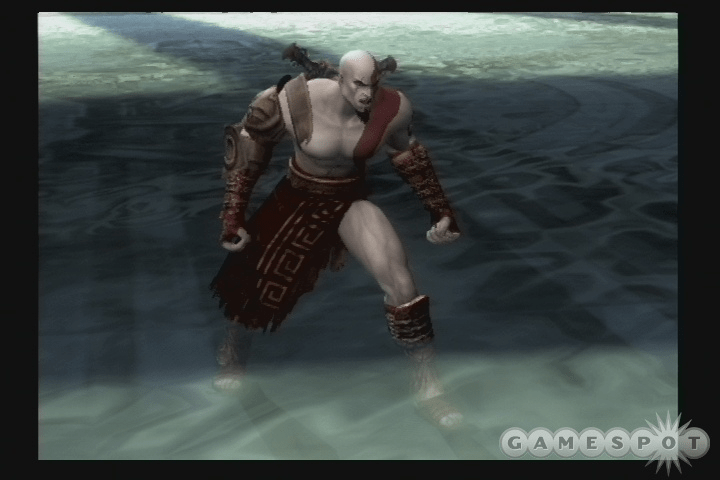
This picture also works to show that despite being a demigod, Kratos was also capable of mutilating a deity with just the blades of Chaos. And you can argue that the blades of Chaos, later Athena, later Exile are all godly weapons capable of killing gods, then Pandora’s Box would be unnecessary later unless the box is capable of making sure the gods, primordials and Olympians alike, but some of this hasn’t been confirmed, so it exists as a retcon.

There’s other stuff that, if changed, or addressed would essentially rewrite the narrative of the games. Personally, I’ve found a newfound appreciation for God of War II for the references and other heroes and characters who appear in the game like Theseus and Perseus, who have an indirect connection through Perseus’ descendant Hercules/Heracles. What I like about Perseus in this game come to the weapons on his person: the reflective shield, the helm of invisibility, the voice acting talents of Harry Hamlin who played the character in 1981’s Clash of the Titans. It’s all so good. To add to this, the point of divergence in his life comes from Kratos taking the head of Medusa instead of him which, in the myths, he was supposed to use on Cetus to save Andromeda from peril, and his quest to see the Sisters of Fate reflects the negative consequences of that in a “Rob Peter to Pay Paul” aspect.

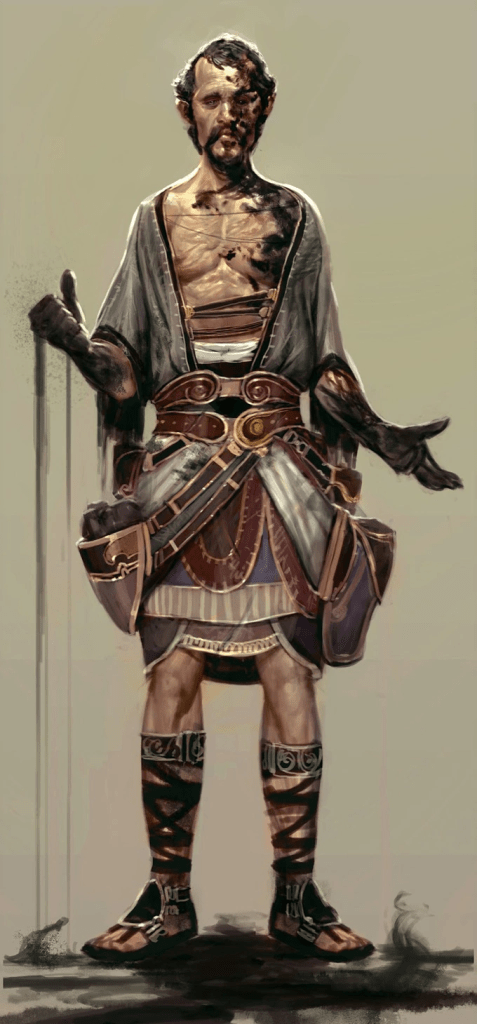
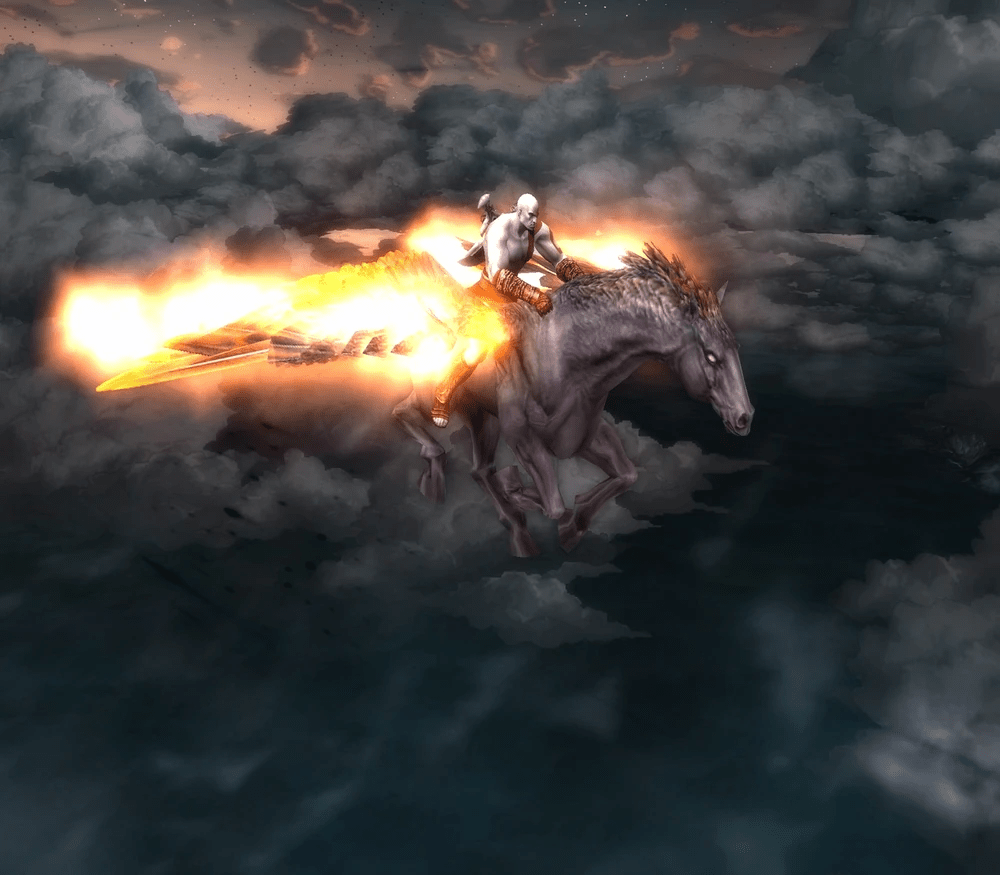
But there’s different things about Perseus to nitpick. Highlighted once again by the Mythology Guy, the sword is the wrong shape and his boots don’t have wings as described in the myths. As for the part of him where he never sought the sisters or died in battle, I’ll leave that part alone. Additionally, before this point, Kratos encounters an elderly Theseus who works as the gatekeeper of the steeds of time, which Kratos himself pointed out was the last thing he expected out of him since Theseus was so famously arrogant and cocky. Something students of Greek mythology are also likely to point out just before the fight on one of the horses.

He’s still quite arrogant in the game, but him having decades on Perseus or even Heracles in God of War III is a strange direction for the developers to take since Perseus is the one who should be an old man instead. In the myths, their indirect connection comes from Perseus being Heracles’ direct ancestor and Heracles encountered Theseus during one of his labors. If we want to alter this slightly, perhaps have a disgruntled and elderly Perseus trade spots with Theseus who’d be obsessed with attempting to regain his fame as the founder-king of Athens.

On the subject of weird directions to take, Hobo Icarus doesn’t make much sense. In the myths, Icarus was warned by his father Daedalus to neither fly too close to the sun or the heat would melt the binding wax that holds the feathers, not too close to the sea or the water would wash away the adhesive. Failing to adhere, the sun melts the wax and sends the boy into the sea to drown and Daedalus buries him on an island.

This would make more sense if it was Daedalus seeking the sisters to see if they could do something about his son as opposed to him becoming a victim of the gods’ cruelty and being forced to work on that labyrinthine Rubik’s cube in God of War III.

In the same game, there’s the issue of the Fates. In Ghost of Sparta, Thanatos tells Kratos and Deimos before fighting them that the Fates determine the paths of everyone in the Greek world, but normally at the behest of the gods, which is also confirmed by Theseus before his own fight in God of War II as well as Lahkesis herself at her own temple before the sisters face their own ultimate fate. A major plot hole here is that the Fates meant for Kratos to beat the odds and get to the temple, but strictly state that there is no changing one’s fate. Whatever happens happens. By this point, Kratos is hellbent on angering his way to Zeus and burying him under the soil of Olympus (or what’s left of it) by the end.

But I have to ask why the Fates would bring him this far if he wasn’t supposed to win. Probably to live up to the prophecy revealed in Ascension and follow the trend of failing to avoid fate by eventually being the cause of it, coupled with Kratos never really losing those god-killing powers from the first game since the Sisters fall to him with more Olympians to follow suit in God of War III. That’s my explanation, but admittedly I’m only working with the powers of extrapolation so I know damn well I’m wrong somewhere.

Not as wrong as Heracles is with his own labors though. He claims in God of War III that he performed all twelve of them, but by my count three of them were taken by Kratos, namely the hydra, the Cerberus, and the Geryon. The first two appeared in GoW 1 as the first battle and the Challenge of Poseidon respectively. The Geryon was the teleporting monster on the island of Crete from Ghost of Sparta, which is fitting since the enemy appears in Heracles’ namesake city in the game. For reference:

Granted in the myth, it didn’t teleport and was described as a three-headed giant or a three-torsoed giant that got bodied by Heracles. I’d still keep the Heracles fight, but maybe change the lines to make the timeline a little bit more consistent than what we got. Going back to Chains of Olympus briefly, Morpheus was pretty much teased as a major figure and him being the god of dreams should have been a golden opportunity for Kratos to combat him in the hopes of getting some kind of relief from his nightmares. Just saying, the series uses the Rule of Three cliché quite a bit so why not give him a third deity to fight unless there were plans that were scrapped? Such a shame we didn’t get to see this.

Speaking of missed opportunities, God of War III has Kratos toppling Olympus in an attempt to reach Zeus. An awesome concept that honestly should have included more deities in the pantheon. We already know about the vacancies left by Ares, Athena, and Persephone, but others either made only one appearance or none at all. Why reference Apollo’s bow but omit the god himself? Or leave Artemis out of the last of the games? Would she have been too OP even for Kratos since she’s a goddess of the hunt? Well, that giant sword she gives him in the first game would suggest that she’s one of the gods you wouldn’t want to trifle with, especially since she turned one of her followers into a bear after an affair with Zeus.

Hades losing his wife to Kratos along with his brother and niece would be a sore spot of reference, and I imagine Zeus would force him to put up with it so he can lend him control of the dead in his fight with Ares, but Hades wouldn’t be the only one pissed off about that. Persephone’s mother should’ve also been there to stop Kratos. Lastly, there are Dionysus and Hestia. Admittedly, some of these omitted gods wouldn’t have any battle prowess, but with the chaos unleashed from the box of Pandora, I’d still think they’d put up a fight of some kind. Dionysus could’ve afflicted Kratos with drunkenness, Hestia and Demeter are both said to wield scepters, and Artemis and Apollo both have bows. Or if this would extend an already pretty long game, how about challenges bearing their names like the first game? Just a thought.

This is just what I think could be used to fix some of God of War’s plot holes, I don’t think they’re egregious and make the games unplayable or unenjoyable, and I understand that some concepts don’t always make it to the final product, like Atlantis getting scrapped and becoming a major plot point for Ghost of Sparta, but some of these points, when examined, don’t often make a lot of sense.

Before I move onto the YouTube channel recommendations, I want to briefly address one recommendation I made in the past. Two weeks ago, I recommended the YouTube channel iilluminaughtii because of her in-depth anticorporatist, anti-MLM documentaries, but earlier this week, it was revealed that former editors and collaborators on her channel and associated channels have dug out some skeletons from her closet.

She attempted to defame another YouTuber when one of his editors questioned the techniques of her editing team on Discord. This specific editor is a YouTuber himself and had simply asked for tips and tricks, which comes with the territory on YouTube, but when the same editing tricks made their way into a video, iilluminaughtii, or in this case Blair herself, got mad and falsely claimed plagiarism on Twitter, which others were quick to point out the hypocrisy as her channel has plagiarized other documentaries in the past.

Now there’s nothing wrong with calling someone out if you believe they stole material or even with referencing a documentary for use in a video or article you yourself are making. The points of divergence come with what Blair claimed and the YouTuber she attempted to accuse of theft. What she claimed was a practice that is common all over the site and the YouTuber she attempted to defame was Devin Stone, a real-life attorney operating in the Washington, DC area whose content focuses on real-life and fictional law cases from the trial in SpongeBob SquarePants to Better Call Saul.

Furthermore, ex-editors and such have come out on Twitter to describe Blair as a person and as a YouTuber personally and none of them have nice things to say about her. For a start, she doesn’t seem to keep a tidy dwelling and is quite accusatory as seen with the nontroversy she tried to start with an actual attorney. She’s also not a good neighbor and doesn’t always practice what she preaches, shaming and lambasting the uber-wealthy, but now that she’d found success from her own channel, she allegedly shopped for luxurious items like expensive clothing brands and cars, sometimes after publishing a video on why X brand doesn’t live up to its purported reputation.

Looking back, it was quite alarming that she could pump out so many documentaries in such a short amount of time considering documentaries take far longer to make than any given movie thanks to the research that goes into them. After what I’d heard about another documentary YouTuber, Jake Tran, I thought I’d be over hypocritical content creators becoming the monsters they sought to destroy, and I make this comparison because this was what I’d thought of with the Twitter threads and YouTube videos released this week that talk about this sort of thing amongst other YouTuber controversies as of late. But whereas Jake Tran took histories lessons as a handbook instead of a warning, Blair is doing the exact thing she often accuses real-life public figures of doing, so what gives?

I’ll still make recommendations for YouTube channels I like and I might cover the topic more in-depth in the future but I can’t make promises to the latter. I don’t really like delving into content creator drama. Personally, I stick around for the content. Online and in Hollywood there are too many examples of celebrities falling victim of their own hubris and I’ll always praise those who try their best to remain controversy-free and point people in their direction since they tend to have evidence of their services to the unfortunate, either through donations or fundraisers, but I can’t say everyone I recommend will be or remain a good person five, ten, twenty years for now. I only promise to try.

As for channels I recommend, to make up for the shortfall that came with Blair “iilluminaughtii,” I have two recommendations this time around. Yes, a two-fer! The first one is Monsieur Z.

https://www.youtube.com/@MonsieurDean/about

Monsieur Z, also known as Mr. Z, real name Dean, is also a history YouTuber who delves into alternate history most of the time. His channel is a bit more frequent than that of Cody Franklin’s Alternate History Hub et al and incidentally, both have been confused with each other because of their deep voices. Politically, Mr. Z leans conservative and has some videos that tacitly or overtly criticize left-leaning and liberal viewpoints, but he’s not a primary current events channel. Most of the time, it’s looking at different points in history that could’ve gone differently like the aforementioned Alternate History Hub.

To throw a bone to Devin Stone, I’m also recommending his channel: LegalEagle.

https://www.youtube.com/@LegalEagle/about

Devin Stone of LegalEagle fame is, as I stated above a real-life attorney who often examines real ongoing law cases as well as fictionalized lawsuits in media. He’s also active on the website Nebula with other similar YouTubers, and even has courses and guides for aspiring lawyers in the US. Whether you hope to become an attorney in the US, you want to know more about the legalese we laymen aren’t always privy to, or if you just want to see how fictionalized court cases compare to real-world practices common in a court room, check out the channel. For both Mr. Z and LegalEagle, they have dedicated Patreon pages and other such outlets for which to support the work that they do, found in their respective about pages.

Also, Devin was a good sport in spite of the dubious claims made against him by Blair. If you’d like, you can look around on YouTube to hear what others have been saying. To summarize, it’s not a very good look for Blair.


What Happened to the Naruto: Ultimate Ninja series?

The series that had to be soft rebooted

Before we start, I just want to say that I think I meant for last week’s post to be about rewriting the God of War Greek Era narrative in a more cohesive manner considering all the silliness that unearths its plot holes. I’ve defended some overarching stuff since most ancient myths have multiple retellings due to oral tradition, but some specific details are hard to ignore. So, I’ll save that for a future post. This time, we’re gonna talk about the Naruto franchise, more importantly a series of video games based on the franchise that sort of went through a soft reboot about halfway through.

Masashi Kishimoto’s magnum opus, the Naruto franchise, had grown to be a smash hit since its first chapter debuted in 1999. Manga/anime fans hold it in high regard, and it’s part of that generation’s Big Three with the others being Bleach by Tite Kubo and One Piece by Eiichiro Oda. Both of which have gotten their own video games, accessories, figures and more.

With Naruto, part of me wants to say the ninja/shinobi aesthetic was what helped it explode when it began to make waves in the west, so much so that when the anime began dubbing it in English in 2005, the Japanese video games were getting the same treatment soon after. Generally, anime adaptations in Japan are promotional material for the manga, as are the manga’s associated figures, light novels, and other materials. Hence why some of us in the west are still waiting on a second seasons to anime that may never come.

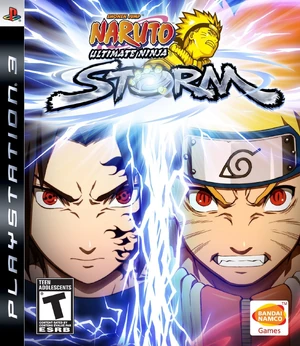
The benefit of releasing in an era where shinobi were the coolest thing since an arctic winter might have heavily tipped the scales in Naruto’s favor, thus explaining the numerous video games associated with it. Specifically, the Ultimate Ninja series. Five main games following the timeline of the manga were released in Japan from October 2003 to December 2007, and ported to the west from June 2006 to November 2009. Likely due to the release of the anime and its western dub, the games loosely follow the events of the manga until they cut off and each successive game adds to the cast of characters to play as.

Ultimate Ninja 1, for instance, starts off with a small cast because it follows the story from the Land of Waves arc until the Destruction of the Leaf/Konoha Crush arc. Many of the important characters are assisting characters during fights, and mostly follow them individually as opposed to staying consistent with the manga, such as the changing around of one or more outcomes of certain battles. The Naruto wiki claims that as far as a presentation goes, critics felt that it left a lot to be desired. Personally, I was introduced to the series through a friend who had the second installment on his PS2 and later I went to buy the first game. From what I’d seen, I agreed with those critics’ statements that more could’ve been done at the outset, and the players and critics got that wish in Ultimate Ninja 2.

In 2004 in Japan and 2007 in the west, the second installment followed up on what the first game brought to the table. Continuing with the rest of the Konoha Crush arc and ending narratively with the Search for Tsunade arc. What became a bit of a trend for the series starting with this game was a game-exclusive arc that can be compared to filler or something along the lines of an OVA. Spoilers to follow: get ready.

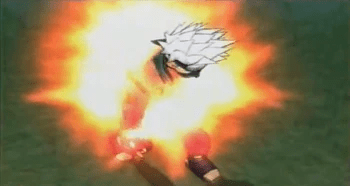
After Tsunade is returned to the village to serve as the Fifth Hokage, Orochimaru who didn’t learn his lesson the first time he tried this malarkey has another go at swaying Tsunade’s decision. This time he as an ace in the hole. He and Kabuto were intercepted at the Training Grounds by Kakashi. At this time, Orochimaru’s arms have been sealed and so he needs Kabuto to use his chakra and perform ninjutsu. One such jutsu, is known as the Forbidden Jutsu: Gedo Mark and its main purpose is to limit its opponents.

There’s better pictures for this, I’m sure. Actually, I think it’s better to see it in action.

Sidenote, the YouTube channel in question has a full playthrough of this game among others. I recommend giving it a look.

This next arc sees Orochimaru and Kabuto to try multiple avenues at once to coerce Tsunade into reconsidering releasing Orochimaru’s arms. First, he cripples the more troublesome ninja, namely Kakashi and Naruto, then he uses Reanimation to revive Zabuza Momochi, Haku, and the Third Hokage. After the Leaf ninja find a way to release the Gedo Mark, they soundly defeat Orochimaru and Kabuto and the game ends. Seems even your video games aren’t free from filler. For my take, it’s an interesting story with a lot of stuff that doesn’t make sense. I don’t doubt that Orochimaru’s hunt for the greatest Jutsu ever would lead him to unethical methods, we see this all the way until Boruto confirms that he’s been under lifelong house arrest, but even if he could inhabit another body, the risk to his health in his current state would have even him rethinking his decisions to use ninjutsu willy-nilly like that. Kabuto even says as much. Still enjoyable, and as an added bonus: Taijutsu Naruto.

The Japanese release had characters from the Ninja Clash in the Land of Snow movie.

There’s also a free-roaming mode where players explore the world of Naruto, though considering it stops at the Tsunade Search arc in canon, only a few locations are available. Nonetheless, there’s different activities that can be done with other characters or solo and some of my best memories of the game come from playing with friends at their houses, even if my skills were subpar. Now that the developers were seeing gold, they expanded on this even further in Ultimate Ninja 3.

Released around Christmas 2005 in Japan and in March of 2008 in the west, Ultimate Ninja 3 covers the entirety of Part I from the Land of Waves to the Sasuke Retrieval Mission albeit with some notable omissions, chief among them the Chunin Exam Preliminary Rounds. There might not have been a way get those into the game since the main focus is fighting, but it’s a not insignificant difference that could potentially shape the way someone views the anime if this was their first exposure to the series.

Still, there’s more characters to use, more minigames with the characters, and just like its predecessor there’s an exclusive arc that interestingly got its own OVA for promotional purposes.

Titled “Finally a Clash! Jonin vs. Genin,” the main gist of the OVA is that the Leaf Village in association with the Sand Village puts together a tournament based on a points system. Genin and lower start with one blue crystal worth one point while Chunin and up start with one red crystal worth five points each. Passing a threshold of points advances the ninja to the next round, and passing that threshold allows the victor to pass a regulation that the two villages would follow for a week straight.

It’s initially suggested that battling was the only way to earn crystals but these being physical points you can hold in your hand, you’re not necessarily limited to that kind of all-out battle. Select characters trade them as currency for favors or use them in wagers. There’s also simply looking for the crystals on the ground as they fall out of people’s pockets like change. As for the free-roaming open world element, there’s now jumping and double jumping and the exploration isn’t limited to a few locales, but it’s not the same open world that you’d see in the later Ultimate Ninja Storm series.

This one does a lot more, though I think the limitations of the hardware still did a number on this game since it compresses large arcs into a few battles. I’m not saying I want all the battles and dialogue to be redone in the game, just that a few of the important, plot battles be given theirs. Additionally, it was quite clever of them to hide the Fourth Hokage’s name as simply his nickname in the manga: Yellow Flash, but I’m not sure why he has no speaking role in the game. Something I forgot to mention when talking about Ultimate Ninja 2, that game had a notoriously difficult substitution/rebound system that made it near impossible to properly counter attacks. UN3 and up dumbed that down significantly and I praise the change.

Japanese release: April 2007, and Western release: March 2009, UN4 as seen on the cover starts in the Shippuden era and like its predecessors it has an exclusive arc that is separate from the canon manga arcs and its own open-world RPG-type game mode. This time around, Naruto is still training with Jiraiya. To conclude this round of training, he’s given prayer beads to wrap around each limb and Jiraiya uses a weighting Jutsu to alter the weight of the beads. They change color with experience and when Naruto’s beads glow red, he’s instructed to find Jiraiya who’ll take them off to conclude his training.

In the meantime, the two head to the Tree Felling Village where a girl, Aoi, is to be used as human sacrifice to satisfy a demon known as Black Shadow who lives in the caves. Naruto’s disgust with the practice results in him chasing after the girl who’s determined to go deeper into the cave. Black Shadow physically stops the shinobi, though by now his beads turn red and he’s eager to get them off so he can come back and break down the barrier Black Shadow had summoned earlier.

Before that though, he and Jiraiya gather some information on Aoi and her path as a sacrifice. As it turns out, Aoi was using a desperate though dangerous method to help her ailing mother, Tsubaki, who’s introduced at around the same time Naruto and Jiraiya make it to the Tree Felling Village. The village’s namesake is derived from a tree that blossomed flowers with healing properties. As a bonus, these flowers were a barrier keeping Black Shadow at bay, but when it was chopped down by the villagers and subsequently consumed by Black Shadow all hell broke loose. The villagers then offered an annual sacrifice to the demon to keep him satisfied.

As for Tsubaki’s and Aoi’s lineage, their ancestors were closely linked to the tree and their connects to the tree are limited to a charm with the flower petals inside it since the tree was felled. Aoi’s father died of illness and Tsubaki was on the same path; this culminated in her decision to feign sacrifice as a means of getting close to the tree within Black Shadow and using it as some sort of cure.

After the demon reveals its true form, Naruto fights it, aided by Aoi, and soundly defeats Black Shadow. Unfortunately, the leaves from the tree have long since wilted, save for one that Aoi picks up and I presume is used in tea. Then Naruto falls into a weeklong coma and at awaking, he finds that Tsubaki made a full recovery and Naruto and Jiraiya return to the Leaf Village having made a difference in this family’s life.

Afterwards, the game starts in the Kazekage Rescue arc, but ends halfway through before the Kazekage proper has been saved. I don’t have evidence to support this, but I think the game released as Shippuden was beginning. The only evidence I see is the release date being consistent with the beginning of Shippuden’s anime adaptation.

It’s pretty much the same as the other games, but with more characters, more movement, etc. But even though, the Shippuden arc leaves a lot to be desired, fortunately in the open-world game mode, there are coins known as Pieces of Memory where you can view the story of all of Part I from the Land of Waves arc to the Sasuke Retrieval Mission, so it’s not a total loss.

Naturally, you could assume that a fifth game was on the horizon to restart the first arc of Shippuden and keep it going to at least the end of the Tenchi Bridge Arc where we see Shippuden Sasuke. This was what I thought too at the time and I found out as recently as a few years ago that there was a fifth game that never made it to North America.

In the UN series by itself this is the last of the main Ultimate Ninja games until Ultimate Ninja Storm on the next generation of consoles. Do note that I’m not saying it has no English language release. When the UK was still an EU country, it was eligible for most EU ports of certain games, this being one of them, so while I managed to find an emulated version of the EU release, this game doesn’t exist outside of Japan or Europe and I don’t think my preschool level Japanese is gonna help me if I play with Japanese subtitles and audio.

This game actually is what motivated this post. Four games bear the Ultimate Ninja tag all released on the PS2 and the fifth one was never made for fans from the Americas. What’s the reason for this? My closest source again comes from the Naruto wiki and it can be boiled down to time constraints and dubbing issues. I can’t say with certainty as I have no evidence that this is the case, but I’m at least somewhat positive that the release dates and the evidence in the games is enough of a clue to work with.

Almost all of them released concurrent with the anime adaptation, but several years after the manga was a few arcs ahead of what was depicted, which explains why UN4’s main story is so short compared to the others. Episode 15 was the most recent episode when that game came out. As for time constraints, with the other games coming out as fast as they did, of course time was Namco’s enemy here. I only made it to the title screen as I wanted to finish the UN games before making it to five, but from what I saw even the EU release was botched with only Japanese audio with the selected nation’s language for subtitles.

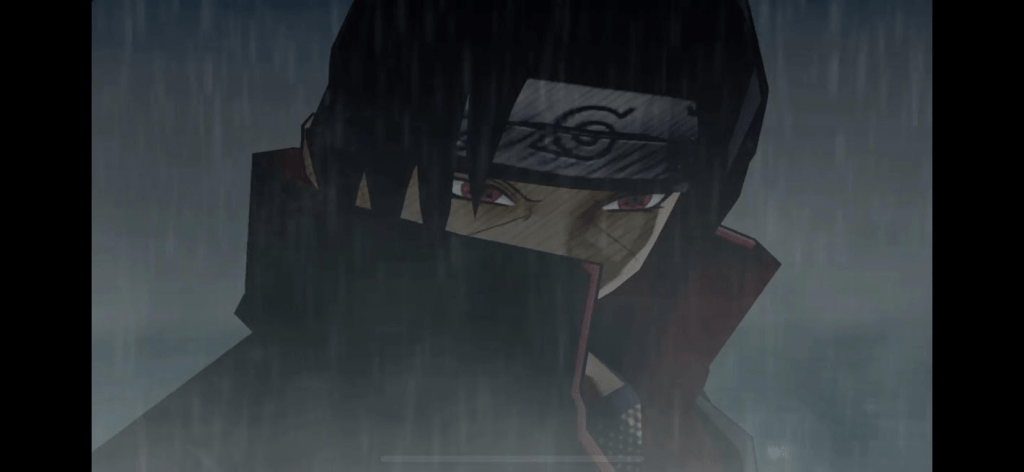
From what I can gather, they were going to keep up with this trend of releasing the games around the same week as a new arc, but it seems fate forced the devs to rethink things a bit. I could see a UN6 continuing from the emergence of the Akatsuki’s Zombie Combo up until Sasuke’s formation of Team Hebi (later Taka) to finally exact revenge on Itachi for the Uchiha Clan Downfall all those years ago. And follow that trend until the manga concluded with some extra ideas for other exclusive/filler arcs.

Realistically, the problems with keeping this up grew to be untenable. At the same time some of these games were being made, the similar graphics were being used for most of the spin-off and mobile/handheld titles like the Ultimate Ninja Heroes series on the PSP and Ultimate Ninja Impact. It’s not like the Japan-only games that weren’t meant for the west; bad luck essentially forced them to hit the reset button and try again with a better series.

Better graphics, new engine, more characters, more to do with the environment and make it feel as though the player is playing the anime, the UN Storm series is in all aspects a technical upgrade. However, there’s a bunch of from the previous series that several gamers may be disappointed to learn were done away with. It took some getting used to to learn that UN3 onwards discarded the multiple screens for an ultimate jutsu as well as different ultimate jutsu in gameplay, and the RPG-esque text reading at least felt like it was advancing faster because the characters would always voice the lines so you did more than read and listen to the background music.

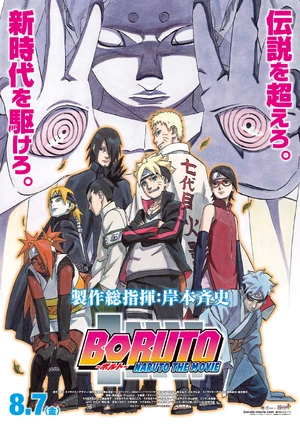
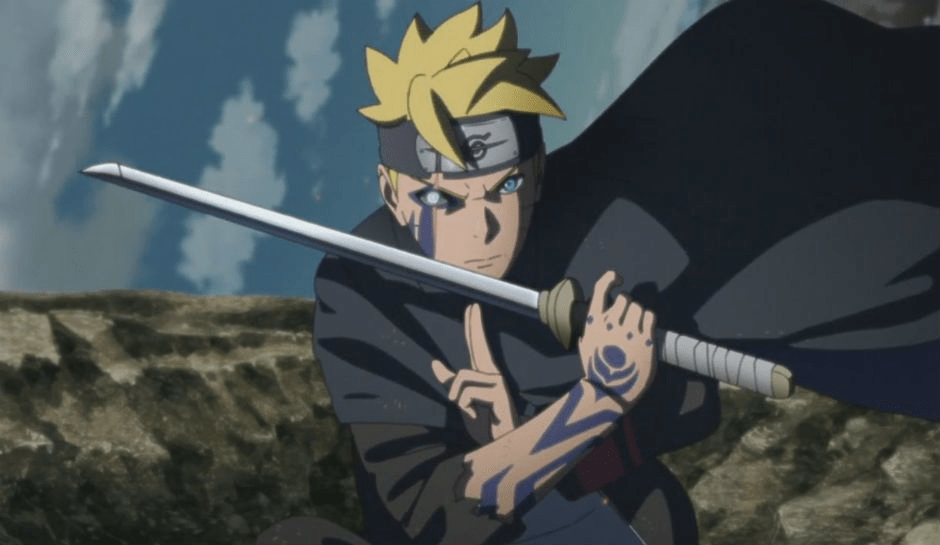
My exposure only comes in the last game Ultimate Ninja 4 which wraps the story up admittedly more beautifully than the anime. At least they did something with the Boruto movie adaptation. And since this was the last of Naruto’s story, if this game was using the Boruto plot to promote the movie then cool!

Though now that I think about it, it’s possible that the reputation of Naruto was what made loads of people expect better from the Boruto series. As much as I’ve been cheerleading Boruto, I also wish it would improve in some areas, though it looks like I’ll get my wish when both the manga and anime return later this year, along with a new game set for release soon.

For this week, I recommend the YouTube channel Alternate History Hub.

https://www.youtube.com/@AlternateHistoryHub/about

This channel specializes mostly in what’s on the tin: alternate history. What if the US stayed out of both world wars? What if Spain stayed Muslim? What if Japan went Catholic? What if the Ottomans colonized the Americas? and other such topics that explore what would happen if history took a different path than what happened in our timeline.

Just like my Trash Taste recommendation from a few months ago, there’s other associated channels with Alternate History Hub. Cody Franklin oversees this channel, he used to oversee the channel Knowledge Hub which is now Knowledge Husk until he gave it to his brother Tyler, and recently, Cody launched the channel Pointless Hub which looks more at entertainment media than something along the lines of geopolitics. You can even support him and his channels through the associated Patreon links.

If alternate history seems right up your alley, give him a follow. If not, then there’s other stuff of his to view.

God of War Original: On Kratos

Norse God of War looks impressive, but…

Going back to notes on future topics, I hadn’t really planned all that well for future topics. This week just says God of War original, but I didn’t really elaborate any further on what I meant by that; I was just listing things off for what I’d like to cover well into September of this year, though for reasons to be revealed much later as more details come to me, I doubt I’ll be anywhere near a device long enough to make regular weekly Friday blog posts.

For this week, I don’t remember whether I wanted to talk about what makes even Greek Kratos a good character along with Norse Kratos or if I wanted to cover a timeline of the Greek era games. I’ve seen more videos contextualizing and/or defending Greek Kratos to rebut the game journalists who were ready to discard him with very little knowledge of the rest of the series, and I’ve done this before as well. My first blog post defends Kratos while still acknowledge that his behavior and actions are downright brutal, so instead of repeating that, I think I’ll put together a comprehensive timeline.

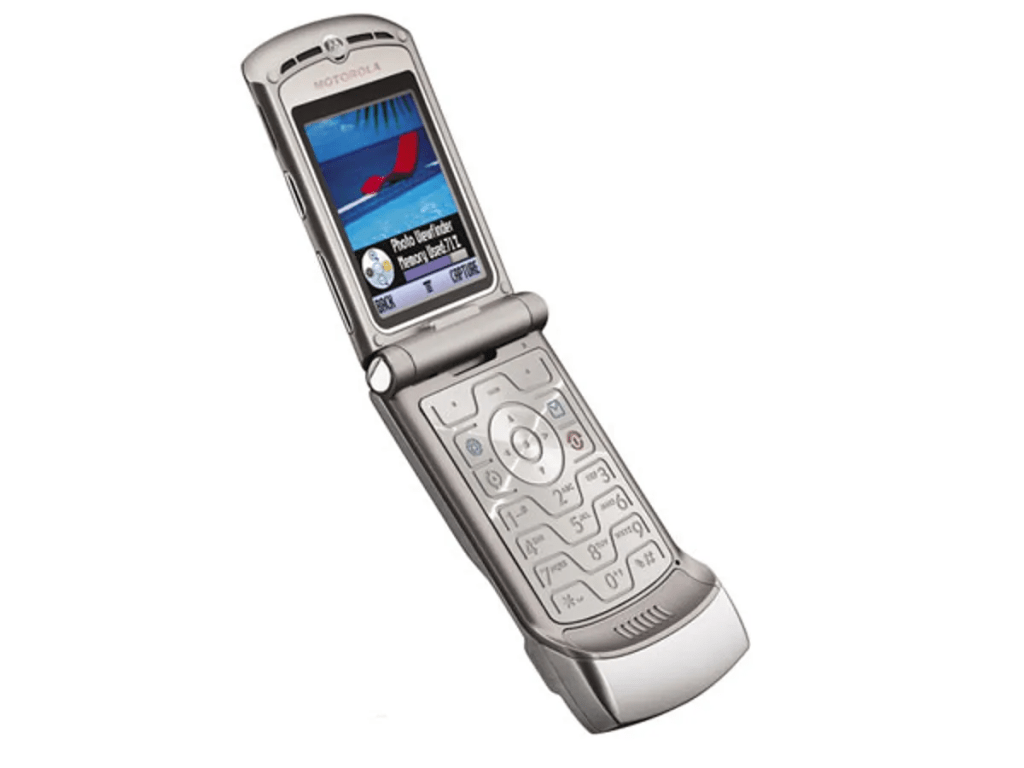
Note: this will mostly before the Greek era and may only cover the games I’ve played, so although the developers claim God of War: Betrayal is canon, I currently don’t have a means to play this. I did find and save a comment on r/GodofWar that tells people how to play on a modern smartphone since it was developed for cell phones when they looked like this:

So I don’t think I can add it to the timeline I’ll create since I haven’t played it yet. Also, most people haven’t really played it either due to how much of a hassle mobile games were in the mid-2000s, so whether its omission changes anything or not depends. To my knowledge, it doesn’t all come to a head until God of War III, but let’s not jump the gun and follow Kratos on his journey.

The extras in the first God of War game set the stage for Kratos the character who coincidentally shares the same name of the mythological god of power and strength and one of Zeus’ best agents/servants.

Kratos’ Origins:

As I recall, the extras in the first game explain his origin story. A mortal woman with a child of dubious paternity in tow was cast out of her city-state and chose to make a home in Sparta and raise her son accordingly. Later, the same mortal woman mothers a second child but cannot establish his father either. The boys live the typical life of a burgeoning Spartan warrior in preparation for the lifelong training to be undergone by young boys around the age of 7.

Tragedy strikes the younger of the brothers. Born with a distinctive birthmark, the gods of Olympus are warned that a marked warrior will bring doom to Olympus, and set out to virtually erase this boy’s existence. Two gods, a brother and sister, take the younger brother and wound the elder. Normally, Greek gods seldom leave survivors so the older brother and their mother had to live with the fact that the younger brother had perished.

This failure to save the younger brother motivated the older brother to become a fully devoted Spartan warrior. Native son or not, this was his home and he was determined to fight in his memory, even gaining a distinctive tattoo to honor his brother’s memory.

Later in life, the older brother known as Kratos married the most beautiful woman in Sparta: Lysandra and fathered a girl named Calliope. In Ancient Sparta, the health of the infant determined their lot. Sickly children were often discarded and Calliope born sickly would surely have been abandoned pertaining to Spartan law.

Kratos made a promise that he wouldn’t be weak and fulfilling that promise, after hearing about the Ambrosia of Asclepius, god of medicine and healing, he sets out to find it to save his daughter. The problem here is that he’s not the only champion who sets out on this quest. Other champions, personally gambled on like race horses by the gods of Olympus, are also on the hunt for the ambrosia. Kratos eventually wins this wager without knowing he was being bet on and sees Calliope well into her own childhood.

After this, he set out on campaigns to expand and strengthen Sparta’s brutal reputation, but his relationship with his family suffers as a result. One such battle eliminates a large number of Spartans and almost spells the end for Kratos until he pleads to the god of war, Ares to save him from death. His offer was his life. Following on this, Ares gifts Kratos a brand new set of weapons to carry into battle. Their chains were seared onto his arms to remind him of his oath to the god of war, never to be removed.

These blades took the head of their first victim soon after, and would set a course for Kratos’ downfall. His time as a devotee to the god who saved him drove him to extremes, you’d grow to be scared of the monster he was becoming. Across the Greek world, Kratos’ name would be made infamous with one single act.

The final straw that broke the camel’s back came when he set his fellow devotees on a rampage against followers of Ares’ sister, Athena, the god of wisdom. The village was massacred behind Kratos as he set his sights on the temple in the middle of the village.

The associated oracle warns him not to go inside, but the prophecy falls on deaf ears as he slaughters the lot of these civilians, the final two pulled him to his senses. Through trickery and manipulation, Kratos slaughtered his family.

Soon after Kratos understands the horror at his feet, an image of his patron god appears to praise him on his lack of mercy and make him into a warrior with nothing to lose. Ares misunderstood though that Kratos’ family was what kept him going for so long. Now that he’s widowed and fatherless, he can’t bring himself to continue to worship Ares.

As punishment for spilling familial blood, the oracle fastens the ashes of his family to his skin, a sign to all of what he was, thus birthing the Ghost of Sparta, a derisive moniker to remind him of his crimes. Worse yet for Kratos, the Furies, keepers of oaths and goddesses of vengeance punish him for breaking away from the god of war.

Ascension:

Breaking away from any deity is a punishable offense. As an example, the Hecatonchires, Aegaeon, was punished by having his many heads and limbs turned into a living prison, or more accurately a zombie prison since Aegaeon’s corpse was used extensively as the prison and he doesn’t get to move until activated by the cruel Furies.

Megaera, Tisiphone, and Alecto all vow to bring Kratos back to Ares or kill him whichever one comes first. Along his journey, their son, Orkos, guides him on his path to free him from the crippling visions that have since followed him. Part of this journey involves seeking out the Oracle of Delphi, Aletheia. Guarded by slave workers and their owner Castor and Pollux (reimagined as conjoined twins), Kratos climbs up the the temple to seek an audience with the Oracle, though without tribute as would be expected. Castor attempted to turn him away for forgoing this rule, but learned first hand why he was the Ghost of Sparta.

The fight carries a third casualty; armed with the Amulet of Ouraborus, Castor destroys the temple and mortally wounds Aletheia, but fortunately for Kratos, she survives long enough to further assist him. His next move is to travel to the island of Delos, home of the statue of Apollo currently in disrepair to gain the eyes of the oracle.

At the same time, the Furies give chase and almost have him prisoner until Orkos intervenes and gives him the stone he uses to be in multiple places at once. At the same time, Kratos rebuilds the statue with the amulet and eventually gains the eyes of the oracle, but doesn’t hold onto them for long. The other mystical relics on this journey of his are confiscated while he gets chained to the Hecatonchires prison. He later regains them and fights off the Furies as they fail to entice or coerce him into serving Ares once more.

To this end, the last method used is the image of his family. But Kratos chooses reality and kills the Furies, seemingly freeing him of his oath until Orkos reveals that as a last ditch effort, Orkos was made the oathkeeper and Kratos can’t be free of his hallucinations until he kills Orkos, which he does reluctantly.

Chains of Olympus:

The journey of redemption is a long one. Kratos stopped serving Ares after it cost him his family, but still seeks to forget his past while under the service of the rest of Olympus. As such, he serves as the main guide for the Attica military in the midst of a Persian invasion with a basilisk in tow. Kratos fights off the Persian Army, their king and destroys the fire breathing beast, thus saving Attica, but Kratos, halfway through his decade of servitude for penance demands another challenge.

On cue, the sun falls out of the sky as a black fog engulfs the lands. At Helios’ temple, a statue of Athena reveals that Helios was kidnapped and without his command of the sun, Morpheus, god of dreams has taken over the lands.

Morpheus doesn’t physically appear in Chains of Olympus, just his name is used. Kratos finds Helios’ sister, Eos, goddess of dawn, who tells him that Atlas the titan kidnapped Helios. She doesn’t know where they went and can’t help any further weakened by the absence of Helios. However, he can still find him by activating the steeds that pull the chariot everyday.

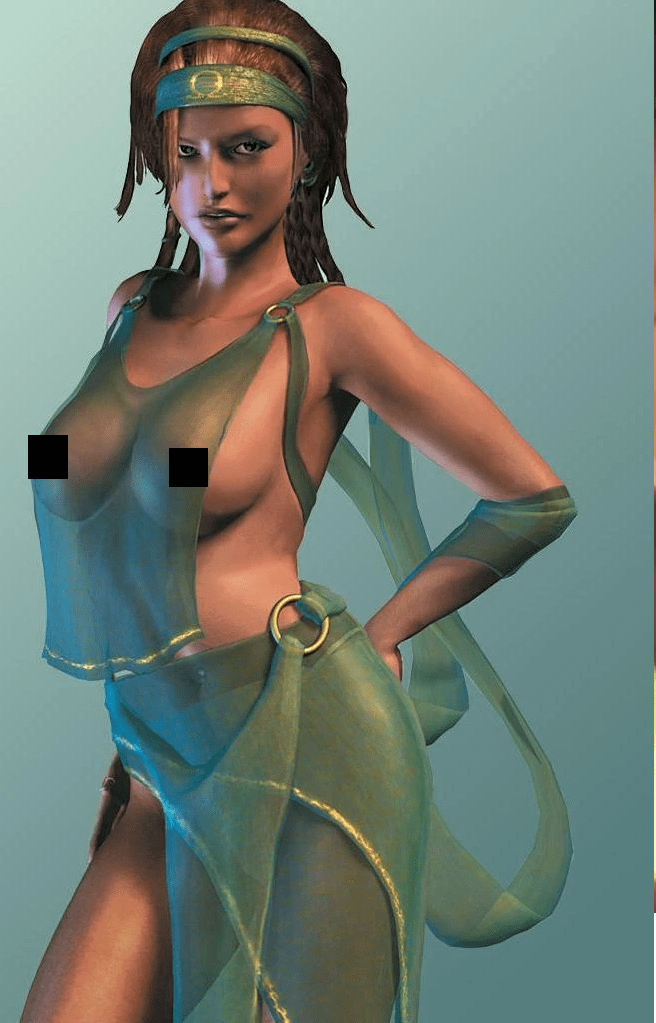
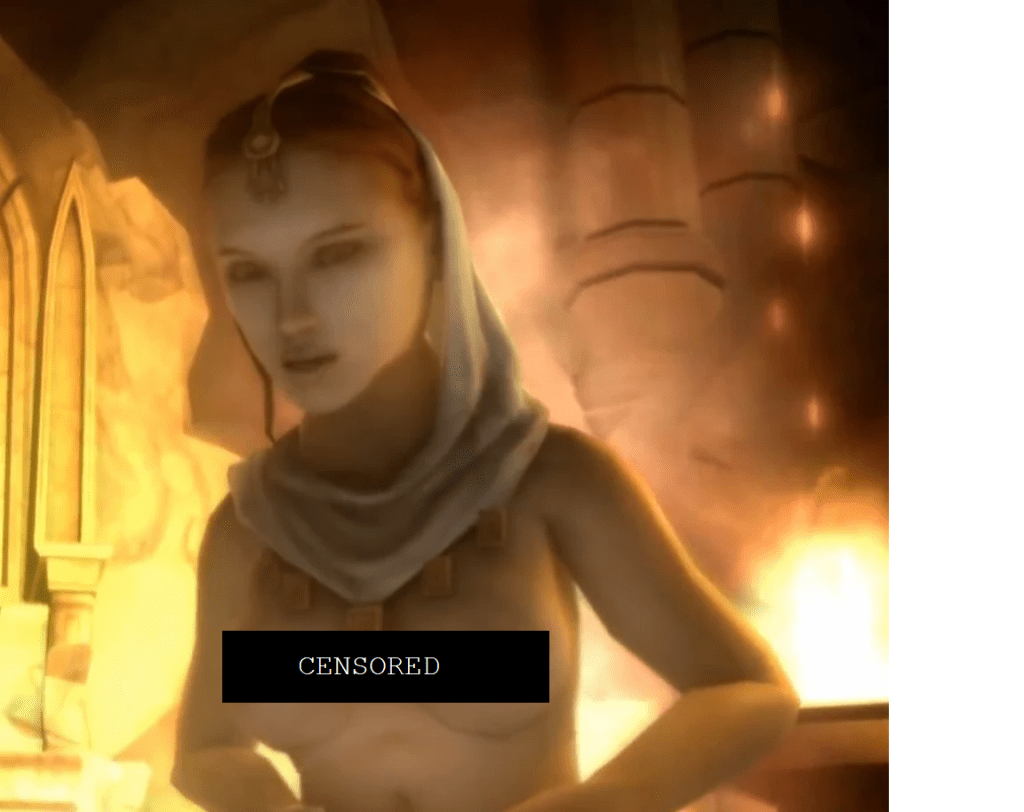
We’re all adults here, but the images of Eos in game have her with her breasts uncovered and I don’t want to risk myself or anyone else reading getting flagged. I could definitely censor the bare nipples, but I chose the easier method of showing her back since I wanna finish this in time for lunch.

Anyway, Kratos activates the steeds and they take him to Hades where Helios was taken by Atlas. On his way, he demands the ferryman Charon bring him to where Helios is being kept. Charon refuses as the gods still needs him and soundly defeats him in battle and sends him to Tartarus.

Kratos breaks out and acquires the gauntlet of Zeus. Climbing out with this new weapon, Kratos returns to the docks to defeat the ferryman and take his ship further into Hades. An apparition haunting him since he was at Helios’ temple was that of Calliope, whom Kratos gifted a carved flute for her to play in reference to her namesake being one of the nine muses.

This apparition of his daughter takes him off his course to save humanity and he willingly sacrifices his powers to be with her in Elysium since there’s no other way for him to get into Elysium elsewise, at the instruction of Persephone.

The reunion is short-lived as the goddess of spring and wife of Hades reveals that she was the one who freed Atlas and used him to kidnap Helios. The next phase of her plan was to use him to destroy the pillar that holds up the world. Instead, Kratos traps the titan beneath the world and uses the gauntlet of Zeus to kill Persephone. The sacrifice he made though was his own daughter. If the pillar was destroyed then Kratos would lose her and her memory, but if it was spared and the world saved, he would have to abandon her. Nonetheless, he fulfills his promise and begrudgingly accepts his place as the servant of the gods.

2005:

Five years after the events of Chains of Olympus, Kratos onboard a ship combats the hydra and sets a course for Athens. Athena calls upon Kratos to save her city from her brother. This doubles as a chance at redemption and a means for Kratos get his revenge on Ares. Before he had to live with his crimes as nightmares, but with a chance to defeat Ares in sight, he jumped at the opportunity hoping it would mean his nightmares would finally end.

Chaos is ensuing at just the gates to Athens proper, and Kratos goes to the oracle of Athens to consult a guide on defeating Ares. He saves her from the minions of Ares and tells him that the power to slay even a god rests within the box of Pandora.

Still a risky picture, but there’s significantly less breast exposure. The oracle tells Kratos that the path to the box is through the desert and Athena, through her statues, elaborates that it’s hidden at the highest level of the temple which is in turn chained to the back of Chronos, who is forced to forever traverse the desert.

Along the way, Kratos comes across deadly traps and perilous enemies, while also being aided by the gods. Finally he reaches the box itself, but is then killed by Ares and has the box taken from him. He still has this task to complete and fights his way out of Hades to complete it with aid of a grave digger that he ran across earlier in the game.

I’ve seen the above photo several times, and only now has it dawned on me that the bottom half is like that meme of the elegantly drawn horse but half-finished. Back at the Temple of the Oracle, Kratos treks through the building to reach Ares, now proclaiming his possession of the box, and threatening to use it on Olympus.

Kratos hurls a Zeus lightning bolt at the chain holding the box, opens it, and uses its power to kill Ares. A mortal man defeated a god for the first time in history, and Athens can rebuild anew, but Kratos learned that he was only set up for redemption and forgiveness. He’s stuck with those nightmares for life. Taking this as a betrayal, he sought to end his own life, but the gods had other plans. Because of his service to Olympus, he’s given the seat of the God of War as consolation. But this wasn’t enough for Kratos.

Ghost of Sparta:

Now that he has the throne of Ares, a long repressed memory of his brother Deimos resurfaces. This time, though, he seeks an answer as to the true fate of his brother. Organizing a fleet of sailors, he sets a course for Atlantis where his mother, Callisto, rests in a chamber, ailing and waiting for her son’s arrival. Knowing his intentions, the gods attempt to dissuade Kratos by unleashing beasts like Scylla, but it doesn’t work out as they hoped.

Through whooping coughs, she reveals that she was forced to lie to Kratos about the fate of his brother at the behest of his father, whose identity she was also cursed to keep secret. Failure to do so transforms her into a beast that Kratos kills. In her dying breath, Callisto urges Kratos travel to Sparta and find a key to the Gate of Death, the realm of the primordial Greek god Thanatos.

After this battle, he travels through the Methana Volcano and acquires the bane of Thera which imbues his blades with fire. In doing so, the stability of the volcano’s interior is in jeopardy as Kratos also uses the fire to destroy the gears that operate the Archimedes screws that regulate the temperature of the volcano. Without all of these, the volcano begins to erupt and Atlantis sinks to the seabed.

The resulting eruption sends Kratos flying into the city of Heraklion, where the Grave Digger greets him, this time with a warning that the destruction of Atlantis will cost him whatever favor he gained from his prior service to Olympus, especially Zeus. Unfortunately for Olympus, occupying the god of war’s throne wasn’t what he desired, and so he sets forth to continue on his trek to Deimos.

Part of this path takes him through the Aronia Mountains where young Spartans are sent to conquer their fears. Going back to the god of death foreshadowing, he and his daughter Erinys are tasked with preventing Kratos from reaching his goal.

During the battle, Kratos conveniently returns to Sparta and his treated as a legend among his countrymen. While there, he comes across a dissenter in the jails who nearly gets him killed. Despite the results of his battle, there’s a small minority of devotees to Ares. Nevertheless, Kratos makes it out of the jails of Sparta and travels to the temple of the fallen god of war to retrieve the key: the skull of Keres.

With the skull in hand, he sets a course back to the now submerged Atlantis to activate the Gate of Death with the key. The realm of death (which I interpreted as Purgatory) is described as a place where neither god nor mortal dares enter willingly.

Navigating the realm, Kratos finally finds his brother, but the reunion is a bloody affair. The associated trophy suggests that Kratos held back because he just wanted his brother back even if it meant he died with hatred in his heart. Not long afterward, Thanatos took Deimos away again and when Kratos returns to save his brother from death again, the two engaged in battle with Thanatos, who admitted the short-sightedness of Olympus’ decision to take Deimos and not Kratos. Though it wouldn’t have made a difference which brother was abducted.

Deimos dies in the fight and after Kratos kills Thanatos, he lays his brother to rest for real this time. Now that it’s only him left, Athena arrives to bestow godhood to Kratos as he now lacks a familial bond on earth. Kratos doesn’t take very kindly to being forced to massacre his family piecemeal and promises to topple Olympus for it one way or another.
II:

Now a god, Kratos relished in the comfort of battle and war in defiance of the peace that Olympus desired in the world. Athena implores him to stop, but he refuses and continues to aid in an ongoing invasion of Rhodes. His brutality turned out to be worse than what Ares was capable of, so Zeus strips him of a fraction of his godhood while bringing the Colossus of Helios at Rhodes to life to fight Kratos and defend the city.
Kratos battles the statue, but Zeus feigns aid by lending him the Blade of Olympus. He’s tricked into pouring the last of his powers into the blade and uses it to destroy the statue soundly, but falling debris causes him to drop the blade and his mortality returns to him. He tried to save face and retrieve the blade, but Zeus beat him to the punch. He expressed his disappointment at what’s become of the Ghost of Sparta.

When Kratos refuses this last opportunity to stand by Zeus, Zeus killed him and annihilated the combating armies of Sparta and Rhodes, save for one lone Spartan. Kratos was then resurrected and encouraged by Gaia to return to the world of the living. He greeted the last Spartan and issued orders to return and fortify Sparta’s defenses while he prepared to face Zeus again, commandeering a Pegasus who doesn’t take him straight to his destination of choice.

A pair of titans has keys he needs to even stand a chance against the king of Olympus. Typhon’s Bane to be retrieved from its namesake’s eye, and the Rage of the Titans to be retrieved from sacrificing Prometheus to the fires of Olympus. With both, Kratos frees the Pegasus previously trapped beneath Typhon’s hand and travels with his new weapons to the Isle of Creation.

This island is the home of the Sisters of Fate, where travelers can request an audience with the sisters. As it turns out, others had similar ideas. The island is filled with numerous traps and guarded by the Steeds of Time which were meant as a gift from Chronos in a feeble attempt to change his own fate from what Zeus had done to him after the Titanomachy.

The steeds are guarded by the last person you’d expect to serve anyone before himself: Theseus.

The old man challenges Kratos to battle and gets trounced by the Ghost of Sparta who then uses his key to traverse the rest of the island and acquires some of Chronos’ lightning magic. Here, he encounters the first of his old enemies in search of a do-over from the sisters: the Barbarian King who fought on the Persian side all those years ago.

Long dead, he returns as a zombie in possession of an undead horse and the hammer that almost killed Kratos when he pleaded for a second chance. The barbarian dies a second time, and Kratos takes his hammer as a secondary weapon. He then encounters Jason and his Argonauts stranded around the island and in varying degrees of screwed. Jason himself in possession of the golden fleece when he gets eaten by a Cerberus beast.

Kratos retrieves the relic and now has the ability to throw attacks back and parry limitlessly. This acquisition of extra relics takes him through Euryale’s temple where he battles her and takes her head as he did her sister years ago in Athens.

The second person seeking counsel with the sisters is Perseus who failed in his myth to save Andromeda without Medusa’s head. Kratos kills him and stumbles upon hobo Icarus who attempts to reserve the right to seek the sisters of fate.

In their fight, Kratos takes his wings and navigates the body of Atlas. Before breaking out from the chasm, Kratos is discovered by the titan who is convinced to stop exacting revenge on the Spartan after hearing of his plan to use the Blade of Olympus on Zeus himself.

Atlas talks about the first time he encountered that blade and what he would’ve done if not sentenced to his position by Kratos. Now that they’re both enemies of Olympus, Atlas grants him his magic and helps him reach the Palace of the Fates. Kratos once again fights his way inside, dodging the traps and enemies inside to get reach the sisters, even defeating the kraken that Perseus was supposed to defeat.

Finally reaching the sisters, Kratos proclaims that fate doesn’t work on him and the sisters fight him in a last ditch effort to prevent him from fighting Zeus, expecting the death of Olympus to follow suit. Kratos proceeds anyway and fights the king of the gods on Olympus, but with Athena protecting her father, he misses the opportunity and accidentally kills Athena in the process. She used her dying breath to reveal what Callisto would have revealed in Atlantis about Zeus being his father and urges him to spare Olympus, which was his original goal.

Kratos declares that only Zeus is his target but won’t let anyone get in his way. Calling forth the Titans from the Titanomachy, Kratos declares war on Zeus and any remaining Olympians.

III:

Expecting heavy resistance, Kratos welcomed the challenge brought on by the Olympians, the first of them being Poseidon himself. The sea god is the first to fall and his death negatively impacts bodies of water across the world. Another confrontation with Zeus leads to Gaia losing her hand and Kratos falling to the underworld again after Gaia reveals he was a means to an end for the titans.

Kratos’ circle of allies shrunk rapidly and now that he’s in Hades, the king of the dead isn’t going to let him slip through his fingers again. Armed with the bow of Apollo, recovered from Peirithous’ corpse, Kratos kills Hades which unbinds the souls from the realm of the dead, and leaves the dead in limbo while Kratos gets to use Hades’ titular claws in battle.

Between battles, Kratos encounters the former Olympian smith god, Hephaestus.

Encountering the smith god, Kratos learns about the Flame of Olympus and is encouraged by the spirit of Athena to find it. After battling with Helios and taking his head (and blotting out the sun) Kratos comes across the labyrinth of Daedalus and more than once in this game. While here, the messenger of the gods, Hermes, taunts him as a challenge, despite the Spartan’s best efforts to ignore the little bugger.

For this, Hermes loses his legs and his death causes plague on Olympus. Traveling further, he comes across his stepmother Hera who would happily turn a blind eye to the death of her husband, but when Kratos asks for Pandora, whom Athena tells him is needed to reach her namesake box, she sicks his half brother Hercules on him.

Under the false promise of godhood over the ancillary nonsense from his labors, Hercules attempts to kill Kratos on Hera’s orders, but gets bludgeoned and robbed of his Nemean Cestus. The world now in ruins without the gods to control it, Kratos continues on in search of Pandora to defeat Zeus. This takes him back to Hephaestus who now turns on Kratos when he learns that Pandora is his new target of acquisition. He claims to need the Omphalos Stone to craft a fourth weapon, though Kratos deems it unnecessary considering the number on his hip already.

The stone turns out to be in Chronos’ stomach and is violently torn from his intestines. Kratos caught on to the double cross and once the electric Nemesis Whip is gifted to Kratos, Hephaestus follows through on his double cross and tries to kill him to protect his daughter.

He fails and Kratos continues on alone in search of the girl.

Along the way, he killed Hera for badmouthing Pandora and moved the cubes of Daedalus’ labyrinth causing his death as well. Pandora is found unconscious and when they return to the flame, she attempts to fulfill her fate. Then Zeus returns to stop Kratos from causing further chaos. In a final battle, Pandora attempts again to fulfill her destiny. At first Kratos prevents her but he was goaded by Zeus and let her go. The flame was extinguished and he learns that the box was empty. Now father and son end this rivalry once and for all while Gaia reveals she survived and isn’t happy to learn that her plan had destructive consequences. The battle continues inside the titaness and the two emerge, with the blade impaled in Zeus.

With the last of his might, he sentences Kratos to a nightmare world, but with the power of hope, he breaks free and beats Zeus to death for good this time. The cost of his revenge was the state of humanity, and when told by Athena to transfer his power to her, he takes his own life in defiance. Only Kratos is essentially unkillable and the post-credits scene reveals that he escaped to Midgard while Greece rebuilt likely under Roman supervision.

I omitted and reworked some stuff for this timeline to fit it all in chronological order since some games begin in medias res, but I think I did an okay job of mapping out the greek timeline. I say “timeline” when this is a recounting of the games’ chronology since calendar dates aren’t exactly shown. Mythologies may be based on a version of the truth, but with oral tradition birthing many different versions of the same story, it’s hard to put Kratos in the timeline in a way that doesn’t have him jumping back and forth between events.

Norse Kratos preceding Fimbulwinter makes more sense temporally as scholars and historians believe a real-life world changing event likely caused by a medieval volcanic eruption called the Volcanic Winter of 536 served as an inspiration for the Norse myth of Fimbulwinter. The Greek era prequels’ release order being what it is, one could believe erroneously that Kratos was in two places at once.

So the timeline is faulty, but keeping in mind that most myths are inconsistent, I’d say it tracks. Thankfully, next week, I know what I want to talk about and I have a better research method to use. I won’t reveal too much, but let this picture be a teaser:

Eagle-eyed readers know what to expect, but in case I need to provide a further hint, it’s about a series of video games.

For this week, my channel recommendation is iilluminaughtii, spelled as seen here.

https://www.youtube.com/channel/UCpDmn2FfVYdPIDwRTcf5-OA

The channel, run by a woman named Blair, takes a hard look at companies and corporations and exposes their dirty laundry for all to see. Blair doesn’t give anyone the benefit of the doubt and dispels their friendly image, uncovers a dark history they thought they’d buried under history and legalese, criticizes them for a professed hypocritical message, or any combination of the three and then some. I don’t tune in to all of her videos. Some topics interest me, some don’t. The ones that do interest me, I can’t recommend them highly enough.

On her channel, her introductory video is an in-depth look at why we all hate PETA. Good stuff so far.

Before I leave, I’m gonna try something at the bottom:

Admittedly a censorship test. Sometimes I write these blog posts in public and if a reference image is NSFW/L, then the safer route is the most preferred, if it exists. The next time I bring up a mature series, the censor blocks will be used when I’m certain I won’t get in trouble for it. Some risks aren’t worth it.

Racing Games

“On Speed” by Lightning McQueen

This topic has been in my notes for a few weeks, and up until recently I thought about first talking about what I love most about the racing game genre before listing off my personal best through worst. I should admit, though, that the games chosen for this were chosen partly for nostalgic reasons but also to see how well they hold up. My appreciation for racing games goes back to an old collection of Hot Wheels toys, funny enough.

There was almost no escaping these little cars. While the cars could be found in most pharmacies and dollar stores and in the bargain bin at select department stores, toy stores held the associated sets and tracks and all of them were awesome. Most often, these were battery-powered loops that propel the cars on assembled tracks that go in multiple different directions. I don’t care what anyone says; no matter your opinions on the 2008 Speed Racer movie, toy manufacturers nailed it when they gave us toys and cars based on the movie. Still got nothing on the LEGO sets, though.

I didn’t own the above set, by the way. These things were huge.

To connect the toy cars to the digital cars I raced around in on the TV, these two ran concurrent with each other. I used to collect loads of toy cars and spend a lot of time with racing games, though not to the same extent as the fighting and adventure games. Still, I spent a lot of time with racing games and so for my best through worst:

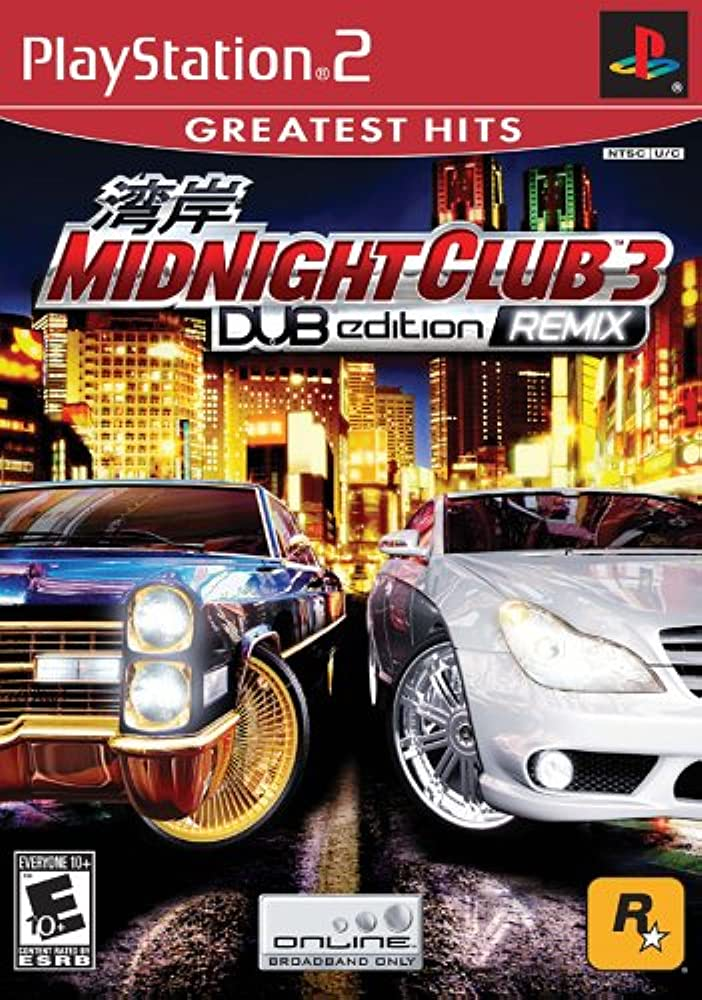
Best: Midnight Club 3: Dub Edition Remix (2005)

Mid: Need for Speed: Hot Pursuit 2 (2002)

Worst: L.A. Rush (2005)

I think this post will get quite a bit long for each of these three, and before I expand on why I put these games where I put them in lieu of probably better options, this is a personal list that I know won’t walk the same stride as others’ personal lists, I have better memories with these games (emulated or otherwise), and for the game in the Worst category, there are objectively worse games like Crazy Bus or Big Rigs: Over the Road Racing, but those were glorified tech demos that could be written off as a joke like Hong Kong 97. You’d have to put them on the same pedestal as actual games we celebrate or despise and that’s too much for those piles of crap. I don’t like to go for low-hanging fruit. Now for the list.

Midnight Club 3: Dub Edition Remix

This version of the game specifically is what I remember best as the game I finished 100% many times over, and as a personal achievement, I managed to do it on the PS2 emulator with just the keyboard. Thank god for long fingers!

The third in the Midnight Club series it follows up from its predecessors with longer races, more challenges, bigger cities, secrets and easter eggs and more. Customization options and an open world to explore let the player get creative during a race. More than once while driving through the cities, I came across these routes to find secrets or prepare to the best of my ability for a race that would most likely take a certain route.

The Dub Edition tagline for the regular and remix versions for the game stem from the game’s partnership with the car magazine Dub, who spruce up a prize car from a tournament in their style to include the Dodge Magnum, the 2006 Dodge Charger, the Chrysler 300C, the Cadillac Escalade EXT and others. The game has three scaled-down, fictionalized versions of the U.S. cities of San Diego, Atlanta, and Detroit, and the remix version includes the Tokyo Challenge. All three cities are headed by a mechanic and his auto parts garage:

San Diego’s mechanic, Oscar, heads the Six-One-Nine Customs;

Atlanta’s garage is Apone Team Racing run by the garage’s namesake,

And Vince’s garage is in Detroit. No fancy name unfortunately.

For Tokyo, Speedway is the garage there.

As you progress through the career mode, you’re told over a type of transceiver or cell phone that a new racer is in the city ready to challenge you. Racers driving a certain type of car denote a car club they belong to and upon their defeat, they send word of you to the club who invites you to partake in their races for a prize across the three cities. Additionally, tournaments can be entered for prize cars, customized by Dub or open for customization at the garage.

The customization options are quite extensive. Most likely riding the wave of the Fast and Furious franchise, nearly every car can have extensive body work done to it, essentially turning a station wagon into a supercar and earning you even more speeding tickets because none of the cars you have are street legal anymore. Imagine explaining that to the traffic cops…

The car classes and types matter mainly to the car clubs stateside, but in the remix version with Tokyo included, there are class and car type specific tournaments, and the kicker is that you don’t necessarily have to finish the American races first before flying to Japan. The first tournament you’re offered will require a vehicle class not available until you’re 4/5 done with Detroit, but the way you unlock tournaments in Tokyo is that instead of challenging individual racers, street races which are represented by red dots in the States are represented by purple diamonds, three of which unlock the next tournament. So theoretically, you can complete some races in the US, head to Japan and complete a tournament there, then come back to the US with the prize car, rinse and repeat.

Then, there’s the soundtrack, which couldn’t be anymore mid-2000s. Hip hop artists, post-grunge bands, techno bands, electro-pop; as I recall, select genres went hand-in-hand with the underground racing scene as depicted in media. I have no idea if this was representative of the lifestyle back then, but if so then that’s pretty cool. It makes the replays all the more enjoyable to watch.

The car clubs have an extra feature for certain cars. Specific types can gain one of three abilities: Zone, Agro, and Roar. Zone is a type of Max Payne-like slow motion ability that allows the Tuner cars, Exotic cars, Sports Bikes and select Luxury Sedans to weave through traffic in slow mo. This ability is earned by driving as clean as possible through the city. Agro is applicable to the rest of the Sedans and SUVs and is a type of boost that allows the driver to slam through traffic at a breakneck pace, breaking necks with all the wreckage caused by ramming other cars off the streets. Driving into other cars and causing general damage is how you earn this ability. Roar is exclusive to Muscle Cars and Choppers and it sends a blast of wind to scatter heavy traffic out of the way. Drifting and power sliding unlocks this ability. All three can be used a total of five times, and going by my playthrough of each ability, they’re not meant to be a one-size-fits-all solution when a race goes sideways. Zone helps you get through traffic, but it builds up as slow as its ability performs and a single crash can set the bar down as it accumulates. The draw of Agro ability is that you can send offending vehicles to the moon and the impact is literally diminished if you activate it on a free road. The same goes for Roar, but the consequences are doubly so if the vehicles don’t spread out how you hope. You have to think a bit more strategically before activating either of these three.

Lastly, there’s the secrets. The three U.S. cities have RockStar logos that net you extra customization options in the garage from more riders on bikes, to license plates to decals and more.

Above all, not only do I recommend it, I highly recommend you set up your controller if you go the emulation route. Contorting your fingers like miniature twister is better as a party trick than to play games. I write from experience.

Need for Speed: Hot Pursuit 2

My next words on this game specifically will surely sound a bit contradictory depending on how you see racing games. The customization options giving me a range of choices heavily influenced my rating of Midnight Club 3 despite me spending less time with it. Need for Speed has little in the way of customization, there’s no overarching plot to become a legendary racer in the underground street racing scene, and the options for cars and tracks is so limited that it’s nonexistent.

That being said, I’m still playing this game and the game modes on display do a lot to make up for what I thought was so perfect about MC3. Granted, NFS HP2 came out in Q4 2002 while MC3 was released around Spring 2005, so older racing games will feel like clean-picked skeletons compared to what would succeed them all, but judging games of this era by their own merits reveals that they’re less about style and more about substance. Midnight Club drips style, but Need for Speed before the EA corruption of the 2010s leaks substance.

Multiple game modes and challenges can be completed and the departure from other games is that there isn’t always an emphasis on getting perfect scores. Some challenges will still let you advance even if you finish in second place. As another divergent example from what’s expected of Midnight Club, transmission systems can be adjusted to suit the player depending on the car: automatic, manual, and semiautomatic transmission. The game is also designed more around skills than simply picking up and playing.

You know how Midnight Club has precise locations based on real-world cities, just scaled down massively from what residents of each would recognize of them (especially for 2005)? Well, the maps in Need for Speed are less precise and more like general amalgamations of a city in a given location. The Mediterranean coastline, the Pacific coast, Australia, the American Southwest, etc. The game also feels less like a smorgasbord of real-life cars and car concepts that with the benefit of hindsight didn’t always pan out.

This concept H3T, for instance, is different from what was sold in 2005 and ‘6, by the way. As a matter of fact, the car brands in NFS were less luxurious and well known and more specific to certain regions if not known to the wider car aficionado demographic. Opel, the now-defunct HSV, one of Ford’s foreign manufacturers, all feature in the game. The cars that you start off with tend to have a top speed of around 125 MPH with an average 0-60 acceleration rate of 5.3 seconds. The further down the line you advance, the top speed rounds to around 200 MPH with a shorter rate of acceleration. With the speeding cars comes new ways to maneuver around the tracks.

Speaking of the tracks, going back to a comment I made about the cars in MC3 losing street legality, they’d all be suited for a race track like how they’re all designed in this game. The tracks within NFS Hot Pursuit all have secret pathways and shortcuts to take but depending on the version you have it may be somewhat different. I emulated the PS2 version and pirated the PC version and the menu selection screens are all different; the PS2 version seemed to be the snazziest of all the available versions, whereas the PC, Xbox, and GameCube layouts are all the same.

Skills play a role in more than just driving and handling. The Hot Pursuit game modes where cops are placed at different points along the track can add an extra layer of difficulty to the challenge and you’ll normally only have that split-second to decide how to avoid them. NFS has a reset button for when you screw up during the race, but in my experience it there are less opportunities to use it during Hot Pursuit mode because the police will catch up to you and ticket you. So best to save those for when you’re out of sight of the police or outside Hot Pursuit mode.

The cops in this game are also aggressive. They’re not GTA-aggressive, but as I recall, in the PC version they’ll deploy helicopters the longer you resist. I know they also do that in the PS2 version though I rarely keep them around for that long to find out. This mode isn’t one sided though — there’s a mode to play as the cop and nab speeding racers as well.

I don’t know if this is true of all EA games from before or even now but their design philosophy, considering Medal of Honor, Need for Speed here, and Battlefield seemed to be based partly or wholly on gaining and refining skills than button-mashing throughout the whole play session. This isn’t a philosophy that’ll resonate with everyone and EA has since divorced themselves from this for darker desires in recent memory, but as I said with Midnight Club 3, find a way to play it and see the game for yourself. It might be too your taste if Midnight Club proves too flashy.

L.A. Rush:

This game is why this blog topic exists. It’s because I hate this game so much that I decided to write this week’s topic. Thing is, for years, I’d never had the words to illustrate my gripes with this game until recently. The YouTube channel BlueTag did the digging and the review on what this game has to offer because I knew damn well I wasn’t gonna put this tripe in my emulator, so here’s the corresponding video.

To spoil the video a bit, this game was developed by Midway Games’ British branch in Newcastle, the same Midway Games that flooded arcades from the 1980s until their 2010 bankruptcy, gave us Mortal Kombat and the subsequent ESRB rating system, and surprise sleepers like SpyHunter and Stranglehold. According to BlueTag, the finer details surrounding development are lost to history, but the game’s inner workings hint at a severe lack of communication between internal departments.

The physics engine is incredibly flimsy for a racing game let alone driving. Slip a finger on the accelerator and the car will hit the nearest wall at Mach 4, with reciprocal results. Forget tanks for cars that could take a beating; this game cinematically emphasizes the damage that comes with totaling the car when this happens.

Funny enough, the main protagonist is supposed to have a fleet of cars, but there’s only one that features prominently in the game at the beginning. L.A. Rush is another game sponsored by a major car promoter, this time MTV’s Pimp My Ride with Xzibit and Lil Jon in tow, but unlike Dub, Pimp My Ride doesn’t have much to offer. Or rather, the Dub team will let you win cars done by them where as PMR often upgrades your ride without you seeing the bodywork or messing around with it until it’s finished. You also stand to lose half your cash to a ride whose paintjob is a surprise until the end.

Speaking of money, you have to pay an entry fee to compete in a race and if you mess up and want to start over and do better, you can’t restart the race from the menu. You have to back out and come back in and pay the entry fee again. Like the other games, cops also play a role in this game but considering the consequences in the other games, this is simultaneously a worse and lax punishment at the same time: it’s lax because you bribe the cops to get them to back off, but it’s worse because you lose money on entry fees anyway so this is another way to lose your money.

Cutscenes meanwhile show the protagonist, whose name I never registered, I think his name was T or something, having already achieved street racer heaven. Then the bad guy shows up, promising to take your stuff which he does. After a few weeks, your cars are all confiscated including the jet black Hummer you rock up to the mansion in, leaving you with a suburban sedan that you have to use to get your cars back, often while under pursuit, and with the crappy physics and whatnot, this is more of a chore than anything.

As for the map, I’m not a native Angeleno, but I’ve heard from the Wikipedia article, that a section of L.A., namely the Valley was absent. Seems weird to put in, but in a racing game a map and layout can make or break a race if not the whole game and what I presume to be a notable location within the L.A. region was done a disservice by its omission. If this is the case, then whatever could’ve been done with the Valley may have killed further interest.

All things considered, if eight year old me was smart enough to see the problems with this back then it should be a warning to how unplayable a game could be, especially the PC port which I learned was worse off than the console version. If you have that Tibetan Buddhist level of patience, give it a go. If not, watch the gameplay and prepare yourself for outdated, cringey dialog, even for a game from the mid-2000s.

Before I move on to the YouTube recommendations, I want to mention a last minute game I also played on the PS2 back in the day, but have fewer moments with: Gran Turismo 4.

My memories with this are hazy as of now, but if I get the chance to emulate and play it, I’ll surely put my thoughts in, no questions asked.

Now for the channel recommendation: Rev says desu. This channel is a commentary channel on mostly anime and anime news and often features the wrong opinions to laugh at and lambast from some of the worst people to speak on a given matter on Twitter. Originally shortform in length, Rev has gotten around to longer videos for more to discuss. Wherever you start, if you like his content be sure to subscribe to him, he makes videos regularly.

https://www.youtube.com/@Revsaysdesu