The Games I’ve Played

Reviewing my play time

Down to the wire, the 11th hour and 2025 is drawing to a close and I have time for the last in this wrap up trio before I get to things I was aware of this year but didn’t or couldn’t cover. Some of these will be games that released this year, others will be old enough to legally drink in the U.S. Looking back on it, I played more games than I watched anime and the problem with anime I’ve had is one of the same ones I’ve had with television, standard or otherwise. The commitment to a series is more than a game that can last between 4 and 400 hours, not to mention as much as I loathe the binge watching method, one benefit it has is that I can clear out my watchlist sooner, but the drawback I see is not being able to fully absorb a show, nuances and all.

For the games I’ve played this year:

  1. Grand Theft Auto III (2001)
  2. God of War (2005)
  3. Silent Hill f (2025)
  4. Mafia: The Old Country (2025)
  5. Call of Duty: World at War (2008), Black Ops (2010), Black Ops II (2012)
  6. Ghost of Tsushima (2020)
  7. Max Payne (2001), Max Payne 2: The Fall of Max Payne (2003), Max Payne 3 (2012)
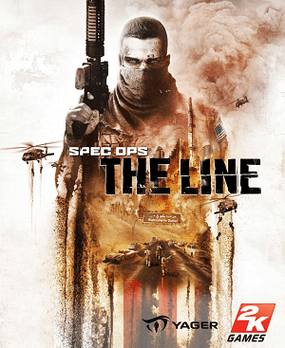
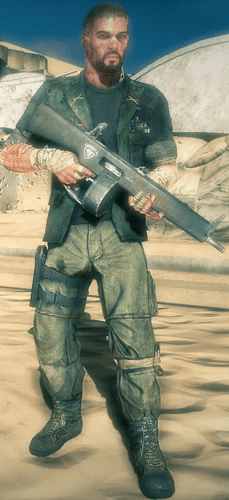
  8. Spec Ops: The Line (2012)

This is neither an exhaustive nor ranked in order list. Just ones that I spent a lot of time on this year and yes, for those who know, Max Payne is up there again. It’s my favorite series after all. Actually, looking at this list, I have reverence for games as old as myself, beginning with:

  • You feelin’ lucky, punk?

Looking at the timeline, GTA 2 released in 1999 and III in 2001, October to be precise, and knowing what happened in real life a month prior, you’d think terrorism would at best lead to a delay, but loads of things were cut that would’ve made the game even darker and grittier than it already was, notably one such mission involving a fabricated aerial terrorist attack. Funny enough, anyone who was alive and old enough to remember 1990s U.S. politics would’ve suspected the decade to have something of a myriad of eye-catching headlines. Ruby Ridge, Waco, Oklahoma City, the World Trade Center parking lot in 1993, the East Africa Embassy bombings, and several others, not helped by President Bill Clinton promising repeatedly to get Osama bin Laden, only for that promise to be fulfilled a decade after he left office by the Obama administration, but I digress.

Of the cuts made to the game, the color scheme referencing the NYPD’s liveries was changed to black-and-white when it was originally sky blue-and-white. Those iconic police liveries would’ve been making daily trips to help clean up the area alongside FDNY and the National Guard, so the decision to change it would’ve been out of respect for the victims and the first responders, I take it. Also, if it wasn’t for 9/11, the NYPD police union might’ve brought them to court for copyright or plagiarism. Who knows? Several missions referencing terrorism were dropped because of course they were; unused characters and dialogue was found in the game’s files over the years; and the rest of what was found in the betas was also thought to be removed, but Rockstar/DMA Design was cutting bloated content in the months prior that year. Probably even before that.

Gameplay-wise, there’s loads of hints and minor details that make the game seem like a passion project/brainchild with so many celebrities whose voices and/or music was being featured in the game in some capacity. One that stands out to me would be the use of the background music for Scary Movies by Royce da 5’9″ and Eminem.

Something you’d have to find by delving into Wiki pages and whatnot

The music, the use of celebrities for voice acting roles (Frank Vincent, Robert Loggia, numerous rappers, etc.), the gangster movie aesthetic that was prominent in the late 1980s and 90s, and to top it all off, it was originally designed for the PS2 and original Xbox with a port to PC coming a couple years later. None of those devices had a lot of processing power at the time, and the games they housed were nothing short of extraordinary. The use of limited technology really drove creativity, and before I get accused of sounding like some boomer gamer longing for the “uncomplicated days,” as much trouble as I went through to emulate and play GTA III, I know damn well that between it and GTA V and later VI (set for release in 2032 or whatever), it aged poorly.
Even it’s 2002 asset flip in Vice City was a better showing in comparison.
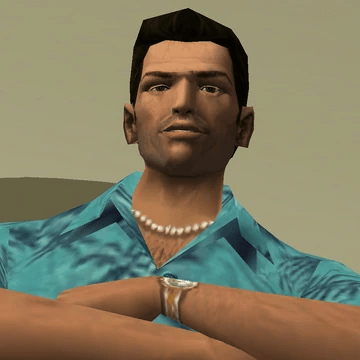
Tommy was essentially Claude with a functioning voice box and actual reasoning, all things considered

I really like GTA III, but I’m not gonna lambaste anyone who hasn’t played it or implore people to bother. If they do, great. If not, nothing was gained or lost. That said, the powers that be, the unchangeable forces of nature, and the gaming landscape owe a lot to GTA III. Rockstar’s successful venture into 3D with both this and Max Payne earlier that year show that with some refinement, 3D can and does work in the gaming sphere with nearly every video game releasing a sequel, if not debuting, over the course of the 2000s and the remainder of the 6th console generation in 3D. The open-world and nonlinear gameplay allowed for speedrunning and multiple different approaches to achieve the same objective so players can get creative with the sandbox. And this being Rockstar, the 3D graphics and depictions of violence led to lawsuits and court settlements for years to come.

Presumably less so for Max Payne and more so for GTA due to it being accessible despite having a slightly less dark story for the time period, GTA alone would see Rockstar in the hot seat by overzealous attorneys and aspirants harping on the zombie adage that “Video games cause violence.” A peek at just this blog and other, more respectable, researchers shows that that’s not and never has been the case–each one is unique, but ignoring nuance in the face of outrage is a time-honored human tradition that keeps us from discovering the aliens… or rather keeps the aliens from discovering us. We disagree on what a wall outlet should look like and the little green men are able to build advanced spaceships in galaxies lightyears away.

S[bark!]t like this is why we haven’t had any abductions as of late

And of course, Rockstar being Rockstar, not only kept trucking on in the face of adversity, but saw fit to take the piss out of their critics by putting their face on the Statue of Happiness in GTA 4, release Bully in 2006, and ride the wave until Jack Thompson was permanently barred from practicing law for his frivolous lawsuits. Rockstar may get s[gunshots]t for releasing one game every 30 years these days, but in a time when they put all of their heads together in a circle, they can give us the same magic used to make King Arthur’s armaments and accoutrements. The dark and edgy era of the 2000s isn’t here anymore, but I’d live to see a piece of media try something like this or Manhunt again, especially with all the cry-bullying that happens on Twitter, Facebook, Tumblr, and parts of Reddit. Heads would roll and I argue that they need to.

Onto the next game:

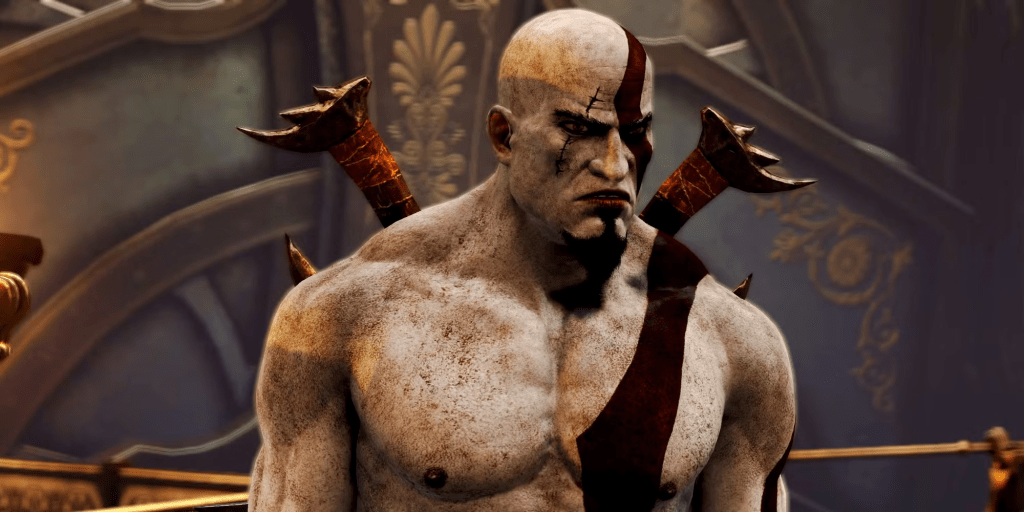
  • Ares!!! Destroy my enemies, and my life is yours!!

We laud Kratos as the eponymous hero of the Norse saga these days, but I’ve learned ages ago that because of the Norse saga, few people realize he debuted in 2005 in the Greek saga. Now, fans who’d made the discovery, even if they picked up the 2018 soft-boot, have a bevy of a series to pick through, but for those who aren’t aware, the original Greek games were an homage to the old claymation, Greco-Roman movies of old like Clash of the Titans, The 300 Spartans, and the 1995 live-action Hercules series. David Jaffe and co. grew up with those and true to the meme, he turned 4, chose one of the several things little kids do at that age and based his entire personality on it.

In my case, it was medieval Japan and East Asia

Fast-forward to Sony Computer Entertainment crafting God of War the same way Hephaestus crafts weapons for Olympus, and it may be lost on those who haven’t or are unable to experience the Greek saga games, but God of War 2005 represents a shift in gaming that happened at the same time during its release. Quick-time events, which it helped to popularize in gaming years later for better or worse; hack-and-slash combat that would reach its zenith in this and other games; puzzles and intricate level design that would be a staple of the series and its several hundred thousand derivatives, and on that last point, several clones.

A stern critic could eye up the God of War trilogy and its PSP spinoffs and put them side-by-side with other games that tried to ape its formula, you’ll notice that several games attempt to rip it off in the years following to make a quick buck, but very few did so successfully or memorably. Something that happened to Mortal Kombat and Street Fighter in the 90s. No-name developers attempting to make a name for themselves by way of emulating a popular formula is a time-honored tradition in video games and sometimes movies. Sometimes you get a successful product like Bayonetta and other times you get a ripoff that deserves the “Like God of War But” stamp of disappointment.

Channel: The Escapist

A reasonable argument could made over imitation and video game clones, but the fact remains that if it was popular enough to sell, it’s also popular enough to steal. God of War wasn’t the only victim of widespread theft, but it was a very noticeable one. To this day, video games are getting cloned and nothing is really stopping the cloning process.

Numero Tres:

  • 化け物や!

Google Translate isn’t good for out of context translations…

My exposure to Silent Hill as a series was always through the grapevine. I didn’t know about it for years and by the time I showed interest in some of the better games, my financial situation and the trends of the time wouldn’t allow me to play them on obsolete hardware. Fast-forward to emulation and I have it saved on my PCSX2 emulator so when the time comes (probably in a few days or a week or so), I have Silent Hill 2 to look forward to.

I’ve been told many times that 2 is the peak of quality and the series gradually fell with 2007’s Origins, the following year’s Homecoming, the 2009 Shattered Memories remake, and 2012’s Downpour falling short of prior entries. A sycophantic Silent Hill fan may have more details on each, but the one game that got me genuinely interested in the series is one that can no longer be accessed by normal means thanks to Konami’s boneheadedness in the last 11 or 12 years.

Veterans got flashbacks and bad memories of a game that never was

From the viewer side of things, this was unsettling enough to simply watch–if I had a PS4 at the time, and I was made aware of the cancellation of Silent Hills, I would treasure P.T. like it was the crown jewel in my empire. Legendary horror writers and programmers in Guillermo del Toro, Hideo Kojima, and Junji Ito were, at some point, approached by Konami to work on, or at the very least contribute to the game’s development, but inheriting the same problems that Sega has — that being incredibly difficult to work with — Konami s[pig squeals]t so hard through the bed, the stool broke through the floor at Mach 7 and made a sinkhole that ate the house.

To make it worse, in 2015 during the Game Awards, a Konami-hired attorney barred Kojima from physically accepting awards for Metal Gear Solid V under threat of legal hell. My criticism of Konami is merely surface level, but I know there’s people out there who will die never letting Konami forget what they let slip through their fingers all those years ago by focusing mainly on profit over playability. Kojima’s expulsion was especially felt when Metal Gear Survive was crapped out, showing how much heavy-lifting Kojima was doing at Konami. To date, Metal Gear hasn’t had a release in over seven years and probably won’t unless we get something of a spiritual successor.

The whole point of detailing all of that was a reminder that even when a bad actor does good once in a while, a single move in the right direction isn’t enough to erase the past sins. I normally don’t like to bludgeon the point home like this, but in the case of recidivist behavior, the symptoms are still showing and a higher dosage is required. Having said that, Silent Hill f appears to return to form of sorts as a proper horror game in the same vein as the earlier entries from over 20 years ago. Coupling the psychological with the physical, the sense of foreboding and tension as you choose what part of fight or flight you want to emphasize really adds to the game. The use of a regenerating stamina bar and a regenerating sanity bar add to the experience too. You’re not some superpowered gorilla capable of smashing through everything from the grass going up like it’s Rampage; you’re a teenage schoolgirl in 1960s rural Japan where constant intrusions into your neighbor’s personal lives are how you get the news.

彼女の名前は深水雛子や。

AFAIK, prior Silent Hill games were always set in the titular Silent Hill or a surrounding suburb, but the decision to return it to Japan was to fully reset the series and remind everyone that it began with Japanese horror tropes, not western ones. Now my limited knowledge on East Asian, and specifically Japanese, horror boils down to Ju-On: The Grudge, One Missed Call, Ringu, and most recently Taiwan’s The Tag-Along, so I’m not an expert on East Asian mythological horror tropes outside of Japanese kami and various yokai. Still, there were several noticeable Japanese horror tropes that did tie into Shintoism and Mahayana Buddhism. I suspect that yokai are an influential part of the monsters in this entry, but it’s merely a gut feeling based on what I’ve seen and roughly two hours of gameplay ain’t enough to speak with certainty. I’ll be back for a full review of the game probably in February or something.

Quattro:
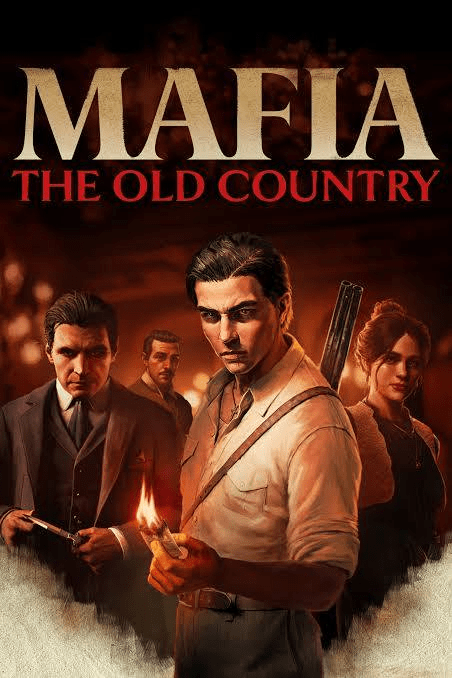
  • Il Regno delle Due Sicilie

I’ve talked about the Mafia series before because I like it, but not nearly as much as God of War or Max Payne, both of which I talk about and play at least once a year. For the Mafia series, it’s been a bit tougher with the original games descending into abandonware status and necessitating remakes, which are more accessible than the originals that they’d fixed, though they’re all long as hell, with Mafia III being one of the longer entries in the series for all the side content available in just the base game.

Mafia: The City of Lost Heaven takes place in the 1930s in the Midwest at the end of Prohibition, so you can still make a few pennies from rumrunning. Mafia II takes place between 1945 and ’51 on the East Coast and makes mention of the war effort and the lifestyle of the early 1950s. Mafia III takes place in 1968 in the Deep South during the civil rights movement, a pivotal time for the U.S. foreign and domestic policy concerning race relations and the Vietnam War effort seeing record anti-war protests and draft dodging. The Old Country is a prequel set in 1900s Sicily, at a time when Italy was whole but Italians as a national people were only just being made.

Much of my knowledge on Italian history came from the latter third of middle school, tenth grade, and my Italian language community college courses. So I know the generic stuff about the peculiar boot-shaped country, but not enough about specific regions at specific periods in time to criticize the historical angle, so learning that some families sold their sons to work in sulfur mines to pay off debts was interesting. The weapons in the games do reflect the era of combat, and in this case, the weapons used by the mafiosi would’ve been in use during Italy’s pathetic attempts to colonize East Africa.

The Mongols had better deserts to exploit, just saying

As such, rolling blocks, trapdoor rifles, and bolt-action rifles are a feature in the game. The machine guns and submachine guns of later mobster media obviously comes decades after all this. I’m not as far in this game as I am with some of the others on this list, but graphically Hangar 13 found their bread and butter back in Mafia III and have been using that with Mafia: Definitive Edition and this game, but left Mafia II untouched. But Mafia II: Definitive Edition has the appropriate promo art.

The tech also reflects the time period. Telephones, automobiles, entertainment; it all feels appropriate for the mid-1900s, which is to say primitive compared to Tommy Angelo’s definition of entertainment, and Vito Scaletta’s and Lincoln Clay’s, and the latter two had television. As a matter of fact, what I’ve seen of The Old Country so far reminds me of some mobster media about the earliest Italian-American organized crime groups. Less Commission and Lucky Luciano and more John Dillinger, Bugs Moran, and adolescent Al Capone.

Before he was dressing like this, though he might’ve always dressed like this

More needs to be explored before I share my thoughts, but for immersion, I’ve set the language output to Sicilian because English language courses as a part of the national Italian curriculum would be a century away.

五番目:

  • Seelow Heights 1945, Vietnam 1968, and Downtown L.A. 2025

I’ve played the Black Ops games before multiple times, but this year was the first time I got to World at War and playing through it, it has the hallmarks of a horror game. Enemies can pop up at you from nothing, notorious adversaries who famously courted death on the battlefield (Imperial Japanese and Nazi German fanaticism is still studied to this day), scarce ammunition, dark atmosphere in contrast to how this era is typically depicted especially in film; I shudder to think how many U.S. soldiers, sailors, and Marines were caught by surprise by the Japanese as well as the rest of the Pacific Allies. Same goes for everyone caught in the Eastern Front against Germany, to include collaborators and partisans.

I didn’t expect a war game to unnerve me while I was playing and here we are. Goes to show how far war games have fallen over the years. War has and always will be unpleasant. One thing to highlight though are a slew of historical inaccuracies design-wise. Of course, true historical accuracy is a concern for the reenactors and cosplayers, but to get to at least 90% accuracy requires a couple of mods. Some that reflect the ethnic diversity of the Soviet Union so we get more than Russian names; some that replace the Wehrmacht and Waffen-SS with the Volkssturm, the last ditch militia propped up by Hitler at the 11th hour; some for the U.S. Marines’ gear in the Pacific so they look appropriate for the era; and some for the Japanese Army, presumably some variance in voice lines to denote Japan’s historical use of Korean, Taiwanese and Manchu conscripts, as well as ideologically-minded partisans. But that’s not my strict desire, that would be the desire of YouTube channel: The Frosty 1.

Treyarch really had platinum with these games. It was still there come Black Ops III time, but after IV, it wasn’t worth it’s weight anymore. Cold War and Black Ops 6 were up there, but the most recent entry necessitates a reboot yesterday.

The mighty have fallen and they can’t get up

Fortunately for me, I included a handful of those accuracy mods, so the next time I boot the game up, they should impact the experience for me next time.

Sechste:

  • 我が名は境井仁だ!

I briefly touched on shog我が名は酒井人だ!unate foreign policy when I was reviewing The Elusive Samurai manga for the first time, but to further elaborate on that, the Mongols didn’t realize that the emperor of Japan was a figurehead for the Hojo clan regents (shikken) at the time until they launched a naval invasion in 1274, which is what Tsushima is about. Contrary to popular belief, only the second attempt was deemed a failure by way of monsoons. The first one was enough to shake the foundations in Kamakura and Kyoto because the samurai had all put up a stiff and adamant resistance to Mongol absorption. Thus, the Mongols hyper-invaded the Middle East to make up for the shortfall of failing in Japan while Japan itself held onto its seat of power in Kamakura until Ashikaga Takauji double-crossed the Hojo and eventually the emperor himself to consolidate power.
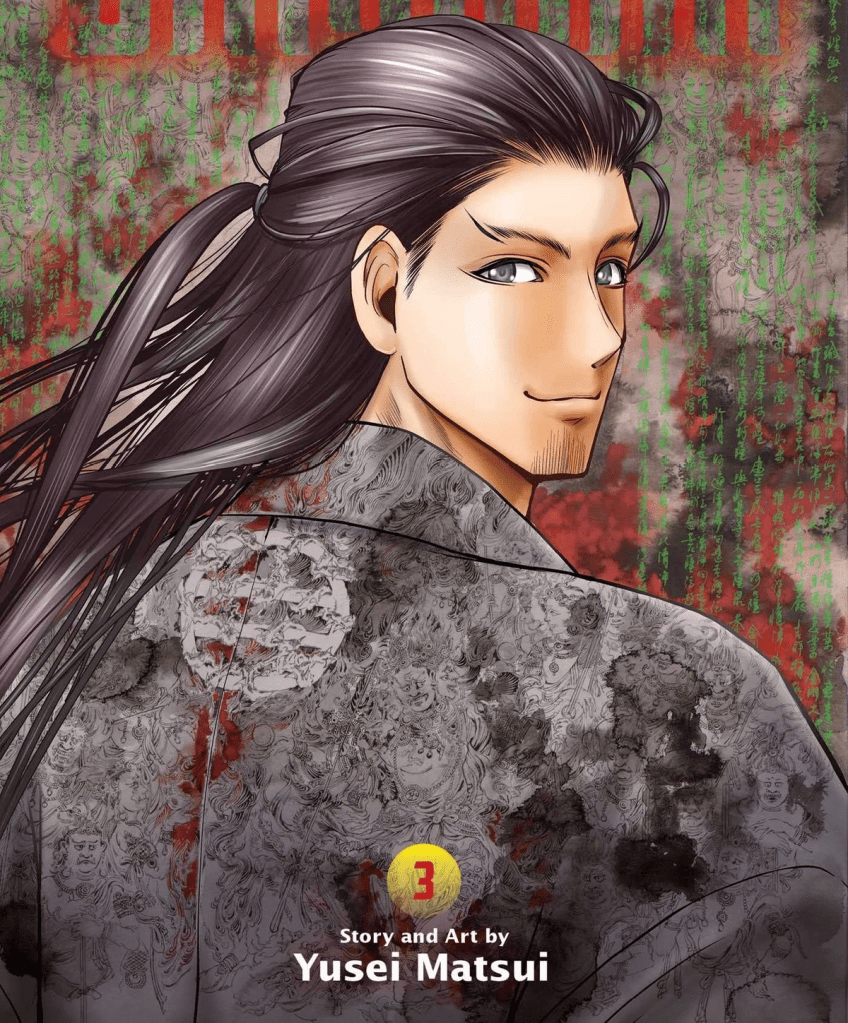
For a traitor, Matsui really made him easy on the eyes

Although developed by American studio Sucker Punch, Ghost of Tsushima and its sequel Yotei are a love letter to Akira Kurosawa films. I’d lambaste the strict adherence to samurai blades if the time period was wrong. But it’s not bad at all. Portuguese missionaries didn’t bring guns with them to Japan until 1543, and it took another couple of decades for the Japanese to reverse engineer them domestically. It’s a technical marvel in its own right with the language also being appropriate for the time and archaic for modern Japanophones.

As for critique, it gets points docked for the Mongols being unanimously Mongolian speaking when the Mongol-led Yuan dynasty included Jurchens, Han Chinese and Koreans, and standardizing speech and vocal patterns would be an afterthought in this time period since nationalism is a more recent thing. A militant Mongol Empire could enforce a national tongue, but if what I’ve been taught about Mongol culture is true, then their territory would’ve been smaller and subject to further internal divisions after Kublai Khan. Then again, this video below explains why the devs did what they did:

Channel: Cool History Bros

Accurate or not, the cross-cultural pollination of east and west was a significant factor for this game seeing as the Japanese audience absolutely loved this game, same as how numerous western fans coined the adage “Git Gud” as a response when a novice Souls player asks for help with a boss, the Souls devs being Japanese themselves. One thing to note about recent titles like these is the wider variety of language options and seeing as I’m playing Sekiro and watching Japanese live-action shows in the original language, I believe I’ve become something of a purist in regard to gaming. I can’t really criticize voice acting and direction when I’m not a voice actor myself. The choice behind this is related to setting. Fantasy worlds are a free-for-all, but feudal Japan, rural 1960s Japan (possibly a stand-in for Shizuoka based on the kanji 「静岡」), and Sicily are all real places with their own respective languages and dialects. Doesn’t make a lot of sense that Sakai Jin, Hinako-san, and The Old Country protagonist, Enzo Favara, would know English. Also, I want the Kurosawa experience for Ghost of Tsushima.

The only great shame I can express for Ghost of Tsushima was the practice by Sony to limit exclusivity to sell consoles. Accessibility for more players who don’t have the necessary hardware to play the games is one thing to praise, or I wouldn’t have been able to see God of War 4 for myself personally…
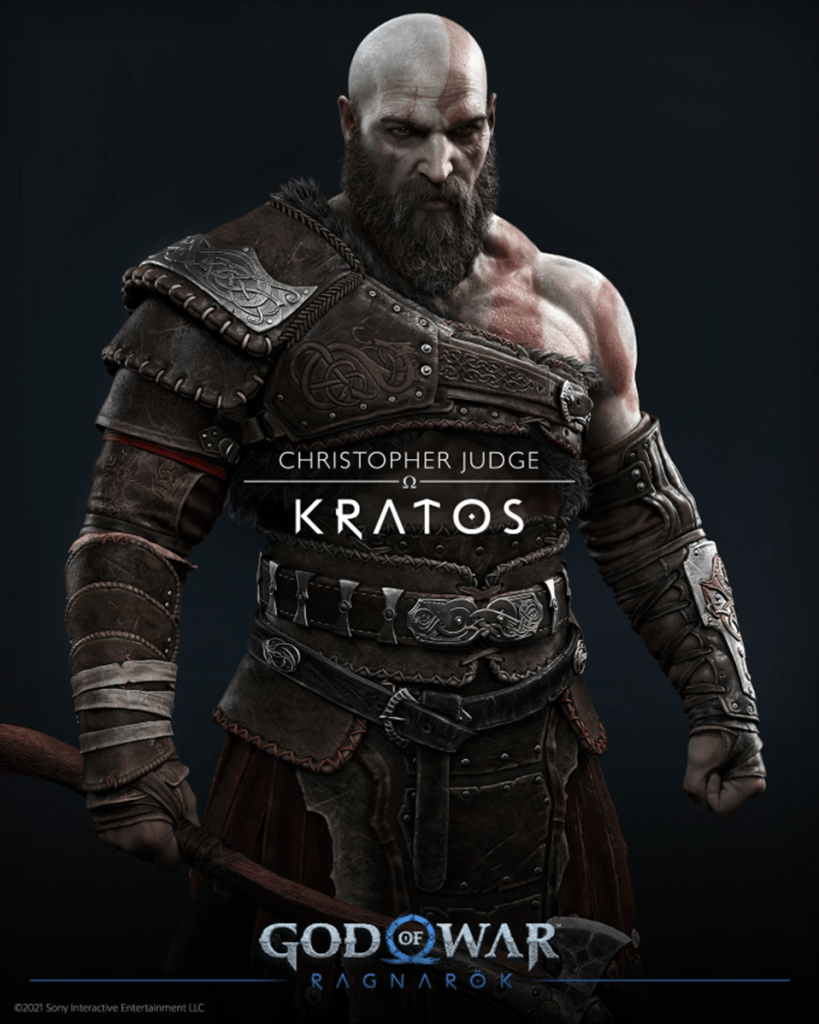
…but if the player already has a Sony product on one platform, what’s the motivation to shell out for the console itself? Especially with cross-play becoming a thing in recent years? I can play Dead by Daylight on PC while my National Guard buddies boot up an Xbox or PS4 and load in with 2% of the issues that this brings. As for console gaming itself, though I emulate old titles, use ROMs for select PC releases, and game largely on PC when able, I’m not completely opposed to console gaming for good. Unfortunately, the pandemic unleashed the flood gates for a myriad of scalpers to buy and resell the 9th gen consoles at obscene prices. Not to mention, neither of them are making confident moves with their respective products. You can find numerous videos expressing confusion at Microsoft’s direction with the Xbox while Sony has been putting one too many eggs in the future of gaming while seemingly forgetting their roots. Crash Bandicoot may be awkward to look at today, but expecting perfection at the first hurdle is how you get imperfections. Did no one ever teach that to Sony?

Sétimo:

  • The Flesh of Fallen Angels

See this post for more details.

Okay, I’ll elaborate. My well-known love for the series goes without saying. The decision to replay it once again is something of a yearly tradition. The gunplay, bullet-time, story beats, writing, game mechanics; the series is a masterpiece of third-person shooting and the fact that it hasn’t inspired more clones over the years is striking. The only ones I can point to are 2007’s Stranglehold by John Woo, starring Chow Yun-fat reprising his role as Inspector Tequila and 2023’s El Paso, Elsewhere by Xalavier Nelson Jr.

One day, I shall judge Mr. Nelson’s work of art

I don’t really have to worry too much about the state of the third game, but the first two being as old as they are are subject to age. Not that they’re aging poorly, but that the tech is evolving without a means to reliably support them without issue. I can run the first game on one of my laptops, but I struggle on the big rig, yet the same big rig is able to run the second and third games issue-free. So the yearly gameplays are something of a quality test of sorts.

As far as gameplay goes, the first game remains a steady ass-kicker. It’s a game that has me quick saving every time I clear a room full of bad guys. It’s also the one with admittedly s[boots]t physics. It ranges from mildly annoying in regard platforming to downright nightmarish in the appropriate nightmare sections. Combine this with a few minor but noticeable glitches that initially had me clipping through the wall or getting stuck in a wall in pitched moments, and I have to risk exiting out to look for a hotfix and go through the bulls[urgh!]t all over again.

Enemy AI has almost always been strong ever since the first game, so from the frozen NY maze of brownstones and brickwork to the sheet metal, ramshackle Hoovervilles of Sao Paulo, I find myself planning my next moves even further beyond what I can immediately see. Typically, I tend to play it by ear and leave the door open for any type of surprise to come my way. It can be done in this series too, even after playing it as many times as I have, though not to a large extent. Max being a cop would be collecting evidence as he goes, and some parts of the games require more than gunning everything in sight.
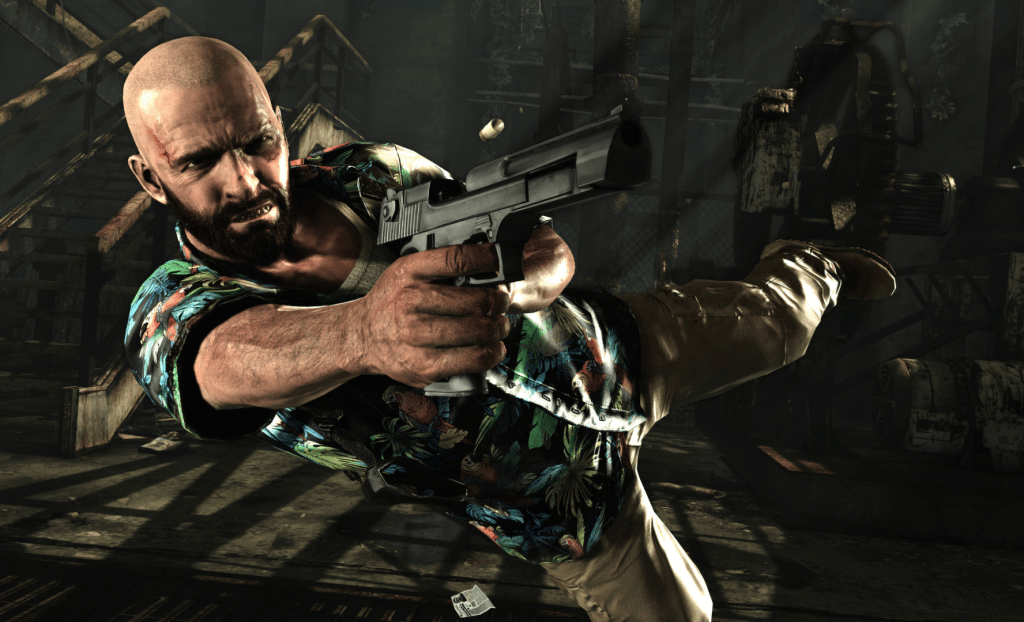
The third installment is the black sheep of the series noted by the lack of involvement from Sam Lake and Remedy Entertainment, the first clue being the cynical, nonanalytical writing, but in defense of the third game, it’s a nine-year gap between it and the second game and a strong painkiller/opioid addiction would leave anyone in a dour mood, especially if you were still mulling over the death of your family by outside forces.

Just ask this guy.
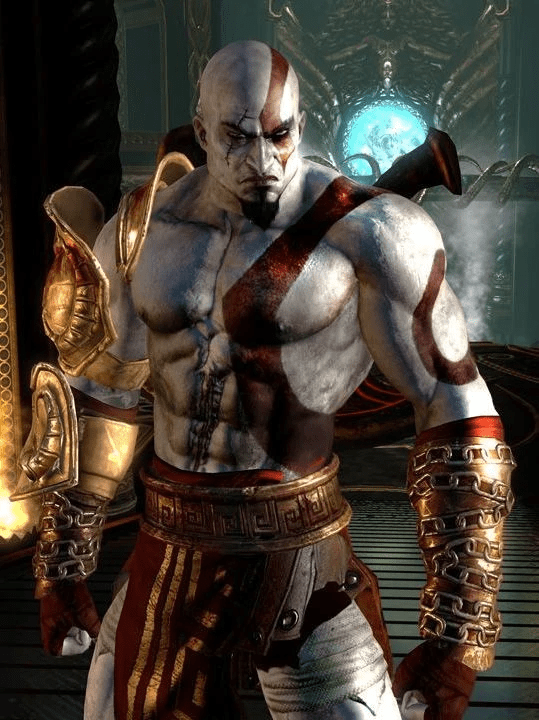
Granted, Max didn’t turn New York inside out, but the destruction of Olympus was literally the last thing Kratos was trying to do

Yes, this is another recommendation for Max Payne, and yes I’m eagerly awaiting the remakes coming out in or after 2026.

Lastly:

  • Leopold II and the Congo, 1899; Col. Kurtz and South Vietnam, 1970s; and Lt. Col. Konrad and the UAE, 2012.

Personally, I feel that this game’s commentary and stark chastisement of gaming is one that aged terribly. It had a case in criticism of modern warfare games and U.S. foreign policy, like other media, but it wasn’t really meant to be rebooted. Suffice to say, it at least went out on a whimper than with a bang. The modern warfare military shooter was revolutionary when CoD did it in 2007, followed by Battlefield soon after, though both were starting to feel that there wasn’t any evolution and some critics were getting tired of the formula by 2011, absent of the individual plots of MW3 and BF3.

2012 would see the long dormant shovelware shooter series Spec Ops belch its profound words at the time in criticism of the modern warfare shooter. “You’re not a hero, you’re a gamer.” “You wanted to feel like something you’re not.” All well and good, Yager Development, but I don’t play CoD for the sole purpose of saving the world, I like campaign of select games and when I wanna turn my brain off I retreat to the zombies mode. Sometimes multiplayer if I can spare a couple minutes to an hour these days.

Admittedly, Spec Ops was asking familiar questions regarding the purpose of Iraq if the WMD scare was cattle manure and why we were still in Afghanistan with it being revealed that nation-building in a place like that hasn’t worked out well for anyone who tried. Not the Soviets, not the Brits, not the Persians, not even Alexander the Great, and we call him “the Great.”
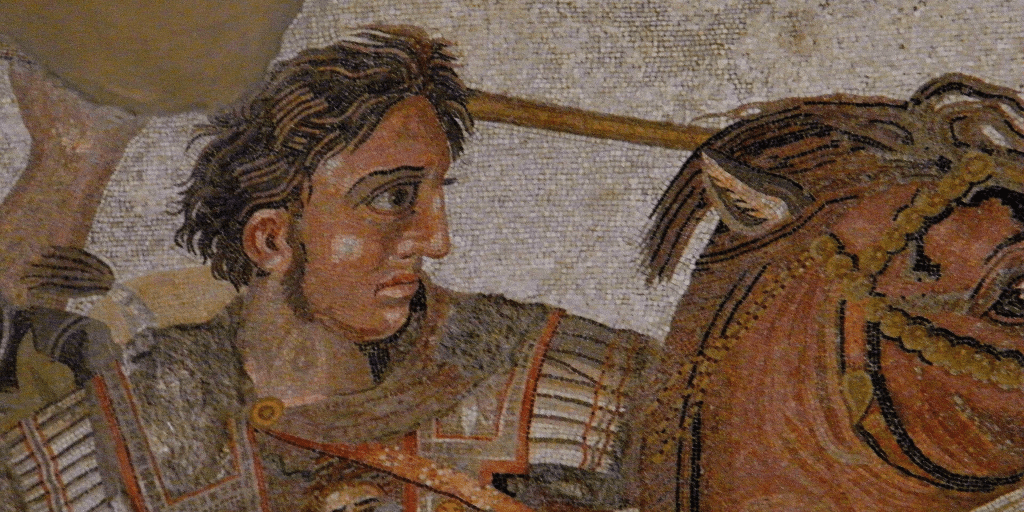
Well, it asked what it wanted to ask at the time and knowing how the War in Afghanistan ended with the Taliban unseated and subsequently reseated in Kabul, if Spec Ops did spawn a sequel or a successor, it might’ve been even harsher on U.S. foreign policy. And I won’t be nice, I know that the U.S. hadn’t built a stable nation since South Korea and calling South Korea stable is putting their modern history very nicely. Vietnam proved to be more prophetic than we originally thought.

But on the whole Spec Ops: The Line’s commentary is critically kneecapped by the decision to make the gameplay so cumbersome. I default to medium difficulty because I’m not so stunted that I need someone to hold and shake my penis every time I have to piss, but I’m also not a badass who can eat Dark Souls for breakfast, lunch, and dinner and still feel starved for tougher games. Functionally, Spec Ops: The Line is not fun to play and maneuver around and that’s on purpose. Bad controls are bad controls, but I don’t know if it’s made worse when it’s accidental or intentional.

To be fair to Yager, I wouldn’t call this an act of malice or villainy; I take it that they didn’t like the direction war games were going at the time. Unfortunately, there seem to be efforts to de-list and bury the game for some reason. It was difficult for me to find it for emulation on RPCS3 and despite its graphical glitches, it was the best way to play it on short notice. I still don’t recommend it, even for its story. Just watch an analysis on YouTube or play the Modern Warfare Remastered games like I did.

Heroes don’t exist…

The last post for 2025 will go up next week and while I’ll be on leave for the holidays, I’ll try to push it out sometime on December 26. The one after that, the first post of 2026 may have to be delayed so that I can make my flight. So it may be out over the weekend on Saturday.

Happy Holidays and Happy New Year, dear readers. Don’t stop consuming your favorite entertainment products.

Anime I’ve Watched

Equally a lot and not enough

Getting back to the end of year wrap up of content, I’ve definitely watched more anime this year in between my regular duties in the Army. A lot of what I’ve been watching this year has been stuff I’ve written about on this blog yonks ago, but also some new stuff that can (and probably should get) their own posts, but this being a speedrun like before I shipped out to Fort Lost in the Woods for training is gonna be a brief overview of some stuff I got a look at this year, but didn’t necessarily finish. I may add more to the watch times of these respectively and give them the reviews that they deserve, but I’m probably gonna do what I normally do and play it by ear. Here’s the anime lineup:

  1. Texhnolyze
  2. Ghost in the Shell: Stand Alone Complex
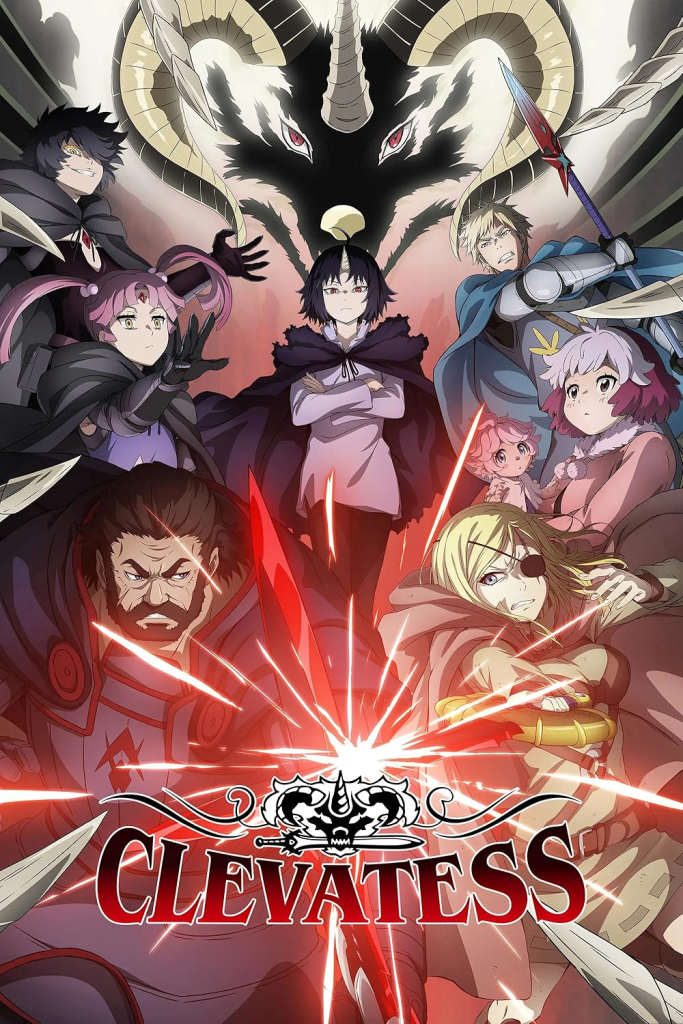
  3. Clevatess
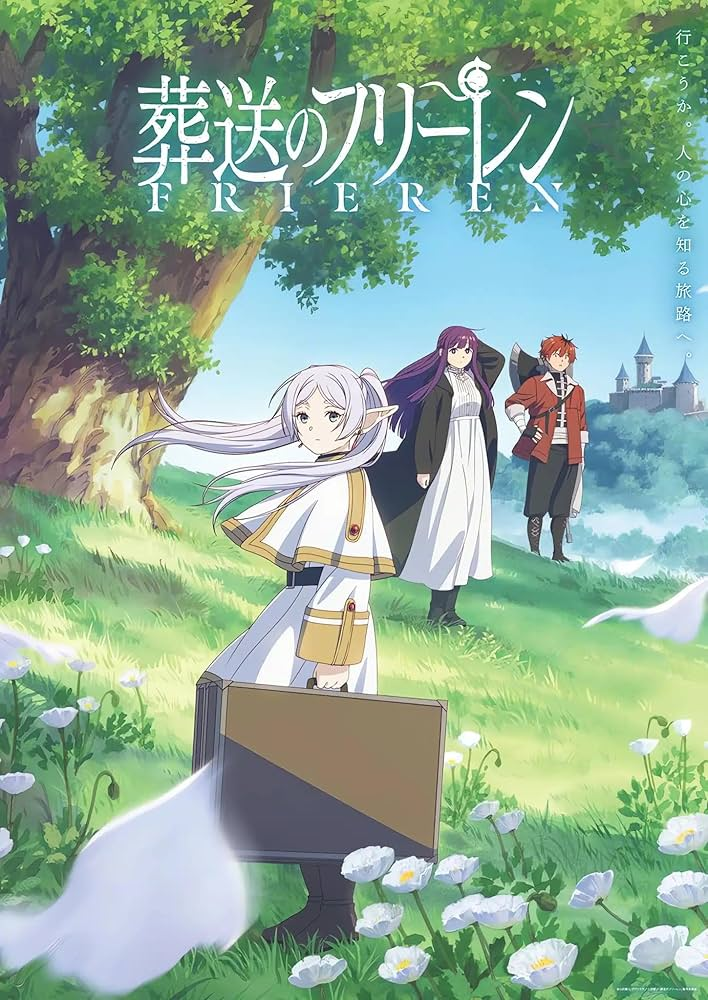
  4. Frieren
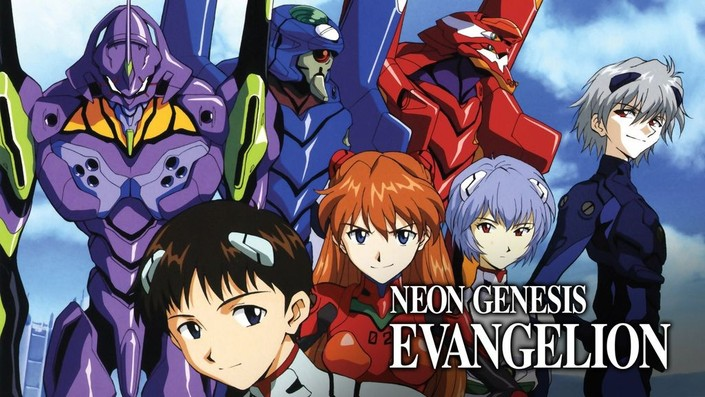
  5. Neon Genesis Evangelion

With a bonus. If you were to ask me if it was anime, it falls under “Yesn’t.” It’s based off a manga and has an anime adaptation that is currently four seasons in, but it’s doing something different.

Normally, this doesn’t always work even with a Japanese cast, but the short version of my upcoming opinion is, “Yes, please.”

Now to the list, starting off with:

Story time: in the first half of advanced individual training to be a 25H commo troop, we had a student leadership, selected by the drill sergeants based on the presentation that the trainees gave during a Soldier of the Month board. For those who don’t know, these boards are a series of questions given to the soldier (or servicemember since every branch does this) to test their knowledge and proficiency on a given subject. They mainly boil down to memorization. The student leads we had at the time seem to have convinced the cadre to use Discord of all platforms to mass communicate important information. But the logic behind it is solid. Wish I were a fly on the wall to see how it unfolded.

I’ve long since left the Discord server, but I recall one of the chats had an anime recommendation chat and one of them had a link to a series called Texhnolyze. I saved it thinking I would get to it immediately and only recently did I start watching it. With a name like that (certainly a tough one to pronounce out loud since X and H don’t normally meet in English), coupled wit the fact that the YouTube channel associated with it is still up, it belongs to the shortlist of things I can search up and still find on YT intact, but with some series falling victim to this Death Note of a blog when I bring them up, sometimes it’s a matter of time or whether bad luck notifies the YT copyright system and takes it down. Thankfully, Taiho Shichauzo is still up, so I still have access to my buddy cop fun times.

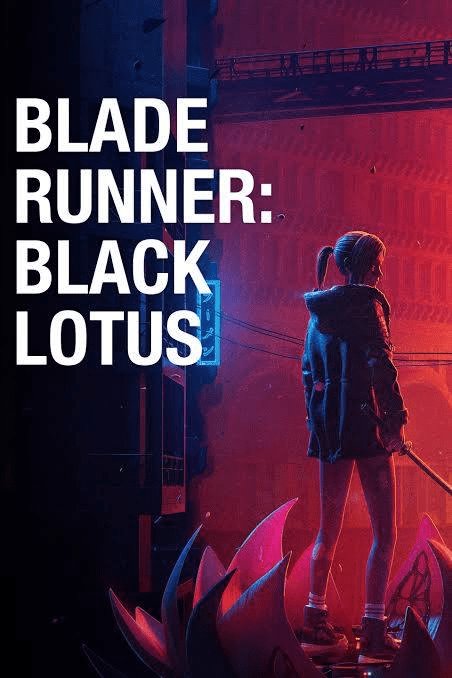
Calling Texhnolyze unique is only gently rubbing the surface, never mind a scratch. The description Google gives me reminds me of the Blade Runner: Black Lotus anime produced by Crunchyroll and distributed for weekly airing on Toonami in late 2021.

And now that I think about it, it makes me think of a bunch of other sci-fi, cyberpunk anime we’ve been getting over the years

There isn’t much to glean from just the first two episodes, but from what I recall, the society within features the protagonist, Ichise, a downtrodden prize fighter past his prime, losing his limbs and getting rebuilt $60 million man style. The setting is an underground city known as Lux, a crumbling city-state under which three main factions vie for power over what remains. Something, something, undesirable soldiers fighting for least desirable piece of real estate, only it’s not a base in the middle of a box canyon no one cares about.

I promise I’m not trying to be harsh here

Running from April 17 to September 25, 2003 for 22 episodes, I don’t wanna critique it based on originality considering a lot of my favorite things aren’t the most original or necessarily universally loved things in the world, but more with what came before, concurrently and after. Ghost in the Shell for instance debuted its manga in 1989 and has become a franchise ever since, with a 1995 movie (and 2008 redo with touchups); Neon Genesis Evangelion debuted in 1994 and has also spawned a franchise, spearheaded by Hideaki Anno who still leads the project to this day; and I had already mentioned Cyberpunk in this blog, so I’ll beat that horse when I have more to say.

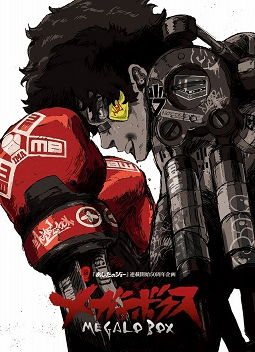
On its own merits, Texhnolyze seems to have a few things going for it, but merely falling into obscure reference, cult classic status. As a result, it’s up my alley. Let’s describe it a little: a future dystopia where humans have cybernetic enhancements to answer for physical shortfalls, battling between wide corruption and complicated power struggles. That’s vague enough to describe Texhnolyze and 2018’s Megalo Box, which interestingly looks like it was animated in 1997 and due to a bevy of legal hoops and hurdles wasn’t able to air until over 20 years later.

This series is said to pay homage to Ashita no Joe and Hajime no Ippo, but I suspect the animation team had at least one Texhnolyze fan onboard

The 22 episodes are still up for viewing as of this writing and I had saved the playlist in 2024 so I know where to go without having to close a pop-up ad every three seconds and so do you.

Channel: Parham

If the channel disappears, you know what I’m gonna say. And since I mentioned Ghost in the Shell earlier:

  • Major Kusanagi looks different from the 1995 movie here

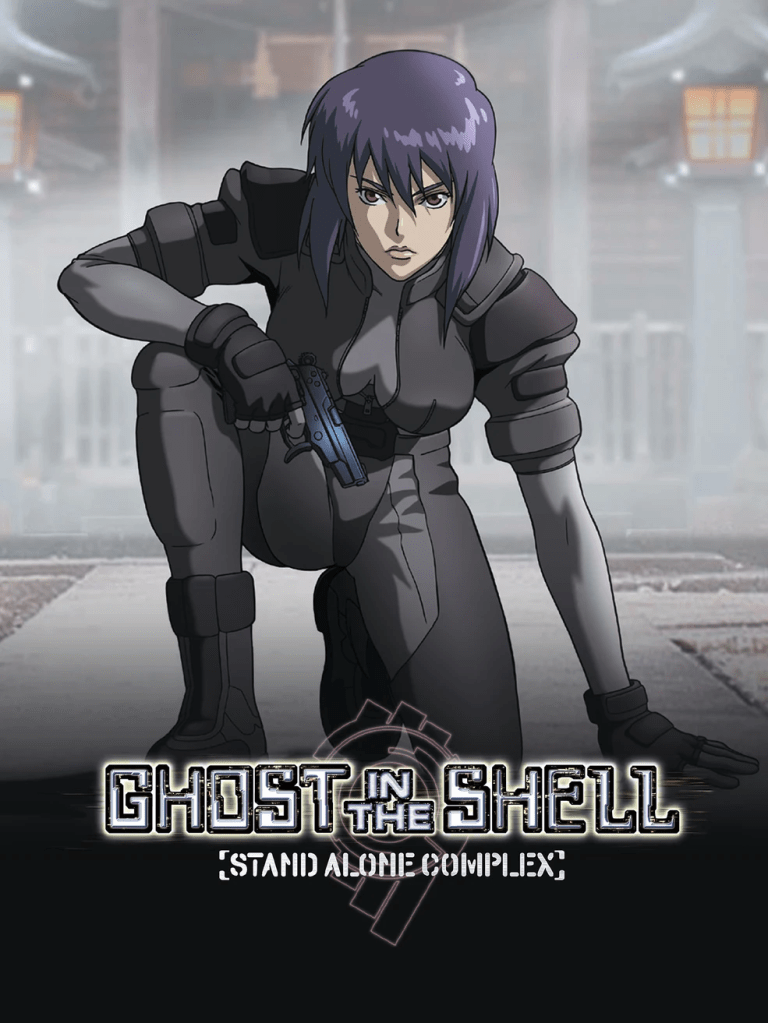
This might be a bit harsher than I intend it to, given I’ve seen the movie at least three times and have had to retreat to Google-sama to get an understanding of what the hell it’s about. But in general, a cybernetic officer in a futuristic Tokyo is tasked with apprehending an entity who goes by the name of the Puppet Master, an advanced AI with the power to Worm and Trojan Horse itself into nearly any vulnerable computerized device to include humans with mechanical enhancements and this description alone may not do it justice.

The manga debuted in 1989, the movie in ’95, and Stand Alone Complex in 2002. It does raise a lot of biting, complicated questions over AI and technology’s advancement over time, though with my limited viewing of the series (four episodes on Tubi before Toonami snatched it back up after many years pimping it out to streaming services), while it scratches the itch I didn’t know I needed scratched, like Texhnolyze before it I’m only just getting started, but unlike Texhnolyze, it’s had decades to cook and it isn’t as straightforward as most other series of its caliber. The mangaka Masamune Shirow may not have realized what he’d unleash when he first put pen to manga panel, but with what it’s become ever since the movie, anyone getting into the franchise has a hell of a lot homework to do.

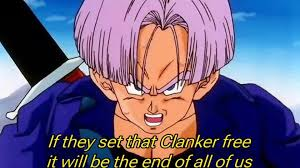
I’m going to be light on spoilers as I have a more in-depth review scheduled to be drafted and published in February, so until then I have more of it to watch. Take this as a light recommendation until then. Also, the content of this series and Serial Experiments Lain may reinforce Trunks’ biases against androids.

Channel: ImmaVegeta

Better get the boy an iPhone for Christmas

  • Fantasy world but the monster and the protagonist become an impromptu family

An interesting one that Crunchyroll was promoting at the time by letting you binge it in one sitting. I loathe binge-watching and forever hold the practice over Netflix’s shoulders, but I think for 2026, I’ll have to loosen that up a little. The series starts off with the protagonist’s party setting out to destroy a beast known as Clevatess, not knowing how royally f[clashing]ked they are until they all drop dead. Clevatess, the monster happens across a baby of noble birth that belonged to a royal family under threat from a rival kingdom and adopts the baby while also reviving one of the heroes to forever live as a zombie of sorts, but using many of the same principles that affected Bucciarati in the second half of Vento Aureo, sans the slow deterioration and lack of pain receptors.

If you’re curious what would drive a bloodthirsty beast to take on the role of a step-parent to an orphaned infant, well, the situation is equally a bet from the baby’s mother, and a test of humanity. Clevatess isn’t the only beast in the world; others like him are also out and about. The zombie female MC was among a group of 13 heroes sent to dispose of Clevatess and the rest, but ultimately struggled at the first hurdle. Following their demise, Clevatess was approached by the mortally wounded mother of the royal baby who had requested he spare humanity starting with the infant. If Clevatess could successfully raise the infant then humanity would be spared, but if not, then mass extinction imminent.

Some may draw unfavorable comparisons to Overlord, and I dispute that so heavily because the comparison is false. Yes, Clevatess and Momonga/Ainz adventure and aid with strict conditions, but Ainz is basically fantasy RPG Genghis Khan. Clevatess is a dark being hellbent on destruction. Even if the source material shows Clevatess leaning Overlord-like down the line, I’m not so certain I wanna give it the copycat flag just yet. Not for nothing, it flips a few tropes on their head where the bad guy becomes the caretaker, though I wonder just how old that trope is. These days, you can find it if you search hard enough, but looking for older examples is a struggle.

The manga debuted online in Japan on the LINE platform in the summer of 2020, so the anime was the only way I ever knew about it. Having said that though, for what it has going for it, it needs more episodes because 12 isn’t enough to give it the leg room it needs.

  • Elves don’t change like humans do

It kicked off in 2023 and had been memed all over the internet even to this day. The most prominent memes being, Ubel being a morally ambiguous mage with… lickable armpits… (ಠ_ಠ), Fern and Stark f[explosion!]k so much that Frieren could leave and come back to greet a litter of their children, and Frieren herself is a god-tier racist, on par with LowTierGod.

Demons beware

Admittedly the memes are far as hell in the animanga and I’m only a couple of episodes in. Aside from these three jokes, the plot is an after story. It’s a DnD campaign that wrapped and the heroes are getting used to peace after the evil entity had been defeated once and for all. Frieren the mage, Himmel the hero, Heiter, and others among the party all go on their separate ways while remaining friends. The one thing that gets to Frieren herself is her elven lifespan compared to that of humans. 50 years pass and Himmel is a frail old man while Frieren, due to her elven species, hasn’t aged a day.

This doesn’t bear on Frieren’s shoulders until Himmel passes away from old age and the elven mage regrets not having gotten to connect with him better. Over the course of the series, the characters, even in their new chapters in their lives, remember Himmel the hero by what he did and how he lived. Each person who remembers him has a lot to say and all of them are positive and uplifting. Of course, the heroes, having known him personally, have more personally ridiculous and intimate stories with him. This goes on throughout the series and Netflix currently has it in its line up so give it a watch if you don’t feel like pirating it. I’d talk more about what I’d observe, but in this instance, I think it’s better when you watch it for yourself.

  • Don’t make me ask twice! !GET IN THE ROBOT, SHINJI!

A staple in the mecha/gundam genre, NGE very much alludes to Christian mythos with the angels harkening to their biblically accurate appearances. There’s a lot to say about Evangelion, it’s movies, and the Rebuild sequel movie series, but this is another one I have slated for a 2026 review.

The main crux of the series is not “Wow, cool robot,” like most of its contemporaries. It’s a combination of peace of mind through acceptance of oneself and clever critique of the military use of children for dangerous experiments. Also the theme of personal loss in juxtaposition with self-acceptance. Roughly every character is fundamentally broken and the fact that much of the cast consists of 14-year-old mech suit pilots, Anno is a weird guy, alright, if this is the proof in the pudding.

What has people continuously talking about it for 30 years strong is the memes, of which there are many. You can have some of your favorites (my personal ones involving Asuka in some capacity), but the one thing to note is that unlike a lot of fandoms, I think the Eva fandom I’ve seen is one of the few to actually read its source material and understand it without issue. This puts it above some of the other series to air concurrently and down the line where the bombastic, earth-position-influencing combat is the sole or central focus of a series. It technically disguises itself as an allegory for depression through Christian mythology, but Hideaki Anno won’t admit that.

Like Frieren, it’s also on Netflix and so is the movie, End of Evanglion. I so far am wrapping up the anime, but I haven’t touched the movie yet. And speaking of movies:

  • Even more Ainu cooking, but for real

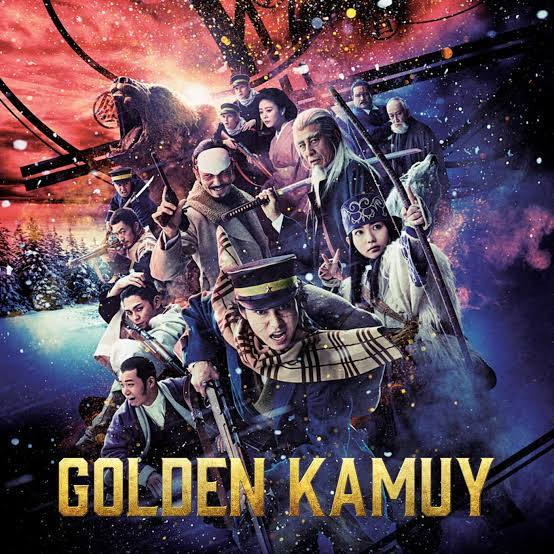
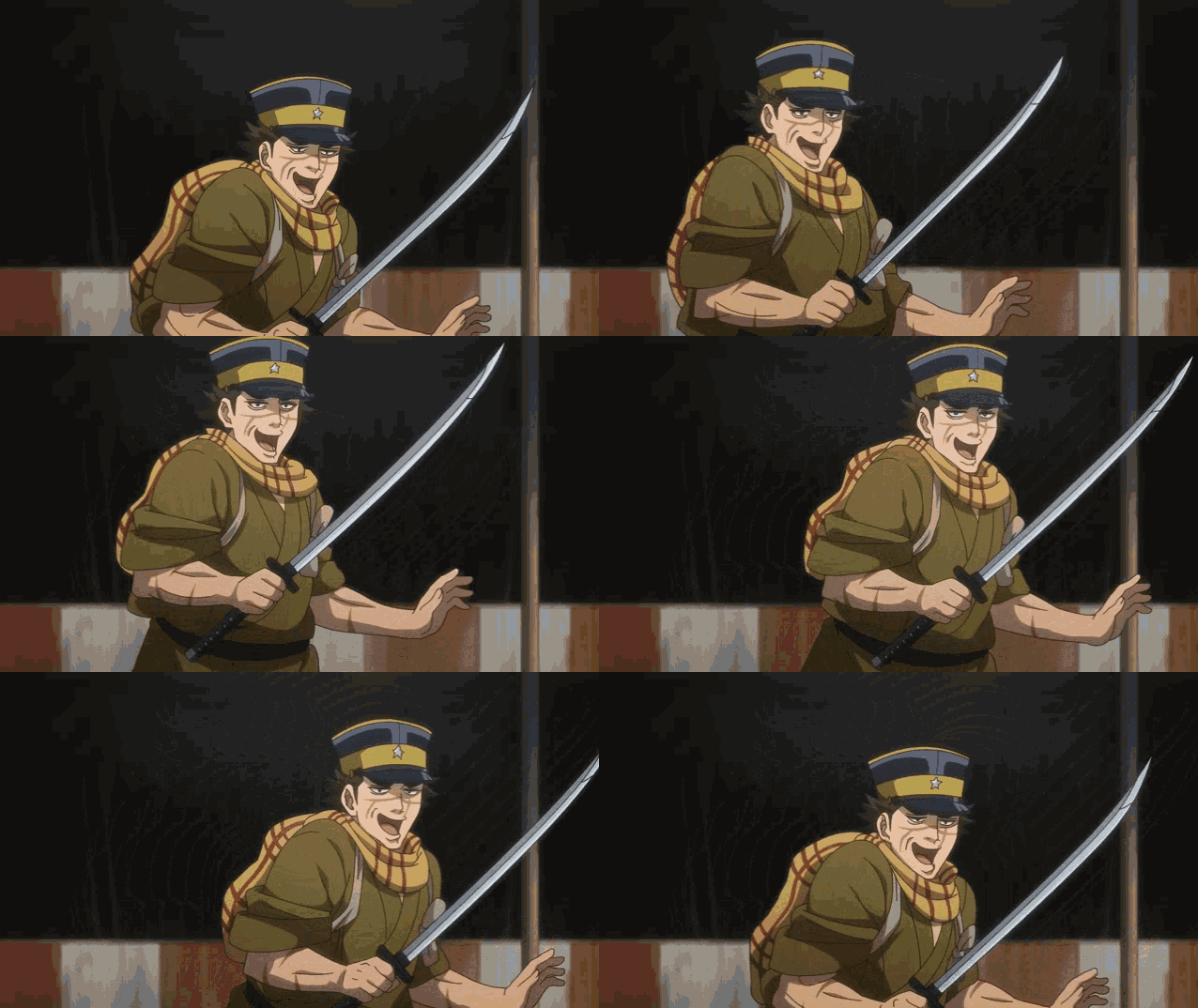
So Satoru Noda began writing the manga in 2014 and the anime adaptation followed four years later. After that came this live action movie in 2024 and a continuation in a second season … Hmmm… The live action version of Golden Kamuy does well to capture the humorous elements of the manga while staying true to the practical elements. It isn’t 1:1 for obvious reasons but this was completely unexpected. A surprise to be sure but a welcome one. I had talked about Golden Kamuy before, so a run down of the salient points are everyone knows of the legend of the Ainu gold, the map to the treasure is tattooed on a group of eccentric Abashiri prisoners, and death is the only thing stopping everyone from using the gold for their own purposes. A race to near-infinite wealth of sorts…

Yeah, I went there.

I only give it high marks because I love the series so much, so as much as I recommend the movie and live-action series, consider that this part of the blog is a bit more subjective than normal since I consider myself part of the target audience for something like this.

Rust Belt Snuff Film

One of the few Rockstar products nearly banned in the U.S.

Banning and heavily scrutinizing entertainment products has been a time-honored tradition ever since Mortal Kombat, Night Trap, and Doom were released in the early 1990s. Violence, gore, and in Night Trap’s case, violence against women. All of these follow on a legacy of learning too late that being devil may care about the contents of an entertainment product can lead to controversy and public outcry. Not all of these can be accurately predicted, but if I didn’t do my research on Jaws or Gremlins before taking my kids there, I’d really have only myself to blame if the kids have nightmares.

Never mind the boat, you’re gonna need to explain to the misses why Timmy doesn’t like sharks all of a sudden before sleeping on the couch tonight.

Although not present for the 1993-4 hearings, DMA Design, now Rockstar North (because no true Scotsman would associate themselves with England anything) released a successful series of video games alluding to the act of motor vehicle theft but not necessarily exclusive to such an act. Yes, I am referencing the Grand Theft Auto series and as noteworthy as the attempts to bury this series over the years are, a different Rockstar property was almost the victim of a successful attempt on its life.

For all the flak GTA got against it for its “realistic violence” {let’s be charitable, 2002 graphics were considered realistic at the time), this game originally got what it might as well have been asking for.

The content within was made for the dark web

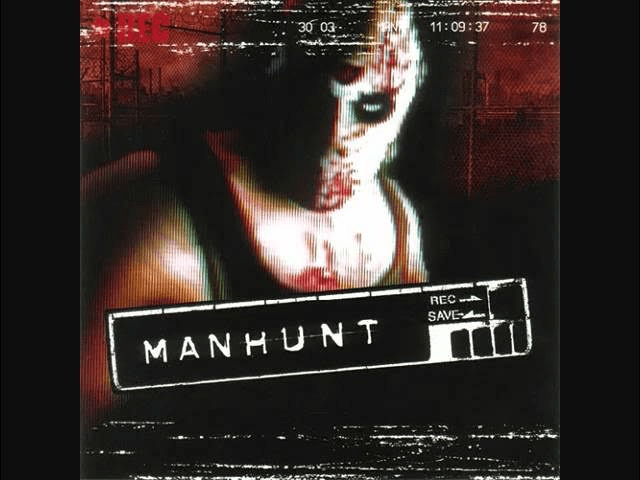
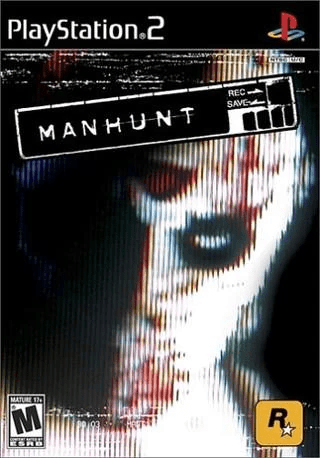
Released on November 18, 2003 for PS2 and then the other then-current platforms the following April, Manhunt gave the audience very little to the imagination regarding its content. Roughly every object that can cause pain in the real world is itself an equippable weapon, but the weapons themselves weren’t on trial here. Or rather, it wasn’t just the weapons getting a heavier look this time around.

But we’ll get around to that soon. The story is as follows: Carcer City, death row inmate James Earl Cash is put to death by lethal injection in public. Privately, he was merely knocked out by presumably less harmful drugs than what costs millions to pump into an actual live person in the most remote parts of the country. Afterwards, a voice, referring to itself as “The Director” leads Cash around by the nose, whispering into his ears the different functions.

There’s the Hoods, who can best be described as a very loose confederation of low-level blue collar criminals from thieves to murderers to rapists to dealers. This amalgamation of crime and villainy is enough to even get crooked cops on the take. Next to that is the Skinz, a white power skinhead group that, if you know anything about how the Rust Belt came to be, makes for a really depressing state of the region. As for why these neo-Nazi larpers would be after Cash’s head when he’s both white and shaven-headed, well the answer to that has long chain in British and American colonial, citizenship, and race laws on the whole, but the short version deals with perception. Purity, or “join or die” mentality for those who fit the mold on paper, and it’s not like the Nazis were s[nein]t-talkers about that either.

Putting the Skinz on the cover of the game’s box art works for shock value if you ask me

After these yo-yos, it’s the Wardogs, a paramilitary group made up of veterans, survivalists, and mercenaries. Pulling from real-world examples, outside of foreign volunteers and conscripts who choose or are forced to fight respectively, mercenaries have never come cheap and paramilitaries typically fight for themselves or the highest bidder, though sometimes they have an ideological goal in mind. Real world paramilitaries include the historical SS and select conscripts fighting for Imperial Japan, and in more recent history there’s the American militia movement from the early 1990s, the Tamil Tigers from the Sri Lankan Civil War, paramilitaries based in the British Isles during the Troubles, some ethnic-based groups from Southeast Asia, notably the Philippines, and numerous others. And I bring up these examples to suggest that the Dir

Following the doomsday preppers are the Innocentz whose name is an apt and disturbing perversion of their patterns of behavior. It should be kept in mind that all criminal organizations are secret societies, but not all secret societies are criminal organizations. In this case, the Innocentz work in tiers each more terrifying than the last from the trademark gangbanger to the thanatistic cult faction to the mentally deficient pedophilic faction, thereby making them the most disturbing enemy in the gang.

And the last round of nasties you fight are the Smileyz, a gang of escaped mental patients who are bizarrely the most vaguely explained faction. They’re not strictly anything, not gangbangers, or white supremacists, or pedophilic cultists; the Wiki makes them out to be the grayest blur in the game.

All things considered, this era of games was churning out edgy and thematically dark games left and right. GTA III and Vice City, Mortal Kombat: Deadly Alliance, Max Payne 3 and this. The more emboldened developers felt to release edgier video games, the harder the backlash and the more highly praised the games were to the audience no matter the reviews. A not insignificant portion of these fell victim to cult classic status, neither hurting nor helping the sales of the PS2, but certainly adding to that platform’s library all things considered.

Credit: r/gaming, u/veterinarygamer

And the PS2 clearly had an expansive library!

I highly doubt that Midway Games cared very much about their public image since their revenue came mostly from the arcades, but DMA/Rockstar was taking home the lion’s share of the media’s attention. The fact that their philosophy was too downright tease their critics was nothing short of genius. These days, I know better than to engage with trolls and ragebait, but the savviest of creators can farm their critics for karma, and successfully. This is the philosophy of Rev Says Desu, or more historically, circus freak shows.

The IJA’s 7th Division was a circus all its own

Aside from nanny state countries that historically coddle their populace and refuse their people the right to decide for themselves what they do and don’t like, the US of A damn near banned it thanks to the graphic violence. Mortal Kombat would’ve reasonably been written off as fantasy with all the ninjas, sorcerers, soul-stealing wizards (Farewell Cary-Hiroyuki Tagawa), upright lizards, and whatnot, if it wasn’t for the use of digitized actors and inclusion of blood and finishing moves. For Manhunt and Grand Theft Auto, the fact that these are plausible and can be readily seen by ordinary people away from a computer or TV screen adds to the controversy. No one’s ever seen a fire-summoning ninja throw a grappling hook from his hand, but thanks to the news everyone’s heard of cartels, bank robbers, gangs, and prison escapees.

But even these are classic horror movie tropes. Most of the time, the criminal knows the victim, and most of the time criminals target members of their own communities. The 1 in 10 percent that the media likes to fearmonger over are all rarities. They do still happen but not to the extent that you’d believe.

RNGesus really needs to hate your existence if a guy like this spawns in front of you in the midnight hours.

It’s not like Manhunt is lost on me, the dark atmosphere and easter eggs make it something of a neo-gothic treat, like that time I watched The Addams Family movies and Beetlejuice. But putting it with its contemporaries just makes it a product of the era. As for the gameplay, it’s as strict a stealth game can be, rewarding creativity in sneaking up and killing and punishing any player averse to this gimmick. Not for nothing, it shows that as much of a monster that the Director tries to make Cash out to be (and he’s definitely up there, death row is spared for the worst outside of wrongful convictions), he’s certainly a crafty bastard if you think about it. When there’s 20 of the Skinz or the Innocentz or the Smileys and only one of Cash to go around, your options are limited and outright combat is a last resort.

It certainly demands patience, but can sometimes test your patience. If you’re not careful, the enemy can sense you about to slit them up with a broken piece of glass. Or they can gang up on you with bats or nail guns while all you have are the Kanye West Supreme Brick, your fists, and Philip J. Fry’s lucky seven-leaf clover. Fortunately, the game predates the Ubisoft Assassin’s Creed tailing missions, so there isn’t any worry about having to tail an enemy to a certain location, nor is there a requirement to slice everyone up into lamb chops outside of designated spaces, so you could only cut up a few guys, sneak past the others, get to the goal, rinse and repeat. It might bring down your slasher/snuff film score at the end, but rigid grading systems like this aren’t worth s[grenade]ting your organs out over.

One notable enemy in the game goes by the name of Piggsy. I haven’t reached him yet, but the Director’s use of him as an enforcer when he looks like this:

Definitely harkens to horror movie directors like Wes Craven and Tom Six.

The game and its sequel (which was initially banned in the U.S.) are both available for purchase on Steam, but the game being as old as it is requires some mods to get it working, even if you pirate it from SteamUnlocked. If you’d like to play yourself, consider this guide on the Steam forums if you run into issues like I did.

The Year in Manga

What I’ve been reading this year

Right before we get to the crux of this post, I had a second look at my notes and noticed a gap between November 28 and December 12. I forgot to fill that in in time so before we properly wrap it up, next week will be something of an intermission discussing a controversial video game even by RockStar’s standards. Here’s a few vague hints: Jack Thompson tried to have it made illegal, it was banned in several countries, including the US at first, and the real kicker, it’s primarily a stealth game, so you get rewards when you knock skulls around without people noticing. Now for the real focus of this post.

The end of the year is on the horizon and before we close out the Year of Cordis Die, let’s recap some of the manga I’ve been pirating. I’ve talked at length about manga I’ve been pirating and recommending for as long as this blog has been up, some series I’ve recommended and others I haven’t mentioned yet. So for this post, there will be updates on what I’ve been reading this year, coupled with some looks at manga I’ve yet to mention on the blog. Here’s some series I have lined up, unordered:

  1. Dosanko Gyaru wa Namaramenkoi/is Mega Cute/Hokkaido Gals are Super Adorable
  2. Torako, Anmari Kowashicha Dame Da Yo
  3. Shihai Shoujo Kubaru-chan
  4. Redo of Healer (T^T)
  5. Hitomi-chan is Shy Around Strangers

Some of these are familiar to the long-timers, others I haven’t spoken a word of once on this blog, even in passing. Take these as holiday recommendations to get you through the time-honored tradition of repeating yesterday’s Christmas songs until Boxing Day.

    Having finished the anime adaptation last year, along with its stellar opening soundtrack, I wanted to continue into the manga. The last episode of the manga covers chapters 31 to 32.5 and right after that the rest is saved for the next season set to air sometime in the distant future when apes walk upright again after millions of years subservient to the superior human and AI starts thinking about installing an emotions software (and those electric f[dial-up]kos can keep dreaming because I want my clankers to be as unaware of the outside world as possible), so after October 2026 or April 2027.

    Now, animanga taking us away from Tokyo because everyone goes there and letting us see the rest of Japan like Hokkaido in this one and Fukuoka historically in Excel Saga (that series doesn’t tell you explicitly that it’s Fukuoka but the mangaka is from there so who else but him, right?) is a neat little tradition when the lights of the world’s largest metro start to get blinding. We’ve still yet to see a mainstream series go to Shikoku (Matsuyama is right there) and until the prefectures on that island band together and spit out a series for us, we’ve got to make-do with RNGesus Japan edition.

    So what has happened ever since Tsubasa charmed these Minnesota-accented Hokkaidoans with his rich boy Tokyo Prefecture charm? Well, I’m still in the middle of that arc but we finally see Tsubasa’s mother, Renka. Hospitalized from running herself ragged trying to raise the perfect Japanese son, it’s a good thing she’s already bound to a hospital bed because knowing a son of hers is besties with a trio of gyaru-tachi would give her a heart attack. Also, it’s interesting that the grandmother, Kaede, is healthier than her own daughter, but that’s the thing about that RNGesus character, he’s a funny guy. Less of a downer than Buddha, all things considered.

    As it happens, Tsubasa was brought to Hokkaido largely to prove that he can excel even outside his comfort zone and on the friends and family front, he has passed, but Renka being the type of mother who’d disown her child on her deathbed for getting an A and not an A+ while also being captain of the chess club and the like concludes that frolicking with the popular girls has led him astray and will return him to Tokyo no questions asked to return to his former glory as a golden boy.

    Not that one.

    Until Kaede, Hirotaka, and Minami herself show Renka that this level of control over the boy’s future and lifestyle is utterly unnecessary, releasing a weight from his shoulders (sort of) under the condition that she be allowed to witness his growth in real time. I’m still reading the manga online and expect to report back either when the second season is announced or around the same time next year, whichever comes first.

    • What the f[punch]k are you lookin’ at, jackass?!

    Japanese subcultures come and go over the years and the subculture that had its halcyon days in the 1970s through 90s was that of the bancho/yankii, the delinquent of sorts. Numerous characters fit the mold from Jotaro Kujo, who was in his element in 1989; to Taison Maeda, who was conceptualized right in the middle of this era at the same time Stardust Crusaders started serializing; from Eikichi Onizuka, who represented the progenitors as they were growing up even at the time, to Josuke Higashikata, who Hirohiko Araki knew would be seen as dated even by 1999 as gyaru were starting to emerge and become more popular.

    Even now as Japan has crossed over into the cholo era (yes, really), some mangaka and anime dedicate characters to a bygone era because nostalgia for an earlier era is not just a time-honored tradition, but a worldwide phenomenon, if fans of pre-revival Doctor Who are anything to go by.

    !EXTERMINATE!

    And I’m not immune to that myself with how often I look for content from the early 2000s, when immediately following a geopolitical tragedy the decade chose to be edgy and serious and smiling was against the law, but I digress.

    Mangaka Nujima got a kick out of introducing East Asian folklore and horror stories in Mysteries, Maidens, and Mysterious Disappearances, but next to that we were given another series, this time about a shy tomboy who gets moved to a rough and tumble high school where the most ferocious girls challenge her… and get humbled at every step. Even the boss Sukeban girl was utterly embarrassed in the first chapter after having her breasts exposed by accident and she hasn’t been able to forget it.

    The translated name is Torako, Don’t Break Anything, and when you’re built like you were supposed to accompany Arthur, King of the Britons on the quest for the Holy Grail, trying not to break s[porcelain]t gets harder and harder, especially when the school you’re in has it as official policy to be a delinquent. Most of the student body looks like it could take on Jotaro Kujo, not necessarily successfully.

    Protagonist Aiko “Torako” Torasawa transfers to a delinquent school and without consent must dodge attacks from the main delinquent girl group that gradually accepts her as one of their own. This manga being an older work of Nujima’s some of what he put in the East Asia version of Urban Legends can be seen in this one. So are there giant boobs in this one as was the case for Whereabouts Unknown? Yes, and multiple… but this is a short series that ran for 20 chapters in 2016. I couldn’t find any associated wiki pages for this series and MangaDex is not the most reliable regarding this information, so I’m adding a pinch of salt to this timeline.

    This series doesn’t take itself as seriously as the other one so funny fanservice is more prevalent than in the other one. Be mindful though that before we got Sumireko’s Oppai of Truth, we have Torako-chan’s Premium Mediums. Would help if we had a medium with premium mediums, but I so far haven’t seen a manga about a fortune teller lady with an average chest size.

    • Before you think about killing yourself, you wanna be my puppet and fall in love with a random chick?

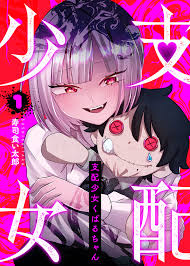
    The official title translates to Ruling Girl Kubaru-chan and the plot of the manga lives up to that ideal with the main male protagonist submitting himself to his female classmate’s whims not by force but by coercion. Given the state he’s in after the first chapter, the poor boy doesn’t have much of an opportunity to resist; he was already driven to ending it all anyway, so the man feels like has nothing worth living for until Kubaru tries to play him like a chess piece. Which fate do you consider the worst? Well, looking at it, no one is playing with a full deck and everyone has problems. The characters all feel real but just about every chapter has a giant layer of what the f[siren]k attached. Someone should go ask Nujima if he can lend some of those Mysterious Disappearances warning signs to this manga instead; the tone of the manga makes it very unpredictable.

    What makes it interesting is that the mangaka’s forewords are always humorous little comments. For example, the main character could be bracing to be a disgusting rape victim and then the chapter ends and the mangaka’s like, “check out this butterfly I found in my backyard.” Dude, your own MC is about to get molested, the f[alarms]k is this??

    The manga starts with Yuto Kiba about to toss himself off the roof, due in large part to a series of misunderstandings that have made him a bad bedfellow to his classmates. Then spunky, eccentric Kubaru proclaims that she can change his life for the better… after he breaks his arm trying to kill himself.

    Alive if not exactly well he may be, that was just the beginning. I’d spoil some of the chapters here, but I don’t believe even some of what’s been going on in this damn manga. Still ongoing, still on MangaDex, and I might dedicate an individual post to the series in the future (gotta move some stuff around for that). Just got to wait and see.

    • (ಠ_ಠ)

    I… was curious… to see what else the source material had in store and, uh… this is a job for the big book of reaction memes.

    (ノಠ益ಠ)ノ彡┻━┻

    There’s two versions of the anime and both of their showings are polite. Why do I say that knowing this screenshot exists in the uncensored version?

    Because the manga holds nothing back. I’m serious, the anime was, for lack of a more appropriate term charitable to its cast with all the raping and blasting going on. Visually, it could’ve been even more shocking and the interview between the Rui Tsukiyo and The Anime Man reveals as much:

    Channel: The Anime Man

    (ノ _ <,, )

    I think, if it’s all the same to you, I’m not so sure if I’d like to explore what women consider edgy and dangerous. For a guy, it’d probably be a reading off of every slur and every offensive gesture in every language and culture; groups like the National Socialist Movement and the Klan would have to reconsider their lives having been outdone by the least racist 4channer. A woman’s fantasies–if the internet isn’t completely full of s[honk]t–are being waited on hand and foot by a smartly dressed bison or wolf or lion by day and being bred like the females of these respective anthropomorphic animals…

    Maybe I’ve been watching too many reactions to Shoe0nhead’s video about a certain dark fantasy romance novel that I refuse to name or allude to. Barely counts as romance (and the author needs to reassess what age millennials are, just saying), and that’s the most I’ll ever touch on the subject for the foreseeable future.

    For the finer details of what the manga entails passed the adapted chapters, well, there’s some changes between what got greenlit and what needed to be changed. So dark themes and imagery alone isn’t a deal-breaker, but explicit use of degrading language and BDSM clothing with emphasis on the SM is, especially when a spare-ess princess orders the servant (read: sex slave) to wear it under penalty of death… or worse: unanesthetized castration, and I’ve got the sneaking suspicion that the Jioral Kingdom is familiar with such a tactic, but I’ve yet to prove it.

    (>_<) (~_~)

    Once again, I’m in strong recommendation towards the gender-reverse isekai and the sexual deviant isekai for the simple fact that these two have a lot of fun with the concept. We here in the west have done sex comedy before and animanga shows that it’s not to be outdone. Ecchi is the proof.

    • For such a tough-looking face, she’s actually just really shy.

    Finally, and for a tonal cleanser, back to high school romcom between a short king and his tall, shy, athletic wife. I haven’t been able to keep up with this series as closely as I used to, but I occasionally check in. With the news that it wrapped up serialization in Spring of this year, my excuse trough has gotten lighter with only work and several more animanga series I have saved in, like, 250 other tabs across all my devices and browsers.

    My muscle memory hasn’t evolved past 2005 Internet Explorer

    From the series’ inception until its conclusion, it’s managed to keep a relatively small fanbase over the years, so it doesn’t attract a lot of newsworthy controversy if at all. On the one hand: great, that means less weirdos barge in and try to change things or “literally me” the characters to death; but on the other hand: dang, how do I know what kind of news is going on with the production of this series? Chorisuke Natsumi doesn’t seem to need the media buzz to get his manga off the ground with social media posts from both fans and himself doing that much of the heavy lifting, but as I said ages ago with the creator of Mysterious Girlfriend X, readily available footage of Natsumi are hard to come by, but at least we know this guy is still alive. He just finished a manga this year.

    Still, Scrutinous Saliva Sucker got a little 12 episode anime and there aren’t any hints that that’s next for Sharkboy‘s Shy Sister. If it happens, neat. If not, alright then; numerous manga don’t get an adaptation for ages if at all with some getting greenlit from the cutting room floor. I don’t have any hard and concrete predictions to make for this, short of what I wrote about in a different post covering it at length. All that’s left to say is that it maintains its cutesy, slice of life, wholesome goodness from start to finish with hints that Hitomi and Yuu become more at the end.

    (^v^)/

    Muscle waifu in wedding attire with friends in attendance, the thing that riles me up the most about the genre is that it ends after the couple ties the knot. Can’t we see Yuu as a dad or Hitomi as a mom? Come on now!!

    But at least there’s something to chew on compared to this:

    And again, ecchi is always stellar, but it can shine even brighter with a strong plot. But that’s true of everything in fiction.

      The World of Devil May Cry (and some other stuff)

      The story of one of the best demon hunters with a supplement

      Making another breakthrough in legacy video game franchises this time with Devil May Cry, the story of Dante, a supernatural gun for hire who hunts down every paranormal entity on earth to keep these forces from invasion and conquest. In his arsenal are a pair of handguns lovingly dubbed Ebony and Ivory to reflect their coloring, one blued and one chromed, so if you were in the market for a pair of collector’s items, you’ve gotta make sure Dante’s dead enough to pilfer his weapons. A sword is also attached to his back and seems to do roughly the same amount of damage as the buster sword from Final Fantasy VII.

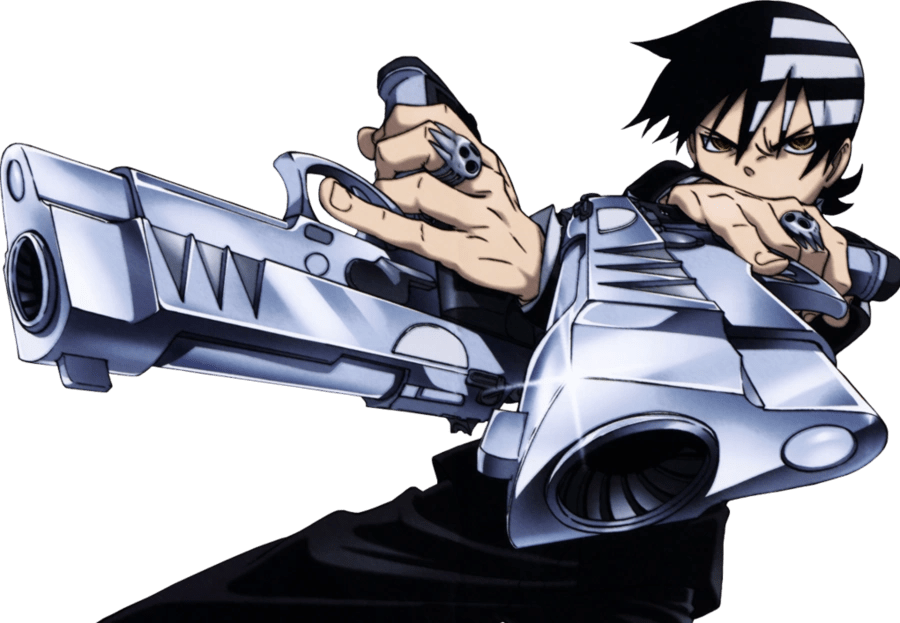
      The series debuted in 2001, spearheaded by Capcom when they were still respectable and didn’t pimp out the Resident Evil series over the course of the 2000s. Now let me see if I’ve got this right: a man named Dante ventures through hellish conditions to bring the light of the lord to humanity. Yes, the independent game wiki and associated Wikipedia page both mention the Divine Comedy as a source of inspiration, but unlike Dante Alighieri’s satire of the Holy See, Capcom’s crack adds 2000s edginess that’d be replicated in the likes of God of War and Max Payne, adds a skills-based combat system mostly based on your ability to move and shoot (though less balletic John Woo/Matrix-like than Max Payne, and more Soul Eater’s Death the Kid sans the strong pinky action).

      Kid must do push-ups with his pinkies to be able to pull this off

      To add on to the God of War aspect that would define its Greek Saga (and to a lesser extent Norse), the game features light puzzle-solving, as well as the fixed camera angles that were a staple of Resident Evil until at least 2005’s Resident Evil 4. And not dissimilar from God of War, the fixed camera can sometimes be a little uncooperative especially in combat. At least it’s not enough to make you wish you could go back in time and heavily scrutinize the dev-team for this. And whatever complaints there were at the time were addressed when the games were remastered in HD by 2018. So rest assured, the franchise is still kicking.

      Funny enough, I recall a cardboard advert of Devil May Cry 4 back in 2008 featuring deuteragonist, Nero…

      I’m still new, as I thought this was Vergil at first

      …and sadly I was way too broke at the time to get it. My PS2 was still marching on and I wouldn’t see a seventh-generation console until 2013… when it was ending. Coupled with console exclusivity and DMC would enter my life yonks later by way of PCSX2. Similar to my introduction to the Yakuza series which I wrote about here.

      As of writing, my interpretation of the series is more browsing the Wikipedia page for reference as I just started exploring the game. I at least wanna get through 80% of the first game though before I start lore dumping, just so that I know I understand the plot. Still a recommendation—that goes without saying. It’s old enough and developed enough to garner new players, myself included, after many years. Maybe a future post could compare the original and the remaster, something I have an idea for regarding Yakuza and the Kiwami games.

      So until I learn more about the children of Sparda, let’s move onto Flash games.

      I’ve waxed poetic in the past about my lovely childhood with Flash games and directed you viewers to an archive of most of the games that were sacrificed the same day Flash died. Be it CQ or staff duty in the Army, when it comes to graveyard hours, I’ve got as much time as can be spared, plus the weekend and recovery to rediscover what all those hours on the computer were dedicated to in between my scheduled assignments during school and what was allowed during day camp depending on what days had the fun counselors and what days had the wet blankets. The fun ones literally said, “Anything but a chat room,” and the wet blankets opposed violent video games and looking at what I was playing, many of them were slightly north of bloody and viscous, but thankfully for them not bloody enough for Mortal Kombat.

      So, Tiberius, what did you rediscover? Several things I’ve played before on the functionally vegetative Stickpage among some others. The one that a friend introduced me to when we were around nine years old was the Sift Heads series.

      This was peak at one point in time

      I’ve mentioned this in passing before on this blog, but now to unpack it in detail. By now, it’s a franchise accessible on any device that allows you to game from the beefiest, sexiest computer Best Buy or other stores like JB Hi-Fi can give you, but it didn’t begin like that. If the Flash Games Archive or the developers are honest about the game’s history, the series of stick-figure shooter games debuted in March 2006, featuring protagonist Vinnie, an ex-mafioso taking scores in the Windy City by way of lightspeed boring machines for your brain. $5,000 please.

      Performing a series of contracts for the highest bidder, Vinnie shows himself an effective killer, and when he’s offered a chance to become a full-time mafioso, he declines, declaring to work solely for himself. Freelancing gives him the flexibility to choose his contracts. As a downside, this means that turning down the wrong people makes him popular with the wrong people, like Max Payne, only there isn’t a cemetery plot dedicated to his dead family because his wife got a dossier from a morally absent pharmaceutical company, so Vinnie can still call Chiraq home and travel the world in search of heads to sift.

      The third and fourth installments add more lore to Vinnie to go along with the plot progression, but the prequel, creatively numbered 0, goes into his past. The short version is that he was born in 1975 and had been killing things from day 1. A cat that mauled his favorite teddy (funny how he remembered that considering memories don’t usually start developing until the age of four or so, unless his mother told him), a toddler who played with his favorite toy car, and an annoying seventh grade teacher who was killed falling out of a two-story window. Tried to fix the AC, should’ve called the repairman; they still had them by 1987. By 1993, 18-year-old Vinnie, driving in a Plymouth Barracuda with an open bottle, is pulled over in a roadside stop. Speeding off irks the Chicago PD who tragically lost their lives in a car crash. Yeah, happened a lot back then. Now all of that silliness out of the way, the late 1990s sees Vinnie accept his first contract. The son of a crooked cop is kidnapped by a major drug smuggler and Vinnie needs to pop the guy and free the son. By 1998, the smuggler is no more and the dirty cop’s dirty son is free as a bird.

      New millennium, 2005. Another major contract is taken and Vinnie, now 30, has gotten more creative with his hits.
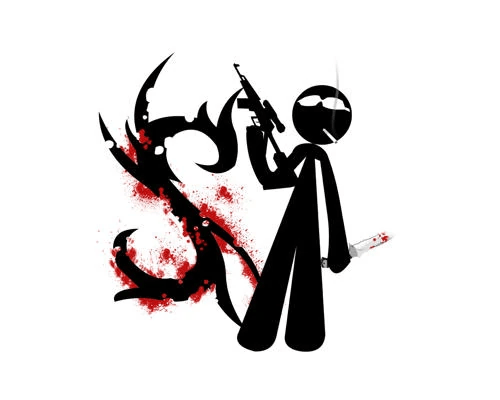
      Probably the best bounty hunter in Chicago

      The next series of games sees a few chickens come home to roost, with a relative of a contract in Japan tracking him down and attempting to kill him. This character is known as Kiro, which doesn’t sound like a name that would be found in Japanese, more so a romanization of “kiroguramu,” but I’ve not got any influence over the series, so we’re rolling with it. An ex-yakuza on the run from his own family plus the triads for a misunderstanding that got a lot of people killed.

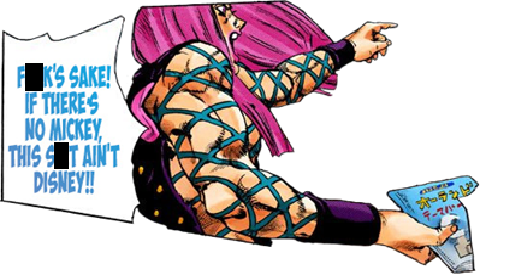
      Vinnie has the opportunity to kill this guy but instead spares him. No one put a price on his head, so he’s not worth the trouble. Guess we know now where his priorities are. If there ain’t no money, this s[guns]t ain’t funny.

      Spoiler for Stone Ocean: the anime wasn’t able to include this scene. Disney’s lawyers are too strong.

      AFAIK, every game with “Sift” in the title is archived on this site, so feel free to explore what makes these stick figures so compelling. And on that note: Johnny Rocketfingers.
      Seems this was re-released on Steam, I didn’t know that ¯\_(ツ)_/¯

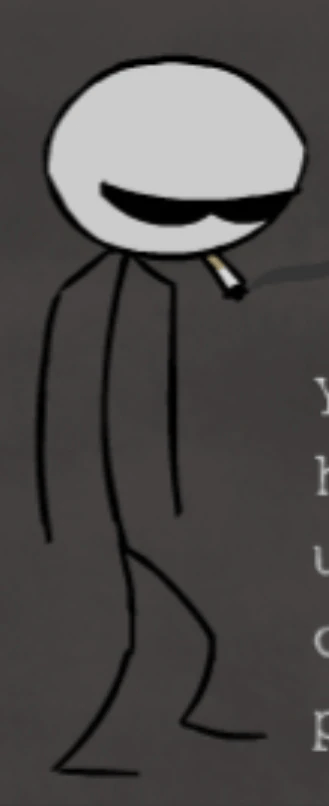
      Crack-smoking, swears-using, drug-dealing, beer-swigging, cigarette-smoking; Johnny Rocketfingers doesn’t play games despite being the protagonist of one. An older game from 2003 (I didn’t realize it was that old either), Johnny boy is asked by a screeching harlot to recover her daughter from hoodlums for a price, enough to buy him a truckload of crack. That’s not a joke, by the way.

      The game has branching dialogue paths, but only one path is canon while the rest are there for s[lighter]ts and giggles. Illusion of choice? To an extent, but you can explore the non-canon choices if you’re curious.

      So, Johnny agrees to get the girl back for a price and goes on an adventure knocking down hoodrat after hoodrat in creative ways. A cat to maul a bouncer, a doll to distract a guard, a can to distract two more guards and an action sequence that results in Johnny getting held captive and tied to a chair.

      But that’s all malarkey after busting out and delivering a “child” to the woman in exchange for that sweet, sweet crack money. But the gang catches up to him and I guess Chiraq starts to resemble Iraq post-insurgency with bodies littering a city street.

      And wouldn’t you know it, Johnny Rocketfingers has a sequel with more to the point-and-click Choose Your Own Adventure style of gameplay. There’s more interactions, more people to interact with, things to collect and more. What’s more, it’s in color as well so we see more and more how ridiculous this simply-drawn character looks next to more detailed NPCs.

      Being in a game doesn’t mean Johnny plays them

      Lover of puzzles and the crack epidemic’s immediate effects Johnny may be, he can’t stop messing with the wrong ones. Everyone knows better than to rip off a dealer, but leave it to this guy to straight up rob and try to stiff the guy. Consequences come a-knocking when Johnny mid-swig is surrounded on all sides by three Knicks rejects. With a broken bottle in one hand and ashes in the other, all three litter the floor of the bar and Johnny drives off while the drug dealer’s henchman calls the boss in a phonebooth, which simultaneously dates the game and adds to the character of the environment. Side note, I always wanted to call someone on a payphone, but there were obsolete by the time I was grown.

      The next morning, Johnny gets a knock on the door of his rundown apartment in the projects (my, the memories of my childhood flood at the mention of that) and the drug dealer’s goons aren’t playing. The rest of the game is spent gathering information on these guys through roundabout favors, or favor, for there is only one that matters. Talk to the hooded dude hanging out on the corner and he’ll tell you what he knows—vaguely—if you recover his Zippo lighter.

      While doing that, Johnny commits random acts of theft, vandalism and robbery of a parking meter (the old-style ones for individual parking spaces on the curb), force-feeding seltzer to a pigeon to get into its nest, boozing up a bum to take his pocket change; this all sounds random the way I’ve written it, but it all adds up in action.

      Getting the Zippo is the interesting part because it’s in a storm drain guarded by a sewer gator. Yes, that’s merely the projects in Brooklyn or the Bronx, but home pride refuses to let me take the piss out of NYC, even if it could use it. Johnny arms himself with a rusty pipe in an attempt to get the gator to f[roar]k off, but the leather-headed bastard is a stubborn bitch. It corners Johnny in a drainage pipe, but finagling with tools dug out of the rubbish bins of the city get him some trinkets to try to open the drainpipe and send the gator flying.

      Patient or foolish enough to toy with his food, but anyway, the gator is out, and we find that this dragon was guarding a treasure trove that Johnny would never get his hands on. And looking at where he lives and how he lives, that much weight in gold doesn’t know how to shut up; the boy’d get clipped if he had even a dollar on hand, never mind valuable Civil War bonds. The real prize is the Zippo, which, when recovered, is the price to pay for information on the main antagonist faction, Thug Inc. If you think it sounds dumb to name an organization like that, this article about Murder Inc. begs to differ.

      Budget Slim Shady doesn’t reveal much about the organization. For the most part, their location is a well-guarded secret, but one of their spots is in a certain part of the city. The coins collected from the parking meter are used to pay for bus fare and before Johnny disappears to knock some skulls around, Dollar Store Eminem is revealed to be a Thug Inc. member by way of the ring on his finger.

      Something, something insider threats and all that s[sparks]t

      To cap it off, this game’s sense of humor has you walk into an obvious trap, pointed out by—and I’m not making this up—a giant, glowing sign that reads: “This way to gang hideout.” Luckily, this is a game or the cops would be all over it, but then again if the dealer is as powerful as portrayed then he’s probably this universe’s Big Smoke, with a section of local PD in his pocket… or just confident no officer would look too heavily into the slums. Johnny walks into the alley, playing it Bogart, when he’s surrounded by similar looking thugs to when he was at the bar the other night. He survives the onslaught until the big boss comes back with a gun in hand. This time, the boss doesn’t survive and gets himself capped, knee capped that is. Then at the end, Johnny’s at the bar again and another chicken returns to roost. The same woman who got the circus freak in the last game hires a real PI (should’ve done that in the first place, dumb ho) to beat the f[knuckles]k outta Johnny and the credits roll.

      Unstoppable

      He was found dead at 32 from a crack and speedball overdose. The bartender barely missed him. /j

      The last Flash game that I wanna close off with is based on another Flash game featuring a semi-famous character. Called Andre’s Adventure: The Quest for the Hammer is based on a similar beat ‘em up game called Combo Factory, and I recall Andre being a central character in that game in mid-2010, though he’s appeared in different games and animations at the time.

      Standard fare, pointy-clicky, attack-y the baddie; Andre’s trademark hammer has grown legs and walked away, and he goes through some kind of supernatural militia to get it. The enemies themselves aren’t fully supernatural; they’re all regular dudes with guns. The supernatural element comes in the form of zombies and Andre’s dark clone: Erdna. If you’ve played Combo Factory, you might notice that the moves used against Dark Andre are not at all dissimilar from those in that game, suggesting either some of the programmers who made that game also helped develop this one, or the devs, while different people, were paying homage to a stick figure icon of sorts. Either way, it seemed to have been a collaborative effort back then. The impact of this orange supernatural crime-fighting stickman are definitely lost on today’s internet, but until I get those mind control Chum Bucket helmets from the SpongeBob movie, I can’t speak for anyone but myself when I say that this one was a classic.

      They’re all available on the Flash Archive site and function as they did back when computers were cathode rays and bulky motherf[typing]kers, so those of you who weren’t around or were too young or just old enough to experience these in their halcyon days and want a hit of nostalgia, give it a go when you’re able.

      The end of the year is on the horizon and the last few posts before 2026 will be a review of some animanga I’ve viewed and video games I’ve played this year. Not all of them having released this year, just things that I didn’t play until this year if that.

      Hentai Games Trio

      The chickens came home to roost again

      The time has arrived once again to do what I do best and talk about an obscure piece of media with zero problems showing breasts and p[nyan]sy. Last year’s post about High School DxD, Shimoneta, and Monster Musume was a teaser; Valentine’s Day’s post about Scarlet Maiden was a personal introduction to AO/R18+ gaming; Spring’s post about FlipWitch – Forbidden Sex Hex was a continuation; and countless other lewd and raunchy animanga series have been showcased on this blog. This time around, I bring you a trio of hentai video games. Like Scarlet Maiden and FlipWitch, follow the Metroidvania formula in shape and art style with endless travel and backtracking, pixelated graphics, a list of bosses without a discernible order in which to defeat them, and several others. These three games are known as:

      1. Midnight Castle Succubus
      2. Tower and Sword of Succubus, and;
      3. Castle in the Clouds.

      I’ll cover them in chronological order in this blog. As usual, I haven’t finished them all 100% but have spent enough time with all of them to get an idea of the least played ones to understand what was being emulated design-wise. Now onto:

      The one that loves Castlevania so much that it rubs its sweaty tits all over the original video game cartridge, Midnight Castle Succubus was developed by Pixel Teishoku and Libra Heart and published under the Critical Bliss horny umbrella on September 18, 2020. Its premise is that every century, an evil succubus lays waste to the lands, slaughtering all men (presumably to add them to her army, like another video game character that I know of), and unleashing hordes of horny monsters to kidnap and molest every woman they can find.

      Somewhat connected sidenote: I read further along in Redo of Healer (my soul is not safe), and the second princess Norn is shown to be a somehow worse monster than most of the others in the Jioral Kingdom; the succubus by that description makes me think of a toned down Norn.

      The protagonist of this venture is a crimson-haired nameless beauty who specializes in the art of the whip. For that, I’ll call her Beatrix. Her mission is essentially defeat the succubus, save the people, rescue the rape victims, don’t get raped herself; that last one happens whenever you die so it follows the FlipWitch variant of combat, but is thankfully more generous with the saves than FlipWitch was, so I can steamroll a level and knock the teeth out of Muscle Fat Ogress, die, come back and not have to worry about losing a trinket I collected along the way because I had the foresight to save prior.

      Speaking of trinkets, the game offers quite a handful. Crowns and orbs, for the most part, with throwable weapons for pickup, almost all of which seem to have been airlifted from the 2D side-scrolling Castlevania games. For the characters, Beatrix doesn’t necessarily venture alone. She can recruit a quartet ranging from the mage, the monk, the thief, and the warrior. I have yet to find the mage, and there’s a power up you can grab from a wizard that allows you to be able to summon all four of them at once as opposed to swapping them out one-by-one. Not to mention another power up that lets you use your untapped succubus powers.

      I have also yet to unlock this feature in the game and at 80% completion (map traversal notwithstanding), I’m not even done with the game. Classic Castlevania lovers are sure to get a kick out of it and lewd game enjoyers will surely enjoy select loading screens of Beatrix in various scenes of undress along with a handful of the women to save being aggressively passed around by horny orges while the boss protects them in their forced breeding endeavors. If that’s two much for you, the game has a SFW version so you don’t have to worry about innocent eyes rolling out of their sockets from two cubicles over. Now onto:

      This game advertises itself as a 3-in-1, but so far I’ve only ever been able to play Tower and Sword. The third game, Succubus Hunter, I haven’t been able to access due to a technical issue with the game’s coding. Maybe this is some kind of odd developer oversight or I need to contact the lord of sex in order to get to work on any one of my machines, but anyway, it came out a month later on October 30, spearheaded by Japanese dev Libra Heart on a solo venture and carried once again by Critical Bliss.

      In Tower, a succubus is void of nearly all her powers and needs to traverse a skyscraper, f[squelch]ing and plucking all the way up until she can f[uoggh!]k her lovers to death as the prince of darkness intended.

      Taking a page from Scarlet Maiden, the design of this succubus, whom we’ll call Matilda, is that of more pieces of abnormally thick tooth floss covering only the important bits so that I don’t have to put the censors to work (wish I had better ones to use though, since those black squares don’t get paid enough), easily removed so that when it comes to magicking the life force out of a demon’s soul (read: penis), she gets ever stronger. Wait ’til Matilda gets to Level 100 and you’re jizz causes her to grow wings so that she can engage in endless flight. That’s the kind of magic that fuels anti-masturbation propaganda. “No, honey, I wasn’t wanking to that tramp over there! the Demon Matilda stole me seed! You’ve to believe me!!” And that’s how marriages fail. – Friar Maxwell, c. 1584.

      I’m not certain if there’s a SFW version, but if there is it’d defeat the purpose of the goal of the game. Put these nun clothes on, dearie, won’t you please think of-wait, sexy nuns are thing, that’s a poor example.

      For the second in this functional 2-in-1:

      From stealing Alucard’s codpiece to raiding Zelda’s elf-eared panties, comes Sword of Succubus, whereby traversing the world is very dangerous without protection… and a sword. The succubus this time, Yolanda, gains the power of a holy sword by which to defeat the king of the demons. Now, succubi are only creatures, praying on mankind’s sexual temptation, so a being who robs you of your seed through her tits going on to do the same to Lucifer is a bit like Tanya from Mortal Kombat fighting Shinnok.

      Hold on…

      An MK X arcade run perhaps?

      The layout definitely calls out more to Zelda’s first outing as opposed to the Belmonts with the pixelated succubus waving a sword and by way of lucky magical charming powers getting the sword buried deep within her enemies’ pants. That description makes me think of a female Fleece Johnson or !shock! Silvia from the KonoSuba movie.

      Tall, dark, beautiful, and capable of penetrating you effortlessly…!

      As a white hat succubus of sorts, Yolanda carries in her ginormous tits (also covered by easily-removable tape) life-saving milk that is the source of her immense power. It can be deposited for upgrades or traded between Yolanda and fellow succubi because real recognizes real or in this case breast recognizes breast.

      Technically, I’m stuck on the first world, but the way this game is mapped out is a bit weird. It might have been the same as the original Zelda game back in 1986, but I have yet to run that through a ROM, partly because my interest in Zelda is quite limited, having only played Phantom Hourglass some 15 years ago, and Zelda had already come a long way seeing as she’s HD and thicker than a tower of king-size snickers.

      The map has different teleportation points to go from one area to another with three different points in the town to a cave to a desert area and that’s the furthest I’m in so far. Different people interact with you with different reactions depending on what you’re wearing or not. The above photo shows Yolanda’s full dress and with enough hits, the thong, nipple tape and sleeves fall off. She’s clearly comfortable fighting naked (and most likely covered in c[hmph!]m after using her charm magic) and can do so quite well until her health drops to zero and you’re greeted with a “Game Over! Try Again!” with her tits in view or her giant ass taking up 40% of the screen. Do they make doors wider to accommodate?

      Until I’m able to access Succubus Hunter, I’ll add it to the review list later. Finally, we’ve got:

      Those aren’t boobs; those are the earth-movers that Obadiah Stane was developing in Iron Man: Armored Adventures.

      Pixel Teishoku and Libra Heart teamed up once again to lead the development of Castle in the Clouds with Critical Bliss coming in clutch for a release date on October 8, 2021. The gameplay is even more fluidic than Midnight Castle Succubus where you can start off running as opposed to unlocking it in that game where Beatrix has an admittedly cute run, like when Senku cured Ruri and the first thing she did was run around:

      Channel: Crunchyroll

      The protagonist of Castle in the Clouds, Lily (an actual named MC this time), starts off as an agile, nimble fighter, armed again with a whip and all the purchaseable upgrades from MCS being available from the first pixel. Penelope stumbles upon a gang of bandits who molest her at the command of their boss, a coldhearted female bandit we’ll call Rachel. You do get your revenge and then some in a boss battle against her, but as you progress through the game, you gain work as a sex worker. Great! So slaying monsters by day and conquering “monsters” by night.

      Lily is a bounty hunter and her main motivation is coin which she hopes to gain by slaying monsters across the world with presumably the same type of whip she uses for her clients. Not that it makes any difference since she can buy more whips from the weapons shop and not just whips (or chains). Swords, scythes, axes, staffs; she’s got access to numerous weapons though she’s still no God of War: Ascension Kratos.

      A general has to know how to use all sorts of weapons, you see.

      Lily’s quest for coinage explains her agreement to take on sex work on the side and is an interesting side hustle of hers, to say the least. The game apes more from the rest of the 2D Castlevanias whilst combining elements from Metroid and rounding out the whole lewd Metroidvania picture. I explored more of this game than Tower and Sword, but not to the extent of MCS.

      With multiple different locales, we probably add Mario 3 to the list of games this game owes money to.

      Does this in any mean that the sex scenes are any different? Not really, it’s the same across the board, but there are a few additions that appeal to the teasing aspect so you creative minded gooners have something to look forward to. Plot-wise, it’s not all that different from a mature isekai or a hentai whose plot just so happens to be in an isekai. Lily accepts quests from the guild, takes on the quest, and gets rewarded in coin.

      There’s more of the game that I’m missing, but the presentation it gives me at the first hurdle is one worth exploring once I’m done with the others or reach 90% in the others, whichever comes first… and considering the content, the players will c[ooh!]m first.

      Looking at all three of these games, let’s ponder for a fact that a woman is the main character of all these games. Agree to disagree on the game over screens being some form of rape of the character by the respective enemy types, only in defeat is the woman helpless and towards the end most of the time, she’s not just in control of the situation but so overpowered, they could become some sort of evil queen with the whips and chains to boot. Let’s one up Spike Spiegel, f[araara]k women who can actually just kill you; lay down the red carpet for the woman who can enslave you.

      Channel: Gianni Matragrano

      All three of these on Steam are available for $13 each, which is appropriate for obvious reasons. Spend $39 now on all of them or wait for an upcoming sale to knock a few bucks off.

      The Asian Cinematic Journey

      About time I addressed a noticeable pattern of mine

      Between Hong Kong cinematic action pieces of yesteryear and Japan’s golden age of cinema, I’ve been quite busy exploring the directors of East Asia. So far, I’ve addressed four powerful names in the cinematic world (John Woo, Akira Kurosawa, Yasujiro Ozu, Kenji Mizoguchi), but this is only the tip of the iceberg, as I’ve definitely seen more than just those for in both the live-action and animated worlds. And before I expand on that, I thought I’d address that for a few seconds:

      I love this era of literal memes, it beats brainrot 100% of the time.

      The archives of this very blog show that the things I write the most about animanga and almost always on the series itself as opposed to the production side of things. It’s been this way since the blog first launched in 2023 and when it comes to writing about the production side, it’s heavily skewed toward games, movies and TV series. The reasons for this have to do with what creators are willing to share to news agencies. From my experience, game devs are happy to document the process from storyboard to controller to thrown off a cliff by Margit the Fell Omen.

      Animanga is a lot of the same but it highly depends on the publisher. So while the 3D Mortal Kombat games have videos where Ed Boon et al talk candidly on the creation and re-introduction of legacy MK characters, Francis Ford Coppola feels cathartic talking about the troubles facing Apocalypse Now, and Bryan Cranston and Aaron Paul would walk you through the making of Breaking Bad and Better Call Saul, only a few manga publishers I’ve found are to be this open about their processes. Individual mangaka certainly, but editors for companies like Shueisha, Kadokawa, etc. are more than a little lockjawed. Even when they do show journalists the tour or sit down to conduct an interview, the details are either light or the sources are in Japanese, which I’ve explained during my review of The Elusive Samurai anime adaptation is nowhere near at a level where I can confidently review the contents. This part is understandable when the studio is busy bringing manga to life in real time, but if nothing is currently being worked on or not set to be for another half-year or so, then there’s really nothing worth keeping secret about the general production part at least, and I say this as a guy who revels in surprises.

      Sometimes information is behind a paywall or a region code and no amount of sloppy-toppy offers will get me access to that succulent content short of a VPN subscription and moving my IP address somewhere else.

      Maybe this will help when it comes to viewing the BBC’s documentary on The Troubles

      A not insignificant portion of my animanga reviews have my parsing what I can from what I’m able to find in English, the most notable examples on this blog being that of Nazo no Kanojo X and Haibane Renmei, where the mangaka doesn’t have easily accessible photos of themselves or evidence that they’ve done interviews in the past and the other where the eccentric writer pulled an anime adaptation off the cutting room floor of his studio. Who says Haibane Renmei was a final draft at the time?

      With that said, my recent trip to the cinematic side of things in East Asia is something of a pipeline, I consider. The precise origin point isn’t so much lost as its under tough debate within myself. I would say that it began when I was in community college in 2018 and my Asian Art History professor introduced the class to Akira Kurosawa’s Ran which is a medieval Japanese interpretation Shakespeare’s King Lear.

      Japanese romanticization of medieval Europe is a time-honored tradition outside of Isekai, it seems.

      But as I recall, I was on a streaming site whose name I forget where I was made aware of a Chinese-animated and directed film by the name of Have a Nice Day.

      Without spoiling too much of the plot, it’s inciting incident is when a cab driver, Xiao Zhang, takes a million yuan ($150,000 USD) at knife point. Not for completely selfish reasons; his girlfriend was the victim of a botched cosmetic surgery and he wants to use the money to get it fixed in South Korea. The rest of the film is something of a No Country For Old Men type of movie, in the sense that even more unscrupulous folks are after the cash, with each pursuer quirkier than the last. Are they dangerous? Yes and no. They are dangerous, but often to themselves than anyone else. And Zhang is still in some kind of danger as some of these types gun for him too, but have to fight the rest of the mob off as they chase him down. One prize, clashing goals, and a story made up of losers and those who lost less. Make of that what you will. It’s currently free to watch on Tubi as of this writing, so I might as well remind myself what I liked about it.

      At the time, I was simply looking for movies and content to watch in the dark of night on my ancient Samsung touchscreen laptop. I was 18 turning 19 at the time and the 2AM binge was a fierce mentality. After a few years of that, binging doesn’t do it for me anymore, as I’ve explained in the past. I was scrounging for films I’d heard of but haven’t seen, and without a specific order in mind. Just wait for the lightbulb to flash on, scour the web for a pirate site that’ll allow to me watch or torrent without issue, and I’m on my way. In some cases, I took these with me to the movies during the holidays and because the copyright expired on some of these, I was able to watch them all in the Almighty Internet Archive.

      To keep track of all of these, I had a Wordpad document organizing the movies listed by decade, starting with the 1930s black and white films where just about every production member is long dead, the production studio defunct or eaten by another one over the years, and no one left alive to make a fuss over it. Pirating movies is my time-honored tradition, Jake.

      Of the films listed, some of these do happen to be Kurosawa films, but looking back at that old document, interspersing Eastern films with the plethora of Western films harkens back to a time when I couldn’t tell the difference between animation and anime, but didn’t care because the drawings moved. You think I gave a damn whether Zatch Bell! or Yu-Gi-Oh! were animated in Vancouver or Yokohama? Seven-year-old me could tell it was art, and it was f[horse]king art!!

      Where did this series go, by the way?

      Speaking of art, I can talk at length about the production and cost side of even foreign cinema, but aside from country of origin, there really isn’t anything foreign film studios do differently in terms of filming. And yet as far as accessing these films go, it’s historically been a challenge for the simple reason of Hollywood being Hollywood. Harboring the lion’s share of the world’s movies, a foreign film would need an international film festival to get more eyes on it. These days, there’s not much trouble achieving that and more, but in an industry where the mantra is to “know your audience,” dropping a foreign film on an unfamiliar audience can further alienate the audience and hurt the film’s efforts, provided the audience is looking at that sort of thing. It can feel like homework if there isn’t prior exposure to the subject matter.

      What does this mean for Asian cinema in the past? Well, long before the interconnected-ness of the modern age, the best you could do was release films of age-old stories, hence why the western film genre dominated from the late 1890s to the 1970s. So powerful and inspirational were these stories of cowboys and Indians that non-American directors took a stab at it by way of the European (mainly Italian) subgenre, the spaghetti western. East Asia, in particular, had to make do with old tropes and stereotypes for specific genres to gain traction over the decades with pioneers like Bruce Lee, John Woo and even Akira Kurosawa gradually introducing these concepts to the western market. The benefit being that their names are known, the drawback being that kung fu, samurai, shinobi, and other medieval concepts were assumed by many to be all that the region had to offer at least until minds like John Woo and Park Chan-wook showed us that even East Asia can cinematic set piece and gun-fu to the top.

      Another thing to highlight about Asian cinema would be the local politics. Like it or not, history and politics touches everyone and in the grand scheme of things, East Asia and Southeast Asia have a disturbing tradition of strong men dictators who couldn’t help but meddle in the affairs of private citizens, historically and contemporarily. Mainland China has loosened its grip in recent years, but in some areas the CCP can still put a thumb over film production. Japan is a democracy these days, but pre-war films were heavily scrutinized for dissent from the Meiji era to the mid-Showa era. Post-independence South Korea had a hardline anticommunist stance that kept creatives walking on eggshells in the film industry and (as I’ve discussed before) in their manhwa/comics industry, leaving their manhwa to be discovered decades after publishing online. Needless to say, if the government didn’t like it, it wasn’t gonna get a wide release outside the country, never mind have a guaranteed impact at home. Why bother making uncultured foreigners care about our movies?! We have mouthpieces to produce!!

      But we live in a freer world, so that’s not an issue anymore… supposedly… It’s only a recent discovery (or re-discovery if I’m being honest) that I’m adding these films to my watchlist and the showing thus far has been nothing short of:

      Insert Invincible title card effect here

      I will not stop writing about these films. I’ll use my remaining appendages if my fingers fall off.

      Gender-Swapped Fantasy Isekai

      Stop me if this sounds familiar

      A man gets reincarnated into a world where traditional gender roles a flipped, in that women are the breadwinners who sexually objectify the opposite sex while men are demure homebodies to be seen and hardly heard from even during intercourse. Quick! Which isekai did I describe!?

      If your answer was several, then great news! You understand how unoriginal the premise has become over the years. It may have had a spark in the beginning but with surprise comes formula comes borderline formulaic. There aren’t many isekai that reverse gender roles, but there’s enough to make it seem as though many follow the exact same story beats. Still, the subject of this post caught my eye, largely because of the premise and because it reinforces a meme I used in a prior post:

      In matters concerning the pleasures of the flesh, women and men are equal. But sometimes people get competitive and develop superiority complexes… for some reason…

      The manga in question is actually adapted from a light novel series, and there’s said to be more in the LNs than the manga considering it’s older, but I haven’t touched the LN yet. Anyway the series in question is Virgin Knight: I Became the Frontier Lord in a World Ruled by Women or in Japanese: Teisou Gyakuten Sekai no Doutei Henkyou Ryoushu Kishi. Another isekai, another title that gives away the premise. But let’s not be harsh–for as s[coconuts]tty as the title may sound, it’s not like it has nothing to show for it.

      And this is just the manga cover

      This is going to be written based on what I read in the manga as well as this Wiki page. The LNs were first written online on Kadokawa’s Kakuyomu site in 2021 and the manga followed two years after that, still there’s not a lot of information on the series on either the Wiki or Wikipedia, nor is there any certainty to the future of the series, seeing as the LNs are only four in number and the manga up to 11 chapters. Very little to take the piss out of, all things considered, especially when a more fleshed out isekai like Re:Zero or the Saga of Tanya the Evil have richer Wiki entries, both on that Wiki linked above, their own associated Wikis and plain old Wikipedia. So this post may be more barebones and subjective than my normal output.

      The basic premise is that Japanese adolescent No. 14,289 gets isekai’d, but the manga skips over the isekai-ing event. Maybe it was Truck-kun again, for which I’m curious why no one put out a hit on him yet. He’s bound to have isekai’d a Yakuza or something; would the family not care that one of their kyodai got f[truck horn]ked up or what?

      The protagonist gets reincarnated into a world where the freedoms enjoyed by men for time immemorial are enjoyed by women this time, faults included. So while we have our own male historical figures to study, this world reverses their gender so expect something like Cristina Colombo instead of Cristoforo, Leonarda da Vinci, Georgia Washington, and numerous others. Per this world’s rules, women are selected to be trained as squires and eventually become knights, but our boy, Lord Faust von Polidoro becomes the exception to this rule. This lone male knight surrounded by female knights still hasn’t gotten with the program that this is where men are lesser creatures, and would thus struggle being in a world where women are as comfortable with their bodies as men historically have been.

      This is how the queen dresses by the way. Just imagine a topless fight between two noblewomen in this world. Oh wait…!

      Eh, there isn’t any conclusive evidence that Austrian noblewomen fenced topless, but it’s a fun campfire story to get people’s imaginations running wild.

      The introductory chapters explain how objectified men are, being sold as sex slaves, highly prized (for the bodies) and highly guarded (for the private use of their bodies), in some cases being passed around between every available woman, especially women in power, so theoretically a Viscountess has a private harem consisting of men who engage in any one of the BDSM subcategories. If she feels like sharing, these sex slaves are passed between this hypothetical viscountess and her entourage, always being used, spent, and emptied only to go through it all the next day… or hour.

      By our standards, what I described is a regular day in the Jioral Kingdom Royal Palace, if not worse for the men.

      For less sexually suggestive themes, if you know a thing about Ancient Greece, specifically Athens, then you know that Athenian society made second-class citizens of their women, with all the men having the influence in the day-to-day operations of the city-state from the politics to the foreign affairs to the military to the voting to the education and numerous other aspects of the way of life. It’s the same in this series as well, of course with women filling that role.

      Writing that last paragraph, I just remembered this trope has a name: Lady Land, and it’s precisely what it sounds like. It’s a bit of a divisive trope for portraying what would happen if women in the west had near or precisely equal rights to men, with critics deriding it as paranoid bollocks. Personally, I’m in the same boat. I’ve lambasted the likes of MeToo and GamerGate as having been hijacked and perverted by radical firebrands and the like, but it’s worth committing to memory that movements like this aren’t as big in membership as the Internet likes to fear-monger over. In the case of the Lady Land trope, I could see someone from the 1890s or around that time organizing a list of why women shouldn’t have these rights, but these days such worries would be overblown and truth be told, sections of the Internet would kill to get that kind of sex slave action, failing to understand that love and lust are two distinct concepts despite the overlap.

      As much as I make it sound like this isn’t worth the read, it’s tropes like these that get me thinking about how women used to be treated in legacy media. Age-old comic tropes getting flipped on their head to offer insight on the other side of the fence. Not saying the same dire straits don’t still affect women today, but to treat it as though there hasn’t been any evolution since at least the late ’60s is both a lie and part of a means to completely flip everything in a more female-centric role but for the worse. The terminally online like to think that patriarchy is the source of all ills and either think things will be different under a matriarchy (they won’t) or, worst case scenario, install some sort of matriarchal dictatorship. Silly conclusions to draw, but I’m a “cooler heads prevail” kind of guy.

      Maybe my time watching British content creators gave me a stiff upper lip, it’s hard to take the Internet seriously when it gets like this at times

      Only about 11 manga chapters, the first few introduce the world, explain how this world’s men are like Ancient Athenian women, i.e. possessing only the right to live and exist (typically as a sperm-filled turkey baster for noblewomen), and introduces the characters. The story follows lone male knight Lord Faust von Polidoro being given the floor to speak by the Queen Lisenlotte who makes Scarlet from Scarlet Maiden look fully clothed by comparison.

      Abnormally thick tooth floss for clothing

      Lisenlotte explains that the first princess Lady Anastasia whose set to inherit the throne is the one who gets the most resources against a uniformed standing army while the second princess Valiere is stuck with glorified conscripts to handle barbarians. Master Chief fighting the Covenant while the Reds and Blues glare at each other in Blood Gulch, or sending units in a Civ game to fight Cleopatra or Gandhi VS sending units to clear out barbarians so you can place a settler. The way this is done doesn’t fly with Polidoro (who’s fighting is own chastity belt in the face of obese boobs), who suggests letting Valiere take more professional soldiers with her during this trial. Queen Lisenlotte concedes and allows the royal coffers to flow equally into both her daughters hands, while still casting favor over Anastasia–primogeniture and all that. But the Lord’s pleas to reconsider undersupplying the youngest daughter gets the queen feeling some type of way. The last man to get her this giddy was her late husband, and presumably she feels something for Polidoro but wouldn’t make a move on him as he’s the spare’s advisor, though she contemplates whether letting him stay as the advisor to the second daughter or giving him to the first. Even as a knight, Lord Polidoro is but a piece of meat to these powerful women. Alternate universe female me would write the same thing.

      Scraping away the prominent gender-flip, the tropes in play are quite typical of any old medieval European fantasy and by extension Euro-fantasy isekai stories that the genre loves to exoticize, like in From Bureaucrat to Villainess or My Next Life as a Villainess or I’ve Raped So Many Women that My Penis is Now Trans— I mean, Redo of Healer. Medieval Europe never appealed to me as much as Medieval Japan did, so I admit that I have a blindspot for this period of history as well as a bias towards East Asia, which has ramped up as of late with my viewership of East Asian media, to the point where my YouTube recommendation feed features Japanese YouTube channels, and I’ve found this comedic gem on Netflix:

      The one time I actually give a damn about musicals

      From what little I know of medieval European absolute monarchies, the politics of the world aren’t even hidden. Navigating internal royal politics is its own chore even for the one in charge, as you want everyone else who shares the power with you as well as those who will soon have that same power after you die are satisfied long enough to keep the realm from falling into disorder. Unwritten rules that rulers take to heart historically and when speedrunning the Age of Discovery in Europa Universalis IV or the Victorian age in the Victoria series. Actually, these concepts were catalogued in Sun Tzu’s The Art of War. In the case where war is inevitable, all precautions need to be taken to guarantee a victory, and not just on the battlefield.

      The rest of the chapters are about Polidoro, Lady Valiere, and the entourage they take in battle with them to fight against the barbarians, with select panels dedicated to the rest of the cast, like Lady Anastasia, the captain of the army, the third in line for the throne, Duchess Astarte, and others. The LNs definitely have more content and I may have a light novel arc in the future, mainly to confirm this but more to the point because some series I like have better LN continuations than they do animanga.

      I’ve heard that the light novels vary from the anime and I want to see if that’s true

      The manga so far ends in the midst of a campaign against the barbarians with more to follow, but AFAIK, the mangaka Michizo is hibernating and short of entering the dragon’s lair to agitate the beast, whenever we get the next full chapter or even update, or god forbid, more information on the series, the best we have are crumbs. It’s completely available on MangaDex and other such pirate manga sites, but beware the AI porn ads on the sidebars. S[ooh!]t’s getting out of control, people. The androids must not win!!

      Trunks and John Connor are our last bastions of freedom

      A Trio of Overlooked Video Games Dealing with Corruption

      The dangers of Insider Threats

      A promise was made a few weeks ago to make a post about corruption in three action/adventure games released on 2012. This will be that post. As for what I have on the schedule, expect a review about a gender-role flipped isekai manga over the weekend.

      Max Payne 3, Sleeping Dogs, and Spec Ops: The Line are a trio of 2012 video games that all deal with corruption and were in several ways criminally underrated by gamers at the time. Three pretty niche series, even despite the graphical showing with something to say about each of their own themes plot-wise. We’re going to look over the plots of all three and what I believe are the reasons they were all overlooked even now.

      For the first of these three: Max Payne 3

      Aventura Brasileira

      The nine-year difference between the unraveling of the second game sets this installment apart from the rest of the series by sending titular Max Payne to Sao Paulo instead of keeping him in the NYC tri-state area. And the game explains why he’s voluntarily exiled from the city. In flashback scenes, Max isn’t exactly done mulling over the plot of the previous two games, walking in on his family dying in the first game and seeing people he regarded as friends double-cross him in the second game. To be fair, none of them were expected to keep specific loyalties to him. His alliance with people like Alfred Woden and Vladimir Lem, as well as a love affair with assassin, Mona Sax, were all out of convenience.

      They each answered to their own bosses, though the corruption angle was relatively muted in the first game. The only corrupt figure in the first game was fellow DEA Agent B.B., who was not only on the Aesir Corporation‘s payroll, but had also helped orchestrate the murder of DEA Agent Alex Balder. Which explains how this was an inside job, though this part seems more like an afterthought, all things considered. I’ve been trying to wrap my head around B.B.’s role, but I haven’t been able to reach any significant conclusions.

      The face of a… winner?

      For Max Payne 2, the interconnected web of conspiracies concerning Max himself unravel in the second half of the game, but are present from the beginning. Woden, being part of the Inner Circle, initially used Max’s services to remove the connections between Woden himself and Aesir’s president and CEO, Nicole Horne. For Woden, only he and Max were privy to the relationship and for Max, she ordered the death of Max’s wife and child, so the vendetta was fulfilled and everyone “won” in the end. As it turns out, Woden wasn’t the only one with a tentacle in another pie. Vlad had an affair with another detective, Valerie Winterson, who’d been ordered by Vlad to remove Mona Sax from the picture, further complicated by Mona’s relationship with Max. Imprisoning a contract killer is one thing, but when she’s dating your junior, it’s easy to see how things get complicated with this intricate test of allegiances. Needless to say, everyone failed. Winterson was gunned down by Max in an ultimatum, Woden, dying of cancer anyway, died trying to stop Vlad, and Vlad shot Mona in the back and later paid for it, thanks to Max.

      Yet, none of that was why Max was in Sao Paulo in 2012. In the flashbacks, an altercation with a mob brat who fit right in on Jersey Shore led to the brat’s death and the comeuppance from his father. Max dealt with the mob before, going after key figures in the Punchinello Family, but the father of the brat Max killed in the bar necessitated a six-figure hit on Max. He could spend the rest of his life dodging mobsters or leave. Conveniently, a fellow beat cop who was in private security for the rich and famous in distinct parts of the world — including Brazil — entices him with an opportunity. The first one was to protect a divorced socialite onboard her yacht while traversing the Panama Canal–except that went to s[pill-popping]t when a far-right Colombian paramilitary stormed the yacht and massacred all the inhabitants. It’s worth noting that the pirates were tipped off about the incoming yacht in a plot to frame Max for the violence and plant dirty money onboard. Max can’t escape these inside job affairs, can he?

      Fast-forward to the plot of the third game and lo and behold, the Mother of All Conspiracies puts Max and partner, Raul Passos, at the center of it all. Private security once again for the rich and famous of Sao Paulo, a trio of brothers of the Branco family, businessman Rodrigo Branco, politician Victor, and airhead socialite Marcelo, pay the duo to protect them and their family including Rodrigo’s trophy wife Fabiana. Things go wrong when armed gangsters from the Comando Sombra gang storm the penthouse and take Fabiana hostage. This is resolved quickly and to celebrate, these idiots helicopter into a nightclub in Sao Paulo. That time, Fabiana is taken and held for ransom. Most of the family is recovered, but the ultimate mission from Rodrigo is to get his wife back. The first lead takes them to a football stadium in Sao Paulo where the duo bring three million reais to the CS, only to be interrupted by a right-wing paramilitary group known as the Cracha Preto (Black Badge).

      Three million short and no closer to finding Fabiana, the next lead takes Max and Passos several kilometers up the Tiete River. A seafaring compound for drug smuggling operations by the CS, they were merely holding the woman in transport until the pair gun their way through the CS, but let her slip through their fingers again. At this point, come the next performance review, Senhor Branco was speaking with the commander of the 55th Battalion of the “elite” Special Forces Unit (Unidade de Forcas Especiais) of the Brazilian Military Police. Passos and Max convince Rodrigo to let them continue their efforts, but the Cracha Preto crashes into the offices of the Fabricas Branco and shoots everything from the office chairs up. Once again, Max is confronted by a painful failure. He was able to secure the building but not fast enough to keep Rodrigo from danger where he was assassinated in the chaos on the main floor. Complicating things further, a bomb is planted in the office to erase the evidence of the murder of a specific individual. Not that Max walks away from the wreckage empty-handed, with a dying paramilitary confessing that they were said to be after Max and that Fabiana was taken to the Nova Esperança favela.

      The Max we all know and love

      Max upgrades to his baldheaded beardy look and investigates personally running into trouble not five minutes into his impromptu investigation. Another cop from Sao Paulo PD, named Wilson da Silva, is also on the case and conveniently bumps into Max, giving him the details on the people holding Fabiana in custody. This heavily armed slum gives Max a proper Brazilian welcome with lead trinkets which he does in typical fashion reciprocating in kind. By the time he makes his way up to the Emperor’s Palace, the man he’d been chasing since the penthouse crash, Serrano, has not just Fabiana, but her sister, Giovanna, and Marcelo in custody. Clearly, they weren’t happy that Max was a grade-A f[gunshots]k up in a world of f[rocket launcher]k downs and sought to buy Fabiana’s safety personally. This effort goes nowhere, and Serrano kills Fabiana in cold blood. Another tense negotiation ended with an antagonist’s bullet broken up by a bigger dog barking and slobbering into enemy territory. The UFE make the rounds in a trademark raid on the favela looking for fresh meat to sell on the black market.

      This isn’t an exaggeration either—the police in Brazil do carry out raids at the heart of the favelas to curtail organized crime, usually in a bloody and performative manner, though of course not all of them are this corrupt. The instance shown in the game sees the UFE pull out all the stops and fearing that he might be next, Serrano and the CS abandon ship. Giovanna and Marcelo are escorted elsewhere to be killed, and Max is left to fight through these makeshift infantrymen to the ground level. It’d be one thing if the UFE were there to arrest only the gang members, but innocent civilians are being carted off and handed to, you guessed it, the Cracha Preto for a hefty sum of money.

      Max eventually finds Giovanna and Marcelo in time to save only Giovanna as Marcelo had been set on fire in a tower of tires, known as a “microwave oven.” He avenges Marcelo and has to escort Giovanna to safety through a public bus stop. Actually successful for once, but Max is essentially left behind while Passos, who was phoned up beforehand, helicopters the mother of his love child out of there. Da Silva returns to inform Max that he’d been a plaything from pretty much the beginning—not just by the Brancos but also allegedly from the Panama job.

      But that’s all a moot point as there are more pressing matters to attend to. Max learned and da Silva knew that the 55th was in bed with the Cracha Preto, but the level of corruption wasn’t well understood. Countries with troubled histories like Brazil can easily have their corruption written off as a legacy of authoritarianism or its military junta. But neither realized that they were involved in the organ trade until Max was set out to raid the condemned Imperial Palace Hotel. The paramilitaries were witnessed burning the dead in trash bags, the civilians carted off earlier were found and as we learn, Serrano was among those rounded up by the UFE. The movie Elite Squad (Portuguese: Tropa de Elite) shows how aggressive the Military Police can be in matters of gang crackdowns, but doesn’t accuse the BOPE of being corrupt themselves. Max Payne 3 does show the UFE’s corruption inside and out. The hotel was the belly of the beast that Max dealt with before moving onto the UFE HQ itself. Unveiling himself as the mastermind behind the grand conspiracy to rule Sao Paulo with an iron fist is none other than Victor himself.

      If he’d been elected Mayor of Sao Paulo, he would’ve made things much worse

      Remember when I said this was the Mother of All Conspiracies? No lies or hyperbole detected. The game ends with Victor facing a trial and being found hanged in his cell, either through suicide or through mob retaliation, seeing as he walking around the general prison population. For all its faults, this may be the one time lack of oversight or corruption did some good. I’m certain here in the U.S., an imprisoned government official would be placed in solitary for their own protection. In Mafia III, the Faster Baby DLC reveals at the end that white supremacist Sinclair Parish Sheriff William “Slim” Beaumont was put in solitary for a 15-year stint, serving 12 before he was shot dead on his front porch in 1989 under mysterious circumstances. The black community had reason enough to hate him, but I think he was killed by fellow white supremacists for turning on them. Officer Tenpenny said it best: “Homies for life? Street loyalty? That’s all bullshit, Carl.” It really do be your own people.

      Takes a traitor to know a traitor

      Now, why do I think MP3 was overlooked? If you look at the cutscenes of this game and put them side-by-side with those of the first two games, it’s a major departure from the graphic novel neo-noir style it worked with. It would’ve been welcomed by fans to see it ape a modern comic book style, but RockStar spearheading the game’s development, absent of Sam Lake and Remedy Entertainment made it look and feel less like Max Payne and more of a spiritual successor. The first game was released in July 2001 on a shoe-string budget and had to do so much with so little. The last game was released in late May 2012 and cost RockStar some hundred million dollars to produce with a swanky new engine that showed how aged and disheveled Max looked after two games playing shootdodge in New York and New Jersey. The assumption was that beautiful-looking games sold like hot cakes, but MP3 was more like Hydrox cookies. The progenitor of the sandwich cookie overshadowed by the more successful Oreo.

      Still Max got his proper send off and with the passing of his voice actor James McCaffrey in 2023, the only thing in the series’ future is a remake of the first two games at an as-of-yet unannounced release date. I’d welcome a spiritual successor, though, instead of a half-baked Max Payne 4. And on that note:

      Sleeping Dogs – 九龍嘅遺產

      歡迎嚟到香港

      A spiritual successor to the True Crime series, Sleeping Dogs follows Hong Kong-born San Francisco cop, Wei Shen, and his transfer to the Hong Kong Police Force. The British legacy of colonization comes through in this game with nearly every Hongkonger in the game having a very western/English given name. Jackie, Winston, Vincent, Peggy, Sonny—you might know people with these names IRL. Goes to show that in recent history, Hong Kong and its territories were more British than they were Chinese. Speaking of British, the superintendent of the HKPF, Thomas Pendrew, is one of the only white people to be seen for miles.

      Snoozing Mutts begins with Wei and his informant partner, Naz Singh, making a deal with the Triads. After a cop walks in on the deal, one of the Triads cleaves him up, Wei and Naz parkour their way out of Dodge, but are cornered by the police. At this opportunity, HK Police conduct an AAR on Wei and reveal that he’s being placed as the newest member of the Hong Kong-based Sun On Yee, this world’s stand-in for the real-world Triad group, Sun Yee On. His mission is to get close to key figures and unveil their main boss, starting at the bottom.

      After this brief, Wei is put into a cell where he runs into a childhood friend from the Old Prosperity Projects, Jackie Ma. A budding gangster and soon-to-be Triad himself, Jackie gets Wei close to Red Pole (read: Lieutenant) Winston Chu, a foulmouthed, tattooed gangster operating out of his mother’s restaurant. Like their western counterparts, East Asian organized crime groups also make use of slice of life crimes from extortion to protection rackets to money laundering, but unlike their western counterparts, they like to present themselves as protectors of their neighborhoods, more so the Yakuza do this than the Triads as I’ve noticed in most crime media from this part of the world, so Winston’s operations being in the back of his mother’s restaurant is not unheard of at all.

      Per the initiation, Wei survives getting surrounded by Sun On Yee, before Winston’s rival Sammy “Dogeyes” Lin shows up to antagonize Winston’s faction, the Water Street Boys. I know better than to walk into a new place like I own it, but Dogeyes pulls up wheeling his giant balls onto Winston’s coffee table. How offended was Winston at this? He went to a local fair to turn the vendors over to Winston’s side. Small, but noticeable losses that smack Dogeyes in the income. But the real prize here lies in a ketamine dealer, Ming, whom Wei tries and fails to get into police custody. In front of an interrogation table for the second time, Wei’s cover holds up well enough for Pendrew to reveal to the interrogating officer that Wei’s no ordinary thug, but one of their own. And I see why Wei wouldn’t initially want the Inspector Teng on the case either. He’s already got one mouthbreather, Raymond Mak, on his shoulder, he doesn’t want another one, but the powers that be have Teng as a secondary to Raymond.

      One of Hong Kong’s finest

      For the police side of things, Ming is nothing but a middleman. The true prize for the Sun On Yee is distributor Popstar. To get to him takes some more class-A acting that sees Wei catch him in the middle of a handoff that ends with a killing. Once that goes to the HKPF, Popstar goes to prison and soon after Winston shows that there’s a brain directing the brawn. Is it really a coincidence that Popstar goes down right as this new guy shows up? Though Winston didn’t think this up in a vacuum with enforcers like Conroy Wu giving him the idea simply because Wei failed a vibe check at his introduction. Thankfully for Wei and the plot he’s a seasoned thespian who was able to spin Popstar’s incarceration as an opportunity for Ming to eventually double-cross Winston and the Water Street Boys… had Ming not just taken a brand new ventilation system to the cranium. And you don’t need an undercover cop to learn how cutthroat organized crime is. Nor even the drug trade, at least if you’ve been anywhere near a TV to see the failures of the opioid epidemic and the war on drugs in real time.

      So, Wei’s spared death and continues to get closer and closer to key figures in the Sun On Yee, even suggesting brilliant ideas for Winston and co. And once Wei actually meets the Dragon Head of the Sun On Yee, David Wa-Lin “Uncle” Po, rather than admit that most of the ideas were his, he hands off credit to Winston. This is a glimpse into face culture in East Asia. Even if you, the underling, are competent and capable of wiggling your way out of danger, the boss a.k.a. your superior, is the most important representative of your group, clan, guild, etc. So, by showing Winston to be the most competent and an infallible genius, Uncle Po grants him his favor. Better yet for his mission, Wei has seen the Dragon Head, a key figure in the Triads for his undercover mission.

      山主的新义安

      That said, undercover police work alongside plain old policing doesn’t get Wei a lot of love from his handlers, at least not Raymond. With a growing history in the triads, Raymond may be the one who most wants Wei off the mission during certain checkpoints. Ratting, snitching, internal security risks; whatever you wanna call it, there’s tons of checkpoints where it can go wrong for Wei and yet, only once has it been shown that his position was close to compromise, and that was resolved rather quickly in the beginning, but Raymond isn’t convinced and wants to leave this to whatever specialized organized crime unit HKPF can muster. Unfortunately for Raymond and fortunately for a time, for Wei, this is shot down each time by Superintendent Pendrew even after Winston and his bride, Peggy Li, are gunned down at their own wedding.

      This removes an obstacle and puts Wei in Winston’s seat in the Sun On Yee, however, I look back on this mission and can’t see it as nothing but an inside job itself. In the mission, Winston asks Wei to bring the chairman his favorite wine. On his way back, gunshots go off inside, and the enemy isn’t dressed like a typical Triad gangster this time. The caterers are the ones who initiate the attack on the wedding, and they don’t discriminate. Once Winston and Peggy are dead, it’s free game. Uncle Po is wounded and recovering in the hospital on life support, and right after this, you go after the two people responsible for the hit: Johnny Ratface and Dogeyes, both of whom get their vengeance from Mrs. Chu, Winston’s mother.

      Never mess with a mother’s babies

      Now, I say it’s an inside job because of how it’s all set up. The Wiki says that Dogeyes orchestrated it and with Triad resources that’s easy to see, though if I’m allowed to put out a feeler for a bit, I question whether this was thought up independently or whether it came from another source. I’ll touch on this later, but for now, Winston’s death puts Wei in his shoes and Raymond’s lost faith in this entire endeavor. Pendrew still allows him to operate with carte-blanche but runs into conflict with Wei himself when he suggests that he should abandon the people who got him to his position in the first place. He doesn’t and Pendrew winds up double-crossing him at multiple points, notably at Uncle Po’s funeral. And it’s not like things get easier with Dogeyes turned into char siu. The next obstacle comes in the form of Big Smile Lee. He’d been trying to become the next chairman with Uncle Po incapacitated but another, Two Chin Tsao, so called because he could eat all of mainland China and still die of starvation, is suggested by Red Pole Broken Nose Jiang. A risk for the whole of the Sun On Yee? Sure, but it was Jiang’s suggestion that Two Guts Two Chin take the helm, though his past as a heroin addict has weakened his resolve to the point where most other Triads think him unfit to rule, even Jiang who might’ve simply made him a placeholder/seat-warmer of sorts. You later reaffirm his tetraphobia in his own house with a fellow Triad called Old Salty Crab.

      Think of him as your mischievous uncle

      The last leg of the game is where Big Smile Lee’s faction takes center stage as the main antagonists. His personal enforcer Mr. Tong kills Jackie and tries to kill Wei after Lee learns that Wei was undercover. A fierce final mission and battle sees Lee’s enforcers, Tong and Ponytail, dead and Lee himself thrown into an ice chipper face first. For all that he’s done, he should’ve gotten in feet first, but carrying an enemy into a deadly trap seems more like Like a Dragon shenanigans if Kazuma or Ichiban were different people.

      Feels a bit useless though, knowing that Pendrew’s “hard work” is gonna get him promoted to Interpol. By this point, both Wei and Raymond know of Pendrew’s corruption but can’t touch him due to his status until Jiang, who also knows Wei is a cop, delivers a USB with video evidence of Pendrew murdering Uncle Po. Furthermore, the discussion between the two reveals that his corruption goes back decades with the two collaborating to reach their respective positions. The course of the game was where dispute erupted between them and Uncle Po gets one last callout before his funeral gets arranged. This is the evidence Wei uses to lock Pendrew up in the same prison housing most of the Triads put away by Wei. Most likely, general population where, like Victor Branco in Max Payne 3, he won’t get any protection. It doesn’t look like Hong Kong’s penal system is as draconian as its mainland counterparts, but with this many Triads inside, it’s gonna hurt.

      So let’s look at why Sleeping Dogs is underrated. This review by Yahtzee Croshaw of Zero Punctuation/Fully Ramblomatic fame should get the point across, but to get it down to brass tacks: it was left to cult status. Praise for the star cast, voice acting, game design, world-building, and set pieces. Even Cantonese speakers who’ve played it could tell that a lot of care was put into the game’s use of English, Cantonese, and Honglish. A bit better than Zenless Zone Zero’s use of Cantonese during the Waifei Peninsula arc, which is a fictionalized stand-in for Hong Kong. It was still a cool easter egg though…

      But to go back to the ZP review of Sleeping Dogs, setting aside the accusations of GTA clone, the main crux of the game is that Wei is supposed to be caught between two loyalties. Too much of a Triad for the HKPF and too much of a cop for the Triads, but he maintains his loyalty beginning to end. Not really atypical, real-life undercover police stick with their law enforcement agencies of employment even after the mission is completed, and continue to work for the police until eventual retirement, assuming that’s not their last case. This is a time-honored tradition IRL and in media. Off the top of my head, there’s two examples, real and fictional, of an undercover cop leaving the force.

      In the co-op game, A Way Out, Vincent Moretti, is revealed to actually be an FBI agent who spearheads an elaborate operation to take down a drug dealer who’s since made a home in Mexico. After he’s killed, in his ending, he reveals himself to partner, Leo Caruso, and attempts to arrest him, but Leo dies after a gun battle. The ending sees him with his wife and infant daughter (whom they’ve been struggling to conceive for years) as he announces his retirement from law enforcement altogether. In real life, British cop Neil Woods spent 14 years undercover, rubbing elbows with the worst of the worst Britain ever had to offer. The experience took him to dark places and motivated him to write two books criticizing the heavy-handed approach to the war on drugs in Britain and America.

      The real culprit for Sleeping Dogs’ status has to do with poor sales. The game cost the developers at United Front Games $30 million and when pushed out the door by Square Enix, they expected a better sales goal and a potential franchise, but with Sleeping Dogs being a spiritual successor to the True Crime series, this claim is one I have to call into question. Not to mention bigger releases from established franchises were releasing that year and the following year from the Tomb Raider reboot to Halo 4 to the announcement of Grand Theft Auto V to be released in September 2013. It still did well enough to earn its place as a great selling game in Britain and America, but not enough for Square whose real crown jewel was the Final Fantasy franchise. Thankfully, the Definitive Edition was released in 2014 complete with all the DLC and expansion packs, showing that even after United Front’s closure in 2016, the publisher still had faith in the game, which is more than can be said of the last game we’re looking at.

      Spec Ops: The Line – Still a Hero, Son?

      A real hero wouldn’t do even an eighth of what goes on in this game

      Delisted and buried, Spec Ops: The Line may qualify for lost media if it wasn’t for all the gameplay videos released, the video analyses, and the ROMs that remain the only way to access the game these days. Even that’s difficult without a stable internet connection. While drafting up this post, I’ve had it quit on me multiple times until I did it through a mobile hotspot on my phone. Side note: it may be due to the location, but I’m positive that if my rig was in a bigger city with more traffic and therefore more customers on a livelier server, it would take considerably less time to download. RPCS3 is a bit finicky in some areas, but if it works well enough to let me play Mortal Kombat 9, flaws notwithstanding, then anything is possible.

      Spec Ops: The Line follows on a time-honored tradition of adapting Joseph Konrad’s 1899 novella Heart of Darkness. A fictional tale of a sailor’s journey through Leopold II’s Congo Free State, it’s a harsh criticism of the Belgian king’s personal territory on the journey to find Kurtz, an ivory trader who’s taken a godlike role among the unsuspecting native tribes. Something that was given a glimpse of in, interestingly, Red Dead Redemption.

      Trusting Dutch was a ruinous decision, but not the worst fate to befall American Indians, all things considered.

      The tale ends with Kurtz meeting his end at the unnamed protagonist’s hands, something that’s consistent across nearly all media depicting the story, such as 1979’s Apocalypse Now where Captain Willard navigates the Mekong River with a Navy PT boat on a mission to find and kill rogue Special Forces Colonel Kurtz. Being in the Army now, this falls out of line with real-world military protocol. That high up and last assigned to a specialized unit, Kurtz would’ve been arrested and interrogated and likely would’ve faced a court-martial for desertion and treason, seeing as, like the character he’s based on, he also became a madman calling himself God among the native Vietnamese. He also meets his end by the protagonist’s hands.

      Come Spec Ops: The Line time and the story beats are the same as Francis Ford Coppola’s troubled movie, but this time it’s a small squad of Delta Force operatives on a mission to find and apprehend Lieutenant Colonel John Konrad, which is consistent with protocol. Kudos. Col. Konrad’s mission was to provide relief to the citizens of Dubai in the wake of a sandstorm but tragedy strikes in the form of another sandstorm and the situation looks like post-Katrina New Orleans but worse… and sandy. The colonel takes matters into his own hands and worsens an already bad situation.

      Delta Force operatives Capt. Walker, Lt. Adams, and Sgt. Lugo go in to relieve the situation. Thing is, Konrad is clearly not alone, seeing as the 33rd Battalion known as the Damned Thirty-Third is still in the city, and it’s on Walker’s assumption that the whole unit is rogue and therefore, free game. They’re in the way of the mission and as fellow soldiers, they put up a fierce resistance on the way to Konrad. The course of the game sees Walker make difficult decision after difficult decision culminating in a prosecutable war crime. The white phosphorus weapon system is a controversial weapon used by the U.S. military during the Iraq and Afghanistan wars. It’s chemical compounds leave horrific burns on all parts of the body that it meets. Despite Lugo’s objections, Walker greenlights its use on a compound that was actually housing civilians.

      It’s common for trauma victims to retreat to a fantasy of their own design

      This salient point is both a turning point for the group and a stark critique of military operations in the region at the time that led to the Iraq War’s inconclusive outcome the year prior in 2011 and Afghanistan’s failure a decade later. I remember watching gameplay of the game ages ago and the shock and awe of the results of this weapon… f[military drums]k everyone who says that these games glorify war; this is a perfect argument against that. The rest of the game gets considerably more nightmarish.

      Even the loading screen tips get progressively more hostile, with messages advising the player that continuing forward is the worst choice to make. I wouldn’t be surprised if halfway through someone booted up a different game or simply put the controller down and had a walk. The last half and final leg of the game sees Walker get to Kurtz’s compound where plot-twist, he was dead the entire time. The herculean task of saving and rebuilding Dubai from scratch was too much for the man. Tragedies, unhappy civilians, dwindling resources, unpredictable outcomes; what sets Kurtz apart from the movie and book was that he didn’t try to make himself King of the Emiratis. Maybe doing so would’ve seen the game marked for banishment from the region, especially at a time when Middle Eastern-American relations were being put to the test in Baghdad and Kabul, as part of the reason Six Days in Fallujah couldn’t release in 2007, so the corruption angle isn’t so much rogue field-grade officer sells out his men for a golden AK. More on the point of rogue battalion-sized element overstays their welcome with good intentions. Or, in layman’s terms, why the U.S. hasn’t been very good at building democratic nations abroad in recent memory. The only success stories come from Germany and Japan post-WWII. Everywhere else has been a bag of trail mix.

      Walker and co. also go in with the best of intentions but well after the gut-punch of using a chemical weapon on civilians, his sanity takes such a heavy hit that the pieces that used to be his brain warp his surroundings substantially. All that time he thought Konrad was mocking him from comms, it was all in his head. Moral choices were even corrupted by his gradually disintegrating psyche as a means of rationalizing the hell he’s in, lying to himself that he’s doing good when he’s another evil come to molest what’s left of the city.

      Side note: for all the good that not just the U.S. military achieves, leaders can make or break an experience and looking at Walker as a soldier myself, there’s multiple instances where further harm could’ve been prevented had he simply called the mission a failure and gone home. Hell, Adams is another officer with him, he could’ve done it too. But let’s not ignore the human element. The game is designed as a critical satire, sans laughter, of the modern military video game at the time and military operations back then. I have the luxury of criticizing Walker with all that’s been made available from the game and real life. I won’t say too much about my leadership in the Army yet, but the working strategy is to simply learn from leadership good and bad. Retired and current servicemembers definitely have similar stories if you spend some time in the appropriate spaces. See r/Army and r/USMC among others for more details.

      Back to the game: Walker at last gets to Konrad whose corpse was under heavy watch presumably since the start of the game. He then has a mind battle with who he thought Konrad was supposed to be, facing criticism after criticism after heavy criticism. Max always felt worthless in Max Payne 2 and 3, but he knew what kind of guy he was in those games. Walker could be shown a mirror and not realize Satan was in it in his own uniform. And here the game has multiple endings.

      A destroyer in a cape is just another aura farmer

      In both pre-endings, Konrad picks up his gun and aims it at Walker. In one ending, Walker, also aiming his weapon, can shoot back to unlock the post-ending. In the other, he can accept his fate and let Konrad shoot him, which is meant to be interpreted as a suicide. The final shot is the city in ruins as the screen goes black. The post endings have three paths. Soldiers are sent to retrieve the now broken Walker and here you get a last response. One ending, Walker shoots the soldiers dead. He grabs a radio from one and repeats the same line that he uses in the beginning, “Gentlemen, welcome to Dubai,” seemingly living the last of his days among the wreckage. Another ending, open fire on the soldiers and accept this upscale suicide by soldiers. His last moments are an audible flashback to one of his prior missions within Delta Force. Credits roll. Third and arguably the most haunting ending, surrender your weapon and return to base or more likely the U.S. to face a trial for treason and, going back to white phosphorus, crimes against humanity, though the political landscape of the time would likely see that charge ignored if brought up at all. The driver of the Humvee asks how he got through this hell, to which Walker replies, “Who says I did?” and whether this ending is canon or not, a close look at the background shows that it repeats, a sign that with all that goes on in the game, the nightmare is only starting for Walker.

      Now the corruption claim I make here depends on definition. It gets muddier in this game. On the one hand, none of the characters collaborated with any enemy forces, sold soldiers down river, or anything of the sort. On the other hand, no one is really innocent of anything. On the surface, there’s the Damned Thirty-Third occupying the city and Walker’s group firing on fellow soldiers, but scraping a layer back, Dubai getting slapped with apocalyptic conditions shows the destruction of the social order. Mob justice was dished out to perpetrators of otherwise slice of life crimes like theft and of egregious sins like full on rape and murder. There wasn’t a gray area when applying mob law. Killing a man’s family was on the same level as stealing drinking water. Konrad was a fool to think his unit could put its best foot forward here and restore order and Walker was a fool to keep his faith in his mission. There’s an option to fire on civilians after they beat Lugo to death, though at that point I don’t think acting or abstaining makes much of a difference anymore. The gates of hell were coming to you, not the other way around.

      Some may see Spec Ops: The Line and question why this instead of something like L.A. Noire which has corruption pretty much from the first case, as The Professional has a lore video on how deep-seated the corruption is:

      Channel: The Professional

      I omitted that as I thought it was too easy to make a case for L.A. Noire. It’s hidden for a lot of players in the beginning and doesn’t show its face once you get to insurance inspector Jack Kelso. Cole Phelps is a good protagonist on his own and Extra Credits critiqued him and his world. Sings the praises of enforcing the law with an even hand yet several cases show how uneven the long arm of the law is applied. A white kid gets off with having weed in the glove compartment of his car; a child molester, one of two, reports his car vandalized by the very brat he tried to rape, with another child molester being let go because he wasn’t guilty of murdering a woman – the police have more on the husband in that case and could probably get a warrant for both him and the rapist, the former for domestic violence and the latter for obvious reasons. Even Phelps and his partner on the ad vice desk, Roy Earle, accept a tip from a shady looking guy for a price, and the head of the whole weed distribution ring isn’t even personally charged with much. And some of this is well before Kelso gets a more important role. A look at the corruption of the LAPD in L.A. Noire would necessitate its own blog post. So look at Spec Ops: The Line as having a different kind of corruption, borne from good intentions with complicated answers to difficult issues. No one was gonna walk away from that blood-free.

      Becoming the villain while still believing you’re a hero

      Why was Spec Ops: The Line overlooked? Deliberate design choices played a role in its underperformance. Some critics couldn’t get through the stiff gameplay or are even critical of its story. The heavy themes are enough to turn off a casual and a far cry from seasoned CoD and BF veterans of the time. It deliberately made itself look ugly to tell players that the modern military craze had to stop at some point, though that point doesn’t really come across until CoD’s 2013 release of Ghosts. That game was hated for the way its campaign ended and come Infinite Warfare time, the sci-fi babble was a f[gun cock]k load of bulls[bang!]t. Battlefield 1 emphasizing the oft-ignored World War I was a step in the right direction, while CoD’s 2017 release went to World War II, its roots, and gave us a rare instance of the Holocaust in an interactive medium.

      That said, the criticism, while wanted by the game’s designers, overlooks the message it was meant to convey. Modern military shooters were overrated by 2012, and even then, DICE and the combined developers of Sledgehammer, Infinity Ward, and Treyarch weren’t doing themselves any favors back then or even now with Black Ops 7 releasing later this year and Battlefield 6 releasing while I was drafting this post. But whatever, a series that fell asleep in 2002 came back a decade later to slap some sense into the gaming industry and died with the industry walking those slaps off with pride instead of shame.

      Well, there you have it: Three games, all released in 2012, all overlooked back then and in some cases even now whether it broke off from a prior entry, it couldn’t make back its money, or its entire point was glossed over by a fickle crowd of gamers wanting the engagement they were used to. However, I’m not ascribing blame for looking these games over. For all the reviews and peeks I make on this blog, I can treasure my favorite pieces of media and lament that some of them don’t have as much audience love, but I still appreciate that they were given something of a green light and a chance to shine when they did, and no matter what happens to these games decades down the line, they’re all worth to committing to memory no matter what.

      Limited and Hard to Find Video Games

      Part 2 to Lost Media

      Last week, I brought up the subject of some video games acquiring the same label that has forever gripped early films: lost media. Where, in some capacity, surviving copies of the original, plus the original, have been destroyed deliberately or accidentally. This time there’s video games that have surviving copies but aren’t made available the world over. In many ways, the gamers are not only innocent, but tend to be victims of arbitrary laws. In places like Brazil, Venezuela, or Argentina, video games are released at ridiculous prices. If an American or British or Australian player can get the same video game for 60 locally, their South American counterparts are paying many times that in reais, pesos, or bolivars (provided that currency hasn’t collapsed again).

      This is true of much of the developing world. I’m a proud piracy advocate, as regular readers know, and this extends not just to animanga, but also of video games, movies, and TV. And I still do so despite having the income able to afford multiple subscriptions. Why? Well, circling back to those posts about my history with emulation, as much as I like modern gaming, some classics can’t be beat. And they’re either hard to find or hard to acquire through traditional means.

      Tell me, who the f[THX sfx]k still has this in 2025? Does it still run? Name the Top 5 Best-Selling PS1 games from memory!!

      This is proof in my pudding. Granted, there is a museum dedicated to the history of video games — several, in fact — and I don’t need to take this matter on myself. But I want to. There’s too many godly classics getting shunted to the dustbins and not enough efforts at preservation, nor are there many developers or publishers or even CEOs who care about this matter.

      Silence would’ve been better to hear from you, Jimmy boy.

      What about the devs, publishers, and other video game heads who do care? Well, the problem that trips them up can come down to the intricacies of development. Never mind the ludicrous projects that are bringing us the likes of Grand Theft Auto VI in 2026 after 13 years in Los Santos, nor the dire straits that kept Duke Nukem Forever cooking for 12 years or Beyond Good and Evil 2 in limbo for longer than that; say a game enters development one year, is announced with trailers and gameplay footage in the next year or year-and-a-half, and finally the full product is delivered after 2.5 to 3 years. If there was trouble, at most it’ll be upwards of five or more years. What kind of trouble could such a game face? Many.

      If it covers a touchy subject especially under concurrent politics, it may not see a wide release, if at all. There’ve been efforts to better educate the gaming population about subjects like the Transatlantic slave trade, the Holocaust, and other such concepts, but because of how weighted these subjects are critics have fired back at the idea of using a video game to discuss it when the time-honored tradition of boring the students with the dullest teacher has always been seen as the least controversial, failing to understand that that may not be the most effective means to go about it.

      A more dynamic teaching style can mitigate this outcome if the lesson is on Philippine-American reconcentrados.

      Creative developers can skirt past this by hiding the lesson in a different narrative, and not even in a completely digital format. It’s possible that there’s a board game or DND campaign whose inner lore includes such a plot point. Several anime I’ve seen touch on the subject with the oppressed being some other humanoid or human-like species.

      As for video game series that have adapted other media, the series itself may not be under trouble or has a countermeasure of some kind if the game is unceremoniously canceled for whatever reason. Game can’t release? Reboot the franchise but on more platforms, it’s been done before.

      My best example of this.

      For the Ultimate Ninja series, I thought for the longest time that there wasn’t a 5th game. There was, but it never got to North America due to timing and dubbing issues, which is why we now have the more successful Ultimate Ninja Storm series. More arcs, better tech, more new moves from the series, and on more platforms than the originals.

      Then there’s instances where developer-side things are perfect, but politically things are not. As I mentioned in last week’s post, region-locking/coding can keep you from accessing a product. For instance, the Senran Kagura games are mostly available outside Japan, but not all of them are; the iDOLM@STER series has overseas fans, but the games are largely Japan exclusive. How did it travel the world? Probably a con, or an otaku from Nagoya visited Houston once. Who knows? Then there’s Kantai Collection or KanColle (Japanese: 艦これ) that despite not being accessible to the wider world, has attracted fans outside Japan as well.

      Did I mention this is a browser game?

      At the part of the politic-side of things, licensing and import restrictions can make things interesting. Oft-times though, politics and laws don’t impede the wider release of a product, but human error within the dev studio keeps it from gaining an overseas audience. Or worse, some type of greed or hesitancy motivates the studio to keep it locally available despite pressure from the wider audience.

      Fans have translated and dubbed this in the years since, Nintendo. What f[Mario coins]ing gives!?

      Realistically, there won’t always be an opportunity to keep this from happening, and as time marches on, new technology will create new problems, but I’m not gonna stop forgetting what games and wider media used to look like and how patchy our earliest endeavors were at the beginning, and I think it’d be a crime if anyone else did either.