Fat Otaku Today, 10/10 Girl Tomorrow

Who’s this chick in the mirror? Is that… me?!

You may remember in January when I wrote about my Korean manhwa arc of which a high number of the series put out was pornographic in art. Several series I remember fondly not just for the tits and ass on the page (read: my phone/computer screen), but because of some of the unique premises they played around with. Even some of the very Korean drama-esque stories had something interesting to keep me coming back. Observe:
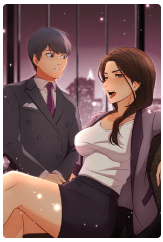
This one, for instance, called Lady Long Legs, is about a man who pays a debt owed to a businesswoman by becoming her man-servant. There is porn in this one, but slight spoilers, it comes later than you’d think.

Circling back to my post on manhwa, the topic of this post is about a manhwa adaptation I watched in Spring of 2021, a few months out from my first excursion in the Army.
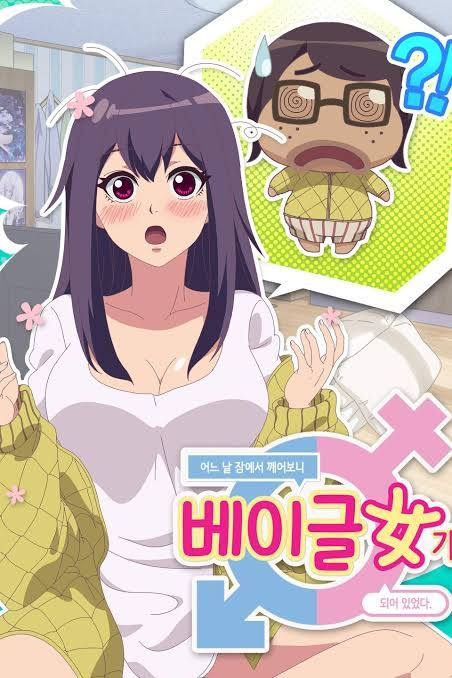
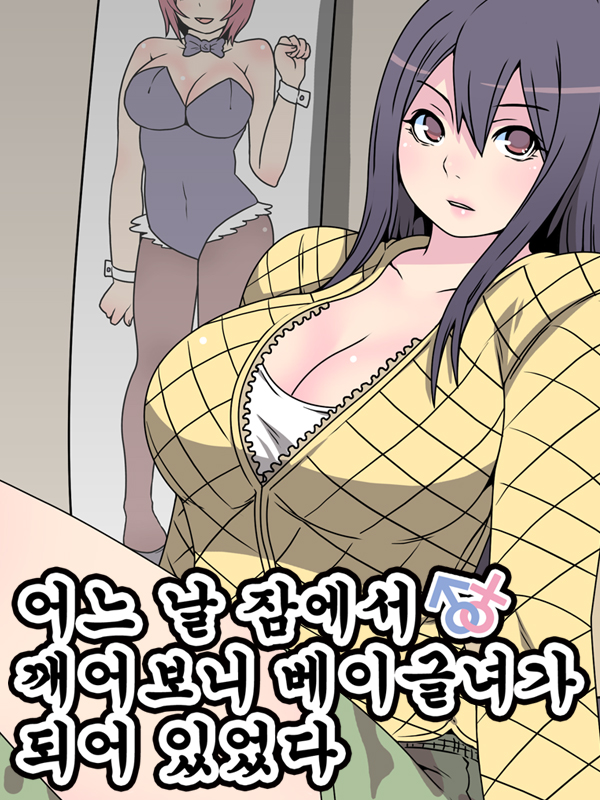
The series is called When I Woke Up, I Became a Bagel Girl and with a title like that, we already have to do a little bit of homework on Korean culture. The term “bagel girl” has nothing to do with bagels, so those of you who were looking out for that, I’m sorry. The best I can do is direct you to the closest bakery or Wawa if you live near one. The term is a play on words of sorts, where bagel girl is a Korean portmanteau of “baby face, glamorous body;” think of it like old cartoons where a smokin’ hot babe is referred to as “babe” or just “dollface.”

The protagonist is a 26-year-old virgin otaku named Bong-gi. No ladies that aren’t plastic or standing in dynamic poses on his shelf, no looks aside from those that cause onions to cry, no hope for the future seeing as he’s in a dead end job, and no confidence unless it’s on a screen in the dead of night. Alright, enough about myself, let’s talk about Bong-gi. Well, a lot of that is true of Bong-gi, so I’m definitely not one to judge. After a s[PS2 bootup]ty day at work, Bong-gi makes a beeline for his PC and games all night, snacking in the process. I mean no hyperbole when I say that’s extremely relatable, at least for me recently.

The next morning, he awakens in his waifu-splashed one-bedroom apartment, clutching his body pillow to answer the door only to discover that there are two large protrusions coming from his chest. He swears on best girl Hestia that he was a man the day before. What happened? Thankfully, he’s also curious or there wouldn’t be a series. An immediate comparison to make for “guy becomes girl” is either Gonna Be the Twintail or Ranma 1/2, but unlike those two series, Bong-gi can’t change gender at will, nor does he have any memory of it happening seeing as it happened in the dead of night while he was fast asleep. It’s also not an action series, but it’s not a pornhwa either, though it does have fun with the genderbend concept.
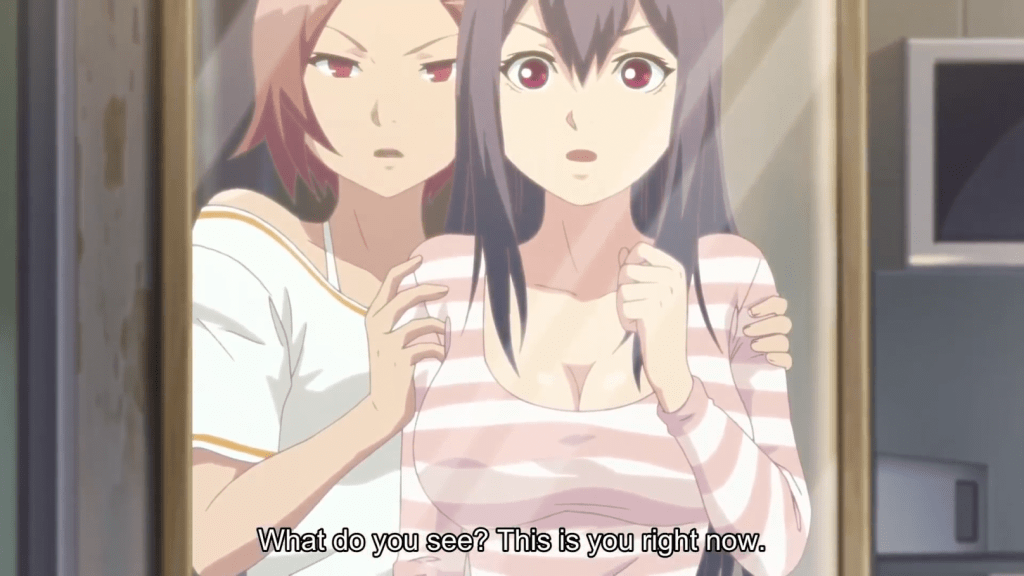
Just like its concept, the central plot of the series can be considered a bait and switch of sorts. If you went in thinking it was going to be a slice of life, think again. It’s more of a detective series with more beneath the surface than meets the eye. Without spoiling too much of the plot, the entirety of the series is based on this mystery plot with different twists and turns that give it a distinct thriller feel. I’m compelled to compare it to a telenovela or a soap opera.

Now to judge it on non-spoiler-y elements. I read many manga series and watch many anime series, as evidenced by this very blog. Manhwa is still a bit of a blind spot of sorts. As I mentioned above, I had a whole arc dedicated to this medium all through community college, however, but with the animanga scene exploding on its own home turf and abroad, whatever I wanted to watch or read from the Korean side of things has been a struggle. Either there’s not enough of it or it gets buried under a wave of other series from Japan. Tying back to my post on the history of manhwa, local Korean politics may or may not be responsible for this.

The youngest Koreans born under Japanese rule may at best be in their mid-to-late 80s, but the generations following still grew up under a military dictatorship hellbent on warning its citizens of what would happen if they bent the knee to the North in particular and the communists on the whole. As a result, in Korea (and by extension Taiwan), creative minds in both countries have been apprehensive about including anything remotely satirical. Some of the manhwa I’ve read (to include Lady Long Legs) have some reference to a real life Korean concept or even law. I’m a bit ashamed to admit that this was how I learned that the country still has conscription; just goes to show that the true opposite of love isn’t hate, but indifference. There wouldn’t be conscription there if they didn’t care about their wacky neighbor (but to be fair, neighboring the hermit kingdom isn’t easy).
I bring that up once again to highlight why manhwa seems to be getting the spotlight only recently. It could simply be Korean politics overpolicing media as a consequence of Cold War politicking; it could be viewers running out of material during the pandemic and reading whatever’s available; it could be a more subtle form of Korean pop culture spreading, sitting side-by-side with K-dramas, movies, and music; it might be all of these or none of these.

For me, it’s along the lines of adding to my fortress of consumable content. I have so many shows and movies in my watchlist that I barely get through all of them. I can watch a few episodes no problem, but I’m not 19 and my days of watching content ’til 2:30 AM are long behind me. Even if I didn’t have the responsibilities demanded of me by the military, I wouldn’t be able to sit there and browse anime to watch anymore. I’ve done it before, and while I haven’t exactly seen it all, the 24-hour binge is far from ideal or even recommended. I don’t even like 24-hour news cycles; you think I wanna watch the same specific series uninterrupted? For this reason, I adopted a method employed by Adult Swim ten years ago: the Double Shot method. It’s a reference to an old Adult Swim promo from the time.

I can’t find any evidence of it online, but as I recall, the programming block aired two consecutive episodes of a certain show for the hour and continue to the next show in it’s line up. For example, King of the Hill would air Episode 15 at 9 and then Episode 16 later at 9:30. The same for American Dad at 10 and 10:30, then Family Guy or Rick and Morty or China, IL at 11 and 11:30, and so on. So far, it’s a sound method that only fails when I feel lazy. Otherwise, it works. This being the second time, I’ve mentioned manhwa, my crystal ball doesn’t say with certainty whether it’ll come up again this year — I only have the first half of this year filled with blog topics — but it does highly recommend the series. As of writing, it’s available for free on Tubi and there’s generally no pressure to sign up if you haven’t already. As for the manhwa, most manhwa hosting sites are gonna be flooded with pop-up ads on the side for a crappy mobile game or porn site, even if you’re not reading a pornhwa. There’s no shortage of them, but I highly advise you be careful where you choose to read this if that’s more your angle.

Also, this series clues you in to how strict Korean beauty standards can be. Most places tend to be like this, but the cultural shock will give you a headache.

Genshiken: A Full Review*

Well, more episodes to cover at least

Gonna have to be entirely honest here, the timeline I gave myself to fully watch Genshiken couldn’t be adhered to. Life got in the way. C’est la vie. But now that I think about it, having covered series before only partly, halfway, or most of the way through, it got me thinking that I don’t necessarily have to complete a series to review it. I think I get more mileage if I watch enough to understand without necessarily having to complete the series. Completion does help, but to quote Jack Torrance, “All work and no play makes [Tiberius] a dull boy.” Now to the review.

It wasn’t long ago that I caught this anime by way of one of the anime subreddits and in that clip, four otaku speak wildly to a normie about the beauties of a niche Japanese rape game.

Not necessarily a turn off for weebs, if the Redo of Healer’s overwhelmingly female fanbase is any indicator and certainly not one for me as I ventured into this anime expecting more off-the-cuff conversations and it’s a lot more mellow than that clip would lead anyone to believe. As I’ve said before, it’s an anime about a quartet of otaku, sometimes joined by the sometimes Y otaku who has himself a girlfriend hellbent on shaming them into being normal. As a weeb, I take offense, but knowing what I know about the internet when this anime was on air in 2004, she wasn’t the only one yelling this from the heavens.

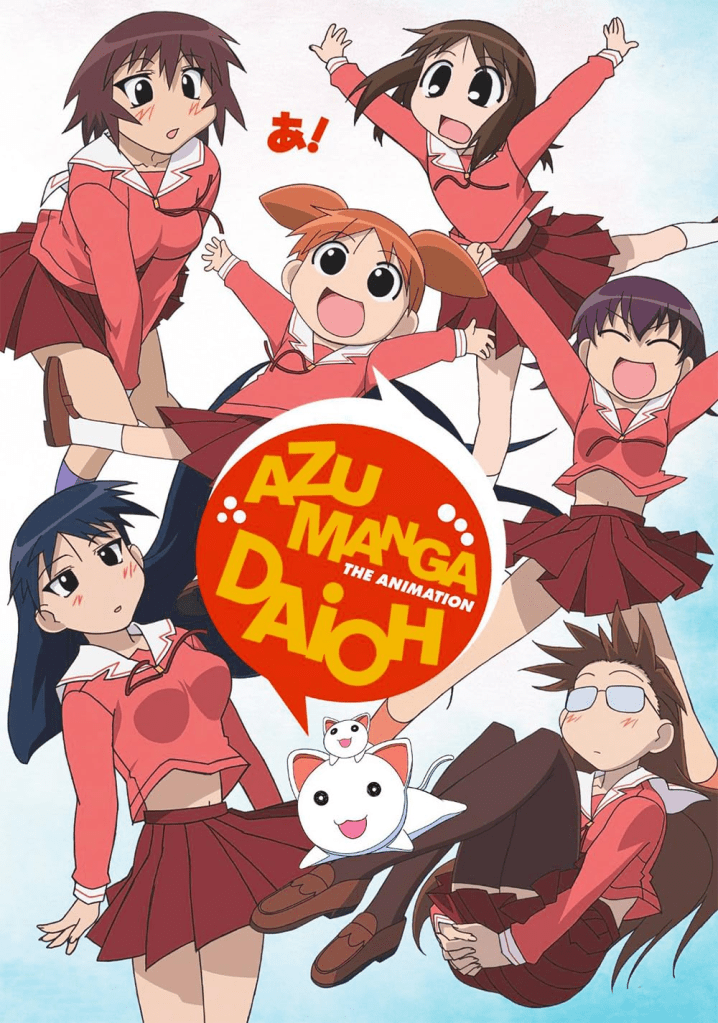
Further, even I have my limits on my own hobbies, though limit doesn’t necessarily mean quit. Moderation is the key. So as I watched more of Genshiken, the more I saw of the slice of life aspects, similar to shows like Azumanga Daioh, Lucky Star, and K-On!, but instead of a multitude of cute girls doing cute things cutely, it’s a bunch of college dudes taking half the share of the oppression shared by gamers because they were brave enough to say no to the rat race by engaging in their hobbies. But it does share a similarity with the aforementioned series, namely progression. Azumanga follows the girls throughout high school; Lucky Star does the same even if it’s famous for talking about nothing, and K-On! adds to the roster in the form of Azunyan, weak to the power of the headpat.

Credit: r/HeadPats, u/BTN099

The slice of life genre has its detractors who balk at the idea of a show about f[pages flipping]k and all, but as someone who enjoys many genres SoL being one of them, it’s a nice break from all the methamphetamine fueled action found in Shonen or the isekai singularity. I like beating up ghosts or searching for the One Piece or defeating space Hitler as much as the next guy, but I don’t always want to see that. Something something variety, something something slice of life.

Besides, Genshiken is a series that speaks to weebs because it’s about weebs. You definitely have nerd friends and may yourself be a nerd in some aspect, especially if you’re subscribed to this blog or check in every week. We all have that circle of friends who geeks out over the same things. I had mine in middle and high school and I met mine both times I was in basic training and when I was in AIT, and that passion turned from video games to anime (but of course, games are still a major part of my life; I’m currently building a gaming PC).

Credit: Naumovski

The passion is what speaks to me, this collection of nerds coming together to discuss the important things in life, such as Oppai, Medium or Flat — which is a trick debate because all size makes the wood rise, especially when paired with thicc thighs that save lives. I do recall that rant on the character of Saki Kasukabe and her intense criticism of the medium of animanga as a whole. Watching further was the right choice and I do recommend continuing the series in whichever form you find best as further episodes see her eating her own words every time she gets humbled.

No one can be this dedicated to animanga, you say? Well, conventions beg to differ. Childish, you say? Well, yesterday’s weebs are parents now — see Latin America’s love of Dragon Ball for more details. Women are definitely not interested, you say? Well, not only does my comment about Redo of Healer having a massive female fanbase stand tall, but so does a new character introduced in Season 1: Kanako Ono:

Makes me think of Tomoko Kuroki from WataMote.

Beyond that, Genshiken is a chronicle of passionate animanga geeks whose love of the medium is not tempered by naysayers and is surprisingly large to newcomers and tourists. Once again, for those who wish to view the series, I implore you to find whatever piracy site works best for you. Most anime streaming sites (read: Crunchyroll) aren’t guaranteed to have the full series.

Genshiken: First Impressions of the Otaku Anime

Before…

I’m still hard at work at doing the research necessary before I fully write about Genshiken as I’ve only watched two episodes so far. By the time I’m done (ballpark estimate: mid-October at the very least, god willing), I hope to have completed most of the first season. For now, allow me to supplement you with a general impression based on the first two episodes.

The manga started publication in Monthly Afternoon magazine in 2002 in Japan before getting licensed by the Kodansha library for release in English. In online discussion, otaku has fallen out of favor in recent years mostly supplanted by the word weeb but for the time frame we’re observing, otaku would make sense for the series as anime was breaking ground in the U.S. and U.K., but not nearly enough to get the worldwide traction it has right now. It was an underground niche back then; otaku (country of origin notwithstanding) were to the general populace what JoJo’s Bizarre Adventure were to otaku.

Genshiken gives a somewhat appropriate insight into this by way of multiple perspectives: the hardcore otaku who can boast to have the original Astro-Boy manga and the outsiders who believe everyone grows out of their hobbies eventually. Side note: if that were true, then we wouldn’t know people who’re still reading Harry Potter or watching Star Wars. Source: me, emulating the older Mortal Kombat, God of War, and Naruto games.

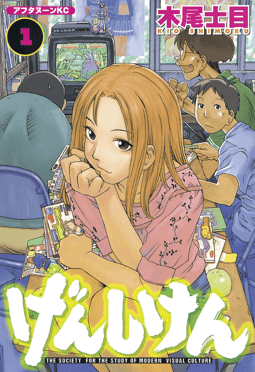
The name in Japanese is a shortening of the full title: Gendai Shikaku Bunka Kenkyukai or “The Society for the Study of Modern Visual Culture.” If reddit was around when the manga debuted, these guys would be gods on the anime subreddits. Speaking of which, a clip of the second episode was how I found the series. Going over the English translation of the name, you get the impression almost that the runners of this animanga club think themselves high and mighty when they’re just another flavor of nerd. And as a nerd, they kinda stopped being special around the early-to-mid 2010s.

It’s easy to say that now since anime has gotten pitifully easy to access, but going back to the late 1990s and early 2000s, your best bet was the VCR or somehow knowing the guy who makes regular excursions to Shinjuku’s and Akihabara’s electronics zone. So I can excuse the elitism in that regard. The central characters in this club mostly fit common stereotype of the era: Harunobu Madarame, the eccentric leader who will defend his tastes to the ends of the earth no matter what; Soichiro Tanaka, the less eccentric, but still enthusiastic one; Mitsunori Kugayama, the gentle giant who speaks with a stutter; joined by newcomers to the club, Kanji Sasahara, Makoto Kosaka, and begrudgingly Saki Kasukabe.

You know, it’s a 2000s anime if a girl is on the cover, even if thematically she’s an improper fit, which was why I claimed that Saki reluctantly joined Genshiken. Slight spoiler: the first episode shows her having a smoke in a train station (something I believe Japan illegalized over time) and telling some dude to get bent before getting all giddy after seeing her childhood friend, now love interest Kosaka. Where things diverge is when Kosaka reveals that he has since become a weeb and encourages Saki to accompany him to the Genshiken club, learning about anime in general and some of Madarame’s tastes as a whole.

Madarame is who I best describe as anime Twitter’s unacknowledged/ignored id. Western anime Twitter has a giant beef to roast about fanservice in anime, but to hear it straight from the horse’s mouth, there is nothing better than fanservice.

Yes, I know the context behind both of these characters. This isn’t a criticism or anything, I just thought it was funny.

It does illustrate what Saki takes issue with the most in the anime community, and it’s a bit of zombie problem that from the outside looking in you’d think had largely disappeared in the online discourse, but has been eternally mummified and immortalized in several online spaces. Fanservice around women also gets a bad rap because of this.

So at the outset you know that Saki is not the target demographic for what these guys like but puts up with it because her love interest is heavily into it. Not to the extent that Madarame is, but he doesn’t feel out of place in Akihabara or the other popular anime hangout spots. With discourse surrounding the series itself being light (at least in the west, Japanese social media might give me more insight if the weblinks still work), the most I have to go on are the anime itself, its manga, and the accompanying Wikipedia page. It’s described as a Seinen series, which makes a lot of sense as none of what the characters like would be suited for a Shonen demographic.

From what I can gather, 21 volumes released between 2002 and 2016, at least three seasons, a spinoff and an OVA all tell me that it was popular enough for all of that as well as foreign dubbing and licensing by Kodansha themselves even though it has a lot of the hallmarks present in something like Azumanga Daioh.

A slice of life series about a group of friends and they’re daily lives in a school setting, it’s original Japanese name largely untranslated or unaltered, but what splits the two series apart is that as a slice of life series, Azudaioh is very easy to take out of context and make the most baked memes and jokes about as any YouTube compilation shows evidence of, whereas Genshiken takes itself more seriously. Far from the “cute girls doing cute things cutely” subgenre of slice of life, Genshiken is more about the subject of… itself if you think about it. You or someone you know belongs to a group of weebs who talk about this regularly–why not have a series that’s a mirror of your hobbies?

As it stands, I don’t know enough yet to speak definitively on the design philosophy of the show, but the Wikipedia article explains that it’s about the characters moreso than what they do. An assertion I’ll hold it to once I’m done with the first season. For now, short of tracking down the physical media and the means to play it, 9animetv.to and Hianime are my new methods of watching the series and you’d be a fool to not use these reliable resources.

My Favorite Podcasts

How I found my favorite series to listen to

Before I start off proper, I want to say that I had a draft lined up for a hypothetical compare and contrast post between God of War’s Kratos and Grand Theft Auto V’s Michael DeSanta/Townley, based on some throwaway lines that I looked too into, specifically Thor lamenting that Kratos wasn’t the same as the Ghost of Sparta that physically deconstructed Mt. Olympus the hard way; and Trevor refusing to let Michael forget that he was a bank robber, a thief, a career criminal like he is and trying tooth and nail to bring him back into the fold. As you would expect, the comparison was very apples to oranges. RockStar doesn’t hang onto most of their cast from previous games. There’s a balance there between old nostalgia and new characters, and RockStar has a rotating body of protagonists compared to SCE Santa Monica. As a result, most RockStar characters have self-contained arcs while Kratos spent the better part of about nine games growing from pride to mournful to determined to vengeful in a manner of writing that whether by accident or on purpose mirrors the story structure of ancient Greek epics and recently Norse epics. One is a parody of American pop culture and the other is loosely inspired by Greco-Roman tales of adventure. If there’s a grain of truth to something like infinite monkey theorem, then I could probably produce a Shakespearean comparison between these convincingly, but until then I’ll keep it on the backburner.

So let’s get to the topic of podcasts.

I’m writing this from the perspective of a listener, not a seasoned podcaster. But I’ve spent a pretty long time listening to several so I figured I’d throw some pennies into that fountain. How I started was with Rooster Teeth Productions’ namesake podcast. It began around 2009 as the Drunk Tank, but at the time needed to switch names at a later date if it hoped to attract sponsors. I think, after a few years, Drunk Tank as a name would’ve been great for a podcast.

I found this out a few years ago on YouTube thumbing through the old videos because I wanted to see how much they’ve grown over the years. The first episode of the Rooster Teeth Podcast/Drunk Tank was much, much shorter than anything that had been produced after nearly a decade as an active podcast. An hour and ten minutes in 2009 compared to about three hours or more after 2014. Incidentally, the podcast wasn’t what made me an active subscriber of Rooster Teeth’s website or their YT channel. There were honestly different opportunities for me to become a subscriber early on that were brushed off. The first time was in 2013 around the Halloween season when I was 20 videos deep into a Dead Space 3 Let’s Play video, and RT’s gaming division, Achievement Hunter, bought ad space for an admittedly creative Halloween costume to show off. Almost fifteen-year-old me wanted to get back to the sci-fi action horror. I subbed to RT in 2018 after catching clips of their anime-style show RWBY in a WatchMojo.com video, and have since discovered their network of content in the Rooster Teeth podcast and Achievement Hunter’s Off Topic podcast, both of which I listened to while in college and during the pandemic.

As of writing this, they have several more podcasts that they produce, including Red Web, Black Box Down, F**kface (yes, really), and a few others, some of which I’ve listened to or are still listening to to this day. Halfway through the pandemic and in the leadup to my enlistment in the Army, I was somewhat spoiled for choice and bounced around podcasts like I bounce around YouTube channels.

A podcast I was tuned into briefly was the Joe Rogan Experience podcast. Weird story for that one, select media outlets had mentioned Joe Rogan’s name before but in a negative light. Naturally, I took to listening to some episodes myself and the context of the conversation about Rogan was out of a concern that he’d been inadvertently promoting then-unproven COVID-19 precautions as cure-alls by allowing controversial practitioners to speak on his show. When I thumbed through his episodes, I found that as an entertainer and commentator by trade, there’s no shortage of eccentric people. Rogan knows this and going back to WatchMojo.com, they have different videos detailing Rogan’s many different guests, some of which have gotten “interesting.” Here’s one video:

The sensationalism seen in modern media tends to lift firebrand personalities and ideologues to a point where a full story isn’t guaranteed. Personally, I put the blame on sensationalism around horror stories and reports, but an unintended benefit of that is wherever I see this type of outrage media, I’m at least patient enough to keep an ear to the ground and wait for every detail to be discovered before I pass judgment.

For the JRE itself, I like to think of it as a catch-all type of podcast. There’s no single point of focus; every guest is unique and brings many individual takes and opinions with them. This rotating body of personalities makes for a unique experience for each episode. Political outlets would make me believe that he’s made his platform a home for fringe ideals and beliefs, but that’s not what I found. Individuals of this stride do come on the JRE but so do many others. All in all, my conclusion is that outrage bait in modern media is very ineffective as expressed in this video:

For Joe Rogan, it’s also very misleading. Talking heads in American media can make you believe the wrong thing about a person, but then you see more of what they have to show for themselves and in my experience I’ve shaken my fists at demagogic rhetoric for lying to me and I’ll continue to do so. For more obviously political podcasts, Tim Pool is more consistent in that field, among others who were also guests on the JRE. I also think he was dealt a bad hand, especially during the height of the pandemic. All things considered, the U.S. at the time had a frustrating response to the pandemic, and I think some journalists really wanted to vent at the time. I’ve no horse in that race, so I won’t comment further on that.

As for the rest of the podcasts I’ve listened to or subscribe to regularly, the ones under the RT umbrella do have a singular focus most of the time. Red Web is hosted by Achievement Hunter personalities Trevor Collins and Alfredo Diaz and delves into unsolved mysteries, some of which have a criminal element, others tend to be centered around modern phenomena like cryptocurrency or strangely placed architecture or local abnormalities and cryptids. I emailed them once in 2021 to see if they had plans on doing an episode about the Toynbee tiles which I have seen in Lower Manhattan when I was in college.

They do have an episode on these mysterious tiles, though I can’t claim to have been the inspiration for that episode. Black Box Down is all about aviation incidents throughout history. From the early days of Wilbur and Orville Wright to modern airline industries and carriers, there’s always a story surrounding an aviation mishap of some sort. One thing I’ve noticed during a filler episode (don’t remember which one) was that most of the audience had either never flown, rarely flown, or held some irrational fear of flying in some capacity. But when they learn more about aviation and planes, the fears are alleviated somewhat.

Personally, we never made enough to fly continuously growing up. Other family members have taken me flying twice to Miami and Orlando for Disney World and Universal Studios theme park respectively, so I never had a fear of flying or aviation. Nor have I really had as much of an interest in flying. So what’s the draw for me? Well, I also wanted to know the secrets behind why planes fall out of the sky and whatever you think that may be, a lot of times it comes down to luck. It may have something to do with terrorism in a post-9/11 world, but flashy articles about aviation are likely to be older than that. You’d be shocked to learn that air hijackings were common during the Cold War era and most of the time the planes landed safely.

BBD’s hosts are also Rooster Teeth personalities, Gus Sorola and Chris Demarais. To my knowledge, this podcast is going to cease production soon as one of the hosts, Gus, has plans elsewhere, but if you want to catch up, the Rooster Teeth website and podcast apps have all the episodes.

F**kface is hosted by three more RT personalities, Geoff Ramsey, Gavin Free and Andrew Panton. The premise behind this podcast is a series of personal stories of the three guys being idiots. Funny and embarrassing stories from childhood, school, work, etc. It’s the podcast equivalent of “if you ever feel like an idiot, remember [insert overlooked example of stupidity here].” F**kface is one of my favorite podcasts, partly because its relatable and also because I’m not always in a learning mood like with Red Web and BBD. Sometimes I wanna turn my brain off.

Speaking of which:

Trash Taste Podcast is the crown jewel podcast that I subscribed to back in 2020 during the pandemic and haven’t looked back ever since. Of all the podcasts I’ve looked at (and they aren’t that numerous honestly), TT is the one that I could forget about for a while and come back to, which was what happened after I was medically separated from the Army.

Trash Taste started off with the goal of being the prime anime podcast and has gradually morphed into a slice of life experience about living in Japan, specifically the Tokyo Metro area which might itself be a city-state like Singapore. Just sayin’, I’d love a manga series at least that took place in Matsuyama or Fukuoka or something. I won’t stop ’til I find that series.

If the name is familiar to readers, then you may recall that I recommended Trash Taste and the three hosts’ YouTube channels all the way back in February of this year. The three hosts are the anime YouTubers, British-based Connor Colquhoun or CDawgVA and Garnt Maneetapho or Gigguk, and Australian-based Joey Bizinger or The Anime Man. All three of them began their journeys on YouTube mostly independent of each other, but with a soft spot for anime.

Garnt’s first videos were reuploads from 2007 reviews he did of series like Bleach, FLCL, Lucky Star, and K-On! as examples. Early on, the inspiration of Zero Punctuation was strong, but similar to what befalls many creators, Garnt eventually found his footing and got to reviewing anime his way. So if the first video is titled “Bleach Review,” a review of Chainsaw Man or Call of the Night would be something along the lines of “Manga’s Newest Best Boy,” with Pochita in the thumbnail somewhere. Additionally, with many anime getting slated for adaptations in a year, a smart move on Gigguk’s part was to quickly summarize the anime of the season.

Connor’s early videos were made up of prank calls while impersonating the star character of the Black Butler anime. He also briefly hosted a podcast based around voice acting, which is what the VA in his online handle stands for. Connor’s content doesn’t really separate himself from his hobbies; he makes himself quite clear that he’s a gamer, a JoJo fan, a Hunter x Hunter fan, a Black Butler enjoyer, and a voice actor. As an added bonus, he mentioned a few times on his channel, in collabs and on the podcast itself that initially, his audience was 93% female, hence the moniker on the associated subreddit “The 93%.”

Finally, Joey. Unlike the other two, Joey the Anime Man has a closer connection to Japanese pop culture being half-white, half-Japanese, or in Japanese law, a hafu. He’s very in tune with his Japanese side to the point where his articulation is better than most Japanese people in Japan. Much of his older content, from my point of view, was rather short form. He started off with anime-centered content (read: hot takes), but was also doing a bunch of other stuff as well. Anime news, manga recommendations, and also gameplay videos, which he has long since moved away from.

All three do still make content on their individual channels, stream on Twitch and upload the VODs for those who are unable to tune in on Twitch live. All of these are recommendations all their own if you’re capable of supporting their content.

The reasons for choice in podcasts are all complex and varied, but I remember listening more closely to the Rooster Teeth and Off Topic podcasts so that I could have non-distracting background noise for homework assignments. I had the radio in the background tuned to my city’s classic rock radio station perpetually since around middle school. It relaxes me. But around the time I was in college, I wanted more. So I turned to podcasts, which admittedly was rough around the edges in the beginning. Only now have I realized after trial and error that you don’t exactly need to put all of your undivided attention into a podcast episode 100% of the time. You can, but all in all, I like to think most podcasters expect a healthy mix of active and passive listeners.

I should also mention that years before Trash Taste debuted in 2020, Gigguk had an anime podcast on his own channel known as Podtaku, a portmanteau of Podcast and Otaku, but as explained in this video, that podcast ran into a whole host of problems surrounding direction and timing:

I’m certain there are OGs who remember these days, and thanks to these experiences, the anime community arguably has one of the best podcasts to date, even if it’s more about living in Japan then just anime alone. And I think that’s for the best — Podtaku practically walked so Trash Taste could run.