Anime I’ve Watched

Equally a lot and not enough

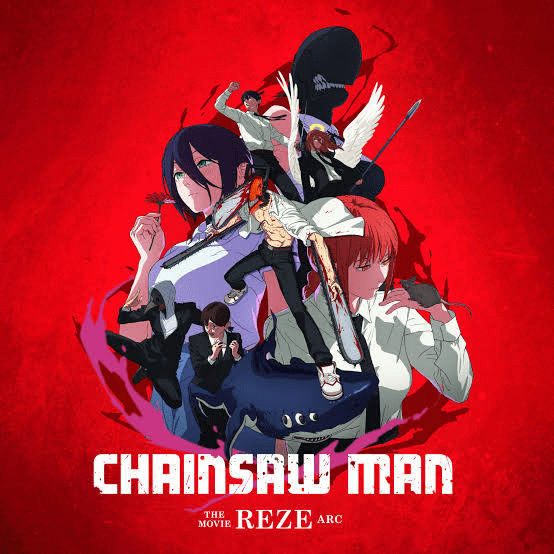
Getting back to the end of year wrap up of content, I’ve definitely watched more anime this year in between my regular duties in the Army. A lot of what I’ve been watching this year has been stuff I’ve written about on this blog yonks ago, but also some new stuff that can (and probably should get) their own posts, but this being a speedrun like before I shipped out to Fort Lost in the Woods for training is gonna be a brief overview of some stuff I got a look at this year, but didn’t necessarily finish. I may add more to the watch times of these respectively and give them the reviews that they deserve, but I’m probably gonna do what I normally do and play it by ear. Here’s the anime lineup:

  1. Texhnolyze
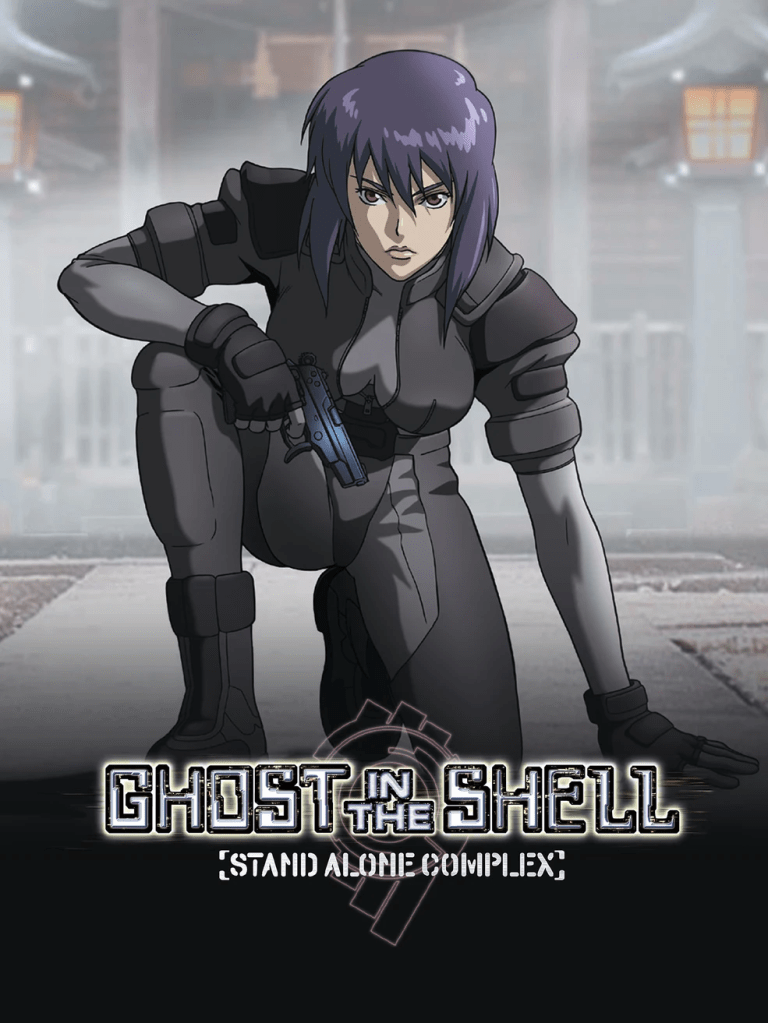
  2. Ghost in the Shell: Stand Alone Complex
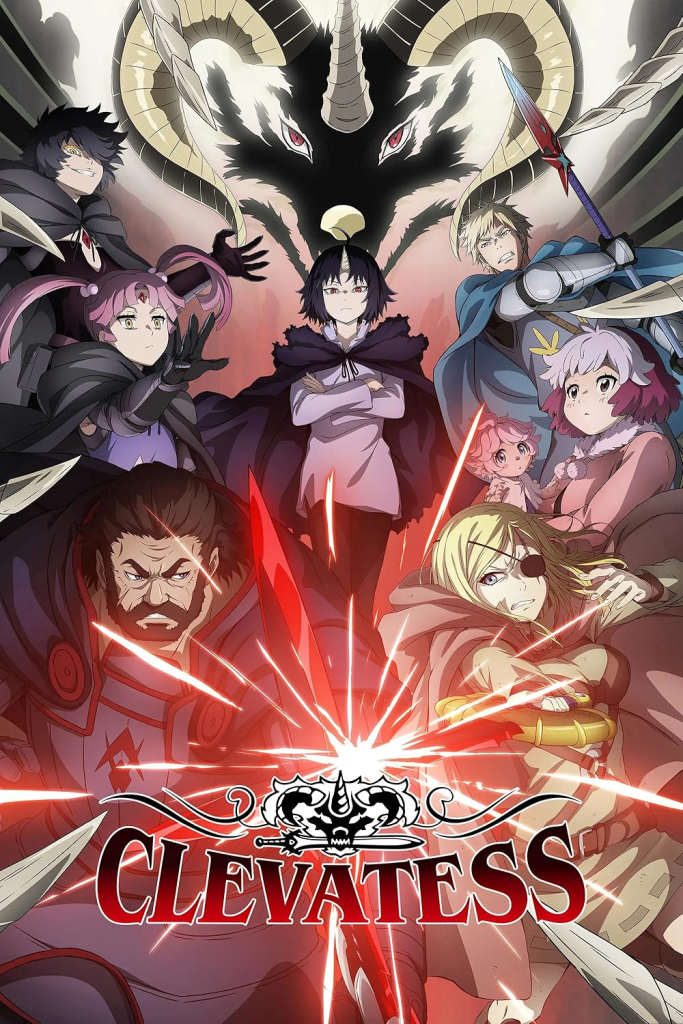
  3. Clevatess
  4. Frieren
  5. Neon Genesis Evangelion

With a bonus. If you were to ask me if it was anime, it falls under “Yesn’t.” It’s based off a manga and has an anime adaptation that is currently four seasons in, but it’s doing something different.

Normally, this doesn’t always work even with a Japanese cast, but the short version of my upcoming opinion is, “Yes, please.”

Now to the list, starting off with:

Story time: in the first half of advanced individual training to be a 25H commo troop, we had a student leadership, selected by the drill sergeants based on the presentation that the trainees gave during a Soldier of the Month board. For those who don’t know, these boards are a series of questions given to the soldier (or servicemember since every branch does this) to test their knowledge and proficiency on a given subject. They mainly boil down to memorization. The student leads we had at the time seem to have convinced the cadre to use Discord of all platforms to mass communicate important information. But the logic behind it is solid. Wish I were a fly on the wall to see how it unfolded.

I’ve long since left the Discord server, but I recall one of the chats had an anime recommendation chat and one of them had a link to a series called Texhnolyze. I saved it thinking I would get to it immediately and only recently did I start watching it. With a name like that (certainly a tough one to pronounce out loud since X and H don’t normally meet in English), coupled wit the fact that the YouTube channel associated with it is still up, it belongs to the shortlist of things I can search up and still find on YT intact, but with some series falling victim to this Death Note of a blog when I bring them up, sometimes it’s a matter of time or whether bad luck notifies the YT copyright system and takes it down. Thankfully, Taiho Shichauzo is still up, so I still have access to my buddy cop fun times.

Calling Texhnolyze unique is only gently rubbing the surface, never mind a scratch. The description Google gives me reminds me of the Blade Runner: Black Lotus anime produced by Crunchyroll and distributed for weekly airing on Toonami in late 2021.

And now that I think about it, it makes me think of a bunch of other sci-fi, cyberpunk anime we’ve been getting over the years

There isn’t much to glean from just the first two episodes, but from what I recall, the society within features the protagonist, Ichise, a downtrodden prize fighter past his prime, losing his limbs and getting rebuilt $60 million man style. The setting is an underground city known as Lux, a crumbling city-state under which three main factions vie for power over what remains. Something, something, undesirable soldiers fighting for least desirable piece of real estate, only it’s not a base in the middle of a box canyon no one cares about.

I promise I’m not trying to be harsh here

Running from April 17 to September 25, 2003 for 22 episodes, I don’t wanna critique it based on originality considering a lot of my favorite things aren’t the most original or necessarily universally loved things in the world, but more with what came before, concurrently and after. Ghost in the Shell for instance debuted its manga in 1989 and has become a franchise ever since, with a 1995 movie (and 2008 redo with touchups); Neon Genesis Evangelion debuted in 1994 and has also spawned a franchise, spearheaded by Hideaki Anno who still leads the project to this day; and I had already mentioned Cyberpunk in this blog, so I’ll beat that horse when I have more to say.

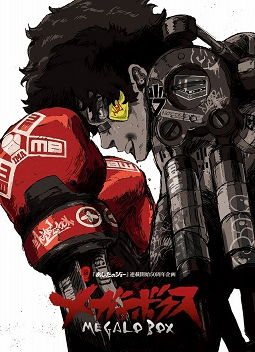
On its own merits, Texhnolyze seems to have a few things going for it, but merely falling into obscure reference, cult classic status. As a result, it’s up my alley. Let’s describe it a little: a future dystopia where humans have cybernetic enhancements to answer for physical shortfalls, battling between wide corruption and complicated power struggles. That’s vague enough to describe Texhnolyze and 2018’s Megalo Box, which interestingly looks like it was animated in 1997 and due to a bevy of legal hoops and hurdles wasn’t able to air until over 20 years later.

This series is said to pay homage to Ashita no Joe and Hajime no Ippo, but I suspect the animation team had at least one Texhnolyze fan onboard

The 22 episodes are still up for viewing as of this writing and I had saved the playlist in 2024 so I know where to go without having to close a pop-up ad every three seconds and so do you.

Channel: Parham

If the channel disappears, you know what I’m gonna say. And since I mentioned Ghost in the Shell earlier:

  • Major Kusanagi looks different from the 1995 movie here

This might be a bit harsher than I intend it to, given I’ve seen the movie at least three times and have had to retreat to Google-sama to get an understanding of what the hell it’s about. But in general, a cybernetic officer in a futuristic Tokyo is tasked with apprehending an entity who goes by the name of the Puppet Master, an advanced AI with the power to Worm and Trojan Horse itself into nearly any vulnerable computerized device to include humans with mechanical enhancements and this description alone may not do it justice.

The manga debuted in 1989, the movie in ’95, and Stand Alone Complex in 2002. It does raise a lot of biting, complicated questions over AI and technology’s advancement over time, though with my limited viewing of the series (four episodes on Tubi before Toonami snatched it back up after many years pimping it out to streaming services), while it scratches the itch I didn’t know I needed scratched, like Texhnolyze before it I’m only just getting started, but unlike Texhnolyze, it’s had decades to cook and it isn’t as straightforward as most other series of its caliber. The mangaka Masamune Shirow may not have realized what he’d unleash when he first put pen to manga panel, but with what it’s become ever since the movie, anyone getting into the franchise has a hell of a lot homework to do.

I’m going to be light on spoilers as I have a more in-depth review scheduled to be drafted and published in February, so until then I have more of it to watch. Take this as a light recommendation until then. Also, the content of this series and Serial Experiments Lain may reinforce Trunks’ biases against androids.

Channel: ImmaVegeta

Better get the boy an iPhone for Christmas

  • Fantasy world but the monster and the protagonist become an impromptu family

An interesting one that Crunchyroll was promoting at the time by letting you binge it in one sitting. I loathe binge-watching and forever hold the practice over Netflix’s shoulders, but I think for 2026, I’ll have to loosen that up a little. The series starts off with the protagonist’s party setting out to destroy a beast known as Clevatess, not knowing how royally f[clashing]ked they are until they all drop dead. Clevatess, the monster happens across a baby of noble birth that belonged to a royal family under threat from a rival kingdom and adopts the baby while also reviving one of the heroes to forever live as a zombie of sorts, but using many of the same principles that affected Bucciarati in the second half of Vento Aureo, sans the slow deterioration and lack of pain receptors.

If you’re curious what would drive a bloodthirsty beast to take on the role of a step-parent to an orphaned infant, well, the situation is equally a bet from the baby’s mother, and a test of humanity. Clevatess isn’t the only beast in the world; others like him are also out and about. The zombie female MC was among a group of 13 heroes sent to dispose of Clevatess and the rest, but ultimately struggled at the first hurdle. Following their demise, Clevatess was approached by the mortally wounded mother of the royal baby who had requested he spare humanity starting with the infant. If Clevatess could successfully raise the infant then humanity would be spared, but if not, then mass extinction imminent.

Some may draw unfavorable comparisons to Overlord, and I dispute that so heavily because the comparison is false. Yes, Clevatess and Momonga/Ainz adventure and aid with strict conditions, but Ainz is basically fantasy RPG Genghis Khan. Clevatess is a dark being hellbent on destruction. Even if the source material shows Clevatess leaning Overlord-like down the line, I’m not so certain I wanna give it the copycat flag just yet. Not for nothing, it flips a few tropes on their head where the bad guy becomes the caretaker, though I wonder just how old that trope is. These days, you can find it if you search hard enough, but looking for older examples is a struggle.

The manga debuted online in Japan on the LINE platform in the summer of 2020, so the anime was the only way I ever knew about it. Having said that though, for what it has going for it, it needs more episodes because 12 isn’t enough to give it the leg room it needs.

  • Elves don’t change like humans do

It kicked off in 2023 and had been memed all over the internet even to this day. The most prominent memes being, Ubel being a morally ambiguous mage with… lickable armpits… (ಠ_ಠ), Fern and Stark f[explosion!]k so much that Frieren could leave and come back to greet a litter of their children, and Frieren herself is a god-tier racist, on par with LowTierGod.

Demons beware

Admittedly the memes are far as hell in the animanga and I’m only a couple of episodes in. Aside from these three jokes, the plot is an after story. It’s a DnD campaign that wrapped and the heroes are getting used to peace after the evil entity had been defeated once and for all. Frieren the mage, Himmel the hero, Heiter, and others among the party all go on their separate ways while remaining friends. The one thing that gets to Frieren herself is her elven lifespan compared to that of humans. 50 years pass and Himmel is a frail old man while Frieren, due to her elven species, hasn’t aged a day.

This doesn’t bear on Frieren’s shoulders until Himmel passes away from old age and the elven mage regrets not having gotten to connect with him better. Over the course of the series, the characters, even in their new chapters in their lives, remember Himmel the hero by what he did and how he lived. Each person who remembers him has a lot to say and all of them are positive and uplifting. Of course, the heroes, having known him personally, have more personally ridiculous and intimate stories with him. This goes on throughout the series and Netflix currently has it in its line up so give it a watch if you don’t feel like pirating it. I’d talk more about what I’d observe, but in this instance, I think it’s better when you watch it for yourself.

  • Don’t make me ask twice! !GET IN THE ROBOT, SHINJI!

A staple in the mecha/gundam genre, NGE very much alludes to Christian mythos with the angels harkening to their biblically accurate appearances. There’s a lot to say about Evangelion, it’s movies, and the Rebuild sequel movie series, but this is another one I have slated for a 2026 review.

The main crux of the series is not “Wow, cool robot,” like most of its contemporaries. It’s a combination of peace of mind through acceptance of oneself and clever critique of the military use of children for dangerous experiments. Also the theme of personal loss in juxtaposition with self-acceptance. Roughly every character is fundamentally broken and the fact that much of the cast consists of 14-year-old mech suit pilots, Anno is a weird guy, alright, if this is the proof in the pudding.

What has people continuously talking about it for 30 years strong is the memes, of which there are many. You can have some of your favorites (my personal ones involving Asuka in some capacity), but the one thing to note is that unlike a lot of fandoms, I think the Eva fandom I’ve seen is one of the few to actually read its source material and understand it without issue. This puts it above some of the other series to air concurrently and down the line where the bombastic, earth-position-influencing combat is the sole or central focus of a series. It technically disguises itself as an allegory for depression through Christian mythology, but Hideaki Anno won’t admit that.

Like Frieren, it’s also on Netflix and so is the movie, End of Evanglion. I so far am wrapping up the anime, but I haven’t touched the movie yet. And speaking of movies:

  • Even more Ainu cooking, but for real

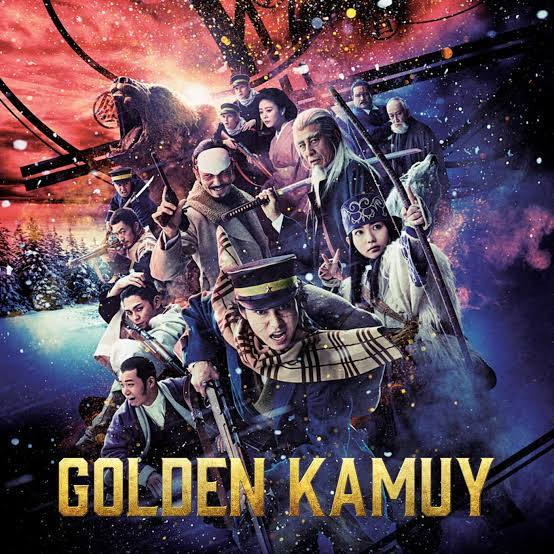
So Satoru Noda began writing the manga in 2014 and the anime adaptation followed four years later. After that came this live action movie in 2024 and a continuation in a second season … Hmmm… The live action version of Golden Kamuy does well to capture the humorous elements of the manga while staying true to the practical elements. It isn’t 1:1 for obvious reasons but this was completely unexpected. A surprise to be sure but a welcome one. I had talked about Golden Kamuy before, so a run down of the salient points are everyone knows of the legend of the Ainu gold, the map to the treasure is tattooed on a group of eccentric Abashiri prisoners, and death is the only thing stopping everyone from using the gold for their own purposes. A race to near-infinite wealth of sorts…

Yeah, I went there.

I only give it high marks because I love the series so much, so as much as I recommend the movie and live-action series, consider that this part of the blog is a bit more subjective than normal since I consider myself part of the target audience for something like this.

The Asian Cinematic Journey

About time I addressed a noticeable pattern of mine

Between Hong Kong cinematic action pieces of yesteryear and Japan’s golden age of cinema, I’ve been quite busy exploring the directors of East Asia. So far, I’ve addressed four powerful names in the cinematic world (John Woo, Akira Kurosawa, Yasujiro Ozu, Kenji Mizoguchi), but this is only the tip of the iceberg, as I’ve definitely seen more than just those for in both the live-action and animated worlds. And before I expand on that, I thought I’d address that for a few seconds:

I love this era of literal memes, it beats brainrot 100% of the time.

The archives of this very blog show that the things I write the most about animanga and almost always on the series itself as opposed to the production side of things. It’s been this way since the blog first launched in 2023 and when it comes to writing about the production side, it’s heavily skewed toward games, movies and TV series. The reasons for this have to do with what creators are willing to share to news agencies. From my experience, game devs are happy to document the process from storyboard to controller to thrown off a cliff by Margit the Fell Omen.

Animanga is a lot of the same but it highly depends on the publisher. So while the 3D Mortal Kombat games have videos where Ed Boon et al talk candidly on the creation and re-introduction of legacy MK characters, Francis Ford Coppola feels cathartic talking about the troubles facing Apocalypse Now, and Bryan Cranston and Aaron Paul would walk you through the making of Breaking Bad and Better Call Saul, only a few manga publishers I’ve found are to be this open about their processes. Individual mangaka certainly, but editors for companies like Shueisha, Kadokawa, etc. are more than a little lockjawed. Even when they do show journalists the tour or sit down to conduct an interview, the details are either light or the sources are in Japanese, which I’ve explained during my review of The Elusive Samurai anime adaptation is nowhere near at a level where I can confidently review the contents. This part is understandable when the studio is busy bringing manga to life in real time, but if nothing is currently being worked on or not set to be for another half-year or so, then there’s really nothing worth keeping secret about the general production part at least, and I say this as a guy who revels in surprises.

Sometimes information is behind a paywall or a region code and no amount of sloppy-toppy offers will get me access to that succulent content short of a VPN subscription and moving my IP address somewhere else.

Maybe this will help when it comes to viewing the BBC’s documentary on The Troubles

A not insignificant portion of my animanga reviews have my parsing what I can from what I’m able to find in English, the most notable examples on this blog being that of Nazo no Kanojo X and Haibane Renmei, where the mangaka doesn’t have easily accessible photos of themselves or evidence that they’ve done interviews in the past and the other where the eccentric writer pulled an anime adaptation off the cutting room floor of his studio. Who says Haibane Renmei was a final draft at the time?

With that said, my recent trip to the cinematic side of things in East Asia is something of a pipeline, I consider. The precise origin point isn’t so much lost as its under tough debate within myself. I would say that it began when I was in community college in 2018 and my Asian Art History professor introduced the class to Akira Kurosawa’s Ran which is a medieval Japanese interpretation Shakespeare’s King Lear.

Japanese romanticization of medieval Europe is a time-honored tradition outside of Isekai, it seems.

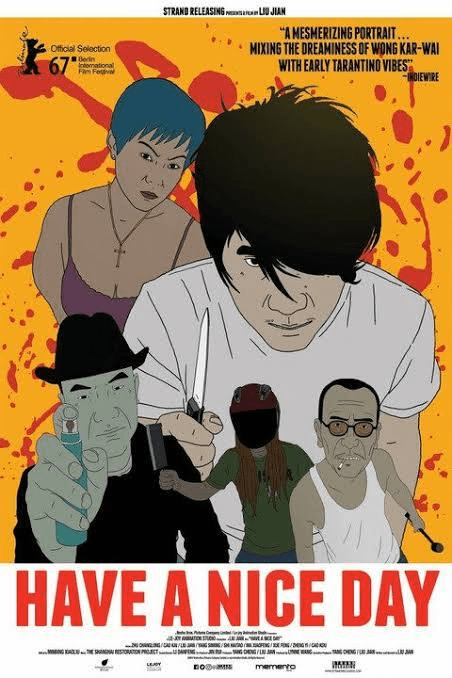
But as I recall, I was on a streaming site whose name I forget where I was made aware of a Chinese-animated and directed film by the name of Have a Nice Day.

Without spoiling too much of the plot, it’s inciting incident is when a cab driver, Xiao Zhang, takes a million yuan ($150,000 USD) at knife point. Not for completely selfish reasons; his girlfriend was the victim of a botched cosmetic surgery and he wants to use the money to get it fixed in South Korea. The rest of the film is something of a No Country For Old Men type of movie, in the sense that even more unscrupulous folks are after the cash, with each pursuer quirkier than the last. Are they dangerous? Yes and no. They are dangerous, but often to themselves than anyone else. And Zhang is still in some kind of danger as some of these types gun for him too, but have to fight the rest of the mob off as they chase him down. One prize, clashing goals, and a story made up of losers and those who lost less. Make of that what you will. It’s currently free to watch on Tubi as of this writing, so I might as well remind myself what I liked about it.

At the time, I was simply looking for movies and content to watch in the dark of night on my ancient Samsung touchscreen laptop. I was 18 turning 19 at the time and the 2AM binge was a fierce mentality. After a few years of that, binging doesn’t do it for me anymore, as I’ve explained in the past. I was scrounging for films I’d heard of but haven’t seen, and without a specific order in mind. Just wait for the lightbulb to flash on, scour the web for a pirate site that’ll allow to me watch or torrent without issue, and I’m on my way. In some cases, I took these with me to the movies during the holidays and because the copyright expired on some of these, I was able to watch them all in the Almighty Internet Archive.

To keep track of all of these, I had a Wordpad document organizing the movies listed by decade, starting with the 1930s black and white films where just about every production member is long dead, the production studio defunct or eaten by another one over the years, and no one left alive to make a fuss over it. Pirating movies is my time-honored tradition, Jake.

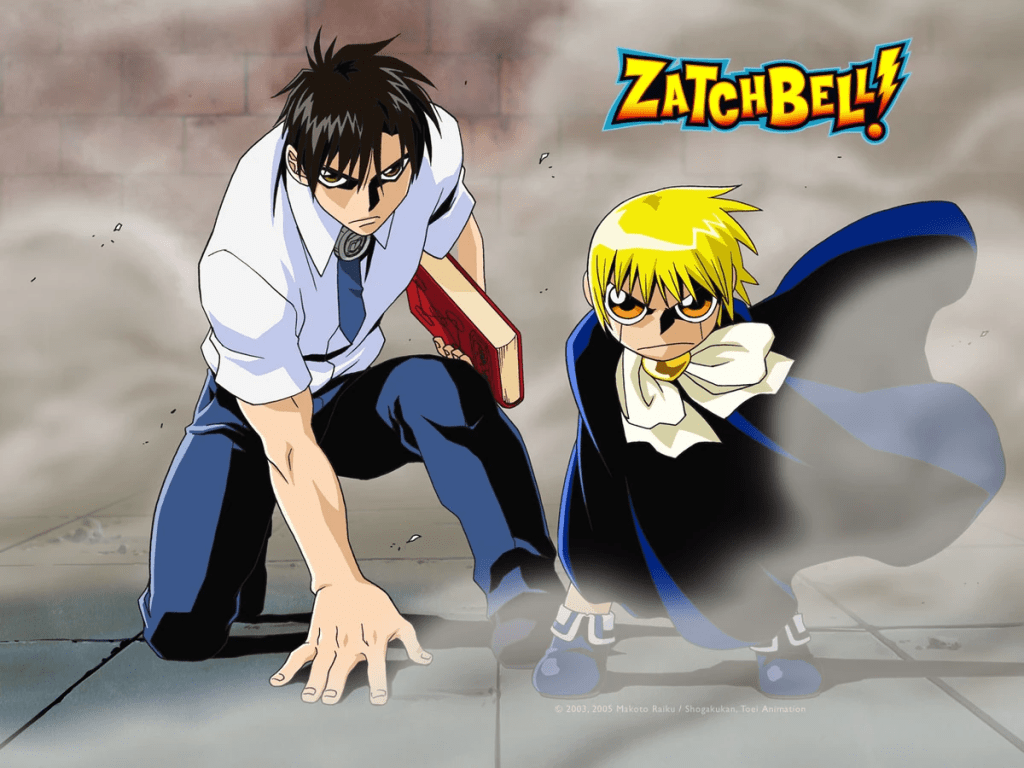
Of the films listed, some of these do happen to be Kurosawa films, but looking back at that old document, interspersing Eastern films with the plethora of Western films harkens back to a time when I couldn’t tell the difference between animation and anime, but didn’t care because the drawings moved. You think I gave a damn whether Zatch Bell! or Yu-Gi-Oh! were animated in Vancouver or Yokohama? Seven-year-old me could tell it was art, and it was f[horse]king art!!

Where did this series go, by the way?

Speaking of art, I can talk at length about the production and cost side of even foreign cinema, but aside from country of origin, there really isn’t anything foreign film studios do differently in terms of filming. And yet as far as accessing these films go, it’s historically been a challenge for the simple reason of Hollywood being Hollywood. Harboring the lion’s share of the world’s movies, a foreign film would need an international film festival to get more eyes on it. These days, there’s not much trouble achieving that and more, but in an industry where the mantra is to “know your audience,” dropping a foreign film on an unfamiliar audience can further alienate the audience and hurt the film’s efforts, provided the audience is looking at that sort of thing. It can feel like homework if there isn’t prior exposure to the subject matter.

What does this mean for Asian cinema in the past? Well, long before the interconnected-ness of the modern age, the best you could do was release films of age-old stories, hence why the western film genre dominated from the late 1890s to the 1970s. So powerful and inspirational were these stories of cowboys and Indians that non-American directors took a stab at it by way of the European (mainly Italian) subgenre, the spaghetti western. East Asia, in particular, had to make do with old tropes and stereotypes for specific genres to gain traction over the decades with pioneers like Bruce Lee, John Woo and even Akira Kurosawa gradually introducing these concepts to the western market. The benefit being that their names are known, the drawback being that kung fu, samurai, shinobi, and other medieval concepts were assumed by many to be all that the region had to offer at least until minds like John Woo and Park Chan-wook showed us that even East Asia can cinematic set piece and gun-fu to the top.

Another thing to highlight about Asian cinema would be the local politics. Like it or not, history and politics touches everyone and in the grand scheme of things, East Asia and Southeast Asia have a disturbing tradition of strong men dictators who couldn’t help but meddle in the affairs of private citizens, historically and contemporarily. Mainland China has loosened its grip in recent years, but in some areas the CCP can still put a thumb over film production. Japan is a democracy these days, but pre-war films were heavily scrutinized for dissent from the Meiji era to the mid-Showa era. Post-independence South Korea had a hardline anticommunist stance that kept creatives walking on eggshells in the film industry and (as I’ve discussed before) in their manhwa/comics industry, leaving their manhwa to be discovered decades after publishing online. Needless to say, if the government didn’t like it, it wasn’t gonna get a wide release outside the country, never mind have a guaranteed impact at home. Why bother making uncultured foreigners care about our movies?! We have mouthpieces to produce!!

But we live in a freer world, so that’s not an issue anymore… supposedly… It’s only a recent discovery (or re-discovery if I’m being honest) that I’m adding these films to my watchlist and the showing thus far has been nothing short of:

Insert Invincible title card effect here

I will not stop writing about these films. I’ll use my remaining appendages if my fingers fall off.

Spec Ops: The Line after 13 Years

When do I start feeling like a hero?

The draft for the triple comparison between Max Payne 3, Sleeping Dogs, and Spec Ops: The Line has been finished, but before I publish that I first wanted to get my thoughts on the last of these three out of the way. Spec Ops: The Line, a 2012 third-person shooter whose stated-mission purpose was to examine the era of the “modern military shooter,” and knock it down a peg. Unfortunately for it in that regard, the message was very ignored as Call of Duty and surprise return Medal of Honor had both had their releases around the same time. Black Ops II on November 13 and Warfighter on October 5. When did Spec Ops release? June 26 that year. It was released at a time when these types of games were all the rage, wearing the skin of a similar game while also lambasting the Bush administration for the Iraq and Afghanistan Wars. By my estimate, it was successful at only one of those, but only because so many other media outlets talked about it as it was happening. For a laugh though, take a gander at this:

Channel: Bloomberg News

Right after the Russo-Ukrainian War went hot.

But I’m somersaulting over the howitzer — let’s rewind. The main inspiration behind Spec Ops: The Line aside from the U.S.’s concurrent foreign policy in West Asia and a criticism of the state of the modern military shoot ’em up was the novel Heart of Darkness by Joseph Conrad and it’s very successful(ly troubled) film adaptation Apocalypse Now. The book was written to highlight the controversy of Leopold II outright owning and micromanaging his personal territory of the Congo in 1899 while the film took that, applied it to the Johnson and Nixon administration’s handling of the Vietnam War, very soon after the pullout and the fall of Saigon to the communists. Suffice it to say, not only was Spec Ops well within its own element by critiquing Bush and the war on terror, it follows a time-honored tradition of satirizing current events in a widely popular medium.

If it wasn’t obvious at the outset, there’s going to be spoilers. I’d encourage you to play the game for yourself, but after 13 years and a new generation of consoles and updates to operating systems, Yager Development hasn’t ported it to modern consoles and most digital storefronts have delisted it. It was a hassle for me to even find an emulated version and the one I have is beset with technical issues. None of them game-breaking, but if you’ve ever dealt with emulation before, you know that the game you emulate/pirate, etc. isn’t going to be the same game that would’ve been released years ago. An emulated game isn’t the same as one bought at GameStop or Best Buy. Alternatively, there’s searching endlessly online for a seventh-generation console and then ultimately a hard copy of the game, but as we progress further into digitization, hard copies will simultaneously be a thing of the past and a priceless collector’s item. Apologies for the rant. Now let’s get to Spec Ops.

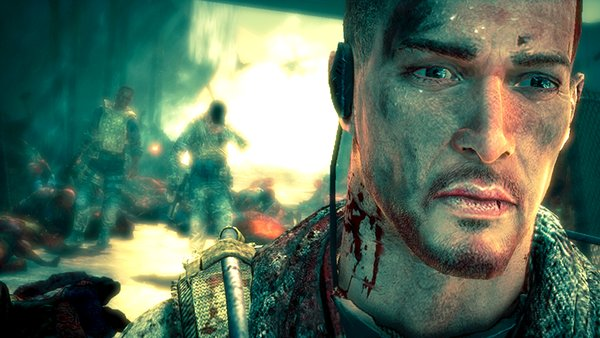
The cover alone would’ve cost it sales if the gameplay didn’t after reviewers got their hands on it.

The game begins with Lieutenant Colonel John Konrad, commander of the 33rd Infantry Regiment authorizing a relief mission in Dubai after the city get’s blasted with wall-to-wall sandstorms. Trouble starts to sprout with the native Emiratis who take issue with the high and mighty US of A walking around as if they own the place. A peace deal/non-aggression pact is taken, but very soon broken by rogue actors among either the Emiratis or the Americans. Whatever the case, the ceasefire is short-lived and insurgents emerge to take back Dubai and handle it themselves. From what I know of history and geopolitics, this sounds eerily close to a similar problem that Somalia has been facing since the early 1990s, but far less complicated than Somalia’s entrenched clan system. Or more like post-Gaddafi Libya. For a brief overture, the United Arab Emirates, where Dubai is located, didn’t suffer as terribly as its North African brothers in the Arab Spring, so trouble in paradise is somewhat unheard of but still within the realm of possibility.

The 33rd Infantry gets swamped with each of these problems and Col. Konrad declares the mission a miserable failure. He could’ve abandoned ship at the first sign of trouble and allowed his men to go back home, but he knuckled down and kept them there. As a result, the soldiers have gone stir-crazy fighting an unknown enemy, and I have to stop here momentarily. I fully understand what the game is intending, but I’m not so certain the devs at Yager know what they’re talking about. In Heart of Darkness, the Belgians were very much an invasive species meddling in on Congolese affairs, but there wouldn’t be a war to fight in the territory until 1915, because when empires go to war, so too do the colonies. Load up, Taiwan and Korea, you’re taking Tsingtao because Tokyo said so.

For Apocalypse Now, the Vietnamese were an amalgamation of southern Vietnamese communists receiving aid from the North Vietnamese Army, China, Laotian and Khmer communist forces and the Soviet Union. There were also veteran guerrillas who fought the Japanese in WWII, so this is the ultimate conflict where the U.S. wouldn’t be able to tell friend from foe anymore. Come Iraq and Afghanistan… the same problem from Southeast Asia followed into West and South Asia, but looking at the leaders and the countries of the time, stability was the one thing neither country had. Afghanistan had nearly as many civil wars as Rome did in the 3rd century and wouldn’t really have a case for nationalism whatsoever. Iraq, on the other hand, had a tenuous government in the hands of a dictator with an iron fist who would suffer from his own consequences thrice in a row over the years. What I’m getting at is, the situation for Iraq and Afghanistan was a top-down problem. The Belgian Congo had a “government” not much better than Leopold’s personal property, but nothing was threatening the Belgians until 1914; Vietnam had a series of governments from themselves to the French to Japan to the French again until decolonization, so there wasn’t a question of who would lead from where once the guns stopped firing. For Iraq, the cradle of civilization had rough years after Saddam’s capture and execution, but was able to get back on its feet and keep ISIS from rising to prominence ever again. Afghanistan’s last stable government was when it was a kingdom, toppled by communists, invaded by the Soviets, and subject to civil wars in the 1990s that saw the Taliban rise, fall, and gradually rise once again after playing the long game. And it hasn’t really been the same ever since.

I’m more than a little torn on this. On the one hand, Al-Qaeda and the Taliban weren’t an unknown enemy, but on the other, they blended in so well with civilian populations that the U.S. handling it personally was why there were accusations and even admissions of war crimes against an unarmed populace, but then again I don’t recall stories of soldiers rounding up civilians in concentration camp-style living conditions. Not from this conflict at least—the Philippines in 1900 surely but nothing from the Middle East in living memory. And no, Abu Ghraib doesn’t count because no one with the right mind was okay with that. All the soldiers involved have been shamed and disgraced. Say what you will about Bush-era foreign policy but for the love of God, don’t lie about it. Especially now, that we pulled out of Iraq during Obama’s first term.

Sorry about all the tangents, when it comes to myths surrounding the war on terror, I can’t help it.

The entire thing is incredibly complicated, so I look at criticism with an electron microscope. To get back to the meat of this review: 1st Special Forces Operational Detachment-Delta (SFOD-D), colloquially known as Delta Force sends a squad of soldiers, Capt. Martin Walker, Lt. Alphonso Adams, and Sgt. John Lugo to extract Col. Konrad and assess the physical and mental readiness of the Damned 33rd. They learn that the Emiratis may have been incensed to rise up thanks to meddling from Langley, and allow me this tangent. Every time I hear about the CIA, I get the urge to have sloppy drunken sex with a loaded shotgun. I’ve come to loathe the use of the CIA as a plot device for a lot what goes on in the world. True or not, it’s gotten lazy as hell, and I’m pretty sure it births new myths or perpetuates existing myths, some of which can be dispelled by the CIA themselves, but I doubt they’re allowed to do so, in case the public meddling is ruining an ongoing project.

Certainly would explain their Cold War behavior, eh?

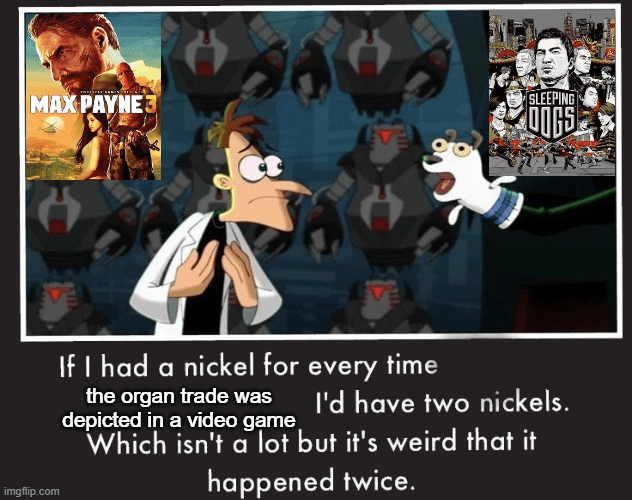
Anyway, CIA perpetuates conflict in the UAE between the Army and the rebelling Emiratis and either neither the soldiers nor rebels are none the wiser or the “rogue” unit knows what’s up, but can’t get it through to the rebelling Emiratis because of high tensions. Meanwhile, these Delta Force operators have declared the unit rogue, their commander MIA, but still have faith that the mission can go on (it can’t), and over the course of the game, things keep getting worse and worse. The culmination of all of this cascades into one of the most disturbing moments in this game. More disturbing than the doctor harvesting organs from the Comando Sombra in Max Payne 3… or the doctor harvesting organs for the 18K in Sleeping Dogs… hmmm…

In Sleeping Dogs’ case, the police missions tend to be optional, but if you want super cop Wei Shen, then get to tagging and bagging!

They screwed up with the chargrill and have to make do with 70% of a burned meal. You know the trope of the traumatic experience being handwaved away with a hasty generalization? Like the one creepypasta where trauma victims, most commonly rape victims, retreat to a fantasy where they’re not being raped, heavily repressing the memory for as long as possible, at times for life? Well, that’s precisely what happens to Capt. Walker in this moment. This virtuous Special Forces officer who makes no mistakes and does nothing wrong f[gunshots]ks up once… colossally so, and admittedly should face a court-martial for the incident. In an admittedly weak defense, all three men weren’t in the right mind to make a sound decision, but to counter that, a period of R&R would be granted so that they could go and investigate the situation properly. For all that’s been going on in the plot so far, even the most bad ass Special Forces soldier would need to rest and Walker (because the plot wants it) doesn’t even rest for a second; and depending on your mindset, this is either a two-cent excuse for shock value or a magnificent pants-pull. Admittedly, I lean more pants-pull-wards, but this was well after the game was out and before my time in the Army. Now I’m towards the middle because I can see how someone would think this was cheap.

And the rest of the mission is almost never the same. The mental games and break from reality, Walker’s gradual descent into mental hell (complete with hallucinations of actual hell); the game stops pretending you’re the protagonist and downright calls you a monster for continuing to play. On the one hand, this can seem manipulative especially towards the end when you finally confront “Konrad,” but on the other hand, it takes “follow the objective marker” and kicks it into high gear. It reminds me of the Milgram experiment where participants were deceived into dutifully obeying atrocious directions. That experiment was one of several used to explain how the Nazis and German society could be complicit in crimes against humanity… though slightly undercut that the penalty was execution, even for the last-ditch militia propped up by Hitler himself, the Volkssturm.

Towards the end, you finally reach Konrad’s HQ, only to learn that he’s been dead the whole time and the voice in Walker’s ear was an auditory hallucination. That circles back to what I said earlier about traumatic experiences being hyper-repressed by the victim/survivor. “I’m not wrong! The world is wrong!!” Yeah, the devs didn’t want anyone to enjoy this, and this may have been where players kept yelling at Walker to abandon ship and declare the mission a failure. Being in the Army, I was doing that at the first sign of trouble, that being when a CIA agent was torturing a junior officer about three chapters in.

The series finale of the TV Show M*A*S*H revealed that the character Hawkeye blames himself for the death of an infant when a Korean woman smothers it, playing it off as a chicken all along. Walker did the same thing, passing off the deaths of civilians on Konrad.

Now there’s two endings in the penultimate chapter: 1. Let the apparition of Konrad gun you down, or 2. Shoot first and proceed to the final chapter which has three endings. Soldiers come to retrieve you and there are three responses: 1. Shoot them all dead and continue to live in the ruins of Dubai as a mad man; 2. Shoot and commit suicide by soldier because you’ve seen enough and this is the closest you’ll get to answering for your sins; 3. Surrender and let the soldiers take you back presumably for questioning and a court-martial. The last of these would see a mental health specialist determine Walker’s mental condition. If able to stand trial, that’s a burial plot 60 feet under Fort Leavenworth. If not, then wherever the line is drawn depends on whether Walker disobeyed orders and took charge of an authorized mission playing vigilante. He did and he did, which would be grounds for conduct unbecoming, though probably means something along the lines of a discharge of either general under honorable conditions or other than honorable discharge if evidence comes up short. As for the use of weapons on civilians, dishonorable. War crimes tribunal. 600 feet under the prison, let the casket melt. To further elaborate on the apparition of Konrad, him shooting you (or you shooting yourself) is an admission that the mission was an even worse failure than what Konrad tried to do by intervening, but shooting the apparition is an insistence that Walker was in the right all along and that every end justified the means, even the deaths of soldiers and civilians. No matter the outcome, Walker’s mind is essentially mashed potatoes. He might have been able to wave it off as Konrad’s doing, but after the shocking moment, the hallucinations, and the search for a golden nugget in a world of s[avalanche]t, there was no way.

Do I recommend the game then? Like I said, it was a struggle to find it as it’s since been delisted from digital stores, leaving emulation as the only way to experience it firsthand. And I don’t recommend it for the gameplay. It’s purposely clunky and cumbersome as an overall critique on the genre at the time but learning that neither CoD nor BF nor even Medal of Honor, belching its last before indefinite hiatus, took that lesson particularly to heart. Or rather the first two put their battlefields elsewhere while, as said before, MoH, went to sleep for the time being.

Also keep in mind that it was a critique on the Iraq and Afghanistan wars, which began under Bush Jr., continued under Obama (who by many accounts droned more people than his predecessor and successor), kept on under Trump’s first and officially ended under Biden, though to clarify, Obama saw the end of Iraq and Biden saw the pullout of Afghanistan. Being 13 years away from the release of the game and long after both conflicts have concluded, the message of the game has certainly aged. It’s not like a WWI-based game where warfare changed, but wars didn’t. The war on terror isn’t the same as a war against a nation where POWs are expected to be repatriated at the end. Knowing how Iraq ended, if the message was to end the wars or at least get out of Afghanistan at the time, it kind of falls flat with how complicated the whole ordeal was. Unless the message was, don’t make it America’s mess, we don’t need to keep seeing to it personally, there’s better ways to go about this, then fair enough, we didn’t need to commit as many to either conflict as we actually did. But would we still be Americans if we didn’t watch the tower fall in person?

America after winning a war, confident that the ideas died with the men…

Yahtzee Croshaw reviewed the game at the time and may have put it more succinctly as an outsider of sorts to American boondoggles in the sand. Now that all of that is done, to look at three 2012 releases and how well they tackle corruption.

Channel: The Escapist

Semi-Lost Media

A Tragedy of Media

The title of this post is meant to have two purposes: to highlight how media can become lost and the modern era’s means of recovering lost media. There isn’t always a perfect method to prevent lost media nor is there a perfect means to recover lost media without sacrifice to the media in question. I’ve faced this problem personally while gaming and emulating games, but I’ll get to that soon.

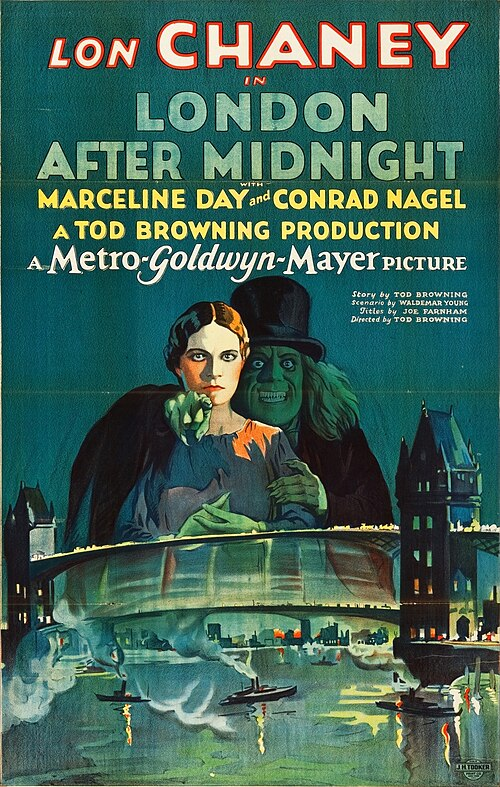
A brief overview of lost media is any piece of media whose preservation methods were either nonexistent or severely compromised to the point that part, most or the entire medium is effectively ruined or destroyed. Surviving copies can’t be located or recovered because they either don’t exist or sometimes won’t be released publicly, even after the copyright expires or the original author dies. For the longest time for obvious reasons, this has mostly applied to film, like so:

This film was released in 1927. It was kept in the MGM vault for decades until all surviving copies were destroyed in the 1965 vault fire. As of this writing, it only survives in posters like this and surviving still shots.

Yet as time has progressed, more and more forms of media have been created, to include video games which can also become vulnerable to media destruction. In one extreme case, Adobe Flash.

https://upload.wikimedia.org/wikipedia/commons/3/31/Adobe_Flash_Player_32.svg

Five years have passed and I still miss it.

This critical piece of software was launched in November 1996 and has formed an important cultural touchstone on the internet ever since. Countless creators, new and veteran, have used it to make everything from videos to short films to even video games. There used to be countless flash games and even websites hosting those games. They were inescapable, until Adobe ceased support for the software on New Year’s Eve 2020.

A not insignificant portion of these games couldn’t be saved and are thus forever lost outside of admittedly s[dial-up]ty videos recorded in 144P in 2007. Yeah, they were hard to look at and aged really terribly, but having aged media is better than having no media. It shows the technological progress between, say, VHS tapes and Blu-Ray discs.

The crux in the custard I’m getting to is that efforts to preserve media have been undertaken for over a century, and while not perfect, as an advocate of piracy and emulation, I also advocate the preservation and, by extension, re-release of old media in as many forms as possible, especially when the format in question begins to deteriorate due to age. My grandmother clung tightly to old VHS tapes and while they may have been endlessly playable in 2005 for example, they had problems at the time and have considerably gotten worse since. Same for all the old floppy disks she never threw away.

In my documented experience on this blog, in order of difficulty from easiest to find to Raiders of the Lost Ark, video games have been fairly easier compared to movies. And movies are still easier to search up compared to TV series. I say fairly and not absolutely because digital stores like Steam and Epic Games Store have delisted video games before and will nonetheless do so again for a variety of reasons. MMORPGs are most vulnerable to destruction when the devs can no longer support the servers due to something like acquisition, shutdown, or “cost-cutting measures.” That last one is less excusable because video games haven’t had a better time to be profitable than the modern day. You can pick your favorite examples of this, but my pick for one of the best-selling video games ever goes to:

Once RockStar realized this game s[gunshots]ts platinum, it hasn’t turned the faucets off ever since. Notice the gap in time between this and Red Dead Redemption 2.

Time and tech is another factor for this. Games released on arcade cabinets or 16- and 32-bit consoles are merely a collection of pixels and a third party emulator is seldom needed. In some cases, they function the same as a browser game. Sixth-generation video games do require a third party emulator but I’ve yet to face any problems downloading them. Just needed to make space. Seventh-generation has proven the most difficult to emulate. On average a PS2 game can be downloaded to PCSX2, for instance, in several minutes to an hour or two, but PS3 and Xbox 360 games can take double or triple that, especially with a spotty connection. Maybe a signal booster would help, but the area of El Paso is surrounded by mountains, so the servers in this part of the country may be considerably weaker than more densely populated areas. Testing this out myself would cost me money and resources I don’t have.

I made mention at the end of the last post that I was planning on posting in the future a comparison of three underappreciated 2012 video games that tackled corruption in different aspects, one of those being Yager Development’s Spec Ops: The Line. Unfortunately, I couldn’t find a store front that was carrying the PC release as it had been delisted ages ago. I’ll elaborate on that in the post, but in order to play it, I had to download a console version for four hours.

This is what I mean when I say it’s important to preserve as much media as we can. Spec Ops: The Line was one such example of a hard to find piece of media. I was worried it was only available in YouTube playthroughs from years ago, but digital libraries keeping the files available online were a godsend for this endeavor. For other games, this isn’t going to be the case. All traces of the game in question could be lost forever.

This wasn’t the sole inspiration for this post. Actually, region-locking of movies was the inspiration, but with the Stop Killing Games initiative going viral, I might as well include it here.

Going back to MMORPGs and similar online games, if a developer goes under or gets eaten by another dev, it’s not their fault if their efforts to stay afloat don’t work. And as I said earlier, the argument of keeping the servers up is too expensive faceplants epically when video games continuously make tons of money.

Although not the original victim of media destruction, the earliest films were most vulnerable to it due to attitudes towards them since inception. A lot of the first examples from the late 19th century were admittedly glorified experiments consisting of multiple still shots giving the illusion of a picture moving independently, but these early examples helped to perfect the craft. Science yesterday, artform today. But a lot of these old films were made with hazardous materials, notably cellulose nitrate. It could catch fire easily and long before the marriage between sound and sight, many of the silent films of a century-plus ago can no longer be recovered. At first, the reasons for preservation were balked at, but efforts to try and preserve it have been made. I consider the zenith of home releases to be the VHS and succeeding DVD-Video eras as both formats have re-released tons of TV and movies with estimates in the hundreds of thousands.

Then we progressed to digital streaming after some time and my main concern with that has to do with licensing and even region locking. If the license expires, you might find yourself unable to view the series you paid for. And if you move from one region to another, you might have to invest in a VPN to see the series you paid for. In a more perfect world, this wouldn’t be the case, but now that buying is no longer owning, piracy is no longer theft.

I do make some concessions with this. I don’t pirate modern games because of the risk of anti-piracy software. Some of the games I do pirate are from dead developers.

No matter the form media takes, it’s always important to save it for the archives. Allow future generations to be able to engage with it, even if it hasn’t aged well graphically. Ed Boon may be perpetually embarassed by Mortal Kombat: Special Forces, but it’s not like nothing was learned from that. Yesterday’s mistakes make for tomorrow’s masterpieces.

I’m still in the process of drafting up that comparison between Max Payne 3, Sleeping Dogs, and Spec Ops: The Line, but I want to preface that with a review on Spec Ops: The Line first. Now that I’m able to play it on RPCS3, I’m in a better position to give my thoughts on more than just its plot.

My Mini-YouTube Movies Arc

Still ongoing, still finding new films to view

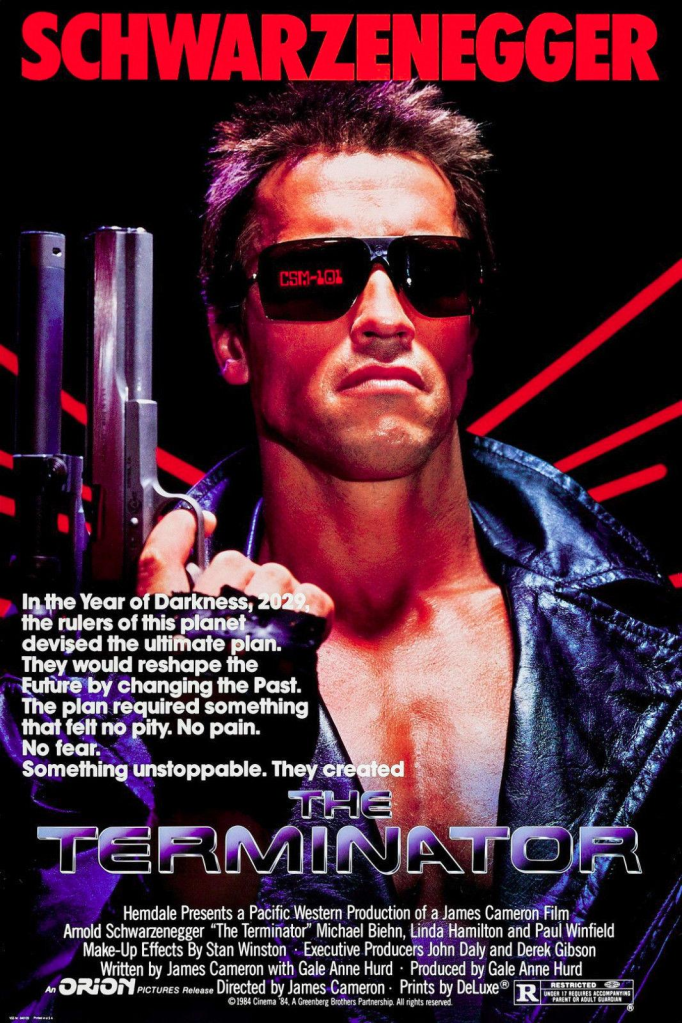
Although I’m as much a piracy advocate as Gol D. Roger, it’s not like the legacy services don’t occasionally give us something worth viewing. The way I got into watching movies primarily on YouTube (before looking elsewhere if what I wanted wasn’t available) began with that time I started to binge all the Terminator movies in rapid succession, next to a viewing of Saving Private Ryan.

For Saving Private Ryan, I recall in middle and high school how whenever the history classes progressed to World War II and eventually to the Allied Landings, they almost always showed the Normandy landings and it became something of a tradition to show the brutality of battle from the Omaha landings, the deadliest landing of just that day. But if you’re American, you’re history lessons probably stopped short of the fall of the wall or the collapse of the Soviet Union. Out of curiosity, I went to look up the entire movie and someone was ballsy enough to have it fully uploaded onto YouTube at the time, before there were ads and before YouTube started to turn to s[pop!]t.

And as regular viewers would know, this was the same setup for at least the first Terminator movie. The original channel I watched it on a decade ago is most certainly deleted (and I highly doubt I can look up my YouTube history from ten years ago), but even to this day dastardly (read: heroic) YouTube channels with only about 20 people in their audience are uploading the full movie, risks notwithstanding. Like this channel:

Channel: INDY CAT PLAY

The graphic content will of course lock the movie to YouTube, but this is an acceptable sacrifice.

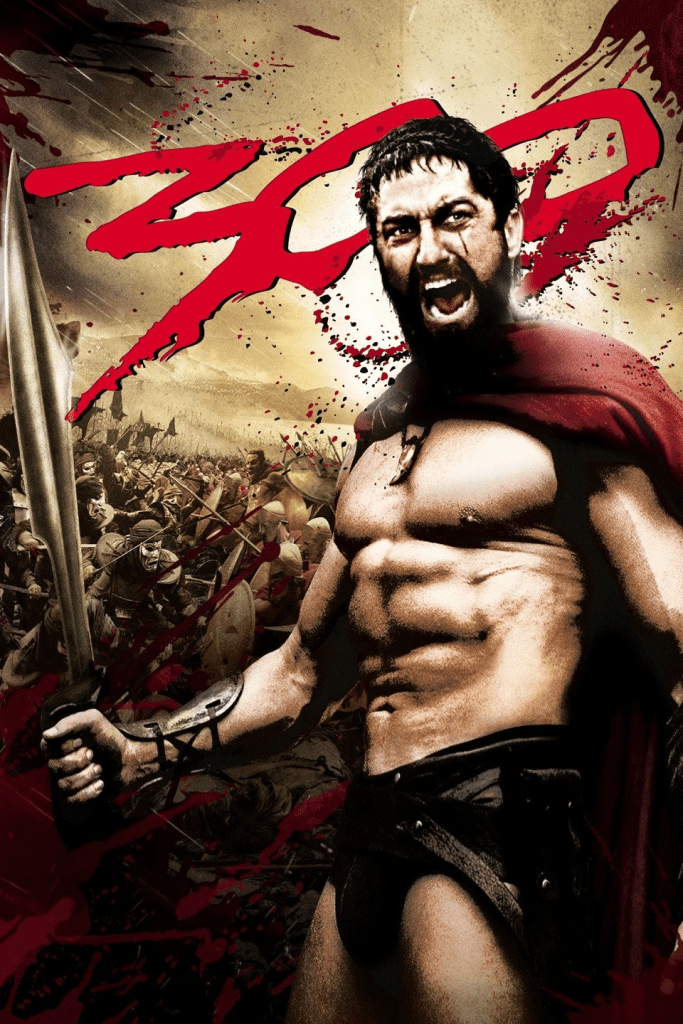
After that, it was down to looking for multiple different movies on multiple different pirate and torrenting sites. Gangster Squad, the 300 movies, Apocalypse Now, Full Metal Jacket, and several more. It was an occasional thing to do prior to community college and during the summer of 2017, it started to ramp up alongside that time I checked up on the Naruto series to discover that Boruto was a thing.

Maybe it’s because I took a break from Naruto that I grew to appreciate the successor series as well. But criticism still exists.

In between choosing my courses, I was on the hunt for new movies to watch, and prior to this, I had expressed an interest in military service by the end of high school. Unfortunately, I was 17 when I graduated and wasn’t able to convince my mom that even part-time service had its merits. “Try college first,” everyone said. You know how the classroom setting doesn’t mesh with everyone? That’s me. Learning by myself was always better than learning in a classroom setting, and there was always a pressure to get the highest scores. My average was usually a B- to B, tops. Except for Art, English and Foreign Languages which got me consistent A’s. The push for A’s across the board led me to lightly defy those expectations due to how Icarian and hubristic it felt. Also, every smart kid was a know-it-all with an attitude.

So I went from slightly above average high schooler to slightly below average college student. Seriously, my GPA took a hit due to my piss poor math scores. But away from that, a section of my free time was devoted to movies with a military slant, as a means to hype myself up. I was still determined to join the Army, and if I’m being honest, I probably wouldn’t have had that break in service from 2021 to ’24 if I had kept it a bit more realistic.

As for the movies I was looking for, there was never a single one-size-fits-all website for me to watch them all on, and as you’d expect, popup ads. Popup ads everywhere. But I was able to fight through the mess and make some pretty neat discoveries. The one website that I was able to watch my movies on was called MegaShare. I’m going off memory alone, but as I recall, the site had its server in Vietnam and momentarily went under in late 2020. A Google search during this draft reveals that as of writing this it’s still up and still functional, with TV series included in its lineup.

Watching anything on this site is a bit tricky without a VPN so good luck streaming Paddington 2 or Jigsaw for instance. These days, the majority of the content that I don’t always pirate comes from my subscriptions to Crunchyroll, Netflix, and Tubi, and for free viewing, there’s YouTube Movies and the Internet Archive, God’s gift to the internet.

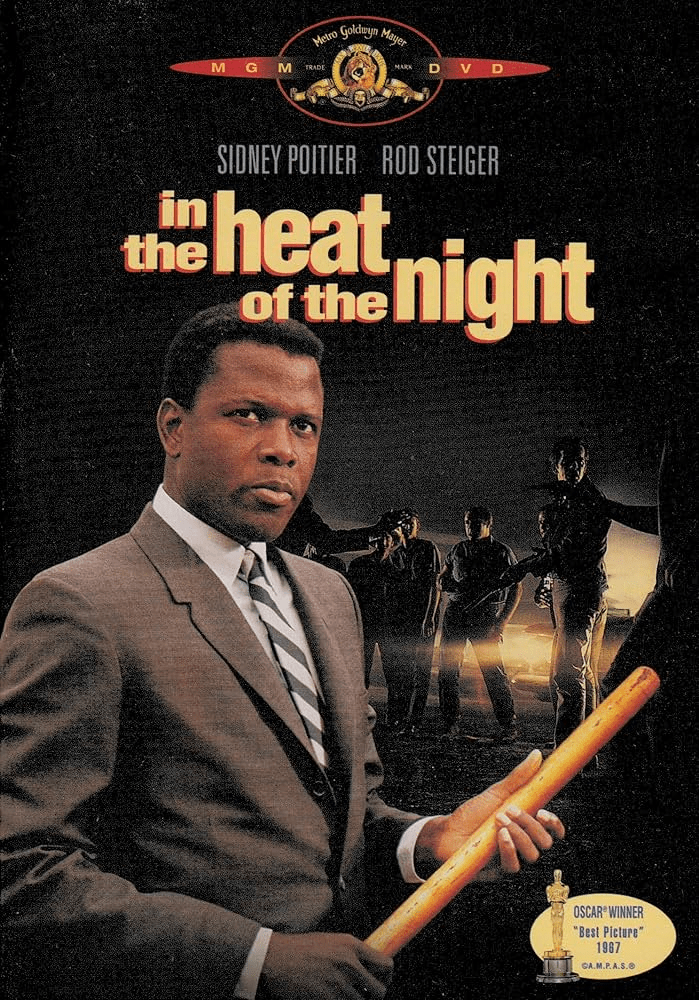
Which brings me to the arc of YouTube movies made free with ads in between. It started in early June 2020. In the aftermath of the George Floyd riots, movies promoting primarily black casts and stories were made free with ads, and one of them was the saga of Philly detective Virgil Tibbs:

Filmed in 1967, starring Sidney Poitier and Rod Steiger, this movie was about a murder of an influential man in tiny Sparta, Mississippi. The racist police department not only suspects this out-of-town Yankee Negro of doing the deed, they point a gun at him while taking him in. However, when Det. Tibbs reveals that he’s also a cop, his superiors assign him to this murder case and his expertise wins over both the police, the victim’s next of kin, and even select townsfolk. A great movie that to those who’re old enough may have a few things to say about how segregation worked at the time, though probably a smaller net would need to be cast for on-duty cops from back then. My grandmother certainly has some surviving memories of Virginia. Not as far south, but still influenced by the Jim Crow laws.

Afterward, there was a blank period where I didn’t watch that many movies, until the last half of 2022. In the Army, if you can’t continue on in basic training, you’d still be allowed to graduate just at a later date. They’ll recycle you into another company either at the beginning or slightly behind depending on certain factors. I was getting tired of medical issues f[clank!]ing me over and I called it quits… which I was regretting. Playing the waiting game for the entirety of 2022 gave me a lot of time to kill as I couldn’t get a job. Eagerly awaiting the initial rejection, I just watched a handful of movies, two of which that stood out were The Mask and Tombstone. Fast-forward to the last quarter of 2023, where my second attempt at joining the Army bore fruit. Much of my time was divided between watching Lucky Star and Azumanga Daioh on YouTube through unlisted playlists and playing CoD: MW 2019 and House Flipper. This was also after my grandmother moved out to an elder’s home in Baltimore, so for the first time in my life I had my own room… at 24 years old…

The recruiter I was talking with through Reddit (true story) told me that my waiver had been approved and I was set for training at Fort Leonard Wood, Missouri the following January. With that out of the way, I watched as many of the movies as YouTube would make available. The list of movies I’ve seen is extensive, so instead I’ll grab three of the movies that I recall watching on YouTube. Not necessarily before the second attempt at Army life, but just on YouTube Movies

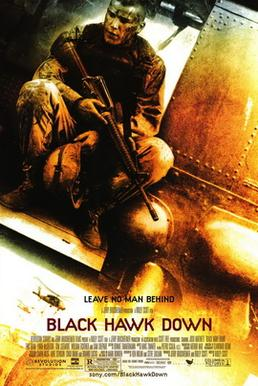
1. Black Hawk Down

I was more than a little hyped up getting back into the Army, and one of the movies I watched was Black Hawk Down. The dramatic retelling of Delta Force’s worst day in Somalia in 1993. To gloss over some of the history, numerous factors helped contribute to the breakdown of the Somali government and instability in the leadership thanks in no small part to colonialism and the clan system. By the early 1990s, the Somali government hit the road indefinitely and numerous warlords rose up dousing the flames with gasoline. One of them, Mohamed Farrah Aidid, had been antagonizing UN Peacekeepers from Pakistan, and President Bill Clinton authorized military action to take him out. The tip of the spear had no idea what they were fighting, a trend that would curse the U.S. military, starting arguably in Vietnam, but continuing on after Somalia.

Channel: Armchair Historian

This video explains it in further detail.

A Black Hawk helicopter was blasted out of the sky and the new mission was to find the soldiers and get them out intact. Easier said than done, when the population of Mogadishu, radicalized and armed with small arms and machetes comes barreling down on your position. Delta lost two of their operators, Master Sergeant Gary Gordon and Sergeant First Class Randy Shughart, and it became a race to get the f[gunshot]k out of Mogadishu without losing anymore people. Mission failed. We won’t get them next time. Somalia is a failed state, yadda yadda…

I’ve talked about this last year, but that was to observe different military practices that are still in use today. For content, 90% of the movie is obviously focused on events from that fateful day, with 10% dedicated to the history and politics of the event. Completely historically accurate? Well, this website fills in the gaps that were scrubbed from the movie for brevity’s sake, but it’s not like there was a fictional account of a flying Pegasus so to that I’d say it’s 95% accurate.

2. Tropic Thunder

This one I hadn’t seen since I was a kid, and its content shows that, on the one hand, it’s best when things age to show the difference between the culture of media then and now, but on the other hand, biting satire like this is sorely missed in this day and age, especially with social media companies making idiot moves in recent history. Cancel culture anyone?

The premise of this comedic masterpiece is that four actors are joined together to adapt a novel of a Vietnam war movie and the production goes awry at every turn. Not because they can’t get film rights, but because of on-set clashes between not just the actors, but also the producers. The studio decides to throw them into Indochina and film them with hidden cameras, failing to realize that they were dropped into the Golden Triangle, a region swaddling Thailand, Laos, and Myanmar where much of the world’s opium is cultivated, typically under the thumb of the nastiest gangs in Asia, to include Triad groups.

Of course, the actors find themselves somewhat held hostage by these guys and the movie turns into an impromptu rescue mission that harkens back to the Project 100,000 policy during the Vietnam War. As for the directors, they have a very clouded “show must go on” mentality and fail to realize who has their stars hostage.

The comedy comes from all the politically incorrect writing and satire. This movie pulls zero punches in taking the piss out of everything. Hollywood’s controversial casting choices, the portrayal of disabled characters by able-bodied actors, the drug use among the Hollywood elites, the draconian control of select studio execs, directors, and other production staff; in an alternate universe, Tropic Thunder would’ve been a documentary. I’ve made jokes elsewhere online that comedy is prophetic and I’ve been seeing it less as a joke and more as the truth these days. No matter your beliefs on a variety of topics, I can’t encourage you to watch this enough. If you’ve seen it before, like I have, give it another watch.

3. No Country for Old Men

Based on the novel of the same name by Cormac McCarthy, in 1980, West Texas hunter, Llewelyn Moss stumbles upon a drug deal gone wrong and takes the money for himself and his wife. Knowing an agent of chaos is after him, he goes through numerous lengths to avoid this amoral hitman, all while an aging sheriff tries to reach him before cartel bullets do.

This movie is called by some the pinnacle of the western genre brought to the modern age. Changing world, untamed land, conflict between nature, society, and mankind; I can think of different media that fit this mold.

No Country requires an elevated level of thinking. It gets a lot of flak from some for the way it ends, which I attribute to a misunderstanding of the western genre. Moss may have been the protagonist, but he’s not necessarily a good guy. His adversary, Anton Chigurh, is both an antagonist and a bad guy and the sheriff Bell is honestly at a loss. When the camera pans to him, he feels like he’s useless and out of his element. Things made sense ages ago, but that age is no more and there’s not much he feels he can do. Moss and Chigurh move at a comparably breakneck pace in their search for the money. Most analyses of the movie are about Chigurh, but not a lot mention Sheriff Bell at all. The movie introduces his character several minutes in, but he has the first and last lines in the movie. I don’t have the analytical expertise to talk about Bell’s place in the movie or the novel (which I haven’t read), but I say he deserves some exposure himself.

YouTube movies can expose you to some films you didn’t know you would like and with a healthy library to show for it, you could easily get lost looking for something to see. No, really, it’s a labyrinth, bring a map… and maybe something to distract the minotaur. For a fourth surprise recommendation to complement the three here, have this:

No staff members were sacked in the production of this classic.

The World of Japanese Live-Action Cinema

Same continent, Different History

Full disclosure, the first topic lined up was meant to be about the Senran Kagura series, but I haven’t been playing it as much as of late. Work-related stuff among other things took my time, and for the style of gameplay, I’ve seen better. At least it has an anime adaptation. Next to that, was about a series that was subject to limited release outside of Japan — Idolmaster, only I’ve mentioned it before and without access to the whole of the franchise, I’m not able to review it in the manner I’d like. Typically, I start at the beginning, but the circumstances that created this series in particular are only available in Japanese arcades with the Xbox 360 port dying with the console, making the first installment in this franchise semi-lost media. So instead, we’re sticking with Nihon and talking about their movies.

As far as old movies go, whatever I could get my hands on I’d always given it a watch. In community college, I watched 1932’s Scarface and 1933’s King Kong. I managed to find the 1982 film The Wall based on the Pink Floyd album of the same name. I recommend all three by the way. And all of these plus similar films have been my go to for years, from my piracy era to my movie theater era. I’ve heard from the Extra History channel on YouTube in their series on Japanese Militarism that when it comes to studying societal changes in the Axis Countries during WWII, Germany and Italy get over-studied while Japan frustratingly has been under-studied or brushed aside, presumably because they don’t have an equivalent to Hitler and Mussolini, or rather no civilian equivalent with the Japanese military dragging the society down into Hell with them one assassinated politician at a time. I bring up the historical blind spot in an admittedly faulty comparison to my own approach to the Japanese film industry. I’m American, after all, my first movies are going to be American. Sometimes, British cinema will spillover.

Guess I was always a sci-fi fan, I was just denying it because the genre was so broad.

Only recently have I been watching Japanese films and a lot of them are damn old, coming from legendary names in Japanese cinema, Akira Kurosawa, Yasujiro Ozu, and one other one I discovered whilst researching this topic, Kenji Mizoguchi. These three directors formed the foundation of post-WWII Japanese cinema in the 1950s during the Golden Age. By the time they were making film after film, Japan already had a storied cinematic history, though looking at the world the country left behind in and entered in favor of, one can see what kinds of films were being made especially during the late Taisho and early Showa periods. The short version of the history of the motion picture largely boils down to an amalgamation of centuries’ long efforts to get pictures to move by themselves, a means to record a moving flipbook and similarly, movements of this type popped up in East Asia.

Early films, as you can expect, are unimpressive considering what populates our screens, streaming services, and theaters today, but to Frederick Harrison Burgh in 1898, regular photos of the every man to his left and right were given life before his eyes. I didn’t exactly take any history of cinema courses, but I can also imagine a playwright of some kind looking at the first film directors in human history and incorporating the ideas into his plays or straight up becoming a film director himself in part or whole–to varying degrees of success. Maybe a combination of these, who knows?

Even when Japan had more or less completed industrialization or neared its zenith, they weren’t done learning from western innovators, such as Thomas Edison.

Far from the progenitor of filmmaking, his inventions and contributions to cinema in particular formed the foundation of this industry worldwide. When the industry erupted in Japan, elements of kabuki and rakugo have made their way in over time. Narration, depictions of bygone eras, romanticism; different country, similar tropes about legendary figures. Just watch any western and compare it to the reality of the cowboy.

In this case, Japan had the shogunates and numerous tales of courageous warriors to adapt to film. Miyamoto Musashi, Tomoe Gozen, the main belligerents of the Genpei War; even the monarch has been depicted in film. Meiji was a fixture of post-WWII cinema for a time and looking at the Meiji era it’s easy to see why. A teenage emperor spearheads reforms that put an island nation on equal footing with the west over the course of about 45 years. Meiji was the emperor during the establishment of the Empire of Japan, his reforms reshaped the military into a powerhouse capable of knocking China and Russia around, empires many times the size of Japan itself and they were weak to Japanese might. Nationalist or no, you can’t help but laud an era of rapid industrialization and the man who helped with that.

These days, we can look at the era objectively, but the World Wars era emboldened and inspired filmmakers world wide. Wartime propaganda to motivate the populace to accept rations for the troops, instructional movies on the safety and operation of equipment and maneuvers, pre-mission briefs with the commanders in the war room before the march to battle: if done right, it can get the public firing on all cylinders and bolster the war effort significantly. If done wrong, the populace will be made complicit or forced to go along with the military’s worst actions. A tool of Japanese militarism, factions of junior officers in the Imperial Army and Navy formed individual groups all along the nationalist side of things. On the tame end, films released in this era in authoritarian nations helped lead to the cult of personality around certain authoritarians. Hitler had one, Mussolini had one, and I doubt he was aware of it, but Hirohito had a cult of personality as well, fostered by a radical faction working under the worst evolution of the national slogan, the latest one being “Revere the Emperor, Destroy the Traitors.”

The wild end of the propaganda spectrum can lead to the fabrication of enemies and dubious reasons to subjugate them. Most tools at their disposal were used for this purpose and led to ultimately dire consequences. Militarism could only last so long though and the dismantling of the Japanese colonial empire and subsequent occupation meant starting over again, with a new constitution and a self-defense industry with limited expeditionary capabilities.

So where does filmmaking factor into all of this? Adaptable stories for one thing. Think of all the western films featuring Ancient Greece and Rome, even in a stylized/fictionalized manner.

Obviously, the Spartans had armor, these masters of warfare weren’t stupid.

As mentioned before, any knowledgeable filmmaker can make Japanese historical films, circling us back to the likes of Kurosawa, Ozu, and Mizoguchi. So far, I’ve only watched Kurosawa films, but I do want to talk about the others anyway. Kurosawa was an inspiration to many. He was to film what Osamu Tezuka was to animanga. The first time I watched him was in college during a course on Asian Art during the Japanese section. The film in question was called Ran and it was Kurosawa’s version of Shakespeare’s King Lear in a manner of speaking, which itself, when I saw it, drew parallels to the power struggle that emerged from the division of the Carolingian Empire in the 9th century. All three stories involve a ruler of some kind who chooses to divide power among his heirs in near-equal status; all three fail to realize that the water of the womb doesn’t always bind and that siblings may bicker, but rich siblings don’t pull any punches; all three heirs immediately raise armies to rob the others of their territory; and all three explain in a gruesome showing why much of the known monarchic world defaulted to primogeniture. This model is criticized heavily by historians but without a better alternative, what were medieval kingdoms gonna do? Let a woman rule? Well, sometimes…

Queen Eleanor by Frederick Sandys, 1858

Remember when I mentioned western influence in Japan? Expanding beyond technology, this opens up a wider question on Japanese appeal to medieval Europe, of which the short answer to that is exoticism, same as how many westerners and weebs exoticize Japan and at times the rest of East Asia, hence why a lot of East Asian celebrities and such adopt western names.

Samurai tales were Kurosawa’s bread and butter and a great influence on samurai stories thereafter. One such film I had the pleasure to watch while on CQ was Yojimbo: the tale of an anti-hero ronin with a bullish demeanor who fights off gangs after getting to know an innkeeper family.

Moving onto Yasujiro Ozu’s output, he didn’t make samurai tales, instead favoring contemporary, slice of life films about everyday life. Exclusively Japanese life? Yes and no. Obviously, the setting is going to be in Japan, but the lifestyle of the people in his films being relatively modern make it relatable to many people globally. These aren’t disillusioned ex-samurai with a lot to gain in a changing Japan; these were regular people with commonfolk stories, easy to tell and far away from the realm of fantasy. I only recently discovered a few of Ozu’s films on the Internet Archive site, and I do plan on giving them all a proper viewing.

The last of the Golden Age Japanese directors is Kenji Mizoguchi, who I mentioned I discovered while drafting this post. Google and his Wikipedia page both tell me that his films historical dramas with a focus on women’s lives. How feministic! He was the oldest of the trio and being born when Meiji was still emperor and thus would have been exposed to the lives of not just female entertainers (geisha) but also of women going into a rapidly advancing Japan. This leads me to believe that, like much of the western world, Japan in particular was about to approach the subject of a woman’s place in life but not with the right approaches or interests at heart in mind. Or when the society did so, it was a mixed bag of controversial successes and failures. Like their male counterparts, women enjoy many of the same privileges enshrined in western societies, but some age-old challenges still linger, many of which became a central theme of Mizoguchi’s movies. Like most of the other media I have listed, I also plan to watch a few Mizoguchi films. I hadn’t made any concrete plans to write about them in any capacity, but I do wanna get back into it at some point–things have been looking a bit too anime otaku-centric as of late.

Not a shift, but an addition to my typical lineup.

Hong Kong Action Cinematic Masterpieces

The Cantonese Collective

Hollywood has a century and change with a wealth of films and genres to back it up, but it’s obviously far from the only producer of groundbreaking films. On the other side of the world on the Pearl River Delta, there’s a city in Guangdong Province that’s been a part of the British Empire longer than it’s been Chinese, and a look through city streets and select-people’s names shows this.

Hong Kong! One of Britain’s prizes in East Asia, to summarize the history of the area, 19th Century European powers sought foreign markets for trade. Britain, for instance, was making inroads in Asia and one of their stops was a fishing village in Southern China. China didn’t want the Brits to sell opium to their people due to the adverse effects on health and in doing so, ignited a war that they lost to Britain.

Although Hong Kong Island was the prize, it did nothing to satisfy British interests and they’d try to renegotiate the existing treaty. China said no again and this time more of Europe and even America had something to gain from an even more vulnerable China, or at least their neighbors. Sticking with Hong Kong, Britain’s near-peer rivals could and have sacked similar-sized territories thus necessitating a formation of the British military to keep the territory safe, though this stronghold of sorts was also witness and participating in further engagements for the rest of the 19th century.

By 1899 and the start of the Boxer rebellion, China had ceded so much territory that it was derisively known as the “Sick Man of East Asia.” Russia, Germany, France, Britain, and Japan all took some of their land and/or influence, further European powers split Shanghai amongst themselves, and Japan was making it crystal clear that this would be their backyard, largely solidified when they won out in the Russo-Japanese War in 1905. British-appointed Hong Kong leaders largely sat back while this corner of the globe kept adjusting lines on maps one ink-dipped fountain pen at a time… at least until Japanese ambitions brought the chaos to the governor’s mansion following Pearl Harbor.

Part of Japanese expansionist ambitions, the great lie told to the colonies of East Asia was that the answer to western imperialism was Japanese imperialism. They lost their opportunity when the US and UK shot down a racial equality clause at Versailles, so Japan’s next move was to dislodge western influence in the area through blood.

The 1920s and 30s gave Japan multiple opportunities to gradually expand in China and Mongolia, but their endeavors were somewhat halted by the US oil embargo after vile reports of, for lack of a better term, Olympic-level rapes and murders being committed in Nanjing.

This book has the details, and predictably none of them are for the faint of heart. Read at your own discretion.

After Pearl Harbor, American, British, Dutch, and commonwealth possessions were eaten and absorbed into the Greater East Asia Co-Prosperity Sphere, including Hong Kong, who wasn’t safe from Japanese atrocities across the Pacific. As we know, the combined forces of the US, UK, Australia, New Zealand, and resistance fighters in Japanese-occupied territories worked tirelessly to send the Japanese back to Tokyo and finish it off with a pair of bangs in 1945.

The Cold War saw roughly every part of the world violently or peacefully throw off the yoke of colonial influence and the last two in China were Hong Kong and Macau in 1997 and 1999 respectively from British and Portuguese hands to a two-systems situation, with full reintegration of the territories into China by 2047 and ’49, on the 50th anniversaries of their return to China, but recent news particularly in Hong Kong leaves the fate of the region uncertain.

Suffice it to say, Hong Kong’s history is one to preserve and retell for eternity. So, why bring up geopolitical history in a post hinting at their cinematic history? Well, I felt that the outside world would certainly have an influence on the region and Hong Kong would have something to give back to the world. Notably, it’s film industry.

Before Hong Kong, Shanghai was China’s moviemaking capital, but very few films of that era are available for wide viewing. Conversely, Hong Kong under British ownership had more room to flex its artistic muscle and it did, compared to mainland China and Japanese Taiwan. Since the end of World War II, the Hong Kong movie industry enjoyed an approach to movie making that wouldn’t be seen until the late civil rights era in the US where more and more independent films would rise to challenge Hollywood.

As a matter of fact, Hong Kong-born cinema was free from subsidies and government influence as a consequence of British ownership, so there weren’t any efforts at the time to scrutinize their films for any anti-British sentiment, like the Shanghainese film industry or the colonial Taiwanese film industry, both of which would be heavily vetted for dissent or used as propaganda tools for the empires. Still, the British empire would likely have something of a propagandist industry, especially in the Cold War. But the filmmakers in London would be doing that anyway, and they wouldn’t need the crown or MI6 to influence their slant seeing as the alliance with the US and NATO membership status would guarantee anti-Soviet hostility even in British media.

The Brits wouldn’t be outdone at this time.

But enough about the pillow where the crown rests, time to continue on about one of its overseas territories. In retrospect, each time the UK tried to put a thumb on their territories, it declared independence with the worst lesson learned. Conversely, when London leaves the colony alone, it learns to develop on its own, coming out better as an independent state. For Hong Kong’s sake, freedom plus location equals a prime source of inspiration. A millennia of Chinese stories ripe for the adapting was set to follow, and with Hollywood pumping out British and American works (at times distributing continental European cinema over the years), the world was Hong Kong’s oyster.

Most of the time, HK filmmakers stuck with the stories they knew best, though by the 1960s and 70s, some of Hong Kong’s best movies would be bolstered by legendary actors and directors, to include but are not limited to Stephen Chow, Jackie Chan, John Woo, Donnie Yen, Chow Yun-fat, and one of the biggest in martial arts cinema, arguably the biggest in his lifetime, Bruce Lee.

Personal story, where I grew up in the Bronx, there were at least ten different Chinese restaurants within walking distance or a short bus or train ride away. One of them had a mural of Bruce Lee in his trademark stance from the Enter the Dragon series.

Millennia of martial arts disciplines and practices led to filmmakers incorporating the concepts into many of their films. The aforementioned Enter the Dragon, Drunken Master, Crouching Tiger Hidden Dragon, Rumble in the Bronx, Kung Fu Hustle; hallmarks of Hong Kong cinema and complete with martial arts action and uniquely comedy. Several of these tend to be based on folktales from the mainland or at least the Guangdong Province, sort of like how kids in the US learn about Paul Bunyan or John Henry. Larger than life folk heroes giving the audience a window into their world at that point in time. For Hong Kong’s film industry, it’s had lots of time to reach perfection over the years, even rivaling foreign competitors, taking in as much cash flow as the US, UK, India, the mainland, Japan, and France.

Sadly, the fun had to end at some point. Domestic competition initially benefitted individual studios and filmmakers to found some of their own, like Golden Harvest, for instance, but when the competition collapsed in the early 1970s, only one studio, Shaw Bros., was left to carry the weight of the industry on its shoulders. The studios in Hong Kong felt this pressure and was compelled to get as many films in theaters as possible in a short amount of time. The problem with rushing movies out the door like that is the same for rushing video games out of the door: quality control. Few rushed movies come out perfectly and the ones that do have to compete with the rest of the dreck they release with or rely on rapidly aging tropes which was the case for Hong Kong. Trope bloat was killing the industry and filmmakers didn’t understand why.

Another, more indirect, cause of the industry’s downfall came with an increase in affordable housing. More tenants move in and start families and/or get jobs, other things take priority, and entertainment becomes a luxury that only a few can afford. Speaking of which, job creation eventually grew the middle class who increasingly became critical of low budget indie films, so good luck getting an honest answer out of Brian Chang when you ask him about the Blair Witch Project.

Or at least the Cantonese answer to The Blair Witch, I suppose.

The final two death throes had to do with piracy and Hollywood making in-roads in East Asia. If you think companies are overblowing the concern for piracy, in some parts of the world, piracy was still necessary if you wanted to watch movies, and going back to East Asian politics, some countries were severely restricting distribution in their territories at the time. Some still do and lobby draconian retaliation for even having the film in their soil. The final straw was Hollywood’s push into the East Asian market and all the aforementioned factors would mean that the Einstein of Cinema would need to breathe new life if Hong Kong was going to rebound. As of 2025, it still hasn’t.

All things considered, all that time rising, shining, and fading was arguably more than enough for Hong Kong cinema to make an impact on media, even to the point that countless classics get referenced to this day. The most recent example that comes to mind would be the gacha game Zenless Zone Zero where the developers at Hoyoverse released an animated promotional music video for their limited S-rank character Ju Fufu, with numerous homages to Hong Kong cinema.

Channel: Zenless Zone Zero

The thumbnail alone is a movie reference. Quick! Guess which one!

And predictably, the Hong Kong films of old would find their way into video games. Of these, I’ve played two unconnected video games, one of which has an interesting story. Starting off:

Sleeping Dogs (2012):

Released by Deep Silver in 2012, it’s more than a Hong Kong GTA clone. It’s cast consists of big name actors on both sides of the Pacific, one of them–Will Yun Lee–taking the visage of the protagonist, Hong Kong-born Wei Shen, a troubled youth who set himself right after he moves with his mother and sister to San Fran. Sadly, the move hardly changed the life of his sister Mimi who was ultimately defeated by a heroin addiction. For Wei, he still had connections to old friends back in Hong Kong, a not insignificant number of them being Triads from adolescence.

In the game, the SFPD imbeds him into the Hong Kong Police Force deep undercover to nab a high ranking Triad in the Sun On Yee, based on the real life Sun Yee On. The gameplay infuses eastern and western tropes and even some concepts, as a result of Hong Kong’s outside influences. The East Asian concept of face culture is implemented in both the plot and in gameplay where an underling, regardless of skill, makes the boss look more capable than they really are. Company-suck up culture with an East Asian flare.

Since he’s playing both sides in this, there are missions where Wei is a detective and story missions where he continues to embed himself in the Triads. Contrary to the game’s description, there’s really no conflict between these that can’t be solved relatively easily. The Triad characters suspect Wei of being a rat three times at most before he Academy Award acts his way out of it–a skill I expect undercover cops to have but it’s stretched to comedic levels until the end. Meanwhile, the HKPF hardly warn that his cover is under serious threat. Maybe they think he can handle it or not, but that’s not a unanimous view. Some of Wei’s handlers express doubt over his ability to stay on the straight and narrow once this is over… even though you the player can probably balance out the criminal activities with the cop work for the duration of the game. The game doesn’t even punish you very harshly for screwing up, merely awarding less upgrade points at the end.

Still worth experiencing, as the DLCs make up for it, each with unique mechanics.

Hard Boiled (1992)

I’d been looking for this one for a few months before I had found it on the Internet Archive sight. John Woo’s blowout success before embarking to Hollywood, like Sleeping Dogs, it’s another cop story, but with arguably more guns than a US gun show.

A pair of Hong Kong cops, Inspector Tequila Yuen, runs into an undercover cop and agrees to help him shut down a gunrunning ring. Tequila is a loose cannon who skirts past the rules to get results, which works in the long run but leaves him subject to reprimand each time. The movie itself has loads of action with some downtime sprinkled for a total of at least 10-15 minutes of breathing room combined. Paying close attention to the cinematography, it’s rare to find a contemporary gun-fu flick without shaky camera effects and I forever praise John Woo for omitting a maligned practice.

The camera stays afar and runs up close during pivotal moments so the fear of missing anything during the action scenes is highly reduced. By the film’s end, the loose ends had been largely tied up leaving for a bittersweet ending.

I didn’t know it at the time, but a video game I played was marketed as a sequel to this very movie. After watching Hard Boiled, I see how that came to be.

Stranglehold (2007)

Speaking of bittersweet, the sweet part is knowing that this is a surprisingly well-done Max Payne clone. The bitter part is knowing this came out with Midway staring bankruptcy from the business end of a rifle.

A follow-up to Hard Boiled set 15 years later, Triads kill a cop and kidnap Tequila’s family and he goes on a one-man mission to get his loved ones home. Sound familiar?

Well, it actually precedes Taken by a year at most, meaning it was probably in development as early as 2004 or 05. Taken likely had been in production since at least late 2005 to mid-2006. Coincidence, nothing more. For John Woo’s sake, Hard Boiled and it’s video game sequel were at least well-received even if the latter is a Max Payne clone and the former helped to influence, interestingly, not just Max Payne but also The Matrix. Funny how it all ties in together, isn’t it?

I’m not yet done with Stranglehold, but I did finish and download Hard Boiled from the Archive site for preservation’s (and private viewings} sake. So once I’m done with the game at least, I hope to give it a review and how well it compares to Max Payne whilst doing its own thing.

Hong Kong used to be a giant in the film world. Someone has to bring it back to its former glory… or s[guns]t, I don’t know. Start a video game company there.

Enough people doing this in Hong Kong should revive it’s anemic industries.

2024: Blog Review and Anime Releases for 2025

Hopefully I come up with a better name for next year.

2024 is behind us and we are now in the futuristic year of 2025, as predicted by Call of Duty: Black Ops II. From January to mid-March, I was in Army basic training where access to technology was reduced to 30 minutes a week for training purposes. Too little time for me to organize my thoughts into a blog entry, so to supplement that I had a notebook full of journal (read: diary) entries as training went on. It helped me trudge through training, though looking back, it wasn’t as bad as I dreaded. Keep in mind that your mileage may vary depending on where you do training if you choose to join the military. Most accounts sing the praises of Relaxin’ Fort Jackson whereas Chill Fort Sill is either ironic or on-brand due in large part to the cold winds in that part of the country.

Using it as an energy source is the most praise I’ll give to the Central Plains.

January to mid-March was a blank period for obvious reasons, but I got myself a new machine and made a comeback post where not much needs to be said. On an unrelated note, I learned at the tail end of training that the man, the myth, the legend Akira Toriyama passed away in early March and thus made my own separate tribute to the God of Shonen.

So long, father of Goku and Dr. Slump. You changed and influenced millions of people the world over with the story of a monkey-tailed little boy eating bullets and growing up to be the strongest fighter in the universe. My goal will be to get around to reviewing the new Dragon Ball DAIMA arc. I’m not the biggest Dragon Ball fan, but it holds a special place in my heart.

Once I was properly back into the fold during AIT, I started April off with a reflection of my first attempt at writing an anime-themed blog. I’ve tried to forget about it, but having this one up reminds me of what I could’ve had damn near four years ago if things went swimmingly, and if I broke it up with an extra focus on other forms of media. Thankfully, this blog has rectified that issue and has branched out many times over to other forms of media, even with animanga keeping me anchored.

Something something lead a horse to water and all that jazz.

Speaking of which, when it came to reviewing animanga I started off with obscure series that flew under the radar. Titles you may have heard but haven’t investigated further, or titles you’ve never heard of until recently, either through me or another medium. This continues the trend I started here from 2023 and continues to be a personal crusade of mine. Not limited to Shonen titles, less celebrated and mostly unheard of titles give room for a few surprises; like how the creator of Prison School also wrote the Robert Johnson manga.

The man who gave us Dommy Mommy Imprisonment wrote a manga about an enigmatic black Mississippi blues artist.

I dare you to tell me that that’s not cultured!

Of course my regular content throughout the year kept to standards, games and animanga kept on pumping through the summer, and I got to writing about two awaited topics: the long-awaited anime adaptation of The Elusive Samurai as well as a Paradox game that couldn’t happen.

As much as I loved Running from the Ashikaga, it really kneecaps itself with a 12-episode run. Fortunately, a second season is in the works and in the drafting of this post, I was gonna say that going without a second season would be illegal. The art direction, the soundtrack, the name behind the series, even the soundtrack and corresponding merch set for release this year would speak volumes of marketing another season. Even if Sprinting Level MAX’s claim to fame is coming from the same mangaka as How to Kill Your Tentacle Sensei, it was enough of a motivating factor for me to check out the manga when it was licensed for an English release in 2021. I admit I was stunned at Japanese Twitter’s reaction to that one scene, and I’m keeping my eyes and ears peeled for the next viral reaction.

Elsewhere, Paradox joined the shortlist of game devs attempting to dethrone The Sims with a life sim of their own under the title “Life By You.” It was announced and showcased in the latter half of 2023 with an early March 2024 release day, later moved to June before it was unceremoniously put to bed for good. In the meantime, people continually string together campaigns connecting Crusader Kings to Europa Universalis to Victoria to Hearts of Iron for a mega campaign. One day, I’ll join those people because it sounds ambitiously fun.

Going further down the list, my entries stepped away from animanga to address other forms of media. I don’t review movies as much as I do animanga and video games, and I really wish I did. The military-sphere said goodbye to Evan Wright who tragically took his own life over summer after years getting raw stories to put into novel form from the widely celebrated Generation Kill to dozens of other publications in magazines and websites throughout his life. I doubt everyone will appreciate his work as much as military and adjacent types usually do, but there’s no denying his work over the years.

And the blog posts after did address more serious topics surrounding the medium interspersed with regular reviews. You know me as the chief advocate of anime piracy as an alternative when streaming decides to get funny. I continue to stand by that claim and I will do so for many years to follow. It was how I watched many of my favorite series over the years, and I continue to do so to this day. There’s no telling when a series will suddenly drop from, say, Netflix or Hulu and sites like Crunchyroll prove unreliable and at the worst of times dangerous. If more news crosses my feed, I’ll write about it as I had back in August.

Going back to regular reviews with more and more interesting titles until it stops making sense, I hadn’t had to reorganize my notes as much for 2024 as I did for ’23, merely putting them in the list set for weeks to a couple months at most down the line. It got messy when I did it like that back in 2023, but it made things interesting personally. It also kept me in the loop before the topic died off, but the consequence of that is some topics had more information about them come out and were at risk of aging rapidly. Such was the case of a couple of YouTube recommendations. I used to do that for channels I like and enjoy from a content standpoint instead of a personality standpoint. So far, only two of those didn’t work out as well with one getting flack for abusive behavior and the other following shareholders and causing a mass exodus of the media team, the latter of which I wrote about a week after it happened.

The last quarter of 2024 was based primarily around animanga, which was fun to write about, but I left a mildly large gap between that and other media. I definitely watched more than anime at the tail end, some of these are gonna get posts in the future. For just January, I plan on covering series I haven’t seen but would like to both in animanga and in video games with that nifty emulator on my devices, as well as another form of manga/comics that is quite celebrated but is mostly slept on. What I mean is, there’s good series from this medium, but I rarely see most anitubers address it. It might be due to its country of origin, but it that doesn’t make it any less worthwhile.

It’s manhwa. I had a whole arc dedicated to this with an interesting start point.

As of writing this, my notes are filled out ’til at least May, covering most of the first half of 2025. After that, I’ve gotta wait and see what I’ll fill it out with.

That Time I Sped-ran the Terminator Movies

And developed a skepticism of A.I.

Regular viewers will know that in the animanga space, I’m fairly okay with keeping up with series, especially when they merchandise and franchise out like Naruto or Dragon Ball. In the west, however, this gets trickier and more challenging for a number of reasons. Reboots/remakes/retcons, etc., screw with canon so much that it starts to look like a hentai doujin with some of the most accursed tags. Franchising itself, I highlighted just now, but it’s not always done neatly or with a solid plan. For example, Star Wars is the champion and great-grandfather of all references. People are insane enough to catalog every single reference to George Lucas’ brainchild, but what makes this an insane task specifically for this franchise is George Lucas getting in the way of his own vision by constantly remaking everything. Creatives tend to be this way, as I would know, but I’d probably not be this uptight about my own projects.

There are a few series whose franchises I’ve followed with full or near-consistency to say that I approach expert level knowledge. Those three are Deadpool, the reboot Planet of the Apes trilogy, and the topic of this post, Terminator. But while Merc with a Mouth and Upright Apes were more gradual, I started to follow the Terminator franchise more closely around 2014.

I don’t recall specifically what brought this on, but I think it might have been a rumor of sorts of an upcoming movie at the time, the fifth one in the franchise and on reflection one of the least warmly received sequels probably since 2009’s Salvation, Terminator: Genisys.

If I was a cynical asshole, I’d probably write up a snarky review about how the franchise only exists because Arnold made it so in the 1980s, his absence in Salvation proves that he was the adhesive holding it all together, and his return in this one is both a proof of concept while also reminding us that glue eventually ages too. Both harsh and what it would look like if not written by a fan but a critic looking to get paid for every character in their document. But I’m vaulting over the USS Theodore Roosevelt on this one.

The sudden confirmation of another movie made me want to play catch-ups, hold the mustard, on the franchise and I did so in an era prior to my current methods of pirating. Pre-adpocalypse, YouTube let you get away with nearly anything visual media-wise though some artists’ estates and family were hook-deep into the copyright claim booth (or I’d remember being able to listen to Jimi Hendrix’s Little Wing at the time), but my first way to look into the franchise was on YouTube, right next to a now deleted channel that had the full length version of Saving Private Ryan. It’s still possible even now to find channels daring to upload full- or seemingly full-length versions of the original 1984 movie, but be careful. Sometimes editing tricks are used to get past the censorship and burn away minutes of your life.

Terminator 2: Judgment Day couldn’t be found on YouTube so I went to a now-defunct torrenting site to watch it. The fate of that site is one shared by several, taken down in a global effort to crack down on piracy. Did it lead to arrests? I didn’t care honestly. Watching movies without spending the pennies to do so was still a challenge for me personally, but I kept trying. I did it with 300 and would nonetheless keep doing it until I discovered services like Tubi and was able to pay for Netflix.

Then of course there was Terminator 3: Rise of the Machines which came out when I was about 4 years old. So technically, this was my introduction to the series, considering I watched it at a babysitter’s house at the time. Rewatching it at 16 and comparing it to the last two films, it was a decent addition to the series as a whole, but not as good as 1 or Judgment Day.

All things considered, I think the third film is looked on two harshly. Dark Fate tried to rewrite it starting here and personally I don’t think Rise of the Machines deserved that. Salvation, however…

I’m exaggerating, but if I had to use a metaphor, if Terminators 1 and 2 were the exciting points, 3 is the midpoint before Salvation starts going down hill, and gradually. I admit that I’m a bit biased here largely because I was watching them all in rapid succession in the lead up to Genisys. Hell, I’d caught up to all the movies long before it was ready for a theatrical release and by the time it released, I once again relied on the dark powers of piracy.

I saw it the following year when I was 17. I don’t remember the trailers spoiling it for me as much, but putting the major plot points, twist included, is almost never a good sign. But I pushed on through and to recap all the movies (spoilers, but it shouldn’t matter anymore):

  1. Terminator 1: cyborg is sent back to kill the mother of the resistance. The resistance has the same idea and sends an agent back to save the mother (and also father the leader of the resistance)
  2. Terminator 2: cyborg is captured and reprogrammed by the resistance to save the leader as a child when the same thing is tried again with an even deadlier model. Mom is also there, in an asylum, “why are you booing me, I’m right” style.
  3. Terminator 3: leader of the resistance afflicted with trauma at the killer cyborgs trying to kill him all his life, another one is his guardian and they try to destroy SkyNet at the source. Love story subplot, chased by Terminatrix, Terminatrix fails, but SkyNet lives on in backup hard drives (I can’t remember it that well)
  4. Terminator 4: full-blown war, leader of resistance sees to combat meanwhile death row inmate is lethal injectioned and transformed unknowingly into a cyborg to get close to the leader but deviates from its mission purpose, leader almost dies but the deviant cyborg/ex-death row inmate saves him at the eleventh hour, SkyNet is disturbingly patient
  5. Terminator 5: resistance ongoing, SkyNet’s next trick is to kill the leader and make a cyborg of him, meanwhile father of the resistance goes back to 1984 as usual (fanservice detected) to find that the timeline’s been f[dial-up modem]ked very thoroughly, they go back to the present (2017) to fight with better weaponry (I think), the Golden Gate Bridge falls for the millionth time in history (it happens a lot in action movies for some reason), cyborg leader of the resistance is defeated, SkyNet still operates…

…and thus was born an effort to rewrite the damn movies. Or at least that’s what the media thought at the time. Dark Fate was the franchise’s last ditch effort at recapturing the magic and to do the third movie justice since it doesn’t fit as neatly into canon as one would’ve hoped pre-release, but the efforts were in vain.

As a fan of the series, Genisys was the let-down that keeps on letting down. It started out well but the grave got so deep, Satan needed to come up and tell the funeral directors that that’s not how grave digging works. I don’t wanna be harsh on the Terminator franchise, the concept does still play on a lot of fears and anxieties, many of which are becoming true 40 years later, but to see where it is now is disappointing. The only thing I have to show for it now is an uncanny apprehension for anything A.I. It took me longer than normal to even try using chatbots and I treat them like Wikipedia or r/AskReddit most of the time. I guess I’m just still testing it. For what it’s worth, if you’re going to go into the franchise yourself, watch the first 3 movies and then maybe go watch the Sarah Connor Chronicles TV series.

And then finish it off with the R-rated uncut version of Robocop 1 and 2 for more sci-fi action gore.

Apes Retaking the Earth for the Fourth Time: Civilization Edition

Like an ape-themed Crusader Kings

Before I start, I meant to have something out at least by Friday, but I delayed it because I had recently graduated from AIT on Fort Eisenhower and took ten days of leave to relax and unwind from the grind. I was enjoying the vacation. It also would’ve been close to when my leave would end so it would’ve cut into time I needed to repack and organize all of my s[drum roll]t. Couple that with jet lag that comes with a six-hour flight from Baltimore to El Paso and adjusting to a new climate and time zone, and I was in no shape to write anything. I’m back now and ready to get back in the groove, though like AIT, now that I’m part of the big Army, time could be taken away from me at the drop of a hat, so if nothing is out by Friday or Saturday, that’ll be the reason for it. Now the post!

This one had been a long time coming, personally. My exposure to the Planet of the Apes franchise was all the way back in 2011 when older family members took me to the movies to see Rise of the Planet of the Apes. At the time, I never realized it was the second reboot in a film franchise that began all the way back in 1968 with Charlton Heston as the star, which in turn was borne from a French sci-fi novel that was published five years prior in 1963.

Bet you didn’t know it was a book first, did ya?

Those in my family who took me were definitely old enough to remember the Charlton Heston movies, and it wasn’t until 2014’s Dawn (that I believe I pirated back then) that I had heard more about the franchise, particularly from James Rolfe of Cinemassacre and Angry Video Game Nerd fame that I learned that the franchise goes back five decades. Here’s the video:

Credit: Cinemassacre

Admittedly, he’s made more videos about the Planet of the Apes franchise, including a 2017 review of War (also linked here), so if you want more of his opinions on the franchise check out the channel and search for Planet of the Apes.

Hell, without meaning to I’ve done a lot of research on the franchise from the lightning in a bottle performance of Charlton Heston–regularly parodied for years on end–to the franchise’s worst fears manifest in the 2001 reboot starring Marky Mark and the Accursed Bunch, which I believe prompted the 2011 reboot trilogy. The premise is definitely an interesting one and a long-lasting one considering all the movies. Wonder how much a box set would cost of all of them?

The original ended with Heston’s character realizing that apes and humanity have reversed their roles and he didn’t find out until he came back to earth from a rocket ship. Spoiler? Honestly, not necessary. Like I said, the ending of the movie had been parodied to death ever since, so I hesitate to label it as such. Don’t let that stop you from checking out the original if you’d like to see where the franchise got its bearings.

I personally never saw the original films or the Mark Wahlberg reboot, all I know was that it was put to rest in the ’70s after one or two failures (someone with more knowledge will correct me if that’s not the case), and the 2001 reboot was so bad that whatever plans there were for a sequel were shelved permanently until the next decade, which brings us to the new more successful trilogy.

It isn’t everyday that a trilogy produces installments better than the last, but if the Rotten Tomatoes scores are still worth anything then the reboot trilogy got better and better with each installment. To catch you up to speed, Rise establishes the beginning of the ape revolution, dawn shows the tensions between humanity and apes, and war shows the culmination of peace talks broken down by a failure to communicate, ironic for the apes since they’ve evolved past the need for communication through sign language–and fitting for humanity since the simian flu in lore robs them of their ability to communicate through anything other than sign language.

Seven years later, 2024 brings us Kingdom of the Planet of the Apes, and much has definitely passed since we last saw any of the apes. Generations after the reign of Caesar, the apes who have long taken over as the dominant species on earth, have fallen into the same trap that plagues humanity even today: tribalism. Different clans of ape with their own philosophies, religion, societies, etc. have popped up, each accusing the other of being different or wrong and in need of fixing.

Almost reminds me of a certain lesson taught to us by a revolutionary known as Huey Freeman.

The different clans within the film all have their own sets of rules, some militaristic, some religious, and a bunch of others that we don’t see directly, but can be implied to be elsewhere in the world. One such clan is that whose traditions center around taming and training birds of prey, namely eagles. The protagonist who belongs to this clan is named Noa, and part of a bonding ritual in his clan involves taking an egg from a nest at a high peak and returning it unscathed to the clan.

His clan is attacked by “followers” of Caesar who bring him to the main villain of the film, Proximus Caesar, an ape with a Julius Caesar complex the size of the Roman Empire at its peak.

One ape, Raka, whose clan had done research and catalogued Caesar’s teachings, explains that these so-called followers have a distorted view of Caesar. Not their fault since his struggle couldn’t be written down and chronicled, but the central focus of Caesar’s struggle had been lost to time. Raka tells Noa that Caesar’s core teaching was “apes together, strong,” an important scene you may remember from Rise when Maurice asked why he gave a cookie to Rocket, one of the more combative apes in custody.

Seeing as the apes are divided by clans like early humans were (and modern humans still are), that lesson had been forgotten. Raka also tells Noa of humanity’s many accomplishments prior to the global world-ending virus; Proximus is also aware of these now antiquated human achievements and inventions, but the tone of voice separates their characters. Raka boasted of humanity’s achievements on the mission to tie the world together while Proximus boasted of humanity’s achievements on the mission to keep the world divided.

Like a warlord, Proximus is dead set on getting humanity’s warfare capabilities, locked behind a giant vault. Throughout the movie, Noa’s character is drip-fed to the audience. Unlike Caesar who was a diplomatic figure with the charisma and courage to sway even the most violent of apes, Noa isn’t a particularly violent character. He’s a soft-spoken, pacifistic character who resorts to violence as an absolute last resort. He uses his words more so than his paws, but it’s not like he doesn’t have flaws of his own.

The state of the world being what it is in the franchise, most apes are lucky if they lay eyes on a wild human. When Noa does see a human, he’s not the most trusting, likely a product of how he grew up. But with Raka acting as a more knowledgeable foil to the young, ignorant but still growing Noa, he learns more about humans from him than even his elders knew, which shows how much knowledge of the old world is lost. In comparison, archeological sites in recent history have rewritten what we thought we knew about early settlements and civilization, like the eastern Turkish structure Göbekli Tepe, said to be older than the first civilization estimated to have been built between 9600 and 8200 BCE. Archeologists are still learning about it as we speak.

“Ape-themed Crusader Kings” is a bit of a joke, but there’s some truth to it. It’s not unheard of for media to look to mythology or religion as a source of inspiration, several video games have become famous for it. In this case, the way Noa is written appears to be Christlike, which may set him up for such a role in the future in this series, provided there is a sequel to Kingdom. Going by audience and critical reception, it looks like there will be and I think there’s going to be a theme in the titles. This successor is called Kingdom and there’s a bunch of early Christian and even ancient Roman themes within the film. Rome itself began with a kingdom, established a republic and then built an empire before it split and the west fell to ruin. My guess for a sequel would probably something along the lines of Republic of the Planet of the Apes, followed by Empire of the Planet of the Apes, just to keep the theme going.

Of course, this is subject to change and whatever’s cooking in the writers’ minds may or may not line up with what I’m thinking of, but as it stands, Kingdom is a welcome addition to the Apes franchise (don’t let the naysayers bray at you like the donkey-headed homunculi they are). I saw it on a streaming service recently, and if you have the means to do so, be sure to sign up and stream it in your own time whenever you’d like, or if you’re a physical media enjoyer, A. based, and B. wait for a DVD release so you can watch it whenever you’d like. Its an age-old franchise with a hell of a lot of lore and history to uncover. Have fun!