As it says on the tin, this is a blog that will cover entertainment and my personal opinions on the subjects at hand.
Author: Tiberius
Here, you will find a variety of opinions in anything and everything concerning entertainment. Movies, games, animation, music, TV; if it's a form of entertainment consumed by many, I may have written about it or I plan to do so in the future. Unless otherwise specified, expect weekly updates each Friday.
I put this off last week to make way for the surprise announcement of Boruto’s Part 1 ending, but with that next chapter’s leaks following so close and a surprise twist at the end, I find myself pushing next week’s topic back again to make room for this because it’s too much to ignore. When Boruto Raiden or whatever Part 2 is gonna be called returns, I’ll probably devote a wider post to that, but until then here’s the gist of Masashi Kishimoto as of late: sporadic.
Now to something I was going to write about last week.
Sometime last year while browsing the Viz website, the debut chapter of a manga known as Akane-banashi was released. The series about the titular character, Akane Osaki, and her journey to become a rakugoka. Rakugo is a type of Japanese storytelling. Practitioners known as rakugoka tell long and ridiculous comedic stories in the seiza sitting position with a paper fan and different tones of voice to denote multiple characters in the story. It’s like standup comedy if you remove the standing.

From what I understand, these stories most often consist of old Japanese legends, myths and folktales, largely influenced by the culture that developed in Japan over the millennia. Quick research tells me that Akane-banashi isn’t the first manga to feature the art of rakugo, the others like Descending Stories were just geared toward older readers or were drawn decades ago and would thus be hard to find outside of an antique shop.
I don’t have a solid answer for how Akane-banashi took off the way it did a year and change later, but I have a few theories: the protagonist is a young woman just learning the ropes instead of a middle-aged or old man who’s already an expert/master; it runs concurrent with some other solid manga that debuted recently so there’s a healthy lineup to thumb through. These are my theories and I expect them to be wrong or inaccurate as I hadn’t taken an interest in rakugo until I stumbled upon Akane-banashi.
In a further demonstration of my limited exposure to rakugo manga (perhaps highlighted by how so few of them there are available for my research), the introductions to rakugo are lacking or brief. The manga explains the ranks of the rakugoka, select stories that a rakugoka is likely to tell (potentially first-time viewers have an idea of what to expect when they go see a performance in real life), and the different ways a story can be told in the rakugo form. This all sounds like a lot, but it’s all so brief by virtue of manga being a visual medium that all things considered Akane-banashi could be taken as a pick-up-and-read style manga. Part of me is curious if a kabuki manga would do the same thing.
Regarding the depiction of exceptionally niche topics in media, the shallow pool of practitioners within a given medium make it hard for outsiders looking in to judge the translation from real life to print, despite their best efforts to research it by any means. In the case of the wider performing arts, in the west and westernized countries with a healthy performing arts/entertainment industry, everyone and their grandmother at least knows one or a few people who’ve tried their hand at it from stage plays to big budget multimillion dollar silver screen productions to varying degrees of success. You don’t even need to be an A-list actor to know what it’s like or what to expect. Well-read individuals can educate themselves from true stories and popular rumors about what goes on in the film industry, especially in Hollywood where most of the movies are made, often to varying degrees of success. As a result, the lay person outside that world probably knows what obstacles a performer faces–but it takes sitting down with a performer or becoming one yourself to know about another layer that’s not as often exposed.
Consider this: actors don’t typically work a traditional 9-5 job. They would often be on-call and working with talent managers and/or companies who can help them land a role of some kind. For filming, almost anything goes. Filming at night? In traffic? On a mountain? With dangerous animals? Is the director denying you sleep for a certain scene? All of these may be extreme examples varying depending on the creativity of the actor or director, but all in all, circumstances like these would be seen as unnatural to those of us who aren’t performers, but largely run-of-the-mill shenanigans in the long run. Methodical madness and all that.
If Akane-banashi is even partly true to life, then accordingly, there’s no real wrong way to tell a story. A testament to a writer’s ability would be if historical events could be reworded to be even more interesting than what actually happened without resorting to exaggerations or outright lies. One such example that comes to mind for me would be Baz Luhrmann’s take on Romeo and Juliet. The original play was set in Renaissance Italy, but Luhrmann sets it in modern-day SoCal with the Montagues and Capulets being warring gangs instead of noble families.
Anything is possible.
Akane-banashi seems to be veering towards the direction of reinventing the wheel on rakugo as a whole and the stories that can be told in this style. All in all, it appears to be flipping the tradition of rakugo on its head, and while I’m slacking on the manga itself, whenever I get the chance I hope to be able to follow up on where it goes from here.
I intended for this week’s post to be about the rakugo manga Akane-banashi, but I guess that’ll be saved for next week, which works for me as I still need to do my research on the manga. About a month ago, I made a post talking about what could be expected of a timeskip in the Boruto series. I said that after Boruto gets his scar from Kawaki in a misguided attempt to protect his new hero Naruto from the threat of the Ohtsutsuki, Kawaki will be closely monitored while Boruto gets more intensive training from Sasuke and most likely Kakashi who also suffered a similar fate: losing an eye while protecting an Uchiha and gaining a dojutsu afterwards. Kakashi got Obito’s Sharingan; Boruto got the Jougan, which is explained in the wiki as a combination between the Hyuga clan’s Byakugan and Naruto’s ability to detect malice, which explains why it was so prominent in the early episodes when Sumire’s summon, Nue, started eating chakra for power.
But when the threat was neutralized, Boruto’s Jougan fell dormant, occasionally glitching awake for the rest of the series for the eagle eyed fans to catch until the Ohtsutsuki threat reemerged to ruin the Chunin Exams as had happened in the movie and the manga.
Momoshiki Ohtsutsuki is the one who implants a Karma seal on Boruto’s palm. The Karma seal is a type of curse mark that enhances the abilities of the owner (Boruto, Kawaki, Jigen/Isshiki) while also holding the biological information of the Ohtsutsuki in question. If the holder of the Karma seal dies, their body undergoes an Ohtsutsukification which can rob them of their original identity while the Ohtsutsuki member takes over. In Jigen’s case, he was a monk who was possessed by Isshiki Ohtsutsuki; and when Kawaki tried to eliminate Momoshiki’s presence in Boruto, the process to Ohtsutsukification sped up rapidly that by technicality, Boruto’s not human anymore.
Additionally, when his chakra runs low, Momoshiki takes over his mind and his body goes on autopilot. The crux of the Boruto series is to show that the Ohtsutsuki threat wasn’t as absent as the shinobi of the previous generation thought. The OG Team 7 had difficulty fighting Kaguya, and now that for them a decade-and-a-half of peace have passed, while the Kage and S-level shinobi can still body major threats, but the Ohtsutsuki prove that, whether alone or in numbers, even the best shinobi would struggle.
The reason I bring Boruto up for a second time and so soon after the first one is because it was publicly announced that episode 293 of the anime is where Part 1 will end. Last month, we were given rumors and glimpses of a possible indefinite hiatus with not a lot of information following on why that was. The most popular reasons being to let the animators rest and also that TV Tokyo’s license to distribute series was ending this summer.
But now we know that the Boruto Timeskip or Shippuden (or realistically Raiden if we note what it would look like in kanji characters) is on the horizon. The manga alluded to such when Kawaki sent Boruto’s parents away and gave Boruto himself the scar. I have to admit that I’m abysmally slow on the anime itself, but recent episodes have shown that the Eida and Daemon have been summoned by Code to track down Kawaki and Boruto for the purpose of becoming a real Ohtsutsuki while getting revenge on the Leaf for what happened to the Ohtsutsuki-led Kara organization and Isshiki.
Between Boruto getting scarred by Kawaki and the destruction of the Leaf as alluded to in the first episode, over the course of the series we’ve learned that Kawaki and Code aren’t working together. They both hate each other, surely, though there’s still no way to tell who or what destroys the Leaf village like that. Maybe the blame falls on one, both, or all three in the heat of battle, but again we’ll have to wait and see what comes up.
I know that my predictions for what might happen during a timeskip it focused only on Boruto and his training. Following up on that, there’s a few things I can expect while others can be said to be speculation.
Boruto’s teammates: During the Chunin exams, Sarada got the promotion and her vest, which makes the new Team 7 eligible for middling C-rank and low B-rank missions, with her as team captain. Mitsuki may follow suit and advance the difficulty of their missions, though this may leave Boruto in the dust as a Genin much like what happened to the previous generation of shinobi when Naruto was training with Jiraiya before his grand return to the village. The rest of Boruto’s graduating class with exceptions might also follow suit with some overachievers making it to Jonin or going on to be ANBU shinobi in the process, but with the boosts Boruto and characters like Sumire, Mitsuki, and Tsubaki all have, whether Boruto or other characters advance or not doesn’t really matter, when you don’t need a high rank to sleep your opponent with minimal movement. The main changes are responsibilities and pay, which is not dissimilar from real-life military ranks. The U.S. military for example expects the junior enlisted to do a lot of the heavy lifting while high-ranking sergeants and above are gradually put into administrative roles. Medal of Honor recipients and servicemembers awarded similarly high awards get a totally different treatment, rank notwithstanding. In similarity to the Naruto franchise, neither Naruto nor Sasuke made it to Chunin, but wound up being the most powerful shinobi in the lands.
Family: Naruto and Hinata are still missing at the time of writing this post and will likely be stuck there until Boruto brings them back or Kawaki is forced to return them to the real world from custody. Likewise, the anime also has an arc where Kawaki and Himawari are attending the Ninja Academy. Initially, I was given the impression that she wouldn’t have the mentality or drive to become a shinobi all her own, but the anime proves that notion incorrect. Not to mention, she’s the one who has the Byakugan and when she activates it, she exhibits the shinobi’s killing intent, and has done so several times in the series.
Furthermore, one of the more recent chapters (Spoilers) shows Daemon attempting to confront Himawari while she’s walking home with groceries in hand. Daemon was confused as to why she didn’t strike, as he sensed an untapped power coming from her. This could be the Byakugan, though it still remains to be seen what he saw in her specifically. What is known is that she is still an academy student and while her brother is off training, she most likely becomes a shinobi herself as well, becoming a Genin or Genin Promotable, not unlike the promotable positions of U.S. servicemembers who are scheduled to attend a promotion board. However, with the direction Kawaki has gone, she and the rest of the class will be one student short, which is also a parallel to that of the original Naruto series.
Deaths: The ninja world lives and dies by the sword. Before, during, and after the establishment of the ninja villages every shinobi was on the battlefield, including child soldiers like the young sons of the Senju and Uchiha clans. This many bodies on the field of battle brought the average life expectancy down to just 30 years with so many children dying in wars alongside their older veteran counterparts. The Third Shinobi War brought these dangers back as Kakashi, Obito, and Rin barely survived unscathed. Even in these relatively peaceful times, the life of the shinobi benefits from technological enhancements while also suffering the same kind of dangers from yesteryear. The more things change and all that. Shinobi dying on the field of battle or on a mission or by any other means is a fact of life that everyone expects to face, though specific character trajectories are left to some conjecture. I have no way to tell who will die or how; predictions aren’t 100%, and characters fans believed were marked for death wound up surviving, while the least likely death wound up happening. Reception to X character’s death/disappearance/etc. will depend on how well written they were. The only thing that can be said with certainty is that fan-favorite characters like Naruto or Sasuke might be one of the few on the chopping block, and fans would likely sooner see them incapacitated than dead, myself included. As for shinobi who preceded them but are now senior citizens in the Boruto era, they could also be up for death or incapacitation, though ideally it’s done in a way that doesn’t make a joke out of them. No promises, though.
Miscellaneous/Free space: Most of what I’ve said so far in this post might be suited for a light novel or an OVA in the future: Ino-Shika-Cho diverging even slightly from their respective parents; Team 15 having a more important role going forward; other ninja teams getting their time of day; the Hyuga clan’s response to Hinata’s and Naruto’s disappearance; and most likely Shikamaru behaving as the interim Hokage if Sasuke does go on to hasten Boruto’s training, after he likely gets healed by Sakura and/or Tsunade. All of this is up in the air, but at least with the short hiatus, I can play catch-ups.
An obscure manga may be due for an obscure anime adaptation.
Currently on vacation so this might be a quick post with little detail. The end summary will make all the difference.
In January of 2020 whilst browsing the Shonen Jump section of viz.com, I was introduced to that month’s debut manga called Undead Unluck. It opens with our character Fuuko Izumo finishing a romance manga and then declaring to the public that she will end her own life. Dramatic? Yes, but she does have an explanation for this. When she physically interacts with people, the person who touched her suffers a proportional amount of misfortune depending on how long, how she was touched, and with what. Brushing up against someone while navigating a crowded train might delay service; prolonged skin-to-skin contact meanwhile means unimaginably bad luck from an injury to a life-altering injury to sometimes death. And it can range from coincidentally realistic to balls to deez nuts ridiculous.
During this confrontation, the second of the titular duo, named Andy, strikes up a conversation and is initially repelled by Fuuko with the same hostility she showed to the others in the vicinity. He falls onto an incoming train and his body cracks the window, but he legit walks it off. Yep. Remember in Naruto when the Leaf ninja were sent to dispose of Hidan, but were continually baffled by his refusal to keel over? It was kind of like that, only Andy hasn’t seen the light of Jashin yet.
And this is how the manga begins. Fuuko begins it wishing to end her life and so does Andy, but his problem is he’s basically Hidan or Deadpool with different rules. As the manga goes along, it’s revealed piecemeal that Andy has a lot of baggage from his life, and he hopes to reach his goal of sweet death by wooing Fuuko along the way. The proportionality is no joke. If intimate contact can topple a building without warning, then according to Andy, rounding third base especially with no condoms should bring about the intensity of Fimbulwinter. Basically, they’re both hoping to go out with a bang. No pun intended.
Fuuko’s and Andy’s abilities of misfortune and immortality surprisingly don’t make them all that special as there are others with similar supernatural abilities that are described as a single word but with the prefix Un- in front of it. Undead, unluck, unbreakable, unjust, untruth, unknown, that sort of thing. It’s a bizarre, indescribable manga that’s best experienced by reading it. I recall going to the Viz Media website to read a chapter weekly that year as the pandemic intensified. In the summer of 2021, this became unachievable as my brief experience with Army basic training by nature limited my access to technology, and keeping up with the outside world doesn’t happen during basic training. After returning from that experience, I found trouble keeping up with the manga as I’d missed so much. These days, I tune in a few times to see what’s going on. I’ll be missing context from one or five or an entire volume’s worth of chapters, but it’s still good reading and reading between the lines as well as a summary from the wiki can help.
Fast-forward to January of this year, and I learn that along the horizon, an anime adaptation is on the table.
Normally, when it comes to burgeoning manga that I lay my eyes on, I’m a historically terrible judge of character. Some manga I wanted to succeed get cancelled twenty chapters in, and others I don’t pay much attention to seem to blow up overnight. Everyone knows who Loid, Yor, and Anya all are because Spy x Family is a massive hit with a solid adaptation to boot, but I’m pretty sure only seven people will have ever heard of Black Torch or Time Paradox Ghostwriter, and I’m one of those seven.
It’s one thing to misjudge the success of something, but this one seems to be completely out of left field until you see what studio is said to be captaining the ship. It’s the same one that fixed with A.P.P.P. broke in the 1990s, the one that got a legendary underground manga to go mainstream for the first time in almost 25 years, the same one that copied Hokuto no Ken‘s homework. You know the one.
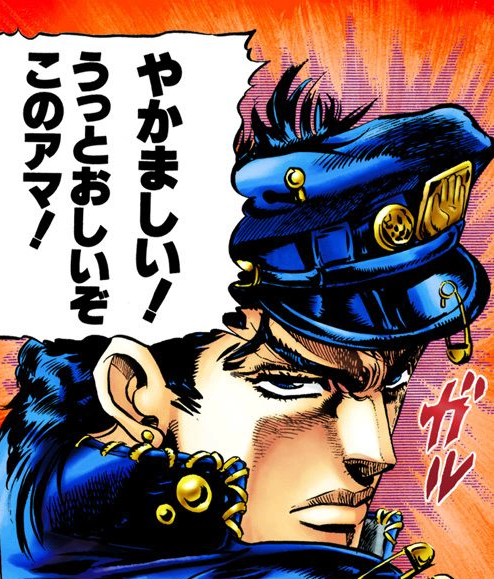
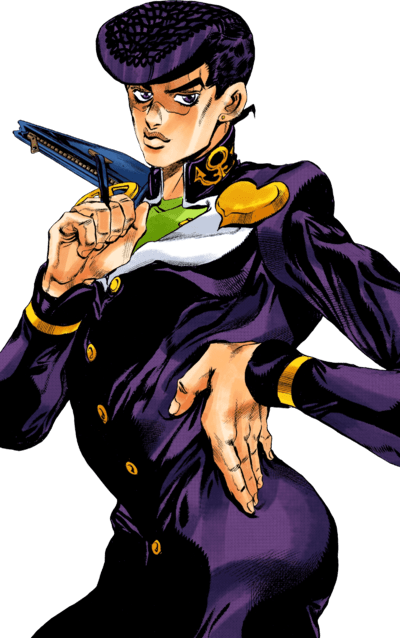
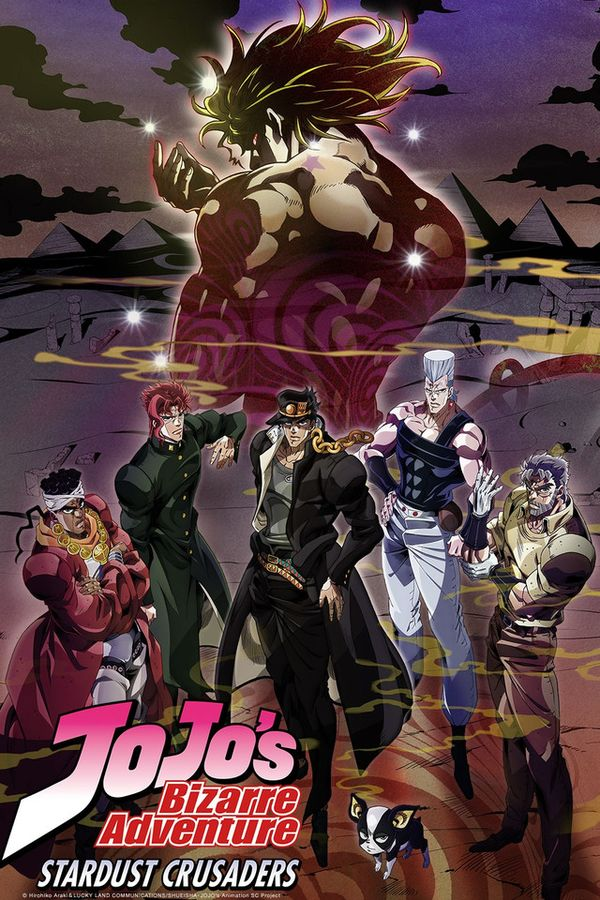
Yes, if things go as planned and Undead Unluck goes from print to animation cel to pirate streaming site, David Production will take full responsibility for converting more anime onlies to another underground manga. David Pro has a set standard for adaptations. JoJo’s shown above and Fire Force are the only two anime that I know they worked on, but the quality of both speaks for themselves. The adaptation of Part 6 Stone Ocean can be seen as controversial within the JoJo community over the amount of CG in select episodes coupled with Netflix’s outdated batch release formula that may or may not have influenced the direction of the adaptation. The same can be said about Fire Force’s fanservice, but above all, save for a few tweaks and changes from manga panel to animation cel is nearly 1 to 1. And there’s normally an explanation for a change anyway.
Actually, changes in continuity aren’t all that uncommon or interesting when it comes to an adaptation of anything. It mostly only matters if the adaptation and the source material are on different wavelengths. For Undead Unluck, I can expect the anime to be as faithful to the manga as possible with a few changes here and there. As of writing this, YouTube and Google feed me articles and teasers with short scenes and demos of the anime to come with no real word on the adaptation to speak of in any significant detail. This can be understandable or suspicious depending on several factors. In the gaming-sphere, all the scrutiny goes to the studio and its leadership if all their hard work is shown in a pre-rendered trailer that fakes the intensity of an upcoming video game.
But anime is more or less forgiven considering how dungeon-esque working conditions can look for animators, as well as studios being notoriously tightlipped about the quality of scenes who draws them all. It’s no secret that the folks at Wit, SHAFT, Aniplex, MAPPA, Pierrot, et al outsource some of their work to Good Korea, China, Thailand, and Vietnam, but whether your favorite arc is being drawn by Saigonese Gustav Klimt or the water buffalo filling in for him while he battles a case of ligma is up in the air. r/Boruto just found out why the anime’s been getting a glow up in recent episodes and it’s not just because Eida is a sexy she-devil. If what they say is true, then the Boruto anime might’ve been used for trainees from other studios.
But as I stated before, David Pro is on the case and living up to their goal of being like their biblical namesake, I don’t expect them to miss a beat. I’ll try my best to keep an eye out for more news on Unkillable + Unfortunate.
When it comes to video game reviewers and YouTubers, I bounce between creators for a time. One of the recommendations I made a few posts ago about Tactical Bacon Productions is one that I firmly believe is in his element enough to get the traffic he needs, even with YouTube jerking him and other YouTubers around with arbitrary strikes and claims due to a screw up that happened on their part. The channels I’ve been recommending for the month of February (and others to come in the future, especially at the end of this post), have been consistent to the best of their ability regarding content. They know what they’re talking about or what they’re doing and few of them have anything controversial surrounding them. The same can’t be said of the subject of today’s video: Under the Mayo.
I came across this channel while looking for content for God of War 4 last year and his controversial review on the game opened up Pandora’s box. Several other YouTubers had come to defend the new Norse era of God of War and call out Mayo for his contrarian viewpoints. And these viewpoints were very contrarian. The video below has a provocative title:
Controversy definitely sells and if it was just a hook to reel in viewers, I’d leave it alone. But viewpoints within the video sounded too ignorant, as if Mayo hadn’t payed any attention to the story of the previous games in the lead up to 2018. Gaming journalists tend to do that a fair amount with the countless number of know-nothings who’s exposure to the old God of War games is surface level or they just forgot. And to lend a straw to Mayo, this isn’t about him misunderstanding the difference between Greek Kratos and Norse Kratos. Hell, this post isn’t unique in what it has to say about him.
On YouTube and select Reddit posts, he’s taken hits for sounding like a hypocrite. Five minutes into a review he’ll praise an element of X and ten minutes in the same video he’ll critique it. Or he’ll highlight a feature of one game, wish for it to be taken out of an upcoming sequel if the game is successful enough and all of a sudden wish for it to come back; or conversely want something to be patched out and regret it when it has. You could argue that most people don’t always know what they want and that’s fair. Too much can be said about an indecisive populace making a generation-changing decision and that sentence alone probably gives you an idea from across the pond.
The point of divergence for Mayo comes in the harsh critique of most games in stark contrast to everything he has said about Doom and Doom: Eternal. Here’s where I admit that the rest of this post may jump into speculation. My exposure to Doom is also surface level, even though I played the original games on Steam and I have the 2016 DOOM on Xbox One that I haven’t touched in a while. I’ve got nothing against the franchise or id Software, my preferences lean more towards the action-adventure variety. I think Doom is an awesomely influential series that most games these days lend an oath of gratitude to, enough that first-person shooters needed a more appropriate genre name than just Doom clone that was the case for it in the 90s and beyond. That being said, if Doom went to court for something (and it probably did, video games that showcase or reference the Devil are gonna get theirs), Mayo is the type of guy that if he were an attorney, he’d drop everything and zoom on over to the courtroom with enough material to sway the jury after boring them to sleep for seven hours, and that’s because even the stenographer wants him to shut the hell up.
id Software’s flagship series has a permanent residence in his head and if his critics are to be believed, if Mayo hasn’t mentioned or shown footage of Doom or Doom: Eternal apropos of nothing, he’s liable to reference it in a review of another game. I’ve watched YouTubers take apart his God of War and Sifu reviews for the flip-flopping, backpedaling talking points, drawing on the conclusion that he says it without sincerity for contrarian’s sake.
Personally, I’ve ventured around this angle before on a few things I wasn’t all that serious about, but Mayo seems determined to die in a bunker with 60 years worth of provisions on his takes.
I hesitate to say that I’m 100% passionate about a singular thing these days, my tastes are subject to change and I could spend my money on things that actually help with survival, hobbies and pastimes coming second. Among Mayo’s critics, he’s come under fire as a hypocritical game reviewer with a singular thing on his mind. With what I know about his review style and what others have said, it seems as though he frames himself as the singular authority on what makes a good game based on only one game and that’s a bad lens to look through.
Speaking of God of War critiques, in GCN’s video on Everything Wrong with God of War 2018 in the style of CinemaSins, one of the criticisms lobbied was one I actually agreed with: games in this day and age need to let go of FromSoftware’s tenets and features of game design. Listing off a round of games that put style and substance front and center like Ninja Gaiden, Onimusha, God Hand, Devil May Cry and the original God of War series, the proof in the pudding there was that FromSoft’s Dark Souls franchise is not the be-all, end-all of game design. In a similar vein, Doom: Eternal isn’t close to revolutionary.
If I may get controversial for a bit, Doom 1993 was a phenomenal influence on the gaming industry. DOOM 2016 and Doom: Eternal are not special. Within the franchise and within the gaming industry, these FPS’s are always welcome to let players partake in the carnage they have to offer, but they don’t have anything new to offer that other games already have for better or worse. Fighting demons on Mars with high tech weaponry? Call of Duty: Advanced Warfare and Black Ops III all did it a year and change prior with sliding and jetpack mechanics for better and worse. Setting the story aside to focus on ramming a demon horn into said demon’s own throat? NetherRealm Mortal Kombat, Black Ops IV, and God of War either did one or both of these things before that.
For the record, I’m not saying that I think Call of Duty beats Doom; I’m saying that mechanically Doom doesn’t do much to make a difference anymore. The lack of weapon reloading gets back to the style of shooter that literally gave you a gun so you can blast away unimpeded, but beyond that Doom is just a more extreme, more based shooter. And you don’t need me to tell you this. Get the game or watch a Let’s Play and see demon limbs flood the next level in Viscera Cleanup Detail.
Don’t get the wrong idea from this. Everyone loves what they love and hates what they hate, but it’s never a good sign to go hard on one or the other, especially at the expense of the opposite. Mayo clearly has a boner for Doom et al, and he has the right to voice his opinions, but there’s better ways to do it. I don’t want to sound like the internet police and say being an asshole on the Internet is wrong when most people do it, ideally with little consequence to them in the real world (better pray no one knows where you live), but if you’re going to say something, have evidence, write down your thoughts, and if there’s a contradiction somewhere down the line, correct it and try again.
The last channel recommendation for the month of February 2023 is TheMythologyGuy.
Since this post mentioned a product caked in mythology, it seemed fitting to mention a channel where that’s the specialty on display. TheMythologyGuy talks about various mythologies from Greece to Egypt to Japan to Norse just to name a few. Several of my favorite videos of his are about the mythical inaccuracies in the God of War games, followed close by movie reviews concerning other myths and franchises, notably that of the Percy Jackson variety. The link to his channel is up above and his about page will have links on where and how to support him.
This will be the last of the channel recommendations until April. Look forward to their return.
The sequel series with a ginormous precedent to live up to
I was originally going to speculate on what the timeskip in the Boruto series would entail, but thanks to leaks provided by Twitter user @Abdul_S17, which have also been passed onto r/Boruto on reddit, this may be a brief post with not as much to say about what happens going forward, or rather, the unpredictable nature of the series makes this very hard, so I’ll try my best with the informaton given. Though I think there’s a few elephants to address regarding the Boruto series. In support of the sequel to Naruto, there’s loads of details that Naruto fans often forget or throw by the wayside. When the Boruto anime debuted in 2017, I recalled a detail that was mentioned in passing, but nonetheless mentioned the death of a major character, and so when it came to it, binging all of Naruto and Shippuden up until that point provided as much context as I could need to make sense of this seemingly unimportant line. This probably gives me the best understanding of the Narutoverse as a whole, the internal politics therein, etc., etc.
That being said, it’s not like Boruto doesn’t have it’s criticisms, and picking apart the worthless drivel from the valid points, Talk no Jutsu or not, if it was Naruto becoming Hokage instead of Konohamaru under the hood of a Transformation Jutsu, rest assured the Orange Hokage would’ve had a way more heartfelt ceremony. Also, regardless of all the money that comes with being affiliated with Naruto, if the Boruto manga was planned better, there probably would’ve been less filler even if the writers can magic it into the plot all the same. The showrunners seem to have fallen for one of the few things that can happen when a manga and anime run concurrent, as explained by a genius in the link below:
A problem inherited by Naruto and other anime adaptations beginning in the early to mid-2000s. And the worst case scenario would be what happened with the Fate franchise, but at least the Big Three have a consistent timeline.
Anyway, the Boruto manga’s next chapter is scheduled for release on February 20, and the leaks tell us how Boruto got the scar that his older self will have in the big brawl against Kawaki. All that’s missing now is the cloak and the sword. If you’ve been reading or watching or both, you know that Boruto has become Sasuke’s pupil and over time gets his old scratched headband as a memento. During the story, a mission to transport a Leaf village scientist to a research facility changes halfway and the new Team 7 is rerouted to assist with a zeppelin crash in the forest transporting autonomous puppets. As it turns out, this was the property of the dangerous group known as Kara and a couple members were sent to intercept.
A familiar face shows himself to keep the secrets from getting out. When that fails, Boruto, Sarada, and Mitsuki, learn that amongst the precious cargo was a boy known as Kawaki whom Kara planned on using as a vital tool. Now that he’s in Leaf Village hands, he’s under the sworn protection of the Hokage, and the troubled kid becomes utterly attached to Naruto, enough that the immediate threat of the Ohtsutsuki clan and its still living members is still felt even close to home.
Multiple attempts and failures to retrieve Kawaki become progressively destructive. Meanwhile, the karma seal on both Kawaki’s and Boruto’s palms begins to resonate and even strengthen at imprecise moments. The flashback in the beginning show that they can both activate it on command, but Boruto as a kid isn’t there yet. The more recent chapters show that whenever Boruto spends most of his chakra or loses control, his karma seal which has the memories of the Ohtsutsuki that Boruto defeated, Momoshiki, activates and Momo’s memories take over his body. Kawaki attempted to remedy this condition with entropy, but Momo, not content on losing his vessel, repairs Boruto’s body.
A cryptic message he gave to Hokage’s son about his blue eyes taking everything he cherished from him starts to come true. At the same time, one of Kara’s worst members, Code, is hellbent on living up to the Ohtsutsuki name by carrying on the will of its old leader Jigen, who was really the vessel of Isshiki Ohtsutsuki. So to summarize it: Code is in one corner hoping to become an Ohtsutsuki with all that comes with it, Kawaki seeks to destroy all Ohtsutsuki, and Boruto wants to get rid of the karma seal on his hand, and these goals all stand in the way of each other with progressively destructive consequences to boot.
I remember being floored by the destruction showcased in the first episode flashforward scene. Until we see the extent of the damage, it’s likely not on the same level as Pain’s Almighty Push.
Then again, them being the only two in the scene on the destroyed Hokage faces says quite a lot doesn’t it.
Now that the scene is set, I want to get a few predictions for what might happen. Spoiler for the leaks shared online, Kawaki gifts Boruto the scar, and is apprehended by Sasuke, Mitsuki, and Konohamaru. After that, I can expect Kakashi to come by as he too lost his eye in his youth and was given a teammate’s notorious Kekkei Genkai lost in the aftermath of the Fourth Ninja War.
In this case, the same may be true for Boruto as he has an ability known as the Jougan. It was originally meant to be the Byakugan, but Kishimoto forgot about that even though there’s a sketch of him with the Hyuga clan’s signature eyes. In the world of Naruto, when a nonmember of a specific clan’s Kekkei Genkai, it’s active for good. There’s no way to turn it off whatsoever, else Kakashi and Danzo wouldn’t have had to make use of eyepatches when they both had theirs.
The jougan activates immediately and the last page shows a glimpse of Momo taking another W for his predictions coming true. Going forward, extra training from Sasuke with some of Kakashi’s input can be expected as both do or used to live with only one normal functioning eye. One thing I didn’t mention was Kawaki trapping Naruto and Hinata in another dimension so that they don’t stand in his way when goes for Boruto again. Soon after being placed under the strictest detention possible, most likely at the behest of Shikamaru, the Leaf Village is gonna demand he release Naruto and Hinata and then keep him under wraps while they deal with Code, and two more Kara members, Eida and her brother Daemon.
As for Boruto, if Kawaki doesn’t comply, then it might fall on Boruto to do so and with less experience than his adoptive brother. The extra training might be signs of a timeskip, but with Kara showing off it’s most overpowered members and keeping them around for a fair bit, it might result in something different. Maybe another flashforward is in order, but again, can’t really tell all that well.
That aside, I recall that Boruto claimed he wanted to be a ninja like Sasuke is in the sense that he protects the village from afar while the Hokage spot goes to Sarada in the future. He seems to be turning into his idol though of course not precisely. Scarred headband, special eye jutsu, currently missing his parents, bearing a curse mark awarded by a pale-skinned enemy, and also under his possession at times, and set to gain a cloak and sword. Holy shit, Boruto is becoming his idol. Let’s have a look.
Of course, Boruto will still have both of his arms, but my point stands: Boruto, by accident or intent, is going to turn into Sasuke, a different type of Shippuden Sasuke. At least that’s what I see, and if it turns out to be true, then awesome. If not, then I’ll wait for Ikemoto and Kishimoto to keep going while I eat a bag of Ligma.
This week’s channel recommendation is TheAlmightyLoli. If you’re looking for a pop culture reviewer with a slice of edge coupled with a passioned understanding of the material at hand look no further. Loli’s style of reviewing and comedy can hit you in the mouth, and his style is an acquired taste, but for those who stick by, there’s never a dull moment. This channel dedicated hours of content to recounting Berserk in honor of Kentaro Miura who sadly died before he could finish the work, though one of his assistant’s, Koji Mori, is picking up where Miura left off at.
If you can sit through days’ worth of content on a single dark fantasy manga that continues to influence the industry to this day, sprinkled in with some other stuff, TheAlmightyLoli’s YouTube channel is linked down below along with the ways to support him on his about section.
Finishing off with the second round of underrated GTA games
Last week, I brought attention to the likes of GTA: Vice City Stories, one of two games that I think should receive a remake, flaws notwithstanding. Even a PC port if able, and I don’t mean by way of emulation as it’s been my only means of playing the game. By the way, I want to quickly update and say I found a mission that may be worse than Supply Lines in San Andreas. The second half of the mission Unfriendly Competition ramps up the difficulty right quick. The second half of this mission can fall off a bridge. Anyway, we’re moving onto Liberty City Stories.
Liberty City Stories is set in 1998, which is three years prior to the start of GTA III. So to outline the timeline of the 3D era: Vice City Stories starts in 1984; Vice City takes place two years later in the mid-spring of 1986; San Andreas begins in 1992; LCS takes place in March of 1998, and GTA III being set in the modern day at the time takes place in mid-Autumn of 2001, and the real-world politics of its real-world counterpart were felt during the development of the game with all the content that was cut.
As a side note, I want to make a post about the uncanny references to 9/11 prior to the actual 9/11. See for yourself, it’s unreal.
Anyway, LCS centers around the character of Antonio “Toni” Cipriani. After lying low for a few years on the orders of Don Salvatore Leone, Toni is called back to do more mob work and help the Leones put the city under mob influence, fighting gangsters, cartels, and the Sicilian Mob itself across the map.
If you ask me, forgetting this game and VCS doesn’t make a lot of sense. You could argue that since they both feature one-off characters and GTA III itself (whom Toni appears in) is the last game chronologically, the point remaking LCS and/or VCS wouldn’t be worth it. But I argue that one-off or not, Victor Vance from VCS and Toni Cipriani from LCS have both been influential even if it’s not all that felt in the games that they serve as prequels too.
No, no one really honors Toni in GTA III and Victor Vance doesn’t appear again, save for the intro to Vice City while other characters like Maria Latore and Phil Cassidy et al have more screen time and became mainstays, but this highlights further problems with prequels. The lack of foresight that can often accompany them. If RockStar thought ahead, they would’ve had Phil Cassidy age properly from gun nut (like his appearance in VC) to drunkard (as shown in VCS) to old man heavy weapons dealer (as seen in GTA III and LCS).
Further, LCS has inherited the water puddle death that made seafaring so nerve-wracking in GTA III and Vice City. The three cities repeatedly lampooned in the GTA series (LA, NYC, Miami) all have beaches, but if you splash a little bit of water on Claude, Tommy Vercetti, or Toni, straight to the hospital. Though, after 2002 and until IV in 2008, motorcycles would make a permanent appearance.
As a sidenote, RockStar got around the lack of motorcycles in GTA III by stating in-universe that a petition to get them off the streets of LC pulled through. So bikers were essentially outlawed. Personally, I grew up in the Bronx and having seen a fair share of bikers growing up, they don’t play a very large influence, but biker gangs in NYC would still show up from time to time.
Thankfully the absence is quickly remedied following 2002’s Vice City, though the 3D era games have showcased several design flaws of the time. In the case of Liberty City Stories, at first glance it was structurally similar to III and Vice City, just asset flipped and this time making use of the map in-game as opposed to hoping the player could memorize from the mini-map in III. But like those games, swimming was against the law. Bikes and bikers were given an appearance, but aircraft would still take a backseat until the pilotable helicopters after 2002.
But a move RockStar made that would change the face of GTA going forward would be non-silent protagonists. Claude in III literally nods and sets forward blasting. Without a single word of dialogue, Claude portrays himself to be one hell of a sociopath. Employers and allies who stay by his side are left alone, but give him a briefcase of cash and a target and he’ll pursue it to the ends of the earth. This serves as a vague spoiler, so those of you looking to emulate it should be on the lookout.
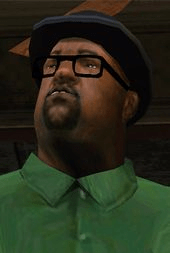
Speaking of III, Toni debuts as an employer in that game and trying my best not to spoil, the character models in both show a difference. Unlike what became of Phil Cassidy, more attention was at least paid to Toni’s model.
See the difference? I want to say RockStar doesn’t focus on progression all that much with characters from previous games quietly retiring or outright dying (Johnny Klebitz deserved better.), but within an established universe, and with the right amount of dedication, they can do good with a before and after. This isn’t related to anything plot wise between games, but at times in LCS Toni will be told that he’s remarkably, almost skeletally thin. In 1998, he was lightly mocked for being underweight, and over the next three years and change, he became overweight. A bit like Nikocado Avocado, except even with the extra pounds, Toni can still move around a lot faster.
Actually, if you’ve ever seen weightlifters, bodybuilders, or the most recent incarnation of Thor, packing on the weight helps plenty for those guys. Toni turned himself into an ox when you think about it. The way the GTA games are written gives away a sense of a Hollywood influence, and mobster movies get the most spotlight depending on the setting. Vice City combines aspects of shows like Miami Vice and any mobster movie set on the East Coast, and III and LCS both give me more New York Five Families vibes. Pick your favorite movie, but for me it’s Goodfellas, with a hint of Godfather, and maybe also Miller’s Crossing with these wise guys dedicating themselves to the mob from birth, the lot of them being mobster brats as kids.
That tends to be the case for both Tommy and Toni. For Toni, his mother doesn’t make a physical appearance, but more of a vocal appearance. Pushing him to step it up, bust his enemies’ teeth in, come back with at least five severed heads or don’t come back at all; admittedly, this feeds into stereotypes of both Sicilian parents and the Sicilian mob. I’m not Sicilian and I don’t know many Italians (save for the many pizzerias and Italian restaurants within walking distance of my apartment), so I can’t say how true to life this is for someone of Sicilian ancestry growing up. The Sicilian mob on the other hand gets a fair amount of media coverage in pop culture if not news outlets in and around Sicily and Southern Italy, and if Sicilian or Mediterranean-based journalists are worth their salt, the Sicilian mob isn’t one to trifled with.
Groups like Ndrangheta can and have done serious damage to people who’ve wronged them, and it’s far from pretty. Of course, works of fiction need to take liberties in case someone is dumb enough to imitate what happens in real life or for dramatic effect, but if RockStar pulled some stories from real-world headlines featuring the Sicilian mob in action, then perhaps it’s as close to accurate as can be short of interviewing an ex-mobster or watching an interview or documentary of such.
Toni Cipriani goes about doing much of what can be expected of a mobster with the strong-arming, enforcement, bribery, political meddling, malicious destruction and all that the mob was accused of doing or charged with. All this being said though, the asset taking and developing in the VC games and San Andreas are absent. On the one hand, it would fit with the narrative of the game, but it’s a bit unrealistic as several mobsters — real and fictional — operated front businesses to keep the police from sniffing around or at least bribe them with “get lost” money.
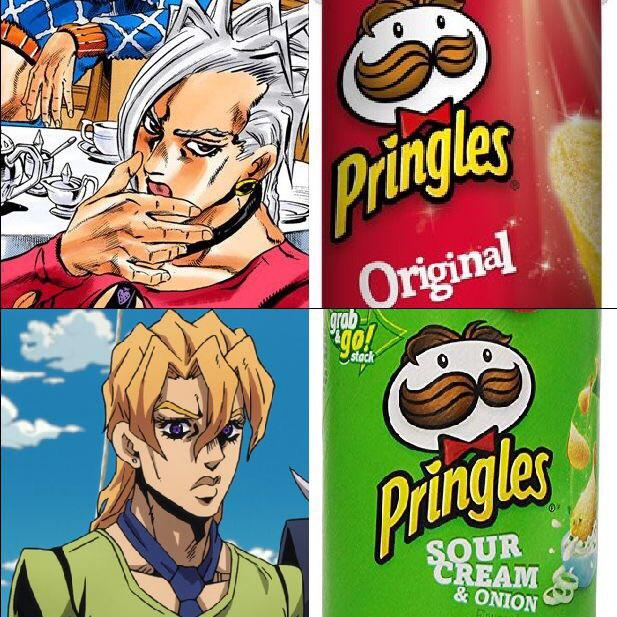
Grand Theft Auto is an ultimate in parody, but more realistic elements existed in movies and shows and funny enough JoJo’s Bizarre Adventure: Golden Wind. Golden Wind takes place in 2001 in Naples and briefly explains that many capos and even the Don’s consigliere (advisor) may have a side business if not an umbrella’s worth of them, sometimes with evidence. Mr. Pericolo (pictured above) is an example of mobsters continually hiding their identities and getting one up on the law or their enemies.
Disguises and shell companies and whatnot don’t feature in LCS. This would probably take away from the video game aspect of the video game and probably feeds into a misconception that a mobster can’t have a side hustle, which I can’t really believe after what happened to Al Capone.
And if that were the case, then the misconception is broken by way of Tommy Vercetti himself gaining assets and collecting regular payments for the latter half of Vice City. Recall that he’s from Liberty City originally, and the game follows much of the plot of Scarface 1983.
For LCS, one of the hidden perks of being an asset flip of GTA III and Vice City is that some of the problems and mechanics in SA and VCS make a comeback. This being Liberty City, the radio stations from III are all intact, albeit with different music and radio shows to listen to (Chatterbox FM is a hidden gem), mobster characters from III show up along with a few one-off characters who don’t appear in III, this being post-VC, there’s more weapons variety and I think the game fixes a minor anachronism.
Gun nuts reading this will notice that ever since the M4A1 was made famous by the U.S. military overseas, RockStar put it in all the 3D games after III despite it not being manufactured until 1994 and probably being issued to the military a year and change after that. So it makes sense at least to have that as a rifle in a game set in 1998. The games set years prior to that should all have the M16, while III and LCS have the M4 model, though this being early 2000s internet, this is assuming the internet was fast 20 years ago.
Anyway, the dialogue doesn’t sound out of place for a piece of mobster media for the time, the characters’ are all felt (especially Mrs. Cipriani), Toni is an impactful protagonist despite the lack of muscle mass, and considering he’s one of two characters to show up in at least four games, it seems as though RockStar wasn’t ready to part ways with either Phil Cassidy or the character Donald Love until it was time to use that next-gen technology to make LC look more like NY than it did back then. Now, I know I said this was a two-parter, but there’s a third game that probably doesn’t receive as much attention that I also want to get around to. Whenever that’ll be, I’ll have to rewrite the schedule, but it’ll be covered down the line, so be on the lookout.
This week, I recommend a podcast. The Trash Taste podcast is hosted by three anitubers Garnt “Gigguk” Maneetapho, Joey “TheAnimeMan” Bizinger, and Connor “CDawgVA” Colquhoun. All three have their own YouTube and Twitch channels, but I’ll only link the podcast since it’ll have the links provided already. The Trash Taste Podcast markets itself as an anime podcast, but has overtime evolved to encompass more about life in Japan especially as a gaijin/non-Japanese. They also have an After Dark channel that livestreams on Twitch as well. The podcast has a Patreon page, and while the videos are recorded for the YouTube viewing audience, if you can’t find the time to sit down and watch, podcasting apps like Google Podcasts and Spotify have their episodes on audio only so there’s more than one way to support them.
Looking at a pair of GTA games that deserve as much honor as the others
Gamers of all strides know the gods of controversy at RockStar Games and their most famous series of all: Grand Theft Auto. Developed by Scotsmen in 1997 under what used to be DMA Design, the working title was changed from Race n Chase to that of a motor vehicle theft, even though the games have always featured way more than that.
It wouldn’t be until the game’s 3D era installments in the Fall of 2001 that set a precedent across the gaming industry. Being one of the games that perfects the 3D formula as other games were failing or meeting expectations prior to the turn of the millennium is one hell of an accolade. Future games continued to reinvent the wheel, with a voiced protagonist and ownable assets in Vice City (2002), RPG elements in San Andreas (2004), and by the HD era, the characters got grittier and more realistic with the GTA 4 and Episodes from Liberty City protagonists of Niko Bellic, the Yugoslav War vet, Johnny Klebitz, the biker, and Luis Lopez, the nightclub manager.
That being said, the 3D trilogy protags and the ones pictured above from the HD era, coupled with the three protags of GTA 5, are the most memorable ones which becomes extremely ironic for the GTA III protagonist: Claude, a silent protagonist who can best be described as an amoral psychopath even without dialogue.
But among the myriad of GTA characters, there’s a few that don’t get as much recognition from the 3D era from a pair of forgotten GTA games. This post will focus on the first of these — Vice City Stories — while next week’s post goes to the second in this two-parter: Liberty City Stories. Those titles almost give me the impression upon reflection that there were drafts for a San Andreas Stories that never came to light.
So what’s Vice City Stories about? It’s set in 1984, two years before Vice City’s protagonist Tommy Vercetti gets out of prison and heads to Vice City, Florida (no fake state this go around), and follows the protagonist Victor Vance. He starts as a corporal in the U.S. Army and is sent to do bullshit tasks for his NCO Sgt. Jerry Martinez. Martinez, though, is an outlier of shitbaggery with most of his tasks being especially illegal. And with Vance as the fall guy, he gets kicked out with a dishonorable discharge for being caught with pot and coming to base with a hooker in toe on Martinez’s orders.
I want to tangent for a bit. If you’ve been in the military, especially the Army, there’s a few things that almost don’t add up very well. It’s an inside joke that Army corporals are very ignored and shat on by higher ups. Specialists are often seen as belonging to a club known as the E-4 mafia. Tons of videos explain what that is, but to my understanding, the shitty details relegated to lower enlisted normally include those in pay grade E-1 to -4, though a Specialist with some time in service knows a few tricks of the trade to get around performing said shitty details. Again, videos can explain it better than an entertainment blog.
Also, there’s a sad reality about the U.S. military that senior noncoms are almost always looked over when they misbehave since they’ve shown to be such an asset for being in for so long at so high a rank, even if their direct leadership (first sergeants and sergeants major) is simply impressed that they can run two miles in under fifteen minutes. Part of that is a joke, but there’s some truth to it. Theoretically, a sergeant first class in the Army or a gunnery sergeant in the Marines can be a total asshole to everyone below him or her and probably face nonjudicial punishment because of something stupid. So it raised a few alarm bells for me that Martinez was a sergeant at the pay grade of E-5 and not E-7 or higher. He probably has more time in service but got passed over for different reasons (the 1980s U.S. Army was a vastly different beast), but who knows?
But enough about military politics. Other outlets can better bitch and moan about that. Back to the game. Following Vance facing the worst of the Uniform Code of Military Justice, a few contacts made on the outside help Vic out and get him back on his feet. He explains to Sgt. Martinez that his purpose for joining the military was to provide for his family, though the game reveals how crap they all are with money, save for the one in his immediate family that really needs it, his sickly younger brother.
When you get an honorable discharge from the Army, ideally you have the best credentials because of how great it makes your resume look. Dishonorable discharge is a different story and Vic could generally be far, far worse than a dope peddler. Interestingly, halfway through the game he expresses discomfort for this part of the criminal underworld, sticking mainly with extortion, racketeering, and prostitution. Still morally questionable, but the character arc almost reminds me of Walter White in Breaking Bad, which is interesting as VCS was released about two years before Breaking Bad premiered on AMC in 2008.
I think I may have material for a future post. While I know what happens at the end of the game, having seen gameplay of it on YT, I’m refraining from major spoilers and looking at features lifted from other games. Swimming is here to stay and the era of “touch water equals death” was gone briefly until RockStar’s 2010 western game Red Dead Redemption brought it back because…
The asset ownership returns from San Andreas and Vice City and this time, Vic has a choice over what to turn a newly acquired building into. Rival gangs can attack your shit and if you don’t hustle, you pay out of pocket to fix it. There’s also side missions and upgrades to do and the fiscally conservative of you might sing your praises if the income outweighs the expenses. This was the case for me personally. You get your pay every day at 4:00 PM, and since I barely spent anything, my daily income brought me a fifth of the way to six figures, so paying to fix shit didn’t really faze me. A feature that also shaped GTA games in the future was bribes.
Whenever you get busted or wasted in game in this era, the authorities tending to you take away your guns, but in this game you can buy them all back. Then with GTA 4, only the police took your guns away. Mentioning the timeline in a non-spoilery way, the 3D era blends pretty well though there’s a few inconsistencies. Some characters disappeared from the timeline momentarily to show up in another game apropos of nothing. Sometimes characters aged incorrectly (see Phil Cassidy for more information). But putting aside developer oversight, the gangs within were mostly consistent, with X gang shown to be powerful in X game or Y gang disbanding because of actions in Y gang, etc., etc.
All of these would at least be grounds for a remake or remaster, or so I’d think, but III, VC, and SA get the most love as those were the three to be remade at least twice, first in the early 2010s to coincide with their respective ten year anniversaries, and again in 2021 to coincide with the 20 year anniversary of GTA III, though faceplanting at the first hurdle.
As well loved as these three games are, they scratch the surface of what the 3D games had to offer and leave a few things out of the narrative and timeline of the 3D era. You could piece together everything with just CJ, Tommy, and Claude and call it a day — many have done that — but personally, I like the extras included by these games inclusion. In fact, I’ll probably work on a timeline blog in the future. I’ve played these games a fair bit and I’ve got a solid grasp of the story.
I mentioned in the last post that for February, I would include YouTube channel recommendations. For February 3, 2023, I recommend the channel Tactical Bacon Productions. This channel covers video game content mainly focused on David Jaffe’s repertoire most famously Twisted Metal and God of War. The most common way to support him are through subscriptions and he does have a Patreon for which donations can be made. The link to his channel is below. If you want to hear more about Kratos or the games that were inspired (even heavily) by Twisted Metal, look no further.
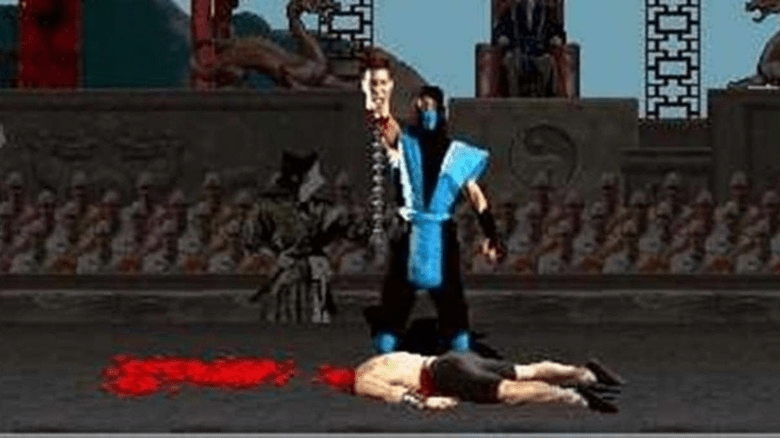
I have made clear that I am no villain of emulation/piracy when it comes to defunct games and their developers. Of those defunct studios, the folks at Midway Games and the entire 3D era of Mortal Kombat games. Well, not as of writing anyway; I’ve only got Deadly Alliance, Deception, and Shaolin Monks at current. When I free up some space on my computer, I’ll add Armageddon to the lineup.
Personally, Mortal Kombat: Deception was the one to introduce me to the rest of the series back when it was new in 2004. I’m not sure if this was fandom-wide or if it was just me, but I didn’t realize there was a story going on at the time. Then I watched further videos and discussions from the creators themselves and unaffiliated content creators on YouTube who explained that it seemed to be the case that folks didn’t realize or pay attention to the story going on until at least 1995 when fan favorites, most notably Scorpion, was absent until the Mortal Kombat 3 re-release titled Ultimate Mortal Kombat 3.
As you can see, Scorpion, Johnny Cage, and Raiden are absent. Along with some new characters and returning characters, rather than keep up the palette swap of Scorpion and Sub-Zero (the latter of which is shown unmasked there with the scar over his eye), there’s the two ninja cyborgs in Sektor (shown in red) and Cyrax (shown in yellow).
Nevertheless, Mortal Kombat trudged through the nineties with a dip in the latter half of the decade following the subpar 3D and cinematics within 1997’s Mortal Kombat 4. The opinions on the games in the 3D era seems to be that on the one hand, 2002’s Deadly Alliance perfected the errors of the previous game graphically, but on the other hand was one of the first signs that the money and idea trough at Midway Games was running dry. If that’s true, then it could explain why the new owners of Mortal Kombat, Warner Bros., are welcome to re-release and highlight Mortal Kombat 1, 2, and 3, while ignoring or keeping the co-creators, Ed Boon and John Tobias, from attempting to re-release/remaster the 3D era games.
I don’t know about you, but this doesn’t seem to be the fairest deal all things considered. The biggest tell that there’s a preference for the first three games is that the plots of all three are the reimagined plots of Mortal Kombat 2011, henceforth referred to as MK9.
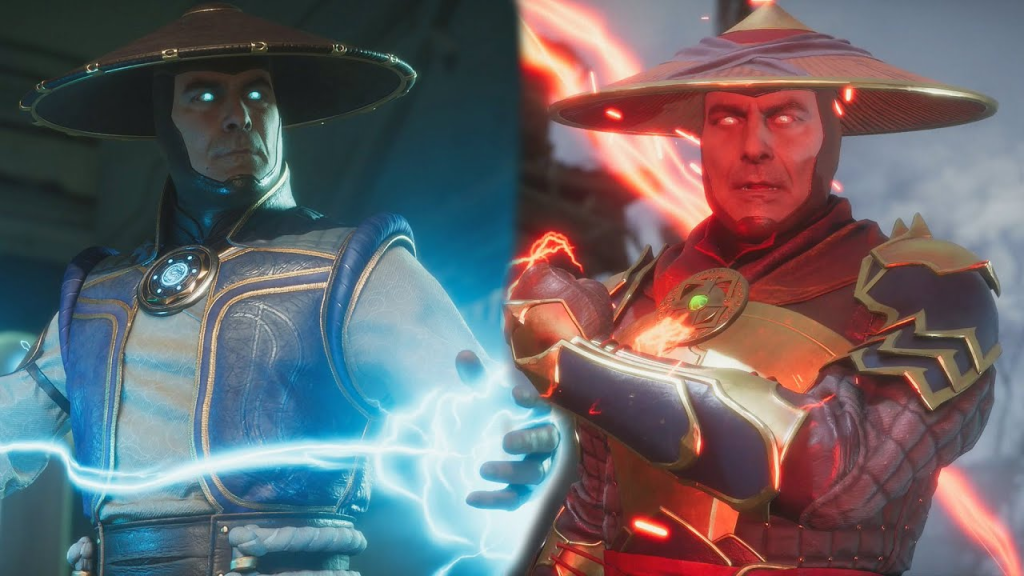
Brief summary for MK9, the events of Armageddon are rewritten when Dark Raiden sends a premonition of the MK Tournament to his past self. An amulet on Raiden’s person cracks as time progresses to show that each and every move they make further welcomes doom in the story. The first third of the game focuses on the tournament as an A plot with other characters’ motivations as a B plot. The middle part focuses on a revamped tournament in Outworld with different rules that are meant to favor the home team instead of the challengers in the Earthrealmers, and the final act focuses on the technically illegal invasion of earth by Shao Kahn’s horde.
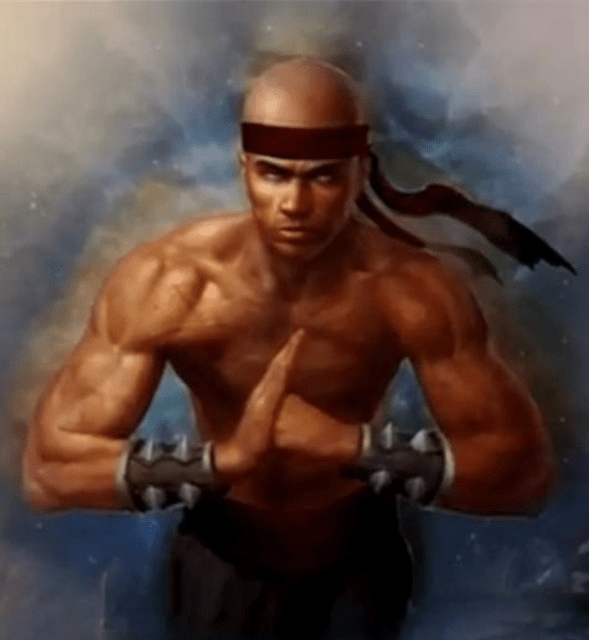
MK 9 does what it can to tie a neat little bow on the story as it goes on, even rewriting events from the old games which is something I admire. As much as I like the old 3D games, there’s not a lot of consistency lore wise. Character endings do factor into the overall plot at large but differentiating canon from non-canon would require a flowchart. For example, Deadly Alliance and Deception flow into each other fairly well. The opening cinematic of DA shows the ambitions of the sorcerers Quan Chi and Shang Tsung, their murdering of Shao Kahn in a false show of allegiance and Shang Tsung finally getting one over on Liu Kang at the Wu Shi Academy itself.
Not only did these two villainous characters achieve something that rarely happens in media (the death of the protagonist/hero), they used his soul to revive the legendarily undefeatable army of the dragon king. A character we learn more about in Deception. While Raiden is narrating the story, it’s interpreted as a sign of things to come. Death and destruction are on the horizon and if Earthrealm doesn’t act fast they could succumb to the same fate that befell Kitana’s home world of Edenia. The purpose of the MK tournament was to give Earthrealm a defense mechanism. With other worlds falling to Shao Kahn’s Outworld forces, the elder gods of Mortal Kombat granted earth this fighting chance, but refuse to intervene further. This forced Raiden to come down to earth to organize Earthrealm’s heroes into a fighting force that can stand a chance against the Deadly Alliance.
While this is happening, Deception is a bit of a prequel. Before there was Liu Kang and Kung Lao, there was Shujinko. An aspiring warrior who looked up to Kung Lao’s ancestor and namesake, the Great Kung Lao, with dreams of defeating Shang Tsung in Mortal Kombat himself. However, as the name suggests, there’s more to this than even he would know.
Both Deadly Alliance and Deception have a story mode known as Konquest, though the story aspect is further explored in Deception. Whereas the DA version is a tutorial showing the player how to control the roster, Deception focuses on a central protagonist in Shujinko. It starts with him in a village in Earthrealm and learning fighting from Bo’ Rai Cho himself. His dreams are put on hold until he can demonstrate his fighting abilities. Seeing the opportunity before him, an entity known as Damashi appears before the young man and grants him the power to imitate the fighting abilities of any warrior he encounters. The purpose of this gift of absorption/copying is so that Shujinko can defend himself while taking on a quest set forth by the Elder Gods.
Damashi explains that they need a representative born within the realms to gather and send them tools known as the Kamidogu so that no one with evil aforethought can disturb reality to their own whim. There are six realms, each with a corresponding Kamidogu. There are four that get the main focus across the franchise, but there’s two more that are explored in this game. In order the realms are Earthrealm, the Netherrealm, Chaosrealm, Outworld, Seido, and Edenia. All realms are accessible when attaining that realm’s Kamidogu, and all are accessible through the Nexus that connects them all to each other. Only a Kamidogu can activate the portals between the realms, though there’s other methods accessible to gods and sorcerers.
Over the course of the story, Shujinko uses this ability to learn nearly every move from every warrior he comes across, to include many big names and newcomers within Deception, not all of them corresponding to the story. You do meet characters like Havik, Dairou, and Raiden in the story, but the latter two don’t teach you their moves until Konquest mode is finished. After that, the Konquest mode is fully explorable though the village you start in can’t be explored so you’d better do everything you can in there or you’d have to risk starting over.
The story of Shujinko begins to converge with that of Deadly Alliance before it when he ventures to the Netherrealm the second time. Getting sidetracked a bit back in Earthrealm to qualify for the tournament puts him in the path of Nightwolf who helps him to limit an evil stain on his soul. The consequence of this is limited travel to more dangerous realms and so to reignite this evil or at least strengthen it, he needs to return to the Netherrealm and absorb more dark energy from one of the best candidates: Scorpion.
In exchange, Scorpion tasks him with finding Quan Chi while in the Netherrealm where the undead ninja beats him silly and chases him through hell. Elsewhere, a pair of demons, Moloch and Drahmin, overhear the commotion with a personal wager to feast on the loser. The pair intervene and hold Scorpion up which gives Quan Chi a chance to escape into a portal that takes him to the Dragon King’s Lost Tomb, ergo the beginning of the Deadly Alliance opening cinematic. Shujinko’s time ends in the Netherrealm and just as he’s returning to Earthrealm, Raiden updates him on the death of Liu Kang, and the urgency they face. Shujinko tries to call a favor from Outworld, but gets held up by the Deadly Alliance. Out of that pickle, he comes across a new one by a frivolous arrest and twenty years in a holding cell in Seido, the realm of Order.
He eventually gets back on track and finds the final Kamidogu only to learn from the real Damashi, Dragon King Onaga, that there’s a final piece that will send the Kamidogu to the elder gods. This blunder forces him to act and self-correct and explains Deception’s opening cinematic as narrated by Shujinko himself.
Shaolin Monks is more of a retelling of MK2 so it won’t get counted here. After the events of Deception though, the stakes are so high that Armageddon is on the horizon.
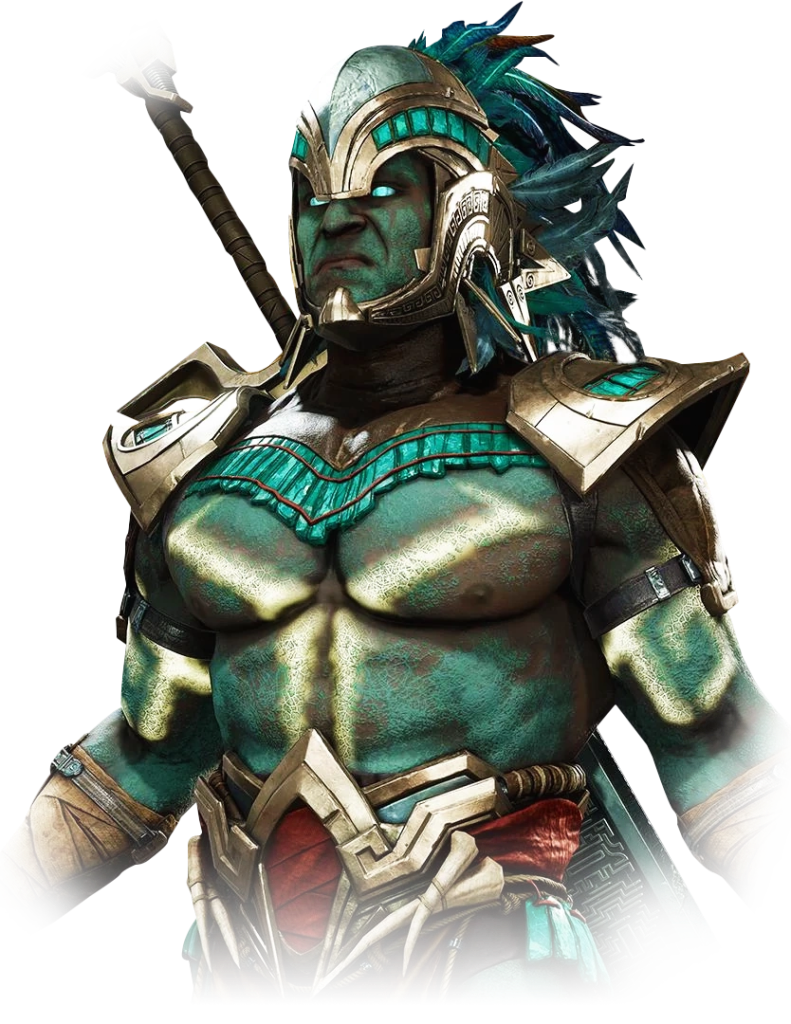
New game, new protagonist, new set of priorities. Shujinko’s quest spanned over forty years, while the new guy Taven pretty much has only a few days to finish his quest. His parents, the god Argus, and the sorceress Delia, set him and his brother Daegon on a quest to acquire weapons and armor and defeat the firespawn known as Blaze. Unbeknownst to them, Blaze’s death is supposed to have two outcomes: annul every warrior’s abilities or exterminate them all. Things don’t go as planned and Taven is found battling his brother in Mortal Kombat as opposed to facing him in a fair and friendly competition as advertised. By the end, the power released by defeating Blaze does nothing. In fact, it makes things worse. No one dies or even loses their powers — they get stronger in the Konquest ending, and this is repeated in Taven’s Arcade ending which is narrated by Argus instead of himself.
If I had to give my two cents on the 3D era of MK games, I’d say that there was a benefit and a hazard to their inclusion in the lore as well as from outside forces. Objectively, Shujinko was written as an unknowing tool of evil with no ambitions beneath the surface. He has an admiration for the Kung Lao lineage, and a desire to live like the original Kung Lao from centuries prior. Not everyone needs lifelong goals or at the very least, it’s better to have something that’s adjustable instead of elaborate and rigid, but Shujinko’s goals seemed to be a bit too idyllic. He had a few of the same problems that Zuko had in Avatar, in that he didn’t really think very hard about what he expected to get out of life. Getting the avatar, winning the cinderblock affections of your callous father, and redemption from a royal faux pas. What next?
Similarly, Shujinko’s goals were to become a great warrior like the Great Kung Lao prior to his replacing the mop in Goro’s hands and defeating Shang Tsung. Not much beyond that. Regarding goals, Taven’s aren’t worse, they’re nonexistent. He goes on the quest because he’s told to and the stakes become personal when he finds out how psychotic Daegon has become.
But even these hazards to the MK lore didn’t really deter me personally. I wasn’t that attached to MK at the time, and I’m willing to let the creator continue unimpeded, though it would help me to try to pay attention to the important bits that get thrown at me all at once so I can point out inconsistencies as I see them. For example, without proper reading between the lines, Shao Kahn seems to come back to life between his death in Deadly Alliance and him appearing in the Armageddon opening cinematic. I heard it was explained that that’s not the original Shao Kahn but one of his generals, most likely Reiko, but finding that piece of info requires some digging.
In one scene in Konquest mode, Shang Tsung, Quan Chi, Onaga, and Shao Kahn are all in the emperor’s throne room, yet all of them betrayed each other or expressed hostilities towards each other before this point! Hell, Onaga admits to seeking the power of Blaze to usurp Shao Kahn to his face. If there was consistency in this timeline, Onaga would really be the last one still alive as the Deadly Alliance killed Shao Kahn, and the duo along with Raiden failed to stop Onaga.
And it’s not just that plot thread. There’s more threads that seemingly have no connection or go nowhere or get dropped half way without addressing the consequences across Deception’s and Armageddon’s Konquest modes. Do the Lin Kuei remember Shujinko? Does Bo’ Rai Cho remember his student? Would Taven have gotten revenge on Quan Chi for killing his partnered dragon Orin? Does this Alliance of Darkness move forward with their plans to conquer all?
It can seem like a waste to put forth this plot point and drop it half-way, but I can see why such a move would be made if it’s unimportant to the rest of the plot or the character in question. Both Konquest modes get back to the original focus, but the midlevel faffing about can seem like reading a story spearheaded by a hyperactive ADHD sufferer. The type who’d get sidetracked in a Skyrim or FromSoftware game.
All that being said, MK9 is a proof of concept that the mess of a late stage investment can be fixed or reworked with a reboot. MK9 goes down in video game history as a success story, and MK X and 11 seemed to be doing fairly well. But there’s some aspects of the old 3D games that deserve a comeback. Mini-games for one would be appreciated like Chess Kombat, Puzzle Kombat, and Motor Kombat which are all entertaining and work towards gathering coins for the krypt as well. Speaking of which…
The krypt also went through its own evolution upping the creepy to full-blown horror. I’m not entirely a fan of the move to make it available for purchase, and it might be the subject of its own blog post in the future, but overall, it’s a better way of unlocking content without forking over IRL cash. Earning money through fighting and game modes and mini-games is an objectively better way.
I’m not sure if this is a conscious decision from within NetherRealm or WB Games is opposed to it, but for some odd reason, the 3R games are largely forgotten. If you have the means to, I encourage you to try and experience them yourself somehow. Gameplay video, emulation, however it’s done, you’ve got to try them. It’s worth an experience.
Before I go, I have plans for February to introduce readers to YouTube channels I have been watching, my subscription to said channel notwithstanding. I watch these channels a fair bit and use the videos at times to fuel my research for these posts. It would only be right that I share and try my best to help them grow to the best of their abilities. This isn’t a sponsor by the way, think of it more as a recommendation. They’ll be there if you would like to explore further. The choice is yours.
Zero respect for a franchise beginning to get out of hand
I intended for this week’s post to be about the 3D Mortal Kombat games. My recent extensive use of the PCSX2 emulator to play them to exhaustion felt like prime material for a post, but recent events in entertainment, word of mouth, and waiting for extra news to come out on said events motivated me to comment on this. Your 3D MK Games Appreciation post may have to wait until next week, followed by a look at GTA games RockStar is hoping you’ve forgotten by now.
In mid-2022, HBO Max announced a new series based around the Scooby-Doo character Velma Dinkley. The creator of this series was none other than The Office alumni Mindy Kaling. Depending on the type of media you consume, this was either a non-starter, a cause of excitement, or everything wrong with modern-day Hollywood.
Now that the series is out and releasing episodes regularly on HBO Max, everyone who’s been able to has seen it, and more and more news about the show, its creator, and the characters have come out, almost no one has anything good to say about the show save for animation and character design. From my own observations and everyone else’s opinions, my conclusions are that if the characters didn’t use the names or even likenesses of established characters, it wouldn’t be so bad. Personally, if it was more of a different set of characters in the same universe, then the media fiasco around the show would likely be naught. But some things are hard to ignore.
Part of me wants to believe that when The Last Airbender came out in 2010, there was a large amount of draft dodgers who contributed largely to the idea of “racebending,” only instead of different races and ethnic groups representing different countries (when that wasn’t exactly the case in the Avatar: The Last Airbender cartoon), established characters were largely race swapped save for Fred who we’ll mention later.
We can argue all day and night about diversity of skin color in the original show and it’s generational iterations over the years, but equally as important as color is also culture and character. Basically, what I’m saying is a show about four white dudes who behave the same would be boring, same for four black dudes, Asian dudes, Amerindians, etc. But as individuals with wants and goals, that’s a hook. Velma is an unfortunate victim of the “diversity of color = automatic good” that some in media claim is a fault of Hollywood. Mindy Kaling’s Velma is not the same as the original 1969 Scooby-Doo, Where Are You? and it shows.
Never mind that Velma is Asian Indian, Shaggy uses his real name of Norville and is black or that Daphne is a rare, East Asian ginger; character-wise everyone is divorced from their original iterations. Well-rounded characters have negative and positive qualities that make them believable and watchable, and there’s too much of the bad and not a lot of the good in Velma. Take the titular character herself.
Original Velma was a peak nerd with as many benefits and drawbacks included in that package. She can singlehandedly teach you all about the mechanics of simple machines within a larger, more complicated device; disassemble a radio blindfolded; and use the simplest possible solution to keep a volcano — real or model — from erupting or minimizing the damage if it does. Clearly, these are exaggerations, but they speak to the positive qualities that can be found in anyone else.
One of the drawbacks for her was that she was also a bit clumsy. Her nearsightedness is an age-old gag; you just can’t have a Velma whose glasses are neatly secured onto her face. Maybe as a middle-aged woman with a band to keep them secure, but it was pretty common to hear, “My glasses! I can’t see without my glasses.” All in all, it was a part of her charm. Number 1 candidate for assistant teacher or even principal, glasses get knocked off by a door.
Then there’s the rest of the gang. Fred was pretty much the everyman with surprisingly exceptional leadership skills, Daphne was the sharp rich girl (one of the few wealthy characters whose riches refer to money and access to knowledge), and Shaggy and Scoob were the pair of goofballs who could stuff their faces with anything deemed edible, the sandwich tower format serving as the default meal of choice. Alone, these folks would probably not get a lot done, but together they make an excellent team. Actually, this type of format can be said to have inspired elements in whole or in part of later shows.
Don’t quote me on that.
The facts in my fondue are that for as long as one of Hanna-Barbera’s recognizable cast of characters has been around, there have been re-imaginings and parodies. All of which I might have seen or would welcome, so long as it doesn’t desecrate the soul of the original or lambaste the fans of the original when legitimate and constructive criticisms are made. Basically, do what you want with X, but don’t insult the fans. No matter the product or franchise, the fans are not to be trifled with.
Mindy Kaling and HBO Max have taken yet another bug bear out of the pen to rub its ass on the carpet, and this time the stains get progressively harder to remove. The producers are forcing all four of their sober audience members to accept these as the original characters despite there being zero connections between them other than their names.
Old Velma was sweet and smart while new Velma appears to be a jerk. Old Shaggy was a clueless goofball while new Shaggy is said to be a hopeless straight edge. Old Daphne was quite charming while new Daphne is a drug dealer for some reason. Old Fred, by my description, kind of had protagonist energy. Charismatic leader who gets the ball rolling. New Fred is all that old Fred is not. Childish, cowardly, incompetent, and the butt of many a cruel and racist joke. What good is it for me to know that he’s penis is small? Well, for me, who’s enjoying the reviews in lieu of the lack of entertainment that was promised in the show, it does nothing for me to retain that knowledge. Not even the target audience is all that enthused.
Certain voices online who are active in the political sphere in other aspects have different takes on this in specific and modern media as a whole. Many conservatives have pointed to the emphasis of a character’s appearance or background as a sole or primary personality trait when in reality a character being black or Indian or Latino/a is merely a descriptor. Same thing for if they’re gay or bisexual. In contrast, many left-leaning voices often advocate for more non-white and non-straight protagonists to offset the default established from generations of media and cinema. Moderates would advocate for both: diversity of color, culture, and character. No picking and choosing what shines at the expense of the others. Funny enough, it’s reported that the far-left were so disgusted by the show that a conspiracy theory has popped up to claim that Velma was secretly spearheaded by the far-right to humiliate and defame the far-left based on assumptions and negative stereotypes.
I promised myself that I wouldn’t get too far into the political aspects of the debate of certain parts of media. I like to stay in the middle where I can absorb every part of a debate and form my own conclusion, even though I’ve given concessions to one side or another at times. I don’t want to stay in that circle for too long as there’s more to talk about the show so let’s move on.
Other criticisms I’ve heard regard the tired old meta humor. When done well, it can enhance the writing. When done poorly or for too long, it starts to rust. This was a bit what got me out of South Park for a bit, but recently I’ve been looking back into the show and for a quarter-century, it’s a bit like a cloaked fist. It punches hard, but doesn’t really talk down to the audience. I might bring it up in a later post.
Velma doesn’t seem to have a lot of material to lampoon off of and if I could do it a service, I’d probably give it the Old Yeller treatment… if there weren’t rumors circulating that it’s set to receive a second season despite fan backlash against the first.
For my final thoughts, Velma‘s characters and setting are a symptom of a larger problem in modern media: it’s an honest reflection of the creators that they often fail to see ironically. As an addition to the Scooby-Doo franchise, it’s entry was as welcome as an independent Rhodesia with white minority rule.
Let’s also not forget that they producers thought Scooby was too childish for this adult take on the franchise. Spoiler warning, though I don’t recommend watching it at all: one of the first scenes is a sex scene between roaches. And the dog got the boot? Well, at least he’s spared the indecency of this show… for now..
In recent times, I have taken an interest in video game emulation and emulators, chief among them is the PS2 emulator PCSX2. This program operates the same as a PS2 with a few different bells and whistles for your computer.
SONY DSC
The PS2 was my first console. My uncle got it for me as a gift when I was about four and my library of games didn’t start collecting dust until I picked up my first Xbox 360 about a decade later. At the same time though, there was a large amount of dust building up around our old 1980s wooden paneled TV and the ports around the PS2’s cords and both had to go.
I discovered the emulator years after that when the nostalgia wave hit me once when I was watching old footage of the 3D era Mortal Kombat games. In my naiveté, I assumed the best way to play this again meant tracking down an old, but refurbished console since I had both the games and some old memory cards. Searching on websites offering them for perhaps a fraction of what they cost in October of 2000 when the console launched in North America proved fruitless.
I don’t know when I first started googling PCSX2, but I know that it was sometime in August or September of 2020 that I had downloaded it to my old computer. My old gaming computer couldn’t handle rendering The Sims 4 in HD and if I dared play a pirated PS2 game on that machine, it needed a new CPU which I could not install. The design of the computer makes it impossible to mod, so I was stuck with the PS2 startup screen and display.
But that much meant that it was in my grasp. I could play the old games I used to have and then some until it was time. For now, it was time for me to find a new computer. And while I have the opportunity to go into a slight tangent right now, I just want to say that modern computers have been extremely nerfed in the years. My grandmother’s old desktop computer, though prone to slow down, lasted upwards of at least six or seven years. My last gaming laptop lasted from August 5, 2017 until May 22, 2021. Less than four years. But hey, the machine I use as of now is much faster and the problems on the other computer are either nonexistent or greatly diminished.
Back to the topic of emulation, I finally after a year and change got the PCSX2 program to work and it’s just like I’m back in elementary or middle school again and this is my prize for knocking out some homework. As of writing this, the games I have active on the computer are as follows:
Mortal Kombat: Deadly Alliance (2002)
Mortal Kombat: Deception (2004)
Mortal Kombat: Shaolin Monks (2005)*
Naruto: Ultimate Ninja 2 (2004 JP/2007 NA)
Tekken 5 (2004)
Grand Theft Auto: Vice City Stories (2006)
Midnight Club 3: DUB Edition Remix (2005)*
The asterisks on Shaolin Monks and Midnight Club are to signify games that I’ve either 100% completed or got as close to getting to 100%. Further sidenote on Midnight Club, the save file still exists, but to make room for other stuff, including legally bought and owned games and their corresponding updates, I had to ditch it from my list of ROMs.
You’d best believe that if I had a YouTube gaming channel, a larger capacity hard drive (ideally 4-5TB), and perhaps a gaming desktop whilst leaving the one I’m writing on for simulation-type games like The Sims or Civilization, I would either record playthroughs and upload or cut out the middle man and try to stream on Twitch. I challenged myself in this game to use only cars that I had won in tournaments and along with the car you buy before the first qualifying race, there’s enough of prizes to fill the garage to near-capacity in the three cities of San Diego, Detroit, and Atlanta. With the addition of Tokyo, my garage was at capacity. I noticed when the last thing I tried was attempting to test drive a car.
Now, this isn’t exactly my first time playing emulated games or even a program to do so. On browsers alone, old GBA and Nintendo DS titles are available to run through and I had blazed through nearly that entire era of Kirby games, sans the original Super Star game and Canvas Curse. Super Star original wouldn’t cost me anything monetary or temporal to play, but memories of the original Canvas Curse on my DS reminded me of how ass my reflexes used to be. Though I still managed to beat Planet Robobot and Triple Deluxe on the Citra Nightly emulator.
As for the games that let me play by going straight to the files, well, there’s an extra step to that. Downloading and extracting files to a 7-Zip location through the WinRAR application makes things all too easy. Even when the app threatens to charge you for using it, it’s not all that much trouble. Just X out of the paywall window and the download will still be there ready for extraction. Easy.
There’s an old debate on the pros, cons, dangers, etc. of video game piracy that has had people talking for years, decades at this point. Before the internet age, backyard engineers have made homebrew consoles before. The Angry Video Game Nerd has a few in his position specially made for select episodes like his Nintoaster and the 4-in-1 console.
But this is different. This isn’t modifying a console; this is grabbing an illegal version of the game made available online. What makes it illegal? Without the recorded sale of a good from a producer to a customer, this is what makes it illegal. But calling back to old Blockbuster video warnings, FBI warnings on nearly every DVD and VHS tape, and movie previews about the consequences of theft, emulating isn’t as easily policed or punished. Hackers can and at times do face the consequences for hacks and viruses, same as a thief who robbed an old lady or the mastermind behind a car theft racket.
Emulation though remains largely unpoliced and unpunished and a lot of the time, it’s rare for their to be a court debate over the issue since a publisher can shut a site down if they catch wind of their old products being made available on the web.
In particular, Nintendo shut down the website Emuparadise, which on the surface sounds like a forum for enthusiasts of birds of large stature and little intellect, but it was more of a storehouse for just about every game available. According to the website owner, he grew up in rural India and had zero access to any of the games growing up. I don’t remember if he explained it on the site, but to my knowledge, the purpose of Emuparadise was to give similar folks the world over a chance to either play these games for the first time, or veterans of old games a nostalgia trip.
While I fall into the latter category, the guy in charge of the site isn’t really all that special regarding his background, but what he made available for the wider public was. People who got into gaming late in life had something to entertain them in the short-term, and veterans like myself have a repertoire at our fingertips. The nostalgia wave hits more like a tsunami, and while I acknowledge most of my old games weren’t as good as I remember, there were things about old gaming that I think a lot of us really took for granted.
One of the biggest of them was DRMs and internet connections to play games. I don’t mind online or offline play when engaging in a legacy run of The Sims 4, but there’s a lot of practices within this 2014 game that probably should’ve served as a sign of things to come for EA going forward. Sims 4 has gotten better over the years, but it’s not very perfect or close to it. Hell, always-online handicapped Destiny in 2014 and almost assassinated the Xbox One a year prior.
Games released before the wide use of internet and mass adoption of social media has this going for them, but as much as I praise and make use of emulators, I can’t ignore the problems that exist within the practice. I mentioned earlier that my old computer had hardware limitations that I couldn’t overcome in order to play on the PCSX2 properly, but there were other problems. Bad ISOs and ROMs make a game literally unplayable. Additionally, what matters is the recency of the tutorial you might view in order to get it right step-by-step. It’s fortunate that the PCSX2 site itself directs you along the way, but more visual learners might try YouTube and without a visible dislike counter to consider (excluding add-ons), you could either use information that’s long out of date or worse be subject to a Rick Roll or something similar.
Granted, these days these are all easy fixes and minor nuisances, but spending enough time in just an internet forum can clue you in to how clueless some people can be sometimes. Another danger that can deter piracy leads into developers sneaking codes into games that make the game unplayable, like the drunk camera on pirated copies of GTA 4. But that’s largely the worst that can happen to a pirate and I’d say they deserve it. Some games aren’t worth pirating. If it’s still available, you can drop a few bucks on it or wait for a sale if you’re frugal. The worst case scenario would be a bait or a scam.
The countless YouTube sponsorships that encourage (read: implore) the viewer to get a VPN like Surfshark, Atlas, Private Internet Access, ExpressVPN, and many others do have a point, not just in identity protection, but also preventive care. If you’re not too careful about where you get your ROMs and whatnot, a lot of your data is up for grabs. I extend this to mods as well, especially those for The Sims.
But above all else, it should be all for good fun. As I said, I’m all for pirating if it means a beloved game is no longer available or if a reputedly acclaimed game can’t be played without the sacrifice of an arm, a leg, or Deez Nuts.
However, I limit my free rein to pirate to the mostly 2D and 3D era. HD games can still be purchased in the modern day and if you really want to play GTA 4 or Mortal Kombat 9 or BioShock, you can drop a few bucks or wait for a sale, or just watch a silent playthrough on YouTube. It is not hard. Speaking of acclaimed games that can’t be played today, I thought I’d make a list of the games, I’d like to play. Some of these I had heard of from a GCN video on Everything Wrong With God of War 2018. They’re as follows:
Onimusha: Warlords (2001)
Ninja Gaiden (2004)
God Hand (2006)
Devil May Cry (2001)
Black (2004)
As I’d done previously, moving some files around and deleting the unneeded would be required if I want to try these all, and the save files all still exist, so not a lot to worry about until I run out of room.